Japan’s ‘most dangerous’ nuclear power plant admits to manipulating earthquake safety data

Regulator halts review to restart Hamaoka power plant after 14 years
Shweta Sharma, Tuesday 06 January 2026, https://www.independent.co.uk/asia/japan/japan-nuclear-plant-data-manipulation-earthquake-b2895086.html
A Japanese power plant operator has admitted to cherry-picking critical safety data to pass the screening process of the nuclear safety regulator to restart two of its offline reactors.
Chubu Electric said on Monday that it had set up an independent panel of experts to investigate possible misconduct in compiling data as part of a process to restart two reactors at the Hamaoka nuclear power plant.
The plant originally had five reactors but two were permanently shut down in 2009. The remaining three reactors were taken offline in the wake of the 2011 Fukushima disaster.
Concerns about data manipulation mean the power plant is unlikely to restart anytime soon. It’s also a likely setback for Japan’s efforts to shift back to nuclear power to boost energy security and cut greenhouse gas emissions.
Chubu told regulators it had selected an earthquake wave model closest to the average of 20 possible patterns to calculate the Hamaoka plant’s “standard seismic motion”, the maximum shaking the reactors could withstand. However, the company admitted, employees in charge could have deliberately chosen that model to make the plant appear safer and speed up the screening process.
We sincerely apologise for the incident,” Chubu Electric president Kingo Hayashi told a press conference. “The actions could potentially shake the foundations of the nuclear power business.”
The regulator learned about the misconduct last February after it was contacted by a whistleblower.
A senior agency executive called the matter “unbelievable” saying it broke trust in the operator and would make the people question its eligibility.
The industry ministry has now ordered Chubu Electric to submit a detailed report by 6 April explaining the cause of the misconduct and outlining measures to prevent it from happening again.
The Hamaoka power plant, 200km south-west of Tokyo, has been described as the “world’s most dangerous” nuclear power facility by some seismologists and anti‑nuclear campaigners. Government forecasts have predicted an 87 per cent chance of a powerful quake in the area, which sits on two major subterranean faults. A major accident would be likely to force the evacuation of Greater Tokyo, home to 28 million people.
Professor Katsuhiko Ishibashi, a seismologist and a former member of a Japanese government panel on nuclear reactor safety, said in 2003 that Hamaoka was “the most dangerous nuclear power station” in Japan because of the potential for an earthquake to trigger a nuclear disaster.
He assessed at the time that such an incident would devastate a broad area between Tokyo and Nagoya, destroying more than 200,000 buildings and resulting in a huge tsunami.
The plant was ordered to shut down reactors 4 and 5 and cancel the planned restart of reactor 3 following the Fukushima disaster, when a magnitude 9 earthquake triggered tsunami waves up to 15m high. Hamaoka was built to withstand only an 8.5-magnitude quake and an 8m tsunami.
Chubu applied for a review to restart the Hamaoka reactors between 2014 and 2015, and it was approved for standard seismic motion in September 2023.
Shares of Chubu Electric dropped 8.2 per cent, its steepest fall since April 2025, after the latest revelations.
Why talk of a Japanese nuclear option is resurfacing – and why it alarms critics
Conservatives are calling for a rethink of nuclear taboos, while critics warn of risks to the global non-proliferation regime
Julian Ryall, SCMP,3 Jan 2026
An editorial in the Sankei Shimbun has reopened a long-taboo debate in Japan over whether the country should even discuss acquiring nuclear weapons, after off-the-record remarks by a senior security official arguing the country should have them sparked domestic and regional backlash.
The conservative daily argued that growing threats from Japan’s neighbours mean no option for protecting the public should be beyond discussion, a stance that has drawn praise from some on the right and alarm from critics who warn that even signalling such intent could destabilise the global non-proliferation system.
The editorial, published on Monday, was accompanied by a graphic comparing regional nuclear forces, stating that Russia has an estimated 5,580 nuclear warheads, North Korea around 50 and China about 500, with the latter figure projected to rise to more than 1,000 by 2030.
It appeared 10 days after the senior national security official in the Prime Minister’s Office said – in an off-the-record remark reported by Japanese media during a background briefing – that he personally believed Japan should possess nuclear weapons.
The remarks prompted a fierce reaction at home and abroad, including from Beijing, where Guo Jiakun, a spokesperson for China’s foreign ministry, told reporters the situation was a “serious issue that exposes the dangerous attempts by some in Japan to breach international law and possess nuclear weapons”.
“China and the rest of the international community must stay on high alert and express grave concern,” he added.
Japan has for decades adhered to its three non-nuclear principles – not possessing, producing or permitting the introduction of nuclear weapons – while relying on the United States for extended deterrence and is a signatory to the Nuclear Non-Proliferation Treaty (NPT), which commits non-nuclear states to forgo developing or acquiring nuclear arms.
The Sankei editorial urged Prime Minister Sanae Takaichi not to “give in” to calls for the aide to be dismissed, arguing that doing so would “stifle free debate on how best to protect the Japanese people”.
It dismissed objections from China and North Korea as “ludicrous” and “hypocritical”, noting that both possessed nuclear weapons and were strengthening their arsenals.
“For Japan, the point of the debate is how to safeguard the public, not merely whether or not to actually possess nuclear weapons,” it added. “From that standpoint, making it taboo to merely mention the nuclear weapons option is the worst possible stance to adopt.”………………………………………………………………………………………………………………………. https://www.scmp.com/week-asia/politics/article/3338570/why-talk-japanese-nuclear-option-resurfacing-and-why-it-alarms-critics
Safety fears as Japan prepares to restart nuclear plant ‘built on tofu’
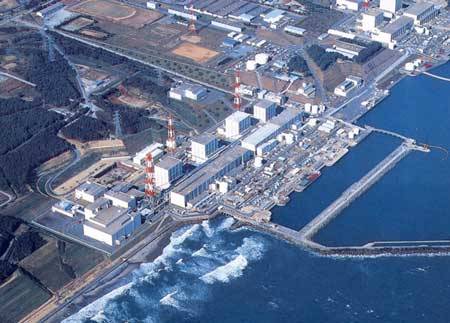
the greatest risk remains the region’s susceptibility to seismic activity.
the will of the majority of residents today is opposition to a restart and that opposition is f
While Fukushima operator Tepco says it is ‘committed to safety’ at Kashiwazaki-Kariwa, critics believe it is a disaster waiting to happen.
Julian Ryall, 27 Dec 2025
Campaigners against nuclear energy have condemned Japan’s decision to resume operations at the Kashiwazaki-Kariwa power plant, claiming that the facility will be unable to withstand a major earthquake as it was “built on tofu”.
Tokyo Electric Power Co (Tepco), the operator of the Niigata prefecture plant, on Wednesday applied for a final examination of the facility to the Nuclear Regulation Authority (NRA). Approval is likely to be a formality as the prefectural assembly already gave the nod on Tuesday.
Tepco, which has been fiercely criticised for its handling of the Fukushima Daiichi nuclear power plant disaster in March 2011, intends to restart one reactor at Kashiwazaki-Kariwa on January 20.
It would be the first of Tepco’s nuclear reactors to resume since three of Fukushima’s six reactors melted down after a magnitude 9 offshore earthquake unleashed devastating tsunamis.
Tepco has been working hard in recent years to convince the local government and residents of Niigata prefecture that it has made upgrades to secure the site from natural disasters.
Its president, Tomoaki Kobayakawa, told the media that as the operator “responsible” for the Fukushima accident, the company was now “committed to prioritising safety” at Kashiwazaki-Kariwa.
Many people remain unconvinced.
“The plant was famous for having been built on tofu – the bedrock is 30 metres (100 feet) below the surface – with many fault lines running through the site as well as offshore,” said Shaun Burnie, senior nuclear energy specialist for Greenpeace.
“Kashiwazaki-Kariwa is one of the world’s largest nuclear plants and the only one in theory capable of operating for Tepco. So restarting operations has been a priority for both the company and the government for more than a decade,” Burnie told This Week in Asia.
“But resistance from Niigata residents, the scale of safety issues and the incompetence of Tepco have undermined all efforts until now.”
History repeating itself?
Nearly 15 years after the Fukushima plant was the site of the second-worst nuclear accident in global history, Burnie warns that serious problems are being overlooked again.
Even during the preliminary planning stages, in the mid-1970s, it was apparent that ground conditions at the site by the Sea of Japan were not suitable, he said.
That was shown in July 2007, when the Chuetsu-oki earthquake struck. The magnitude 6.6 quake occurred on a previously unknown offshore fault line about 11km (7 miles) off the coast, followed 13 hours later by a 6.8 tremor around 330km (205 miles) to the west.
The nuclear plant, 19km (12 miles) due south from the epicentre of the initial quake, registered a peak ground acceleration – essentially how much the ground shook – of 6.8 metres (22 feet) per second squared in reactor No 1. The design specification for achieving a safe shutdown is 4.5m/s², while the restart level for key equipment in the plant is 2.73m/s².
Burnie said the original design specifications at the site “turned out to be gross underestimates”, with the quakes causing damage of varying degrees at 3,000 places within the plant.
A fire in an electric transformer caused the most serious damage. It left a pall of black smoke over the plant and alarmed local residents. There were also a number of leaks of mildly radioactive water and spills of radioactive cobalt-60, iodine and chromium-51 from overturned storage drums.
Given the events of 2007 and 2011, Burnie said local residents’ concerns were justified, particularly as new issues have come to light.
“We should have no confidence in Tepco assurances on safety at Kashiwazaki-Kariwa,” he said. “For example, two months after the NRA had approved the reactors’ basic safety assessment in late 2017, Tepco revealed that … the site under the emergency hydrogen ventilation buildings at units five, six and seven was vulnerable to liquefaction.”
Tepco “immediately came under pressure to explain the scale of liquefaction at the site, prove that it does not extend to the reactor buildings and how it was that the NRA was not informed prior to granting approval”, Burnie said.
Equally, he said, the NRA had to explain how it failed to identify liquefaction as a problem for a site before it granted basic safety approval.
A series of security incidents have also been cause for concern. There have been accusations of poor handling of sensitive documents, malfunctioning intruder detection systems and an employee borrowing a colleague’s pass to enter the restricted main control room in 2020.
Shaken by fears
But the greatest risk remains the region’s susceptibility to seismic activity.
“There are multiple seismic fault lines in the area of the Kashiwazaki-Kariwa site, including large-scale submarine active faults,” Burnie said. “The enormous seismic risks at the site remain unresolved and are certain to dominate the debate about the safety of any reactor restart, including in ongoing legal challenges.”
In a statement issued on Tuesday, Tepco said it would “carefully cooperate with all inspections performed by the NRA while also continuing to prioritise safety and steadily making each and every preparation for a restart”.
Takeshi Sakagami, a member of the Citizens’ Association for Monitoring Nuclear Regulation, said that a recent survey conducted by Niigata prefecture determined that 60 per cent of local residents believed that “conditions are not right” to resume operations at the plant.
“The governor explained that support should increase as understanding deepens,” Sakagami said. But “opponents counter that the will of the majority of residents today is opposition to a restart and that opposition is firm”.
Sakagami believed the government was hastening to restart the reactors “because they fear that Japan’s nuclear technology will fall behind the rest of the world”.
For him, the direction that Japan should take is simple.
“I believe Japan should abandon nuclear power and boldly shift towards renewable energy sources and energy conservation,” he said.
Former Japanese PM Ishiba again criticizes remarks advocating nuclear armament.
Asia18:02, 27-Dec-2025. CGTN, https://news.cgtn.com/news/2025-12-27/Ex-Japan-PM-Ishiba-in-fresh-broadside-against-nuclear-armament-remarks-1JrH8p2oIaA/p.html
Former Japanese Prime Minister Shigeru Ishiba has again criticized recent remarks by a senior government official suggesting that Japan should possess nuclear weapons.
Speaking on a program aired Friday night by Japan’s BS11 television, Ishiba said that as the only country in the world to have suffered atomic bombings, Japan should take a clear stance on preventing nuclear proliferation and should not make statements that undermine that position.
On December 18, an anonymous senior official in charge of security at the Prime Minister’s Office told reporters that Japan should possess nuclear weapons. After the remarks were made public, they sparked widespread criticism and controversy within Japan.
Addressing the issue earlier, Ishiba said that if Japan were to acquire nuclear weapons, it would be forced to withdraw from the Treaty on the Non-Proliferation of Nuclear Weapons as well as the International Atomic Energy Agency.
He stressed that such a move would render Japan’s nuclear energy policy – which underpins the country’s energy system – untenable, adding that “this would by no means be beneficial for Japan.”
According to a report on the online edition of the Japanese magazine Shukan Bunshun on December24, the official who made the remarks was Oue Sadamasa, a special advisor to Prime Minister Sanae Takaichi, whose portfolio includes nuclear disarmament and non-proliferation.
1A 15 years after Fukushima disaster locals fear return of Japan’s nuclear power.
Sarah Hooper, December 24, 2025, https://metro.co.uk/2025/12/24/15-years-after-fukushima-disaster-locals-fear-return-of-japans-nuclear-power-25764288/
Japan is returning to nuclear energy almost 15 years after the Fukushima disaster – but not everyone is convinced it’s a good idea.
The world’s largest nuclear power plant, Kashiwazaki-Kariwa, shut down most of its reactors after the deadly 2011 earthquake and tsunami.
The Fukushima nuclear disaster was triggered in March 2011 when four of the plant’s reactor buildings were damaged in the most powerful earthquake in Japan’s history, which had a magnitude of 9.0.
In the aftermath, Japan began the process of shutting down many of its nuclear power plants, including Kashiwazaki-Kariwa, north of Tokyo.
But as the country looks to become self-sufficient when it comes to energy, it’s rebooting many of the nuclear plants shut down after the tsunami.
Restarting nuclear facilities is a ‘significant move’ for Japan
Dr Leslie Mabon, a Senior Lecturer in Environmental Systems in the School of Engineering and Innovation at the Open University, has researched how nuclear facilities affect the environment and communities near Fukushima in Japan.
He told Metro that none of the reactors which are going to be restarted are in nuclear stations in Fukushima Prefecture, but restarting Kashiwazaki-Kariwa is a significant move
‘What is significant about this restart is not only the size of the plant – the largest in Japan – but also that it is operated by Tokyo Electric Power Company (TEPCO), who are also responsible for the Fukushima Dai’ichi plant that faced the meltdowns in 2011,’ he explained.
‘A crucial question at the heart of the controversy over nuclear restarts in Japan is: who does it benefit?’
Local governments and citizens living near nuclear plants have raised concerns about the safety of the plants, especially because the electricity produced won’t power their own communities.
‘Electricity from the plant primarily benefits those living in the Tokyo metropolitan area, some 200km south-east,’ Dr Mabon added.
‘Citizens and political figures in Niigata, and other regions like it, where restarts are on the horizon, may well be asking why they have to take up the risk for a power plant that benefits those living far away.’
An ageing and declining population in rural areas where the nuclear power plants are also located poses another problem.
‘Local and regional politicians face a very difficult balancing act between the jobs and economic benefits that hosting a nuclear plant brings on one hand, versus the concerns some of their citizens might have about safety and fairness on the other,’ he said.
Widespread outcry over nuclear power
Local residents aren’t supportive of the move, however, with dozens of protesters assembling outside after politicians voted to reopen the plant.
TEPCO, the energy company which will operate the plants, said in a statement: ‘We remain firmly committed to never repeating such an accident and ensuring Niigata residents never experience anything similar to 2011.’
Despite widespread outcry by residents – some 60% of whom don’t believe conditions to restart the plant have been met – it will reopen in January.
Local resident Ayako Oga was protesting after the vote – she was forced to relocate after the meltdown of the Fukushima plant placed her home inside the exclusion zone.
She said: ‘As a victim of the Fukushima nuclear accident, I wish that no one, whether in Japan or anywhere in the world, ever again suffers the damage of a nuclear accident.’
Radioactive substance leaks from Fukui nuclear power plant in Japan
Jen Mills, Metro 24 Dec 2025
Radioactive water leaked from a disused power plant in Japan today during work to decommission it.
Parts of the Fugen nuclear plant in Fukui Prefecture are being dismantled, and while this took place, around around 20ml of water containing a ‘high’ amount of the radioactive isotope tritium leaked from a pipe.
Japanese broadcaster NHK One reported earlier that detailed investigations were underway to see if any workers were splashed with the water, though internal exposure via inhalation had been ruled out.
Citing the Nuclear Regulation Authority, they said no radioactive material had leaked outside the controlled area of the plant.
Hiroshima urges Japanese government to uphold non-nuclear principles
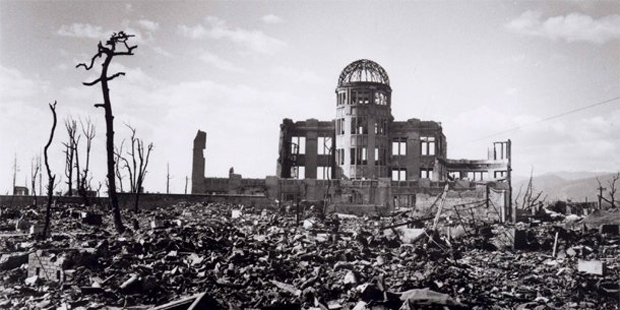
Japan’s Hiroshima Prefecture on Monday issued a statement urging the national government to uphold the country’s non-nuclear principles, after a security official recently suggested the country should possess nuclear weapons.
The Hiroshima prefectural assembly unanimously adopted the written opinion, citing local concerns about reviewing the long-standing Three Non-Nuclear Principles, which prohibit possessing, producing or permitting the introduction of nuclear arms into Japanese territory, Kyodo News reported.
“It is our duty, as the only country to have suffered atomic bombings, to continue striving toward the realization of a world without nuclear weapons,” the statement said.
The statement comes after an official involved in devising security policy under the government led by Prime Minister Sanae Takaichi recently said that Japan should possess nuclear weapons, inciting backlash from locals, including atomic bomb survivors.
It is the first written opinion by the prefectural or city assemblies of Hiroshima or Nagasaki, both devastated by U.S. atomic bombs, regarding the country’s reconsideration of the non-nuclear principles, the report said.
Itsunori Onodera, head of the ruling Liberal Democratic Party’s security research council, said on a TV program on Sunday that Japan needs to debate the future of its non-nuclear principles.
Last month, Japanese media quoted government sources as saying that, as the Takaichi administration gears up to revise the country’s key national security documents by the end of 2026, Takaichi was considering reviewing the third of the Three Non-Nuclear Principles, which prohibits nuclear weapons from entering Japan’s territory, raising strong doubts and concerns at home.
Japan set to restart world’s biggest nuclear power plant.
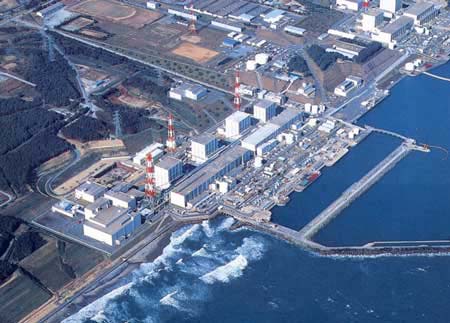
Kashiwazaki-Kariwa will be the latest plant to restart 15 years after the Fukushima disaster shut down the country’s nuclear energy programme.
Aljazeera, By Lyndal Rowlands and News Agencies, 22 Dec 25
Japan is set to resume operations at the world’s largest nuclear power plant: Kashiwazaki-Kariwa.
The partial restart of the plant got the green light in a vote on Monday by the Niigata local government. Japan has reopened several nuclear facilities as it seeks to reduce emissions, reversing policy 15 years after 54 reactors were shut in the wake of the Fukushima disaster despite public opposition.
Niigata prefecture’s assembly passed a vote of confidence on Governor Hideyo Hanazumi, who backed the restart last month, effectively allowing the plant to begin operations again.
The 2011 triple meltdown at Fukushima, following an earthquake and tsunami, destroyed Japan’s trust in its nuclear energy infrastructure…………..
Fourteen of the 33 nuclear plants that remain operable in the country have been resurrected. However, Kashiwazaki-Kariwa is the first to be operated by Tokyo Electric Power Co (TEPCO), which ran the Fukushima plant.
TEPCO is considering reactivating the first of seven reactors at the plant on January 20, Japanese public broadcaster NHK reported……………………
While lawmakers voted in support of Hanazumi, the assembly session showed that the community remains divided over the restart, despite the promise of new jobs and potentially lower electricity bills.
About 300 protesters rallied to oppose the vote, holding banners reading “No Nukes”, “We oppose the restart of Kashiwazaki-Kariwa” and “Support Fukushima”.
Farmer and antinuclear activist Ayako Oga, 52, joined the protests on Monday in her new home of Niigata, where she settled after fleeing the area around the Fukushima plant in 2011 with 160,000 other evacuees. Her old home was within the 20km (12-mile) radius irradiated exclusion zone.
“We know firsthand the risk of a nuclear accident and cannot dismiss it,” said Oga, adding that she still struggles with post-traumatic stress disorder-like symptoms……………………………… https://www.aljazeera.com/news/2025/12/22/japan-set-to-restart-worlds-biggest-nuclear-power-plant
Fukushima Now (29) – Part 1: What Constitutes Responsibility?
by Citizens’ Nuclear Information Center · December 21, 2025, By Yamaguchi Yukio, https://cnic.jp/english/?p=8747
n the 14 and a half years that have passed since March 2011, the cesium-137 that was released has finally made it to the halfway point of its half-life. After 90 years, its radioactive concentration will have diminished to one-eighth its initial level, and after 300 years, one-thousandth. According to the current medium-to-long-term roadmap, decommissioning measures should be completed around 2041 to 2051. Even by then, however, the radioactivity will have decreased only by a little more than half. Not even what these “decommissioning measures” are supposed to include has been decided on yet.
In places with serious radioactive contamination, nobody will be able to live there for another century. The area thus affected is said to exceed 300 square kilometers. The first sample of fuel debris taken from the Unit 2 reactor weighed 0.7 grams, and the second, 0.2 grams. The information gained from their analysis is just as miniscule. Meanwhile, the total amount of fuel debris in the Unit 1-3 reactors is estimated at 880 tons. Whether it will be necessary to retrieve all of it to begin with is a matter of great contention.
Idogawa Katsutaka, who was mayor of Futaba Town at the time of the accident, evacuated the entire town to protect everyone there from radioactive exposure, leading many of them as far as 250 kilometers away to Kazo City, Saitama Prefecture, near Tokyo, where they took refuge in a gymnasium that had belonged to the town’s former Kisai High School. This was just one of the municipalities that evacuated from Fukushima Prefecture to escape radioactivity. The town’s population totaled 6,971 people overall, of whom 187 took refuge at the former Kisai High School (as of September 18, 2012). Details of their evacuation were relayed widely around the world by the 2012 film “Nuclear Nation” (Japanese: “Futaba kara Toku Hanarete,” directed by Funahashi Atsushi, music by Sakamoto Ryuichi).
As of 1 August 2025, the registered population of Futaba Town had dwindled to 5,157 in all, of whom 59 percent were living within Fukushima Prefecture and 41 percent were still evacuees elsewhere among 43 of Japan’s 47 prefectures. Idogawa’s hope is, “We want somehow to go home, all of us, together, to a safe hometown.” The number of returnees so far, however, is a mere 87 people (as of August 2025).
■ Idogawa filed suit in May 2015 against the government of Japan and Tokyo Electric Power Co. (TEPCO), seeking 755 million yen in damages. A decision on the case was rendered on 30 July 2025 in Tokyo District Court, finding no responsibility on the part of the government, but ordering TEPCO to pay compensation of about 100 million yen for damages to real estate and compensation for the evacuations.
The reasoning behind this decision was that even if the government had required TEPCO to take measures against a possible tsunami, there was a good likelihood that a similar accident could have occurred anyway, so the government bore no responsibility for it. This followed the precedent of a Supreme Court’s ruling on 17 June 2022 denying the government’s responsibility.
Nor did they recognize Idogawa’s claim that his health had been damaged by his exposure in the course of evacuating. This angered Idogawa, who called it a terrible decision against a person who had faithfully fallen in line with Japan’s atomic energy administration.
I think what caused this tragic nuclear accident, unprecedented in scale, was Japan’s fundamentally flawed nuclear power system, adopted by the government in the name of “peaceful use of the atom.” It can only be called a huge transgression by the politicians, bureaucrats, scientists, and business leaders of that time on account of their lackadaisical inattention to safety.
The theory of plate tectonics teaches us not to expect to see broad regions of stability, free from concerns about earthquakes, tsunamis or volcanic activity in the Japanese archipelago. We are only part way toward clarifying the causes and circumstances of the Fukushima nuclear accident. Despite this, the government is ignoring the lessons of history and clearly announcing a “nuclear renaissance” in its 7th Strategic Energy Plan. Even if it intends to “put safety first” as a condition, it cannot create safety measures if it has yet to elucidate the causes of the accident. This is no way to ensure “safety first.” It’s a contradiction.
Establishing nuclear power plants in the Japanese archipelago in itself is a mistake. The first chairman of Japan’s Nuclear Regulation Authority publicly stated that even if the new safety standards created in 2012 were fulfilled, it would not guarantee safety. Even now, the phrase “safety first” commonly uttered by nuclear proponents is a fiction and can only be called irresponsible.
Nuclear power’s role in Japan is fading. The myths of reactor safety and energy needs can’t change that reality.

By Tadahiro Katsuta , Bulletin of Atomic Scientists 11th Dec 2025
On November 24, the Niigata Prefecture approved the partial restart of the seven-unit Kashiwazaki-Kariwa Nuclear Power Plant—the world’s largest, with a 7,965-megawatt-electric capacity—the first time it would be operated since the 2011 Fukushima Daiichi accident. The decision follows a series of efforts by the Japanese government to revive its nuclear industry since the Fukushima disaster led to the temporary shutdown of all its reactors.
In February, the Japanese government unveiled the country’s latest revised strategic energy plan with one significant shift: It no longer includes the commitment to “reduce dependence on nuclear power as much as possible.” Since the 2011 Fukushima accident, this objective has been reaffirmed in all three revisions preceding the 2022 plan. Its removal marks a clear departure from the government’s previously cautious stance on Japan’s nuclear policy.
Decommissioning work of the Fukushima Daiichi plant is still falling behind schedule, and there are no prospects for fully lifting the evacuation orders in the Fukushima Prefecture. This uncertainty surrounding post-accident Fukushima casts doubt on the government’s ability to manage another nuclear crisis. Meanwhile, the government’s plan actively promotes the “effective use” of plutonium through the reprocessing of spent nuclear fuel and the “usefulness” of nuclear power as a decarbonized power source in its newest plan.
The Japanese government had consistently maintained a strong policy of promoting nuclear power since the initial planning stage in the 1950s until the Fukushima accident. Its current position, therefore, comes as little surprise. But in the nearly 15 years since the accident, Japan’s energy structure and society have changed—and all evidence shows that nuclear power cannot simply be switched on again, despite what the government claims.
Displaced by renewable energy. As a result of new safety regulations that the Nuclear Regulation Authority (NRA) established in 2012, nuclear power plants with inadequate accident prevention measures are still unable to operate.
Japan used to operate 54 commercial nuclear power plants before the Fukushima accident, but so far only 14 have obtained operating permits and resumed operations. This translated into nuclear power’s share of electricity supply dropping to just over 5 percent from the 29 percent before the accident. The government is seeking a 20-percent share by fiscal 2040 but has not presented any specific measures to achieve this goal.
Meanwhile, renewable energy has increased rapidly since the Fukushima accident, partially filling the vacuum of the shutdown reactors. Renewable energy now supplies 226 terawatt-hours of electricity—more than twice the 84 terawatt-hours supplied by nuclear power. And renewables will continue to dominate the electricity market with a target share of 40 to 50 percent by 2040, also more than double that of nuclear power……………..
While nuclear power lacks competitiveness in the electricity market, Japan’s electricity demand has already plateaued. Demand has decreased by more than 10 percent since 2010,[2] according to the latest figures. The government insists that electricity consumption will increase sharply over the next 10 years due to the growing demand in data centers and semiconductor factories. However, even if this happens, it will still result in a lower electricity demand compared to 2010.
Unlike France, Japan does not allow output adjustments for nuclear power generation, and being an island nation, it cannot export electricity overseas. Moreover, with a slowing economy and a shrinking population, electricity demand has already peaked. In a market that seeks to maximize profits by anticipating short-term electricity demand and avoiding excess power generation, nuclear power is not an attractive option.
Does Japan need MOX fuel?
……………………………………………..Power companies and the government have not disclosed what the cost will be for Japan of manufacturing this MOX fuel abroad and then importing it. But trade statistics indicate that the MOX fuel commissioned at a French reprocessing plant cost approximately $11,000 per kilogram of heavy metal (primarily plutonium and uranium), while uranium fuel imported from the United States cost approximately $1,000 per kilogram of heavy metal. In other words, MOX fuel is more than 10 times as expensive as imported non-reprocessed reactor fuel.[3]………………….
Does nuclear power mean fewer CO2 emissions?
……………………………………………………………………………………………………………………………………………..As spent nuclear fuel continues to accumulate in Japan, the government claims that it can be reduced by reprocessing. If so, the reduction cost can be estimated as ¥488 million ($3.3 million) per ton.[5] That’s an emission reduction cost per ton 300,000 times higher than for other mitigation measures indicated by the IPCC. Moreover, spent nuclear fuel does not disappear through reprocessing. Even at the end of a closed fuel cycle, the reprocessed and recycled used fuel will require permanent geological disposal, which comes with its own set of challenges. That’s particularly the case with MOX fuel, which generates high decay heat associated with plutonium and accumulated minor actinides.
Advocates of nuclear power argue that combining fast reactors and transmutation technology after reprocessing can reduce the volume of high-level radioactive waste. But, beyond their many scientific and economic challenges, those measures will not be available in time to solve the climate change crisis, which requires immediate solutions. The only way to stop the generation of spent nuclear fuel is to stop operating nuclear reactors in the first place.
The myth of nuclear power disappears. The Fukushima accident demonstrated—once again—that the claimed inherent safety of nuclear power is a myth. Japan’s reduced reliance on nuclear power since the accident has now also debunked a second myth—that the Japanese society needs nuclear energy. The government’s reversal of its passive stance in favor of a proactive nuclear power policy goes against the current facts. It should revise its energy plan accordingly.
Unfortunately, the new Japanese cabinet formed this October, like its predecessors, is sidestepping the many current and future challenges of nuclear power………………………… As long as the government continues to avoid confronting the difficult reality of nuclear power in Japan, the myth will go on. Until it doesn’t.
Japan rejects EU plan to steal Russian assets – Politico.

09 Dec 2025, https://www.sott.net/article/503419-Japan-rejects-EU-plan-to-steal-Russian-assets-Politico
The bloc wants to use Moscow’s funds immobilized in the West to cover Ukraine’s budget deficit.
Japan has reportedly dismissed a European Union initiative to tap frozen Russian sovereign assets to help finance Ukraine’s massive budget shortfall.
Brussels hopes to issue a so-called “reparation loan” backed by Russian funds immobilized in the West – a plan that Moscow has denounced as outright theft. Belgium, where most of the money is held by the Euroclear clearinghouse, has refused to greenlight the proposal unless other nations agree to share associated legal and financial risks.
Belgian Prime Minister Bart De Wever has said broader international backing, particularly from non-EU countries holding Russian assets, would bolster the European Commission’s case for what he called the effective confiscation of a foreign state’s funds. But at a meeting of G7 finance ministers on Monday, Japan’s Satsuki Katayama made clear her government would not support the plan due to legal constraints, Politico reported, citing EU diplomatic sources.
Officials told the outlet they believe Japan’s stance aligns with that of the United States, which also opposes the EU approach and views the frozen assets as leverage in negotiations with Moscow.
France has reportedly likewise declined to touch any assets held on its soil, while Canada and the UK have signaled possible participation if the EU ultimately pursues the scheme.
Ukraine’s parliament last week adopted a 2026 budget with a staggering $47.5 billion deficit, expecting foreign donors and creditors to fill the gap. Roughly half that anticipated support – an estimated $23.6 billion – remains uncertain pending the fate of the EU loan plan.
Ukrainian media noted that lawmakers pushed the budget through despite unresolved questions over foreign financing, in part to project stability following the removal of Andrey Yermak, formerly the most powerful aide to the country’s leader, Vladimir Zelensky. Yermak was dismissed as a corruption scandal engulfed Kiev’s political establishment.
Japan inspects nuclear sites as seismologists warn of another large quake.

Authorities assessed the damage from Monday’s 7.5-magnitude earthquake, amid warnings of aftershocks and a potentially larger tremblor in the coming days.
Nuclear facilities were inspected in Japan on Tuesday as
authorities assessed the damage from a 7.5-magnitude earthquake, amid
warnings of aftershocks and a potentially larger tremblor in the coming
days. As cleanup operations began, Prime Minister Sanae Takaichi told
reporters that an emergency task force was formed to urgently assess
damage, according to The Associated Press. “We are putting people’s
lives first and doing everything we can,” she said……………………………………………………………..
Japanese officials found “no abnormalities” at Fukushima, the International Atomic Energy Agency said early Tuesday.
But as inspections were carried out on other nuclear sites, the country’s Nuclear Regulation Authority said in a statement that nearly 120 gallons of water spilled from a fuel cooling system at a nuclear fuel processing plant in the city of Aomori near the epicenter of Monday’s earthquake……………………….
NBC News 9th Dec 2025, https://www.nbcnews.com/world/asia/japan-earthquake-nuclear-sites-damage-injuries-emergency-rcna248160
Japan pulls out of Vietnam nuclear project, complicating Hanoi’s power plans
Japan has dropped out of plans to build a major nuclear power plant in
Vietnam because the time frame is too tight, Japanese ambassador Naoki Ito told Reuters, potentially complicating Vietnam’s long-term strategy to
avoid new power shortages.
Vietnam, home to large manufacturing operations for multinationals including Samsung and Apple, has faced major power blackouts as demand from its huge industrial sector and expanding middle class often outpaces supplies, strained by increasingly frequent extreme weather, such as droughts and typhoons.
“The Japanese side is not in a position to implement the Ninh Thuan 2 project,” the ambassador to Vietnam said, referring to a plant with a planned capacity of 2 to 3.2 gigawatts. The project is part of Vietnam’s strategy to boost power generation capacity.
Asahi Shimbun 8th Dec 2025, https://www.asahi.com/ajw/articles/16208469
Hiroshima Declaration and Declaration on the Rights of Nuclear Victims 2025

October 2025, https://mp-nuclear-free.com/Nuclear/2025_WNVF_01.html
In 2025, Hiroshima and Nagasaki mark the 80th anniversary of the atomic bombings by the United States. The nuclear age began when the United States dropped atomic bombs on Hiroshima and Nagasaki and human beings gained the power to wipe humanity from the earth. The atomic bombings instantly slaughtered countless innocent people, bringing unprecedented inhuman misery to Hiroshima and Nagasaki. Those who survived the horrors of this hell are still suffering from the effects of radiation. Reparation for victims of indiscriminate genocide as a result of state-provoked wars is yet to be fulfilled.
For more than 80 years, the nuclear industry and countries that have promoted the use of the nuclear cycle have trivialized or concealed the health effects of radiation and have created nuclear victims all over the world, regardless of whether it is used for military purposes or “peaceful” uses. Much of the nuclear impacts have been inflicted on Indigenous and colonized peoples. Even after the devastating nuclear disasters in Chernobyl and Fukushima, these countries and the nuclear industry are trying to further expand their negative impact by parading nuclear energy as a climate solution.
We would like to create a place of international solidarity in Hiroshima for nuclear victims and their allies, aiming for the elimination of the nuclear cycle and a world in which no more hibakusha (nuclear victims) are created.
Full text of the declaration at https://mp-nuclear-free.com/Nuclear/WNVF2025_image/HiroshimaDeclaration-Declaration-Rights-WNV2025_EN.pdf
China warns of severe consequences if Japan fails to retract its threats of military intervention over Taiwan
Japan, like most of the countries in the world, officially recognizes Taiwan as part of China. Both the countries signed an agreement in 1972 according to which Japan recognizes the one-China policy.
Though Japan recognizes the “one-China policy”, earlier this month its prime minister, Sanae Takaichi, threatened military intervention if China tried to unify Taiwan with the mainland.
November 20, 2025 by Abdul Rahman, https://peoplesdispatch.org/2025/11/20/china-warns-of-severe-consequences-if-japan-fails-to-retract-its-threats-of-military-intervention-over-taiwan/
China reiterated its demand that Japanese Prime Minister Sanae Takaichi retract her statement threatening military intervention in the event that China tries to forcefully integrate Taiwan into the mainland. It warned of strong counter measures otherwise.
The “Japanese prime minister’s erroneous remarks on Taiwan have fundamentally eroded the political foundation of China-Japan relations and triggered strong outrage and condemnation from the Chinese people,” said official spokesperson of the Chinese Ministry of Foreign Affairs, Mao Ning, in response to a question on Wednesday, November 19.
“Retract the erroneous remarks, stop making provocations on issues concerning China, take practical steps to admit and correct the wrongdoing, and uphold the political foundation of China-Japan relations,” Mao reiterated.
Speaking in the country’s parliament, newly elected Takaichi had said on November 7 that her country may respond militarily to any “situation threatening Japan’s survival” including an attempt to force the unification of Taiwan with China.
She also added that if a US warship sent to break a possible blockade on Taiwan is attacked it would invite a similar Japanese military response.
Japan hosts the largest contingent of American forces anywhere outside the US territory.
Despite strong Chinese protests and a diplomatic spat last week, Takaichi is still refusing to retract her comments, claiming that they were “hypothetical” in nature. She also said she would not repeat them in future.
However, China has demanded a complete retraction, saying Takaichi’s statement violates the fundamental principle of China-Japan relations and amounts to interference in its domestic affairs, a red line.
Indications of Japanese militarism
Mao also objected to Takaichi’s invocation of phrases such as “survival threatening situation” and “collective self defense” in the case of Taiwan, saying that it is a pretext for “Japanese militarism to launch aggression” in the region.
Takaichi, of Japan’s Liberal Democratic Party (LDP), is widely seen as an ultra nationalist and a hawk who wants to reverse the demilitarization of Japan imposed post the Second World War.
After assuming power in October she pushed the country’s defense budget up and even talked about revisiting Japan’s long held no-nuclear policy and manufacture of heavy weapons.
Takaichi’s Taiwan statement is based on the country’s military strategy, which provoked widespread popular protests in the country when it was adopted in 2015.
Mao reminded that similar aggressions and excuses had been used by the Japanese to justify its occupation of Chinese territories in the last century and to bring the Second World War into the region.
“In 1931, Japan called its seizure of Manchuria as ‘survival-threatening’, and used that as a pretext to carry out the September 18th incident and invaded and occupied Northeast China,” Mao reminded.
“Japan later claimed that to defend ‘the greater East Asia co-prosperity sphere’ was an existential battle” for it and expanded its war of aggression to the entire Asian region, Mao pointed out, asking “whether to attack Pearl Harbor was also deemed as survival-threatening to Japan, which ignited the Pacific War.”
“As we mark the 80th anniversary of the victory of the Chinese People’s War of Resistance against Japanese Aggression and the World Anti-Fascist War the international community must guard against and firmly thwart any attempt of reviving militarism, jointly uphold the post-WWII international order and safeguard world peace,” she emphasized.
Chinese counter measures
Japan, like most of the countries in the world, officially recognizes Taiwan as part of China. Both the countries signed an agreement in 1972 according to which Japan recognizes the one-China policy.
On November 12, China had underlined that Taiwan is the core of its national interest and a red line which no external force should cross. It asked the Japanese to respect the agreement signed between the two countries, including adherence to the “one-China policy”.
Since Takaichi’s remarks, China has taken several counter measures, including issuing a travel advisory asking its citizens to avoid traveling to Japan and restricting the sale of Japan’s seafood products in the country, among others.
China and Japan had a mutual trade of around USD 300 billion in 2024. Chinese visitors to Japan bring substantial revenue to the Japanese economy, according to one estimate, around USD 14 billion dollars each year.
“If Japan refuses to retract them or even continue to pursue the wrong course, China will have to take strong and resolute countermeasures and all consequences arising therefrom will be borne by Japan,” Mao warned.
1 This Month
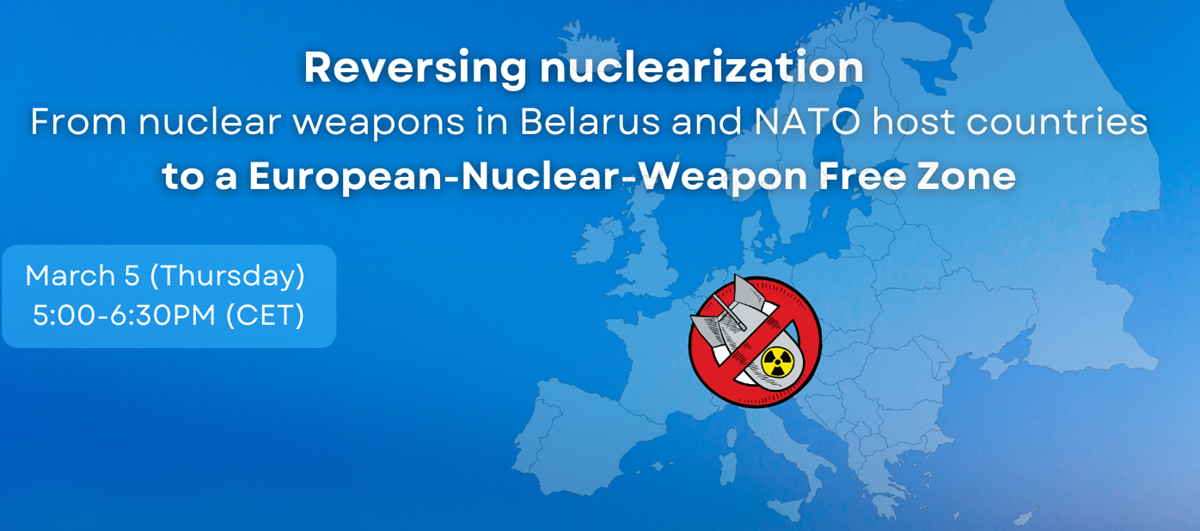
5 March -Online – Reversing nuclearization:
From nuclear weapons in Belarus and NATO host countries to a European-Nuclear-Weapon Free Zone
11am-12:30pm Eastern Time USA / 5pm-6:30pm CET

of the week – Advocating for a
nuclear free beach – https://www.samuellawrencefoundation.org/
The Samuel Lawrence Foundation advocates for a Nuclear Waste Free Beach at San Onofre, join us and take action!

10 March A LIVE WEBINAR THE REAL EFFECTS OF NUCLEAR POWER
What the Industry Isn’t Telling Us
1:00 PM Mountain, 2 pm Central, 3 pm Eastern. Live on the Keepers of the Water Facebook page


18 March Webinar @ 1 PM EST: An Assessment of SMR Projects: The Case of Canada
register for the zoom:
https://us02web.zoom.us/webinar/register/WN_o8BIIOUvQ2ONJR1nta65DQ#/registration

of the week – STOP SMALL MODULAR REACTORS IN CANADA
To see nuclear-related stories in greater depth and intensity – go to https://nuclearinformation.wordpress.com
-
Archives
- March 2026 (37)
- February 2026 (268)
- January 2026 (308)
- December 2025 (358)
- November 2025 (359)
- October 2025 (376)
- September 2025 (258)
- August 2025 (319)
- July 2025 (230)
- June 2025 (348)
- May 2025 (261)
- April 2025 (305)
-
Categories
- 1
- 1 NUCLEAR ISSUES
- business and costs
- climate change
- culture and arts
- ENERGY
- environment
- health
- history
- indigenous issues
- Legal
- marketing of nuclear
- media
- opposition to nuclear
- PERSONAL STORIES
- politics
- politics international
- Religion and ethics
- safety
- secrets,lies and civil liberties
- spinbuster
- technology
- Uranium
- wastes
- weapons and war
- Women
- 2 WORLD
- ACTION
- AFRICA
- Atrocities
- AUSTRALIA
- Christina's notes
- Christina's themes
- culture and arts
- Events
- Fuk 2022
- Fuk 2023
- Fukushima 2017
- Fukushima 2018
- fukushima 2019
- Fukushima 2020
- Fukushima 2021
- general
- global warming
- Humour (God we need it)
- Nuclear
- RARE EARTHS
- Reference
- resources – print
- Resources -audiovicual
- Weekly Newsletter
- World
- World Nuclear
- YouTube
-
RSS
Entries RSS
Comments RSS
 nuclear-news