Japan begins 21st release of Fukushima nuclear-contaminated wastewater into ocean

TOKYO, July 6 (Xinhua) Zhang Kaiwei, Liang Jun)– https://en.people.cn/n3/2026/0706/c90000-20474742.html
Japan on Monday began a new round of discharge of nuclear-contaminated wastewater from the crippled Fukushima Daiichi Nuclear Power Plant into the sea, marking the 21st such release since the controversial operation began in 2023.
The discharge started at 11:41 a.m. local time. According to the plant’s operator, Tokyo Electric Power Company Holdings (TEPCO), the latest round, scheduled to continue through July 24, will release about 7,800 tonnes of wastewater into the ocean, containing approximately 1.3 trillion becquerels of radioactive tritium.
Struck by a 9-magnitude earthquake and the ensuing tsunami on March 11, 2011, the Fukushima nuclear plant suffered core meltdowns that released radiation, resulting in a level-7 nuclear accident, the highest on the International Nuclear and Radiological Event Scale.
Despite concerns and opposition from the international community, Japan unilaterally launched the discharge of nuclear-contaminated water from the Fukushima Daiichi plant into the ocean in August 2023. So far, TEPCO has completed 20 rounds of discharges, and around 157,000 tonnes of wastewater have been released into the sea.
Radioactive cesium from 2011 Fukushima nuclear disaster spread over wide area: study
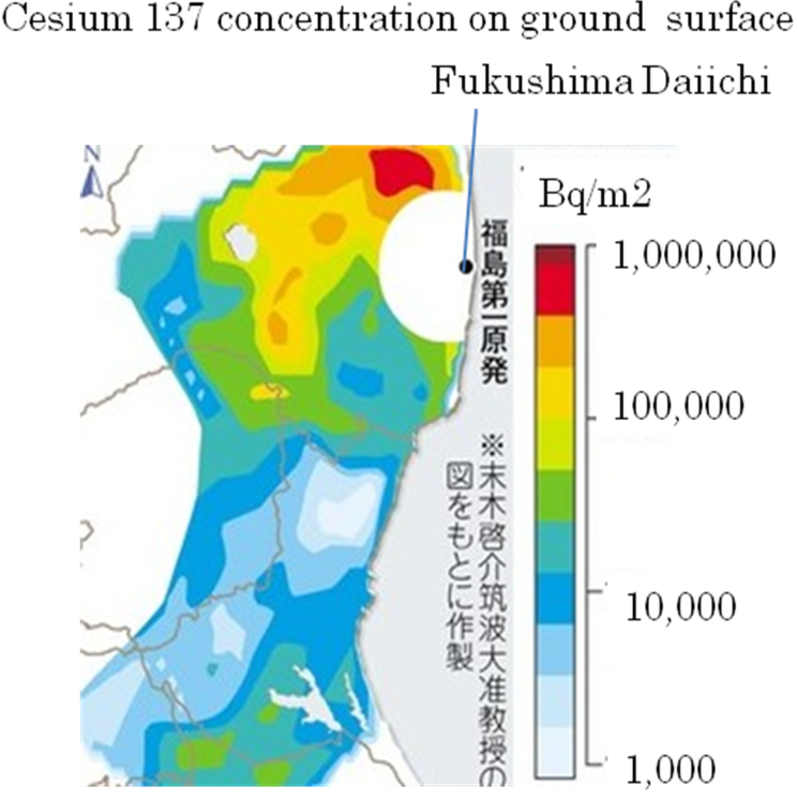
June 26, 2026 (Mainichi Japan), https://mainichi.jp/english/articles/20260626/p2a/00m/0na/004000c
TOKYO — A research team including members of the University of Tsukuba and National Taiwan University has clarified the dispersal routes of highly radioactive “cesium-rich microparticles” (CsMPs) released in the Fukushima nuclear disaster.
In the accident at Tokyo Electric Power Company Holdings Inc. (TEPCO)’s Fukushima Daiichi Nuclear Power Station in 2011, radioactive materials mainly contaminated areas to the plant’s northwest, but CsMPs were carried across a wide area of Fukushima Prefecture. The team also found that they were generated in large quantities four days after the March 11 Great East Japan Earthquake that year.
Actual extent of dispersal had remained unclear
CsMPs are spherical microparticles several micrometers in diameter. In the Fukushima Daiichi accident, they were formed when high-temperature nuclear fuel melted through to the floor and components of the melted concrete turned glasslike, encasing radioactive materials. The microparticles do not dissolve easily in water, and there are concerns that if inhaled they can remain lodged in the lungs, but the reality of how they spread had not been well understood.
The research team developed a method to examine the number of CsMPs contained in soil and analyzed soil samples taken from 100 locations in Fukushima Prefecture immediately after the accident. As a result, large numbers of CsMPs were found to the northwest and southwest of the plant, with as many as 52 particles per gram of soil. At some locations, 60% of the radioactivity in the soil was due to CsMPs.
The team then examined the dispersal process together with simulations of radioactive plumes, or air flows, and found that large-scale releases had begun in the early hours of March 15, 2011. A radioactive plume containing as many as 4,700 CsMPs per cubic meter was carried clockwise over a wide area of the prefecture, starting at the plant and moving from south to southwest and then northwest. It also reached Tokyo, the team said.
On the other hand, radioactive plumes released from 12 a.m. on March 16 onward contained no CsMPs. Instead, they are believed to have contained cesium in a form that easily dissolves in water.
‘Highly significant’ for future responses
Satoshi Utsunomiya, a National Taiwan University professor of environmental science on the team, said, “It is highly significant that we have clarified the process of when CsMPs were generated inside the plant and when their formation ceased.” The findings are expected to lead to decontamination efforts that better reflect actual conditions and to guidelines for responding to nuclear disasters.
Shinya Yamasaki, an associate professor of analytical chemistry at the University of Tsukuba, commented, “It has been shown that radiation maps and the distribution of CsMPs are different.”
The findings were published in the Journal of Hazardous Materials.
(Japanese original by Yurika Tarumi, Lifestyle, Science & Environment News Department)
Reactor reboot at world’s largest nuclear plant highlights flaws in Japan’s radioactive waste plans

With a lot of spent fuel accumulating at nuclear power plants across the country, a final disposal of radioactive waste is a crucial challenge that must be resolved,”
Finding a community willing to host a highly radioactive dump site has been difficult, even with a raft of financial enticements.
By ASSOCIATED PRESS, 11 June 2026,
https://www.dailymail.com/wires/ap/article-15890689/Reactor-reboot-worlds-largest-nuclear-plant-highlights-flaws-Japans-radioactive-waste-plans.html
KASHIWAZAKI, Japan (AP) – Japan has resumed operations at the world´s largest nuclear power plant to help the country meet huge electricity demands during a global oil crisis, but the reboot highlights a big problem: Japan is running out of space for spent nuclear fuel and has no viable plans for permanent disposal of the radioactive waste.
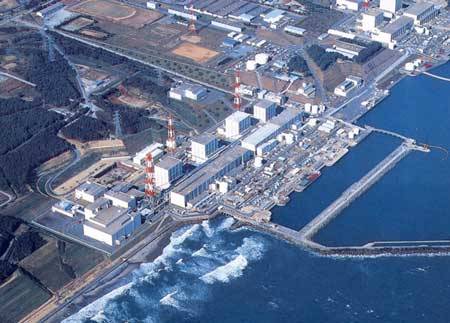
The restart of No. 6 reactor at Kashiwazaki-Kariwa Nuclear Power Station earlier this year was meant to spur a movement to bring more nuclear reactors online. Kashiwazaki-Kariwa is one of three plants whose cooling pools will be full in five years, according to the Federation of Electric Power Companies of Japan.
“Without solid (fuel management) plans, our power generation will stall sooner or later,” Kashiwazaki-Kariwa General Manager Takeyuki Inagaki said.
After decades of seeking permanent storage for highly radioactive spent fuel, the government is considering Minamitorishima, a remote Pacific island south of Tokyo. But the selection has faced skepticism and criticism stemming from Japan’s arbitrary actions on spent fuel and radioactive waste management.
Only 15 of Japan´s 54 reactors have restarted since the March 2011 Fukushima disaster, when a 9.0 earthquake off Japan´s northeastern coast and a subsequent tsunami caused meltdowns at three reactors operated by Tokyo Electric Power Company Holdings, or TEPCO. About 160,000 people fled from Fukushima and some areas remain unlivable.
Kashiazaki-Kariwa, also run by TEPCO, was shut down after the Fukushima disaster as part of a nationwide nuclear power stoppage.
The spent fuel in a cooling pool at Kashiwazaki-Kariwa No. 6 reactor, which is 88% filled, can be seen from a top-floor observation area. TEPCO has installed filtered venting systems and devices to prevent hydrogen explosions among additional safety measures based on lessons from Fukushima.
Prime Minister Sanae Takaichi is pushing to bring more nuclear plants online, resulting in more spent fuel. Without a viable permanent storage plan, there are worries that reactors will have to close when storage space runs out.
There are two options for dealing with spent nuclear fuel: direct disposal as waste or recycling to extract plutonium and uranium for reuse.
Japan insists on recycling, saying it will help the resource-poor nation’s energy needs while reducing the toxicity and volume of radioactive waste. But a reactor designed for plutonium reuse, a key part of the recycling, has failed. Reprocessing also won´t be able to handle all the spent fuel, adding to a plutonium stockpile that already is large enough to arm thousands of atomic bombs.
Experts say Japan should also consider the direct disposal option.
As of December 2025, cooling pools at 17 Japanese nuclear power plants held more than 17,000 tons (15,422 metric tons) of spent fuel, using nearly 80% of total storage capacity, according to the Ministry of Economy, Trade and Industry.
Beyond the large amount of radioactive waste from normal reactors, Japan also “has to deal with massive and largely unknown high-level nuclear waste from the Fukushima disaster,” said Lila Okamura, a Senshu University professor and expert on environmental politics and nuclear waste management.
Choosing a final disposal site for spent fuel and building a facility would require 100 years and tens of thousands of years to monitor the storage deep underground. For a generations-long project, Japan should plan carefully and not rush the current plan that is full of uncertainties, Okamura said.
Weeks after Kashiwazaki-Kariwa’s No. 6 reactor came back online for the first time in 14 years since the Fukushima disaster, Industry Minister Ryosei Akazawa approached Ogasawara village to request a feasibility study for a high-level radioactive waste site on Minamitorishima, an island administered by Ogasawara, which is part of Tokyo.
“With a lot of spent fuel accumulating at nuclear power plants across the country, a final disposal of radioactive waste is a crucial challenge that must be resolved,” Akazawa said in a letter to Ogasawara Mayor Masaaki Shibuya.
The government-owned Minamitorishima, about 2,000 kilometers (1,242 miles) south of Tokyo, has no permanent residents. The Japanese army is constructing a firing range for long-range, surface-to-ship missiles as a deterrent to China. The island also has deep sea deposits rich with rare earth minerals.
“The move seems political,” said Satoshi Takano, a member of a government panel looking at final disposal of spent fuel. “There will be little opposition from a government-owned remote island.”
Some experts say the island, which sits on a geologically stable tectonic plate, could be suitable. Many residents on Ogasawara and two nearby islands raised concerns about safety and tourism.
“I was baffled when I heard about the plan,” Ogasawara assembly member Yusuke Hirano told an assembly meeting. “I think nuclear waste is incompatible with islands that are a UNESCO Natural World Heritage site.”
Finding a community willing to host a highly radioactive dump site has been difficult, even with a raft of financial enticements. Minamitorishima is the fourth location to have a feasibility study since the government started looking in the early 2000s.
The whole review process will take about two decades. Municipalities participating in the first stage can receive up to 2 billion yen ($12.8 million) in government subsidies. The next stage would bring up to 7 billion yen ($44.7 million). Funding details for a final study haven’t been disclosed.
The world´s first final disposal site for spent nuclear fuel is set to open in Finland later this year. Britain, Germany and the United States have abandoned reprocessing largely because of high costs and technical challenges, while several other countries are discussing plans for direct disposal sites.
Inagaki, the Kashiwazaki-Kariwa general manager, said TEPCO is transferring spent fuel from No. 6 reactor to other reactors at the plant with more space, but the utility hopes to resume shipments to a dry cask storage in northern Japan as a near-term solution. Other utilities with nearly full pools have announced plans to build dry-cask storage at their plants.
Many residents worry about Japan’s growing stockpile because high-density storage of spent fuel could also increase overheating risks.
Mie Kuwabara, a civil activist in Niigata, wondered “where will it go next?”
“It’s irresponsible to accelerate restarts and produce more spent fuel without deciding its final destination,” said Kuwabara, who also is skeptical about using Minamitorishima.
“It’s like saying that it’s OK to put a facility there because nobody is around to complain if there is a problem,” Kuwabara said. “It’s scary.”
Rolls-Royce strikes nuclear deal with Japan, likely to be tax-payer funded
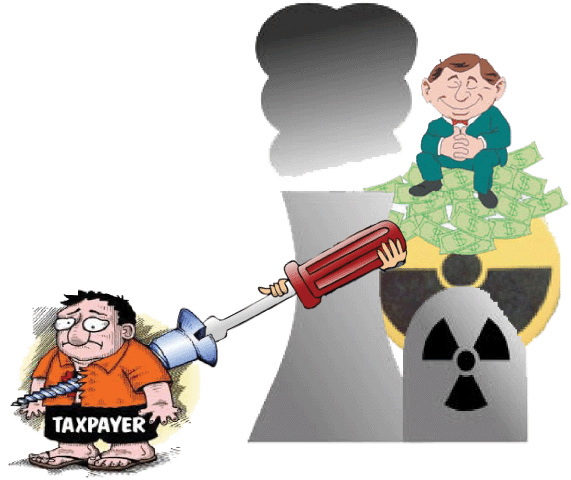
potential support that could eventually include
taxpayer-backed loans, debt financing or direct investments from the
National Wealth Fund.
Sir Keir Starmer and Sanae Takaichi set to sign agreement to develop advanced modular reactors
Matt Oliver, Industry Editor
Britain will join forces with Japan to build mini nuclear reactors capable
of powering factories, data centres and military bases. Sanae Takaichi,
Japan’s prime minister, and Sir Keir Starmer will sign an agreement at a
ceremony in Downing Street on Sunday, as part of a push to strengthen
energy cooperation between Tokyo and London.
The tie-up will lead to
British engineering giant Rolls-Royce working with the National Nuclear
Laboratory and its Japanese counterpart to develop advanced modular
reactors (AMRs) and the fuel needed to power them, The Telegraph can
disclose.
Japan has been testing a high-temperature, gas-cooled reactor for
decades, but the technology remains unproven commercially. Under the
partnership, the Japan Atomic Energy Agency will share its extensive safety
data with Rolls-Royce to help the company build a demonstrator AMR in the
UK by the mid-2030s.
Rolls is understood to have held discussions with the
Government about potential support that could eventually include
taxpayer-backed loans, debt financing or direct investments from the
National Wealth Fund.
Under the agreement, Rolls-Royce, the UK and Japanese
national laboratories have also agreed to explore options for supplying the
novel kind of fuel the AMRs will use. Known as tri-structural isotropic
particle fuel (TRISO), it is seen by scientists as inherently safer than
more conventional nuclear fuel because it can be left to cool on its own.
TRISO fuel is made by taking poppy seed-sized pieces of uranium and
wrapping them in layers of ceramic material that are almost as tough as
diamond. These pellets are then compacted into hexagonal blocks or billiard
ball-sized “pebbles”, which can be loaded into a nuclear reactor. The
Government has already announced a £300m programme with Urenco, a nuclear
fuel company, to build a UK enrichment facility capable of providing the
uranium needed to make TRISO pellets.
Telegraph 14th June 2026, https://www.telegraph.co.uk/business/2026/06/14/rolls-royce-strikes-nuclear-deal-with-japan/
N-Fuel Removal from Fukushima No. 2 Reactor Pool Begins

Tokyo, June 2 (Jiji Press), https://jen.jiji.com/jc/eng?g=eco&k=2026060200277
Tokyo Electric Power Company Holdings Inc. on Tuesday began removing nuclear fuel from the spent fuel pool of the No. 2 reactor at its tsunami-stricken Fukushima No. 1 nuclear power plant in northeastern Japan.
The work is considered a key step in the decommissioning of the reactors at the plant in Fukushima Prefecture. TEPCO aims to complete the removal of all fuel assemblies from the No. 2 reactor by fiscal 2028.
The No. 2 reactor’s spent fuel pool currently stores 587 spent fuel assemblies, which are highly radioactive, and 28 unused fuel assemblies, according to TEPCO. The unused fuel is being removed first because it poses a lower risk in the event of an accident.
Radiation levels at the No. 2 reactor building are still high after the nuclear fuel in the reactor melted down in the March 2011 accident. Radiation on the fifth floor, where the fuel pool is located, measures as high as 3 to 5 millisieverts per hour, making it difficult for workers to stay there for a long time.
Against this background, a crane for removing fuel assemblies is remotely controlled, and the assemblies are placed one by one in a transport container called a cask inside the pool. The cask will be lifted out of the pool and then lowered onto a trailer from a platform installed next to the building.
Survey begins to determine remote island’s suitability for nuclear disposal site
But while the local leaders of the municipalities in Hokkaido and Genkai approved the literature reviews, the Hokkaido and Saga governors, whose permission NUMO will seek to go on to the next stage — a preliminary on-site survey — are opposed
By Eric Johnston, STAFF WRITER, May 21, 2026, https://www.japantimes.co.jp/tag/nuclear-energy/
A survey to determine the suitability of a remote island in the Ogasawara Islands chain as a final disposal site for radioactive nuclear waste began Wednesday.
The National Waste Management Organization of Japan (NUMO) will carry out a review of the scientific literature on the geology of Minamitorishima, Japan’s easternmost island, located nearly 2,000 kilometers from Tokyo.
The literature review is the first stage of an investigation into whether the site would be suitable for constructing an underground nuclear storage facility. The radioactive waste would need to be buried at least 300 meters underground for up to 100,000 years.
Minamitorishima has no civilian residents and is part of Ogasawara Village. The mayor, Masaki Shibuya, gave his approval for the survey last month.
Over the next two years or so, experts will scrutinize geological maps and academic papers regarding earthquake fault lines and volcanic activity on and around the island.
Local governments that agree to participate in the literature review can receive up to ¥2 billion in grants, and the central government has been encouraging as many of them as possible to raise their hands.
“The final disposal of radioactive waste is a critical issue that Japan as a whole must resolve, and we intend to conduct literature surveys in as many parts of the country as possible,” NUMO President Akira Yamaguchi said in a statement Wednesday.
Minamitorishima is only the fourth site to agree to the survey. Suttsu town and Kamoenai village in Hokkaido Prefecture have been surveyed, and NUMO is compiling feedback on the report. Genkai, in Saga Prefecture, is currently undergoing a survey as well.
But while the local leaders of the municipalities in Hokkaido and Genkai approved the literature reviews, the Hokkaido and Saga governors, whose permission NUMO will seek to go on to the next stage — a preliminary on-site survey — are opposed.
“If Suttsu and Kamenaichi intend to proceed with a preliminary survey, I’ll express opposition at this time,” Hokkaido Gov. Naomichi Suzuki said in March, citing an October 2000 prefectural assembly ordinance opposing the introduction of nuclear waste into the prefecture.
Saga Prefecture Gov. Yoshinori Yamaguchi has also indicated his opposition to his prefecture hosting a final disposal facility.
“I have no intention of accepting any new burdens,” Yamaguchi said in April when asked about his position on whether he’d provide consent for Genkai to conduct a preliminary on-site survey after the literature survey.
Unlike the other three candidate sites, Minamitorishima has no permanent residents and is off-limits to the public. It houses facilities operated by the Maritime Self-Defense Force, the Japan Meteorological Agency, and the Land, Infrastructure, Transport and Tourism Ministry.
The Japanese government is moving to restart as many nuclear power plants as possible. But on-site storage facilities for spent nuclear fuel at many power plants are approaching full capacity, while plans to have the spent fuel recycled at the Rokkasho Reprocessing Plant in Aomori Prefecture remain stalled.
In February, the Federation of Electric Power Companies of Japan released figures showing that storage pools at 17 nuclear plants where spent fuel is cooled were 78% full as of the end of last year.
Reactor to be halted after radioactive steam detected in northeastern Japan nuclear plant
CGTN, 16th May 2026,
https://news.cgtn.com/news/2026-05-16/Japan-s-nuclear-reactor-to-be-halted-after-radioactive-steam-detected-1NbFXtkebzG/p.html
The operator of the Onagawa nuclear power station in Miyagi Prefecture, northeastern Japan, said Friday that it will halt the facility’s No. 2 reactor after radioactive steam was detected within its turbine building.
Tohoku Electric Power Co. said a small amount of radioactive steam was found in the reactor unit’s turbine building at around 5:10 p.m. local time on Friday, adding no radioactive materials had leaked into the environment and that the halt was for inspection purposes.
The company also dismissed any link between the incident and a 6.4-magnitude earthquake that struck northeastern Japan on Friday night.
The No. 2 reactor at the plant had previously been taken offline for a regular inspection and was only brought back online on Monday, with commercial operations scheduled to resume on June 9.
Japan faces tough road ahead over nuclear-fuel reprocessing plant
Japan Times, 10 May 26,
Japan still faces a tough road ahead over the construction of a spent nuclear fuel reprocessing plant in Aomori Prefecture, whose completion date has been moved back 27 times.
With less than a year to go until the current deadline at the end of next March, Japan Nuclear Fuel is in time-consuming exchanges with the Nuclear Regulation Authority (NRA) over the plant.
The completion “will definitely be delayed” again, Aomori Gov. Soichiro Miyashita has said. Meanwhile, Chief Cabinet Secretary Minoru Kihara has said that the deadline remains unchanged.
Japan Nuclear Fuel began the construction of the plant, a key component of the country’s nuclear energy policy, in the village of Rokkasho in 1993, originally planning to complete it in 1997.
Delays primarily stemmed from a series of problems, including those with some equipment, before northeastern Japan was struck by the massive March 2011 earthquake and tsunami and the subsequent nuclear accident at Tokyo Electric Power Company’s Fukushima No. 1 power plant.
After the triple disaster, Japan significantly tightened nuclear safety standards. The NRA’s lengthy regulatory review to ensure the Rokkasho plant’s compliance with the standards led to delays in recent years.
The regulatory watchdog finished examining the plant’s basic design in 2020 and then started a detailed design review, which is still going on.
When Japan Nuclear Fuel announced its 27th postponement in the summer of 2024, it said it would complete its submissions to the NRA by November 2025 and win the body’s approval by March this year, but the plans have not progressed as scheduled………………………………………………………………………………. https://www.japantimes.co.jp/news/2026/05/10/japan/japan-nuclear-fuel-reprocessing/
The ongoing Fukushima nuclear disaster 15 years on: a photoessay
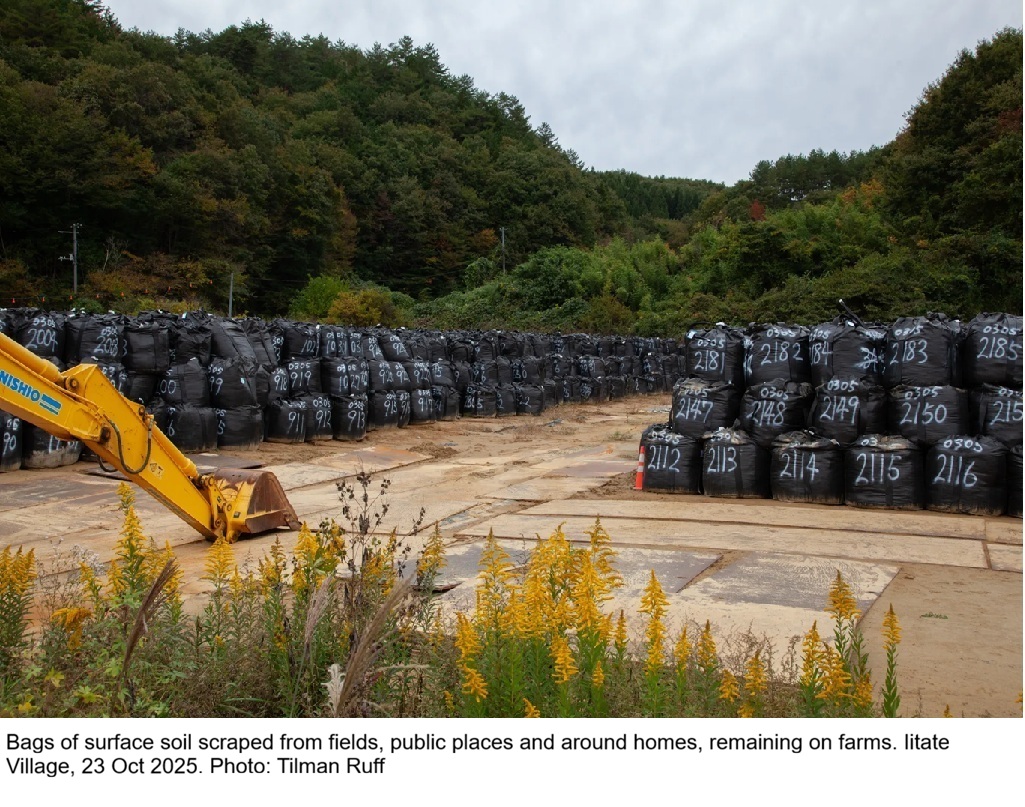
Peace and Health Blog. International Physicians for the Prevention of Nuclear War Tilman Ruff, April 2, 2026
It is now 15 years since the Great East Japan Earthquake on 11 March 2011—and the tsunami it generated—wrought havoc on the Fukushima Daiichi Nuclear Power Plant (FDNPP). A predictably dangerous plant design, a corrupt and negligent operator, and Japan’s incestuous and corrupted ‘nuclear village’ involving collusion and revolving doors between government, regulator and operators, combined in a lethal mix.
The myth that a nuclear disaster couldn’t happen in Japan and therefore didn’t need to be prepared for continues to exact a high toll. The Fukushima Nuclear Accident Independent Investigation Commission, the only such body ever established by the National Diet of Japan, concluded that:
“It was a profoundly man-made disaster – that could and should have been foreseen and prevented. … a multitude of errors and willful negligence that left the Fukushima plant unprepared for the events of March 11.” “… Bureaucrats … put organisational interests ahead of their paramount duty to protect public safety.”
The accident “was the result of collusion between the government, regulators and TEPCO … They effectively betrayed the nation’s right to be safe from nuclear accidents.”
“The Commission concludes that the government and regulators are not fully committed to protecting public health and safety”.
Despite this clear and damning indictment, the highest courts in Japan have acquitted Tokyo Electric Power Company’s (TEPCO) top executives and have not held the government accountable. No TEPCO executive or government official is in prison because of a huge and ongoing disaster they could and should have prevented.
The 40th commemoration of the Chernobyl nuclear disaster on 26 April this year provides another sombre milestone to reflect on humanity’s flirtation with the most hazardous technology ever invented, intimately linked with weapons that pose the most acute existential threat to the biosphere.
While both national and prefectural governments seek to present the Fukushima disaster as effectively over and the region being open for business, the resulting catastrophe is far from over. A visit to Japan in late 2025 provided a valuable opportunity to visit Fukushima for the sixth time since the disaster and learn from those grappling with the ongoing challenges to health, livelihoods and rebuilding a sustainable future in the regions affected by the disaster, which extend far beyond the boundaries of Fukushima Prefecture, even though government programs to address the disaster’s aftermath focus exclusively on Fukushima.
Because ‘luckily’ half the radioactive caesium (Cs) released by the reactor meltdowns and explosions is Cs-134, with a two year half-life, rather than the 30 year half-life of Cs-137 which makes up the remainder of the caesium released, the initial decline in residual radioactivity, to which caesium is the dominant contributor, has been faster than following the Chernobyl disaster.
The multiple damaged nuclear reactors and spent fuel pools at Fukushima Daiichi are far from stable, and decommissioning as planned by TEPCO is barely progressing and looks increasingly unfeasible. Just 0.9 grams of fuel debris has been able to be removed to date, in two removals three years later than scheduled, while 880 tons remain with no plans yet for how to remove the bulk of this material. In addition, 1,007 tons of spent fuel remain in the spent fuel pools at Units 1 and 2. The melted reactors with spent fuel pools resting above them have been severely structurally damaged. In reactor 1 for example, robotic cameras have revealed that the concrete of the pedestal which supports the reactor has melted all the way around, exposing the internal reinforcing bars now providing effectively the only structural support. These damaged structures have heightened vulnerability to further earthquake and tsunami damage.
A major independent international assessment of a kind that Japan has resisted to date is warranted to assess the best means to address this extremely challenging, highly radioactive mess to order to most effectively and expeditiously secure the site as much as possible from further fires, meltdown or criticality events, further tsunami or earthquake damage, and ongoing or escalating release of radioactive materials. While it may be feasible and challenge enough to remove the fuel remaining in the spent fuel pools above Units 1 and 2, rather than stubbornly persisting with decommissioning plans going nowhere, aiming to stabilise the damaged fuel in the reactors so that active cooling is no longer required, and establishing durable physical encasement of the damaged facilities on all sides deserve more thorough consideration.
Decontamination and redistribution
Extensive decontamination by scraping away the upper 5 cm of surface soil for 20m around houses, in fields and gardens, in schools, childcare centres, parks and public gathering places, resulting in the accumulation of 14 million m³ of contaminated soil, has denuded areas and reduced fertility of agricultural land, but has had some useful effect in reducing radiation exposure to residents and contamination of vegetables grown in decontaminated areas. Use of potassium-rich fertiliser has also contributed to reducing caesium absorption by crops. However, forested areas, which comprise 70% of Fukushima, particularly covering hills and mountains which received higher fallout than valleys and low-lying areas, act as reservoirs of radioactivity, which is constantly washed down by rain and snow to flatter and lower-lying areas where people’s homes, farms, paddies and fields lie, and also washes into estuaries and beach sands. This contributes to patchiness and high variability of contamination at a local level, and hence the importance of localised and ongoing measurement.
Hot caesium-laden particles
An important discovery was made by Japanese geochemists, particularly Satoshi Utsunomiya, that caesium-rich microparticles 2-3 microns in diameter, small enough if inhaled to be retained in the alveoli of the lung, were not only widely present in hotspots in Fukushima, but also widely deposited in Tokyo on 15 March 2011, when the most intensely radioactive fallout cloud passed over Tokyo following the explosion of the Unit 3 reactor.
These particles, assessed to be formed by the interaction of molten reactor fuel with concrete surrounding and supporting Fukushima Daiichi reactors 1 and 3, are intensely radioactive, more so than spent nuclear fuel. Contrary to conventional assumptions about the highly soluble nature of caesium and therefore (as a potassium analogue) its even dispersal in organisms and organs, these particles are insoluble, meaning they can deliver a much greater localised radiation dose to surrounding cells, and for a longer period. The main scientific publication of these findings was delayed some years because of academic infighting and political sensitivity. Their significant implications for human radiation exposures and radiation protection related to the Fukushima disaster, including the identification and isolation of radioactive hot-spots, have hardly been explored.
Public health and safety continue to be sidelined
National and regional government policies are still negligent in failing to prioritise public health and safety. In the early weeks after the disaster, the Japanese government, arbitrarily and without scientific justification, increased the maximum permissible radiation exposure for a member of the public from 1 to 20 mSv per year. This unacceptably high level is still in place, 15 years later, as the basis for government policy, including clean-up standards and the designation of areas suitable for residents to return to and ending their eligibility for government support. No other government has accepted such a continuing high radiation level for its population, including the most vulnerable, particularly children. The government is now even countenancing some return to areas where doses estimated to be received are up to 50 mSv/yr.
The Japanese government also continues other weakened protection standards, for example before the disaster, waste and soil with radioactivity more than 100 Bq/kg was regarded as strictly controlled waste, whereas since the disaster, soil which is contaminated up to 8000 Bq/kg has been classified as suitable to be treated as ordinary waste, suitable for incineration and reuse in construction works around the country.
In August 2023, Japan began discharging processed radioactive Fukushima wastewater into the Pacific Ocean. As of 22 Dec 2025, according to TEPCO, 127,000 m3 of contaminated water has been dumped, containing about 31.2 TBq of tritium. Such discharges are planned to continue for at least 30-40 years, in breach of Japan’s obligations under the UN Convention on the Law of the Sea, which expressly prohibits ocean dumping of radioactive waste. This will no doubt include not only the 1.4 million m3 of wastewater already accumulated, but contaminated wastewater which continues to accumulate for the forseeable future, at a current average of 50 m3/day, containing a raft of radioactive contaminants. Alternatives such as prolonged storage in purpose-built large tanks, or incorporating treated wastewater into concrete for underground construction use, were given no serious consideration.
An epidemic of thyroid cancer in children ……………………………………………………………………………………………………………………………………………………………………………………………………………………………………………… https://peaceandhealthblog.com/2026/04/02/the-ongoing-fukushima-nuclear-disaster-15-years-on-a-photoessay/#more-7185
Japanese earthquake and tsunami warning forces evacuation from Fukushima nuclear plants
20 Apr, 2026 By Tom Pashby
Workers at two Fukushima nuclear power plants in Japan were forced to
evacuate to higher ground following earthquake and tsunami warnings today
(20 April). Japan’s nuclear power company Tepco (Tokyo Electric Power
Company) issued statements where they sought to reassure the public about
its plants. “At around 16.53 [local time] on April 20, 2026, an
earthquake with a magnitude of 7.5 on the Richter scale struck off the
coast of Sanriku, Japan”, it said. “As of now, there is no abnormality
with our main power system. “In response to the tsunami advisory issued
for Fukushima Prefecture, evacuation orders have been issued to workers at
the Fukushima Daiichi and Fukushima Daini Nuclear Power Stations.
New Civil Engineer 20th April 2026,
https://www.newcivilengineer.com/latest/japanese-earthquake-and-tsunami-warning-forces-evacuation-from-fukushima-nuclear-plants-20-04-2026/
TEPCO halts cooling of spent fuel pool at Fukushima Daini plant
April 6, 2026 (Mainichi Japan),
https://mainichi.jp/english/articles/20260406/p2a/00m/0bu/002000c
FUKUSHIMA, Japan (Kyodo) — The operator of the Fukushima Daini nuclear power plant being decommissioned said Sunday it halted cooling of a spent fuel pool after receiving an alert about a pump malfunction.
According to Tokyo Electric Power Company Holdings Inc., the alarm for the spent fuel pool of the No. 1 reactor was triggered at around 2:45 p.m. Sunday. Workers shut down the pump after smoke was confirmed at the site, suspending the pool’s cooling.
The four-reactor Fukushima Daini plant is located about 12 kilometers south of the Fukushima Daiichi plant, devastated by the March 2011 earthquake and tsunami disaster.
TEPCO has decided to decommission both complexes following the disaster.
The latest incident has not affected the radiation level outside, and no one has been injured, TEPCO said. The company is investigating the cause.
The No. 1 unit spent fuel pool at the Fukushima Daini complex stores 2,334 used fuel assemblies, as well as 200 new fuel ones.
The water temperature at the time when the cooling system was halted was 26.5 C, and it will take about eight days to exceed the temperature level set for safe operation, according to TEPCO.
The Nightmare of Fukushima 15 Years Later

SCHEERPOST, By Joshua Frank, March 20, 2026
“…………………………………………………………………………………… The Fukushima Daiichi nuclear plant, built by General Electric (GE) in the mid-1960s, was designed to withstand natural disasters, but its creators never foresaw an earthquake like that. When the plant’s sensors detected the quake, its reactors automatically shut down. That emergency shutdown (or scram) halted its fission process, triggering backup power to keep cold seawater flowing through the reactors and spent-fuel containers to prevent overheating. Things at Fukushima were going according to plan until that massive tsunami battered the plant, washing away transmission towers and damaging electrical systems. There were backup generators in the basement, but those, too, had been inundated by waves of seawater, and an already bad situation was about to get far worse.
A power outage at a nuclear power plant is known as a “station blackout.” As you might imagine, it’s one of the worst scenarios any nuclear facility could possibly experience. If all electricity is lost, that means water is no longer being pumped into the reactor’s scalding-hot core to cool it down. And if that core isn’t constantly being cooled, one thing is certain: disaster will ensue. The fission process itself may be complicated, but that’s basic physics. To make matters worse, there were three operating reactors at Fukushima Daiichi. Luckily, three others had already been shut down for maintenance. If power wasn’t restored in short order, that would mean that all three of Fukushima’s reactors were in very big trouble.
We would later learn that no one — not at TEPCO, GE, or among Japanese regulators — had ever considered the possibility that all the reactors might lose electricity at once. They had only drawn up plans for one reactor to go down, in which case the others could keep the plant running. But all of them offline, and every generator out of commission? There was no precedent or playbook for that.
The nuclear industry has a reasonably polite name for a disaster like the one that was rocking Fukushima. They refer to it as a “beyond design-basis accident” because no single nuclear plant design can account for every possible problem it might encounter in its lifetime. The fact that there’s a term for this should make you anxious.
Meltdowns and Fallout
Over the next several days, the emergency at Fukushima Daiichi only worsened. Every effort to restore power to its reactors hit a dead end. On-site radiation-detection equipment, which would have triggered warnings and guided evacuation efforts for those in danger, was no longer functioning. Plans to pump water into the reactors to cool them had faltered. Their cores kept overheating, and the boiling pools of spent fuel were at risk of drying out, potentially triggering a massive fire that would release extreme amounts of radiation.
Within three days, following a series of fires, hydrogen explosions, and panic among those aware of what was happening, Fukushima’s Units 1, 2, and 3 experienced full-scale core meltdowns. Over 150,000 people within an 18-mile radius had already been forced to evacuate, and radiation plumes would take two weeks to spread across the northern hemisphere, although the Japanese government wouldn’t admit publicly that any meltdown had occurred until June 2011, three months later.
The only good news for the 13 million people living 150 miles south in Tokyo was that, during and immediately after the meltdowns, prevailing winds carried much of Fukushima’s radioactive material away from the smoldering reactors and out to sea. It’s estimated that 80% of the fallout from Fukushima ended up in the ocean, meaning most of it headed east rather than toward population centers to the south and west. The other fortunate news was that the spent fuel containers had somehow survived it all. If their water levels in the pools had been drained, far more radiation would have been released.
But Tokyo wasn’t completely spared. After years of research, scientists discovered that cesium-rich microparticles had blanketed the greater Tokyo area, an unpopular discovery that drew backlash and threats of academic censorship. Areas around the Fukushima exclusion zones recorded the highest radiation levels. Japanese government officials continually downplayed the dangers of the accident and were reluctant to even classify the event as a Level 7 nuclear disaster, the highest rating on the International Nuclear Event Scale, which would have placed it on a par with the 1986 Chernobyl nuclear disaster. Japanese officials have also failed to conduct long-term epidemiological studies that would include baseline measurements of cancer rates, which has cast doubt on thyroid screenings that found troubling incidents of cancer far higher than researchers expected.
Radioactive Fish
Prior to the earthquake, the ocean’s cesium-137 levels near Fukushima were 2 Becquerels (a unit of radioactivity) per cubic meter, well below the recommended drinking water threshold of 10,000 Becquerels. Just after March 11, 2011, cesium-137 levels there spiked to fifty million before decreasing as sea currents dispersed the radioactive particles away from the coast. The ocean, however, had been poisoned.
In the years that followed the Fukushima nuclear disaster, researchers documented a frightening, yet predictable trend. Radioactive isotopes in seawater were taken up by marine plants (phytoplankton), which then moved up the food chain into tiny marine animals (zooplankton) and, eventually, to fish.
Cesium-137 consumed by fish can reside in their bodies for months, while Strontium-90 remains in their bones for years. If humans then eat such fish, they will also be exposed to those radioactive particles. The more contaminated fish they eat, the greater the radioactive buildup will be.
In 2023, over a decade after the incident, radiation levels remained sky-high in black rockfish caught off the Fukushima coast. Other bottom-dwelling species have been found to be laden with radioactivity, too, including eel and rock trout. Further concerns have been raised about the treated radioactive water that TEPCO continued to release into the ocean, prompting China to suspend seafood imports from Japan. Aside from those findings, there have been very few studies examining the effects of Fukushima’s radiation on ecosystems or on the people of Japan.
“Japan has clamped down on scientific efforts to study the nuclear catastrophe,” claims pediatrician Alex Rosen of International Physicians for the Prevention of Nuclear War. “There is hardly any literature, any publicized research, on the health effects on humans, and those that are published come from a small group of researchers at Fukushima Medical University.”
Recognizing such levels of radiation, even if confined to the waters near Fukushima, would cast the country’s nuclear industry as a significant threat — not only to Japan but globally. Any admission that Fukushima’s radiation is linked to increased cancer rates would raise broader concerns about nuclear power’s future viability. Radiation exposure is cumulative and, although Fukushima didn’t immediately cause mass casualties, it wasn’t a benign accident either. It took decades before it was accepted that Chernobyl had caused tens of thousands of excess cancer deaths. It may take even longer to completely understand Fukushima’s full effects. In the meantime, the still ongoing cleanup of the burned-out facilities may cost as much as 80 trillion yen ($500 billion).
It’s been 15 years since Fukushima’s reactors experienced those meltdowns and we still don’t fully understand their long-term repercussions. Nuclear power advocates will argue that Fukushima wasn’t a serious incident and that nuclear technology is still safe. They’ll minimize radiation threats, remain optimistic that new reactor designs will never falter, dismiss the fact that there’s simply no permanent solution for radioactive waste, and overlook the inseparable connection between nuclear power and atomic weapons. After all, among other things, we’ll undoubtedly need nuclear energy to help power the artificial intelligence craze, right?………………………………………………………………………………………………………………………………………………………………………. With nine nuclear-armed nations and roughly 12,000 nuclear warheads on this planet, worries about nuclear war are unavoidable. However, the danger of a nuclear disaster at a seemingly “peaceful” nuclear facility is often ignored. The future of atomic energy remains uncertain, but it is our duty to eliminate this hazardous energy source before another Fukushima triggers a war-like catastrophe all its own.mhttps://scheerpost.com/2026/03/20/searching-for-solace-in-a-nuclearized-world/
Joshua Frank, a TomDispatch regular, is co-editor of CounterPunch and co-host of CounterPunch Radio. He is the author of Atomic Days: The Untold Story of the Most Toxic Place in America, and the forthcoming Bad Energy: AI Hucksters, Rogue Lithium Extractors, and Wind Industrialists Who are Selling Off Our Future, both with Haymarket Books.
Drone video from inside a Fukushima reactor shows a hole in pressure vessel, likely fuel debris
Daily Mail. By ASSOCIATED PRESS, 20 March 2026
TOKYO (AP) – A video taken by tiny drones sent into one of three damaged reactors at the Fukushima Daiichi nuclear power plant showed a gaping hole in the thick-walled steel container of the core, with lumps of likely melted fuel debris hanging from it, in a first sighting of a pressure vessel bottom since the meltdown 15 years ago.
The rare footage was taken by micro-drones – measuring 12 by 13 centimeters (4.7 by 5.1 inches) and weighing only 95 grams (3.3 ounces) each – deployed for a two-week mission to collect visual, radiation and other data from inside the Unit 3 reactor. It was released late Thursday.
The March 11, 2011 massive quake and tsunami destroyed cooling systems at the Fukushima Daiichi plant, causing meltdowns at reactors No. 1, 2 and 3.
The three reactors contain at least 880 tons of melted fuel debris with radiation levels still dangerously high. Tokyo Electric Power Company Holdings, which manages the plant, successfully took tiny melted fuel samples from the Unit 2 reactor last year, but internal details remain little known.
TEPCO plans more remote-controlled probes and sampling to analyze melted fuel and to develop robots for future fuel debris removal that experts say could take decades more.
Sending drones as close as possible to the pressure vessel’s bottom was an important goal of the latest probe, according to the plant operator, Tokyo Electric Power Company Holdings……………………………..
TEPCO spokesperson Masaki Kuwajima said officials confirmed there was a hole at the bottom of the vessel and that those hanging objects, lumps and deposits are believed to be melted fuel debris…….
The latest drone mission came nearly a decade after an earlier underwater robot probe provided a less clear picture of the inside of the Unit 3 reactor.https://www.dailymail.co.uk/wires/ap/article-15663749/Drone-video-inside-Fukushima-reactor-shows-hole-pressure-vessel-likely-fuel-debris.html
U.S. and Japan Ponder Nuclear Energy Project in Massive $550 Billion Deal

By Michael Kern – Oil Price 4th March 2026, https://oilprice.com/Latest-Energy-News/World-News/US-and-Japan-Ponder-Nuclear-Energy-Project-in-Massive-550-Billion-Deal.html
The United States and Japan have been considering the inclusion of a nuclear power project involving Westinghouse in the $550-billion package of investment that Japan has pledged in the U.S. under the bilateral trade deal, sources familiar with the plans told Reuters on Wednesday.
Last year, as part of the U.S.-Japan trade agreement, Japan pledged to buy $8 billion worth of American products per year. The Government of Japan has also agreed to invest $550 billion in the United States, the White House said.
At the time, U.S. Secretary of Commerce, Howard Lutnick, hailed the deal as “historic” and said that the U.S. would use the $500-billion Japanese investment “to build our energy infrastructure, chip manufacturing, critical minerals mining, and shipbuilding to name a few.”
The plan for a nuclear power project, as well as a copper refining facility, is being discussed and could be talked into details later this month when Japan’s Prime Minister Sanae Takaichi is due to meet with U.S. President Donald Trump at the White House on March 19, according to Reuters’ anonymous sources.
Westinghouse, which could be involved in the nuclear power project, was named as a company that has expressed interest to launch projects in the energy sector, according to a joint fact sheet for the Japan-U.S. Investment.
TEPCO planning to send probe into Fukushima nuke reactor
By TOMOYUKI SUZUKI/ Staff Writer, March 4, 2026 ,
https://www.asahi.com/ajw/articles/16341286
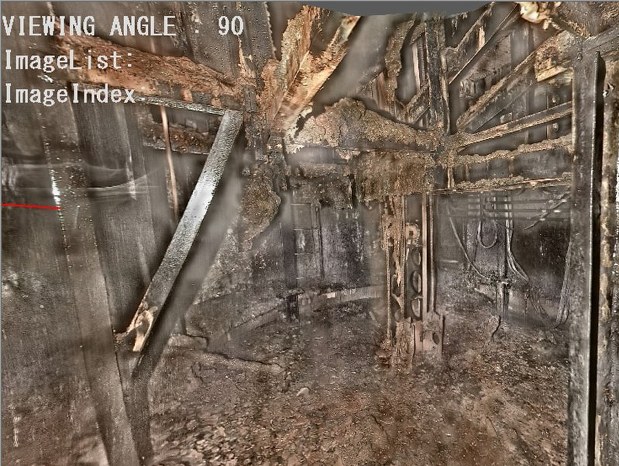
Tokyo Electric Power Co. will soon launch a probe, the first of its kind, into the pressure vessel at one of the hobbled reactors at its Fukushima No. 1 nuclear power plant to scope out the current conditions.
The effort is part of TEPCO’s long-standing goal of retrieving melted nuclear fuel debris, left in the aftermath of the triple reactor meltdowns following the 2011 Great East Japan Earthquake and tsunami.
TEPCO officials said they are planning to insert a camera-equipped fiberscope into the plant’s No. 2 reactor to shoot footage and measure radiation levels during the first half of fiscal 2026 between April and September.
An estimated 880 tons of fuel debris remain inside the No. 1, 2 and 3 reactors at the Fukushima No. 1 plant.
TEPCO plans to approach the contaminated debris, which remains in the pressure vessels, from the tops of the reactor buildings and pulverize the debris to reduce the volume and collect it by sucking it from the side or by other means.
TEPCO officials are hoping, during the planned probe, to monitor the interior of the pressure vessel visually and ascertain the radiation levels on a location-by-location basis to help work out concrete methods for retrieving the fuel debris.
The fiberscope to be used in the probe, which resembles an endoscope, will be inserted into the pressure vessel from the side through piping.
The officials said they will be probing not the core part of the vessel but the outer side of a shroud of stainless steel, which has been installed to surround nuclear fuel, to determine, among other things, if the shroud has been deformed and if there is any debris in sight.
They said they will conduct mock-up drills in the days and months to come. They added that they will take measures to block air from leaking from the pressure vessel’s interior so workers will not be exposed to radiation.
The probe was initially scheduled to begin in fiscal 2024, but the work has been delayed because the development of a dosimeter-equipped fiberscope and other processes have turned out to be more time-consuming than expected.
“When the distribution of dose levels is known, that could, depending on the circumstances, help give an estimate of the amount of residual fuel (which has yet to turn into debris),” said Akira Ono, president of TEPCO’s Fukushima Daiichi Decontamination & Decommissioning Engineering Co., which is overseeing the corresponding processes at the Fukushima No. 1 nuclear plant.
TEPCO plans to start large-scale retrieval of the Fukushima No. 1 plant’s debris at its No. 3 reactor in fiscal 2037 or later.
The dose levels and circumstances of the areas surrounding the reactor buildings are not the same for the No. 1, 2 and 3 reactors.
TEPCO officials said they have set a target date of 2027 for studying the design of debris removal equipment and other specifics for those reactors.
2222222
1 This Month
23-25 October – on Zoom – World BEYOND War’s annual global conferenc


Shut down the radiation-damaged Heysham nuclear reactors now
To see nuclear-related stories in greater depth and intensity – go to https://nuclearinformation.wordpress.com

Say No to NASA’s Reckless Nuclear Reactor on the Moon
Say No to NASA’s Reckless Nuclear Reactor on the Moon

-
Archives
- October 2026 (247)
- September 2026 (339)
- August 2026 (330)
- July 2026 (355)
- June 2026 (287)
- May 2026 (306)
- April 2026 (356)
- March 2026 (251)
- February 2026 (267)
- January 2026 (308)
- December 2025 (358)
- November 2025 (359)
-
Categories
- 1
- 1 NUCLEAR ISSUES
- business and costs
- climate change
- culture and arts
- ENERGY
- environment
- health
- history
- indigenous issues
- Legal
- marketing of nuclear
- media
- opposition to nuclear
- PERSONAL STORIES
- politics
- politics international
- Religion and ethics
- safety
- secrets,lies and civil liberties
- spinbuster
- technology
- Uranium
- wastes
- weapons and war
- Women
- 2 WORLD
- ACTION
- AFRICA
- Atrocities
- AUSTRALIA
- Christina's notes
- Christina's themes
- culture and arts
- Events
- Fuk 2022
- Fuk 2023
- Fukushima 2017
- Fukushima 2018
- fukushima 2019
- Fukushima 2020
- Fukushima 2021
- general
- global warming
- Humour (God we need it)
- Nuclear
- RARE EARTHS
- Reference
- resources – print
- Resources -audiovicual
- Weekly Newsletter
- World
- World Nuclear
- YouTube
-
RSS
Entries RSS
Comments RSS


