Ban to be lifted on Fukushima’s worst-affected zone in 2022

A barrier set up at the difficult-to-return zone as Typhoon No. 10 approaches Okuma, which co-hosts the Fukushima No. 1 nuclear power plant, in Fukushima Prefecture on Aug. 30
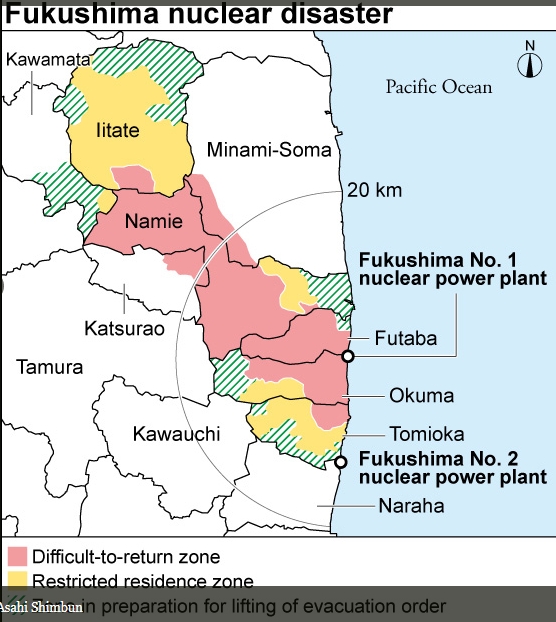
Some of the most contaminated areas of Fukushima Prefecture rendered uninhabitable by the 2011 nuclear disaster will be declared safe to live in again in 2022.
The government’s decision to lift the partial ban on repatriation to the “difficult-to-return zone” was announced Aug. 31 after Prime Minister Shinzo Abe called a joint meeting of the government’s Nuclear Emergency Response Headquarters and Reconstruction Promotion Council.
By 2022, the area’s 24,000 or so residents will have been displaced for more than a decade and there is no way of knowing how many will choose to return to their hometowns.
The difficult-to-return zone encompasses seven municipalities situated in a 20-kilometer radius of the crippled Fukushima No. 1 nuclear power plant as well as a spur of land northwest of the radius.
Partial lifting of the ban, in the eyes of the government, is reasonable as “radiation levels in the zone have dropped” even though no decommissioning work has been done there.
The government said the move is aimed at bolstering efforts to rebuild the prefecture, adding that leaving the zone intact would only perpetuate negative images of the area and sully the reputation of local products.
The ban will initially be lifted for areas where local government buildings, train stations and community halls are located, and eventually the rest of the zone.
There was no word, however, on how many years it will take for that to happen.
The government envisages enacting a law to designate areas earmarked as rebuilding hubs so as to encourage residents to return. The government will try to give priority to decisions by local officials as to which areas fall into that category.
In preparation for the lifting of the partial ban, the government will start extensive decontamination work in the zone from fiscal 2017, which begins next April.
The government estimates it would take 1 trillion yen ($9.7 billion) to clean up the entire zone, and is balking at making such an outlay on grounds of time and cost.
Even if the operation done on a limited basis, it is bound to come with a hefty price tag.
Funds needed for construction of housing and makeshift shops in the hub areas will be set aside in the government’s budget, starting from fiscal 2017.
According to government officials, some municipalities will likely to set up more than one rebuilding hub.
But one of the villages in the zone may end up having no hub at all due to depopulation.
A 2015 survey by the Reconstruction Agency found that the share of displaced people from Okuma, Futaba, Namie and Tomioka who expressed their intention to return to their hometowns varied from 11.4 percent to 17.8 percent. While the ratio was 32.8 percent for Iitate, no figures were available for Katsurao and Minami-Soma.
Underground Ice Wall – Japan’s gamble to contain Fukushima’s irradiated water
Even if the ice wall works, Tepco will face the herculean task of dealing with the huge amounts of contaminated water that have accumulated.
Japan’s $320 Million Gamble at Fukushima: An Underground Ice Wall, NYT By MARTIN FACKLER, AUG. 29, 2016 FUKUSHIMA DAIICHI NUCLEAR POWER STATION — The part above ground doesn’t look like much, a few silver pipes running in a straight line, dwarfed by the far more massive, scarred reactor buildings nearby.
More impressive is what is taking shape unseen beneath: an underground wall of frozen dirt 100 feet deep and nearly a mile in length, intended to solve a runaway water crisis threatening the devastated Fukushima Daiichi Nuclear Power Station in Japan.
Officially named the Land-Side Impermeable Wall, but better known simply as the ice wall, the project sounds like a fanciful idea from science fiction or a James Bond film. But it is about to become a reality in an ambitious, and controversial, bid to halt an unrelenting flood of groundwater into the damaged reactor buildings since the disaster five years ago when an earthquake and a tsunami caused a triple meltdown.
Built by the central government at a cost of 35 billion yen, or some $320 million, the ice wall is intended to seal off the reactor buildings within a vast, rectangular-shaped barrier of man-made permafrost. If it becomes successfully operational as soon as this autumn, the frozen soil will act as a dam to block new groundwater from entering the buildings. It will also help stop leaks of radioactive water into the nearby Pacific Ocean, which have decreased significantly since the calamity but may be continuing However, the ice wall has also been widely criticized as an expensive and overly complex solution that may not even work. Such concerns re-emerged this month after the plant’s operator announced that a section that was switched on more than four months ago had yet to fully freeze. Some also warn that the wall, which is electrically powered, may prove as vulnerable to natural disasters as the plant itself, which lost the ability to cool its reactors after the 45-foot tsunami caused a blackout there.
The reactor buildings are vulnerable to an influx of groundwater because of how the operator, Tokyo Electric Power Co., or Tepco, built the plant in the 1960s, by cutting away a hillside to place it closer to the sea, so the plant could pump in water more easily. That also put the buildings in contact with a deep layer of permeable rock filled with water, mostly rain and melted snow from the nearby Abukuma Mountains, that flows to the Pacific.
Since the accident, five robots sent into the reactor buildings have failed to return because of high radiation levels and obstruction from debris.
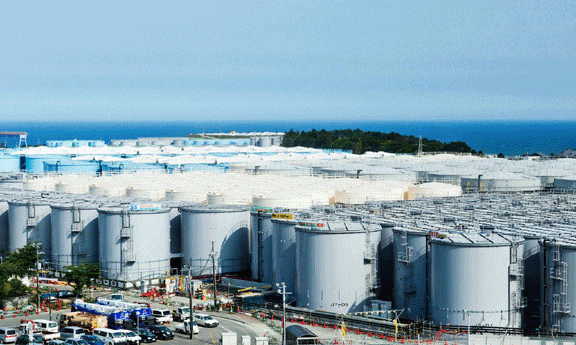
The water has also created a waste-management nightmare because Tepco must pump it out into holding tanks as quickly as it enters the buildings, to prevent it from overflowing into the Pacific. The company says that it has built more than 1,000 tanks that now hold more than 800,000 tons of radioactive water, enough to fill more than 320 Olympic-size swimming pools.
On a recent visit to the plant, workers were busily erecting more durable, welded tanks to replace the temporary ones thrown up in a hurry during the early years after the accident, some of which have leaked. Every available patch of space on the sprawling plant grounds now appears to be filled with 95-foot tanks.
“We have to escape from this cycle of ever more water building up inside the plant,” said Yuichi Okamura, a general manager of Tepco’s nuclear power division who guided a reporter through Fukushima Daiichi. About 7,000 workers are employed in the cleanup.
The ice wall is a high-technology bid to break that cycle by installing what might be the world’s largest freezer. Continue reading
Niigata prefecture governor Hirohiko Izumida not seeking re-election: new hope for restarting Fukushima nuclear plant
 New Hope For The Fukushima Nuclear Power Plant, Oil Price, By Zainab Calcuttawala – Aug 31, 2016 Tokyo Electric Power Co. Holdings Inc.’s (TEPCO) plan to restart the defunct Fukushima nuclear power plant has an increased chance of being implemented after the prefecture governor, who has campaigned against its reopening, decided against running for re-election, according to a new report by Bloomberg.
TEPCO shares rose as much as 12 percent Wednesday morning – the largest price jump since May 2015, presumably in reaction to the announcement.
Niigata prefecture governor Hirohiko Izumida said he would not pursue a bid for a fourth term for the October 16th elections, according to a personal statement posted on his fan page.
The governor has long opposed plans to return the Kashiwazaki-Kariwa nuclear power plant – the largest of its kind in the world – to production. Japanese laws do not require that utility companies obtain the approval of local leaders before commencing operations, but it is the expected practice.
Izumida has previously demanded that TEPCO conduct further investigations into the causes of the triple meltdown at the Fukushima Dai-Ichi plant in 2011 before proposing plans to restart any of the firm’s reactors.
“The next Niigata governor will likely not make as many relentless demands as Izumida,” Japanese analyst Hidetoshi Shioda said…….
The New York Times reported on Monday that Japanese government has funded the construction of a $320 million block of man-made permafrost that would continue 100 feet underneath the Dai-Ichi plant to solve “an unrelenting flood of groundwater” that had been headed into the damaged reactors.
The project will stop the leak of radioactive water into the Pacific Ocean, which may be continuing at low levels to this day, The Times said.
TEPCO has applied to return reactors No. 6 and 7 to production at Kashiwazaki-Kariwa. The company expects to boost profits by $97 million a month for each reactor it restarts, TEPCO spokesperson Tatsuhiro Yamagishi said earlier this week. http://oilprice.com/Latest-Energy-News/World-News/New-Hope-For-The-Fukushima-Nuclear-Power-Plant.html
TEPCO has applied to return reactors No. 6 and 7 to production at Kashiwazaki-Kariwa.
Tokyo Electric Power Co. Holdings Inc.’s (TEPCO) plan to restart the defunct Kashiwazaki-Kariwa nuclear power plant has an increased chance of being implemented after the prefecture governor, who has campaigned against its reopening, decided against running for re-election, according to a new report by Bloomberg.
TEPCO shares rose as much as 12 percent Wednesday morning – the largest price jump since May 2015, presumably in reaction to the announcement.
Niigata prefecture governor Hirohiko Izumida said he would not pursue a bid for a fourth term for the October 16th elections, according to a personal statement posted on his fan page.
The governor has long opposed plans to return the Kashiwazaki-Kariwa nuclear power plant – the largest of its kind in the world – to production. Japanese laws do not require that utility companies obtain the approval of local leaders before commencing operations, but it is the expected practice.
Izumida has previously demanded that TEPCO conduct further investigations into the causes of the triple meltdown at the Fukushima Dai-Ichi plant in 2011 before proposing plans to restart any of the firm’s reactors.
“The next Niigata governor will likely not make as many relentless demands as Izumida,” Japanese analyst Hidetoshi Shioda said.
According to the World Nuclear Association, the 2011 meltdown led to highly radioactive releases over days 4-6 after the incident originally occurred on March 11th.
The organization reports no deaths or cases of radiation sickness from the incident, though 100,000 citizens had been evacuated from the area to ensure minimal health effects.
The New York Times reported on Monday that Japanese government has funded the construction of a $320 million block of man-made permafrost that would continue 100 feet underneath the Dai-Ichi plant to solve “an unrelenting flood of groundwater” that had been headed into the damaged reactors.
The project will stop the leak of radioactive water into the Pacific Ocean, which may be continuing at low levels to this day, The Times said.
TEPCO has applied to return reactors No. 6 and 7 to production at Kashiwazaki-Kariwa. The company expects to boost profits by $97 million a month for each reactor it restarts, TEPCO spokesperson Tatsuhiro Yamagishi said earlier this week.
New Hope For Nuclear Power In Japan: http://oilprice.com/Latest-Energy-News/World-News/New-Hope-For-The-Fukushima-Nuclear-Power-Plant.html
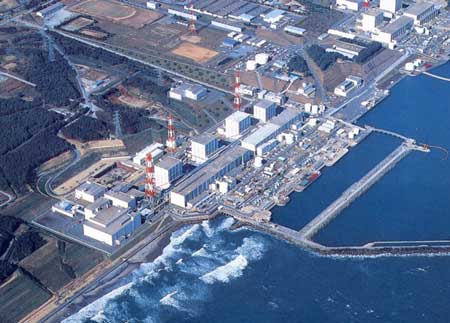
Post-scriptum: A factually incorrect article published at OilPrice.com (Update: they have corrected the erroneous claim about restarting Fukushima Daiichi but left a photo of Fukushima Daiichi on their somewhat corrected story a copy of the original version can be found here) has begun propagating across the internet. TEPCO is NOT trying to restart reactors at Fukushima Daiichi.
Credit to Nancy Foust of Fukuleaks who caught the Oilprice incorrection: http://www.fukuleaks.org/web/?p=15719
Japan Extends Reactor Lifetimes for First Time Since Fukushima
Japan’s Nuclear Regulation Authority (NRA) this June approved 20-year license extensions for the aging Takahama 1 and 2 reactors, a first for the power-strapped country that has been conflicted about the future of its nuclear power plants since the Fukushima Daiichi catastrophe in 2011.
A regulatory system established in the aftermath of Fukushima limits the operating lives of Japanese nuclear units to 40 years, though it allows a one-time extension of no more than 20 years. The NRA’s approval to allow the 40-year-old Takahama 1 and 39-year-old Takahama 2 to operate an additional 20 years was carried out as an “extraordinary case.” Kansai Electric Power Co., which owns the two 826-MW reactors, filed applications for the extensions in April 2015, as well as for its 826-MW Mihama 3 reactor in November 2015, saying that they were “important” for its business.
Under its revised long-term energy plan, Japan anticipates getting between 20% and 22% of its total generated electricity from nuclear power by 2030, and industry groups like the Japan Atomic Industrial Forum have argued that the lifetime extensions will be integral to meeting that target.
Four of the nation’s nuclear power plants idled after Fukushima have so far cleared the new regulatory standards required to resume operations, but only Sendai 1 and 2, which are owned and operated by Kyushu Electric Power Co., are online. Kansai started up its Takahama 3 reactor on January 29 and Takahama 4 on February 26, but it took Unit 4 offline just three days later following a “main transformer/generator internal failure” (Figure 1). It was then forced to halt operations at Unit 3 on March 10 after Japan’s Otsu District Court issued a temporary injunction against the operation of both reactors because, the court said, the safety of the units could not be guaranteed. On July 12, Otsu District Court Judge Yoshihiko Yamamoto rejected Kansai’s request to lift the injunction. Kansai now says that—though it has filed to appeal the court’s decision to the Osaka High Court—it will begin removing nuclear fuel from the reactor cores.
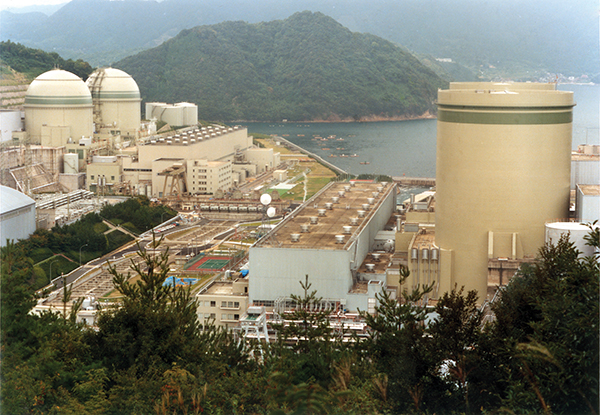
One step forward, two steps back. While Japan’s Kansai Electric Power Co. received Nuclear Regulation Authority approval to extend the lifetimes of Units 1 and 2 at its Takahama Nuclear Power Plant in Oi District, Fukui Prefecture, to 60 years, it has been forced to halt operations at Units 3 and 4 by a temporary injunction issued by a district court.
Meanwhile, applications for 22 more nuclear plant restarts have been filed with the NRA. According to a 2017 economic and energy outlook released by the Institute of Energy Economics of Japan (IEEJ) in late July, at least 12 nuclear power plants should be restarted next year. The research group notes, however, that those projections are clouded by a number of issues, including court judgments and local agreements. That uncertainty could come at a significant cost to the nation, it added.
“Because of the judicial ruling that ceased operations at the Takahama Unit No. 3 and 4, it is important to analyse the effect of stopping operations of nuclear power plants from a local point of view,” the IEEJ’s outlook says. “As a rule, if one nuclear plant with the capacity of 1 MW stops operation for one year in an area where annual demand is about 100 TWh, total fossil fuel costs increase by [$594 million] and the energy-related [carbon dioxide] emissions increases by 4 Mt-CO2 (7% increase for the local emissions). The average electricity unit cost will increase by [$3.96/MWh] (1.8% rise of the average power unit price).”
http://www.powermag.com/japan-extends-reactor-lifetimes-first-time-since-fukushima/
Damage caused only by misconceptions about the nuclear incident not by the nuclear accident itself, according to the Yomiuri Shimbun, a pro-government newspaper
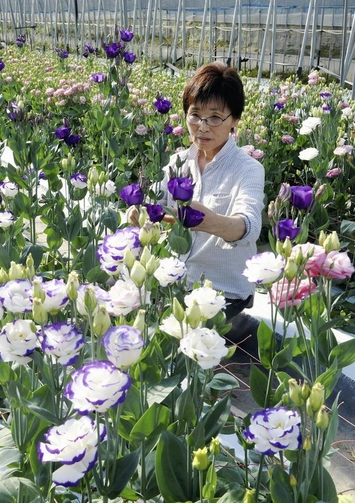
Fukushima farmers plant flowers to revive agriculture
Tomoko Horiuchi checks eustoma she grows in Minami-Soma, Fukushima Prefecture, in early August.
FUKUSHIMA — Farmers from Fukushima Prefecture’s municipalities who have received the government’s evacuation directives in the wake of the 2011 disaster at the Fukushima No. 1 nuclear power plant are cultivating flowers as a new agricultural business to rebuild their lives.
The climate in these areas is suited to growing colorful flowers, as it has abundant sunshine and a relatively large change in temperature between day and night.
After the nuclear crisis, the price of rice harvested in the prefecture has hovered at low levels because of the damaged perception of crops grown in the area.
But because growing flowers is less susceptible to damage caused by misconceptions about the nuclear incident, an increasing number of local farmers actively cultivate eustoma and other popular ornamental flowers.
Junichi Futatsuya, 65, from the Haramachi district in Minami-Soma, began cultivating eustoma in the spring of 2014 using an idle greenhouse where he used to raise rice seedlings. In 2015, a local agricultural cooperative that covers Minami-Soma formed a section to grow eustoma, with Futatsuya participating in the project. Membership has now grown to 25 people.
Stable prices
In July, the evacuation directives were lifted in most areas of Minami-Soma, and many farmers now sell their flowers in Tokyo in the hopes of gaining recognition for them in areas that are major markets.
Futatsuya, who restarted cultivating rice this year, said, “I’m expecting to secure income by growing rice and flowers.”
Kawasaki Flora Auction Market Co. trades in flowers produced by Futatsuya and other farmers from the prefecture.
“We don’t hear any dealers in the market saying they would shy away from the products because the flowers are produced in Fukushima Prefecture,” said Manabu Aishima, 49, a section chief of the Kawasaki-based company. “Farmers can expect all-year shipping with adequate investment in plants and equipment.”
Tomoko Horiuchi, 69, also grows eustoma in the district. She said she did not experience a wide fluctuation in prices before or after the crisis.
“It made me realize that flowers are not susceptible [to damage caused by misconceptions]. I would like fellow producers to increase to more stably supply flowers to the market,” she said.
Supporting ambition
Daytime entry is allowed in areas where evacuation directives have been issued as long as these areas are not designated as “difficult-to-return zones” due to high levels of radiation exposure.
In July last year, six farmers in the town of Namie formed a study group to grow flowers, and one of the farmers was able to grow and ship eustoma to customers.
The Namie town government plans to conduct a survey to find places suitable for flower cultivation and is considering consolidating greenhouses near the town office.
Meanwhile, in the village of Iitate, evacuation directives are scheduled to be lifted in most places at the end of March 2017. Four farmers will build greenhouses in the village to grow baby’s-breath flowers on a trial basis.
The Fukushima prefectural government is also financially supporting farmers if they build greenhouses and purchase equipment to make flower cultivation a new business in the Hamadori area, which is close to the nuclear plant.
“We’d like to support ambitious farmers,” said Masatoshi Kanno, vice chief of the prefectural government’s horticulture section.
Former senator pledges to support vets in Fukushima lawsuit
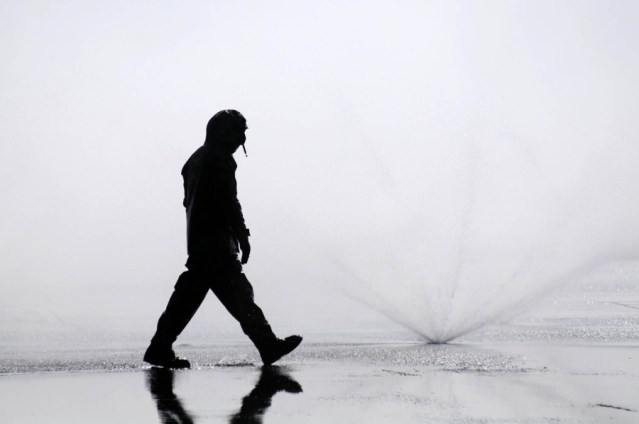
A sailor checks sprinklers on the flight deck of the aircraft carrier USS Ronald Reagan during Operation Tomodachi in 2011. Sailors scrubbed the external surfaces on the flight deck and island superstructure to remove potential radiation contamination.
Former Sen. John Edwards has pledged to support hundreds of U.S. sailors, Marines and airmen who say they were sickened by radioactive fallout from the 2011 disaster at the Fukushima Dai-ichi nuclear power plant.
U.S. forces participated in relief efforts after a 9.0-magnitude earthquake triggered a tsunami that battered swaths of northeastern Japan, including the plant.
Edwards — the 2004 Democratic nominee for vice president who ran for president that year and in 2008 — has offered his “legal and personal assistance” to the plaintiffs after hearing about their lawsuit against the Tokyo Electric Power Co., which operates the plant, according to a statement from the plaintiffs’ attorneys.

Former Sen. John Edwards arrives at the Federal courthouse in Greensboro, North Carolina, Tuesday, May 29, 2012.
The lawsuit against TEPCO and several other co-defendants, including General Electric, EBASCO, Toshiba Corp. and Hitachi, is scheduled to proceed to trial pending appeals. Oral arguments in the appeals case are due to begin Thursday in the 9th Circuit Federal Court in Pasadena, Calif. The plaintiffs’ lawyers don’t expect a ruling before November.
The plaintiffs maintain that TEPCO lied about the risk of radiation exposure, luring American forces closer to the affected areas and lulling others at bases across Japan into disregarding safety measures. The other defendants are accused of making faulty parts for reactors that contributed to Fukushima’s meltdown in March 2011.
The plaintiffs allege they have developed cancers, ulcers, uterine bleeding and thyroid issues as a result of radiation exposure. The U.S. government has said the radiation levels servicemembers encountered were too low to cause any maladies.
Edwards is now a partner at Edwards Kirby, a Raleigh law firm specializing in personal injury, economic justice and property rights. He could not be immediately be reached for comment.
News of Edwards’ support comes just months after another ex-politician, former Japanese Prime Minister Junichiro Koizumi, pledged his support after meeting with several of the plaintiffs during a visit to the United States.
In July, he called on his countrymen to donate to a fund for the plaintiffs, saying “it is not the kind of issue we can dismiss with just sympathy,” according to the Asahi Shimbun.
After Typhoon Lionrock landed in Fukushima
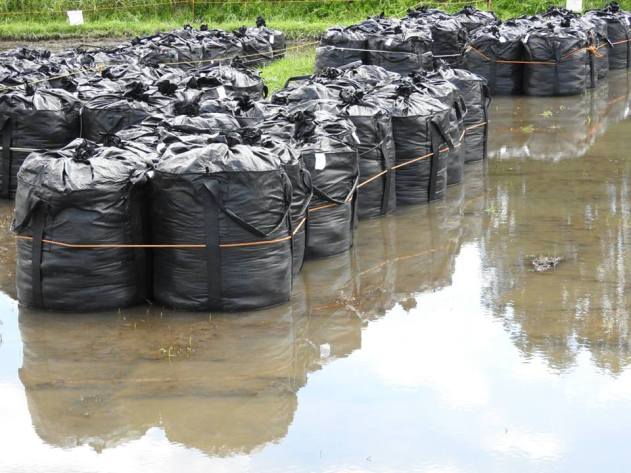

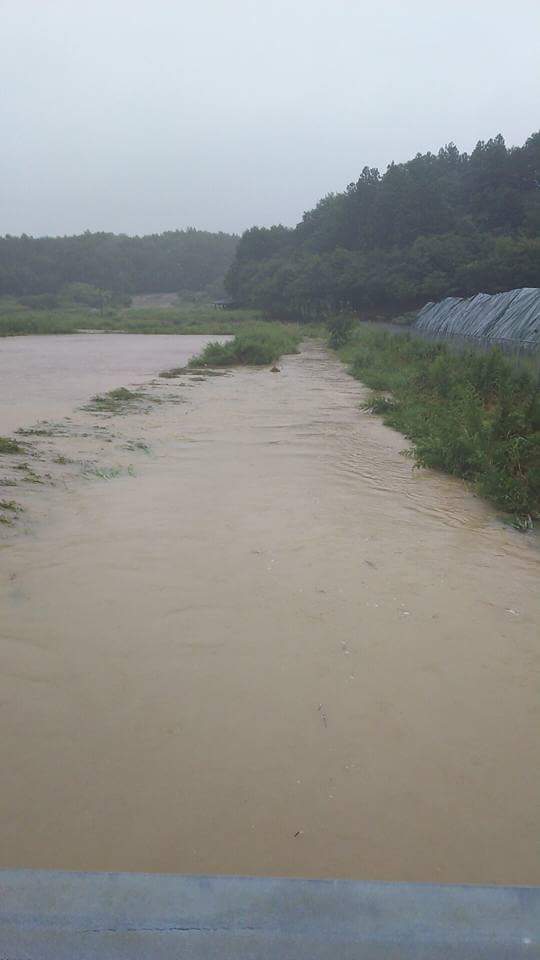
Flexible container bags filled with radioactive soil in flooded water in Iidate, Fukushima.
Credit to Hiroki Suzuki
Niigata Pref. Nuclear Power Opponent Governor Out of The Way
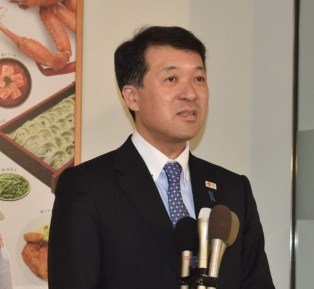
Was he pressured to drop out?
Hirohiko Izumida, governor of Niigata prefecture, said he won’t run for a fourth term and dropped out of the gubernatorial election scheduled for October 16.
The move may affect Tokyo Electric Power Co. Holdings Inc.’s efforts to restart its Kashiwazaki-Kariwa nuclear plant in the prefecture. According to Bloomberg, Tokyo Electric rose as much as 12 percent to 417 yen, the biggest intraday increase since May 2015, and traded at 394 yen at 9:32 a.m. Tokyo time. The Topix index rose as much as 1 percent.
Tepco Rises Most in Year After Governor Opposing Restart Retires
Tokyo Electric Power Co. Holdings Inc., operator of the wrecked Fukushima nuclear power plant, jumped the most in more than a year after a prefecture governor opposing the restart of one of its reactors abandoned his bid for re-election.
Tokyo Electric rose as much as 12 percent to 417 yen, the biggest intraday increase since May 2015, and traded at 394 yen at 9:32 a.m. Tokyo time. The Topix index rose as much as 1 percent.
Hirohiko Izumida, governor of Niigata prefecture, said he won’t run for a fourth term and dropped out of the gubernatorial election scheduled for October 16, according to a personal statement posted on a website of supporters. Izumida opposed Tokyo Electric’s plan to restart its Kashiwazaki-Kariwa nuclear power plant, the world’s largest facility, located in Niigata prefecture. Local government approval is typically sought by Japanese utilities before they restart nuclear reactors, though not required by law.
With Izumida out of the picture, the chance of Kashiwazaki-Kariwa’s reactors restarting has increased, said Hidetoshi Shioda, an analyst at SMBC Nikko Securities, who views the retirement as a positive for Tokyo Electric shares.
Izumida had demanded that Tokyo Electric further investigate the cause of the triple meltdown at its Fukushima Dai-Ichi plant in 2011 before restarting any reactors.
“The next Niigata governor will likely not make as many relentless demands as Izumida,” SMBC’s Shioda said.
Tepco, as the company is known, has applied to restart No. 6 and 7 reactors at Kashiwazaki-Kariwa. Running one reactor boosts Tepco’s profits by as much as 10 billion yen ($97 million) a month, company spokesman Tatsuhiro Yamagishi said Monday.
Niigata Pref. nuclear power opponent governor won’t stand for re-election
NIIGATA — Gov. Hirohiko Izumida has retracted his announcement that he will run in the upcoming gubernatorial election to seek a fourth term.
Since Izumida has adopted a cautious stance toward the restarting of the Kashiwazaki-Kariwa Nuclear Power Plant in Niigata Prefecture, his decision not to run in the election will likely have a huge impact on the issue. All seven reactors at the power station, owned by Tokyo Electric Power Co., have been idle since March 2012 in the wake of the 2011 Great East Japan Earthquake, tsunami and the ensuing crisis at the Fukushima No. 1 nuclear plant.
The campaign for the Oct. 16 Niigata gubernatorial election is to kick off on Sept. 29.
Izumida’s decision not to run in the election is linked to his criticism of a report in the Niigata Nippo regional daily over a dispute involving a subsidiary of a shipping company funded by the prefectural government.
In an interview with news organizations, Izumida said, “It’s important to have prefectural residents know the facts, but I feel my appeal never reached the residents. Even if I requested the newspaper to correct its report, the daily would never do so, which prompted me to abandon running in the race.”
At a prefectural assembly session in February this year, Izumida announced that he would run in the gubernatorial election to seek a fourth four-year term. However, his retraction of his candidacy leaves Nagaoka Mayor Tamio Mori, 67, who heads the Japan Association of City Mayors, as the only person who has announced his candidacy.
It came to light this past July that Japan Shipping Exchange Inc., an arbitration organization, had ordered a shipping company’s subsidiary funded by the prefectural government to pay 160 million yen to a South Korean company following a dispute over the purchase of a ferry.
The Niigata Nippo published a series of articles holding the Niigata Prefectural Government responsible for the case.
In response, the prefectural government has dismissed the accusations saying, “The daily’s coverage is incorrect,” and repeatedly urged the newspaper to correct its reports.
The Niigata Nippo is set to release a statement to express its views on the case.
http://mainichi.jp/english/articles/20160831/p2a/00m/0na/008000c
Storm slams northern Japan
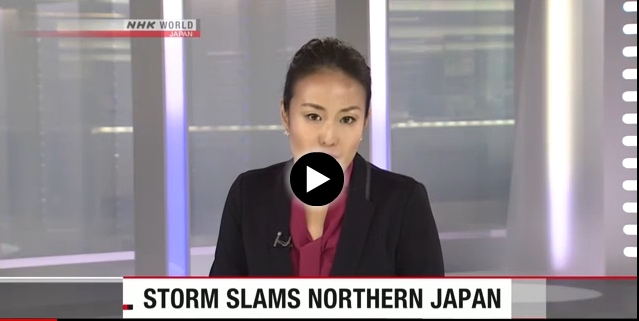
People in northern Japan are dealing with the aftereffects of a powerful storm.
Lionrock ripped through the region devastated by the 2011 earthquake and tsunami.
It has now moved out to the Sea of Japan and become a low pressure system.
People in Tohoku and the northern island of Hokkaido are dealing with heavy rains, strong winds and rough seas.
Officials also issued mudslide warnings.
They say many parts of the area had one month’s worth of rainfall in just 2 days.
The storm was the first typhoon to strike the Pacific side of Tohoku in recorded history.
Danger alert as Typhoon No. 10 lands in Tohoku
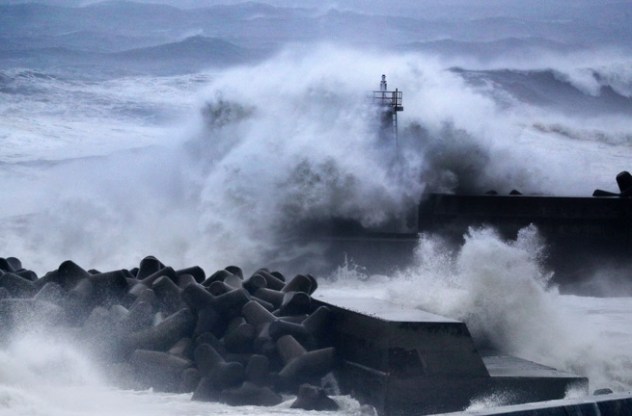
Violent waves crash against the shore in Iwaki, Fukushima Prefecture, as Typhoon No. 10 approaches the Tohoku region on the morning of Aug. 30.
Powerful Typhoon No. 10 struck the Tohoku region on the afternoon of Aug. 30 as expected.
The Japan Meteorological Agency has issued a warning to residents of potential record rainfall. The potent storm made landfall in Ofunato, Iwate Prefecture, shortly before 6 p.m. and was moving north-northwest at a speed of 50 kph as of 6 p.m., according to the agency. The atmospheric pressure at the center of the typhoon, known as Typhoon Lionrock outside Japan, was 970 hectopascals.
The sustained wind speed near the center was 108 kph, while gusts can increase up to 162 kph.
The storm is expected to accelerate and keep moving north-northwest, reaching areas northwest of Hirosaki, Aomori Prefecture, by nightfall. It will likely cut through the area into the Sea of Japan where it will then be termed an extratropical cyclone.
The northern part of the nation is expected to see heavy rainfall of more than 50 millimeters per hour on Aug. 30-31. With rain in some areas even likely to exceed 80 mm per hour, precipitation in northern Japan over the course of the two days could total the region’s average rainfall for the entire month of August.
Rainfall in the 24 hours until noon on Aug. 31 is expected to reach 250 mm in the Tohoku region and 200 mm in Hokkaido. The typhoon could bring on heavy rains in the region if the clouds are fed by the wet atmosphere located to the east of the nation.
As the intense rain could cause the radioactive groundwater accumulated on the premises of the crippled Fukushima No. 1 nuclear power plant in coastal Fukushima Prefecture to overflow, operator Tokyo Electric Power Co. is pumping more groundwater from the wells at the facility than usual.
The utility said that groundwater levels are still up by about 20 centimeters since Typhoon No. 9, or Typhoon Mindulle, traveled through the Tohoku region on Aug. 22.
No. 10 is the first typhoon to make landfall in the Tohoku region from the Pacific Ocean side since the meteorological agency started keeping track of the storms in 1951.
http://www.asahi.com/ajw/articles/AJ201608300038.html
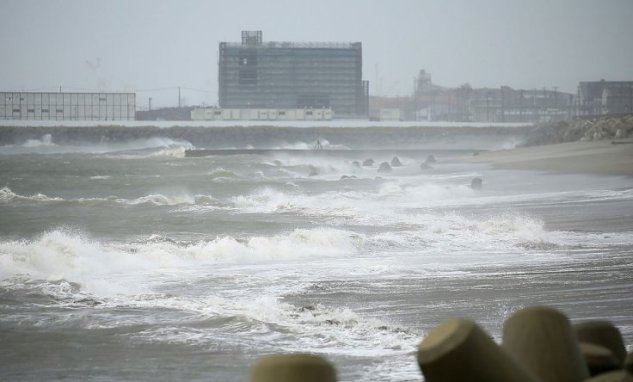
Powerful typhoon strikes region of Japan devasted by 2011 tsunami
Hundreds of flights have been grounded and work suspended at damaged Fukushima nuclear reactor.
A powerful typhoon has struck an area in north-eastern Japan devastated by the 2011 tsunami.
More than 100 flights have been grounded and evacuation warning issued for thousands of people as Typhoon Lionrock reached the north-eastern Tohoku region, with wind speeds of up to 126 km recorded on Tuesday evening (30 August).
In 2011, the region was devastated by an earthquake and tsunami, damaging the Fukushima nuclear reactor and leaving more than 18,000 people dead.
More than 170,000 people were subject to evacuation, including 38,000 in Ofunato, according to the Fire and Disaster Management Agency.
Approximately 10,000 homes in the northern region were without electricity, with power lines damaged from the winds, AP reported.
The typhoon was predicted to dump about 35 cm (14 inches) of rain on the north-eastern region by Wednesday morning, more than double the average rainfall for August, Reuters reported.
Airlines cancelled hundreds of flights to and from the northern region, while bullet train services to Tohoku and Hokkaido regions were suspended.
At Fukushima, some outdoor decommissioning work was suspended as the storm neared.
http://www.ibtimes.co.uk/powerful-typhoon-strikes-region-japan-devasted-by-2011-tsunami-1578738
Couple built home on top of radioactive soil due to inaccurate city sketch
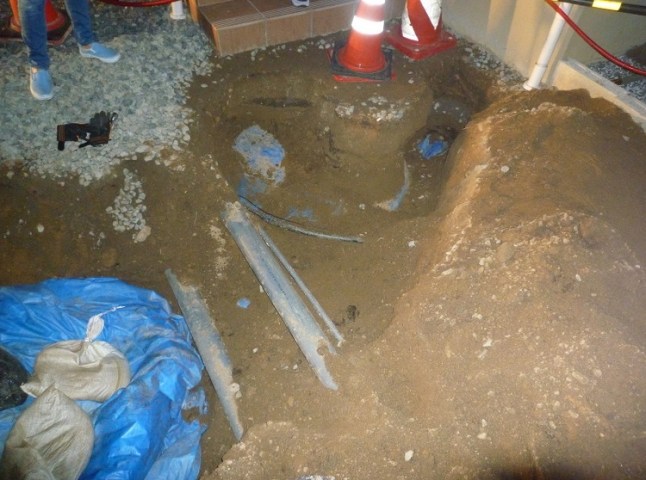
Parts of a flexible container bag buried under the couple’s home are seen at the top of this photo taken in Fukushima on Oct. 21, 2015.
FUKUSHIMA — A couple unknowingly built a new home in Fukushima on top of bags containing radioactive soil because they received an inaccurate waste storage sketch created by the Fukushima Municipal Government, it has been learned.
The couple has been unable to remove four flexible container bags of radioactive soil found buried under their home, as doing so could leave their house leaning. They say the city has not apologized.
“Far from admitting responsibility and apologizing, they haven’t even tried to examine the site. They have also been reluctant to release information, and have acted extremely insincerely,” a statement from the pair said.
The couple initially received a Fukushima Municipal Government sketch showing buried waste on a plot of land they purchased, but it contained no dimensions. About 66,000 similar sketches without dimensions have already been distributed, and it is possible that similar incidents could occur in the future as the storage of waste collected in the wake of the meltdowns at Tokyo Electric Power Co.’s Fukushima No. 1 Nuclear Power Plant becomes prolonged.
In five Fukushima prefectural municipalities, including the city of Fukushima, contaminated soil collected during decontamination work has mostly been stored onsite, while other local bodies have stored it at interim storage facilities. The city of Fukushima is the only one of the five municipalities to have handed landowners waste storage sketches without any dimensions. Those provided by the other four municipalities show dimensions. When land changes hands, the diagrams are normally handed from the previous landowner to the new one.
In November 2013, a man in Fukushima bought a 300-square-meter plot of decontaminated land, and received a “monitoring chart” from the previous landowner with a diagram showing where radioactive soil was buried, along with radiation measurements taken before and after the decontamination. Based on the diagram, the man built a new home, avoiding the northeast of the plot of land where the waste was shown to be buried.
However, when the city came to dig up the buried waste in October 2015, it was found that six flexible container bags with a total capacity of six cubic meters lay under the northeast part of the new home. Four of them could not be removed due to fears of the home being left leaning.
When the man made an official information request for documents on decontamination in May this year, he was given a diagram containing dimensions. This showed that the waste was buried several dozen centimeters closer to the southwest, nearer the center of the plot of land. The man says the actual burial spot was even further toward the center.
A Fukushima Municipal Government official said the purpose of the diagram without dimensions was to display the amount of radiation, and that the burial spot it showed was only a rough indication. The municipal government said the basis of the diagram with dimensions, on the other hand, was different, being used to record the burial spot of waste under the Act on Special Measures Concerning the Handling of Radioactive Pollution.
A city official commented that the decontaminated soil was supposed to be removed quickly and the officials had not expected it to be there until the time a land transaction was made and a home built. The city is considering replacing about 26,000 diagrams that are due to be distributed with ones that show dimensions. It is also considering publicly informing people that the diagrams that have been issued without dimensions are not accurate indications of where waste is buried.
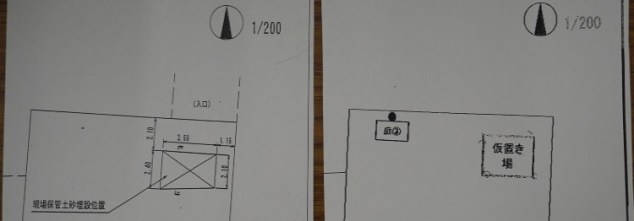
This photo shows the diagram with dimensions, left, and the one without. The No. 3 marking on the second diagram is where radiation levels were measured.
http://mainichi.jp/english/articles/20160829/p2a/00m/0na/011000c
Japan considers scrapping fast-breeder reactor as costs mount

The government is considering scrapping the troubled Monju fast-breeder reactor after calculating that readying it for restart would cost several hundred billion yen, sources said Monday.
A political decision on decommissioning the reactor is now in sight, with Chief Cabinet Secretary Yoshihide Suga joining talks to determine its fate, the sources said.
The facility in Fukui Prefecture has been beset by safety problems and has only been operational for a total of 250 days since it first went critical in 1994.
Decommissioning Monju would deal a serious blow to the nation’s vaunted fuel cycle policy, in which the reactor was designed to play a central role. The plan is to develop a commercial fast-breeder reactor that produces more plutonium than it consumes.
The science ministry has been trying to find a new entity to run the reactor, which is currently operated by the government-backed Japan Atomic Energy Agency.
The ministry was ordered to do this by the Nuclear Regulation Authority in November, after the NRA expressed exasperation with the operator’s consistent failure to make the plant a success.
Nuclear safety has been a hot-button issue in Japan in the wake of the disaster in 2011 at the Fukushima No. 1 nuclear plant.
The ministry has been consulting a panel of energy experts on whether to keep Monju alive or to scrap it but has failed to identify a new entity to take over management.
In either case, substantial amounts of money are needed. The agency estimated in 2012 that it would cost around ¥300 billion to scrap the reactor in a process lasting over 30 years.
Safety problems included a major fire caused by a sodium leak in 1995.
The total of 250 operational days has come at a cost of more than ¥1 trillion in building and maintenance costs.
If Monju restarts operations, the ministry says its fuel must be replaced. In the event of a restart, new guidelines for fast-breeder reactors must also be created and any related construction will have to reflect these guidelines.
Making the building’s facilities meet the new guidelines will likely cost nearly ¥100 billion, the sources said, adding there would be further expenses for replacing old equipment.
Public Cost of Fukushima Cleanup Tops $628 Billion and Is Expected to Climb
Meanwhile, problems still persist at the nuclear plant, most notably with the ‘highly contaminated’ water being stored in tanks at the site

That includes costs for radioactive decontamination and compensation payments, the Japan Times reported.
The public cost of cleaning up the 2011 Fukushima Daiichi nuclear plant disaster topped ¥4.2 trillion (roughly $628 billion) as of March, and is expected to keep climbing, the Japan Times reported on Sunday.
That includes costs for radioactive decontamination and compensation payments. Tokyo Electric Power Company (TEPCO) will sell off its shares to eventually pay back the cost of decontamination and waste disposal, but the Environment Ministry expects that the overall price of those activities could exceed what TEPCO would get for its shares.
Meanwhile, the taxpayer burden is expected to increase and TEPCO is asking for additional help from the government.
The Times reports:
The government estimates the proceeds from TEPCO share sale at ¥2.5 trillion, but to generate the estimated gain, the TEPCO stock price needs to trade at around ¥1,050, up sharply from current market levels of some ¥360.
In addition, the Environment Ministry expects that the cumulative total of decontamination and related costs could surpass the estimated share proceeds by the March 2017 end of the current fiscal year.
[….] TEPCO and six other power utilities charged their customers at least ¥327 billion in electricity rate hikes after Japan’s worst-ever nuclear accident. Moreover, consumers paid ¥219.3 billion or more for TEPCO, chiefly to finance the maintenance of equipment to clean up radioactive water at the plant and the operation of call centers to deal with inquiries about compensation payments.
Moreover, as Deutsche Welle noted on Monday, problems still persist at the nuclear plant, most notably with the “highly contaminated” water being stored in tanks at the site.
“There are numerous problems that are all interconnected, but one of the biggest that we are facing at the moment is the highly contaminated water that is being stored in huge steel tanks at the site,” Aileen Mioko-Smith, an anti-nuclear activist with the group Green Action Japan, told DW. “They are running out of space at the site to put these tanks, the water that is being generated on a daily basis means they have to keep constructing more, and the ones that are not welded have a history of leaking.”
“The situation with contaminated water at the site is a ticking time bomb and they don’t seem to know what they can do—other than to construct more tanks,” she said.
Typhoon No. 10 barrels toward Kanto and Tohoku, Fukushima Daiichi included
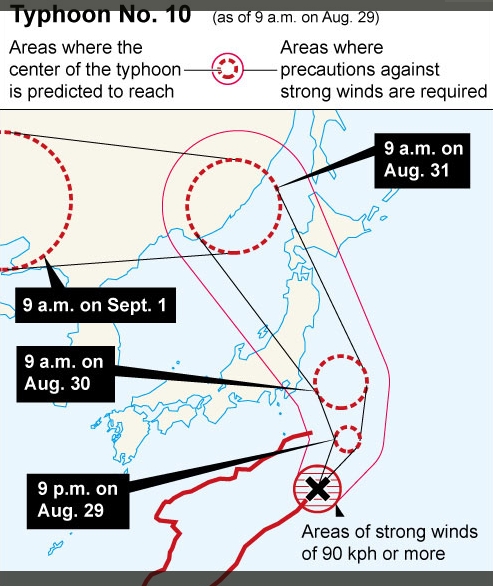
Powerful Typhoon No. 10 is expected to be the first typhoon in at least 65 years to make landfall in the Tohoku region from the Pacific Ocean side on the evening of Aug. 30.
The Japan Meteorological Agency is warning that heavy rains of 80 millimeters or more per hour are expected to fall in some parts of northern Japan, including Tohoku.
The agency is also advising commuters in the Kanto region to take precautions against strong winds and heavy rain on the morning of Aug. 30.
As of noon on Aug. 29, Typhoon No. 10 was advancing in the waters about 340 kilometers southeast of Hachijojima island at a speed of 25 kph. The atmospheric pressure at the center of the typhoon was 945 hectopascals. The maximum wind speed near the center was 162 kph. The maximum momentary wind speed was 216 kph.
Typhoon No. 10 is expected to reach waters about 360 km southeast of Choshi, Chiba Prefecture, in the morning on Aug. 30, although it is expected to slightly weaken by that time.
The typhoon is forecast to make landfall on the Tohoku region later that day and move to the Sea of Japan before dawn on Aug. 31, the agency said.
According to the agency, no typhoons have landed on the Tohoku region from the Pacific Ocean side since statistics became available in 1951.
In the period from Aug. 29 to Aug. 30, the maximum wind speed is expected to be 126 kph in the Tohoku region and 82.8 kph in the Hokkaido and Kanto regions.
The amount of rainfall during the 24-hour period until the morning of Aug. 30 is predicted to be up to 200 mm in the Tohoku and Kanto regions and Yamanashi and Nagano prefectures.
http://www.asahi.com/ajw/articles/AJ201608290030.html
Fukushima nuclear plant prepares for typhoon
The operator of the troubled Fukushima Daiichi nuclear power plant is preparing for the powerful Typhoon Lionrock.
Tokyo Electric Power Company says on Monday workers secured electric cables and hoses.
TEPCO says on Tuesday it will suspend work with cranes and other operations at the plant’s port, which could bear the brunt of strong winds and waves. Depending on weather conditions, the firm may also call off outdoor work in other areas.
It says when the most recent typhoon approached last week, heavy rain caused underground water levels to rise and threatened to flush contaminated water into the harbor.
Workers are arranging pumps to draw up more ground water, and setting up additional pumps at wells used to observe water levels.
There were concerns in the past that a downpour brought by a typhoon could cause contaminated rain water to flow through a drainage channel into the ocean.
To address these fears, TEPCO rerouted the drainage system into the plant’s inside port. It also raised the levels of barriers around tanks that store tainted water.
http://www3.nhk.or.jp/nhkworld/en/news/20160829_22/
Nearing typhoon halts work at Fukushima Daiichi
Workers at the troubled Fukushima Daiichi nuclear plant have suspended some of the decommissioning work and are bracing for rain and winds from a powerful typhoon.
Typhoon Lionrock is expected to make landfall along Japan’s northeastern coast on Tuesday afternoon, passing off Fukushima Prefecture.
Tokyo Electric Power Company says workers secured electric cables and hoses on the plant compound on Monday.
On Tuesday, the operator suspended work at the plant’s port. It also stopped the operation of a crane being used to demolish a temporary cover over one of the reactor buildings. Officials say they are closely watching to make sure the cover is not blown off by the typhoon.
TEPCO says it has also taken measures to prevent contaminated rain water and groundwater from leaking into the ocean.
In past typhoons, it was thought that contaminated rainwater flowed into the ocean through a drainage system. There were also concerns that radioactive groundwater might leak into the ocean as rain could increase the groundwater in the compound.
This time the operator has installed stronger pumps and increased their number.
The utility says as of 11 AM Tuesday, there were no changes in groundwater levels at the plant’s site.
Other measures taken earlier include rerouting the drainage system into the plant’s port instead of directly into the ocean. TEPCO also raised the barriers around tanks that store tainted water.
1 This Month
26 September – International Day for the Total Elimination of Nuclear Weapons





PLEASE OPPOSE HR 8255 AND S.3639 – bills would accelerate satellite deployment, with no environmental review or safeguards – https://ncstd5li.quorum.us/campaign/169331/
To see nuclear-related stories in greater depth and intensity – go to https://nuclearinformation.wordpress.com
-
Archives
- September 2026 (313)
- August 2026 (330)
- July 2026 (355)
- June 2026 (287)
- May 2026 (306)
- April 2026 (356)
- March 2026 (251)
- February 2026 (267)
- January 2026 (308)
- December 2025 (358)
- November 2025 (359)
- October 2025 (375)
-
Categories
- 1
- 1 NUCLEAR ISSUES
- business and costs
- climate change
- culture and arts
- ENERGY
- environment
- health
- history
- indigenous issues
- Legal
- marketing of nuclear
- media
- opposition to nuclear
- PERSONAL STORIES
- politics
- politics international
- Religion and ethics
- safety
- secrets,lies and civil liberties
- spinbuster
- technology
- Uranium
- wastes
- weapons and war
- Women
- 2 WORLD
- ACTION
- AFRICA
- Atrocities
- AUSTRALIA
- Christina's notes
- Christina's themes
- culture and arts
- Events
- Fuk 2022
- Fuk 2023
- Fukushima 2017
- Fukushima 2018
- fukushima 2019
- Fukushima 2020
- Fukushima 2021
- general
- global warming
- Humour (God we need it)
- Nuclear
- RARE EARTHS
- Reference
- resources – print
- Resources -audiovicual
- Weekly Newsletter
- World
- World Nuclear
- YouTube
-
RSS
Entries RSS
Comments RSS

