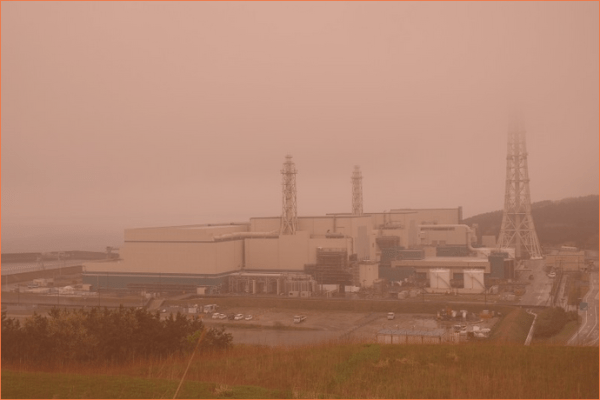
The No. 3 and No. 4 reactors at Kansai Electric Power Co.’s Oi nuclear plant in Oi, Fukui Prefecture
Fukui gives OK to restart of Kansai Electric’s Oi nuclear plant
FUKUI–Kansai Electric Power Co. has cleared all hurdles toward restarting two reactors at its Oi nuclear power plant early next year after gaining the consent of the prefectural governor here Nov. 27.
The utility plans to resume operations of the No. 3 and No. 4 reactors in January and March, respectively.
“I have agreed to the restart after taking into account the position of the Oi town government and Fukui prefectural assembly, as well as the response by the central government and the operator of the plant concerning our request to have an interim storage site for spent nuclear fuel to be built outside the prefecture,” Governor Issei Nishikawa told reporters here the same day.
Nishikawa signed off on Kansai Electric’s request following similar moves by the town government of Oi, which hosts the Oi nuclear plant, the town assembly and the prefectural assembly.
In response to the governor’s request concerning the storage site, Shigeki Iwane, president of Kansai Electric, has already pledged to offer a proposed alternative site next year.
Industry minister Hiroshige Seko, too, vowed that the central government will be involved in drawing up the plan.
Nishikawa pushed for the construction of the interim storage facility outside the prefecture as a condition to agreeing to the restart of the Oi plant.
Five reactors are now operating in Japan after clearing new nuclear regulations established in the aftermath of the 2011 Fukushima nuclear disaster.
Two of the reactors are at Kansai Electric’s Takahama plant in Fukui Prefecture.
The Fukui District Court, citing safety concerns, ordered a halt to the operations of Oi’s No. 3 and No. 4 reactors in May 2014.
But Kansai Electric appealed the decision and has since been gearing up to restart the units.
FUKUI, Japan (Kyodo) — Fukui Gov. Issei Nishikawa on Monday gave the go-ahead for Kansai Electric Power Co. to restart two reactors at its Oi nuclear power plant in the central Japan prefecture.
With Fukui also hosting Kansai Electric’s Takahama plant where two reactors have already resumed operation, the planned restart of the Nos. 3 and 4 reactors at the Oi complex would make the prefecture the first since the 2011 Fukushima nuclear disaster to have two active nuclear power plants.
The governor conveyed the decision to Economy, Trade and Industry Minister Hiroshige Seko over the phone Monday.
The Osaka-based utility plans to bring the No. 3 reactor back online in mid-January and restart the No. 4 unit in mid-March.
The two reactors located on the Sea of Japan coast resumed operation in July 2012 under tentative nuclear safety standards set by the then-Democratic Party of Japan government while all other reactors in the country remained idle for checks following the meltdowns at the Fukushima Daiichi complex.
The two reactors at the Oi complex went offline in September 2013 for regular checkups and cleared the Nuclear Regulation Authority’s safety review based on the country’s post-Fukushima screening standards in May.
The Fukui governor’s approval of the restart came after Kansai Electric President Shigeki Iwane said Thursday the utility would decide by the end of 2018 where to set up a storage facility for spent nuclear fuel.
The governor had been requesting the utility’s construction plan for the facility.
Speaking at a press conference, Nishikawa said he has come to the decision after “comprehensively considering opinions of our town and prefectural assemblies as well as responses of the government and the plant operator to an idea of setting up an interim storage facility outside our prefecture.”
The central government is yet to pick a final disposal site for nuclear waste, including spent fuel.
Chief Cabinet Secretary Yohihide Suga said in a separate press conference it is “extremely meaningful” that the plan to restart the two reactors in Oi has now received approval from the hosting prefecture’s governor.
Suga, however, declined to clarify the government’s stance on the opposition voiced by Taizo Mikazuki, governor of neighboring Shiga Prefecture.
About 20 antinuclear activists gathered in front of the Fukui prefectural government office Monday to show their opposition to the decision.
Jiku Miyazaki, a 73-year-old temple master in Oi, expressed concerns about whether residents can safely evacuate if a nuclear accident occurs.
“Under the current conditions, we won’t be able to evacuate,” Miyazaki said, citing troubles residents encounter when typhoons strike the region.
“We want them to take measures in view of the possibility of the two nuclear plants having accidents at the same time.”
Some residents hope for the economic benefits that an influx of plant workers could promise local businesses.
A man in his 50s said, “Our life here is depending on (the plant). As long as the governor judges it is safe, we need it to be restarted or we will be in trouble.”
Academic paper: “Increases in perinatal mortality in prefectures contaminated by the Fukushima nuclear power plant accident in Japan” Source Institute: 医療問題研究会
Authors and copyright: Hagen Heinrich Scherb, Dr rer nat Dipl-Matha,∗, Kuniyoshi Mori, MDb, Keiji Hayashi, MDcEditor: Roman Leischik.
Abstract:
Descriptive observational studies showed upward jumps in secular European perinatal mortality trends after Chernobyl.
The question arises whether the Fukushima nuclear power plant accident entailed similar phenomena in Japan. For 47 prefectures representing 15.2 million births from 2001 to 2014, the Japanese government provides monthly statistics on 69,171 cases of perinatal death of the fetus or the newborn after 22 weeks of pregnancy to 7 days after birth.
Employing change-point methodology for detecting alterations in longitudinal data, we analyzed time trends in perinatal mortality in the Japanese prefectures stratified by exposure to estimate and test potential increases in perinatal death proportions after Fukushima possibly associated with the earthquake, the tsunami, or the estimated radiation exposure.
Areas with moderate to high levels of radiation were compared with less exposed and unaffected areas, as were highly contaminated areas hit versus untroubled by the earthquake and the tsunami. Ten months after the earthquake and tsunami and the subsequent nuclear accident, perinatal mortality in 6 severely contaminated prefectures jumped up from January 2012 onward: jump odds ratio 1.156; 95% confidence interval (1.061, 1.259), P-value 0.0009.
There were slight increases in areas with moderate levels of contamination and no increases in the rest of Japan.
In severely contaminated areas, the increases of perinatal mortality 10 months after Fukushima were essentially independent of the numbers of dead and missing due to the earthquake and the tsunami. Perinatal mortality in areas contaminated with radioactive substances started to increase 10 months after the nuclear accident relative to the prevailing and stable secular downward trend. These results are consistent with findings in Europe after Chernobyl.
“To revitalize Fukushima Prefecture”, signing of a technological cooperation agreement with NEDO (organization for the development of new energies and industrial technologies), for tests of drones and robots ; construction of a huge site of 50 hectares straddling the municipalities of Minamisoma and Namie …
Koriyama, Fukushima Pref., Nov. 22 (Jiji Press)–The New Energy and Industrial Technology Development Organization on Wednesday concluded a cooperation pact with the Fukushima prefectural government on the development of technologies for demonstration tests for drones and robots.
The organization, better known as NEDO, aims to establish technologies to accurately measure the durability and safety of drones and robots, utilizing the Fukushima Robot Test Field, a planned large test site over 50 hectares that straddles the city of Minamisoma and the town of Namie in a coastal region in the northeastern Japan prefecture.
The Fukushima government is building the site as part of efforts to revitalize the coastal region, devastated by the March 2011 earthquake and tsunami and the subsequent nuclear accident at Tokyo Electric Power Company Holdings Inc.’s <9501> Fukushima No. 1 power plant. The test site will partly enter into service in fiscal 2018.
Various demonstration tests will be conducted there, such as one to check a robot’s capabilities to conduct underwater inspections of old dams using a 7-meter-deep pool.
NEDO plans to develop technology to check whether drones can fly stably in strong wind. For this, the central government-linked organization will use a wind tunnel facility to be set up in the site.
Reactor buildings at the Kashiwazaki-Kariwa nuclear plant are seen in this file photo taken in Kashiwazaki, Niigata Prefecture, on April 26, 2017.
Sixty holes violating the Building Standards Act were found recently in firewalls at the Kashiwazaki-Kariwa nuclear plant in Niigata Prefecture, in addition to two similar holes found in July this year, plant operator Tokyo Electric Power Co. (TEPCO) announced Nov. 22.
Of the 60 holes, 49 date back to the 1980s when the No. 1 reactor building was built, revealing administrative agencies’ lack of consideration for proper construction management.
Reactor buildings have several thousand holes in them for pipes. Of these holes, those going through firewalls are required to have any gaps filled in with mortar caulk or other nonflammable material. In July, TEPCO found two holes in a firewall in the No. 2 reactor building that had not been properly filled in. A subsequent inspection of the entire plant found that 60 holes had not been filled in — a building code violation — of which 41 were in radiation-control areas.
The power company will begin taking countermeasures, such as filling the holes in, as early as the beginning of the New Year. “At the time the reactor buildings were built, our awareness of the risks was insufficient,” TEPCO spokesperson Yoshimi Hitosugi said.
Aging Tokai No. 2 nuclear plant should be decommissioned http://www.asahi.com/ajw/articles/AJ201711240017.html November 24, 2017 Japan Atomic Power Co.’s Tokai No. 2 nuclear power plant in Tokai, Ibaraki Prefecture, seems doomed to be decommissioned given the strong doubts and practical difficulties surrounding the company’s plan to restart the reactor at the plant.
Japan Atomic Power plans to apply to the Nuclear Regulation Authority to extend the operating life of the idled reactor at the plant beyond the legal life span of 40 years in principle.
The currently offline reactor will reach the end of its legal life span in one year. The operator is seeking to persuade the NRA to make an exception of the reactor for bringing it back on line.
It has been estimated that the required safety measures will cost the company at least 170 billion yen ($1.52 billion). In an unusual move, the nuclear safety watchdog has told Japan Atomic Power, which is on a fragile financial footing, to come up with a workable plan to raise the funds to finance the measures.
With the local communities and governments around the plant struggling to develop required plans for emergency evacuations, there is strong skepticism about the feasibility of the company’s plan to restart the reactor.
Since there is little chance of the company’s other reactors being restarted, the fate of Japan Atomic Power hinges on whether the Tokai No. 2 plant will be allowed to come on stream again.
But that doesn’t justify taking it as a given that the company will get the green light for restarting the reactor. Japan Atomic Power, the major electric utilities with major stakes in the company and the Ministry of Economy, Trade and Industry, which regulates the power industry, should carefully reassess the future of the company without assuming that the reactor will start running again.
The 40-year legal life for nuclear reactors is an important rule to reduce the risk of accidents involving aging reactors. It was introduced following the disastrous accident at the Fukushima No. 1 nuclear power plant in 2011.
The operational life can be extended by up to 20 years if approved by the NRA.
When the law was revised, however, the government said such extensions would be highly exceptional cases.
But Kansai Electric Power Co.’s applications for life extensions for its three aging reactors have all been approved.
If the Tokai No. 2 plant is added to the list, the rule will move closer to becoming a dead letter.
There are no special reasons for restarting the old reactor, such as a serious risk of a power shortage.
Japan Atomic Power’s plan should not be given a go-ahead simply to help the embattled company.
The Tokai No. 2 plant is located at the northern tip of the Tokyo metropolitan area. Some 960,000 people live within 30 kilometers from the plant, more than in any other 30-km radius of a nuclear plant. Local governments located within the zone are required to develop evacuation plans.
It is obviously difficult to secure safe evacuation routes, facilities to accept evacuees and the means to transport them for the entire 30-km zone around the plant.
None of the 14 municipalities that are subject to the requirement has worked out an evacuation plan.
The outlook for local government support for the plan is also dismal.
The government of Ibaraki Prefecture and the mayor of Tokai intend to base their decisions on local public opinion as to whether to give their consent to the plan.
Recent Asahi Shimbun surveys of local voters found that opponents to the plan far outnumbered supporters.
Five other cities around the plant are demanding the consent rights similar to those given to Tokai in order to take part in the decision-making process.
Japan Atomic Power and the major utilities that own the firm should confront these realities.
The utilities that are under contract to buy electricity from Japan Atomic Power continue paying more than 100 billion yen of basic fees in total every year even though the company currently generates no power to sell with all its reactors out of operation.
It should not be forgotten that the money comes from the electricity bills paid by consumers.
It has been proposed that Japan Atomic Power should serve as a vehicle for the consolidation of the power industry driven by the decommissioning of aged nuclear reactors.
Instead of simply shelving the problem, the parties involved should accelerate their efforts to map out a viable future for the company.
Six Years After Fukushima, Robots Finally Find Reactors’ Melted Uranium The Japanese government and companies used radiation-hardened machines to search for the fuel that escaped the plant’s ruined reactors. By MARTIN FACKLER. NY Times 19 Nov 17 “……As officials became more confident about managing the disaster, they began a search for the missing fuel. Scientists and engineers built radiation-resistant robots like the Manbo and a device like a huge X-ray machine that uses exotic space particles called muons to see the reactors’ innards.
Now that engineers say they have found the fuel, officials of the government and the utility that runs the plant hope to sway public opinion. Six and a half years after the accident spewed radiation over northern Japan, and at one point seemed to endanger Tokyo, the officials hope to persuade a skeptical world that the plant has moved out of post-disaster crisis mode and into something much less threatening: cleanup……..
Tepco is keen to portray the plant as one big industrial cleanup site. About 7,000 people work here, building new water storage tanks, moving radioactive debris to a new disposal site, and erecting enormous scaffoldings over reactor buildings torn apart by the huge hydrogen explosions that occurred during the accident…….
The government admits that cleaning up the plant will take at least another three to four decades and tens of billions of dollars. A $100 million research center has been built nearby to help scientists and engineers develop a new generation of robots to enter the reactor buildings and scoop up the melted fuel.
At Chernobyl, the Soviets simply entombed the charred reactor in concrete after the deadly 1986 accident. But Japan has pledged to dismantle the Fukushima plant and decontaminate the surrounding countryside, which was home to about 160,000 people who were evacuated after accident.
Many of them have been allowed to return as the rural towns around the plant have been decontaminated. But without at least starting a cleanup of the plant itself, officials admit they will find it difficult to convince the public that the accident is truly over.
They also hope that beginning the cleanup will help them win the public’s consent to restart Japan’s undamaged nuclear plants, most of which remain shut down since the disaster……..
Engineers are developing the new radiation-resistant robots at the Naraha Remote Technology Development Center. It includes a hangar-sized building to hold full-scale mock-ups of the plant and a virtual-reality room that simulates the interiors of the reactor buildings, including locations of known debris.
Japan Atomic Power in dire straits after diverting funds, Asahi Shimbun, By TSUNEO SASAI/ Staff Writer, November 17, 2017
Japan Atomic Power Co. has diverted so much of its decommissioning funds to build new reactors that it now lacks enough cash to scrap its aging units or even resume operations of existing ones. The problem-plagued company is banking on a decision by the Nuclear Regulation Authority, but even that might not be sufficient to save it financially.
The Ministry of Economy, Trade and Industry requires nuclear power plant operators to accumulate decommissioning funds every year based on their estimated costs to scrap reactors.
The ministry’s guidelines, however, do not prohibit the companies from temporarily using the accumulated money for other purposes.
According to calculations, Japan Atomic Power should have saved around 180 billion yen ($1.6 billion) to decommission its four nuclear reactors. The company declined to give details about how much of decommissioning fund was used for other purposes. However, a person familiar with the situation said the operator “diverted the majority.”
That leaves Japan Atomic Power without the necessary funds to carry out its plans to decommission its one-reactor Tokai nuclear plant in Ibaraki Prefecture, and the No. 1 reactor at its Tsuruga nuclear plant in Fukui Prefecture.
The company’s two other reactors–the reactor at the Tokai No. 2 nuclear plant and the No. 2 reactor at the Tsuruga plant–are off-line. To survive the financial crunch, Japan Atomic Power will soon apply to the NRA to extend the operating life of the idled Tokai No. 2 nuclear plant reactor. That reactor will reach its 40th year of operation in November 2018. Even if the NRA approves the 20-year extension, the company does not have the 174 billion yen needed to improve safety measures at the reactor to bring it online.
An active geological fault line was found running directly beneath the No. 2 reactor building at the Tsuruga nuclear plant, meaning a resumption of reactor operations there is nowhere in sight.
Japan Atomic Power decided to use decommissioning funds to cover costs to build the Tsuruga No. 3 and No. 4 reactors in a bid to curb borrowing from financial institutions, according to several sources.
However, that decision was made before disaster struck at the Fukushima No. 1 nuclear power plant in March 2011.
A U.N. body has called on Japan to take steps to better protect press freedoms as concerns about the country’s laws aimed at curtailing leaks of state secrets could hinder the work of journalists.
In another of the 218 non-legally binding recommendations on Japan’s human rights record released by the U.N. Human Rights Council’s working group, Tokyo was urged to apologize and pay compensation to “comfort women” forced to work in Japan’s World War II military brothels.
The recommendations reflected the views of some 105 countries. Of the issues raised, the U.N. council will adopt those that have been accepted by the country in question at a plenary session around March 2018.
In relation to freedom of the press in Japan, the recommendation called on the country to amend Article 4 of the broadcasting law that gives the government authority to suspend broadcasting licenses of TV stations not considered “politically fair.”
Japan had already attracted criticism, in particular from David Kaye, U.N. special rapporteur on the right to freedom of opinion and expression, over its law called the Act on the Protection of Specially Designated Secrets, which came into force in 2014.
Under the law, civil servants or others who leak designated secrets could face up to 10 years in prison, and those who instigate leaks, including journalists, could be subject to prison terms of up to five years.
In his report, Kaye noted that the law may be arbitrarily enforced as subcategories under which information may be designated as secret are “overly broad.”
On the issue of “comfort women,” raised at the request of South Korea and China, the recommendation urged Japan to promote fair and accurate historical education, including the women’s stories, and to apologize and compensate victims.
The recommendation also said Japan should abolish or suspend the death penalty, reflecting calls from European Union countries, and continue to provide support to those affected by the Fukushima nuclear crisis caused by the massive 2011 earthquake and tsunami. In particular, a directive to address health issues faced by pregnant mothers and children was noted.
The U.N. Rights Council is mandated to “undertake a universal periodic review” of whether countries are meeting their human rights obligations and commitments.
The examination is conducted on all 193 members of the United Nations in periodic cycles of a few years. The latest review was the third for Japan.
In a show of power, Japan, US begin joint naval drills off Korean Peninsula Trump’s harsh rhetoric, coupled with the North Korean regime’s ongoing weapons tests, have escalated regional tension to unprecedented levels
IANS | Tokyo Business Standard, November 16, 2017Japan and the US on Thursday began joint naval drills south of the Korean Peninsula in a show of power against North Korea.
The US sent its nuclear-powered aircraft carrier Ronald Reagan, three destroyers and around 14,000 troops to participate in the drills that will be conducted until November 26 in waters near the Okinawa archipelago, the US Navy said in a statement cited by Efe news.
North Korea nuclear crisis: Japan bracing itself for influx of evacuees if war erupts
Coast Guard readies plans to escort boats from peninsula to designated ports as brinkmanship continues between Pyongyang and Washington The Independent, 16 Nov 17 Japan is studying plans to cope with an influx of perhaps tens of thousands of North Korean evacuees if a military or other crisis breaks out on the peninsula, including ways to weed out spies and terrorists, a domestic newspaper said.
The Japan Coast Guard would escort boats fleeing North Korea to designated ports, where police would screen them by checking their identity and possible criminal records and expel those deemed a threat, The Yomiuri newspaper said on Thursday.
It did not say where those people would be sent, however.
Evacuees granted temporary entrance would be transferred to emergency detention centres, probably in southern Japan, after completing quarantine and other procedures.
Officials would then decide whether they were eligible to remain in Japan, The Yomiuri said.
Regional tension over Pyongyang’s missile and nuclear arms programmes remain high.
PAWB is proud to announce a new partnership with Friends of the Earth Japan
in the campaign to oppose Hitachi’s plans to build two huge nuclear
reactors at Wylfa. To confirm the partnership, Ayumi Fukakusa from Friends
of the Earth Japan will be visiting Ynys Môn and Gwynedd between November
18 and20. During her visit, Ayumi will discuss their campaigning in Japan
against exporting Hitachi and Toshiba nuclear technology to Wales and
England. She will also explain how their campaign focusses on halting JBIC,
Japan Bank for International Cooperation and NEXI, Nippon Export and
Investment Insurance finance and insurance for nuclear power projects
outside Japan. http://stop-wylfa.org/wp/
The equipment, weighing 72 tons, was lifted up to the upper part of the plant’s No. 3 reactor using two large cranes.
The pool, located on a floor 36 meters above the ground, holds a total of 566 spent and unused nuclear fuel assemblies. Tepco plans to begin removing the fuel from the storage pool in the middle of fiscal 2018.
The installation work was originally slated to start Saturday, but was postponed due to strong winds.
With the device, the fuel assemblies will be moved from the pool to sturdy containers, which will be tightly sealed to block any emissions of strong radiation.
The work will be conducted in the water-filled pool, and then the containers will be then lowered to the ground using a different crane and transferred to another pool some distance from the reactor, where they will be stored.
The building housing the No. 3 reactor was heavily damaged by a hydrogen explosion that occurred shortly after the power station was knocked out by the tsunami following the magnitude 9 earthquake in March 2011.
After debris from the blast was removed from the upper part of the No. 3 reactor, Tepco started work in late July this year to install a cover on top of the reactor to shield the fuel-removing equipment from weather damage and prevent radioactive materials from spreading.
The crane to be used for lowering the fuel containers to the ground is slated to be installed in the upper part of the reactor on Nov. 20.
Informal Labour, Local Citizens and the Tokyo Electric Fukushima Daiichi Nuclear Crisis: Responses to Neoliberal Disaster Management, ANU, Adam Broinowski, 7 Nov 17,
Sworn to secrecy,12 after a superficial safety education drill, they are sent into highly contaminated, hot and wet labyrinthine areas.
Irregular workers’ oral contracts with tehaishi are often illegal or dangerous, and are sometimes imposed on workers through threats or use of force.
Over the past 40 years, poor monitoring and record-keeping has meant that many former nuclear workers who develop leukaemia and other illnesses have been denied government compensation due to their lawyers’ inability to prove the etiological link between their disease and employment.
Informal Labour, Local Citizens and the Tokyo Electric Fukushima Daiichi Nuclear Crisis: Responses to Neoliberal Disaster Management, ANU, Adam Broinowski, 7 Nov 17, “…
Conditions for Informal Labour Employed in Nuclear Power Stations The phenomenon of assembling and recruiting a relatively unskilled labour pool at the cheapest rate possible is typical in nearly all of Japan’s large-scale modern industrial projects in the 20th century. As early as the late 19th century, however, non-criminal homeless men were recruited for such projects, whether forced, coerced or voluntarily from the major day-labourer (hiyatoi rōdōsha 日雇い労働者) sites (yoseba) established in Sanya (Tokyo), Kotobuki (Yokohama), Kamagasaki (Osaka) and Sasashima (Nagoya). In pre–World War II and wartime Japan, yakuzatehaishi (手配師 labour recruiters) operated forced labour camps known as takobeya (たこ部屋 octopus rooms) for Korean and Chinese labourers who had been transported to work mainly in coal mines and on construction sites.6………
The rapid build of nuclear power stations was planned in the 1960s by a consortium of major investment banks, electric utilities and construction companies and/or industry manufacturers (Mitsubishi, Tōshiba, Hitachi, Sumitomo, etc.), and was carried out in the 1970s, with increased momentum in response to the oil crisis of 1974–76. Through an intensive ‘regional development’ program of rural industrialisation from the early 1970s, politically disempowered communities were targeted as potential cheap labour as their environs were designated as sites for nuclear projects by investment capital. In a combination of regulatory capture and economic dependency, utilities moved in to provide employment opportunities to communities while the same communities steadily lost control over their resources and subsistence economies. In the process, they lost political agency as their political representatives often received corporate and state inducements for these projects. As TEPCO owns the electricity distribution system in Fukushima Prefecture, which includes hydroelectric and thermal power stations as well as nuclear, and is a major employer and investor in Fukushima Prefecture,10 it has considerable sway in the political process as well as over electricity bills.
By the early 1980s, irregular workers came to comprise nearly 90 per cent of all nuclear workers.11As nuclear reactors grow increasingly contaminated and corroded by radiation over time, informal labour became fodder for regular maintenance, cleaning, repairing and/or venting and refuelling of these nuclear reactors to reduce exposures to permanent company employees such as scientists and engineers. As the power station must be halted during the maintenance period, this period equates to a lack of production and profitability and is kept to a bare minimum by the operators, an approach that led to a litany of safety oversights and accidents.
Although provided less training, informal nuclear workers are paid higher over a shorter employment period than regular workers, whose insurance is taken out of their wage. Sworn to secrecy,12 after a superficial safety education drill, they are sent into highly contaminated, hot and wet labyrinthine areas. Their work includes scrubbing contaminated areas, installing shields to reduce exposure for skilled workers, decontaminating and repairing pipes and tanks, welding, transporting contaminated materials and waste, washing contaminated uniforms and tools, removing filters and clearing garbage, inspecting gauges in high-level areas, dispersing chemicals over nuclear waste piles, pouring high-level liquid waste into drums and mopping up waste water. Although radioprotection regulations have been tightened in the last decade, working conditions for irregular workers have not necessarily improved and, without sufficient information about radiation danger, they can still be exposed to over 1 millisievert (mSv) of external radiation within minutes in high concentration areas and accumulate large amounts of internal radiation.13
Since 3.11, invoking the International Commission on Radiological Protection’s (ICRPs) often-used ALARA (as low as reasonably allowable) principle to justify this regulatory contingency, the state also raised nuclear workers’ limits from no more than 50 mSv per year (mSv/y) and 100 mSv/5 years to 250 mSv/y to deal with emergency conditions, and determined that there would be no follow-up health treatment for those exposed to doses below 50 mSv/y, while TEPCO decided to not record radiation levels below 2 mSv/y in the misplaced justification that the effects would be negligible. In December 2011, ‘cold shutdown’ was (erroneously) declared and the workers’ limit was returned to 100 mSv/5 years. It will likely be raised again as the government expedites decommissioning to meet its estimated completion by 2030–2050.14 Although very few regular workers’ cumulative doses exceeded 20 mSv/y in any year prior to 3.11, by June 2015 the official number rose to 6,64215 with doses of irregular nuclear workers often un(der)counted.
In a fast-track 40-year plan to decommission Fukushima Daiichi (i.e. removing the cores and dismantling the plant), as of August 2015 roughly 45,000 irregular workers (‘front-line’ workers, or ‘nuclear gypsies’) had been assembled at the J-Village Iwaki-Naraha soccer stadium before entering the sites. As well as jobs at the power stations, they work on decontamination and construction sites throughout the prefecture, which include those designated for the 2020 Olympics, a new school in Futaba (the town nearest to FDNPS), a large centre for radiation monitoring, a large research and training institute for reactor decommissioning, and a giant sea wall for tsunami prevention (see also Chapter Five). Yakuza-linked labour brokers (tehaishi/ninpu-dashi), eager to profit from the post-3.11 decommissioning budget (conservatively estimated at $150 billion), use social media and oral contracts to recruit these workers from the most vulnerable populations for ‘clean up’ work.16 In this customary cascade of diluted responsibility, their original wage and conditions are skimmed or cut away (pinhane sareta ピンハネされた) by contractors (roughly 733 companies) so that some irregular workers receive as little as 6,000 yen per day and only a very small fraction of the 10,000 yen per day in danger money promised by the Ministry of the Environment (MoE) and TEPCO.17
Irregular workers’ oral contracts with tehaishi are often illegal or dangerous, and are sometimes imposed on workers through threats or use of force.18 In addition, the day labourer may become indebted to tehaishi for housing and/or loans for lifestyle dependencies (i.e. gambling, drugs, prostitution). As products of structural discrimination, itinerant and/or irregular workers who are already socially isolated may find it difficult to build support networks, whether through marriage, family or solid friendships. Obligated within a semi-legal economy and stripped of rights and protections, each worker is pitted against the other, young and old, stronger and weaker, individual and family man, for basic survival.
Over the past 40 years, poor monitoring and record-keeping has meant that many former nuclear workers who develop leukaemia and other illnesses have been denied government compensation due to their lawyers’ inability to prove the etiological link between their disease and employment. For example, the death of Yoshida Masao (58), the Fukushima Daiichi manager who was among the ‘Fukushima 50’ who remained at the plant to manage the nuclear meltdowns in their critical phase and who developed oesophagal cancer in 2013, was not recognised by TEPCO as related to radiation exposure from Fukushima Daiichi as the cancer was deemed to have developed too quickly after the initial accident.
Irregular nuclear workers have commonly relied on permanent employees to monitor, record and calibrate their doses. Denied sufficient information about radiation exposure risks, and preferring not to jeopardise their contracts and provoke physical intimidation if they complain about their conditions, many collude with company officers (who record their accumulated doses) to camouflage and underestimate their dose rates (particularly for internal doses). This allows them to extend their time and contracts at nuclear plants before they are deemed to have reached (or exceeded) the maximum annual dose limit (50 mSv/y).19 When a nuclear worker is diagnosed with abnormalities in a routine check-up, some subcontractors may falsify nuclear workers’ passbooks.20 Despite the long lives of internalised radionuclides, it has been customary either not to measure this properly and/or to simply reset the dose record at the end of each financial year.
While protective clothing and procedures have grown more stringent for nuclear workers, especially after some workers died and fell ill from heat-related causes, irregular workers remain far less protected.22 At Fukushima Daiichi, where crews are overworked and understaffed, irregular workers often commit errors leading to cases of serious injury and large leaks of radioactive materials into the environment. This is further compounded by the lack of understanding or recognition of chronic illnesses in either permanent or irregular nuclear workers. This has sometimes led to poorly explained deaths of nuclear workers.23
In October 2015, a welder in his late 30s and father of three from Kita-Kyushu became the first worker in four years to be awarded workers’ insurance payments (medical costs and loss of income for temporary disability) while three more cases remained undecided. He was diagnosed with acute myelogenous leukaemia after having accumulated 19.8 mSv/y from exposure to a radiation leak and one year’s work at Fukushima Daiichi (Reactors 3 and 4) and the Genkai nuclear plant (Kyushu) (both of which use MOX fuel).24 While compensation was recognised under nuclear workers’ compensation insurance legislation (1976), the Health Ministry maintained that a causal link between illness and employment remains to be scientifically proven. After the delayed report by TEPCO of 1,973 workers exposed to over 100 mSv/y by mid-2013, by August 2015 21,000 of the 45,000 irregular workers had been exposed to over 5 mSv/y and 9,000 workers to over 20 mSv/y.25TEPCO and the central government would certainly be worried about a spike in compensation claims.
Without a proper health regime, the permanent damage incurred by irregular nuclear workers far outweighs the value of their cheap labour power. With their use as filters as they move to each plant, as nuclear workers grow older and sicker they become less able to commodify their labour and are unlikely to receive proper treatment and/or compensation (due to insufficient data and high radiation safety limits among other things). Although the endless production of labour willing to take on this dangerous work and the devolution of responsibility and ambiguity around radiation health effects are used to justify the continuation of these practices, if workers are knowingly placed in harmful conditions the employer is in breach of a duty of care under the Labour Standards Law. As byproducts of a discriminatory industrial labour system, these irregular nuclear workers and their families, like many elsewhere, are deprived of basic rights to health and well-being. As one labourer stated in relation to Fukushima Daiichi:‘TEPCO is God. The main contractors are kings, and we are slaves’.26 In short, Fukushima Daiichi clearly illustrates the social reproduction, exploitation and disposability of informal labour, in the state protection of capital, corporations and their assets….http://press-files.anu.edu.au/downloads/press/n2335/html/ch06.xhtml?referer=2335&page=11
it is not surprising that the overwhelming emphasis in scientific studies and public reports has been placed on psychological impacts rather than disease and deaths
Informal Labour, Local Citizens and the Tokyo Electric Fukushima Daiichi Nuclear Crisis: Responses to Neoliberal Disaster Management, Adam Broinowski , ANU 7 Nov 17
“….Official Medicine: The (Il)logic of Radiation Dosimetry
On what basis have these policies on radiation from Fukushima Daiichi been made? Instead of containing contamination, the authorities have mounted a concerted campaign to convince the public that it is safe to live with radiation in areas that should be considered uninhabitable and unusable according to internationally accepted standards. To do so, they have concealed from public knowledge the material conditions of radiation contamination so as to facilitate the return of the evacuee population to ‘normalcy’, or life as it was before 3.11. This position has been further supported by the International Atomic Energy Agency (IAEA), which stated annual doses of up to 20 mSv/y are safe for the total population including women and children.43 The World Health Organisation (WHO) and United Nations Scientific Commission on the Effects of Atomic Radiation (UNSCEAR) also asserted that there were no ‘immediate’ radiation related illnesses or deaths (genpatsu kanren shi 原発関連死) and declared the major health impact to be psychological.
While the central and prefectural governments have repeatedly reassured the public since the beginning of the disaster that there is no immediate health risk, in May 2011 access to official statistics for cancer-related illnesses (including leukaemia) in Fukushima and southern Miyagi prefectures was shut down. On 6 December 2013, the Special Secrets Protection Law (Tokutei Himitsu Hogo Hō 特定秘密保護法) aimed at restricting government employees and experts from giving journalists access to information deemed sensitive to national security was passed (effective December 2014). Passed at the same time was the Cancer Registration Law (Gan Tōroku Hō 癌登録法), which made it illegal to share medical data or information on radiation-related issues including evaluation of medical data obtained through screenings, and denied public access to certain medical records, with violations punishable with a 2 million yen fine or 5–10 years’ imprisonment. In January 2014, the IAEA, UNSCEAR and Fukushima Prefecture and Fukushima Medical University (FMU) signed a confidentiality agreement to control medical data on radiation. All medical personnel (hospitals) must submit data (mortality, morbidity, general illnesses from radiation exposures) to a central repository run by the FMU and IAEA.44 It is likely this data has been collected in the large Fukushima Centre for Environmental Creation, which opened in Minami-Sōma in late 2015 to communicate ‘accurate information on radiation to the public and dispel anxiety’.
This official position contrasts with the results of the first round of the Fukushima Health Management Survey (October 2011 – April 2015) of 370,000 young people (under 18 at the time of the disaster) in Fukushima prefecture since 3.11, as mandated in the Children and Disaster Victims Support Act (June 2012).45 The survey report admitted that paediatric thyroid cancers were ‘several tens of times larger’ (suitei sareruyūbyōsū ni kurabete sūjūbai no ōdā de ōi 推定される有病数に比べて数十倍のオーダーで多い) than the amount estimated.46 By 30 September 2015, as part of the second-round screening (April 2014–March 2016) to be conducted once every two years until the age of 20 and once every five years after 20, there were 15 additional confirmed thyroid cancers coming to a total of 152 malignant or suspected paediatric thyroid cancer cases with 115 surgically confirmed and 37 awaiting surgical confirmation. Almost all have been papillary thyroid cancer with only three as poorly differentiated thyroid cancer (these are no less dangerous). By June 2016, this had increased to 173 confirmed (131) or suspected (42) paediatric thyroid cancer cases.47
The National Cancer Research Center also estimated an increase of childhood thyroid cancer by 61 times, from the 2010 national average of 1–3 per million to 1 in 3,000 children. Other estimates of exposure to radiation, obtained from direct thyroid measurements in Namie town in April 2011, although discontinued under government pressure, also returned much higher results than official estimates (i.e. 80 per cent positive, 1 at 89 mSv, 5 over 50 mSv, 10 at 10mSv or under).48 In April 2014, Dr Tsuda Toshihide, an epidemiologist at Okayama University, declared this a ‘thyroid cancer epidemic’ (kōjōsendensenbyō 甲状腺伝染病), and predicted multiple illnesses from long-term internal radiation below 100 mSv/y and advocated for a program of outbreak (emergency or rapid) epidemiology in and outside Fukushima.49Similarly, a Tokyo-based physician, Dr Mita Shigeru, circulated a public statement notifying his colleagues of his intention to relocate his practice to Okayama due to overwhelming evidence of unusual symptoms in his patients (roughly 2,000). Given that soil in Tokyo post-Fukushima returned between 1,000 and 4,000 Bq/kg, as compared to an average of 500 Bq/kg (Cs 137 only) in Kiev soil, Mita pointed to a correlation between these symptoms and the significant radiation contamination in Tōhoku and metropolitan Tokyo.50
While results from the Fukushima Health Survey demonstrate flaws in the official dosimetry model and public safety campaign, the survey itself also has clear limitations. It is limited to subjects in a specific age bracket in one prefecture and one non-fatal illness (thyroid cancer, which can be treated with surgery but has lifelong side effects) from the ingestion of one radionuclide (Iodine 131) with a relatively short half-life (eight days) that comprised only 9.1 per cent of the total releases. Its dosimetry is based on the National Institute of Radiological Sciences (NIRS) model,51 which is for external exposure only, does not account for exposures in the initial days of the disaster and uses Japanese Government data that has been criticised for underestimating releases and exposures.52 Further, the survey ignores the damage from the bulk of the total inventory including longer-lived radionuclides (such as Plutonium 239, Caesium 137, Strontium 90, Americium 241, among others), some of which are more difficult to measure on ordinary and less sensitive Geiger counters and which have been distributed and continue to circulate across a wide area. It also ignores other organ diseases, unusual chronic illnesses and premature births and stillbirths, voluntary terminations and birth deformities occurring in and beyond Fukushima prefecture.
In addition to the control of relevant data, the government has used other methods to encourage residents to stay in radiation-contaminated areas. In May 2011, Dr Yamashita Shunichi, then co-director of Fukushima Medical University and the Fukushima Health Management Survey and a specialist from Nagasaki on radiation illness in Chernobyl, declared there was a 1 in 1 million chance of children getting any kind of cancer from radiation and there would be negligible health damage from radiation below 100 microSv/h, and prescribed smiling as an aid to living with radiation to a public audience in Fukushima.53
Dr Yamashita is only one among a host of politicians, bureaucrats, experts and advertising and media consultants who support the post-3.11 safety mantra of anshin (secure 安心), anzen (safe 安全), fukkō (recovery 復興). Through public meetings, media channels, education manuals and workshops,54 local citizens in Fukushima Prefecture were inundated with optimistic and reassuring messages, also known as ‘risk communication discourse’, and central and prefectural government-sponsored ‘health seminars’ encouraging a ‘practical radiation protection culture’ in which they have been urged to take responsibility (jiko sekinin 自己責任) for their own health (e.g. wearing glass badges, self-monitoring, avoiding hotspots), form bonds of solidarity (kizuna 絆) with their community and participate in the great reconstruction (fukkatsu 復活) for the revitalisation of a resilient nation (kyōjinka kokka 強靭化国家) as a whole. To counteract baseless rumours (ryūgen higo 流言蜚語) and the negative impact of gossip (fūhyō higai 風評被害) of radiation in contaminated Fukushima produce, citizens in and beyond Fukushima Prefecture, and even non-citizens, have been encouraged to buy and consume Fukushima produce as an expression of moral and economic support (through slogans such as ‘Ganbare Fukushima!’ がんばれ福島!). At the same time, to reduce ‘radiophobia’ and anxiety, while focusing on the psychological impact from stress, health risks from radiation exposures have been trivialised and/or normalised for the general public.55
This approach is backed up by international nuclear-related agencies. As stipulated on 28 May 1959 in the ‘WHA12-40’ agreement, the WHO is mandated to report all data on health effects from radiation exposures to the IAEA, which controls publication. On no other medical health issue is the WHO required to defer publication responsibilities to another institution. Scientific expertise at the IAEA primarily lies in nuclear physics (radiology and dosimetry) as opposed to epidemiology and medical expertise on radiation effects to living tissue. The IAEA and its related UN bodies are informed by the International Commission of Radiation Protection (ICRP) recommendations on radiation dose assessments derived from the Atomic Bomb Casualty Commission/Radiation Exposure Research Foundation (ABCC/RERF) lifetime studies of hibakusha (被爆者) in Hiroshima and Nagasaki. This dosimetry is primarily based on an average exposure of a 20–30-year-old ‘reference man’ (originally modelled on a US Army soldier) mainly to short-term one-off acute gamma radiation exposure. While it recommends caution, the ICRP continues to maintain that anything below 100 mSv/y is a ‘low dose’ and that the risk of ‘stochastic effects’ are yet to be scientifically proven beyond doubt. Within this framework, it would seem reasonable to raise the level from 1 to 20 mSv/y.
The ABCC/RERF studies ignored, however, biological contingencies of sex, age, constitution, other health conditions and the variegated effects (including complicating chemical and metabolic dynamics) from both internal and external exposures to different radionuclides of all types (‘low level’ internal radiation is at least 20 times greater). After Chernobyl, the WHO and IAEA used the ICRP dose model to conclude that there were up to 56 deaths of ‘liquidators’ (clean-up workers) from acute radiation sickness and 4,000 additional cancers;56 and that environmental effects such as lifestyle (i.e. parental alcoholism, smoking) and ‘radiophobia’ (stress and depression) contributed to excess illnesses in 80 per cent of adult cases. It also concluded that no harm would be received by the 2 million farmers and more than 500,000 children who continued living in radioactive areas in Belarus.
Nevertheless, it is no longer possible to ignore a significant body of research, including 20 years of scientific studies compiled in Belarus and Ukraine that show serious depopulation, ongoing illnesses and state decline.57 These studies have found genetic effects within a radius of 250–300 km from Chernobyl, while children’s health in Belarus has declined from a situation where 80 per cent of the child population was healthy prior to the Chernobyl disaster to a situation post-Chernobyl where only 20 per cent are healthy.58 In 1995, Professor Nechaev from the Ministry of Health and Medical Industry (Moscow) stated that 2.5 million people were irradiated from Chernobyl in the Russian Federation, the Ukrainian Prime Minister Marchuk stated that 3.1 million had been exposed to Chernobyl radiation and Professor Okeanov from Belarus observed a spike in leukaemia and cancers among liquidators in Gomel relative to duration of exposure.59 By 2001, of 800,000 healthy Russian and Ukrainian liquidators (with an average age of 33 years) sent to decontaminate, isolate and stabilise the reactor, 10 per cent had died and 30 per cent were disabled. By 2009, 120,000 liquidators had died, and an epidemic of chronic illness and genetic and perigenetic damage in nuclear workers’ descendants appeared (this is predicted to increase over subsequent generations).60 The full extent of the damage will not be understood until the fifth generation of descendants. By the mid-2000s, 985,000 additional deaths between 1986 and 2004 across Europe were estimated as a direct result from radiation exposure from Chernobyl.61
Given this background of regulatory capture and radical discrepancies in methods and estimates prior to the Fukushima disaster, it is less surprising that there may be a process of regulatory capture and cover up underway in response to Fukushima Daiichi. In December 2011, a Cabinet Office Working Group chaired by RERF chairman Nagataki Shigenobu consisted of 18 Japanese ICRP members (including Niwa Otsura and Yamashita Shunichi). The experts invited Mr Jacques Lochard to provide external expertise. Lochard is an economist, ICRP member, Director of the Center of Studies on the Evaluation of Protection in the Nuclear Field (CEPN) (funded by Electricité de France EDF), and co-director of the CORE-ETHOS Programme in Chernobyl (1996–1998).
The CORE (Cooperation and Rehabilitation in the Belarusian territories contaminated by Chernobyl) Programme organised a takeover of radioprotection health centres in Ukraine and Belarus, and delayed a health audit beyond five years while it produced the ETHOS report outlining a ‘sustainable system of post-radiological accident management for France and the European Union’.62 While local scientists (led by Yuri Bandazhevsky and Vassili Nesterenko) recommended whole body counts (WBC) for each child (in which 50,000 children would be tested with spectrometers), food measurement, dietary radioprotection (prophylaxis through adsorbents) and resettlement of those exposed to radiation over 1 mSv/y,63 the ETHOS manual concluded that in a similar radiological event in western Europe, resettlement would be restricted to those exposed to more than 100 mSv/y. By factoring in ‘social, economic and political’ costs, ETHOS proposed ways for populations to live with radiation, and identified psychosomatic illnesses derived from ‘stress’ based on unfounded fears (i.e. ‘radiophobia’) of radiation as the greatest health risk. After a prolonged delay, in 1996 the IAEA and WHO finally settled on 5 mSv/y as the mandatory evacuation limit in a compromise between the Soviet (1 mSv/y) and western European (100 mSv/y) recommendations after Chernobyl.64These agencies targeted ‘alarmist’ reports (including social protests) as encouraging ‘radiophobia’, stressing the psychological impacts of radiological events.
In post-3.11 Japan, the Japanese Cabinet Office Working Group65 reinforced the IAEA dosimetry regime by reiterating that cancers only emerge four to five years after exposure, that increases in cancers within this period could not be attributable to the accident,66 and that illnesses in people exposed to radiation below 100 mSv/y could be concealed by other carcinogenic effects and other factors (rendering them statistically negligible), and thus could not be proven to be radiation related. In fact, in July 2014, Nagataki Shigenobu declared that it would be ‘disastrous to conclude [from the survey findings] an increase in thyroid cancer’ was due to radiation exposure.67 Consequently, privileging a government study of the thyroid glands of 1,080 children in late March 2011 (a very small sample), Nagataki claimed that almost none had exceeded 50 mSv for internal exposure and that 99.8 per cent of the population in Fukushima Prefecture could be estimated to have received an external dose below 5 mSv. Nagataki dismissed the need for further medical screenings, regular check-ups or internal radiation tests (whole body counter, urine and blood tests) at hospitals and clinics in Fukushima Prefecture or elsewhere.
Instead, the government appears to have adopted the ETHOS model: ‘improving’ community life in radiation-contaminated areas through local education and support groups; encouraging proactive self-responsibility (i.e. self-monitoring with government monitors) for children and parents (including pregnant women); stamping out ‘stigma’ attached to ‘Fukushima’ residents, the area and its produce while stigmatising ‘radiophobia’; and encouraging evacuees’ return after and even prior to ‘decontamination’.68
By September 2015, an officially estimated 3,407 people (up from 3,194 the previous year) had died from ‘effects related to the great east Japan earthquake’ (Daishinsai kanren shi 大震災関連死).69 In March 2015, about 1,870 deaths of those who had evacuated due to the overall disaster were deemed to have been from ill-health and suicide. By March 2016, this had increased to 2,208 deaths, while 1,386 deaths were estimated to have been caused by effects related specifically to the nuclear disaster (genpatsu kanren shi).70 Further, a statistically significant 15 per cent drop in live births in Fukushima Prefecture in December 2011, and a 20 per cent spike in infant mortality were found to have been caused mainly by internal radiation from the consumption of contaminated food.71 Nor do statistics on abortions seem to have been factored into official accounts. As the statistics are so temporally specific, anxiety (disruption, evacuation) is unlikely to have been the major factor as the spikes would be more prolonged. It has also been extrapolated from the conservative UNSCEAR 2013 estimate of a 48,000 person Sv collective dose, that another 5,000 are expected to die from future cancers in Japan (and larger numbers to become ill).72 Using the Tondel model, however, the European Commission on Radiation Risk (ECRR), in contrast to the ICRP dose model, which estimates 2,838 excess cancers within 100 km radius over 50 years excluding internal radiation, estimated that 103,000 excess cancers within 100 km would be diagnosed within 10 years and 200,000 in the next 50 years.73
As with informal and formal nuclear workers, if these deaths were officially recognised as being tied to radiation from Fukushima Daiichi, then the family of the deceased as main income earner would be eligible for a 5 million yen ‘consolation’ payment (half for others). Further, it would also imply the need for stricter radiological protection standards and a greater number of permanent evacuations and official health treatment program that would effectively limit the so-called ‘benefits’ associated with nuclear power generation.74 In short, it is not surprising that the overwhelming emphasis in scientific studies and public reports has been placed on psychological impacts rather than disease and deaths (particularly but not limited to nuclear workers and children) and the argumentation over the significance of thyroid cancers. The same pattern occurred after Chernobyl and Three Mile Island……http://press-files.anu.edu.au/downloads/press/n2335/html/ch06.xhtml?referer=2335&page=11
the majority of people seem to have adopted denial as a way to excise the present danger from their consciousness.
In March 2015, Asami reported that doctors undertook paediatric thyroid operations while denying any correlation (inga kankei 因果関係) with radiation exposures. They also urged their patients to keep their thyroid cancer a secret to enhance their employment or marriage prospects, although it would be difficult to conceal the post-operation scar
While radiation contamination is clearly a health and environmental issue, state-corporate methods deployed by executives to protect (transnational) financial, industry and security interests and assets also make it a political issue.
information and communication control appears to be widespread. After 3.11, the central government hired advertising companies Dentsū and Hakuhōdō (formerly McCann Ericson Hakuhodo) to run a ‘public acceptance’ campaign.
Informal Labour, Local Citizens and the Tokyo Electric Fukushima Daiichi Nuclear Crisis: Responses to Neoliberal Disaster Management, ANU, Adam Broinowski, 7 Nov 17
“…..Local Responses to State–Corporate Suppression and Lack of Public Health Protection
Faced with the post-3.11 reality of government (and corporate) policy that protects economic and security interests over public health and well-being, the majority of the 2 million inhabitants of Fukushima Prefecture are either unconscious of or have been encouraged to accept living with radioactive contamination. People dry their clothes outside, drink local tap water and consume local food, swim in outdoor pools and the ocean, consume and sell their own produce or catches. Financial pressure after 3.11 as well as the persistent danger of social marginalisation has made it more difficult to take precautionary measures (i.e. permanent relocation, dual accommodation, importing food and water) and develop and share counter-narratives to the official message. Nevertheless, some continue to conceal their anxiety beneath a mask of superficial calm.
As Fukushima city resident Shiina Chieko observed, the majority of people seem to have adopted denial as a way to excise the present danger from their consciousness. Her sister-in-law, for example, ignored her son’s ‘continuous nosebleeds’, while her mother had decided that the community must endure by pretending that things were no different from pre-3.11 conditions.75 Unlike the claim that risk is evenly distributed, it is likely that greater risk is borne by those who eat processed foods from family restaurants and convenience stores, as well as infants, children and young women who are disproportionately vulnerable to internal radiation exposures. Most mothers, then, have an added burden to shield their children while maintaining a positive front in their family and community.
Some, such as Yokota Asami (40 years old), a small business owner and mother from Kōriyama (60 km from FDNPS), demonstrated initiative in voluntarily evacuating her family. She decided to return (wearing goggles and a mask, she joked) in September 2011 when her son’s regular and continuous nosebleeds (in 30-minute spells) subsided. The Yokotas found themselves the victims of bullying when they called attention to radiation dangers, and were labelled non-nationals (hikokumin 非国民) who had betrayed reconstruction efforts. Her son was the only one to put up his hand when he was asked along with 300 fellow junior high school students if he objected to eating locally produced school lunches. He also chose not to participate in outdoor exercise classes and to go on respite trips instead. When it came time to take the high school entrance exam, he was told by the school principal that those who took breaks could not pass. He took the exam and failed. When he asked to see his results he found that he had, in fact, enough points to pass (the cut-off was 156 while he received 198 out of 250 points). The Yokotas decided that it was better to be a ‘non-national’ and protect one’s health. Their son moved to live in Sapporo.76
In March 2015, Asami reported that doctors undertook paediatric thyroid operations while denying any correlation (inga kankei 因果関係) with radiation exposures. They also urged their patients to keep their thyroid cancer a secret to enhance their employment or marriage prospects, although it would be difficult to conceal the post-operation scar.77Yokota also indicated she knew of students having sudden heart attacks and developing leukaemia and other illnesses.78
This seems to be supported by Mr Ōkoshi, a Fukushima city resident, whose two daughters experienced stillbirths after 3.11. While Ōkoshi found that doctors have regularly advised women in the area to abort after 3.11, presumably to avoid miscarriages and defects, they do not discuss direct causes. He also observed regular illnesses experienced by many of his friends, and some sudden deaths. After a friend (62 years old) started saying strange things, he was diagnosed with brain dysfunction. He died quickly. Another friend (53 years old) was advised by a doctor to monitor a polyp in her breast. When she sought second opinions, she discovered she had accumulated an internal dose of 22 mSv and had a rapidly developing liver cancer. She also died quickly.79 There are many more such stories that are being actively ignored by the authorities. As Shiina put it, ‘we’re getting leukaemia and cataracts and we die suddenly. The TEPCO registrar has been inundated with complaints’.80
While radiation contamination is clearly a health and environmental issue, state-corporate methods deployed by executives to protect (transnational) financial, industry and security interests and assets also make it a political issue.81As things do not change by themselves, rather than turning one’s frustration inward in self-blame, turning to prayer or deceiving oneself into returning to pre-3.11 lifeways in contaminated areas, Shiina states that people, particularly those most affected, must develop political consciousness.
To achieve this ambitious objective is not as complicated as it might sound. Nishiyama Chikako (60 years old), for example, returned to Kawauchi village to run for the local assembly after the mandatory order was lifted in December 2011. She found, as she commented in her blog, a link between TEPCO and the tripling of the Kawauchi budget post-3.11. Subsequently, she reported that her blog was shut down by unknown hackers on several occasions.82
This sort of information and communication control appears to be widespread. After 3.11, the central government hired advertising companies Dentsū and Hakuhōdō (formerly McCann Ericson Hakuhodo) to run a ‘public acceptance’ campaign. Young teams were dispatched nationwide to conduct ‘public opinion guidance’ (yoron yūdō 世論誘導). The teams consisted of casual labour (earning 2,000–4,000 yen per hour) hired under a confidentiality clause (shuhi gimu 守秘義務) to manipulate information (jōhō kōsaku 情報工作) and harass internet users.83
Media professionals have been subjected to similar tactics. The Asahi TV journalist Iwaji Masaki (Hōdō Station), one of the few mainstream journalists covering the Fukushima Daiichi nuclear accident in depth, for example, was intimidated by police for interviewing (December 2012) informal nuclear workers who showed shoddy decontamination practices that entailed contaminated waste disposal rather than removal and the mother of a child with thyroid cancer. Airing the program was delayed until August 2013. Before he could complete his planned segments on the US$1 billion class action for compensation for unusual and serious illnesses filed against TEPCO, General Electric, Hitachi and Tōshiba in 2015 by sailors from the USS Ronald Reagan (which provided assistance quickly after the disaster, and among whose crew 250 were ill and three had died),84 on 29 September 2013, Iwaji was reportedly found dead in his apartment (having suffered carbon monoxide poisoning in a sealed room as he slept). Much speculation followed on social media, including both plausible reasons for suicide and testimonies from friends that knew him well that Iwaji himself stated he would never commit suicide, but the story was conspicuously ignored by major news channels.85
The former mayor of Futaba village Idogawa Katsuichi was harassed on social media for calling attention to illnesses and for the resettlement of pregnant women and children. When Kariya Tetsu characterised Idogawa in his popular manga series (Oishinbo 美味しんぼ), and depicted the manga’s main character as suffering from nosebleeds after visiting Fukushima, Kariya’s editors shut the series down following accusations of ‘spreading rumours’ from some readers, media commentators and high-level politicians. Similarly, Takenouchi Mari, a freelance journalist and mother who evacuated from Fukushima in 2011, received thousands of slanderous messages and threats to her two-year-old son and her property after criticising the co-founder of Fukushima ETHOS on her blog in mid-2012. She too reported that her internet account was suspended and her request for a police investigation ignored. She was counter-sued for harassment and subjected to a criminal investigation and civil law suit.86
Among the activists who have been arrested for anti-nuclear protests, the academic Shimoji Masaki of Hannan University (9 December 2012) was arrested by Osaka Prefectural Police and charged with ‘violating the Railway Operation Act’ for walking through an Osaka station concourse while participating in a demonstration against radioactive waste incineration (17 October 2012). Shimoji had reiterated that residents, due to radioactive incineration (which was due to commence in Osaka in February 2013), would be forced to bear the burden of air, food and water contamination.87
Despite such obstacles to developing a political consciousness as well as the obvious difficulties in permanently resettling large populations, it has been not only evacuees who have had to think about their fundamental life priorities after the Fukushima Daiichi nuclear distaster. Some have adopted real (not only psychological) self-protection mechanisms. The voluntary Fukushima Collective Health Clinic (Fukushima Kyōdō Shinryōjo 福島共同診療所), for example, is founded on three principles: respite (hoyō 保養), treatment (shinryō 診療) and healing (iryō 医療). Co-founder Dr Sugii, advocates a return to the 1 mSv/y limit, and seeks to inform those who for whatever reason cannot move from contaminated areas in Fukushima Prefecture.88 This is modelled on Belrad, the independent health clinic in Belarus run by Alexey Nesterenko, which prioritises knowledge, safety and open information on radiation and its health impacts.
To counteract the misinformation residents were exposed to post-Chernobyl, over time and with limited resources, Belrad and other organisations have disseminated information and organised respite trips for children in affected areas. In 2015, for example, subsidised respite trips were organised for 50,000 children, and results have shown that over two continuous years of respite those who accumulated 25–35 Bq/kg had reduced the amount to 0 Bq/kg. Unlike the flat limit of 100 Bq/kg of Caesium in food in Japan (50 Bq/kg for milk and infant foods, 10 Bq/kg for drinking water), Belrad recommends an internal radiation limit of 10–30 Bq/kg in the body (although it advises below 10 Bq for infants to avoid lesions and heart irregularities).89 It should be noted that these limits do not guarantee safety against the effects of repeating internal radiation exposure from consuming contaminated foods, which is relative to the length of time the radiation remains and its location in the body.
While some communities, such as the town of Aketo in Tanohama, Iwate Prefecture, have struggled to block the siting of nuclear waste storage facilities,90 others are also organising to reduce radio-accumulation in their children through respite trips,91 as well as concentrating on indoor activities, measuring hotspots and decontaminating public areas and pathways, pooling funds for expensive spectrometers to monitor internal exposure and food and water, incorporating dietary radioprotection, as well as finding ways to reduce anxiety.
Many local farmers cannot admit the already near-permanent damage to their land (which may continue for hundreds of years) because it would imply the devaluation of their property and produce as well as threatening their ancestral ties to the land, commitments and future plans. While many are keenly aware of their responsibilities, the push by the Fukushima and central governments to identify and gain access to markets for produce from irradiated areas would make it easier to overlook uncomfortable factors. Some have argued that given the reassurances of safety from the highest authorities, these offical figures should therefore relocate to contaminated areas and consume these products regularly. Despite the fairness of this statement, a more utilitarian logic has prevailed. In the name of reconstruction and revitalisation of Fukushima and the nation, the dilution of Fukushima produce with unirradiated produce to return measurements just under the required limits, radiation spikes in soil and food or the mutation of plants as Caesium replaces potassium (K40), for example, tend to be minimised. In this climate, the distribution and relabelling of Fukushima produce for urban and international markets (i.e. in a black market of cut-price bulk produce picked up by yakuza and other brokers) is likely to continue.
To date, the majority of evacuees have refused to return to (de)contaminated areas. Some claim they are yet to receive accurate information to justify it. Independent specialists such as Hosokawa Kōmei (Citizens’ Commission on Nuclear Energy), who develops models for transition to renewable alternatives, anticipate an increase in evacuee populations as they predict increased resettlement of Fukushima residents over 20–30 years.92 As some evacuees recognise the potential for second or third Fukushimas, they have sought to strengthen their collective identities and rights. Through local organisation and alternative life practices, whether in micro-scale ecovillages and transition towns93 with communal occupancies and squats, parallel currencies and local exchange systems (roughly 70 substantive projects), organic food co-ops, self-sufficient energy systems, local production and recycling, carpools and free kindergartens, such groups are seeking to reconstruct and model core social priorities, focusing on clean food, health and community cooperation rather than the internalised and dreary competition for material accumulation.
Although the accountability of authorities with prior knowledge has yet to be properly investigated, one of the largest groups of collective legal actions to be mounted in Japanese history includes some 20 lawsuits by 10,000 plaintiffs. The Fukushima genpatsu kokuso-dan (Group of Plaintiffs for Criminal Prosecution 福島原発告訴団), formed on 20 April 2012, filed a criminal case (lodged 3 September 2013, Fukushima District Court) against 33 previous and present officers of TEPCO, government officials and medical experts for ‘group irresponsibility’ and the neglect of duty of care, environmental damage and harm to human health. Mutō Ruiko, one of the key plaintiffs, declared the main aim to be symbolic: to publicly record injury, reclaim the victims’ sense of agency and protect the next generation. In short, they were seeking recognition of wrong and harm done rather than primarily financial redress. This moderate aim was undoubtedly tempered by recognition of regulatory capture: those who were cavalier with safety procedures ‘were now in charge of restarts; those responsible for the “safety” campaign were now in charge of the Health Survey; [there has been] no responsibility for the SPEEDI cover-up; and TEPCO is not being held responsible for [faulty] decontamination’.94
The judgement of this case was handed down at the Tokyo District Court on the same day as the announcement of Tokyo’s successful Olympics bid (9 September 2013). The case was dismissed on the grounds that the disaster was beyond predictability (sōteigai 想定外), which made negligence hypothetical.95 A citizens’ panel (Committee for inquest of Prosecution) overturned the dismissal and renewed the claim against three TEPCO executives on 18 December 2013. They demanded, alongside a ruling of negligence against three former TEPCO executives, the inclusion of physical, economic, social and psychological harms: illness, paediatric underdevelopment (radiation exposures, excessive isolation indoors), financial losses (unemployment, loss in property value, rental costs of two homes, relocation, travel, etc.), family and community division, ijime (bullying いじめ) and stress. Many plaintiffs also claimed that their disrupted reliance upon nature,96 as inviolable and precious,97 should be recognised as harm. This too was dismissed and again a citizen’s panel found against the three TEPCO executives.98In May 2015, 10 groups of plaintiffs formed a network named Hidanren (被弾連, Genpatsu Jiko Higaisha Dantai Renrakukai) comprising 20,000 people. The Fukushima kokuso-dan again made a claim to another citizens’ panel, which found in July 2015 in favour of indicting the three TEPCO executives for trial.99 In addition, a civil case filed in June 2015 by 4,000 plaintiffs from Iwaki seeking to prove negligence and not just harm sought to use previously withheld evidence to show fair warning of a 3.11-type scenario was given. This case focused the court on the operator’s calculation of risk probability of a tsunami of that size and, rather than aiming at financial compensation, it sought to deter nuclear operators from future negligent practices if ruled in favour. In anticipation of out-of-court settlements, the Japanese Government increased the budget for compensation payments to 7 trillion yen (US$56 billion)….http://press-files.anu.edu.au/downloads/press/n2335/html/ch06.xhtml?referer=2335&page=11