Japan’s former Prime Minister Junichiro Koizumi calls on opposition to challenge LDP’s nuclear policy
 Koizumi calls on opposition to challenge LDP’s nuclear policy, THE ASAHI SHIMBUN, July 24, 2018
Former Prime Minister Junichiro Koizumi has criticized the Abe administration for its pro-nuclear energy stance and called for the policy to be made an election issue when Japanese go to the polls next year.
In a recent interview with The Asahi Shimbun in Tokyo, Koizumi, 76, said, “It isn’t possible any more for Prime Minister Shinzo Abe to end nuclear power generation. He did not try to do so, even though he could have.”
Among extremely rare remarks for a former prime minister and former Liberal Democratic Party lawmaker to make, Koizumi also said he expects opposition parties to make ending Japan’s reliance on nuclear power a key point for debate in the next Upper House election to be held in summer 2019.
Koizumi made his anti-nuclear stance clear in a news conference in 2013, seven years after he stepped down as prime minister.
Since then, he has repeatedly demanded that the Abe administration change its energy policies and bring nuclear power generation to an end.
Koizumi expressed disappointment at Abe’s response to that demand……..http://www.asahi.com/ajw/articles/AJ201807240057.html
Japan’s Olympic-sized dangers of climate change and nuclear radiation

Climate change is bringing unprecedented heat sweeping Japan right now, and is predicted to continue through August – Japan: Heat spikes to 41.1C near Tokyo as high temps to continue until August
Tokyo 2020 will host the XXXII Olympic Summer Games, Jul 24 – Aug 9.
How safe will the athletes be – competing in this new era of climate change heat?
How safe will anyone be, with the continuing danger of Fukushima’s wrecked nuclear reactors, and Japan’s accumulations of nuclear radioactive trash?
Ironically, Japan would appear to most thinking people to be a most unwise choice for the 2020 Olympics, because of the continuing dangerous situation at Fukushima.
But most people have missed the connection to the military-industrial-corporate-global-nuclear-complex.
It’s a large part of the reason WHY JAPAN WAS CHOSEN – TO PROVE TO THE WORLD THAT FUKUSHIMA DOESN’T MATTER – THAT THE NUCLEAR INDUSTRY IS JUST FINE!
Steve Dale comments: Trees take up the Cesium-137 via their roots and pump it to their growth tips. A forest fire could spread radioactivity everywhere again. People avoiding the No-Go areas might have the radiation come to their lungs via smoke.
Japan to deploy large patrol boats to guard nuclear plants


Japan readies for nuclear terrorism as 2020 Olympics approach

Japan to deploy large patrol boats to guard nuclear plants (Mainichi Japan)
TOKYO (Kyodo) — The Japan Coast Guard will deploy two large patrol vessels to areas of the Sea of Japan to reinforce protection of nuclear power plants against terrorism, sources familiar with the matter said Saturday.
Two new 1,500-ton vessels with helipads will be deployed between fiscal 2019 and 2020 to the coast guard’s Tsuruga office in Fukui Prefecture where several nuclear plants are located, according to the sources.
Patrol boats of similar size, each costing about 6 billion yen ($54 million), will be introduced in other parts of the country in the future, they said.
The government is moving to strengthen counterterrorism measures in the run-up to the 2020 Tokyo Olympics and Paralympics, in line with an agreement in February with the International Atomic Energy Agency to bolster Japan’s capacity to respond to nuclear terrorism…….
The new ships could also be used to respond to emergency situations at nuclear plants in other areas, and crew will receive special training in dealing with radioactive substances, they said. ……
https://mainichi.jp/english/articles/20180722/p2g/00m/0dm/007000c
Japan’s Nuclear Power Plants
https://www.nippon.com/en/features/h00238/ [2018.07.19] Seven years on from the Fukushima Daiichi disaster, nine reactors are operational in Japan as of July 2018. Unlike the Fukushima Daiichi reactors, all of these are pressurized water reactors and they are based in western Japan.
On March 11, 2011, there were 54 nuclear reactors in operation in Japan supplying approximately 30% of the country’s electric power. However, the Great East Japan Earthquake and subsequent devastating tsunami that brought disaster to the Fukushima Daiichi Nuclear Power Station transformed attitudes and nuclear energy usage nationwide.
In July 2013, the Japanese government established new regulatory standards for nuclear power plants. To withstand earthquakes and tsunami, new stricter safety regulations must be met, involving huge costs to implement necessary safety countermeasures. Additionally, in municipalities where plants are located, whether operations are allowed to resume has become an election point for local politicians, and residents continue to file injunctions against bringing plants online again. Even if the hugely expensive safety countermeasures are implemented, numerous hurdles remain to be overcome.
As of July 12, 2018, there are five plants with a total of nine reactors that have met the new standards: Ōi and Takahama (Kansai Electric Power Company), Genkai and Sendai (Kyūshū Electric Power Company), and Ikata (Shikoku Electric Power Company). Meanwhile, it has been decided that 19 reactors will be decommissioned.
The nine reactors that have resumed operations are based in western Japan. All of them are pressurized water reactors, thereby differing from the Fukushima Daiichi plant operated by Tokyo Electric Power Company (TEPCO), where the accident occurred. When it comes to nuclear plants that have the same boiling water reactor system as Fukushima Daiichi, reactors 6 and 7 of Kashiwazaki-Kariwa (TEPCO) have passed the new standards review and Tōkai Daini (Japan Atomic Power Company) is now at the final stage awaiting official approval. However, as they are the same types of reactors as Fukushima Daiichi and memories of the huge earthquake are still strong in people’s minds in eastern Japan, it is difficult to gain approval from local residents and municipalities. No plans have been set for restarting them
Oi nuclear plant ruling reads like it was rendered pre-Fukushima


Japan’s growing plutonium stockpile fuels fears

Japan, U.S. extend nuclear pact amid concern about plutonium stockpile
KYODO NEWS 17 July 18 Japan and the United States extended on Tuesday a bilateral nuclear agreement that has served as the basis for Tokyo’s push for a nuclear fuel recycle policy.
The pact, which entered into force in July 1988, has authorized Japan to reprocess spent fuel, extract plutonium and enrich uranium for 30 years. As neither side sought to review it before the end of the term, it will remain effective, leaving Japan the only country without nuclear arms that is allowed to reprocess spent nuclear fuel.
But the passing of the initial 30-year period raises uncertainty over the future of the pact, now that it can be terminated anytime six months after either party notifies the other.
The United States is seen as concerned about Japan’s stockpiles of plutonium
………Japan has around 47 tons of plutonium, which is enough to produce about 6,000 nuclear warheads.
Of the 47 tons, around 10 tons were stored in Japan and the reminder in Britain and France as of the end of 2016, according to government data.
In early July, Japan clearly stated for the first time in its basic energy plan that it will trim the amount.
Spent fuel from nuclear reactors is reprocessed to extract uranium and plutonium, which is then recycled into fuel called mixed oxide, or MOX, for use in fast-breeder reactors or conventional nuclear reactors.
But following the 2011 Fukushima nuclear disaster, most of Japan’s nuclear power plants remain offline as they are required to pass newly established safety regulations……..
The Rokkasho plant, a key pillar of the country’s nuclear fuel recycling policy, will be able to produce around 8 tons of plutonium a year when fully operational. https://english.kyodonews.net/news/2018/07/d0e37985dc1c-japan-us-extend-nuclear-pact-amid-concern-about-plutonium-stockpile.html
Former Prime Minister Junichiro Koizumi at Ozawa ‘school’ on need to end nuclear power
Koizumi speaks at Ozawa ‘school’ on need to end nuclear power, Asahi Shimbun ,By TATSURO KAWAI/ Staff Writer, July 16, 2018
Former Prime Minister Junichiro Koizumi wondered if he was in the right place, appearing at an event for a longtime political rival.
Koizumi was guest lecturer on July 15 at a Tokyo hotel for a political “school” organized by Ichiro Ozawa, the head of the opposition Liberal Party.
“I thought there must have been a mistake because I never expected to be invited here,” Koizumi said, drawing laughs from the crowd.
The two political veterans, who were once on opposite sides in the ruling Liberal Democratic Party, have come together in a high-voltage pairing to work toward eliminating nuclear energy in Japan.
In his speech, Koizumi reflected on his long past with Ozawa.
“In the political world, there is a frequent shift in who is one’s friend or foe,” Koizumi said.
His main theme of the lecture was to work against nuclear energy.
Koizumi reiterated that point when he met with reporters after the speech and said, “In order to build momentum for a national movement to do away with nuclear plants, it will be important for politicians like us who have been called conservative to raise our voices.”
Ozawa said he was heartened by Koizumi’s comment and added, “I and the other opposition parties have all made zero nuclear plants our most important policy objective. It is an extremely strong backing to have an individual who once served as prime minister and (LDP) president to talk to the people about doing away with nuclear plants.”
Koizumi also expressed displeasure that his former political protege, Prime Minister Shinzo Abe, had not done more on nuclear energy policy.
It is extremely regrettable that the opportunity is being wasted because if the prime minister moved toward zero nuclear plants, the ruling and opposition parties would come together to make that a reality,” Koizumi told reporters. ……….http://www.asahi.com/ajw/articles/AJ201807160020.html
Questions: why does USA allow only Japan to reprocess plutonium?
 Japan’s ‘plutonium exception’ under fire as nuclear pact extended https://asia.nikkei.com/Politics/International-Relations/Japan-s-plutonium-exception-under-fire-as-nuclear-pact-extended Beijing and Seoul question why US allows only Tokyo to reprocess, TOKYO — Japan’s nuclear cooperation agreement with the U.S. — the pillar of Tokyo’s nuclear energy policy — renews automatically on Monday after the current pact, which took effect in 1988, expires.
The agreement allows Japan to be the sole non-nuclear-weapons state to use plutonium for peaceful purposes and underlies the country’s policy of recycling spent nuclear fuel.
But the renewal comes at a time when Japan’s “plutonium exception” is increasingly under scrutiny. Instead of negotiating a new pact that could last several decades, Washington and Tokyo chose an automatic extension of the current agreement.
The agreement signed three decades ago stated that after the 30-year period expired, the terms would remain in force but could be terminated by either side with a six months’ notice. Japan worries that without a new long-term agreement, the country enters an “extremely unstable situation,” Foreign Minister Taro Kono has said.
Japan’s neighbors have cried foul over Japan’s plutonium exception. China has said it creates a path for Japan to obtain nuclear weapons. South Korea, which also has a nuclear cooperation agreement with the U.S., has pressed Washington hard to be granted similar freedom on fuel reprocessing.
Countries such as Saudi Arabia that are looking to develop their own nuclear programs have also protested.
Under President Barack Obama, Japan’s plutonium stockpiles — much of which is stored in the U.K. — drew uncomfortable attention in Washington. In March 2016, Thomas Countryman, the then-assistant secretary of state for nonproliferation, told a Senate hearing that he “would be very happy to see all countries get out of the plutonium reprocessing business.”
President Donald Trump has shown less interest in preventing nuclear proliferation, but is committed to dismantling North Korea’s nuclear facilities and materials. Resolving the inconsistent treatment afforded Japan’s plutonium stockpile would make it easier to convince Pyongyang to give up reprocessing capabilities as part of its denuclearization, Countryman told Nikkei recently.
The Trump administration appears aware of these arguments. The National Security Council and State Department have requested that Japan reduce its stockpile and otherwise ensure its plutonium is used and managed appropriately. On July 3, Japan’s cabinet approved a new basic energy plan that includes reducing plutonium holdings, aiming to assuage American concerns.
But Japan’s mostly idled nuclear power industry makes working through the stockpile a challenge.At one point after the 2011 Fukushima nuclear disaster, all of the country’s reactors were offline. Nine have managed to restart under stricter safety standards adopted in the wake of the meltdowns, but only a few Japanese reactors can run on so-called mixed-oxide fuel containing plutonium.
Regulators have asked utilities such as Shikoku Electric Power and Kyushu Electric Power that are working to restart nuclear reactors to look into consuming plutonium fuel held by other power companies. But this would require potentially difficult negotiations with local governments.
One other option is to pay overseas countries that store plutonium on Japan’s behalf to dispose of them, but that would involve discussion on the international level.
“The only viable option is to explain to the world the steady efforts we are making toward reduction,” said an official at the Ministry of Economy, Trade and Industry, which is responsible for Japan’s energy policy.
So far, the U.S. has not called on Japan to abandon its plutonium entirely, or to speed up its reduction. And there is little chance the U.S. will end the cooperation agreement, as “Japan’s nuclear technology is indispensable to the American nuclear industry,” according to a Japanese government source.
But Tokyo worries that the Trump administration may apply the same transactional approach it has to other foreign policy issues to the question of Japan’s plutonium.
Foreign trainees used to clean up radioactive contamination from Fukushima nuclear plant
At least four firms used foreign trainees to clean up radioactive contamination from Fukushima nuclear plant: ministry, Japan Times, BY SHUSUKE MURAI, STAFF WRITER , 14 July 18
The Justice Ministry revealed Friday that at least four construction companies have used foreign trainees in radioactive cleanup work related to the triple meltdown at the Fukushima No. 1 nuclear power plant, which occurred in 2011.
The interim report of the ministry’s probe, covering 182 companies with foreign trainee programs as of June 29, said one of the four companies, based in Iwate Prefecture, has been banned from accepting foreign trainees for five years.
The other three firms — two in Fukushima Prefecture and one in Chiba Prefecture — are still under investigation. The names of the companies were not revealed.
The ministry plans to compile a full report covering 1,002 companies in eight prefectures, including Miyagi, Ibaraki, Tochigi, Gunma and Saitama, this fall.
The research started in the wake of a government announcement in March banning the use of foreign trainees in work to remove radioactive contamination. The government says such work is not consistent with the true purpose of the foreign trainee program.
The Technical Intern Training Program was introduced in 1993 with the aim of transferring skills to developing countries. But the scheme has drawn criticism both at home and abroad as a cover for importing cheap labor for the manufacturing, construction and other industrial sectors, where blue-collar workers are in short supply…….
In May, six people under a foreign trainee program were found to have participated in construction work at the Fukushima No. 1 plant despite a ban on trainees working at the crippled facility. Tokyo Electric Power Company Holdings Inc., the operator of the Fukushima plant, said they were hired by one of its subcontractors and sent to take part in groundwork without receiving any training on how to protect themselves from radiation.https://www.japantimes.co.jp/news/2018/07/13/national/least-four-firms-used-foreign-trainees-clean-radioactive-contamination-fukushima-nuclear-plant-ministry/#.W0xBe9IzbIU
Half of Fukushima Prefecture residents want radiation monitoring posts to be maintained
Fukushima Minpo News 2nd July 2018, Nearly 50% of residents in Fukushima Prefecture are against a central
government policy to remove some 2,400 posts in the prefecture for
monitoring nuclear radiation from fallout left by the 2011 accident at
Tokyo Electric Power Co.’s Fukushima Daiichi plant, according to an
opinion poll jointly conducted by Fukushima-Minpo Co., publisher of the
namesake local daily, and Fukushima Television Broadcasting Co.
http://www.fukushimaminponews.com/news.html?id=901
Japan-US nuclear energy pact set to renew automatically in July 2018
https://mainichi.jp/english/articles/20180116/p2a/00m/0na/005000c (Mainichi Japan)
A nuclear energy cooperation agreement between Japan and the U.S. will renew automatically in July 2018, it is expected to be confirmed on Jan. 16.
The existing accord, officially called the Agreement for Cooperation Between the Government of the United States of America and the Government of Japan Concerning Peaceful Uses of Nuclear Energy, recognizes Japan’s extraction of plutonium from spent nuclear fuel and use of mixed oxide (MOX) fuel as part of its “nuclear fuel cycle.” Renewing the pact will enable Japan to continue with its nuclear fuel cycle policy.
However, after the pact is renewed, if either Japan or the U.S. gives notice, then the agreement will be halted after six months — which would mean that Japan’s nuclear policy would be more easily affected by the will of the U.S.
The nuclear energy agreements that the U.S. has in place with other countries control the handling of nuclear materials and related equipment — from the standpoint of non-proliferation — whenever the U.S. provides nuclear technology to those other nations.
Under the existing agreement between Japan, a non-nuclear nation, and the U.S., nuclear fuel cycle operations such as the reprocessing of spent nuclear fuel and also uranium enrichment are recognized, in what is considered an exceptional case.
With the pact coming into effect in July 1988, the 30-year deadline of the current agreement will be reached on July 16, 2018. As long as neither Japan nor the U.S. give notice to withdraw six months prior to the deadline, the pact will be automatically renewed.
The Japanese government did try to negotiate with the U.S. about maintaining the agreement as it is. However, the administration under U.S. President Donald Trump has not been in a position to negotiate, and so the pact looks set to renew automatically, without any serious negotiations taking place.
Restarting Tokai No. 2 nuclear plant would be a huge mistake
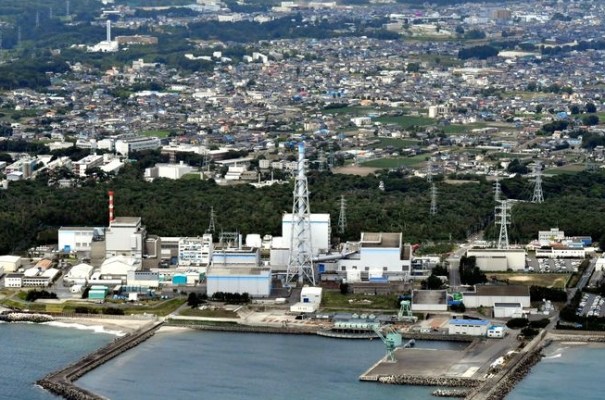
Oi nuclear Plant ‘Safe’ to Operate

Court overturns injunction, says Oi nuclear plant safe to operate

1 This Month
26 September – International Day for the Total Elimination of Nuclear Weapons





PLEASE OPPOSE HR 8255 AND S.3639 – bills would accelerate satellite deployment, with no environmental review or safeguards – https://ncstd5li.quorum.us/campaign/169331/
To see nuclear-related stories in greater depth and intensity – go to https://nuclearinformation.wordpress.com
-
Archives
- September 2026 (281)
- August 2026 (330)
- July 2026 (355)
- June 2026 (287)
- May 2026 (306)
- April 2026 (356)
- March 2026 (251)
- February 2026 (267)
- January 2026 (308)
- December 2025 (358)
- November 2025 (359)
- October 2025 (375)
-
Categories
- 1
- 1 NUCLEAR ISSUES
- business and costs
- climate change
- culture and arts
- ENERGY
- environment
- health
- history
- indigenous issues
- Legal
- marketing of nuclear
- media
- opposition to nuclear
- PERSONAL STORIES
- politics
- politics international
- Religion and ethics
- safety
- secrets,lies and civil liberties
- spinbuster
- technology
- Uranium
- wastes
- weapons and war
- Women
- 2 WORLD
- ACTION
- AFRICA
- Atrocities
- AUSTRALIA
- Christina's notes
- Christina's themes
- culture and arts
- Events
- Fuk 2022
- Fuk 2023
- Fukushima 2017
- Fukushima 2018
- fukushima 2019
- Fukushima 2020
- Fukushima 2021
- general
- global warming
- Humour (God we need it)
- Nuclear
- RARE EARTHS
- Reference
- resources – print
- Resources -audiovicual
- Weekly Newsletter
- World
- World Nuclear
- YouTube
-
RSS
Entries RSS
Comments RSS

