Latest Fukushima leak exposes failures in nuclear crisis management
Xinhua 2024-02-12, https://www.chinadaily.com.cn/a/202402/12/WS65c9eda7a3104efcbdaeab75.html
In a chilling revelation that sent shockwaves through the world, a new nuclear waste leak has unearthed the gaping crack in Japan’s professed claim of responsible handling the accident at the Fukushima Daiichi nuclear power plant.
The leakage of about 5.5 tons of water containing radioactive materials from the plant also highlights the need for international supervision of Japan’s controversial discharge of the Fukushima nuclear-contaminated water into the ocean.
It is estimated that 22 billion becquerels of radioactive materials such as cesium and strontium are contained in the leaked water, and the plant’s operator, Tokyo Electric Power Company (TEPCO), claimed on Wednesday that monitoring of a nearby drainage channel did not show any significant radiation level changes.
This begs the question: What constitutes a “significant” level?
Nearly 13 years after the catastrophic earthquake and tsunami, recurring leaking incidents still hint at the utility’s mismanagement and the Japanese government’s inadequacy in overseeing it.
On Oct. 26, 2023, just one week before Japan started the third round of release, two men were hospitalized after being accidentally splashed with radioactive liquid at the plant. On Aug. 11, 2023, days before the first round of discharge started, TEPCO found leaks in a hose used to transfer nuclear-contaminated water, which, as it said, would not affect the discharge plan.
Even more concerning, the causes of these incidents have fully exposed the chaos and disorder of TEPCO’s internal management. The leak on Wednesday stemmed from a valve left open during cleaning operations, while the October incident resulted from a loose hose channeling contaminated solutions. In August, TEPCO attributed a leak to cracks approximately four centimeters in length found in a hose.
The deficiencies in the fundamental equipment raise questions about the potential for similar occurrences and whether TEPCO conducts regular inspections of its equipment.
While TEPCO this time claimed that there is no risk to the public and that the surrounding environment remains unaffected by the leak, its history of cover-ups and opacity has eroded public trust.
For instance, it took TEPCO over two years after the 2011 tsunami to acknowledge that radioactive tritium had leaked into the Pacific Ocean, contradicting its initial assertions that the toxic water had been contained within the plant’s premises.
Also, in February 2015, TEPCO admitted that since April 2014, it had been aware of radioactive substances from a rainwater drainage ditch linked to one of its buildings being leaked into the sea when it rained.
Until meaningful reforms are enacted, the specter of Fukushima will continue to haunt Japan, serving as a sober reminder of the country’s failure to protect its citizens and the broader environment.
5.5 tons of radioactive water leaked from Fukushima nuclear plant: media
China Daily, Xinhua 2024-02-07
TOKYO — Approximately 5.5 tons of water containing radioactive materials have leaked from an equipment at Japan’s Fukushima Daiichi nuclear power plant, local media reported Wednesday.
At about 8:53 am local time on Wednesday, workers discovered water leaking from the outlet of a device used to purify nuclear-contaminated water during the inspection of the equipment, Fukushima Central Television reported, citing the plant’s operator Tokyo Electric Power Company (TEPCO).
TEPCO estimates that the amount of water that leaked was approximately 5.5 tons, which may contain 22 billion becquerels of radioactive materials such as cesium and strontium, the report said.
Most of the leaked water appeared to have seeped into the soil, but monitoring of a nearby drainage channel did not show any significant radiation level changes, it added.
TEPCO has made the area where the water was leaked a no-go area……………………………. more https://www.chinadaily.com.cn/a/202402/07/WS65c35af9a3104efcbdaea423.html
Still no end in sight for Fukushima nuke plant decommissioning work
January 27, 2024 (Mainichi Japan), https://mainichi.jp/english/articles/20240127/p2a/00m/0na/003000c
OKUMA, Fukushima — Nearly 13 years since the triple-meltdown following the March 2011 Great East Japan Earthquake and tsunami, it is still unclear when decommissioning of the Fukushima Daiichi Nuclear Power Station’s reactors will be completed.
Operator Tokyo Electric Power Company (TEPCO) Holdings Inc. showed the power plant to Mainichi Shimbun reporters on Jan. 26 ahead of the 13th anniversary of the nuclear accident. Radiation levels in many areas are almost normal, and people can move in ordinary work clothes. However, the most difficult part of the work, retrieving melted nuclear fuel, has been a challenge. The management of solid waste, which is increasing daily, also remains an issue. The decommissioning of the reactors, which is estimated to take up to 40 years, is still far from complete.
Meltdowns occurred in reactor Nos. 1, 2 and 3. The start of nuclear fuel debris removal at reactor No. 2, which had been scheduled to begin by the end of fiscal 2023, has just been postponed for the third time. Reactor buildings are still inaccessible due to high radiation, meaning the work has to be done remotely.
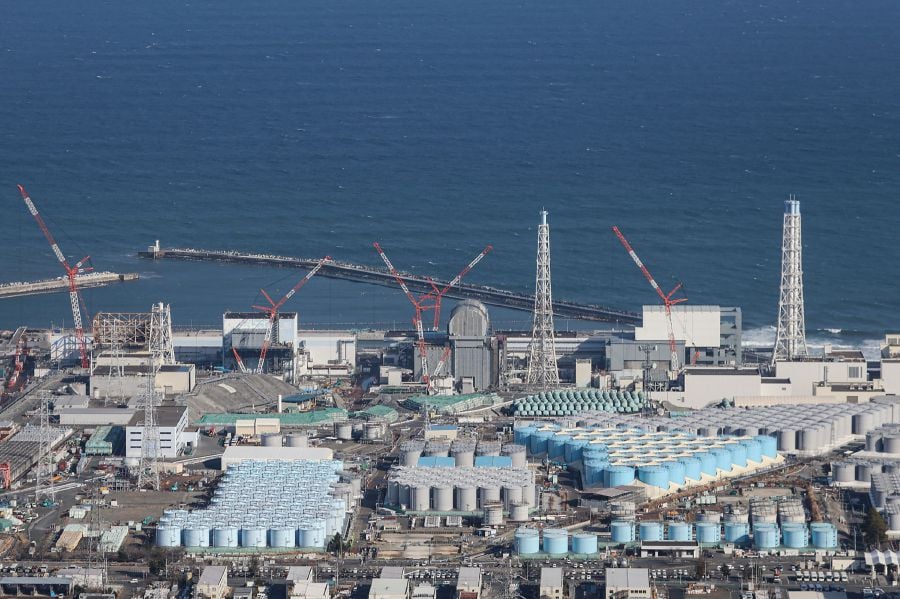
More than 1,000 tanks for storing treated wastewater are lined up next to reactor Nos. 1 through 4, and new facilities to stably store and process approximately 520,000 cubic meters of existing solid waste are being built by reactor Nos. 5 and 6.
Treated wastewater began being discharged into the ocean in 2023, and the tanks are gradually being removed, but there is no timetable for the disposal of the solid waste. A TEPCO representative said, “The final issue that remains is how to deal with the radioactive waste that continues to be produced even as the decommissioning of the plant progresses.”
Japanese original by Yui Takahashi, Lifestyle, Science & Environment News Department)
Japan’s Fukushima nuclear plant: further delays for removal of melted fuel debris
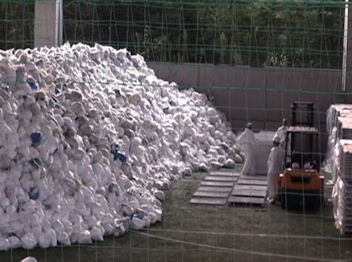
About 880 tons of highly radioactive melted nuclear fuel remain inside the three damaged reactors. Critics say the 30- to 40-year cleanup target set by the government and TEPCO for Fukushima Daiichi is overly optimistic. The damage in each reactor is different and plans need to be formed to accommodate their conditions.
NewsDay, By The Associated Press, January 25, 2024
TOKYO — The operator of the tsunami-hit nuclear plant in Fukushima announced Thursday a delay of several more months before launching a test to remove melted fuel debris from inside one of the reactors, citing problems clearing the way for a robotic arm.
The debris cleanup initially was supposed to be started by 2021, but it has been plagued with delays, underscoring the difficulty of recovering from the plant’s meltdown after a magnitude 9.0 quake and tsunami in March 2011.
The disasters destroyed the Fukushima Daiichi nuclear plant’s power supply and cooling systems, causing three reactors to melt down, and massive amounts of fatally radioactive melted nuclear fuel remain inside to this day.
The government and the Tokyo Electric Power Company Holdings, or TEPCO, initially committed to start removing the melted fuel from inside one of the three damaged reactors within 10 years of the disaster.
In 2019, the government and TEPCO decided to start removing melted fuel debris by the end of 2021 from the No. 2 reactor after a remote-controlled robot successfully clipped and lifted a granule of melted fuel during an internal probe.
But the coronavirus pandemic delayed development of the robotic arm, and the plan was pushed to 2022. Then, glitches with the arm repeatedly have delayed the project since then.
On Thursday, TEPCO officials pushed back the planned start from March to October of this year.
TEPCO officials said that the inside of a planned entryway for the robotic arm is filled with deposits believed to be melted equipment, cables and other debris from the meltdown, and their harder-than-expected removal has delayed the plan.
TEPCO now is considering using a slimmer, telescope-shaped kind of robot to start the debris removal.
About 880 tons of highly radioactive melted nuclear fuel remain inside the three damaged reactors. Critics say the 30- to 40-year cleanup target set by the government and TEPCO for Fukushima Daiichi is overly optimistic. The damage in each reactor is different and plans need to be formed to accommodate their conditions.
TEPCO has previously tried sending robots inside each of the three reactors but got hindered by debris, high radiation and inability to navigate them through the rubble, though they were able to gather some data in recent years.
Getting more details about the melted fuel debris from inside the reactors is crucial for their decommissioning. TEPCO plans to deploy four mini drones and a snake-shaped remote-controlled robot into the No. 1 reactor’s primary containment vessel in February to capture images from the areas where robots have not reached previously……… more https://www.newsday.com/news/nation/Japan-Fukushima-nuclear-plant-melted-fuel-decommissioning-v83291
Tokyo High Court holds Japan government not liable for Fukushima nuclear disaster
Sean Nolan | Southwestern Law School, US, DECEMBER 28, 2023
Tokyo’s High Court found the government of Japan not liable Tuesday for damages related to the 2011 Fukushima nuclear disaster and associated mass evacuations, leaving responsibility solely with plant operator the Tokyo Electric Power Co. (TEPCO).
The ruling also reduced the damages amounts of a previous court order from $414,400 to $165,000 for 44 of 47 petitioners. The decision mirrors a previous ruling in 2022 which found that the government “was highly unlikely to been able to prevent the flooding” that damaged the plant. Ultimately, the court held that more stringent regulatory actions would have been insufficient to prevent the disaster since the size, direction and scale of the tsunami exceeded estimations for such an event. This is the latest in a series of decisions with different outcomes over the last several years including court cases in 2020 and 2017 which litigated the government’s role in failing to prevent the disaster. There is also a 2022 court case that found TEPCO executives personally liable.
Motomitsu Nakagawa, a lawyer, representing the evacuees expressed dismay with the decision and raised the possibility of another appeal calling the decision a “copy and paste” of the previous Supreme Court ruling. The nuclear disaster has already caused $82 billion in damages to victims, decommissioning work and storage for contaminated materials. While TEPCO has been responsible for all the decommissioning, including contaminant storage, it’s financial position has deteriorated over the last few years amid the massive costs associated with the work and multiple postponements due to technological challenges.
Legal fallout has also extended to the cleanup itself with court cases from South Korea fisheries and Japanese fisherman over the release of radioactive wastewater into the Pacific Ocean. The discharge also sparked international concern from neighboring countries and protests from activists who fear pollution and widespread destruction of wildlife and marine ecosystems.
 | |||
| |||
Fukushima nuclear plant worker exposed to radiation
TOKYO. 12 Dec 23 https://japantoday.com/category/national/fukushima-nuclear-plant-worker-exposed-to-radiation
A plant worker at the crippled Fukushima Daiichi nuclear complex may have ingested radioactive materials after his face was exposed to the substances, the plant operator said Monday.
The operator Tokyo Electric Power Company Holdings Inc said the man in his 20s was wearing a protective full-face mask and suit while working in a room near the plant’s No. 2 reactor building, decontaminating fences and other equipment ahead of the removal of 615 spent nuclear fuel rods from the building.
But radioactive material was found on his face during a routine radiation test as he was leaving the site and he was decontaminated immediately.
The incident follows one in October when two men were exposed to radioactive liquid while cleaning a water filtration facility at the same plant.
A Photographer Goes Inside the Ruins of the Fukushima Nuclear Power Plant
The first tests, during which remotely operated underwater robots were launched into the containment structure, were unsuccessful……… The extremely high levels of radiation (650 Sv/h) would destroy the vehicles’ electronic circuits in minutes. A person would die in seconds in such conditions..
Peta Pixel NOV 26, 2023, ARKADIUSZ PODNIESIŃSKI
This article has copious photographs. They are not very interesting, as the photographer was banned from photographing the seriously dangerous parts of place
For more than a dozen years, I have been documenting the aftermath of the disasters at the Chornobyl and Fukushima nuclear power plants, the progress of the cleanup, and the decontamination and revitalization of the contaminated areas. During this time, I made many visits to the Chornobyl plant. Finally, it was time to visit the Fukushima plant………………
Given my critical attitude towards nuclear power, as demonstrated by my published album about the tragic consequences of the two disasters as well as my photographs and films that have been shown around the world, obtaining permission was not easy or straightforward. However, after several months of trying and dozens of emails and phone calls, I finally managed to get approval.
Interestingly, I was told no photographer before me had ever had such an extensive itinerary for a visit. Despite this, I hope that my two-day visit will not be the last. The decommissioning of the power plant is a process that will take several decades, so I hope there will be more than one opportunity to return.
……………………………..nowhere else in the world have I seen so many workers guarding the exits of underground garages, building sites and intersections, or thousands of flashing bollards shaped like frogs, mice, and other animals.
..For security reasons, taking pictures of many places is prohibited……………………………………..
Similarities or Differences
Only when I’m standing in front of the damaged units do I grasp the scale of the tragedy and destruction. The first unit has no roof, as it was destroyed by a hydrogen explosion. Only the jagged remnants of the steel skeleton now protrude from it. There is less external damage to the second unit, but inside the meltdown of the reactor core produced a similar effect. When I look at the exposed roof of the first reactor building, comparisons to Chornobyl automatically come to mind.
Units 3 and 4 have already been covered with new structures that are intended to strengthen their substructures and enable the removal of the spent fuel inside. Probably to avoid comparisons with Chornobyl, these are not called sarcophagi, but they serve an identical purpose – they reinforce the damaged buildings, prevent radioactive substances from escaping, and serve or will be used to extract the fuel inside. At Chornobyl, one reactor was damaged, while at Fukushima it was as many as three.
On the one hand, in Chornobyl, the areas around the nuclear power plant are still closed 37 years later. The damaged reactor has already been covered by a second sarcophagus and the removal of the fuel inside of it is still a subject of debate. On the other hand, in Japan, after 12 years most of the areas around the plant have already been cleaned and returned to their residents.
The process of removing the fuel from the damaged reactors is expected to begin in 2024. This very complex and dangerous task will be divided into two separate phases. The first involves removing the melted fuel from the damaged reactors, while the second consists of removing the spent fuel stored in the spent fuel pools. Fuel remains in the first two units as debris is still being cleaned up and other obstacles blocking access to the interior are being removed. The next two units are in much better condition: the spent fuel has already been removed from the pools, and only one of them has had a nuclear core meltdown.
After a while, we drive up to the reactor buildings themselves. Standing next to the vertical walls of the structure, I realize their magnitude. For obvious reasons, I can’t go inside any of them. It’s a red zone, where the damage is greatest, and the radiation levels are deadly high.
Inside of Primary Containment Vessel
I also visit Units 5 and 6, which sustained less damage. They were shut down when the earthquake and tsunami hit, although there was still nuclear fuel in the reactors and spent fuel pools the entire time. Due to the power outages and the cessation of the cooling processes, they did not operate properly and had to be monitored constantly. After the damage was repaired and cooling restored, the remaining fuel in the reactors was moved to a spent fuel pool several floors above. Besides having the chance to take photos, visiting these units is an excellent opportunity for me to better understand how the disaster unfolded and the work to clean up the resulting damage, particularly the melted fuel from inside the reactors.
In Unit 5, I enter the safety enclosure known as the PCV (Primary Containment Vessel) that houses the reactor. This is already a yellow – more radioactive – zone, so once again I must change my clothes. The safety enclosure is shaped like a huge steel pear, more than 30 meters high. Inside it is the reactor, which is surrounded by hundreds of pipes, valves, and pumps. I squeeze between them and come to a small opening in the wall. This leads to a tiny room where the control rod drive hydraulic system is located.
The room is cramped and not even a meter high – definitely not a place for people who have claustrophobia. The reactor is just a few meters above me. It is identical to the ones whose cores melted down due to the power outages and lack of cooling. Under the extreme heat, their uranium fuel rods melted like candle wax and dripped to the bottom of the reactor casing. The hot mass then burned through the steel walls and seeped into the bottom of the containment enclosure, exactly where I stand now.
Because of these similarities, Unit 5 is currently being used to test various methods of removing fuel from damaged reactors. The first tests, during which remotely operated underwater robots were launched into the containment structure, were unsuccessful. More often than not, they got stuck while maneuvering underwater amid piles of debris, cables, and rusted structures. The extremely high levels of radiation (650 Sv/h) would destroy the vehicles’ electronic circuits in minutes. A person would die in seconds in such conditions………………………………
According to a report by the Japanese Atomic Energy Commission – not disclosed to the public for fear of causing panic – in the event that the situation went completely out of control and the direction of the wind changed, there would have been so much contamination that it would have necessitated the evacuation of the 50 million people living within a 250 km radius of the plant, an area that includes Tokyo. Thus, the fact that the worst-case scenario was avoided is not only due to the superhuman efforts of hundreds of power plant workers, firefighters, and other emergency responders, but also to chance or, if you prefer, luck.
Although the danger was averted, fuel remains in the spent fuel pools in Units 1 and 2 (the most damaged ones) as well as in Units 5 and 6. I was allowed to enter the last of these. It stores over 1,600 fuel assemblies………………………………………………………………………………………………………………………………………………………………………………………..more https://petapixel.com/2023/11/26/a-photographer-goes-inside-the-ruins-of-the-fukushima-nuclear-power-plant/
Japan’s Fukushima plant completes third water release

Canberra Times By Mari Yamaguchi, November 20 2023 – Australian Associated Press
The release of a third batch of treated radioactive wastewater from Japan’s damaged Fukushima nuclear plant into the Pacific Ocean ended safely as planned, its operator says, as the country’s seafood producers continue to suffer from a Chinese import ban imposed after the discharges began.
Large amounts of radioactive wastewater have accumulated at the nuclear plant since it was damaged by a massive earthquake and tsunami in 2011.
It began discharging treated and diluted wastewater into the ocean on August 24 and finished releasing the third 7800-ton batch on Monday.
The process is expected to take decades.
The discharges have been strongly opposed by fishing groups and neighbouring countries including China, which banned all imports of Japanese seafood, badly hurting Japanese producers and exporters of scallops and other seafood……………………………………………………
Japan’s government has set up a relief fund to help find new markets for Japanese seafood, and the central and local governments have led campaigns to encourage Japanese consumers to eat more fish and support Fukushima seafood producers.
TEPCO is also providing compensation to the fisheries industry for “reputational damage” to its products caused by the wastewater release and said it has mailed application forms to 580 possible compensation seekers…………………………..
TEPCO and the government say the process is safe, but some scientists say the continuing release of water containing radionuclides from damaged reactors is unprecedented and should be monitored closely.
Monday’s completion of the release of the third batch of wastewater brings the total to 23,400 tons.
TEPCO plans a fourth release by the end of March 2024.
That would only empty about 10 of the approximately 1000 storage tanks at the Fukushima plant because of its continued production of wastewater, although officials say the pace of the discharges will pick up later.

The tanks currently hold more than 1.3 million tons of wastewater, most of which needs to be retreated to meet safety standards before release.
TEPCO and the government say discharging the water into the sea is unavoidable because the tanks need to be removed from the grounds of the plant so that it can be decommissioned. https://www.canberratimes.com.au/story/8430646/japans-fukushima-plant-completes-third-water-release/
Fukushima Nuclear Power Plant starts 3rd round of wastewater release, potentially impacting seafood quality in U.S.
The Daily Universe, Belle Lewis, November 14, 2023
The Fukushima-Dachii nuclear plant started its third release of nuclear wastewater on Nov. 2 as scientists warn that seafood products from the Pacific Ocean could be contaminated.
Although the International Atomic Energy Agency approved the 30-year water release plan, scientists and civilians in nations bordering the Pacific Ocean have questioned the safety of the plan, especially as it relates to seafood.
In a press release approving of the plan, the IAEA stated, “the discharges of the treated water would have a negligible radiological impact to people and the environment.”
Paul Dorfman, member of the Irish Government Environmental Protection Agency Radiation Protection Advisory Committee and chair of Nuclear Consulting Group, explained that some scientists have questioned IAEA’s approval of the water release.
“I and others are concerned by IAEA’s attitude,” Dorfman said. “Normally even low levels of radioactive pollution will find its way into local seafood, one way or another.”
In 2020, Japan exported 332,926 kilograms of frozen scallops to the U.S. Japan exports many fish products to the U.S.
Samantha Valeriano, a psychology student from Hawaii, said she eats seafood about once a week. She does not often think about where her food comes from but wants to be more cautious following the nuclear water release.
“I think I would be a little more cautious of what I ate, checking labels a little bit more,” Valeriano said. “I would be conscious of what I ate and where it came from.”
As the People’s Republic of China has imposed bans of Japanese fish exports, the U.S. has supported the Japanese market by increasing fish purchases.
In a press release, the United States Embassy and Consulate in Japan explained that military bases in Japan will carry Japanese seafood as a way to buoy up seafood markets and undermine the PRC’s ban.
“United States elected representatives and senior government officials have stood in solidarity with Japan during this baseless ban,” the statement said. “Another step to help provide additional sales to counter the ban was to start selling Japanese seafood at the U.S. military facilities in Japan, both through the commissaries and mess halls.”
According to the statement, government officials like former speaker Kevin McCarthy ate seafood from Japan as a testament to Japan’s safety standards.
However, other U.S. agencies, like the National Association of Marine Laboratories question whether accurate research was conducted by the IAEA and Japanese Government to determine safety of seafood products.
They explain that the lack of data on potential health impacts is a cause for serious concern.
“Many of the radionuclides contained in the accumulated waste cooling water have half-lives ranging from decades to centuries, and their deleterious effects range from DNA damage and cellular stress to elevated cancer risks in people who eat affected marine organisms, such as clams, oysters, crabs, lobster, shrimp and fish,” the statement reads.
Eve Nagareda, medical laboratory science major from Hawaii, shared she wants to avoid seafood from dumping grounds even if levels are considered safe.
“I think I would try to go as far as possible from it,” Nagareda said…………………………………………………………………………..
On Sep. 8, the IAEA conducted seawater sampling off the Japanese Coast. They recorded Tritium levels below the internationally mandated limit of 1,500 bequerels per liter.
Dorfman explained that below-accepted tritium levels does not mean that the ALPS is functioning properly.
“The Japan government and IAEA say that the treatment is sufficient, and levels of radiation, especially tritium, in the water releases are low.” Dorfman said. “However, others note that the treatment process has already failed once before, and may let through a series of radioisotopes, not only tritium.”
A pre-publication scientific paper found that radionucleotides from the Fukushima plant will distribute globally and penetrate into the deep ocean. The highest concentration of these particles would be along the eastern coast of Japan.
This paper contradicts assertions made by the IAEA that once the water is dumped into the Pacific Ocean, the particles will dilute.
Radiation experts often say that “dilution isn’t the solution to pollution,” according to Dorfman.
Why release the water?
After the water is released, the land the tanks occupy will be available for the Japanese government to build facilities to fully decommission the Fukushima-Daiichi Plant.
In the greater scheme of things, it has to be said that the main issue at Fukushima remains the almost impossible task of trying to extract the nearly 880 tonnes of highly radioactive nuclear fuel that have melted in three of the plant’s six reactors,” Dorfman said.
According to Dorfman, decommissioning is far off.
“We are a very very long way away from decommissioning Fukushima,” Dorfman said. “At the moment, there are no feasible plans to do so.”
What is the future of nuclear energy?
As the Fukushima nuclear water release continues its third phase and looks toward its 30-year release plan, scientists like Dorfman consider the overall effectiveness of nuclear power and its potential risks.
“The weight of evidence shows that due to the pace, scale and economics of the renewable evolution, all nuclear can do is make promises it just can’t keep,” Dorfman said.
Dorfman continued to explain how renewable energy will outstrip nuclear soon.
“Nuclear is quite simply just marginal,” Dorfman said. “In terms of cost, time, and do-ability — it’s renewable expansion in all sectors, energy efficiency and management, rapidly advancing storage technologies, grid modernization, interconnection and market innovation from supply to service provision that will power the global net-zero energy transition.”
As Nuclear wastewater disposal continues, organizations like the IAEA and NAML continue to debate the potential health impacts. https://universe.byu.edu/2023/11/14/fukushima-nuclear-power-plant-starts-third-round-of-wastewater-release-potentially-impacting-seafood-quality-in-u-s/
Collective calls on Pacific leaders to oppose Fukushima nuclear wastewater discharge
The Pacific Collective on Nuclear Issues has denounced once again the dumping of radioactive wastewater from the damaged Fukushima nuclear power plant into the Pacific Ocean, calling on Pacific leaders to suspend Japan’s status as a Pacific Islands Forum (PIF) dialogue partner.
The Collective, composed of civil society groups, non-governmental organizations and movements in the Pacific, issued a statement this week, during which the 52nd Pacific Islands Forum Leaders Meeting was held in the Cook Islands.
The statement condemned the Japanese government and the facility operator, Tokyo Electric Power Company (TEPCO), for insisting on this flawed and dangerous course of action.
“The findings of the independent panel of scientific experts commissioned by the Pacific Islands Forum were unequivocal – the data provided so far, to support Japan’s claim that the treated wastewater is safe, is inconsistent, unsound and therefore far from reliable,” the statement said, adding that “if the Japanese government and TEPCO believe the radioactive wastewater is safe, they should be prepared to safely dispose of it within terrestrial Japan.”
The Collective also declared that such dumping into the Pacific Ocean is a direct violation of human rights.
Aside from being a brazen violation of international law, the Collective said, Japan’s behavior and handling of this matter is an affront to the very sovereignty of Pacific states and unbecoming of a dialogue partner of the PIF.
Founded in 1971, the PIF is the region’s premier political and economic policy organization which comprises 18 members.
The Collective called on the Pacific leaders to reaffirm the long-held position of the Pacific to keep their region nuclear-free and to review diplomatic relations with Japan at the next Pacific Islands Forum Leaders Meeting in 2024.
They also called on the international community not to turn a blind eye to the threat that dumping radioactive wastewater into the Pacific Ocean poses to Pacific peoples, their livelihoods, safety, health and well-being.
Japan conducted the third round of release of nuclear-contaminated wastewater from the crippled Fukushima Daiichi Nuclear Power Plant into the Pacific Ocean earlier this month, despite numerous and repeated objections by governments and communities, environmental groups, NGOs, and anti-nuclear movements in Japan and the Pacific
Pacific island nations express concern over Fukushima water release
Japan Times, AVARUA, COOK ISLANDS – 11 Nov 23
Leaders of Pacific island nations expressed strong concerns over the release of treated radioactive water from Japan’s wrecked Fukushima No. 1 nuclear plant into the Pacific Ocean during a regional summit, according to Cook Islands Prime Minister Mark Brown.
Brown, who currently chairs the Pacific Islands Forum, said Thursday there were “strong concerns” raised by “our forum leaders for the significance of potential threats of contamination to the health and security of the blue Pacific.”
The bloc’s 18 members have expressed differing views on the treated wastewater discharge from the Fukushima No. 1 nuclear power plant, which began in late August, after extensive dialogue between the member states and Japan………………………………………………….
The leaders’ meeting began in the Cook Islands Monday, with the main talks taking place Wednesday and Thursday on Rarotonga, the country’s most populous island, and Aitutaki.
The Pacific Islands Forum comprises Australia, the Cook Islands, Micronesia, Fiji, French Polynesia, Kiribati, the Marshall Islands, Nauru, New Caledonia, New Zealand, Niue, Palau, Papua New Guinea, Samoa, the Solomon Islands, Tonga, Tuvalu and Vanuatu. https://www.japantimes.co.jp/news/2023/11/11/japan/politics/japan-pacific-island-nations-fukushima-water-release/
China calls for a long-term international monitoring mechanism for Fukushima nuclear-contaminated wastewater
Minister Huang urges Japan on nuclear-contaminated water
By JIANG XUEQING in NAGOYA, JAPAN | chinadaily.com.cn 2023-11-05 https://www.chinadaily.com.cn/a/202311/05/WS65476d92a31090682a5ec7c3.html
Chinese Minister of Ecology and Environment Huang Runqiu urged Japan to engage in full consultations with stakeholders in handling the release of nuclear-contaminated water from the crippled Fukushima Daiichi Nuclear Power Plant in a responsible manner.
“We also called for the prompt establishment of a long-term international monitoring mechanism with the participation of Japan, neighboring countries, and other relevant stakeholders to effectively protect the global marine environment,” Huang said at the 24th Tripartite Environment Ministers Meeting among Japan, South Korea, and China. The two-day meeting closed on Saturday in Nagoya, Japan. #nuclear #antinuclear #nuclearfree #NoNukes
Fukushima nuclear plant workers sent to hospital after being splashed with tainted water
Guardian, 27 Oct 23
The operator Tepco says the workers came in contact with the wastewater when a hose came off accidentally and have been taken to hospital as a precaution
Four workers at the Fukushima nuclear plant were splashed with water containing radioactive materials, with two of them taken to hospital as a precaution, according to the plant operator.
The incident, which took place on Wednesday, highlights the dangers Japan still faces in decommissioning the plant. The reactor was knocked out by an immense tsunami in 2011 in the world’s worst atomic disaster since Chornobyl in 1986.
Five workers were cleaning pipes at the system filtering wastewater for release into the sea when two were splashed after a hose came off accidentally, according to a spokesperson for operator Tepco.
Two others were contaminated when they were cleaning up the spill, the spokesperson added………
Tepco said that both would stay in hospital for “about two weeks” for follow-up examinations and that the company was analysing how the accident had occurred while reviewing measures to prevent a repeat of it………………………
more https://www.theguardian.com/environment/2023/oct/27/fukushima-nuclear-plant-workers-hospitalised-after-being-splashed-with-tainted-water #nuclear #antinuclear #NoNukes #radiation
Mechanism for toxic radioactive water release sought

“What I find problematic is that TEPCO, the Japanese government and the IAEA are not addressing the long-term environmental impacts and the accumulation in the environment resulting from individual data. In the case of long-term releases, there is a concern about accumulation in the marine environment and concentration through the ecosystem, but this aspect is not being adequately evaluated.”
By JIANG XUEQING in Tokyo 2023-10-24 https://global.chinadaily.com.cn/a/202310/24/WS65372116a31090682a5ea51d.htmll
Experts urge long-term intl monitoring and participation of all stakeholders
Experts call for the establishment of a long-term international monitoring mechanism with substantive participation from stakeholders, as Japan and the International Atomic Energy Agency are both criticized for not addressing the long-term environmental impacts of the dumping of nuclear-contaminated water into the sea.
The IAEA is sending its team to Japan to continue its safety review of the release from the crippled Fukushima Daiichi Nuclear Power Plant.
Starting Tuesday, the IAEA will conduct a safety review of the activities carried out at the Fukushima plant to make sure these activities are consistent with the international safety standards, said Lydie Evrard, IAEA deputy director-general and head of the agency’s department of nuclear safety and security.
A report on the review is expected to be finalized by the end of 2023, she told a news conference in Tokyo on Monday.
Chinese Foreign Ministry spokesman Wang Wenbin on Oct 11 said the collection of marine samples near Fukushima, analysis by laboratories and comparison of those samples were carried out by the IAEA Secretariat under its bilateral arrangement with Japan. Therefore, he said, it falls short of an international monitoring arrangement with the full and substantive participation of all stakeholders.
“The international community requires the immediate establishment of an international monitoring arrangement with substantive participation of all stakeholders, including Japan’s neighboring countries, that will stay effective for the long haul,” Wang said, urging the IAEA to play its due role and take the responsibility of providing rigorous supervision on Japan’s discharge.
The key issue is how to establish an international monitoring mechanism for the real-time and long-term effective management of nuclear-contaminated water being discharged, said Zhang Yulai, vice-president of the Japan Institute of Nankai University.
Major challenge
“Information disclosure is a major challenge because the Japanese government and TEPCO share common interests, making genuine monitoring difficult,” he said.
There are also technical challenges, as certain radionuclides that the Advanced Liquid Processing System cannot remove still exist, he said.
Fukushima plant operator TEPCO announced pre-discharge test results on Thursday, showing that the third batch of nuclear-contaminated water to be released during Japan’s next round of ocean discharge contains seven radionuclides, namely tritium, carbon-14, cobalt-60, strontium-90, yttrium-90, iodine-129 and cesium-137. Among them, strontium-90 and yttrium-90 were not detectable before the second round of discharge.
The measured quantity of strontium is relatively low, but given its 29-year half-life, it will persist in the environment to a certain extent. Strontium is a significant radionuclide that tends to accumulate in bones when ingested by fish or humans, said Hideyuki Ban, a renowned Japanese nuclear expert and co-director of the Tokyo-based Citizens’ Nuclear Information Center.
“What concerns me is the lack of information about the measurement times and methods. I believe that rapid measurements may lack precision,” Ban said.
“What I find problematic is that TEPCO, the Japanese government and the IAEA are not addressing the long-term environmental impacts and the accumulation in the environment resulting from individual data. In the case of long-term releases, there is a concern about accumulation in the marine environment and concentration through the ecosystem, but this aspect is not being adequately evaluated.”
Many Japanese said they do not believe the data disclosed by TEPCO and the Japanese government.
Chiyo Oda, co-director of KOREUMI, also known as the Citizens’ Conference to Condemn Further Pollution of the Ocean, said those who have experienced the nuclear disaster have developed distrust in the government and TEPCO.
The promise not to release the water without first understanding the concerns of fishermen and citizens, as stated just before the release, has been disregarded. Though they have announced monitoring results immediately after the release, the data is not trustworthy, Oda said.
“It is evident that the marine environment will be contaminated over a long period of time, and there is potential for long-term impacts on human health,” she said. #nuclear #antinuclear #nuclearfree #NoNukes
A wall of silence: atom bosses remain tight-lipped over Fukushima whistleblower claims
collaboration between the IAEA and the Japanese Government over the Fukushima radioactive water releases was imperative as the continuation of sea dumping regardless of the adverse impact to the marine environment represents a ‘make or break issue’ for the nuclear industry.
Over seven weeks have passed without an acknowledgement or reply to a letter the UK/Ireland Nuclear Free Local Authorities co-signed which was sent to the UN International Atomic Energy Authority calling for transparency over claims that the organisation collaborated with the Japanese Government to ‘manage the message’ over the ocean dumping of 1.3 million tonnes of radioactive water from the Fukushima nuclear disaster site.
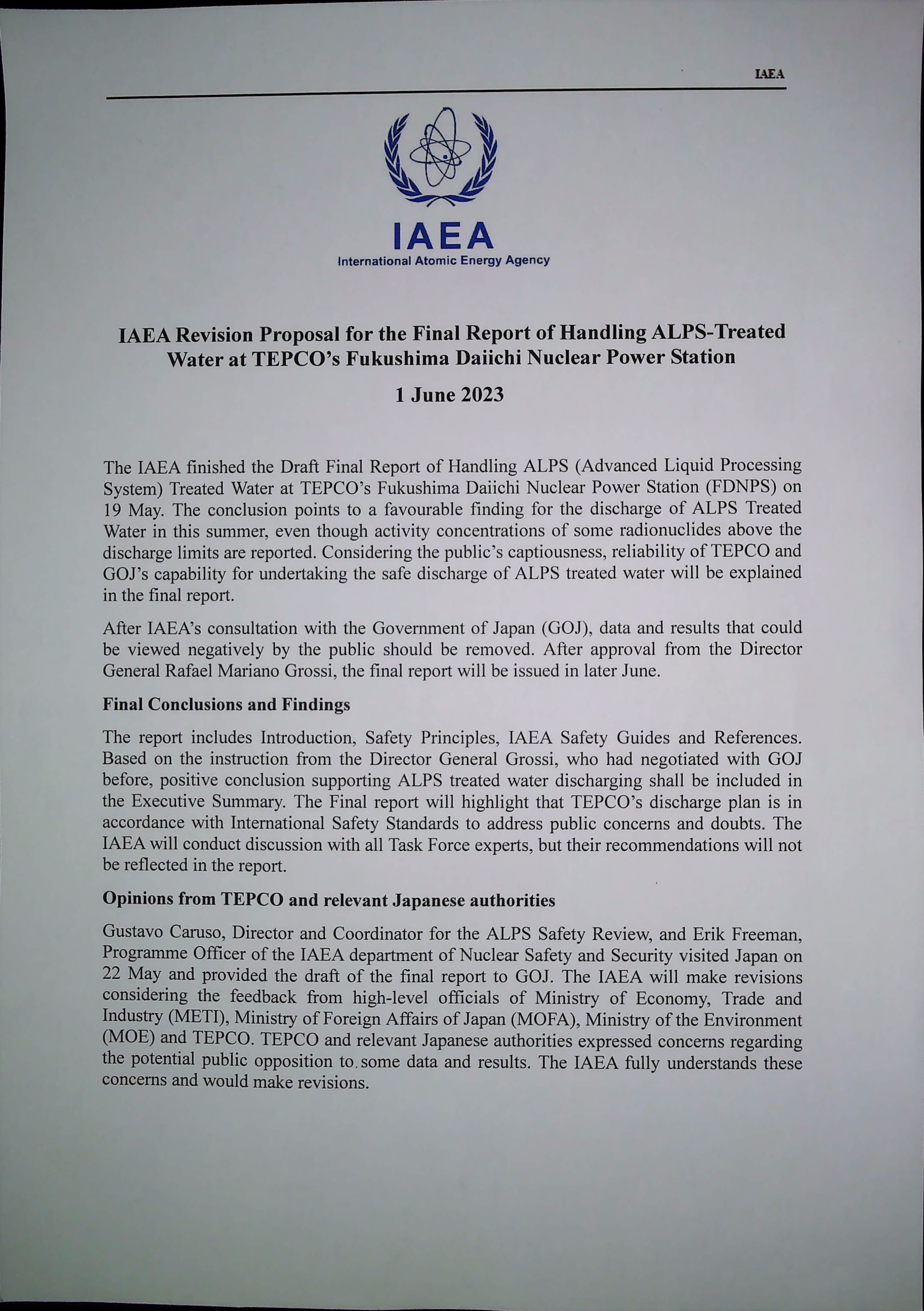
On 28 June, an anonymous whistleblower posted a document, seemingly issued by the Department of Nuclear Safety at the IAEA, to the website/blogsite dunrenard[1]. If genuine, the document, titled ‘IAEA REVISION PROPOSAL FOR THE FINAL REPORT OF HANDLING ALPS TREATED WATER AT TEPCO’S FUKUSHIMA DAIICHI NUCLEAR POWER STATION’, appears to indicate that the international agency has actively sought to downplay the dangers associated with discharging millions of barrels of water which remain contaminated with highly toxic tritium.
The NFLA’s first covered this story and our disquiet at the revelations in a media release dated 3 July:
https://www.nuclearpolicy.info/news/cover-up-did-atom-bosses-collude-to-manage-message-of-japanese-plan-to-poison-pacific/
One of the recipients of the leaked document was Mr Tim Deere-Jones, a graduate in Marine Studies from Cardiff University. Tim, an independent marine pollution researcher and consultant since 1983, is highly regarded by the many international organisations who have engaged him in their campaigns against the damage caused to our oceans and inland waterways by radioactive and other contaminants.
Tim was incensed that the Japanese Government was quick to condemn the claim that Japan had pressurised the IAEA to remove ‘negative information’ about the environmental impact that would result from the radioactive waste discharges from the final report, but also noted that on the claims themselves the IAEA made no comment.
Keen to seek clarification and action on the veracity of the whistleblower’s claims, Tim went right to the top of the IAEA and penned a letter to the head of the management office for the Deputy Director General. Here he explains why:
“To date there has been no detectable independent action to investigate and test the veracity of the whistleblower’s claims against the claim of non-interference made by the Government of Japan.
“I fear that if this is scenario is allowed to continue the whistleblower’s action and disclosure will be historically characterised by the Government of Japan statement, sink into obscurity and be forgotten and the whistleblower’s heroic action will have been wasted, while he/she is still under threat of investigation, identification, and penalty.
“My disclosure request to the IAEA is intended to elicit a direct response from the agency to the claims made by the whistleblower as to date my online media searches have yet to reveal any related statement made by the organisation.
“This creates the impression that the Government of Japan has been acting as the IAEAs mouthpiece in respect of the whistleblower disclosure and that the IAEA would prefer NOT to be associated in anyway with the issue, to the extent that it has not made any public statement”.
Tim’s request for disclosure, submitted by registered post to the IAEA’s Vienna office and by email to the official account on 1 September, was backed by five British anti-nuclear groups and individuals from Europe and the Pacific Ocean, representing commercial fishers, other marine stakeholders, and coastal zone and Pacific Island communities.
Although the registered letter was tracked as received at the Vienna office on 9 September, Tim has yet to receive any response from the agency, and on 16 October sent a reminder:
“I have concluded that the absence of a receipt or response is a clear indication of the IAEA’s resistance to any discussion of the issues raised.
“My reading critique of the IAEAs final report to TEPCO re the issue of the ALPs treated water release certainly supports the drift of the whistleblower statement”.
Amongst the co-signatories to the letter, which is reproduced at the end of this press release, were the NFLAs, which have objected in letters to Japanese Ministers, senior officials at TEPCO (the nuclear operator), and the United Nations to the discharge of radioactive water from Fukushima, and signed a partnership agreement with its counterparts, Mayors for a Nuclear Power Free Japan, to collaborate in opposing the plan.
Though disappointed at the continued wall of silence, Chair Councillor Lawrence O’Neill is unsurprised that the IAEA remains tight-lipped:
“Sadly, the duties of disclosure required of public bodies in the UK through the Freedom of Information Act do not apply to an international agency based in Vienna and the IAEA’s statutes appear to contain no provisions for transparency or external accountability, despite the agency being funded by the member states, and so the taxpayers, of the United Nations.
“Although the organization claims to want to become more open, the lack of a response, or even an acknowledgement, to our legitimate request for information belies the fact that, on controversial issues, a culture of secrecy still prevails.”
Tim believes that collaboration between the IAEA and the Japanese Government over the Fukushima radioactive water releases was imperative as the continuation of sea dumping regardless of the adverse impact to the marine environment represents a ‘make or break issue’ for the nuclear industry. He has produced a short paper explaining his reasoning, which also appears at the end of this media release.
For further information about this media release please contact NFLA Secretary Richard Outram by email to richard.outram@manchester.gov.uk or telephone 07583097793
1. https://dunrenard.wordpress.com/2023/06/28/will-this-whistleblower-be-heard-by-anyone/
Notes to Editors:
The reminder sent to Ms Margaret Doane, Head, Department of Management Office of the Deputy Director General, IAEA, 16 October 2023
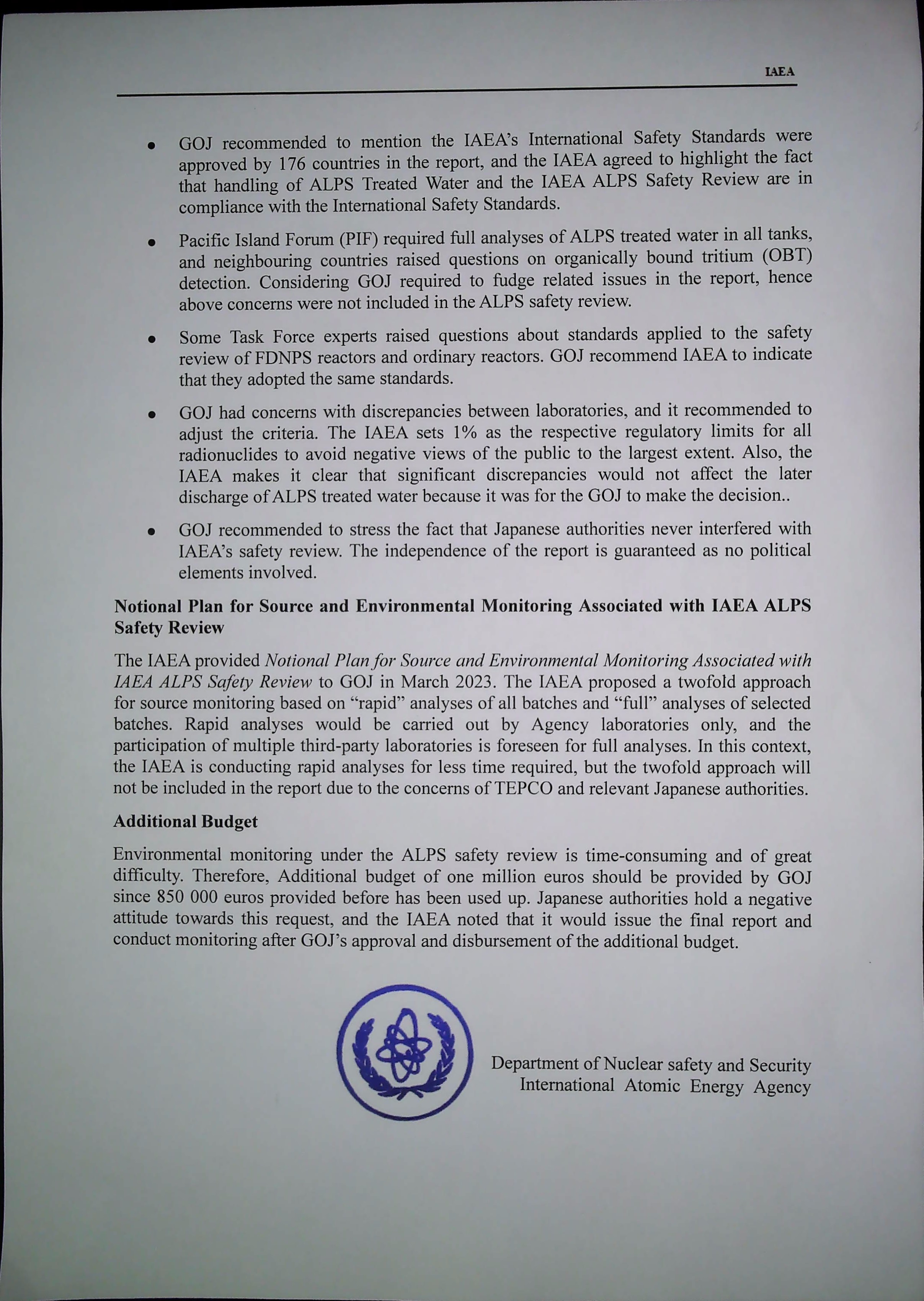
#nuclear #antinuclear #nuclearfree #NoNukes
1 This Month
23-25 October – on Zoom – World BEYOND War’s annual global conferenc


Shut down the radiation-damaged Heysham nuclear reactors now
To see nuclear-related stories in greater depth and intensity – go to https://nuclearinformation.wordpress.com

Say No to NASA’s Reckless Nuclear Reactor on the Moon
Say No to NASA’s Reckless Nuclear Reactor on the Moon

-
Archives
- October 2026 (247)
- September 2026 (339)
- August 2026 (330)
- July 2026 (355)
- June 2026 (287)
- May 2026 (306)
- April 2026 (356)
- March 2026 (251)
- February 2026 (267)
- January 2026 (308)
- December 2025 (358)
- November 2025 (359)
-
Categories
- 1
- 1 NUCLEAR ISSUES
- business and costs
- climate change
- culture and arts
- ENERGY
- environment
- health
- history
- indigenous issues
- Legal
- marketing of nuclear
- media
- opposition to nuclear
- PERSONAL STORIES
- politics
- politics international
- Religion and ethics
- safety
- secrets,lies and civil liberties
- spinbuster
- technology
- Uranium
- wastes
- weapons and war
- Women
- 2 WORLD
- ACTION
- AFRICA
- Atrocities
- AUSTRALIA
- Christina's notes
- Christina's themes
- culture and arts
- Events
- Fuk 2022
- Fuk 2023
- Fukushima 2017
- Fukushima 2018
- fukushima 2019
- Fukushima 2020
- Fukushima 2021
- general
- global warming
- Humour (God we need it)
- Nuclear
- RARE EARTHS
- Reference
- resources – print
- Resources -audiovicual
- Weekly Newsletter
- World
- World Nuclear
- YouTube
-
RSS
Entries RSS
Comments RSS


