USA joining with China to develop thorium nuclear reactors
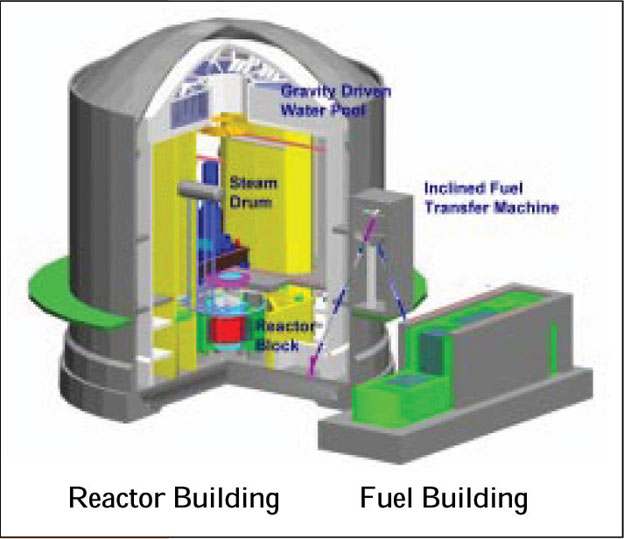 What’s not clear is what, exactly, the U.S. will get from the collaboration….
U.S. partners with China on new nuclear, By Mark Halper Smart Planet June 26, 2012 E Pluribus Thorium? U.S. Assistant Energy Secretary Peter Lyons and Chinese Academy of Sciences’ Jiang Mianheng have joined forces for thorium development. What’s in it for the U.S.?
The U.S. Department of Energy is quietly collaborating with China on an alternative nuclear power design known as a molten salt reactor that could run on thorium fuel Continue reading
Solar panels for IKEA’s buildings in China
 IKEA To Use Solar Power on Buildings in China, Market Watch, June 12, 2012, IKEA Group partners with Hanergy to install solar panels on IKEA buildings BEIJING, Jun 12, 2012 (BUSINESS WIRE) — IKEA Group today announced that, as part of its goal to only use renewable energy to power its buildings, it will partner with Hanergy, one of China’s leading clean energy companies, to install solar photovoltaic panels on IKEA owned buildings in China. Continue reading
Despite local government opposition, China funding new nuclear plant in Wangjiang
The Pengze project made headlines in February, when the Wangjiang County government openly opposed its construction on grounds that the site selection was based on unreliable population and seismic activity data.
The County government also alleges that the firm used gifts to entice villagers into agreeing to the plans.
 Controversial China nuclear plant funding resumes, Market Watch, Jiangxi nuclear plant gets funding in sign building freeze is ending By Lu Bingyang and Wang Yong BEIJING ( Caixin Online )7 June 12, — One of China’s pioneering inland nuclear power projects has received another capital injection after the government put nuclear development on hold due to last year’s disaster in Japan. Continue reading
China the nuclear lobby’s great hope – or is it?
Public opinion could also pose an obstacle. In a poll carried out by research agency Ipsos MORI after Fukushima, 42% of those surveyed in China were supportive of nuclear power – but that 48% were opposed. It
is also reported that public opposition and environmental concerns have led to the delay in construction of three inland nuclear power sites.
China’s nuclear developments probably matter more to the rest of the world than they do to China.
 Chinese nuclear goes global? China dialogue Antony Froggatt June 06, 2012 From Parisian boardrooms to Kazakh uranium mines, the nuclear industry anxiously awaits news from Beijing. …….
“…… the Fukushima crisis in Japan has had a significant – and under reported – impact on Chinese nuclear developments, triggering a freeze on the start of new construction, a re-consideration of the safety standards of domestic designs and unprecedentedly visible opposition to the building of new, inland nuclear plants. Continue reading
Vigourous and organised opposition to nuclear power in China
many of the companies building nuclear power plants and the government have not held honest discussions with stakeholders and are unwilling to provide adequate information. The Ministry of Environmental Protection rejected Caixin’s application for more information on documents related to the Pengze plant’s environmental assessment.
“Our actions are divided into three phases: official, media and litigation,” Wang said. Petitioning the government was the first step, and using the media to attract attention the second. “If this still doesn’t work, we can only move to litigation. In the next step, we’ll sue whichever departments approved construction of the Pengze nuclear plant, and we’ll sue to the end.”
 Ex-officials battle China nuclear plant plan, Market watch,Retired officials vigorously battle China nuclear power plant plan By Cui Zheng BEIJING ( Caixin Online ) —”… the meltdown on March 11, 2011, is still fresh on the minds of four retired cadres in Wangjiang County.
They petitioned against the Pengze nuclear power project in neighboring Jiangxi Province and ultimately convinced their local government to oppose the plan. This kind of official opposition to a nuclear undertaking is almost unheard of in China. Continue reading
China raising funds to launch nuclear power, but public sentiment is “fragile”
China to Stoke Nuclear Power, WSJ 6 June 12, State-Owned Firm Plans IPO to Fund Reactors; $5.4 Billion Deal Is Possible BEIJING—China National Nuclear Power Co. said it is planning a Shanghai initial public offering that will go toward financing part
of five power projects worth 173.5 billion yuan ($27.2 billion), in a multibillion-dollar deal that signals that the country’s ramp-up of nuclear power is moving forward..
… China National Nuclear Power, according to a statement on the environmental ministry website, will sell shares to raise funds for nuclear-power projects in Fujian, Zhejiang, Hainan and Jiangsu provinces, the statement said, adding that these projects were approved by China’s National Development and Reform Commission between 2008 and 2010. Those projects require 173.5 billion yuan in funding,…
the IPO could be asking a lot of the country’s equity markets. The commission hasn’t approved any sizable IPOs since May, when the regulator gave the green light to China Postal Express & Logistics Co.’s potentially 9.98 billion yuan deal, though that has yet to
launch. Since early May, the benchmark Shanghai Composite Index is down 4%.
“A big IPO would weigh on the stock market further as it would divert funds from the secondary market, especially when the sentiment remains fragile,” said Yang Delong, a fund manager at China Southern Fund….. http://online.wsj.com/article/SB10001424052702303665904577449784005256706.html?mod=googlenews_wsj
China against North Korea having nuclear weapons
Chinese paper urges Beijing to oppose N. Korea’s nuclear power claim, SEOUL, June 3 (Yonhap) –– A leading Chinese newspaper has urged Beijing to oppose North Korea’s nuclear power status proclaimed in its revised constitution.
The Global Times, an English-language Chinese newspaper under the People’s Daily, said in its June 2 editorial that any legalization of North Korea’s possession of nuclear weapons can stimulate South Korea and Japan, and prod Taiwan to demand its right to nuclear arms,
triggering a chain reaction of nuclear armament in Northeast Asia……
The Global Times editorial is the first unofficial response from China, as the Beijing government has kept mum on the issue so far. Continue reading
China not such a nuclear threat to USA
 China nuclear no ‘direct threat’: US commander http://www.brecorder.com/general-news/172/1195339/, MAY 31, 2012 China’s nuclear weapons do not pose a “direct threat” to the United States, the man in charge of America’s arsenal said Wednesday in calling for greater dialogue with the Chinese military. “We would like to have routine contact and conversations with China’s military,” said General Robert Kehler, head of Strategic Command or STRATCOM, which oversees America’s nuclear deterrence operations around the globe.
“We think there would be tremendous benefit to that in both China and the United States, in particular to help us avoid some misunderstanding or some tension in the future.” Kehler said that although the United States and Russia account for roughly 90 percent of the world’s nuclear weapons, dealing with the Chinese on the matter will become increasingly important. “I do not see the Chinese strategic deterrent as a direct threat to the United States. We are not enemies,” he said. “Could it be? I suppose if we were enemies it could be and therefore we at least have to be aware of that.”
China’s campaign to cut greenhouse gases
 China to spend $27bn on energy efficiency and renewables Country plans to promote solar and wind power and develop hybrid technologies to cut carbon emissions guardian.co.uk, 25 May 2012 China plans to spend $27 bn (£17bn) this year to promote energyconservation, emission reductions and renewable energy.
 The country’s finance ministry said it wants to promote energy-saving products, solar and wind power and accelerate the development of renewable energy and hybrid cars…..
In the long term, China is targeting to cut its greenhouse gas emissions by 40-45% by 2020, compared with 2003 levels and aims to boost its use of renewable energy to 15% of overall energy consumption.
Negotiators from over 180 nations are meeting in Bonn, Germany, until Friday to work towards getting a new global climate pact signed by 2015. The aim is to ensure ambitious emissions cuts are made after the Kyoto protocol expires at the end of this year. http://www.guardian.co.uk/environment/2012/may/25/china-renewable-energy-carbon-emissions
Nuclear industry downturn in China
 Chinese nuclear manufacturers are now dealing with overcapacity as the world nuclear industry enters a trough,
China can manufacture 12 nuclear reactors sets annually whereas the industry needs only 40 sets before 2020
Japan leak sent nuclear industry reeling, 2012-05-19, By Liu Yiyu (China Daily) Japan’s nuclear emergency of last year has left a mark on Chinese nuclear manufacturers, which have since seen billions of yuan worth of orders postponed, a senior industry official said. Continue reading
Cut your nuclear weapons drastically – China urges USA and Russia
China wants ‘drastic’ US, Russia nuclear arms cuts, Daily Times, 1 May 12 A senior Chinese diplomat told a nuclear meeting in Vienna that the development of missile defence systems which ‘disrupt’ the global strategic balance should also be abandoned, in a possible reference to US plans that have angered Russia
China called on the United States and Russia on Monday to make “drastic” cuts in their nuclear arsenals, saying countries with atomic weapons should pledge not to be the first to use them. Continue reading
China opposing North Korea’s nuclear testng
Chinese Official: China Opposes Nuclear Test by N. Korea, Arirang, 29 April 12 Chinese Vice Minister of Foreign Affairs Cheng Guoping has said that Beijing opposes a nuclear test by North Korea. Cheng who’s accompanying Chinese Vice-Premier Li Keqiang on an official visit to Russia told reporters Saturday that China and Russia agreed to maintain their previous stance on North Korea’s nuclear ambitions.
Saying that the international community must do something to ease tensions on the Korean Peninsula, Cheng called for an immediate resumption of the stalled six-party talks.
He reiterated that China will continue to work with the two Koreas to ensure peace and stability on the Korean Peninsula and in Northeast Asia…. http://www.arirang.co.kr/News/News_View.asp?nseq=128895&code=Ne8&category=1
Nuclear power in China has a doubtful future
Prospects for Nuclear Power in 2012, The Energy Report, 5 April 12, “…….China has dominated new nuclear plant orders in the past few years, accounting for 25 out of the 38 reactors on which construction started worldwide between 2008 and 2010. Six of these units were for Gen III+ designs, four AP1000s and two EPRs. Almost all the others used a design imported from France in the 1980s, which in turn had been licensed from Westinghouse in the early 1970s. This design, the CPR1000, is showing its age and there was an expectation, even before Fukushima, that the AP1000 would replace it. This would have been a huge boost to the AP1000, giving it the volume of orders that might have allowed costs to come down and for teething problems to be solved. The EPR, by contrast, appears to have no prospect of further orders in China.
However, there were signs that the strain of the rapid pace of construction was beginning to show. In 2011, no new starts were made, compared with 10 in 2010. Fukushima explains this to a degree, but some might have been expected in the first three months of 2011 before disaster struck. The reason behind the slowdown is the high cost of the AP1000. The large Chinese utilities appear to be looking at other options.
There is now talk of pursuing indigenous advanced designs developed from the CPR1000 as well as Small Modular Reactors (SMRs). China has always been adept at convincing nuclear suppliers that there was a great future for their particular technology in China. It is unclear whether talk of SMRs and new advanced designs will go any further. China is looking much less committed to nuclear power than it was a year ago.
There is also speculation that China may enter the export market on the entirely unsupported assumptions that its reactors will be cheap and that it can successfully build them away from home soil. South Africa is particularly enthusiastic about Chinese designs, but whether this enthusiasm can be turned into orders remains to be seen.
The reality is that China needs nuclear power much less than the nuclear industry needs China. ….” http://www.theenergyreport.com/pub/na/12441
China’s secretive nuclear industry – more dangerous than Japan’s?
 China’s nuclear power plant review: ‘problems in 14 areas’ found Christina Science Monitor, Should we be concerned? 18 March 12, A nuclear official said in passing this weekend that problems in 14 areas need to be resolved. In the wake of Fukushima, a shade more transparency would be welcome. By Peter Ford, “…. a press conference held on Saturday on the sidelines of the annual National People’s Congress meeting, at which a top nuclear-industry insider spoke:
Referring to a safety review of China’s nuclear power plants conducted in the wake of the Fukushima nuclear power plant meltdown in Japan last year, he mentioned, in passing, that “problems in 14 areas have been found and need to be resolved.” Some of them will take up to three years to fix, he added.
That was all that Wang Binghua, chairman of the State Nuclear Power Technology Corp., said on the subject, and none of the journalists present pressed him further, according to an official transcript of his remarks. So all we, and the Chinese public, know is that among China’s 14 working nuclear reactors there are 14 “problems.” What they might be, where, how serious they are, and what can be done to rectify them remains secret…..
Mr. Wang said he expected that the current freeze on the examination and approval of new nuclear plants – in effect since Fukushima – would end this year. He promised that “the Chinese government will not approve any new nuclear project that does not contain necessary emergency measures before the problems identified in the review have been solved.”
 But since nobody outside China’s nuclear industry knows what the problems are, nobody can know whether they have been solved or not. Suddenly, even Japan’s dangerously shadowy nuclear industry begins to look almost transparent…. http://www.csmonitor.com/World/Global-News/2012/0312/China-s-nuclear-power-plant-review-problems-in-14-areas-found
Rare earths processing – a potent environmental polluter
China’s rare earths refineries…… have poisoned rivers with acid and piled up radioactive waste — an environmental cost that aroused little controversy in developed, consuming nations
Malaysian protesters blame an earlier rare earths plant, shut by Japan’s Mitsubishi Chemicals in 1992, for birth defects and a high number of leukemia cases……
Environmental campaigners point to studies done in both New Jersey and China showing that thorium radiation emitted during the refining process and by plant waste can cause cancer, leukemia, birth defects and chronic lung diseases.
Pollution the big barrier to freer trade in rare earths Al Arabiya News,, 19 March 2012 Environmental campaigners point to studies done in both New Jersey and China showing that thorium radiation emitted during the refining process and by plant waste can cause cancer, leukemia, birth defects and chronic lung diseases.
Tackling pollution, not freeing up trade, is regarded as the solution to a global shortage of rare earths, the metals that are the building blocks of the 21st century. Continue reading
1 This Month



26 September – International Day for the Total Elimination of Nuclear Weapons


PLEASE OPPOSE HR 8255 AND S.3639 – bills would accelerate satellite deployment, with no environmental review or safeguards – https://ncstd5li.quorum.us/campaign/169331/
To see nuclear-related stories in greater depth and intensity – go to https://nuclearinformation.wordpress.com
-
Archives
- September 2026 (233)
- August 2026 (330)
- July 2026 (355)
- June 2026 (287)
- May 2026 (306)
- April 2026 (356)
- March 2026 (251)
- February 2026 (267)
- January 2026 (308)
- December 2025 (358)
- November 2025 (359)
- October 2025 (375)
-
Categories
- 1
- 1 NUCLEAR ISSUES
- business and costs
- climate change
- culture and arts
- ENERGY
- environment
- health
- history
- indigenous issues
- Legal
- marketing of nuclear
- media
- opposition to nuclear
- PERSONAL STORIES
- politics
- politics international
- Religion and ethics
- safety
- secrets,lies and civil liberties
- spinbuster
- technology
- Uranium
- wastes
- weapons and war
- Women
- 2 WORLD
- ACTION
- AFRICA
- Atrocities
- AUSTRALIA
- Christina's notes
- Christina's themes
- culture and arts
- Events
- Fuk 2022
- Fuk 2023
- Fukushima 2017
- Fukushima 2018
- fukushima 2019
- Fukushima 2020
- Fukushima 2021
- general
- global warming
- Humour (God we need it)
- Nuclear
- RARE EARTHS
- Reference
- resources – print
- Resources -audiovicual
- Weekly Newsletter
- World
- World Nuclear
- YouTube
-
RSS
Entries RSS
Comments RSS
 nuclear-news