Global warming is bringing new “fire regime”all too quickly
Record Arctic blazes may herald new ‘fire regime’ decades sooner than anticipated, more https://www.washingtonpost.com/weather/2020/08/14/record-arctic-fires/?arc404=true Other signs of rapid Arctic warming are evident, including the partial loss of a symbolic Canadian ice shelf, WP, By Andrew Freedman and Lauren Tierney, August 14 2020
The Arctic summer of 2019 was supposed to be an outlier. Featuring massive blazes in Siberia, including what scientists strongly suspected were smoldering fires beneath the peat in the carbon-rich soils of the transition zone between the tundra and Arctic taiga, last year set records for emitting planet-warming greenhouse gases via wildfires. Many scientists thought it might be a one-off, considering that computer model projections tend to show that the emergence of such extreme fire years won’t happen until mid-century.
However, this year is proving those scientists wrong. And it raises the unsettling possibility that fire seasons that begin much earlier than average and end later — and affect delicate Arctic ecosystems — could soon be the new normal. Wildfires continue to burn unimpeded across Siberia, as they have since May, after getting an unusually early start to the fire season. A thick blanket of smoke has turned the sky a milky gray in Siberia’s cities, with some smoke making it across the Pacific into Alaska and Canada’s Hudson Bay.
In fact, according to Mark Parrington, senior scientist and wildfire expert at the European Union’s Copernicus Atmosphere Monitoring Service, Siberian wildfire smoke has been seen around the world as it hitches a ride on upper air winds. To track wildfires and estimate their emissions of planet-warming carbon dioxide, black carbon and more, Parrington uses satellite instruments to detect heat signals all over the world.
He and his colleagues then use the temperature of the signals to arrive at an estimate of the energy emitted by each fire, by making the assumption that a particular amount of biomass (plants, grasses and trees, for example) is needed to burn at that temperature. This measure of the rate of radiant heat output from a fire is known as “radiatiative power,” which can then be translated into estimated emissions.
Based on data stretching back to 2003, when the satellite sensors began recording reliable data, Parrington says Arctic fires released more carbon dioxide in June and July this year than during any complete fire season before that. This is an especially noteworthy milestone, since 2019 itself had been a record-breaker for Arctic wildfires. This year, some of the Arctic fires were burning so far north that they were spotted bordering sea ice cover.
Looking at carbon emissions from fires in the Arctic Circle, Parrington says 2020 is already the top year even when the Jan. 1 to Aug. 11 period is considered, vs. the full 365 days for each of the other years. Last year had set a record for such emissions, with 180 megatons of carbon dioxide emitted by Arctic fires, but 2020 has eclipsed it so far, with about 240 megaton through Aug. 11. Parrington said Arctic wildfire emissions rose significantly from June into July, particularly in the northern Russia Sakha Republic, a pattern also observed last year.
“It’s an indicator that something’s changed in the environment there,” he said of the fire activity of the past two summers.
Jessica McCarty, a wildfire expert at Miami University of Ohio with experience working in the Siberian Arctic, said Parrington’s emissions estimates are probably underestimates, since satellites don’t detect the heat signatures from Arctic peat fires. Such blazes smolder without open flames above the surface, consuming ancient organic matter and freeing up planet-warming gases such as methane and carbon dioxide that had been locked away. This, along with permafrost melt, acts to speed up global warming as part of a self-reinforcing cycle.
McCarty has searched through the scientific literature from Arctic nations as part of a report she is co-authoring for the Arctic Council. “This is the type of fire event that would be described by these worst-case modeling scenarios that were supposed to occur mid-century,” she said, adding that we may be 30 years early in seeing such fire impacts, which would require a reevaluation of how the Arctic is responding to global warming.
[Rapid Arctic meltdown in Siberia alarms scientists]
For next year, she’ll be examining when the fire season starts, where it begins, what types of landscapes burn and what the ignition sources are. Once you log a few extreme fire seasons, she says, the extreme becomes the norm, known to fire researchers as a “fire regime.”
“If seven out of 10 years are extreme years, that’s a fire regime,” McCarty said.
She said a review of scientific literature from Russia and other Arctic nations shows that Siberian fires typically subside in mid- to late August, when the first snows arrive in the Far North. But that assumption may need to be revisited, too. If any fires this year continue into September, she said, “I’ll be really shocked. I don’t know that I’ll have words that are ready to be published.”
The fires were touched off by an unusually hot year to date, which has helped dry out the soils and melt snow cover unusually early in the spring.
For example, temperatures have hit record levels even in the Arctic, north of 66 degrees north latitude. A reading of 100.4 degrees (38 Celsius) on June 20 was probably the hottest temperature on record in the Arctic. It was recorded in Verkhoyansk, about 3,000 miles east of Moscow, on June 20.
The people who live in Siberia and other Arctic regions are used to variable weather. In Verkhoyansk, for example, temperatures can drop to minus-50 degrees in the winter and climb into the 70s during the summer. Yet the persistent warmth so far this year has stood out to climate researchers.
[An oil spill in Russia’s Arctic exposes risks for Moscow’s Far North plans]
“What is incredibly unusual is the persistence of the warm signal” in Siberia, said Samantha Burgess, deputy director of the Copernicus Climate Change Service, in an interview. She said the warmth has had significant implications for the region, ranging from clearing out sea ice north of Siberia unusually early in the summer melt season to contributing to permafrost melt that led to a major oil spill in Norilsk, Russia.
Burgess said the temperature spike in Siberia this summer heralds events to come not only there but in other parts of the Arctic, as well, as the region warms at about three times the rate of the rest of the world. She said the Siberian warm streak is likely to occur again and likely to show up in other parts of the Arctic.
It’s really taken people by surprise how quickly these changes have taken place in the Arctic,” Burgess said.
The Arctic as a whole has had record warm temperatures from May through July, as measured in the lower atmosphere.
Much of Siberia experienced an exceptionally mild winter, followed by a warmer-than-average spring, and it has been among the most unusually warm regions of the world during the summer as well. During May, parts of Siberia had an average monthly temperature that was a staggering 18 degrees Fahrenheit (10 Celsius) above average for the month, according to the Copernicus Climate Change Service. The unusually mild weather has continued through August so far, as an area of high pressure, or heat dome, has been parked over the Siberian Arctic.
Fires and ice
The summer fire and melt season hasn’t just featured an unusual surge in fires and their harmful emissions. It is also bringing dramatic declines in sea ice and, in one prominent case, long-lasting ice attached to land.
Meier says warm ocean waters in other parts of the Arctic could continue melting ice throughout the month, despite the weakening energy from the sun as fall approaches. Sea ice typically reaches its minimum extent in early- to mid-September.
Similar dynamics are playing out in Greenland and Antarctica, where massive glaciers have been destabilized by the disintegration of their ice shelves, which act as doorstops that prevent inland ice from sliding into the sea, where it would dramatically raise sea levels.
Before the breakup of the Canadian shelf into large icebergs, it was about the size of D.C., the Associated Press has reported.
Permafrost will thaw faster, as global heating causes more rain in the North

|
Climate change is causing more rain in the North. That’s bad news for permafrost
New study shows wetter weather is thawing the frozen ground that covers a quarter of the northern hemisphere, threatening to release massive stores of carbon, The Narwhal, Julien Gignac, Local Journalism Initiative reporter . Aug 20, 2020
Longer, rainier summers are thawing permafrost at an accelerated rate in interior Alaska, according to a new study, begging the question: what does this mean for rainy summers in the Canadian North? “Thawing is happening even faster than we thought,” said Thomas Douglas, an environmental engineer with the U.S. Army Cold Regions Research and Engineering Laboratory and lead author of the study. “We’ve had these crazy wet summers. It’s gonna be bad for permafrost.” The study, published in Nature’s Climate and Atmospheric Science journal, found that between 0.6 and 0.8 centimetres of permafrost thawed for every centimetre of above-average rainfall in Alaska between 2013 and 2017……………… According to a 2015 report by Yukon University, annual precipitation in the territory has increased by six per cent over the past 50 years, with summers seeing the most rainfall compared to other seasons. “Rain water, especially in the summer, is pretty warm and it can move warm, thermal mass down through the soil a lot faster than just warm air temperatures can,” Douglas said. “If you lose three to four weeks of winter to summer, what used to be falling as snow is now falling as rain.”……… According to a 2015 report by Yukon University, annual precipitation in the territory has increased by six per cent over the past 50 years, with summers seeing the most rainfall compared to other seasons. “Rain water, especially in the summer, is pretty warm and it can move warm, thermal mass down through the soil a lot faster than just warm air temperatures can,” Douglas said. “If you lose three to four weeks of winter to summer, what used to be falling as snow is now falling as rain.”……….. it’s not only the North that is impacted by thawing permafrost. Arctic permafrost stores an estimated 1.4 million megatonnes of carbon in frozen organic matter. As it thaws, microorganisms that were dormant when frozen start to break down that matter, releasing carbon and methane into the atmosphere. “It has global ramifications,” Douglas said……………………. we could see all Arctic precipitation levels change in the coming years as sea ice continues to disappear, leaving more open water and more evaporation that eventually becomes precipitation. “As the Arctic Ocean becomes more ice-free in the summer, you would expect many of these areas to become eventually wetter,” Marsh said. https://thenarwhal.ca/climate-change-rain-arctic-permafrost-thaw/ |
|
|
Greenland’s meltdown taking flight

This century is shaping up to be designated an inflection point of radical change with solid evidence of trouble down the line found most recently in a rapid meltdown phase of the Greenland Ice Sheet, a target way too big to miss. It’s melting fast and faster beyond the scope of climate models, which, for reasons not fully explained, cannot keep up with the cascading ice mass.Starting with this decade, Greenland’s meltdown took flight. This is indisputable as its acceleration has a familiar ring found amongst all major ecosystems, planet-wide. In short, climate change acceleration is universal. It’s a horrifyingly dangerous threat to the integrity of life-sourcing ecosystems, like the Great Barrier Reef, three massive unprecedented bleaching events in only five years; all the result of rising ocean temperatures driven by global heat, up to 90% mortality in some locations. (Source: Australian Academy of Sciences).
Greenland represents 23 feet of sea level encased in ice up to two miles thick and will likely require hundreds or thousands of years to completely melt-down, but for current purposes that doesn’t count! What counts are the upcoming years on the way to 23 feet. And, that’s a dicey proposition when consideration is given to how far off scientists’ models have been. It’ best to brace for the worst.
After all, there is no chance that emissions will be curbed. In today’s real world, it is simply not on the docket. Greenhouse gases have been accelerating ever since China decided to mix a cocktail of High-end Capitalism and the Communist Party of China; thereafter, building a brand spanking new coal-burning power plant every week like clockwork to meet capitalistic demands for cheaper products for America and the world, starting in the late 1970s.
Not only China but also Japan plans to build 20 new coal-powered plants and India is planning numerous new coal-powered plants. And, that’s only half of today’s fossil-fuel renaissance, looking ahead thru this decade, oil barons, like Saudi Arabia and the U.S., intend to increase oil and gas production by up to 130% by 2030, meaning substantially higher CO2 emissions leading to hotter temperatures leading to higher sea levels leading to increased flooding of coastal cities.
Where’s the IPCC when it’s really needed or is it hopelessly feckless?
In truth, the underlying Greenland message is not subtle; it’s simply build seawalls, thus protecting hundreds of millions of people, businesses, and urban environments from massive flooding, and soil contamination and aquifer spoilage via salt water. Coastal cities across the world need to start constructing enormous seawalls, in some cases extending for miles beyond the city’s limits, possibly as far as an entire coastline, as rising waters find voids in structures.
Past the tipping point: Greenland glaciers will continue to lose ice, no matter what
Warming Greenland ice sheet passes point of no return https://www.sciencedaily.com/releases/2020/08/200813123550.htm Even if the climate cools, study finds, glaciers will continue to shrink. August 13, 2020, Source: Ohio State University
- Summary:
- Nearly 40 years of satellite data from Greenland shows that glaciers on the island have shrunk so much that even if global warming were to stop today, the ice sheet would continue shrinking.
-
Nearly 40 years of satellite data from Greenland shows that glaciers on the island have shrunk so much that even if global warming were to stop today, the ice sheet would continue shrinking.
The finding, published today, Aug. 13, in the journal Nature Communications Earth and Environment, means that Greenland’s glaciers have passed a tipping point of sorts, where the snowfall that replenishes the ice sheet each year cannot keep up with the ice that is flowing into the ocean from glaciers.
“We’ve been looking at these remote sensing observations to study how ice discharge and accumulation have varied,” said Michalea King, lead author of the study and a researcher at The Ohio State University’s Byrd Polar and Climate Research Center. “And what we’ve found is that the ice that’s discharging into the ocean is far surpassing the snow that’s accumulating on the surface of the ice sheet.”
- King and other researchers analyzed monthly satellite data from more than 200 large glaciers draining into the ocean around Greenland. Their observations show how much ice breaks off into icebergs or melts from the glaciers into the ocean. They also show the amount of snowfall each year — the way these glaciers get replenished.
The researchers found that, throughout the 1980s and 90s, snow gained through accumulation and ice melted or calved from glaciers were mostly in balance, keeping the ice sheet intact. Through those decades, the researchers found, the ice sheets generally lost about 450 gigatons (about 450 billion tons) of ice each year from flowing outlet glaciers, which was replaced with snowfall.
“We are measuring the pulse of the ice sheet — how much ice glaciers drain at the edges of the ice sheet — which increases in the summer. And what we see is that it was relatively steady until a big increase in ice discharging to the ocean during a short five- to six-year period,” King said.
- The researchers’ analysis found that the baseline of that pulse — the amount of ice being lost each year — started increasing steadily around 2000, so that the glaciers were losing about 500 gigatons each year. Snowfall did not increase at the same time, and over the last decade, the rate of ice loss from glaciers has stayed about the same — meaning the ice sheet has been losing ice more rapidly than it’s being replenished.
“Glaciers have been sensitive to seasonal melt for as long as we’ve been able to observe it, with spikes in ice discharge in the summer,” she said. “But starting in 2000, you start superimposing that seasonal melt on a higher baseline — so you’re going to get even more losses.”
-
Before 2000, the ice sheet would have about the same chance to gain or lose mass each year. In the current climate, the ice sheet will gain mass in only one out of every 100 years.
King said that large glaciers across Greenland have retreated about 3 kilometers on average since 1985 — “that’s a lot of distance,” she said. The glaciers have shrunk back enough that many of them are sitting in deeper water, meaning more ice is in contact with water. Warm ocean water melts glacier ice, and also makes it difficult for the glaciers to grow back to their previous positions.
That means that even if humans were somehow miraculously able to stop climate change in its tracks, ice lost from glaciers draining ice to the ocean would likely still exceed ice gained from snow accumulation, and the ice sheet would continue to shrink for some time.
“Glacier retreat has knocked the dynamics of the whole ice sheet into a constant state of loss,” said Ian Howat, a co-author on the paper, professor of earth sciences and distinguished university scholar at Ohio State. “Even if the climate were to stay the same or even get a little colder, the ice sheet would still be losing mass.”
Shrinking glaciers in Greenland are a problem for the entire planet. The ice that melts or breaks off from Greenland’s ice sheets ends up in the Atlantic Ocean — and, eventually, all of the world’s oceans. Ice from Greenland is a leading contributor to sea level rise — last year, enough ice melted or broke off from the Greenland ice sheet to cause the oceans to rise by 2.2 millimeters in just two months.
The new findings are bleak, but King said there are silver linings.
“It’s always a positive thing to learn more about glacier environments, because we can only improve our predictions for how rapidly things will change in the future,” she said. “And that can only help us with adaptation and mitigation strategies. The more we know, the better we can prepare.”
This work was supported by grants from NASA. Other Ohio State researchers who worked on this study are Salvatore Candela, Myoung Noh and Adelaide Negrete.
Story Source:
Materials provided by Ohio State University. Original written by Laura Arenschield. Note: Content may be edited for style and length.
- Journal Reference:
- Michalea D. King, Ian M. Howat, Salvatore G. Candela, Myoung J. Noh, Seonsgu Jeong, Brice P. Y. Noël, Michiel R. van den Broeke, Bert Wouters, Adelaide Negrete. Dynamic ice loss from the Greenland Ice Sheet driven by sustained glacier retreat. Communications Earth & Environment, 2020; 1 (1) DOI: 10.1038/s43247-020-0001-2
The Arctic – where global heating meets nuclear pollution – theme for September 20
Global heating is bringing massive changes to the Arctic, and at an accelerating pace. It is the warning system to the world, as sea ice melts, Greenland’s glaciers melt, swathes of frozen ground thaw, permafrost melts. The Arctic ocean will probably be ice-free in summer by 2040.
Crazily, Russians and Americans rejoice, seeing all this as the opportunity to exploit the region for oil and gas, the very things that are causing this unfolding climate nightmare. Apparently these governments are not concerned about the Arctic processes that bring changed global weather, with changed ocean currents, sudden extreme cold snaps. Global heating speeds up with feedback loops: as ice is lost , dark water absorbs more heat from the sun, melting permafrost releases methane and carbon dioxide into the atmosphere.
Arctic regions now experience repeated uncontrollable forest fires, bringing environmental and economic destruction.
Nuclear pollution. The Arctic is where the the two disastrous threats meet – climate change and nuclear radiation. This danger is happening with fires threatening Northern Russian radioactive sites, and with radiation released as buried nuclear items appear from under the ice. Russia’s dumping of nuclear submarines and other radioactive trash is now recognised as a danger to Arctic ecosystems.
There are 39 nuclear-powered vessels or installations in the Russian Arctic today with a total of 62 reactors. This includes 31 submarines, one surface warship, five icebreakers, two onshore and one floating nuclear power plant. These numbers are set to increase; . “By 2035, the Russian Arctic will be the most nuclearized waters on the planet.”
There were 2 fatal arctic accidents in 2019 – 14 sailors killed due to a fire on a nuclear-powered submarine, and an underwater nuclear-powered cruise missile exploded. Several serious submarine nuclear reactor accidents have occurred in Arctic waters, and a U.S. bomber with plutonium warheads crashed at Thule airbase on Greenland. In the Kara Sea, thousands of containers wit radioactive waste were dumped, together with 16 reactors.
Arctic permafrost is thawing, as the region experiences unprecedented heat
I study the Arctic. The decision to withdraw from the Paris climate accord is reprehensible – but we can’t give up hope
When you stand facing an exposed edge of permafrost, you can feel it from a distance.
It emanates a cold that tugs on every one of your senses. Permanently bound by ice year after year, the frozen soil is packed with carcasses of woolly mammoths and ancient ferns. They’re unable to decompose at such low temperatures, so they stay preserved in perpetuity – until warmer air thaws their remains and releases the cold that they’ve kept cradled for centuries.
I first experienced that distinct cold in the summer of 2016. I was traveling across Arctic Europe with a team of researchers to study climate change impacts. We were a few hours past the Finnish border in Russia when we stopped to first set foot on the tundra. The ground was soft but solid beneath our feet, covered with mosses and wildflowers that stretched into the distance until abruptly interrupted by a slick, towering wall of thawing permafrost.
As we stood facing the muddy patch of uncovered earth, the sensation of escaping cold felt terrifying.
The northern hemisphere is covered by 9m sq miles of permafrost. This solid ground, and all the organic material it contains, is one of the largest greenhouse gas stores on the planet. Frozen, it poses little threat to the 4 million people that call the Arctic home, or to the 7.8 billion of us that call Earth home. But defrosted by rising temperatures, thawing permafrost poses a planetary risk.
When the organic material begins to decompose, permafrost thaw can destabilize major infrastructure, discharge mercury levels dangerous to human health and release billions of metric tons of carbon. We witnessed small-scale damage in Russia that summer through slumped landscapes and uneven roads. At the time, the larger, more dramatic changes were predicted to unfold over the course of this century.
Four years later, those changes are happening much sooner than scientists predicted. The carbon-laden cold of the Arctic’s permafrost is leaking into Earth’s atmosphere, and we are not ready for the consequences.
In June, the Russian Arctic reached 100.4F, the highest temperature in the Arctic since record-keeping began in 1885. The heat shocked scientists, but was not a unique or unusual event in a climate-changed world. The Arctic is warming at nearly three times the rate of the global average, and June’s single-day high was part of a month-long heatwave. This relentless heat has melted sea ice and made traditional subsistence dangerous for skilled Indigenous hunters. It’s fueled costly wildfires, some of which are so strong they now last from one summer to the next. And it’s sped up permafrost thaw, buckling roads and displacing entire communities.
Watching the heat of 2020 devastate the Arctic, I think back to the fear we experienced while watching that permafrost thaw in 2016, but I also remember feeling hopeful.
Just weeks before our expedition began, 174 countries had signed the Paris agreement on the first day it opened for signatures. Barack Obama and China’s President Xi Jinping released a joint statement of climate commitments for the world’s two largest greenhouse gas emitters. It seemed like every world leader had finally dedicated themselves to climate action. Throughout our trip across the Arctic, my colleagues and I discussed the difficulties of limiting global warming to 1.5 degrees, but, with the momentum of Paris, we agreed that it was still possible to contain a climate catastrophe.
It is much harder to find hope today than it was four years ago – but it’s not impossible.
The Arctic’s skies are blackened with wildfire smoke and we are not even halfway through summer. The Trump administration has reversed 100 environmental rules and stands on the precipice of pulling the US out of the Paris agreement in November 2020.
Things may seem hopeless, but we are not helpless.
Every individual has a skill, a voice, a career to wield as a tool to address climate change. Ultimately, climate action is not powered by the Paris agreement – it’s powered by people. From presidents to protesters, we each have a part to play in limiting the devastation of the climate crisis.
Climate change cannot be stopped. The Arctic’s ice will melt and large swaths of frozen ground will thaw. Climate change is already causing devastating loss of life, destroying irreplaceable cultural heritage and inundating the places we hold dear. With every degree we allow our world to warm, the more we lose. But by demanding climate action from our governments, and demanding climate action from ourselves, we can work today to avert the worst damage and adapt to the impacts we can no longer avoid.
As the Arctic burns, we cannot afford climate silence from anyone. The cost of inaction is too high.
- Dr Victoria Herrmann is the president and managing director of the Arctic Institute
Russia plans removal of its nuclear trash from Arctic waters
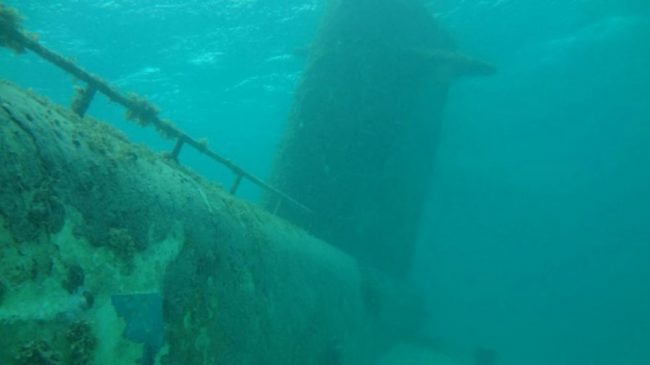
Russia to Remove Hazardous Nuclear Objects Dumped in Its Arctic Waters,
The country’s nuclear energy company will over the next eight years lift two submarines and four reactor compartments from the bottom of the Barents and Kara Seas. By The Barents Observer 5 Aug 20, Russia’s state nuclear agency plans to remove several nuclear objects from the depths of Russia’s Arctic waters in an effort to reduce environmental hazards, Rosatom said this week as it presented a clean-up plan for the region.
Russia’s state nuclear agency plans to remove several nuclear objects from the depths of Russia’s Arctic waters in an effort to reduce environmental hazards, Rosatom said this week as it presented a clean-up plan for the region.
From the late 1960s to the late 1980s, about 18,000 radioactive objects were dumped into Russia’s remote northern waters. Most of them present little environmental risk. But some are increasingly seen as a hazard to Arctic ecosystems.
“Rosatom over the next eight years intends to lift from the bottom of Russia’s Arctic waters six objects that are most dangerous in terms of radioactive pollution,” the company’s spokesperson told the state-run TASS news agency.
The company plans to lift the reactors from the K-11, K-19 and K-140 submarines as well as spent nuclear fuel from the reactor that served the Lenin icebreaker.
In addition, two entire submarines will be lifted: the K-27 from the Kara Sea and K-159 from the Barents Sea. While the former was deliberately dumped by Soviet authorities in 1982, the latter sank during a towing operation in 2003.
The K-27 is located in 33-meter depths east of the Novaya Zemlya archipelago. It has been described by experts as a potential radioactive “time bomb.” The K-159 is located in 200-meter depths off the coast of the Kola Peninsula.
These six objects represent more than 90% of radioactive sources dumped at sea, Rosatom said………
Lifting the six hazardous nuclear objects will not only be technically difficult, but also very expensive.
A recent report made for Rosatom and the European Commission estimated the costs of lifting these six objects at 278 million euros. That includes the cost of bringing them safely to a yard for decommissioning and long-term storage.
Lifting the K-159 alone is estimated to cost 57.5 million euros. Lifting the K-27 and transporting it to a shipyard for decommissioning and long-term storage in Saida Bay will carry a price tag of 47.7 million euros, the report said.
It’s unlikely that Russia’s increasingly cash-strapped treasury will have the 278 million euros needed for the cleanup.
Several countries have previously allocated billions to assist Russia’s post-Soviet efforts to cope with nuclear waste.
Norway has since the mid-90s granted about 1.5 billion kroner (140 million euros) to nuclear safety projects in the Russian part of the Barents region. https://www.themoscowtimes.com/2020/08/05/russia-to-remove-hazardous-nuclear-objects-dumped-in-its-arctic-waters-a71060
The new normal for Northern Siberia – thawing permafrost,forests on fire
The Moscow Times reports economic losses from thawing permafrost alone is expected to cost Russia’s economy up to $2.3 billion US per year. Last year’s fires likely cost rural communities in the region almost $250 million US. In March, Russia announced 29 measures it would be taking to try to deal with climate change over its vast landmass but critics complained the efforts have been more focused on exploiting natural resources in the Arctic than mitigating the impacts of a warming climate.
“They are actively going after every mineral and oil and gas deposit that they can,”
As permafrost thaws under intense heat, Russia’s Siberia burns — again, https://www.cbc.ca/news/world/siberia-burning-climate-change-russia-1.5645428
Russia’s northern landscape is being transformed by heat and fire, Chris Brown · CBC News : Jul 12, Right around now, University of British Columbia climatologist and tundra researcher Greg Henry would usually be up at Alexandra Fiord on the central-east coast of Canada’s Ellesmere Island experiencing the Arctic’s warming climate up close.
Instead, the pandemic has kept his research team grounded in Vancouver — and his focus has shifted to observing the dramatic events unfolding across the Arctic ocean in northern Siberia.
“It’s remarkable — it’s scary,” said Henry of the incredible run of high temperatures in Russia’s far north that have been breaking records for the past month.
This week, a European Union climate monitoring project reported temperatures in June were up to 10 degrees higher than usual in some parts of Russia’s Arctic, with an overall rise of five degrees.
The heat and dry tundra conditions have also triggered vast forest fires. Currently, 1.77 million hectares of land are burning with expectations that the total fire area could eventually surpass the 17 million hectares that burned in 2019.
Equally striking is where the fires are burning.
“Now we are seeing these fires within 15 kilometres of the Arctic Ocean,” said Henry. “Usually there’s not much fuel to burn there, because it’s kept cold by the ocean so you don’t get ignition of fires that far north.”
This year though, he said the heat has dried the ground out enough to change the dynamics.
“It’s a harbinger of what we are in for because the Arctic has been warming at twice the rate of the rest of the planet.”
Environmental disaster Continue reading
Lower-latitude oceans drive complex changes in the Arctic Ocean,
The University of Alaska Fairbanks and Finnish Meteorological Institute led the international effort, which included researchers from six countries. The first of several related papers was published this month in Frontiers in Marine Science.
Climate change is most pronounced in the Arctic. The Arctic Ocean, which covers less than 3% of the Earth’s surface, appears to be quite sensitive to abnormal conditions in lower-latitude oceans.
“With this in mind, the goal of our research was to illustrate the part of Arctic climate change driven by anomalous [different from the norm] influxes of oceanic water from the Atlantic Ocean and the Pacific Ocean, a process which we refer to as borealization,” said lead author Igor Polyakov, an oceanographer at UAF’s International Arctic Research Center and FMI.
Although the Arctic is often viewed as a single system that is impacted by climate change uniformly, the research stressed that the Arctic’s Amerasian Basin (influenced by Pacific waters) and its Eurasian Basin (influenced by Atlantic waters) tend to differ in their responses to climate change.
Since the first temperature and salinity measurements taken in the late 1800s, scientists have known that cold and relatively fresh water, which is lighter than salty water, floats at the surface of the Arctic Ocean. This fresh layer blocks the warmth of the deeper water from melting sea ice.
In the Eurasian Basin, that is changing. Abnormal influx of warm, salty Atlantic water destabilizes the water column, making it more susceptible to mixing. The cool, fresh protective upper ocean layer is weakening and the ice is becoming vulnerable to heat from deeper in the ocean. As mixing and sea ice decay continues, the process accelerates. The ocean becomes more biologically productive as deeper, nutrient-rich water reaches the surface.
By contrast, increased influx of warm, relatively fresh Pacific water and local processes like sea ice melt and accumulation of river water make the separation between the surface and deep layers more pronounced on the Amerasian side of the Arctic. As the pool of fresh water grows, it limits mixing and the movement of nutrients to the surface, potentially making the region less biologically productive.
The study also explores how these physical changes impact other components of the Arctic system, including chemical composition and biological communities.
Retreating sea ice allows more light to penetrate into the ocean. Changes in circulation patterns and water column structure control availability of nutrients. In some regions, organisms at the base of the food web are becoming more productive. Many marine organisms from sub-Arctic latitudes are moving north, in some cases replacing the local Arctic species.
“In many respects, the Arctic Ocean now looks like a new ocean,” said Polyakov.
These differences change our ability to predict weather, currents and the behavior of sea ice. There are major implications for Arctic residents, fisheries, tourism and navigation.
This study focused on rather large-scale changes in the Arctic Ocean, and its findings do not necessarily represent conditions in nearshore waters where people live and hunt.
The study stressed the importance of future scientific monitoring to understand how this new realm affects links between the ocean, ice and atmosphere.
###
Co-authors of the paper include Matthew Alkire, Bodil Bluhm, Kristina Brown, Eddy Carmack, Melissa Chierici, Seth Danielson, Ingrid Ellingsen, Elizaveta Ershova, Katarina Gårdfeldt, Randi Ingvaldsen, Andrey V. Pnyushkov, Dag Slagstad and Paul Wassmann.
Arctic heat, uncontrolled fires, crumbling permafrost – very bad climate news
|
Arctic Oil Infrastructure Faces Climate Karma https://www.bloomberg.com/opinion/articles/2020-07-05/siberia-heatwave-climate-change-really-is-big-oil-industry-risk
Siberia’s heatwave reflects temperature changes that weren’t generally forecast to occur until the end of the century. That’s bad news for everyone.By Julian Lee July 5, 2020, Beaches, clear blue seas, scorching temperatures and long days. Forget the Caribbean, your next summer beach holiday could be on the shores of Russia’s Arctic Ocean.Temperatures at Nizhnyaya Pesha, some 840 miles (1,352 kilometers) northeast of Moscow and just 12 miles from Arctic Ocean coast, reached 86 degrees Fahrenheit (24 degrees Celsius) in early June — a disaster for anyone worried about the planet’s future. Further to the east and further inland, things got even hotter. Russia’s state weather authority confirmed that the temperature at the small town of Verkhoyansk — which sits about 70 miles north of the Arctic Circle and boasts the Pole of Cold District Museum of Local Lore as its only tourist attraction listed on Tripadvisor — hit 100.4 degrees Fahrenheit on June 20. Most alarming, though, is not the temperature itself, but the fact that this wasn’t an isolated incident. Rather, it is part of a heatwave that has persisted since the end of last year. On average, temperatures in western Siberia have been 10 degrees Fahrenheit above normal since December, according to the European Centre for Medium-Range Weather Forecasts. Uncontrolled fires are already sweeping across the forests of Russia, and have been for months. On Friday, the Russian Ministry of Natural Resources reported that efforts were being made to extinguish 272 forest fires covering an area 12 times the size of the District of Columbia, including 10 on specially protected natural territories extending over an area bigger than Manhattan. As I wrote here, rising Arctic temperatures strike at the heart of the Russian economy, which is largely built upon the extraction of oil and gas. Rising temperatures are melting the permafrost and impairing its ability to support structures built on it. The changes threaten the “structural stability and functional capacities” of oil industry infrastructure, according to the Ocean and Cryosphere in a Changing Climate report adopted in September by the Intergovernmental Panel on Climate Change (IPCC). In RetreatAreas of discontinuous permafrost could see a 50-75% drop in load bearing capacity by 2015-25 compared with 1965-75 We’re already seeing the impact. As my colleague Clara Ferreira Marques wrote here, a devastating Arctic fuel spill on May 29 appears to have been caused by melting permafrost. More than 20,000 tons of diesel fuel (or about 150,000 barrels) leaked from a storage tank owned by MMC Norilsk Nickel PJSC, polluting rivers and lakes that drain into the Arctic Ocean’s Kara Sea. The company blamed the “sudden subsidence of supports which served for more than 30 years without problems” for the damage that allowed the fuel to escape from the tank. Russia’s Prosecutor General’s office ordered thorough checks to be carried out on particularly dangerous installations built on territories exposed to permafrost melting. For the oil and gas sector, that’s likely to cover pipelines and processing plants, as well as storage tanks. It’s going to be a massive undertaking. Some “45% of the oil and natural gas production fields in the Russian Arctic are located in the highest hazard zone,” according to the IPCC report. Assets At RiskSome of Russia’s largest oil and gas fields are at risk from thawing permafrost While many of the country’s newest oil and gas fields are situated far to the north, in areas of continuous permafrost, many of the older ones, which form the bedrock of the industry, are in the discontinuous permafrost zone. That area is also crossed by the major pipelines that carry hydrocarbons to customers and export terminals. The heatwave experienced so far this year in Siberia reflects temperature changes that weren’t generally forecast to occur until the end of the century. The rapid changes that are happening to the climate of the world’s northern regions means that even the infrastructure built on areas of continuous permafrost may soon be at risk, too. And that mitigation measures deemed appropriate now may soon be viewed as inadequate. And what’s true in the Arctic north of Russia may also hold in the Arctic north of the Americas. Most of Alaska is underlain by permafrost — continuous across the North Slope (the borough that covers the northern third of the state and is home to its oil production), discontinuous over most of the rest of the state. The risks that bedevil oil and gas infrastructure are no less severe here. The U.S. Bureau of Land Management plans to open an Indiana-sized region of the National Petroleum Reserve-Alaska to new oil and gas development. Doing so is meant to be a boon to U.S. oil independence and Alaska’s state budget, capable of delivering 500,000 barrels of oil a day, according to BLM estimate It could also be a curse. The bureau warns in its environmental impact statement that the new development could be responsible for greenhouse gas emissions equivalent to about 1% of the U.S. total in 2018. Increased industrial activity in the area, on top of the already altered landscape thanks to global warming, creates a host of risks to wildlife from polar bears to eagles and could lead to deadly walrus stampedes. Environmental groups vow to fight the move, which is expected to be finalized by the end of July. Whether oil companies will rush to pour their dollars into frontier exploration in a region that will expose them to unflinching scrutiny and, very likely, unwanted social media campaigns, is questionable — particularly at a time when those investment dollars have become scarce and companies are increasingly focused on the quick returns from investing in the shale deposits of Texas, New Mexico and other, more climatically benign, states. If the northern latitudes continue warming as they are, the implications will be grave for all of us. — With assistance by Elaine He |
|
The Arctic’s climate disaster-Verkhoyansk goes from record cold to record heat
The Record, 28 June 20,The remote Siberian town of Verkhoyansk, three thousand miles east of Moscow and six miles north of the Arctic Circle, has long held the record, with another Siberian town, for the coldest inhabited place in the world. The record was set in 1892, when the temperature dropped to ninety below zero Fahrenheit, although these days winter temperatures are noticeably milder, hovering around fifty below. Last Saturday, Verkhoyansk claimed a new record: the hottest temperature ever recorded in the Arctic, with an observation of 100.4 degrees Fahrenheit—the same temperature was recorded that day in Las Vegas. Miami has only hit a hundred degrees once since 1896. “This has been an unusually hot spring in Siberia,” Randy Cerveny, the World Meteorological Organization’s rapporteur of weather and climate extremes, said. “The coinciding lack of underlying snow in the region, combined with over-all global temperature increases, undoubtedly helped play a critical role in causing this extreme.” Siberia, in other words, is in the midst of an astonishing and historic heat wave.
Anthropogenic climate change is causing the Arctic to heat up twice as fast as the rest of the planet. Climate models had predicted this phenomenon, known as Arctic amplification, but they did not predict how fast the warming would occur. Although Verkhoyansk has seen hot temperatures in the past, Saturday’s 100.4-degree record follows a wildly warm year across the region. Since December, temperatures in western Siberia have been eighteen degrees above normal. Since January, the mean temperature across Siberia has been at least 5.4 degrees Fahrenheit above the long-term average. As the meteorologist Jeff Berardelli reported for CBS, the heat that has fallen on Russia in 2020 “is so remarkable that it matches what’s projected to be normal by the year 2100, if current trends in heat-trapping carbon emissions continue.” By April, owing to the heat, wildfires across the region were larger and more numerous than they were at the same time last year, when the Russian government eventually had to send military aircrafts to battle vast blazes. The scale of the current wildfires—with towering plumes of smoke visible for thousands of miles on satellite images—suggest that this summer could be worse. Because of the coronavirus pandemic, they will also be more complicated to fight.
Toward the end of May, as the sun stopped dropping below the horizon, the heat continued. In the town of Khatanga, far north of the Arctic Circle, the temperature hit seventy-eight degrees Fahrenheit, or forty-six degrees above normal, topping the previous record by twenty-four degrees. The heat and fires are also hastening the dissolution of Siberian permafrost, perennially frozen ground that, when thawed, unleashes more greenhouse gases and dramatically destabilizes the land, with grave consequences. On May 29th, outside Norilsk, the northernmost city in the world, the thawing ground buckled, causing an oil-storage tank to collapse and spew more than a hundred and fifty thousand barrels, or twenty-one thousand tons, of diesel fuel into the Ambarnaya River. The spill was the largest to ever occur in the Russian Arctic.
Norilsk, which was constructed in the nineteen-thirties by prisoners of a nearby Gulag camp, Norillag, was already one of the most polluted places in the world. Most of its hundred and seventy-seven thousand residents work for Norilsk Nickel, the company that owns the collapsed oil tank. Its massive mining and metallurgy complex alone is worth two per cent of Russia’s G.D.P. The city contributes a fifth of the global nickel supply and nearly half of the world’s palladium, a metal used to make catalytic converters. Factories billow clouds of sulfur dioxide incessantly, and the resulting acid rain has turned the city and its surroundings into an industrial wasteland, with no green space or parks, just dirt and dead trees. Life expectancy in Norilsk is twenty years shorter than it is in the United States. The last time the town made the news, before the oil spill, was exactly a year ago, when an emaciated polar bear, a refugee from its melting home, was photographed rummaging through the city dump.
Norilsk Nickel’s executives have tried to skirt responsibility for the oil spill by blaming the thawing permafrost—or, as a press release stated, “a sudden sinking of the storage tank’s pillars, which served accident-free for more than thirty years.”
But the thaw did not happen unexpectedly, out of nowhere. Buildings in Norilsk have collapsed because of the sagging ground. Russian and international experts have been aware of the risks that rapidly thawing permafrost represents for more than a decade. A 2017 report from an Arctic Council working group said that “communities and infrastructure built on frozen soils are significantly affected by thawing permafrost, one of the most economically costly impacts of climate change in the Arctic.” They found that thawing permafrost could contaminate freshwater, when previously frozen industrial and municipal waste is released, and that the bearing capacity of building foundations has declined by forty to fifty per cent in some Siberian settlements since the nineteen-sixties. They also noted that “the vast Bovanenkovo gas field in western Siberia has seen a recent increase in landslides related to thawing permafrost.” The authors of a 2018 paper, published in Nature Communications, found that “45% of the hydrocarbon extraction fields in the Russian Arctic are in regions where thaw-related ground instability can cause severe damage to the built environment.” The paper continued, “Alarmingly, these figures are not reduced substantially even if the climate change targets of the Paris Agreement are reached.”
In early June, President Vladimir Putin declared a national emergency, and scolded local authorities for their slow response to the spill. The Kremlin allegedly found out about the spill two days after the fact, from pictures of a crimson river posted on social media. Although the Russian prosecutor general’s office agreed, in a preliminary finding, that the thawing permafrost was a contributing factor to the spill, investigators also said that the fuel-storage tank had needed repairs since 2018. They arrested four employees of the power plant on charges of violating environmental regulations. Norilsk Nickel denied the accusations but said that the company is coöperating with law-enforcement agencies and has launched “a full and thorough investigation.” “We fully accept our responsibility for the event,” the company said in a statement provided to the Guardian. Vladimir Potanin, the president of Norilsk Nickel and the richest man in Russia, said that the company will pay for the full cost of the disaster, which he estimated at ten billion rubles, or a hundred and forty-six million dollars. (A Russian environmental watchdog, Rosprirodnadzor, put the cost at around one and a half billion dollars.) Putin, meanwhile, publicly lambasted Potanin for the disaster, emphasizing that it was his company’s negligence that led to the spill. “If you replaced them in time,” Putin said, in a video call in early June, referring to the aging oil-storage tank, “there wouldn’t have been the damage to the environment and your company wouldn’t have to carry such costs.”
The company’s initial response efforts—floating booms to contain the spill—largely failed. By June 9th, the oil had entered the forty-three-mile-long Lake Pyasino, which borders a nature preserve and flows into the Pyasino River. “Once it enters that river system, it can’t be stopped,” Rob Huebert, an Arctic expert at the University of Calgary, said. “The oil could then make its way to the Arctic Ocean.” On June 11th, Russia’s investigative committee charged Norilsk’s mayor with criminal negligence, for his botched response to the disaster. Last Friday, in another video call, Putin’s emergencies minister reported that response teams had collected 3.6 million cubic feet of polluted soil and 1.1 million cubic feet of contaminated water. The company will construct a pipeline to pump the contaminated muck to unspecified disposal sites. But the region will remain toxic. Diesel oil seeps into river banks. Even if the oil is contained to the lake, the contamination can never be fully removed. Some of it will make its way through the food chain. Wildlife—fish, birds, reindeer—could suffer for decades. “You can’t ever really clean a spill up,” Huebert said. Putin, in the call, emphasized that work must continue until the damage is remedied. “Obviously, the disaster has brought dire consequences for the environment and severely impacted biodiversity in water bodies,” he said. “It will take a lot of time to reclaim and restore the environment.”
Putin, however, is not known for his environmentalism. His anger and concern about the Norilsk oil spill might have more to do with how much it exposed his government, making visible the overwhelming economic and environmental risks facing oil, gas, and mineral development in Siberia if temperatures there continue to rise. “The Russians’ continued development of oil and gas in the central Arctic region is their economic future,” Huebert said. “The Russians’ interest in all this is to keep the oil flowing, whatever it takes.” But sixty per cent of Russia is permafrost. Although much of the newest oil and gas infrastructure in the Far North has been engineered with climate change in mind, temperatures are currently on track to far exceed projections. Perhaps that is why the Kremlin did, finally, officially ratify the Paris accord last October. And yet the Kremlin continues to incentivize increased oil and gas development in eastern Siberia and the Arctic, which will lead to more greenhouse-gas emissions, which will continue speeding up the permafrost thaw.
Need for action on global heating – It’s 38°C in Siberia
|
The Arctic heatwave: here’s what we know, https://www.theguardian.com/commentisfree/2020/jun/25/arctic-heatwave-38c-siberia-scienceTamsin Edwards
It’s 38°C in Siberia. The science may be complicated – but the need for action now couldn’t be clearer Fri 26 Jun 2020 There’s an Arctic heatwave: it’s 38°C in Siberia. Arctic sea ice coverage is the second lowest on record, and 2020 may be on course to be the hottest year since records began. For many people, such news induces a lurch of fear, or avoidance – closing the webpage because they don’t want to hear yet more bad news. A few might think “It’s just weather,” and roll their eyes. How can we make sense of such an event? Climate is subtle and shifting, with many drivers and timescales. But we can use this northern heatwave to illuminate the complexity of our planet. We can break this question into parts, from fast to slow. Fast: the immediate effect is to increase wildfires. Siberia has seen “zombie fires” reignited from deep smouldering embers in peatland. This is bad news, releasing particulate air pollution and more carbon in 18 months than in the past 16 years. The immediate cause? Here in the mid-high northern latitudes, we live in unstable weather under the influence of the polar jet stream. This rapid current of air high above our heads drags weather in a conveyor belt from west to east, with alternating patches of cold and warm air, low and high pressure. Sometimes the weather patterns get stuck, creating a stable period of weather, like a heatwave. This is one long, severe example. Does climate change make this “blocking” more likely? Maybe. The jet stream is created by the contrast between cold polar air and the warmer south. The Arctic is warming twice as fast as the global average: that means less north-south contrast, so the jet stream can become more wobbly and meandering. Loops break off like the oxbow lakes of school geography lessons, stranding particular weather patterns in one place. And why is the Arctic warming faster? Because sea ice and snow are so bright. When they melt with global warming, the ocean and land beneath are darker, so they absorb more of the sun’s heat. Their loss amplifies our warming. The current low in Arctic sea ice is itself partly the result of the Siberian heatwave, amplifying the usual year-to-year fluctuations. But the trend is down: the more CO2 we emit, the more the planet’s temperature rises, and the more sea ice we lose. Scientists predict the Arctic will start seeing summers without sea ice by 2050. But it’s not irreversible. It’s not a tipping point. The sea ice would return if we could cool the climate again. Unfortunately we know only three ways to do that: extract vast amounts of CO2 from the air with trees or technology; reflect the sun’s rays at a planetary scale; or wait, for many generations. This Arctic heatwave is a sharp spike on top of the global warming trend. That’s what makes it more intense, more likely and more of a warning: it’s a taste of the future predicted for Russia, if we burn quickly through our fossil fuels. The real fear around the Arctic for the longer term, I find when talking to people, comes from the idea of “runaway” warming from methane release. Warming could release stores of methane – a strong greenhouse gas – from permafrost or frozen sediments at the bottom of the ocean, which would add to the warming from our own activities. There is more than twice the amount of carbon in the permafrost as in the atmosphere, and thawing has already begun. There are big local impacts – damage to roads and buildings, because the ground can no longer bear so much weight, and an appalling story involving what appears to be anthrax release from thawing burial grounds. Permafrost thaw was even blamed by a Russian mining company for the recent collapse of a fuel reservoir, contaminating the river with 20,000 tonnes of diesel, though other factors were probably also involved. So could this Siberian heatwave, or ones like it, trigger catastrophic warming? I see much fear about amplifying methane feedbacks, including the false idea that climate scientists don’t consider them (we do, just separately to the main global climate models). Yet for several years there has been growing evidence that this risk is less than originally thought. Carbon stored in permafrost and wetlands is predicted to contribute around 100bn tonnes of CO2 this century. That’s a lot, but we add around 40bn tonnes ourselves every year. The methane at the bottom of the ocean would take centuries to release, so as long as we limit global warming we should keep those stores mostly locked up. There are uncertainties, of course, but the stores’ impact on warming is likely to be tenths of a degree, not several degrees. Yet every tonne of CO2 released from permafrost means one tonne fewer we can emit if we are to reach net zero emissions by 2050. Every year’s equivalent of our emissions brings our deadline closer. Every tenth of a degree of warming brings us closer to our target of 1.5°C and makes more permafrost thaw, and the impacts of climate change worse for the most vulnerable people and species of the world. The Arctic heatwave shows us that there are few simple stories in climate change. There is always a mix of natural and human influence, bad news and slightly-less-bad news, and occasionally even hopeful news. So, more than ever, we need to avoid over-simplifying or slipping into easy tropes like “We’re all doomed” or “It’s all weather,” but to try to understand the details. Perhaps there is one simple story though: every bit of warming we avoid will help keep our planet a more familiar and an easier place to live on. • Dr Tamsin Edwards is a senior lecturer in physical geography at King’s College London |
Record breaking heat in Verkhoyansk, north of the Arctic Circle
|
A Siberian town near the Arctic Circle just recorded a 100-degree temperature https://www.vox.com/2020/6/21/21298292/siberia-temperature-100-climate-change
One of the coldest towns on Earth clocks a potentially record-breaking — and worrying — temperature. By Zeeshan Aleem@ZeeshanAleem Jun 21, 2020,A small town in Siberia reached a temperature of 100.4 degrees Fahrenheit on Saturday, which, if verified, would mark the hottest temperature ever recorded north of the Arctic Circle. Temperatures have jumped in recent months to levels rarely seen in the Russian region, and it’s a sign of a broader trend of human-caused climate change that’s transforming weather patterns in the Arctic Circle. The town of Verkhoyansk is one of the coldest towns on Earth — temperatures dropped to nearly 60 degrees below zero there this past November — and the average June high temperature is 68 degrees. The 100.4 reading in Verkhoyansk, which sits farther north than Fairbanks, Alaska, would be the northernmost 100-degree reading ever observed. The Washington Post reports that while there are questions about the accuracy of the record temperature, a Saturday weather balloon launch that found unusually high temperatures in the lower atmosphere supports the reading. And on Sunday, the town reached 95.3 degrees, according to the Post. CBS News meteorologist and climate specialist Jeff Berardelli wrote on Saturday that 100-degree temperatures in or near the Arctic are “almost unheard of.” Before Saturday, Siberia was already experiencing an extraordinary heat wave. Surface temperatures in Siberia were 18 degrees higher than average in May, making it the hottest May in the region since record-keeping began in 1979, according to the Copernicus Climate Change Service. “It is undoubtedly an alarming sign, but not only May was unusually warm in this region,” said Freja Vamborg, a senior scientist at the Copernicus Climate Change Service, in a statement about the finding. “The whole of winter and spring had repeated periods of higher-than-average surface air temperatures.” Climate scientist Martin Stendel said on Twitter that the temperatures recorded in northwestern Siberia last month would be a 1-in-100,000-year event — if not for climate change. Berardelli said the average heat across Russia between January and May actually matches what current models project to be normal for the region in 2100, if carbon emissions continue. “Due to heat trapping greenhouse gases that result from the burning of fossil fuels and feedback loops, the Arctic is warming at more than two times the average rate of the globe,” he explained in his analysis of the Verkhoyansk reading. “This phenomenon is known as Arctic Amplification, which is leading to the decline of sea ice, and in some cases snow cover, due to rapidly warming temperatures.” He noted that if the climate continues to heat up, extreme heat waves will become more of the norm. |
|
Raising dangerously radioactive Russian submarines from the bottom of Arctic oceans

Russia plans to raise radioactive wrecks in the Arctic https://bellona.org/news/nuclear-issues/2020-05-russia-plans-to-raise-radioactive-wrecks-in-the-arctic
By 2030, the Russian government will raise seven pieces of radioactive debris – including two nuclear submarines – from the bottom of Arctic oceans, where they were intentionally scuttled during the Soviet era, documents received by Bellona confirm. May 12, 2020 by Charles Digges
By 2030, the Russian government will raise seven pieces of radioactive debris – including two nuclear submarines – from the bottom of Arctic oceans, where they were intentionally scuttled during the Soviet era, documents received by Bellona confirm.
The documents identify this debris as the most dangerous of the items the Soviet Union discarded in polar waters, and say that six of them contain more than 90 percent of the radioactivity to be found on the Arctic seabed.
Of particular importance, the documents say, are the K-159 and K-27 nuclear submarines, the nuclear reactors of which were still full of nuclear fuel when they went down.
Both submarines, say experts, are in a precarious state. In the case of the K-27, which was scuttled intentionally in 1982, the sub’s reactor was sealed with furfural, before it was sunk. But experts say this seal is eroding. The K-159, which sank while it was being towed to decommissioning in 2003, poses similar threats. Some 800 kilograms of spent nuclear fuel remained in its reactor when it went down in some of the most fertile fishing grounds in the Kara Sea.
In both cases, experts fear that a nuclear chain reaction could occur should water leak into the submarines’ reactor compartments.
Russian scientists have kept a close eye on the K-159, launching regular expeditions to monitor for potential radiation leaks. According to their data, should the submarine depressurize, radionuclides could spread over hundreds of kilometers, heavily impacting the local fishing industry.
Anatoly Grigoriev, who heads up the international programs department of Rosatom, Russia’s state nuclear corporation, says that raising the wrecks will cost some €123 million.
“Should the K-159 depressurize, it could cause €120 million of damage per month,” Grigoriev told Bellona at an earlier meeting.
Both submarines, say experts, are in a precarious state. In the case of the K-27, which was scuttled intentionally in 1982, the sub’s reactor was sealed with furfural, before it was sunk. But experts say this seal is eroding. The K-159, which sank while it was being towed to decommissioning in 2003, poses similar threats. Some 800 kilograms of spent nuclear fuel remained in its reactor when it went down in some of the most fertile fishing grounds in the Kara Sea.
In both cases, experts fear that a nuclear chain reaction could occur should water leak into the submarines’ reactor compartments.
Russian scientists have kept a close eye on the K-159, launching regular expeditions to monitor for potential radiation leaks. According to their data, should the submarine depressurize, radionuclides could spread over hundreds of kilometers, heavily impacting the local fishing industry.
Anatoly Grigoriev, who heads up the international programs department of Rosatom, Russia’s state nuclear corporation, says that raising the wrecks will cost some €123 million.
“Should the K-159 depressurize, it could cause €120 million of damage per month,” Grigoriev told Bellona at an earlier meeting.
The majority of this debris was left in the eastern bays of the Kara Sea near the Novaya Zemlya Archipelago. Still, the exact location of some of these sunken objects is still unknown. The whereabouts of the reactor compartment from the K-140 nuclear submarine remains unaccounted for.
And there are other radiation hazards that are farther afield. The K-278, or Komsomolets, nuclear submarine lies at the bottom of the Norwegian Sea.
“A quarter of all the radioactive waste that has been sunk in the oceans belongs to us,” says Sergei Antipov, director of strategic planning and project management at the Nuclear Safety Institute of the Russian Academy of Sciences.
Since the early 2000s, massive projects to decommission Soviet-era nuclear submarines have been ongoing with the assistance of numerous western partners. Moscow has shared information about these radioactive hazards with nations of the G-7 and has worked with the European Bank of Reconstruction and Development and other donors.
This international cooperation has brought significant results. Military bases have been cleared of most radioactive contamination and nearly 200 rusted-out nuclear submarines have been safely dismantled, as a review of the last 25 years of Bellona’s work clearly shows.
Russia, moreover, has the necessary infrastructure to deal with whatever discarded radiation hazards are brought to the surface of Arctic waters. And while Russia lacks the necessary vessels for such undersea rescues, the international partners it has developed while cleaning up other pieces of the Soviet nuclear legacy certainly do.
Next year, Russia assumes the rotating chairmanship of the Arctic Council, and we hope that Moscow will be able to announce upon the first meeting that these projects are underway. Bellona, which is already involved in discussing this important work, has high hopes.
An Arctic island is warming SIX times faster than the global average
|
Global warming: An Arctic island is warming SIX times faster than the global average, GLOBAL WARMING threatens the planet as a whole but parts of an island in the Arctic are warming six times faster than the global average, scientists have warned. Express UK By SEBASTIAN KETTLEY Apr 30, 2020 Polar researchers stationed in the southwest of the Arctic island of Spitsbergen have found a worrying warming trend in meteorological data spanning 40 years. Temperatures in parts of the island, which is part of the Svalbard archipelago between Norway and the North Pole, have risen six times higher than the global average. Scientists from the Institute of Geophysics, Polish Academy of Sciences (IGF PAN) made the worrying discovery during expeditions to the Polish Polar Station Hornsund. The scientists presented their findings in Earth System Science Data. Professor Marzena Osuch, study co-author and hydrologist, told the Polish Press Agency (PAP): “The average temperature in Hornsund between 1979 and 2018 rose by 1.14C per decade. “The change is more than six times higher than the global change for the same period.”……. https://www.express.co.uk/news/science/1276239/Global-warming-Arctic-temperatures-Spitsbergen-warming-faster-climate-change |
|
1 This Month
23-25 October – on Zoom – World BEYOND War’s annual global conferenc


Shut down the radiation-damaged Heysham nuclear reactors now
To see nuclear-related stories in greater depth and intensity – go to https://nuclearinformation.wordpress.com

Say No to NASA’s Reckless Nuclear Reactor on the Moon
Say No to NASA’s Reckless Nuclear Reactor on the Moon

-
Archives
- October 2026 (247)
- September 2026 (339)
- August 2026 (330)
- July 2026 (355)
- June 2026 (287)
- May 2026 (306)
- April 2026 (356)
- March 2026 (251)
- February 2026 (267)
- January 2026 (308)
- December 2025 (358)
- November 2025 (359)
-
Categories
- 1
- 1 NUCLEAR ISSUES
- business and costs
- climate change
- culture and arts
- ENERGY
- environment
- health
- history
- indigenous issues
- Legal
- marketing of nuclear
- media
- opposition to nuclear
- PERSONAL STORIES
- politics
- politics international
- Religion and ethics
- safety
- secrets,lies and civil liberties
- spinbuster
- technology
- Uranium
- wastes
- weapons and war
- Women
- 2 WORLD
- ACTION
- AFRICA
- Atrocities
- AUSTRALIA
- Christina's notes
- Christina's themes
- culture and arts
- Events
- Fuk 2022
- Fuk 2023
- Fukushima 2017
- Fukushima 2018
- fukushima 2019
- Fukushima 2020
- Fukushima 2021
- general
- global warming
- Humour (God we need it)
- Nuclear
- RARE EARTHS
- Reference
- resources – print
- Resources -audiovicual
- Weekly Newsletter
- World
- World Nuclear
- YouTube
-
RSS
Entries RSS
Comments RSS

