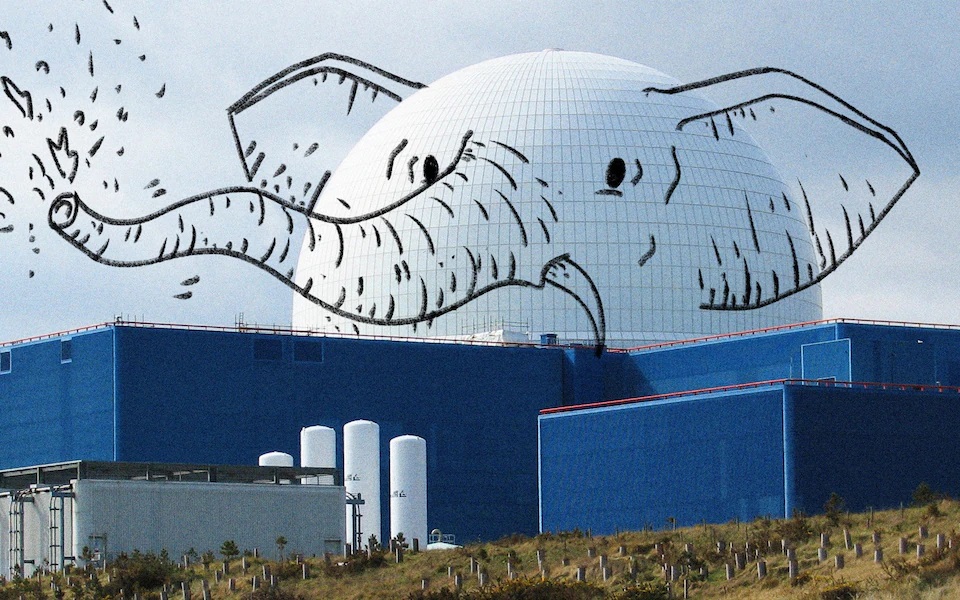
Stop Sizewell C carries out bold projection on Sizewell B dome a week before the Spending Review, highlighting alternatives for Sizewell C’s £40 billion cost.

Stop Sizewell C tonight projected a series of messages to the Prime Minister onto Sizewell B’s dome, stating that the £40 billion Sizewell C project is a Nuclear Waste of Money. [1] The messages urge him to make alternative choices for spending taxpayers’ money on ways to generate cheaper electricity and to reduce household bills.
In one week, on 11 June, the Chancellor is expected to set out taxpayers’ commitment to Sizewell C at the conclusion of the Spending Review. Sizewell C has already swallowed £6.4 billion of taxpayers’ money [2] and the entire project is bogging down the government balance sheet. The two-year equity raise process remains ongoing with an uncertain outcome, meaning the much-delayed Final Investment Decision is unlikely before next month at the earliest. The Financial Times says this could take place at an Anglo French Summit between 8-10 July. [3]
Alison Downes of Stop Sizewell C said: “Every pound sunk into risky, expensive Sizewell C is a pound lost to alternative energy sources and critical social funding that the voting public cares deeply about. It’s not too late to redirect money to offshore wind, or warm homes – creating thousands of jobs – or to restoring the most unpopular and unjust cuts. Sizewell C, given the terrible track record of Hinkley Point C, would be £40 billion badly spent.”
Stop Sizewell C 4th June 2025,
https://docs.google.com/document/d/1IugTc5hAy7N9SlPrdvbfevH5USEfIsjJKw-jIDoo74c/edit?tab=t.0
Britain considering fleet of nuclear strike aircraft
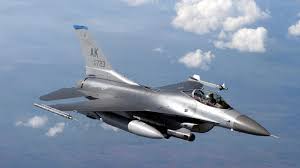
The UK may acquire F-35A fighter jets as part of a broader effort to
deepen its contribution to NATO’s nuclear sharing arrangements, following
a key recommendation in the newly published Strategic Defence Review (SDR).
The document states:
“More F-35s will be required over the next decade.
This could comprise a mix of F-35A and B models according to military
requirements to provide greater value for money.”
This reference to a
potential F-35A acquisition has been interpreted by experts and
parliamentarians as linked to the UK’s possible future role in NATO’s
nuclear sharing mission—an arrangement under which non-nuclear states
host US nuclear weapons and are capable of delivering them in wartime.
While the UK already possesses its own independent nuclear deterrent via
the submarine-based Trident system, participation in NATO’s air-delivered
nuclear mission would mark a significant evolution in its commitment to
Alliance nuclear burden-sharing.
UK Defence Journal 3rd June 2025,
https://ukdefencejournal.org.uk/britain-considering-fleet-of-nuclear-strike-aircraft/
It’s over! Anti-nuke dump campaigners in East Lincolnshire celebrate victory
The UK/Ireland Nuclear Free Local Authorities are delighted to share in
the celebrations of East Lincolnshire residents and their elected members
as Nuclear Waste Services announces that it shall now take the ‘immediate
steps needed to close the Community Partnership and the communities of
Withern and Theddlethorpe, and Mablethorpe will leave the GDF (Geological
Disposal Facility) siting process’.
The announcement came hot on the
heels of the decision this morning by the Lincolnshire County Council
Executive to withdraw its support from the GDF process.
NFLA 3rd June 2025, https://www.nuclearpolicy.info/news/its-over-anti-nuke-dump-campaigners-in-east-lincolnshire-celebrate-victory/
Priming us up for war – “it’s not so bad, after all” – Britain’s Labour government leads the way
The Unseen March video from 9 years ago – but now it’s getting worse. https://theaimn.net/priming-us-up-for-war-its-not-so-bad-after-all-britains-labour-government-leads-the-way/
On the outskirts of Berlin, you can visit what’s left of Sachsenhausen , one of the first Nazi concentration camps, set up in 1936, as a model for the more than 44,000 such camps they ran between 1933 and 1945.
I was impressed by the efficiency shown by the way that the Nazis carried out mass murder in this camp – which became a model for how to run this operation as quickly and with as little fuss as possible.
In the early days of the camp, the inmates were used as forced labour. Systematic extermination was carried out. Many thousands died by hunger, disease, overwork, medical experiments and mistreatment. But by 1941, tens of thousands of Jews and Soviet prisoners were being directly murdered.
I saw where this happened. Originally, the prisoners were forced down a brick path, and shot. You can still see stains on this path. But here’s the interesting bit. It turned out that the German soldiers who did the shooting became badly affected by it. Sometimes they would miss, or have to make several shots to actually kill a man. It made the soldiers unwell, having to rather messily murder their victims – it’s not like being in combat, not at all fair. It was making those soldiers mentally ill.
Here’s where the practical genius of the Nazis came in. They devised a special unit, (which was still there, when I visited a few years ago). In this unit, the shooter could be sure of doing one direct lethal hit, but the victim was placed in such a way that the shooter was unable to see him. This system solved the psychological problem of upsetting the man doing the shooting. No more mental illness, and the mass killing could proceed in an orderly way.
In a sort of sequel to this discovery, the Americans in recent years developed the efficiency of drones. targeting and killing suspected terrorists and militants in countries like Pakistan, Yemen, and Afghanistan. Once again, – such a beneficial effect on the operator’s mental health. From thousands of miles away – press a button, no sight of any mess. and a beneficial effect on the the public too – all this killing being done so neatly, and so far away – so much better than an old-fashioned war battle.
So it is that the thought of war becomes much less unpleasant. With drones, and missiles, it has become a sort of distant, sort of “clean”, precision operation.
This new palatability of war comes to add to the already existing beneficial aspects of war. Getting ready for war shows that our great leaders are strong and decisive. It’s patriotic. It defends our democratic values. There are those other – nebulous, but still real, concepts of courage, heroism, and past glorious victories. The new “war-readiness” shows that we are aware, and awake-up to the threats of other countries, who undoubtedly want to attack us. And on top of all that – getting ready for war provides jobs jobs jobs!
Now Sir Keir Starmer’s UK Labour government is not so sure that the British public is convinced of all this. So they’re accentuating the already existing British trend to promote militarism. The Daily Mail announces the new education programme:
Children taught value of the military
Defence chiefs will work with the Department for Education to develop understanding of the Armed Forces among young people in schools, by means of a two-year series of public outreach events across the UK, explaining current threats and future trends.
Schools and community-based cadet forces will also be expanded, with an ambition of a 30 per cent rise by 2030 with a view to the UK having 250,000 cadets, many of whom will then go on to join the armed forces.
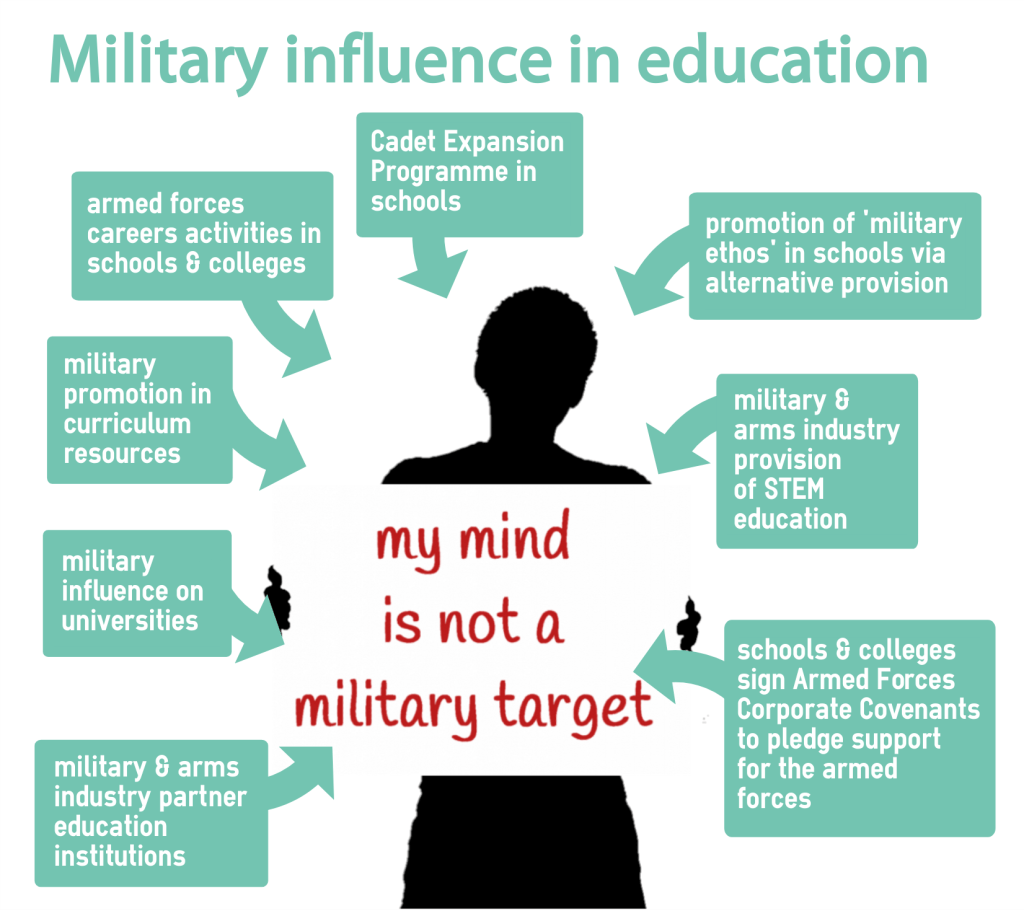
Those radical terrorists, The Quakers, have provided an alternative view – The military in education & youth activities. But I’m not sure that their view is widely known.
It looks as if mass education on the necessity of war is now well underway. The general public in the West is being brainwashed with the doctrine that authoritarian Russia and China are about to invade our peace-loving democracies. Sir Keir Starmer takes the initiative, showing how Labour there is in concert with the Tories. We must be ready to fight back, or perhaps better, to pre-empt such attacks. No doubt the Russian and Chinese populations are being taught a similar message, the other way around.
What now makes it easier is that we can buy ever more of those glorious distance methods, so much neater than sending our boys out for messy personal danger. The efficient Nazis got the ball rolling on this. In education Sir Keir Starmer now takes the initiative. Labour in the UK is enthusiastically backing their own and and the USA’s arms manufacturers. Weapons-making is the big thing in business now – in Europe too, and of course in the USA.
War School – The Battle for Britain’s Children – https://www.youtube.com/watch?v=bl5Zc71KV_g
Sellafield’s race against time: nuclear waste clean-up not going quickly enough, Public Accounts Committee (PAC) warns

Sir Geoffrey Clifton-Brown MP, Chair of the Committee, said: “The intolerable risks presented by Sellafield’s ageing infrastructure are truly world-class. When visiting the site, it is impossible not to be struck by the fact that one can be standing in what is surely one of the most hazardous places in the world.
“Our report contains too many signs that this is a race that Sellafield risks losing.”
Report highlights latest picture on delays and cost rises in c.£136bn 100-year nuclear decommissioning project.
The retrieval of waste from ageing buildings at the most hazardous nuclear site in the UK is not happening quickly enough. In its report on decommissioning Sellafield, the Public Accounts Committee (PAC) warns that the estimated £136bn cost of the project would rise even more if work is further delayed, while expressing scepticism as to whether or not recent signs of improvement in performance could represent another false dawn.
The PAC found in 2018 that government needed a firmer grip on Sellafield’s nuclear challenges, and now warns that not enough progress has been made in addressing its most significant hazards. One building, the Magnox Swarf Storage Silo (MSSS), has been leaking radioactive water into the ground since 2018 – the PAC calculates, at current rates, enough to fill an Olympic swimming pool roughly every three years. The Nuclear Decommissioning Authority (NDA) accepts this leak is its “single biggest environmental issue”, but that the radioactive particles are “contained” in the soil and do not pose a risk to the public.
The PAC’s report finds that Sellafield Ltd has missed most of its annual targets for retrieving waste from several buildings on the site, including the MSSS. The PAC’s inquiry heard that the MSSS is the most hazardous building in the UK, and as a result of Sellafield Ltd’s underperformance will likely remain extremely hazardous for longer. The report seeks answers from Government on how it will hold the NDA and Sellafield Ltd to account in ameliorating the site’s greatest hazards.
As well as safety concerns, the PAC further warns of the impact that delays in the programme have on costs. In the long-term, waste will need to be stored in an underground Geological Disposal Facility (GDF) capable of storing it for thousands of years. The PAC finds that the date for the GDF has slipped from 2040 to the late 2050s, with every decade of delay meaning Sellafield could need to construct another storage building, each costing £500m-£760m. The GDF project is still at an early stage, with sites considered in Cumbria and Lincolnshire – though the PAC understands that Lincolnshire County Council has recently announced it is likely to withdraw.
The report highlights some recent signs of improvement in Sellafield’s delivery, with more emphasis put on planning in how it works with contractors and most recently-started projects being delivered in line with their business cases as a result. However, the report highlights the example of one of Sellafield’s project to refurbish an onsite lab so it could continue analysing waste samples – essential for safety.
The report finds that this very poorly managed and now-paused project has seen £127m wasted. Its failure, which resulted from a lack of understanding of what physical state its labs were in, and from not doing the right remedial work to address their deterioration, illustrates the need to improve asset management at Sellafield. The report urges Sellafield Ltd to explain how it is addressing the deteriorating condition of its assets, which its safety experts have warned is making the site increasingly unsafe.
The PAC’s report also finds indications of a sub-optimal culture at the site, with concerns raised in the report given that the exceptionally hazardous nature of many of Sellafield’s activities means that it is imperative that all employees and contractors on the site feel able to raise any concerns that they have without fear of consequences. The PAC is aware that the NDA paid £377,200 in 2023-24 to settle employment-related claims.
Further, the PAC previously noted that non-disclosure agreements have been used elsewhere in the public sector to cover up failure. The report finds that Sellafield Ltd has signed 16 non-disclosure agreements in the last three years. It further seeks publication from the NDA of information around the prevalence and perception of bullying and harassment in its annual report.
Chair comment
Sir Geoffrey Clifton-Brown MP, Chair of the Committee, said: “The intolerable risks presented by Sellafield’s ageing infrastructure are truly world-class. When visiting the site, it is impossible not to be struck by the fact that one can be standing in what is surely one of the most hazardous places in the world. This is why we expect Sellafield’s management of its assets, and the delivery of the project to decommission it, to be similarly world-class. Unfortunately, our latest report is interleaved with a number of examples of failure, cost overruns, and continuing safety concerns. Given the tens of billions at stake, and the dangers onsite to both the environment and human life, this is simply not good enough.
“As with the fight against climate change, the sheer scale of the hundred-year timeframe of the decommissioning project makes it hard to grasp the immediacy of safety hazards and cost overruns that delays can have. Every day at Sellafield is a race against time to complete works before buildings reach the end of their life. Our report contains too many signs that this is a race that Sellafield risks losing. It is of vital importance that the Government grasp the daily urgency of the work taking place at Sellafield, and shed any sense of a far-off date of completion for which no-one currently living is responsible. Sellafield’s risks and challenges are those of the present day. There are some early indications of some improvement in Sellafield’s delivery which our report notes. Government must do far more to hold all involved immediately accountable to ensure these do not represent a false dawn, and to better safeguard both the public purse and the public itself.”
Zaporizhzhia ‘extremely fragile’ relying on single off-site power line, IAEA warns
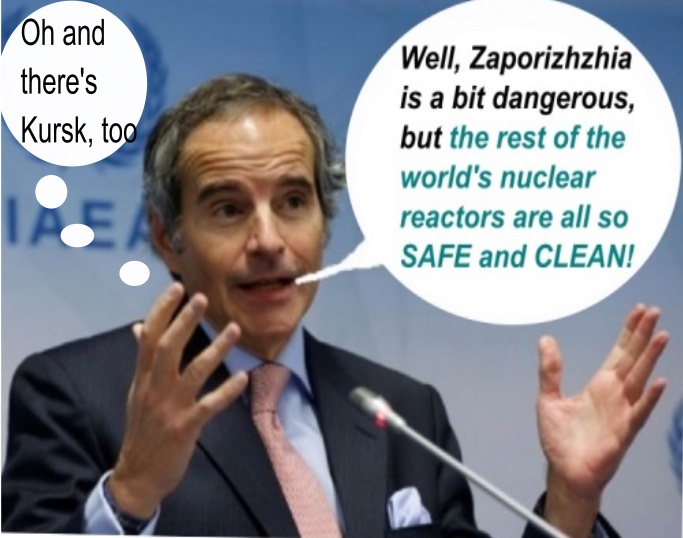
Europe’s largest nuclear power plant has just one remaining power line for essential nuclear safety and security functions, compared with its original 10 functional lines before the military conflict with Russia, warned Rafael Mariano Grossi, director general of the International Atomic Energy Agency.
The off-site power situation at the six-reactor Zaporizhzhia nuclear power plant in Ukraine is “extremely fragile,” Grossi said, since its last 330-kilovolt backup line has remained disconnected since the plant lost access to it on May 7. It is unclear when it will be restored.
As a result, Zaporizhzhia is entirely dependent on the last remaining 750-kV line for the external electricity required to operate the plant’s nuclear safety systems and cool its nuclear fuel.
After Russia took control of Zaporizhzhia in early 2022, the plant has lost all access to off-site power eight times, but it was usually restored within a day, according to the IAEA.
Quotable: “We are actively engaged. I have been discussing with the [energy] minister, with the Ukrainian regulator, and also, of course, with the Russian side, because they are in control of the plant. The idea is to be talking to everybody when it comes to safety,” Grossi said during a press conference Tuesday during his visit to Kyiv, Ukraine.
Grossi warned that even though Zaporizhzhia has not been operating for some three years now, its reactor cores and spent nuclear fuel still require continuous cooling, for which electricity is needed to run the water pumps.
“There are only two [power lines] in operation—one 750-kV and another 330-kV—which are intermittently down because of a number of situations… attacks or interruptions, we do not know,” Grossi added in his remarks. “The repair works have been performed but what we expect is this quite unpredictable situation will continue.”
“We have to move to a more stable situation, and this, of course, depends on overall political negotiation, which will lead to less—or, ideally, no—military activity around the plant.” Grossi said. “Absent that, what we are doing [and] what everyone is doing is (trying) to avoid the worst (and) repair it as soon as possible. Try to ensure outside power supply whenever it falls down.” Grossi plans to visit Russia as part of his regular contacts with both sides to ensure nuclear safety and security during the conflict.
A closer look: In addition to the lack of off-site power backup, on May 22 the IAEA reported a drone strike at Zaporizhzhia’s training center—the third such incident so far this year. There were no casualties or major damage; however, one person died in April 2024 when a drone struck the plant’s main containment building.
Ukraine blames Russia for the strikes, but Russia has denied responsibility.
The Zaporizhzhia-based IAEA team continues to monitor and assess other aspects of nuclear safety and security at the plant. They conducted a walkdown last week to measure and confirm stable levels of cooling water in the site’s 12 sprinkler ponds and visiting its two fresh fuel storage facilities, where no nuclear safety or security issues were observed.
The IAEA team has reported hearing military activities on most days over the past week, at different distances away from the power plant, Grossi said.
At Ukraine’s three operating nuclear plants—Khmelnytskyi, Rivne and South Ukraine—three of the nine total reactors are in planned outage for refueling and maintenance.
IAEA team members at these sites also continue to hear military activities nearby. At South Ukraine, the IAEA team saw a drone being shot at by antiaircraft fire on May 23, and plant workers reported that 10 drones were observed 2.5 kilometers (about 1.55 miles) south of the site the same evening. Also on May 23, Chernobyl workers saw two drones flying just a few miles from the site. And the IAEA team at the Khmelnytskyi plant was required to shelter on-site last Monday.
UK government has already allocated £6.4bn to the Sizewell C nuclear project!
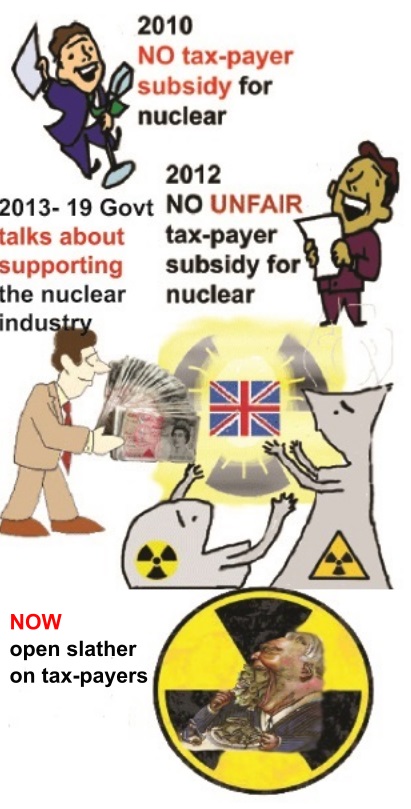
The Sizewell C Development Expenditure Subsidy Scheme (DEVEX Scheme) has
been made for £5.5bn for the Sizewell C company. Under this scheme to
date, £3.9bn has been awarded to the company, in two tranches, one of
£1.2bn and one of £2.7bn. Prior to these awards, the Department had
awarded £2.5bn to the project since the Government Investment Decision in
November 2022 under the SZC Investment Funding Scheme. Hence, in total, the
Department has to date allocated £6.4bn to the project under both subsidy
scheme.
Hansard 2nd June 2025
UIN 54121, tabled on 21 May 2025
https://questions-statements.parliament.uk/written-questions/detail/2025-05-21/54121
Sizewell C nuclear project to get go-ahead during Anglo-French summit
UK ministers hope to sign up private sector investors for new Suffolk power
plant later this month. The new Sizewell C nuclear power station is
expected to get the final go-ahead during an Anglo-French summit in London
next month, as UK ministers edge towards securing billions of investment
from the private sector.
Darren Jones, a Treasury minister, told the
Financial Times earlier this year that the final investment decision for
Sizewell C, where shareholders formally commit to the investment, would be
“at the spending review” on June 11. Ministers are expected to reaffirm
the government’s intention to invest in Sizewell in or around the
spending review, according to people close to the situation, with details
expected on how much they could allocate in taxpayer support for the
project.
However, the final go-ahead is not expected until an announcement
by Prime Minister Sir Keir Starmer and French President Emmanuel Macron
during the Franco-British summit in London between July 8 and July 10,
according to people close to the talks in Britain and France. By then the
government and EDF will have received final bids from several private
investors who have been given a deadline of late June, allowing the formal
final investment decision to proceed.
Groups expected to bid for a stake in
Sizewell include insurer Rothesay, backed by the Singaporean infrastructure
fund GIC, the Canadian pension fund CDPQ, Amber Infrastructure Partners,
Brookfield Asset Management, pension fund USS, Schroders Greencoat and
Equitix, people close to the talks have said. Centrica, the owner of
British Gas, has also confirmed that it is in talks to invest in the
project.
FT 3rd June 2025,
https://www.ft.com/content/25927b63-6ce5-4964-b8df-086c010148f8
Kremlin and Trump aides raise nuclear war fears after Ukraine drone strike
Vladimir Putin has warned Russia will respond to Kyiv’s attacks on nuclear-capable aircraft at airfields
Andrew Roth in Washington, https://www.theguardian.com/world/2025/jun/04/ukraine-russia-nuclear-war-fears
As Vladimir Putin pledges to retaliate against Ukraine for last weekend’s unprecedented drone attack, Kremlin advisers and figures around Donald Trump have told the US president that the risk of a nuclear confrontation is growing, in an attempt to pressure him to further reduce US support for Ukraine.
Kirill Dmitriev, the head of Russia’s sovereign wealth fund and an important intermediary between the Kremlin and Trump’s envoy Steve Witkoff, called the Ukrainian drone strike an attack on “Russian nuclear assets”, and echoed remarks from Maga-friendly figures warning of the potential for a third world war.
“Clear communication is urgent – to grasp reality and the rising risks before it’s too late,” Dmitriev wrote, adding a dove emoji.
Ukraine claimed that the strike damaged more than 40 Russian planes, including Tu-95 and Tu-22M heavy bombers that have been used to launch cruise missiles at Ukrainian cities throughout the war, killing thousands and damaging crucial infrastructure that delivers heat and electricity to millions more.
But those planes can also carry weapons armed with nuclear warheads, and are part of a nuclear triad along with submarine and silo-based missiles that form the basis for a system of deterrence between Russia and the United States.
After a phone call between the two leaders on Wednesday, Trump said: “President Putin did say, and very strongly, that he will have to respond to the recent attack on the airfields.”
Ukraine voluntarily gave up its nuclear weapons in 1994, in return for security assurances from the US, the UK and Russia.
Those skeptical of US support for Ukraine are seizing on the risks of a nuclear confrontation to argue that the conflict could possibly spin out of control.
Maga (Make America great again) influencers such as Steve Bannon and Charlie Kirk have openly condemned the drone attack, with Bannon likening the strike to Japan’s attack on Pearl Harbor and Kirk writing: “Most people aren’t paying attention, but we’re closer to nuclear war than we’ve been since this began in 2022.”
But more centrist advisers within the Trump camp – including some who have closer links to Ukraine – are also warning that the risks of a nuclear conflict are growing as they seek to maintain Trump’s interest in brokering a peace.
“The risk levels are going way up,” Keith Kellogg, Trump’s envoy for Ukraine and Russia, told Fox News. “When you attack an opponent’s part of their [nuclear] triad, your risk level goes up because you don’t know what the other side is going to do. And that’s what they did.”
Kellogg also repeated rumours that Ukraine had struck the Russian nuclear fleet at Severomorsk, although reports of an explosion there have not been confirmed. He said the US was “trying to avoid” an escalation.
Other current and former members of the administration skeptical of US support for Ukraine have also vocally opposed the drone strikes.
“It is not in America’s interest for Ukraine to be attacking Russia’s strategic nuclear forces the day before another round of peace talks,” said Dan Caldwell, an influential foreign policy adviser who was a senior aide to Pete Hegseth at the Pentagon until he was purged amid a leaking scandal last month.
“This has the potential to be highly escalatory and raises the risk of direct confrontation between Russia and Nato,” he said. “US should not only distance itself from this attack but end any support that could directly or indirectly enable attacks against Russian strategic nuclear forces.”
It is not the first time that concerns over Russia’s use of a nuclear weapon have been used to try to temper US support for Ukraine.
As Moscow’s forces were routed near Kharkiv and in the south at Kherson in September 2022, Russian officials sent signals that the Kremlin was considering using a battlefield nuclear weapon, senior Biden officials have said.
National security officials said they believed that if the Russian lines collapsed and left open the potential for a Ukrainian attack on Crimea, then there was a 50% chance that Russia would use a nuclear weapon as a result.
Ukrainian officials have responded by saying that Russia has embellished its threats of a nuclear attack in order to blackmail the US from giving greater support to Ukraine.
Truce or trap? Ukraine makes sure peace talks go nowhere
Any progress towards a settlement will be incremental, slow and painful
Jun 2, 2025 By Tarik Cyril Amar, a historian from Germany working at Koç University, Istanbul, on Russia, Ukraine, and Eastern Europe, the history of World War II, the cultural Cold War, and the politics of memory
On Sunday, in the Russian regions of Bryansk and Kursk, both bordering Ukraine, bridges collapsed on and under trains, killing seven and injuring dozens of civilians. These, however, were no accidents and no extraordinary force of nature was involved either. Instead, it is certain that these catastrophes were acts of sabotage, which is also how Russian authorities are classifying them. Since it is virtually certain that the perpetrators acted on behalf of Kiev, Western media have hardly reported these attacks. Moscow meanwhile rightly considers these attacks terrorism.
On the same day, Ukraine also carried out a wave of drone attacks on important Russian military airfields. That story, trumpeted as a great success by Ukraine’s SBU intelligence service, has been touted in the West. The usual diehard Western bellicists, long starved of good news, have pounced on Ukraine’s probably exaggerated account of these assaults to fantasize once more about how Ukraine has “genius,” while Russia is “vulnerable” and really almost defeated. Despair makes imaginative. In the wrong way.
The reality of Ukraine’s drone strikes on the airfields is not entirely clear yet. What is certain is that Ukraine targeted locations in five regions, including in northern and central Russia as well as Siberia and the Far East. Kiev’s drone swarms were launched not from Ukraine but from inside Russia, using subterfuge and civilian trucks. Under International Humanitarian War (aka the Law of Armed Conflict), this is likely to constitute not a legitimate “ruse of war” but the war crime of perfidy, a rather obvious point somehow never mentioned in Western commentary.
Yet at least, in this instance the targets were military: This was either an act of special-ops sabotage involving a war crime (the most generous possible reading) or plain terrorism or both, depending on your point of view. Three of the attacked airbases, it seems, successfully fended off the Ukrainian first-person-view kamikaze drones. In two locations, enough drones got through to cause what appears to be substantial damage.
Ukrainian officials and, therefore, Western mainstream media claim that more than 40 Russian aircraft were destroyed, including large strategic bombers and an early-warning-and-control aircraft. Official Russian sources have admitted losses but not detailed them. Russian military bloggers, often well-informed, have quoted much lower figures (“in the single digits,” thirteen), while noting that even they still constitute a “tragic loss,” especially as Russia does not make these types of aircraft anymore.
In financial terms, Ukrainian officials claim that they have inflicted the equivalent of “at least 2 billion” dollars in damage. Even if it should turn out that they have been less effective than that, there can be little doubt that, on this occasion, Kiev has achieved a lot of bang for the buck: even if “Operation Spiderweb” took a long time to prepare and involved various resources, including a warehouse, trucks, and the cheap drones themselves, it is certain that Kiev’s expenses must have been much less than Moscow’s losses.
In political terms, Russia’s vibrant social media-based sphere of military-political commentators has revealed a sense of appalled shock and anger, and not only at Kiev but also at Russian officials and officers accused of still not taking seriously the threat of Ukrainian strikes even deep inside Russia. One important Telegram “mil-blogger” let his readers know that he would welcome dismissals among the air force command. But he also felt that the weak spots exploited by Kiev’s sneak drone attack have systemic reasons. Another very popular mil-blogger has written of “criminal negligence.”
Whatever the eventual Russian political fall-out of these Ukrainian attacks, beware Western commentators’ incorrigible tendency to overestimate it. German newspaper Welt, for instance, is hyperventilating about the attack’s “monumental significance.” In reality, with all the frustration inside Russia, this incident will not shake the government or even dent its ability to wage the war.
Probably, its real net effect will be to support the mobilization of Russia. Remember that Wagner revolt that saw exactly the same Western commentators predicting the imminent implosion not merely of the Russian government but the whole country? You don’t? Exactly.
In the case of the terrorist attacks on civilian trains, the consequences are even easier to predict. They will definitely only harden Moscow’s resolve and that of almost all Russians, elite and “ordinary.” With both types of attacks, on the military airfields and on the civilian trains, the same puzzling question arises: What is Kiev even trying to do here?
At this point, we can only speculate. My guess: Kiev’s rather desperate regime was after four things:
First, a propaganda success for domestic consumption. Given that Zelensky’s Ukraine is a de facto authoritarian state with obedient media, this may actually work, for a moment. Until, that is, the tragedy of mobilization, all too often forced, for a losing proxy war on behalf of a fairly demented West, sinks in again, that is, in a day or so.
Second, with its combination of atrocities against civilians and an assault on Russia’s nuclear defenses, this was Kiev’s umpteenth attempt to provoke Russia into a response so harsh that it would escalate the war to a direct clash between NATO (now probably minus the US) and Russia. This is a Ukrainian tactic as old as this war, if not older. Call it the attack’s routine aspect. Equally routinely, that plan went nowhere.
Then there was the attempt to torpedo the second round of the revived Istanbul talks, scheduled for Monday, 2 June, by provoking Russia to cancel or launch such a rapid and fierce retaliation strike that Kiev could have used it as a pretext to do the same. That is, as it were, the tactical dimension, and it also failed.
While the above is devious, it is also run-of-the-mill. States will be states, sigh. The fourth likely purpose of Kiev’s wave of sabotage and terror strikes – the strategic aspect, as it were – however, is much more disturbing: The Zelensky regime – and at least some of its Western backers (my guess: Britain in the lead) – are signaling that they are ready to wage a prolonged campaign of escalating terrorist attacks inside Russia, even if the fighting in Ukraine should end. Think of the Chechen Wars, but much worse again. This, too, would not succeed. One lesson of the Chechen Wars is precisely that Moscow has made up its mind not to bend to terrorism but instead eliminate its source, whatever the cost.
Regarding those Istanbul talks, they have taken place. Ukraine was not able to make Russia abandon them. Otherwise, the results of this second round of the second attempt at peace in Istanbul seem to have been very modest, as many observers predicted. Kiev, while losing, did its usual grimly comedic thing and offered Moscow a chance to surrender. Moscow handed over its terms in turn; and they have not changed and reflect that it is winning the war. Kiev has promised to study them.
Given that the gap between Ukrainian delusions and Russian demands seems unbridgeable at this point, even a large-scale ceasefire is out of reach. And that may be, after all, what both the Zelensky regime and its European backers want. As to Moscow, it has long made clear that it will fight until it reaches its war aims. In that sense, the new talks confirmed what the attacks had signaled already: peace is not in sight.
Russia’s chief negotiator Vladimir Medinsky did, however, offer smaller, local ceasefires of “two to three days” that, he explained, would serve to retrieve the bodies of the fallen for decent burial. In the same spirit, Russia has committed to hand over 6,000 bodies of Ukrainian soldiers and officers.
There was something for the living as well: more prisoner exchanges, for those severely ill or injured as well as for the young, have been agreed. Figures are not clear yet, but the fact that they will take place on an “all-for-all” basis reflects a Russian gesture of good will.
Finally, Medinsky also revealed that the Ukrainian side handed over a list of 339 children that Russia has evacuated from the war zone. He promised that, as in previous cases, Russian officials will trace them and do their best to return the children to Ukraine. Medinsky pointed out that the number of children on Kiev’s list massively contradicts Ukrainian and Western stories – as well as lawfare – about an immense, “genocidal” Russian kidnapping operation.
In that sense, the talks at least helped to deflate an old piece of Western information war. Perhaps that is all that is possible for now: truly incremental humanitarian progress and a very gradual, very slow working toward a more reasonable manner of talking to each other. Better than nothing. But that’s a low bar, admittedly.
Lincolnshire will not be used to store nuclear waste after the county council voted to withdraw from the process.
BBC 3rd June 2025

“People haven’t been able to sell their houses, to do whatever they want to do, to move on with their lives, so we are delighted they now can.”
Nuclear Waste Services (NWS), a government body, had earmarked an area near Louth, in East Lindsey, as a possible site for a Geological Disposal Facility (GDF).
Speaking after the vote to end the talks, council leader Sean Matthews said communities had been subjected to years of “distress and uncertainty”.
NWS said it would take “immediate steps” to close down the consultation.
NWS originally earmarked the former Theddlethorpe gas terminal site, near Mablethorpe, for a storage facility.
A community partnership group was formed to open talks with local communities and councils.
The government body later announced it had moved the proposed location to land between Gayton le Marsh and Great Carlton.
Lincolnshire County Council today voted to follow East Lindsey District Council’s decision to quit the partnership group.
It means that the project cannot progress in Lincolnshire because it does not have the required “community consent”.
‘Treated appallingly’
Matthews, who represents Reform UK, said the authority’s former Conservative administration should “hang its head in shame” for allowing the process to continue for four years.
“I would like to apologise to the communities who have been treated appallingly,” he said.
However, Conservative opposition leader Richard Davies said his party had “always listened to the community” and “led the charge to say no”.
Mike Crooks, from the Guardians of the East Coast pressure group, which was set up to oppose the project, said the wait for a decision had left people “unable to go on with their lives”.
“People haven’t been able to sell their houses, to do whatever they want to do, to move on with their lives, so we are delighted they now can.”
In a statement, Simon Hughes, NWS siting and communities director, said it had granted £2m to support local community projects which had “left a lasting positive legacy”.
Analysis by Paul Murphy, BBC East Yorkshire and Lincolnshire Environment Correspondent.
For the sleepy coastal village of Theddlethorpe, the four year-long “conversation” about the disposal of radioactive material has been a source of anger, distress and bewilderment…………………………………………………………..
That strong opposition grew, despite the promise from NWS of millions of pounds of investment, skilled jobs and transformative road and rail infrastructure.
Questions are being asked about how and why it took the county and district councils so long to reject the proposals when public opposition was being so powerfully expressed.
A similar nuclear disposal plan for East Yorkshire provoked similar furore and was kicked out by the local authority after just 28 days of public consultation.
The prospect of an underground nuclear disposal site in Lincolnshire appears to be dead and buried – unlike the UK’s growing pile of toxic waste from nuclear power stations.
The problem of finding a permanent and safe home for this deadly material is no longer Lincolnshire’s issue, but it hasn’t gone away. https://www.bbc.com/news/articles/ce81471p313o
A peace deal in Istanbul won’t happen until NATO is off the table
Failure and being seen to fail on NATO will deliver a huge political blow to western leaders who will keep kicking the peace can down the road
Ian Proud, Jun 03, 2025, https://thepeacemonger.substack.com/p/a-peace-deal-in-istanbul-wont-happen?utm_source=post-email-title&publication_id=3221990&post_id=165018630&utm_campaign=email-post-title&isFreemail=true&r=1ise1&triedRedirect=true&utm_medium=email
Russia will not end the war until, at the very least, Ukraine revokes its commitment to join NATO. If and when that happens, European leaders will have to confront their failure, justify it to their voters and explain why they prolonged the war for so long.
The next round of Istanbul peace talks commenced today, with UK media playing down the chances of a breakthrough. Helpful signs emerged of another prisoner exchange. Ukraine will consider Russia’s draft memorandum. There is a more clearly stated intent to continue talks towards a possible future meeting of leaders.
In a war that has long passed the one million mark in numbers of people killed or injured across both sides, no one will emerge from this process completely victorious when the fighting ends if, indeed, it ends this year.
But for President Zelensky and for western leaders, particularly in Europe, it is not victory but rather the fear of failure that presents the biggest stumbling block to a quick peace deal. Lacking sufficient financial and military support from western sponsors, and under pressure from the Trump administration to settle, Ukraine may at some point be forced to revoke its aspiration to join NATO.
NATO is by far the most stubborn ‘root cause’ that Russia is looking to address through negotiations, although the list of issues including on minority language rights, the division and status of territory, and Ukrainian children (raised today in Istanbul) is very long.
And NATO membership for Ukraine is an issue that President Trump and US officials including defence Secretary Pete Hegseth, negotiator Steve Witkoff and Ukraine Envoy Keith Kellogg have all acknowledged as unrealistic.
Undaunted, Zelensky, European leaders and the NATO secretary general still cling to an ever more tenuous line that the path to Ukrainian membership is irreversible.
That is untenable.
Russia has the military and economic means to continue the attritional fight, at a time when its slow but steady rate of progress in the Donbas is accelerating into the summer. There is not a scrap of evidence that Ukraine can recover its position, nor financial or military rabbits that increasingly cash and vote strapped European politicians can pull out of the hat.
Ukraine cannot win the war. It is cynical and self-serving for the hordes of mainstream politicos and pundits to suggest otherwise.
Ukraine will eventually have no choice but to let go of its demand for NATO membership. That will take Ukraine back to March to April 2022, when its negotiators agreed to the inclusion of a clause on neutrality in the draft Istanbul 1 peace treaty, that was derailed by Boris Johnson.
The key substantive difference between Istanbul 1 and a possible Istanbul 2 treaty, will be that Ukraine has since lost hundreds of thousands of troops to death or injury and is a matter of months from losing the whole of the Donbas.
After the first, brief, set of peace talks in Istanbul on 16 May, President Zelensky was quick to assert that there could be no return to the Istanbul 1 draft as a starting point for talks.
But I am afraid that the neutrality issue is not going away.
Ukraine is not going to join NATO.
Not joining NATO is the stinging nettle that Zelensky will sooner or later have to grip. And having clung so long to the NATO aspiration and sent so many Ukrainian troops to their deaths, the political ramifications will be searing
It is therefore this fear of failing and being seen to fail that is acting as the biggest stumbling block to a peace deal, as talks resumed today. That fear of failure is shared by Ukraine’s European sponsors.
Going back to the start of the war, then UK Prime Minister Boris Johnson said that ‘Putin must fail and must be seen to fail.’
Unfortunately for Johnson, when Ukraine is forced to give up its NATO aspiration, he will have failed and be seen to have failed.
Despite its enormous losses of men and materiel, Russia will have seen off the world’s biggest military bloc. The very idea of this is politically terrifying to the likes of Boris Johnson, Liz Truss and Keir Starmer who spent their time in office telling us that victory over Russia would be a doddle.
The UK mainstream media still clings to the victory narrative like a comfort blanket. Even today, the UK state-owned broadcaster, the BBC, reasserted the line that Putin failed in his bid to overrun Kyiv at the start of the war, remove Zelensky, and install a puppet government. And that is a legitimate claim to make.
But this war has never really been about the violent overthrow of a neighbouring Head of State. It is now and has been since 2022 an existential struggle to prevent further NATO expansion up to Russia’s border.
Western pundits argue endlessly that Russia has no right of veto over NATO. But when it boils down to it, governments decide the core strategic interests of their countries, not foreign pundits. NATO and its members should never have forced the issue of membership for Ukraine unless they were willing to fight Russia over it.
And NATO has never been willing to fight Russia for Ukraine’s right to choose.
The warning signs were there at President Putin’s 2007 Munich Security Conference Speech, during Russia’s brief war with Georgia in 2008 and following the overthrow of Ukrainian President Yanukovych in February 2014.
Through endless sanctions and efforts to impose international isolation, Russia’s position on NATO has never changed and will never change.
British and western media continue to promote a host of questionable assertions to keep hopes up that Russia really is losing and has been losing from the start. Russia’s imminent economic collapse, a likely coup d’etat made more real by Prigozhin’s rebellion, overwhelming battlefield losses of the Russian army, compared to the Ukrainian (even though there is a large body of analysis suggesting the picture is the complete opposite). And that just a few more billion dollars should be enough to finish the job.
The western propaganda path to victory has been gaslit like a badly cobbled Victorian street.
Putin must fail and must be seen to have failed.
Yet, when a peace treaty is finally agreed between Russia and Ukraine, it will become clear that western leaders failed. And they will be seen by their voters to have failed, with potentially disastrous domestic political consequences for traditional parties all across a Europe in economic and cultural decline.
Moreover, Europe will have to swallow the bitter pill of being pressured by Trump to accelerate Ukraine’s membership of the EU at a financial cost to ordinary European citizens far greater than the war itself. Little wonder then that indulging Zelensky and maintaining a slowly losing war has cynically been an easier choice for many, rather than striking for peace.
So don’t hold your breath for a quick peace deal out of Istanbul. The queue of European politicians lining up to kick the failure can down the road, from Von der Leyen, Rutte, Merz, Macron, Stubb, Starmer and the whole lot of them, is very long indeed.
Playing with Fire- Ukraine’s Operation Spiderweb

Ukraine’s Operation Spiderweb has crossed the threshold when it comes to triggering a Russian nuclear response. How Russia and the United States respond could determine the fate of the world.
Scott Ritter, Jun 01, 2025, https://scottritter.substack.com/p/playing-with-fire?utm_source=post-email-title&publication_id=6892&post_id=164935563&utm_campaign=email-post-title&isFreemail=false&r=191n6&triedRedirect=true&utm_medium=email
In 2012, Russian President Vladimir Putin declared that “The nuclear weapons remain the most important guarantee of Russia’s sovereignty and territorial integrity and play a key role in maintaining the regional balance and stability.”
In the intervening years, western analysts and observers have accused Russia and its leadership of irresponsibly invoking the threat of nuclear weapons as a means of “saber rattling”—a strategic bluff to hide operational and tactical shortfalls in Russian military capabilities.
In 2020 Russia published, for the first time, an unclassified version of its nuclear doctrine. The document, called “Basic Principles of State Policy of the Russian Federation on Nuclear Deterrence,” noted that Russia “reserves the right to use nuclear weapons” when Moscow is acting “in response to the use of nuclear and other types of weapons of mass destruction against it and/or its allies, as well as in the event of aggression against the Russian Federation with the use of conventional weapons when the very existence of the state is in jeopardy.” The document also stated that Russia reserved the right to use nuclear weapons in case of an “attack by [an] adversary against critical governmental or military sites of the Russian Federation, disruption of which would undermine nuclear forces response actions.”
In 2024 Vladimir Putin ordered Russia’s nuclear doctrine to be updated to consider the complicated geopolitical realities that had emerged from the ongoing Special Military Operation (SMO) in Ukraine, where the conflict had morphed into a proxy war between the collective west (NATO and the US) and Russia.
The new doctrine declared that nuclear weapons would be authorized for use in case of an “aggression against the Russian Federation and (or) its allies by any non-nuclear state with the participation or support of a nuclear state is considered as their joint attack.”
Russia’s nuclear arsenal would also come into play in the event of “actions by an adversary affecting elements of critically important state or military infrastructure of the Russian Federation, the disablement of which would disrupt response actions by nuclear forces.”
The threats did not have to come in the form of nuclear weapons. Indeed, the new 2024 doctrine specifically stated that Russia could respond with nuclear weapons to any aggression against Russia involving “the employment of conventional weapons, which creates a critical threat to their sovereignty and (or) territorial integrity.”
Operation Spiderweb, the largescale assault on critical Russian military infrastructure directly related to Russia’s strategic nuclear deterrence by unmanned drones, has demonstrably crossed Russia’s red lines when it comes to triggering a nuclear retaliation and/or pre-emptive nuclear strike to preclude follow-on attacks. The Ukrainian SBU, under the personal direction of its chief, Vasyl Malyuk, has taken responsibility for the attack.
Operation Spiderweb is a covert direct-action assault on critical Russian military infrastructure and capabilities directly related to Russia’s strategic nuclear deterrent capabilities. At least three airfields were attacked using FPV drones operating out of the backs of civilian Kamaz trucks repurposed as drone launch pads. Dyagilevo airfield in Ryazan, Belaya airfield in Irkutsk, and Olenya airfield in Murmansk, home to Tu-95 and Tu-22 strategic bombers and A-50 early warning aircraft, were struck, resulting in numerous aircraft being destroyed and/or heavily damaged.
This would be the equivalent of a hostile actor launching drone strikes against US Air Force B-52H bombers stationed at Minot Air Force Base in North Dakota and at Barksdale Air Force Base in Louisiana, and B-2 bombers stationed at Whiteman Air Force Base in Missouri.
The timing of Operation Spiderweb is clearly designed to disrupt peace talks scheduled to take place in Istanbul on June 2.
First and foremost, one must understand that it is impossible for Ukraine to seriously prepare for substantive peace talks while planning and executing an operation such as Operation Spiderweb; while the SBU may have executed this attack, it could not have happened without the knowledge and consent of the Ukrainian President or the Minister of Defense.
Moreover, this attack could not have occurred without the consent of Ukraine’s European partners, in particular Great Britain, France and Germany, all of whom were engaged in direct consultations with Ukrainian President Volodymyr Zelensky in the days and weeks leading up to the execution of Operation Spiderweb.
The Ukrainians have been encouraged by Europe to be seen as actively supporting the Istanbul peace process, with an eye to the notion that if the talks failed, the blame would be placed on Russia, not Ukraine, thereby making it easier for Europe to continue providing military and financial support to Ukraine.
There appears to be a major role being played by US actors as well—Senator’s Lyndsay Graham, a Republican from South Carolina, and Richard Blumenthal, a Democrat from Connecticut, made a joint visit to Ukraine in the past week where they coordinated closely with the Ukrainian government about a new package of economic sanctions linked to Russia’s willingness to accept peace terms predicated on a 30-day ceasefire—one of Ukraine’s core demands.
Operation Spiderweb appears to be a concerted effort to drive Russia away from the Istanbul talks, either by provoking a Russian retaliation which would provide cover for Ukraine to stay home (and an excuse for Graham and Blumenthal to go forward with their sanctions legislation), or provoking Russia to pull out of the talks as it considers its options going forward, an act that would likewise trigger the Graham-Blumenthal sanctions action.
Unknown is the extent to which President Trump, who has been pushing for successful peace talks between Russia and Ukraine, was knowledgeable of the Ukrainian actions, including whether he approved of the action in advance (Trump appeared to be ignorant of the fact that Ukraine had targeted Russian President Putin using drones during a recent trip to Kursk.)
How Russia responds to this latest Ukrainian action is yet unknown; the drone attacks on Russian military bases came on the heels of at least two Ukrainian attacks on Russian rail lines that resulted in significant damage done to locomotives and passenger cars and killed and wounded scores of civilians.
But this much is clear: Ukraine could not have carried out Operation Spiderweb without the political approval and operational assistance of its western allies. The American and British intelligence services have both trained Ukrainian special operation forces in guerilla and unconventional warfare actions, and it is believed that previous Ukrainian attacks against critical Russian infrastructure (the Crimea bridge and Engels Air Base) were done with the assistance of US and British intelligence in the planning and execution phases. Indeed, both the Crimea bridge and Engels airbase attacks were seen as triggers for the issuing of Russia’s 2024 nuclear doctrine modifications.
Russia has in the past responded to provocations by Ukraine and its western allies with a mixture of patience and resolve.
Many have interpreted this stance as a sign of weakness, something which may have factored in the decision by Ukraine and its western facilitators to carry out such a provocative operation on the eve of critical peace discussions.
The extent to which Russia can continue to show the same level of restraint as in the past is tested by the very nature of the attack—a massive use of conventional weapons which struck Russia’s strategic nuclear deterrence force, causing damage.
It is not a stretch of the imagination to see this tactic being used in the future as a means of decapitating Russian strategic nuclear assets (aircraft and missiles) and leadership (the attack against Putin in Kursk underscores this threat.)
If Ukraine can position Kamaz trucks near Russian strategic air bases, it could do so against Russian bases housing Russia’s mobile missile forces.
That Ukraine would carry out such attack likewise shows the extent to which western intelligence services are testing the waters for any future conflict with Russia—one that NATO and EU members say they are actively preparing for.
We have reached an existential crossroads in the SMO.
For Russia, the very red lines it deemed necessary to define regarding the possible use of nuclear weapons have been blatantly violated by not only Ukraine, but its western allies.
President Trump, who has been claiming to support a peace process between Russia and Ukraine, must now decide as to where the United States stands considering these developments.
His Secretary of State, Marco Rubio, has acknowledged that under the previous administration of Joe Biden the United States was engaged in a proxy war with Russia. Trump’s Special Envoy to Ukraine, Keith Kellogg, recently acknowledged the same about NATO.
In short, by continuing to support Ukraine, both the US and NATO have become active participants in a conflict which has now crossed the threshold regarding the employment of nuclear weapons.
The United States and the world stand on the precipice of a nuclear Armageddon of our own making.
Either we separate ourselves from the policies that have brought us to this point, or we accept the consequences of our actions, and pay the price.
We cannot live in a world where are future is dictated by the patience and restraint of a Russian leader in the face of provocations we are ourselves responsible for.
Ukraine, not Russia, represents an existential threat to humanity.
NATO, not Russia, is responsible for encouraging Ukraine to behave in such a reckless manner.
So, too, is the United States. The contradictory statements made by US policy makers regarding Russia provide political cover for Ukraine and its NATO enablers to plan and execute operations like Operation Spiderweb.
Senators Graham and Blumenthal should be called out for sedition if their intervention in Ukraine was done to deliberately sabotage a peace process President Trump has said is central to his vision of American national security going forward.
But it is Trump himself who must decide the fate of the world.
In the coming hours we will undoubtedly hear from the Russian President about how Russia will respond to this existential provocation.
Trump, too, must respond.
By telling Graham and Blumenthal and their supporters to stand down regarding Russian sanctions.
By ordering NATO and the EU to cease and desist from continuing to provide military and financial support to Ukraine.
And by taking sides in the SMO.
Choose Ukraine and trigger a nuclear war.
Choose Russia and save the world.
Scott Ritter is a former Marine intelligence officer with extensive experience in arms control and disarmament, and an expert on US-Russian relations. His work can be found at ScottRitter.com. He is the author of several books, including his latest, Highway to Hell: The Armageddon Chronicles, 2014-2025, published by Clarity Press.Upgrade to paid

The 2026 bill for the Ukraine war is already in the mail

Time to bring the gravy train to a halt. With talks stalled, Zelensky says he needs more money for next year
Ian Proud, May 31, 2025, https://responsiblestatecraft.org/ukraine-war-2672231522/
Ukraine is already asking for more money to continue fighting into 2026, a sure sign that President Volodmyr Zelensky has no plans to end the war.
With the battlefield continuing to favor Russia, European leaders have their collective heads in the sand on who will pay. How long before President Trump walks away?
At the G7 Finance and Central Bank governors’ meeting in Banff on May 21, Ukraine’s Finance Minister Sergii Marchenko sought financial support for 2026, “including the provision of support to the Ukrainian army through its integration into the European security system,” according to reports.
I have said before that Ukraine cannot keep fighting into 2026 without a significant injection of European money. Even if the war were to stop tomorrow, Ukraine would still face a huge funding black hole. And that prolonging the war simply extends Ukraine’s indebtedness and delinquency, nudging it every closer towards the status of a failed state.
Making light of the price tag, German-based Kiel Institute has suggested extra EU support to Ukraine’s army would only need to cost an extra 0.2% of GDP or $43.3 billion per year. This assumes no additional U.S. funding under President Trump and is a figure practically identical to the $41.5 billion figure I forecast two months ago.
The Ukrainian side pointed out two assumptions that underpin their request — first, that funding Ukraine’s military supports macro-financial stability in that country. That is untrue. By far the leading cause of the increased financial distress of Ukraine is its vast and unsustainable prosecution of a war that it cannot win. As I have said before, ending the war would allow for immediate reductions to be made to military spending, which accounts for 65% of total government expenditure.
Second, that paying for Ukraine’s military is keeping Europe safer. It isn’t. The best route to European security would be to end the war tomorrow. The risk of escalation only grows for the longer the war continues and President Zelensky resorts to increasingly desperate tactics as the battlefield realities turn against him.
This latest request for money is a clear signal that Zelensky is not serious about U.S. demands for peace, and would prefer to continue the fight, drawing directly upon European funds. It has long been clear to me that Zelensky is evading peace because it would bring his presidency to a close, not to mention elevate risks to his personal safety.
He has therefore been piling on more pressure for Western leaders to impose more sanctions and other measures, which will only serve to prolong the war. Senator Lindsey Graham’s recent brain wave that the U.S. impose 500% secondary tariffs on countries that trade with Russia is a classic example. No doubt other countries, China in particular, would respond negatively to this, as it has already to the launch of Trump’s tariff war. It would kill President Trump’s efforts at engagement with Russia, by boxing him in to Beltway demands in an identical rerun of his first presidency, making him appear toothless in the eyes of Putin.
But these are not the real points. Having suffered over 20,000 sanctions already since 2014 yet maintaining a stable, growing economy, what makes people believe that Russia will back down to even more sanctions now?
The war continues to favor Russia on the battlefield. In recent days, in addition to expanding territory in the south of Donetsk, the Russian army has made major gains in the pocket around now-occupied Toretsk. Progress, as always, is slow and grinding as it has been since the start of 2024. Ukraine has undoubtedly mounted a formidable defence of its territory, for which its fighters deserve great credit.
But Russia has never fully mobilized the country for the fight in Ukraine, for various domestic political reasons. Putin also wants to maintain relations with developing country partners and a more devastating military offensive against Ukraine would make that harder.
Pumping more billions into Ukraine’s army will merely slow the speed of defeat. Even the Ukrainians now accept that they cannot reclaim lost territory by force. Ending the war would at least draw a line in the sand for future negotiations.
For their part, Europe simply can’t afford to pump another $40 billion per year into Ukraine’s army, at a time when member states are trying to boost their own militaries, revive their flagging economies and deal with an upsurge in nationalist political parties that want to end the war.
An April pledge for extra military donations in 2025 elicited just $2.5 billion per year from Germany, and reconfirmed the £6 billion from the UK already committed, without pledging new funds. Keir Starmer’s government is in the process of making an embarrassing U-turn on previously agreed cuts to winter fuel payments for pensioners.
I seriously doubt that British people would consider another big increase in funds for Ukraine’s war would be a sensible investment if peace was on the table. That this isn’t actively discussed in Britain, in a way that it is in the United States, is driven by the complete lockdown of debate in the UK and European mainstream media.
Right from the beginning, the war in Ukraine has been an attritional battle of who can sustain the fight for the longest period of time. A longer war will always favor Russia because the economic liability Europe faces will ratchet up to the point where it becomes politically unsustainable. We make the assumption that Russia’s aims in Ukraine are to prevent NATO expansion and to protect the rights of native Russian speakers in that country, and of course, on the surface, they are.
But on the current track, Putin gets the added benefit of watching the European Union project slowly implode, without the need to go all in on Ukraine.
President Trump for his part continues to walk a fine line that involves criticizing both Putin and Zelensky for the continuance of the war. In the face of intransigence on all sides, I wonder how long it will be before he washes his hands of the mess and walks away.
Ian Proud was a member of His Britannic Majesty’s Diplomatic Service from 1999 to 2023. He served as the Economic Counsellor at the British Embassy in Moscow from July 2014 to February 2019. Prior to Moscow, he organized the 2013 G8 Summit in Lough Erne, Northern Ireland, working out of 10 Downing Street. He recently published his memoir, “A Misfit in Moscow: How British diplomacy in Russia failed, 2014-2019.”
Ukraine Targets Russian Airfields in Major Drone Attack
According to Reuters, Ukrainian spies hid the drones in wooden sheds that were loaded onto trucks and driven near bases deep inside Russia
by Dave DeCamp June 1, 2025 https://news.antiwar.com/2025/06/01/ukraine-targets-russian-airfields-in-major-drone-attack/
The Security Service of Ukraine (SBU) conducted a large-scale drone attack deep inside Russian territory on Sunday that targeted several Russian airfields.
The Russian Defense Ministry said the attack targeted five Russian regions, including the Amur Oblast in Russia’s far east, which is over 3,000 miles from Ukraine, and a base in the Irkutsk Oblast, over 2,500 miles from the Ukrainian border.
The attack also targeted the northern region of Murmansk and the western oblasts of Ivanovo and Ryazan. The Russian Defense Ministry said that “several aircraft” caught fire in Murmansk and Irkutsk and that the attacks were launched “in the exact proximity” of the airfields in the region.
The Defense Ministry said the attacks were “repelled” in the other three regions. “No casualties were reported either among servicemen or civilians. Some of those involved in the terror attacks were detained,” the ministry said.
A Ukrainian official told Reuters that the SBU was able to pull off the attack by hiding explosive-laden drones inside the roofs of wooden sheds. The sheds were loaded onto trucks driven near the bases, and the roof panels were lifted off by a remotely activated mechanism, allowing the drones to fly out.
Videos on social media show drones flying out of a truck near the Belaya airbase in Irkutsk. Ukrainian officials said the attack was planned for more than a year and claimed it destroyed 41 Russian aircraft, including TU-95 long-range bombers, though the number hasn’t been confirmed by the Russian side.
Ukrainian President Volodymyr Zelensky described the attack as a “brilliant operation” in his nightly address. ” It took place on enemy territory and was aimed exclusively at military targets – specifically, the equipment used in strikes against Ukraine. Russia suffered truly significant losses – entirely justified and deserved,” he said.
US and Ukrainian officials claimed that the Trump administration was not notified ahead of the attack, although the CIA is deeply involved with the SBU and helped build up Ukraine’s intelligence services following the 2014 US-backed coup that ousted former Ukrainian President Viktor Yanukovych.
Also on Sunday, a Russian missile strike on a Ukrainian military training site killed 12 Ukrainian troops and wounded 60. Ukrainian officials said that on Sunday, Russia launched 472 drones at Ukraine overnight, marking the largest Russian drone barrage of the war.
Both sides have dramatically stepped up their drone attacks in recent weeks despite the US push for peace talks. Russian and Ukrainian negotiators are expected to hold a second round of direct peace talks in Istanbul on Sunday.
1 This Month

petition to oppose the rapid increase of space-military industry threatening Jeju Island and the region.
[Petition by April 19th (KST)] Stop the joint military-Hanwha Systems-Jeju Provincial Government Sea Launch!
World Nuclear Power. Reactors 1951-2026, 75 Years of Nuclear Power.
Interactive Map– https://dv.worldnuclearreport.org/

Chernobyl: The Lost Tapes – A good documentary on Chernobyl on SBS available On Demand for the next 3 weeks– https://www.sbs.com.au/ondemand/tv-program/chernobyl-the-lost-tapes/2352741955560

of the week–London Campaign for Nuclear Disarmament

Tell the Ukrainian Government to Drop Prosecution of Peace Activist Yurii Sheliazhenko
To see nuclear-related stories in greater depth and intensity – go to https://nuclearinformation.wordpress.com
-
Archives
- April 2026 (211)
- March 2026 (251)
- February 2026 (268)
- January 2026 (308)
- December 2025 (358)
- November 2025 (359)
- October 2025 (376)
- September 2025 (257)
- August 2025 (319)
- July 2025 (230)
- June 2025 (348)
- May 2025 (261)
-
Categories
- 1
- 1 NUCLEAR ISSUES
- business and costs
- climate change
- culture and arts
- ENERGY
- environment
- health
- history
- indigenous issues
- Legal
- marketing of nuclear
- media
- opposition to nuclear
- PERSONAL STORIES
- politics
- politics international
- Religion and ethics
- safety
- secrets,lies and civil liberties
- spinbuster
- technology
- Uranium
- wastes
- weapons and war
- Women
- 2 WORLD
- ACTION
- AFRICA
- Atrocities
- AUSTRALIA
- Christina's notes
- Christina's themes
- culture and arts
- Events
- Fuk 2022
- Fuk 2023
- Fukushima 2017
- Fukushima 2018
- fukushima 2019
- Fukushima 2020
- Fukushima 2021
- general
- global warming
- Humour (God we need it)
- Nuclear
- RARE EARTHS
- Reference
- resources – print
- Resources -audiovicual
- Weekly Newsletter
- World
- World Nuclear
- YouTube
-
RSS
Entries RSS
Comments RSS
 nuclear-news