MP wants to stop Britain’s supplying of weapons grade nuclear materials to Russia
MP calls for sanctions on nuclear materials trade, Cambrian Newsby Alex Jones – Meirionnydd, Arfon & Dwyfor reporter @alexj_cn alexj@cambrian-news.co.uk
DWYFOR Meirionnydd’s MP has challenged the prime minister about nuclear materials following the suspected attempted murder of a former Russian double agent and his daughter.
Sergei Skripal and his daughter Yulia were in Salisbury earlier this month when both were found in a critical condition on a public bench.
It has since transpired that both had been inflicted with a nerve agent which has left both, and a police officer who attended, fighting for their lives.
The incident has sparked a marked decline in UK and Russian relations.
It has been suggested that Russian involvement was “the only plausible explanation” but the Kremlin has denied responsibility.
In a meeting in the House of Commons last week, Theresa May gave an update on the situation, prompting MP Liz Saville Roberts to challenge the Prime Minister regarding trade of nuclear materials with the former Cold War adversary.
Mrs Saville Roberts said: “Alongside many colleagues in the House, I speak on behalf of my party in calling for a robust and immediate response.
“Sources inform us that Russia is the UK’s biggest weapons-grade nuclear substances export market, despite several attempts at a moratorium on depleted uranium by the European Parliament and the United Nations.
“Will the Prime Minister confirm whether the UK is still exporting nuclear substances to Russia?
“If so, surely this should be among the very first sanctions imposed?”……..http://www.cambrian-news.co.uk/article.cfm?id=119768&headline=MP%20calls%20for%20sanctions%20on%20nuclear%20materials%20trade§ionIs=news&searchyear=2018
UK Conservatives – inconsistent, incoherent, policy – agreeing to Russia’s involvement in UK’s nuclear power development
Times 18th March 2018, Ed Davey: Vladimir Putin’s ambitions have been evident for some time, but
the Conservatives’ position has long been incoherent and inconsistent.
During the coalition years, the Conservatives seemed torn between the
national security evidence of the country’s wrongdoings and the billions
of roubles it had to invest.
Russian industrial investment plans would
never have stood up to the sort of detailed scrutiny we gave to Chinese
ones. I was particularly astonished when David Cameron agreed to Putin’s
request that the Russian state nuclear power company, Rosatom, be
introduced to the UK’s civil nuclear power market and develop an
international consortium with Rolls-Royce.
It was left to the Lib Dems to insist of downgrading this to a simpler, meaningless memorandum of
understanding. I was gobsmacked that even after Putin’s annexation of
Crimea, the prime minister clung on to the idea — even as we searched
around for sanctions to impose. https://www.thetimes.co.uk/article/former-energy-minister-ed-davey-tories-position-on-russia-is-incoherent-and-inconsistent-fhnvfkmgp
Finland’s nuclear power plant’s price tag – at least $11 billion
 Costlier Than Pyramids: Finnish NPP Becomes World’s Second-Priciest Building, Sputnik News
EUROPE 19.03.2018
The Finnish Olkiluoto-3 nuclear reactor has been touted as the “flagship of European nuclear energy,” but has taken more than a decade to complete and cost the Nordic nation an arm and a leg.
When completed, the third reactor at Finland’s Olkiluoto nuclear power plant will have the distinction of being the world’s second most expensive building, higher than that of a number of luxury hotels, sports arenas, skyscrapers and even pyramids, Finnish national broadcaster Yle reported.
With a breathtaking price tag of €8.5 billion ($11 billion), Olkiluoto-3 is expected to be finished in 2019, 14 years after the start of the construction. For the sake of comparison, the Cheops Pyramid, the largest of the pyramids at Giza, took about 20 years to build. However, construction of the 4,500-year-old pyramid turned to be far more efficient, as it was built over roughly the same period of time and without access to modern technology. Also, its cost in today’s money has been estimated at only €4 billion ($4.9), half the Olkiluoto price tag.
To offer a more modern building for comparison, New York’s replacement One World Trade Center cost an estimated $3.8 billion to build. …….https://sputniknews.com/europe/201803191062679754-finland-npp-price/
Plan for pan-European alliance against the promotion of nuclear energy- Austria and Luxembourg to start it

 Austria, Luxembourg Agree on Alliance against Nuclear Power http://www.chronicle.lu/category/energy/25133-austria-luxembourg-agree-on-alliance-against-nuclear-power 05 Mar 2018 Luxembourg and Austria have agreed on an Alliance against the promotion of nuclear energy in Europe.
Flamanville EPR Nuclear Reactor: The Countdown to the Atomic Clock.
 Paris Normandie 17th March 2018, [Machine Translation]“They are not ready. “Monday morning, at the end of acommittee of health, safety and working conditions of the plant, trade unionists of the CGT are circumspect. EDF agents have just visited the future Local Crisis Center (CCL), one of the “post-Fukushima” equipment whose vocation is to ensure the management of crises.
“They’re supposed to be up and running in two weeks, but we’re far from it …” After seven
years of delay and a construction cost that has tripled to reach 10.5
billion euros, the commissioning of the EPR, this new generation nuclear
reactor under construction in Flamanville, is scheduled for May 2019. The
goal is to be able to load the fuel into the tank in December.
But the context remains tense for this site which accumulated the setbacks: the
problems recently discovered on the tank lid – which will have to be
changed before 2024 when it is normally every 20 or 30 years – or on the
secondary circuit welds leave an uncertainty about the authorization that
could give – or not – the ASN, the “policeman” nuclear.
Sébastien Lecornu,”second” of Nicolas Hulot and former president of the departmental council
of the Eure, visiting the site of the EPR in early February, had said: “I trust EDF
http://www.paris-normandie.fr/accueil/reacteur-nucleaire-epr-de-flamanville–le-compte-a-rebours-de-l-horloge-atomique-FH12516146
UK’s headlong rush into new nuclear power development could run into big problems about selecting sites
PeterBanks Blog 17th March 2018, It has been a busy time lately. BANNG has attended a number of meetings and
Prof. Andy Blowers has been involved as an expert in the Geological Disposal Facility (GDF) consultation process. And on top of that the weather has thrown a wobbly which has potential implications on the decisions for energy policies.

There have been two important meetings. One concerned the Government’s consultation on reviewing the siting criteria
for new nuclear power stations. For all of us concerned about the Government’s headlong rush towards more ridiculous nuclear development it is vital to respond to this consultation.
Clearly the Government is attempting to extend the time period allocated for selecting potential new nuclear sites. The sites included in the previous consultation on the siting criteria in 2008 should have had power stations generating by 2025 and even Hinkley Point C (HPC) has only a remote chance of being up and running by then.
BANNG also had an important strategic meeting with the Nuclear New Build departments of the Office for Nuclear Regulation (ONR) and the Environment Agency (EA). This event was co-chaired by BANNG’s Andy Blowers and the EA’s Simon Barlow. The meeting was attended by senior representatives from the EA and ONR and 6 from BANNG. Andy Blowers once again was also able to represent Colchester Borough Council.
http://banksyboy.blogspot.co.uk/2018/03/the-other-beast-from-east.html
U.S. Department of Homeland Security and the Federal Bureau of Investigation confirm Russian hackers targeting U.S. nuclear plants
 Union of Concerned Scientists 16th March 2018, Yesterday, the Department of Homeland Security and the Federal Bureau of Investigation officially confirmed that Russian hackers have been targeting US nuclear power plants and other critical facilities since at least 2016.
Regardless, the US nuclear industry has been pressuring the Nuclear Regulatory Commission to relax its cyber security standards. Below is a statement by Edwin Lyman, a senior scientist at the Union of Concerned Scientists.
“The Department of Homeland Security alert is a stark
reminder that nuclear power plants are tempting targets for cyber
attackers. Although the systems that control the most critical safety
equipment at US nuclear plants are analog-based and largely immune to cyber
attacks, many other plant systems with important safety and security
functions are digital and could be compromised. For instance, electronic
locks, alarms, closed-circuit television cameras, and communications
equipment essential for plant security could be disabled or reprogrammed.
And some plants have equipment, such as cranes that move highly radioactive
spent fuel, that utilize computer-based control systems that could be
manipulated to cause an accident.”
https://www.ucsusa.org/press/2018/russian-cyber-attacks-call-stringent-security-standards-us-nuclear-plants-plant-owners
UK nuclear regulator identifies 5 areas needing improvement in Hinkley Point C EPR project
 Nucnet 16th March 2018, The UK’s nuclear regulator has identified five key areas of supply chain
management where improvements are needed ahead of acceleration in both
construction and manufacturing for the Hinkley Point C EPR project in
Somerset, England.
The Office for Nuclear Regulation has rated an overall
inspection finding as ‘amber’. This means that some arrangements are
below standard and the ONR is seeking improvements.
The five key areas include issues such as improvement programmes, lessons learned,
self-assessment and quality assurance. The ONR said the inspection of the
supply chain for Hinkley Point C was instigated in the context of the
records falsification issues that emerged in 2016 at Areva’s Le Creusot
forge facility. The facility, now operated by Framatome, is a supplier of
key components to the Hinkley Point C project. The falsification issues
became apparent after the French nuclear safety regulator, ASN, confirmed
that major technical and organisational shortcomings had occurred at the Le
Creusot.
https://www.nucnet.org/all-the-news/2018/03/16/uk-regulator-says-improvements-are-needed-in-hinkley-point-c-supply-chain
Germany’d record refutes the myth that “baseload power is essential”
 Energy Post 12th March 2018, The experience of the German Energiewende shows that increasing amounts ofrenewable energy on the power system, while at the same time reducing
inflexible baseload generation, does not harm reliability write Michael
Hogan, Camille Kadoch, Carl Linvill and Megan O’Reilly of the Regulatory Assistance Project (RAP).
American policymakers who are still skeptical can look across the Atlantic, to Germany, for a concrete example of a successful transition away from traditional baseload, the authors note.
Numerous studies sponsored by utilities, system operators, the national
labs, and others show that a large share of variable renewable energy
production can be integrated while keeping the lights on, without any
valuable role for traditional baseload.
No study, not even by the US Department of Energy, which examined this issue in an August 2017 Staff Report on Electricity Markets and Reliability, has found evidence that baseload generation is required for reliability. Most studies have found that reliability and least cost are best served by reducing the share of inflexible baseload generation.
Germany is meeting nearly a fifth of its electricity requirements with VREs while retiring inflexible thermal generation, the nation has not experienced reliability problems on either the distribution or bulk electric system. If anything, government data show that the reliability of the German system has increased. http://energypost.eu/how-german-energiewendes-renewables-integration-points-the-way/
Russia’s underwater nuclear graveyard – a great place for fishing?
 Russia’s Arctic nuclear dump may become promising fishing area https://thebarentsobserver.com/en/ecology/2018/03/russias-arctic-nuclear-dump-may-become-promising-fishing-area
Thousands of containers with radioactive waste were dumped in the Kara Sea during Soviet times. Now, Russia’s Federal Agency for Fishing believes it’s a good idea to start fishing. By Thomas Nilsen March 15, 2018
“We shall present soon a program on development of promising fishing in the Kara Sea,” said Sergey Golovanov at the 5th international conference of fishing in the Arctic, organized in Murmansk this week. He is quoted by news agency TASS.
Golovanov is head of the Science and Education Department with the Federal Agency for Fisheries and has a background from PINDRO, the Marine research institute in Murmansk.
According to Gulovanov, the Kara Sea’s advantage for the fishing industry is that it is a shelf sea, it does not border any territorial waters of other nations. “This is why Russia can have own fishing regulations there,” he said according to TASS.
In 2013, a Norwegian-Russian joint study expedition to the dump-site of K-27 concluded that it is feasible to lift the ill-fated submarine from the seabed. Although dumped 30 years ago, the hull of the submarine is intact.
Several other areas of the Kara Sea were also visited by the science expedition.
Nuclear weapons testing
Additional to the nuclear waste dumped across the Kara Sea, the waters are also next to the Soviet Union’s largest testing area for nuclear weapons. At Novaya Zemlya, 79 nuclear- and hydrogen bombs where detonated in the atmosphere between 1955 and 1962. In the period from 1963 to 1990 another 35 warheads were tested in tunnels under ground. Today, most of Novaya Zemlya is closed off miitary area.
At the conference in Murmansk, nothing was said about the Kara Sea being the main dumping ground for nuclear waste during Soviet times. No other oceans worldwide have more dumped radioactive waste than Russia’s Arctic Kara Sea.
Here, there, everywhere
17 ships and barges loaded with radioactive waste are dumped here. So are 17,000 containers with radioactive waste. Even worse, along the east coast of Novaya Zemlya is 16 nuclear reactors dumped, six of them with spent uranium fuel still on board.
With the breakup of the Soviet Union, both the military Northern Fleet and the civilian icebreakers stopped dumping waste at sea.
Entire nuclear sub dumped in 1982
On shallow waters in the Stepovogo Bay on the southeast coast of Novaya Zemlya, an entire nuclear-powered submarine, the K-27, was dumped in 1982.
The submarine had then been laid-up for more than 15 years after one of the two troublesome reactors suffered a severe leakage of radioactive gasses and inadequate cooling causing extensive fuel element failures.
Dumping the entire submarine at sea was done in what the Soviet reactor engineers and scientists believed would be a safe way to avoid leakages of radionuclides into the marine environment.
The two on board reactors are liquid-metal cooled and contain spent nuclear fuel, 800 kilograms of uranium to be precise.
Both Russian and Norwegian radiation experts have repeatedly warned that failing to lift the submarine eventually one day will cause leakages of radioactivity into the Kara Sea. A worst-case scenario has even pointed to the danger of an uncontrolled chain reaction that could be triggered inside the reactor in case sea water one day starts to leak in through the protecting cover that today isolates the compartment holding the two reactors.
In 2013, a Norwegian-Russian joint study expedition to the dump-site of K-27 concluded that it is feasible to lift the ill-fated submarine from the seabed. Although dumped 30 years ago, the hull of the submarine is intact.
Several other areas of the Kara Sea were also visited by the science expedition.
Nuclear weapons testing
Additional to the nuclear waste dumped across the Kara Sea, the waters are also next to the Soviet Union’s largest testing area for nuclear weapons. At Novaya Zemlya, 79 nuclear- and hydrogen bombs where detonated in the atmosphere between 1955 and 1962. In the period from 1963 to 1990 another 35 warheads were tested in tunnels under ground. Today, most of Novaya Zemlya is closed off miitary area.
Heavy guarding for Ukraine’s spent nuclear fuel dump near Chernobyl

| Nuclear waste storage facility near Ukraine’s Chernobyl to be heavily guarded: report http://www.xinhuanet.com/english/2018-03/16/c_137042132.htm |
The decree, which was adopted by the cabinet earlier this week, envisages that the central spent fuel storage facility (CSFSF) will be guarded by the officers of the National Guard of Ukraine.
The building of the CSFSF, which will store spent nuclear fuel from three Ukrainian nuclear power plants, is currently underway at the 30-km-radius exclusion zone around the plant.
The construction of the facility has started in November 2017 and its first stage is due to be completed in 2019.
The building of the CSFSF is aimed at boosting Ukraine’s capabilities in managing and storing its nuclear waste. Currently, the East European country relies heavily on Russia for storing spent fuel from its power plants.
Ukraine generates over half of its electricity from nuclear energy. Currently, 15 reactors in four nuclear power plants are operating in the East European country.
The Chernobyl plant, located some 130 km from Kiev, witnessed one of the worst nuclear accidents in human history on April 26, 1986.
The blasts at the No. 4 reactor spread radiation across Ukraine, Belarus, Russia and other European countries.
British nuclear submarine joins American naval exercises under Arctic ice
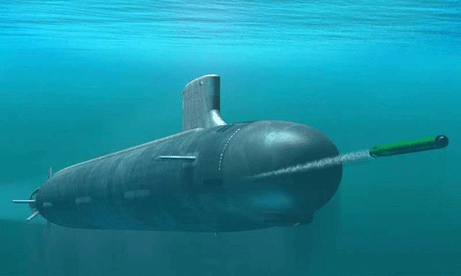 Britain Sends Nuclear Sub Under Arctic Ice As Tensions With Russia Heat Up, Sputnik News, 16 Mar 18, One British and two US nuclear submarines are taking part in a joint naval exercise currently underway in the icy waters of the Arctic Ocean.
Armed with Tomahawk cruise missiles and Spearfish heavy torpedoes, the HMS Trenchant is the first British nuclear sub to be deployed under the Arctic ice in a decade.
It joined a pair of the US Navy’s fast attack submarines the USS Hartford and USS Connecticut, both of which surfaced in the Arctic Circle on March 10 as part of the multinational maritime Ice Exercise 2018……..https://sputniknews.com/military/201803161062602535-uk-submarine-arctic/
America’s NuScale, and UK firms trying to sell Small Modular Nuclear Reactors to France
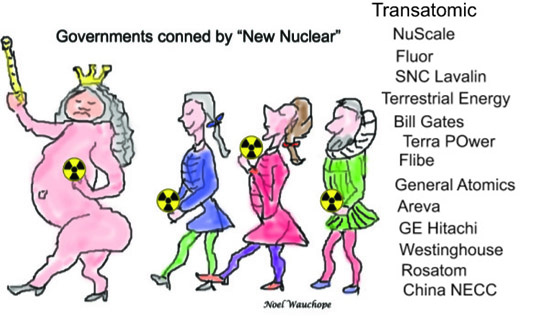 France considers developing mini nuclear reactors, eyes cost Euro News , 15/03/2018 PARIS – The French nuclear industry is considering developing Small Modular Reactors (SMRs), but will have to ensure these miniaturised generators are not only technically feasible but also financially viable, executives said.
Now revealed: Queen Elizabeth’s speech for World War 3 is ready
Queen Elizabeth’s WWIII speech revealed, AS RELATIONS between the UK and Russia plummet and talk of a new Cold War spreads, these are the chilling words we hope are never said. News.com.au, 15 Mar 18, Alexis Carey alexis.carey@news.com.au QUEEN Elizabeth has a pre-written speech prepared for the outbreak of World War 3.
And as tensions between the UK and Russia continue to escalate, some believe the threat of nuclear war is more real than it has been since the Cold War.
The current crisis began on March 4, when former Russian spy Sergei Skripal and his daughter Yulia were found slumped on a bench in Salisbury, England.
UK Prime Minister Theresa May said they had been poisoned by a nerve agent called Novichok, one of the world’s deadliest.
While the pair remain in hospital, their prognosis is grim.
Novichok has been made in Russia for many years, and Ms May said it was “highly likely” Russia was involved in the poisoning. She demanded that Russia explain what happened, but when the country didn’t comply, she said: “There is no alternative conclusion other than that the Russian State was culpable for the attempted murder of Mr Skripal and his daughter — and for threatening the lives of other British citizens.”
As a result, the government has ordered 23 Russian diplomats to leave UK soil by next Wednesday, which is the UK’s biggest removal of foreign representatives in three decades.
UK government ministers and members of the Royal Family will also not attend the World Cup in Russia in June in a further show of retaliation.
As the dispute grows, UK media have republished Queen Elizabeth’s speech, which she will deliver if a nuclear war is ever declared.
The monarch’s speech was initially written in 1983 during the peak of the Cold War.
It had previously been kept a strict secret under the National Archives’ 30-year rule.
The sombre speech was written as if it was delivered at midday on Friday, March 4, 1983 — and while some aspects are now outdated, such as the reference to Queen Elizabeth’s son Prince Andrew serving in the Royal navy, the majority remains relevant.
The speech begins by referencing Queen Elizabeth’s recent Christmas message, before detailing her childhood during World War II.
It goes on to encourage British citizens to “fight off the new evil”.
The speech was previously published by the BBC and has been reproduced here in full:
UK Labour in tune with young people’s enthusiasm for renewable energy: Tories are tone deaf
Dave Toke’s Blog 14th March 2018, How Labour can really put the wind up the Tories. Labour is well placed to
embarrass the Tories by attacking the Government’s war on the onshore
wind industry in the UK.
Despite onshore wind now being the cheapest widely
available electricity source the Government is actively sabotaging the
industry by refusing to allow long term contracts to be issued to wind
developers. Meanwhile large subsidies are being offered to gas, coal and
nuclear power stations.
Under the last Labour Government incentives were
given to build up a large increase in onshore wind power, which now
supplies around a tenth of UK’s electricity supply, with offshore wind
and solar farms now supplying around another ten per cent of UK
electricity.
But right wing English Tory pressure has prevented any move
towards enabling long term contracts to be issued so that new windfarms can
be financed. Meanwhile the UK risks becoming increasingly dependent on
supplies of gas from places like Russia and Qatar.
The Labour frontbench is beginning to realise that young people in particular want to see green
energy being given a chance, and, for example, John McDonnell has recently
attacked the Tories for failing to doing anything to revive support for the
feed-in tariff scheme that helped people install solar panels on their
roofs.
But attention ought also to be turned to promoting onshore
windfarms. Doing so would embarrass the Government and also sow division
inside the Tory ranks. More practically, it would offer hope to people who
are working in the industry that they might have a future.
Places like Grimsby are benefitting from offshore wind projects which are still being
built, but onshore wind factories are being closed down, the latest being
the Glasgow based Gaia Wind. The Minister of State for Energy, Claire
Perry, has, in recent months, been making some encouraging noises about
providing some ‘contracts for differences’, but appears to lack the
required political clout to do much that changes anything, especially to
overcome the vocal hostility of the climate-and-wind sceptical group of
Tory MPs.
http://realfeed-intariffs.blogspot.co.uk/2018/03/how-labour-can-really-put-wind-up-tories.html
1 This Month
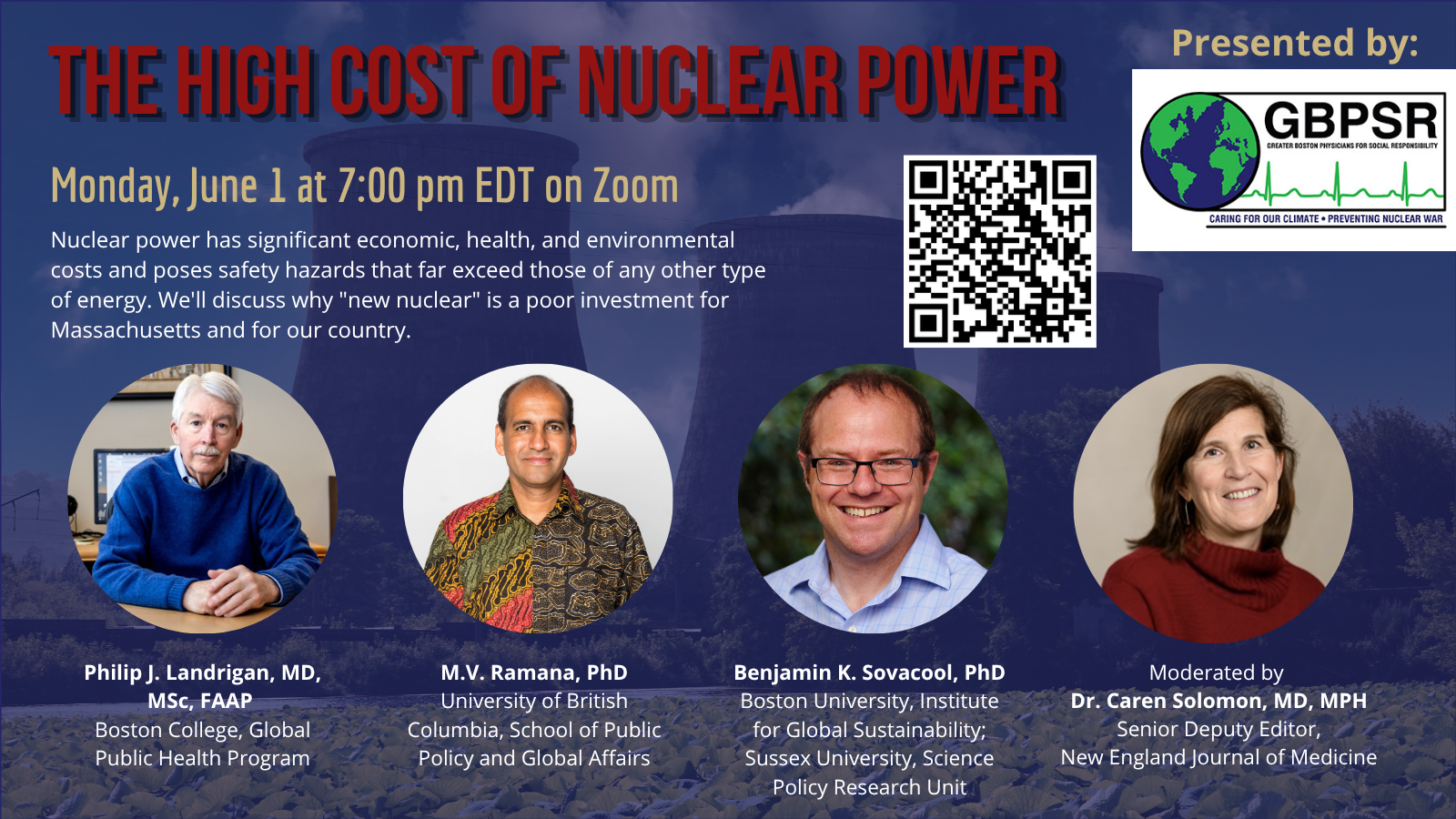
1 June Webinar – The High Cost of Nuclear Power – Register


of the week– Nuclear Reactor Information Task Force
To see nuclear-related stories in greater depth and intensity – go to https://nuclearinformation.wordpress.com
-
Archives
- May 2026 (262)
- April 2026 (356)
- March 2026 (251)
- February 2026 (268)
- January 2026 (308)
- December 2025 (358)
- November 2025 (359)
- October 2025 (376)
- September 2025 (257)
- August 2025 (319)
- July 2025 (230)
- June 2025 (348)
-
Categories
- 1
- 1 NUCLEAR ISSUES
- business and costs
- climate change
- culture and arts
- ENERGY
- environment
- health
- history
- indigenous issues
- Legal
- marketing of nuclear
- media
- opposition to nuclear
- PERSONAL STORIES
- politics
- politics international
- Religion and ethics
- safety
- secrets,lies and civil liberties
- spinbuster
- technology
- Uranium
- wastes
- weapons and war
- Women
- 2 WORLD
- ACTION
- AFRICA
- Atrocities
- AUSTRALIA
- Christina's notes
- Christina's themes
- culture and arts
- Events
- Fuk 2022
- Fuk 2023
- Fukushima 2017
- Fukushima 2018
- fukushima 2019
- Fukushima 2020
- Fukushima 2021
- general
- global warming
- Humour (God we need it)
- Nuclear
- RARE EARTHS
- Reference
- resources – print
- Resources -audiovicual
- Weekly Newsletter
- World
- World Nuclear
- YouTube
-
RSS
Entries RSS
Comments RSS
 nuclear-news