British government to provide $18.2 billion for Hitachi to build Wylfa nuclear power station
 Nikkei Asian Review 11th May 2018 The British government has proposed to arrange all 2 trillion yen ($18.2
billion) in lending that Hitachi says is needed to build a nuclear power
plant in Wales, as the Japanese side seeks to reduce its risk and encourage
the U.K. to put more skin in the game.
London had previously suggested that it guarantee 1 trillion yen in lending, but to get the project moving it
changed its offer to include approaches such as direct financing in order
to reduce Hitachi’s financial exposure.
The plan also calls for a totalinvestment of 900 billion yen, with Hitachi as well as Japanese and British
public-private interests each taking a one-third stake, and guarantees for
corporate loans. The total cost of the plant, to be built on the Isle of
Anglesey, is expected to swell to 3 trillion yen.
Hitachi Chairman Hiroaki Nakanishi met with Prime Minister Theresa May in London last Thursday to
ask for greater backing. The original plan called for the loans to be
provided by private lending institutions from both countries and guaranteed
equally by each government. State funding would come at a lower cost than
borrowing from private institutions and would demonstrate the U.K.’s
increased involvement as a backer of Hitachi’s nuclear power business,
which would ease raising funds and help secure investors.
The offer reflects the U.K.’s strong desire to proceed with the project, since
bankruptcy could place a burden on British taxpayers. The U.K. government
will submit a formal proposal to the Japanese side soon. Hitachi will then
make a final decision on whether to continue with the project at a board
meeting at the end of the month.
Some at Hitachi and in Tokyo have expressed concern about Japanese interests retaining leadership of the
project with two-thirds control. Hitachi and the U.K. are thought to be
discussing ways to prevent Hitachi’s exposure risk from rising, such as by
raising London’s stake or issuing dual class shares. But the British
Parliament is likely to oppose expanding the government’s stake, which
could throw a wrench in the project’s final shareholding structure or
allocation of costs. Hitachi is also requesting that the electricity’s
purchase price be raised, but the U.K. is opposed. It hopes to satisfy
Hitachi by covering all loans and raising its stake in the project.
https://asia.nikkei.com/Business/Business-Deals/London-offers-18bn-in-loans-for-Hitachi-s-UK-nuclear-plant
A maritime catastrophe waiting to happen – Russia’s Floating Nuclear Power Plant in the Arctic
Reasons Why a Floating Nuclear Power Plant in the Arctic is a Terrible Idea http://www.maritimeherald.com/2018/reasons-why-a-floating-nuclear-power-plant-in-the-arctic-is-a-terrible-idea/, BY SVILEN PETROV, -11 May 18, This enormous monstrosity is the first floating nuclear power plant built in the world. And now it’s heading to the Arctic. No, it’s not a joke or science fiction, it’s really happening.

Rosatom, Russia’s state-controlled nuclear giant, has just launched the Akademik Lomonosov, the first of a fleet of floating nuclear power plants that Russia plans to build and sell to other countries such as China, Indonesia and Sudan. It is currently being towed across the Baltic Sea, where it will travel all of Scandinavia to Murmansk, to be supplied and tested, before departing on a 5,000 kilometre trip through the Arctic.
We already know the risks of drilling for oil in such a fragile and wild environment as the Arctic, but a nuclear reactor floating in its waters could aggravate things much more. This is why:
- It is a matter of time that a catastrophe occurs
Rosatom has said that the plant “is designed with a large margin of safety that exceeds all possible threats and makes nuclear reactors indestructible in the face of tsunamis and other natural disasters.” Remember what happened the last time they said a boat was “unsinkable”?
Nothing is indestructible. The problem is that this nuclear Titanic has been built without independent experts to verify it. The same lack of supervision that there was in Chernobyl.
The flat bottom hull of this plant makes it especially vulnerable to tsunamis and cyclones. A large wave could launch the station to the coast. Also, he can not move alone either. If you release moorings, you can not move away from a threat (such as an iceberg or a strange vessel, for example) increasing the risk of a fatal incident. A collision shock would damage your vital functions, causing a loss of power and damaging your cooling function.
- Imagine how difficult it would be to deal with the consequences
There are so many things that could go wrong here: it could flood, sink or run aground. All of these scenarios could lead to the release of radioactive substances into the environment.
In case of a collapse, the ocean water would cool the core. It may seem like a good idea, but when the fuel rods are melted with seawater, there would first be a water explosion and possible explosions of hydrogen that would propagate a large number of radioactive isotopes into the atmosphere.
Damage to the reactor could contaminate much of the marine wildlife that is nearby, which means that fish populations could be contaminated in the coming years. The radioactive Arctic is not the most beautiful scenario. The areas around Fukushima and Chernobyl are already difficult to clean, imagine in the polar night, with sub-zero temperatures and snowstorms.
- The terrible trajectory of nuclear ships, icebreakers and Russian submarines
In Russia, there is a very long list of accidents with nuclear submarines and icebreakers.
The first nuclear icebreaker, Lenin, suffered a cooling accident in 1965, which caused a partial melting of the nucleus, which ended up pouring into the Tsivolki Bay near the Novaya Zemyla archipelago in 1967. In 1970, the reactor of a nuclear submarine ( K-320) was launched at the Krasnoye Sormovo pier in Russia, releasing large amounts of radiation and exposing hundreds of people. An accident during the fuel loading of a nuclear submarine reactor in Chazma in 1985 irradiated 290 workers, causing 10 deaths and 49 injured people. And the list goes on …
Rosatom’s plans to build a fleet of floating nuclear power plants pose an increased risk of unprecedented nuclear accidents in the Arctic.
- A nuclear dump in the water
We already have enough radioactive waste without knowing what to do with them. We do not need more.
The reactors of this plant are smaller than those found in a nuclear power plant on land and will need to be refuelled every two or three years. The radioactive waste will be stored on board until it returns after the designated 12 years of operation. That means radioactive waste will be left floating in the Arctic for years.
This is not only incredibly dangerous, but there is still no safe place to transport the fuel used once you step on firm ground. No source of energy must generate waste that takes thousands of years to be safe.
- Is using nuclear energy to facilitate the extraction of more fossil fuels
If this floating nightmare were not already absurd enough, the reason they are towing it to the Arctic is to help Russia extract more fossil fuels. Its main mission is to provide electricity to the northern oil, gas, coal and mineral extraction industries.
And it is not necessary to repeat the reasons why more fossil fuels are synonymous with more climate change. We only have to protect the Arctic from this potential catastrophe.
Responsible for the anti-nuclear campaign of Greenpeace Spain, Source: El Independiente
UK nuclear regulator prosecutes waste firm over worker exposed to radiation
 Sellafield faces huge fine over worker’s exposure to radiation Nuclear regulator prosecutes waste firm after injury leaves employee open to exposure https://www.theguardian.com/environment/2018/may/11/sellafield-faces-huge-fine-over-employees-exposure-to-radiation Adam Vaughan, 11 May 18
Britain’s biggest nuclear waste storage and reprocessing site is facing a potential multimillion-pound fine after an employee was exposed to dangerously high levels of radiation.
The nuclear regulator said its investigation had led it to prosecute Cumbria-based Sellafield Ltd, which handles the waste from the UK’s nuclear power stations as well as spent fuel from Japan and the US.
It is the first time in five years that the Office for Nuclear Regulation has prosecuted the company.
Last time, Sellafield was fined £700,000 for sending bags of radioactive waste to a landfill dump instead of a specialist facility.
Now, if the prosecution is successful, the firm is understood to be facing the prospect of a substantial fine, likely to be much larger because an individual was affected.
The case relates to an accident in February 2017, when a site employee was wounded while handling equipment, leaving him open to internal radiation exposure.
He was decontaminated afterwards, but an investigation found the individual may have been exposed to radiation up to three times the annual limit. The regulator is taking the firm to court over offences under the Health and Safety at Work act.
Both Sellafield and the ONR said they were unable to comment further for legal reasons.
The prosecution is due to begin at Workington magistrates court in Cumbria on 20 July.
Sellafield has been state-run since 2016, after MPs raised concerns over how much it was costing taxpayers under private ownership.
The facility is in the process of a major transformation from a reprocessor of nuclear waste, where it turns spent fuel from power stations into uranium that can be used again, to solely focusing on storage.
The site’s Thermal Oxide Reprocessing Plant (Thorp) ceases operations in November this year, and will then be dismantled. Sellafield’s Magnox reprocessing plant, which handles waste from Britain’s early nuclear power stations, is scheduled to close in 2020.
UK: the environment will have less protection after Brexit
Times 11th May 2018 , The environment will have less protection after Brexit because the proposed
new green watchdog will lack the power to hold ministers to account,
conservation groups have said.
Michael Gove, the environment secretary, has
unveiled plans for a new independent statutory body to replace the role of
the European Commission in ensuring compliance with rules on reducing air
and water pollution and protecting wildlife in Britain.
An Environmental Principles and Governance Bill will be published in draft form this autumn
and will establish what the government described as a “world-leading body
to hold government to account for environmental outcomes”. However, unlike
the commission, which can take legal action against the government for
failing to observe environmental laws and impose fines, the new body may
only have the authority to issue advisory notices.
A Whitehall source said that Mr Gove wanted the body to have much stronger powers but that this had
been resisted by Philip Hammond, the chancellor, who is concerned that
tough enforcement of environmental rules could harm economic growth.
https://www.thetimes.co.uk/edition/news/gove-s-new-green-watchdog-will-leave-environment-unprotected-after-brexit-zflnfgv9h
Scotland welcomes EDF’s offshore wind project
 The National 10th May 2018 , NICOLA Sturgeon has welcomed the decision by the French energy giant EDF to
buy a large offshore wind project off the coast of Scotland for more than
€500 million from its Irish developer.
The project, dubbed Neart naGaoithe, which means “strength of the wind” in Gaelic, was delayed by
several years because of a legal challenge concerning its impact on
seabirds, but ultimately gained approval and won a government subsidy
contract. The deal follows similar investments by EDF, which has pushed
into renewables in recent years with big deals ranging from solar in Dubai
to wind projects in Chile.
http://www.thenational.scot/business/16218325.First_Minister_welcomes_French_energy_giant__39_s_wind_farm_acquisition/
Julian Assange stuck in Ecuador’s embassy in London- no visitors allowed, no outside communications
 Julian Assange stuck without a phone, can’t see guests at Ecuador’s embassy in London, Washington Examinerby Anna Giaritelli | May 11, 2018
Can Europe salvage the Iran nuclear deal?
Europe scrambles to salvage Iran nuclear deal after US withdraws https://nypost.com/2018/05/10/europe-scrambles-to-salvage-iran-nuclear-deal-after-us-withdraws/ ANKARA , 10 May — European countries are powerless to salvage the nuclear deal with Iran after the United States pulled out, the deputy head of the elite Iranian Revolutionary Guard (IRGC) said Thursday.
Britain, France and Germany said they remained committed to the deal despite Tuesday’s decision by President Trump to withdraw.
But Brig. Gen. Hossein Salami said Europe “cannot act independently over the nuclear deal,” the semi-official Fars news agency quoted him as saying.
Iranian President Hassan Rouhani said Tuesday that Tehran would remain in the 2015 agreement, though Europe had only a “limited opportunity” to preserve it.
On Wednesday, Supreme Leader Ayatollah Ali Khamenei cast doubt on the ability of the European signatories to guarantee Tehran’s interests, adding: “I do not trust these countries either.”
Khamenei has the final say on all state matters and commands the loyalty of the IRGC, which has huge political and economic influence domestically.
Salami said Iran’s enemies were not seeking military confrontation. “They want to pressure our country by economic isolation … Resistance is the only way to confront these enemies, not diplomacy,” Fars quoted him as saying.
Trump also said Tuesday he would revive US economic sanctions against Iran, penalizing foreign firms doing business with Tehran and further undermining what he called “a horrible, one-sided deal that should have never, ever been made.”
Europeans fear a collapse of the deal could raise the risk of deepening conflicts in the Middle East.
Early on Thursday, Iranian forces launched their first attack on Israel from inside Syria, firing rockets at army bases in the Golan Heights, Israel said.
That prompted one of the heaviest Israeli barrages against Syria since the conflict there began in 2011.
The pact, the signature foreign policy achievement of Trump’s predecessor, President Barack Obama, was designed to prevent Iran from developing a nuclear bomb in exchange for lifting most sanctions that had crippled its economy. Sanctions were removed in 2016.
Trump complained that the agreement failed to address Iran’s ballistic missile program, its nuclear activities beyond 2025 or its role in conflicts in the Middle East, where Tehran has been involved in a proxy war from Lebanon to Yemen for decades.
In defiance of Western pressure to curb the missile program, Tehran says it is an essential precautionary defense against the United States and other adversaries, primarily Gulf Arab states and Israel.
“Exiting the deal and their concerns over Iran’s missile work are excuses to bring our nation to its knees,” Salami said.
The IRGC’s overseas arm, the Quds force, operates in Iraq, Syria and Yemen, among other places.
Britain coy about whether or not it is funding Hitachi nuclear power project in Wales
 Britain plays down media report of Hitachi nuclear deal, Susanna Twidale -10 May
 LONDON/TOKYO (Reuters) – Britain’s government on Wednesday played down a media report that it will guarantee Hitachi Ltd’s Horizon Nuclear Power loans for the construction of two reactors in Wales.
British Prime Minister Theresa May met Hitachi Chairman Hiroaki Nakanishi last week in London and asked him to go ahead with the project, conveying the government’s intention to fully guarantee the loans, Japan’s Mainichi newspaper paper said, without citing a source.
“We don’t recognise these reports,” a spokesman for Britain’s Department for Business, Energy and Industrial Strategy (BEIS) said in an emailed statement.
“Nuclear power remains a crucial part of the UK’s energy future but we have always been clear that this must be delivered at the right price for consumers and taxpayers,” he said.
Britain is seeking new ways to fund nuclear projects after criticism over a deal awarded to France’s EDF to build the first nuclear plant in Britain for 20 years, which could cost consumers 30 billion pounds.
“These discussions are commercially sensitive and we have no further details at this time,” the BEIS spokesman said.
Hitachi’s Horizon plans to construct at least 5.4 gigawatts of new nuclear capacity at two sites in Britain – the first at Wylfa Newydd in Wales, and a second at Oldbury-on-Severn in England.
…….. The Mainichi report said Hitachi is still pushing for the British government to take a stake in the project and guarantee electricity prices to ensure it is profitable.
The cost of the Hitachi project in Wales has ballooned to 3 trillion yen (20.2 billion pounds) due to tougher safety measures, the newspaper said. Hitachi declined to comment, when contacted by Reuters.
Reporting by Susanna Twidale, Yoshiyasu Shida and Osamu Tsukimori; Writing by Aaron Sheldrick; Editing by Christian Schmollinger and Alexandra Hudson
Hitachi encouraged by British assurance of guaranteed loan for Wylfa nuclear power plant construction
 Mainichi 9th May 2018 [Machine Translation] The UK government presented to Hitachi about a debt
guarantee for the full amount of borrowing necessary for the project, surrounding Hitachi’s nuclear power plant project to be planned in central UK.
Until now, the Japanese government had a policy of guaranteeing debt from borrowing from Japanese banks. The British government, which had been asked to strengthen support from Hitachi, said it showed stronger involvement in finance.
Based on this, Hitachi is expected to judge continuation of investment within the month. As a loan, 3 megabanks such as
Mitsubishi UFJ Bank and other government-affiliated international cooperation banks are planning to participate from Japan, and it was planned that the Japan Trade Insurance, wholly owned by the government, will guarantee the loans of three lines.
However, in late April, the British government showed Hitachi’s intention to guarantee full debt of both Japanese and English bank loans. Prior to this, Hitachi reported that there is a possibility of withdrawing from business unless UK government’s adequate support is obtained, the UK side seems to have presented as part of the support measures.
If the loan is burned down due to an accident or the like due to the guarantee of debt, there is a possibility that the
British people will eventually bear a burden. Although the burden of Hitachi is not immediately reduced compared with the case where the Japanese government guarantees the debt, the British government owes the risk of the failure of the project, so that the meaning that the British government can continue to support in the future can be expected is there.
https://mainichi.jp/articles/20180509/k00/00m/020/171000c?fm=mnm
Hitachi Ltd’s Horizon Nuclear Power unit has received assurance of UK govt funding for nuclear build in Wales
Reuters 9th May 2018, Hitachi Ltd’s Horizon Nuclear Power unit has received an assurance from
the British government that it will guarantee loans for the construction of
two reactors in Wales, the Mainichi newspaper reported on Wednesday.
British Prime Minister Theresa May met Hitachi Chairman Hiroaki Nakanishi
last week in London and asked him to go ahead the project, conveying the
government’s intention to fully guarantee the loans, the paper said,
without citing a source.
As the project costs have increased to meet new safety provisions, Hitachi is still pushing for the British government to
take a stake in the project and guarantee electricity prices to ensure it
is profitable, the Mainichi said. The cost of the Hitachi project in Wales
has ballooned to 3 trillion yen ($27.4 billion) due to the tougher safety
measures, the newspaper said.
https://uk.reuters.com/article/uk-britain-nuclear-hitachi/hitachis-u-k-nuclear-project-to-get-guarantees-from-government-media-idUKKBN1IA0IV?rpc=401&
Poland embraces wind power – a better deal than nuclear
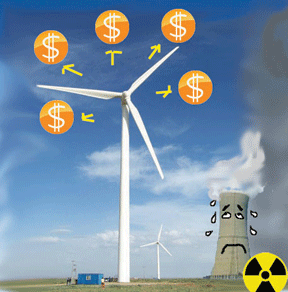 PGE picks Baltic wind over nuclear as Poland embraces green power, Agnieszka Barteczko, Pawel Goraj WARSAW/GDYNIA (Reuters) – State-controlled PGE (PGE.WA) has abandoned its leading role in plans to build Poland’s first nuclear power station as it focuses on new wind farms in the Baltic Sea, two sources said.
PGE, the largest Polish power group, announced a nearly $10 billion offshore wind project in March but has also been responsible for the nuclear project…….
One source said PGE could not fund both projects and cheap technology had swung the decision in favor of wind. PGE could still play a smaller role in the nuclear project which has been delayed and still needs government approval.
“PGE cannot afford both – offshore wind and nuclear. The decision was taken to go for offshore,” the source said.
A government source also said that PGE would focus on offshore.
…….. Poland’s ruling conservative Law and Justice (PiS) party promised before elections in 2015 to defend the coal industry and put in place laws to prevent new investment in both onshore and offshore windfarms.
But in March it changed tack and proposed a law to make it easier to build wind turbines. That is currently being debated in parliament.
If the law is passed, as expected, several other wind farm projects could also proceed.
Polenergia (PEPP.WA), owned by the Kulczyk family, has said it would like to build a wind farm in the Baltic by 2022. PKN Orlen is also considering building one.
PGE said in March that it wants to build offshore windfarms with a capacity of 2.5 gigawatts (GW) by 2030.
………. Analysts and investors say that offshore wind farms are the easiest and fastest way for Poland to fill the expected capacity gap from coal and reduce CO2 emissions in line with EU’s 2030 targets as Poland seeks improved ties with Brussels.
They provide more electricity than onshore windfarms, which Poland already has, and can be built more quickly than a nuclear power plant.
The decision to open up the offshore power industry could also draw in investors. Statoil said in April it would join Polenergia’s offshore project which has drawn interest from other international wind companies.
“We received phone calls from all over Europe after Statoil’s decision was announced. If such a player has entered, we need to be in too, many investors say,” said Maciej Stryjecki, the president of the board at SMDI Advisory Group.
………. The Polish Wind Energy Association (PWEA) estimates that offshore windfarms with a total capacity of 6 GW would help create around 77,000 new jobs and add around 60 billion zlotys to economic growth.
Local authorities in the windy Baltic resort and port of Leba, which is close to the future offshore sites, are hoping the industry could provide year-round employment as a balance to seasonal jobs.
“If investors choose Leba, a base and functional and technical facilities for wind farms could be created here,” the mayor of Leba, Andrzej Strzechminski, said.
PWEA has identified around 70 potential Polish suppliers to the offshore industry including shipyards Crist SA and GSG Towers. Their workers’ boat-building skills can be transferred to make windmill components.
GSG Towers, a unit of Gdansk Shipyard Group, is looking forward to Poland’s first offshore windmills and contracts with new clients.
The Polish Wind Energy Association (PWEA) estimates that offshore windfarms with a total capacity of 6 GW would help create around 77,000 new jobs and add around 60 billion zlotys to economic growth.
Local authorities in the windy Baltic resort and port of Leba, which is close to the future offshore sites, are hoping the industry could provide year-round employment as a balance to seasonal jobs.
“If investors choose Leba, a base and functional and technical facilities for wind farms could be created here,” the mayor of Leba, Andrzej Strzechminski, said.
PWEA has identified around 70 potential Polish suppliers to the offshore industry including shipyards Crist SA and GSG Towers. Their workers’ boat-building skills can be transferred to make windmill components.
GSG Towers, a unit of Gdansk Shipyard Group, is looking forward to Poland’s first offshore windmills and contracts with new clients.
“We are not talking anymore about whether Poland needs to develop offshore wind projects…there are no more question marks and we only talk about when and how to do it right,” said Liudmyla Buimister who was the CEO of GSG Towers, a unit of Gdansk Shipyard Group, until April 16.
It has approached PGE and Polenergia about building a device to send electricity generated at sea to the onshore grid.
Additional reporting by Barbara Lewis in London; Editing by Anna Willard https://www.reuters.com/article/us-poland-energy/exclusive-pge-picks-baltic-wind-over-nuclear-as-poland-embraces-green-power-idUSKBN1IB0LE
Chernobyl: History of a Tragedy by Serhii Plokhy review –

Guardian 9th May 2018 Chernobyl: History of a Tragedy by Serhii Plokhy review – Europe nearly
became uninhabitable. A compelling history of the 1986 disaster and its
aftermath presents Chernobyl as a terrifying emblem of the terminal decline
of the Soviet system. The turbine test that went catastrophically wrong was
not, he argues, a freak occurrence but a disaster waiting to happen. It had
deep roots in the party’s reckless obsession with production targets and
in the pliant nuclear industry’s alarming record of cutting corners to
cut costs.
https://www.theguardian.com/books/2018/may/09/chernobyl-history-tragedy-serhii-plokhy-review-disaster-europe-soviet-system
UK Energy minister Lord Henley would consider storing nuclear waste under national parks
Mirror 9th May 2018 , Tory ministers were slammed after they refused to rule out burying nuclear
waste under national parks. The government’s statement was branded
“absolutely shocking” by Green Party co-leader Caroline Lucas. It comes
more than five years after Cumbria County Council rejected a bid for an
underground storage unit under the Lake District.
Since then ministers have continued their search for a home for the Geological Disposal Facility.
Labour peer Lord Judd asked ministers to promise national parks, protected
areas and areas of outstanding natural beauty will be excluded from the
search.
But energy minister Lord Henley said he was “not excluding”
those areas yet while a National Policy Statement is finalised. He
insisted: “Development for a Geological Disposal Facility should only be
consented in nationally designated areas in exceptional circumstances and
where it would be in the public interest to do so. “Even if such
development were consented, the developer would be required to take a
number of measures to protect and where possible improve the
environment.” https://www.mirror.co.uk/news/politics/tory-ministers-refuse-rule-out-12508389
European leaders consider ways to save the Iran nuclear deal


 Europe pledges to save Iran nuclear deal ‘for our shared security’ https://www.smh.com.au/world/europe/europe-pledges-to-save-iran-nuclear-deal-for-our-shared-security-20180509-p4ze4a.html, By Nick Miller, 9 May 2018
Budapest: European leaders have hinted at financial incentives or compensation for Iran to persuade it to stay it in the nuclear deal that the US has rejected.
And they are likely to act to protect European companies trading with Iran despite the US re-imposing sanctions.
In a joint statement UK prime minister Theresa May, German Chancellor Angela Merkel and French president Emmanuel Macron greeted with “regret and concern” Donald Trump’s announcement that he would re-impose sanctions against Iran and withdraw from the Iran nuclear deal.
“Together, we emphasise our continuing commitment to the (agreement),” they said. “This agreement remains important for our shared security.”
They said Iran “continues to abide by the restrictions” in the deal preventing its development of nuclear weapons, and “the world is a safer place as a result”.
“Our governments remain committed to ensuring the agreement is upheld, and will work with all the remaining parties to the deal to ensure this remains the case including through ensuring the continuing economic benefits to the Iranian people that are linked to the agreement.”
They encouraged Iran to “show restraint in response to the decision by the US” and to continue to meet all its obligations including atomic agency inspections and monitoring.
“In turn, Iran should continue to receive the sanctions relief it is entitled to whilst it remains in compliance with the terms of the deal,” the leaders said.
The European Commission’s foreign affairs representative and vice president Federica Mogherini said the nuclear deal “is not a bilateral agreement and it is not in the hands of any single country to terminate it”.
“It is a key element of the global nuclear non-proliferation architecture,” Mogherini said, adding that it was “even more” relevant in the context of negotiations with North Korea.
“The nuclear deal with Iran is crucial for the security of the region, of Europe and of the entire world,” she said.
She said Europe “fully trusted” the work of the nuclear watchdog which had certified Iran had fully complied with it s commitments under the deal.
And she too suggested Europe would look to compensate Iran for the impact of renewed US sanctions.
“The EU has repeatedly stressed that the lifting of nuclear related sanctions has a positive impact on trade and economic relations with Iran, including crucial benefits for the Iranian people,” she said
“The EU is fully committed to ensuring that this continues to be delivered on. I am particularly worried by the announcement of new sanctions. I will consult with all our partners in the coming hours and days to assess their implications. The EU is determined to act in accordance with its security interests and to protect its economic investments.”
And she appealed to Iran to “stay true to your commitments, as we will stay true to ours. And together, with the rest of the international community, we will preserve the nuclear deal.”
May, Macron and Merkel said they wanted to build on the nuclear deal to address other issues including Iran’s ballistic missile programme and “its destabilising regional activities, especially in Syria, Iraq and Yemen”.
Macron Tweeted that the three countries would “work collectively on a broader framework” covering nuclear activity after the deal ends in 2025, ballistic activity and “stability in the Middle East”.
On Monday UK Foreign Secretary Boris Johnson travelled to the US to make a last-ditch appeal to save the deal, but didn’t get an audience with the president.
Instead he appeared on the cable news program Fox & Friends – which Trump regularly watches – and remarked that “Plan B does not seem, to me, to be particularly well developed at this stage”.
Swizerland’s Health Office recalls jewellery contaminated with radioactive thorium and uranium
 Radioactive jewellery recalled in Switzerland swissinfo, 7 May 18 A Swiss company has sold esoteric “negative-ion” jewellery containing high levels of uranium and thorium. The Federal Office of Public Health has written to people who have bought the jewellery, telling them to send it to the health office.
Health office spokesman Daniel Dauwalder on Monday confirmed media reports that an unnamed company had imported rock powder from China with levels of the two radioactive substances that were harmful for skin cells and the outer skin layer.
The health office said if the bracelets, necklaces and earrings were worn for several hours a day over a year, the skin’s dose threshold of 50 millisieverts could be exceeded. In the long term, the risk of skin cancer would increase, it added.
….The radioactive rock powder was discovered by German customs guards, who informed the Federal Office of Public Health.
Dauwalder said the office had already received many items of jewellery, which would be disposed of accordingly. The jewellery must not end up in the normal rubbish, the office said.https://www.swissinfo.ch/eng/uranium-earrings_radioactive-jewellery-recalled-in-switzerland/44101980
1 This Month

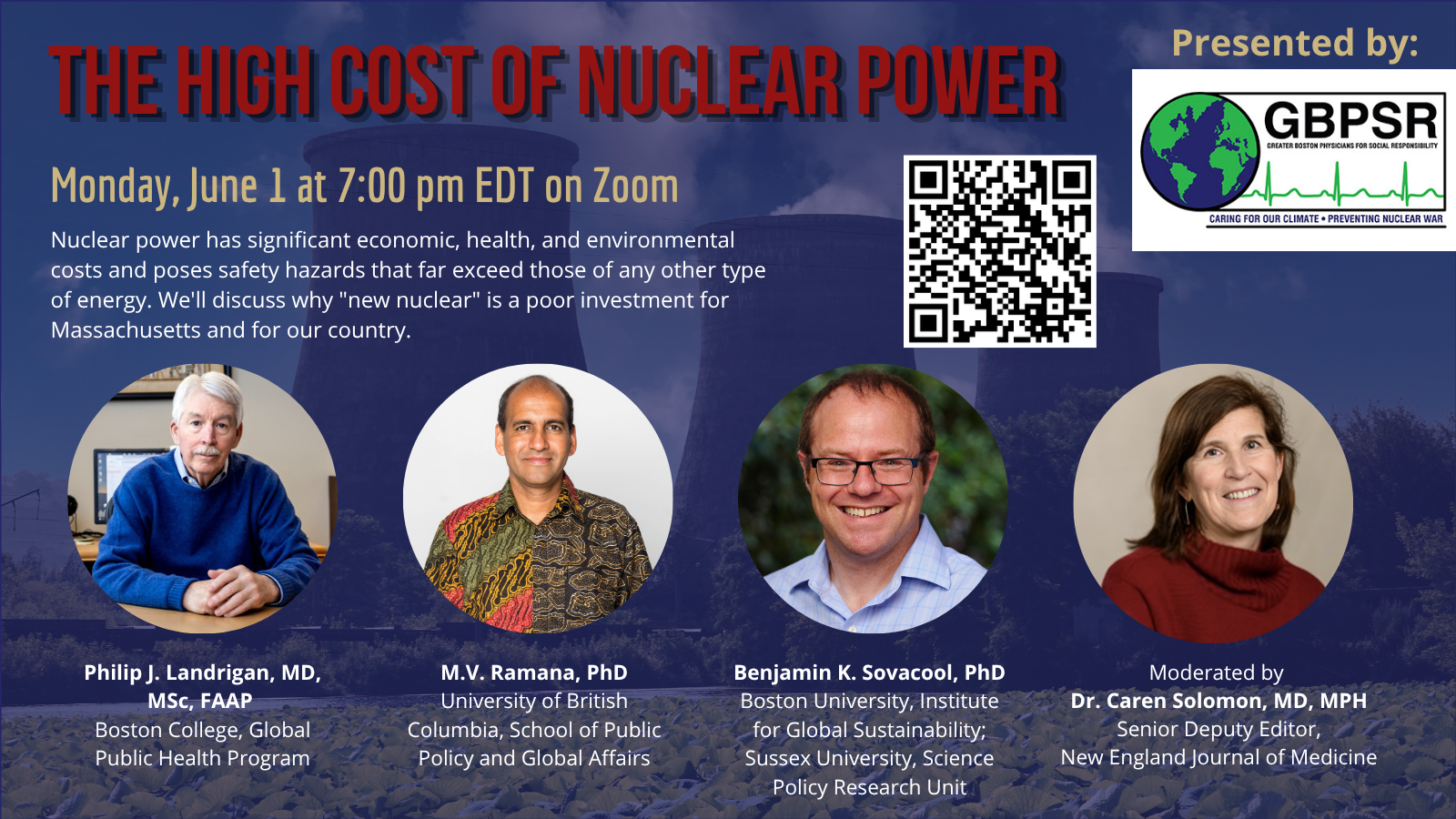
1 June Webinar – The High Cost of Nuclear Power – Register


of the week– Nuclear Reactor Information Task Force
To see nuclear-related stories in greater depth and intensity – go to https://nuclearinformation.wordpress.com
-
Archives
- May 2026 (262)
- April 2026 (356)
- March 2026 (251)
- February 2026 (268)
- January 2026 (308)
- December 2025 (358)
- November 2025 (359)
- October 2025 (376)
- September 2025 (257)
- August 2025 (319)
- July 2025 (230)
- June 2025 (348)
-
Categories
- 1
- 1 NUCLEAR ISSUES
- business and costs
- climate change
- culture and arts
- ENERGY
- environment
- health
- history
- indigenous issues
- Legal
- marketing of nuclear
- media
- opposition to nuclear
- PERSONAL STORIES
- politics
- politics international
- Religion and ethics
- safety
- secrets,lies and civil liberties
- spinbuster
- technology
- Uranium
- wastes
- weapons and war
- Women
- 2 WORLD
- ACTION
- AFRICA
- Atrocities
- AUSTRALIA
- Christina's notes
- Christina's themes
- culture and arts
- Events
- Fuk 2022
- Fuk 2023
- Fukushima 2017
- Fukushima 2018
- fukushima 2019
- Fukushima 2020
- Fukushima 2021
- general
- global warming
- Humour (God we need it)
- Nuclear
- RARE EARTHS
- Reference
- resources – print
- Resources -audiovicual
- Weekly Newsletter
- World
- World Nuclear
- YouTube
-
RSS
Entries RSS
Comments RSS
 nuclear-news