Scotland’s Youth Peace Academy running 3 day programme to train activists
 The National 22nd June 2018 , A FULLY funded three-day training programme is giving young people the
chance to become top activists on nuclear disarmament. The Youth Peace
Academy is inviting 18 to 30-years-olds residing in Scotland to take part
in a packed training programme. Participants will learn about nuclear
weapons, lobbying, writing press releases, fundraising tools and more.
Peace Education Scotland’s Flavia Tudoreanu helped come up with the idea
after attending a similar event in Berlin. She said: “We thought it would
be really good to bring to Scotland.
http://www.thenational.scot/news/16306981.Young_Scots_offered_training_in_anti-nuclear_activism/
French nuclear corporation EDF hedges its bets: now starting 2 renewable energy programmes
Renews 22nd June 2018 Energy giant EDF is celebrating a UK double after cutting the ribbon on two
renewables projects this week. The company’s chairman and chief executive
Jean-Bernard Levy was present for the official opening of both the 41.5MW
Blyth offshore wind farm off the Northumberland coast and the 49MW West
Burton B battery storage facility.
The Blyth project (pictured) features
five MHI Vestas V164-8.0MW turbines optimised to 8.3MW. The West Burton B
facility will operate within the new frequency control system to be
deployed across the UK to improve national grid stability. Levy said:
“These two innovative projects demonstrate our expertise in renewable
energies and electricity storage. They contribute greatly to
decarbonisation of the energy mix in the UK, our second largest market
after France.”
http://renews.biz/111572/edf-celebrates-uk-one-two/
Nuclear decommissioning in the UK
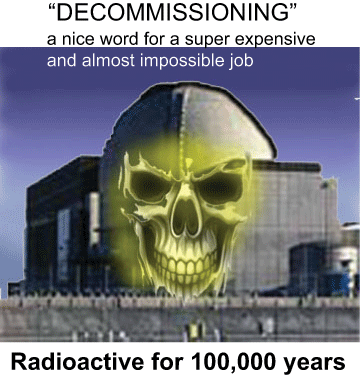 Decommissioning NO2Nuclear Power. Safe Energy Journal 78 The UK government has launched a consultation on the future regulation of nuclear sites in the final stages of decommissioning and clean-up. The Department for Business, Energy and Industrial Strategy (BEIS) said the consultation seeks to enable a “more flexible approach that can optimise waste management, thereby realising environmental benefits and reducing costs”.
Of the 36 nuclear sites located across England, Wales and Scotland, the Nuclear Decommissioning Authority (NDA) is responsible for the decommissioning and clean-up of 17. Other sites to be decommissioned in the future include the operational nuclear power stations owned by EDF Energy, and other nuclear sites in the nuclear fuel cycle, reprocessing, waste management, pharmaceutical and research sectors.
In the UK, the Nuclear Installations Act 1965 (NIA65) provides the legal framework for nuclear safety and nuclear third-party liability and sets out a system of regulatory control based on a robust licensing process administered by the Office for Nuclear Regulation (ONR). Under this regime, a site operator is required to have a licence to use a site for specified activities such as the operation of nuclear power stations. In addition to the nuclear site licensing regime, the NIA65 requires that financial provision is in place to meet claims in the event of a nuclear incident, as required under international law on nuclear third-party liability.
The consultation proposals include changing the NIA65 to allow licensees to exit the licensing regime once the site has reached internationally agreed standards and nuclear safety and security matters have been fully resolved. After the licence has been ended, the site would be regulated by the relevant environment agency and the Health and Safety Executive, in the same way that non-nuclear industrial sites undergoing clean-up for radioactive or other contamination are regulated.
Proposals for further clean-up would be assessed by the relevant environment agency under the Radioactive Substances Regulations. BEIS said this process would enable the site operator to work with the community to establish the “most appropriate” end-state for the site and would result in improved waste management and other environmental benefits.
BEIS proposes to implement two recent decisions by the OECD Steering Committee for Nuclear Energy concerning the exclusion of certain sites from the nuclear third-party regime when the main nuclear hazards have been removed and the risks to the public are small. It also proposes to tighten the licence surrender process to require a licensee to apply to ONR to surrender the licence, and to strengthen requirements for ONR to consult with HSE when the licence is surrendered or varied. (1)
The Government says the main reasons for change are:
- nuclear third party liability currently continues beyond the point at which it is no longer required. The UK has not yet implemented the decisions of the OECD Steering Committee for Nuclear Energy concerning the exclusion of certain sites from the nuclear liability regime;
- site operators wishing to exit the NIA65 licensing regime are required to clean-up the site in a way that does not allow them to balance the overall safety and environmental risks and this may result in unnecessary costs; and
- · disposal facilities for radioactive waste located on nuclear licensed sites remain subject to nuclear licensing. Such sites are also regulated by the environment agencies. This is considered dual regulation which is unnecessary after nuclear safety matters have been resolved.
The UK Government Department for Business, Energy and Industrial Strategy (BEIS) published a discussion paper on the regulation of nuclear sites in the final stages of decommissioning and cleanup in November 2016. The NFLA responded here:
This response concluded that:
There is a danger that what is being proposed will simply be seen as turning nuclear sites into nuclear dumps as a way of saving money.
The concept of “optimisation” which is decided by the operator and regulators making value judgements needs to be replaced with the concept of the Best Practicable Environmental Option which uses a systematic consultative and decision making procedure.
Any part of a nuclear site upon which it is proposed to allow unrestricted use must be able to show that doses to members of the public will be of the order of 0.01mSv or less per year. Using a risk factor in conjunction with probability of receiving a dose is too flexible and unacceptable.
Any waste left on-site much be concentrated and contained in a monitorable, retrievable store.
Former nuclear operators should remain liable for any future unexpected events and should also be liable to pay for any regulatory effort in perpetuity.
These earlier proposals appear to allow for the unrestricted use of sites which may have nuclear waste buried and which could be capable of administering doses of up to 20mSv/yr if human intrusion occurs.
The HSE Criterion for De-Licensing Nuclear Sites (2005) says the Basic Safety Standards Directive (Euratom 96/29) allows member states to exempt a practice where appropriate and without further consideration if doses to members of the public are of the order of 0.01mSv or less per year. HSE is of the view that this dose limit broadly equates to a risk of 10-6 ‘as well as being consistent with other legislation and international advice relating to the radiological protection of the public. The environment agencies Guidance on Requirements for Authorisation (GRA) on Near Surface Disposal Facilities for Solid Radioactive Waste (Near Surface GRA) says that a risk level of 10-6 per year is equivalent to a calculated dose of around 0.02mSv/yr, where the probability of receiving the dose is one.
The consultation is open until 3rd July, and is available here:
https://www.gov.uk/government/consultations/the-regulation-of-nuclear-sites-in-the-final-stagesof-decommissioning-and-clean-up http://www.no2nuclearpower.org.uk/wp/wp-content/uploads/2018/06/SafeEnergyNo78.pdf
UK’s Nuclear Decommissioning Authority (NDA) to spend billions stabilising plutonium canisters
 Power Technology 21st June 2018 , NDA to spend billions stabilising plutonium canisters. The National Audit Office (NAO) has released a report detailing the unstable condition of highly dangerous plutonium canisters at the Sellafield nuclear plant, said to be “decaying faster than anticipated”.
The report, titled ‘Progress with reducing risk at Sellafield’ warns that if these canisters were to leak it would prove an “intolerable risk” – a label defined by the Nuclear Decommissioning Authority (NDA) as a situation where reducing the risk “becomes the overriding factor”, taking precedence over matters of cost and requiring immediate action.
The NDA has refused to comment on the number of canisters affected, though it has said it is only a “small proportion” of their total number. The UK houses 40% of global civil plutonium, the majority of which is stored at the Sellafield site in Cumbria, itself overseen by the NDA. The substance is a by-product of nuclear fuel reprocessing and the site’s abundant stock has led the NDA to label Sellafield its most hazardous facility.
The new report shows Sellafield, which opened in 2012, to have ‘unsuitable’ containers for storing plutonium. The NAO has proposed the canisters be repackaged through the store retreatment plant (SRP) facility, though until this facility is ready the NDA is recommended to place the more unstable canisters in extra layers of packaging. In response to these measures, the NDA has announced its decision to pledge a further £1bn on these packaging canisters, and £1.5bn on building a new facility to house the plutonium.
https://www.power-technology.com/news/nda-spend-billions-stabilising-plutonium-canisters/
France’s Minister Hulot slams Nuclear power and the pro nuclear push by EDF

Le Monde 21st June 2018 [Machine Translation] Nuclear: Hulot puts pressure on EDF. In an interview on Franceinfo, the Minister of the ecological and solidarity transition considered that the French group was in a “drift” because of its too much attachment to the nuclear power.
While France is in the middle of a discussion on its energetic roadmap, Nicolas Hulot did not mince his words, Thursday on Franceinfo . “One of the reasons why EDF is in trouble is that, in particular, the nuclear industry, sorry 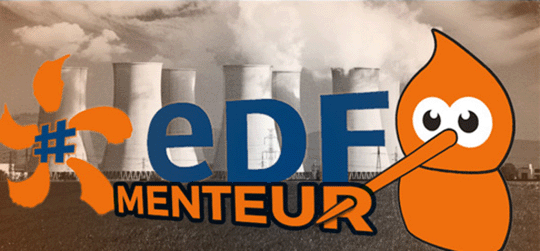 to say , takes us into a drift,” said the Minister of ecological transition and solidarity. Mr. Hulot has been criticizing nuclear power in good standing.
“It is clear that the cost of energy made with nuclear power is increasing because we have not
necessarily provisioned a number of things, at the same time that the cost of renewable energy is falling” stressed the minister. EDF’s financial situation remains difficult: the group suffers from low electricity prices on the market, losing tens of thousands of customers a month and has suffered from the shutdowns of many nuclear plants in recent years.
Contacted, the EDF group did not wish to react to the Minister’s statements.
https://www.lemonde.fr/economie/article/2018/06/21/nucleaire-hulot-met-la-pression-sur-edf_5318946_3234.html
The nuclear industry has co-opted academia in Cumbria

In Cumbria 21st June 2018, More needs to be done to ensure communities not only see but feel the benefits of investment in Cumbria’s nuclear sector, industry figures have been told. Rick Wylie, the Samuel Lindow Academic Director for the University of Central Lancashire (UCLan) based at Westlakes Science and Technology Park, laid down the challenge at the third warm-up arm-up event to September’s Cumbria Nuclear Conference, hosted by Carlisle MP John Stevenson.
Mr Wylie stressed the important work the nuclear industry had already done to support communities and the aspirations of young people and adults, by supporting projects such as the new Whitehaven Academy and Well Whitehaven. But, in a speech at Castle Green Hotel in Kendal on Thursday night, he said: “Nuclear investment needs to have wider public value. It is not just about money, it is about ensuring people not just see but feel the benefits of it.
The prolonged closure of nuclear reactor 3 at Hunterston B in North Ayrshire, UK
 Hunterston B NO2NuclearPower 22 June 18 THE prolonged closure of reactor 3 at Hunterston B in North Ayrshire is the beginning of the end for seven nuclear power stations in Scotland and England. The reactor is scheduled to stay offline until 17th November according to EDF’s website, but experts doubt whether it will ever restart, and argue that proliferating cracks in other elderly reactors across the country will shorten their expected lives and lead to premature shutdowns. EDF Energy, however, insist that it will be able to reopen the reactor.
Independent nuclear engineer John Large says extending the life of troubled reactors like the one at Hunterston is “gambling with public safety”. He says the new cracks signal the “death knell” for Hunterston reactor three. “This means that reactor four is doomed to the same fate, followed by similar plants at Hinkley Point and Hartlepool, thereafter progressively followed by other advanced gas-cooled reactors”.
EDF says it has found a total of 39 “keyway root cracks” in the reactor and they are “happening at a slightly higher rate than modelled”. The integrity of the thousands of graphite blocks that make up the reactor core is vital to nuclear safety. They ensure that the reactor can be cooled and safely shut down in an emergency. Large argues that EDF’s decision to keep reactor three closed until the end of the year was prompted by the UK Government’s safety watchdog, the Office for Nuclear Regulation (ONR). “ONR’s doubts about the reactor safety have not been satisfied by this most recent inspection,” he said. “It may simply be a way of saving face and fobbing off the announcement that the plant is to be permanently shut down.”
Large also highlighted the uncertainties in tracking cracks, which are mostly modelled rather than measured. “There is little that EDF can do to physically resolve this problem,” he said.
Rita Holmes, a local resident who chairs the Hunterston site stakeholder group, argued it would be very difficult for the public to have confidence in the safety of reactor three. “It has had its day and should be allowed to bow out gracefully,” she said. (1) “The local communities are unhappy that the reactor has any cracks, and certainly not happy that one with a growing number of cracks could be allowed to continue generation.”
If the graphite blocks fail and become misshapen, nuclear fuel could get stuck overheat, melt down and leak radioactivity in a major accident. Cracks could also prevent control rods from being inserted causing the nuclear fuel to overheat, potentially resulting in a nuclear accident. An ONR spokesperson said: “Before we grant permission to EDF to restart reactor three we will require that an adequate safety case justifying further operation.”. John Large said “The core at Hunterston may now be in such a poor structural state that its collapse during a relatively modest earthquake could result in a nuclear fuel meltdown and significant radioactive release.”
EDF says “We have prepared well for this; we have a £100 million graphite research programme.”” Professor Paul Bowen, a metallurgist from the University of Birmingham who advises the ONR, thought that the body was likely to insist on more frequent inspections rather than reactor closure. “I’m absolutely confident that the regulator will take a very conservative position,” he said. (2)
“The thing which will close (these reactors) down in the end will be the cost of ensuring safety. It is possible to make a safety case for a significant amount of cracked bricks but it takes time and costs money,” said Barry Marsden, professor of nuclear graphite technology at the University of Manchester. (3)
Local communities should be given a say in the future of Hunterston, according to Green MSP Ross Greer. He says the lack of public consultation has been unacceptable, while highlighting that European law says all ageing nuclear power stations should have an environmental impact assessment. He said: “This is obviously of major safety and economic concern to the local community. Last year I published a report urging the Scottish Government to review safety conditions at the site following earlier reports of cracks and the repeated granting of lifetime extensions to the plant. The local community currently has no say in decisions to extend a plant’s lifetime as an Environmental Impact Assessment with a public consultation is not required. The government must reconsider its position on the need for an Environmental Impact Assessment to accompany decisions on the granting of lifetime extensions to ageing nuclear power stations and commit to a renewed transition plan for North Ayrshire which will prevent the community being left behind, as so many others have been, by the closure of aging power stations.” (4)
A Committee of the Aarhus has just published a report which says the Netherlands “failed to comply” with Aarhus Convention by refusing to organise a public consultation on the 20 year lifetime extension of an old nuclear plant at Borssele. This has important implications for Torness which is due to submit its next Periodic Safety Review to the Office for Nuclear Regulation in January 2019.
(5) Experts estimate the 40% cut in the power station’s output – it normally supplies enough electricity for 1.8m homes – will cost the French state-owned firm £100m-120m in lost revenue. That is small compared with the impact of temporary safety closures at EDF’s French plants, which led profits to fall 16% last year, but it is still a blow the company could do without as it ramps up construction of the £20bn Hinkley Point C nuclear power station in Somerset. (6)
As things currently stand the UK’s remaining 8.9 GW of nuclear capacity will close over a 12-year period, starting in 2023. However, rather than wondering if the AGRs could be given further life extensions, questions should now be asked about the supply implications if some, or all, of the AGRs are unable to operate as envisaged, says Anthony Froggatt of Chatham House. With Brexit raising questions about the financing and schedules for some interconnections, government policies slowing down the deployment of onshore renewables despite their tumbling costs, and the existing plans for the closure of the remaining coal stations, urgent consideration must be given to ensure supply, energy efficiency and flexibility from now on.
Onshore and offshore renewables need to be at the heart of the future system. This would be good for the environment and competitiveness, as the last few years have seen a remarkable change in economics of renewable energy and it is now recognized that by 2020 electricity from renewables will be ‘within the fossil fuel-fired cost range, with most at the lower end or undercutting fossil fuels’ and are already significantly lower than the current prices offered for nuclear new build. (7 http://www.no2nuclearpower.org.uk/wp/wp-content/uploads/2018/06/SafeEnergyNo78.pdf
Continued delays and overspending at the Sellafield nuclear waste clean-up site
Herald 20th June 2018 , Decommissioning the nuclear site at Sellafield faces continued delays and an overspend of up to £913 million, according to an official report. The National Audit Office (NAO) said the Nuclear Decommissioning Authority (NDA) had improved its performance in delivering major projects at the site in Cumbria. But work is still predicted to be late and to cost more than originally expected, said the spending watchdog. The NDA’s nine major projects were expected to cost an additional 60% of their budget at the design stage in 2015, but this has been reduced to 29%, said the NAO. While this was a substantial improvement, it was still a forecast overspend of
£913 million.
The NAO reported that three projects were cancelled when £586 million had already been spent on them after the NDA said it had
found a better way of delivering the work. It said Sellafield Limited has achieved £470 million in efficiency savings, but added that neither the NDA nor the company knows their make-up and admit that a proportion does not represent genuine efficiency savings.
“The strategic decisions the NDA takes around prioritising activity at Sellafield could be profoundly changed and improved by a better, more evidence-based assessment of these constraints. “The NAO has found that the role of the NDA is unclear and this could put at risk the progress we are now seeing at Sellafield,” the report said. “The Department for Business, Energy & Industrial Strategy’s
governance of the NDA is complex and not working as well as it should to support improvements at Sellafield.
http://www.heraldscotland.com/news/16301638.Watchdog_warns_of_delays_and___900m_overspend_in_Sellafield_decommissioning/
Serbian citizens to sue NATO over their cancers due to depleted uranium

 Lawsuits against NATO countries to be filed in fall https://www.b92.net/eng/news/politics.php?yyyy=2018&mm=06&dd=18&nav_id=104422 The first lawsuits are expected to be filed in the fall by Serbian citizens suffering from cancer.SOURCE: BETA
They will sue NATO countries because of the use of depleted uranium during the 1999 bombing of Serbia.
This was announced on Monday President of the Association of Citizens “Depleted Uranium” Sveto Nogo. The lawsuits will be filed individually, he explained.
Speaking at a symposium in the southern town of Nis, dedicated to the consequences of the bombing, Nogo said that there would be no class action lawsuit, but instead those filed by cancer patients and their families.
“NATO countries will be sued for pecuniary and non-pecuniary damages. We will launch lawsuits against five countries, and after the symposium, it will be decided which countries those will be,” Nogo said.
He said that working groups will be formed in the coming months to draft the lawsuits and added that the Serbian Bar Association, the Belgrade Bar Association and “partially” the Nis Bar Association all stand behind “the project.”
“There has been an increasing number of cancer patients, and even babies are being born with cancer. We do not recognize ‘force majeure’, and as intellectuals we have no right to keep silent about it,” Nogo said.
The president of the organizing committee of the symposium, Srdjan Aleksic, said that, as far as the future cases that will be conducted before national courts of NATO member states, the most important point for Serbian citizens is that Italian courts have already confirmed the causality between the use of depleted uranium and soldiers falling ill after staying in the territory that came under attack of such weapons in Kosovo and Metohija.
“The soldiers who had cancer and the families of the deceased have been afforded compensation ranging from 200,000 to 500,000 euros by a court in Italy. We will seek the same compensation for our citizens,” Aleksic said.
According to him, it took five years for the Italians to prove in court the causal relationship between bombardment with depleted uranium and cancer, while Serbia is facilitated by their evidence – “and the first verdict should be reached in two years.”
“We appeal for an agreement and amicable resolution, because if Italian citizens have been paid compensation, I do not see any reason for our citizens not to receive it,” Aleksic pointed out.
Domenico Leggero, a member of the Italian commission looking into the consequences of the use of depleted uranium, also spoke at the event to say that all judgments in Italy have been made in favor of the sick soldiers, while the country’s Ministry of Defense has been declared guilty.
“In Italy there have been over 80 cases. The soldiers have been compensated,” Leggero said. He added that the harmful effect of depleted uranium on human health had been proven in Italy as early as in 1987.
Sergei Baburin, who headed Russian Duma’s assistance to Serbia during the 1990s, said that Serbia has waited a long time to file the lawsuits, but that it was still not too late – “because things should not be left as they are, because we will all be complicit in an injustice.”
Baburin said that many people who defended the country have been convicted of crimes – unlike those who bombarded it.
The two-day symposium in Nis gathered about thirty domestic and international experts, in the fields of law, medicine, engineering, atomic physics and ecology.
‘Vague assurances’ to Ireland on post-Brexit nuclear safety ‘not worth much’
‘Vague assurances’ on post-Brexit nuclear safety ‘not worth much’
Fianna Fáil expresses concerns about Britain’s capacity to maintain standards, Brian Hutton
Julian Assange’s 6 years of confinement in Ecuadorian Embassy in London
2,192 Days of Confinement: Assange’s 6 Years in Ecuadorian Embassy in Numbers, https://sputniknews.com/europe/201806191065516777-assange-6-years-embassy-london/
June 19 marks six years since the founder of WikiLeaks entered the building of the Ecuadorian Embassy in London. He hasn’t stepped foot outside it since.
Julian Assange has been residing at the Ecuadorian Embassy in London since 2012, where he sought refuge while facing sexual assault allegations in Sweden.
981 days have passed since the Metropolitan police removed dedicated 24/7 guards from outside the Ecuadorian Embassy on October 12, 2015.
“Like all public services, MPS resources are finite. With so many different criminal, and other, threats to the city it protects, the current deployment of officers is no longer believed proportionate,” a statement by the Met police said.
865 days since the UN Working Group on Arbitrary Detention (WGAD) ruled in a majority decision that Assange was being detained inside the Ecuadorian Embassy in London arbitrarily and was allowed to leave.
READ MORE: UN Ruling on Assange’s Illegal Detention Explained
396 days since the allegations were dropped by Swedish prosecutors, but the Wikileaks founder would still get arrested if he left the embassy’s premises — by the UK police — for failing to surrender to the court in 2012.
158 days since Assange was granted Ecuadorian citizenship and subsequently the UK was asked to recognize the whistleblower as a diplomatic agent. Had the British agreed — it would have given Assange immunity to finally leave the embassy.
However, the UK refused the request, meaning he remains confined to the Ecuadorian Embassy, which has been found “dangerous physically and mentally” and “a clear infringement of his human right to healthcare.”
83 days since the whistleblower’s access to the Internet was cut off “in order to prevent any potential harm.”
“The government of Ecuador has suspended the systems that allows Julian Assange to communicate with the world outside of the Ecuadorian Embassy in London… The measure was adopted due to Assange not complying with a written promise which he made with the government in late 2017, whereby he was obliged not to send messages which entailed interference in relation to other states,” the government of Ecuador said in a statement.
Julian Assange fears extradition to the United States to be prosecuted for espionage after his website leaked classified US data.
Satellite photo indicates that Russia is upgrading a key nuclear weapons storage site
Is Russia upgrading nuclear bunker? Nine News,
UK govt providing $billions for Wylfa nuclear power project, but Hitachi still scrambling for more money from Japan and USA

Nikkei Asian Review 16th June 2018 , Hitachi continues to search for ways to share the burdens of building a British nuclear power plant and now is sounding out the Development Bank of Japan and several Japanese power companies about taking stakes in the
project, a high hurdle as many are still struggling with the heavy financial fallout from the 2011 meltdown at Fukushima.
The cost projection for the project on the Welsh island of Anglesey has ballooned to 3 trillion yen ($27.1 billion). To keep it commercially viable, the British government pledged on June 4 to arrange the entire 2 trillion yen in necessary loans, twice its original offer. In addition, 900 billion yen is to be invested in the Hitachi subsidiary responsible for developing and building the plant, with 300 billion yen coming from a consortium of Japanese companies and the Japanese government.
The DBJ is considering an investment as a government-affiliated financial institution. Chubu Electric Power, Tokyo Electric Power Co. Holdings, Kansai Electric Power, Chugoku Electric Power and Hokuriku Electric Power are some of the utilities being approached
about taking small stakes in the project, as well as Japan Atomic Power. Hitachi is also asking the utilities for technical support.
Japan Atomic Power already plans to support such aspects as operation and maintenance of the U.K. plant with U.S. energy provider Exelon. Tepco and Chubu Electric both operate in Japan boiling water reactors, the same type that will bebbuilt on Anglesey. But winning participation from these companies will not be an easy task. Tepco must raise 16 trillion yen of the 22 trillion yen needed to decommission the Fukushima Dai-ichi nuclear plant and compensate victims of the meltdown. The company has said it will improve profitability to do so, but such efforts are still in the preliminary stages.
https://asia.nikkei.com/Business/Business-Deals/Hitachi-seeks-Japanese-partners-in-building-27bn-UK-nuclear-plant
Resounding “No” to nuclear waste dump, from Czech rural community
JAROMĚŘICE NAD ROKYTNOU VOTES AGAINST NUCLEAR WASTER STORAGE SITE http://www.radio.cz/en/section/news/jaromerice-nad-rokytnou-votes-against-nuclear-waster-storage-site Ruth Fraňková17-06-2018
The inhabitants of Jaroměřice nad Rokytnou, a village in the Vysočina region between Bohemia and Moravia, voted overwhelmingly against the construction of a nuclear waste storage site on their land in a referendum on Saturday.
Jaroměřice nad Rokytnou is one of nine Czech locations being considered by experts for the purposes of a nuclear waste store. About 45 percent of the village’s inhabitants took part in the vote, which makes the referendum valid.
Nuclear Industry Association still struggling with inconvenient truth that Brexit is bad for their industry
 Industry body welcomes progress on international nuclear agreement as Brexit looms http://www.timesandstar.co.uk/news/business/Industry-body-welcomes-progress-on-international-nuclear-agreement-as-Brexit-looms-31636156-0808-499c-bb14-5cb07e604c04-ds
But the Nuclear Industry Association says there remains a lot to do to secure Britain’s nuclear sector before it leaves Euratom.
Progress on a voluntary agreement that will continue to allow officials to keep tabs on and inspect UK civil nuclear facilities including Sellafield post-Brexit, has been welcomed by an industry group.
The International Atomic Energy Agency’s (IAEA) board of directors has approved the UK Voluntary Offer Agreement, which if ratified as expected later this summer, will see the UK continue to share information on its civil nuclear facilities and allow inspections by IAEA officials.
The IAEA works to ensure the peaceful use of nuclear energy and has safeguards in place with nuclear weapons states such as the UK. At present the sharing of information and inspections go through the European Commission and its agency Euratom.
The UK is set to leave Euratom in March 2019 at the same time it exits the European Union.
The Nuclear Industry Association (NIA) has been pushing the Government to secure agreements with bodies including the IAEA, to ensure current agreements do not break down post-Brexit.
The NIA’s chief executive Tom Greatrex welcomed the IAEA’s approval of a replacement agreement as a “step in the process towards creating a domestic regime to replace current Euratom functions”.
He said: “It is the first in a series of international agreements which need to be negotiated, agreed and ratified with a number of third countries, and the practical arrangements relating to the UK’s safeguarding regime need to be finalised – including recruitment, training, systems and equipment.
“There has been significant progress over the last few months, but there remains a lot left to do.
“Industry continues to work with government to assist in this process, but it remains of critical importance that the government finalise negotiations on a transitional framework for the UK before it leaves the EU and Euratom in March 2019, to minimise the risk of future arrangements not being ready at the time the UK ceases to be part of Euratom.”
Concerns has also been expressed in Cumbria over the UK’s exist from Euratom.
Barrow and Furness MP, John Woodcock has been a long-standing critic of the move, which he says has potential to hurt the industry in the county.
Prime Minister Teresa May said she is keen to retain some links with Euratom post-Brexit.
In a speech last month Mrs May said she would “willingly” make a financial contribution to allow Britain’s to “fully associate” itself with Euratom’s R&D programme and Horizon Europe research and innovation programme – the successor to Horizon 2020.
1 This Month

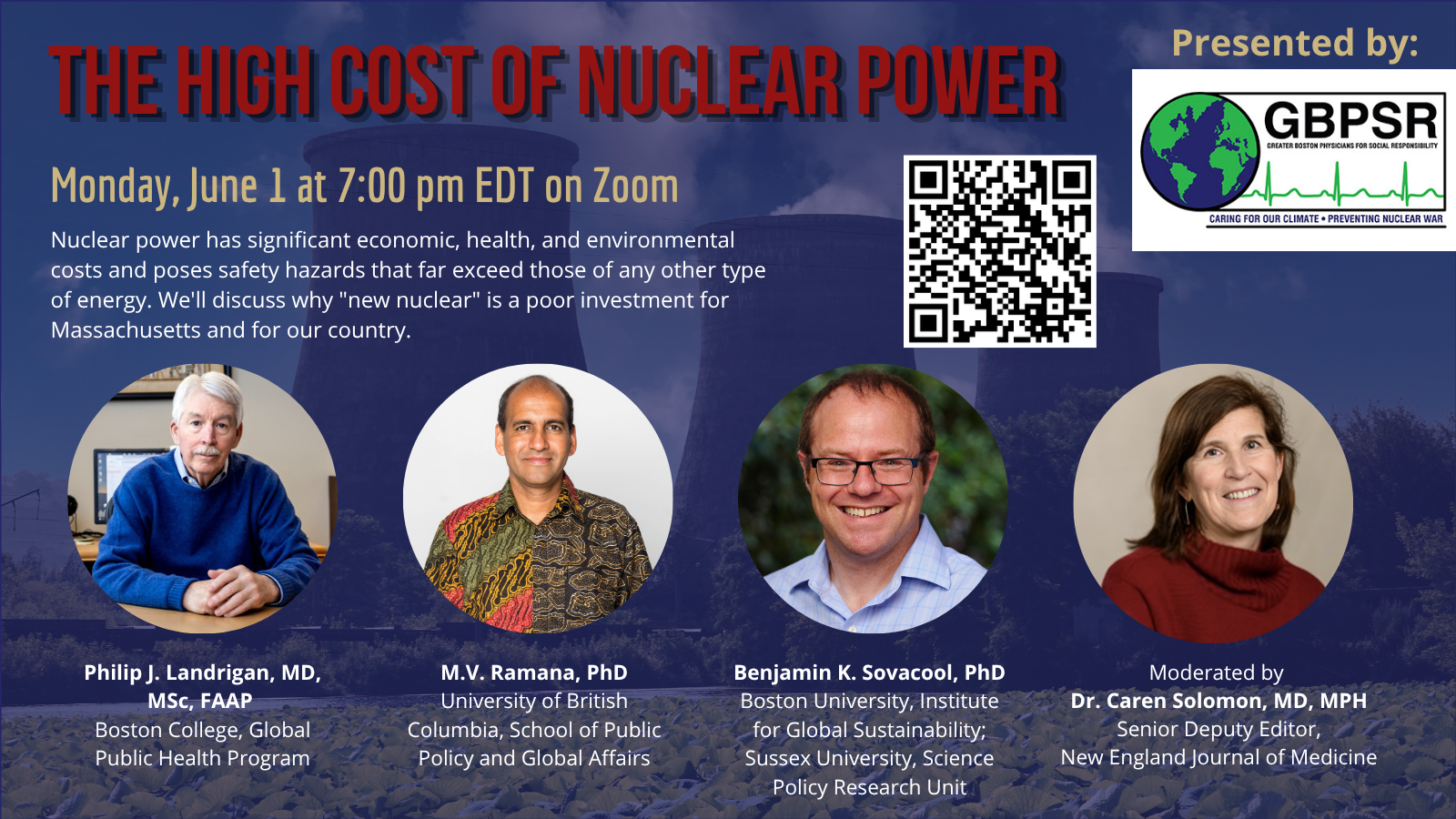
1 June Webinar – The High Cost of Nuclear Power – Register


of the week– Nuclear Reactor Information Task Force
To see nuclear-related stories in greater depth and intensity – go to https://nuclearinformation.wordpress.com
-
Archives
- May 2026 (262)
- April 2026 (356)
- March 2026 (251)
- February 2026 (268)
- January 2026 (308)
- December 2025 (358)
- November 2025 (359)
- October 2025 (376)
- September 2025 (257)
- August 2025 (319)
- July 2025 (230)
- June 2025 (348)
-
Categories
- 1
- 1 NUCLEAR ISSUES
- business and costs
- climate change
- culture and arts
- ENERGY
- environment
- health
- history
- indigenous issues
- Legal
- marketing of nuclear
- media
- opposition to nuclear
- PERSONAL STORIES
- politics
- politics international
- Religion and ethics
- safety
- secrets,lies and civil liberties
- spinbuster
- technology
- Uranium
- wastes
- weapons and war
- Women
- 2 WORLD
- ACTION
- AFRICA
- Atrocities
- AUSTRALIA
- Christina's notes
- Christina's themes
- culture and arts
- Events
- Fuk 2022
- Fuk 2023
- Fukushima 2017
- Fukushima 2018
- fukushima 2019
- Fukushima 2020
- Fukushima 2021
- general
- global warming
- Humour (God we need it)
- Nuclear
- RARE EARTHS
- Reference
- resources – print
- Resources -audiovicual
- Weekly Newsletter
- World
- World Nuclear
- YouTube
-
RSS
Entries RSS
Comments RSS
 nuclear-news