Bulgaria is set to restart construction of a Russian designed nuclear power plant first proposed at the end of the Cold War. The move, supporters say, could reduce the country’s energy dependence on Russia.
15th June Forum to discuss nuclear weapons travelling on A34 UK

http://www.oxfordmail.co.uk/news/16292903.Forum_to_discuss_nuclear_weapons_travelling_on_A34/
A FORUM to discuss nuclear transportation and how councils can deliver low carbon energy instead will be held in Oxford today.
The Nuclear Free Local Authorities organisation will hold its summer seminar on nuclear transports – as nuclear weapons currently travel up and down the A34 – nuclear transparency and promoting low carbon energy.
The local government voice on nuclear issues wants authorities to adopt anti-nuclear policies and encourage them to be part of a mixed energy supply over the next 40 years.
Currently around 50 local councils – including Oxford City – support the organisation’s policies.
The city council’s NFLA representative, John Tanner, said: “I am thrilled that Nuclear Free Local Authorities are meeting in Oxford to discuss nuclear safety and local energy scheme.
“Lots of people don’t know that nuclear weapons regularly travel up and down the A34.”
He added: “It’s also important to remember that green energy, produced locally, can be a lot more economical than large-scale nuclear power.”
The forum will take place at Oxford Town Hall from 10.30am to 1pm.
Safety measure for World Cup – Russia halts nuclear waste transport
World Cup puts break on nuclear transport, A load of containers with spent nuclear fuel from Andreeva Bay on the Kola Peninsula will have to wait because of a general ban on transport of dangerous goods in Russia during the Football World Cup. https://thebarentsobserver.com/en/ecology/2018/06/world-cup-puts-break-nuclear-transport Thomas Nilsen, 14 June 18, June 14, 2018
Russia puts priority to safety and doesn’t want any potential lethal substances moving around during the four weeks with World Cup when tens of thousands of football fans are commuting by railway to different cities.
 In the north, the ban now delays a shipment of nuclear waste that otherwise would be on its way to Mayak north of Chelyabinsk in the South Urals.
Head of Rosatom State Nuclear Corporation’s international technical assistance project, Anatoly Grigoryev, says three railway sets already have departed to Mayak this year. «The fourth is ready, but we can’t send it because transport of dangerous goods during the World Cup is prohibited,» Grigoriyev says to Interfax in an interview reposted by Rosatom.
From Andreeva Bay near Russia’s border to Norway, the containers with old uranium fuel from Cold War submarines are shipped to Murmansk, where they are loaded over to a set of special rail-wagons. From Murmansk, the train follows Russia’s railway lines south through Karelia towards St. Petersburg and Yaroslav before heading east towards the Urals, a distance of more than 1,600 kilometers.
Mayak reprocessing plant is located between the cities of Chelyabinsk and Yekaterinburg. The last is one of the cities where football matches will be played.
Anatoly Grigoryev assures that the load of nuclear waste containers from the Murmansk region will be shipped to Mayak as soon as the World Cup is over by mid-July.
Last June, a top brass of Russian and Norwegian politicians, diplomates and nuclear safety experts cheered and waved as the first load of containers set out to sea from Andreeva Bay. Since the 1990s, Norway has spent tens of millions of euros to support preparing for the nuclear waste removal from the site to start.
In Murmansk, nuclear safety expert with the Bellona Foundation, Andrey Zolotkov, says this is the first time to his knowledge transport of nuclear waste has been put on break for such reason as a international tournament.
«I don’t recall any such thing. This is most likely due to keeping the railway routes free from such cargos because of all the [football] fans on the move,» Zolotkov says to the Barents Observer. Additional to Bellona, Zolotkov has for many years been working on board the Russian nuclear icebreaker fleet’s transport- and storage vessel «Imandra».
From Murmansk, the nuclear waste cargo-train follows the same tracks, and through the same big cities, as ordinary passenger trains.
«After all, we are just talking about a one month delay,» Andrey Zolotkov explains pointing to the many-years it will take to remove all spent nuclear fuel elements from Andreeva Bay.
A total of about 22,000 such uranium fuel elements where stored in three rundown concrete tanks. That is equal to about 100 submarine reactor cores.
Anatoly Grigoryev with Rosatom estimates it will take about 10 years to remove it all from the Kola Peninsula to the Mayak plant.
Jordan knocks back Russia’s $10 billion nuclear power plant , but contemplates”small floating reactor”
Jordan turns down a Rosatom plant, but dangles possible small reactor collaboration with Russia In a blow to the international business interests of Russia’s state nuclear corporation Rosatom, Jordan has scrapped a plan to build a $10 billion nuclear power plant with Moscow’s help. Bellona, by Charles Digges
In a blow to the international business interests of Russia’s state nuclear corporation Rosatom, Jordan has scrapped a plan to build a $10 billion nuclear power plant with Moscow’s help.
Jordan’s Atomic Energy Commission, the JAEC, said on Monday that the project, after three years of study and consideration, had collapsed over disagreements on how to finance the the build, which would have included two nuclear reactors built by Rosatom.
But canceling the larger plant, said the JAEC, doesn’t mean Jordan won’t be working with Russia on any nuclear projects at all. According to the commission, it’s possible that Rosatom would furnish the Mediterranean nation with small modular reactors instead.
On Monday, the commission said in a statement that the larger project was off because the commercial loans Rosatom wanted Joran to secure to finance construction would drive up the cost of the electricity the plant would eventually produce.
………Without specifically mentioning the cancellation of the larger plant, Rosatom said in a statement on May 27 that it and JAEC had decided to “intensify and step up” cooperation on small modular reactors and form a joint feasibility study for such a project based on  Russian designs.
Yet what these reactors might consist of remains somewhat mysterious. Russia has signed agreements with other countries for work on small-scale reactors, most recently Sudan, to which it vaguely promised to build a floating nuclear power plant.
…… Rosatom repeatedly said that foreign customers would flock to Moscow to order floating nuclear power plants of its own.
Those orders have yet to materialize, but that hasn’t stopped Rosatom from repeating the mantra that floating plants will be a prime offering to its foreign customers. Whether an offer to build Jordan a floating plant will come to pass remains unknown. But increasingly, the notion of floating plants seems synonymous with Rosatom’s small reactor development schemes. http://bellona.org/news/nuclear-issues/2018-06-jordan-turns-down-a-rosatom-plant-but-dangles-possible-small-reactor-collaboration-with-russia
Centrica wants to sell its nuclear industry stake, but it’s hard to attract buyers
Centrica aims to sell UK nuclear stake by end of 2020 , Nasdaq, By Susanna Twidale, LONDON, June 14 (Reuters) – Centrica plans to sell its 20 percent stake in eight British power plants by the end of 2020, but has yet to start marketing the assets, the company’s CEO said on Thursday
France’s EDF owns the other 80 percent of the nuclear plants ……….
Analyst have said it could be difficult to attract buyers for the nuclear assets, with large financials shying away from nuclear investment and half of the plants expected to close in 2024.
Last week Britain said it would consider investing in a new plant to be built by Japanese company Hitachi in northern Wales, with private investors reluctant to take on the huge costs of new nuclear power infrastructure. https://www.nasdaq.com/article/centrica-aims-to-sell-uk-nuclear-stake-by-end-of-2020-20180614-00256
Fears in Isle of Man community over dangers of new Wylfa nuclear power station
Fears over new atomic plant Isle of Man Today, 14 June 18 The new secretary of the Mannin branch of the Celtic League is calling on the Manx government to oppose plans for a new nuclear power station on Anglesey.
Wylfa nuclear plant, located just 35 miles from the southern coast of the Isle of Man, closed in 2015 after more than 40 years of service.
Now the Westminster government has announced that public money will be invested into a multi-billion pound replacement…….
Allen Moore, who was appointed branch secretary of Celtic League Mannin last month and is also the organisation’s environmental officer, believes the Manx government should oppose the project.
He said: ’Opposition to the nuclear policies of the UK and French governments remains a core concern of the Celtic League. Those governments have built many of their nuclear power stations in or close to Celtic countries, and none more so than around the Irish Sea. It is to be hoped that the Manx Government does express concerns to the UK about the new Wylfa power station development. The MHKs were elected to represent us, after all.’
Mr Moore said we need to look after the environment to ensure that we survive, both here in the Isle of
Man and worldwide.
He explained: ’I was four months old at the time of the Windscale fire. If that had been even worse we wouldn’t have survived in the Isle of Man.
’At best, we would have had to be evacuated, and now the UK might be talking about the Windscale Generation as well as the Windrush Generation.
’There is a perception in some quarters that nuclear power produces clean energy and doesn’t cost much once the power station is built.
’However, as is being seen with the older generation nuclear power stations, decommissioning these plants is hugely expensive, including finding a safe way of disposing of and securing the radioactive material. What are we leaving future generations?’
The Manx government’s declared policy is to seek the complete closure of the Sellafield nuclear reprocessing plant and to oppose the operation of any nuclear facility which is the source of radioactive pollution.
The government laboratory conducts independent monitoring of environmental radioactivity levels in the Isle of Man.
Reports suggest estimated construction costs for Wylfa have risen from £10bn to as much as £20bn. The UK govt may cover a large proportion of that funding. http://www.iomtoday.co.im/article.cfm?id=41170&headline=Fears%20over%20new%20atomic%20plant§ionIs=NEWS&searchyear=2018
Systemic failures in France’s Flamanville nuclear project
Challenges 8th June 2018 [Machine Translation] EPR plant in Flamanville: does EDF really control its
construction site? While China has inaugurated its first EPR reactor,
delays are accumulating on the site of the EPR Flamanville in the Channel.
Defects noted at the end of March on strategic welds will further postpone
the opening of the plant “at least a few months” according to the Nuclear
Safety Authority.
In Flamanville, we are facing systemic failures. It is no
longer a matter of simple problems that add up to each other. It is in
these terms that Mycle Schneider, an independent Canadian expert and
co-author of an annual report on the nuclear industry, draws the alarming
report of the Flamanville shipyard. On May 31, EDF announced a delay of
several months in the construction of the EPR plant due to welding defects
on pipes. A new setback that will delay the commissioning of the plant. And
this is mainly due to a long series of problems since the launch of the
project in December 2007.
https://www.challenges.fr/entreprise/centrale-epr-de-flamanville-edf-maitrise-t-elle-vraiment-son-chantier_592774
British nuclear industry threatened by exit from EU, without the Euratom safeguards
Brexit without trade deal is ‘worst-case scenario’ for nuclear industry, Utility Week 12 June 18
David Blackman
Withdrawing from the EU without a trade deal would be the “worst-case scenario” for the nuclear industry, Tom Greatrex has warned.
The Nuclear Industry Association chief executive told a conference in London, organised by Chinese atomic energy company Ocean Energy last week, that the Brexit transition period would be “crucial” to the sector, which depended in turn on whether the UK is able to strike a trade deal with the EU.
“No deal is the worst-case scenario for our industry because of the specific nature of the Euratom treaty,” he said, referring to the EU-wide framework for safeguarding nuclear materials and labour.
Greatrex also raised alarm bells over the impact of Brexit on the industry despite the steps taken by colleges in Somerset to train local people to work in the Hinkley Point C plant.
…….Labour peer Lord Hanworth echoed Greatrex’s concerns about the industry’s skilled labour pipeline, citing as a particular worry the government’s failure to make a decision so far on Rolls Royce’s bid to develop a small modular reactor programme.
Rolls Royce could “no longer sustain” the project in the face of “considerable uncertainty”, he said: “If they have to walk away from the project, Britain will lose part of its nuclear engineering competence. “
The peer also highlighted concerns expressed by Hinkley Point C’s developer EDF about the shortage of steel fixers and concrete pourers.
Thousands protest against uranium mine in Spain
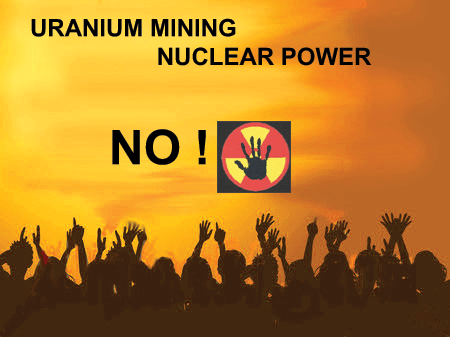 Mining.com 10 June 18 Valentina Ruiz Leotaud Spanish media are reporting that between 3,000 and 5,000 people hailing from different cities in Spain, as well as from Portugal and France, rallied this weekend in Salamanca to express their rejection to a uranium mine being built in the Retortillo municipality.
Tons of water poured in by planes, to major wildfire inside the Chernobyl ‘dead zone’

 Large fire ravages Chernobyl Exclusion Zone, tons of water poured in by planes https://www.rt.com/news/428807-chernobyl-exclusion-zone-fire/
A major wildfire is sweeping through the Chernobyl nuclear disaster area. The authorities have deployed dozens of fire trucks as firefighting aircraft bombard the radioactive exclusion zone with massive amounts of water.
The fire inside the Chernobyl ‘dead zone,’ which is now part of Ukraine, started on Tuesday morning, when dry grass was ignited, local emergency services said in a statement. The wildfire subsequently reached a forest, where up to 10 hectares (24 acres) are now in flames.
Some 29 vehicles and 126 personnel have been dispatched at the scene, with several planes and helicopters dropping water from the sky on the area engulfed by wildfire.
The zone saw another large blaze last year, which scorched 25 hectares (60 acres) of land.
Chernobyl became the site of one of the biggest nuclear disasters in history, when a local power reactor blew up in 1986, leading to massive contamination of the surrounding area. The severely damaged reactor was sealed off by a protective ‘sarcophagus’ of steel and concrete, while the nearby town of Pripyat had its 50,000 population evacuated. Today, Pripayt is a ghost town. The so-called ‘exclusion zone’ was imposed around the site of the disaster, banning visitors.
Current winds are not blowing residual pollution towards the country’s capital Kiev, local authorities said, noting that radiation levels remain normal.
Nuclear warning over Brexit as advisers fear for Scottish sites’ safety
John Boothman, June 10 2018, The Sunday Times Scotland’s ability to safeguard nuclear sites will be compromised by Brexit, say government advisers who are concerned that EU oversight of inspections and monitoring of atomic facilities will be lost.
An expert group led by Professor Anne Glover, president of the Royal Society of Edinburgh, said Westminster will need to establish a system of policing the country’s nuclear power plants, which include Torness in East Lothian and Hunterston B in North Ayrshire, when the UK is forced to leave Euratom, the European nuclear regulator.
The UK’s Office for Nuclear Regulation (ONR) must take on extra duties after the UK leaves the EU, including the “safeguards” regime required under international rules to prevent misuse of fissile materials, the panel said.
The group believes the move could…(subscribers only) https://www.thetimes.co.uk/article/nuclear-warning-over-brexit-as-advisers-fear-for-scottish-sites-safety-fxskdprdp
As nations pull out of nuclear power, Britain is isolated in putting tax-payer funds into new nuclear construction

 Britain’s nuclear U-turn puts us in a very lonely club, https://www.theguardian.com/commentisfree/2018/jun/08/government-nuclear-dream-north-wales-climate-change Fred Pearce Pumping £5bn into a new plant in north Wales as a way to fight climate change is a solution at odds with the rest of the world
For once, ministers have put their money where their mouth is – into taking another stab at nuclear power. This week the business secretary, Greg Clark, announced plans to pump £5bn into a new nuclear power station at Wylfa in north Wales. It was a reversal of a longstanding Conservative policy not to underwrite nuclear construction. So why the sudden enthusiasm? And what does Clark know that the rest of the world does not?
For almost everywhere else, governments and corporations are pulling the plug on nuclear. Even in a world fearful of climate change, in which nations have promised to wean themselves off fossil fuels by the mid-century, almost no one wants to touch nuclear.
Germany will be nuclear-free by 2022. France – once Europe’s great nuclear advocates – is backtracking. President Macron is committed to cutting nuclear’s contribution to grid power from the 75% to 50%. Seven years after the Fukushima accident, all but a handful of Japan’s 54 nuclear power plants remain closed.
US utilities are shutting reactors fast too, even those with years of their operating licences yet to run. In America’s deregulated energy markets, nuclear cannot compete. Last week President Trump called for the utilities to suspend closures, citing national energy security. He may resort to the law to get his way, but even Trump is not demanding new reactors.
Meanwhile, the state-sponsored nuclear enthusiasm of China, recently the world’s premier builder, has dimmed. Beijing has issued no new construction approvals for over two years. Only Russia keeps up the momentum – which puts Britain in an embarrassing club.
Britain hasn’t completed a new nuclear power station for 23 years. …… renewable sources like solar and wind are both now cheaper, and are becoming cheaper still, while nuclear costs only rise.
Some who call themselves “eco-modernists” argue that nuclear and renewables would make a great mix: nuclear could fill in when the sun goes down and the winds drop. But there is a problem. Any effective stand-in for fickle renewables needs to be available at the flick of a switch. Hydropower or natural gas can do the job, but not nuclear. Its forte is to deliver constant baseload power
If nuclear ticked enough other boxes, it might still have a role to play in keeping the lights on. But it has always been a bad neighbour and troublesome citizen. Some of our fears about radiation may be exaggerated, but they are real fears nonetheless. And nuclear power’s links to nuclear weapons are not just about shared technology – at least not while Britain remains home to the world’s largest stockpile of plutonium.
We are sitting on 130 tonnes of a human-made element that lies at the heart of most nuclear weapons. The stockpile is at a warehouse at Sellafield in Cumbria, in defiance of warnings from scientists at the Royal Society a decade ago that in its present form it poses a major security risk, whether diverted for weapons or breached by terrorists.
The plutonium was manufactured over decades from used power-station reactor fuel. Britain wanted to be at the forefront of a new global industry using plutonium to fuel new designs of reactors. But production continues even though there is no sign of a world market for plutonium. And neither the new Hinkley Point reactor under construction in Somerset, nor the proposed plant at Wylfa, will burn the stuff.
The government seems determined to pursue a nuclear dream, even though it has palpably failed to come to terms with the toxic legacy of the country’s nuclear past.
Next to the site of the planned Wylfa plant sits the shell of an old nuclear power station. It was shut in 2015, but is not scheduled for demolition for almost another century, in 2105. It is one of 11 former plants that sit abandoned around our coastlines, from Dungeness in Kent to Trawsfynydd in Snowdonia, and Sizewell in Suffolk to Hunterston in south-west Scotland.
They are currently being put into what the industry terms “care and maintenance” – mothballed while their radioactivity decays, and until the government’s Nuclear Decommissioning Authority can find somewhere to put their remains.
On present form, that day may never come. Britain is today no nearer agreeing a final resting place for its most dangerous and long-lasting radioactive wastes than it was back in 1976, when the royal commission on environmental pollution said we should build no more nuclear power plants until that problem was resolved. Absurdly, the most recent plan has been to bury the waste in tunnels to be dug beneath the Lake District national park.
Nuclear power today is a largely friendless industry: uneconomic without heavy government support, uninsurable, stuck with a military heritage from hell, overtaken by cleaner competitors, beset by waste problems that no one has resolved, and always vulnerable to public panic after the Chernobyl or Fukushima accidents.
Some believe it may have a future when the waste problems are resolved and if radical new reactor designs emerge. That may be so. But the truth is that in the 60 years since the bomb-makers first promised us “atoms for peace”, nuclear power has gone from a sunrise to a sunset industry. Only the British government seems not to realise it.
Fred Pearce is the author of Fallout: A Journey Through the Nuclear Age, From the Atom Bomb to Radioactive Waste
Despite Ukrainian Prime Minister’s reassurances, Wildfires near Chernobyl are potentially catastrophic
 Radio Free Europe 6th June 2018 , Scientists have been concerned for decades about potentially catastrophic wildfires inside the exclusion zone around the defunct Chernobyl nuclear power plant in Ukraine — the site in 1986 of the world’s worst nuclear accident.
That’s because trees and brush in the zone have absorbed radioactive particles that can be released into the air by the smoke of a wildfire.
Not surprisingly, some experts are skeptical about Ukrainian Prime Minister Volodymyr Hroysman’s claim on Facebook that “there’s no need to worry” about a June 5 blaze that raced through the so-called Red Forest — one of the most contaminated patches of forest near Chernobyl.
https://www.rferl.org/a/prime-minister-says-don-t-worry-but-scientists-concerned-about-chernobyl-wildfires/29276072.html
“Temporary” – or rather STRANDED, nuclear wastes for Sellafield, as Britain has no idea what to do with its radioactive trash
 Sellafield to store nuclear waste on site for up to 100 years
Waste will be stored in a facility until there is a long-term disposal solution NWE Mail, UK, By Jenny Barwise, 8 June 2018
Sellafield is seeking permission to store extra nuclear waste in a specialised facility on the site for up to 100 years.
An application has been lodged with the county council to built two extra plant rooms in the existing Self Shielded Box Storage (SSBS) facility. The facility itself was granted permission three years ago and completed earlier this year. It is designed solely for the interim storage of boxes of waste from the Magnox storage pond which ceased operations 25 years ago.
The waste would be stored in the facility as an interim measure until a long term disposal solution – such as a geological waste facility which the Government is currently consulting on – was created. ……..
“This year we completed the construction of a new store which will hold hundreds of self-shielded boxes – these are specially built 30-tonne metal containers which safely hold radioactive waste and provide the necessary shielding from the waste inside them.”…….
As well as creating the extra plant rooms, the security fence needs to be raised by four-metres.
The application has been lodged with the county council as it is the authority which deals with minerals and waste matters, but Copeland Council has been consulted on the plans.
At a meeting earlier this week, Copeland planning officer Heather Morrison said: “In the absence of any long-term disposal options being available for this material, interim storage solutions are required.”…..years http://www.nwemail.co.uk/home/Sellafield-to-store-nuclear-waste-on-site-for-up-to-100-years-fdf84498-08c3-418e-a5f1-f86c0e1aafa2-ds
Welding defects in the Flamanville EPR nuclear reactor
Romandie 7th June 2018 ,President of the Nuclear Safety Authority (ASN), Pierre-Franck Chevet, said
Thursday that EDF should repair the welding defects on the future EPR
Flamanville, a project that will represent “a minimum” few months of job.
“Already for the weld defects identified, it must be repaired.I feel that
on these defects detected – and I did not say it was the end of what we
would ask – nothing it must be a few months of work, “he said. “It is at
least a few months of work,” he added to members of the commission of
inquiry on the safety and security of nuclear facilities.
Defects had been detected at the end of March on welds of the piping of the reactor under
construction at Flamanville, whose start is officially scheduled for the
end of the year. They concern the pipes of the main secondary circuit,
which connect the steam generator and the turbine that produces the
electricity. By inspecting the work of its subcontractors, EDF realized
that the welds that had been declared compliant actually bore “quality
deviations”. The electrician has therefore launched additional controls.
“According to the indications, there are about 35% of welds that have
defects,” said Mr. Chevet.
“There are some for a few weeks … before. EDF
also explained last Thursday that it would take a few more weeks of
discussions with ASN to draw the conclusions of this dossier – and to have
a precise idea of the probable new delays and additional costs. Meanwhile,
the group had mentioned a possible delay of “a few months” from the start
of the nuclear reactor, potentially until the summer of 2019. The president
of the ASN also recalled that there was another problem concerning the weld
material quality, which had already been announced.
https://www.romandie.com/news/925225.rom
1 This Month
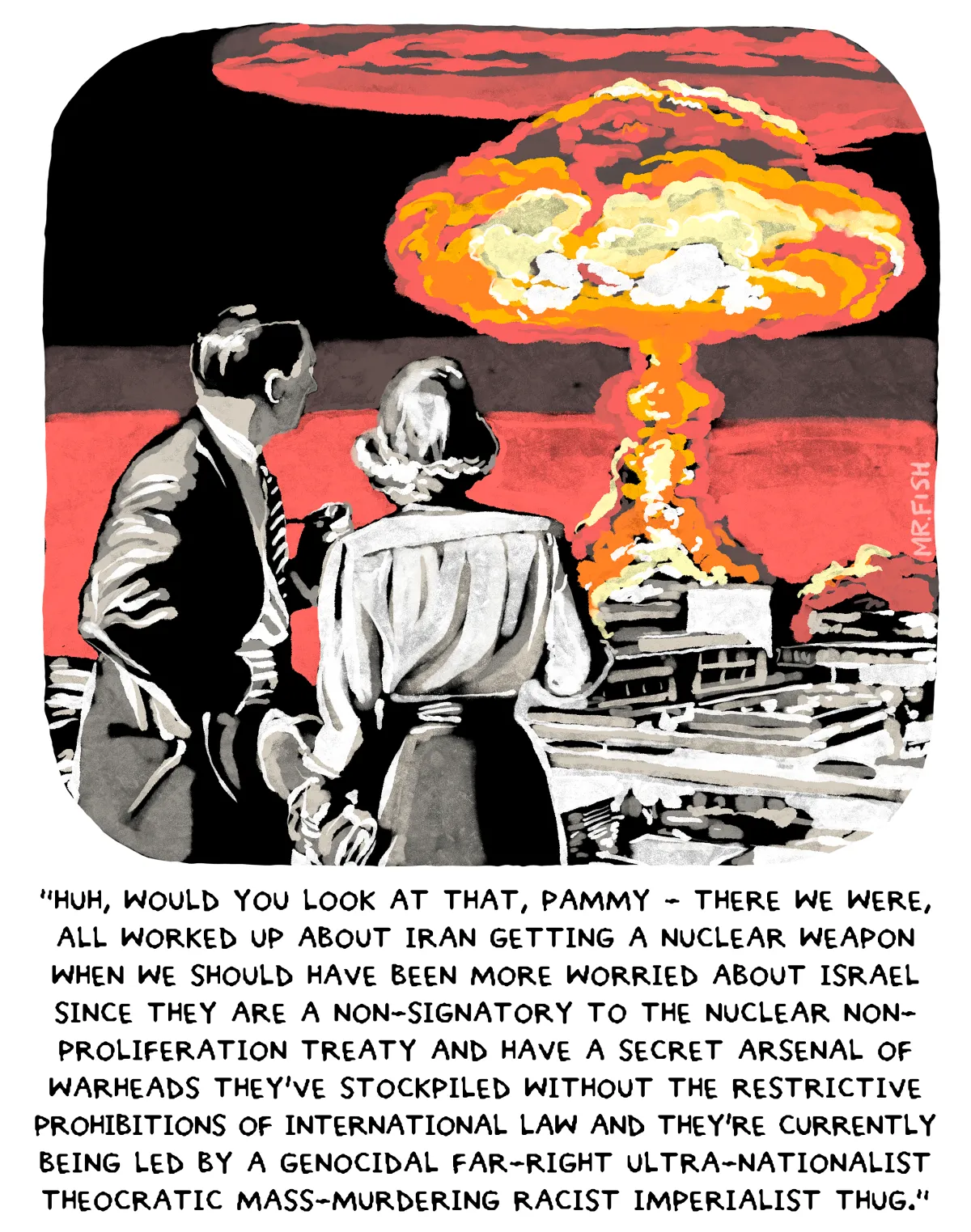
1 June Webinar – The High Cost of Nuclear Power – Register
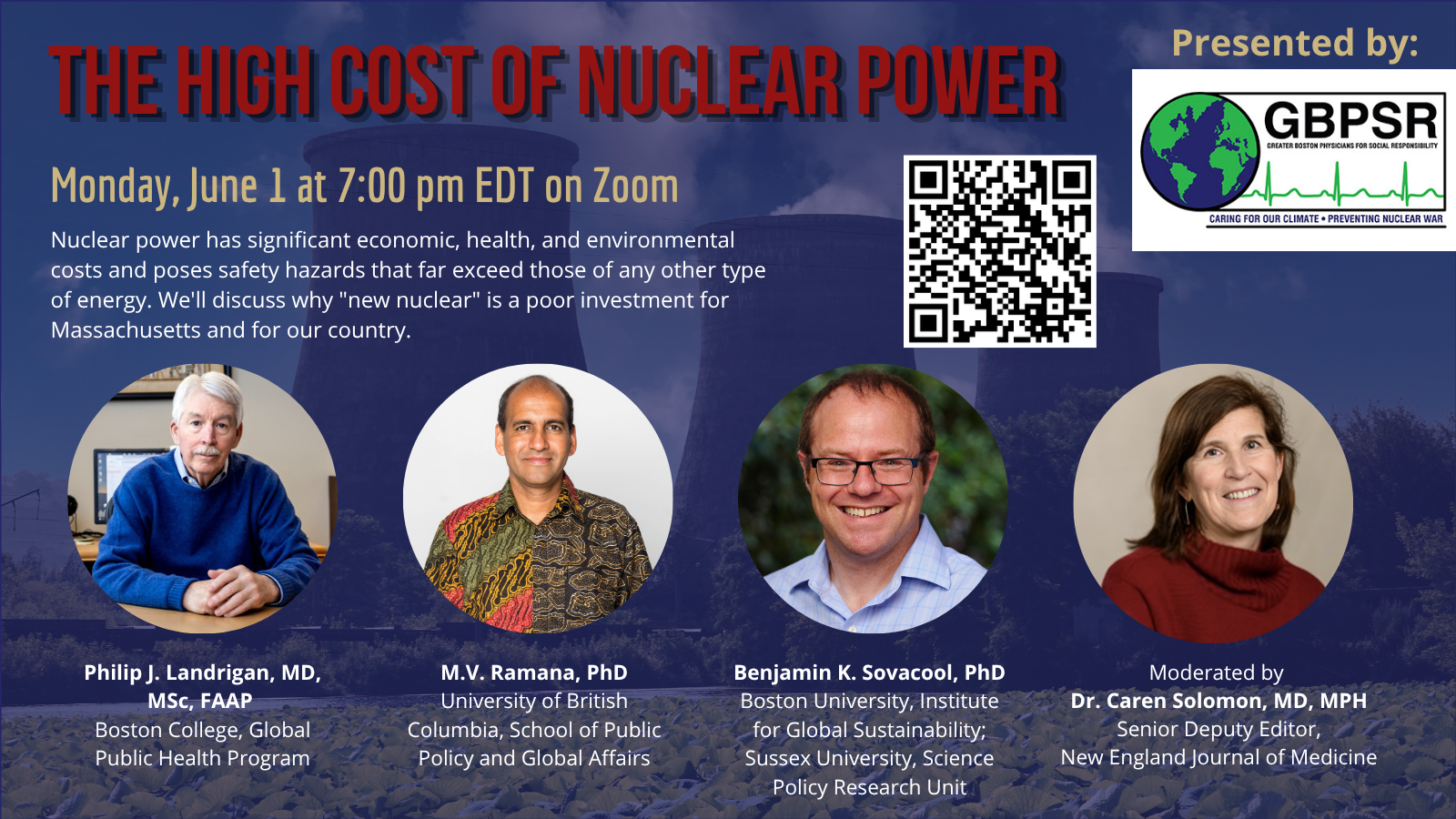


of the week– Nuclear Reactor Information Task Force
To see nuclear-related stories in greater depth and intensity – go to https://nuclearinformation.wordpress.com
-
Archives
- May 2026 (262)
- April 2026 (356)
- March 2026 (251)
- February 2026 (268)
- January 2026 (308)
- December 2025 (358)
- November 2025 (359)
- October 2025 (376)
- September 2025 (257)
- August 2025 (319)
- July 2025 (230)
- June 2025 (348)
-
Categories
- 1
- 1 NUCLEAR ISSUES
- business and costs
- climate change
- culture and arts
- ENERGY
- environment
- health
- history
- indigenous issues
- Legal
- marketing of nuclear
- media
- opposition to nuclear
- PERSONAL STORIES
- politics
- politics international
- Religion and ethics
- safety
- secrets,lies and civil liberties
- spinbuster
- technology
- Uranium
- wastes
- weapons and war
- Women
- 2 WORLD
- ACTION
- AFRICA
- Atrocities
- AUSTRALIA
- Christina's notes
- Christina's themes
- culture and arts
- Events
- Fuk 2022
- Fuk 2023
- Fukushima 2017
- Fukushima 2018
- fukushima 2019
- Fukushima 2020
- Fukushima 2021
- general
- global warming
- Humour (God we need it)
- Nuclear
- RARE EARTHS
- Reference
- resources – print
- Resources -audiovicual
- Weekly Newsletter
- World
- World Nuclear
- YouTube
-
RSS
Entries RSS
Comments RSS
 nuclear-news