Europe’s first dedicated recycling plant for old solar panels has opened in France.
 Climate Action 26th June 2018 Europe’s first dedicated recycling plant for old solar panels has opened
in France. Veolia, an environmental services company, has opened the plant
in the town of Rousset, near Marseille, after securing a contract with
recycling organisation PV Cycle France.
The new deal means that Veolia will
recycle 1,300 tonnes of solar panels in 2018, which will increase to 4,000
tonnes by 2022, according to news agency Reuters. “This is the first
dedicated solar panel recycling plant in Europe, possibly in the world,”
said Gilles Carsuzaa, head of electronics recycling at Veolia.
According to
Veolia, solar capacity has grown by up to 40 percent a year in France,
equivalent to 84,000 tonnes of material in 2017 alone. The plant will now
ensure a single panel’s complex array of silver, silicon, glass, copper,
and plastics, and copper are dissembled and in working order to make new
solar panels. Solar panels have an estimated lifespan of 25 to 30 years,
meaning that many of the first generation built in the 1990s are now being
decommissioned. Veolia’s initial contract will recycle almost all of the
out-of-date solar panels in France this year.
http://www.climateactionprogramme.org/news/solar-panel-recycling-plant-opens-in-france
Germany’s successful development towards nuclear fusion
achieved a world record for plasma production, according to its creators.
Researchers were able to keep the device, technically known as Wendelstein
7-X, running for longer and at higher energy, than ever before. Its
performance is the best recorded for a stellarator type reactor and brings
the goal of producing limitless energy a step closer to reality,
researchers say. The new success was thanks to modifications made to the
walls of the reactor, which increase the temperature and efficiency of the
reaction.http://www.dailymail.co.uk/sciencetech/article-5886603/Germanys-star-jar-fusion-reactor-comes-step-closer-producing-LIMITLESS-energy.html
Finland’s nuclear waste dump will still be in the trial stage for years
 Nucnet 25th June 2018, A full-scale in-situ system test for spent nuclear fuel disposal is
expected to begin this week at Posiva’s planned final deep geologic
disposal facility at Olkiluoto, Finland. Posiva’s owner Teollisuuden
Voima Oyj (TVO) said the test will be the first of its kind and means that
Posiva is making progress towards the operational test phase of its final
disposal system and technology.
According to TVO, the test will last for
several years. It aims to prove that the prototype processes for geological
storage at Posiva’s repository are “all working concepts”. The test
has been in preparation since December 2017, TVO said. The processes
include placing fuel assemblies packed in copper-steel canisters inside
holes drilled in the bedrock tunnels. This is followed by backfilling the
tunnels with bentonite clay and sealing them with a cast plug. Two test
canisters will be equipped with thermal resistors simulating the residual
temperature of spent nuclear fuel, TVO said. A TVO official said the
temperature and pressure in the canisters, test holes and the surrounding
bedrock, and the behaviour of the backfill of the tunnels, will be
monitored by some 500 sensors over several years.
https://www.nucnet.org/all-the-news/2018/06/25/finland-s-posiva-to-begin-world-s-first-in-situ-system-test-at-final-repository-site
New report: economic benefit in stopping renewal of the Trident missiles system,and creating many more jobs
Morning Star 27th June 2018, A PIONEERING new report argues that thousands more engineering jobs could
be created by stopping the renewal of the Trident missiles system. The
report, Defence Diversification: International Learning for Trident Jobs,
was published today by the Nuclear Education Trust.
It examines various government and Civil Service initiatives in Britain, western Europe and the
United States. It argues that an internationally led programme to diversify
the work of Trident’s workers would cost far less than it would to renew
the cold-war-era nuclear weapons system — estimated to be between £180
billion and £205bn over the next several decades
https://www.morningstaronline.co.uk/article/scrapping-trident-nuclear-weapons-%E2%80%98could-create-thousands-engineering-jobs%E2%80%99
Community Energy could bring a revolutionary change to Europe’s clean energy package

 Unearthed 26th June 2018 ,This week national governments will meet in Brussels to vote on a deal –
part of the EU’s clean energy package – that would recognise the right
of people and communities to produce their own energy. It could represent
possibly the biggest systematic change to Europe’s electricity market in
a generation. Unearthed has got hold of the final text of the renewable
energy directive, which could boost the take-up of renewable energy from
households and small producers in the EU. The UK appears unsure as to
whether it will integrate the policies into national law after Brexit.
https://unearthed.greenpeace.org/2018/06/26/eu-makes-it-a-right-for-people-to-sell-renewable-energy-here-are-5-things-you-need-to-know/
UK govt cancels promising Swansea Tidal Lagoon scheme, as it promotes dodgy Wylfa nuclear power plan
Guardian 27th June 2018 Letter Gideon Amos: When I and my fellow planning inspectors spent the best
part of a year examining and reporting on both the principle and the detail
of the project in Swansea, it was clear that this pathfinder project had
important environmental, cultural and regeneration benefits.
Vitally, itwould provide baseload generation capacity to complement our welcome but
increasing reliance on wind energy. In addition, while being “first of a
kind” presents big investment and consenting headaches for a promoter, the
potentially infinite lifespan of the generating station means these early
upfront costs need to be discounted over a much longer timeframe than other
projects.
Failing to weigh these benefits and costs in the Treasury
economist’s balance sheet is a major mistake and one that misses a massive
opportunity to put the planet back at the centre of our nation’s future.
NFLA 27th June 2018 The Nuclear Free Local Authorities (NFLA) is hugely disappointed in the
decision announced on Monday by UK Business and Energy Secretary Greg Clark
to cancel potential financial support for the Swansea Tidal Lagoon scheme.
This is a retrograde step for a nascent and exciting technology, and
compares negatively with the billions being offered to prop up new nuclear
reactor schemes like Wylfa B.
http://www.nuclearpolicy.info/news/cancellation-support-swansea-tidal-lagoon-scheme-error-uk-energy-industrial-strategy-policy/
Russia, Rwanda establish nuclear energy ties
 WNN, 27 June 2018
Russia’s Rosatom and the Ministry of Infrastructure of Rwanda have signed a Memorandum of Understanding on cooperation in the peaceful uses of nuclear energy. The document was signed on 22 June by Rosatom Deputy Director General Nikolay Spassky and Ambassador Extraordinary and Plenipotentiary of the Republic of Rwanda to the Russian Federation Jeanne d’Arc Mujawamariya……
Ireland’s concerns on nuclear safety after Brexit and UK’s withdrawal from the Euratom Treaty
 Irish Times 25th June 2018 , Cllr Mark Dearey, Cllr John Trainor, Co-Chairmen, Nuclear-Free Local
Authorities All-Ireland Forum: … on nuclear safety after
the UK leaves the Euratom arrangements, it is clear that Minister for the
Environment Denis Naughten must do more than simply accept cosy platitudes
from his UK counterpart. While the Border issue is a pivotal part of the
negotiations of Brexit, the parallel decision to leave the Euratom Treaty
arrangements is still of real importance.
The treaty oversees all external safety and security checks at UK nuclear sites, particularly Sellafield, as
well as monitoring the UK’s duties in not proliferating nuclear materials
that could be converted into a nuclear weapons programme.
In our view, the UK government needs to grow up on the issue of the jurisdiction of the
European Court of Justice on matters of nuclear safety. The UK government
has compromised all over the place on Brexit, and by refusing to do so on
this subject, it is putting all of our safety at risk on a point of
political expediency.
As The Irish Times has correctly noted, the transfer
of these duties to the domestic nuclear regulator is not without risk, and
there is real concern that there may not be enough inspectors recruited in
sufficient time and that key and complicated IT systems to verify such work
are put in place by March 2019.
Last month the Oireachtas Joint Planning
Committee heard of detailed concerns over the UK’s approach to assessing
the transboundary impacts of plans to develop new nuclear plants like
Hinkley Point and Wylfa.
Any accident from an existing or new nuclear plant
could have devastating health, economic and social impacts on Ireland, so
it is important not just to receive assurances, but to properly audit them
and to be satisfied that a new nuclear safety regime remains fit for
purpose.
Ireland is extensively doing that with other impacts of Brexit on
the country, and in our view, this should be a core part of that detailed
discussion. We also want to know how both governments will prioritise
nuclear safety and energy policy in a post-Brexit world, where we see a
real lack of forward thinking in addressing the energy needs of both the UK
and Ireland.
https://www.irishtimes.com/opinion/letters/brexit-and-nuclear-safety-treaty-1.3541656
EDF aims to be the key corporation in nuclear station decommissioning
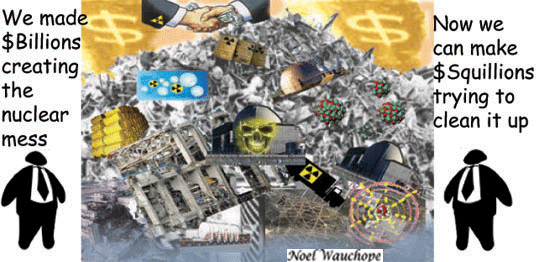
EDF and VEOLIA Conclude a Partnership Agreement on Nuclear Plant Decommissioning and Radioactive Waste Processing, Business Wire June 26, 2018
Russia speeds up removal of piled up nuclear fuel assemblies at Andreyeva Bay
Bellona 18th June 2018 , The pace of cleanup at a major Cold War dump for spent nuclear submarine
fuel in Northwest Russia is going faster than planned, officials with
Russia’s state nuclear corporation Rosatom have said, with efforts racing
ahead twice as rapidly as initially thought possible.
Still, Rosatom has elected not to revise its deadline for removing decades of piled up nuclear
fuel assemblies at Andreyeva Bay, a Soviet era submarine maintenance base,
whose proximity to Europe made it a lighting rod for international
environmental concern. On Thursday, Anatoly Grigoryev, who heads up
Rostom’s international technical programs, told the Interfax newswire
that technicians had shipped away a load of fuel that was expected to take
a year to remove in only six months.
http://bellona.org/news/nuclear-issues/2018-06-andreyeva-bay-nuclear-fuel-removal-going-faster-than-planned-rosatom-says
Iran expects Europe’s package to save nuclear deal by end of June: Araqchi

 Press TV, Jun 23, 2018 A senior Iranian nuclear negotiator says the Islamic Republic expects the European Union to put forward by the end of June its package of proposals to save a multilateral nuclear agreement between Tehran and the P5+1 group of countries from which the US has withdrawn.
Iranian Deputy Foreign Minister Abbas Araqchi said on Saturday that the three European signatories of the nuclear agreement, officially known as the Joint Comprehensive Plan of Action (JCPOA), and the EU had promised to offer a package of practical steps that would fulfill Iran’s demands, including on oil sales, payments for its oil and transportation………
Since the US president pulled Washington out of the historic nuclear deal, European countries have been scrambling to ensure that Iran gets enough economic benefits to persuade it to stay in the deal. The remaining parties have vowed to stay in the accord.http://www.presstv.com/Detail/2018/06/23/565876/Araqchi-Europe-JCPOA-package
With climate change, it’s unwise for UK to build Hinkley Point C, as sea levels are rising
 Weatherwatch: the nuclear option and rising levels of anxiety Danger of coastal flooding might make sensible people think twice about building houses in vulnerable places, let alone nuclear power stations, Guardian, https://www.theguardian.com/news/2018/jun/22/weatherwatch-the-nuclear-option-and-rising-levels-of-anxiety Paul Brown,
Back in 2012 a document obtained under the Freedom of Information Act showed that the Environment Agency was warning that 12 out of the UK’s 19 nuclear sites were in danger of coastal flooding and erosion because of climate change. Among them was Hinkley Point in Somerset, one of the eight proposed sites for new nuclear power stations around the coasts.That was before the increasing volume of melting of the Greenland ice capwas properly understood and when most experts thought there was no net melting in the Antarctic.
Melting ice sheets are hastening sea level rise, satellite data confirms
Satellite measurements released earlier this month and other recent observations of how warmer seas are eroding ice shelves and glaciers have removed uncertainty.
Estimates of sea level rise in the next 50 years have gone up from less than 30cm to more than a metre, well within the lifespan of the nuclear stations the UK government has planned.
The extra coastal erosion and threat of storm surges that this increase in sea level will bring to our shores might make sensible people think twice about siting any buildings in vulnerable places, let alone nuclear power stations.
So far, however, the government has yet to respond and is pressing ahead with its plans.
Scrap Trident or risk a “nuclear annihilation abyss”- former nuclear sub commander warns UK govt
 Former nuclear sub commander pleads with Government to scrap Trident or risk a “nuclear annihilation abyss”, Sunday Herald, Rob Edwards, 24 June 18
How the British government struck such a terrible deal as Hinkley Point C nuclear power project

 Hinkley Point: the ‘dreadful deal’ behind the world’s most expensive power plant Building Britain’s first new nuclear reactor since 1995 will cost twice as much as the 2012 Olympics – and by the time it is finished, nuclear power could be a thing of the past. How could the government strike such a bad deal? Guardian, By Holly Watt, 21 Dec 17, Hinkley Point, on the Somerset coast, is the biggest building site in Europe. ……
the irony of Hinkley Point C is that by the time it eventually starts working, it may have become obsolete. Nuclear power is facing existential problems around the world, as the cost of renewable energies fall and their popularity grows. “The maths doesn’t work,” says Tom Burke, former environmental policy adviser to BP and visiting professor at both Imperial and University Colleges. “Nuclear simply doesn’t make sense any more.”
The story of Hinkley Point C is that of a chain of decisions, taken by dozens of people over almost four decades, which might have made sense in isolation, but today result in an almost unfathomable scramble of policies and ambitions. Promises have been made and broken, policies have been adopted then dropped then adopted again. The one thing that has been consistent is the projected cost, which has rocketed ever upwards. But if so many people have come to believe that Hinkley Point C is fundamentally flawed, the question remains: how did we get to this point, where billions of pounds have been sunk into a project that seems less and less appealing with every year that passes?
……… By the end of 2003, all government policy indicated that Hinkley Point C would never be built, and there was no prospect of any other new nuclear power plants. It seemed certain that nuclear had no future in Britain – which is why, when the government performed a volte-face three years later, so many onlookers were astonished. “Without any obvious change in the world, by 2006, the position in government had been completely reversed,” MacKerron told me. “Nuclear power had become extremely beneficial, important and not uneconomic.”
One thing that had happened in the intervening years was a PR blitz by the nuclear industry, which had deployed scores of lobbyists, including former politicians such as the former energy minister Brian Wilson, to push the idea of a “nuclear renaissance” in the UK. Between 2003 and 2006, says Andrew Stirling, professor of science and technology policy at Sussex University, “Britain saw the beginnings of a massive pro-nuclear lobbying and PR campaign that continues to this day.”
Through the media and advertising campaigns, key messages were hammered home. Renewables were intermittent and unreliable. Overseas gas imports were politically vulnerable. “Green” nuclear was the only plausible way to hit carbon dioxide reduction targets. Keith Parker, who was then chief executive of the Nuclear Industry Association (NIA), told the New Statesman that the 2005 election became a particular focus for swaying opinions. “It gave us a good chance to raise the profile of nuclear power,” he said. In the months leading up to the election, a series of talks was organised at exclusive venues such as the Army & Navy Club on Pall Mall and St Stephen’s Club in Queen Anne’s Gate. Industry leaders and experts came together to explain the benefits of nuclear to politicians and energy journalists. The NIA (which is now chaired by John Hutton) took on the role of managing the influential all-party parliamentary group – an informal grouping of politicians – on nuclear energy.
In July 2006, the government U-turn arrived in the form of a new policy paper, The Energy Challenge, which declared that new nuclear power stations would be necessary to help Britain reduce its carbon emissions and to ensure an uninterrupted, affordable supply of energy well into the future.
Greenpeace launched a legal challenge, claiming that the consultation process behind the government’s recommendation had been totally inadequate. The judge presiding over the case agreed, and in February 2007 ruled that the process had been “misleading”, “very seriously flawed” and “procedurally unfair”. Blair accepted the ruling, but stated that “this won’t affect the policy at all”.
Andrew Stirling believes that there was a crucial, largely unspoken, reason for the government’s rediscovered passion for nuclear: without a civil nuclear industry, a nation cannot sustain military nuclear capabilities. In other words, no new nuclear power plants would spell the end of Trident. “The only countries in the world that are currently looking at large-scale civil power newbuild programmes are countries that have nuclear submarines, or have an expressed aim of acquiring them,” Stirling told me.
In May 2007, the government published a paper titled “Meeting the energy challenge: a White Paper on energy”, which reaffirmed its enthusiasm for nuclear and declared that there had been “significant changes in the economics of nuclear power”. In contrast to the late 1980s, the government claimed it was now being approached by “some energy companies expressing a strong interest in investing in new nuclear power stations”.
When Gordon Brown took over from Blair in June 2007, the shift to nuclear proceeded apace. As it happened, the new prime minister’s brother, Andrew, was then the communications director for EDF, though a spokesman for Gordon Brown told me that at no point while he was prime minister “did he ever discuss energy policy with Andrew Brown”.
In January 2008, the announcement came. A new generation of nuclear power stations in the UK was given formal backing by the government. “It was one of the most exciting days in my ministerial life,” says Hutton. “Ministers do lots of important things all the time, but there are probably those moments in your ministerial career when you sit back and think: ‘Actually, this is going to have an intergenerational effect. This is going to affect the country 50, 60, 70 years after I’ve gone.’”
The development at the top of the list was Hinkley Point C……….
With no real plan B after the private sector had lost interest in Hinkley Point, the government suddenly found itself in a weak negotiating position. “They perhaps didn’t foresee that only one developer, EDF, was prepared to go ahead,” said MacKerron. “So by definition, they were a bit over a barrel.”
In September 2008, British Energy was sold to EDF. After months of long and difficult negotiations between EDF and a team of civil servants representing the UK’s interests in British Energy, and an earlier failed bid, the French company paid £12.5bn to take over eight UK nuclear power plants. It also announced its plan to develop four new power stations.
These days, EDF looks like an unlikely white knight. The market value of the company has collapsed, from more than €150bn (£132bn) in 2008 to roughly €30bn (£26bn) today, and the French nuclear industry is facing an existential crisis.
…….. The financial deal that EDF struck with the British in October 2013 to fund the project – which, in Magnin’s words, amounts to the British taxpayer funding France’s energy needs – remains one of the most controversial elements of the Hinkley deal.
Given its commitment to building Hinkley Point C, the government had no choice but to make EDF an offer that was too good to resist. It offered to guarantee EDF a fixed price for each unit of energy produced at Hinkley for its first 35 years of operation. In 2012, the guaranteed price – known as the “strike price” – was set at £92.50 per megawatt hour (MWh), which would then rise with inflation. (One MWh is roughly equivalent to the electricity used by around 330 homes in one hour.)
This means that if the wholesale price of electricity across the country falls below £92.50, EDF will receive an extra payment from the consumer as a “top-up” to fill the gap. This will be added to electricity bills around the country – even if you aren’t receiving electricity from Hinkley Point C, you will still be making a payment to EDF. ……..
In short, instead of using taxpayers’ money to fund a state subsidy for EDF, the government negotiated a deal whereby the electricity consumer foots the bill. Given that almost every taxpayer in the UK is an electricity consumer, the distinction is largely academic. …….
The deal looks particularly bad when compared with the current cost of renewable energy. As Hinkley’s pricetag keeps rising, the cost of energy keeps falling. And, as a recent report from the public accounts committee pointed out, although energy costs are falling, this just drives up the top-up payment to EDF. “No one was protecting the interests of energy consumers in doing the deal,” the report noted.
In December 2013, the European commission decided that the payments to EDF were so big that they could distort the electricity price across the whole of Europe, and launched an investigation into the deal. The resulting document, published in 2014, can be read as a 33,000-word attempt by the EU to save the UK from its own poor negotiating.
The commission raised several issues………
In 2012, as it was preparing to negotiate the strike price with EDF, the government hired the consultancy firm LeighFisher to assess construction costs for Hinkley. The higher the cost estimated by LeighFisher, the higher the strike price for EDF.
However, as the National Audit Office pointed out in June 2017, LeighFisher is owned by Jacobs Engineering Group. And at the same time that LeighFisher was assessing Hinkley Point construction costs, Jacobs was working for EDF, with some of its staff seconded to the French company. The National Audit Office points out that Jacobs staff were having “input” into LeighFisher’s cost verification exercise.
In short, a division of a company employed by EDF was advising the UK government how much to pay EDF.
……. Hinkley Point C will be the third nuclear reactor to be built on this site. These days, its oldest brother, Hinkley Point A, which began operating in 1965 and was decommissioned in 2000, is dilapidated, with large holes gaping in its blue walls. Hinkley Point B, which began operating in 1976 and is scheduled to be decommissioned in 2023, stands 300 metres to its right – an anonymous grey hulk, disappearing against the sky, as steam from its huge chimneys floods into the clouds………
“My grandchildren will be paying for this,” Allan Jeffery from Stop Hinkley told me, as we walked around the outer boundary of the site earlier this year.
The government estimates that the Hinkley top-up payments will cost consumers around £30bn over the course of the 35-year contract. One of the few figures on a comparable scale is the Brexit divorce bill.
The story of Hinkley point contains another echo of – or perhaps a warning for – the Brexit negotiations. With Hinkley, even though the UK’s position got steadily worse, at no point did the government seriously try to force the terms of the deal. It simply couldn’t, because it had backed itself into a corner.
……. The stakes of the Hinkley deal were also high for both China and France, and neither country gave an inch. When it came to the crunch, the UK’s negotiators had to take the deal they were offered. “The issue now is that nobody has a good exit strategy,” says Prof Steve Thomas. “I think everyone wants out. But there are penalties to pay now, and there is the humiliation of 10 wasted years.”……..https://www.theguardian.com/news/2017/dec/21/hinkley-point-c-dreadful-deal-behind-worlds-most-expensive-power-plant
Britain’s wind energy programmes have proved to be cheaper and better climate policy, as against nuclear
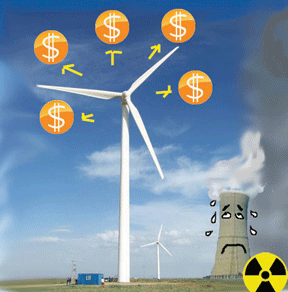 Dave Toke’s Blog 22nd June 2018, The Climate Change Act has been celebrating its 10th anniversary, but there
is surprisingly little to celebrate in the earlier advice of the Committee on Climate Change (CCC). The CCC is the body created to advise the Government on the achievement of the carbon reduction commitments (80 per cent of 1990 levels by 2050).
You would expect the advice of the CCC to speed the Government’s low carbon programme, but in the crucial aspect of
electricity supply policy it has (in the past) actually damaged it! Looking back on its past, it looks like the Committee gave completely the wrong advice to the Government, advice which, alas, they still seem to be following now. In particular, in the ‘Renewable Energy Review’ issued in 2011 (which I criticised at the time), the CCC, urged the Government to cut
back the targets for offshore wind and instead focus on nuclear power.
They told the Government not to be put off by the Fukushima disaster that had happened earlier that year. According to the Times Report on May 9th 2011 ”The Committee on Climate Change says heavy reliance on offshore wind could result in unacceptable increases in fuel bills.’ David Kennedy, the then Chief Executive of CCC said that ‘Nuclear looks like it will be the lowest cost for the next decade or two’. Indeed the Review stated that nuclear power was currently ‘the most cost effective of the low carbon technologies’.That conclusion, given the cost of onshore wind, was highly challengable at the time, especially as given the existing record of nuclear power plant that had been built in the UK and the roll-out of
onshore wind.
Whereas the deployment of renewable energy has soared ahead, despite the best efforts of many in the Conservatives to block it, nuclear power plans set out in 2010 have proved to be fantasy. And, of course, offshore wind costs have tumbled rapidly making the CCC’s earlier pronouncements looking especially silly.
http://realfeed-intariffs.blogspot.com/2018/06/how-committee-on-climate-change-gave.html
1 This Month
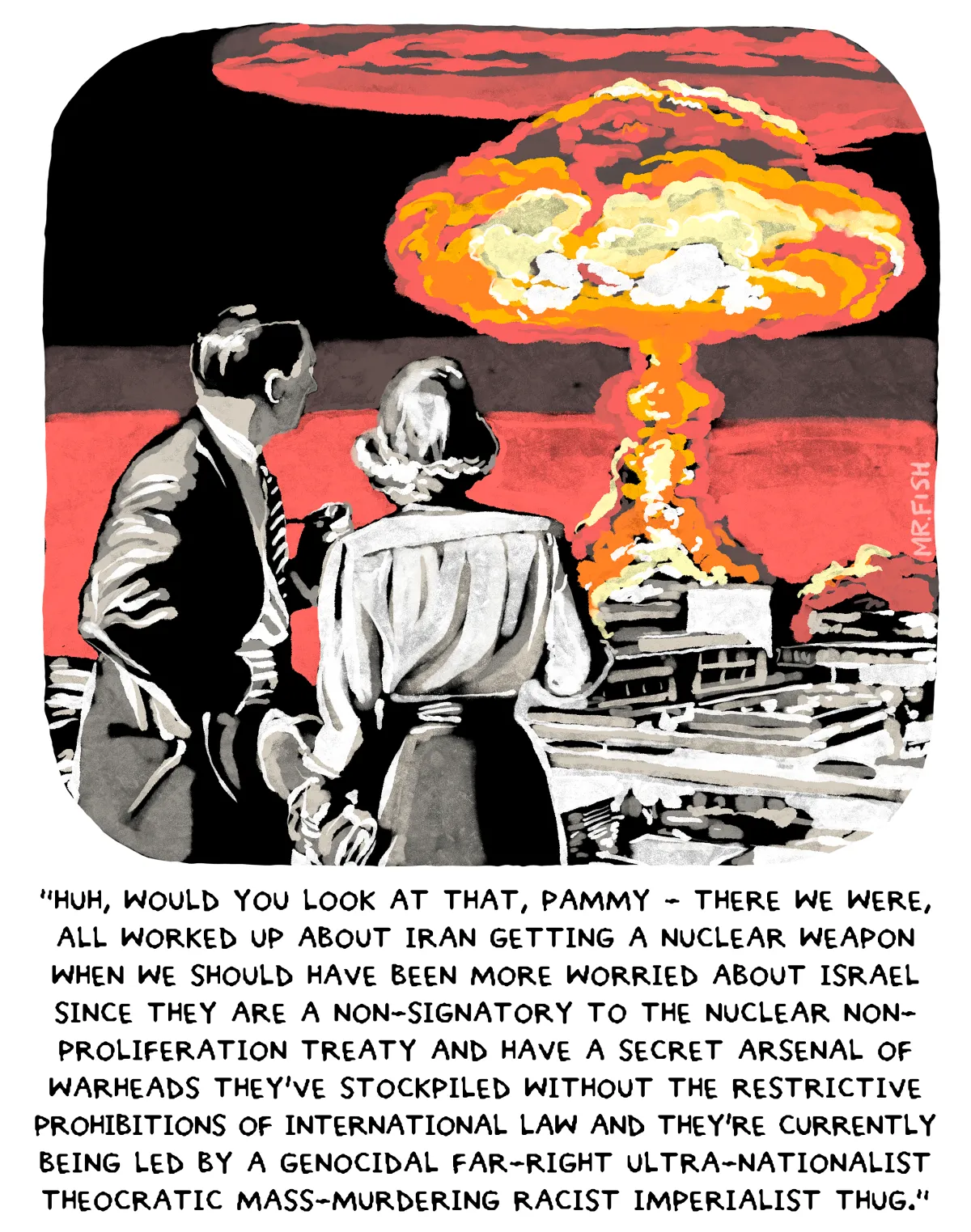
1 June Webinar – The High Cost of Nuclear Power – Register


of the week– Nuclear Reactor Information Task Force
To see nuclear-related stories in greater depth and intensity – go to https://nuclearinformation.wordpress.com
-
Archives
- May 2026 (262)
- April 2026 (356)
- March 2026 (251)
- February 2026 (268)
- January 2026 (308)
- December 2025 (358)
- November 2025 (359)
- October 2025 (376)
- September 2025 (257)
- August 2025 (319)
- July 2025 (230)
- June 2025 (348)
-
Categories
- 1
- 1 NUCLEAR ISSUES
- business and costs
- climate change
- culture and arts
- ENERGY
- environment
- health
- history
- indigenous issues
- Legal
- marketing of nuclear
- media
- opposition to nuclear
- PERSONAL STORIES
- politics
- politics international
- Religion and ethics
- safety
- secrets,lies and civil liberties
- spinbuster
- technology
- Uranium
- wastes
- weapons and war
- Women
- 2 WORLD
- ACTION
- AFRICA
- Atrocities
- AUSTRALIA
- Christina's notes
- Christina's themes
- culture and arts
- Events
- Fuk 2022
- Fuk 2023
- Fukushima 2017
- Fukushima 2018
- fukushima 2019
- Fukushima 2020
- Fukushima 2021
- general
- global warming
- Humour (God we need it)
- Nuclear
- RARE EARTHS
- Reference
- resources – print
- Resources -audiovicual
- Weekly Newsletter
- World
- World Nuclear
- YouTube
-
RSS
Entries RSS
Comments RSS
 nuclear-news