UK government has not come clean on its plans for nuclear safeguards post Brexit
David Lowry’s Blog 23rd July 2018 ‘Mark-your-own-homework’ nuclear “safeguards” proposed by UK Government as
part of Brexit plans. A week ago the Government published a near 100-page
report titled ‘The future relationship between the United Kingdom and the
European Union’, which has provoked much public and political discussion.
But one important issue not examined in the media was the section on the
future of the UK commercial nuclear sector and any future relationship with
the EU nuclear agency, Euratom. (The section on Euratom is reproduced
below)
http://drdavidlowry.blogspot.com/2018/07/mark-your-own-homework-nuclear.html
EU Energy and Environment Sub-Committee want clarity on UK’s nuclear plans after Brexit
 House of Lords 19th July 2018 The EU Energy and Environment Sub-Committee has written to the Minister for Business and Industry, Richard Harrington MP, following an evidence session with the Office for Nuclear Regulation which considered their efforts to prepare for Brexit.
The Committee has written to BEIS’ Minister for Business and Industry to ask for further clarity on the ONR’s future funding arrangements, and to request regular updates between now and the point of withdrawal to ensure the ONR’s preparation remains on track.
The Committee also asks for an update on negotiations regarding the intended Nuclear Cooperation Agreements with the USA, Canada, Japan and Australia.
https://www.parliament.uk/business/committees/committees-a-z/lords-select/eu-energy-environment-subcommittee/news-parliament-2017/nuclear-preparedness-letter-to-minister/
Arctic circle countries ravaged by wildfires – Sweden worst affected
 Wildfires rage in Arctic Circle as Sweden calls for help http://www.inkl.com/news/sweden-calls-for-help-as-arctic-circle-hit-by-wildfires?sharer=20552, By Jonathan Watts, July 18, 2018
At least 11 wildfires are raging inside the Arctic Circle as the hot, dry summer turns an abnormally wide area of Europe into a tinderbox.
The worst affected country, Sweden, has called for emergency assistance from its partners in the European Union to help fight the blazes, which have broken out across a wide range of its territory and prompted the evacuations of four communities.
Tens of thousands of people have been warned to remain inside and close windows and vents to avoid smoke inhalation. Rail services have been disrupted.
The Copernicus Earth observation programme, which gives daily updates of fires in Europe, shows more than 60 fires burning across Sweden, with sites also ablaze in Norway, Finland and Russia, including in the Arctic Circle.
Norway has sent six fire-fighting helicopters in response to its neighbour’s request for assistance. Italy is sending two Canadair CL-415s – which can dump 6,000 litres of water on each run – to Örebro in central southern Sweden.
In western Sweden, fire-fighting operations were temporarily halted near an artillery training range near Älvdalen forest due to concernsthat unexploded ordnance might be detonated by the extreme heat.
Residents in Uppsala said they could see the plumes of smoke and have been banned from barbecuing in national parks, after 18 consecutive days without rain.
“This is definitely the worst year in recent times for forest fires. Whilst we get them every year, 2018 is shaping up to be excessive,” said Mike Peacock, a university researcher and local resident.
There have been huge fires in the past in Sweden, but not over such a wide area. This appears to be a trend as more and bigger blazes are reported in other far northern regions like Greenland, Alaska, Siberia and Canada.
The sparks come from a variety of sources: BBQs, cigarettes and increasingly lightning, which is becoming more frequent as the planet warms.
Swedish authorities say the risk of more fires in the days ahead is “extremely high” due to temperatures forecast in excess of 30C. Much of the northern hemisphere has sweltered in unusually hot weather in recent weeks, breaking records from Algeria to California and causing fires from Siberia to Yorkshire. Ukraine has been hit especially hard by wildfires.
The European Forest Fire Information System warned fire danger conditions were likely to be extreme across much of central and northern Europe in the coming weeks.
EU officials said many of this year’s fires are outside the traditional European fire zone of the Mediterranean, and are increasingly taking place at unexpected times of year. 2017 was the worst fire year in Europe’s history, causing destruction to thousands of hectares of forest and cropland in Portugal, Spain and Italy, as late as November. “There are clear trends of longer fire seasons and frequent critical periods in Europe that are leading to dangerous fire situations,” said a European commission official.
Climate scientists said the Arctic and other areas that were once relatively fire-free are likely to become more vulnerable.
“What we’re seeing with this global heatwave is that these areas of fire susceptibility are now broadening, with the moors in north-west England and now these Swedish fires a consequence of that,” said Vincent Gauci, professor of global change ecology at the Open University.
“Both these areas are typically mild and wet which allows forests and peatlands to develop quite large carbon stores,” he added. “When such carbon-dense ecosystems experience aridity and heat and there is a source of ignition – lightning or people – fires will happen.”
Legal action against Franced’s EDF over Framatome (i.e AREVA) ‘s violations of environmental code
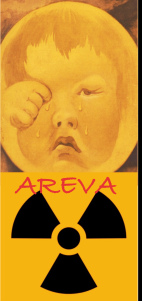 Liberation 17th July 2018 , Flamanville: NGOs lodge a complaint against EDF for “breaches” of security.
Sortir du nucléaire and Greenpeaceare to take legal action this Wednesday morning in the case of defective welds detected on the pipes of the future EPR reactor. The soap opera of the shipyard of the EPR reactor, built by EDF on the Flamanville power station (Manche), takes a legal turn.
According to our information, Sortir du nucléaire and Greenpeace France will file this Wednesday morning with the prosecutor of the High Court of Cherbourg a complaint against EDF and its industrial subsidiary Framatome
(ex-Areva NP) “for ten violations of the code of the environment and the regulation of basic nuclear installations “.
http://www.liberation.fr/france/2018/07/17/flamanville-des-ong-portent-plainte-contre-edf-pour-infractions-a-la-surete_1667181
China General Nuclear Power Corporation (CGN) acquires 75% stake in Swedish wind power project
Reuters 18th July 2018 , China General Nuclear Power Corporation (CGN) has acquired a 75 percent
stake in a Swedish wind power project from Australia’s Macquarie Group
and GE Energy Financial Services, state news agency Xinhua reported on
Wednesday. The North Pole wind power project, located in Pitea, Sweden, is
expected to be operational by the end of 2019 with a capacity of 650,000
kilowatts, making it the single largest onshore wind power park in Europe,
Xinhua said.
https://uk.reuters.com/article/us-cgn-sweden/chinas-cgn-acquires-75-percent-of-swedish-wind-farm-xinhua-idUSKBN1K81IC?rpc=401&
Britain’s new rules will force companies to declare their carbon footprint
Telegraph 18th July 2018, Britain’s largest companies will need to lay bare the size of their
carbon footprint alongside their statutory financial results in their
annual reports from next year. Under new rules, the Government will force
large private companies and those quoted on the London Stock Exchange to
account for their energy use, carbon emissions and their energy efficiency
measures in the drive towards a zero carbon economy. The new rules take
effect for the financial years from April 2019 and replace a defunct carbon
reporting regime which was heavily criticised by business for needlessly
adding layers of bureaucracy at a cost of around £20m.
https://www.telegraph.co.uk/business/2018/07/18/government-force-carbon-accounting-annual-reports/
AREVA – now called “Fromatome” – working on faults in nuclear reactor components
 Romandie 18th July 2018 Framatome (formerly Areva NP) has completed the analysis of the anomalies
detected on the manufacturing files of components manufactured on its site
of Le Creusot (Saône-et-Loire) for the French reactors of EDF, and the
factory is now “fully operational,” said Wednesday a company executive. The
audit launched in 2015 after detecting the existence of anomalies involved
three phases: an inspection step, or a review of “nearly 4,000 files”, then
a technical analysis phase of any discrepancies raised. which is “totally
finished for all the parts of the French park”, said David Emond, director
of the division Components of Framatome, during a press point in Le
Creusot. “We still have to finish a number of foreign customers, and it
will be done at the end of the year,” he added. The Nuclear Safety
Authority (ASN) must now complete the study, reactor by reactor as
scheduled maintenance stops by EDF, the results transmitted by Framatome.
https://www.romandie.com/news/937602.rom
Anxiety about nuclear weapons transport paused for 2 hours
Herald 16th July 2018 , AN INVESTIGATION has been launched after a freight train carrying nuclear
material ran a stop signal near to Kingussie on Friday night. The service
was carrying spent fuel from the Dounreay Power Station to the
decommissioning site at Sellafield, Cumbria. It came to a stop after
travelling past a red light before being moved to a “position of safety” by
concerned officials. Direct Rail Services (DRS), the company which handles
shipments between the two sites on behalf of the Nuclear Decommissioning
Authority (NDA), said they understand there was no risk of collision due to
the error.
However, concerns have been raised as to why a train loaded with
radioactive material was allowed to sit there for almost two hours. An
investigation has since been launched into the circumstances of the
“highly-disturbing” incident. DRS has been transporting spent fuel between
the two sites for a number of years. The material is taken from Dounreay to
Georgemas Junction and loaded on to the train to Carlisle and then onto
Sellafield.
Tor Justad, chairperson of the Highlands Against Nuclear
Transport group, said: “We’ve been campaigning for these shipments to be
stopped and for the material to be kept on site. Storing nuclear material
is hazardous enough but it’s when you go to transport it that accidents can
happen. And obviously an incident like this is highly-disturbing. We know
that low-level radiation is emitted from these canisters so to hear that
the train was sitting at Kingussie for hours is concerning.”
http://www.heraldscotland.com/news/16356092.investigation-launched-after-train-carrying-nuclear-material-ran-stop-signal-at-kingussie/
European Court of Justice’s ruling gives high-risk nuclear technology with billion-dollar subsidies an unfair competitive advantage.
Rebecca Harms MEP 12th July 2018 ,Rebecca Harms , spokeswoman for the Greens / EFA Group in the European
Parliament , comments on the European Court of Justice’s ruling that the EU
Commission’s decision to grant aid to the United Kingdom for the
construction of a nuclear reactor at the Hinkley Point nuclear power plant
is legitimate .
“The Euratom Treaty is a relic of the past and gives the
high-risk nuclear technology with billion-dollar subsidies an unfair
competitive advantage. The Euratom Treaty does not match the European
requirements for clean energy and fair competition. We must end the
distortion of competition in the European energy market, reform the Euratom
Treaty and rely on the energy transition. ”
Here you will find the report ”
Pathways to a Euratom Reform ” on behalf of the Greens / EFA Group.
http://rebecca-harms.de/post/zitat-von-rebecca-harms-zur-entscheidung-des-europaeischen-gerichtshof-gruenes-licht-fuer-hinkley-point-subventionen-euratom-vertrag-zu-geben-36732
66% of UK voters support onshore wind power
Independent 16th July 2018 , Two-thirds of British people think the government should ditch the policies
 that have all but killed off the UK’s onshore wind industry, according to a
new poll.
Since new rules governing the construction of onshore turbines
were introduced following the election in 2015, planning applications for
new wind farms have plummeted by 94 per cent. As the government struggles
to meet strict greenhouse gas emissions targets, experts have criticised
the effective ban on technology that is widely considered the UK’s cheapest
new power source.
Aside from the environmental and industry arguments for
promoting onshore wind, the technology has considerable support from the
British public, as the government’s own data on public attitudes to
renewable energy have shown. Now, a new opinion poll by YouGov has revealed
66 per cent of voters would support a change in policy that allowed onshore
wind farms to be built in places where they have local backing. Current
policies were initially introduced following a Conservative promise to
“halt the spread of onshore wind farms” which “often fail to gain public
support”.
https://www.independent.co.uk/news/uk/politics/onshore-wind-ban-lift-voters-renewable-energy-renewableuk-yougov-a8449381.html
Russia’s huge nuclear submarine on show in Finland as Trump arrives for summit with Putin
Putin to show off huge nuclear submarine just south of Helsinki as summit with Trump sails up Barents Observer The Oscar-II class vessel is similar to the Kursk that sank in the Barents Sea in 2000. By Thomas Nilsen, July 11, 2018
“The first group includes the large anti-submarine ship “Severomorsk” and the nuclear submarine missile cruiser “Orel”, the press service of the Northern Fleet says in a noteposted on the Defense Ministry’s portal Wednesday evening.
Also, the recently modernized missile cruiser “Marshal Ustinov” and the brand new frigate “Admiral Gorshkov” are sailing in the same navy group, as previously reported by the Barents Observer.
The Russian warships are Wednesday evening in Skagerrak south of Norway and will during the next 24 hours pass through Storebælt in Denmark. The route continues south of Bornholm, then north along the east side of the Swedish island of Gotland before turning east into the Gulf of Finland.
Arrival in the Gulf of Finland is expected within a few days, the Northern Fleet writes.
This means Putin will have one of his navy’s largest nuclear-powered submarines sailing just south of Helsinki either a day or two before the summit, or about the same time as the historical meeting with U.S. President Donald Trump takes place on July 16th.
The ships are sailing towards Kronstadt outside St. Petersburg where they will participate in the annual Navy Parade taking place on July 29th…….. https://thebarentsobserver.com/en/security/2018/07/large-russian-nuclear-submarine-sails-scandinavian-waters,
Cool down nuclear plan because renewables are better bet – advisers tell UK government
https://www.theguardian.com/uk-news/2018/jul/10/nuclear-renewables-are-better-bet-ministers-told ministers told Government advisers say UK should back just one more new nuclear power station in the next few years, Guardian, Adam Vaughan, 15 July 18
Government advisers have told ministers to back only a single new nuclear power station after Hinkley Point C in the next few years, because renewable energy sources could prove a safer investment.
The National Infrastructure Commission (NIC) said the government should cool down plans for a nuclear new build programme that envisage as many as six plants being built.
The commission, launched by George Osborne in 2015, said that a decade ago it would have been unthinkable that renewables could be affordable and play a major role in electricity generation. But the sector had undergone a “quiet revolution” as costs fell, it said.
Sir John Armitt, the NIC’s chairman, said: “They [the government] say full speed. We’re suggesting it’s not necessary to rush ahead with nuclear. Because during the next 10 years we should get a lot more certainty about just how far we can rely on renewables.”
He argued that wind and solar could deliver the same generating capacity as nuclear for the same price, and would be a better choice because there was less risk. “One thing we’ve all learnt is these big nuclear programmes can be pretty challenging, quite risky – they will be to some degree on the government’s balance sheet,” he said.
“I don’t think anybody’s pretending you can take forward a new nuclear power station without some form of government underwriting or support. Whereas the amount required to subsidise renewables is continually coming down.”
Renewables were a “golden opportunity” to make the UK greener and make energy affordable, he added.
Armitt said he was agnostic about whether the next power station was the one Hitachi wanted to build in Wales, or one EDF Energy hoped to build in Suffolk. The government is in the process of negotiating a deal with Hitachi to enable the project at Wylfa on Anglesey to go ahead.
But the NIC’s report was unequivocal. It said: “Government should not agree support for more than one nuclear power station beyond Hinkley Point C before 2025.”
Armitt said: “By that point we should be in better position on storage technology and presumably [will] continue to see a drop in price on renewables.”
The NIC said that by 2030 a minimum of 50% of power should come from renewables, up from about 30% today.
New figures released by energy analytics firm EnAppSys show renewables have already overtaken nuclear for electricity generation. Wind, solar and biomass power stations supplied 28.1% of power across April, May and June, with nuclear at 22.5%, the third quarter in a row that renewables have outstripped nuclear.
But Armitt said he was hopeful that, as an independent adviser to ministers, his recommendations would fall on receptive ears. “We’ve seen how long it took to negotiate Hinkley – does the government really want to have to keep going through those sort of negotiations?” he said.
Separate research commissioned by the NIC and published on Tuesday found that nuclear and renewables could meet climate targets for comparable costs.
Aurora Energy Research concluded that, regardless of which technology was pursued, the power sector would have to reach zero emissions by 2050 to hit legally binding carbon goals.
In a statement, EDF Energy said it believed “in having as much renewable power as practically possible and is making major investments in renewables. However, having too much of one energy type creates risks to security of supply and increases costs.”
UK’s Ministry of Defence secretive about safety ratings for the Trident nuclear weapons system
Trident nuclear safety ratings kept secret by MoD, Herald Scotland, Rob Edwards , 14 July 18
UK’s academic and government experts now agree that renewable energy, not nuclear power, is Britain’s future
Telegraph 15th July 2018 , Support for renewable energy is no longer the preserve of eco-warriors, nor
the enemy of the sceptical pragmatist. Experts from academia and government
agree that after years of heavy subsidy, renewable energy is close to
paying its own way.
“Few would have imagined that by 2018 we would be
talking about a subsidy-free future for renewables,” admits Mateusz Wronski
of Aurora Energy Research. “Yet this is where we have arrived – and our
research highlights clearly the enormous prize and potential in the market,
not only in Great Britain but across Europe.”
Aurora broke ranks with traditional energy rhetoric earlier this year by publishing data showing
that new renewable energy projects are now the cheapest source of
electricity in the market and hold the promise of a multi-billion-pound
investment boom for Britain. “The subsidy-free revolution is here, and it’s
big. This is a £60bn investment opportunity in north-west Europe alone,”
Wronski says, with Britain poised to gain far more than any other country
from the coming revolution.
A rapid shift in the economics of energy has
brought renewables to the brink of a major tipping point only a few years
away. Britain could begin to host onshore wind and solar projects without
the need for subsidies from the early 2020s, to unlock about £20bn of
investment between now and 2030. At the end of the next decade, offshore
wind will follow suit.
Last week, the renewable agenda found a fresh ally.
Sir John Armitt, the chairman of the National Infrastructure Commission,
made the most hard-headed case for renewable energy yet. In the first ever
independent assessment of Britain’s infrastructure needs, the commission
dealt a blow to the Government’s nuclear ambitions by warning ministers
against striking a deal for more than one follow-up to the Hinkley Point C
project before 2025.
Instead, government should focus its efforts on
rolling out more renewable power. The pace of the zero-subsidy roll-out
could become quicker if developers are allowed to enter their “zero” bids
into the flurry of auctions held by National Grid throughout the year to
guarantee generation and an optimal frequency for the grid. By taking part
in the subsidy auctions, wind developers would soon be able to cast a bid
at or below the cost of wholesale power prices, which would effectively
mean zero added costs to bills. This would provide certainty to investors,
lower the project’s risk and reduce the cost of capital needed to bring the
projects to life. In turn, consumers would be in line for lower bills.
https://www.telegraph.co.uk/business/2018/07/15/wind-change-reshape-energy-landscape-renewables-start-pay-way/
Fukushima residents visit north Wales to warn people against nuclear power
What Fukushima disaster victims want to tell people of North Wales about new reactor plans, Daily Post , 15 July 18
Visitors from the stricken region have been in Anglesey and Gwynedd,
Victims of the nuclear disaster at Fukushima in Japan visited North Wales to warn people against building new reactors at Wylfa and Trawsfynydd.
Horizon Nuclear Power’s plans to build the £12bn Wylfa Newydd have been formally accepted for consideration by the Planning Inspectorate.
A period of consultation is now taking place while talks are held with the Westminster Government, which also recently revealed plans to build another reactor at Trawsfynydd.
Yesterday morning, two farmers and a journalist from Fukushima visited Anglesey to share their first-hand experiences of the nuclear …….Farmer Satoshi Nemoto said: “The nuclear accident has kept farmers throwing away their products. Dairy farmers have been forced to kill cows or leave them behind in sheds. Farmer Satoshi Nemoto said: “The nuclear accident has kept farmers throwing away their products. Dairy farmers have been forced to kill cows or leave them behind in sheds. Fellow farmer Isao Baba from Namie, 10km from the disaster site, said he still can’t return home to what is called the “Difficult to Return Zone”. ……https://www.dailypost.co.uk/news/what-fukushima-disaster-victims-want-14907594
1 This Month
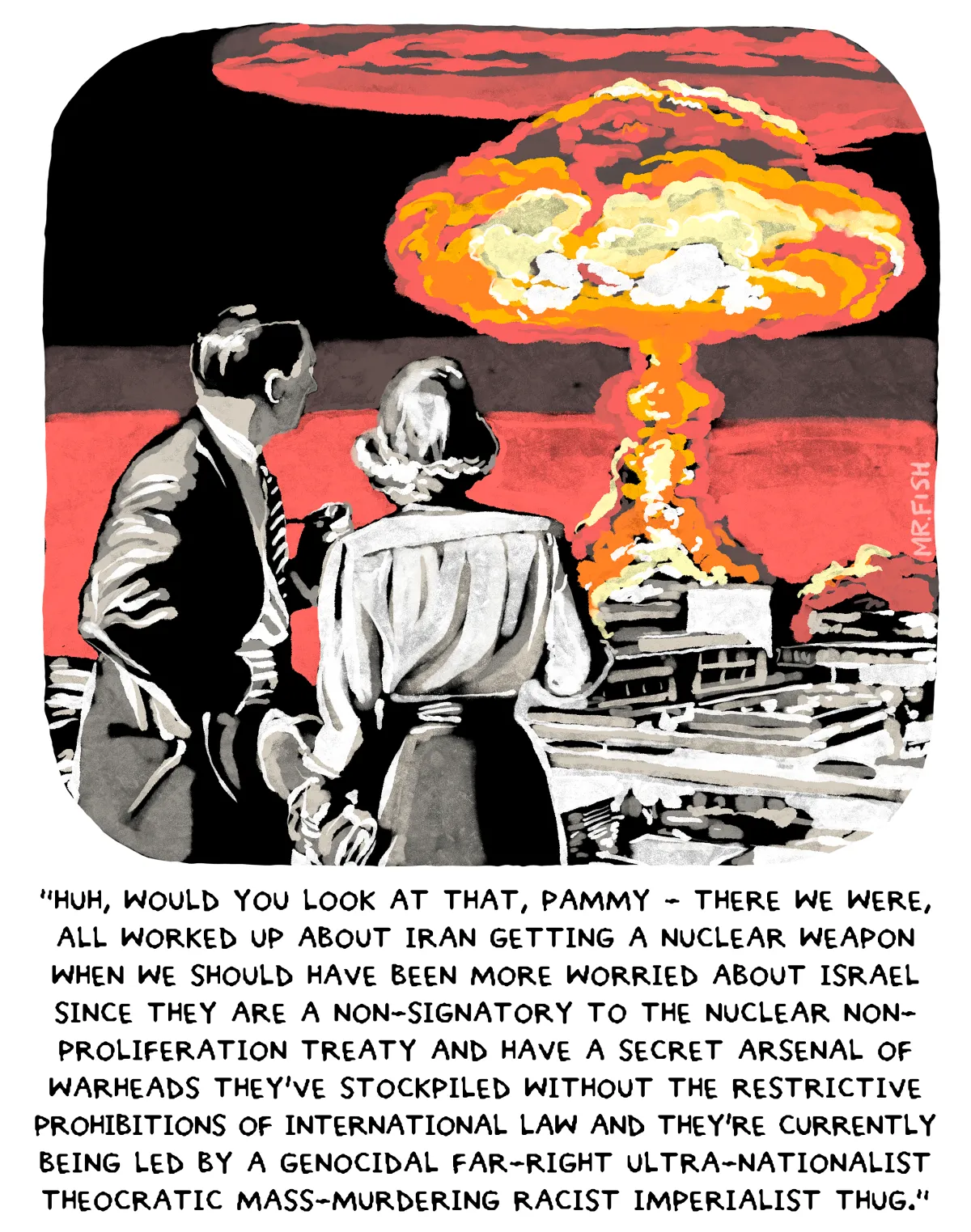
1 June Webinar – The High Cost of Nuclear Power – Register
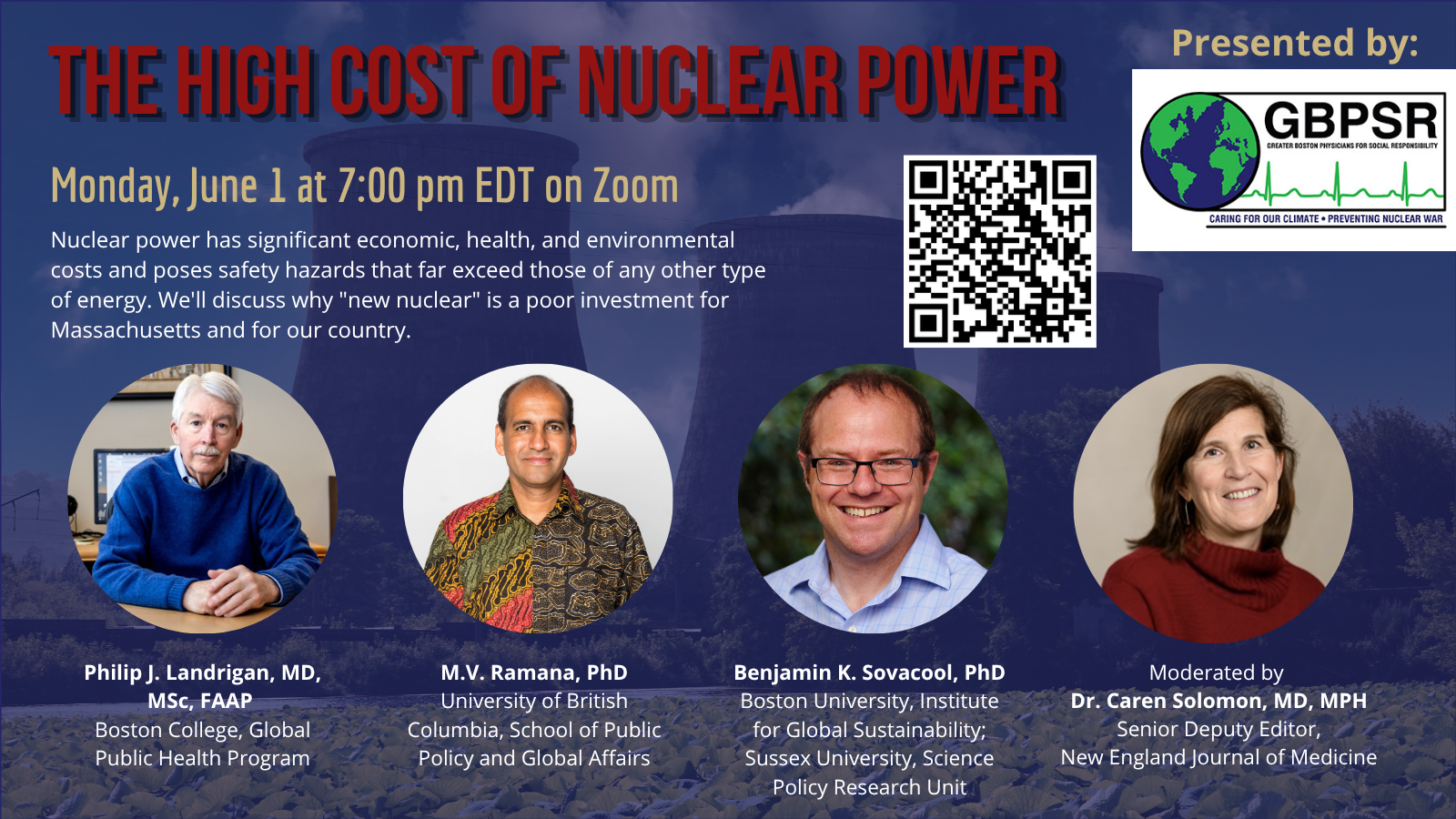


of the week– Nuclear Reactor Information Task Force
To see nuclear-related stories in greater depth and intensity – go to https://nuclearinformation.wordpress.com
-
Archives
- May 2026 (262)
- April 2026 (356)
- March 2026 (251)
- February 2026 (268)
- January 2026 (308)
- December 2025 (358)
- November 2025 (359)
- October 2025 (376)
- September 2025 (257)
- August 2025 (319)
- July 2025 (230)
- June 2025 (348)
-
Categories
- 1
- 1 NUCLEAR ISSUES
- business and costs
- climate change
- culture and arts
- ENERGY
- environment
- health
- history
- indigenous issues
- Legal
- marketing of nuclear
- media
- opposition to nuclear
- PERSONAL STORIES
- politics
- politics international
- Religion and ethics
- safety
- secrets,lies and civil liberties
- spinbuster
- technology
- Uranium
- wastes
- weapons and war
- Women
- 2 WORLD
- ACTION
- AFRICA
- Atrocities
- AUSTRALIA
- Christina's notes
- Christina's themes
- culture and arts
- Events
- Fuk 2022
- Fuk 2023
- Fukushima 2017
- Fukushima 2018
- fukushima 2019
- Fukushima 2020
- Fukushima 2021
- general
- global warming
- Humour (God we need it)
- Nuclear
- RARE EARTHS
- Reference
- resources – print
- Resources -audiovicual
- Weekly Newsletter
- World
- World Nuclear
- YouTube
-
RSS
Entries RSS
Comments RSS
 nuclear-news