Creusot nuclear safety scandal continues with many more anomalies revealed

 Stop Penly 24th July 2018 , Creusot, the scandal continues and concerns a growing number of components.
On July 17, 2018, EDF published a note on the information provided to the safety authority concerning the nuclear equipment manufacturing files carried out at the Creusot plant, now under the control of the state energy
operator.
The verification of all the manufacturing files of these components reveals 1,775 anomalies and 449 non-compliances on the equipment of 46 of its operating nuclear reactors. With 94 anomalies and 19 nonconformities for 34 parts manufactured at Le Creusot, reactor 3 Bugey (Ain) seems to be the most affected.
http://stopeprpenly.org/?p=1161
Electricite de France wants pension funds to cough up for building Sizewell nuclear project
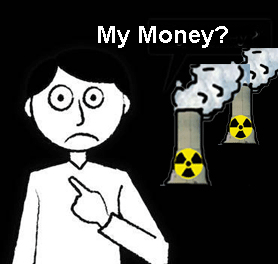
 EDF Wooing Pension Funds to Finance Sizewell U.K. Nuclear Plant, Bloomberg, By Rachel Morison 12 pension funds interested in backing plant in East Anglia Plant would lower nuclear costs by copying design of Hinkley
The developer of Britain’s first nuclear power station in more than three decades has approached 12 pension funds about helping finance a sister plant on the other side of the country.
Electricite de France SA is working on ways to pay for its Sizewell C project in East Anglia that will make it cheaper than the Hinkley Point C nuclear plant it’s building on the coast of Southwest England. Hinkley has been a lightning rod for controversy since the government pledged to pay 92.50 pounds ($122) a megawatt-hour for its power, more than 60 percent more than the latest offshore wind farms……..
Prime Minister Theresa May’s government has estimated it needs to draw in 100 billion pounds within the next decade to upgrade power grids and replace aging generation plants as the bulk of Britain’s nuclear fleet finishes its life in service. ……..https://www.bloomberg.com/news/articles/2018-07-26/edf-wooing-pension-funds-to-finance-sizewell-u-k-nuclear-plant
British tax-payers’ liability in the event of a nuclear accident at Wylfa

Government outlines public liability at Wylfa nuclear plant https://www.newcivilengineer.com/latest/government-outlines-public-liability-at-wylfa-nuclear-plant/10033570.article 26 JULY, 2018
Nuclear operators must have insurance, energy and clean growth minister Claire Perry told parliament, and any costs more than €1.5bn (£1.33bn) would be “met at parliament’s discretion”.
The Westminster Hall debate followed a report in the Times that claimed Japanese company Hitachi would not pay for any accidents at the proposed plant in Anglesey, north Wales.
Energy and clean growth minister Claire Perry said: “There were some questions about liability in the event of an accident. I am happy to say that the last significant incident was the Windscale fire in 1957, and we are light years away from that plant in terms of nuclear operating technology and the safety regime that we operate.
“The Nuclear Installations Act 1965 makes the insurance that I mentioned a requirement, without which operators cannot operate. As the hon. Member for Southampton, Test mentioned, we also have legislation based on the Paris and Brussels conventions.
If the total cost of claims ever exceeded €1.2 billion, a further €300 million would be provided by all contracting parties to the Brussels supplementary convention. Any further claims above that total would be met at Parliament’s discretion.”
Alan Brown MP said: “It marks a departure from the “polluter pays” principle. It is critical that the UK Government do not sign up to any such crazy proposals.”The government is in “commercial negotiations” with Hitachi over the plans, and will take a £5bn stake in the project.
Further delays, costs escalations, at EDF’s Flamanville European Pressurized Reactor (EPR)

FT 25th July 2018 , French power utility EDF has said there will be further delays and cost overruns at its flagship Flamanville nuclear site. In April, the company said that problems with the weldings at its Flamanville site might have an
impact on the costs and the schedule for starting the long-delayed nuclear reactor.
On Wednesday, the company said that out of the 148 inspected welds, 33 had quality deficiencies and would be repaired. As a result it had “adjusted the Flamanville EPR schedule and construction costs . . . The loading of nuclear fuel is now scheduled for the fourth quarter in 2019 and the target construction costs have been revised from €10.5bn to €10.9bn.”
The plant was already seven years late and €7bn over budget. The Flamanville plant in France is one of three being
built in Europe using the next-generation European Pressurized Reactor technology. The other two projects are the Olkiluoto project in Finland, which is more than a decade late, and the UK’s Hinkley Point, which is mired in controversy over the high cost of the project.
http://www.ft.com/content/1b2473c8-8fdd-11e8-b639-7680cedcc421
Bradwell Nuclear Power Station closed 16 years ago, now ready for decades of “interim” wastes
 Maldon & Burnham Standard 23rd July 2018 , BRADWELL Power Station has finished treating radioactive waste as it makes another big step towards being decommissioned. Site operator Magnox is now
preparing the site for the 80 year care and maintenance process. The power
station stopped generating electricity in March 2002, after running for 40
years. In a programme spanning seven years, hundreds of thousands of litres
of radioactive resin and sludge has been made ready for interim storage.
The radioactive sludge was collected from the ponds which stored the
site’s spent nuclear fuel during operation. The resins helped with
removing the radioactive content from site’s discharges – making sure
they were kept within safe and permitted levels. Once it had been
retrieved, the waste was treated and packaged in self-shielding ductile
cast iron containers known as yellow boxes, making it suitable for interim
storage in the site’s purpose-built facility.
http://www.maldonandburnhamstandard.co.uk/news/16371458.bradwell-power-station-finishes-treating-radioactive-waste/
Solar power plant operating within the Chernobyl Exclusion Zone
Positive News 24th July 2018 , A solar power plant has started producing electricity within the Chernobyl
Exclusion Zone, marking a new epoch for the notorious nuclear facility in
Ukraine. The €1m (£870,441), one-megawatt solar farm went live in May
and generates enough electricity to power a medium-sized village.
https://www.positive.news/2018/environment/33949/nuclear-wasteland-is-home-to-worlds-unlikeliest-green-energy-experiment/
Scandal of radioactive particles on Britain’s beaches
Radiation Free Lakeland 24th July 2018 , An urgent request has been sent to Sellafield to monitor and retrieve
radioactive particles from St bees beach ahead of Cumbria Wildlife
Trust”s ‘Beached Art’ day. Sellafield have treated this
straightforward request under Freedom of Information rules which means that
there will not be a reply for at least a month and then we may have to pay
for the request to be answered.
The request has been sparked by a citizen
science project carried out by Radiation Free Lakeland volunteers in
collaboration with nuclear science undergraduates at Worcester Polytechnic
Institute in the US. The accuracy of the independent report has been
confirmed by the Environment Agency (letter from EA below on original ) . Marianne
Birkby of RaFL says “the EA recognise the accuracy of our citizen science
project and the accuracy of the students work, but they fail to acknowledge
that our samples were taken without the use of expensive detecting (or any)
equipment,
Also plutonium was not tested for, so this report while accurate
does not reveal the full picture. This means that the volume and
viciousness of radioactive particles being washed onto our beaches is far
greater than is being admitted to. It also means the likelihood of
inhalation and ingestion of particles by beach users is far greater than
“low.” Cumbria Wildlife Trust and other beach users have faith in the
authorities when they say the beaches are safe. This faith is misplaced.
The nuclear waste scandal has been going on for decades polluting our
beautiful beaches with insidious radioactive particles and it will continue
unabated unless people square up to the nuclear industry and say enough is
enough”
https://mariannewildart.wordpress.com/2018/07/24/radioactive-sand-sculptures-by-cumbria-wildlife-trust/
Britain’s nuclear regulator concerned for Hinkley project, as Flamanville nuclear project’s delays and safety problems continue
Times 26th July 2018 , Doubts about the Hinkley Point nuclear plant being built on time
intensified yesterday when its developer announced fresh delays to a prototype in France caused by defective welding. EDF, the French state-controlled energy company, is building Britain’s first new nuclear plant in a generation in Somerset and aims to start generating electricity from the £20 billion project in 2025.
The company is building the same
reactor type at Flamanville, Normandy, but has repeatedly had to put back
the start-up date, originally 2012, because of construction problems. EDF
said yesterday that first power generation at Flamanville would now slip by
a year to early 2020 because it needed to repair “quality deficiencies”
in the welding in part of the plant that carries steam to the turbines. The
cost of the plant has increased by a further €400 million to €10.9
billion, more than three times its original budget.
City analysts at RBC
Capital Markets said the announcement would “add to concerns about
whether EDF’s other projects . . . can be delivered on time and
budget”. Hinkley Point is due to generate 3.2 gigawatts of power, seven
per cent of Britain’s power needs, and is meant to help keep the lights
on when coal and older nuclear plants close. EDF insists it has learnt the
lessons from the EPRs being built elsewhere, ensuring that the British
project will proceed more smoothly.
However, Britain’s nuclear safety
regulator has raised concerns about substandard quality control checks on
EDF’s supply chain. A source insisted that Hinkley should not suffer the
same problems as Flamanville because the project uses a different
contractor and testing method, both of which had already been deployed
successfully in Finland. Kate Blagojevic, head of energy at Greenpeace UK,
said: “EDF’s nuclear design just doesn’t work very well. The nuclear
power plant in Finland is a decade late and because of yet more technical
problems, the Flamanville plant has gone from late to later. This bodes ill
for Hinkley Point C.” A spokesman for EDF said: “The construction of
Hinkley Point C remains on track. The project has already benefited, and
will continue to learn from the experience of other projects.
https://www.thetimes.co.uk/edition/news/reactor-fault-raises-spectre-of-delays-at-20bn-hinkley-point-xflrcbg2j
France’s Flamanville nuclear reactor: swelling costs, and more delays
New Economy 25th July 2018 The cost of EDF’s new Flamanville nuclear reactor has swelled to more
than three times the French state-owned utility’s original budget after
further issues were revealed in the construction process. EDF said target
construction costs had risen by €400m ($468m) to €10.9bn ($12.7bn).
Already seven years behind schedule, the project will now be delayed by
another year, with the loading of nuclear fuel not expected until the
fourth quarter of 2019. In April, EDF revealed that problems with the
weldings at its flagship nuclear site could impact the project’s costs
and timetable following an assessment by the French Nuclear Safety
Authority.
On July 25, EDF said 33 of 148 inspected welds were found to
have “quality deficiencies” and would be repaired: “EDF teams and
their industrial partners are fully mobilised and are continuing all other
assembly and testing activities at the Flamanville [European Pressurised
Reactor (EPR)], including the system performance tests.” France’s
Flamanville project is one of three EPRs currently being built across
Europe.
The third-generation technology has taken decades to develop and
aims to improve safety, as well as reduce costs. EDF is also building the
Olkiluoto 3 project in Finland and Hinkley Point C in the UK, both of which
are also behind schedule.
https://www.theneweconomy.com/energy/edf-reveals-further-cost-overruns-and-delays-to-its-flamanville-nuclear-reactor
Brutal heat wave brings wildfires across Arctic circle countries
 Wildfires have ignited inside the Arctic Circle https://www.vox.com/2018/7/24/17607722/wildfires-sweden-greece-europe-arctic-circle-heat-wave In Sweden and Latvia, and further south in Greece, wildfires are spreading amid a brutal heat wave. By
UK’s nuclear plans mean taxpayers take on unlimited costs for any accidents, and for longterm wastes
Politics Home 24th July 2018 , Alan Brown MP: Government mustn’t sign up to ‘crazy proposals’ leaving the
taxpayer facing unlimited risk over nuclear incidents. Shadow SNP
Spokesperson for Energy, Alan Brown MP, writes ahead of his Westminster
Hall debate on ‘Taxpayer liability for safety at the Wylfa Nuclear power
project’. The nuclear industry in the UK, whilst keeping the lights on for
decades has come at a price.
The legacy of contamination and clean-up is
estimated by the National Audit Office to come in at £121bn by completion
in 2020. The Magnox swarf storage silo contains waste sludge which is
corrosive and radioactive and deemed a hazard until 2050 and there are a
number of existing nuclear power stations still to be decommissioned.
Yet we are told by the UK Government that we need more nuclear as a low carbon
means of energy generation. While the process may indeed be low carbon, it
is anything but green given the toxic legacy.
Why do we want to commission more at exorbitant costs?
With regards the cliché “we need the baseload,” as far back as 2015, the chief executive of National Grid
argued that the baseload concept was outdated. The only other reasoning I
can see is the equally outdated concept of the UK being a world leader in a
particular sector.
I have my own bias of course, but I would suggest the UK
may be the world leader in bad nuclear deals. A 35 year agreement for
Hinkley Point C at £92.50/MWh, when offshore wind recently came in at
£57.50 for a 15 year tenure. The Hinkley deal so bad it was criticised by
the NAO as bad value for money.
Part of the problem with Hinkley was the
risk and the financial exposure to private investors. A risk allayed with
the fact the technology for the European Pressure Reactor (EPR) has still
to be proven, with all existing EPR projects under construction facing
delays.
As investment in nuclear around the world falls, the UK has ten
stations on the go in terms of planning. Yet, the National Infrastructure
Commission’s latest report states that they believe there should be a
maximum of just one new nuclear contract signed before 2025. This is
because of the reduced costs of renewables and the other emerging
technologies including the massive decrease in cost of batteries.
Their report also illustrates that over the years the cost of nuclear has not
decreased, debunking another UK Government aspiration. This backdrop brings
us directly to Wylfa. Direct information from the Government remains
difficult due to the claims of “commercial confidentiality”. However,
again it is clear that the private developer, Hitachi, has had difficulties
with the costs and risks associated with the project. This has led to the
suggestion of the Government taking a £5bn direct stake in the project. In
principle for key infrastructure projects, a direct Government stake makes
sense as it can borrow cheaper than the private sector.
However, this seems to be part of another wider blank cheque type agreement for a Government
desperate to get the project over the finishing line. When strike rate
figures of £77.50/MWh are quoted for Wyfla, then this stake is one reason
for the reduction. Under the Paris and Brussels conventions, a nuclear
operator has the liability for any nuclear incidents. Even so, there is a
cap ay £1.2bn euros, so way below the true cost of a catastrophic
incident. Hitachi has already had two serious safety breaches in other
nuclear developments, and for one was fined $2.7bn from the US Government.
Apparently learning from this, Hitachi are resisting taking on liability
for nuclear incidents. We do not know exactly what they are proposing, but
it marks a departure from current agreements and the “polluter pays”
principle. It is critical that the UK Government does not sign up to any
such crazy proposals. The cost legacy is bad enough; we still don’t have
a solution to long term disposal of nuclear waste and it is folly to sign a
deal for the taxpayer to take unlimited risk on a nuclear incident. This
could prove to be the worst deal yet unless the Government changes tact
soon. https://www.politicshome.com/news/uk/energy/nuclear-power/opinion/house-commons/97117/alan-brown-mp-government-mustnt-sign-crazy
The Small Modular Nuclear Reactor dream could be over for Rolls Royce
 Nucnet 23rd July 2018 , Rolls-Royce is preparing to shut down its project to develop small modularnuclear reactors if the government does not make a long-term commitment to the technology, including financial support, in the coming months, the Financial Times reported. According to the UK-based newspaper, the UK aero-engine maker has scaled back investment significantly, from several millions to simply paying for “a handful of salaries”. Warren East, Rolls-Royce chief executive, told the Financial Times:
However, David Orr, executive vice-president of Rolls-Royce’s SMR programme, said that without comfort from the government on two fronts the project “will not fly. We are coming to crunch time.”
Rolls-Royce is one of several consortia to have bid in a government-sponsored competition launched in 2015 to find the most viable technology for a new generation of SMRs. https://www.nucnet.org/all-the-news/2018/07/23/rolls-royce-planning-to-shut-down-smr-project-without-government-support
Russia’s new “doomsday” weapon works by dispersing killer nuclear radiation
 Russia just showed off a potentially world-ending nuclear ‘doomsday’ torpedo https://www.businessinsider.com.au/russia-shows-off-a-nuclear-doomsday-torpedo-that-the-us-cant-stop-2018-7?r=US&IR=T, ALEX LOCKIE, JUL 24, 2018,
Protestors break into US air base housing nuclear weapons
Intruders cut fence and storm US air base housing nuclear weapons https://www.dailystar.co.uk/news/world-news/718383/us-military-air-base-nuclear-missiles-protestors-buechel-germany-air-base-peace-bundeswehr
A US military base has been stormed by intruders who cut through a fence over allegations nuclear weapons are housed on the site.
Peace activists infiltrated the Buechel Air Base in Germany by cutting through the fence before confronted by servicemen.
The group now face criminal charges for illegal entry, property damage and interference with air traffic.
Seven people managed to cut through the perimeter at the US air base in to protest against nuclear weapons.
Germany military police said the activists claimed nuclear weapons are stored at the site.
Activists were stopped by the servicemen patroling the base after entering the security zone and then handed over to the police.
Anti-nuclear protestors had earlier in the day staged an impromptu protest outside the base’s gates.
Police had to be called to break-up the demonstration.
Protest actions have been ramping up over the past weeks – with protestors inflitrating the site last wek and putting up posters.
Germany’s military has been criticised over the incursions and has pledged to ramp up security – including more cameras.
Germany is one of four countries in Europe to host American nukes on their soil under lock and key – just in case of a nuclear exchange.
It is understood to have 20 US nuclear weapons stored which can be bolted to Tornado jets.
Belgium, the Netherlands and Italy also house Washington’s nukes – with around 20, 22 and 90.
US forces have had a presence in Germany since the end of World War 2 as part of their ongoing commitment to NATO.
France’s nuclear reactors limiting production, affected by extreme heat
 High temperatures to cut French nuclear production: EDF https://www.spglobal.com/platts/en/market-insights/latest-news/electric-power/072418-high-temperatures-to-cut-french-nuclear-production-edf , Author Anuradha Ramanathan , Editor Maurice Geller London — France’s EDF expects nuclear-fired power production at its Bugey and Saint-Alban power stations to be curtailed “due to extreme temperature forecast,” the utility said Tuesday.
- Output fall likely at Bugey, Saint-Alban plants
- Production limitations to start from Saturday
- No details on capacity impact provided
On grid operator RTE’s website, EDF said environmental issues are limiting “some” nuclear production availability in the country, starting Saturday.
EDF did not give details on the exact impact of the output restrictions. The two nuclear power stations have a combined capacity of over 6 GW.
Environmental issues have already resulted in weekend outages at EDF’s Bugey-3 reactor on the river Rhone. Hot weather conditions previously have led to cooling water restrictions due to raised river temperatures.
According to forecaster MeteoFrance, temperatures should remain above seasonal average, or around 2 degrees Celsius above norms over the weekend.
–Anuradha Ramanathan, anuradha.ramanathan@spglobal.com
–Edited by Maurice Geller, maurice.geller@spglobal.com
1 This Month
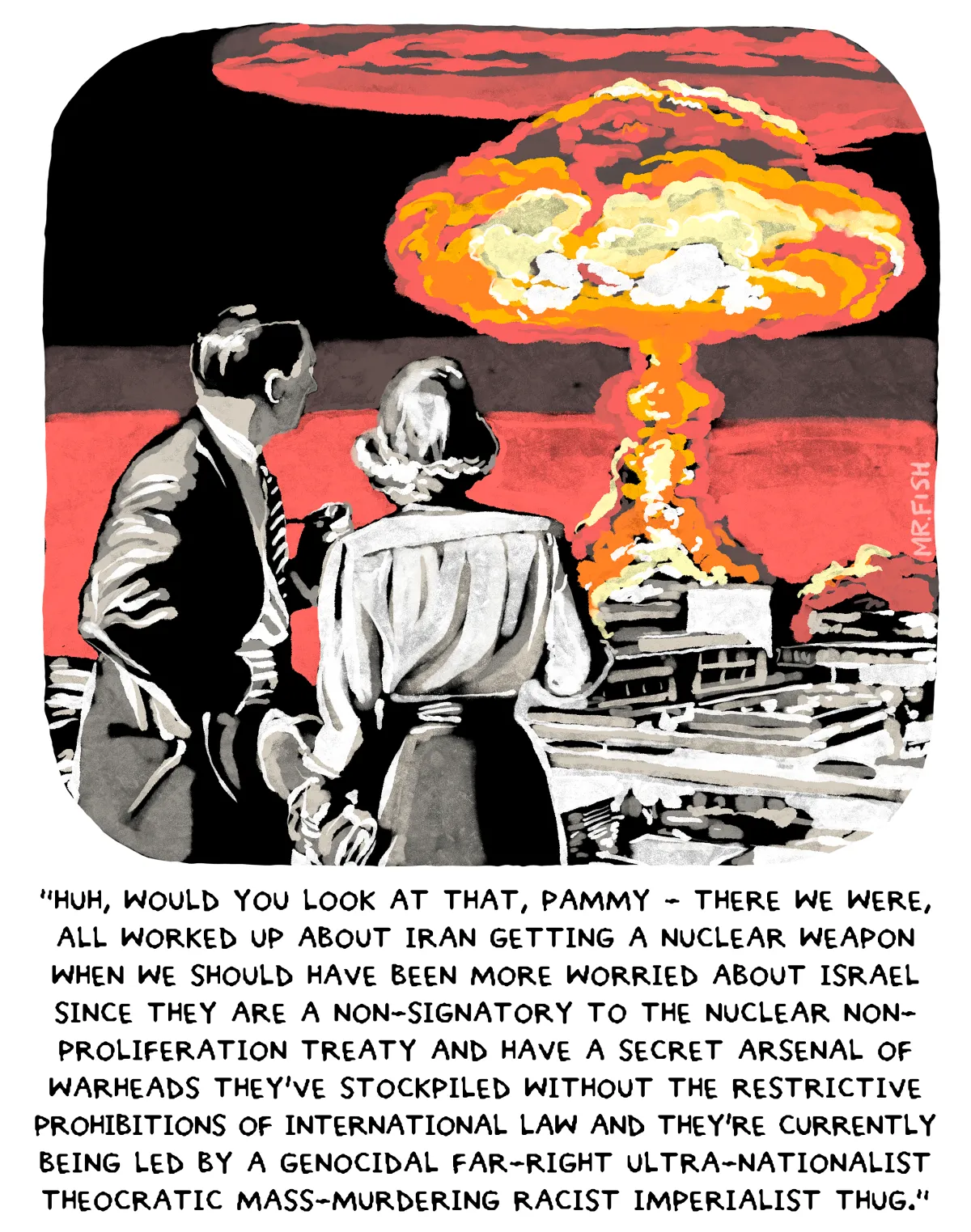
1 June Webinar – The High Cost of Nuclear Power – Register
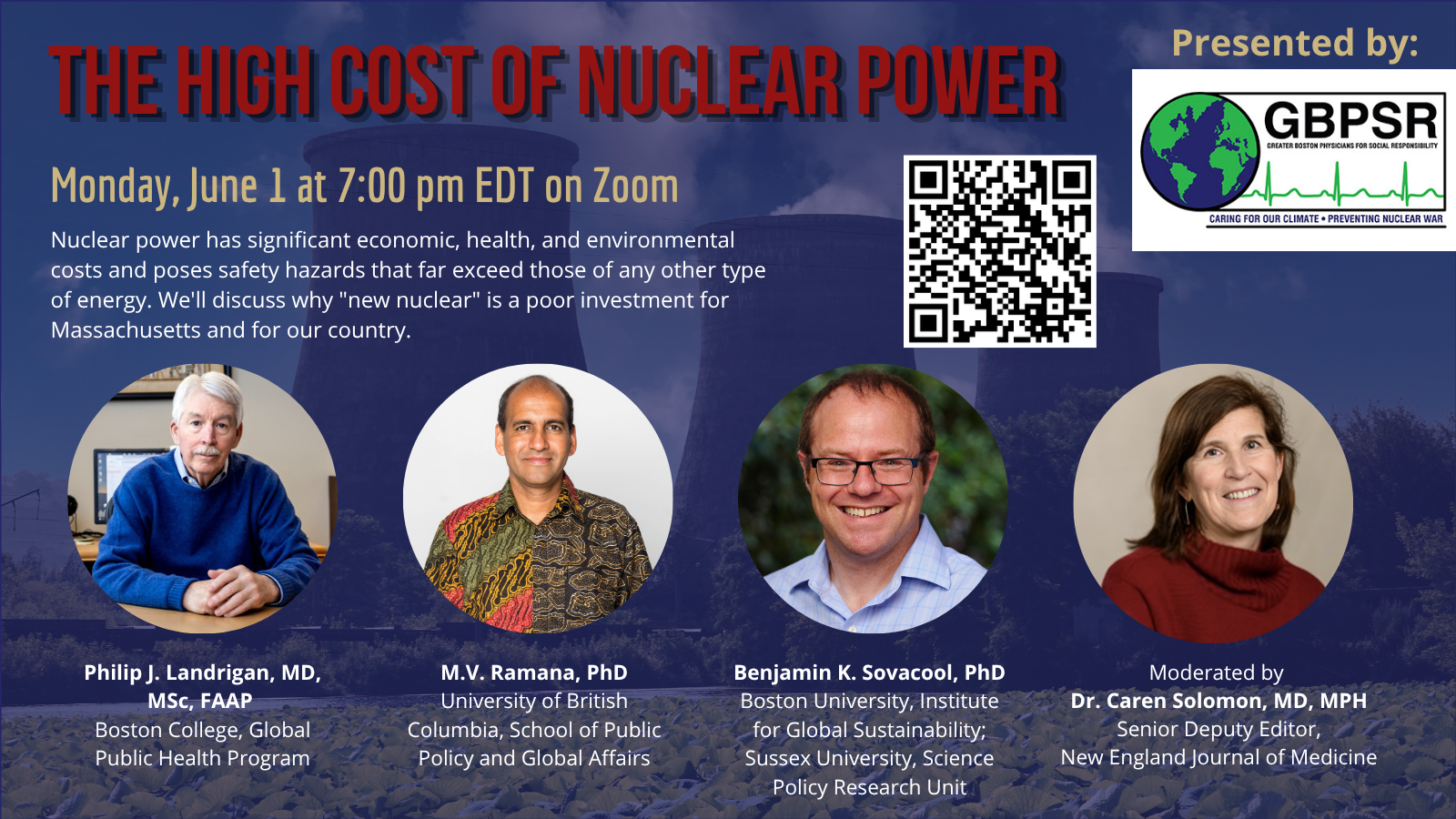


of the week– Nuclear Reactor Information Task Force
To see nuclear-related stories in greater depth and intensity – go to https://nuclearinformation.wordpress.com
-
Archives
- May 2026 (262)
- April 2026 (356)
- March 2026 (251)
- February 2026 (268)
- January 2026 (308)
- December 2025 (358)
- November 2025 (359)
- October 2025 (376)
- September 2025 (257)
- August 2025 (319)
- July 2025 (230)
- June 2025 (348)
-
Categories
- 1
- 1 NUCLEAR ISSUES
- business and costs
- climate change
- culture and arts
- ENERGY
- environment
- health
- history
- indigenous issues
- Legal
- marketing of nuclear
- media
- opposition to nuclear
- PERSONAL STORIES
- politics
- politics international
- Religion and ethics
- safety
- secrets,lies and civil liberties
- spinbuster
- technology
- Uranium
- wastes
- weapons and war
- Women
- 2 WORLD
- ACTION
- AFRICA
- Atrocities
- AUSTRALIA
- Christina's notes
- Christina's themes
- culture and arts
- Events
- Fuk 2022
- Fuk 2023
- Fukushima 2017
- Fukushima 2018
- fukushima 2019
- Fukushima 2020
- Fukushima 2021
- general
- global warming
- Humour (God we need it)
- Nuclear
- RARE EARTHS
- Reference
- resources – print
- Resources -audiovicual
- Weekly Newsletter
- World
- World Nuclear
- YouTube
-
RSS
Entries RSS
Comments RSS
 nuclear-news