Radiation Free Lakeland 10th Sept 2018 , Springfields** This is from the 1990s. “You and Yours” BBC Radio 4 programme
describing the “biggest in the UK” radioactive discharges The
Springfields plant discharges directly into the River Ribble and has done
so since 1948. What has changed? Nothing, apart from the fact that any
mention of cancer and radioactive discharge by eminent doctors is now a
taboo subject.
https://mariannewildart.wordpress.com/2018/09/10/6th-installment-of-the-springfields-archive-prestons-radioactive-river/
September 12, 2018
Posted by Christina Macpherson |
UK, wastes |
Leave a comment
 Radiation Free Lakeland 9th Sept 2018 Last week a ‘debate’ on the implementation of the plan for dangerous
geological dumping of nuclear waste took place in the House of Lords.
So few Lords were there. Anyone would think this plan to impose one or more
high level waste dumps underneath our feet is an issue of so very little
importance and no interest to them. The cat is now out of the bag that the
ONLY reason a geological dump is being implemented (over decades) is to
“support a new generation of nuclear power stations in the UK by
providing a safe and secure way to dispose of the waste they produce.
This is key to the future new nuclear build” There we have it. The key to new
nuclear build is to have “a plan” for the “final disposal” of high
level nuclear wastes. No matter that the plan in question is going to
poison us into eternity. The push for Geological Disposal is MAD BAD AND
DANGEROUS on many levels.
I happened to be on the train coming back from
London on the day before the Lords debate and saw Lord Melvyn Bragg
hightailing it from London to Cumbria. If this had been a debate on wind
turbines he would have been there with brass knobs on full of vim and
emotion “this will destroy the place as a natural habitat for human
beings, and replace it with what will be seen as an industrial landscape”
but hey as its only one or two high level nuclear wastes dumps (with the
places in the frame most likely to be Cumbria or under the beleaguered
Irish Sea), who cares a damn if we damn the future? If you can bear to read
it – here below is the debate.
https://mariannewildart.wordpress.com/2018/09/09/lords-high-tail-it-away-from-geological-dump-debate-biggest-decision-in-our-time/
September 12, 2018
Posted by Christina Macpherson |
politics, UK |
Leave a comment
BBC, 10 September 2018, Opponents to a controversial scheme to dump mud from a nuclear plant off the coast of Cardiff have launched a last-minute legal challenge.
September 12, 2018
Posted by Christina Macpherson |
Legal, UK |
Leave a comment
 Reuters 10th Sept 2018 , France’s state-controlled EDF power utility needs to show a new
generation nuclear reactors work well, which is not for now the case, new
environment minister Francois de Rugy said in remarks published on Monday.
De Rugy signaled that any decision on whether to build more plants using
the European pressurized reactor (EPR) design would be based on economic
factors. The French government is expected to outline in late October a
plan to cut the share of nuclear energy in its electricity production to 50
percent from the current 75 percent, the highest level in the world. It has
already said it could take a decade more to get there than an initial
target of 2025.
https://www.reuters.com/article/us-france-nuclear-edf/edf-must-prove-nuclear-reactors-viable-french-minister-says-idUSKCN1LQ1HB
September 12, 2018
Posted by Christina Macpherson |
business and costs, France |
Leave a comment
 Reuters 11th Sept 2018 , French nuclear group Orano on Monday inaugurated a 1.15 billion euro (1.02
billion pounds)uranium conversion plant despite huge global overcapacity
for nuclear reactor fuel. State-owned Orano’s new plant in Tricastin,
southern France, will account for a quarter of the world’s 60,000-tonne
annual uranium hexafluoride (UF6) production capacity when it fully ramps
up in 2021 and is set to have the industry’s lowest costs, the company
said. UF6, produced by combining “yellowcake” uranium ore concentrate
with fluorine, is a precursor of enriched uranium, which fuels the
world’s nuclear plants. Following the 2011 Fukushima disaster in Japan,
uranium prices are near decade lows as several countries reduced their
reliance on nuclear energy.
https://uk.reuters.com/article/uk-france-nuclearpower-enrichment/french-orano-opens-uranium-conversion-plant-despite-glut-idUKKCN1LQ2O9
September 12, 2018
Posted by Christina Macpherson |
business and costs, France, politics, Uranium |
Leave a comment
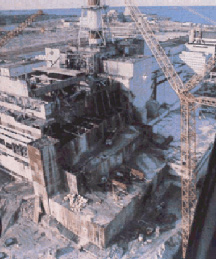
THE MELTDOWN AT the Chernobyl Nuclear Power Plant in northern Ukraine on April 26, 1986 was a massive tragedy that ultimately claimed at least 9,000 lives and affected millions more. It also created a toxic mess. Radioactive particles choked the atmosphere and rained down on cities, forests, and roads. In the immediate aftermath, fires had to be put out, debris cleared, contaminated waste buried deep underground.It was, obviously, not an easy task. Remote-controlled bulldozers and other robots proved too weak for the job, their circuitry fried by radiation. So the Soviet Union sent in humans—600,000 of them. These brave firefighters, soldiers, janitors, and miners—the so-called “liquidators”—did everything from hosing down streets to felling trees to building a concrete sarcophagus around the exposed reactor … all the while charged subatomic particles ravaged their cells and shortened their life spans.
“No personal sacrifice was too much for these men and women,” says photographer Tom Skipp. Moved by their story, he visited Slavutych, Ukraine in April to photograph survivors, now in their golden years. The portraits make up his haunting series The Liquidators.
“The liquidators were sent into impossible scenarios where even machines failed,” Skipp says. “Each has a human story seemingly entangled in the complex history of communism and duty to the motherland….
On average, the liquidators were exposed to 120 millisieverts of radiation, about 1,200 times the amount you get from a simple x-ray. In the years following the meltdown, more than 4,000 of them died from radiation-caused cancers, and another 70,000 were disabled by exposure. Still, the liquidators shared a steadfast sense of duty to their government and fellow citizens, even when they didn’t agree with the ruling system or found it difficult to talk about. “I think that there’s a certain amount of fear aligned with speaking out against any wrongdoings that were committed,” Skipp says. “Many live on a state pension.”
Skipp photographed the men and women with his Fujifilm GFX 50 in their homes, as well as at at a local museum dedicated to explaining the history of Chernobyl and Slavutych. Many of the portraits capture them standing proudly but solemnly before an image of the destroyed reactor and beneath a clock stopped at the exact time of the meltdown—the moment that defined their lives forever. https://www.wired.com/story/chernobyl-liquidators-photo-gallery/
September 10, 2018
Posted by Christina Macpherson |
deaths by radiation, health, Ukraine |
Leave a comment

NuClear News, Sept 18 The Stop Hinkley Campaign wrote to the Office for Nuclear Regulation at the end of July to express increasing concern about the number of reports from climate researchers who believe sea levels could rise by as much as 6 metres as a result of substantial melting of the Greenland and Antarctic ice sheets caused by climate change.
Some researchers say sea levels could rise by six metres or more even if the 2 degree target of the Paris accord is met. Sustained warming of one to two degrees in the past has been accompanied by substantial reductions of the Greenland and Antarctic ice sheets and sea level rises of at least six metres – several metres higher than what current climate models predict could occur by 2100. (1)
In the light of these recent higher estimates of sea level rise the group wanted to know whether ONR has revisited and perhaps revised its view on the future safety of the Hinkley Point C site. Stop Hinkley was particularly interested to know whether ONR is confident that the site will be suitable for the interim storage of spent fuel until at least the year 2140.
ONR responded by saying that “the primary protection against coastal flooding for HPC is the height of the site platform (14m above sea level). The site characterisation has demonstrated that the platform is not vulnerable to a design basis coastal flood, including reasonably foreseeable climate change. The HPC site licensee (NNB GenCo) will monitor this hazard via Periodic Safety Reviews (including the interim spent fuel store) and if the assumptions in the safety case regarding climate change are shown to no longer be valid; they will be reconsidered. If necessaryy, further preplanned flood protection measures will be put in place through a managed approach.”
The 14m above sea-level makes it sound like quite a large margin. But the Hinkley Point C Stress Test report shows an extreme flooding level of 9.52m (with no waves). Taking into consideration “wave effects” of 2m this gives a margin of 2.48m. (2)
Latest study suggests that rapid melting in Antarctica could begin within the next century, before HPC is decommissioned and before spent fuel is removed. (3) The Antarctic ice sheet contains enough ice to raise sea level by approximately 57 metres (187 feet), about half the length of a soccer pitch. (4) While it is unlikely that enough ice would melt to raise sea-levels by 57 metres, Antarctica is so massive that just a small fraction of this ice melting would be enough to cause huge problems for people and infrastructure on the coast.
ONR says it “maintains a constant review of scientific thinking on climate change, and is guided by relevant good practice. This includes UK and international guidance, UK Climate Projections 09 (UKCP09) and the Intergovernmental Panel on Climate Change (IPCC). To support efficient and effective regulation, ONR has established an independent expert panel on meteorological hazards to provide advice. ONR’s expert panel is a collection of competent consultants with expertise in this technical area. This panel has provided advice on the HPC external flooding safety case and will continue to provide advice on the potential impacts of climate change.”
“ONR is content that a suitable managed adaptive approach can be adopted, in the event that sea level rise is more than predicted.”
Perhaps the next question to ONR is how long will it take to move 60 years’ worth of spent fuel if the thinking on flood risk and the likelihood of a tsunami were suddenly to become out-dated? http://www.no2nuclearpower.org.uk/wp/wp-content/uploads/2018/09/NuClearNewsNo110.pdf
September 10, 2018
Posted by Christina Macpherson |
marketing, UK |
Leave a comment
 Times 8th Sept 2018
 , Plans for a new nuclear power station in Cumbria are set to move closer to
collapse next week, with the company developing the Moorside project
expected to confirm that it is laying off the majority of its staff.
Nugen, owned by Toshiba, the troubled Japanese conglomerate, has been consulting
throughout August on job cuts among its 100 employees after failing to
secure a buyer. It is understood that it is preparing to sign off on cuts
on Monday and to brief staff on Tuesday, with the most likely option
resulting in the loss of at least 50 jobs.
If no buyer for Nugen is found
before the end this year then the venture is likely to be abandoned
altogether. Nugen’s Moorside scheme, neighbouring the Sellafield atomic
waste site on the Cumbrian coast, has been in doubt since early last year,
when financial problems engulfed Toshiba. A sale to Kepco, the South Korean
utility, has stalled amid political change in South Korea and a British
government rethink of the financial support on offer for nuclear plants,
after widespread criticism of the high costs of Hinkley Point.
https://www.thetimes.co.uk/article/staff-layoffs-leave-cumbria-nuclear-plans-on-the-brink-5mfgkcz3j
September 10, 2018
Posted by Christina Macpherson |
business and costs, UK |
Leave a comment
NuClear News Sept 18
Jeremy Leggett, former Chair of SolarCentury, has used 30 pictures and charts to show why the UK nuclear renaissance plan is doomed to failure. It’s a great way to get a point across. But sometimes it’s useful to have it written down too.
The UK’s first ever National Infrastructure Assessment says at least half of all UK power should be renewable by 2030, and can be at no extra cost. It urges the Government to grab the golden opportunity to ditch nuclear and go with cheaper solar and wind. Solar Power Portal 10th July 2018 No2NuclearPower nuClear News No.110, September 2018 19 https://www.solarpowerportal.co.uk/news/grab_the_golden_opportunity_to_go_green_uk_urged_to_ditch_nuclear_in_favour
EDF is in deep financial trouble: The utility upon which the UK Government’s plans for a nuclear renaissance depend faces an existential threat with no obvious escape route.
On 25th July 2018 there was yet more bad news for EDF. 33 welds need repairing. Nuclear fuel now to be loaded Q4 2019. EDF says costs up €0.4bn to €10.9bn FT 25th July 2018 https://www.ft.com/content/1b2473c8-8fdd-11e8-b639-7680cedcc421
In august 2016 a major reversal in opinion on nuclear power amongst business leaders was reported. There was a big majority for new nuclear in 2015. In 2016 only 9% strongly agree. 75% of IOD members support strong solar and wind policies. Guardian 19th August 2016 http://www.theguardian.com/business/2016/aug/19/businesschiefs-attack-uk-government-failure-to-secure-energy-supply
In a remarkable U-turn the UK Government agrees to a £5bn public stake in welsh nuclear power station. The total cost of Wylfa to be shared with Hitachi and the Japanese Government is estimated at £16bn. The price of power is expected to be £75-77/MWh – more than solar and wind. Guardian 4th June 2018 http://www.theguardian.com/environment/2018/jun/04/uk-takes-5bn-stake-inwelsh-nuclear-power-station-in-policy-u-turn
. · It seems that Whitehall’s obsession with civil nuclear is in fact a military romance. So argue researchers at the Science Policy Research Unit. They find evidence of desperation to keep expertise for submarine reactors alive. Guardian 29th March 2018 http://www.theguardian.com/science/political-science/2018/mar/29/why-is-ukgovernment-so-infatuated-nuclear-power
And then there is global warming. If governments do not shut down residual nuclear programmes it seems climate change impacts will at some point – in the case of the many reactors on coasts and rivers – do the job for them.
- Nuclear regulators around the world have used out-of-date scientific understanding of sea level rise. Ensia: “A number of scientific papers published in 2018 suggest that climate change will impact coastal nuclear plants earlier and harder than industry government or regulatory bodies have expected.” Ensia 8th Aug 2018https://ensia.com/features/coastal-nuclear/
This summer’s heatwave forced 3 Nordic reactors to be curbed and 1 to close. EDF may close 4 reactors. Seawater off Sweden and Finland was too warm for reactor cooling. Reuters 1st Aug 2018 https://www.reuters.com/article/us-nordics-nuclearpowerexplainer/in-hot-water-how-summer-heat-has-hit-nordic-nuclear-plantsidUSKBN1KM4ZR Reuters 1st Aug 2018 https://www.reuters.com/article/us-francenuclearpower-weather/frances-edf-may-halt-four-nuclear-reactors-due-to-heatwavestatement-idUSKBN1KM56C
September 10, 2018
Posted by Christina Macpherson |
politics, UK |
Leave a comment

 “Panglossian puffery”, says David Lowry. The report ignores the security and nuclear waste problems of small modular reactors.
The Nuclear Free Local Authorities (NFLA) says this is yet another attempt to promote the benefits of SMRs despite large and quite possibly insurmountable hurdles to cross. The Government suggests the report was produced by an ‘independent’ group, yet at least half of the group have strong links to the nuclear industry, including the Nuclear Industry Association. The UK appear to be one of the few governments pursuing a strategy of promoting SMRs. Even France and Finland, the only other countries in Europe currently developing large nuclear projects, have no plans to develop such technology. Indeed France has just commissioned a whole raft of new smaller-scale solar energy projects.
the finance sector is accurate in being sceptical of new nuclear developments given the rapidly decreasing costs of renewable energy.
Rolls-Royce warned last month that it was preparing to shut down the [Small Modular Nuclear Reactor] project if the government did not make a long-term commitment to its technology.
Panglossian SMRs , NuClear News Sept 18, The government should subsidise the deployment of small modular nuclear reactors in order to speed the transition to a low carbon energy system, according to an independent review into the technology commissioned by Ministers. The Expert Finance Working Group on Small Reactors (EFWG) said in a report that government should offer subsidies for small nuclear reactors to help de-risk the technology and kickstart cost reductions. (1)
Small modular reactors (SMRs) generally have a capacity less than 600MW, with the costs ranging from £100 million to £2.3 billion, which the experts suggest could be delivered by 2030. The EFWG has recommended the government to help de-risk the small nuclear market to enable the private sector to develop and finance projects – it believes SMRs could be commercially viable propositions both in the UK and for an export market.
The report says the “Government should establish an advanced manufacturing supply chain initiative, as it did with offshore wind, to bring forward existing and new manufacturing capability in the UK and to challenge the market on the requirement for nuclear specific items, particularly Balance of Plant (BOP), thereby reducing the costs of nuclear and the perceived risks associated with it.”
Nuclear Energy Minister Richard Harrington said: “Today’s independent expert report recognises the opportunity presented by small nuclear reactors and shows the potential for how investors, industry and government can work together to make small nuclear reactors a reality. Advanced nuclear technologies provide a major opportunity to drive clean growth and could create high-skilled, well-paid jobs around the country as part of our modern Industrial Strategy.” (2) Continue reading →
September 10, 2018
Posted by Christina Macpherson |
Small Modular Nuclear Reactors, spinbuster, UK |
Leave a comment

 radioactive waste from one of the UK’s most important nuclear
decommissioning projects. Businesses in Lancashire, Cumbria and West
Yorkshire are joining forces to produce self-shielded boxes which will
store legacy waste from the First Generation Magnox Storage Pond (FGMSP) at
Sellafield. The 66-year old open air pond was originally used to store
nuclear fuel from the UK’s first generation of nuclear power stations. It
has been prioritised for clean-up by the Nuclear Decommissioning Authority.
The clean-up work requires the manufacture of hundreds of boxes to store
material taken out of the facility.
http://www.thebusinessdesk.com/yorkshire/news/2025845-northern-collaboration-sellafield-n-plant-clear
September 10, 2018
Posted by Christina Macpherson |
UK, wastes |
Leave a comment
Nuclear Finance NuClear News http://www.no2nuclearpower.org.uk/wp/wp-content/uploads/2018/09/NuClearNewsNo110.pdf Sept 18 Consumers could pay for new nuclear power plants years before they are built. The government is considering using a controversial financing system to build new nuclear power stations which would see customers charged for construction costs long before a project has actually been built. The fact that Mark Corben – former chief financial officer at the Special Purpose Vehicle (SPV) for the Thames Tideway Tunnel – has moved to the UK Department for Business, Energy and Industrial Strategy (BEIS) to advise on development of a new finance model for funding new nuclear projects, confirms that the Government is seriously considering this method of finance. (1
The approach, called the Regulated Asset Base (RAB) model, has been described as an “open cheque book” for developers, as consumers could be locked into paying the costs of a project going wrong – like construction taking longer than planned, or prices spiralling – indefinitely until it’s complete.
Shadow energy minister Alan Whitehead MP said: “The problem with this model as applied to new nuclear power stations is that it transfers all the risk of construction from the developer to the customers, with the rather wobbly promise of benefits to come in the future.” Like other publicprivate finance models, the RAB model has a sticky history. The government has already supported the use of RAB for the Thames Tideway Tunnel, a £4.2bn project to revamp 15 miles of sewer lines in North London, which Thames Water says a RAB model has helped lower costs. As well as taking a RAB approach to financing the Thames Tideway, the government offered a “contingent financial support” package which guarantees public money when certain parts of the project go wrong. It’s this transfer of liability first to the consumer, and then also the taxpayer, which helps lower risk and attract investors. A similar package may be offered to nuclear developers.
In 2017, the cross-party British Infrastructure Group of MPs, chaired by Conservative exminister Grant Shapps, raised concerns that bill payers had been asked to write a “blank cheque” for the project. The National Audit Office (NAO) has also been critical of the Thames Tideway contract, as it still isn’t clear how much consumers will have to pay. The idea of a RAB approach has already proven popular with the nuclear industry. EDF boss Humphrey Cadoux-Hudson recently told the Financial Times that he is in talks with dozens of private investors over financing Sizewell C, the French giant’s post-Hinkley nuclear project in Suffolk – and that the RAB model could be pivotal.
Much of the work around taking a RAB approach to financing nuclear power has been carried out by Dieter Helm, professor of Energy Policy at the University of Oxford and a figure respected by government. Writing in a blog about the model’s application to nuclear last month, Helm highlighted a number of open issues – such as which regulator would set the RAB for nuclear projects, as well as the “very severe lobbying pressures” any regulator would come under when making its RAB evaluations. Helm concludes that the RAB may be an efficient approach to financing nuclear power, but still doesn’t address fundamental issues about its cost competitiveness with other technology like wind and solar, or what do with all its radioactive waste. “It is for society to decide whether it wants new nuclear or not,” he said. “The market cannot decide.” (2)
Finally the Government has, after I feared so long it would, chosen the doomsday option to fund new nuclear power stations – one that will be disastrous for the consumers and taxpayers, says Dave Toke, reader in Energy Policy at Aberdeen University. After years of swearing that they would not offer subsidies to nuclear power, and saying that in the future the terrible drain of (historical) over-spending on nuclear power would stop, the Government has gone back to square zero. Essentially, under the Government’s proposals nuclear developers will have no real limit on what they can spend to build the power stations. It is a recipe for national disaster. No private developer is willing to take the construction risks of funding nuclear power in the UK, whatever ‘strike price’ is offered for the electricity that might be generated in future.
For Hinkley Point C the French state will pay for the inevitable cost overruns that come along with building the plant, combined quite probably, with an out-of-contract bailout by the British Government when the going gets tough. But now the Government is casting around for another nuclear power plant to be built, – Wylfa or Sizewell C – but neither developer (Hitachi or EDF) wants to take the risk of paying the almost inevitable losses on the project. So enter the Government’s new proposals which will no doubt be promoted as a simple accountancy trick to lower costs. But it hides the fact that taxpayers will take the losses. Under the RAB arrangements electricity consumers will start paying extra on their bills from when construction starts, which could be anything from 7-10+ years ahead of any energy being generated. (3)
September 10, 2018
Posted by Christina Macpherson |
politics, UK |
Leave a comment
 Bechtel & Wylfa NuClear News Sept 18, http://www.no2nuclearpower.org.uk/wp/wp-content/uploads/2018/09/NuClearNewsNo110.pdf Reports in the Japanese press that Bechtel is to withdraw from its key role in building Wylfa Newydd due to concerns over the project’s profitability, and the drastic rise in construction costs, (1) were swiftly denied. (2)
Nevertheless all mention of the joint venture Hitachi set up earlier in the year with Bechtel and JGC Corporation called Menter Newydd, (New Venture in Welsh) –to help deliver the Wylfa Newydd project – seems to have disappeared. The detailed allocation of work between Horizon and Menter Newydd remained to be worked out, but the new joint venture was expected to lead a significant proportion of on-site construction activities. At that time it seemed that Horizon would be the owners of the nuclear plant and Menter Newydd would be the builders.
The Wales Online website from 22nd May 2016 which announced the establishment of Menter Newydd said “Menter Newydd is a joint venture of Hitachi Nuclear Energy Europe, US giant Bechtel Management Company and Japanese firm JGC Corporation (UK) and will be responsible for the construction of Wylfa Newydd, overseen by Horizon Nuclear Power.” (3)
Bechtel now describes itself as a “project management contractor (PMC) to help deliver a new, two-reactor nuclear plant in Wales for Horizon Nuclear Power”: (4) Clearly a downgrading of its role.
And what of the JCG Corporation? Virtually no mention of Wylfa on their website. But a notice of changes of Directors dated 8th February 2018 has Tsuyoshi Iwasaki who was Associate Executive Director Project Director for Wylfa Newydd retiring and becoming simply an “advisor” to nothing specific. (5)
According to Asahi Shimbun on 17th August Bechtel has decided to withdraw from its key role in construction and only offer a consulting service. The article goes on to say that Horizon Nuclear Power, now a subsidiary of Hitachi, will be in charge of the construction while receiving advice from Bechtel and Japanese electric power companies. One Hitachi executive played down the significance of Bechtel’s withdrawal from its role in construction. “It only means that roles of companies will change. The impact to the project is not big,” the executive said
But the newspaper says “…if Horizon replaces Bechtel, it faces the risk that the construction costs will become higher than anticipated. Hitachi is aiming to lower its stake in Horizon from the current 100 percent to less than 50 percent as a condition for the start of construction of the nuclear plant, and so it is asking other companies to invest in Horizon. But if other companies are concerned over Horizon’s risk, they will hesitate to invest in it. As a result, Hitachi will face bigger difficulties in raising funds for construction and proceeding with the project.”
The Daily Post, on the other hand says: “Reports that a US construction giant has withdrawn from building Wylfa Newydd are “categorically untrue” But Asahi Shimbun didn’t say they had withdrawn completely – only that they had downgraded their role from lead constructor to more of a consultancy role.
Horizon made a big deal out of its announcement that it had appointed Bechtel as Project Management Contractor (PMC) claiming that it would mean cheaper nuclear electricity. It also said it had signed further contracts with Hitachi Nuclear Energy Europe and JGC New Energy UK Limited (JGC) to continue to provide support during the project’s development stage. Bechtel, who will have nearly 200 employees embedded within Horizon, will oversee the project management of the power station, together with Horizon.
Duncan Hawthorne, CEO of Horizon Nuclear Power, said: “These world-leading companies bring a wealth of nuclear, engineering and construction expertise to complement our growing organisation and will help us replicate the cost and schedule successes of the previous four ABWR reactors. The UK still needs reliable nuclear power to help transform our energy mix, and we are gearing up to deliver that. “Our first power station will be cheaper than what has gone before and after that, with smart financing, supply chain learnings and no need for first time overheads, future project costs will fall further still.” (7)
People Against Wylfa B (PAWB) commented that Bechtel has obviously come to the conclusion that it would not make financial sense for them to take part in such a huge and extortionately expensive project. There is an apparent difference of opinion between Hitachi and Bechtel about the cost of construction with Bechtel’s estimates being higher. If a company as large as Bechtel is getting cold feet, it will be difficult for Hitachi to engage another company to take their place. One idea mentioned was that Horizon could replace Bechtel to manage the construction. The risk linked to that would be huge since Horizon is only a local subsidiary company to Hitachi without any experience of building anything let alone two monster nuclear reactors. Hitachi also has no experience of building nuclear reactors. Their track record is offering their boiling water reactors for other companies to build. If, as reported Bechtel will stay as a consultant to the project that is very different to being an active building partner.
The Westminster Government and the Welsh Labour Government should wake up to what is very obvious to other countries worldwide that nuclear power is a technology that belongs to the middle of the twentieth century. It is dirty, dangerous and a threat to environmental and human health. There is an international trend now that sees the price of renewable energy technologies coming down. Using these various technologies and a comprehensive energy conservation programme in our homes, public buildings and workplaces is the sensible and progressive way ahead. This would create work immediately – unlike Wylfa B – without the enormous risks, both financial and healthwise. (8)
September 10, 2018
Posted by Christina Macpherson |
business and costs, UK |
Leave a comment
http://www.no2nuclearpower.org.uk/wp/wp-content/uploads/2018/09/NuClearNewsNo110.pdf NuClear News Sept 18 Kepco, the Korean state-owned nuclear company, which was looking at rescuing the troubled Nugen project at Moorside has strong reservations about the proposed funding model – the Regulated Asset Base (RAB) model. The company is no longer the leading bidder, and according to the Korean press prefers the Contract for Difference (CfD) deal given to EDF for Hinkley C. (1)
Sources in Korea blame the shift in Government policy on support for new nuclear for delaying the deal between Kepco and Toshiba. The Korea Herald, a daily English language newspaper based in Seoul, quoted a Korean government official who claims that the deal for NuGen is being renegotiated because the UK government’s decision to “change profit models for the project”. (2)
Toshiba has opened the door to alternative buyers for NuGen, raising doubts over the future of Moorside. Talks with Kepco, however, are still continuing, despite Kepco being stripped of its preferred bidder status. (3)
Cumbrian MPs have been demanding Government help to make sure nuclear new build happens. Trudy Harrison, Tory MP for Copeland said: “The Government must take a proactive stance. Nuclear new build is not commercially viable without Government support. It is now time for Government to get a grip on our energy policy. In Cumbria we have the skills and experience.” Mrs Harrison is setting up a Moorside strategic partnership, with representatives from Sellafield, Cumbria LEP and councils.
Sue Hayman, Labour MP for Workington, has written to the Government to ask them to act immediately over NuGen. She is co-chair of the All Party Parliamentary Group on Nuclear Energy. “NuGen is now in the last chance saloon. The Government must act now or it will be too late, and West Cumbria will not get the 20,000 jobs, economic investment and infrastructure improvements that depend on Moorside.”
Barrow’s MP, John Woodcock, now sitting as an Independent says: “We cannot wait much longer for the government to step in and rescue the stalled £15billion Moorside project”. (4)
NuGen announced it was restructuring as part of a review because of the “prolonged time” it had taken to seal the deal with the Korean utility. Around 100 staff and contractor jobs, including that of chief executive Tom Samson, are at risk under the restructuring plans. (5)
Toshiba has set a deadline to secure a deal by the end of September, according to the Financial Times. The Company is believed to have spent hundreds of millions of pounds on developing the site so far. It was forced to pay close to $139m to buy a 40% stake held by France’s Engie last year. The Korean government is understood to remain keen to progress with the investment because it would give it a foothold in one of the few western nations backing the construction of new reactors. But it has said the investment must pass a “national audit” test before it can proceed. Kepco wants to deploy two of its APR-1400 reactors at Moorside to generate a combined electricity of about 3GW – close to 7% of Britain’s electricity needs. Kepco said it was “too early” to say whether it would be able to meet the criteria for the audit. (6)
Meanwhile, NuGen has provided information to support the Moorside site in Cumbria being carried forward into the UK government’s new national policy statement as a site for a new nuclear power plant. NuGen CEO Tom Samson said, “NuGen remains committed to delivering a nuclear power station at Moorside in Cumbria.” (7)
September 10, 2018
Posted by Christina Macpherson |
business and costs, politics, UK |
Leave a comment
NucClear News Sept 18, Bradwell B nuclear project is entering a new phase according to China General Nuclear Power Corporation (CGN) and EDF. The developers have begun analysing the findings from early investigative work carried out on the site on the Dengie peninsula. China General Nuclear Power Corporation (CGN) and EDF are at the pre-planning stage of their plans to build a UKHPR1000 nuclear reactor plant, with the design for this currently undergoing a Generic Design Assessment (GDA) by the Office for Nuclear Regulation and the Environment Agency.
The East Anglian Daily Times reports that up to 30 people were on site during more than 40,000 hours of investigative work, with specialist firms such as Structural Soils Ltd working alongside local firms such as Scott Parsons Landscaping Services at Burnham-on-Crouch taking part. The landscaping firm’s project team has used drilling rigs to complete 20 boreholes. These will be used to analyse the make-up of the land using geophysical testing which should be completed later this year.
Since the start of the year, more than 3000 metres of exploratory holes in the ground have been completed and soil samples taken from each. These will now be taken to various laboratories for testing and examination as part of EDF’s engineering analysis. Now the firm is sending out a newsletter update to local residents explaining the progress of the project. (1)
The Blackwater Against New Nuclear Group (BANNG) responded to the newsletter saying it was a partial and misleading piece of smooth ‘nuke speak’ that gives all the upsides and none of the downsides of a new nuclear power station at Bradwell. Nowhere in the newsletter is there the slightest hint that Bradwell B might not go ahead. In fact, early stage or not, so sure is CGN/EDF of success that an indicative project timeline is provided, showing that construction ‘begins’ in 5 – 7 years from now.
The newsletter tells us that comments can be made on the Generic Design Assessment (GDA) process. But one might well ask if there is any point in commenting on this given the obvious confidence of CGN/EDF that the Hualong 1000 reactor, not yet in use anywhere in the world, will pass the regulators’ tests. Yet all the digging of boreholes and marine surveys cannot disguise the fact that the site is in Flood Zone 3 and, therefore, totally unsuitable for potentially dangerous new nuclear reactors. Words such as ‘flooding’, storm surges’, ‘other coastal processes’, ‘all predicted to get worse with climate change’.
There is no mention in the newsletter of the immense upheaval, currently taking place around Hinkley Point C in Somerset, that will take place on the estuary if Bradwell B goes ahead, making it a major industrial site and changing it forever; of the jetty on the Blackwater that will likely be needed to bring in large pieces of equipment to the construction site; of the routine radioactive emissions that will take place; of the on-site, long-term highly radioactive waste stores. (2)
BANNG has sent comments to the GDA process. Although the process is meant to be generic, not site-specific, BANNG is calling for the continuing viability of coastal sites under the threat of climate change to be taken into consideration. BANNG considers that the continuing integrity of sites is an issue that must be identified and taken into account in the GDA. Sites that are liable to inundation within the next 200 years should be ruled out. Forecasts of coastal change reveal that the parts of the Dengie peninsula on which Bradwell B is proposed will be permanently below sea level within the next century. Assuming Bradwell B starts generating in 2030 with an operational lifetime of 60 years followed by, perhaps, fifty years storage on site before a GDF is available it will be at least the middle of the next century before the site is fully decommissioned and cleaned up. Estimates of time-scale are, of course, uncertain but these are broadly in line with current government forecasts. And this is a highly optimistic picture. Decommissioning is likely to be a protracted exercise, a GDF may not be available for new build spent fuel and site deterioration may set in well before the site is cleared. It is highly probable there will be nuclear activity on floodable sites for up to two centuries. Indeed, this may be a conservative estimate.
The GDA is predicated on the eventual development of a disposal facility. Although the government has stated that ‘it is satisfied that effective arrangements will exist to manage and dispose of the waste that will be produced from new nuclear power stations’ this amounts to no more than a claim. http://www.no2nuclearpower.org.uk/wp/wp-content/uploads/2018/09/NuClearNewsNo110.pdf
September 10, 2018
Posted by Christina Macpherson |
business and costs, politics, UK |
Leave a comment







 nuclear-news