As we might have expected, the de facto abandon of the Intermediate-Range Nuclear Forces Treaty (INF Treaty) – concluded between Washington and Moscow at the end of the Cold War – has now rebooted the competition. Except that this time, it’s even more complicated, since the United States violated the Treaty first, while they were already violating the Non-Proliferation Treaty (NPT). Meanwhile, Russia has discreetly forged ahead with its technological progress while pretending to allow the problem to drag on.
French government to decide whether or not to build new EPR nuclear reactors
France to decide over building new EPR nuclear reactors between 2021 and 2025: AFP https://www.reuters.com/article/us-france-energy/france-to-decide-over-building-new-epr-nuclear-reactors-between-2021-and-2025-afp-idUSKCN1N00RO
PARIS (Reuters) 26 Oct 18– The French government will decide on whether or not to build a new generation of EPR reactors between 2021 and 2025, Agence France Presse (AFP) reported on Friday, citing a working document.
France’s nuclear industry could be asked to draw an “industrial plan” by mid-2021 that would guarantee future EPR reactors are able to produce energy at a reasonable price, estimated between 60 and 70 euros per megawatt, AFP reported.
The French government will present its 2018-28 energy strategy next month instead of at the end of this month, a government source told Reuters earlier this week.
The long-awaited plan (PPE) will outline how and by when France will reduce the share of nuclear energy in electricity generation, currently at about 75 percent, and is a crucial factor in the investment planning of state-owned utility EDF, which operates France’s 58 nuclear reactors.
Asked about the AFP story in an interview with France 2 television on Friday, Environment and Energy Minister Francois de Rugy declined to confirm the information.
De Rugy added to France 2: “I confirm that a working document is made to work on it and weigh different scenarios.”
Reporting by Mathieu Rosemain and Caroline Pailliez; Editing by Sudip Kar-Gupta
USA issues stark warning against UK partnering with China on nuclear power stations


 US warns Britain against Chinese alliances on nuclear plants, Security official claims evidence of civilian nuclear technology being put to military use, Ft.com, David Sheppard in London , 25 Oct 18
The US has issued a stark warning to the UK about partnering with China’s largest state-backed nuclear company on a host of new power plants, saying it has evidence that it is engaged in taking civilian nuclear technology and transferring it to military uses. Christopher Ashley Ford, the US assistant secretary for international security and non-proliferation, said that China General Nuclear (CGN), which is a partner on the £18bn Hinkley Point C nuclear project, among others, was at the forefront of Chinese efforts to militarise civilian nuclear technology.
“It’s quite clear now that essentially the entirety of the Chinese nuclear industry is lashed up with military-civil fusion,” Mr Ford said in a briefing with the Financial Times. “There is a growing pattern of information of which we have become aware over time related to technological theft issues.” Mr Ford said the US had shared evidence, both “open source” and from intelligence gathering, with the UK, showing CGN was involved in the transfer of technology that could be used for a range of military applications. That could include powering China’s new breed of nuclear powered submarines, aircraft carriers and “floating nuclear reactors for the ongoing militarisation of the South China Sea”, Mr Ford
“If CGN is engaged in helping the Chinese navy . . . with missiles that could presumably be pointed at western capitals, including London . . . It’s worth thinking about whether that’s a particularly good idea,” Mr Ford said. The bluntly delivered warning comes as UK prime minister Theresa May has tried to increase scrutiny of Chinese investment in key UK infrastructure compared to her predecessor David Cameron, including over involvement in nuclear power plants.
But the US intervention, given their status as the UK’s key military ally, is likely to increase pressure on Downing Street. The Trump administration is locked in a trade war with China, with tensions ramping up over tariffs and the balance of payments between the two countries. But the US this month also updated its own policies on civilian nuclear co-operation with China to say that there would be a “presumption of denial” for any US company seeking to transfer technology to CGN or its subsidiaries. …..
A contract between China and Westinghouse Electric Company, the US nuclear engineering group sold by Toshiba to Canadian asset manager Brookfield last year, is not, however, broadly affected by the US policy shift, although future deals could be. The second Westinghouse plant in China started up on Wednesday, 11 years after the deal to build four AP1000 reactors was first signed. …..
Last month, CGN told the Financial Times that political sensitivities could prompt it to give up the chance to operate a new atomic power plant at Bradwell in Essex, as the group also outlined ambitious plans for an industrial partnership with Britain. …..
CGN has invested more than £2bn in its British nuclear projects in the past two years, and has committed to spend £9.5bn in this area in total. https://www.ft.com/content/84ab26f6-d7a5-11e8-a854-33d6f82e62f
Britain’s Ministry of Defence foresees nuclear attacks on Earth, launched from space
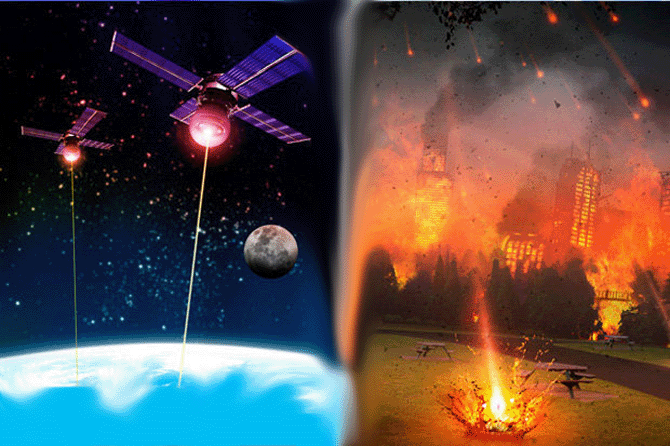 Space stations could launch NUCLEAR attacks on Earth in 30 years – shock MoD report
SPACE stations could launch nuclear attacks on Earth in 30 years, the Ministry of Defence has warned in a shock report on the growing threat of a nuclear space race. The threat of a nuclear space race comes as countries look to expand their arsenal of weapons outside the earths atmosphere.
A report called the ‘Future Starts Today’ outlines the “critical point” the world has reached in relation to warfare.
Defence Secretary Gavin Williamson acknowledged the “dangerous” state of the world.
He said: “This report makes clear that we are living in a world becoming rapidly more dangerous, with intensifying challenges from state aggressors who flout the rules, terrorists who want to harm our way of life and the technological race with our adversaries…………
As the advancement of technology increases the prospect of military space bases has come to fruition with nuclear warheads circling earth.
These weapons would have “global reach” and be unseen by those on Earth.
The destructive power of a nuclear electromagnetic pulse weapon – detonated in the air rather than on the ground – will be developed to knock out whole cities and even countries.
Electromagnetic pulses have the ability to shut down anything running on electrical power therefore, lights, communications, heating systems would all stop working in an instant.https://www.express.co.uk/news/world/1034575/space-stations-nuclear-attack-earth-ministry-of-defence-report
Future of Bradwell nuclear project in doubt – Chinese company might withdraw
BANNG 22nd Oct 2018 , BANNG has long maintained that there is no need for a new nuclear powerstation at Bradwell. The costs, in terms of the long-lasting, physical
damage to the tranquil and vulnerable Blackwater estuary, of the finances,
of the potential for terrorist attacks and of the uncertainties around
investment by a potentially hostile state, are too high.
Nuclear power is an old-fashioned technology and given the continuing success and decreases
in the costs of renewables and storage, there will be no need for it by the
time Bradwell B could be in operation.
in the costs of renewables and storage, there will be no need for it by the
time Bradwell B could be in operation.
In its partnership with EDF, CGN, a Chinese state-owned nuclear company, is the majority two-thirds stakeholder
in the Bradwell B project. However, it seems now that CGN is wavering. In
the Financial Times of 18 September it was reported that CGN ‘has
admitted that political sensitivities could prompt it to give up the chance
to operate a new atomic power plant in the UK’.
in the Bradwell B project. However, it seems now that CGN is wavering. In
the Financial Times of 18 September it was reported that CGN ‘has
admitted that political sensitivities could prompt it to give up the chance
to operate a new atomic power plant in the UK’.
The Chinese withdrawal, should it come, would appear to reflect widespread concerns about the
security issues surrounding Chinese investment into a highly sensitive part
of the UK’s national infrastructure. In the Financial Times, Zheng
Dongshan, Chief Executive of CGN’s UK subsidiary, is reported as
acknowledging that it would take time for CGN ‘to show the public, the
government they can trust us’. Andy Blowers, Chair of BANNG, said: ‘The
project may be doomed anyway as the Bradwell B site is totally unsuitable
and is opposed by communities all around the Blackwater estuary.’
https://www.banng.info/news/is-bradwell-b-going-down-the-drain/
security issues surrounding Chinese investment into a highly sensitive part
of the UK’s national infrastructure. In the Financial Times, Zheng
Dongshan, Chief Executive of CGN’s UK subsidiary, is reported as
acknowledging that it would take time for CGN ‘to show the public, the
government they can trust us’. Andy Blowers, Chair of BANNG, said: ‘The
project may be doomed anyway as the Bradwell B site is totally unsuitable
and is opposed by communities all around the Blackwater estuary.’
https://www.banng.info/news/is-bradwell-b-going-down-the-drain/
Gorbachev, experts baffled by U.S. withdrawal from nuclear weapons deal
Euro News, By Alexander Smith with NBC News World News• 22/10/2018
A piece of reckless brinkmanship that could spark an arms race between NATO and Russia in Europe, or a hardball negotiating strategy that might push Moscow into keeping its longstanding promises on nuclear weapons?President Donald Trump was widely criticized this weekend when he announced his intention to scrap a landmark nuclear weapons agreement signed by President Ronald Reagan and Soviet leader Mikhail Gorbachev in 1987. The deal was designed to keep ground-based nuclear missiles out of Europe.Trump said that Russia has for years been violating the Intermediate-range Nuclear Forces Treaty, or INF.He’s not the first president to make this allegation. President Barack Obama said much the same.Many experts agree that Moscow continues to break the rules and flout the pact, but despite that some say ripping up the agreement is a bad idea.
These skeptics range from Sen. Rand Paul, R-Ky., to Gorbachev himself, with the Nobel laureate telling Russia’s Interfax news agency Sunday that Trump’s decision was “very strange” and not the work of “a great mind.”The White House’s decision to pull out, so this argument goes, will only allow Moscow to continue its current actions without having to maintain the pretense of compliance. Meanwhile, Russia, which also accuses the U.S. of violating the agreement, can point the finger at the U.S. as the one responsible for the INF’s failure.The 1987 agreement bans ground-based nuclear and conventional missiles that can strike between 300 miles to 3,400 miles.”One concern is that in the medium-term there may be the temptation to return intermediate-range missiles, potentially including nuclear weapons, to Europe,” said Karl Dewey, an analyst at Jane’s by IHS Markit, an open-source defense intelligence provider based in London…….. https://www.euronews.com/2018/10/22/will-trump-s-withdrawal-nuclear-treaty-spark-arms-race-or-n922731
5 things to know about threatened US-Russia nuclear weapons deal
 https://www.aljazeera.com/news/2018/10/5-threatened-russia-nuclear-weapons-deal-181021140208661.html https://www.aljazeera.com/news/2018/10/5-threatened-russia-nuclear-weapons-deal-181021140208661.html
Trump wants to withdraw from the INF treaty that was signed over three decades ago by the US and Soviet leaders. US President Donald Trump has said Washington will withdraw from a 31-year-old nuclear weaponsagreement with Moscow, accusing Russia of violating the treaty and demanding the inclusion of China. Here are five things to know about the Intermediate-Range Nuclear Forces Treaty (also known as the INF treaty: 1. How did the agreement come about? The INF treaty was signed in December 1987 by the then-US President Ronald Reagan and Soviet leader Mikhail Gorbachev. It resolved a crisis that had begun in the 1980s with the deployment of Soviet SS-20 nuclear-tipped, intermediate-range ballistic missiles targeting Western capitals. By signing the agreement, Washington and Moscow swore off from possessing, producing or test-flying a ground-launched cruise missile with a range between 500 and 5,500km. 2. Why is the US withdrawing from the treaty?US officials believe Moscow is developing and has deployed a ground-launched system in breach of the INF treaty that could allow it to launch a nuclear strike on Europe at short notice. Russia has consistently denied any such violation. Trump said on Saturday that it was only fair for US to develop the weapons since Russia and China (not a signatory of the treaty) were already doing it. 3. How does Russia feel about the INF deal?Moscow has long been accusing the US of violating the nuclear agreement, pointing to a NATO missile shield in Romania that could launch nuclear missiles at any time. In 2007, Russia even threatened to withdraw from the INF treaty. On Sunday, an unnamed Russian foreign ministry official told state news agencies that Washington has been “deliberately and step-by-step destroying the basis for the agreement” for many years. 4. What can the US withdrawal from the nuclear treaty lead to?The move will end the prospect of the renewal of the New Start agreement between Moscow and Washington which is set to expire in 2021, as the INF treaty is its backbone. Signed in 2010, New Start requires both nations to cut their deployed strategic nuclear warheads to no more than 1,550. Russian Senator Alexei Pushkov wrote on Twitter that the move was “the second powerful blow against the whole system of strategic stability in the world” after Washington’s 2001 withdrawal from the Anti-Ballistic Missile treaty. Gorbachev, the co-signatory of the INF treaty, said on Sunday it would be a mistake for Washington to quit the deal, and that it would undermine work he and US counterparts did to end the arms race. 5. Can the nuclear deal be saved? John Bolton, Trump’s national security adviser, is scheduled to meet Russian leaders, including Foreign Minister Sergey Lavrov and Security Council Secretary Nikolai Patrushev, this week in Moscow. The trip is likely to show whether there is a chance for the deal to be saved. Trump’s announcement on Saturday suggested that he hoped for the re-negotiation of the terms. Last week, The Guardian reported Bolton, a long-standing opponent of arms control treaties, was pushing for the US withdrawal over alleged Russian violations. US Defence Secretary James Mattis has previously suggested that a Trump administration proposal to add a sea-launched cruise missile to Washington’s nuclear arsenal could provide the US with leverage to try to persuade Russia to come back in line on the arms treaty.
|
|
UK govt incentives for nuclear, coal gas – work against renewable energy development
 Dave Toke’s Blog 20th Oct 2018 UK Renewable trade associations are fighting for the survival of the renewable industry against an onslaught led by the Treasury. If the Treasury gets its way almost all future development for renewable energy in the UK will be stopped.
Continued incentives and tax breaks for nuclear power, shale gas and conventional power stations will, however, remain in place.
The Treasury is pushing for:
a) An end to the policy of issuing CfDs as part of the scheduled review of electricity market reform which takes place next year.
b) The ending of all incentives to solar pv, including for solar power exported to the electricity distribution system.
c) The ending of the carbon price floor which makes fossil fuel more expensive and non-fossil sources relatively cheaper.
http://realfeed-intariffs.blogspot.com/2018/10/renewables-lobbies-fight-to-stave-off.html
http://realfeed-intariffs.blogspot.com/2018/10/renewables-lobbies-fight-to-stave-off.html
 |
ReplyForward
|
Nuclear Security UK – bolstering defences against a terror attack.
 Telegraph 20th Oct 2018 Counter-terrorism officers are to be equipped with a new fleet of high-tech
nuclear and radiological detection vehicles to trace weapons-grade materials in the UK. The Home Office is planning to buy up to 10 mobile gamma and neutron radiation detection systems to bolster its defences against them being used in a terror attack.
Ports and airports across the country already have screening systems in place to spot anyone smuggling nuclear or radiological materials into the UK as part of the Border Force’s Cyclamen monitoring system. Similar equipment was used at the Olympic Park during the 2012 Summer Olympics in London.
https://www.telegraph.co.uk/news/2018/10/20/nuclear-counter-terror-detection-systems-bolstered-high-tech/
US nuclear missiles in Italy, as well as their bombs?
VOLTAIRE NETWORK | ROME (ITALY) | 19 OCTOBER 2018 he B61-12, the new US nuclear bomb which replaces the B-61 deployed in Italy and other European countries, will begin production in less than a year. The announcement was made officially by the National Nuclear Security Administration (NNSA). It reveals that the revision of the final project has now been completed with success, and the qualification stage will begin this month at the Pantex Plant in Texas. Production will be authorised to begin in September 2019.
In March 2020, the first unit of production will begin fabricating a series of 500 bombs. As from that time, in other words in about a year and a half, the United States will begin the anti-Russian deployment in Italy, Germany, Belgium, Holland and probably certain other European countries, of the first nuclear bomb in their arsenal with a precision guidance system. The B61-12 is designed with penetrating capacity, built to explode underground in order to destroy bunkers housing command centres.
Since Italy and the other countries, in violation of the Non-Proliferation Treaty, are offering the USA the bases, the pilots and the aircraft for the deployment of the B61-12, Europe will soon be exposed to a greater risk as the front line of the developing nuclear confrontation with Russia.
An even more dangerous situation appears at the same moment – the return of the Euromissiles, meaning the nuclear missiles which are similar to those deployed in Europe in the 1980’s by the USA, with the official aim of defending against Soviet missiles. This category of ground-based nuclear missiles of intermediate range (between 500 and 5,500 km) were eliminated with the INF Treaty of 1987. But in 2014, the Obama administration accused Russia of having experimented with a cruise missile (# 9M729) whose category was forbidden by the Treaty. Moscow denied that the missile violated the INF Treaty and, in turn, accused Washington of having installed in Poland and Romania launch ramps for interceptor missiles (elements of the « shield »), which could be used to launch cruise missiles bearing nuclear warheads.
The accusation aimed by Washington at Moscow, which is not supported by any evidence, enabled the USA to launch a plan aimed at once again deploying in Europe ground-based intermediate-range nuclear missiles. The Obama administration had already announced in 2015 that « faced with the violation of the INF Treaty by Russia, the United States are considering the deployment of ground-based missiles in Europe ». This plan was confirmed by the Trump administration – in fiscal year 2018, Congress authorised the financing of a « programme of research and development for a cruise missile which could be launched from a mobile road base ».
The plan is supported by the European allies of NATO. The recent North-Atlantic Council, at the level of Europe’s Defence Ministers, which was attended for Italy by Elisabetta Trenta (M5S), declared that the « INF Treaty is in danger because of the actions of Russia », which it accused of deploying « a disturbing missile system which constitutes a serious risk for our security ». Hence the necessity that « NATO must maintain nuclear forces which are stable, trust-worthy and efficient » (which explains why the members of the Alliance rejected en bloc the United Nations Treaty for the prohibition of nuclear weapons).
So the grounds are being laid for a European deployment, on the borders of Russian territory, of ground-based intermediate-range US nuclear missiles. It’s as if Russia were deploying in Mexico nuclear missiles pointed at the United States. Manlio Dinucci
Translation
Pete Kimberley
Source
Il Manifesto (Italy)
France’s nuclear regulator fears that the Flamanville nuclear reactor has other problems as well as defective welds
Le Monde 18th Oct 2018 The Nuclear Safety Authority (ASN) fears that the site of the EPR nuclear
reactor in Flamanville (Channel) has other problems “very difficult” , in
addition to that of welds, said Thursday, October 18 the head of the EPR
pole of the ASN of Normandy. “I do not hide from you that ( … ) we can
imagine that there may indeed be other difficulties elsewhere.
We are looking at whether the welds will remain, or not, the only very difficult
topic ” of this project, said Eric Zelnio at a meeting of the Local
Information Committee (CLI) on the Flamanville nuclear site. This is the
reason why the ASN “is about to formulate to EDF a request to extend to
other equipment on the reactor” the requested quality review of the weld
problem.
topic ” of this project, said Eric Zelnio at a meeting of the Local
Information Committee (CLI) on the Flamanville nuclear site. This is the
reason why the ASN “is about to formulate to EDF a request to extend to
other equipment on the reactor” the requested quality review of the weld
problem.
The nuclear policeman also asks the group to “work on the kinetics
of these dysfunctions, known for some for some years, ” continued Zelnio.
“We have the feeling that there has been a significant lapse of time
between detection, reaction and information,” added the pole leader, also
regretting “the fact that some operations were not suspended” in the wake
of these detections. https://www.lemonde.fr/economie/article/2018/10/18/epr-de-flamanville-le-gendarme-du-nucleaire-exprime-de-nouvelles-inquietudes_5371459_3234.html
of these dysfunctions, known for some for some years, ” continued Zelnio.
“We have the feeling that there has been a significant lapse of time
between detection, reaction and information,” added the pole leader, also
regretting “the fact that some operations were not suspended” in the wake
of these detections. https://www.lemonde.fr/economie/article/2018/10/18/epr-de-flamanville-le-gendarme-du-nucleaire-exprime-de-nouvelles-inquietudes_5371459_3234.html
Wales Labour government’s poor decisions, favouring nuclear project at the expense of citizenz’ well-being
Wales Online 19th Oct 2018 David Lowry: The article by Westminster Energy Minister Claire Perry
to mark Green GB week is hypocritical, especially as in the same week
fracking was allowed to restart in Lancashire. She talks about windfarms
and solar farms in Anglesey, but makes no mention of the massively
expensive (£20 billion-plus) new nuclear plant on Ynys Mon at Wylfa
Newydd, which the Westminster government’s new financing plans mean
electricity bill-payers in Wales will have to subsidise in advance.
Also, in south Wales, people living near the coastline from Newport to Swansea
have had their health put in danger by the dumping of radioactively
contaminated mud from just off the Hinkley Point nuclear plant in Somerset.
The mud has been dredged to make channels for barges bringing equipment and
building materials to build the new £25bn reactor at Hinkley C. I find it
extraordinary that such a dangerous policy has been permitted by the Welsh
Labour Government, to assist the economically illiterate nuclear policies
of the Conservative Westminster government, whose policies are almost
entirely economically hostile to Wales. As a Welsh person from Neath
watching from afar, these absurd energy decisions are incomprehensible.
https://www.walesonline.co.uk/news/local-news/western-mail-letters-friday-october-15300307
A plan to get Nuclear-Weapons Treaties happening again
|
How To Get Nuclear-Weapons Treaties Back on Track, Defense one BY DARYL G. KIMBALL, EXECUTIVE DIRECTOR, ARMS CONTROL ASSOCIATION, 16 Oct 18, Back in March, President Trump told reporters at the White House in March that he wanted to meet with Putin in large part “to discuss the arms race, which is getting out of control” and has characterized the costly nuclear weapons upgrade programs being pursued by each side as “a very, very bad policy.”Three months have elapsed since the July summit between Trump and Putin in Helsinki – after which the U.S. president said, “Perhaps the most important issue we discussed at our meeting…was the reduction of nuclear weapons throughout the world.” But since the summit, there has been no apparent progress. The long-running dispute over Russia’s violation of the 1987 Intermediate-Range Nuclear Forces Treaty remains. The two sides have not begun to discuss the future of the successful 2010 New START agreement, which limits each side to 1,550 deployed strategic warheads. That treaty will expire on Feb. 5, 2021, unless Trump and Putin agree to extend it. Without these treaties in place, the door will be opened to an unconstrained nuclear arms race. The already abysmal U.S.-Russian relationship will become even more complicated and dangerous. Next week, National Security Advisor John Bolton will travel to Moscow to meet with his counterpart in the Kremlin, Nikolai Patrushev. It is past time for both sides to get serious about resolving the INF compliance crisis, to agree to discuss the extension of New START, and to resume regular talks on “strategic stability.” INF Woes: U.S. and Russian officials both say they support the 1987 INF Treaty, which led to the elimination all U.S. and Soviet ground-launched ballistic and cruise missiles with ranges between 500 and 5,500 kilometers. But the treaty is now at risk because Russia has tested and deployed a prohibited ground-launched cruise missile: the 9M729. Moscow, for its part, alleges, far less credibly, that Washington is deploying missile defense systems in Europe that could be used to launch offensive missiles. Contrary to what some observers may want to believe, the arms control community has been working hard to raise the alarm belland put advance serious options to put out the INF fire. Since Russia’s INF violation became known in early 2014, the Arms Control Association has steadfastly reported on and published expert analyses on the problem in our monthly journal Arms Control Today. We have convened U.S. and European and Russian experts from inside and outside government on the INFissue, and met with U.S. lawmakers and staff to exchange views on the problem. We have confronted senior Russian officials in private consultations Washington and in Moscow and, along with a number of experts and former U.S. officials, we have put forward options for resolving the dispute. ……… The Future of New START: New START remains one of the few bright spots in an otherwise broken U.S.-Russian relationship. Ratified in 2011, the Treaty limits the number of deployed strategic warheads to a maximum of 1,550 on each side, a target each met earlier this year, and which is far below the tens of thousands we pointed at each other during the Cold War. The Treaty imposes important bounds on strategic nuclear competition as long as it is in force. As allowed in Article XIV of the treaty, it can be extended by up to five years by agreement by the two Presidents, without requiring further action by the Congress or the Duma. Before and after the Helsinki summit, Russian officials have reiterated their interest in talks designed to extend the treaty. But after his first post-Helsinki meeting with Patrushev, in Geneva on Aug. 23, Bolton said the administration remains in the “early stages” of an interagency review about whether to extend, replace, or jettison New START or to pursue a different type of approach. Unfortunately, some elements in the Trump administration want to hold New START hostage until Russia acknowledges its INFviolation—an extremely unlikely possibility. Sacrificing New START, given the transparency it provides, would only create a bigger nuclear headache and do nothing to bring Russia back into compliance with INF. Key Senate Democrats have called for an extension of New START so long as Russia remains in compliance with it, and several leading Senate Republicans have also voiced their support for New START. U.S. military leaders continue to see value in New START; for example, Gen. John Hyten, commander of U.S. Strategic Command, told Congress last March that “bilateral, verifiable arms control agreements are essential to our ability to provide an effective deterrent.” If New START is not extended, there will be no legally binding limits on the world’s two largest strategic arsenals for the first time since 1972. In its absence, each side could quickly increase the number of warheads deployed on their strategic delivery systems. Unconstrained U.S.-Russian nuclear competition—in both numbers and technology—could spark an arms race as dangerous as that of the 1950s and 1960s. That would add scores of billions in additional costs to an already unrealistic U.S.nuclear upgrade plan. An extension of New START, on the other hand, would buy time for the two sides to discuss agreements on new strategic systems, including the ones under development by Russia, and provide a solid baseline for talks on further reductions of each side’s strategic and tactical nuclear stockpiles……..https://www.defenseone.com/ideas/2018/10/how-get-nuclear-weapons-treaties-back-track/152095/ |
|
EDF says that Hinkley Point C new nuclear plant could be built from 2021 (with UK govt funding)
|
Britain’s next new nuclear plant to be built from 2021, says EDF boss, Telegraph UK, 17 Oct 18, The construction of EDF Energy’s follow up project to the Hinkley Point C new nuclear plant could begin within the next three years, according to the group’s boss.
The UK arm of the French state-owned nuclear giant is yet to agree a fresh financing framework for the Sizewell C nuclear in Suffolk after repeated criticism of the Hinkley Point C deal. But Simone Rossi, the company’s new chief executive, said the group expects to be able start construction at the end of 2021 to take advantage of its experience building the Hinkley project in Somerset. The UK’s new nuclear drive has been dogged by criticism due to high costs, while renewable energy costs have fallen faster than expected. The National Infrastructure Commission (NIC) warned the government earlier this year to slow plans for a new nuclear investment boom in favour of cheaper renewable power. The Government had originally planned support the construction of as many as six new plants to help cut carbon emissions from the energy sector – but developers have struggled to finance the plans. The Government is expected to abandon the contract offered to EDF Energy for Hinkley, which put bill payers on the hook to guarantee the developer a price of £92.50 for every megawatt-hour of energy produced. Under the new proposals, known as a regulated asset base (RAB) model, EDF Energy could be in line for similar terms as those offered to companies building major multi-billion pound water infrastructure developments. The Telegraph revealed earlier this year that Dalmore Capital, one of the backers of the Thames Tideway Tunnel, is in talks to help finance the £16bn Sizewell nuclear plant……….https://www.telegraph.co.uk/business/2018/10/16/britains-next-new-nuclear-plant-built-2021-says-edf-boss/
|
|
Russia’s nuclear torpedoes trapped5,000 Feet Below the Waves on a Dead Submarine
Russia Lost Two Nuclear Weapons. Why? They are Trapped 5,000 Feet Below the Waves on a Dead Submarine.
Komsomolets sank in 5,250 feet of water, complete with its nuclear reactor and two nuclear-armed Shkval torpedoes. Between 1989 and 1998 seven expeditions were carried out to secure the reactor against radioactive release and seal the torpedo tubes, omsomolets sank in 5,250 feet of water, complete with its nuclear reactor and two nuclear-armed Shkval torpedoes. Between 1989 and 1998 seven expeditions were carried out to secure the reactor against radioactive release and seal the torpedo tubes. Russian sources allege that during these visits, evidence of “unauthorized visits to the sunken submarine by foreign agents” were discovered.
In the mid-1980s, the Soviet Union constructed a super submarine unlike any other. Fast and capable of astounding depths for a combat submersible, the submarine Komsomoletswas introduced in 1984, heralded as a new direction for the Soviet Navy.
Russia to build $ 11 billion nuclear powerv station in Uzbekistan
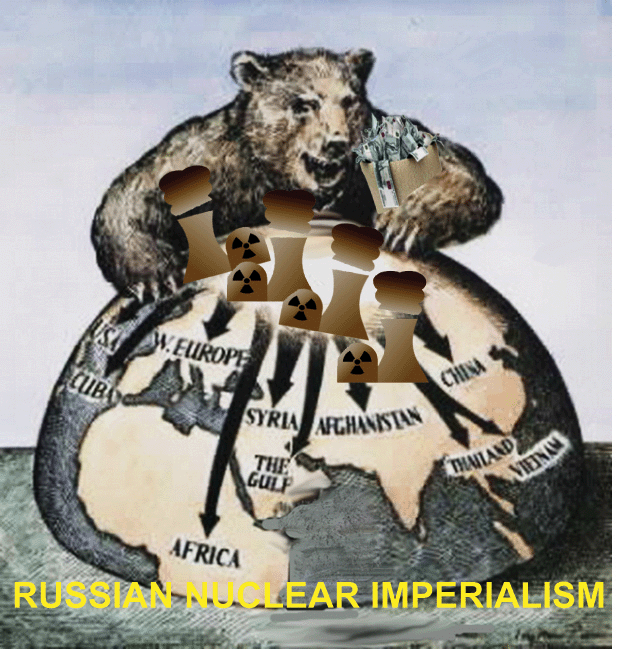 Cost of building nuclear power plant in Uzbekistan to be about $11B, Azer News, Cost of building nuclear power plant in Uzbekistan to be about $11B, Azer News,
17 October 2018 By Trend
The estimated cost of construction of nuclear power plant of Russian design in Uzbekistan will be about $ 11 billion, the launch of the first power unit has been planned for 2028, the Aide to the President of the Russian Federation Yury Ushakov said, Interfax reported. “It is estimated that the cost of the project will be somewhere around $11 billion,” Ushakov told reporters in Moscow Oct. 16. Ushakov said that it is believed that the first power unit will presumably be launched in 2028. Ushakov also said that during the state visit to Uzbekistan on October 18-19, President Vladimir Putin will take part in the ceremony of launching a project to build a nuclear power plant of Russian design in Uzbekistan……… Russia’s share in the total foreign trade of Uzbekistan exceeds 18 percent – this is second place after China,” Ushakov said. “According to the results of the current year, there are all opportunities to reach the trade turnover of $5 billion.” At the same time, speaking about the international topics planned for discussion at the summit in Uzbekistan, Ushakov singled out Afghanistan, “as well as building up cooperation between Russia and Uzbekistan in the framework of the SCO (Shanghai Cooperation Organization).” https://www.azernews.az/region/139290.html |
1 This Month
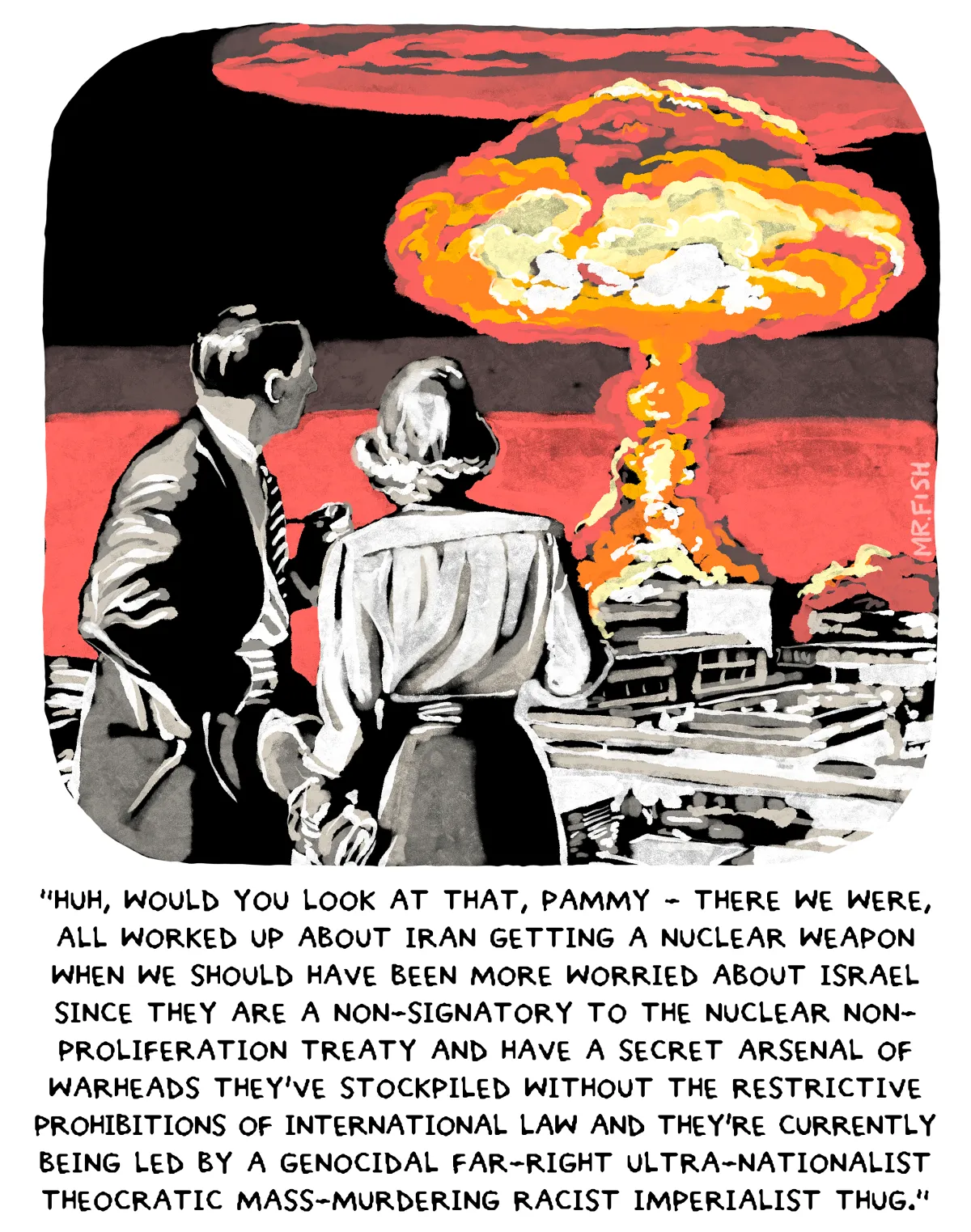
1 June Webinar – The High Cost of Nuclear Power – Register
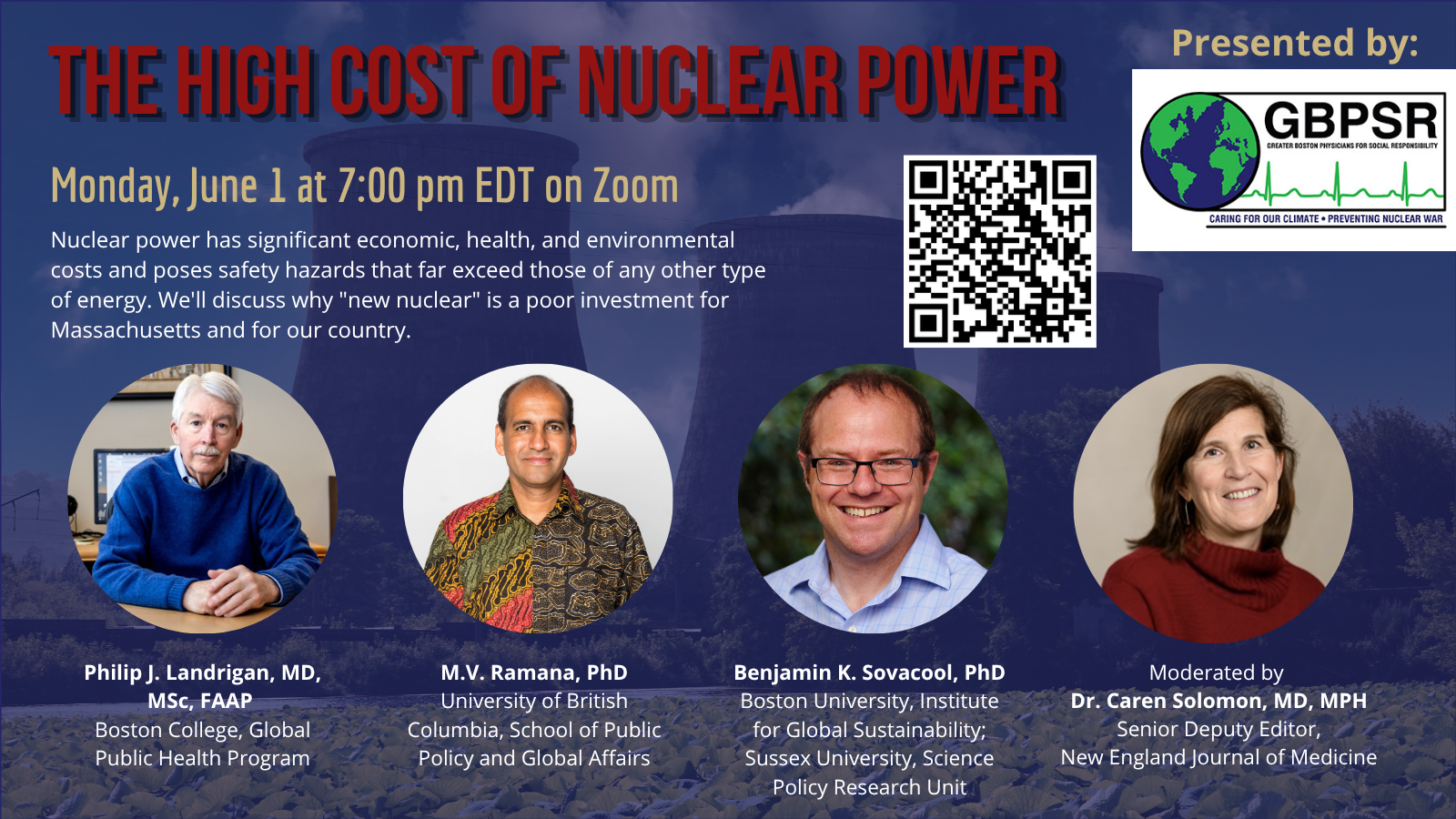

of the week– Nuclear Reactor Information Task Force
To see nuclear-related stories in greater depth and intensity – go to https://nuclearinformation.wordpress.com
-
Archives
- May 2026 (262)
- April 2026 (356)
- March 2026 (251)
- February 2026 (268)
- January 2026 (308)
- December 2025 (358)
- November 2025 (359)
- October 2025 (376)
- September 2025 (257)
- August 2025 (319)
- July 2025 (230)
- June 2025 (348)
-
Categories
- 1
- 1 NUCLEAR ISSUES
- business and costs
- climate change
- culture and arts
- ENERGY
- environment
- health
- history
- indigenous issues
- Legal
- marketing of nuclear
- media
- opposition to nuclear
- PERSONAL STORIES
- politics
- politics international
- Religion and ethics
- safety
- secrets,lies and civil liberties
- spinbuster
- technology
- Uranium
- wastes
- weapons and war
- Women
- 2 WORLD
- ACTION
- AFRICA
- Atrocities
- AUSTRALIA
- Christina's notes
- Christina's themes
- culture and arts
- Events
- Fuk 2022
- Fuk 2023
- Fukushima 2017
- Fukushima 2018
- fukushima 2019
- Fukushima 2020
- Fukushima 2021
- general
- global warming
- Humour (God we need it)
- Nuclear
- RARE EARTHS
- Reference
- resources – print
- Resources -audiovicual
- Weekly Newsletter
- World
- World Nuclear
- YouTube
-
RSS
Entries RSS
Comments RSS
 nuclear-news