Hackers accessed confidential documents about nuclear plants

 Hackers obtain nuclear power plant plans in France, DW, 2 Nov 18 Hackers have accessed confidential documents about nuclear plants and prisons in a cyberattack on a French firm, media reported. Some of the data was found on a rented server in Germany, according to the reports.
Thousands of sensitive documents pertaining to nuclear power plants, prisons and tram networks have been stolen from the servers of a French company in a cyberattack, German and French media have reported Friday.
The data illegally accessed from the French company Ingerop back in June amounted to more than 65 gigabytes, according to reports by German public broadcaster NDR, the daily Süddeutsche Zeitung and French newspaper Le Monde.
A spokeswoman from Ingerop quoted by NDR said more than 11,000 files from a dozen projects were obtained. They were said to include plans showing the planned locations of video cameras for a French high-security prison, documents about a planned nuclear-waste dump in northeastern France and personal information on more than a thousand Ingerop workers.
Some of the documents were connected with the Fessenheim nuclear plant on the border to Germany, reports said………https://www.dw.com/en/hackers-obtain-nuclear-power-plant-plans-in-france/a-46126878
UK’s Sellafield nuclear decommisioning ‘a misuse of public funds’
 CORE 31st Oct 2018 The findings of the spending watchdog’s latest report on the status of
Sellafield’s clean-up projects and costs makes yet more dreary reading
for the UK taxpayer – the costs described as ‘a misuse of public
funds’ by a spokesman for the report’s authors the Government’s
Public Accounts Committee (PAC).
criticism of the way the Nuclear Decommissioning Authority (NDA) is
managing many of the major projects needed to clean up Sellafield. The site
currently receives some £2Bn of public money every year and, over the next
100+ years of decommissioning is expected to cost a total of £91Bn.
raises the spectre of the UK’s plutonium stockpile (40% of the world’s
global stock) and the latest thinking by Government on its long-term
plutonium management options. [An NDA FoI response to CORE (29.10.18)
suggests an update on its plutonium plans is currently being finalised by
the NDA and could be published in the next month or so]
http://corecumbria.co.uk/briefings/spendthrift-sellafield-wayward-governance-and-the-latest-plutonium-view/?doing_wp_cron=1541014253.9727599620819091796875
French hypocrisy in decision to cancel decree of closure of Fessenheim NPP
Council of State, Thursday, October 25, to cancel the decree of closure of
the nuclear power plant Fessenheim reveals, according to the speaker of
this forum, the hypocrisy of an energy system on which the political power
has no hold.
https://reporterre.net/Fessenheim-est-le-symbole-de-l-hypocrisie-energetique-francaise
€45 billion renewables investment opportunity in France, with its new energy policy
The tide is turning against nuclear power, following the IPCC Report
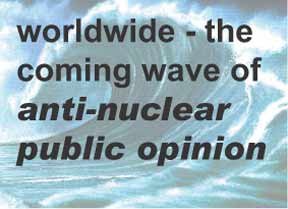 NuClear News, Nov 18 Tide Turns Against NuClear News, Nov 18 Tide Turns Against  Nuclear http://www.no2nuclearpower.org.uk/wp/wp-content/uploads/2018/10/NuClearNewsNo112.pdf Nuclear http://www.no2nuclearpower.org.uk/wp/wp-content/uploads/2018/10/NuClearNewsNo112.pdf
Following the recent National Infrastructure Assessment which advised the Government not to build more than two new nuclear stations (about 6GW) (1) and the Committee on Climate Change (CCC) statement that “If new nuclear projects were not to come forward, it is likely that renewables would be able to be deployed on shorter timescales and at lower cost,” (2) we have now seen the International Panel on Climate Change (IPCC) report making some pretty disparaging remarks about nuclear power. Perhaps the tide is finally turning. The IPCC latest findings tell a nightmarish tale—one much worse than in previous reports— surveying the climate-change impacts we’re already experiencing with one degree of warming, and the severity of the impacts to come once we surpass 1.5 degrees of warming. Ten million more people would be exposed to permanent inundation, and several hundred million more to “climate-related risks and susceptible to poverty.” Malaria and dengue fever will be more widespread, and crops like maize, rice, and wheat will have smaller and smaller yields— particularly in sub-Saharan Africa, Southeast Asia, and Central and South America. Security and economic growth will be that much more imperilled. “Robust scientific literature now shows that there are significant differences between 1.5 and 2 degrees,” Adelle Thomas, a geographer from the Bahamas and also one of the report’s lead authors, told the New Yorker. “The scientific consensus is really strong. It’s not just a political slogan: ‘1.5 to stay alive.’ It’s true.” (3) But the IPCC report points out that “the transition from the energy system that would be needed to limit global warming to 1.5 ° C is underway in many sectors and regions of the world. The technical, social, economic and political feasibility of solar energy, wind energy, and electricity storage technologies has improved considerably in recent years, while nuclear energy and Carbon dioxide (CCS) storage in the electricity sector did not show the same improvements.”
Nuclear: too weak, too slow, too expensive and too risky The IPCC report continues saying the timeframe between the date of decision and the commissioning of nuclear power plants is between 10 and 19 years, and current deployment capacity is slowed by public concern about the risk of accidents and problems with nuclear waste. In addition, the IPCC notes, that “the costs of nuclear energy have increased over time in some developed nations, mainly because of the prevailing conditions, where increased investment risks in high-capital-intensive technologies have become important.” The theoretical benefits that nuclear energy could bring in the fight against climate change are therefore far too weak, too slow, too expensive and too risky. While the IPCC report requires us to quickly reduce emissions, it is not possible to choose the slowest and most expensive electric generation technology to deploy, as well as the dirtiest and riskiest. Nuclear power is disqualified from the race of the climatic fight. (4)
The IPCC report also says: “In spite of the industry’s overall safety track record, a non-negligible risk for accidents in nuclear power plants and waste treatment facilities remains. The long-term storage of nuclear waste is a politically fraught subject, with no large-scale long-term storage operational worldwide. Negative impacts from upsteam uranium mining and milling are comparable to those of coal, hence replacing fossil fuel combustion by nuclear power would be neutral in that aspect. Increased occurrence of childhood leukaemia in populations living within 5 No2NuclearPower nuClear news No.112, November 2018 3 km of nuclear power plants was identified by some studies, even though a direct causal relation to ionizing radiation could not be established and other studies could not confirm any correlation”.
An April 2018 report from the International Renewable Energy Agency (IRENA) shows, renewable energy and energy efficiency can, in combination, provide over 90% of the necessary energy-related CO2 emission reductions the world needs. Furthermore, this can happen using technologies that are safe, reliable, affordable and widely available. While different paths can mitigate climate change, renewables and energy efficiency provide the optimal pathway to deliver most of the emission cuts needed at the necessary speed. But renewable energy will need to be scaled up at least six times faster for the world to meet the decarbonisation and climate mitigation goals set out in the Paris Agreement.
The total share of renewable energy must rise from around 18% of total final energy consumption (in 2015) to around two-thirds by 2050. Over the same period, the share of renewables in the power sector would increase from around one-quarter to 85%, mostly through growth in solar and wind power generation. The energy intensity of the global economy will have to fall by about two-thirds, lowering energy demand in 2050 to slightly less than 2015 levels. This is achievable, despite significant population and economic growth, by substantially improving energy efficiency, the report finds. (6)
So what is the UK Government doing? On 15th October the UK Government wrote a joint letter with the Welsh and Scottish governments to the Committee on Climate Change to seek updated advice on meeting the 1.5oC target. (7) Specifically, the governments asked the CCC to report on the date by which they should look to set a net zero target, as well as the range which UK greenhouse gas emissions reductions would need to be within, against 1990 levels, by 2050 as an appropriate contribution to the global goal of limiting global warming to “well below” 2oC above pre-industrial levels. It has also asked for the corresponding emissions range for a 1.5oC target. But the letter said carbon budgets already covering the period 2018-2032 were out of scope of the request.
The Intergovernmental Panel on Climate Change (IPCC) warned that limiting global warming to 1.5oC by the end of the century would require “rapid, far-reaching and unprecedented changes in all aspects of society”, and that the world is currently heading for a 3oC rise in temperature. (8) The exclusion of the period from 2018 – 2032 led to protests from green groups and the opposition. Labour’s Energy Spokesperson, Alan Whitehead, called on the government to strengthen its review of the UK’s long term carbon targets and allow the Committee on Climate Change (CCC) to assess whether existing near-term carbon targets are compatible with keeping temperature increases below 1.5C. CCC chief executive Chris Stark admitted he was surprised the letter explicitly stated that “carbon budgets already set in legislation (Carbon Budgets 3-5 covering 2018-2032) are out of scope of this request”. (9 The Scottish Government has now written separately to the CCC changing its position, and saying the previous request “should not therefore prevent you from advising on all of Scotland’s targets.” (10) No2NuclearPower nuClear news No.112, November 2018 4 Devastating Critique of UK policies on renewables Meanwhile the BBC’s File on Four programme aired an unprecedented critique of the UK government’s undermining of renewables. The government says it is committed to green energy – its recent ‘Clean Growth Strategy’ claims plans are in place to cut greenhouse gases by more than half of 1990 levels by 2030. And yet, research shows investment in green energy fell 56% last year, the biggest drop of any country – with policy change, subsidy cuts and ‘stop-start’ support from ministers being blamed. So, do Britain’s plans for a greener future add up? File on 4 takes to the road to find out. On a trip around the North East of England, Simon Cox asks why, when the offshore wind industry has grown, other cheap, renewable energies like onshore wind, solar power and now biofuels are struggling to survive. He examines whether changes in policy are hitting crucial investment, and if ambitious climate targets will really be met.
While offshore wind expands, it’s not the same story for onshore. Changes to planning laws mean it’s pretty impossible to build them in England and Wales. The CCC has warned of big gaps in the Government’s programme. We are going to need more onshore wind and solar to meet our targets. Gareth Miller of Cornwall Insight told the BBC that “to simply shut out the two undeniably cheapest technologies … from being built to their maximum capacity in the UK seems to be very, very strange indeed … There is a question of how serious the Government is when it says it wants to decarbonise the power sector at the lowest cost to the consumer in a world where they are currently shutting out the cheapest technologies to make that happen … I think we’ll see a significant slowdown if we haven’t already.”
In 2015 the tariff for generating solar electricity was slashed by two-thirds for homeowners and large solar farms. The domestic market has now gone back to the level it was at before the feedin tariff came in. A lot of very good companies have gone bust or shrunk. Next April the remaining tariff for exporting electricity to the grid will disappear – a further blow to investors in solar power – it will ruin the financial case for putting solar panels on your roof. It will be the final end of the domestic solar market in the UK. You are looking at thousands and thousands of job losses across the country. One recent survey found over 40% of UK solar installers are considering quitting the industry. To survive British companies have been forced to look overseas. Solar Century, for example, wouldn’t be able to survive if it was just reliant on the UK. Jeremy Leggett, founder of Solar Century says:
“If I needed any more persuading that we are dealing with hostile forces who basically over many years have taken every opportunity to set us back while promoting the cause of more expensive nuclear and more expensive shale gas then this is it … of all the things they have done to harm our industry over the years this is arguably the worst … the prize for the Government in a country desperate for jobs would have been to build a domestic industry – that is not going to happen because so many big British companies have been driven to bankruptcy.”
The opportunity to build a really healthy British solar industry has been lost. Dr Gem Woods from Imperial College says: “We now know that even what seemed like an impossibly stretching target of reducing our greenhouse gas emissions by 80% by 2050 is not going to be anything like good enough. And so we have to think very fast (and do very fast) about what sort of systems that we need to be deploying over the next 5, 10 and 20 years – not the next 50 years. At the moment we have locked ourselves into a set of processes that in my view are really delaying meaningful implementation of the types of technologies and systems that will allow us and our children to have any kind of meaningfully good future.”
|
Nuclear company AREVA rebranded itself (Orano, Framatome) – but legal troubles linger
 BFMTV 29th Oct 2018, Buyout of Uramin by Areva: the Paris Court of Appeal orders new
 indictments. In 2007, Areva, then led by Anne Lauvergeon, acquired this Canadian mining company for 1.8 billion euros. A financial fiasco on which justice leads several investigations.
The Paris Court of Appeal ordered further indictments including the former boss of the group.
Czech government might delay its nuclear power expansion plans
Reuters 29th Oct 2018 The Czech government may delay its decision for state-controlled utility
CEZ to build new reactors at its two nuclear power plants, Industry
Minister Marta Novakova was quoted as saying on Monday.
“The decision about building nuclear units can’t be done under pressure and we don’t
want to be put under pressure from suppliers or other entities,” Novakova
said in an interview published by Bloomberg. “The Finance Ministry is
also analyzing the risk of potential court disputes.” The project to
expand CEZ’s nuclear power plant fleet is the biggest investment ever
into Czech energy. CEZ operates two plants at Dukovany and Temelin that
together covered 38 percent of Czech energy needs last year.
https://uk.reuters.com/article/us-czech-nuclearpower/minister-czechs-may-delay-plan-to-boost-nuclear-power-capacity-bloomberg-idUSKCN1N31GF?rpc=401&
France’s people turning away from nuclear power
 French public opinion growing against nuclear power https://www.connexionfrance.com/French-news/French-public-
 opinion-is-growing-against-nuclear-power-as-awareness-of-environment-and-renewable-energy-growsThe French public is becoming less and less in favour of nuclear power, as awareness and concern for the environment grows, according to a new study.
The change in opinion has been attributed to the growth and improvement in renewable energy sources, and the rising awareness of the public towards the environment.
The safety of nuclear reactors has also been in question recently, after a spike in breakdowns, and more and more people living within 80 km of a central reactor.
Environmental campaigner Greenpeace, said: “We have gone from a world in which French society believed that nuclear was the only choice. The public thought it was bad, but a necessary evil. But now, with the rise in renewable energy, with sun and wind, we can bypass nuclear completely.”
Concern over the environmental impact of nuclear power has also played a role, it suggested.
The statement continued: “We are waking up to the fact that when we turn on a light or a toaster at home, we are producing radioactive waste that is going to remain on Earth for thousands of years. We are starting to ask ourselves if this is a clean source of energy.”
Despite this, however, the same poll found that just 28% of people would be willing to pay more for their energy to fix the nuclear problem.
Nuclear facilities in UK – perfect targets for terrorism
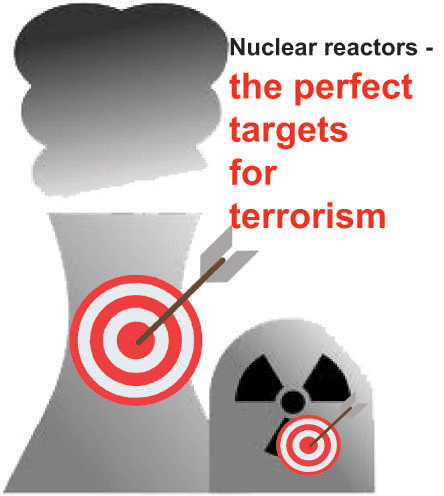 Nuclear facilities as potential targets in China and UK https://nuclearexhaust.wordpress.com/2018/10/27/nuclear-facilities-as-potential-targets-in-china-and-uk/ Nuclear facilities as potential targets in China and UK https://nuclearexhaust.wordpress.com/2018/10/27/nuclear-facilities-as-potential-targets-in-china-and-uk/
Nuclear reactors as potential targets in UK Wales |
|
New research on impacts of climate change in the Mediterranean
 First study on climate change impact in Mediterranean https://www.eurekalert.org/pub_releases/2018-10/cuoh-fso102618.php, The first-ever study synthesizing risks posed by climate and environmental changes in the Mediterranean, CITY UNIVERSITY OF HONG KONG As the Mediterranean Basin is experiencing the impact of climate change more than ever, an international network of scientists has worked together to synthesize the effects of climate change and environmental problems, as well as the incurred risks, in the region, to facilitate decision-making in addressing the issues.This first-ever synthesis of multiple environmental changes and risks affecting the livelihoods of people in the entire region has just been published in the latest issue of Nature Climate Change. First study on climate change impact in Mediterranean https://www.eurekalert.org/pub_releases/2018-10/cuoh-fso102618.php, The first-ever study synthesizing risks posed by climate and environmental changes in the Mediterranean, CITY UNIVERSITY OF HONG KONG As the Mediterranean Basin is experiencing the impact of climate change more than ever, an international network of scientists has worked together to synthesize the effects of climate change and environmental problems, as well as the incurred risks, in the region, to facilitate decision-making in addressing the issues.This first-ever synthesis of multiple environmental changes and risks affecting the livelihoods of people in the entire region has just been published in the latest issue of Nature Climate Change.
The rates of climate change observed in the Mediterranean Basin exceed the global trends for most variables. The impact has further exacerbated the existing environmental problems caused by land use changes such as urbanization and agricultural intensification, increasing pollution and declining biodiversity. Led by Professor Dr Wolfgang Cramer from the Mediterranean Institute for Biodiversity and Ecology, an international team of scientists has just published a review article in Nature Climate Change to address the current and future risks related to these changes, titled “Climate change and interconnected risks to sustainable development in the Mediterranean”. Professor Michael Tsimplis from the School of Law at City University of Hong Kong who is part of the international team and has multidisciplinary background with research in oceanography and climate change said, “this paper suggests that the risks posed by climate change in the Mediterranean Sea were underestimated because each was only examined independently. But in reality, they are interconnected and interact with social and economic problems exacerbating their impacts. So they all have to be addressed at the same time and within the same financial constraints.” The paper reviews the various environmental changes and the risks posed by these changes in the five major interconnected domains, namely water resources, ecosystems, food safety and security, health, and human security. For an instance, average temperatures in this region have already risen by 1.4°C since the pre-industrial era, 0.4°C more than the global average. Even if future global warming is limited to 2°C, as prescribed by the Paris Agreement, summer rainfall is at risk to be reduced by 10 to 30% in some regions, thereby enhancing existing water shortages and decreasing agricultural productivity, particularly in southern countries. Due to climate change alone, the irrigation demands in the region are projected to increase between 4 and 18% by the end of the century. Population growth may escalate these numbers furthers to 22-74%. Tourism development, new industries and urban sprawl may increase water pollution, too. The acidification of sea water, increasing heatwaves in combination with drought and land-use change also affect the natural ecosystems, posing risks in biodiversity and fisheries. Food production from agriculture and fisheries across the Mediterranean region is also changing due to the social, economic and environmental changes. Combined with the ongoing switch to more animal-based food production, southern countries are at risk to increase their dependence on trade. Public health is impacted by multiple trends of change, through heat waves, pollution (higher risk of cardiovascular or respiratory diseases), and the increased spread of disease vectors (West Nile virus, Dengue, Chikungunya). In politically unstable countries, environmental change is an increasingly relevant factor for socio-economic risks, due to famines, migration and conflict. Human security will also be threatened due to extreme weather, such as a rise in sea level posing a higher risk of storm surges for people living in coastal areas in the region. To facilitate decision-making in the face of these risks, the authors call for a pan-Mediterranean integrated risk assessment. Therefore, the Mediterranean Experts on Climate and Environmental Change (MedECC) network has been established, currently involving 400 scientific experts, supported by government agencies and other partners, to produce a full synthesis of risks and present it to decision makers for debate and approval. |
|
UK Law changed so nuclear waste dumps can be forced on local communities
 Law changed so nuclear waste dumps can be forced on local communities https://www.theguardian.com/environment/2015/apr/05/law-changed-so-nuclear-waste-dumps-can-be-forced-on-local-communities?fbclid=IwAR19RWY6_PDJsDLIDLGhunei Law changed so nuclear waste dumps can be forced on local communities https://www.theguardian.com/environment/2015/apr/05/law-changed-so-nuclear-waste-dumps-can-be-forced-on-local-communities?fbclid=IwAR19RWY6_PDJsDLIDLGhunei
Legislation rushed through in the final hours of parliament allows local planning laws to be bypassed, seriously alarming anti-nuclear campaigners, Juliette Jowit, Mon 6 Apr 2015, Last modified on Thu 15 Feb 2018 Objectors worry that ministers are desperate to find a solution to the current radioactive waste problem to win Nuclear waste dumps can be imposed on local communities without their support under a new law rushed through in the final hours of parliament.Under the latest rules, the long search for a place to store Britain’s stockpileof 50 years’ worth of the most radioactive waste from power stations, weapons and medical use can be ended by bypassing local planning. Since last week, the sites are now officially considered “nationally significant infrastructure projects” and so will be chosen by the secretary of state for energy. He or she would get advice from the planning inspectorate, but would not be bound by the recommendation. Local councils and communities can object to details of the development but cannot stop it altogether. The move went barely noticed as it was passed late on the day before parliament was prorogued for the general election, but has alarmed local objectors and anti-nuclear campaigners. Friends of the Earth’s planning advisor, Naomi Luhde-Thompson, said: “Communities will be rightly concerned about any attempts to foist a radioactive waste dump on them. We urgently need a long-term management plan for the radioactive waste we’ve already created, but decisions mustn’t be taken away from local people who have to live with the impacts.” Objectors worry that ministers are desperate to find a solution to the current radioactive waste problem to win public support to build a new generation of nuclear power stations. Zac Goldsmith, one of the few government MPs who broke ranks to vote against the move, criticised the lack of public debate about such a “big” change. “Effectively it strips local authorities of the ability to stop waste being dumped in their communities,” he said. “If there had been a debate, there could have been a different outcome: most of the MPs who voted probably didn’t know what they were voting for.” Labour abstained in the vote, indicating that a future government will not want to reverse the change of rules. However, the shadow energy minister, Julie Elliott, has warned that the project is expected to take 27 years to build even after a preferred site was identified and would cost £4bn-5.6bn a year to build, plus the cost of running it for 40 years. Since the Royal Commission on Environmental Pollution found in 1976 that it was “morally wrong” to keep generating nuclear waste without a demonstrably safe way of storing the waste, there have been at least four attempts to find the right site, all of them shelved after strong protest. There are now 4.5m cubic metres of accumulated radioactive waste kept in secure containers at sites across Britain, though only 1,100m3 of this is the most controversial high-level waste, and 290,000m3 is intermediate-level waste. It costs £3bn a year to manage the nuclear waste mountain, of which £2bn comes from taxpayers. The most recent proposal for a more permanent solution was to ask local authorities to volunteer to examine whether they could host the development. Initially, a coalition of Cumbria county council and Copeland and Allerdale borough councils put their names forward, but the policy stalled in 2013 when the county council pulled out. Last year, the Department for Energy and Climate Change (DECC) published a white paper which said ministers would prefer to work with public support, but reserved the right to take more aggressive action on planning if “at some point in the future such an approach does not look likely to work”. The day before parliament rose, MPs voted in an unusual paper ballot to implement a two-page statutory instrument which adds nuclear waste storage to the list of nationally significant infrastructure projects in England, via the 2008 Planning Act. Officials have said approval depends on a “test of public support” and any site would undergo extensive geological safety tests. Copeland borough council, one of the two areas most affected by any such development at Sellafield, said it was pleased with the government’s change to planning rules. Radiation-Free Lakeland – set up to block the Sellafield proposal because they claim there is no evidence deep storage is safe or that the geology of Cumbria is suitable – claimed, however, “the test of public support is a fig leaf: the government hast’t said what the public support will be”. The only existing high-level radioactive underground waste storage, in New Mexico, USA, has been closed since last year following two accidents. Germany has put similar plans for burying high-level waste on hold and four other countries, including France and Japan, are examining the idea. |
|
Russia preparing to discuss Intermediate-Range Nuclear Forces (INF) Treaty with USA
The 1987 accord prohibits the United States and Russia from possessing, producing, or deploying ground-launched cruise and ballistic missiles with a range of between 500 and 5,000 kilometers.
“Just a week ago, a couple of days before they announced their intention to withdraw from the Intermediate-Range Nuclear Forces Treaty, the Americans via their embassy in Moscow sent the Russian Foreign Ministry an extensive list of questions which are a concern to them,” Lavrov said in an interview aired on Russian television.
“It is better to come to terms with Russia on an equal basis and it is not necessary to be friends,” the Russian minister also said. “We are not forcing a friendship.”………
START Under Threat?
In the wake of U.S. threats to withdraw from the INF Treaty, Lavrov said that the “fate of the New START Treaty is unclear.”
The New START Treaty limits strategic nuclear weapons. It was signed in 2010 and is due to expire in 2021, although the two sides could agree to extend it for another five years.
Russian President Vladimir Putin has warned that Washington’s withdrawal from the INF Treaty could lead to a new “arms race.”
Meanwhile, European members of NATO have urged Washington to try to bring Russia back into compliance with the nuclear arms control agreement rather than quitting it, diplomats say.
Speaking on October 28, U.S. Defense Secretary Jim Mattis said the United States was in consultation with its European allies on the INF Treaty.
When asked whether he could rule out placing intermediate-range missiles on the ground if Washington left the INF Treaty, Mattis told reporters travelling with him to Prague, “I never rule things out like that, I also don’t rule it in.” ………https://www.rferl.org/a/lavrov-says-moscow-preparing-answers-to-u-s-inf-concerns/29568360.html
Putin warns European nations on hosting US nuclear weapons – risk to them of counter-strike
 Putin says Russia will target nations who host US nuclear weapons https://www.independent.co.uk/news/world/europe/russia-putin-missiles-us-arms-treaty-inf-john-bolton-moscow-a8600146.html
‘European countries… must understand that they are putting their own territory at risk of a possible counterstrike,’ says Russian president, Oliver Carroll, Moscow
Climate change. Prolonged dry weather leads EDF to curb Fessenheim 2 nuclear reactor output
 EDF curbs Fessenheim 2 nuclear reactor output due to dry weather https://www.reuters.com/article/france-drought-nuclearpower/edf-curbs-fessenheim-2-nuclear-reactor-output-due-to-dry-weather-idUSL8N1X63FD
PARIS, Oct 26 (Reuters) – French utility EDF reduced output at its 900 megawatts (MW) Fessenheim 2 nuclear reactor on Friday as prolonged dry weather across west and central Europe has led to low water levels at the Rhine river which it uses to cool the reactor.
French grid operator RTE said EDF cut output at Fessenheim 2 by 130 MW due to environmental issues. EDF use water from the Rhine river as coolant for the plant, France’s oldest, which has two 900 MW reactors.
EDF could not be reached for comment on the situation.
Toshiba to dissolve its British nuclear unit NuGeneration?
Toshiba considers liquidation of British nuclear unit NuGeneration https://mainichi.jp/english/articles/20181026/p2g/00m/0bu/070000c
October 26, 2018 (Mainichi Japan) TOKYO (Kyodo) — Toshiba Corp. is considering dissolving its British nuclear subsidiary NuGeneration Ltd. as negotiations for its sell-off have stalled, sources close to the matter said Friday.
The Japanese conglomerate is in the process of withdrawing from its overseas nuclear businesses after the bankruptcy of its U.S. subsidiary Westinghouse Electric Co. in 2017.
Korea Electric Power Corp. has been selected as the preferred bidder for the British nuclear subsidiary, but no agreement was reached before its preferred bidder status expired, the sources said.
Toshiba is also at odds over the terms of the unit’s sale with a Canadian asset management company which has shown interest in buying NuGeneration, they said.
NuGeneration plans to build a nuclear power plant with three reactors in Moorside, northwestern England. It was initially scheduled to use reactors manufactured by Westinghouse before the U.S. company went bankrupt.
1 This Month
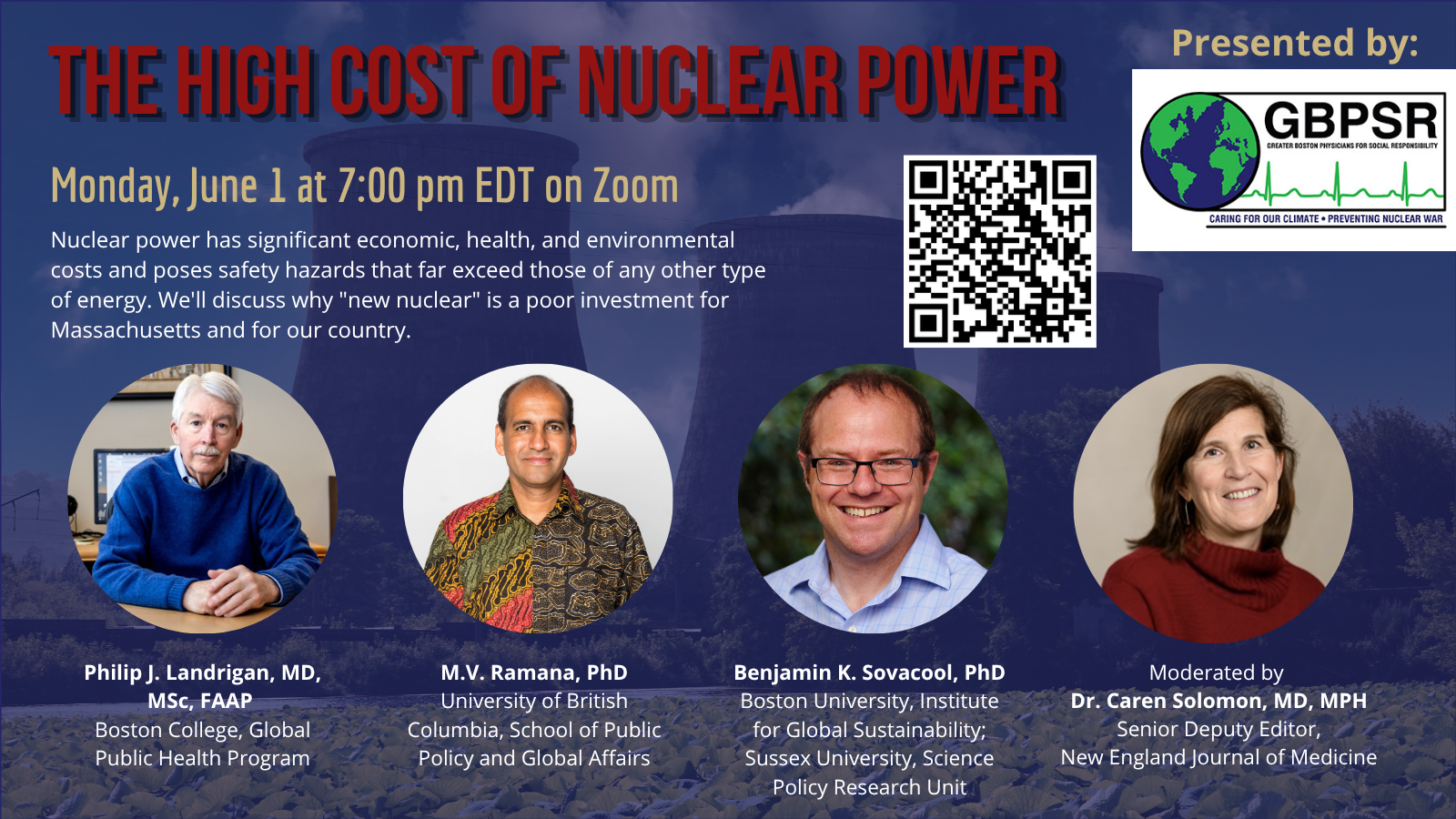
1 June Webinar – The High Cost of Nuclear Power – Register


of the week– Nuclear Reactor Information Task Force
To see nuclear-related stories in greater depth and intensity – go to https://nuclearinformation.wordpress.com
-
Archives
- May 2026 (262)
- April 2026 (356)
- March 2026 (251)
- February 2026 (268)
- January 2026 (308)
- December 2025 (358)
- November 2025 (359)
- October 2025 (376)
- September 2025 (257)
- August 2025 (319)
- July 2025 (230)
- June 2025 (348)
-
Categories
- 1
- 1 NUCLEAR ISSUES
- business and costs
- climate change
- culture and arts
- ENERGY
- environment
- health
- history
- indigenous issues
- Legal
- marketing of nuclear
- media
- opposition to nuclear
- PERSONAL STORIES
- politics
- politics international
- Religion and ethics
- safety
- secrets,lies and civil liberties
- spinbuster
- technology
- Uranium
- wastes
- weapons and war
- Women
- 2 WORLD
- ACTION
- AFRICA
- Atrocities
- AUSTRALIA
- Christina's notes
- Christina's themes
- culture and arts
- Events
- Fuk 2022
- Fuk 2023
- Fukushima 2017
- Fukushima 2018
- fukushima 2019
- Fukushima 2020
- Fukushima 2021
- general
- global warming
- Humour (God we need it)
- Nuclear
- RARE EARTHS
- Reference
- resources – print
- Resources -audiovicual
- Weekly Newsletter
- World
- World Nuclear
- YouTube
-
RSS
Entries RSS
Comments RSS
 nuclear-news