Russia may revive its Perimeter” or “Dead Hand” automatic nuclear missile system
This comes after the Trump administration announced that the United States is withdrawing from the 1987 Intermediate-Range Nuclear Forces Treaty, which eliminated the once-massive American and Russian stockpiles of short- and medium-range missiles. Donald Trump alleges that Russia has violated the treaty by developing and deploying new, prohibited cruise missiles.
This has left Moscow furious and fearful that America will once again, as it did during the Cold War, deploy nuclear missiles in Europe. Because of geographic fate, Russia needs ICBMs launched from Russian soil, or launched from submarines, to strike the continental United States. But shorter-range U.S. missiles based in, say, Germany or Poland could reach the Russian heartland.
Viktor Yesin, who commanded Russia’s Strategic Rocket Forces in the 1990s, spoke of Perimeter/Dead Hand during an interview last month in the Russian newspaper Zvezda [Google English translation here]. Yesin said that if the United States starts deploying intermediate-range missiles in Europe, Russia will consider adopting a doctrine of a preemptive nuclear strike. ……..
What is unmistakable is that Perimeter is a fear-based solution. Fear of a U.S. first-strike that would decapitate the Russian leadership before it could give the order to retaliate. Fear that a Russian leader might lose his nerve and not give the order.
And if Russia is now discussing Perimeter publicly, that’s reason for the rest of us to worry.
Michael Peck is a contributing writer for the National Interest. He can be found on Twitter and Facebook. https://nationalinterest.org/blog/buzz/russias-dead-hand-nuclear-doomsday-weapon-back-38492
Call for Belgium’s unsafe Tihange nuclear reactor to be shut down
 The Parliament Magazine 11th Dec 2018 , Leading Greens MEP Rebecca Harms has called for the decommissioning of a Belgian nuclear reactor as it no longer meets international safety
standards. Harms said that Belgian authorities should shut down the
country’s oldest nuclear reactor, Tihange 1, 43 years after it began
operations, given that almost no Belgian reactors are connected to the
grid.
today’s international safety requirements. It seems impossible to retrofit
the old reactor to bring it up to the state of the art in science and
technology.”
new study on the risks of the continued operation of Tihange 1. The author
of the study, reactor safety expert Prof Manfred Mertins, presented the
findings at a news briefing in the European Parliament. He told reporters
he has raised “serious doubts” concerning the plant’s accident
safety. The academic came to the conclusion that the continued operation of
Tihange 1 due to “outdated reactor design, inadequate safety management
and the accumulation of frequent unplanned events represents a potential
danger for the site and its surroundings.” It was particularly critical
“that the results of international tests and current safety standards are
not adequately taken into account.”
https://www.theparliamentmagazine.eu/articles/news/rebecca-harms-decommission-hopelessly-outdated-belgian-nuclear-reactor
UK’s Office for Nuclear Regulation (ONR) to prosecute Sellafield over worker’s exposure to radiation
BBC 11th Dec 2018 , Representatives from the Sellafield nuclear reprocessing plant have
appeared in court after a worker was allegedly exposed to plutonium.
Sellafield Ltd was charged with a health and safety offence after an
incident at the West Cumbria site in February last year. The company
entered no plea at Carlisle Crown Court.
The prosecution relates to “risks arising from hand working within glove boxes”. The glove boxes are sealed
containers, with integral gloves, which allow someone to work on objects or
materials that need to be kept in a separate atmosphere. The company faces
one charge brought by the Office for Nuclear Regulation (ONR) under the
Health and Safety at Work Act. A trial has been provisionally earmarked for
April next year with another hearing listed for February.
This is the first
prosecution brought by the ONR since it was established in 2014.
https://www.bbc.com/news/uk-england-cumbria-46528539
Russia marketing nuclear technology to Saudi Arabia
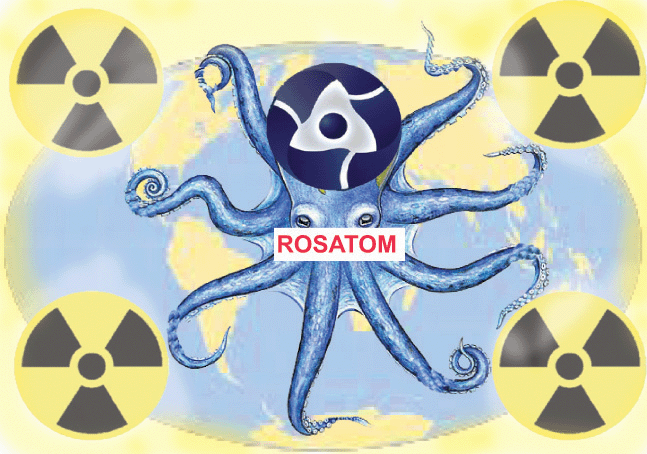
 Riyadh hosts workshop on Russian nuclear technology RIYADH — ROSATOM State Atomic Energy Corporation organized a workshop on Russian nuclear technologies in Riyadh on Dec. 5 for representatives of Saudi companies. The event was held at the Council of Saudi Chambers of Commerce………
France, Hungary Conclude Military, Nuclear Energy Agreements
Hungarian Foreign Minister Péter Szijjártó announced the deals on Tuesday after meeting his French counterpart Jean-Yves Le Drian.
Hungary’s armed forces have ordered twenty Airbus helicopters from France.
Meanwhile, two French companies, including a state-owned company, will have a major role in operating the current Paks nuclear power plant and in manufacturing turbines for the expanded Paks plant.
“We will continue to strengthen the French-Hungarian alliance that has emerged in the peaceful use of nuclear energy,” Szijjártó said, adding that France and Hungary both adhere to the principle that the national energy mix must remain a national competence…….https://hungarytoday.hu/france-hungary-conclude-military-nuclear-energy-agreements/
Swiss Government under pressure to sign nuclear ban treaty
Supporters said failure to sign the accord sent a negative message to the international community and undermined Switzerland’s credibility as a champion of humanitarian law………
The TPNW will enter into force when at least 50 countries ratify it. Signatories have obligations not to develop, test, produce, acquire, possess, stockpile, use or threaten to use nuclear weapons. The agreement also prohibits the deployment of nuclear weapons on national territory and assistance to any country involved in prohibited activities.
So far, 67 countries have approved the treaty and another 19 have ratified it. https://www.swissinfo.ch/eng/parliament_government-under-pressure-to-sign-nuclear-ban-treaty/44613098
White House fury as Russian nuclear planes visit Venezuela
|
White House fury as Russian nuclear planes visit Venezuela Irish Independent, Harriet Alexander,December 12 2018
Two Russian bombers capable of carrying nuclear weapons have landed in Venezuela in a show of support which has infuriated Washington. General Vladimir Padrino, the Venezuelan defence minister, welcomed about 100 Russian pilots and other personnel after the two TU-160s and two other aircraft landed at the international airport that serves Caracas on Monday. He said the deployment showed “we also are preparing to defend Venezuela to the last inch when necessary”. Nicolas Maduro, the president of Venezuela, has frequently alleged that the US is planning an invasion. Mr Padrino noted that Russian aircraft had visited before in 2013, but said their current deployment was part of a “new experience,” and was designed to “raise the level of interoperability of the aerospace defence systems” of both countries. Mr Maduro has found himself increasingly isolated as Donald Trump takes an increasingly aggressive stance against his regime. With many of his allies under sanctions and financial transactions blocked, Mr Maduro has cultivated friendships with America’s adversaries. He said talks with President Putin in Moscow this month yielded Russian investment in his country’s oil and gold sectors. It was not clear how long the Russian planes would stay in Venezuela, nor what their mission would be. “Russia’s government has sent bombers halfway around the world to Venezuela,” US Secretary of State Mike Pompeo tweeted. “The Russian and Venezuelan people should see this for what it is: two corrupt governments squandering public funds, and squelching liberty and freedom while their people suffer.” The Kremlin rejected Mr Pompeo’s criticism. “As for the idea that we are squandering money, we do not agree. It’s not really appropriate for a country half of whose defence budget could feed the whole of Africa to be making such statements,” said Kremlin spokesman Dmitry Peskov. The developments come as Mr Trump escalated his threat to shut down the US government over his demand for funding of his Mexican border wall……..https://www.independent.ie/world-news/latin-america/white-house-fury-as-russian-nuclear-planes-visit-venezuela-37618272.html |
|
|
Despite President Macron, France’s government report calls new nuclear power uneconomical
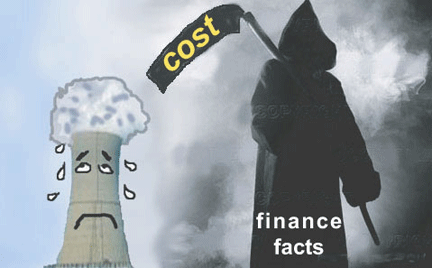 Building new nuclear plants in France uneconomical -environment agency https://af.reuters.com/article/commoditiesNews/idAFL8N1YF5HCGeert De Clercq, DECEMBER 11, 2018
State environment agency contradicts Macron on new nuclear
* New nuclear reactors would be structurally loss-making
* Renewables could account for 85 pct of power mix by 2050.
Building new nuclear reactors in France would not be economical, state environment agency ADEME said in a study on Monday, contradicting the government’s long-term energy strategy as well as state-owned utility EDF’s investment plans.
In a speech last month, President Emmanuel Macron said nuclear energy would remain a promising technology for producing low-cost, low-carbon energy and that EDF’s EPR reactor model should be part of future energy options.
Macron has also asked EDF to draw up a plan for building new reactors with a view to making a decision about nuclear in 2021
Two EPR reactors under construction in France and Finland are years behind schedule and billions of euros over budget.
“The development of an EPR-based nuclear industry would not be competitive,” ADEME said, adding that new nuclear plants would be structurally loss-making. bit.ly/2GlEbcT
Building a single EPR in 2030 would require 4 to 6 billion euros of subsidies, while building a fleet of 15 with a total capacity of 24 gigawatt-hour by 2060 would cost the state 39 billion euros, despite economies of scale that could bring down the EPR costs to 70 euros per megawatt-hour (MWh), ADEME said.
Renewables costs could fall to between 32 and 80 euros/MWh, depending on the technology, by 2060.
But extending the existing fleet too long, while also building new EPRs, would lead to overcapacity, compromising returns on all generation assets, including renewables.
EDF – which generates about 75 percent of French electricity with 58 nuclear reactors – declined to comment.
The ADEME report, which studied energy mix scenarios for 2020-2060, said renewables could account for 85 percent of power generation by 2050 and more than 95 percent by 2060, except if the government pushes through the EPR option anyway.
The gradual increase of renewables capacity could reduce the pre-tax electricity cost for consumers – including generation, grids and storage – to about 90 euros per MWh, compared to nearly 100 euros today, ADEME said.
ADEME director Arnaud Leroy, appointed in February, helped write the energy chapter of Macron’s election programme and was a spokesman for his campaign, but the agency is independent and earlier studies have also contradicted government energy policy.
In 2015, a ADEME study suggesting that France could switch to 100 percent renewable energy by 2050 at a cost similar to sticking with nuclear was barred from publication for months by the government. reut.rs/2RLGKG8 (Reporting by Geert De Clercq; editing by David Evans)
As UK’s planned Wylfa nuclear power station might be axed, UK’s whole nuclear project is in doubt
Fresh doubts have been raised over prospects for the UK’s new nuclear power programme after a report that Hitachi is considering axing plans for a plant in Wales.
The Japanese conglomerate’s mooted 2.9GW nuclear power station on Anglesey is next in line in the UK’s nuclear plans after EDF Energy’s 3.2GW Hinkley Point C scheme in Somerset.
However, Japan’s TV network Asahi reported that the Wylfa Newydd scheme may be scrapped, sending Hitachi’s shares up by almost 3%, before ending up by 1%.
The project is expected to be discussed at the Japanese multinational’s board meeting on Tuesday.
The Guardian understands that cancelling the power station would result in Hitachi having to write off its near-£2bn investment in the project.
Ministers have already been hit by the recent collapse of plans for a significant new nuclear plant in Cumbria after Toshiba failed to find a buyer for the Moorside project.
However, it would be surprising if Hitachi pulled the plug on Wylfa at this stage. Tripartite talks are still ongoing between the firm and the UK and Japanese governments.
The business secretary, Greg Clark, said in June that the UK was considering taking a “direct investment” in the power station, overturning decades of policy of not taking a stake in civil nuclear power. But such projects should be financed by the private sector “in the longer term”, he said.
The UK is understood to have offered to take at least a £5bn-plus public stake to make the financing of the £16bn power station work.
The company and government are still continuing with talks, which insiders described as “fairly intense”.
Hitachi’s British subsidiary Horizon will need to reach an agreement with the UK by the middle of 2019, if it is to clear EU state aid approval and hit its timetable of making a final investment decision in mid-to-late 2020.
Wylfa is one of two sites that Hitachi is considering, with an identical 2.9GW plant planned for Oldbury in Gloucestershire.
A Horizon spokesperson said: “Since the secretary of state’s statement to the House in June this year we’ve been in formal negotiations with the UK government regarding financing of the Wylfa Newydd project in a way that works both for investors and the UK electricity customer.”
The company said the negotiations were commercially confidential and it would not comment on rumours or speculation.
Greenpeace UK said investors could see the economics of new nuclear did not add up. “As Hitachi contemplates whether to pull out of Wylfa, UK government might contemplate whether they’ve been backing the wrong horse for many years,” said Doug Parr, the group’s chief scientist.
Russia sends 2 nuclear-capable bombers to Venezuela
Russian Defense Minister Sergei Shoigu said at last week’s meeting with his Venezuelan counterpart Vladimir Padrino Lopez that Russia would continue to send its military aircraft and warships to visit Venezuela as part of bilateral military cooperation. ….
Russia-US relations are currently at post-Cold War lows over Ukraine, the war in Syria and allegations of Russian meddling in the 2016 US election. Russia has bristled at US and other NATO allies deploying their troops and weapons near its borders. https://www.canberratimes.com.au/world/south-america/russia-sends-2-nuclear-capable-bombers-to-venezuela-20181211-p50lea.html?ref=rss&utm_medium=rss&utm_source=rss_feed
Germany a leading solar power producer, despite its low hours of sunshine
https://germanyworks.ft.com/energy/german-solar-power-is-a-sunrise-market/
Scotland’s wind power output over 100%
 WIND output in Scotland has broken through the 100% threshold for the first
time with 109% of total electricity demand being met from renewables, according to new data. Figures from Weather Energy, part of a wider European project, show electricity generated by wind in November was enough to power nearly 6 million homes – a new record for Scotland.
In another milestone, wind production outstripped total electricity demand on 20 out of 30 days. Gina Hanrahan, head of policy at environmental group WWF Scotland, welcomed the contribution made by wind: “Wind power breaking through the magic 100% threshold is truly momentous. For months output has flirted around the 97% mark, so it’s fantastic to reach this milestone. “It’s also worth noting that 20 out of 30 days wind production outstripped demand.
https://www.thenational.scot/news/17286749.scottish-wind-power-output-breaks-100-output-milestone/
UK nuclear waste policy
GDF Watch 7th Dec 2018 , It has been over 10 years, 4 Prime Ministers, and 5 Administrations since
the original Committee on Radioactive Waste Management (CoRWM) recommended
geological disposal. In that period successive Governments of all Parties
have recommitted to geological disposal.
With the recent publication of
position papers updating their advice on a range of key issues, the latest
CoRWM have also reaffirmed their expert opinion that geological disposal
remains the best available way to dispose of higher-activity radioactive
waste. Four new papers have been issued in response to specific concerns
raised in stakeholder submissions to the public consultations earlier this
year on the GDF draft National Policy Statement (NPS) and the Working With
Communities siting policy:
http://www.gdfwatch.org.uk/2018/12/07/corwm-respond-to-public-concerns-reaffirm-geological-disposal/
US and Russia ally with Saudi Arabia to water down climate pledge
After a heated two-and-a-half-hour debate on Saturday night, the backwards step by the four major oil producers shocked delegates at the UN climate conference in Katowice as ministers flew in for the final week of high-level discussions.
It has also raised fears among scientists that the US president, Donald Trump, is going from passively withdrawing from climate talks to actively undermining them alongside a coalition of climate deniers.
Two months ago, representatives from the world’s governments hugged after agreeing on the 1.5C report by the UN Intergovernmental Panel on Climate Change (IPCC), commissioned to spell out the dire consequences should that level of warming be exceeded and how it can be avoided.
Reaching a global consensus was a painstaking process involving thousands of scientists sifting through years of research and diplomats working through the night to ensure the wording was acceptable to all nations.
But when it was submitted to the UN Framework Convention on Climate Change on Saturday, the four oil allies – with Saudi Arabia as the most obdurate – rejected a motion to “welcome” the study. Instead, they said it should merely be “noted”, which would make it much easier for governments to ignore. The motion has not yet been able to pass as a result of the lack of consensus.
t opened up a rift at the talks that will be hard to close in the coming five days. During the plenary, the EU, a bloc of the 47 least developed countries, as well as African and Latin and South American nations, all spoke in favour of the report. Several denounced the four countries trying to dilute its importance. ………
Scientists were also outraged. “It is troubling. Saudi Arabia has always had bad behaviour in climate talks, but it could be overruled when it was alone or just with Kuwait. That it has now been joined by the US and Russia is much more dangerous,” said Alden Meyer, the director of strategy and policy in the Union of Concerned Scientists….
Ministers have only five days to establish a rulebook for the Paris agreement. A wild card is the role of the host nation, Poland – the most coal-dependant nation in Europe – which will chair the final week of the meeting………
As well as acceptance of the report, there are several other potential fights brewing regarding transparency rules for reporting emissions and proposals for wealthy high emitters to provide financial support to poorer nations struggling to adapt. https://www.theguardian.com/environment/2018/dec/09/us-russia-ally-saudi-arabia-water-down-climate-pledges-un
With Brexit, thorny nuclear problems about the ownership of EU nuclear materials stored in Britain
 David Lowry’s Blog 4th Dec 2018 , As Parliament grapples with ministers in a power struggle over disclosure
of legal advice on the Brexit ‘divorce’ agreement and the sovereignty of Parliament, other Brexit–related details have been pushed into the background: but they should not be.
Caroline Lucas (who represents the Brighton, Pavilion constituency). Dr Lucas asked the business and energy department on 20 November, with reference to Article 83, paragraphs (1) and (2) of the Draft Agreement on the withdrawal of the UK from the EU and the European Atomic Energy Agency (dated 14 November 2018), who will own fissile materials stored at UK nuclear facilities after the UK withdraws from that agency. (‘Radioactive Materials,’ 193428)
(“Euratom”) Treaty arrangements, special fissile material is collectively owned by the Euratom Community, but the operator with the legal title to the material has an “unlimited right of use and consumption” over it, subject to their complying with the obligations imposed on them by the Treaty. This form of supranational, or sovereign, ownership underpins the regulation of special fissile materials by the Euratom Community in accordance with the Euratom Treaty. http://drdavidlowry.blogspot.com/2018/12/plutonium-title-swaps-and-brexit.html
1 This Month
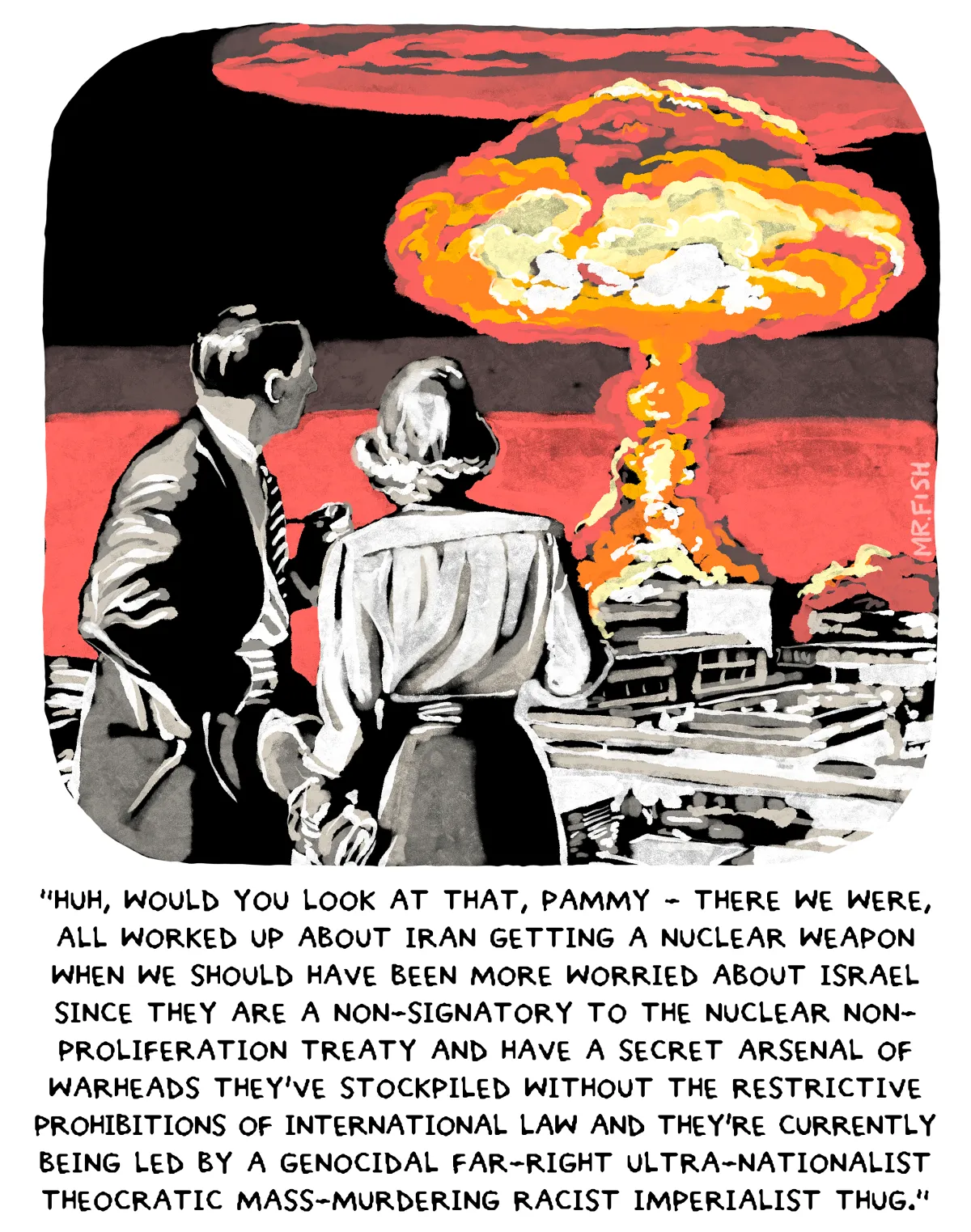
1 June Webinar – The High Cost of Nuclear Power – Register
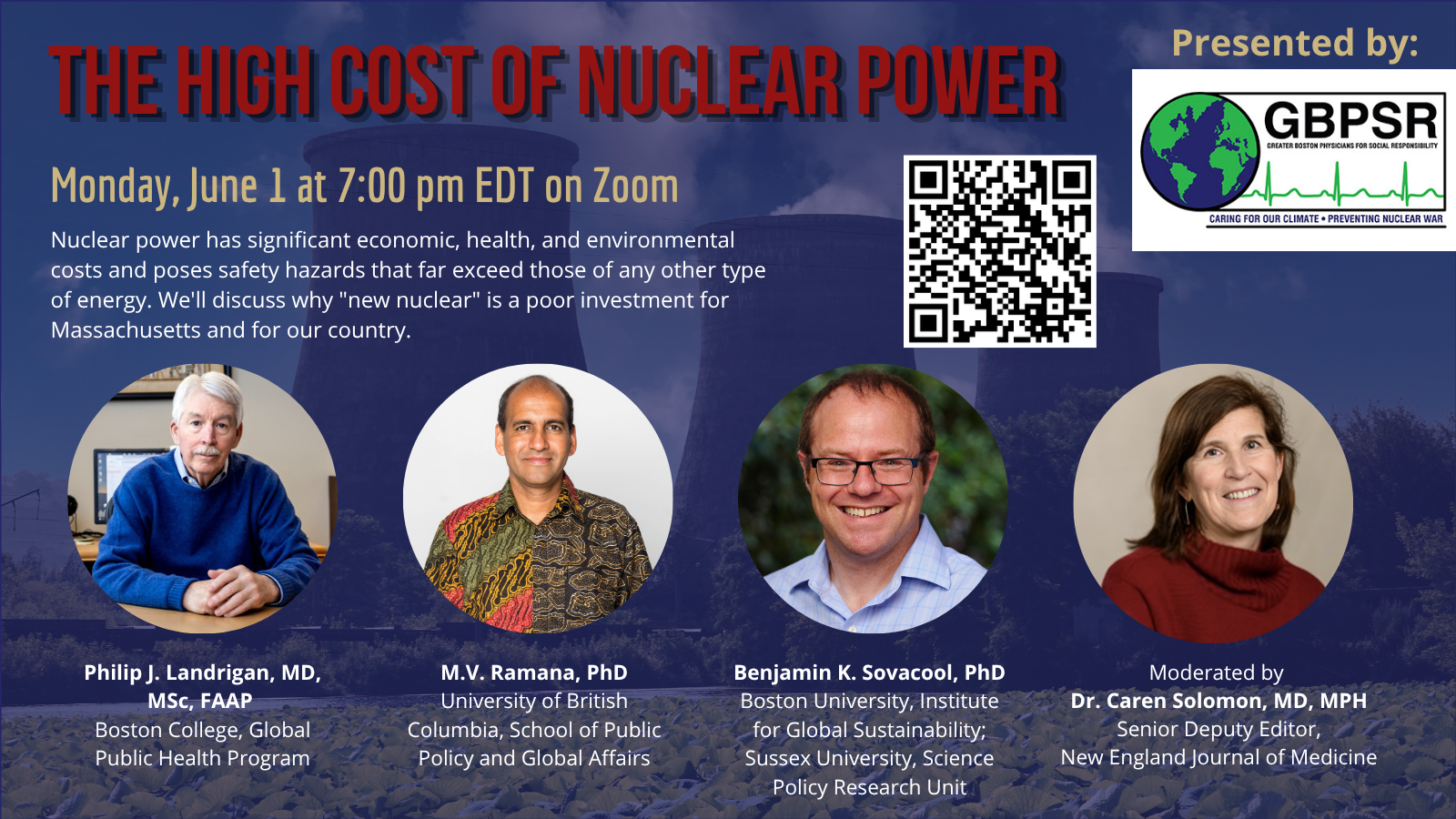


of the week– Nuclear Reactor Information Task Force
To see nuclear-related stories in greater depth and intensity – go to https://nuclearinformation.wordpress.com
-
Archives
- May 2026 (262)
- April 2026 (356)
- March 2026 (251)
- February 2026 (268)
- January 2026 (308)
- December 2025 (358)
- November 2025 (359)
- October 2025 (376)
- September 2025 (257)
- August 2025 (319)
- July 2025 (230)
- June 2025 (348)
-
Categories
- 1
- 1 NUCLEAR ISSUES
- business and costs
- climate change
- culture and arts
- ENERGY
- environment
- health
- history
- indigenous issues
- Legal
- marketing of nuclear
- media
- opposition to nuclear
- PERSONAL STORIES
- politics
- politics international
- Religion and ethics
- safety
- secrets,lies and civil liberties
- spinbuster
- technology
- Uranium
- wastes
- weapons and war
- Women
- 2 WORLD
- ACTION
- AFRICA
- Atrocities
- AUSTRALIA
- Christina's notes
- Christina's themes
- culture and arts
- Events
- Fuk 2022
- Fuk 2023
- Fukushima 2017
- Fukushima 2018
- fukushima 2019
- Fukushima 2020
- Fukushima 2021
- general
- global warming
- Humour (God we need it)
- Nuclear
- RARE EARTHS
- Reference
- resources – print
- Resources -audiovicual
- Weekly Newsletter
- World
- World Nuclear
- YouTube
-
RSS
Entries RSS
Comments RSS
 nuclear-news