Drop in output of France’s nuclear reactors, due to delays and outages
French nuclear output drops to 52 GW on maintenance, outage, delays, S and P Global,
Andreas Franke , EditorJonathan Dart , 14 Jan 19 London — French nuclear output peaked at 52 GW Monday as an unplanned outage, delays to scheduled returns and planned maintenance kept availability below expectations, data from grid operator RTE and nuclear operator EDF show.
The 910-MW Blayais 2 reactor suffered an outage Sunday afternoon due to turbine failure in the non-nuclear part of the plant, EDF said. The reactor is due to return Monday at 8:00 pm local time (1900 GMT).
The 1.3-GW Penly 1 reactor is also scheduled to return Monday night following a three-month maintenance break.
The 1.3-GW Flamanville 1 unit is scheduled to return late Wednesday following a 10-year overhaul that began in April 2018 and extended for four months more than expected.
Flamanville 2 started its own 10-year-overhaul last week.
EDF has warned of a “particularly dense and complex maintenance schedule” this year, with seven reactors undergoing 10-year-overhauls.
Another two reactors are scheduled to go offline this weekend for annual maintenance. ……–Andreas Franke, andreas.franke@spglobal.com
–Edited by Jonathan Dart, newsdesk@spglobal.com https://www.spglobal.com/platts/en/market-insights/latest-news/electric-power/011419-french-nuclear-output-drops-to-52-gw-on-maintenance-outage-delays
UK to use Regulatory Asset Base (RAB) funding for Wylfa nuclear plant, exposing consumers to financial risk?
 Times 13th Jan 2019 Ministers will be forced to pioneer a new way of financing nuclear power after Hitachi walked away from a £16bn plant in north Wales. The suspension of the Japanese giant’s Horizon project on Anglesey, expected to be confirmed at a board meeting tomorrow, will force the government to lure investors with a financing method that would pile costs on to consumers, even before a plant has been built.
building the £20bn Hinkley Point power station in Somerset, and CGN has ambitions to build its own reactors on the Essex coast at Bradwell-on-Sea. Industry insiders said state-controlled CGN could swoop on Anglesey if Hitachi puts the project up for sale. Kepco of South Korea would also be interested.
megawatt hour for Hinkley Point’s electricity for 35 years. The Horizon deal would have guaranteed about £75 per megawatt hour, falling to the £50s for future reactors on the site.
https://www.thetimes.co.uk/article/fce4e714-169e-11e9-9e09-701e9f424b2e
Collapse of UK’s nuclear power plans as Hitachi Exit Follows Toshiba
U.K’s Nuclear Future Fades as Hitachi Exit Follows Toshiba, Bloomberg, By Lars Paulsson and Mathew Carr January 11, 2019,
EDF’s atomic plants need to be replaced by new generation
Offshore wind could be the winner from withdrawal, RBC says
…….Japanese conglomerate Hitachi Ltd. will halt work on the Wylfa project and take a one-time charge as negotiations with the British government over funding stalled, the Nikkei newspaper reported. After Toshiba Corp.’s withdrawal from its Moorside plant in November, it leaves the nation with just Electricite de France SA’s Hinkley Point project underway and that’s been mired in controversy because of delays and the cost to the U.K. consumer.
……..The Nikkei report said the company’s board will make a decision next week and cited an unidentified executive saying the project isn’t being abandoned entirely and could be restarted in the future.
Toshiba said in November it planned to liquidate NuGeneration Ltd., its U.K. nuclear power developer, after failing to find a partner or a buyer for the Moorside project. In September, China General Nuclear said it may give upthe chance to operate a nuclear plant at Bradwell amid political sensitivities over Chinese investments, the Financial Times reported.
As the U.K. is running out of nuclear options, other technologies stand to benefit.
“We see offshore wind as increasingly viable,” said John Musk, utilities analyst at RBC Europe Ltd. Natural gas power will probably provide a significant amount of the baseload power not met by renewables……..https://www.bloomberg.com/news/articles/2019-01-11/u-k-s-nuclear-future-fades-as-hitachi-exit-follows-toshiba
New danger for Julian Assange as Ecuador toes the USA line (and Australia won’t help him, though he’s their citizen)
More troubles for Julian Assange as Ecuador bows to pressure to extradite him following this letter, http://thewikidaily.com/more-troubles-for-julian-asange-as-ecuador-bows-to-pressure-to-extradite-him-following-this-letter/ We have been monitoring Julian asange’s asylum in Ecuadorian embassy in britain to outline the dangers the computer proggrammer and wikileaks founder face in coming future and it seems alot have been happening lately than the mainstream media’s are reporting.
Ecuador has begun a “Special Examination” of Julian Assange’s asylum and citizenship as it looks to the IMF for a bailout, the whistleblowing site reports, with conditions including handing over the WikiLeaks founder.
Former Ecuadorian President Rafael Correa tweeted an image of the letter he received from the State Comptroller General on December 19, which outlines the upcoming examination by the Direction National de Auditoria.
The audit will “determine whether the procedures for granting asylum and naturalization to Julian Assange were carried out in accordance with national and international law,” and will cover the period between January 1, 2012 and September 20, 2018.
Assange has been in the Ecuadorian Embassy in London since he sought asylum there in 2012. He was granted Ecuadorian citizenship last December in a bid to protect him from being extradited to the US where he fears he faces secret charges for publishing US government cables and documents.
WikiLeaks tweeted the news on Wednesday, joining the dots between the audit and Ecuador’s consideration of an International Monetary Fund bailout. The country owes China more than $6.5 billion in debt and falling oil prices have affected its repayment abilities.
According to WikiLeaks, Ecuador is considering a $10 billion bailout which would allegedly come with conditions such as “the US government demanded handing over Assange and dropping environmental claims against Chevron,” for its role in polluting the Amazon rainforest.
Assange’s position has increasingly been under threat under Correa’s successor, President Lenin Moreno, with Ecuadorian authorities restricting his internet access and visitors.“I believe they are going to turn over Assange to the US government,
Russia’s Rosatom to manage accident plan at the Fukushima NPP
 Russia’s Rosatom wins two bids for accident management at Fukushima NPP http://tass.com/world/1039631, January 12, 2019, MOSCOW, Russia’s state nuclear corporation Rosatom has been engaged in the nuclear control plan at Japan’s stricken Fukushima nuclear power plant and has already won two bids in that project, Rosatom CEO Alexei Likhachev said in a televised interview with Rossiya’24 news channel on Saturday.
“We have been engaged by Japan to implement the nuclear accident management plan at the Fukushima NPP. We have won two tenders and are getting ahead,” he said.
In September 2017, Rosatom’s First Deputy CEO Kirill Komarov said that Rosatom offered help to Japanese counterparts in handling the crippled Fukushima NPP.
The nuclear disaster at the Fukushima-1 power plant in March 2011 was triggered by an earthquake-induced tsunami that knocked out vital reactor cooling systems. This resulted in three nuclear meltdowns, hydrogen explosions and a massive release of radioactive waste, which contaminated the surrounding area. Clean-up operations continue at the power plant and adjacent territories. According to the current action plan, full decommissioning of the station may take place only around 2040.
People Against Wylfa B (PAWB) has warned for years of the coming financial failure of Wylfa nuclear project
Wales Online 11th Jan 2019 , The campaigning group People Against Wylfa B (PAWB) said in a statement: “Should the news be confirmed at a meeting of the Hitachi Board next week
then it will be a relief for all of us who worry about the future of our
island, our country, our language, our environment and indeed renewable
energy.
PAWB has warned for years that the costs associated with the Wylfa
project would be likely to prove fatal to the project, but we were ignored.
“Consequently, millions of taxpayers’ money from the island, Wales and
the UK was invested to back Wylfa B. In addition huge political capital has
been invested, and there has been a failure to have a mature public
discussion about the project other than in terms of cash and jobs.
“The legacy of this, if the reports from Japan prove to be true, is that over a
decade has been wasted on Wylfa, with very little alternative economic
planning in evidence. Our young people have been promised jobs on very
shaky foundations. “Good land has been destroyed to create infrastructure
to back the project. It is time for politicians and officials from the UK
Government, the Welsh Government and Anglesey to admit that they were
wrong. “Wales is rich in natural resources which can be used to create a
vibrant and sustainable energy future, and above all else create more jobs
in less time than Wylfa would have done.”
https://www.walesonline.co.uk/news/politics/hitachi-to-pull-plug-angleseys-15663299
‘Local Hero’ – a campaign to raise awareness of the environmental threat of planned Sizewell nuclear station
TEAGS 11th Jan 2019 Locals and campaigners create ‘Sizewell Hero’ – a tribute to the film
‘Local Hero’ – to launch a new online campaign, urging EDF to change
its approach. Theberton and Eastbridge Action Group on Sizewell [TEAGS]
today launched a new video and online campaign.
Made by local people, it is aimed at increasing awareness and concern about the impacts of the proposed Sizewell C&D nuclear power station to audiences beyond east Suffolk. EDF
launched its Stage 3 consultations on the twin-reactor development last
week. ‘Sizewell Hero, hosted on YouTube and Facebook, is a three-minute
homage to the award-winning 1980s film ‘Local Hero’, and shows a
company executive transformed and inspired by the beauty of Minsmere and
the coast at Sizewell to think again about the company’s plans.
The video is entirely a local initiative, starring Middleton actor Simon Bridge and
featuring other residents from Theberton and Middleton. The film was shot
and produced by Steve Sutton and crew from UK Aerial Photography Ltd, based
in Peasenhall. Permission to use the famous ‘Local Hero’ theme music
was kindly granted by Mark Knopfler’s management, Crockford Management
and the project was made possible by a grant from Lush Charity Pot. Stills
and ‘making of’ photos are available.
https://teags.org/sizewell-hero-video-and-online-campaign-launched/
UK will have to pile on costs to consumers, if new nuclear power is to go ahead
Energy ministers eye new formula to pay for Britain’s nuclear power plants
Japanese withdrawal leaves UK energy policy in tatters Times, John Collingridge, January 13 2019, Ministers will be forced to pioneer a new way of financing nuclear power after Hitachi walked away from a £16bn plant in north Wales.
UK’s nuclear energy renaissance derailed, as Japanese companies step back from nuclear investment?
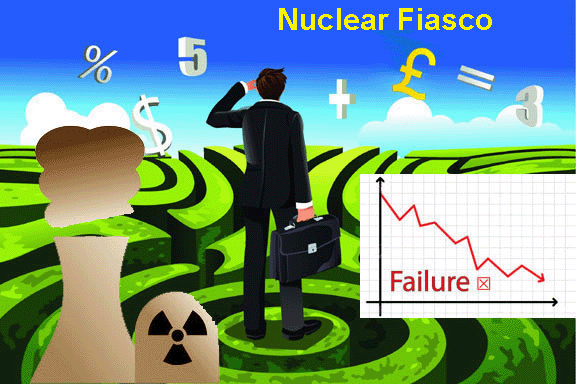 Japan’s nuclear rethink could derail UK energy plans, https://unearthed.greenpeace.org/2019/01/09/japan-uk-nuclear-plans-go-awry/, Doug Parr, 11 Jan 19, Reports in the Japanese press claim Hitachi is set to suspend all work on Wylfa, its nuclear power project in Wales.
A nuclear cover-up? Britain removes from public access, files on atomic bomb tests in Australia

“To now withdraw previously available documents is extremely unfortunate and hints at an  attempted cover-up.”
“worrying that properly released records can suddenly be removed from public access without notice or explanation.”
Review or ‘cover up’? Mystery as Australia nuclear weapons tests files withdrawn https://edition.cnn.com/2019/01/11/australia/uk-australia-nuclear-archives-intl/index.html, By James Griffiths, CNN
More than 65 years since the UK began conducting secret nuclear weapons testing in the Australian Outback, scores of files about the program have been withdrawn from the country’s National Archives without explanation.
The unannounced move came as a shock to many researchers and historians who rely on the files and have been campaigning to unseal the small number which remain classified.
“Many relevant UK documents have remained secret since the time of the tests, well past the conventional 30 years that government documents are normally withheld,” said expert Elizabeth Tynan, author of “Atomic Thunder: The Maralinga Story”.
“To now withdraw previously available documents is extremely unfortunate and hints at an attempted cover-up.”
Withdrawal of the files was first noted in late December. Access to them has remained closed in the new year.
Dark legacy The UK conducted 12 nuclear weapons tests in Australia in the 1950s and 1960s, mostly in the sparsely populated Outback of South Australia.
Information about the tests remained a tightly held secret for decades. It wasn’t until a Royal Commission was formed in 1984 — in the wake of several damning press reports — that the damage done to indigenous people and the Australian servicemen and women who worked on the testing grounds became widely known.
Indigenous people living nearby had long complained of the effects they suffered, including after a “black mist” settled over one camp near Maralinga in the wake of the Totem I test in October 1953. The mist caused stinging eyes and skin rashes. Others vomited and suffered from diarrhea.
These claims were dismissed and ridiculed by officials for decades — until, in the wake of the Royal Commission report, the UK agreed to pay the Australian government and the traditional owners of the Maralinga lands about AU$46 million ($30 million). The Australian authorities also paid indigenous Maralinga communities a settlement of AU$13.5 million ($9 million).
While the damage done to indigenous communities was acknowledged, much about the Totem I test — and other tests at Maralinga and later at Emu Field — remained secret, even before the recent withdrawal of archive documents.
“The British atomic tests in Australia did considerable harm to indigenous populations, to military and other personnel and to large parts of the country’s territory. This country has every right to know exactly what the tests entailed,” Tynan said. “Mysteries remain about the British nuclear tests in Australia, and these mysteries have become harder to bring to light with the closure of files by the British government.”
Alan Owen, chairman of the British Nuclear Test Veterans Association, which campaigns on behalf of former servicemen, said “the removal of these documents affects not only our campaign, but affects the many academic organizations that rely on this material.”
“We are very concerned that the documents will not be republished and the (Ministry of Defense) will again deny any responsibility for the effects the tests have had on our membership,” Owen told CNN.
Unclear motives Responding to a request for comment from CNN, a spokeswoman for the National Archives said the withdrawal of the Australian nuclear test files was done at the request of the Nuclear Decommissioning Authority (NDA), which has ultimate responsibility over them.
The NDA said that “a collection of records has been temporarily withdrawn from general access via The National Archive at Kew as part of a review process.”
“It is unclear, at this time, how long the review will take, however NDA anticipates that many of the documents will be restored to the public archive in due course,” a spokeswoman said.
Jon Agar, a professor of science and technology at University College London, said the withdrawal “is not just several records but two whole classes of files, many of which had previously been open to researchers at the National Archives.”
“These files are essential to any historian of the UK nuclear projects — which of course included tests in Australia. They have been closed without proper communication or consultation,” he added.
Agar shared correspondence he had with the NDA in which a spokeswoman said some files would be moved to a new archive — Nucleus — in the far north of Scotland. However the Nucleus archives focus on the British civil nuclear industry, and it is unclear why files on military testing would be moved there, or why those files would need to be withdrawn to do so.
Nucleus also does not offer the type of online access to its records as the National Archives does.
“Why not just copy the files if the nuclear industry needs them at Nucleus for administrative reasons? Why take them all out of public view?” Agar wrote on Twitter.
Information freedom In correspondence with both CNN and Agar, the NDA suggested those interested in the files could file freedom of information (FOI) requests for them.
Under the 2000 Freedom of Information Act, British citizens and concerned parties are granted the “right to access recorded information held by public sector organizations.”
FOI requests can be turned down if the government deems the information too sensitive or the request too expensive to process. Under a separate rule, the UK government should also declassify documents between 20 and 30 years after they were created.
According to the BBC, multiple UK government departments — including the Home Office and Cabinet Office — have been repeatedly condemned by auditors for their “poor,” “disappointing” and “unacceptable” treatment of FOI applications.
Commenting on the nuclear documents, Maurice Frankel, director of the Campaign for Freedom of Information, a UK-based NGO, said it was “worrying that properly released records can suddenly be removed from public access without notice or explanation.”
“It suggests that the historical record is fragile and transient and liable to be snatched away at any time, with or without good reason,” he added.
Hitachi to post $2 billion special loss, will suspend UK nuclear power operations
 Hitachi to suspend UK nuclear power ops, post $2 billion special loss https://energy.economictimes.indiatimes.com/news/power/hitachi-to-suspend-uk-nuclear-power-ops-post-2-billion-special-loss/67484807
Hitachi is set to vote on the planned suspension at its board meeting next week, the Nikkei said without citing sources REUTERS | January 11, 2019, TOKYO: Hitachi has decided to suspend its 3 trillion yen ($28 billion) nuclear project in Britain and to post a special loss of about $2 billion for the year ending March, the Nikkei business daily reported on Friday.
Hitachi is set to vote on the planned suspension at its board meetingnext week, the Nikkei said without citing sources.
The loss is expected to be 200 billion to 300 billion yen ($1.9 billion to 2.8 billion), it said.
Hitachi representatives could not be immediately reached for comment
Hitachi looks certain to cancel its plans for a £16bn nuclear power station in Wales
 Hitachi set to cancel plans for £16bn nuclear power station in Wales Guardian, Adam Vaughan@adamvaughan_uk-12 Jan 2019
Move by Japanese firm would be blow to UK plans to replace coal plants and ageing reactors The Japanese conglomerate Hitachi looks certain to cancel its plans for a £16bn nuclear power station in Wales, leaving Britain’s ambitions for a nuclear renaissance in tatters.
An impasse in months-long talks between the company, London and Toyko on financing is expected to result in the flagship project being axed at a Hitachi board meeting next week, according to the Nikkei newspaper.
The company has spent nearly £2bn on the planned Wylfa power station on Anglesey, which would have powered around 5m homes.
Another Japanese giant, Toshiba, scrapped a nuclear plant in Cumbria just two months ago after failing to find a buyer for the ailing project.
Withdrawal by Hitachi would be a major blow to the UK’s plans to replace dirty coal and ageing reactors with new nuclear power plants, and heap pressure on ministers to consider other large-scale alternatives such as offshore windfarms.
It would also mark an end to Japan’s hopes of exporting its nuclear technology around the world.
Hitachi and the UK and Japanese governments have been negotiating over a guaranteed price of power from Wylfa and a potentially £5bn-plus UK public stake in the scheme.
Talks have proved “tricky to find a solution that works for all parties”, industry sources said.
Unions said the prospect of Wylfa being cancelled was extremely worrying and losing two projects in such a short period “should set alarm bells ringing” about the government’s commitment to nuclear………
an insider said: “There has been a serious rift in Hitachi, and the group that said this is too large and risky an investment of Japanese capital have won out. They pointed to the uncertainty created by Brexit to say this was another reason to pull the plug.” ……….
Nuclear critics said a collapse of the scheme was not a disaster but an opportunity for a policy shift. Doug Parr, the chief scientist of Greenpeace UK, said: “We could have locked ourselves into reliance on an obsolete, unaffordable technology, but we’ve been given the chance to think again and make a better decision.”
Sara Medi Jones, the acting secretary general of CND, said: “With offshore wind now cheaper than nuclear it’s clear there is a clean and workable alternative. We just need the political will to make it happen.”
Just one new nuclear power station, EDF Energy’s Hinkley Point C in Somerset, has been given the green light and begun construction. The French company and Chinese firm CGN both want to build more. https://www.theguardian.com/environment/2019/jan/11/hitachi-cancel-plans-nuclear-power-station-angelsey-wales
Japan’s Prime Minister Abe in UK to beg for more money for Wylfa nuclear project?
Unearthed 9th Jan 2019 Doug Parr: Japan’s prime minister Shinzo Abe is in London this week, and it seems likely in his meeting with Theresa May that the Japanese-backed
nuclear power plant in Wales will come up. The Wylfa project, to be built
by Hitachi and its subsidiary Horizon, is one of a clutch of planned
nuclear power stations which the UK government has heavily prioritised for
security of power supply, and meeting the country’s climate obligations.
Late last year another of the 6 major projects, the proposed Moorside plant
in Cumbria, was effectively abandoned after Toshiba pulled out. And another
has come under fire as questions are raised about security issues flowing
from the Chinese builders.
These developments effectively illustrate that
UK nuclear power policy is heavily dependent on overseas developers.
What is less understood is that there are significant shifts underway in Japan
which strongly suggest Hitachi’s projects may too be at risk. The most
advanced of Horizon’s nuclear plans is a large power station to be built
at Wylfa on Anglesey, North Wales. In fact, with the collapse of Moorside,
the Wylfa plant is the only nuclear project that could realistically be
built before 2030, in addition to the plant already under construction at
Hinkley Point in Somerset.
Japan, however, is reconsidering its nuclear
export strategy. Because it keeps going wrong. Until recently it had 3
companies interested in building nuclear power stations abroad: Toshiba,
Mitsubishi and Hitachi. These companies have experience building nuclear
stations at home but since the Fukushima disaster in 2011, they have had to
look elsewhere.
Seeking to help these giants of Japanese industry to
maintain their businesses, Prime Minister Abe reportedly wanted to turn
Japan into a “nuclear export superpower”. Hitachi, however, are
reportedly be thinking of scrapping the project as its costs and risks
become unmanageable. Hitachi could be looking at Toshiba’s
near-bankruptcy and thinking ‘let’s not go there’. According to their
chairman the project was in “an extremely severe situation” as it
struggled to attract investors, even though UK government may have promised
as much as two thirds of the build cost.
Despite this already generouslargesse (on behalf of UK taxpayers, not offered to any other energy projects) Hitachi are intending to come back to UK government and ask for
more. It looks like no assessment of the risks by a private funder come
back looking good, and the only way nuclear plants can be built is with
government stepping into very risky projects that require taxpayers to
shoulder the risk.
The aversion from private investors may not only be
because of the rising costs, but also that the operating performance of the
proposed reactor is pretty poor (albeit partly due to earthquakes).
Notably Hitachi continues to be happy to spend many billions of pounds on power
grid investments, but not its own nuclear reactor, which it wants UK
taxpayers to fund. Major Japanese newspapers have opposed their own
taxpayers lending support to the Wylfa project, even though a home-grown
company would be getting the benefits.
And during the Xmas break, Japan’s
third largest newspaper called for the nuclear export strategy to be
abandoned. Another paper attacks the ‘bottomless swamp’ of nuclear
funding in UK and remarks upon how few countries seem to be following the
UK-style nuclear-focused policy. Reportedly Japanese government has asked
its development banks to fund the ‘nuclear export strategy’, and Wylfa
in particular, but they don’t want to. It is quite difficult to see how
Hitachi can manage the risks of this project without some home support, and
support in Japan is ebbing away.
https://unearthed.greenpeace.org/2019/01/09/japan-uk-nuclear-plans-go-awry/
UK’s Sizewell nuclear project – a monstrous folly that is shrouded in misleading information
‘vague to the point of being misleading.’ Pete Wilkinson, the group’s
chairman, said today, ‘This is the last chance before the Development
Consent Order for people of east Suffolk to submit their views about how
the proposed EDF development will affect their lives.
Assessment (EIA) process is on-going and is being used to identify any
likely significant effects arising as a result of Sizewell C’ (emphasis
added). This renders the document premature and deliberately vague to the
point of being misleading.
the impacts are acceptable or not when the developer itself does not know
to what degree and in which areas the environment will be degraded?
arranged on the Titanic. TASC believes we should not embark on the Titanic
at all and we encourage all those who agree with us to write to EDF, Dr
Coffey and Greg Clark, the government minister responsible for this
unnecessary monstrosity on our precious coast, to tell them so.’ TASC’s
opinion is that very little of significance has changed since the 2nd
consultation.
no more than a red herring to distract from the overriding fact that
Sizewell C will have a devastating and unacceptable impact on the Suffolk
coastal community. This is a rural area lacking in the type of
infrastructure needed to construct such a massive industrial complex. It is
this lack of major roads and railway lines that has made this area a mecca
for walkers, cyclists, bird watchers and those that just enjoy the peace
and tranquility of a beautiful landscape. There is no doubt that the
monstrous folly of Sizewell C will put all this, and the vibrant and
sustainable tourist industry that has developed around it, at risk.
http://tasizewellc.org.uk/index.php/news/242-sizewell-opposition-group-condemns-consultation-as-deliberately-vague
Funding deadlock looks set to sink Japan’s last overseas nuclear project.
Nikkei Asian Review 11th Jan 2019 , Hitachi to suspend all work on UK nuclear plant. Funding deadlock looks set to sink Japan’s last overseas nuclear project. Hitachi plans to put a U.K.nuclear power project on hold as negotiations with the British government over funding hit an impasse, all but closing the book on Tokyo’s vision for nuclear infrastructure exports.
board is expected to officially decide next week to suspend all work on the
plant, including design and preparations for construction. Hitachi will
freeze the roughly 300 billion yen ($2.77 billion) in assets held by its
British nuclear business and write down their value, likely booking a loss
of 200 billion yen to 300 billion yen for the fiscal year ending in March.
after the news last month that a Japanese-led consortium including
Mitsubishi Heavy Industries was scrapping a project in Turkey. With the
aversion to nuclear power that took hold after the March 2011 Fukushima
Daiichi disaster showing little sign of abating, prospects look grim for a
sector that the Japanese government had positioned as a pillar of its
infrastructure export drive. Hitachi had taken on the planned construction
of two reactors on the Welsh island of Anglesey after acquiring U.K.-based
Horizon Nuclear Power in 2012. The company is leaving the door open to a
return. The project is “not being abandoned,” a source close to Hitachi
told Nikkei, suggesting the company would keep an eye on the situation and
resume the project if possible.
apparently set to continue, reworking the project to the extent Hitachi
requires will be no easy task. As things stand now, it appears likely that
the company will ultimately be forced to bow out.
https://asia.nikkei.com/Business/Business-Deals/Hitachi-to-suspend-all-work-on-UK-nuclear-plant
1 This Month

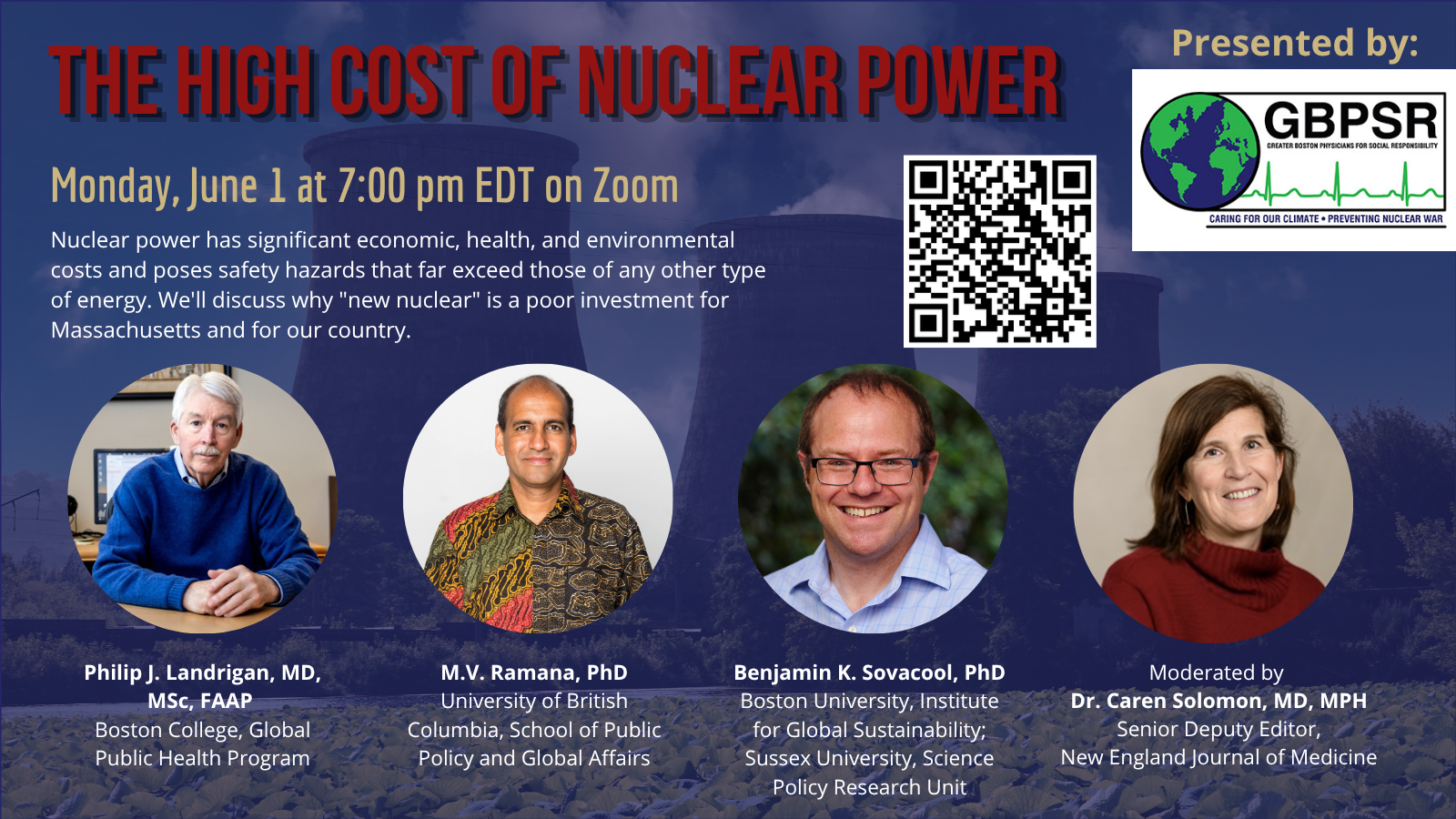
1 June Webinar – The High Cost of Nuclear Power – Register


of the week– Nuclear Reactor Information Task Force
To see nuclear-related stories in greater depth and intensity – go to https://nuclearinformation.wordpress.com
-
Archives
- May 2026 (262)
- April 2026 (356)
- March 2026 (251)
- February 2026 (268)
- January 2026 (308)
- December 2025 (358)
- November 2025 (359)
- October 2025 (376)
- September 2025 (257)
- August 2025 (319)
- July 2025 (230)
- June 2025 (348)
-
Categories
- 1
- 1 NUCLEAR ISSUES
- business and costs
- climate change
- culture and arts
- ENERGY
- environment
- health
- history
- indigenous issues
- Legal
- marketing of nuclear
- media
- opposition to nuclear
- PERSONAL STORIES
- politics
- politics international
- Religion and ethics
- safety
- secrets,lies and civil liberties
- spinbuster
- technology
- Uranium
- wastes
- weapons and war
- Women
- 2 WORLD
- ACTION
- AFRICA
- Atrocities
- AUSTRALIA
- Christina's notes
- Christina's themes
- culture and arts
- Events
- Fuk 2022
- Fuk 2023
- Fukushima 2017
- Fukushima 2018
- fukushima 2019
- Fukushima 2020
- Fukushima 2021
- general
- global warming
- Humour (God we need it)
- Nuclear
- RARE EARTHS
- Reference
- resources – print
- Resources -audiovicual
- Weekly Newsletter
- World
- World Nuclear
- YouTube
-
RSS
Entries RSS
Comments RSS
 nuclear-news