Scotland kow tows to UK and Australian govts – rejects courageous Aboriginal appeal against nuclear waste transport
Last ditch aborigine appeal to Scotland to stop nuclear waste transfers to Australia, https://www.heraldscotland.com/news/17391290.last-ditch-aborigine-appeal-to-scotland-to-stop-nuclear-waste-transfers-to-australia/?ref=fbshr&fbclid=IwAR3r2Lqdv0V66rc7I8PrKJme4mkAsIx2Wtd5bv-Vy_XeT1i3GOgi_Mr By Martin Williams @MWilliamsHT 29 Jan 19, SOME of the Aborigines who live in and around a sacred burial place in South Australia can still remember the clouds of poison that were the result of Britain’s nuclear bomb tests in the 1950s.
Genetic effects of radiation, and other pollutants, in children of Gulf War veterans
|
Veterans with debilitating Gulf War Syndrome may have passed it on to children
EXCLUSIVE: Stricken families say they want the Ministry of Defence to recognise the condition as the British Legion says it believes 30,000 may be suffering, Grace Macaskill, Mirror UK 27 JAN 2019 British forces veterans suffering Gulf War Syndrome may have given it to their children. New medical research has revealed troops who served in Iraq are more likely to have damage to DNA that could be passed on during reproduction. Almost 75 per cent of the 53,000 UK soldiers there were given an anthrax vaccine. Many were also exposed to depleted uranium in some weapons. Thousands reported a raft of disorders on their return home, including extreme fatigue, dizziness, strange rashes, nerve pain and memory loss – and the British Legion believes 30,000 may be suffering from the syndrome. And more and more affected families are reporting that their children have developed terrifying symptoms of conditions that can be passed on genetically . Now they are demanding the Ministry of Defence acts on the latest research and recognises Gulf War Syndrome. One devastated ex-serviceman, Roger Needham, told us: “Gulf War Syndrome is being passed to our kids and I have to watch my daughter struggle every day.” The daughter of another sick Iraq veteran – diagnosed with arthritis at 11 – said: “My immune system is on the floor and I’ve had a life of bad health. There’s no one in the wider family with this.” And the wife of an ill soldier whose son and daughter have battled chronic illnesses told us: “We want answers.” An ex-Government advisor on Gulf War illnesses, Prof Malcolm Hooper, backed the US findings. “Our soldiers were poisoned,” he said. Their immune systems suffered a massive assault, along with the endocrine system which controls reproduction. “Many of the immune-type symptoms they suffer now can be passed to children through germ cells. The Government must take this seriously.” The American study, funded by the US Veterans Affairs department, will step up the pressure. Dr Michael Falvo, lead researcher at the War Related Illness and Injury Study Center, said the findings were the “first direct biological evidence” Gulf War illness causes harm to the body. “If DNA that is damaged or mutated comes from the sperm or eggs then it is possible for it to be passed on to children,” he said. “We found veterans with Gulf War illness had greater mitochondrial DNA damage than those without. Mitochondria are the ‘power generators’ of cells, passed to offspring primarily via a fertilised egg.” Roger, 51 – an ex-lance corporal with the Royal Army Ordnance Corps who developed chronic fatigue shortly after the conflict – said he welcomed the US findings and wants research done to force the Government to recognise the syndrome. “Every day I have extreme fatigue and unexplained aches and pains,” said Roger, of Doncaster, who worked in ammo dumps. “But seeing my daughter Emma sick with it is awful. Nothing like this has run in my family.” Emma, 26, also suffers from chronic fatigue and struggles in her retail job. Her mum Sue, 51, said: “She was conceived shortly after the war. She was always tired as she grew up. We took her to a paediatrician at 15. ……..“But seeing my daughter Emma sick with it is awful. Nothing like this has run in my family.” Emma, 26, also suffers from chronic fatigue and struggles in her retail job. Her mum Sue, 51, said: “She was conceived shortly after the war. She was always tired as she grew up. We took her to a paediatrician at 15. When I said her dad served in the Gulf and had chronic fatigue he said it made sense to him. That’s when we started to think about the connection to Gulf War Syndrome.” Roger added: “The Americans have recognised Gulf War illness so why can’t the MoD? I don’t think they will because of what it might cost them in payouts.”……. Charities and ex- Army top brass are joining hundreds of families to demand a probe into the health of the 30,000 troops thought to be suffering. Col Richard Kemp, an ex-chair of the COBRA Intelligence Group, said: “If soldiers feel children have developed signs of illness due to their service, it is the Government’s duty to investigate.” Maria Rusling, of the National Gulf Veterans and Families Association, said: “Veterans are worried what legacy they are leaving their children. We need a full investigation.” A King’s College London study in 1999 found Gulf troops two to three times more likely to report 53 different symptoms compared to soldiers sent to Bosnia. But the MoD has never officially recognised the condition. An MoD spokesman said: “We have already sponsored significant research into the effects of this conflict on veterans and have no plans to conduct further studies.” https://www.mirror.co.uk/news/uk-news/veterans-debilitating-gulf-war-syndrome-13911872 |
|
Aldermaston – Britain’s bomb factory – it’s a slow motion train crash
https://www.thetimes.co.uk/article/the-awe-bomb-factory-starts-to-implode-lg6vlc55b
Germany phasing out coal, but will not import nuclear power as replacement
“We want energy security to be provided at all times,” the minister told broadcaster ZDF, but added: “We do not want to import cheap nuclear power from other countries.”
Germany‘s coal commission on Jan. 26 said the country should shut down all of its coal-fired power plants by 2038 at the latest, proposing at least 40 billion euros ($45.7 billion) in aid to regions affected by the phase-out.
French nuclear company EDF considering retreating from operations in UK
year”, according to one senior figure, but it is being approached with caution by EDF’s Paris head office amid concern over the political implications.
another two nuclear power projects with support from China. EDF is locked in negotiations with the Government over plans to fund its plans for a reactor at Sizewell C. Discussions about a step back from the energy-supply
market began after the departure of long-serving boss Vincent De Rivaz in 2017.
Gas has confirmed plans to sell its 20pc stake in the reactors and industry sources say EDF hopes to sell another 29pc from its share within the same transaction. The deal is understood to have caught the eye of a consortium
of pension funds which would hold a minority share of the business while EDF remains the operator of the nuclear reactors.
https://www.telegraph.co.uk/business/2019/01/26/edf-weighing-retreat-energy-market-uk/
Tax-payer funding for yet another nuclear folly? Rolls Royce’s Small Modular Reactors
 Rolls-Royce seeks government funds for nuclear power project https://www.ft.com/content/1bbfefb0-20bf-11e9-b2f7-97e4dbd3580d Group wants £200m to develop small-scale plants after failure of big schemes Sylvia Pfeifer and David Sheppard– 27 Jan 19
A consortium led by Rolls-Royce has asked for more than £200m in government funding to help develop its project for small nuclear reactors, as ministers scramble to recast Britain’s energy policy after the collapse of plans to build several large reactors. The engineering group and its partners, which include Laing O’Rourke and Arup, want to secure a sum “in the low hundreds of millions”, confirmed one person with knowledge of the request. Any amount would be match-funded by the consortium and be used to develop Rolls-Royce’s technology through to the later stages of the licensing process in order to be able to attract private investment.
The consortium has applied for funding from the government’s industrial strategy challenge fund under UK Research and Innovation. The money would enable the group to develop its design through to the later stages of the “generic design assessment” by the industry regulator. Industry sources with knowledge of the bid said the consortium “entered detailed negotiations” with UKRI before Christmas. Rolls-Royce has previously said it believes its reactor would cost about £2.5bn to build.
As a nuclear power project collapses, leading utility chief calls on UK government to increase targets for offshore wind energy
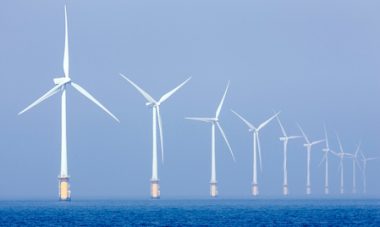 Forget nuclear woes and increase offshore wind targets, says boss of leading utility, Owjonline 25 Jan 2019 by David Foxwell The chief executive of one of the UK’s leading utility companies has called on the government to increase targets for offshore wind energy after plans for another nuclear power station were put on hold.SSE chief executive Alistair Phillips-Davies said the UK should be grateful that in offshore wind it has an ‘off the shelf’ answer to the problem of how the country can decarbonise energy cost-effectively while securing jobs and growth for the UK economy.
He is well-qualified to comment on energy policy in the country, having become chief executive of SSE in 2013 after working in the energy industry since 1997, when he joined Southern Electric.
“Later this year our Beatrice offshore windfarm, the largest project in Scotland, will be completed, and will begin exporting low carbon electricity to the grid,” he said. “It is one of many projects delivered to time and budget, which have helped bring the costs down substantially.
“Last year UK Energy Minister Claire Perry set out an ambition of an additional 1-2 GW of offshore wind per year during the 2020s taking the UK to a total of between 20 and 30 GW, meaning it could be the generation technology with the largest installed capacity in the UK.
“The sector has responded, and an Offshore Wind Sector Deal will be finalised later this year setting out the industry’s substantial commitments to the UK’s industrial strategy. The question now is whether 30 GW by 2030 is ambitious enough,” Mr Phillips-Davies said.
“In the coming months, the government will receive advice from the Committee on Climate Change on the implications of increasing its decarbonisation target from an 80% reduction in emissions by 2050 to net zero.
“In light of the IPCC report last year, SSE supports the adoption of a net zero target, and the implications will be a need to go faster and harder on decarbonising electricity as the driver for decarbonising heat and transport.”
Mr Phillips-Davies went on to say, “With the news that Hitachi has pulled out of the Wylfa project, the new nuclear programme looks in real trouble and was due to come in well above the costs of offshore wind anyway…….https://www.owjonline.com/news/view,forget-nuclear-woes-and-increase-offshore-wind-targets-says-boss-of-leading-utility_56566.htm
NATO chief says ‘no real progress’ on nuclear treaty
‘We don’t want a new Cold War,’ says Jens Stoltenberg. ‘We don’t want a new arms race.’ Russia refused to give any ground during a meeting with NATO on Friday about its alleged violations of a nuclear treaty, leaving the landmark arms control agreement in “real jeopardy,” Secretary-General Jens Stoltenberg said.
NATO says Russia has deployed a new land-based missile, the Iskander 9M729, in violation of the Intermediate-range Nuclear Forces (INF) Treaty, which since 1988 has banned all missiles with a range of 500 to 5,500 kilometers. And U.S. President Donald Trump has said that he will begin withdrawing from the landmark nuclear accord on February 2 unless Russia takes steps to return to compliance.
Western allies urged Russia to return to compliance at the meeting on Friday of the Russia-NATO Council, but Stoltenberg said the session yielded no change in either side’s position……https://www.politico.eu/article/jens-stoltenberg-russia-nato-after-meeting-russians-chief-says-no-real-progress-on-nuclear-treaty/
A close call – a nuclear war just missed, 25 years ago
That day, a group of American and Norwegian researchers launched a Black Brant XII sounding rocket from the Arctic Circle island of Andøya in an effort to study aurora borealis (the northern lights).
The scientists had warned Russia, the US, and 28 other countries that they were planning a launch, as they knew there was a chance that the rocket would be mistaken for a nuclear first strike.
But someone forgot to tell Russian radar technicians. The technicians sent an alert to Moscow suggesting that an American first strike might be incoming.
Within minutes, President Boris Yeltsin was brought his black nuclear-command suitcase. For several tense minutes, while Yeltsin spoke with his defense minister by telephone, confusion reigned,” the Washington Post’s David Hoffman reported a few years after the incident. “Little is known about what Yeltsin said, but these may have been some of the most dangerous moments of the nuclear age.”
It was, Hoffman reported, the first time a Russian or Soviet leader had used a nuclear briefcase in response to an actual alert. Yeltsin concluded that it was not actually a first strike and did not retaliate.
For that, I thank him; I don’t know if a Russian second strike would have sent enough warheads to kill 4-year-old Dylan all the way up in New Hampshire, but I’m also glad we didn’t have to find out.
But, of course, the 1995 incident was hardly the only time in the nuclear area we came close to an accidental nuclear exchange.
On October 27, 1962, Vasili Arkhipov, a Soviet navy officer, was in a nuclear submarine near Cuba when US naval forces started dropping depth charges (a mild explosive meant to signal for the submarine to identify itself). Two senior officers on the submarine thought that a nuclear war had already begun and wanted to launch a nuclear torpedo at a US vessel. But all three senior officers had to agree for the missile to fire, and Arkhipov dissented, preventing a nuclear exchange.
On September 26, 1983, Soviet Lt. Col. Stanislav Petrov was watching the Soviet Union’s missile attack early warning system when it displayed, in large red letters, the word “LAUNCH”; Petrov’s computer terminal gradually indicated that one, then two, then three, and eventually a total of five American missiles were incoming. Petrov declined to report the strike, knowing that if he did, the likely response would be a full nuclear retaliation. And it was good he did, because the Minuteman missiles the detection system thought it saw were actually just the sun’s reflection off clouds.
Oh, and while we’re at it: The Air Force lost a nuclear bomb off the coast of Georgia in 1958, where it remains today. There’s also a nuclear weapon stuck in a field in Faro, North Carolina, because of another time the Air Force screwed up; that bomb came extremely close to detonating.
Also, in 1980, an intercontinental ballistic missile exploded in Damascus, Arkansas, while it had a 9-megaton nuclear warhead — with three times more explosive power than all the bombs of World War II combined — on top of it. The warhead didn’t detonate; if it did, Arkansas wouldn’t exist and you never would have heard of Bill or Hillary Clinton.
We can live safely in the knowledge that much or all of humankind won’t suddenly vanish due to a miscalculation by a radar officer in Russia or the US, and that people near missile sites won’t find themselves incinerated accidentally due to technician error. Or we can continue to have nuclear weapons. But we have to choose.
Shares slump for Europe’s biggest publicly traded power company, due to Czech Republic’s PM’s nuclear power dream
-
Government is revamping panel discussing reactor financing
-
Analysts say state is unlikely to force CEZ to foot the bill
-
Billionaire Prime Minister Andrej Babis’s ambition to build new nuclear reactors in the Czech Republic is denting CEZ AS’s shares well in advance of any deal actually being struck.
That’s particularly unfortunate for the investors in eastern Europe’s biggest publicly traded power company, who should under normal circumstances be benefiting from a rally in electricity prices to near a seven-year high. CEZ is lagging peers because politicians keep dragging their feet about deciding who’ll pick up the multibillion-dollar bill for new reactors that would be unprofitable even at today’s prices
This protracted saga is yet another example of how nuclear energy once seen as the main low-carbon alternative to fossil fuels is struggling to get off the ground because of mounting costs. Only last week, Japanese conglomerate Hitachi Ltd. took a $2.8 billion charge after scrapping a U.K. project even though the U.K. government put its most generous offer yet on the table to help fund the Wylfa plant in Wales. ……..
The unfavorable math forced CEZ to cancel a tender for new reactors in 2014, after years of price negotiations and legal disputes with potential suppliers.
With the cost of renewable technologies plummeting, making wind and solar plants even more attractive to nations phasing out fossil fuels, the surge in costs from contracts to completion for new nuclear plants in Finland and France is evidence of how the technology is falling behind competitors. https://www.bloomberg.com/news/articles/2019-01-25/nuclear-dream-of-billionaire-premier-is-spooking-cez-investors
A financial necessity – UK’s nuclear industry to fall into China’s hands
Telegraph 24th Jan 2019, Britain’s nuclear industry is falling inexorably into Chinese hands. At
Hinkley Point in Somerset, after years of debate and delay concrete is now
finally being poured by EDF for the base of Britain’s first nuclear reactor
to be built since Sizewell B.
But plans to build a fleet of new reactors at
other sites where existing plants are due to be retired from service are
tumbling like nine-pins.
Will any more be built? It’s hard to say, but without giant dollops of Chinese cash it looks increasingly improbable.
Amid falling costs for renewable alternatives, Britain’s nuclear dreams are
foundering on the rocks of cold economic reality, just as they did under
Thatcher when a flood of North Sea gas arrived to reshape the nation’s
energy landscape.
EDF, which owns the UK’s existing reactor fleet, and its
Chinese partner CGN remain committed to developing three new nuclear
projects at Hinkley, Sizewell in Suffolk and another at Bradwell in Essex –
a Chinese-led scheme – quite how the £50 billion-odd cost of building them
will be met remains murky. With debts of over 31 billion euros (£27bn),
the French state-owned company is strapped for cash and looks increasingly
reliant on its Beijing-backed partner to get them built.
The dawning reality is that without Chinese money to prop up EDF the industry is a
busted flush. Amid mounting security fears, Britain will have to think hard
about the wisdom of handing over the keys to a large part of its nuclear
fleet to Beijing.
Meanwhile, there are other ways China might seek to boost
its stake in Britain’s nuclear fleet. For starters, CGN has approached the
UK government about developing Moorside, the site adjacent to Sellafield
which has been vacated by Toshiba, using its own technology. It could seek
to do something similar at Wylfa too. Moreover, Centrica is planning to
offload a 20 pc stake it holds in EDF’s existing fleet of UK reactors.
China could be a willing buyer if it is allowed to do so.
Whether or not any of this matters is of course another question, but amid growing
tensions with China over espionage and security, many figures within
Britain’s security establishment view the prospect as alarming.
https://www.telegraph.co.uk/technology/2019/01/24/britains-nuclear-industry-falling-inexorably-chinese-hands/
Hungary’s problems in financing new nuclear power plant
Hungary working to modify funding for Russian-built nuclear plant, Marton Dunai, BUDAPEST (Reuters) 26 Jan 19- Hungary is working to modify financing for a nuclear plant being built by Russia so it only starts repaying the loan once the two reactors begin supplying power, a Hungarian minister said, after an EU review of the plans contributed to delays in the project.
……..Hungary awarded Russia’s state-owned Rosatom a contract to build a similar-sized plant to replace the existing one, but construction has faced long delays, partly because of a European Union review of the project, including the way it was funded.
“Once we know the deadlines for the technical contract, we will modify this (financing) contract,” said Janos Suli, the minister in charge of the project, adding that this would meet procedures set by the EU executive……….https://www.reuters.com/article/us-hungary-nuclearpower-financing/hungary-working-to-modify-funding-for-russian-built-nuclear-plant-idUSKCN1PJ153
Nationalise the UK nuclear industry- the only way to save it – says Hitachi chairman

|
Hitachi chairman: Nationalization only way to rescue UK nuclear project
Nakanishi says investor support of power plant has evaporated, Nikkei Asian Review DAVOS, Switzerland — Hitachi’s frozen nuclear power plant project in the U.K. could be revived only if the business is nationalized by Britain, Chairman Hiroaki Nakanishi said here on Wednesday. “Nationalization is the only path” to resuming the project, he told reporters on the sidelines of the World Economic Forum’s annual meeting. Nakanishi said that a scheme under which the company would not be saddled with massive assets is necessary for construction to begin. For the government to take a majority stake in the business to fill the funding gap left by the private sector, however, legal changes are needed, he said. This clouds the prospect of the project being revived as the tumult of Brexit leaves Theresa May’s government with little political capital to push for such a change. he added that the investor community had lost the appetite to support the project, after watching other similar nuclear projects around the world stall. The Japanese company said last Thursday that is was freezing the nuclear project under British subsidiary Horizon Nuclear Power. It also announced an impairment loss and related expenses of around 300 billion yen ($2.74 billion) for fiscal 2018 group earnings…….https://asia.nikkei.com/Business/Companies/Hitachi-chairman-Nationalization-only-way-to-rescue-UK-nuclear-project |
|
UK CAN meet its climate goals without the Wylfa nuclear plant

Carbon Brief, 21 January 2019 “……. recent analysis from the government’s official advisers the Committee on Climate Change (CCC) shows the UK could meet its power demand and climate goals to 2030 at low cost, without any new nuclear beyond the Hinkley C scheme already being built in Somerset.
This new analysis reflects the dramatic cost reductions seen for renewables in recent years. Greg Clark, the UK’s secretary of state for business, energy and industrial strategy (BEIS), made a similar point last week as he spoke in parliament about the failed Wylfa deal. He told MPs:
“The economics of the energy market have changed significantly in recent years. The cost of renewable technologies such as offshore wind has fallen dramatically…The challenge of financing new nuclear is one of falling costs and greater abundance of alternative technologies, which means that nuclear is being outcompeted.”……….
The CCC’s “central renewables” and “high renewables” scenarios meet the 2030 carbon target without new nuclear beyond Hinkley C. In these scenarios, nuclear generation in 2030 is 35TWh – the estimated output of Hinkley C plus Sizewell B, each running for 90% of available hours……….
each of the 2030 scenarios supplies enough electricity to meet projected demand, meaning the lights would not “go out”. Gas would still supply 20-25% of electricity, most of which would be used to cover peak demand during winter or to fill gaps in variable renewable output.
The CCC scenarios out to 2030 all massively expand renewables, whether or not additional new nuclear plants get built. The renewable share of the mix increases from 33% in 2018 to at least 58% in 2030. Nuclear’s share falls from 18% in 2018 to between 10% and 17% in 2030. At the low end, where no new nuclear is added after Hinkley C, it is renewables that make up the gap.
[The CCC says: “We do not consider [the BEIS 2030] pathway credible.” This pathway sees nuclear’s share hold steady, though, as BEIS notes, this is “not based on [nuclear] developers’ proposed pipeline”. BEIS also assumes imports via electricity interconnectors reach 21% of the total while the CCC assumes net-zero imports, with interconnectors helping balance supply and demand.]
The CCC says expanding wind and solar is a “low-regrets” option as renewables are likely to be cheaper than new gas, with similar costs to running existing gas plants or raising imports, even after accounting for the costs of integrating their variable output onto the grid. The CCC adds:
“If new nuclear projects [beyond Hinkley C] were not to come forward, it is likely that renewables would be able to be deployed on shorter timescales and at lower cost.”
Replacing the output of the shelved new nuclear plants at Wylfa, Moorside and Oldbury with renewables would be 13-33% cheaper, including the costs of balancing variable output, according to quickfire analysis from the Energy and Climate Intelligence Unit.
Note that reductions in per-capita electricity generation have saved the UK the equivalent of four Hinkley Cs of demand since 2005, according to recent Carbon Brief analysis. The CCC assumes continued efficiency improvements to 2030 are offset by demand for electric vehicles and heating. ……https://www.carbonbrief.org/qa-can-the-uk-meet-its-climate-goals-without-the-wylfa-nuclear-plant
For UK it;s now time to double down on wind and solar energy
 Now that UK nuclear power plans are in tatters, it’s vital to double down on wind and solar, The Conversation, Reader in Energy Policy, University of Aberdeen January 23, 2019 Now that Japanese giants Toshiba and Hitachi have walked away from UK nuclear power projects that had previously been abandoned by others, it has forced the government to reassess the pro-nuclear bias of its energy policy. Greg Clark, the UK business secretary, has recognised that nuclear power is no longer cost competitive with renewable energy, but don’t expect any extra push into the cheaper technology. Now that UK nuclear power plans are in tatters, it’s vital to double down on wind and solar, The Conversation, Reader in Energy Policy, University of Aberdeen January 23, 2019 Now that Japanese giants Toshiba and Hitachi have walked away from UK nuclear power projects that had previously been abandoned by others, it has forced the government to reassess the pro-nuclear bias of its energy policy. Greg Clark, the UK business secretary, has recognised that nuclear power is no longer cost competitive with renewable energy, but don’t expect any extra push into the cheaper technology.There is easily enough solar and wind energy available to make up for the cancellation of the nuclear projects and to produce the low-carbon electricity required to make the UK’s 2030 carbon emissions targetsachievable. Instead, however, the country’s incentives and regulations favour developing more power plants driven by natural gas. Having hacked back emissions from power by over two-thirds since 1990, progress with decarbonising the grid risks coming to an end. According to the UK parliament’s Committee on Climate Change, the UK needs to cut power emissions from about 265g of carbon dioxide per kilowatt hour in 2017 to under 100g by 2030. The government had been substantially relying on nuclear power to do this, having originally identified eight sites as viable for new plants. Six projects were taken forward, including Hitachi and Toshiba plants in Wales and Cumbria respectively. Yet despite much larger government incentives than those available for renewables, most private nuclear builders are now steering clear, having seen the problems with new plants in the likes of the US and France. The only two projects still on the slate are a joint venture by EDF of France and CGN of China – both foreign state-owned companies. They are building the UK’s first new plant in over two decades, Hinkley C in south-west England; while also planning a second, Bradwell B, in the south east. Nuclear and renewablesEven before the latest announcement that Hitachi’s Wylfa plant in Wales was being suspended, the Committee on Climate Change was already saying the UK needed to build more renewable capacity to reach its carbon reduction targets. Now the problem is even worse. In 2018, 19% of the UK’s electricity was generated by nuclear plants. With most existing plants due to retire over the next few years, I calculate this may now fall to 10% by 2030 when you factor in the new-build cancellations. Solar and wind generation could easily more than make up for this. For years, renewables’ share of generation has been steadily rising. It reached 30% in 2018 and is due to reach 35% in 2020. But with no new incentives for onshore wind and solar and only limited incentives for offshore wind, it looks likely to fall far short of its potential……….. Power politicsThe reason why more renewables are not on the cards is because the Treasury is keen to limit energy incentives. It worries that the electricity price has been increasing – and hence the Treasury wants to strictly limit new incentives, the costs of which are added to electricity bills. This, however, ignores the fact that CFD prices will benefit from the falling cost of building offshore wind farms – the price has more than halved in three years. Nevertheless, the amount of money available to pay for the contracts is being limited to around half that being made available to owners of gas-fired power plants to supply capacity when the wind isn’t blowing. If all 27GW of offshore wind power schemes in various stages of planning got contracts, I calculate it would supply around one-third of the total electricity requirement. Coupled with the remaining nuclear power and the renewables that are already onstream, that would reach the 75% of power that the Committee on Climate Change reckons needs to be coming from these low-carbon sources by 2030 to achieve the emissions targets. This is not counting potential offshore wind resources which are not even being mobilised, plus large possibilities for onshore wind and solar. Instead, gas-fired power looks set to supply around half of UK electricity by 2030, compared to 40% at present. One government justification for being less generous to renewables is that unlike gas or nuclear, they do not represent “firm” power – in other words, they only generate when the wind is blowing or the sun is shining. Proponents of renewable energy counter that you can reduce the generating capacity required by increasing the use of batteries to store power on the grid and by incentivising consumers to, say, use more power overnight when demand is lower. Yet one other option that attracts less attention is that you also get spare “firm” capacity from small gas engines or open-cycle turbines. These can be built quickly and would only be sparingly needed in a system mostly supplied by renewables. Based on my calculations using Hinkley C and Wylfa, they cost around one-twentieth of the projected cost of new nuclear power. They are alsonearly half the price of large gas-fired “CCGT” plants. Instead, however, the government spends the lion’s share of its incentives pot on large conventional power plants, many of which would operate whether they were subsidised or not………. overnment policy is offering large incentives to new nuclear, gas-fired power and also shale gas extraction – but, paradoxically, not many are actually being developed. Meanwhile the cheapest options – onshore wind, solar and offshore wind – are being discriminated against. The collapse of the UK’s nuclear power plans should be an opportunity to think again. How frustrating that decarbonising power is instead falling off the agenda. https://theconversation.com/now-that-uk-nuclear-power-plans-are-in-tatters-its-vital-to-double-down-on-wind-and-solar-110253 |
|
1 This Month

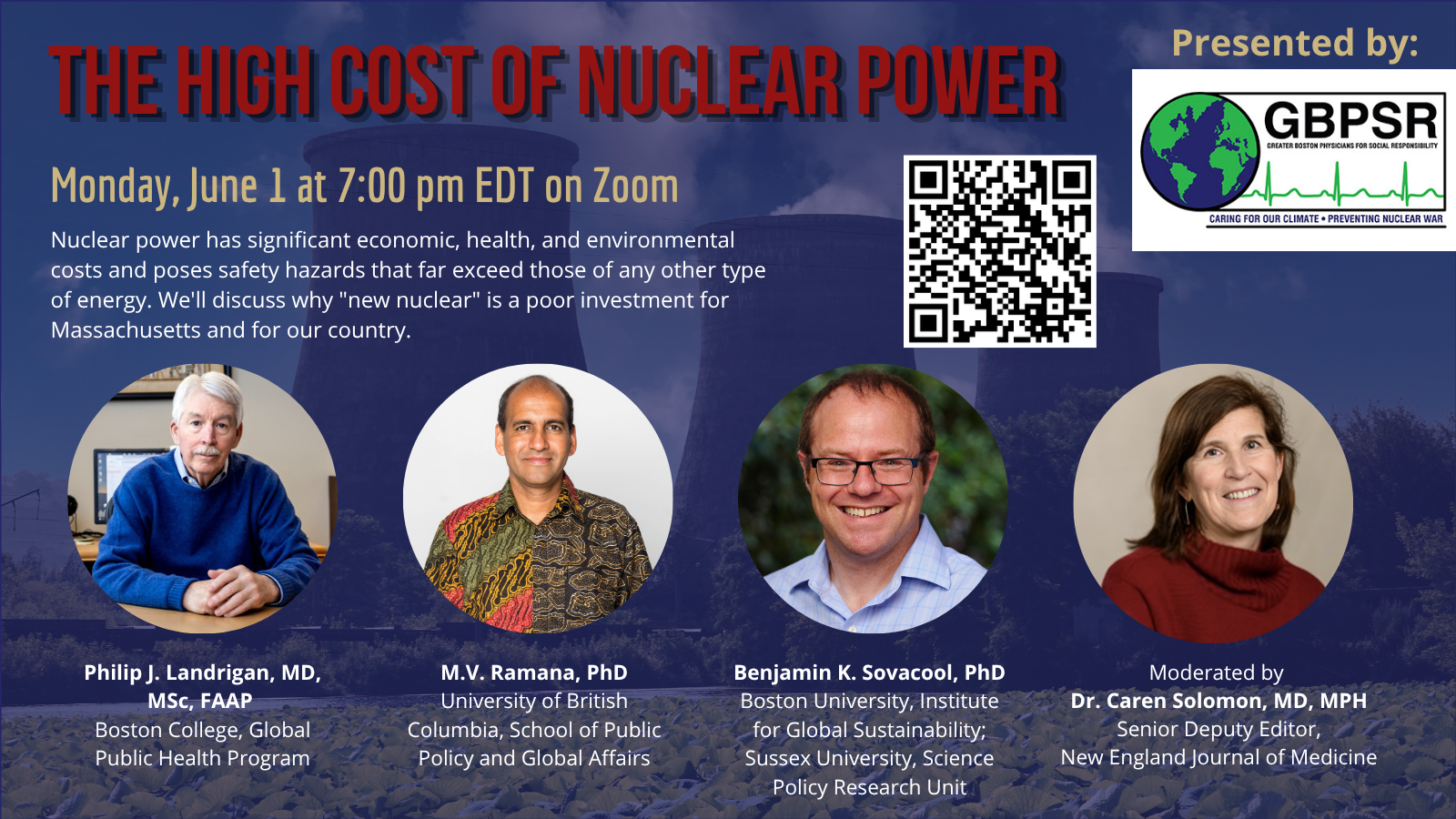
1 June Webinar – The High Cost of Nuclear Power – Register


of the week– Nuclear Reactor Information Task Force
To see nuclear-related stories in greater depth and intensity – go to https://nuclearinformation.wordpress.com
-
Archives
- May 2026 (262)
- April 2026 (356)
- March 2026 (251)
- February 2026 (268)
- January 2026 (308)
- December 2025 (358)
- November 2025 (359)
- October 2025 (376)
- September 2025 (257)
- August 2025 (319)
- July 2025 (230)
- June 2025 (348)
-
Categories
- 1
- 1 NUCLEAR ISSUES
- business and costs
- climate change
- culture and arts
- ENERGY
- environment
- health
- history
- indigenous issues
- Legal
- marketing of nuclear
- media
- opposition to nuclear
- PERSONAL STORIES
- politics
- politics international
- Religion and ethics
- safety
- secrets,lies and civil liberties
- spinbuster
- technology
- Uranium
- wastes
- weapons and war
- Women
- 2 WORLD
- ACTION
- AFRICA
- Atrocities
- AUSTRALIA
- Christina's notes
- Christina's themes
- culture and arts
- Events
- Fuk 2022
- Fuk 2023
- Fukushima 2017
- Fukushima 2018
- fukushima 2019
- Fukushima 2020
- Fukushima 2021
- general
- global warming
- Humour (God we need it)
- Nuclear
- RARE EARTHS
- Reference
- resources – print
- Resources -audiovicual
- Weekly Newsletter
- World
- World Nuclear
- YouTube
-
RSS
Entries RSS
Comments RSS
 nuclear-news