Bay of Biscay graveyard of nuclear-armed Russian submarine
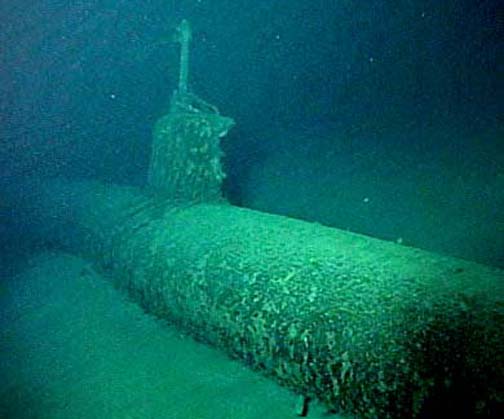
CTY Pisces – Photos of a Japanese midget submarine that was sunk off Pearl Harbor on the day of the attack. There’s a hole at the base of the conning tower where an artillery shell penetrated the hull, sinking the sub and killing the crew. Photos courtesy of Terry Kerby, Hawaii Undersea Research Laboratory. August 2003.
n April 8, K-8 suffered two fires, resulting in a shutdown of both nuclear reactors. The boat surfaced, and Captain Vsevolod Borisovich Bessonov ordered the crew to abandon ship. Eight crew members, trapped in compartments that were either flooded or burned out, died in the initial incident. Fortunately, a Soviet repair vessel arrived, and took K-8 under tow. However, bad weather made the recover operation a difficult prospect. Much of K-8’s crew reboarded the submarine, and for three days fought a life-and-death struggle to save the boat. Although details remain scarce, there apparently was no opportunity to safely remove the four nuclear torpedoes from K-8, and transfer them to the repair ship.
The Bay of Biscay is one of the world’s great submarine graveyards. In late World War II, British and American aircraft sank nearly seventy German U-boats in the Bay, which joined a handful of Allied and German subs sunk in the region during World War I. On April 12, 1970, a Soviet submarine found the same resting place. Unlike the others, however, K-8 was propelled by two nuclear reactors, and carried four torpedoes tipped by nuclear warheads……… https://nationalinterest.org/blog/buzz/15000-feet-below-waves-lurks-trouble-dead-russian-submarine-nuclear-armed-46652
France facing the burden of nuclear waste
receive 90% of the radioactive residues produced each year in France. One
approach to saturation, and for some waste there is still no solution.
In France, nuclear industry manages to cancel a film showing, about Fukushima nuclear disaster
 France TV Info 6th March 2019 A film about the Fukushima disaster censored in a commune that houses a
nuclear power plant. The Nuclear Exit Association planned a projection
eight years after the Fukushima accident in Japan. But the event was
canceled after the nearby nuclear plant contacted the town hall.
Britain now needs a Green New Deal
Times 7th March 2019 Britain needs a new economy that works for everyone and to move beyond the
old, broken systems and status quo that left many people behind. A green
new deal for the UK could give us just that. Climate change has muscled its
way back onto the political agenda. It was debated by MPs last week for the
first time in two years.
It seems that the momentum around Alexandria
Ocasio-Cortez and Senator Ed Markey’s green new deal in the US, the
audacious climate march on Westminster by schoolchildren last month and
increasingly rising temperatures may have finally jolted our politicians
out of their climate stupor.
Four months ago, a group of experts on the
Intergovernmental Panel on Climate Change (IPCC) delivered the news that
the world must halve carbon emissions in a little over a decade. Responding
would require an almighty push to green our economy – one that would touch
on every aspect of our lives.
Despite this stark warning from scientists,
the political establishment in Westminster barely flinched. There was no
commitment to redouble our efforts, no renewed urgency or call to action.
Instead, our politics continued to be consumed by Brexit. But the IPCC
report was a sobering wake-up call for many. A movement of activists in the
US, backed by a new generation of Democrats, including the Justice
Democrats, are reacting with the urgency needed. The green new deal – an
idea that came from organisations including the New Economics Foundation
(NEF) a decade ago – has emerged as a forceful response.
The idea is
simple: an unprecedented mobilisation of resources to achieve 100 per cent
renewable energy and eliminating greenhouse gas emissions within a decade
while creating millions of jobs and lifting living standards.
https://www.thetimes.co.uk/article/0ab3eb08-403c-11e9-aa0a-30b9d78dd63b
All use of nuclear power will end in Germany by end of 2022
Nuclear “finished” in Germany, plant operators affirm https://www.cleanenergywire.org/news/nuclear-finished-germany-plant-operators-affirm Frankfurter Allgemeine Zeitung 04 Mar 2019, Benjamin Wehrmann
The use of nuclear power in Germany will come to an end by the end of 2022 as planned, operators of the country’s remaining nuclear plants have told the Frankfurter Allgemeine Zeitung in reaction to a survey in which almost half of the respondents said nuclear plants should run longer than coal plants. Energy company EnBW said that the political regulation means that “nuclear energy is finished in Germany,” adding that its two remaining plants would be deconstructed right after they are taken off the grid. Ralf Güldner, head of the German Nuclear Forum, said ending nuclear power while at the same time phasing out coal and struggling to expand the power grid could mean that Germany’s autonomous power supply security becomes threatened. However, Güldner too said the political situation was “very clear.” Plant operator Preussen-Elektra said “we certainly don’t think about any plan B.” According to the article, operators say that they will not have qualified staff anymore to keep nuclear plants running longer than agreed.
In the survey, 49.5 percent of respondents said the planned decommissioning of the last nuclear plant by 2022 and of the last coal plant by 2038 is the right order, while 44.1 percent said closing nuclear plants before coal plants is wrong from a climate perspective.
Russia considering making spaceplane powered by a nuclear reactor
 ‘Reshaping space market’: Russia mulls building rocket plane with nuclear engine Rt.com : 6 Mar, 2019 Russian space agency Roscosmos is considering building a spaceplane powered by a nuclear reactor, according to a memo obtained by a Russian news agency. The move could “reshape” the market for space launches, the document says.
A rocket plane is an aircraft powered by rocket engines. Conventional jets proved better for atmosphere-only flight, but this type of vehicle found its niche application as a reusable spacecraft – most notably as the Space Shuttle program.
Several rocket planes are still operational today, like the SpaceShipTwo, which is meant for suborbital tourist flights. Roscosmos believes such an aircraft may be viable for space missions if equipped with a nuclear power plant, says a memo reviewed by RIA Novosti.
The memo says Russia’s experience with creating the Buran spaceplane and similar space systems would come in handy for designing such a craft in the future.
Nuclear power is tricky to use in space, let alone harnessing it to provide propulsion. The USSR experimented with placing small nuclear reactors on its satellites for endurance, but the incident with the Kosmos 954 sat, which malfunctioned and fell in Canada in 1977, showed that potential problems probably outweigh the benefits. Improvements in solar panels made them the to-go power source in space applications while chemical and compressed gas thrusters are used for propulsion.
The picture may be different for long-range space missions, in which a reliable power source, capable of providing propulsion for months rather than minutes would be a huge advantage. Russia is currently working on a project dubbed TEM, a nuclear-powered rocket powered by a megawatt-class nuclear reactor…….. https://www.rt.com/russia/453132-rocket-plane-nuclear-power/
Lithuania wants Belarus to convert its Russian-built nuclear power plant to gas
Lithuania to ask Belarus to switch nuclear plant to gas VILNIUS (Reuters) 6 Mar 19, – Lithuanian prime minister Saulius Skvernelis will ask Belarus to convert its Russian-built nuclear power plant to gas provided by Lithuania’s liquefied natural gas (LNG) terminal and a planned gas link between Lithuania and Poland.
The nearly-completed nuclear plant has long been viewed as a threat to its safety and national security by Lithuania, which says it is not built to the highest safety standards, an allegation which is denied by Belarus.
Astravets, which is near the border with Lithuania, is being built by Russia’s Atomstroyexport and financed with a $10 billion loan from by Moscow. It expects to have the first of its two 1.2 gigawatt VVER 1200 reactors online this year and the next one in 2020.
“It’s up to Belarus to make a choice: to keep on having an energy sector which depends on the policies of a single country, or to make a strategic change,” Skvernelis said on Monday, without naming Russia, the dominant supplier of energy to Belarus.
“Lithuania could be a good example and a useful partner for Belarus,” he added.,………
Reporting by Andrius Sytas; Editing by Alexander Smith https://www.reuters.com/article/us-baltics-energy/lithuania-to-ask-belarus-to-switch-nuclear-plant-to-gas-idUSKCN1QL163
Ceredigion County Council has reiterated a long-standing nuclear-free commitment.

 Ceredigion could be considered for potential nuclear waste storage site, Tivyside Advertiser, By Dave Parkinson 6 Mar 19, WITH parts of Wales being considered as possible sites to bury radioactive waste, Ceredigion County Council has reiterated a long-standing nuclear-free commitment.
Russia ready to enter deal to build nuclear power plant in Czech Republic
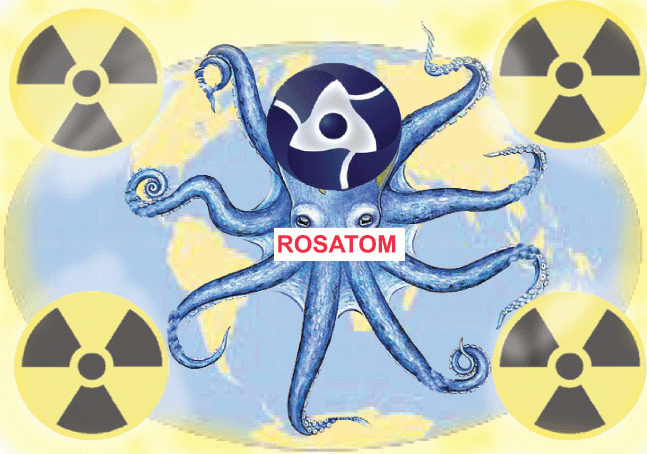 CZECH-RUSSIAN TALKS INCLUDED DISCUSSIONS ON CONSTRUCTION OF NEW NUCLEAR POWER BLOCK, https://www.radio.cz/en/section/news/czech-russian-talks-included-discussions-on-construction-of-new-nuclear-power-block Tom McEnchroe, 06-03-2019
His Czech counterpart Marta Nováková (ANO) said one tender conditions would be that the third nuclear power source remain fully under the administration of the Czech Republic once finished.
The intergovernmental commission also discussed mutual cooperation in supporting small- and medium-sized businesses, mutual exports into third-countries and cooperation within the aircraft industry.
The future of Britain’s Hinkley C nuclear project is in doubt
 Bridgwater Mercury 5th March 2019 Roy Pumfrey, Cannington resident and Stop Hinkley spokesman has a number of
concerns about the new EDF Sedgemoor Campus off Bath Road.
working at Hinkley simply won’t have been able to afford.
see is the power station and an enormous radioactive waste store, twice the size of what EDF originally proposed. All the temporary structures – the jetty, two hostel sites, park and rides, office blocks, freight lay-downs etc etc – have to be removed. EDF has already said its fantasy is to spirit the Bath Road units away to its improbable development at Sizewell.
As for the sites, acres of tumbleweed are all we have to look forward to.
https://www.bridgwatermercury.co.uk/news/17478105.letter-what-will-become-of-barcode-city/
Many infringements found in Orano’s (formerly Areva) uclear site at Tricastin, France
 Sortir du Nucleaire 5th March 2019 , As part of ASN’s duties concerning the control of basic nuclear
installations (BNIs), an unannounced inspection was carried out on 6 March
2018 on the W and TU5 installations (BNI No. 155), operated by Orano Cycle
on the nuclear site Tricastin, on the theme “waste management”. As this
inspection revealed numerous infringements, the “Quit Nuclear” Network
filed a direct summons against Orano.
https://www.sortirdunucleaire.org/Tricastin-dechets-Orano
Russia keen to have Bulgaria go into debt to Russia, to implement Belne nuclear station
 Russia Ready To Take Part in Bulgaria’s Belene Nuclear Power Plant, Medvedev Says, Moscow Times
Russia to lease nuclear-powered attack submarine to India for a cool $3 billion
|
India, Russia To Sign $3 Billion Nuclear Sub Deal This Week
India and Russia are set to sign a $3 billion lease agreement for a nuclear-powered attack sub on March 7, according to local media reports. The Diplomat, By Franz-Stefan Gady, March 05, 2019 India and Russia are expected to conclude an intergovernmental agreement for a 10-year lease of a Russian nuclear-powered attack submarine (SSN) this week. The deal, estimated to be worth around $3 billion, will likely be inked on March 7, according to sources cited by The Economic Times. Neither the Indian nor Russian defense ministries, however, have officially confirmed that a signing ceremony will be held in the coming days. |
|
Faslane nuclear submarine base had hundreds of health and safety incidents in 2018
 Daily Record 3rd March 2019 More than 500 “significant” health and safety incidents were recorded at the Faslane nuclear submarine base last year, the Sunday Mail can reveal. Documents released to the SNP under Freedom of Information for the Royal Navy facility near Helensburgh, in Dunbartonshire, show the figure has almost quadrupled since 2014.
Last year, there were 481 health and safety incidents at the high security base compared to 123 in 2015, 377 in 2016 and 501 in 2017. A statement confirmed that under Naval command, only those deemed as “significant” were now recorded on central systems.
https://www.dailyrecord.co.uk/news/politics/faslane-nuclear-fears-after-500-14079043
New defects, after a series of problems and delays, in France’s supposed “nuclear flagship” Flamanville
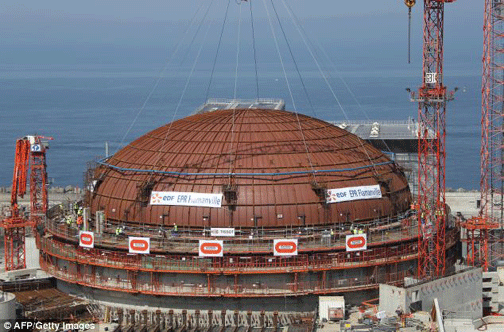 France Info 1st March 2019 Machine Translation] Cracks, failed welds … How the site of the EPR Flamanville has turned into a fiasco to nearly 11 billion euros.
The third generation nuclear reactor, which was to take office in 2012, will finally be operational only in 2020 after the discovery of new defects. Back on those days when the yard slipped. It was to be the flagship of the French nuclear industry, the EPR of Flamanville (Manche) is today its ball.
The construction site of the European Pressurized Reactor (EPR) experienced numerous delays, the last of which occurred on July 25, 2018, after the discovery of poorly made welds. Originally scheduled for 2012, its entry into service is (for the moment) postponed to 2020. And nothing says that the yard will be spared by new counter-time. The Nuclear Safety Authority (ASN) thus pinned EDF on Wednesday (February 27th) for a lack of “traceability” of certain equipment qualification operations on the EPR.
1 This Month

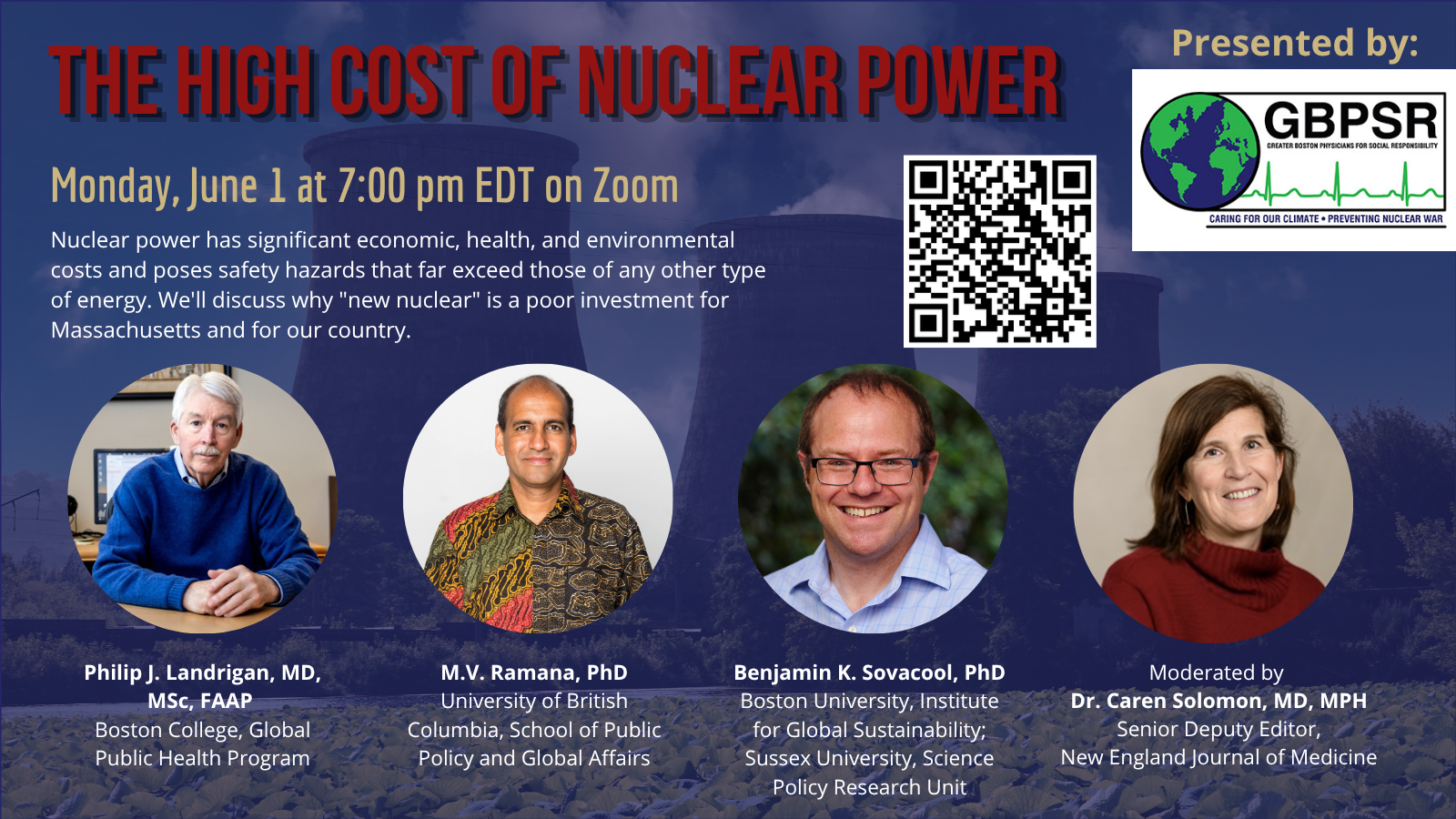
1 June Webinar – The High Cost of Nuclear Power – Register


of the week– Nuclear Reactor Information Task Force
To see nuclear-related stories in greater depth and intensity – go to https://nuclearinformation.wordpress.com
-
Archives
- May 2026 (262)
- April 2026 (356)
- March 2026 (251)
- February 2026 (268)
- January 2026 (308)
- December 2025 (358)
- November 2025 (359)
- October 2025 (376)
- September 2025 (257)
- August 2025 (319)
- July 2025 (230)
- June 2025 (348)
-
Categories
- 1
- 1 NUCLEAR ISSUES
- business and costs
- climate change
- culture and arts
- ENERGY
- environment
- health
- history
- indigenous issues
- Legal
- marketing of nuclear
- media
- opposition to nuclear
- PERSONAL STORIES
- politics
- politics international
- Religion and ethics
- safety
- secrets,lies and civil liberties
- spinbuster
- technology
- Uranium
- wastes
- weapons and war
- Women
- 2 WORLD
- ACTION
- AFRICA
- Atrocities
- AUSTRALIA
- Christina's notes
- Christina's themes
- culture and arts
- Events
- Fuk 2022
- Fuk 2023
- Fukushima 2017
- Fukushima 2018
- fukushima 2019
- Fukushima 2020
- Fukushima 2021
- general
- global warming
- Humour (God we need it)
- Nuclear
- RARE EARTHS
- Reference
- resources – print
- Resources -audiovicual
- Weekly Newsletter
- World
- World Nuclear
- YouTube
-
RSS
Entries RSS
Comments RSS
 nuclear-news