 Times 3rd March 2019 Rolls-Royce is selling the vast bulk of its civil nuclear business, dealing a new blow to efforts to rebuild Britain’s atomic power industry. The FTSE 100 engineer has hired consultants from KPMG to find a buyer for the
nuclear division, which could fetch up to £200m.
The move marks the end of an era for the country’s premier engineering company, which has more than 50 years’ expertise in nuclear power but is being slimmed down by chief executive Warren East to focus on jet engines, power generators and defence. The nuclear business makes instruments and controls to monitor radiation and temperature and prevent reactors overheating. Its equipment is installed in more than 200 reactors around the world, and it has a big presence in France, where it works with the state-backed engineering firm Orano , [formerly Areva, which went bankrupt]
Rolls-Royce’s retreat from civil nuclear work reflects the industry’s broader problems. Plans for new power stations in Britain have been left in tatters after the Japanese industrial giants Toshiba and Hitachi withdrew, leaving just Hinkley Point in Somerset under way.
The Japanese exit has triggered an inquiry by the Commons business committee into future investment in energy infrastructure. The sale will not include Rolls-Royce’s work on Hinkley Point, which is ringfenced, the company’s
project to develop small reactors or its nuclear submarine reactor business.
Rolls-Royce has been in talks to install its equipment at a plant in Essex planned by China General Nuclear, to help assuage security concerns. This work is likely to be transferred to the new owner. Sources said the business, which has more than 1,000 staff, was likely to go to a trade buyer. A Chinese deal is unlikely.
https://www.thetimes.co.uk/edition/business/rolls-royce-to-offload-civil-nuclear-unit-zsq59zlmm
March 4, 2019
Posted by Christina Macpherson |
business and costs, UK |
Leave a comment
Why the collapse of a historic nuclear treaty could lead to a Cold War-like arms race, ABC News,
By Tasha Wibawa 3 Mar 19 The United States and Russia have ripped up a Cold War-era nuclear missile treaty, leaving analysts fearing a potential arms race with global ramifications.
Key points:
- The landmark INF treaty was integral to ending the Cold War
- Short and intermediate range missiles were banned because of the short flight time
- Analyst say it’s unlikely to be renegotiated within the six-month notice period
Last week, Russian President Vladimir Putin said Russia was ready for a Cuban Missile-style crisis if the US wanted one, referring to the 1962 standoff that brought the world to the edge of nuclear war.
Decades later, tensions between the two nations are heating up again.
Mr Putin warned that Moscow would retaliate if the US placed new missiles closer to Russia, telling local media that Moscow could deploy hypersonic missiles on ships and submarines outside US territorial waters.
The comments were made after the Trump administration announced it would officially abandon a historic nuclear pact that had kept nuclear missiles out of Europe for three decades.
Here’s a look at what the treaty is, what may come next, and why analysts believe its demise could lead to a 21st-century arms race.
The Intermediate-Range Nuclear Forces Treaty (INF) bans the US and the Russian Federation, previously the Soviet Union, from developing, testing and possessing short- and intermediate-range missiles that could be launched from the ground, as opposed to the sea or sky.
The treaty — signed by former US president Ronald Reagan and Soviet leader Mikhail Gorbachev in December 1987 — declared that “nuclear war cannot be won and must never be fought” and took seven years to negotiate.
Both sides agreed to destroy a total of 2,692 short-, medium- and intermediate-range missiles with a range between 500 and 5,500 kilometres that were stationed in, or aimed at Europe.
The treaty is credited with helping to ending the Cold War.
Maria Rublee, a former US intelligence officer and nuclear politics expert at Monash University, told the ABC these missiles were seen as a “hair trigger for nuclear war” due to how quickly they could strike a target.
“You don’t have time to talk, to pick up the phone, the red hotline, to say what’s going on and ask if this is a mistake.”
Washington and its North Atlantic Treaty Organisation (NATO) allies claim Moscow has been violating the terms of the treaty by developing missiles within the range for years, but Russia has repeatedly denied the allegations.
Earlier this month the Trump administration declared it would suspend US obligations under the treaty, with the intention of withdrawing because of Russia’s alleged non-compliance.
The day after the announcement, Russia also said it would withdraw from the treaty, and accused the US of fabricating the allegations so it could develop new missiles.
The treaty is not dead just yet — both parties must give six months notice before they can officially withdraw — but Dr Rublee said the chances of the treaty being revived were low, although there was some hope.
“[The first step] is not going to come from the Trump administration and it’s not going to come from Russia,” she said.
“It would need to come from NATO because the countries most at risk are European countries.”…….. https://www.abc.net.au/news/2019-03-03/collapse-of-treaty-could-lead-to-new-arms-race/10845950
March 4, 2019
Posted by Christina Macpherson |
politics international, Russia, USA, weapons and war |
Leave a comment
 **Flamanville* Tendance Ouest 1st March 2019 EDF announced that “500 people will intervene to take over twenty welds” non-compliant on the site of the nuclear reactor. A team that will add to
the current workforce of the site, already 3800 people. The operation
should take place in the fall, “after our hot tests , ” said Bertrand
Michoud, director of facilities at the EPR Flamanville.
https://www.tendanceouest.com/actualite-313403-epr-de-flamanville-500-personnes-pour-reprendre-20-soudures-sur-le-chantier.html
March 4, 2019
Posted by Christina Macpherson |
France, safety |
Leave a comment
Nuclear waste meeting in Swansea is cancelled and replaced with an online event Wales Online, By Robert  DallingSenior Reporter 1 MAR 2019
It was one of a series of meetings taking place across the country to discuss where to bury the country’s most dangerous radioactive waste.
The organisation that had planned a meeting in Swansea about where to store nuclear waste has cancelled it, and said it’s staging an online event instead.
Government-run Radioactive Waste Management was behind the meetings in Swansea and Llandudno to discuss where to create a geological disposal facility for burying the UK’s stockpile of the most dangerous radioactive waste.
No details of any potential sites were made public and it was understood that the body was seeking “a willing host community” where radioactive waste could be stored hundreds of metres underground.
The Swansea meeting was planned for Tuesday, March 1
A statement from the firm read: “Radioactive Waste Management (RWM) respects the views expressed by Swansea Council in their proposed motion (for consideration on 28 February) about hosting a Geological Disposal Facility (GDF) in their area.
“RWM also reaffirms that none of its regional events, including the one for Swansea , is linked in any way to where a GDF might be sited and no site anywhere in England or Wales has been targeted, proposed or chosen. A GDF can only be sited in Wales if a community is willing to host it…….
It is expected that the process of selecting an underground site and going through the planning and construction process will take decades with any chosen site first receiving waste in the 2040s.
The Government said communities interested in hosting a GDF could receive up to £1m a year initially and up to £2.5m a year if deep borehole investigations took place.
Swansea Lib Dem councillor Peter Black criticised the move to cancel the physical meeting.
He said: “I think we should have met them face to face so as to get some clarity as to what exactly they were proposing.
“A webinar means that many people who might want to contribute to this debate, who are not on the internet, will now be excluded.”
Leader of Swansea Council, Rob Stewart said: “I’m pleased that RWM has listened to the very strong representations that we have made and cancelled this meeting in Swansea.
“We note that they have replaced it with an online event so I will make it clear that we will not let up on in our fight until the Swansea Bay area is ruled-out as a potential location for a dump for radioactive waste.
“The reaction of most councillors, our local residents and businesses is clear – nuclear waste is not and never will be welcome here and we will not allow it.” https://www.walesonline.co.uk/news/wales-news/nuclear-waste-meeting-swansea-cancelled-15901315
March 2, 2019
Posted by Christina Macpherson |
politics, UK, wastes |
Leave a comment
 After Putin’s warning, Russian TV lists nuclear targets in U.S. Andrew Osborn, MOSCOW (Reuters) 25 Feb 19, – Russian state television has listed U.S. military facilities that Moscow would target in the event of a nuclear strike, and said that a hypersonic missile Russia is developing would be able to hit them in less than five minutes.
The targets included the Pentagon and the presidential retreat in Camp David, Maryland.
The report, unusual even by the sometimes bellicose standards of Russian state TV, was broadcast on Sunday evening, days after President Vladimir Putin said Moscow was militarily ready for a “Cuban Missile”-style crisis if the United States wanted one.
With tensions rising over Russian fears that the United States might deploy intermediate-range nuclear missiles in Europe as a Cold War-era arms-control treaty unravels, Putin has said Russia would be forced to respond by placing hypersonic nuclear missiles on submarines near U.S. waters.
……..The targets, which Kiselyov described as U.S. presidential or military command centers, also included Fort Ritchie, a military training center in Maryland closed in 1998, McClellan, a U.S. Air Force base in California closed in 2001, and Jim Creek, a naval communications base in Washington state.
Kiselyov, who is close to the Kremlin, said the “Tsirkon” (‘Zircon’) hypersonic missile that Russia is developing could hit the targets in less than five minutes if launched from Russian submarines.
Hypersonic flight is generally taken to mean traveling through the atmosphere at more than five times the speed of sound……. https://www.reuters.com/article/us-usa-nuclear-russia/after-putins-warning-russian-tv-lists-nuclear-targets-in-us-idUSKCN1QE1DM
February 25, 2019
Posted by Christina Macpherson |
politics international, Russia, USA, weapons and war |
Leave a comment
‘Tit-for-tat steps’ toward a nuclear war, DAILY SABAH, Hakkı Öcal 25 Feb 19, Russian President Vladimir Putin’s response to reports that the U.S. would deploy short-range missiles has strong warnings about how they could counter this move.
Those missiles, Putin estimates, could reach Moscow in 10 minutes and he considers this “a very serious threat.” He declared in his response in English, “In this case, we will be forced – I repeat – forced to take tit-for-tat steps.”
Now, read this warning with another piece of news from the Truthout.org website. According to the Truthout report, the National Nuclear Security Administration (NNSA), the U.S. federal agency responsible for the military application of nuclear science, announced that the first of a new generation of strategic nuclear weapons had rolled off the assembly line. It is smaller in size and power; it will yield “only” about one-third of the power of the bomb the U.S. had dropped on Hiroshima on Aug. 6, 1945. In one day, 145,000 people were killed in Hiroshima. So, this “small” bomb, that is officially designated as the W76-2, could kill approximately 50,000 people.
A smaller missile and a smaller bomb, according to the group known as the Union of Concerned Scientists, are actually more dangerous than those monster nuclear weapons, for they kill fewer people. No, there is no contradiction in this evaluation. What precluded the use of the big bombs by both sides was the fear that mutual destruction from both sides’ large atomic weapons would mean the annihilation of civilization. That mutual assured destruction (MAD) theory made a thermonuclear disaster “unthinkable.” ……
This small bomb, according to the Union of Concerned Scientists, is not a deterrent against another country; it is going to be used. It is designed to be used. Its power is not the equivalent of the roughly 100 kilotons of TNT as the ones that had devastated Hiroshima and Nagasaki, but five kilotons. A practical guy like Trump would like to teach a lesson or two to those who are on his national strategy document as “the enemies of the U.S.” using this rather economic weapon. It would not end capitalism and the financial network as the “big one” would have.
Policy analysts think that the Pentagon would definitely deploy short-range nuclear-capable missiles in Eastern Europe and on islands off the Chinese coast. Watch for the deployment of those small bombs on nuclear submarines around Iran, too.
We are closer to a nuclear war than we would like to believe. https://www.dailysabah.com/columns/hakki-ocal/2019/02/25/tit-for-tat-steps-toward-a-nuclear-war
February 25, 2019
Posted by Christina Macpherson |
Russia, USA, weapons and war |
Leave a comment
L’Express 22nd Feb 2019 , Sooner or later, EDF will have to close power plants. Facing the corporation is a vast building project with many unknowns. And in the middle flows the Meuse.
Nestled in one of its loops, a few kilometers from the Belgian border, the two cooling towers of the Chooz nuclear power  plant spew their plumes of white smoke. On the other side of the river, under the wooded hillside that has taken the colors of autumn, EDF is leading the dismantling of Chooz A.
Shut down since 1991 this reactor, installed in an\ artificial cavern, saw its installations gradually dismantled and
evacuated. Still to settle the fate of the tank. Perched on a metal bridge over a deep pool where she was dipped, a handful of Swedish engineers from the American company Westinghouse remotely maneuver the articulated arms of a robot that cut it. A long work, which must last until 2022. After which, the cave Chooz A will be filled with sand, for eternity.
https://lexpansion.lexpress.fr/actualite-economique/les-travaux-d-hercule-du-demantelement-nucleaire_2040298.html
February 25, 2019
Posted by Christina Macpherson |
decommission reactor, France |
Leave a comment
East Anglian Daily Times 23rd Feb 2019 Suffolk residents pack out Theberton church to have their say on Sizewell
C. Worried residents from across east Suffolk voiced their dismay about plans for Sizewell C at a public meeting near the proposed site on Saturday morning. Residents have long been concerned that the plan will have
long-lasting effects on the areas environment and tourist industry, while other issues such as roads, traffic and an anti-nuclear attitude were also voiced in the meeting organised by Theberton and Eastbridge Action Group on
Sizewell (TEAGS).
TEAGS representative Charles McDowell said that “The link road they have proposed will cut parishes in two, breaks up fields and makes them inviable for farming. “It makes you wonder if they [EDF] are out for revenge against the people of Theberton.” The power station’s proximity to nationally renowned nature reserve, RSPB Minsmere ruffled feathers with residents concerned for the safety of the birds, and in turn the effect a downturn would have on the local tourism economy, worth £250 million.
Adam Rowlands, the RSPB’s Suffolk area manager, said: “In terms of flora and fauna in the area, this is a matter of international importance.” Another resident said that the plans could see a ‘decimated natural environment’ left for his children and grandchildren.
County councillor Guy McGregor, who was responsible for the council’s previous response to the plan, said that although it would see opportunities for employment, the problems outweighed the benefits, highlighting the ‘constant stream’ of heavy goods vehicles that would create traffic and pollution. EDF’s plans could see up to 1,500 HGVs on
the county’s roads, in addition to the extra traffic that would be created by the construction of a new build town or campus which would house 2,400 workers at Eastbridge.
Richard Smith – who is now the county councillor leading negotiations with EDF – praised the efforts of TEAGS
and residents, saying: “There is no better way for a community to voice its concerns like how you have. It sends a huge message to EDF.” Mr Smith did warn however that the authority has ‘no direct power’, but urged residents to continue their campaign.
https://www.eadt.co.uk/news/sizewell-c-concerns-bring-hundreds-to-theberton-church-1-5904154
February 25, 2019
Posted by Christina Macpherson |
opposition to nuclear, UK |
Leave a comment
News.com.au 23rd Feb 2019 , Eerie photographs taken recently show how nature is reclaiming an abandoned
town 33 years after the nuclear disaster at Chernobyl. The harrowing
pictures show what is left of the towns of Chernobyl and Pripyat in
Ukraine, with gasmasks scattered about and dolls left abandoned in a day
care centre. Other captivating photos show an abandoned supermarket with a
shopping trolley outside and a rusting bumper car. Dutch photographer Erwin
Zwaan, 47, travelled to the 28-kilometre exclusion zone around Chernobyl in
Northern Ukraine in 2016 and 2018 to photograph the ghostly ruins for his
book Chernobyl – 30+ Years Without Humans. The power plant and nearby town
Pripyat — once home to 50,000 people — remain more or less untouched
three decades after they were evacuated in 1986.
ttps://www.news.com.au/technology/environment/natural-wonders/haunting-photos-show-dozens-of-gas-masks-littering-chernobyl-as-nature-reclaims-nuclear-plant-blast-site/news-story/bb8e136f596b754ddf45430c2366d1e4
February 25, 2019
Posted by Christina Macpherson |
Resources -audiovicual, Ukraine |
Leave a comment
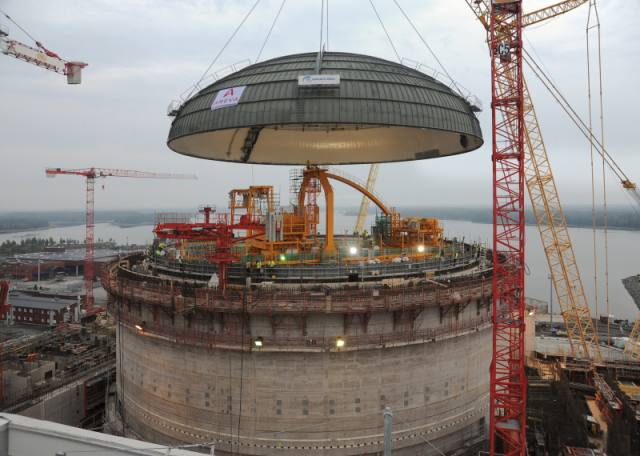
WSAU 22nd Feb 2019 Safety problem found at Areva’s Finnish reactor before start-up –
regulator. Finland’s nuclear regulator has identified a safety issue at
Olkiluoto 3, a 1.6-gigawatt reactor built by France’s Areva, now renamed
Orano, and the problem needs to be fixed before the unit can receive a
permit to operate, the regulator told Reuters. The reactor is due to start
producing electricity in January next year after a decade-long delay. Part
of the pressuriser, a primary circuit component of the reactor, is
vibrating at levels that exceed safety limits, said Pekka Valikangas, the
regulator’s section head for nuclear reactor regulation, ahead of an
important assessment which is due to be published on Monday. “The test
results show that these vibrations are not approved,” Valikangas said in an
interview.
https://wsau.com/news/articles/2019/feb/22/exclusive-safety-problem-found-at-arevas-finnish-reactor-before-start-up-regulator/
February 25, 2019
Posted by Christina Macpherson |
Finland, safety |
Leave a comment
 CofE backs further action on climate change
Christian Today staff writer Fri 22 Feb 2019 The Church of England will step up its environmental programme in response to the escalating threat of climate change, its General Synod voted today.
A motion brought by the dioceses of London and Truro was approved, committing the Church to accelerating its existing environmental programme and calling on every diocese to put in place an environmental programme overseen by a designated member of the bishop’s staff team…… https://www.christiantoday.com/article/cofe-backs-further-action-on-climate-change/131845.htm
February 25, 2019
Posted by Christina Macpherson |
climate change, Religion and ethics, UK |
Leave a comment
 Orsted’s Hornsea Project Spawns Talk of Offshore Wind Replacing Nuclear, Greentech Media, JASON DEIGN FEBRUARY 22, 2019
 Danish developer Ørsted said its Hornsea One plant, which started delivering power to the grid this month, could help make up for a lack of planned nuclear generation in the U.K., as plans for new reactors have fallen by the wayside.When complete, Hornsea One will cover more than 157 square miles, making it bigger than the city of Denver, and have a peak capacity of 1.2 gigawatts, thanks to 174 turbines of at least 7 megawatts each.
It will be the biggest offshore wind plant on the planet, dwarfing the current leader, Walney Extension, which Ørsted opened last September with a capacity of 659 megawatts. Ørsted has plans for an even bigger project, the 1.8-gigawatt Hornsea Two plant, in U.K. waters………
Not just a U.K. debate
Given that the U.K. is relying on a largely untested reactor design for upcoming nuclear capacity, it is perhaps legitimate to ask if the reliability of new reactors will be significantly greater than those of gigawatt-scale offshore wind farms built at the same time.
Tom Dixon, wholesale team leader at U.K. consultancy Cornwall Insight, said: “New offshore wind farms being developed are now much more reliable than older offshore sites or their onshore counterparts.”
As a result, he said, “it is credible to say that the shortfall in new nuclear could be made up by offshore wind, with improving operational performance and relatively low costs for the technology, but additional flexibility would be required at times when output is low.”
It is not just the U.K. where offshore wind could potentially take over new nuclear’s mantle.
This month, in the wake of a partnership between Ørsted and Tokyo Electric Power Company, the analyst firm Wood Mackenzie Power & Renewables questioned whether offshore wind could also be a cure for rising energy demand as new nuclear languishes in Japan.
“Rising costs and a lack of public confidence in Tepco’s ability as a nuclear operator have led the company to reconsider its future strategy,” said WoodMac senior analyst Robert Liew. “Tepco’s involvement in offshore wind is a crucial development.” https://www.greentechmedia.com/articles/read/hornsea-spawns-talk-of-offshore-wind-replacing-nuclear#gs.v9EFOjv7
February 23, 2019
Posted by Christina Macpherson |
renewable, UK |
Leave a comment
 ‘Things will turn NASTY’ Belarus leader issues warning after collapse of nuclear treaty https://www.express.co.uk/news/world/1090969/belarus-news-inf-treaty-world-war-3-russia-v-usa-nato
RUSSIA and Belarus will consider a joint military response if the US deploys weapons in Europe after pulling out of the Intermediate-range Nuclear Forces (INF) Treaty.
By SIMON OSBORNE, Feb 22, 2019 Belarus President Alexander Lukashenko said he fears “things will turn nasty” should the US decision spark a new arms race at a time of increasing global tensions. The US and Soviet Union signed the INF treaty in 1987 in an historic move that effectively removed nuclear weapons from Europe and signalled the beginning of the end of the Cold War.
But Donald Trump has pulled the US out of the accord after accusing Russia of committing repeated violations and Mr Lukashenko fears the security of Belarus could be compromised as a result.
He said: “It is a catastrophe, particularly for us.
“I am afraid the Americans will grab the fleeting opportunity and deploy the missiles in Europe after breaking the treaty. “If they do, things will turn nasty for us, too. Because together with Russia, we will have to think of reciprocal measures.”
He continued: “It would be unavoidable if this happened. It would be even worse if, God forbid, missiles were deployed in Ukraine.
“This is why I am wholeheartedly against dissolving the Intermediate-Range Nuclear Forces Treaty.
“We pursue a peace-loving policy. We don’t need scuffles between major powers, from which, judging from history, we’ve always suffered.
“This is why we don’t need this slaughter, this fight, particularly now around the Intermediate-Range Nuclear Forces Treaty.”
Mr Lukashenko said he believes NATO is keen to deploy missiles in Europe.
He said: “It seems to me that although NATO claims they are not going to deploy these missiles in Europe, they are running a bluff.
“Otherwise, why would they withdraw? Why did they have to destroy this treaty?
“They should have come to terms with China and make it part of the treaty if China was the focus of it.”
February 23, 2019
Posted by Christina Macpherson |
Belarus, politics international, Russia, USA, weapons and war |
Leave a comment
The Rift Between the U.S. and Europe Brings Nuclear Risks, TIME, By SIMON SHUSTER/MUNICH February 21, 2019
“…………The loss of trust between the U.S. and Europe was especially palpable at this year’s Munich summit, a traditional show of mutual reassurance among NATO allies. In her speech to the summit, German Chancellor Angela Merkel complained that the U.S. decision to scrap the INF treaty was made without consulting Europe, even though the treaty concerns Europe’s security most of all. “We sit there in the middle with the result,” Merkel said. Minutes later, when Vice President Mike Pence delivered a greeting from his boss, President Donald Trump, the room full of European diplomats responded with stony silence.
Their chief concern at the summit, at least when it comes to nuclear security, was the U.S. move in May to pull out of the deal with Iran. That deal took nearly a decade to negotiate, and it committed the Islamic Republic in 2015 to halt its nuclear-weapons program. Yet despite U.S. intelligence agencies reporting the deal was working, the Trump Administration scrapped it, imposing new sanctions against Iran and pressuring European allies to do the same. Germany, France and the U.K. have so far refused. ……
February 23, 2019
Posted by Christina Macpherson |
EUROPE, politics international, USA |
Leave a comment









 nuclear-news