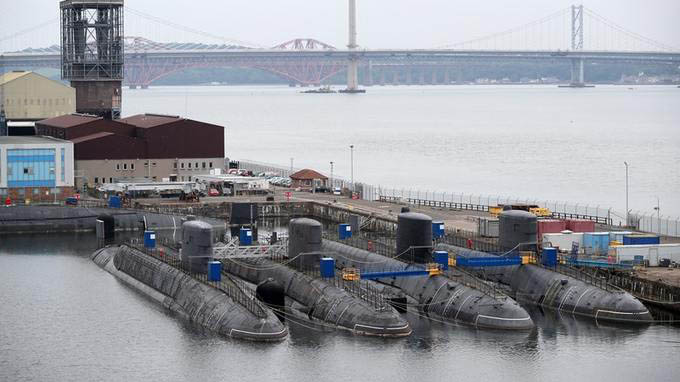
Britain’s ageing nuclear submarines are dangerous, Morning Star 3rd April 2019
https://morningstaronline.co.uk/article/britain%E2%80%99s-ageing-nuclear-submarines-are-dangerous
REVELATIONS that the Ministry of Defence has failed to dispose of any of the 20 nuclear submarines it has decommissioned in nearly 40 years underlines the unique risks associated with nuclear weapons.
What passes for debate in Parliament on our nuclear arsenal is deeply frustrating.
Ministers airily dismiss concerns about the staggering cost of Trident renewal (over £200 billion), ignore advice from top brass that these “useless” weapons swallow up money that would be better spent on conventional equivalents, sidestep questions about whether the ability to incinerate whole cities at the push of a button is a relevant deterrent to modern threats from terrorism to climate change.
Even Tony Blair has said the utility of a nuclear arsenal was “non-existent in terms of military use,” admitting in his memoirs that he only supported renewal when PM because he felt foreigners would see it as “too big a downgrading of our status as a nation” if we voluntarily abandoned it.
Yet his successors portray any attempt to discuss these questions rationally as evidence of being soft on Britain’s security.
They could not be more wrong, as the National Audit Office’s investigation into how we dispose of decommissioned submarines attests.
We have not disposed of a single one since 1980. The MoD has not been in a position to remove radioactive fuel from retired submarines since 2004, when the Office for Nuclear Regulation ordered it to stop as its facilities for doing so — at the Devonport naval base in Plymouth — were not safe enough.
An original plan to have a new disposal process operational by 2011 has now been postponed to 2026; the MoD stores twice as many mothballed nuclear subs as it operates and some have been cooling off in retirement for longer than they ever roamed the seas.
This is not simply a matter of bad organisation or rising costs.
Dr Philip Webber of Scientists for Global Responsibility (SGR) warned in 2017 that of the 12 retired submarines docked at Devonport, eight still contained fuelled nuclear reactors.
These “have to be continually cooled using external power and water to avoid overheating, which could lead to a fire, meltdown or a release of radioactive particles and gases.”
The risks involved in defuelling nuclear reactors are considerable – that’s why the MoD has felt unable to do so safely for 15 years — and older reactors (as we would expect to find on vessels that haven’t been operational for up to 40 years) tend to pose a greater risk of igniting, exploding or releasing radiation if anything goes wrong in the process than newer ones.
In an excellent article published in the SGR newsletter of winter 2017, Dr Webber points out that the MoD is actually aware of how dangerous keeping decommissioned subs knocking around is: following freedom of information requests, minutes of a Defence Board Meeting of 2011 were released.
The MoD’s senior nuclear safety regulator Commodore Andrew McFarlane notes that “all pressurised water reactors are potentially vulnerable to … structural failure,” which could lead to “release of highly radioactive fission products outside the reactor core.”
This would be a public safety hazard “out to 1.5 kilometres” (almost a mile) from the submarine.
Dr Webber estimates that 32,000 residents of Plymouth would fall within that range.
Safely defuelling and disposing of these radioactive hulks should be a priority for any government that takes public
safety seriously.
The enormous difficulties of doing so are a warning of exactly what risks we take on by blithely opting to renew our nuclear weapons programme.
It’s tragic that for most of our politicians “national security” rests on our ability to harm the peoples of other nations, rather than keep people on these shores safe.
April 4, 2019
Posted by Christina Macpherson |
safety, UK, weapons and war |
1 Comment
 Over the years, those who sought care from Dispensary No. 4 or the IRME were logged in the state’s medical registry, which tracks the health of people exposed to the Polygon tests. People are grouped by generation and by how much radiation they received, on the basis of where they lived. Although the registry does not include every person who was affected, at one point it listed more than 351,000 individuals across 3 generations. More than one-third of these have died, and many others have migrated or lost contact. But according to Muldagaliev, about 10,000 people have been continually observed since 1962. Researchers consider the registry an important and relatively unexplored resource for understanding the effects of long-term and low-dose radiation2.
Geneticists have been able to use these remaining records to investigate the generational effects of radiation…….
In 2002, Dubrova and his colleagues reported that the mutation rate in the germ lines of those who had been directly exposed was nearly twice that found in controls3. The effects continued in subsequent generations that had not been directly exposed to the blasts. Their children had a 50% higher rate of germline mutation than controls had. Dubrova thinks that if researchers can establish the pattern of mutation in the offspring of irradiated parents, then there could be a way to predict the long-term, intergenerational health risks.
The nuclear sins of the Soviet Union live on in Kazakhstan https://www.nature.com/articles/d41586-019-01034-8 Wudan Yan– 3 Apr 19, Decades after weapons testing stopped, researchers are still struggling to decipher the health impacts of radiation exposure around Semipalatinsk. The statues of Lenin are weathered and some are tagged with graffiti, but they still stand tall in the parks of Semey, a small industrial city tucked in the northeast steppe of Kazakhstan. All around the city, boxy Soviet-era cars and buses lurch past tall brick apartment buildings and cracked walkways, relics of a previous regime.Other traces of the past are harder to see. Folded into the city’s history — into the very DNA of its people — is the legacy of the cold war. The Semipalatinsk Test Site, about 150 kilometres west of Semey, was the anvil on which the Soviet Union forged its nuclear arsenal. Between 1949 and 1963, the Soviets pounded an 18,500-square-kilometre patch of land known as the Polygon with more than 110 above-ground nuclear tests. Kazakh health authorities estimate that up to 1.5 million people were exposed to fallout in the process. Underground tests continued until 1989.
Much of what’s known about the health impacts of radiation comes from studies of acute exposure — for example, the atomic blasts that levelled Hiroshima and Nagasaki in Japan or the nuclear disaster at Chernobyl in Ukraine. Studies of those events provided grim lessons on the effects of high-level exposure, as well as the lingering impacts on the environment and people who were exposed. Such work, however, has found little evidence that the health effects are passed on across generations.
People living near the Polygon were exposed not only to acute bursts, but also to low doses of radiation over the course of decades (see ‘Danger on the wind’). Kazakh researchers have been collecting data on those who lived through the detonations, as well as their children and their children’s children. Continue reading →
April 4, 2019
Posted by Christina Macpherson |
Kazakhstan, radiation, Reference |
Leave a comment
NFLA 1st April 2019 The Nuclear Free Local Authorities (NFLA) has submitted its comments of the
Radioactive Waste Management’s (RWM) ‘Site Evaluation’ criteria.
These criteria are supposed to assist RWM in the process to deliver a
suitable site for a deep underground radioactive waste repository should
prospective volunteer communities / Councils interested come forward.
The RWM consultation has been mired in two parallel processes that have led to
considerable concern and even anger expressed by a number of Councils,
particularly in Wales and Northern Ireland – these include a letter from
the UK Government that has gone to all Councils in England, Wales and
Northern Ireland seeking ‘expressions of interest’ in taking part in a
process to find a volunteer location for a deep underground repository; and
RWM placing downloadable films on their website considering the regions of
the three nations and generic geology that may be suitable for such a
facility.
A number of Councils, such as Newry, Mourne and Down and
Fermanagh and Omagh Council in Northern Ireland, and Swansea, Ceredigion
and Powys County Councils in Wales, have passed resolutions expressing
their opposition to such a development in their or neighbouring areas.
http://www.nuclearpolicy.info/news/nfla-submit-views-on-core-site-evaluation-issues-to-radioactive-waste-management-for-a-deep-underground-radioactive-waste-repository/
April 4, 2019
Posted by Christina Macpherson |
politics, UK, wastes |
Leave a comment
The Ferret. Rob Edwards, 2nd April 2019 Plans by the Ministry of Defence (MoD) to rethink the disposal of radioactive waste from 27 defunct nuclear submarines have come under fierce fire from campaigners.
A recent meeting of local authority advisors was told that the MoD is “considering alternative options for the management of the waste”. This is despite previous decisions made after an exhaustive, 16-year public consultation process.
Those who were involved in the consultations are alarmed that the MoD is thinking of changing what has been agreed – and are pressing for more information. It was “incredibly frustrating”, said one critic.
Since the 1980s seven aged nuclear-powered submarines have been taken out of service and laid up at the Rosyth naval dockyard in Fife. Since the 1990s, thirteen more have been laid up at Devonport naval dockyard in Plymouth, nine of them still containing radioactive fuel.
A further three reactor-driven submarines are due to be retired in the next few years. They will be followed by the four Vanguard-class submarines, currently armed with Trident nuclear missiles and based at Faslane on the Clyde.
The MoD began a public submarine dismantling project in 2000. It announced in 2016 that a nuclear plant at Capenhurst in Cheshire had been chosen as an “interim storage site” for radioactive waste.
A proposal to store the waste on a former nuclear site at Chapelcross near Annan in south west Scotland was rejected after objections from the Scottish Government. The Ferret revealed in December that in the past the MoD has contemplated dumping the submarines on the seabed near Scotland.
Work on dismantling the first “demonstrator” submarine, Swiftsure, began at Rosyth in 2016. The MoD said in December 2018 that over 70 tonnes of radioactive and non-radioactive waste had been removed, and that dismantling of a second submarine, Resolution, would start in 2019.
But now future plans have been thrown into confusion by the MoD reportedly having second thoughts. The change of heart was disclosed by the Nuclear Legacy Advisory Forum (NuLeAF), an expert group working with 113 local planning authorities in England and Wales.
A report posted online for a steering group meeting on 20 March outlined NuLeAF’s role in previous submarine dismantling consultations. “The Ministry of Defence, working with the regulators, has now indicated it is considering alternative options for the management of the waste,” it said.
“It is understood that they are in discussion with the Nuclear Decommissioning Authority who will be managing an engagement process to gain stakeholder input.”…….
Campaigners have reacted angrily. “Given the amount of time, effort and public money that went into the consultation process, it is alarming to hear that the MoD now appear to be changing its mind,” said Jane Tallents, who was an advisor to the MoD’s submarine dismantling project.
“I can only guess that in the three years that they have been dismantling the first submarine they have come across problems not anticipated by all the experts who informed the public during the consultation.”
She and others had urged the MoD to extend its “unprecedented openness” on the submarine dismantling project to other areas of policy-making. “It would be disappointing if the project itself does not come clean and tell us what alternative options they are now looking at.”
Edinburgh-based nuclear consultant and critic, Pete Roche, accused the MoD of undermining its prolonged public consultations. “Communities and environmentalists thought the MoD had pulled off the impossible and come up with a consensus on what to do with nuclear waste from submarines,” he told The Ferret.
“Now it seems they want to pour all this hard work down the drain. This is incredibly frustrating and makes you wonder if banging your head against a wall would be more fruitful than getting involved in these consultation processes.”
In January a group including former naval staff campaigning to “Save The Royal Navy” described the failure to promptly deal with submarine waste as “a national scandal”. Progress had been “painfully slow” because “successive governments have avoided difficult decisions and handed the problem on to their successors,” it argued.
An article on the group’s website warned that maintaining the submarines safely while they awaited dismantling was “a growing drain on the defence budget”. It estimated the total cost of disposing of 27 submarines to be at least £10.4 billion over 25 years………. https://theferret.scot/mod-rethink-nuclear-submarines-waste/
April 4, 2019
Posted by Christina Macpherson |
politics, UK, wastes, weapons and war |
Leave a comment
 MoD criticised over failure to dispose of retired nuclear submarines https://www.itv.com/news/2019-04-03/mod-criticised-over-failure-to-dispose-of-retired-nuclear-submarines/ The Ministry of Defence has been condemned for a “dismal” failure to dispose of decommissioned nuclear-powered submarines.
The MoD has submarines which have been in storage longer than they have been in service and the UK now has twice as many submarines in storage as it does in service.
The National Audit Office (NAO) said the department has not disposed of any of the 20 boats no longer in service since 1980.
Some of these vessels still contain nuclear fuel and the failure to address the issue risks damaging the UK’s international reputation as a “responsible nuclear power”.
The issue was raised during Prime Minister’s Questions by Labour MP Luke Pollard who asked whether the prime minister will extend the nuclear clean up to include all the royal navy submarines.
Mrs May responded to say the MoD will continue to work with the nuclear decommissioning service to achieve “steady state disposal of our laid up submarines.”
The estimated cost of disposing of a submarine is £96 million, the NAO said.
Decommissioned vessels are being stored at Devonport and Rosyth, while arrangements are made to safely dispose of them and the radioactive waste they contain.
No submarines have been defuelled since 2004, when regulators said facilities did not meet required standards.
The process is not due to start again until 2023 and has been delayed for 11 years, with a £100 million cost increase to £275 million, a £12 million annual bill for maintaining and storing the nine fuelled submarines and pressure on dock space at Devonport.
The MoD has put its total future liability for maintaining and disposing of the 20 stored and 10 in-service nuclear-powered boats at £7.5 billion over the next 120 years, underlining the long-term nature of nuclear waste.
The Government said the ministry “needs to get a grip urgently” on the matter.
Meg Hillier, chairwoman of the Commons Public Accounts Committee, said: “For more than 20 years the Ministry of Defence has been promising to dismantle its out-of-service nuclear submarines and told my committee last year that it would now address this dismal lack of progress.
“It has still not disposed of any of the 20 submarines decommissioned since 1980 and does not yet know fully how to do it.
“The disposal programmes have been beset by lengthy delays and spiralling costs, with taxpayers footing the bill.
“The ministry needs to get a grip urgently before we run out of space to store and maintain submarines and we damage our reputation as a responsible nuclear power.”
The vessels being stored include the first submarines used to carry the UK’s nuclear deterrent – the Polaris boats HMS Revenge, HMS Renown, HMS Repulse and HMS Resolution.
Attack submarine HMS Conqueror, which sank the Argentine cruiser General Belgrano during the Falklands War is another of the boats in storage.
A Ministry of Defence spokesman said: ““The disposal of nuclear submarines is a complex and challenging undertaking.
“We remain committed to the safe, secure and cost-effective de-fuelling and dismantling of all decommissioned nuclear submarines as soon as practically possible.”
April 4, 2019
Posted by Christina Macpherson |
UK, wastes, weapons and war |
Leave a comment
The MoD Has Blown £500m on Storing Old Nuclear Subs http://www.gizmodo.co.uk/2019/04/the-mod-has-blown-500m-on-storing-old-nuclear-subs/, By Gary Cutlack on 04 Apr 2019
Fans of the history of the UK’s submarine fleet will be pleased to know we have numerous classic old nuclear-powered subs in various storage sites around the country, although government financial watchdogs aren’t best pleased about it, as the lifetime cost to the Ministry of Defence for storing these ancient subs has now breached the £500m mark.
They’re not being stored for the greater good or to teach future generations about war etc. — they’re being stored because decommissioning 1960s and 1970s nuclear technology is extremely hard. Hence, 20 of our retired nuclear-powered subs have been sitting around, some since 1980, waiting to be dismantled and have their insides made safe.
This collection also includes all four of the Resolution class submarines that were designed and built in the 1960s to carry the Polaris nuclear missiles, and continued notionally defending us until the 1990s. The National Audit Office says nine of the 20 decaying subs in long-term storage still contain some nuclear material, and suggests there’s a total decommissioning cost of £96m to be found to make them all safe and recycle the clean bits into drones. [NAO via BBC]
April 4, 2019
Posted by Christina Macpherson |
UK, wastes, weapons and war |
Leave a comment
Christian campaigners are calling on Westminster Abbey to think again about hosting a service which is marking 50 years since the introduction of the UK’s nuclear deterrent at sea.
The famous London church will be used on May 3 by the Royal Navy.
The service is expected to include prayers for peace around the word.
Russell Whiting from the Christian Campaign for Nuclear Disarmament has questioned why the Abbey would want to host an event like this.
Speaking to Premier, he said: “During the Sermon on the Mount, Jesus said, ‘Blessed are the peacemakers they will be called the children of God’.
“I don’t believe that we can call ourselves peacemakers whilst we possess a weapon that can destroy creation, and it is a creation after all, that we have been given to be stewards of.”
While some have labelled it a “celebration” or a “thanksgiving service”, Westminster Abbey has distanced itself from those particular words.
In a statement to Premier, a spokesman said: “The service marking the 50 years of the continuous at sea deterrent is not a service of thanksgiving or a celebration of nuclear armaments.
“The service will recognise the commitment of the Royal Navy to effective peace-keeping through the deterrent over the past fifty years and will pray for peace throughout the world.”
Russell Whiting told Premier he remains unconvinced.
“The Royal Navy’s press release announcing this service described it as a celebration,” he said. “[The Abbey] says it’s not going to be a thanksgiving but the invitations that have gone out describe this as a national service of thanksgiving.
“It may well be that Westminster Abbey has one thing in mind, but it’s clear that the Ministry of Defence has something quite different.”
The Christian Campaign for Nuclear Disarmament says it will protest at the event if it goes ahead.
Whiting said he doesn’t object to a service going ahead as long as it isn’t in a place of Christian worship.
April 4, 2019
Posted by Christina Macpherson |
Religion and ethics, UK |
Leave a comment
Cumbria Trust 2nd April 2019 At the Silloth Town Council meeting held on 11 March 2019 it was
“RESOLVED that a letter be sent to say that Silloth Town Council will not
be volunteering to be a site for a GDF and that we don’t want it in our
area” which was in response to The Radioactive Waste Management –
Consultation on how they will evaluate potential sites for a GDF in the
future in England and Wales.
https://cumbriatrust.wordpress.com/2019/04/02/its-definitely-no-to-a-gdf-from-silloth-town-council/
April 4, 2019
Posted by Christina Macpherson |
opposition to nuclear, politics, UK, wastes |
Leave a comment
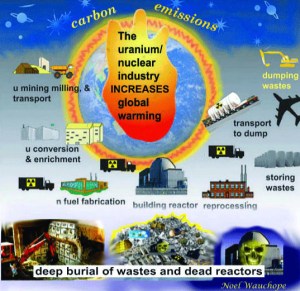 Euractiv 29th March 2019 The European Parliament voted on a proposed classification for sustainable
assets on Thursday (28 March), voting to exclude nuclear power from
receiving a green stamp of approval on financial markets.
The text voted in Parliament also excludes fossil fuels and gas infrastructure from the
EU’s proposed green finance taxonomy, which aims to divert investments
away from polluting industries into clean technologies. In a bid to prevent
“green-washing”, the Parliament text also requires investors to
disclose whether their financial products have sustainability objectives,
and if they do, whether the product is consistent with the EU’s green
assets classification, or taxonomy.
While activists applauded the move, they said the classification voted by the European Parliament was too
narrow and applies only to a limited set of recognisable green assets, such
as wind and solar power companies.
https://www.euractiv.com/section/energy-environment/news/nuclear-power-excluded-from-eus-green-investment-label/
April 4, 2019
Posted by Christina Macpherson |
climate change, EUROPE |
Leave a comment
 David Lowry’s Blog 1st April 2019 Last night I submitted my latest (of dozens) of responses to a Government
or nuclear industry sector public consultation on nuclear policy, this time
on the flawed machinations of trying to find site or sites where nuclear
waste can be disposed of.
I strongly complained that previous submissions
had been entirely ignored, which had reduced the incentive to commit to
researching and preparing detailed submission this time. The same complaint
was included in the Cumbria Trust submission, which asserted: “BEIS and its
predecessors have a track record of issuing consultation documents and
choosing to ignore responses that go against their preconceived plans.” My
own submission was very short, but appended the very long evidence I
submitted year ago, which was ignored, with the demand it be heeded this
time.
http://drdavidlowry.blogspot.com/2019/04/nuclear-waste-very-long-term.html
April 4, 2019
Posted by Christina Macpherson |
politics, UK |
Leave a comment
 Times 3rd April 2019
 Delaying the disposal of the Royal Navy’s retired submarine fleet has
cost the taxpayer £900 million, according to the Whitehall spending
watchdog. None of the 20 submarines that have left service since 1980 has
been fully defuelled or dismantled.
They include HMS Conqueror, which sank
the General Belgrano in the Falklands conflict in 1982, and the four
Polaris vessels that carried Britain’s nuclear deterrent until the
mid-1990s.
A National Audit Office report published today says that while
it is expensive to scrap the submarines, at £96 million per boat, delaying
the disposal programme is also costly, adding £900 million to the total
bill so far. Each decommissioned submarine costs £12 million a year to
store and maintain.
Meg Hillier, chairman of the Commons public accounts
committee, heaped scorn on the “dismal lack of progress” and
“spiralling costs”. She told the Ministry of Defence (MoD) to “get a
grip urgently before we run out of space to store and maintain submarines
and we damage our reputation as a responsible nuclear power”.
The budget
for the programme to dismantle retired submarines and remove their
radioactive parts has soared by £800 million, or 50 per cent, due to a
15-year delay in rolling out a tested approach. In addition, the 11-year
delay in the project to remove irradiated fuel from the nine retired
nuclear submarines has seen the budget rise by £100 million, or 57 per
cent. Regulators halted the defuelling of submarines in 2004 after
government facilities failed to meet required standards. The process is not
due to start again until 2023.
April 4, 2019
Posted by Christina Macpherson |
UK, wastes, weapons and war |
Leave a comment
|
Mediapart 1st April 2019 , The public consultation on the extension of the oldest French nuclear
reactors has just ended in general indifference. The debate is impaired
by the technicality of the exchanges, the bureaucracy of the procedures and
the lack of will to make room for the citizens.
Sunday, March 31 closed a debate that did not take place: the public consultation on the improvement
of nuclear reactors 900 megawatts (MW), the oldest, as part of the review
they must undergo at their fortieth year of operation. The stakes are high:
under what conditions can the oldest EDF power stations continue to produce
electricity, even though they are reaching an age originally planned as a
terminal? https://www.mediapart.fr/journal/france/010419/nucleaire-le-debat-qui-n-pas-lieu
|
|
April 4, 2019
Posted by Christina Macpherson |
France, politics |
Leave a comment
|
 The even madder plan to build a new nuclear plant on the beach March 31, 2019 by beyondnuclearinternational The case against Sizewell C, By Linda Pentz GunterIn December 2018 we ran an article — The mad plan to store nuclear waste on the beach— which has become one of our most read stories. Now, as the climate crisis worsens, here comes a possibly even madder plan — a new nuclear power plant on a beach with a shifting coastline famous for erosion……. The even madder plan to build a new nuclear plant on the beach March 31, 2019 by beyondnuclearinternational The case against Sizewell C, By Linda Pentz GunterIn December 2018 we ran an article — The mad plan to store nuclear waste on the beach— which has become one of our most read stories. Now, as the climate crisis worsens, here comes a possibly even madder plan — a new nuclear power plant on a beach with a shifting coastline famous for erosion…….
The Sizewell reactors sit on a windswept beach just yards from a sea that has already consumed ancient villages as the coastline changed and eroded over the centuries. Now the sea level rise that will come with climate change promises in time to drown a few more, most likely including the Sizewell nuclear site. Undeterred, the French government nuclear company, EDF, insists it will build a new reactor at Sizewell — one of its ill-fated EPR design that is already struggling at Flamanville, Olkiluoto and Hinkley. Just from a climate change point of view, it is an exercise in insanity. But there is so much more at stake.
The local activist group, Together Against Sizewell C (TASC) has been challenging the EDF plan for years, even as Sizewell sits permanently second in the queue behind the ever more delayed and ever more exorbitant sister site at Hinkley C in Somerset, where EDF is attempting to build two EPRs. Despite the technical problems, cost over-runs and the obscene strike price EDF scored off the UK government — which would almost triple current electricity rates — the company insists in can build Sizewell C more cheaply than Hinkley C and that construction could start within the next three years. It’s a pretty tall order and, arguably, total French farce.
What would actually happen to the Suffolk coastline and the surrounding villages, towns and countryside, is so alarming that TASC has ramped up its urgency in appealing to a likely somewhat otherwise distracted UK government — that is busy self-destructing over Brexit — to cancel Sizewell C.
In an eloquent petition, (which UK residents can sign at this link), TASC has laid out the case for halting the Sizewell C planning process immediately, arguing that in “report after report” nuclear power has shown “to be superfluous to UK climate change, cost and electricity generating targets. Nuclear is too expensive, a security risk and leaves a legacy of radioactive waste.” The petition will be delivered in person to the UK Secretary of State for Business Energy and Industrial Strategy.
On March 12, the group delivered an earlier petition, signed by 1,500 local people, to the Suffolk County Council’s Conservative leader Matthew Hicks, ahead of a cabinet meeting to discuss Sizewell C.
TASC also held an art exhibition to draw attention to the risks at Sizewell……….For more information please see the TASC website and find them on Twitter at: @SayNo2SizewellC https://beyondnuclearinternational.org/2019/03/31/the-even-madder-plan-to-build-a-new-nuclear-plant-on-the-beach/
|
|
April 1, 2019
Posted by Christina Macpherson |
climate change, safety, UK |
Leave a comment
|
 Treaty’s End Would Likely Start New U.S. vs. Russia Nuclear Arms Race, Study Finds https://www.haaretz.com/us-news/treaty-s-end-would-likely-start-new-u-s-vs-russia-nuclear-arms-race-study-finds-1.7074395 1 Apr 19 Treaty’s End Would Likely Start New U.S. vs. Russia Nuclear Arms Race, Study Finds https://www.haaretz.com/us-news/treaty-s-end-would-likely-start-new-u-s-vs-russia-nuclear-arms-race-study-finds-1.7074395 1 Apr 19, The study, produced by the CNA Corp non-profit research group and seen by Reuters, is the most comprehensive public examination to date of the consequences of New START’s demise .
The demise of the only U.S.-Russia arms control pact limiting deployed nuclear weapons would make it harder for each to gauge the other’s intentions, giving both incentives to expand their arsenals, according to a study to be released on Monday.
The expiration of the New START accord also may undermine faith in the Nuclear Non-Proliferation Treaty, which calls on nuclear states such as the United States and Russia to work toward nuclear disarmament, as well as influence China’s nuclear posture, historically one of restraint.
The study, produced by the CNA Corp non-profit research group and seen by Reuters, is the most comprehensive public examination to date of the consequences of New START’s demise. It argues for extending the 2011 treaty, which expires in February 2021 but can be extended for five years if both sides agree.
The Trump administration is deliberating whether to extend the pact, which President Donald Trump has reviled as a bad deal and his national security adviser, John Bolton, has long opposed. Russia has said it is prepared to extend New START but wants to discuss what it regards as U.S. violations first.
The State Department did not immediately respond to a request for comment on the administration’s deliberations.
Trump has said Washington will withdraw from another arms pact, the 1987 Intermediate-range Nuclear Forces Treaty, this summer unless Moscow ends its alleged violations, compounding tense ties. Russia denies violating the INF treaty.
The New START treaty required the United States and Russia to cut their deployed strategic nuclear warheads to no more than 1,550, the lowest level in decades, and limit delivery systems – land- and submarine-based missiles and nuclear-capable bombers.
It also includes extensive transparency measures requiring each side to allow the other to carry out 10 inspections of strategic nuclear bases each year; give 48 hours notice before new missiles covered by the treaty leave their factories; and provide notifications before ballistic missile launches.
Both sides must also exchange data declaring their deployed strategic nuclear warheads, delivery vehicles and launchers, as well as breakdowns of how many of each are located at individual bases.
All of that would end if the treaty expires.
“Neither country would have the same degree of confidence in its ability to assess the other’s precise warhead levels,” CNA’s Vince Manzo wrote in the study. “Worst-case planning is also more likely as a result.
“Increased opacity between U.S. and Russian strategic nuclear forces would unfold within the broader context of growing mistrust and diverging perceptions about strategy, intentions, and perceptions,” he added.
Without the data, the United States would have to reassign its overworked satellites, possibly devoting more surveillance to Russia and less to China, Iran and North Korea.
Another casualty of the treaty’s expiration could be global nonproliferation, making non-nuclear states doubt the United States and Russia will keep working toward nuclear disarmament under the NPT, the study said.
While it was impossible to predict how China – estimated to have about 280 nuclear warheads – would react to New START’s expiry, the study cites factors that could make Beijing expand its capability.
Without a treaty limiting U.S. and Russian nuclear forces, China could overestimate their arsenals. Unconstrained U.S. and Russian forces could also strengthen voices in China that view a large arsenal as symbolically important, as well as those already advocating for more nuclear weapons.
The study recommends steps for the United States and Russia to mitigate the risks from the treaty’s expiration, including voluntarily sticking to its limits and continuing to exchange data. It also recommends Washington propose annual exchanges of nuclear weapons information and dialogue with Beijing.
|
|
April 1, 2019
Posted by Christina Macpherson |
politics international, Russia, USA, weapons and war |
Leave a comment
ABC News 2 Apr 19, While some view the British parliament as a symbol of political stasis since the 2016 Brexit referendum, other Brits have utilised Westminster’s symbolic power to press — literally and figuratively — for faster action on climate change.
On Monday, members of climate change action group Extinction Rebellion stripped half-naked in the House of Common’s glass-walled public gallery during a Brexit debate, and some appeared to have glued themselves to the glass.
As MPs started yet another day of lengthy debate on how or even whether the country should leave the European Union, 14 protesters stripped to their underpants to show slogans painted on their backs, including: “Climate justice now”.
……. more acts of civil disobedience would occur in the lead up to the group’s ‘International Rebellion’ on climate change inaction slated for April 15.
In the moments afterward, numerous people took to Twitter to poke fun at a parliament that has otherwise been considered stale and mired in a prolonged Brexit debate….. https://www.abc.net.au/news/2019-04-02/british-protesters-bare-bottoms-in-parliament-to-protest-climate/10961468
April 1, 2019
Posted by Christina Macpherson |
climate change, politics, UK |
Leave a comment





 nuclear-news