Finland’s Olkiluoto 3 nuclear reactor – another delay after delays
|
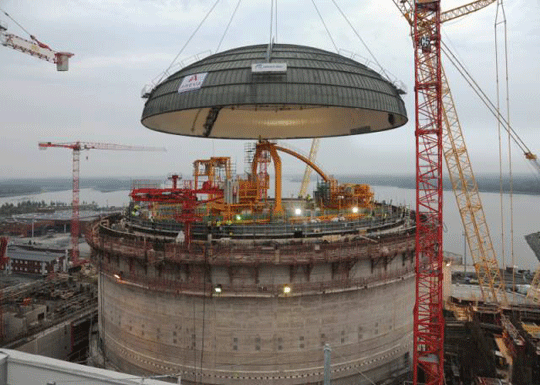
* Likely to delay planned January 2020 start-up * Project already more than 10 years behind schedule – The start-up of Finland’s long-delayed Olkiluoto 3 nuclear reactor is likely to be pushed back by at least another two months, its project director said on Wednesday. The reactor in western Finland, built by a consortium of France’s Areva and Germany’s Siemens, is already more than a decade behind schedule and had been due to start producing electricity in January 2020. However, operator Teollisuuden Voima (TVO) said that modification work during the first quarter had not progressed according to schedule. This means the loading of nuclear fuel into the reactor will now be pushed back by at least two months, to August from June, it added. “This new schedule review informed by the plant supplier is disappointing of course,” it said in a statement. Changes to automated systems had been made and needed to be checked, which took longer than expected, said project director Jouni Silvennoinen. He told Reuters the fuelling delay would likely postpone the start-up of regular electricity production by an equal number of months. Prior to Wednesday, the most recent delay to the project was announced in November 2018, as a result of which TVO was entitled to a payment of 18 million euros ($20 million) from Areva. Silvennoinen said the financial impact of the new delay would be clarified when the plant eventually started producing electricity regularly. |
|
UK Nuclear workers vote to strike over pay
Nuclear workers vote to strike over pay, David McPhee, https://www.energyvoice.com/other-news/196648/nuclear-workers-vote-to-strike-over-pay/ Workers including security guards at an airport and nuclear site have voted to take industrial action in separate disputes over pay and other issues.
Members of the Unite union employed by Mitie at London City Airport and the
Sellafield reprocessing site in Cumbria voted heavily in favour of action.
Security guards, catering staff and other workers at Sellafied will stage a series of strikes from April 19 to 29 and from May 4 to 13 as well as banning overtime.
Unite said its members at the airport, including security guards and staff helping passengers with mobility issues, will also be taking industrial action.
Unite regional officer Michelle Cook said: “Mitie is treating its workforce with complete contempt. Workers are being subjected to low pay and third rate conditions.
“Mitie is drinking in the last chance saloon and if it wants to avoid industrial action they need to immediately enter into meaningful negotiations and properly address the workers concerns.”
EU seeks design bids for storage plant for Georgia’s nuclear waste
OSLO (Reuters) – Sweden’s radiation safety authority launched a tender on Monday for the design of a nuclear storage and processing plant for Georgia’s Soviet-era radioactive waste.
The authority, SSM, is the coordinator of a European Union storage project activated after Georgia finished locating the waste. The country will receive 10 million Swedish crowns ($1.08 million) for two years for collaborating.
The tender closes on May 10, said SSM.
Austrians protest against the completion of Mochovce again
Slovak Spectator, 8 Apr 19,But both the operator of the nuclear power plant and the Slovak regulator consider it scaremongering. The Austrians have objected to the third and fourth blocks of the Mochovce nuclear power plant, situated in Nitra Region, once again.
Global 2000, an Austrian environmental organisation, has claimed that the massive 1.5-metre-wide containment of the new reactor in Mochovce is not safe enough since it was drilled through and technologies were anchored in it, referring to an anonymous source. They pointed to the weakened stability of the building and damaged hermetic chambers that are expected to stop the potential leak of radioactive substances in case of an accident, the SITA newswire reported…….
The company called the statement of the Austrian organisation misleading and false. …… https://spectator.sme.sk/c/22094308/austrians-protest-against-the-completion-of-mochovce-again.html
UK’s National Grid prepares for 100 per cent renewable energy by 2025.
to the Australian Energy Market Operator, says it is preparing to change
its systems so it can operate the electricity grid with 100 per cent
renewable energy by 2025.
transition to renewables, but the progress in other countries is usually
overlooked.
out coal completely by 2025 and the grid operator says it needs to develop
a system in which it doesn’t need coal or gas back-up. The document
identifies the areas where traditional generation has delivered services
such as inertia, frequency control and voltage, which will now have to come
from wind and solar, plus various storage technologies and other “demand
side” options. This will require a re-design of the markets to better
represent the new technologies and the passing of the old ones. It has now
set a work plan that sets various deadlines in coming years, and tenders
for providers of new technologies.
https://reneweconomy.com.au/uks-national-grid-operator-gets-ready-for-100-renewables-by-2025/
Ukraine’s President Poroshenko issues nuclear decree, demands new reactors be built
Poroshenko appears committed to having the new reactors approved and built as soon as possible. The decree highlights Poroshenko’s resolve to ease financial burdens on ….. (subscribers only) https://www.kyivpost.com/business/poroshenko-issues-nuclear-decree-demands-new-reactors-be-built.html
It’s likely that Flamanville nuclear reactor will be delayed yet again, with discussion on how to fix faulty welds

ICIS 5th April 2019 The commissioning of France’s long-overdue 1.65GW Flamanville 3 nuclear project could face  further delays, according to industry stakeholders. A group of experts from French nuclear authority ASN, nuclear safety institute IRSN and utility EDF are set to meet on 9 April to discuss what to do about the welds of the plant’s EPR reactor, IRSN’s director Jean Cristophe-Niel said at a conference in Paris on Thursday.
At the meeting ASN could communicate to EDF whether it would want the welds to be entirely rebuilt or just repaired. If ASN does order the welds to be rebuilt this could significantly delay the commissioning of the plant which was previously set for winter 2019-2020.
The project has already faced delays spanning seven years. ASN will have to communicate its final decision on
Flamanville’s welds in May. The director of energy think-tank WISE-paris Yves Marignac also said at the conference that it was possible Flamanville 3 would be delayed further with no clear timeframe in sight. A number of
traders present at the conference said they were not surprised by this possibility given the project’s track record.
Russia keen to market nuclear reactors to Kazakhstan
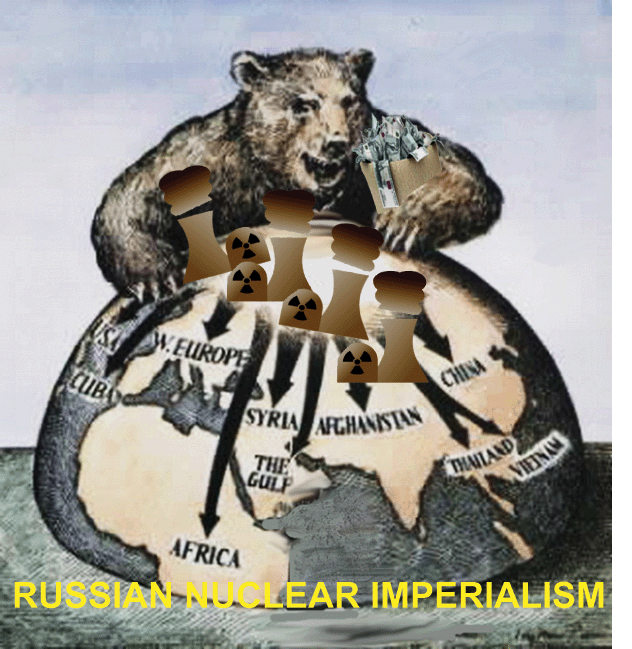 Putin Offers Russian Help To Build Kazakh Nuclear Plant, April 06, 2019 Radio Free Europe, By Bruce Pannier ,
President Vladimir Putin proposed Russian help to build such a plant when he met with Kazakhstan’s new president, Qasym-Zhomart Toqaev, in Moscow on April 3.
A day later, Deputy Kazakh Energy Minister Magzum Mirzagaliev said there was no “concrete decision” to construct a nuclear power plant in Kazakhstan, but he also revealed that officials have already chosen a site for such a project near the town of Ulken, in the southeastern Almaty Province.
Both Russia and Kazakhstan have agreements with many nations about cooperation in civilian atomic-energy use, but the Kazakh-Russian nuclear relationship is probably the most complicated of all.
Putin’s overture to Toqaev was far from the first time Moscow has offered help building a nuclear plant in Kazakhstan, though it was interesting that Putin decided to publicly repeat the proposal to Toqaev, who only became Kazakhstan’s president on March 20 and was making his first official visit abroad in that capacity.
No wonder Kazakhstan’s Energy Ministry released a public statement on April 4 assuring the public would be consulted about building any such plant until “after public hearings and consent from local executive bodies on the territory where construction of an [nuclear power plant] is possibly planned.”
‘Russian Technology’
On April 3, Russian media carried the headline Putin Offers Toqaev The Construction Of An NPP In Kazakhstan Using Russian Technology. Putin was quoted as saying the two countries would be moving to a new form of cooperation.
By “Russian technology,” Putin presumably means Rosatom, Russia’s state nuclear company.
Rosatom does the same thing. The company boasts a $100 billion portfolio, and its website says it has 36 nuclear reactor projects in 12 countries — in places like Bangladesh, Egypt, India, Belarus, Iran, Turkey, Hungary, and China. Rosatom submits bids for every nuclear-power-plant contract worldwide. And Rosatom also has nuclear cooperation agreements with countries in South America, Africa, Asia, and Europe.
The cost of a nuclear power plant starts at around $8 billion, and that is in cases where there is only one reactor, such as Rosatom’s VVER-1000. During Putin’s visit to India in October, Rosatom signed a contract to construct six VVER reactors at a new site in India, in addition to the four other reactors Rosatom is already contracted to build at India’s Kudankulum site. Two VVER reactors are already in operation there.
Russian financial institutions usually loan most, or nearly all, of the money to those countries for the construction of such plants, and Russian nuclear-fuel provider TVEL frequently receives the contract for fuel supplies.
Kazakhstan would be a different sort of customer for Rosatom. It has been the world’s leading uranium producer and exporter since 2009. And Kazakhstan does more than just extract uranium. State company Kazatomprom has worked for years, and is now able to take uranium through all the cycles, from raw uranium to nuclear fuel. From 2007 to 2017, Kazatomprom owned a 10-percent stake in Westinghouse.
So Kazakhstan has a large domestic source of uranium and can produce its own nuclear fuel; and Kazatomprom has nuclear technicians trained mostly by Russia but also some trained in Japan, France, and other countries.
Russia and Kazakhstan cooperate to mine uranium in Kazakhstan. Putin mentioned “six Russian-Kazakh enterprises for extracting and enriching uranium.”
Kazatomprom exported nearly 15,290 tons of uranium in 2018, and about 17 percent of that went to Russia.
Kazakhstan and Russia established the International Uranium Enrichment Center in Angarsk in 2007. As its name suggests, the center will provide low-enriched uranium (LEU) to interested parties. The center has been internationally hailed as ensuring a steady supply of uranium for nuclear reactors while not transferring the technology to enrich uranium.
The International Atomic Energy Agency (IAEA) and Kazakhstan’s government also established an LEU bank at Kazakhstan’s Ulba Metallurgical Plant in Oskemen, “a physical reserve of up to 90 metric tons of low enriched uranium suitable to make fuel for a typical light water reactor.”
The IAEA and Russia have an agreement on transporting the uranium to the LEU bank in Oskemen.
The April 4 statement from Kazakhstan’s Energy Ministry said nuclear-power-plant technologies from five countries, “including Rosatom,” were being studied. But the ministry also said other projects were being reviewed, such as more gas-fired plants, hydropower projects, and coal-fired thermal plants.
Proposed Locations
Russian news agency Interfax noted in its report that Russian Ambassador to Kazakhstan Aleksei Boroodavkin said in February, “We are hopeful that a decision will be taken soon for the construction of an atomic power station that we hope Rosatom will construct.”………. https://www.rferl.org/a/kazakhstan-putin-offers-russian-nuclear-plant-help/29865177.html
Doubts on safety of Sweden’s copper canisters for radioactive wastes
“Still no problem” The power industry’s nuclear waste company On April 4,
SKB expressed its opinion to the government with a supplement to, in the
first place, certain that the copper canister will function as intended in
the planned final repository for spent nuclear fuel in Forsmark.
the same claim that the court rejected in its opinion to the government on
January 23, 2018. In a first analysis, the environmental organizations’
nuclear waste review has concluded that the compilation is very weak and
does not show that the court’s concerns are unfounded. It is now important
that the Swedish Radiation Safety Authority performs a renewed thorough and
unconditional review of both the old and the new data.
http://www.mkg.se/skb-yttrar-sig-till-regeringen-om-kopparkorrosion-fortfarande-inget-problem
Safety rules relaxed for UK radioactive wastes, due to fears of supply disruption after Brexit
Ministers are under pressure to own up to any potential risks to health and security, after emergency advice was quietly issued to organisations and businesses.
Under the measure, they are being allowed to bust limits if they are unable to export waste because of Brexit – or if they fear they will be unable to obtain the radioactive material they need.
The rules have been relaxed regardless of whether the UK leaves the EU or – as seems increasingly likely – there is an extension to Article 50 until next year or beyond.
Rosie Duffield, a Labour MP and supporter of the People’s Vote campaign for a new Brexit referendum, said it was another example of consequences “nobody voted” for in 2016.
“It is essential that a minister comes to the Commons and makes a statement about the environmental and security risks that storing more waste at industrial or NHS sites pose,” Ms Duffield said.
“It is not acceptable that the rules on something like this can be changed without proper public discussion and accountability.”
The Environment Agency acknowledged the substances were hazardous but insisted there was “no risk to the public or the environment” from the new rules…… https://www.independent.co.uk/news/uk/politics/brexit-radioactive-supply-limit-hospitals-universities-factories-a8856796.html
Creative action against nuclear waste dumping
https://theecologist.org/2019/apr/05/creative-action-against-nuclear-waste Chris Bluemel, Stop New Nuclear Network , 5th April 2019 Campaigners will gather at the Springfields nuclear site in Lancashire to raise awareness on the twin fronts of new nuclear generation and radioactive waste disposal.
In the UK, the costs of nuclear developments have been borne by the taxpayer. Under the ‘Contracts for Difference’ scheme, bills for electricity from the new plant at Hinkley C will be twice what we currently pay.
This does not cover the costs of accidents, which are underwritten by the Government. Nuclear plants typically run overtime and over-budget.
Nuclear waste
The Government’s consultation about burying nuclear waste is about to end, kicking off a five-year search for a willing host community with ‘suitable’ ground conditions.
We are presented with two options: leave the waste in crumbling storage facilities like Sellafield; or bury it and let it contaminate the environment.
In Scotland, new surface-level management facilities are being built but in England this is deemed too expensive. It is clear that we need a solution to managing the waste before we create more of it.
Springfields is where nuclear fuel is produced for both civil and military use, and waste processed from both the UK and abroad.
‘Surround Springfields’ on 27 April is an opportunity to follow the route of radioactive waste and to understand how this issue affects everyone, everywhere.
Creative action
We will even be dressing as barrels of waste in an attempt to break a world record for surrounding a nuclear site.
We will also be having a live conversation with indigenous people in other countries via a webinar about the impacts of uranium mining and nuclear waste. You can join this remotely if you cannot get there – check our Facebook page for details.
Do we choose a long term, socially responsible and ethical energy supply, with a moral commitment to the wellbeing of future generations?
We need to come together and make the Government approach these challenges with vision and creativity, not with the poverty of ambition, opacity and lack of foresight that characterises the nuclear solution.
Take part
Surround Springfields will take place on Saturday 27 April. For more information, contact the organisers.
This Author
Chris Bluemel is a music teacher and campaigner and part of the Stop New Nuclear network. He has been involved in a wide range of campaigning from standing in elections as a Green Party candidate to direct action against road-building, fracking, the DSEI arms fair, and Trident. He is also part of the radical protest-folk band Seize The Day.
Doctors want UK to be at the forefront of international nuclear disarmament.
Nuclear war and a new arms race , Guardian, Bruce Kent, Vice-president, Campaign for Nuclear Disarmament, 5 Apr 19
We write as members of Medact, an organisation of health professionals working to make the world a safer place by drawing attention to the links between nuclear disarmament, the environment and social justice.
Medact is the British affiliate of IPPNW, International Physicians for the Prevention of Nuclear War, set up in 1980 by two eminent cardiologists, one American and one Soviet, and both doctors to their heads of state. Last week we met with the director of programmes for IPPNW and heard first-hand just how worried people in the US are about the potential use – deliberate or inadvertent – of nuclear weapons.
The BMA produced a report in 1983 entitled The Medical Effects of Nuclear War, describing the humanitarian catastrophe that would result. The World Medical Association and the International Red Cross and Red Crescent Movement have echoed these sentiments.
It is worth noting that 122 nations voted in favour of the 2017 UN treaty on the prohibition of nuclear weapons. The UK was not among them. Having heard from our American colleagues just how dangerous the current situation is, we urge people to encourage their political representatives to push for the UK to engage with the treaty and be at the forefront of international nuclear disarmament.
Dr Lesley Morrison GP
Dr Duncan McIntyre Retired physician
Dr Michael Orgel Retired clinician
Dr Judith McDonald GP
Dr Danuta Orlowska Clinical psychologist
Dr Georgina Race Junior doctor
Dr Margaret Craig GP
Dr Cath Dyer Retired GP
Dr Richard Dyer Retired GP
Dr Guy Johnson GP
• May I urge the dean of Westminster Abbey to cancel the ceremony planned for 3 May. It is to be held in thanksgiving for 50 years of continuous at-sea (nuclear weapon) deterrence. That means 50 years of being ready and wiling to commit mass murder. Is this something to thank God for?
Nuclear weapons are supposedly there to ensure our security. They actually have precisely the opposite effect, and are, of course, a standing invitation to other countries to copy our example. As Robert McNamara, a former US defence secretary, said: “It was luck that prevented nuclear war.”
We are rarely told about the many accidents and miscalculations that have taken us, too often, to the brink of disaster. Perhaps it would be better to hold a day of prayer for the success of the current UN nuclear weapon abolition treaty, which this country has yet to support. https://www.theguardian.com/world/2019/apr/05/nuclear-war-and-a-new-arms-race
4 Sound reasons why Blackwater Against New Nuclear Group opposes Sizewell nuclear project
BANNG 2nd April 2019 BANNG’s primary purpose is to oppose the development of new nuclear power
at Bradwell in Essex. We also have an interest in generic and specific
processes and proposals for new nuclear developments which may have a
bearing on the Bradwell development.
Our response to the Sizewell application reflects a number of common concerns. One, is that Sizewell and
Bradwell are projects being developed by a partnership between EDF and CGN.
Although Sizewell is based on the UK EPR while Bradwell is intended for the
UK HPR1000, both comprise reactors, waste stores and other buildings which
must be accommodated on coastal sites.
A second feature is that the sites
are hemmed in by areas of environmental significance with many
designations, the most notable being the Suffolk Coast and Heaths AONB and
Minsmere RSPB reserve in Suffolk and the Marine Conservation Zone in Essex.
Thirdly, both are close to substantial populations with Leiston (Suffolk)
and West Mersea (Essex) within two to three miles from the sites.
Fourth,
both sites are vulnerable to coastal processes, in the case of Sizewell,
coastal erosion and at Bradwell flooding and storm surges, problems which
will only get worse as climate change wreaks havoc on the fragile and
low-lying east coast while the operation and decommissioning of the plants
continues into the next century and beyond. And, fifth, as the UK’s
nuclear strategy collapses, Sizewell and Bradwell are the two remaining
sites which puts enormous pressure on government, developers, regulators
and the IPC to ensure the delivery of the two new nuclear power stations.
Indeed, CGN has responded to the opportunity presented by stating that,
‘In simple terms, we have ramped up. We are bringing forward [the
Bradwell project]’1.
https://www.banng.info/news/sizewell-c-stage-3-pre-application-consultation-banng-paper-no-40/
Explosion at Vulcan nuclear submarine site at Dounreay
which occurred at the Vulcan nuclear submarine site at Dounreay. Alexander
Glasgow believes the incident could have caused serious injuries and is
critical of the lack of information provided by the Ministry of Defence
(MoD) which operates the facility. He raised the issue at the latest
meeting of the Thurso community council and said he is “still chasing it
up” but colleagues wondered why he was asking questions when Vulcan is not
within the community council boundary. Mr Glasgow said: ” I find it
extraordinary that this isn’t considered within our bailiwick. As well as
the local economy, a great many employees live in Thurso. We could have had
multiple serious injuries here.”
Scottish National Party demands public inquiry into the decommissioning of nuclear-powered submarines
nuclear-powered submarines, following the publication of a damning report
on how the Ministry of Defence (MoD) has handled the process. The National
Audit Office (NAO) found the MoD still does not know how it will finally
dispose of 20 decommissioned vessels, several of which remain laid up
afloat at Rosyth Dockyard in Fife. The UK now has twice as many submarines
in storage as it does in service, and has not disposed of any of the boats
decommissioned since 1980. The estimated cost of disposing of a submarine
is £96 million, the NAO found, while the MoD has put its total future
liability for maintaining and disposing of the 20 stored and 10 in-service
nuclear-powered boats at £7.5 billion over the next 120 years. SNP defence
spokesman Stewart McDonald has now called on UK Government ministers to be
held to account and “face up to the consequences of their actions”.
1 This Month
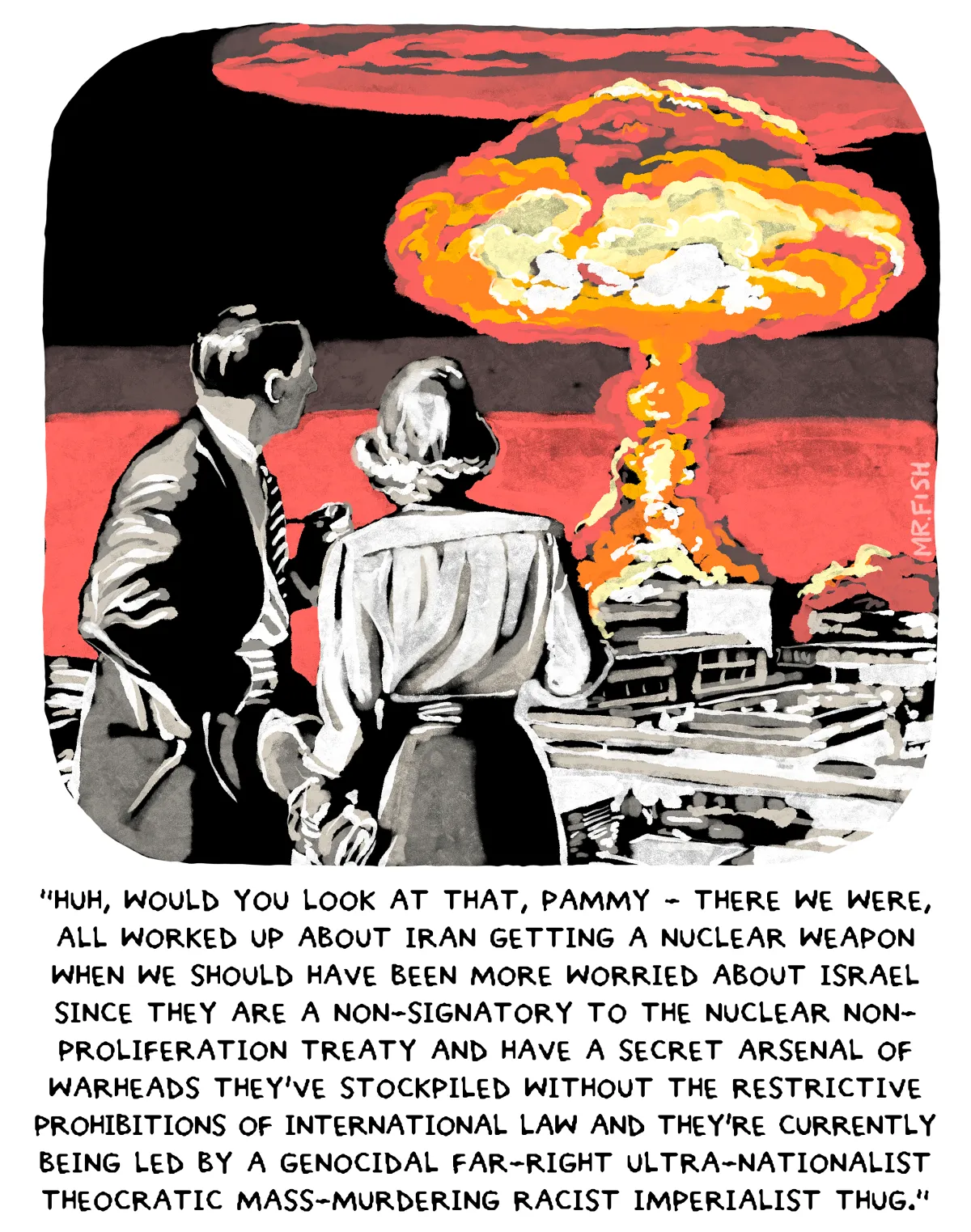
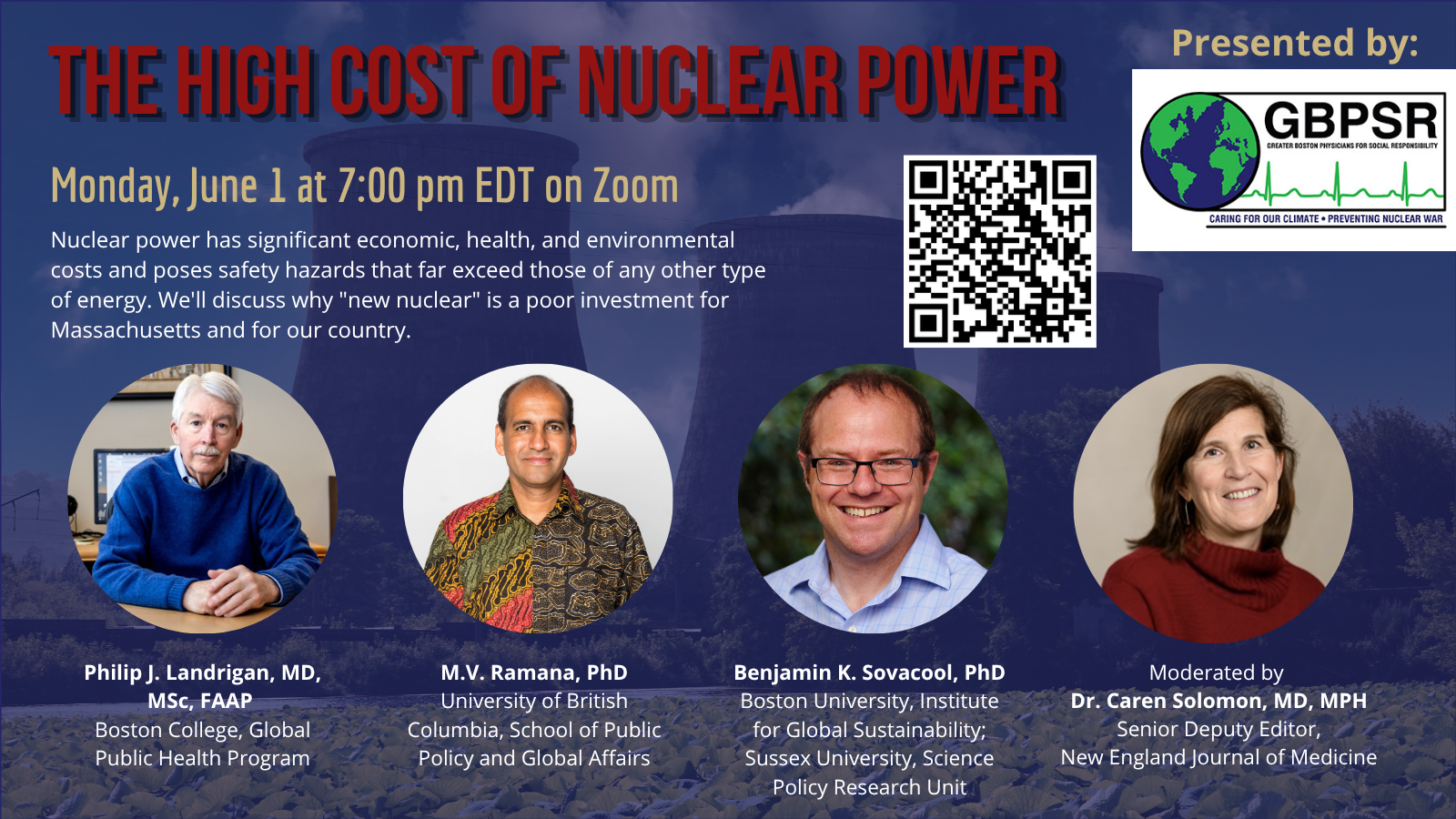
1 June Webinar – The High Cost of Nuclear Power – Register


of the week– Nuclear Reactor Information Task Force
To see nuclear-related stories in greater depth and intensity – go to https://nuclearinformation.wordpress.com
-
Archives
- May 2026 (255)
- April 2026 (356)
- March 2026 (251)
- February 2026 (268)
- January 2026 (308)
- December 2025 (358)
- November 2025 (359)
- October 2025 (376)
- September 2025 (257)
- August 2025 (319)
- July 2025 (230)
- June 2025 (348)
-
Categories
- 1
- 1 NUCLEAR ISSUES
- business and costs
- climate change
- culture and arts
- ENERGY
- environment
- health
- history
- indigenous issues
- Legal
- marketing of nuclear
- media
- opposition to nuclear
- PERSONAL STORIES
- politics
- politics international
- Religion and ethics
- safety
- secrets,lies and civil liberties
- spinbuster
- technology
- Uranium
- wastes
- weapons and war
- Women
- 2 WORLD
- ACTION
- AFRICA
- Atrocities
- AUSTRALIA
- Christina's notes
- Christina's themes
- culture and arts
- Events
- Fuk 2022
- Fuk 2023
- Fukushima 2017
- Fukushima 2018
- fukushima 2019
- Fukushima 2020
- Fukushima 2021
- general
- global warming
- Humour (God we need it)
- Nuclear
- RARE EARTHS
- Reference
- resources – print
- Resources -audiovicual
- Weekly Newsletter
- World
- World Nuclear
- YouTube
-
RSS
Entries RSS
Comments RSS
 nuclear-news