End of nuclear cooperation waivers could quietly kill Iran deal
|
Forget oil sanctions, end of nuclear cooperation waivers could quietly kill Iran deal https://www.al-monitor.com/pulse/originals/2019/04/iran-jcpoa-nuclear-deal-sanctions-waivers-trump-arak-fordow.html April 24, 2019 Much of the current debate on the Donald Trump administration’s “maximum pressure campaign” against Iran concerns its decision not to extend waivers allowing eight nations – including China, India and Turkey – to import limited amounts of Iranian oil. However, it is the possible revocation of waivers that allow the remaining parties to the deal signed in 2015 to engage in civil nuclear cooperation with Iran — with the aim of reducing the proliferation risks of the Iranian nuclear program — that poses the greatest threat to the future of the nuclear deal. US national security adviser John Bolton and a group of hawkish lawmakers in Congress are agitating for the Trump administration to cancel three key waivers issued in November 2018, when the United States reimposed secondary sanctions on Iran. These waivers pertain to technical work on Iran’s civil nuclear program required under the terms of the Joint Comprehensive Plan of Action (JCPOA) and cover activities at three sites: Fordow, Arak and Bushehr. The aim of this cooperation is to jointly work toward significantly reducing proliferation risks. In Arak, a waiver is necessary to enable Iran to redesign its heavy water research reactor in order to “support peaceful nuclear research and radioisotope production for medical and industrial purposes.” The proposed redesigned Arak reactor would vastly cut the potential for a plutonium path to the bomb. The underground uranium enrichment facility of Fordow is being converted into a “nuclear, physics and technology center.” The aim here is to keep uranium enrichment literally closer to the surface and thus more vulnerable in case of an Iranian dash for the bomb. At Bushehr, the site of a Russian-built nuclear power plant that became operational in 2011, the waiver is necessary to allow Iran to continue to purchase the fuel it needs to run the reactor and produce electricity. A decision to revoke the waivers for civil nuclear cooperation would constitute perhaps the most direct US assault on the JCPOA to date. For this reason, Secretary of State Mike Pompeo and other figures in the Trump administration, worried about political blowback, have been arguing for their continuation, with European governments lobbying the United States aggressively on the issue. Note, however, that even with the present waivers in place, it is apparent that implementation of the nuclear cooperation has been faltering. Revocation of the waivers would have further and grave consequences for the future of the JCPOA. |
|
|
Russia’s attitude to North Korea’s nuclear weapons
What Russia thinks about North Korea’s nuclear weapons, Bulletin of the Atomic Scientists, By Anastasia Barannikova, April 24, 2019, North Korean leader Kim Jong Un arrived in Russia today for a meeting with President Vladimir Putin….. Despite Russia’s past vote in favor of sanctions on Kim’s regime, Moscow has many reasons not to lean too hard on Kim over nuclear disarmament…………
Russia wants a stable North more than a non-nuclear North. Although, Russia continues to officially oppose North Korea’s nuclear status on the basis of its strict interpretation of the NPT, experts already speak about “nuclear emancipation” for the North, meaning recognition of its status as a lesser nuclear state. These ideas coincide with an idea some Chinese scholars have developed whereby North Korea would reduce its nuclear arsenal but keep some weapons as a deterrent. From Russia’s perspective, nuclear weapons now guarantee the security of the North Korean regime. The weapons can prevent attempts at violent regime change by external force. Through them, North Korean leadership has the independence to make changes within its borders. That’s good for Russia.
Many Russian analysts consider North Korea’s nuclear program to be defensive. Looking at the North’s nuclear doctrine, it seems likely the country wouldn’t use its nuclear weapons against a country that isn’t planning an attack. While little is known about Russia’s military planning beyond its publicly available doctrines, the specifics of the bilateral relations it holds with the North may guarantee that Russia has no plans to attack its neighbor.
……….The security of Kim’s regime, in turn, guarantees stability near Russia’s eastern borders. For Russia, a stable North Korean regime guarantees the absence of refugees flows, a normal feature of conflict zones, but also prevents US troops from deploying in a potentially disintegrating North. And with its nuclear weapons as diplomatic leverage, North Korea can maintain some independence from China. Thus, Moscow views Kim’s stability as providing something of a buffer between Russia and China.
Do North Korean nuclear weapons pose a threat to Russia? From Moscow’s perspective, the Korean Peninsula and Northeast Asia are relatively stable and don’t pose any immediate threats to security. Relations between Russia and North Korea are neutral, if not friendly. North Korean leadership appreciates Russia’s cautious, slow approach to the relationship, in contrast to China’s activist take on issues on the Korean Peninsula. Russia’s emphasis on the need to respect state sovereignty as a fundamental principle of international relations further lubricates the bilateral relationship: Russia avoids any attempt to interfere in the internal affairs of the North, so Pyongyang does not consider Russia as an external threat.
Many Russian analysts consider North Korea’s nuclear program to be defensive. Looking at the North’s nuclear doctrine, it seems likely the country wouldn’t use its nuclear weapons against a country that isn’t planning an attack. While little is known about Russia’s military planning beyond its publicly available doctrines, the specifics of the bilateral relations it holds with the North may guarantee that Russia has no plans to attack its neighbor.
But there is one scenario whereby North Korea’s nuclear weapons could threaten Russia. If Kim launches missiles against the United States, experts say they’ll fly over Russian territory. A US anti-missile response could, thus, risk a war between Russia and the United States. But Russian experts don’t believe that North Korea would ever attack the United States; they consider Kim Jong Un too rational for that. ………https://thebulletin.org/2019/04/what-russia-thinks-about-north-koreas-nuclear-weapons/
Campaign for Nuclear Disarmament (CND) holds public meeting in Burnley
 Organisation that has called for nuclear Organisation that has called for nuclear  weapons to be banned for six decades holds public meeting in Burnley, 23 Apr 19, https://www.burnleyexpress.net/news/organisation-that-has-called-for-nuclear-weapons-to-be-banned-for-six-decades-holds-public-meeting-in-burnley-1-9730392An organisation that has existed for 62 years and campaigns to ban nuclear weapons held a public meeting in Burnley.And the strong message that came forward from the meeting of the East Lancashire branch of the Campaign for Nuclear Disarmament was that the public should be made more aware of the humanitarian consequences of a deliberate or accidental detonation of nuclear weapons as well as the dangers that the population of UK are exposed to by the government persisting in maintaining and developing them. weapons to be banned for six decades holds public meeting in Burnley, 23 Apr 19, https://www.burnleyexpress.net/news/organisation-that-has-called-for-nuclear-weapons-to-be-banned-for-six-decades-holds-public-meeting-in-burnley-1-9730392An organisation that has existed for 62 years and campaigns to ban nuclear weapons held a public meeting in Burnley.And the strong message that came forward from the meeting of the East Lancashire branch of the Campaign for Nuclear Disarmament was that the public should be made more aware of the humanitarian consequences of a deliberate or accidental detonation of nuclear weapons as well as the dangers that the population of UK are exposed to by the government persisting in maintaining and developing them.
Between her international anti-nuclear commitments , Rebecca is currently acting as a legal observer in the XR demonstrations in London where over two hundred people have been arrested for committing acts of non-violent direct action. Rebecca showed a short film about the horrific humanitarian consequences of the use of nuclear weapons before going on to describe how, over a number of years, the nations of the world that do not have nuclear weapons have come together to negotiate the Treaty on the Prohibition of Nuclear Weapons. It was adopted by the United Nations in July 2017 by 122 nations of the UN General Assembly. Currently 70 nations have signed the Treaty and 22 have ratified it. Once 50 countries have ratified it, then it will become part of International law, like the laws against other WMD’s -chemical weapons, cluster bombs and landmines. It is expected that this could happen sometime next year. |
|
Planning application for Wylfa nuclear plant examined, despite project halt due to lack of investment
Officials will rule on a development consent order (DCO) application for
the project in three months. If the Planning Inspectorate approves the DCO,
the project must also be approved by business secretary Greg Clark before
it can go ahead. Introduced in 2008, DCOs are designed to streamline
construction planning for projects designated as nationally significant by
rolling other individual consents such as planning permission, listed
building consent and compulsory purchase orders into one. The decision to
continue with the DCO application for Wylfa comes despite work on the site
remaining suspended – work was stopped in January when Hitachi struggled
to secure additional private investment in the project.
Wastes from other nuclear stations could be dumped at Hinkley Point A
 Somerset Live 23rd April 2019 Fears ‘skips of nuclear waste’ could be transported through Bridgwater to be stored at Hinkley Point A. Dozens of skips full of nuclear waste could
soon be transported through Bridgwater from other parts of the UK. Magnox
Ltd currently operates the Hinkley Point A site near Stogursey, which
includes a small area where nuclear waste is stored before being moved
elsewhere for processing. Currently, only waste which is generated on the
Hinkley site can legally be stored there. But the company is putting
forward plans to allow waste from other nuclear power stations to be
transported to Hinkley by road – via Bridgwater.
https://www.somersetlive.co.uk/news/somerset-news/fears-skips-nuclear-waste-could-2788091
Germany launches public meetings, in search of nuclear waste repository solution
Public info event kicks off search for nuclear waste repository https://www.cleanenergywire.org/news/public-info-event-kicks-search-nuclear-waste-repository
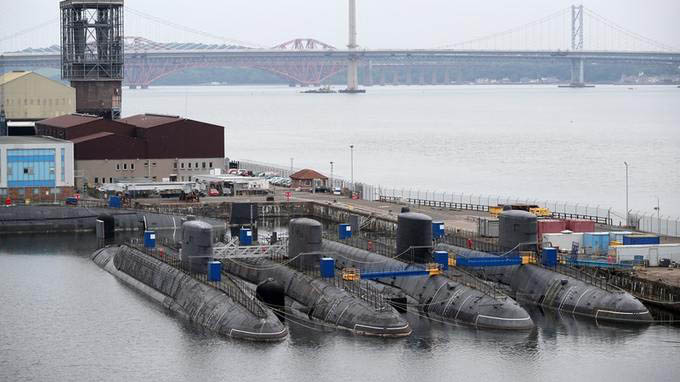
UK is stuck with 20 dead nuclear submarines – what to do with them?
|
How do you scrap a nuclear submarine? https://www.chemistryworld.com/news/how-do-you-scrap-a-nuclear-submarine/3010405.article, The UK is facing a £7.5 billion bill to dismantle its 20 defunct vessels
What is a nuclear submarine?A ‘nuclear’ submarine can refer to a submarine that carries nuclear warheads, one that is powered using nuclear energy, or both. In the UK, the Vanguard, Astute and Trafalgar class submarines are all powered using a nuclear reactor, but only the four Vanguard class submarines carry nuclear warheads – Astute and Trafalgar submarines are ‘hunter-killers’ designed to sink other ships. The UK’s current fleet relies on a reactor typically seen in power stations across the world – the pressurised water reactor (PWR). These compact power plants produce vast amounts of heat through the splitting of uranium-235 (235U). This fissile isotope exists in very small quantities (less than 1%) in natural uranium, which mainly consists of uranium-238 (238U). To use it as fuel, the 235U is increased relative to the 238U in a process known as enrichment. In the PWR, waste fission products are made, such as caesium, xenon and krypton, as neutrons split the 235U fuel, with 238U also absorbing neutrons to form plutonium. These fission products can damage the ceramic fuel and reduce the reactor’s efficiency. The vessel that contains this whole process is also bombarded with high levels of radiation over its operational life. What happens to a nuclear submarine once it is removed from service?Once a nuclear-powered submarine is decommissioned, it is placed into long-term storage. Only after monitoring the vessel will engineers begin to defuel and dismantle it. However, over the past four decades, this second part hasn’t happened in the UK.
Since 1980, the UK Ministry of Defence has taken 20 nuclear-powered submarines out of service. Of these 20 subs, the UK has not fully disposed any of them and nine still contain highly radioactive nuclear fuel. The vessels have languished at dockyards in Plymouth and Rosyth.
This is not a sustainable solution, but it is in stark contrast with other countries’ past policies. During the Cold War, the Soviet Union dumped 19 ships containing nuclear waste in the Kara Sea, as well as 14 reactors and the K-27 nuclear submarine. With such vessels continuing to rust on the seabed, there are concerns these sites could harbour a potential environmental crisis. However, the subs stored in the UK are constantly monitored in a controlled environment. Although a far cry from the Arctic submarine graveyards, the UK fleet still lies exposed to salty water, with the vessels rusting in the dockyards.
Why are the submarines still in storage?It is an incredibly complex situation, but the government stopped defueling its disbanded fleet back in 2004. The UK’s nuclear regulator deemed that the facilities were not up to standards, and the UK has been working to improve them ever since. Mired in delays and inflating budgets, the defueling may not restart until 2023 – the original start date was 2012. Even when the subs are ready for their next voyage through the disposal process, it is a journey fraught with complexity.
What is the plan for the nuclear waste?Once defueling starts, the sub will be moved to a ‘reactor access house’ on rails. In this facility, engineers will remove the spent nuclear fuel from the sub, which contains various actinides and radionuclides. The fuel is highly radioactive and generates heat, so needs to be cooled in water before any further work can begin. To cool the fuel rods, the waste is sent to a specialised plant at Sellafield, where it is stored in vast water ponds. The water acts as both an efficient coolant and radiation barrier. Historically, this spent fuel would have then been recycled to form new nuclear fuel.
During reprocessing, the fissile uranium and plutonium is separated through solvent extraction, before converting the remaining liquid waste into a glass for long-term storage. However, it is now unclear whether this will still happen. It is more likely that the spent nuclear fuel will be stored indefinitely after cooling. The current UK strategy is to bury this waste in a highly-engineered geological disposal facility, which would see more than 650,000m3 of waste stored in an underground cavern, according to recent government estimates. But plans are still ongoing and a facility is yet to be built.
What happens to the submarine after defueling?After defueling, the sub will return to the ‘wet’ dock for another period of storage and monitoring. Following this, the submarine is dismantled. Components such as pipes and pumps exposed to radiation are taken away and the reactor vessel removed. However, engineers do not simply remove the reactor. In many countries, the reactor is lifted out with the two empty compartments either side of it and then sealed off to minimise the risk of exposure. After removing this ‘three-compartment unit’, the submarine is cast off for its final voyage to a commercial shipyard for recycling. But it will be a costly endeavour. The UK may face costs of up to £7.5bn if it wants to take the entire fleet through this voyage of defueling and disposal. It remains unclear whether the plans will stay on course, but the defence department has committed to dismantling the fleet ‘as soon as reasonably practicable’.
|
|
|
Netherlands’ creative solar power initiative – archipelago of islands made up of sun-tracking solar panels
Guardian 21st April 2019 Dutch engineers are building what will be the world’s largest archipelago of islands made up of sun-tracking solar panels. Growing resistance to the
construction of wind turbines or fields of solar panels on land has led the
renewable energy industry to look for alternative options. Large islands of
solar panels are under construction or already in place in reservoirs and
lakes across the Netherlands, China, the UK and Japan. In a development
that is to become the largest of its type in the world, construction will
begin this year on 15 solar islands on the Andijk reservoir in north
Holland. The islands, containing 73,500 panels, will have the
sunflower-like ability to move to face the light.
Pumped storage hydro could fill nuclear nuclear energy gap
 Pumped storage hydro could fill nuclear nuclear energy gap https://www.thenational.scot/news/17588663.pumped-storage-hydro-could-fill-nuclear-nuclear-energy-gap/, A SCOTTISH company has called for the UK Government to put pumped storage hydro (PSH) at the heart of its strategy to meet the challenge of providing a secure, low-carbon electricity supply in the coming decades. Pumped storage hydro could fill nuclear nuclear energy gap https://www.thenational.scot/news/17588663.pumped-storage-hydro-could-fill-nuclear-nuclear-energy-gap/, A SCOTTISH company has called for the UK Government to put pumped storage hydro (PSH) at the heart of its strategy to meet the challenge of providing a secure, low-carbon electricity supply in the coming decades.
|
|
Together Against Sizewell C (TASC) feeling encouraged: public opinion turning against Sizewell nuclear project
Suffolk coast have been “exposed as entirely inadequate” – and believe it cannot be built.
way on its Hinkley Point C new build and plans for the Suffolk project are
progressing well.
recent plans shown in the company’s stage three consultation for Sizewell C
have been “exposed as entirely inadequate”. He said: “Since the
delivery of a 1,500-signature petition to the Leader of Suffolk County
Council, we have seen a surge in support for our position of outright
opposition to Sizewell, local artists and actors voicing their concerns and
the RSPB warning that the most important bird reserve in the country,
Minsmere, is potentially threatened by the Sizewell development.
the hurdles to building such a complicated and dangerous plant in such a
confined and remote area will be recognised as overwhelming and terminal.
to the sheer scale of the environmental and infrastructure changes the
plant will require and they are becoming more and more vocal in opposition.
It is very encouraging.” TASC has voiced concerns over the suitability of
the Sizewell site, claiming it is too small for the proposed development,
potential loss of SSSI, visual intrusion, noise and light pollution and the
negative impact it will have on the Suffolk Coast and Heaths AONB and
Heritage Coast.
clearly demonstrates three things: we require much more information from
EDF before we can fully appreciate the impact of their plans; even on the
information available, it is clear that the dis-benefits associated with
Sizewell C far outweigh the putative benefits, and EDF must plan for a
fourth round of consultation.”
https://www.eadt.co.uk/news/tasc-pete-wilkinson-szc-cannot-be-built-1-6009732
Nearly 1000 climate protestors arrested in London – and Extinction Rebellion is changing tack
|
Extinction Rebellion: The People Risking Their Freedom For Climate Change | HuffPost Reports: UK Extinction Rebellion arrests close to 1,000 as protesters ‘pause rebellion’ ITV 21 Apr 19 Climate change protesters who have stopped traffic in a series of peaceful demonstrations across London will “pause” their rebellion in a bid to achieve their political aims, as the arrest total nears 1,000.Extinction Rebellion (XR) have announced they are switching disruptive tactics for political negotiations as they enter a second week of campaigning to have the Government declare a climate emergency. The number of people arrested in connection with the protests has hit 963 and 40 people have been charged. Continue reading |
We will never stop fighting’: Greta Thunberg joins London climate protest
Humanity is at a crossroads, Greta Thunberg tells Extinction Rebellion, Guardian, Vikram Dodd , Damien Gayleand Mattha Busby 22 Apr 2019
Swedish climate activist’s speech comes amid police action to clear protesters from Waterloo Bridge, Governments will no longer be able ignore the impending climate and ecological crisis, Greta Thunberg, the teenage climate activist, has told Extinction Rebellion protesters gathered at Marble Arch in London.
In a speech on Sunday night where she took aim at politicians who have for too long been able to satisfy demands for action with “beautiful words and promises”, the Swedish 16-year-old said humanity was sitting at a crossroads, but that those gathered had chosen which path they wish to take…….
Her speech came amid police efforts to forcibly clear Extinction Rebellion protesters from Waterloo Bridge as the group debated whether to continue its campaign of mass civil disobedience. Police said on Sunday night they had cleared all the protesters from Parliament Square ……. https://www.theguardian.com/environment/2019/apr/21/extinction-rebellion-london-protesters-offer-pause-climate-action
Britain’s Nuclear Free Local Authorities (NFLA) notes that over 70 Welsh councils formally reject hosting nuclear waste dump
 NFLA 18th April 2019 The Nuclear Free Local Authorities (NFLA) notes that over 70 Welsh unitary, county, city, town and community councils have passed resolutions formally opposing taking any interest in hosting a deep underground radioactive waste repository.
The figure was noted at a joint meeting in Menai Bridge organised by the NFLA Welsh Forum in conjunction with the groups PAWB, CADNO and CND Cymru. At a presentation provided by the NFLA Secretary, he noted that there had been real anger and frustration raised across Welsh and Northern Irish Councils in particular to the request made by the UK
Government for considering hosting a large deep underground repository to store over 60 years of higher activity radioactive waste, as well as possibly additional waste should new nuclear power stations ever be built.
Even in England, a number of nuclear site Councils have indicated their public opposition to hosting a repository. NFLA have noted some of these issues in its response to RWM regarding its consultation on how any proposed sites will be evaluated.
Britain’s slow path to zero carbon emissions
Extinction Rebellion: what pushes people to drastic action on climate change?
Slow burn? The long road to a zero-emissions UK, Guardian, Robin McKie, Observer science editor, Sun 21 Apr 2019
Extinction Rebellion protesters want a carbon-free UK by 2025. But can the financial and political hurdles be overcome?
Many experts disagree, however. They argue that such an imminent target is completely impractical. “Yes, you could decarbonise Britain by 2025 but the cost of implementing such vast changes at that speed would be massive and hugely unpopular,” says Lord Turner, former chairman of the climate change committee.
Most expect the climate change committee will plump for 2050 as Britain’s ideal decarbonisation date. “2050 is do-able and desirable and would have an insignificant overall cost to the economy,” states Turner, who is now chairman of the Energy Transitions Commission. According to this scenario, developed nations, including Britain, would aim to achieve zero-emissions status by 2050 and then use the decarbonising technologies they have developed to achieve this goal – hydrogen plants, carbon dioxide storage vaults and advanced renewable generators – to help developing nations halt their greenhouse gas emissions by 2060.
Many experts disagree, however. They argue that such an imminent target is completely impractical. “Yes, you could decarbonise Britain by 2025 but the cost of implementing such vast changes at that speed would be massive and hugely unpopular,” says Lord Turner, former chairman of the climate change committee.
Most expect the climate change committee will plump for 2050 as Britain’s ideal decarbonisation date. “2050 is do-able and desirable and would have an insignificant overall cost to the economy,” states Turner, who is now chairman of the Energy Transitions Commission. According to this scenario, developed nations, including Britain, would aim to achieve zero-emissions status by 2050 and then use the decarbonising technologies they have developed to achieve this goal – hydrogen plants, carbon dioxide storage vaults and advanced renewable generators – to help developing nations halt their greenhouse gas emissions by 2060.
And the change has already been reflected in Britain’s power statistics. In 2013, 62.5% of UK electricity was generated by oil, coal and gas stations, while renewable provided only 14.5%. In 2018, the figure for oil, coal and gas had been reduced to 44% while renewables were generating 31.7%. It is a distinct improvement – though we have yet to be given a date when engineers expect the last UK fossil-fuelled power plant to produce its final watts of electricity and to emit its last puffs of carbon dioxide
“Decarbonising UK power production is going well,” says George Day, head of policy for the technology and innovation centre Energy Systems Catapult. “There is a clear path forward.” But as he points out, there are many other sources of carbon dioxide in the UK. “The next big challenge will be heating. Gas boilers are major carbon emitters and dealing with them is going to be very difficult.”
According to Day, about 90% of British people have gas boilers in their homes, most having been fitted relatively recently …
………In the end, it will simply not be possible to reduce Britain’s fossil-fuel emissions to zero, say scientists. To compensate, we will have to take carbon dioxide back out of the atmosphere. “That is the logical, inevitable consequence of trying to achieve zero net emissions in this country,” argues Corinne Le Quéré, of the University of East Anglia. “If you are looking for any net zero target then you have to remove carbon dioxide from the atmosphere.”
This can be done in three ways: naturally, by planting trees and shrubs that absorb carbon dioxide. Or artificially – on a larger scale – the gas can be removed as it is produced at a factory or power station that burns trees for energy.
Or it can be removed by huge numbers of man-made air filters, known as direct air capture. The carbon dioxide can be liquefied and stored underground in underground caverns, or old, depleted gas fields under the North Sea. This is known as carbon capture utilisation and underground storage (CCUS).
“In the end, your choice of replanting or of building underground storage facilities depends on how much carbon you will need to remove,” says Le Quéré. “Most calculations suggest Britain will need to take quite a lot of carbon dioxide out of the atmosphere to keep its net emissions at zero.”……….
UK carbon emissions have fallen for the sixth year running
This need for speed is shared by many other parts of the zero-emissions programme, as we have seen. It may seem odd given it is unlikely it will reach its conclusion for another three decades. Nevertheless, scientists are adamant that even if choose 2050 for our decarbonisation date, we need to act now.
This urgency of the task is emphasized by Joeri Rogelj at Imperial College London. “If the world limits emissions of carbon dioxide to no more than 420 billion tonnes this century, we will have a two in three chance of keeping global warming down to around 1.5C.
“However, if we go above to 580 billion tonnes then our chances will be reduced to 50-50. The problem is that in 2017 alone, a total of 42 billion tonnes of carbon dioxide was emitted in a single year. By that calculation, we clearly do not have a lot of time to waste.”https://www.theguardian.com/environment/2019/apr/21/long-road-to-zero-emissions-uk
1 This Month

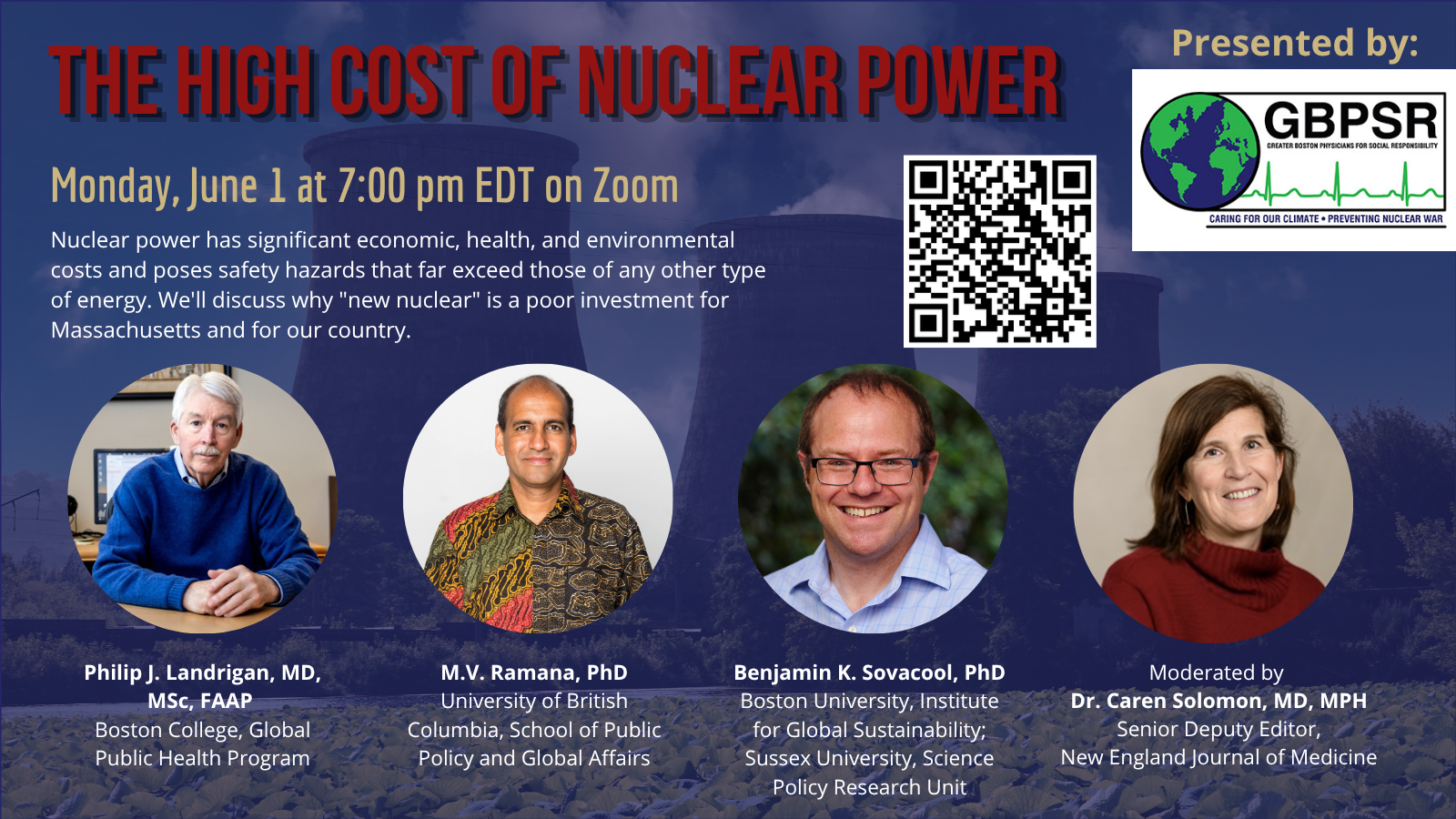
1 June Webinar – The High Cost of Nuclear Power – Register


of the week– Nuclear Reactor Information Task Force
To see nuclear-related stories in greater depth and intensity – go to https://nuclearinformation.wordpress.com
-
Archives
- May 2026 (255)
- April 2026 (356)
- March 2026 (251)
- February 2026 (268)
- January 2026 (308)
- December 2025 (358)
- November 2025 (359)
- October 2025 (376)
- September 2025 (257)
- August 2025 (319)
- July 2025 (230)
- June 2025 (348)
-
Categories
- 1
- 1 NUCLEAR ISSUES
- business and costs
- climate change
- culture and arts
- ENERGY
- environment
- health
- history
- indigenous issues
- Legal
- marketing of nuclear
- media
- opposition to nuclear
- PERSONAL STORIES
- politics
- politics international
- Religion and ethics
- safety
- secrets,lies and civil liberties
- spinbuster
- technology
- Uranium
- wastes
- weapons and war
- Women
- 2 WORLD
- ACTION
- AFRICA
- Atrocities
- AUSTRALIA
- Christina's notes
- Christina's themes
- culture and arts
- Events
- Fuk 2022
- Fuk 2023
- Fukushima 2017
- Fukushima 2018
- fukushima 2019
- Fukushima 2020
- Fukushima 2021
- general
- global warming
- Humour (God we need it)
- Nuclear
- RARE EARTHS
- Reference
- resources – print
- Resources -audiovicual
- Weekly Newsletter
- World
- World Nuclear
- YouTube
-
RSS
Entries RSS
Comments RSS
 nuclear-news