Anglican Church angry about ‘Thanksgiving’ service for nuclear weapons at Westminster Abbey
 International outcry at ‘Thanksgiving’ service for nuclear weapons at Westminster Abbey ww.ekklesia.co.uk/node/28146, By agency reporter. APRIL 28, 2019, The international Anglican Communion has expressed widespread concern about the upcoming ‘National Service of Thanksgiving’ for nuclear weapons, which is being held at Westminster Abbey on Friday 3 May 2019.
More than 175 Anglican clergy members have signed a statement, coordinated by the Christian Campaign for Nuclear Disarmament (Christian CND), calling for the service to be stopped. The signatories to the statement come from the United Kingdom, the United States, Brazil, Germany, Australia, New Zealand and Canada. They include eight current or former bishops.Christian CND commended the Church of England for overwhelmingly passing a motion at General Synod in 2018 which noted that nuclear weapons have “indiscriminate and destructive potential” which urges Anglicans to “work tirelessly for their elimination across the world”.
Martin Tiller, Co-Chair of Christian CND said, “Christians around the world will find this service, described by the Royal Navy as a ‘celebration’, to be completely inappropriate. For centuries, Christians have been praying for peace, and we simply do not accept that a so-called ‘nuclear deterrent’ is God’s answer to that prayer. The huge support for our The international Anglican Communion has expressed widespread concern about the upcoming ‘National Service of Thanksgiving’ for nuclear weapons, which is being held at Westminster Abbey on Friday 3 May 2019.
More than 175 Anglican clergy members have signed a statement, coordinated by the Christian Campaign for Nuclear Disarmament (Christian CND), calling for the service to be stopped. The signatories to the statement come from the United Kingdom, the United States, Brazil, Germany, Australia, New Zealand and Canada. They include eight current or former bishops.Christian CND commended the Church of England for overwhelmingly passing a motion at General Synod in 2018 which noted that nuclear weapons have “indiscriminate and destructive potential” which urges Anglicans to “work tirelessly for their elimination across the world”.
Martin Tiller, Co-Chair of Christian CND said, “Christians around the world will find this service, described by the Royal Navy as a ‘celebration’, to be completely inappropriate. For centuries, Christians have been praying for peace, and we simply do not accept that a so-called ‘nuclear deterrent’ is God’s answer to that prayer. The huge support for our petition and clergy statement demonstrates that many, many other Christians agree with us.”
The Rt Rev Andrew Hedge, Bishop of Waipu, New Zealand said,”New Zealand has a proud record of being opposed to nuclear weapons and has already ratified the UN Treaty on the Prohibition of Nuclear Weapons. I welcome the motion passed by Church of England General Synod in support of the Treaty, and believe that the witness of the church needs to be invested in working to bring about a nuclear weapons-free world. Recognition of the long-standing commitment of the naval submariners to vigilant patrol is laudable; however, the idea of aligning that celebration with the threat of potential indiscriminate destruction through the use of nuclear weapons is completely counter to the witness of the Church in the proclamation of the gospel.”
Christian CND will be taking part in an alternative witness outside Westminster Abbey on Friday 3 May, gathering at 11:30 for reflection and prayer before the witness begins at 12 noon. The witness will be inter-denominational with Methodist, Quaker, Catholic and Anglican representation. The witness is being supported by the Network of Christian Peace Organisations, Pax Christi, the Anglican Pacifist Fellowship, the National Peace and Justice Network, Church and Peace and the Fellowship of Reconciliation.
* Read the statement and a full list of signatories here
* Christian Campaign for Nuclear Disarmament http://christiancnd.org.uk/
UK Labour aims to declare a national climate emergency
|
Corbyn launches bid to declare a national climate emergency, Guardian, Toby Helm
Sun 28 Apr 2019 Labour will attempt to force Commons vote as it is revealed that the government has failed to spend anti-pollution cash, Labour will this week force a vote in parliament to declare a national environmental and climate change emergency as confidential documents show the government has spent only a fraction of a £100m fund allocated in 2015 to support clean air projects.Jeremy Corbyn’s party will demand on Wednesday that the country wakes up to the threat and acts with urgency to avoid more than 1.5°C of warming, which will require global emissions to fall by about 45% from 2010 levels by 2030, reaching “net zero” before 2050. The move will place Conservative MPs under pressure to back the plan, or explain why they refuse to do so, now fears over the combined problems of air pollution and climate change have risen to the top of the political agenda. On Saturday night Corbyn said the recent wave of protests were “a massive and necessary wake-up call” that demanded “rapid and dramatic action, which only concerted government action and a green industrial revolution can deliver.” He said that if parliament backed the move and became the first national legislature to declare a climate emergency it would “trigger a wave of action from governments around the world”. The motion was welcomed by Greta Thunberg, the 16-year-old Swedish climate activist who has criticised the inaction of the world’s politicians. “It is a great first step because it sends a clear signal that we are in a crisis and that the ongoing climate and ecological crises must be our first priority,” she said. “We can not solve an emergency without treating it like an emergency. “I hope the other UK political parties join in and together pass this motion in parliament – and that political parties in other countries will follow their example.” ….. This week, Pascal Lamy, the World Trade Organisation’s former director general, will add to the pressure on the government, warning a London audience that Brexit risks damaging the UK’s leadership on climate change. Lamy’s intervention accompanies new research from leading lawyers showing that existing preparations would not prevent damaging roll-backs on key climate change and environmental protections. It comes just days before the Committee on Climate Change publishes advice to the government on long-term climate change targets. Lamy will say: “It is vital that any new trade deal or environment treaty between the UK and EU protects the region’s global leadership position on climate change. Without safeguardsto ensure strong continued cooperation and alignment, Brexit could destroy environmental protections – well beyond allowing chlorinated chicken imports.” Writing in Sunday’s Observer shadow business secretary Rebecca Long-Bailey says: “Unless we take rapid action to reduce the amount of carbon dioxide we are releasing into the atmosphere, we face total catastrophe.” https://www.theguardian.com/environment/2019/apr/27/corbyn-declares-national-climate-emergency |
|
“Climate Emergency Independents” emerge from Extinction Rebellion to stand for UK Parliament

 Guardian 26th April 2019, Activists who took part in the Extinction Rebellion protests have announcedthey will stand in the European elections on a “climate emergency” ticket.
Under the name Climate Emergency Independents the new group, which is
separate from Extinction Rebellion, nine candidates will stand in the 23
May polls – seven in London and two in south-west England region. The group
said it was inspired by the mass civil disobedience demonstrations on the
streets of London over the past two weeks as well by Greta Thunberg and the
global school strikes movement she inspired.
Russia wants to know details of Trump’s nuclear arms-control initiative
|
https://www.business-standard.com/article/international/russia-wants-to-know-details-of-trump-s-nuclear-arms-control-initiative-119042700734_1.html
US and Moscow are at loggerheads on nuclear weapons after Trump announced in February that he’s pulling out of a landmark Cold War-era treaty banning short- and medium-range missiles Olga Tanas | Bloomberg April 27, 2019 Russia is interested in the details of a potential U.S. plan to push for new arms-control agreements, Dmitry Peskov, spokesman for Russian President Vladimir Putin, told reporters Saturday in Beijing. US President Donald Trump has questioned the cost of maintaining a nuclear arsenal and has asked administration officials to prepare options for potential new arms-control agreements with Russia and China, the Washington Post reported April 25, citing an unidentified senior administration official. Peskov said while it would be ideal to rid the world of nuclear weapons, such a move would also remove the “restraining parity” that guarantees that no nuclear power makes a “monstrous mistake.” There had been no contacts with Russian experts on the issue, he said.
The US and Moscow are at loggerheads on nuclear weapons after Trump announced in February that he’s pulling out of a landmark Cold War-era treaty banning short- and medium-range missiles. The U.S. withdrawal from the 1987 Intermediate-Range Nuclear Forces treaty, after accusing Russia of violating the pact, has raised the threat of a renewed missile build-up in Europe. Russia has warned that time is also running out to begin talks on extending the other key nuclear weapons accord between Russia and the U.S., the New START treaty, before it expires in 2021. |
|
|
Britain’s costly nuclear submarines – dead but not buried
Not an easy problem to solve. “………Britain has retired twenty nuclear submarines since 1980. None have been disposed of, and nine still contain radioactive fuel in their reactors, according to an audit by Britain’s National Audit Office. These subs spent an average of twenty-six years on active service—and nineteen years out of service.
Even worse is the price tag. Britain has spent 500 million pounds ($646.4 million) maintaining those decommissioned subs between 1980 and 2017. Full disposal of a nuclear sub would cost 96 million pounds ($112.1 million). As a result, the total cost for disposing of the Royal Navy’s ten active subs and twenty retired vessels would be 7.5 billion pounds ($9.7 billion), NAO calculated.
Dismantling and disposing of a nuclear sub is a complex process. The nuclear fuel must be carefully removed from the reactor using special facilities. Then the submarine itself must be dismantled, again with extra care paid to removing the radioactive parts of the vessel. Just one contractor—Babcock International Group PLC—is “currently the Department’s sole supplier capable of undertaking most of the Department’s defueling and dismantling requirements,” noted NAO. “It owns the nuclear-licensed dockyards and facilities in both Devonport and Rosyth, and also provides aspects of the related projects.”
Fuel removal ceased in 2004 after British nuclear regulators found the removal facilities didn’t meet standards. Yet the Ministry of Defense still lacks a fully-funded plan for defueling.
All of this is taking a toll on a Royal Navy already underfunded and struggling to fund new ships. “The Department pays an estimated £12 million [$15.5 million] a year to maintain and store the nine fueled submarines currently stored in Devonport,” NAO found. “Maintaining fueled, rather than unfueled, submarines also presents additional technical uncertainties and affects dock availability. ….
Until submarines are prepared, the Department must keep them partially crewed, potentially affecting the Department’s ability to redeploy its personnel.”The plan is to begin defueling subs, beginning with HMS Swiftsure, in 2023. But even then, the Ministry of Defense will have to deal with different subs that have different disposal requirements. “At present, the Department does not have a fully developed plan to dispose of Vanguard, Astute and Dreadnought-class submarines, which have different types of nuclear reactor,” NAO pointed out. “For the Vanguard and Astute-class it has identified suitable dock space which, if used, will need to be maintained.”
Interestingly, the British military gets an exemption when it comes to nuclear waste. “Within the civil nuclear sector, organizations must consider nuclear waste disposal during the design stage of power stations and nuclear infrastructure. The Department does not have a similar obligation.”
Russia seeks a new nuclear weapons treaty with the United States and China.
 Russia ready to discuss nuclear treaty with China, US, https://nypost.com/2019/04/26/russia-ready-to-discuss-nuclear-treaty-with-china-us/ By Associated Press, April 26, 2019 , MOSCOW — A top Russian diplomat says Russia is willing to negotiate a new nuclear weapons treaty with the United States and China.Deputy Foreign Minister Sergei Ryabkov told reporters on Friday Moscow is closely following reports in the United States that the U.S. would like to reach a nuclear weapons deal with both Russia and China, and is “willing” to negotiate.
The story was reported by CNN earlier Friday.
Ryabkov also said that Russia “would like to convince” the U.S. to adopt a joint statement that would condemn any use of nuclear weapons.
Ryabkov’s comments come just months after the U.S. withdrew from the Intermediate-Range Nuclear Forces Treaty, a cornerstone of the post-Cold War security, and Russia followed suit.
Each claims breaches by the other.
Russia’s President Putin supports North Korea, seeks multilateral talks on decnuclearising the Korean Peninsula
After Meeting Kim Jong-un, Putin Supports North Korea on Nuclear Disarmament, NYT, By Andrew E. Kramer and Choe Sang-Hun, April 25, 2019, MOSCOW — President Vladimir V. Putin of Russia made a public show of support for North Korea on nuclear disarmament, seeming to undermine President Trump’s approach to nuclear diplomacy, as Mr. Putin and Kim Jong-un on Thursday wrapped up their first summit meeting.
Russian officials have long insisted they wanted to support Mr. Trump’s efforts at one-on-one nuclear negotiations with Mr. Kim, the North Korean leader. But speaking to reporters after the meeting in Vladivostok, on Russia’s Pacific Ocean coast, Mr. Putin said that North Korea needs security guarantees from more nations than just the United States before abandoning its nuclear arsenal.
Mr. Putin also reiterated Russian backing for a gradual process of trading disarmament for sanctions relief. “If we take one step forward and two backward, then we would fail to achieve the desired result,” Mr. Putin said. “But it will eventually be possible to achieve this goal, if we move forward gradually and if we respect each other’s interests.”
At talks in February in the Vietnamese capital, Hanoi, Mr. Trump had proposed a “big deal” to lift punishing economic sanctions in return for a quick and complete elimination of North Korea’s nuclear weapons program. Mr. Kim offered, instead, only a partial dismantling of nuclear facilities — while keeping his arsenal of nuclear warheads and missiles — in exchange for relief from the most harmful sanctions.
With each side calling the other’s plan unacceptable the talks collapsed — in sharp contrast to the rosy picture both leaders painted of their first meeting in Singapore in June.
After the breakdown in talks in Hanoi, North Korea vented its frustration with a weapons test and accusations that Mr. Trump’s national security adviser, John R. Bolton, and secretary of state, Mike Pompeo, were sabotaging negotiations.
In his first trip abroad since the talks in Vietnam, Mr. Kim sought to stress his friendly relations with the Kremlin as a counterweight to the hard-line tactics of the Trump administration.
…….. Mr. Putin suggested Russia might welcome a revival of multilateral talks on North Korea, known as the six-party negotiations, which have been dormant for a decade and were previously derided by Mr. Trump
…….. “The most important thing, as we have discussed today during the talks, is to restore the rule of international law and revert to the position where global developments were regulated by international law instead of the rule of the fist,” Mr. Putin said. “If this happens, this would be the first and critical step toward resolving challenging situations such as the one on the Korean Peninsula.”
….. Before they collapsed in 2009, the six-party talks among China, Japan, North Korea, South Korea, the United States and Russia had produced agreements to halt North Korea’s nuclear program, but the North later abrogated them.
Any Russian attempt to revive them now is bad news for Mr. Trump, who has repeatedly cited them as the prime example of the failed tactics of previous administrations. He has claimed that his own leader-to-leader diplomacy with Mr. Kim stood a far better chance of bringing about the North’s denuclearization.
Russian foreign policy has a different starting point. “In Moscow’s thinking, Kim Jong-un has learned from the fates of Iraq’s Saddam Hussein and Libya’s Col. Muammar el-Qaddafi that for an authoritarian regime, the only safeguard against U.S. military intervention is the possession of nuclear weapons capable of hitting the American mainland,” Aleksandr Gabuev, a fellow at the Moscow Carnegie Center, wrote……… https://www.nytimes.com/2019/04/25/world/europe/summit-kim-putin-trump-nuclear-north-korea.html
Europe’s oldest nuclear reactors: safety problem at Hunterston B
  Cracks found in nuclear reactor that could lead to the full evacuation of Edinburgh and Glasgow, edinburgh live, 26 Apr 19,The Hunterston B reactors in Ayrshire are the oldest in Europe, and dangerous cracks have been found, The two reactors at Hunterston B nuclear power plant near Ardrossan are 43 years old – the oldest in Europe.They’re already well beyond their operating lifetimes, which have twice been extended by EDF Energy, and they’re scheduled to close down for good in 2023. Cracks found in nuclear reactor that could lead to the full evacuation of Edinburgh and Glasgow, edinburgh live, 26 Apr 19,The Hunterston B reactors in Ayrshire are the oldest in Europe, and dangerous cracks have been found, The two reactors at Hunterston B nuclear power plant near Ardrossan are 43 years old – the oldest in Europe.They’re already well beyond their operating lifetimes, which have twice been extended by EDF Energy, and they’re scheduled to close down for good in 2023.
“In the very worst case the hot graphite core could become exposed to air and ignite leading to radioactive contamination of…the metropolitan areas of Glasgow and Edinburgh.”The reactors have been closed since October 2018 as a result, but owners EDF Energy are currently making a case for turning them back on, with help from trade union GMB. Although the probability of a meltdown is still low, the consequences could be incredibly severe. In such an event, both Glasgow and Edinburgh would need to be entirely evacuated due to radioactive contamination. According to Dr Ian Fairlie, an independent consultant on radioactivity in the environment, and Dr David Toke, Reader in Energy Policy at the University of Aberdeen, the two reactors definitely should not be restarted. Speaking about the cracks in the barrels, they say: “This is a serious matter because if an untoward incident were to occur – for example an earth tremor, gas excursion, steam surge, sudden outage, or sudden depressurisation, the barrels could become dislodged and/or misaligned. “These events could in turn lead to large emissions of radioactive gases. Further, if hot spots were to occur and if nuclear fuel were to react with the graphite moderator they could lead to explosions inside the reactor core. “In the very worst case the hot graphite core could become exposed to air and ignite leading to radioactive contamination of large areas of central Scotland, including the metropolitan areas of Glasgow and Edinburgh.” ….. The operational limit for the latest period of operation was 350 cracks but an inspection found that allowance had been exceeded.https://www.edinburghlive.co.uk/news/edinburgh-news/cracks-found-nuclear-reactor-could-15944122?fbclid=IwAR02Y5JATa8g9RAlmeuO1dLy2XInrIKdtKP7lbb4DBkYmls_AjMjJMkniWs |
|
London’s Extinction Rebellion climate protestors made an impact, and they’re keeping on
The Greta Thunberg effect: her visit to London in 2 minutes
Why the climate protests that disrupted London were different, Extinction Rebellion skillfully used civil disobedience to sound the alarm on the climate emergency., VOX By Thousands of activists unleashed strategic disorder in London for 10 days to draw attention to the accelerating climate crisis. In costume and in tents, they barricaded roads and bridges at major city landmarks, with more than 1,000 peacefully submitting to arrest.
The coordinated direct actions across the city were organized by Extinction Rebellion, a movement founded last year to demand a more aggressive climate target from the British government: net-zero greenhouse gas emissions by 2025.
With a core message that climate change is an “emergency” that threatens the survival of the human species, Extinction Rebellion sounded a shriller alarm than past climate protests. Members also deployed ostentatious, nonviolent tactics — such as gluing themselves to the Waterloo Bridge — at a scale that “has never been done before,” according to Alanna Byrne, a press coordinator with Extinction Rebellion.
“We know we have disrupted your lives,” the group said Wednesday in a statement. “We do not do this lightly. We only do this because this is an emergency.”
Extinction Rebellion’s urgency and energy on climate change is aligned with a wave of youth climate activism bubbling up in Europe, the United States, and beyond — including a series of student strikes, led by the riveting Greta Thunberg, a 16-year-old from Sweden……..
not all Londoners were unhappy with the disruption, and many tweeted about how much they enjoyed the opportunity to participate.
Extinction Rebellion protesters in London have three key demands
The protestors want three things from the UK government:
- For climate change to be treated as an emergency
- A commitment to net-zero greenhouse gas emissions by 2025
- The creation of a citizen assembly for climate action
“We don’t want to be doom and gloom, but we also think it’s really, really important to use emergency messaging,” said XR’s Byrne. “One of the major problems that we have is that so many people are not aware of the crisis we’re in and we want the government to be talking about it.”
While the UK government is already mired in Brexit negotiations that have continued to drag on, protestors argue that climate change poses an even bigger threat to the long-term health and security of the country and deserves the same, if not more, political attention.
Extinction Rebellion protesters in London have three key demands
The protestors want three things from the UK government:
- For climate change to be treated as an emergency
- A commitment to net-zero greenhouse gas emissions by 2025
- The creation of a citizen assembly for climate action
“We don’t want to be doom and gloom, but we also think it’s really, really important to use emergency messaging,” said XR’s Byrne. “One of the major problems that we have is that so many people are not aware of the crisis we’re in and we want the government to be talking about it.”
While the UK government is already mired in Brexit negotiations that have continued to drag on, protestors argue that climate change poses an even bigger threat to the long-term health and security of the country and deserves the same, if not more, political attention.
………in this moment of crisis, young leaders will keep reminding us of how resourceful humans can be in the face of a challenge. “Sometimes we just simply have to find a way. The moment we decide to fulfill something, we can do anything,” Thunberg said. “And I’m sure that the moment we start behaving as if we were in an emergency, we can avoid climate and ecological catastrophe. Humans are very adaptable: We can still fix this.”
Can the UK fix it to the tune of net-zero emissions by 2025? Why not try? https://www.vox.com/energy-and-environment/2019/4/24/18511491/climate-change-protests-london-extinction-rebellion
Trident celebrations ignore Aboriginal victims of British nuclear weapons testing
https://www.greenleft.org.au/content/trident-celebrations-ignore-aboriginal-victims-british-nuclear-weapons-testing, Linda Pearson, April 26, 2019 Issue 1218, Scotland
Campaign for Nuclear Disarmament (CND) General Secretary Kate Hudson said the plan is “morally repugnant” and the organisation is urging supporters to convey their opposition to Defence Secretary, Gavin Williamson. Two Bishops and more than 20 priests have called on Westminster Abbey to cancel the service, which is set to take place on May 3……
The rhetoric of “deterrence” and “defence” is routinely invoked by nuclear-armed states to obscure the horrifying truth about nuclear weapons and justify national security doctrines that rely on them. Nuclear weapons are unique in their destructive power; “designed to indiscriminately kill and destroy thousands of innocent civilians”, as the Bishop of Colchester told The Times last week. This reality was recognised by most of the world’s countries, which voted to ban nuclear weapons in 2017.
Britain’s nuclear weapons program has already destroyed the lives of countless innocent civilians. More than 1200 Indigenous Australians were exposed to radiation during British nuclear weapons testing in the 1950s and 1960s, while many others were displaced. The effects continue to be experienced by their families today. Some are now calling on the British government to apologise for the testing, instead of celebrating Trident.
Nuclear testing in Australia
Britain conducted 12 major nuclear weapons tests in Australia at the Montebello Islands, and at Emu Field and Maralinga in South Australia.
After securing the agreement of the Australian government, the British established a permanent test site at Maralinga in 1955. Seven major and several hundred “minor” tests were carried out there, releasing 100kg of radioactive materials into the surrounding area.
The British and Australian governments of the day demonstrated a callous disregard for the lives of Aboriginal people that is characteristic of the settler-colonial mindset. Permission to conduct the testing was not sought from Aboriginal landowners and the Australian government decided they should not be informed of the risks.
When an Australian scientist asked British authorities about the potential danger to local Aboriginal people, the response was that “a dying race couldn’t influence the defence of Western civilisation”.
Many Aboriginal people were forcibly removed from their land prior to the tests, destroying their way of life. Others experienced serious health issues as a result of their exposure to radiation.
Yankunytjatjara man Yami Lester went blind after a “black mist” from the explosions enveloped his country. Others experienced skin rashes, diarrhea and vomiting. Today, Aboriginal communities in the area experience high rates of diseases associated with the effects of radiation poisoning.
Yami Lester’s daughter, Karina Lester, and her family played a crucial role in the International Campaign to Abolish Nuclear Weapons (ICAN). They collected and shared stories from the survivors of nuclear weapons testing that were instrumental in convincing 122 states that the only safe way to deal with nuclear weapons is to eliminate them.
ICAN won the Nobel Peace Prize for its efforts to bring about the 2017 United Nations Treaty on the Prohibition of Nuclear Weapons. The historic treaty recognises “the disproportionate impact of nuclear-weapon activities on Indigenous peoples”. The British and Australian governments boycotted the UN negotiations, however, and have ruled out signing the treaty.
No cause for celebration
Karina Lester said “survivors of the British Nuclear Tests carried out on Australian soil in the 1950’s and 1960’s in South Australia’s outback are still haunted. The Indigenous communities still suffer with high numbers of deaths, cancers, respiratory illnesses and autoimmune disease.”
Several attempts to clean up the Maralinga site have been made by British and Australian governments, thanks to the campaigning of survivors like Yami Lester, but contamination at the site remains. In 1995, Aboriginal peoples received just £7.5 million for the loss and contamination of their land. Only £110,000 has been paid to five Aboriginal people to compensate for their exposure to radiation. A class action was blocked by Britain’s Supreme Court in 2013.
Karina Lester said that the affected communities “have had no apology for the wrongdoings on our traditional lands to this day. As the British Government celebrates 50 years with nuclear weapons, Australia’s Indigenous communities in South Australia wear the scars.”
Instead of celebrating, Lester said, “we Indigenous South Australians urge the British government to own up and apologise for your actions
Aboriginal communities in South Australia now fear that they will be forced to bear the risks of radioactive contamination again. The Australian government is currently considering three sites for the location of a national nuclear waste dump, two on Barngarla land, near Kimba, and one on Adnyamathanha land at Wallerberdina Station, near the Finders Ranges.
The dump will host nuclear material currently stored at different sites in Australia, plus waste from Britain pursuant to a 2012 agreement between the British and Scottish governments. The agreement relates to waste generated by the reprocessing of Australian nuclear fuel at Dounreay. However, that waste is to remain where it is and a substituted amount will be shipped from the Sellafield nuclear reprocessing and decommissioning site, located on the coast of the Irish Sea.
The views of traditional owners have been sidelined throughout the process for choosing the dump’s location and Adnyamathanha’s traditional owners say that federal government contractors have already damaged sacred sites. As a result, two separate human rights complaints are outstanding in Australian courts.
Campaigners have called on the British and Scottish governments to halt the shipment while there is a risk that it will end up dumped on Aboriginal land without the consent of the Traditional Owners. However, the British government said the shipment “will comply with all relevant international laws” and the eventual destination of the waste is “a matter for the Australian authorities”. The British Environment Agency has so far failed to respond to requests to halt the shipment of waste from Sellafield.
The Scottish government has also failed to act to stop the shipment, despite expert advice it commissioned, which states that the Scottish Environment Protection Agency and, ultimately, Scottish ministers could refuse to authorise the shipment on human rights grounds.
Britain’s plans to celebrate 50 years of at-sea nukes erases the experience of Indigenous people affected by nuclear weapons testing. Those experiences should be front and centre in any discussion about nuclear weapons, as ICAN recognised.
Instead of celebrating, we should be looking at ways to redress the past and prevent future harm. Britain should apologise for its nuclear weapons testing and pay adequate compensation to those affected. The shipment of nuclear waste from Sellafield should be stopped.
But there is only one way we can prevent more lives being destroyed by nuclear weapons and that is by eliminating them altogether. https://www.greenleft.org.au/content/trident-celebrations-ignore-aboriginal-victims-british-nuclear-weapons-testing
British govt about to give nuclear power a massive state-funded financial boost
|
For instance the Financial Times describes the use of “RAB” (regulated asset base) financing as similar to the system used to build the Thames Tideway tunnel’ Under such schemes the developers are allowed to charge consumers in advance for the capital building projects. What Ministers are not emphasising of course, is that in industries such as water the Government does not lend lots of money to the privatised companies. They raise this on private markets. But in the case of nuclear power plants the bulk of the money needed to build them will be borrowed from the Government.
RAB has been used to try to finance nuclear power plants in the USA, in the states of Georgia and South Carolina recently. The result was disaster and the developing company, Westinghouse, went bust. But this was ‘normal’ RAB where the developer takes the risk of cost overruns. But in the proposed UK nuclear version it will be the electricity consumer who goes bust when the almost inevitable cost-overruns set in! The nuclear RAB is really a cover for a nuclear bailout. So let’s call it a ‘nuke bailout RAB’.
What makes this move even more infuriating for green energy supporters is that Hammond offered what amount to a few superficial titbits for green energy in his Spring statement. Meanwhile renewable energy projects will not be able to take part in RAB projects. Not only will nuclear power be funded under much more preferential terms compared to offshore or onshore renewable energy projects but they will be directly funded by government and large parts, if not all, of their liabilities guaranteed by the treasury – again something that does not apply to renewable energy. (1)
According to Harminder Singh, Power Analyst at GlobalData, the RAB model would shift the risk from the developers to consumers, thus raising the electricity bills of consumers. Consumers will be effectively paying for an asset that will come up some time in the future, with all the risks associated with it. Furthermore, with the cost escalations associated with nuclear power projects, there is an additional uncertainty regarding how much it will add to the consumer power bill. The model has so far not been used for projects as expensive as nuclear power plants, which is seen as a key cause for concern. On the other hand, the RAB is a useful tool to attract private investments in the sector, as investors are able to see a fixed rate of return as the project is being built. The key problem that RAB addresses is that of high cost of capital for nuclear power projects. It is revised at regular intervals to take into account increases in capex – subject to regulatory approval. The regulatory protection and government backing means that the RAB is treated as a strong, secure asset. (2) http://www.no2nuclearpower.org.uk/wp/wp-content/uploads/2019/04/NuClearNewsNo116.pdf |
|
|

Negative ecological impacts of low dose radiation
Russia urges for six-part talks as the practical way to deal with North Korea
|
Kremlin: Six-party talks only efficient way to tackle nuclear North Korea https://www.reuters.com/article/us-northkorea-russia-kremlin/kremlin-six-party-talks-only-efficient-way-to-tackle-nuclear-north-korea-idUSKCN1S01BNMOSCOW (Reuters) Writing by Anton Kolodyazhnyy; Editing by Maria Kiselyova – 24 Apr 19,The Kremlin said on Wednesday that six-party talks, which are currently stalled, were the only efficient way of addressing the de-nuclearisation of the Korean peninsula, but all other efforts also merited support.
North Korean leader Kim Jong Un arrived in the Russian city of Vladivostok on Wednesday for a summit he is likely to use to seek support from Russian President Vladimir Putin while Pyongyang’s nuclear talks with Washington are in limbo. “There are no other efficient international mechanisms at the moment,” Kremlin spokesman Dmitry Peskov said. “But, on the other hand, efforts are being made by other countries. Here all efforts merit support as long as they really aim at de-nuclearisation and resolving the problem of the two Koreas,” he told reporters. |
|
Teenage climate activist Greta Thunberg addresses UK Parliament
BBC 23rd April 2019 Teenage activist Greta Thunberg has described the UK’s response to climate change as “beyond absurd”. In a speech to MPs, the Swedish 16-year-old
criticised the UK for supporting new exploitation of fossil fuels and
exaggerating cuts to carbon emissions. She was invited to Westminster after
inspiring the school climate strikes movement. Environment Secretary
Michael Gove said “we have not done nearly enough”. In her speech in
Parliament on Tuesday, Miss Thunberg said the UK was supporting shale gas
fracking, greater exploitation of North Sea oil and gas fields and
expanding airports. “This ongoing irresponsible behaviour will no doubt be
remembered in history as one of the greatest failures of humankind,” she
said. She also described the UK’s carbon emissions reduction as the result
of “very creative” accounting. The country’s reported 37% reduction in
emissions since 1990 was only 10% when aviation, shipping, imports and
exports were counted, she said. Miss Thunberg said her generation’s future
had been “stolen” so that “a small number of people could make unimaginable
amounts of money”.
https://www.bbc.co.uk/news/uk-48017083
admiration but also a sense of responsibility and guilt because I recognise
I am of your parents’ generation. I recognise we have not done nearly
enough to deal with the problem of climate change,” he said. “Suddenly,
thanks to the leadership of Greta and others, it has become inescapable
that we have to act . . . Greta, your voice has been heard and we are all
responsible for making sure that we listen and we respond and that we
change.”
https://www.thetimes.co.uk/article/e43d91d8-660e-11e9-adc2-05e1b87efaea
Decommissioning contracts announced for Dounreay nuclear site in Scotland.
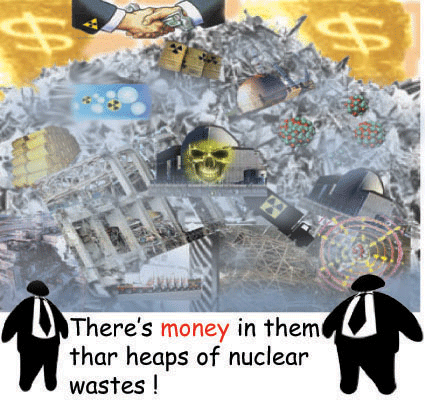
£400m decommissioning contract winners for Scotland nuclear site revealed, Infrastructure Intelligence Ryan Tute, 24 Apr 19, Dozens of companies and their supply chains have been announced as winners for six decommissioning framework contracts, worth up to £400m, at the Dounreay nuclear site in Scotland.
Dounreay Site Restoration Limited (DSRL), was the site of Britain’s former centre of nuclear fast reactor research and development for 60 years and is set to be demolished and cleaned up.
Initially for up to four years with the possibility of extensions of up to an additional three years, winners will take work at the site, delivered on behalf of the Nuclear Decommissioning Authority (NDA). ……
Full list of winners:
- AECOM E&C UK; MW Hargreaves; Kier Infrastructure and Overseas; Morson Projects; NIS; NSG Environmental; Squibb Group; Westinghouse Electrical Company UK
- Dounreay Decommissioning Framework (DDF) Alliance; Cavendish Nuclear; BAM Nuttall; KDC Contractors; JGC Engineering and Technical Services
- Dounreay Wood Alliance (DWA); Wood; Aquila Nuclear Engineering; GD Energy Services; Orano Projects
- Jacobs UK; Atkins
- Nuclear Decommissioning Ltd (NDL); James Fisher Nuclear; REACT Engineering; Shepley Engineers; WYG Engineering; JBV Demolition; RPS Consulting Services
- Nuvia; Graham Construction; Oxford Technologies; Thompson of Prudhoe http://www.infrastructure-intelligence.com/article/apr-2019/%C2%A3400m-decommissioning-contract-winners-scotland-nuclear-site-revealed
1 This Month

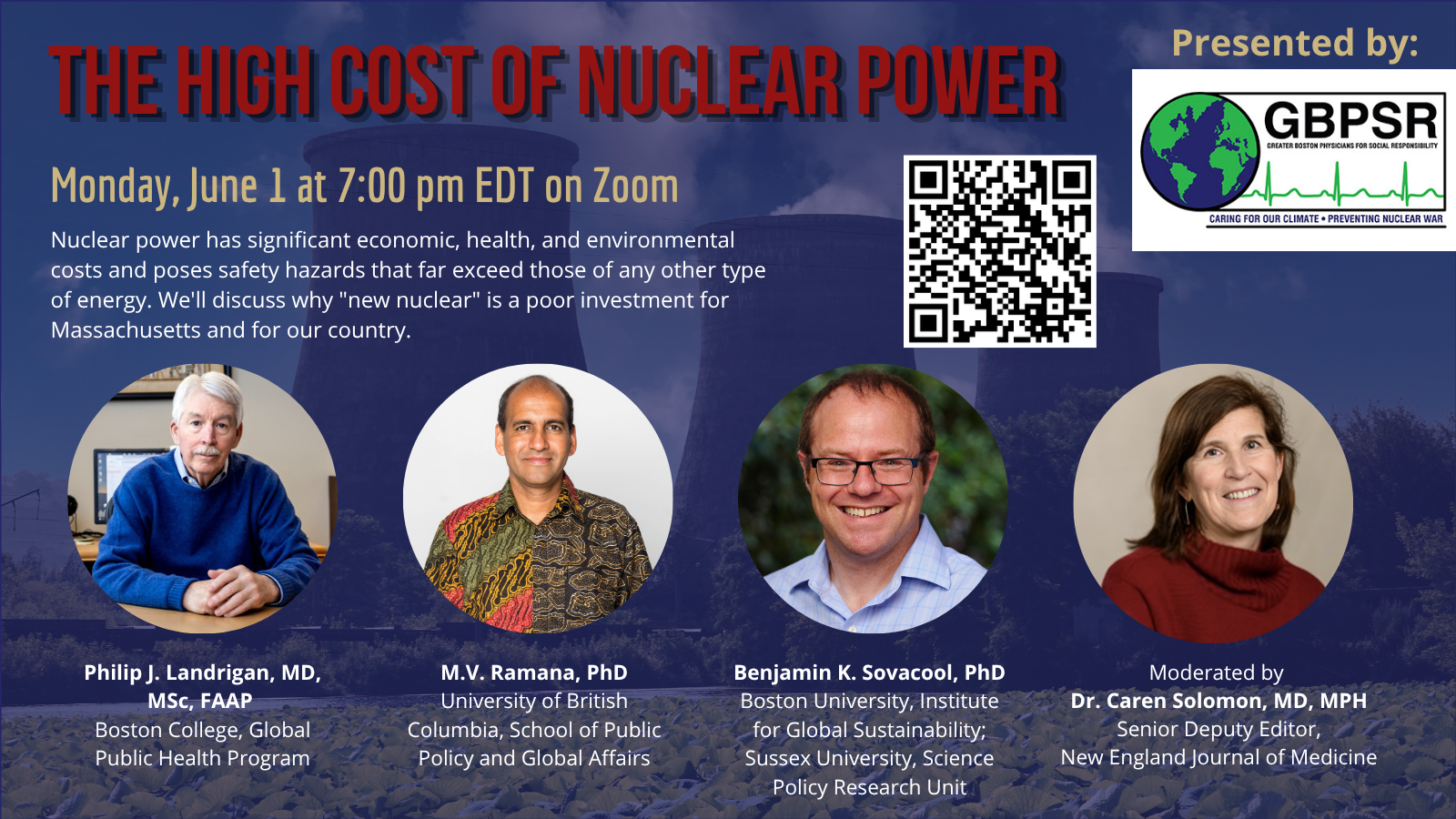
1 June Webinar – The High Cost of Nuclear Power – Register


of the week– Nuclear Reactor Information Task Force
To see nuclear-related stories in greater depth and intensity – go to https://nuclearinformation.wordpress.com
-
Archives
- May 2026 (255)
- April 2026 (356)
- March 2026 (251)
- February 2026 (268)
- January 2026 (308)
- December 2025 (358)
- November 2025 (359)
- October 2025 (376)
- September 2025 (257)
- August 2025 (319)
- July 2025 (230)
- June 2025 (348)
-
Categories
- 1
- 1 NUCLEAR ISSUES
- business and costs
- climate change
- culture and arts
- ENERGY
- environment
- health
- history
- indigenous issues
- Legal
- marketing of nuclear
- media
- opposition to nuclear
- PERSONAL STORIES
- politics
- politics international
- Religion and ethics
- safety
- secrets,lies and civil liberties
- spinbuster
- technology
- Uranium
- wastes
- weapons and war
- Women
- 2 WORLD
- ACTION
- AFRICA
- Atrocities
- AUSTRALIA
- Christina's notes
- Christina's themes
- culture and arts
- Events
- Fuk 2022
- Fuk 2023
- Fukushima 2017
- Fukushima 2018
- fukushima 2019
- Fukushima 2020
- Fukushima 2021
- general
- global warming
- Humour (God we need it)
- Nuclear
- RARE EARTHS
- Reference
- resources – print
- Resources -audiovicual
- Weekly Newsletter
- World
- World Nuclear
- YouTube
-
RSS
Entries RSS
Comments RSS
 nuclear-news