U.S. intelligence assessment – Russia’s Mystery Nuclear Explosion Occurred During Missile Recovery at Sea
|
Russia’s Mystery Nuclear Explosion Occurred During Missile Recovery at Sea — Reports https://www.themoscowtimes.com/2019/08/30/russias-mystery-nuclear-explosion-occurred-during-missile-recovery-at-sea-reports-a67084 The mysterious explosion in northern Russia that caused a spike in radiation levels happened during a mission to salvage a nuclear-powered cruise missile from the bottom of the sea, media have cited a U.S. intelligence assessment as saying.
Five nuclear engineers were killed in a liquid propulsion system blast at Russia’s naval missile test facility, leading to a brief spike in radiation on Aug. 8. The secrecy surrounding the accident has led outside observers to speculate that what the explosion involved the Burevestnik nuclear-powered intercontinental cruise missile, dubbed the SSC-X-9 Skyfall by NATO.
“This was not a new launch of the weapon, instead it was a recovery mission to salvage a lost missile from a previous test,” the CNBC business outlet cited an unnamed U.S. official with direct knowledge of a U.S. intelligence assessment as saying. Russian crews aboard three vessels had last year prepared to recover a missile that landed in the Barents Sea during a failed November 2017 test, CNBC reported last year, also citing a U.S. intelligence report. “There was an explosion on one of the vessels involved in the recovery and that caused a reaction in the missile’s nuclear core which lead to the radiation leak,” another unnamed source told the outlet Thursday. The U.S.-funded Radio Free Europe/Radio Liberty news outlet’s Russian-language service came to the same conclusion after analyzing photographs of nuclear waste containers at what are thought to be previous Burevestnik test sites. Russia tested four of the missiles between November 2017 and February 2018, each resulting in a crash, people who spoke on condition of anonymity previously told CNBC. Government officials have given a muted, occasionally contradictory response in the weeks since the accident. President Vladimir Putin said the explosion occurred during testing of what he called promising new weapons systems. Last year, Putin had boasted about what he said was the Burevestnik’s unlimited range. Four of Russia’s nuclear radiation monitoring stations went silent days after the explosion, and doctors in the region have said they weren’t warned that they were treating patients exposed to radiation. |
|
Trump’s friendliness with Putin makes it hard for NATO to do anything about Russia’s weapons tests and radioactive explosion
Russia’s nuclear weapons tests were linked to a radioactive explosion. Trump’s friendliness with Putin makes it hard for NATO to do anything about it. Business Insider, MITCH PROTHERO, AUG 29, 2019
Examining the radioactive isotopes from Russia’s mystery explosion
How nuclear scientists are decoding Russia’s mystery explosion. Isotopes that caused a radiation spike earlier this month probably came from an exploding nuclear-reactor core — but device’s application is still unknown. Nature,
The Flamanville EPR nuclear reactor – a nightmare site for EDF.
Le Monde 30th Aug 2019 The Flamanville EPR, a nightmare site for EDF.
The third-generation Normanreactor, scheduled to be launched in 2012, will not start until the end of 2022 due to faulty welds on the site. Launched in 2007, the third generation EPR reactor was initially to be connected to the electricity grid in 2012, and cost around 3.5 billion euros. In practice, it will not
start before the end of 2022, at the earliest, and the bill will rise to
more than 11 billion euros. An amount likely to be further revised upwards
depending on the work that remains to be done.
France’s sodium-cooled fast Nuclear reactor turns out to be a dud. Cancelled
News1 29th Aug 2019 The Astrid Fast Reactor Project is shut down by the Atomic EnergyCommission. A blow to the future of the sector. This was to be the nextstep in the development of the French nuclear industry, one that wouldallow it to project into the future, but which is likely never to see the
light of day. According to our information, the Astrid Fast Neutron Reactor
(RNR) project is being abandoned by the Atomic Energy and Alternative
Energies Commission (CEA), which is nevertheless at the origin.
https://www.news1.news/2019/08/france-abandons-the-fourth-generation-of-reactors.html
Le Monde 29th Aug 2019 Astrid, the acronym for Advanced Sodium Technological Reactor for Industrial Demonstration, is a sodium-cooled fast reactor prototype project to be built at the Marcoule nuclear site in the Gard.
The objective of this new generation is to use depleted uranium and plutonium as fuel, in other words to reuse the radioactive materials from the electricity generation of the current nuclear fleet and largely stored at the La Hague site. (Channel), operated by Orano (formerly Areva).
Russia Spreads Influence in Africa Using Nuclear Power
Russia Spreads Influence in Africa Using Nuclear Power – Reports, Moscow Times, 30 Aug 19, Russia is working to win influence in at least 10 African states with high-cost nuclear technology that for the most part does not suit their needs, researchers and NGOs have told The Guardian newspaper.
With booming exports, nuclear energy is one example of Russia’s increasing presence in Africa in recent years. Elsewhere, a businessman known as “Putin’s chef,” Yevgeny Prigozhin, is widely reported to be spearheading Russia’s push to exchange security and electioneering services for mining rights in Africa.
Russia’s state nuclear agency Rosatom has approached the leaders of “dozens” of African countries with various nuclear energy projects in the past two years, The Guardian reported Wednesday. Rosatom has existing deals with Egypt and Nigeria and other various agreements with other countries on the continent.
Few African countries have the capacity to distribute the amount of nuclear energy generated by the type of reactors that Rosatom is exporting, experts told the outlet. Observers also noted that the costly projects favored by Rosatom likely wouldn’t benefit Africa’s poorest populations…….. https://www.themoscowtimes.com/2019/08/29/russia-spreads-influence-in-africa-using-nuclear-power-reports-a67077
Physical and psychological abuse of Julian Assange
Clinical psychologist Lissa Johnson: They are trying to break Assange “physically and psychologically” WSWS, By Oscar Grenfell , 28 August 2019Australian clinical psychologist Lissa Johnson has been an outspoken defender of Julian Assange, writing extensively on the grave implications of his persecution for democratic rights and freedom of speech.
Johnson explained to the WSWS that she “writes about the psychology of politics and social issues.” She has a background in media studies and sociology, and a PhD in the psychology of manipulating reality-perception.
Earlier this year, Johnson wrote an extensive five–partinvestigative series titled “The Psychology of Getting Julian Assange,” published on the New Matilda website. Johnson provided the following responses to a series of questions from the World Socialist Web Site earlier this week.
WSWS: John Shipton and John Pilger have recently detailed the punitive conditions of Assange’s detention in Belmarsh Prison. Could you speak about the way in which his isolation, and the denial of his right to access computers/legal documents is aimed at stymieing his defence against the US extradition request and increasing the psychological pressures upon him?
Lissa Johnson: If anyone takes a moment to imagine what it must be like to face the prospect of 175 years in a US prison, having already been subjected to nearly a decade of arbitrary detention and judicial harassment, knowing that you have no chance of a fair trial in the US, having been smeared in the media and branded a “terrorist” and enemy of the state, then that gives you an inkling of what Julian Assange was dealing with even before being placed under lockdown in Belmarsh prison. If you add to that having read hundreds of documents from Guantanamo Bay and knowing, in intimate detail, what the United States does to those it brands terrorists and enemies of the state, then Julian Assange’s reality becomes even clearer.
Now, with the full force of the US national security state bearing down on him, Julian Assange has been stripped of his most basic abilities to protect himself. Continue reading
Double standards in UK prison, as Julian Assange is deprived of justice
Julian Assange: Deprivation of Justice and Double Standards in Belmarsh Prison, 21st Century Wire , AUGUST 28, 2019 BY
Alfred de Zayas, former UN Rapporteur, has described the actions of the British authorities in pursuit of Assange as “… contrary to the rule of law and contrary to the spirit of the law.” What we see on the surface is an illusion of British justice, masking a political agenda behind it.
Britain’s notorious Belmarsh Prison is now being presented as beacon of good governance, indicative of a fair and just society which equitable but firm with perpetrators. After carefully reviewing the case of Julian Assange though, there can be little doubt that placing the award-winning journalist in such a facility is nothing but the latest vehicle for his rendition to the US.
So far, Belmarsh has been fulfilling that state agenda.
Belmarsh as the state’s next weapon of choice
Judge Deborah Taylor sent Assange to category A Belmarsh prison for a bail-skipping offense, even though he’d demonstrated that he had good reason to skip bail. It is difficult not to conclude that the category A assignment was done so that he would be weak and vulnerable. In essence, Assange was sent to Belmarsh for 50 weeks for failing to turn up at a police station. There was no ongoing court case; he had no prior offenses; there were no charges; the Swedish investigation had been dropped. So skipping police bail was all the British government had. It should also be pointed out that Judge Taylor made a series of mistakes during the sentencing on 1st May, referring to rape charges in Sweden, which Assange corrected and which she then acknowledged were wrong. This indicates that Judge Taylor went into court at least uninformed, set in her mind that Assange had somewhere, somehow been charged with rape. This would seem to explain some of the reasoning behind Judge Taylor’s cruel sentencing, described by the United Nations Working Group on Arbitrary Detention as ‘disproportionate’ but also as furthering the arbitrary deprivation of Assange’s liberty. What’s more, it has been pointed out how several thousand people in the UK skip bail each year and are in now way subject to such harsh punishment.
Clearly, Judge Taylor had used narratives provided by the state in order to send Assange to a category A penitentiary, even though these narratives have been thoroughly debunked. …….
Following his assessment of Assange in May inside Belmarsh prison, Nils Melzer issued a statement detailing the conditions of dentention. Melzer was accompanied by two medical experts who specialize in the examination of possible victims of torture as well as the documentation of symptoms, both physical and psychological. On examining Assange Melzer observed the following:
“Most importantly, in addition to physical ailments, Mr. Assange showed all symptoms typical for prolonged exposure to psychological torture, including extreme stress, chronic anxiety and intense psychological trauma.“
In addition to these concerns, reports also indicate Assange is being medicated. Continue reading
“Chernobyl on the Seine” – Marie curie’s radioactive legacy
France Is Still Cleaning Up Marie Curie’s Nuclear Waste, Her lab outside Paris, dubbed Chernobyl on the Seine, is still radioactive nearly a century after her death. Bloomberg Business Week , By Tara Patel, 28 Aug 19,
In 1933 nuclear physicist Marie Curie had outgrown her lab in the Latin Quarter in central Paris. To give her the space needed for the messy task of extracting radioactive elements such as radium from truckloads of ore, the University of Paris built a research center in Arcueil, a village south of the city. Today it’s grown into a crowded working-class suburb. And the dilapidated lab, set in an overgrown garden near a 17th century aqueduct, is sometimes called Chernobyl on the Seine. No major accidents occurred at the lab, which closed in 1978. But it’s brimming with radioactivity that will be a health threat for millennia, and France’s nuclear watchdog has barred access to anyone not wearing protective clothing. The lab is surrounded by a concrete wall topped by barbed wire and surveillance cameras. Monitors constantly assess radiation, and local officials regularly test the river. “We’re proof that France has a serious nuclear waste problem,” says Arcueil Mayor Christian Métairie. “Our situation raises questions about whether the country is really equipped to handle it……. (subscribers only) https://www.bloomberg.com/news/articles/2019-08-28/france-is-still-cleaning-up-marie-curie-s-nuclear-wasteRussia fears fatal consequences if the NEWSTART nuclear arms treaty is allowed to lapse
Calls on Donald Trump to start talks about the last remaining nuclear weapons agreement between Russia and the U.S. remain unanswered, 18 months before it expires, increasing the risk of an unhindered arms race, according to Russian President Vladimir Putin’s spokesman. The consequences will be “quite fatal” if Russia and the U.S. let lapse the 2010 New START treaty limiting both nuclear powers’ strategic arsenals, Kremlin spokesman Dmitry Peskov said on a call with reporters Monday. “Undoubtedly, strategic stability on the overall global level will be affected, because we all — I mean humanity — we will be left without a single document that would regulate this area.”…….. (subscribers only) https://www.bloomberg.com/news/articles/2019-08-26/russia-says-u-s-silence-on-last-nuclear-treaty-may-be-fatal |
|
|

A Small Nuclear Reactor exploded in Russian accident – fallout isotopes prove this

Isotopes’ Composition Proves Nuclear Reactor Was Involved in Russian Explosion, Expert Says
Analyses of the radionuclides in the fallout over Severodvinsk show several isotopes that would not have been present if was a simple RTG in the explosion.
NATO nuclear bombs are stored in violation of international law in Italy, Germany, Belgium, the Netherlands and Turkey.
|
NATO Nuclear Gaff, Voltaire Network , by Manlio Dinucci It’s a stale old secret. But it is also one of the most
 formidable denials of the Atlantic Alliance: nuclear bombs are stored in violation of international law in Italy, Germany, Belgium, the Netherlands and Turkey. By mistake, a member of the NATO Parliamentary Assembly wrote it in a report immediately withdrawn. VOLTAIRE NETWORK | ROME (ITALY) | 26 AUGUST 2019 formidable denials of the Atlantic Alliance: nuclear bombs are stored in violation of international law in Italy, Germany, Belgium, the Netherlands and Turkey. By mistake, a member of the NATO Parliamentary Assembly wrote it in a report immediately withdrawn. VOLTAIRE NETWORK | ROME (ITALY) | 26 AUGUST 2019 That the United States keeps nuclear bombs in five NATO countries – Italy, Germany, Belgium, the Netherlands and Turkey – has long been proven (especially by the Federation of American Scientists – FAS) [1]. But NATO never officially admitted it. However something has just gone off the rails. In the document titled “A new era for nuclear deterrence? Modernization, Arms Control and Alien Nuclear Forces”, by Canadian Senator Joseph Day on behalf of the Defense and Security Committee of the NATO Parliamentary Assembly, the’ secret ’has been revealed. ….. Accusing Russia of keeping many tactical nuclear weapons in its own arsenal, the document states that the US nuclear weapons deployed in advanced positions in Europe and Anatolia (ie near Russian territory) serve “To ensure the full involvement of the Allies in NATO’s nuclear mission and the concrete confirmation of the US nuclear commitment to the security of the European allies of the Alliance”. As soon as Senator Joseph Day’s document was published online, NATO intervened by deleting it and then republishing it as an amended version. Too late though……… This confirms what we have documented for years …… All this in violation of the Non-Proliferation Treaty, ratified by both the US and Italy. Meanwhile the Parliament is tearing on the TAV but not on the Bomb, that it tacitly unanimously approves. …………… Translation Roger Lagassé Source |
|
Russia launched two ballistic missiles from nuclear-powered submarines in the Arctic Ocean and the Barents Sea
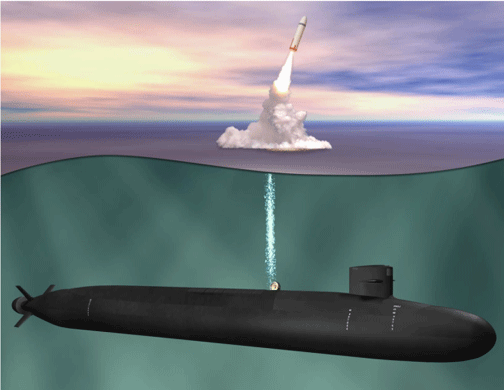 Russia says it launched 2 ballistic missiles in the Arctic Ocean as part of combat training By Amir Vera, CNN August 25, 2019 Russia launched two ballistic missiles from nuclear-powered submarines in the Arctic Ocean and the Barents Sea on Saturday, according to a tweet from the Russian Ministry of Defense.
Contradictory reports from Russia, over the Aug. 8 nuclear incident
|
Russia says nuclear accident during suspected missile engine test released radioactive gas cloud https://www.cbsnews.com/news/russia-nuclear-accident-released-radioactive-gas-cloud-isotopes-government-reveals-today-2019-08-26/ AUGUST 26, 2019 MOSCOW — Russia’s state weather and environment monitoring agency on Monday released new details about a brief spike in radioactivity following a mysterious explosion at the navy’s testing range that has been surrounded by secrecy and fueled fears of increased radiation levels.
Russia’s state weather and environmental monitoring agency Rosgidromet said Monday the brief rise in radiation levels was caused by a cloud of radioactive gases containing isotopes of barium, strontium and lanthanum that drifted across the area. The agency said its monitoring has found no trace of radiation in air or ground samples since Aug. 8. It has previously said that the peak radiation reading in Severodvinsk on Aug. 8 briefly reached 1.78 microsieverts per hour in just one neighborhood — about 16 times the average. Readings in other parts of Severodvinsk varied between 0.45 and 1.33 microsieverts for a couple of hours before returning to normal. The authorities said those readings didn’t pose any danger, and the recorded levels were indeed several times less than what a passenger is exposed to on a long-haul flight. Still, contradictory statements from the authorities and their reluctance to reveal details of the explosion have drawn comparisons to the Soviet cover-up of the 1986 explosion and fire at the Chernobyl nuclear power plant, the world’s worst nuclear disaster. The Defense Ministry denied any radiation leak even as the local administration in Severodvinsk reported a hike in radiation levels and told residents to stay indoors — a move that prompted frightened residents to buy iodine, which can help reduce risks from exposure to radiation. Russian media reported that the victims of the explosion received high doses of radiation. They said that medical workers at the Arkhangelsk city hospital that treated three of those injured said they hadn’t been warned that they would treat people exposed to radiation and lacked elementary protective gear. The Moscow Times on Monday cited Igor Semin, a cardiovascular surgeon at the hospital, who scathingly criticized the authorities in a social network post for failing to warn the hospital workers about the deadly risks. “They were abandoned and left to fend for themselves,” the newspaper quoted Semin as saying. Asked about the doctor’s statement, Kremlin spokesman Dmitry Peskov said that the authorities will look into the matter. Officials have said the explosion in Nyonoksa occurred during tests of a “nuclear isotope power source” of a rocket engine — a cryptic description that made many observers conclude that the test involved one of Russia’s most secretive weapons — the prospective Burevestnik (Storm Petrel) nuclear-powered cruise missile which was code-named “Skyfall” by NATO. U.S. President Donald Trump has thrown his weight behind that theory, saying the U.S. learned much from the failed test. |
|
Fish transport around Scandinavia in nuclear-powered Russian ship
 Russia starts nuclear-powered fish transport around Scandinavia Container carrier “Sevmorput” is now being loaded with 200 refrigerated containers with fish at port in Petropavlovsk-Kamchatskiy and will soon set sail for the Northern Sea Route and further south to St. Petersburg. Barents Observer Thomas Nilsen Russia starts nuclear-powered fish transport around Scandinavia Container carrier “Sevmorput” is now being loaded with 200 refrigerated containers with fish at port in Petropavlovsk-Kamchatskiy and will soon set sail for the Northern Sea Route and further south to St. Petersburg. Barents Observer Thomas Nilsen
“This test-voyage with the container carrier gives hope that one time such deliveries will become regular,” says Kamchatka Governor Vladmir Kuzmitsky in an interview with the region’s own portal.The 200 containers are filled with frozen fish, fillets, caviar and other seafood, a total of 5,000 tons. The voyage takes three weeks, of which the two first will be along the Northern Sea Route, north of Siberia. This is the first time a Russian civilian nuclear-powered ship sails with cargo outside the coast of Norway. From the North Sea, “Sevmorput” will continue in the narrow waters between Sweden and Denmark, sailing through the Great Belt and into the Baltic Sea before final port call to St. Petersburg. Rosatom confirmed the voyage in a tweet on Monday. “Sevmorput” is expected to cross the Barents Sea and sail outside Norway by the second week of September. Then, the ship will sail back the same route and a second voyage will come in late October……. https://thebarentsobserver.com/en/industry-and-energy/2019/08/russia-starts-nuclear-powered-fish-transport-around-scandinavia |
|
1 This Month
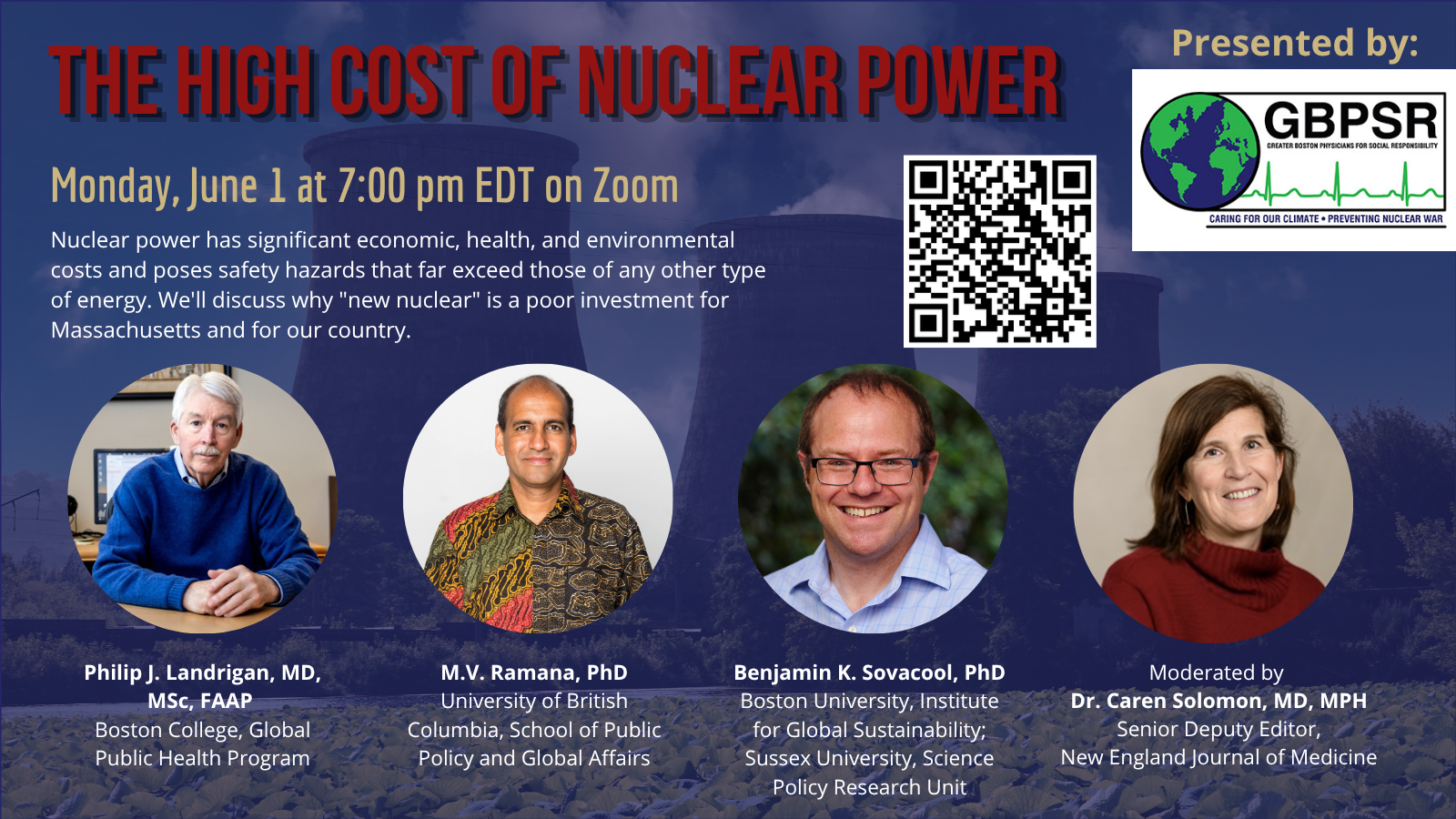
1 June Webinar – The High Cost of Nuclear Power – Register


of the week– Nuclear Reactor Information Task Force
To see nuclear-related stories in greater depth and intensity – go to https://nuclearinformation.wordpress.com
-
Archives
- May 2026 (243)
- April 2026 (356)
- March 2026 (251)
- February 2026 (268)
- January 2026 (308)
- December 2025 (358)
- November 2025 (359)
- October 2025 (376)
- September 2025 (257)
- August 2025 (319)
- July 2025 (230)
- June 2025 (348)
-
Categories
- 1
- 1 NUCLEAR ISSUES
- business and costs
- climate change
- culture and arts
- ENERGY
- environment
- health
- history
- indigenous issues
- Legal
- marketing of nuclear
- media
- opposition to nuclear
- PERSONAL STORIES
- politics
- politics international
- Religion and ethics
- safety
- secrets,lies and civil liberties
- spinbuster
- technology
- Uranium
- wastes
- weapons and war
- Women
- 2 WORLD
- ACTION
- AFRICA
- Atrocities
- AUSTRALIA
- Christina's notes
- Christina's themes
- culture and arts
- Events
- Fuk 2022
- Fuk 2023
- Fukushima 2017
- Fukushima 2018
- fukushima 2019
- Fukushima 2020
- Fukushima 2021
- general
- global warming
- Humour (God we need it)
- Nuclear
- RARE EARTHS
- Reference
- resources – print
- Resources -audiovicual
- Weekly Newsletter
- World
- World Nuclear
- YouTube
-
RSS
Entries RSS
Comments RSS
 nuclear-news