18 nuclear power plants in the EU are operating without a valid license, Sophia Ankel and Alexandra Hilpert, Business Insider Deutschland , 25 Aug 19
- 18 nuclear power plants in the European Union are operating without a valid license, according to research conducted by Germany’s Green Party.
- This number doesn’t include the 34 other illegal power plants in neighboring European countries that aren’t part of the EU.
- All operating illegal atomic reactors were never subject to an Environmental Impact Assessment (EIA).
- Spiegel indicated that — should any reactor fail an EIA assessment — governments in those countries where reactors are operating may face serious consequences.
…….Some of the EU countries running the illegal power plants include the Netherlands, Bulgaria, Ukraine, Belgium, Finland, the UK, Sweden, and Switzerland.
The number does not take into account the 34 other illegal nuclear power plants in neighboring European countries that aren’t part of the EU……
n France alone, there are 58 pressurized water reactors, which produce over 70% of the country’s electricity. Many of them are classified as “high-risk reactors” because they are more than 30 years old. The recommended operating age of a nuclear power plant is 40 years. Another nuclear power plant at the Mühleberg site in Switzerland has also been classified as particularly dangerous by an Austrian environmental protection organization called “Global2000”.Not only is it a “high-risk reactor”, but it’s also the same power plant as Fukushima— the Japanese reactor which had a nuclear disaster in 2011………
The UN Committee responsible for these investigations is currently examining several nuclear reactors which are said to have been approved in Europe without an EIA. https://www.businessinsider.com/18-nuclear-reactors-in-the-eu-are-currently-operating-illegally-2019-8/?r=AU&IR=T
August 26, 2019
Posted by Christina Macpherson |
EUROPE, safety |
1 Comment
|
 Nuclear power funding plan worries Cumbria councillors, BBC, 24 August 2019 Nuclear power funding plan worries Cumbria councillors, BBC, 24 August 2019
|
|
August 26, 2019
Posted by Christina Macpherson |
politics, UK |
Leave a comment
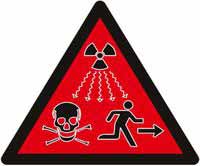 Russian nuclear accident: Medics fear ‘radioactive patients’, https://www.bbc.com/news/world-europe-49432681 23 Aug 19, Russian medics who treated radiation victims after a military explosion in the Arctic had no protection and now fear they were irradiated themselves.
Two of the medics in Arkhangelsk spoke to BBC Russian about the victims’ evacuation, on condition of anonymity.
Five nuclear engineers died on 8 August when an “isotope-fuel” engine blew up at the Nyonoksa test range, officials said. Two military personnel also died.
President Vladimir Putin said the test involved a new weapon system.
Six people were injured in the accident, but officials gave few details about it.
On 14 August Russia’s weather service Rosgidromet revealed that radiation levels had spiked 16 times above normal, in Severodvinsk, a city 47km (29 miles) east of Nyonoksa.
According to the official data, the radiation that reached Severodvinsk was not heavy enough to cause radiation sickness.
Experts in Russia and the West say the test was most likely linked to the new 9M730 Burevestnik nuclear-powered cruise missile, called “Skyfall” by Nato. Last year Mr Putin said the technology would give the missile “unlimited” range.
The Arkhangelsk medics, who spoke to the BBC’s Pavel Aksenov, said at least 90 people came into contact with the casualties, but the military did not warn them of any nuclear contamination risk.
Contamination fears
The medics were at the civilian Arkhangelsk regional hospital, which treated three of the injured, while three other casualties were taken to an Arkhangelsk hospital called Semashko, which is equipped for radiation emergencies.
The medics said they were speaking out now because they feared for their own health and did not want any similar “[safety] violations” to recur.
“We don’t want them to bring us next time not three, but ten people, God forbid, and hide the information from us again,” said one.
The degree of secrecy surrounding the explosion has drawn comparisons with the 1986 Chernobyl disaster, when Soviet officials were slow to admit the truth.
The Arkhangelsk medics said it was clear that the three brought to their regional hospital were very sick. Doctors examined them in the emergency room, then sent them to an operating theatre.
But the emergency room continued to admit other patients for about an hour, the medics said, until the doctors realised that the three “had received a very high radiation dose”. The hospital handles pregnancy complications and other difficult medical conditions.
“The radiation picture was developing by the hour. Blood tests were being done, and every hour you could see that this or that cell count was plunging. That signified a very high radiation dose,” they said.
The hospital staff kept treating the victims despite knowing about the radiation dose. The staff had to improvise some self-protection – for example, they took face masks from the helicopter crews’ emergency kit.
The next day the three victims were transferred to a hospital in Moscow which has radiation specialists. Their condition now is unknown.
Nuclear decontamination
A military team later carried out decontamination work in the Arkhangelsk hospital.
The medics said the casualties’ clothing was removed, along with stretchers and a “highly radioactive bath”.
“Our cleaners should have been advised, they’re just simple country folk, they were just picking up sacks and bundles and carrying them out,” said one.
The other medic said hospital staff were now mentally stressed, knowing that radiation safety information had been withheld from them during the emergency.
Two weeks after the explosion the Russian health ministry said none of the medics at the Arkhangelsk hospitals had received a hazardous radiation dose. Its conclusion was based on medical examination of 91 staff.
Incomplete data
On Monday an international nuclear agency reported that the two Russian radiation monitoring stations nearest to Nyonoksa had gone offline soon after the explosion. The revelation fuelled suspicions that the radiation could have been heavier than officially reported.
The Comprehensive Nuclear Test-Ban Treaty Organization (CTBTO) said the technical failure at those sites was then followed by a failure at two more. It tweeted an animation showing the potential radiation plume from the explosion.
Russia said the weapons test was none of the CTBTO’s business, and added that handing over radiation data was voluntary. Two of the monitoring stations have since started working again.
August 24, 2019
Posted by Christina Macpherson |
health, Russia |
Leave a comment

|
Russia’s closed cities hold the secrets to global nuclear disasters you’ve never heard of https://www.abc.net.au/news/2019-08-24/russia-closed-cities-hold-secrets-to-global-nuclear-disasters/11437734
By Lauren Beldi The lack of information from the Russian Government following the deadly explosion on August 8 has some questioning whether the situation might be worse than originally thought.
Key points:
- There are at least 40 closed cities in Russia, officially known by the acronym ZATO
- Some have also been home to some of the world’s worst nuclear incidents
- President Vladimir Putin is trying to encourage more Russians to move to closed cities
But it makes sense why Russia might be vague on the detail.
Both the city near the accident site, Severodvinsk, and the one where the victims were buried, Sarov, are “closed cities” — highly controlled areas that house the country’s most important weapons sites.
The Government does not want outsiders knowing what goes on there, especially when accidents happen.
And when accidents do happen in closed cities, like a radioactive explosion or an outbreak of anthrax, Russia has a long history of covering them up.
Russia is far from the only country to have closed cities, but it does have a lot of them.
It’s thought there are about 40 closed cities in Russia, though it’s suspected there are others whose very existence is highly classified.
First established in the 1940s, closed cities — officially known by the acronym ZATO in Russian — are most often associated with either military installations or major research centres and are used to house employees and their families.
For example, Sarov, where the five scientists killed in the explosion were buried, is the site of a nuclear weapons design facility.
It’s been a closed city since 1946, when it was renamed Arzamas-16 and its location was removed from all unclassified maps.
The movement of people and information in and out of these cities is highly restricted, and residents are often not allowed to disclose where they live to outsiders.
“There’s levels of security inside levels of security, it’s like a series of concentric circles,” Kate Brown, MIT Professor of Science, Technology and Society, told the ABC.
“And when you have those it is easy to gloss over problems, perhaps cover up accidents, there’s not a lot of ways for information to get out.”
The nuclear disaster you probably haven’t heard of
While Chernobyl and Fukushima might be synonymous with nuclear disasters, that might not be the case for Kyshtym.
It was the third most-serious nuclear accident ever recorded, and it happened at the Mayak facility in the closed city of Ozyorsk, in Russia’s Ural Mountains, in 1957.
A cooling system in a radioactive waste tank broke down and the rise in temperature resulted in an explosion that released an estimated 20 million curies of radioactivity into the environment.
During the Chernobyl explosion, about 50–200 million curies of radioactivity was estimated to have been released.
The Kyshtym disaster contaminated an area up to 20,000 square kilometres, known as the East-Ural Radioactive Trace, and thousands of people near the plant were evacuated.
But the Soviet government didn’t publicly acknowledge the accident until 1989.
The incident was happening at the time of the Cold War so it was also an attempt by the Soviet authorities to prevent the news from reaching the outside world,” Alexey Muraviev, a specialist in Russian strategic and defence policy at Curtin University, told the ABC.
But the area had been contaminated even before the Kyshtym disaster, when high-level radioactive waste from the production of plutonium at Mayak had been intentionally dumped into the nearby Techa river.
“They put about 3.2 million curies into that small river, and the people who lived downstream drank from it, swam in it, ate from it, fished in it, watered their crops in it,” Professor Brown said.
Twenty-eight communities live down that river, several tens of thousands of people, and they didn’t tell anybody that they were putting high-level waste [in the river].”
Mayak now serves as a reprocessing plant for spent radioactive fuel.
In October 2017, a network of monitoring sites picked up a cloud of radioactive material, Ruthenium-106, above Europe.
In a report published just last month, a team of scientists say the most likely source was a fire or explosion at Mayak that occurred during the reprocessing of spent fuel to create enriched caesium for an Italian laboratory.
Russia’s nuclear energy agency continues to deny anything happened at Mayak in 2017, but at the time, the Russian Meteorological Service admitted there was “extremely high contamination” in the air around the Ural mountains.
And it’s not just nuclear accidents that happen at closed cities.
In 1979, spores of anthrax leaked from a biological weapons facility in the closed city of Sverdlovsk and killed at least 68 people, many of whom were civilians from a nearby ceramics plant.
The Soviet government blamed the deaths on the consumption of contaminated meat, and it was only in 1992 that then-president Boris Yeltsin publicly linked the anthrax outbreak with the military facility.
While some have a bad safety reputation, there’s a big reason why Russians might want to move to a closed city: they’ve historically gotten the best of everything.
As part of the privileges of working on important, secret and dangerous processes, residents are promised a higher standard of living and better resources.
During the Soviet era, those who lived in closed cities were spared the austerity of other parts of the country.
“So there were no problems with, for example, food supplies; people could buy anything they wanted,” Dr Muraviev said.
“They also provided better living conditions, so people who would work at closed cities would be guaranteed state funding accommodation and so on.”
The reputation of the living standards and privileges of those cities meant the jobs that would allow you to move to one were highly sought after.
“This is an important element, otherwise it sounds like [closed cities] are like a giant concentration camp,” Dr Muraviev said.
And according to Dr Muraviev, Russian President Vladimir Putin has been actively trying to restore the glamour of the country’s remaining closed cities.
“Back in the 1990s those privileges kind of really lapsed, so there were no incentives anymore, but now they’re sort of back on the agenda and the Government is really pumping funds into these cities,” he said.
“That’s part of [Mr Putin’s] strategy to rebuild Russia’s national security as well as rebuild Russia’s national defence capability.”
And as far as the risks go of moving to a secretive town next to a nuclear facility or a military installation?
Dr Muraviev said the people who chose to move to closed cities knew what came with the job.
“They understand risks associated with it and they’re not just doing it for money; they’re also doing it for the idea of making Russia safe,” he said.
|
|
August 24, 2019
Posted by Christina Macpherson |
Reference, Russia, secrets,lies and civil liberties |
Leave a comment
|
 Iran’s Zarif: Nuclear talks with Macron were ‘productive’ Iran’s Zarif: Nuclear talks with Macron were ‘productive’
Mohammad Javad Zarif says they could work with new French proposals, to save nuclear deal. https://www.aljazeera.com/news/2019/08/irans-zarif-nuclear-talks-macron-productive-190823161529602.html Iran’s foreign minister has hailed “positive” talks with French President Emmanuel Macron, on salvaging the 2015 nuclear deal.Mohammad Javad Zarif says they could work with new French proposals, to save the nuclear deal.
Speaking to reporters after meeting Macron, Zarif says both countries have made suggestions on how to move forward after the United States pulled out of the nuclear deal last year.
Macron has previously said he will either try to soften the effect of the US sanctions or come up with a way to compensate the Iranian people.
|
|
August 24, 2019
Posted by Christina Macpherson |
France, Iran, politics international |
Leave a comment
|
Scottish CND 21st Aug 2019 Scottish CND condemn Office of Nuclear Regulation’s decision to restart
Hunterston nuclear reactor 4. The meeting between ONR, Dr Ian Fairlie and
NFLA (notes available) stated that while the cracking in Reactor 4 is not
as extensive as Reactor 3 there is an issue of some cracks openings that
are greater than 1.2cm wide (i.e. 1/2 inch). Scottish CND chair Arthur
West:
“This news about the Hunterston reactor is very disappointing. It is
very worrying that the Office of Nuclear Regulation seems to have increased
the number of cracks permitted in the reactor. This move seems to be a
clear case of moving the goalposts to allow the closed reactor to reopen.
It really is time to think about a future beyond nuclear energy. The best
response to the current situation at Hunterston is to continue the
development of safer and cleaner forms of renewable energy.”
http://www.banthebomb.org/index.php/news/2042-scottish-cnd-condemn-onr-decision-to-restart-huntertston
|
|
August 24, 2019
Posted by Christina Macpherson |
safety, UK |
Leave a comment
Largs and Millport Weekly News 19th Aug 2019 A SERIES of safety failure at Hunterston could have had ‘serious
consequences’ if the reactors had been in full operation, it was claimed
this week. The Nuclear Free Local Authorities group, which is made up of
councillors around the UK concerned about nuclear power, described the
incidents as ‘notable’. The incident which prevented cooling gas from being
circulated around a reactor was highlighted by the group as ‘a real
concern’. However the nuclear regulators described the incident as ‘minor’
as both incidents happened when both reactors were offline. n relation to
the incident, a spokesperson for Nuclear Free Local Authorities said:
“Whilst there were no radiological consequence from them, this is largely
due to the reactors not being in operation. “A loss of cooling is of real
concern as the consequences of such an eventuality when the reactors are in
full operation could have been extremely serious.”
https://www.largsandmillportnews.com/news/17833610.anger-series-safety-failures-hunterston/
The Nuclear Free Local Authorities (NFLA) is disappointed with the decision
of the Office for Nuclear Regulation (ONR) to permit resumption of
electricity generation at Reactor 4 in the EDF-owned Hunterston site in
North Ayrshire. NFLA believes the age, the amount of keyway root cracks in
both Reactors 3 and 4, and the precautionary principle should have been
considered in the reactors not being reopened for generation.
NFLA 21st Aug 2019
http://www.nuclearpolicy.info/news/nfla-disappointed-onr-decision-resume-operations-reactor-4-hunterston-b/
August 23, 2019
Posted by Christina Macpherson |
safety, UK |
Leave a comment
|
Bitcoin Hackers Charged As Nuclear Power Plant Security Compromised https://www.forbes.com/sites/daveywinder/2019/08/23/bitcoin-hackers-charged-as-nuclear-power-plant-security-compromised/#148c22252735
Davey WinderSenior Contributor, 23 Aug 19, Illicit cryptocurrency mining isn’t usually associated with state-level security compromises. Then again, Bitcoin hackers don’t often target nuclear power plants. Yet according to a report on the Ukrainian UNIAN news website, that’s exactly what happened at South Ukraine’s second-largest nuclear power plant, south of Kiev in the city of Yuzhnoukrainsk.
What was found during the nuclear power plant raid?
Detectives from the Security Service of Ukraine (SBU) searched the Yuzhnoukrainsk nuclear power plant on July 10. During the raids, two bespoke cryptocurrency mining hardware rigs were seized from office 104 in the plant’s administrative wing, along with fiber-optic and network cables.
Coindesk has reported that, on the same day, “a National Guard of Ukraine branch uncovered additional crypto mining equipment at the same nuclear plant. In this search and seizure, 16 GPU video cards, seven hard drives, two solid-state drives and routers were uncovered.” This was at the barracks of the National Guard tasked with protecting the plant. The Russian international television network RT has said that “the people who were supposed to be defending the highly dangerous piece of Ukrainian infrastructure could well have been behind the scheme.”
How was the nuclear power plant security compromised?
The UNIAN report, via Cointelegraph, stated that the cryptominers “compromised the nuclear facility’s security via their mining setup internet connection,” and “ended up leaking classified information on the plant’s physical protection system.”
According to a ZDNet report, the SBU is investigating the incident “as a potential breach of state secrets due to the classification of nuclear power plants as critical infrastructure.” As well as the apparent intent to misappropriate electricity and internet resources to mine cryptocurrency, the SBU is also investigating other lines of inquiry. One of these being whether the mining rigs could have been used to access the network to steal classified security data relating to the nuclear power plant.
|
|
August 23, 2019
Posted by Christina Macpherson |
secrets,lies and civil liberties, Ukraine |
Leave a comment

 Russian radiation detectors ‘go dark’ after mystery explosion
The mysterious shutdown of four nuclear monitoring stations after a fatal blast at a military site has fuelled fears of radioactive contamination. news.com.au 22 Aug 19
Russian officials have dismissed concerns, declaring on Tuesday the country had no obligation to share its data with the CNTBTO — raising fears of a Kremlin cover up on the type of weapon involved and the extent of contamination.
Elevated radiation levels — of up to 16 times the average — were detected 40 km away in the city of Severodvinsk in the aftermath of the event, according to The New York Times.
President Vladimir Putin said on Monday there was no risk to the public, although officials have yet to disclose how much radiation was released………
US National Nuclear Security Administration former deputy William Tobey said it was “at least an odd coincidence” Russian sensors stopped transmitting data about the same time as the explosion occurred.
“Power outages, other failures, can knock down a particular place, but if more than one site is out, it would seem that that is a less likely explanation,” Mr Tobey said.
Russian authorities have offered changing and contradictory information about the explosion fuelling speculation about what really happened and what type of weapon was involved.
While the Russian Defense Ministry said no radiation had been released in a rocket engine explosion, officials in the nearby city of Severodvinsk reported a brief rise in radiation levels.
The contradiction drew comparisons to Soviet attempts to cover up the 1986 explosion and fire at the Chernobyl nuclear power plant in Ukraine, the world’s worst nuclear disaster.
In his first comments on the explosion, Russian President Vladimir Putin said Monday that it hasn’t posed any radiation threat. Putin added that experts are monitoring the situation to prevent any “unexpected developments.”
He didn’t say what weapon was being tested when the explosion occurred, but described the
test as a “state mission of critical importance.”…….
The Russian military said the explosion killed two people and injured six, while the state nuclear corporation Rosatom acknowledged later that it also killed five of its engineers and injured three others.
Rosatom said the explosion occurred on an offshore platform during tests of a “nuclear isotope power source.”……
Rosatom’s mention of a “nuclear isotope power source,” led some observers to conclude that the weapon undergoing tests was the “Burevestnik” or “Storm Petrel,” a prospective nuclear-powered cruise missile first mentioned by Putin in 2018 and was codenamed “Skyfall” by NATO.
US President Donald Trump backed that theory in a tweet last week, saying America is “learning much” from the Skyfall explosion.
The US worked to develop a nuclear-powered missile in the 1960s under Project Pluto, but the idea was discarded as impractical and risky. Mr Tobey said Russia’s apparent revival of the concept raises significant risks.
“Effectively, Russia is thinking about flying around nuclear reactors,” he told AP.
“The very idea of this system is, I think, a risky system. It probably poses more risk to the Russian people than to the American people. If it crashes, it could spread radiation.”
Nuclear expert Michael Krepon, who co-founded the Stimson Center, a nonpartisan public policy research body, said it was not surprising that Russia might take steps to conceal its activities because “they just can’t accept transparency when it comes to screw ups”.
“This weapon poses a danger first and foremost to the people who are working on it,” Mr Krepon said.
“It’s dumb, it’s stupid, it’s expensive, and there are so many other ways that you can deliver nuclear weapons long distance. The more Putin advertises this system, the more he’s likely to be embarrassed by it.” https://www.news.com.au/technology/innovation/military/russian-radiation-detectors-go-dark-after-mystery-explosion/news-story/4ab6ce7b4b3926379381a9a7d20baab3
August 22, 2019
Posted by Christina Macpherson |
Russia, secrets,lies and civil liberties |
Leave a comment
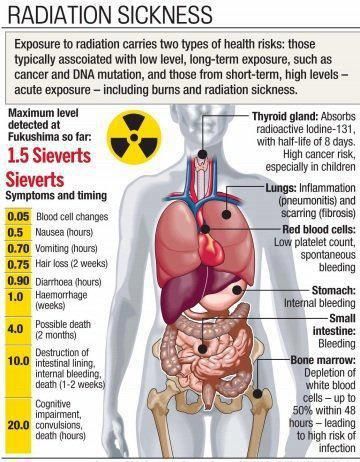
Two victims of mysterious Russian missile blast ‘died of radiation sickness’ , By Will Englund and Natalia Abbakumova, SMH, August 22, 2019 Moscow: Two of the Russian specialists killed in the explosion at a White Sea missile testing range died not of traumatic injuries from the blast itself but of radiation sickness before they could be taken to Moscow for treatment, the independent newspaper Novaya Gazeta has reported.The paper cited an unnamed medical worker who was involved in their care. “Two of the patients did not make it to the airport and died,” the person said. “The radiation dose was very high, and symptoms of radiation sickness grew every hour.”
Their bodies were taken to the Burnazyan Federal Medical and Biophysical Centre in Moscow, a leading institution in the fields of radioactive and nuclear medicine.
The explosion occurred on August 8, on a sea-based platform off the village of Nyonoksa, in Russia’s far north. Rosatom, Russia’s atomic agency, said a device employing “isotopic sources of fuel on a liquid propulsion unit” was destroyed. Few additional details were provided…….
The doctors and nurses were made to sign nondisclosure agreements stating that information about the incident is a state secret. A doctor told Novaya: “They don’t understand what a state secret is and what the scope of this secret is and that makes the staff very nervous.” …….
Four sensors in various locations across Russia that are in place to monitor compliance with the Comprehensive Nuclear Test Ban Treaty stopped reporting information shortly after the explosion, as first reported by the Wall Street Journal, but at least one has since resumed.
An independent news website, Znak.com, quoted an unnamed nuclear expert as suggesting that the explosion does not pose a health threat to the general population but that the sensors may have been turned off to prevent disclosure of particular isotopes that would give clues as to the nature of the device being tested on the White Sea.
|
|
|
August 22, 2019
Posted by Christina Macpherson |
health, Russia, secrets,lies and civil liberties |
Leave a comment
 Nuclear regulator permits restarting of reactor 4 at Hunterston B
EDF Energy is expected to restart reactor a year after it was shut down over safety concerns, Guardian, Jillian Ambrose. 21 Aug 19, Britain’s nuclear watchdog has agreed to allow one of the country’s oldest nuclear reactors to restart, one year after it was shut down to investigate cracks in its graphite core.
EDF Energy is expected to restart reactor 4 at its 40-year-old Hunterston B nuclear plant on the Firth of Clyde in North Ayrshire within weeks after the Office for Nuclear Regulation (ONR) said the plant was safe.
The regulator will allow the reactor to run for four months after proving that the reactor cores can still fulfil their fundamental safety requirements, despite the cracks in its graphite bricks……..
The reactor was shut down last March after investigators discovered more than expected cracks in the graphite core of reactor 4 and reactor 3 at the Scottish nuclear plant. Its application to restart reactor 3, which was found to have more than 350 hairline cracks in its graphite core, is still pending. ……..
The French-owned energy company owns and operates all of the UK’s existing nuclear power plants, which provide about a fifth of the UK’s electricity. It is hoping to extend the reactors’ expected running lives and build new nuclear plants at the Hinkley Point C and Sizewell B nuclear sites.
The company said in 2016 it would extend the lives of its Heysham 1 and Hartlepool nuclear plants, which were due to close this year but will continue to run until 2024. The closure dates of the Heysham 2 and Torness nuclear plants will both be delayed by seven years to 2030.
EDF Energy hopes to run the Hunterston nuclear plant until 2023. https://www.theguardian.com/business/2019/aug/20/edf-nuclear-reactor-restarting-hunterston-b
August 22, 2019
Posted by Christina Macpherson |
safety, UK |
Leave a comment

Russia to launch floating nuclear reactor, Rosatom insists 2-reactor unit is safe as tests are planned in the Arctic, Ft.com, Nastassia Astrasheuskaya in Murmansk 21 Aug 19, On Friday, three tugs will tow the Akademik Lomonosov barge out of Murmansk to begin a 5,000km voyage to a remote port on the other side of Russia’s Arctic coast, and in the process send waves through the nuclear energy sector.
The vessel is a floating nuclear reactor, a portable power plant designed to supply electricity to areas disconnected from the grid, and envisaged by Russia’s state nuclear corporation Rosatom as the future of small-scale nuclear power with an eye on export opportunities in developing countries.
But the two-reactor Lomonosov, which took a decade to design and build, has sparked safety fears and concerns over the environmental impact of any mishap, amid concern over a botched nuclear missile test this month at a military site close to Murmansk that released a radiation spike in a nearby city.
Rosatom insists the unit is safe, and “virtually unsinkable” in case of natural disasters. The plant will also be guarded by the Russian guard, Moscow’s internal military force. “Our unit has other tasks, other requirements in terms of security. It has to correspond with double standards — for a nuclear plant and a vessel,” said Dmitry Alexeenko, deputy head of Rosatom’s department overseeing its construction.
The unit is the first in a programme designed to provide power to remote communities where building a conventional nuclear power plant would be excessive. The Akademik Lomonosov will sail to the Chukotka region, deep in Russia’s far east, where miners are seeking to exploit gold and copper reserves. …
However, environmental groups have raised concerns over the possible repeat of the 1986 Soviet nuclear power plant explosion in Chernobyl, modern-day Ukraine. In 2017, Greenpeace led a protest at St Petersburg’s Baltic shipyard, where the unit was being tested, demanding “No to floating Chernobyl”. The reactor tests were then moved to Murmansk. “A floating nuclear power plant is far more vulnerable to outside threats, such as those from pirates, should they be sold to equatorial countries, and natural disasters, which Fukushima proved even onshore plants are prone to,” said Konstantin Fomin of Greenpeace Russia. The launch comes as energy companies around the world, including in the US and South Korea, have been exploring building smaller scale reactors.
Rosatom says it has been in talks with potential buyers from Latin America, Africa and Asia. It has also held discussions with Sudan to use the plant for power generation and Argentina for water desalination. But the project’s total cost, and confirmation of any foreign contracts, will only be made after the technology is fully tested, the company added. Nuclear energy experts said given the construction timeframe, it is unlikely to be cheap.
Anton Khlopkov, head of Russia’s independent Center for Energy and Security Studies, expects the unit to be significantly cheaper than a conventional land-based nuclear power plant, which normally costs about $5bn-$6bn. But the cost per megawatt would be higher, he said.
“The project economics remain an open question, even taking into account that it is aimed at distant locations where the power costs can be higher for obvious reasons. Even then the project has to prove economic viability,” he said. Rosatom, however, sees the reactor as a strategic project where economic costs are secondary. ……. https://www.ft.com/content/2edadf02-b538-11e9-8cb2-799a3a8cf37b
|
|
|
August 22, 2019
Posted by Christina Macpherson |
ARCTIC, business and costs, Russia, safety, technology |
Leave a comment
The Absurd Strategy Behind Russia’s Nuclear Explosion, A radioactive mess near the Arctic Circle suggests our  next superpower arms race will be even more foolish than the last one. New Republic , By ANKIT PANDA, August 22, 2019,
 The United States and Russia are entering a new arms race, and the costs aren’t just monetary. On August 8, Russian civilians around the remote village of Nyonoksa found themselves downwind of a military nuclear propulsion experiment gone wrong in the White Sea, just outside the Arctic Circle. According to the Russian ministry of defense, a liquid propellant rocket engine
had gone awry and exploded.
This by itself was alarming, but not unprecedented: Liquid propellants, long preferred in many Russian missiles, are volatile and
have exploded when prematurely brought
into contact with oxidizing agents. What made this month’s explosion more significant was Russia’s acknowledgement that a “nuclear isotope power source” was involved. Seven people—including five scientists from Sarov, one of Russia’s secret nuclear complexes—were killed in the explosion. Russian state weather
monitors reported heightened background radiation levels around the site and beyond.
A press release from a Norwegian monitoring agency a week after the incident noted that “tiny amounts of radioactive iodine”—a common byproduct of the sort of nuclear fission that might take place in a reactor—had been detected in northern Norway.
The exact sort of weapon Russia may have been testing is unknown, but the balance of evidence points to a probable culprit: the Burevestnik nuclear-powered cruise missile. Nuclear nonproliferation expert Jeffrey Lewis and his team of researchers out in Monterey, California, have done much of the work in compiling this evidence, which includes the presence of a nuclear fuel carrier ship that was known to have been involved in recovery efforts after a previous failed test of the missile. Known in NATO countries as the SSC-X-9 SKYFALL, the Burevestnik’s atomic propulsion is said by Russian state media to give the missile “almost unlimited range, non-predictable trajectory and high air defense penetration capacity.”……..
In the end, much of what may be driving investment and research on this weapon—beyond Putin’s chest-thumping—may be the sprawling and influential Russian defense bureaucracy. (Overspending on exotic military systems is not an exceptionally American trait.)
That’s the shaky strategic logic behind it. But the common-sense logic, as the radioactive Nyonoksa explosion shows, is even less kind. If a nuclear-powered cruise missile sounds exotic and a little dangerous, that’s because it is. Missiles go boom—usually intentionally, but often enough not—and whatever nuclear power source they might be using onboard wouldn’t be immune.
There’s still little consensus among American experts about how exactly the Burevestnik might leverage nuclear power for propulsion. If you thought nuclear fission weapons were complex, nuclear rocket propulsion is more arcane and mysterious still. In the 1950s and 1960s, U.S. scientists drafted fanciful plans to give missiles nuclear engines, on the assumption that they’d be able to fly longer and farther than any weapon yet conceived. But the Americans eventually gave up; the technical challenges and environmental risks weren’t worth it. The Russians haven’t given up just yet, but they may someday…..
For the Russian leadership, a weapon like Burevestnik is a prestige project, a way to set Moscow apart from its competition……
Of course, Donald Trump couldn’t stomach another head of state flaunting his fancy rocket. The president tweeted on August 12 that the United States has “similar, though more advanced, technology.” As nuclear chemist Cheryl Rofer observed, this was a rare tweet by Trump’s standards: one that criticized Russia. “And of course, it’s a dick-measuring contest,” Rofer added. (Trump’s done this before, chiding North Korean dictator Kim Jong Un on Twitter over the size of his “nuclear button.”) To the extent he grasps the salient issues, it’s likely the president has already asked Pentagon officials why the United States doesn’t have a nuclear-propelled cruise missile of its own.
A spokesperson for the Kremlin was blasé about the Nyonoksa explosion, stating that “accidents happen.” Yes, they do, but nuclear-powered cruise missile programs don’t just happen. They represent dangerous and unnecessary choices to goose a nation’s theoretical military supremacy, incentivizing other nations to follow suit, risks be damned. The arms control regimes that once moderated U.S. and Russian decisions are already crumbling, and another big one—the New Strategic Arms Reduction Treaty, or New START—may expire in 2021. What exactly transpired in the White Sea on August 8 may remain fuzzy, but what is becoming increasingly clear is the risk to life associated with a new generation of nuclear arms proliferation between the U.S. and Russia. With ultranationalist leaders and weapon fetishists in control of Washington and Moscow, buttressed by military yes-men and mercenary defense contractors, there’s little to stand in the way of a new, irrationally exuberant buildup of bizarre new nuclear forces.
Ankit Panda is an adjunct senior fellow at the Federation of American Scientists and a senior editor at The Diplomat. Follow him on Twitter at @nktpnd.
https://newrepublic.com/article/154815/absurd-strategy-behind-russias-nuclear-explosion
August 22, 2019
Posted by Christina Macpherson |
Russia, USA, weapons and war |
Leave a comment
|
Russia Tells Nuclear Watchdog: Radiation From Blast Is ‘None of Your Business’ Daily Beast , Barbie Latza Nadeau, Correspondent-At-Large 08.20.19 Russia has told the Vienna-based Comprehensive Nuclear-Test-Ban Treaty Organization that the nuclear-reactor explosion at a White Sea missile test site in early August is none of their business.
|
|
August 22, 2019
Posted by Christina Macpherson |
Russia, secrets,lies and civil liberties |
Leave a comment
|
Authorities Seize Crypto Mining Equipment from Nuclear Power Plant, https://www.coindesk.com/authorities-seize-crypto-mining-equipment-from-nuclear-power-plant Ukraine’s top law-enforcement and counterintelligence agency uncovered crypto mining equipment on site at a nuclear power plant.According to local media reports, the Security Service of Ukraine (SBU) confiscated six Radeon RX 470 GPU video cards, a motherboard, power supplies and extension cords, a USB and hard drive, and cooling units installed in the South Ukrainian Nuclear Power Plant on July 10.
All of the equipment was located in a single office, No. 104, in the administrative wing separate from the power facility, from the state-owned Energoatom enterprise.
The power plant is registered as a state secret and outside computer equipment is not authorized to enter the property.
The same day, a National Guard of Ukraine branch uncovered additional crypto mining equipment at same nuclear plant. In this search and seizure, 16 GPU video cards, 7 hard drives, 2 solid-state drives and router were uncovered.
GPUs have fallen out of favor in the crypto mining community, as more specialized equipment has come to market. It is unknown what type of cryptocurrencies were being mined. The SBU did not respond to a request for comment by press time.
Reportedly, activists with the Ukrainian Cyber Alliance formed a flash mob organized under the #fuckresponsibledisclosure in 2017, to raise concerns over security issues at Energoatom.
|
|
August 22, 2019
Posted by Christina Macpherson |
secrets,lies and civil liberties, Ukraine |
Leave a comment







 nuclear-news