Europe’s record heat linked to climate change. Deaths in France

RECORD HEAT WAVE LINKED TO CLIMATE CHANGE KILLED 1,500 PEOPLE IN FRANCE THIS SUMMER, NEWSWEEK, BY ON 9/8/19 HEAT WAVES THAT PLAGUED FRANCE THIS SUMMER LEFT SOME 1,500 PEOPLE DEAD, ACCORDING TO THE EUROPEAN NATION’S HEALTH MINISTER.
Agnes Buzyn explained on France Inter radio on Sunday that there had been at about 1,000 more deaths than normal during the summer months, with half of the deceased being 75 or older, the French newspaper Le Monde reported. In total, she said there were 18 exceptionally hot days recorded in France during June and July.
Although the number of deaths was high, Buzyn also pointed out that it was much lower than the 15,000 deaths that occurred during scorching summer heat wave back in 2003. The minister attributed the lower death toll in 2019 to a successful public awareness campaign.
“We have succeeded — thanks to prevention, thanks to workable messages the French population heeded — to reduce fatalities by a factor of 10,” she said, according to the Associated Press.
Paris, the French capital, experienced its hottest day ever recorded in July, with the temperature soaring above 108 degrees Fahrenheit. The previous record, documented in 1947, was just under 105 degrees.
Elsewhere in Europe, multiple countries recorded exceptionally hot summer temperatures as scientists pointed to the growing global impact of climate change.
In Germany, the temperature nearly hit 107 and in the Netherlands it narrowly surpassed 105 back in July. In Belgium, the temperature soared above 104, which was a new record as well. In fact, all three countries broke their hottest-ever recorded temperature records twice within 24 hours, British newspaper The Guardian reported at the time…….
A study conducted by a team of European scientists linked the intense heat wave directly to man-made climate change…….. https://www.newsweek.com/summer-heat-wave-climate-change-killed-1500-france-1458205
UK Nuclear Decommissioning Authority (NDA) gives incorrect information on Calder Hall

http://drdavidlowry.blogspot.com/2019/09/i-believethat-some-energy-industries.html
No more room for Belgium’s nuclear waste
No more room for Belgium’s nuclear waste https://www.brusselstimes.com/all-news/belgium-all-news/67262/no-more-room-for-belgiums-nuclear-waste/ , Alan Hope, The Brussels Times, 08 September 2019 Belgium has no more room in its storage spaces for low-grade nuclear waste, according to the latest annual report from Belgoprocess, the government agency responsible.
Belgoprocess’ waste storage bunker in Dessel in Antwerp province, close to the nuclear research centre in Mol, already contains 50,000 vats of waste, and there is not enough room left over for the quantity of waste expected in the coming year. The agency intends to build a new bunker with space for 5,000 vats, but warns that action needs to be taken in the meantime.
The new bunker will cost seven million euros, and will take a year to complete. Until it is ready, the agency needs to look elsewhere for somewhere to dispose of nuclear waste.
Belgoprocess has plans for a definitive stockage space, but when it presented its plans in 2017, the nuclear power regulator FANC presented a number of objections, and refused to issue a permit.
At the start of 2019, a new plan was submitted for approval. If all goes according to plan, the definitive storage should be ready by 2024, by which time the temporary bunker will have reached or even exceeded its capacity.
Belgoprocess stocks, according to the latest figures, mainly low-grade waste, with smaller quantities of medium-grade and high-grade: 440 m³ of high-grade waste; 3,895 m³ of medium-grade waste and 19,460 m³ low-grade waste. Only low-grade capacity is under pressure of space for the time being.
Last year the national institute for radioactive waste and enriched fissile material Niras, which oversees Belgoprocess, estimated the cost of stockage of nuclear material at eight to ten billion euros, substantially more than the projected 3.2 billion euros originally planned in 2013. The cost is paid by Electrabel, the energy provider which manages the country’s nuclear power stations.
France pledges to press Iran to comply with nuclear deal
 France pledges to press Iran to comply with nuclear deal https://nypost.com/2019/09/07/france-pledges-to-press-iran-to-comply-with-nuclear-deal/ By Sara Dorn, France will continue pressuring Iran to comply with the 2015 nuclear deal, a top official said Saturday.
“We must do everything we can to contribute to ease tensions with Iran and to ensure navigation safety,” French defense minister Florence Parly said during a joint press conference with U.S. Defense Secretary Mark Esper in Paris.
“We can only confirm our goal, which is to bring Iran to fully respect the Vienna deal,” Parly said.
Meanwhile, Iranian officials said Saturday the country has begun using centrifuges to enrich uranium, a key ingredient for nuclear weapons.
Iran ramped up its nuclear activity in July in response to President Trump’s reinstatement of sanctions that were nixed during the nuclear deal made with Iran and world leaders in Vienna in 2015.
Iran has said it would come back into compliance with the pact if Europe helps the country work around the US sanctions to sell crude oil on the international marketplace.
A small nuclear reactor was definitely the cause of the Russian missile engine explosion
It can therefore be stated with certainty that the “isotopic source of energy” referred to by Rosatom was a nuclear reactor.
The Mysterious Explosion of a Russian Nuclear Missile Engine The BESA CENTER. September 6, 2019 BESA Center Perspectives Paper No. 1,280, September 6, 2019
County Council rejects plans for transport of Hinkley Point A nuclear wastes through Somerset
 Hinkley Point A nuclear waste transport plans refused, BBC, 5
  September 2019 Plans to transport nuclear waste through Somerset and store it at Hinkley Point A, have been rejected by the county council.
Magnox, which manages the decommissioned site, applied for permission to bring waste from three UK power stations to the site by road.
But Somerset County Council voted unanimously to refuse the plans.
Magnox said it was disappointed the council had not agreed with the recommendation for approval.
Under current planning conditions, only waste generated on the Hinkley A site – which is currently under construction- can be stored there.
The company had applied to change the rules so it could transport and temporarily store waste from Oldbury in Gloucestershire, Dungeness A in Kent and Sizewell A in Suffolk.
It had wanted to make a total of 46 deliveries of “intermediate waste”, such as used nuclear fuel containers, by road through Bridgwater.
Despite being recommended for approval, the council’s regulation committee voted unanimously to oppose the application.
‘No benefit’
Councillor Simon Coles said approving the plans would send a message that more of the Hinkley A storage facility could become home to waste from other parts of the UK.
Brian Smedley, of Bridgwater Town Council, said the plans would have “no economic, social or environmental benefit” to the town……. https://www.bbc.com/news/uk-england-somerset-49597817
Safety and security preparations for remote Prevek as floating nuclear power plant enters East Siberian Sea
As floating nuclear power plant enters East Siberian Sea, emergency services in Pevek make a last check Final preparations in the remote Arctic town that will host the floating nuclear installation. Barents Observer, By Atle Staalesen, September 06, 2019,
The «Akademik Lomonosov» on the 6th September passed the Sannikov Strait south of the New Siberian Islands and made it into the East Siberian Sea. The floating installation now has only about 3 days left of its extensive voyage across the Northern Sea Route.
The «Akademik Lomonosov» on 23rd August set out of the Kola Bay after more than a year of preparations in Murmansk. Towed by icebreaker «Dikson» and accompanied by support ships «Yasnyy» and «Kapitan Martyshkin», the floating power plant had course for the Barents Sea and subsequently made it through the Kara Sea and Laptev Sea.
Is Pevek ready?
According to the ministry, a special fire- and rescue department is under construction on site. When completed, the unit can ultimately serve as base for a bigger Arctic rescue center.
Outsourced security
Also law-enforcement authorities are on site preparing to keep an eye on the new strategic object. It is Rosgvardia, the Russian National Guard, that has been commissioned to protect the power plant and its surroundings.
According to the security service, the formation of guarding units were in late August about to be completed and training was ongoing in cooperation with representatives of Rosatom.
Big risks
The «Akademik Lomonosov» has two KLT40S reactors and will provide heat and electricity to Pevek for the next 12 years. After that, it will have to be towed back either to Rosatomflot’s base in Murmansk, or to a shipyard like in Severodvinsk for unloading the spent nuclear fuel and carry out other maintenance work.
Environmentalists have criticized the project and warned against possible major risks.
Nuclear power is uninsurable. Britain’s Sizewell C and Bradwell B are not done deals

Energy Voice 3rd Sept 2019 Sizewell C and Bradwell B are not yet wholly done deals though groundwork
is under way with contracts issued and limited employment generated. At the end of July, for example, Atkins was awarded a £5m contract for preparatory works at Sizewell C for EDF. It is the first programme of construction work to start at the proposed nuclear power station, which will be located next to the existing Sizewell B plant on the Suffolk coast.
The situation at Bradwell in Essex is more complex, with the original power station now being decommissioned and China Electric pushing hard to get the green light for the new B station. In January, the new boss at Bradwell B peddled the claim that the nuclear plant “will bring significant benefits” to the community. Alan Raymant, a local lad, claimed: “The need for the reliable, low-carbon energy that nuclear provides continues to grow strongly. “Bradwell B will be a major part of Britain’s energy future, powering the national, regional and local economy for many years to
come.”
The project is being headed by China General Nuclear Power Group and EDF. UK technology content will be very limited. Same for Sizewell C. Neither project is slam-dunk. The case for their cancellation is very strong, not least that competitive civil nuclear is a total lie.
There is no such thing as economic or environmentally responsible nuclear. It is hugely expensive and most certainly not low carbon. Until now, all nuclear plant– more than 650 reactors – around the world has ridden on the back
of defence programmes and been subsidised.
And no one anywhere has solved the nuclear waste legacy, which is a trans-generational challenge and absolutely cancels out any of the contrived profit.
Moreover, early, high-capacity nuclear energy countries such as the UK, Canada and France have still not dismantled any of their reactors. These stations spend more time as industrial sarcophagi than they do generating electricity and
profits.
According to a fresh study published in July by Deutsche Welle of Germany, the challenges of the long-term storage of nuclear waste have been basically ignored, to the extent that today there are no long-term storage facilities for highly radioactive waste in operation.
In countries such as Germany, the UK and the US, the search for a suitable location has gone on for decades with governments all too ready to bribe communities to accept nuclear waste dumps on their doorstep, fortunately unsuccessfully.
Oh, and one more thing that no one talks about here. Civil nuclear is virtually uninsurable. So what if there is an accident? The answer is simple. According to Deutsche Welle: “Society will be asked to bear a very large proportion of these costs. The fact that nuclear power plant operators are not insured against the risk of accidents makes this abundantly clear. Worldwide, there are no financial service organisations that offer insurance to them.”
https://www.energyvoice.com/opinion/206775/nuclear-secrets-and-lies/
‘All of us are in danger’: John Pilger delivers warning from Julian Assange
 Today, in further flagrant and conscious censorship, no British, Australian or American newspaper is carrying a report on Waters’ initiative and the rally.
Roger Waters and John Pilger make powerful defence of Julian Assange in London, WSWS 3 September 2019
Up to 1,000 people gathered last night in central London to hear internationally acclaimed musician Roger Waters deliver a musical tribute to imprisoned WikiLeaks’ publisher Julian Assange.
Performing outside the UK Home Office, just miles from Belmarsh Prison where Assange is being held as a Category A prisoner, Waters sang Pink Floyd’s iconic song “Wish You Were Here.” He was accompanied by guitarist Andrew Fairweather Low.
Supporters filled the forecourt and pavement on both sides of Marsham Street, many carrying banners and placards demanding Assange’s freedom and the release of imprisoned whistleblower Chelsea Manning. Spontaneous chants rang out, “Free, Free Julian Assange!” and “There’s only one decision: No extradition!”
John Pilger, a veteran filmmaker and investigative journalist and a personal friend of Assange, opened the event with an impassioned speech. Pointing in the direction of the Home Office, Pilger told the crowd: “The behaviour of the British government towards Julian Assange is a disgrace. A profanity on the very notion of human rights. It’s no exaggeration to say that the treatment and persecution of Julian Assange is the way that dictatorships treat a political prisoner.”
John Pilger, a veteran filmmaker and investigative journalist and a personal friend of Assange, opened the event with an impassioned speech. Pointing in the direction of the Home Office, Pilger told the crowd: “The behaviour of the British government towards Julian Assange is a disgrace. A profanity on the very notion of human rights. It’s no exaggeration to say that the treatment and persecution of Julian Assange is the way that dictatorships treat a political prisoner.”………
Pilger warned that Assange’s condition was a matter of grave concern. “I worry a great deal about him if he spends many months in Belmarsh,” he said. “The regime there is imposing a kind of isolation on him that is deeply psychologically wounding. He’s in a small cell in the hospital ward. They seem not to know what to do with him. Of course, what they should be doing is letting him out. He certainly should not be in a maximum-security prison.”…….
Underscoring the point made by Kristinn Hrafnsson about the mainstream media, no major British television station reported on the event on their evening news broadcasts. Today, in further flagrant and conscious censorship, no British, Australian or American newspaper is carrying a report on Waters’ initiative and the rally.
Via social media and publications such as the WSWS, however, reports and video of Waters’ performance, Pilgers’ speech and the statements of Gabriel Shipton are circulating widely and will be viewed by hundreds of thousands of people internationally over the coming days.
Akademik Lomonosov — the first floating nuclear power stations – both a nuclear and a climate danger
‘It is not just a nuclear risk, but a climate risk’ https://www.downtoearth.org.in/interviews/climate-change/-it-is-not-just-a-nuclear-risk-but-a-climate-risk–66520
Jan Haverkamp, a nuclear expert of Greenpeace (Central and Eastern Europe), spoke to Down To Earth on about Akademik Lomonosov — the first floating nuclear power stations — in Russia
By Rajit Sengupta, 04 September 2019 Akademik Lomonosov is the first among a fleet of a dozen floating nuclear power stations to be used for fossil fuel exploration and exploitation in the Arctic. Jan Haverkamp, a nuclear expert of Greenpeace (Central and Eastern Europe), spoke to Down To Earth on how this project is not only about increasing nuclear risk, but also increasing climate change risks.
How safe is Akademik Lomonosov?
Unlike nuclear submarines, the Akademik Lomonosov is a barge without own propulsion, meaning it can only float (or sink) and not dive. It means that if the mooring is broken, the barge is steerless, adding considerable to the risk when compared to a submarine or an ice-breaker.
It can also not dive away from an iceberg or avoid sea-ice by going deep. For its operations, it will be partially dependent on a coastal electricity link, which will also be used for electricity intake in times of trouble. The cable is lot more vulnerable than that of an on-land reactor.
Accidents with naval reactors have happened in the past. In 1970, an uncontrolled start-up of the reactor of the nuclear submarine K-320, at the Krasnoye Sormovo wharf in Nizhny Novgorod, Russia, caused the release of larger amounts of radioactivity. It led to 12 casualties and hundreds of people getting exposed to above-limit radiation doses.
An accident during fuel loading of the reactor of a nuclear submarine in Chazma Bay, in 1985, irradiated 290 workers leading to 10 casualties and 49 injured.
The radioactive content of the two reactors on board of the Akademik Lomonosov is around 25 times smaller than that of the Chernobyl nuclear power station, but is still considerable. A severe accident with bypass of the containment could cause substantial contamination kilometres downwind.
Will Akademik Lomonosov lead to further nuclearisation in Northern Sea Route?
The Akademik Lomonosov is a new step in the nuclearisation of the Arctic. The first was the introduction of nuclear submarines, followed by nuclear weapons, nuclear marine vessels, a few nuclear merchant ships and nuclear ice-breakers and the Bilibino nuclear power station, which is to be closed down soon.
Akademik Lomonosov is the first of a fleet of a dozen floating nuclear power stations that are to power ports to enable transport through the Northern Sea Route, and substantially increase fossil fuel exploration and exploitation in the Arctic. So it is not only about increasing nuclear risk, but also increasing climate change risks.
Russia plans to sell the technology to other countries including Sudan. Why are countries so interested in this technology?
The interest is much lower than what Rosatom (Russia’s state nuclear corporation) wants us to believe. Indonesia and Cabo Verde have already denied interest. I think Sudan, which was a military dictatorship a few months ago, is an exception.
Rosatom is making tall promises to sell the technology, which is unlikely to be fulfilled. It has promised financing, cheap or competitive electricity and waste management with little historical experience to back it up.
What has Russia benefitted from the project?
The Akademik Lomonosov is a symbol of the power-struggle between the old nuclear dinosaurs gathered in Rosatom and the upcoming and already much larger global clean renewable industry.
The Akademik Lomonosov is extremely expensive, certainly in comparison with viable renewable alternatives for Chukotka. Now nuclear power is being used to exploit more gas, oil and coal. Rosatom is a bad energy advisor for Russia and for foreign partners.
The radioactive fallout from Chernobyl continues to impact lives.
 The legacy of Chernobyl: Zombie reactors and an invisible enemy ABC News, Foreign Correspondent By Europe correspondent Linton Besser, Mark Doman, Alex Palmer and Nathanael Scott, 3 Sep 2019, As the Soviet Union grappled with the scale of the disaster unfolding at Chernobyl, radioactive material spewed into the environment.
In the immediate aftermath of the 1986 explosion inside reactor number four of the nuclear power plant, dozens of first responders received fatal doses of radiation, forests surrounding the reactor were poisoned, and nearby waterways were contaminated.
Despite attempts to douse the fire in the core with sand, boron and lead, the reactor burnt for 10 days, releasing huge amounts of radioactive materials beyond the plant’s perimeter.
Three decades on from what is considered to be one of the worst nuclear accidents in history, the fallout from Chernobyl continues to impact lives.
Carried in the prevailing weather patterns, the radioactive particles pouring out of reactor four spread rapidly.
The vast majority of particulates fell over parts of Belarus, Russia and Ukraine where more than 5 million people now live in contaminated areas. But modelling by the Met Office, the UK’s national weather service, shows how, within two days of the disaster, the radioactive plume was transported more than 1,000 kilometres.
There’s also the highly contaminated Red Forest to the south and west. It got its name from the colour the trees turned as they died after the blast. Here researchers continue to uncover highly radioactive pockets of soil. Access to this area is largely restricted, but the Safecast data shows areas inside the forest reaching an average of around 30µSv/h. Then of course there’s the reactor itself. A place so irradiated it sits entombed in a giant sarcophagus made of steel and concrete. Some estimates suggest the core will remain radioactive for thousands of years.
There’s no data at the core because access to the area is heavily restricted for safety reasons. Azby Brown, the lead researcher with Safecast, said many of the hardest-hit areas, like the abandoned town of Pripyat, will remain unsafe to live “for generations”.
“If you just look at the half life of Caesium-137, it’s 30 years. So it’s been through one half life, meaning naturally half of it has decayed, so anywhere you went 30 years ago in Chernobyl was twice [as radioactive] as what it is today,” he said.
Despite the lingering risks, there are some who’ve chosen to ignore the warnings and return to live inside the exclusion zone.
Sofia Bezverhaya was living just 30 kilometres from the plant in the village of Kupovate when the plant exploded.
The breach of reactor number four occurred on a Saturday. But Sofia, the local council administrator, heard nothing of it.
“It was only on the Monday that we’ve found out there’d been an accident,” she told Foreign Correspondent. That day, she took a phone call from a Communist Party official. “There’s been an accident,” she was told. “Prepare for the evacuation.”
“They kept telling us, it’s just for three days … [but] all of us had that uneasy feeling creeping into our souls, that we might just leave our homes and never ever come back. And that’s what came to be.”
“Our grand- and great grandparents are buried here. And we also want to be buried here, in our village. It’s our dream.”
The official death toll from Chernobyl is disputed, but a UN report into the “true scale of the accident” found as many as 4,000 people could die as a result of radiation exposure.
Once Sofia returned, despite official warnings to avoid locally grown produce, she had little choice but to continue to plough her own yard for food. And more than three decades later, she’s still doing it.
From the garden bed, which runs beside the length of her blue weatherboard home, she grows tomatoes, zucchinis, pumpkins, capsicum, sorrel, potatoes and onions.
“For me, my resort is my work in the garden … where I can watch a squirrel collecting nuts, and hear the singing of nightingale.”
Kupovate is firmly within the boundaries of the exclusion zone around the reactor. But once a year, Sofia Bezverhaya said, her garden vegetables are tested, and the results are within acceptable limits.
It’s an anomaly which demonstrates the caprice of the fallout; the red lines of the exclusion zone simply do not prescribe the limits of the contamination……… https://www.abc.net.au/news/2019-09-03/chernobyls-radioactive-legacy-zombie-reactors-an-invisible-enemy/11432430
Spanish group gives summer holidays to kids from Chernobyl’s polluted region
Chernobyl nuclear disaster: Meet the NGO giving children a summer from the still present pollution, Euro News 1 Sept 19, TV hit series Chernobyl may have revived interest in the 1986 nuclear disaster, but for one Spanish NGO, it’s never gone away.
Vallès Obert has helped organise summer holidays in Spain for around 2,000 children from the Chernobyl region since 1995.
It does this by finding families willing to host them.
The time away from the area helps their bodies recover from exposure to the toxic radioactive materials still present in the atmosphere around the diaster site…….
There are many people who have health problems”, explains Natasha, 14, who was born two decades after the incident.
She is being hosted by a family in La Roca del Vallès, near Barcelona, but will soon return to her hometown, Stanyshivka, about 60km from Chernobyl.
“After radiation, some people born cannot speak,” she told Euronews…….
Vallès Obert estimates two months a year outside the polluted environment helps their defences regenerate significantly.
Manuel, president of the association, explains that “there is an age range between 40 and 50 years old in which cancer problems begin to appear: larynx or stomach cancer, leukaemia… everything related to cancer”…….. https://www.euronews.com/2019/08/31/chernobyl-nuclear-disaster-meet-the-ngo-giving-children-a-summer-from-the-still-present-po
Expert on birds warns of environmental catastrophe if UK’s planned Sizewell nuclear station goes ahead
if plans for new nuclear power station on wetland nature reserve go ahead.
Chris Packham and campaigners warn against nuclear plant on nature reserve.
reactors. The firm last year axed plan to build a jetty to bring in
materials for site by sea. It is a wetland nature reserve of such beauty
and importance that it became home to the BBC’s popular Springwatch
series for three years.
Royal Society for the Protection of Birds site on the Suffolk coast, faces
catastrophe under plans put forward by French energy firm EDF to build a
new nuclear power station. The site, which attracts numerous species of
rare birds including marsh harriers, lies close to an existing nuclear
power station, Sizewell B – but EDF now wants to build Sizewell C, which
comprises two more giant reactors.
The rocketing costs of Jules Horowitz materials testing reactor (JHR) hastened the demise of the Astrid fast nuclear reactor project
 Jim Green
 Nuclear Fuel Cycle Watch Australia The World Nuclear Association noted in June 2019 that the development of a commercial fast reactor is no longer a high priority in France.
 France’s plan for a Generation IV nuclear reactor bites the dust

France drops plans to build sodium-cooled nuclear reactor. PARIS (Reuters) – France’s CEA nuclear agency has dropped plans to build a prototype sodium-cooled nuclear reactor, it said on Friday, after decades of research and hundreds of millions of euros in development costs.
Confirming a report in daily newspaper Le Monde, the state agency said it would finalize research in so-called “fourth generation” reactors in the ASTRID (Advanced Sodium Technological Reactor for Industrial Demonstration) project this year and is no longer planning to build a prototype in the short or medium term.
“In the current energy market situation, the perspective of industrial development of fourth-generation reactors is not planned before the second half of this century,” the CEA said.
In November last year the CEA had already said it was considering reducing ASTRID’s capacity to a 100-200 megawatt (MW) research model from the commercial-size 600 MW originally planned.
Le Monde quoted a CEA source as saying that the project is dead and that the agency is spending no more time or money on it.
Sodium-cooled fast-breeder reactors are one of several new designs that could succeed the pressurized water reactors (PWR) that drive most of the world’s nuclear plants. [tinyurl.com/y84d2hvc]
In theory, breeders could turn nuclear waste into fuel and make France self-sufficient in energy for decades, but uranium prices have been on a downward slope for a decade, undermining the economic rationale for fast-breeder technology.
There are also serious safety concerns about using sodium instead of water as a reactor coolant.
Since sodium remains liquid at high temperatures – instead of turning into steam – sodium reactors do not need the heavy pressurized hulls of PWRs. But sodium burns on contact with air and explodes when plunged into water.
An earlier French model was scrapped in the 1980s after encountering major technical problems.
The ASTRID project was granted a 652 million euro ($723 million) budget in 2010. By the end of 2017 investment in the project had reached 738 million euros, according to public auditor data quoted by Le Monde.
The CEA said a revised program would be proposed by the end of the year for research into fourth-generation reactors beyond 2020, in line with the government’s long-term energy strategy.
Reporting by Geert De Clercq; Editing by Leigh Thomas and David Goodman at top https://www.reuters.com/article/us-france-nuclearpower-astrid/france-drops-plans-to-build-sodium-cooled-nuclear-reactor-idUSKCN1VK0MC

1 This Month

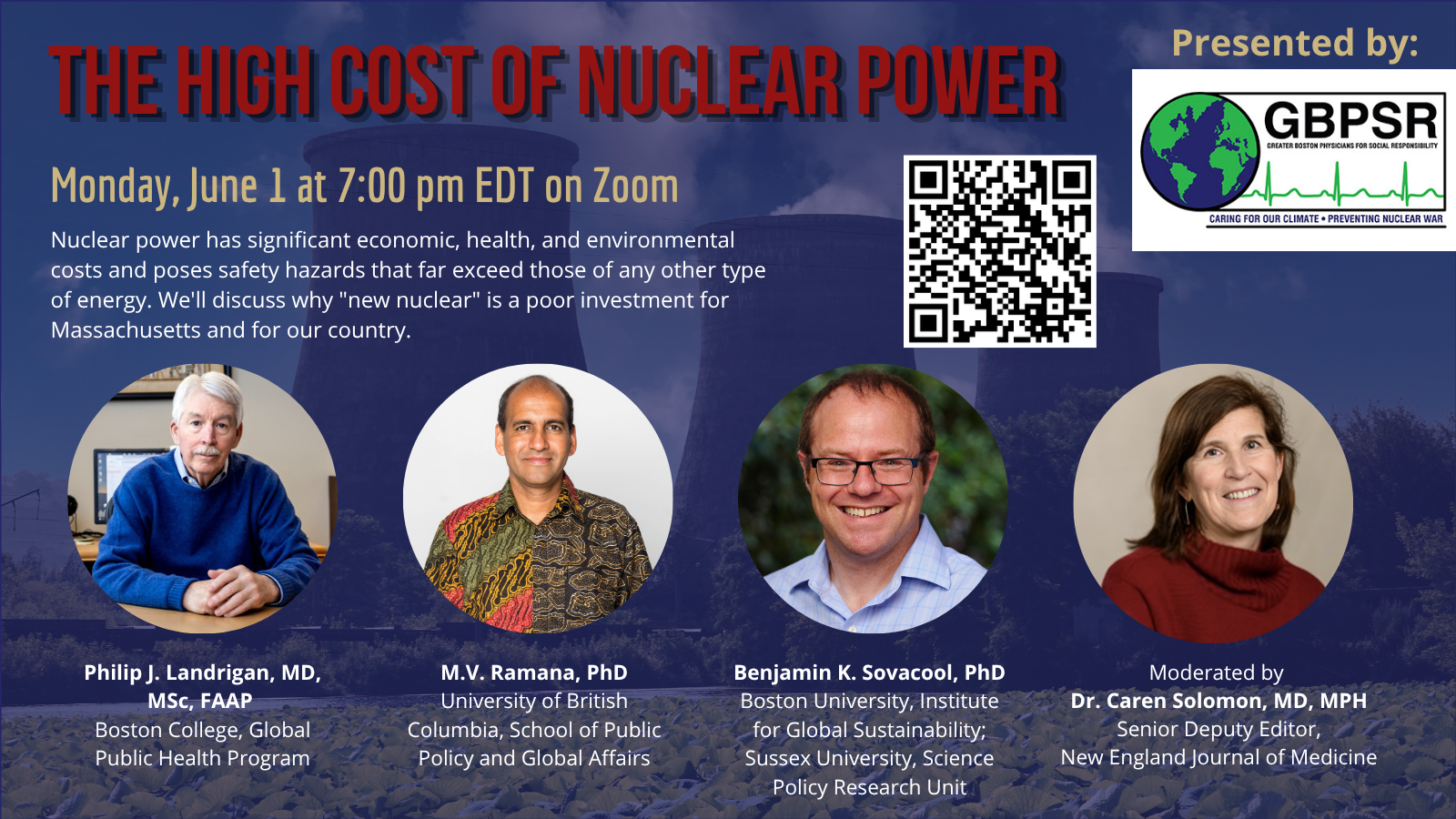
1 June Webinar – The High Cost of Nuclear Power – Register


of the week– Nuclear Reactor Information Task Force
To see nuclear-related stories in greater depth and intensity – go to https://nuclearinformation.wordpress.com
-
Archives
- May 2026 (243)
- April 2026 (356)
- March 2026 (251)
- February 2026 (268)
- January 2026 (308)
- December 2025 (358)
- November 2025 (359)
- October 2025 (376)
- September 2025 (257)
- August 2025 (319)
- July 2025 (230)
- June 2025 (348)
-
Categories
- 1
- 1 NUCLEAR ISSUES
- business and costs
- climate change
- culture and arts
- ENERGY
- environment
- health
- history
- indigenous issues
- Legal
- marketing of nuclear
- media
- opposition to nuclear
- PERSONAL STORIES
- politics
- politics international
- Religion and ethics
- safety
- secrets,lies and civil liberties
- spinbuster
- technology
- Uranium
- wastes
- weapons and war
- Women
- 2 WORLD
- ACTION
- AFRICA
- Atrocities
- AUSTRALIA
- Christina's notes
- Christina's themes
- culture and arts
- Events
- Fuk 2022
- Fuk 2023
- Fukushima 2017
- Fukushima 2018
- fukushima 2019
- Fukushima 2020
- Fukushima 2021
- general
- global warming
- Humour (God we need it)
- Nuclear
- RARE EARTHS
- Reference
- resources – print
- Resources -audiovicual
- Weekly Newsletter
- World
- World Nuclear
- YouTube
-
RSS
Entries RSS
Comments RSS
 nuclear-news