Switzerland’s old Beznau nuclear power plant
|
The world’s oldest nuclear power plant, By Jack Unwin Power Technology, 16 Oct 19, A look at Beznau nuclear power plant in Switzerland, the world’s oldest nuclear power plant currently in operation…….
Construction on the plant began in 1965 and Beznau 1 began producing power on 1 September 1969, with Beznau 2 following in 1972. It has two pressurised water reactors (PWR) built by Westinghouse with a capacity of 365MW each, for a total capacity of 730MW and able to produce 6000 gigawatt-hours (GWh) of energy. The plant is owned and operated by Swiss private company Axpo Holdings.
Accidents will happenDespite its long run producing power, Beznau has been no stranger to accidents at its site. According to the Swiss Federal Nuclear Safety Inspectorate, there were 91 nuclear security incidents between 1995 and 2014. However 86 of these were at level 0 on the International Nuclear Event Scale (INES), the least severe on its scale. Four were at level 1 and one in 2009 that was level 2, when two workers at the plant were exposed to “inadmissible” levels of radiation . Following its reopening four incidents were recorded at in 2018.
Protests and closureProtestors in Switzerland have targeted Beznau in particular, and nuclear power in general. Following the Fukushima nuclear disaster in Japan in 2011, 20,000 protestors gathered in the town of Doettingen to condemn Beznau in the largest anti-nuclear protest in the country for 25 years. In 2014 100 Greenpeace activists broke into Beznau and scaled one of the buildings at the site with a banner proclaiming “the end” of nuclear power due to safety concerns for the ageing plant. These concerns appeared to be well-founded in October 2015 when Beznau 1 was found to have 1000 holes, cracks and indentations around the reactor. Beznau was closed for repairs when “anomalies” were found in its steam generators from March 2015 to March 2018. The future of nuclear power in SwitzerlandDespite still producing power and being one of five nuclear plants that form35% of Switzerland’s energy mix, Beznau and nuclear power itself is under threat. Switzerland will instead develop renewable energy from wind, solar and hydropower as part of its Energy Strategy 2050 plan. Meanwhile there will be no new general licenses for nuclear power plants, but old plants like Beznau will continue to run until they are decommissioned…..https://www.power-technology.com/features/worlds-oldest-nuclear-power-plant/ |
|
Soaring costs of France’s Flamanville project casts a blight on the global nuclear industry
EDF said that its European pressurised reactor in Flamanville was now expected to cost €12.4 billion. This is €1.5 billion more than the previous estimate.
Initially it was supposed to cost €3.3 billion and the reactor was supposed to come on stream in 2012. The company says that under the revised plan it hopes to load fuel at Flamanville at the end of 2022, a decade late.
EDF is an electrity business with interests worldwide, including operating 58 nuclear reactors in its home country. It is majority-owned by the French state, which holds an 83.7 per cent stake…(subscribers only) https://www.thetimes.co.uk/edition/business/edf-admits-flamanville-reactor-will-cost-four-times-original-estimate-k55qjn9b5?fbclid=IwAR0-APtlBA77Q8ixdA4VPMl3YCO24A_ivA0dL9Xf_Hyo0mwKn4w0898zmjY
The million year problem – deep burial of nuclear wastes
Quite apart from the technological challenges and ethical issues these solutions present, both have one major drawback: to be successful they rely on external, uncontrollable factors. How could the knowledge required to interpret these things this be guaranteed to last?
Semiotician Thomas Sebeok recommended the creation of a so-called Atomic Priesthood. Members of the priesthood would preserve information about the waste repositories and hand it on to newly initiated members, ensuring a transfer of knowledge through the generations.
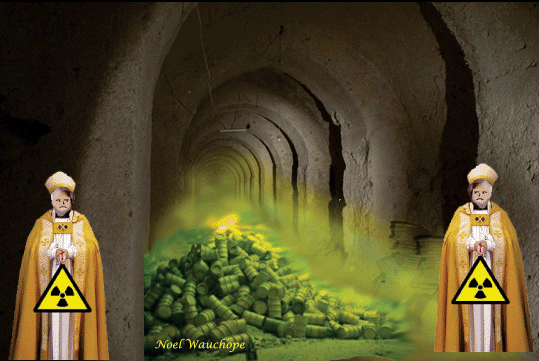
Buried nuclear waste stays dangerous for a million years — here’s how scientists plan to stop a future disaster
In thousands of years’ time, will they even understand the language written on our ‘keep out’ signs? https://inews.co.uk/news/long-reads/buried-nuclear-waste-danger-underground-future-disasters-814704
By Helen Gordon, Monday, 14th October 2019 The red metal lift takes seven juddering minutes to travel nearly 500 metres down. Down, down through creamy limestone to reach a 160-million-year-old layer of clay.
Here, deep beneath the sleepy fields and quiet woods along the border of the Meuse and Haute-Marne departments in north-east France, the French National Radioactive Waste Management Agency (Andra) has built its underground research laboratory.
The laboratory’s tunnels are brightly lit but mostly deserted, the air dry and dusty and filled with the hum of a ventilation unit.
Blue and grey metal boxes house a series of ongoing experiments – measuring, for example, the corrosion rates of steel, the durability of concrete in contact with the clay. Using this information, Andra wants to build an immense network of tunnels here.
It plans to call this place Cigéo, and to fill it with dangerous radioactive waste. It is designed to be able to hold 80,000 cubic metres of material.
Long-term risks of nuclear waste Continue reading
Putin warns on the need for a new nuclear weapons treaty
 PUTIN TAKES SWIPE AT TRUMP FOR WITHDRAWING FROM NUCLEAR TREATY: ‘IT WAS NOT WORTH RUINING’, Newsweek,
In an interview with Arabic-speaking journalists ahead of his visit to Saudi Arabia and the United Arab Emirates, Putin reiterated Russia’s opposition to the withdrawal in February from the INF, which had been signed in 1987 by Soviet leader Mikhail Gorbachev and President Ronald Reagan.
It banned missiles with ranges of between 310 and 3,400 miles but the U.S. and Nato had accused Russia of violating the pact by deploying a new type of cruise missile, a claim Moscow denied.
Putin said: “It think it was a mistake…and that they could have gone a different path. I do understand the U.S. concerns. While other countries are free to enhance their defences, Russia and the U.S. have tied their own hands with this treaty. However, I still believe it was not worth ruining the deal; I believe there were other ways out of the situation.”
Putin said that the U.S. must back a new START Treaty, which expires in 2021, to restrict a race to acquire strategic nuclear weapons.
“The new START Treaty is actually the only treaty that we have to prevent us from falling back into a full-scale arms race. To make sure it is extended, we need to be working on it right now. We have already submitted our proposals; they are on the table of the U.S. administration. There has been no answer so far.
“If this treaty is not extended, the world will have no means of limiting the number of offensive weapons, and this is bad news. The situation will change, globally. It will become more precarious, and the world will be less safe and a much less predictable place than today,” Putin said, according to a transcript of the interview on the Kremlin website.
Putin said that his doubt over the U.S. commitment to nuclear disarmament stretched back to 2002, when under President George W. Bush, Washington withdrew from the Anti-Ballistic Missile (ABM) Treaty, which had imposed limits on missile defence systems……… https://www.newsweek.com/putin-start-treaty-trump-arms-race-1464921
North West Evening Mail (UK) gives a fine example of incorrect pro nuclear goobledygook
 Radiation Free Lakeland 12th Oct 2019, New Nuclear** On the anniversary of the Windscale disaster and in the midst of the building of a new gas plant especially for Sellafield, the North West Evening Mail publishes a press release from the nuclear industry touting the ‘Rediscover Nuclear’ campaign.
Some of the laughable descriptions include “homegrown” “safe” “low carbon”. Each of these claims is a big fat lie. As Phil Johnstone tweets: UK “homegrown” nuclear. “UK only ever sold 2 reactors back in 60s, British Energy no longer exists. The UK doesn’t really have much of a civil nuclear industry. What is “homegrown” about it? Electricite de France? China General Nuclear Power Corporation?
https://mariannewildart.wordpress.com/2019/10/12/homegrown-dont-make-me-laugh/
Russia and the quest for nuclear power in space

 Ekipazh: Russia’s top-secret nuclear-powered satellite, The Space Review, by Bart Hendrickx, Monday, October 7, 2019 There is strong evidence from publicly available sources that a Russian company called KB Arsenal is working on a new type of military satellite equipped with a nuclear power source. Called Ekipazh, its mission may well be to perform electronic warfare from space.
Regulatory issues
One of the Principles stipulates that nuclear reactors may be operated on interplanetary missions, orbits high enough to allow for a sufficient decay of the fission products, or in low-Earth orbits if they are boosted to sufficiently high orbits after the operational part of the mission. As explained earlier, the latter procedure was followed for the Soviet-era RORSAT missions, but it is highly unlikely that Russia would want to risk repeating the Cosmos 954 experience of 1978. In fact, the very presence of a “transport and energy module” on Ekipazh is a sure sign that it will be placed into an orbit high enough to prevent any harm. Before the nuclear-powered TEM is even activated, a liquid-fuel propulsion system may first boost the satellite to an orbital altitude of at least 800 kilometers, the same procedure that has been described for the one-megawatt TEM. During a recent question-and-answer question with students in St. Petersburg, Roscosmos chief Dmitri Rogozin confirmed that 800 kilometers is the minimum operating altitude for nuclear reactors. Judging from Russian press reports, Rogozin was actually replying to a question about Ekipazh, but seemingly dodged that by talking about the one-megawatt reactor instead.[38]
The results of this safety assessment, together with, to the extent feasible, an indication of the approximate intended time-frame of the launch, shall be made publicly available prior to each launch and the Secretary-General of the United Nations shall be informed on how States may obtain such results of the safety assessment as soon as possible prior to each launch.
Outlook
One also wonders if the Russians are biting off more than they can chew by simultaneously working on two nuclear electric space tugs (Ekipazh and the one-megawatt TEM). An attempt to streamline this effort seems to have been made by giving KB Arsenal a leading role in both projects in 2014, making it possible to benefit from the company’s earlier experience in the field and infrastructure that it may already have in place to test related hardware. Still, the two projects use fundamentally different nuclear reactors built by different organizations.
Is UK’s regulator of Hinkley nuclear project ignoring the seismic risks of fracking in the area?
Drill or Drop 12th Oct 2019, Hinkley. The safety regulator for the nuclear industry has no information about the risk of earth tremors from fracking near the Hinkley Point power station, a campaign group has revealed. Frack Free Exmoor, Quantocks and Sedgemoor.
(FFEQS) has also shown that the Office for Nuclear Regulation (ONR) has had no correspondence on the subject with either the oil and gas industry regulator, the power station operator, local exploration companies or Somerset County Council. FFEQS has described the failure to assess the risk of fracking on the nuclear station, which includes the new Hinkley Point C facility, as “a gaping hole” in the safety case.
In August 2019, fracking by Cuadrilla near Blackpool caused more than 130 earth tremors, including the UK’s largest fracking-induced seismic event, measuring 2.9ML. This tremor led to formal complaints of cracks to walls, windows and doors to about 100 properties, DrillOrDrop understands. Hinkley Point is a few miles from an area where the exploration company, South Western Energy, has indicated it is interested in drilling for hydrocarbons (DrillOrDrop report).
Opposition to fracking appears to be growing in the region.
Sedgemoor District Council voted unanimously on 9 October 2019 to be a Frack Free zone. This follows previous similar votes in Somerset West and Taunton councils.
Energy Efficiency – effective, but forgotten since UK privatisation of Energy Saving Trust and the Carbon Trust.

Business Green 10th Oct 2019, Energy Efficiency. The public needs reminding that saving energy is good for the planet, argues Andrew Warren.
British people are very confused about what they should most usefully be doing, in order to assuage any guilt they might feel about damaging the climate. A Smart Energy GB study released this week found just three in 10 people think being energy efficient would have the biggest impact on protecting the environment.
This startling finding was backed up another a survey of 2,000 people undertaken by Opinium Research. That found saving energy tends to come way down the list of possible practical response under consideration. The most popular response to the Opinium survey was to “avoid throwing away food”. This was followed by various moves to reduce plastic wastage – buying plastic-packed groceries, single-use plastic bottles, using plastic shopping bags – or simply not recycling enough.
Steven Day, co-founder of Pure Planet, which sponsored the opinion survey, commented: “It is great that the majority of people are thinking more about their impact on our environment. But it looks like they
are feeling guilty about the smaller things – not the biggest-impact
activities causing the greatest harm.”
This lack of awareness of the potential for saving energy contrasts enormously with similar surveys undertaken twenty years ago, admittedly when overall awareness of the threat of climate change was far lower. Then, the vast majority of people would always respond to questions to the threat of climate change by emphasising the need to save energy, both at home and at work.
Since 2010 there have been no publicly funded awareness campaigns supporting energy efficiency funded by central government. Their abandonment directly followed the privatisation of the two main public advice agencies, the Energy Saving Trust and the Carbon Trust.
35,454 Petitioners call for scrapping of UK’s “regulated asset base” (RAB) funding for Sizewell nuclear project
 Sizewell.
TASC 11th Oct 2019, Just one major problem with the Sizewell C plans is that nuclear new build projects have been largely a financial disaster. Almost every major nuclear project in the West has been plagued by delays and cost overruns: Some delays are in the order decades. Likewise, the cost overruns are of epic proportions.
Some new-build projects have had cost overruns that run into billions. Changing the funding method for the planned Sizewell C to a
regulated asset base model would shift the risk of rising costs from EDF to consumers, and could lead to even worse project planning because the existing RAB model would offer little incentive for EDF to build on-time and on-budget. EDFs investment is safe regardless, and we wind up footing the bill no matter how incompetently EDF proceeds.
TASC 11th Oct 2019,Today, campaigners from Sizewell, Hinkley Point and Bradwell nuclear sites and consumer group SumOfUs will visit the Department of Business, Energy and Industrial Strategy to deliver a 35,454-signature petition protesting the government’s proposal to subsidise new nuclear power plants by hiking energy bills.
The petition calls on the government to scrap plans to subsidise the nuclear industry through a “regulated asset base” (RAB) funding model, under which consumers would be forced to pay a surcharge on their energy bills for new nuclear power projects such as Sizewell C in Suffolk and Bradwell B in Essex.
Russia’s fatal Skyfall missile test- a fatal nuclear accident
- A report from a US State Department official on Thursday provides a clearer picture as to how the August 8 Skyfall accident occurred at a secret Russian military testing range.
- “The United States has determined that the explosion near Nyonoksa, Russia, was the result of a nuclear reaction that occurred during the recovery of a Russian nuclear-powered cruise missile,” the official wrote. “The missile remained on the bed of the White Sea since its failed test early last year, in close proximity to a major population centre.”
- Amid confusion and obfuscation from Russia and speculation from analyst, the report gives a clearer picture of how the accident, which killed seven Russians, occurred.
A report to the UN General Assembly First Committee on Thursday by Thomas G. DiNanno, the deputy assistant secretary and senior bureau official at the State Department’s Bureau of Arms Control, Verification, and Compliance, ended months of speculation about the exact cause of the accident, which killed seven Russians.
While experts at the time determined that the cause was a nuclear-reactor explosion and tied it to the 9M730 Burevestnik nuclear-powered cruise missile, which NATO calls the SSC-X-9 Skyfall, DiNanno’s report gives a clearer picture of how the accident occurred.
After the accident, Russia’s explanations and reactions to it varied greatly, from ordering an evacuation of the area to canceling it hours later. Four radiation sensor sites also went mysteriously offline after the accident, pointing to a potential cover-up. Russian officials said they were not obligated to share the data, which could have helped point to the cause of the accident, The New York Times reported.
Officials also declined to tell doctors treating engineers affected by the blast that they had been exposed to nuclear radiation and requested hospital staff sign a nondisclosure agreement, The Moscow Times originally reported……. https://www.businessinsider.my/us-putins-skyfall-missile-failed-test-and-exploded-during-recovery-2019-10/
Flamanville nuclear reactor repairs will cost $13.6 billion

 EDF Cost Overrun at French Plant Piles Pressure on Nuclear Giant, by
- Repairs at Flamanville reactor will lift cost to $13.6 billion
- Plant won’t load nuclear fuel until end of 2022 at earliest
The latest budget hike at the Flamanville-3 reactor is yet another blow to the French state-controlled utility, which raised its cost estimate for two similar reactors it’s building in the U.K. just weeks ago. It also fuels doubts about nuclear’s future in France, where the government has been reluctant to approve new projects before Flamanville-3 is online….. (subscribers only) https://www.bloomberg.com/news/articles/2019-10-09/edf-lifts-cost-of-french-nuclear-reactor-by-14-to-13-6-billion
Russia has a pointless, but scary Seaborne Nuclear Weapon
Key point: Moscow’s deadly weapon is pointless but is still apart of mutually-assured-destruction.On May 22, 2018, the Russian submarine Yuri Dolgoruky slipped beneath the waves of the Arctic White Sea. Hatches along the submerged boat’s spine opened, flooding the capacious tubes beneath. Moments later, an undersea volcano seemingly erupted from the depths.
Amidst roiling smoke, four stubby-looking missiles measuring twelve-meters in length emerged one by one. Momentarily, they seemed on the verge of faltering backward into the sea before their solid-fuel rockets ignited, propelling them high into the stratosphere. The four missiles soared across Russia to land in a missile test range on the Kamchatka peninsula, roughly 3,500 miles away.
You can see the launch sequence in this video.
Like the nuclear-powered ballistic missile submarines (SSBNs) operated by United States, China, France, the United Kingdom, and India, the primary purpose of Borei-class submarines is almost unimaginably grim: to bring ruin to an adversary’s cities, even should other nuclear forces be wiped out in a first strike.
Each of the submarine’s sixteen R-30 Bulava (“Mace”) missiles typically carries six 150-kiloton nuclear warheads designed to split apart to hit separate targets. This means one Borei can rain seventy-two nuclear warheads ten times more destructive than the bomb dropped on Hiroshima on cities and military bases over 5,800 miles away.
The Borei is the most advanced SSBN in the Russian Navy, and is designed to replace its seven Soviet-era Delta-class SSBNs. Throughout most of the Cold War, Soviets submarines were noisier than their Western counterparts, and thus vulnerable to detection and attack by Western attack submarines. …….
The Bulava has an unusually shallow flight trajectory, making it harder to intercept, and can be fired while the Borei is moving. The 40-ton missiles can deploy up to forty decoys to try to divert defensive missiles fire by anti-ballistic missiles systems like the Alaska-based
Ground-based Midcourse Defense system. https://news.yahoo.com/russia-terrifying-seaborne-nuclear-weapon-053000241.html
French nuclear company EDF rules out any interest in UK’s Wylfa nuclear plan
New Civil Engineer 10th Oct 2019, EDF Energy has ruled out taking an interest in the new Wylfa nuclear site in Wales despite claiming it is the ‘best site in the UK’ for nuclear
power. https://www.newcivilengineer.com/latest/edf-rules-out-wylfa-bid-despite-naming-it-best-site-in-uk-10-10-2019/
EDF’s Flamanville nuclear project – more costs, more delays
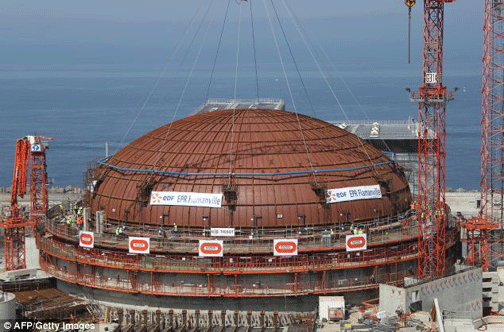
EDF adds further €1.5bn to Flamanville nuclear plant costs https://www.ft.com/content/fc6a8610-ea5e-11e9-a240-3b065ef5fc55 French energy group also confirms latest delay to opening of long-awaited project.
David Keohane in Paris 9 Oct 19, French energy giant EDF announced increased costs to its long-troubled flagship nuclear project at Flamanville on Wednesday as it confirmed delays to the opening of the plant due to faulty weldings. The company said construction costs would rise by €1.5bn to €12.4bn and the loading of nuclear fuel would be delayed until the end of 2022, which had previously been scheduled for the end of 2019 with commercial activity starting in 2020. The group, which is 83.7 per cent owned by the French government, had flagged the delays at the plant in north-western France to the end of 2022 during its half-year results in July. Flamanville was originally expected to cost €3.3bn and start operations in 2012.
Analysts at Morningstar said that the increase in costs was in line with estimates but warned “the worst-case scenario has not gone away totally” — alternative more expensive plans — since EDF had to get approval for its repair proposals by the end of 2020. This involves the use of remotely operated robots. Flamanville is considered a litmus test for the next-generation European Pressurised Reactor technology. One EPR is already up and running in China, but Flamanville remains the bigger test for EDF because it is 100 per cent owned by the company and the French regulators are known to be exacting. There are two other EPR projects being built in Europe: The Olkiluoto project in Finland, which is more than a decade late, and the UK’s Hinkley Point, which EDF warned in September would cost an extra £2.9bn to complete.
The news comes as EDF pushed back the formal presentation to the government of an internal reorganisation plan, called Project Hercules, which had been due by the end of the year, at the request of French president Emmanuel Macron. Project Hercules will create a government-owned mother company, EDF Bleu, containing the nuclear assets as well as hydroelectric assets. Bleu’s main subsidiary, EDF Vert, will house renewable energy, the networks and the services businesses and will be listed, with some 20 per cent to 40 per cent sold to raise funds.
The quid pro quo for the reorganisation, as seen by EDF, is a new regulated price for nuclear energy, assuming it can be agreed with Brussels. However, Project Hercules has been deferred due to delays in discussions with Europe. In an internal email to staff sent late last week, EDF chief executive Jean-Bernard Lévy said “a reorganisation without better regulation would not be enough to give EDF the financial means to play its role in the investments necessary for the success of [France’s] energy transition”.
Massive Nuclear Explosion similar to Kyrshtym by Mayak Can Happen Happen at Hanford if the site is not Monitored and tanks not taken care of
Lane, 6 Oct 19 Mayak Explosion
Ten Thousand Gallon Tank at Mayak Exploded from Heat Decay. The Heat Deacy was from Strontium 90, Cesium 137, Cobalt 60 and Plutonium Stored in the Underground Tank. The explosion was equivalent to 100 tons of TNT. There are55 million gallons of the same Radionuclide Mix stored at Hanford, in UnderGround Tanks. If they become too concentrated and hot, the same thing will Happen there, contaminating a Great Portion of the Pacific NW USA and southe western Canada.
Medvedev, Zhores A. (4 November 1976). “Two Decades of Dissidence”. New Scientist.
Medvedev, Zhores A. (1980). Nuclear disaster in the Urals translated by George Saunders. 1st Vintage Books ed. New York: Vintage Books. ISBN 978-0-394-74445-2. (c1979)

In 1957 the cooling system in one of the tanks containing about 70–80 tons of liquid radioactive waste failed and was not repaired. The temperature in it started to rise, resulting in evaporation and a chemical explosion of the dried waste, consisting mainly of ammonium nitrate and acetates (see ammonium nitrate/fuel oil bomb). The explosion, on 29 September 1957, estimated to have a force of about 70–100 tons of TNT,[10] threw the 160-ton concrete lid into the air.[8] There were no immediate casualties as a result of the explosion, but it released an estimated 20 MCi (800 PBq) of radioactivity. Most of this contamination settled out near the site of the accident and contributed to the pollution of the Techa River, but a plume containing 2 MCi (80 PBq) of radionuclides spread out over hundreds of kilometers.[11] Previously contaminated areas within the affected area include the Techa river, which had previously received 2.75 MCi (100 PBq) of deliberately dumped waste, and Lake Karachay, which had received 120 MCi (4,000 PBq).[7]
In the next 10 to 11 hours, the radioactive cloud moved towards the north-east, reaching 300–350 km (190–220 mi) from the accident. The fallout of the cloud resulted in a long-term contamination of an area of more than 800 to 20,000 km2 (310 to 7,720 sq mi), depending on what contamination level is considered significant, primarily with caesium-137 and strontium-90.[7] This area is usually referred to as the East-Ural Radioactive Trace EURT
1 This Month
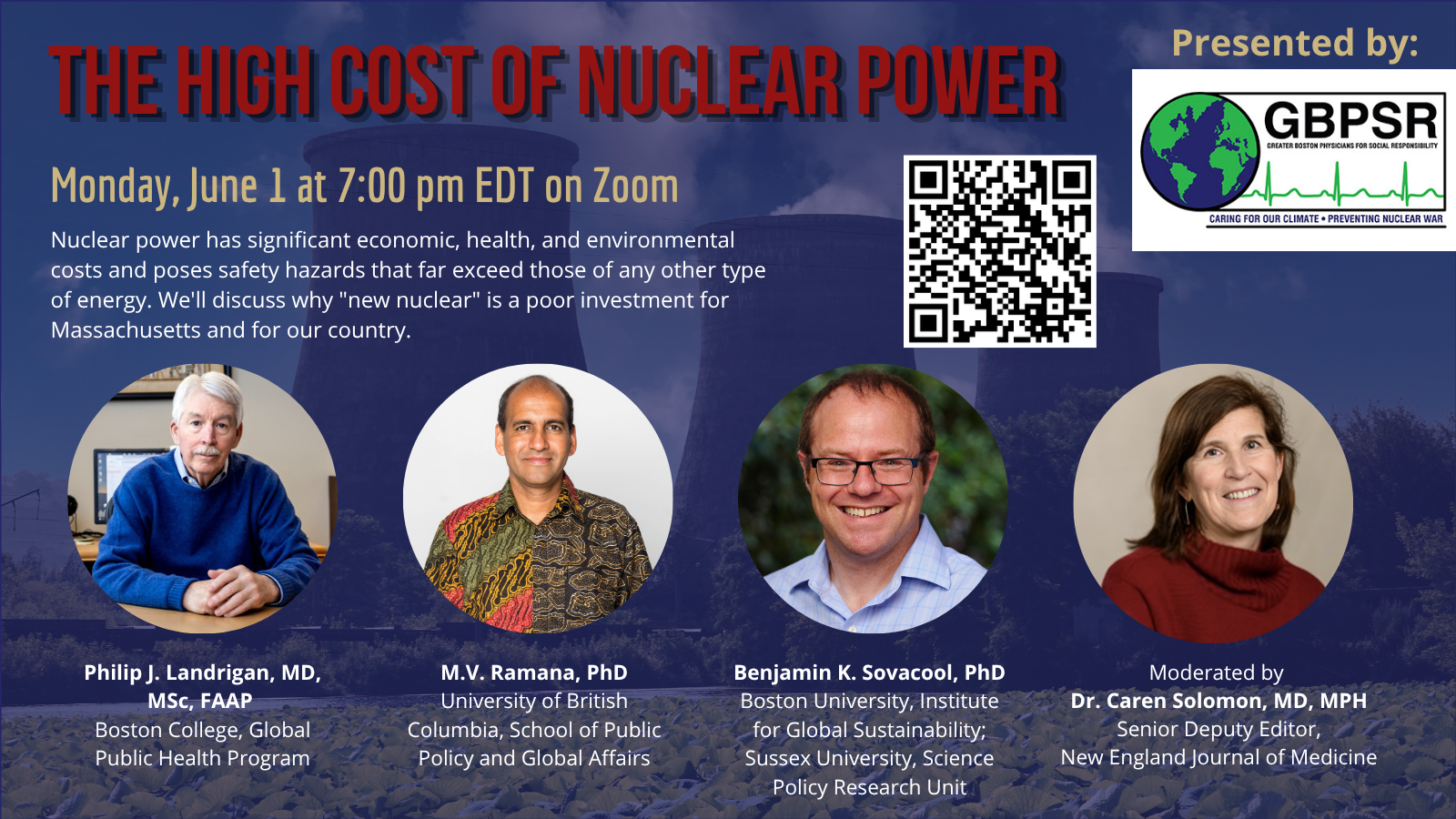
1 June Webinar – The High Cost of Nuclear Power – Register


of the week– Nuclear Reactor Information Task Force
To see nuclear-related stories in greater depth and intensity – go to https://nuclearinformation.wordpress.com
-
Archives
- May 2026 (243)
- April 2026 (356)
- March 2026 (251)
- February 2026 (268)
- January 2026 (308)
- December 2025 (358)
- November 2025 (359)
- October 2025 (376)
- September 2025 (257)
- August 2025 (319)
- July 2025 (230)
- June 2025 (348)
-
Categories
- 1
- 1 NUCLEAR ISSUES
- business and costs
- climate change
- culture and arts
- ENERGY
- environment
- health
- history
- indigenous issues
- Legal
- marketing of nuclear
- media
- opposition to nuclear
- PERSONAL STORIES
- politics
- politics international
- Religion and ethics
- safety
- secrets,lies and civil liberties
- spinbuster
- technology
- Uranium
- wastes
- weapons and war
- Women
- 2 WORLD
- ACTION
- AFRICA
- Atrocities
- AUSTRALIA
- Christina's notes
- Christina's themes
- culture and arts
- Events
- Fuk 2022
- Fuk 2023
- Fukushima 2017
- Fukushima 2018
- fukushima 2019
- Fukushima 2020
- Fukushima 2021
- general
- global warming
- Humour (God we need it)
- Nuclear
- RARE EARTHS
- Reference
- resources – print
- Resources -audiovicual
- Weekly Newsletter
- World
- World Nuclear
- YouTube
-
RSS
Entries RSS
Comments RSS
 nuclear-news