Too small for the monstrosity’: Anti-nuclear campaigners to take Sizewell C opposition to public meeting
|
Too small for the monstrosity’: Anti-nuclear campaigners to take Sizewell C opposition to public meeting https://www.eadt.co.uk/news/nuclear-free-local-authorities-meeting-colchester-essex-october-2019-1-6341230
Anti-nuclear campaigners are to voice their “real concern” over the planned building of new nuclear power stations – including at Sizewell C – during a public meeting. EDF Energy has said that building new nuclear reactors across the country, including in Suffolk, is crucial to meeting the country’s future ends – with Sizewell B station director Paul Morton recently saying: “The lights won’t stay on without it.” But that has caused controversy in Suffolk for years, with opponents questioning its environmental benefits while raising fears that building a massive new nuclear power station could have on the area of outstanding natural beauty at Sizewell. The Nuclear Free Local Authorities (NFLA) English Forum is now holding a public meeting at the Firstsite Gallery in Colchester on Saturday, October 26 in association with groups such as Together Against Sizewell C (TASC). NFLA steering committee chairman David Blackburn said it would allow “councillors and the concerned public to understand the real concerns in building new nuclear reactors”. Pete Wilkinson, of Together Against Sizewell C, called the planned Suffolk location “an eroding coastal site, bequeathing future generations an inequitable and intolerable radioactive waste legacy”. He also said it was “a site too small for the monstrosity it is required to contain, hemmed in by precious areas of outstanding natural beauty in a remote, inaccessible and tranquil area”. He added that Sizewell C would be “an unnecessary behemoth” that “electricity bill payers are being asked to subsidise”. EDF Energy was approached for comment. |
|
|
No such thing as a zero- or close to zero-emission nuclear power plant.
 David Lowry, Guardian 21st Oct 2019: in the analysis
 of MPs’ voting record on bills to combat climate change (Tories five times more likely than other MPs to vote against bills to tackle climate crisis, 12 October), both Jeremy Corbyn and Caroline Lucas are marked as 92% supportive on the basis they voted to
“keep nuclear power subsidies relatively low”.
Proposed Solution to Global Warming, Air Pollution, and Energy Security, in
his forthcoming book, 100% Clean, Renewable Energy and Storage for
Everything, Jacobson argues: “There is no such thing as a zero- or close to
zero-emission nuclear power plant. Even existing plants emit due to the
continuous mining and refining of uranium needed for the plant. Overall
emissions from new nuclear are 78 to 178g of CO2/kWH, not close to 0.”
https://www.theguardian.com/environment/2019/oct/21/tory-boasts-on-climate-action-are-full-of-hot-air
Highly toxic nuclear waste being imported into Russia, from Germany
 Russia Is Importing Toxic Nuclear Waste From Germany, Greenpeace Warns, https://www.themoscowtimes.com/2019/10/23/russia-is-importing-toxic-nuclear-waste-from-germany-greenpeace-warns-a67873 A European uranium enrichment firm has resumed shipments of a highly toxic and radioactive waste product from Germany to Russia, Greenpeace Russia warned Wednesday. Russia Is Importing Toxic Nuclear Waste From Germany, Greenpeace Warns, https://www.themoscowtimes.com/2019/10/23/russia-is-importing-toxic-nuclear-waste-from-germany-greenpeace-warns-a67873 A European uranium enrichment firm has resumed shipments of a highly toxic and radioactive waste product from Germany to Russia, Greenpeace Russia warned Wednesday.
The enrichment firm Urenco and Russia’s state nuclear company Rosatom halted the radioactive waste imports from Germany in 2009 over revelations that the waste was stored in the open. German media reported Tuesday that Urenco had resumed exports of the toxic compound used to enrich uranium, sending up to 3,600 metric tons to central Russia in May-October 2019. “Russia should not become a radioactive burial ground for the rest of the world,” Greenpeace’s energy campaigner Rashid Alimov said, demanding the release of government documents and punishment of officials responsible for resumed shipments. Urenco plans to send 12,000 metric tons of uranium hexafluoride to Russia in 2019-2022, the Die Tageszeitung newspaper reported, citing officials’ communications. Greenpeace estimates that Russia has stored 1 million metric tons of the uranium hexafluoride, a waste product known as “tails.” Vyacheslav Alexandrov, the head of the state-run radioactive waste management operator’s Novouralsk branch where Urelco had reportedly sent the “tails,” said Russia prohibits nuclear-waste imports and expressed surprise over Greenpeace’s warning. In comments to the Znak.com news website, Alimov agreed with Alexandrov that “Russia formally observes the law” but contended that about 90% of the imported toxic “tails” remain in Russia after enrichment. |
|
UK govt postpones decision on Wylfa nuclear project
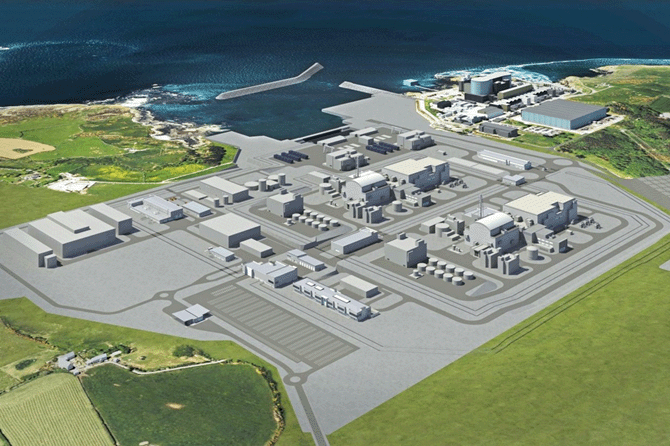 Wylfa: Anglesey nuclear power plant planning decision deferred, BBC,
She had been widely expected to back the proposals, granting what is known as a development consent order (DCO).
Hitachi shelved the scheme, the biggest energy project ever proposed in Wales, over funding issues.
Developers Horizon Nuclear Power had earlier said the decision would “heavily influence” how the project progresses.
Ms Leadsom has now given a deadline by the end of the year – and invited comments from Natural Resources Wales, the Office for Nuclear Regulation, Anglesey council and other bodies. She wants more assurances on various aspects – from biodiversity, visual impact, flooding and construction noise – and any risk to the Sandwich tern, which has a colony nearby.…….
Opponents of nuclear power have called on Ms Leadsom to dismiss the planning application and focus on renewable sources of electricity. Dylan Morgan of People Against Wylfa B said it was “obvious the developers are keen to get planning permission in order to try and sell the site”.
“But that’s easier said than done at the moment given the pretty perilous state of the global nuclear industry and the hopeless economics.”……. https://www.bbc.com/news/uk-wales-50139360
High Radiation Along Planned Moscow Highway Route
Greenpeace Finds High Radiation Along Planned Moscow Highway Route, Moscow Times, Oct. 21, 2019, Soil samples taken along the route of a planned highway in Moscow are emitting radiation levels that pose cancer risks to residents, Greenpeace Russia said Monday.
Activists have warned that the eight-lane highway, which authorities hope to start building next year and finish by 2024, will release buried radioactive dust into the air and the Moscow River.
“We now have official proof that radioactive waste lies on the route and not somewhere nearby,” Greenpeace Russia said Monday.
Greenpeace demanded in July that construction be halted, months after state-run safety tests revealed radiation levels near the planned highway 200 times higher than the norm.
The NGO and hired experts found five locations on the highway route between the Moscow Polymetals Plant and the Moskvorechye commuter rail station where topsoil emitted up to eight times the normal level of radiation.
“Borehole measurements half a meter deep showed greater [radiation] values than on the surface,” Greenpeace said…….https://www.themoscowtimes.com/2019/10/21/greenpeace-finds-high-radiation-along-planned-moscow-highway-route-a67834
Russian obfuscation over nuclear accident is a dangerous precedent
|
|
The “water footprint”of solar and wind power is far less than for coal and nuclear
 Solar, wind power can alleviate water stress https://www.businesstimes.com.sg/energy-commodities/solar-wind-power-can-alleviate-water-stress, MON, OCT 21, 2019 – Solar, wind power can alleviate water stress https://www.businesstimes.com.sg/energy-commodities/solar-wind-power-can-alleviate-water-stress, MON, OCT 21, 2019 –
SOLAR and wind power could be in for another boost once policy makers begin accounting for the vast volumes of water needed to keep the lights on.
That’s the conclusion of research published this week by the European Union’s Joint Research Centre, which is urging the bloc’s leaders to pay closer attention to the amount of water used by traditional coal, natural gas and nuclear power plants. It takes more than 1,300 litres of water – enough to fill four bathtubs – to generate the electricity each European resident uses each day. “For the EU, to decarbonise and increase the share of renewables of its energy supply, it needs to formulate policies that take the water use of energy sources into account,” wrote water and energy researchers led by Davy Vanham. Solar, wind, geothermal and run-of-river hydropower account for a “small fraction” of water used compared with what is consumed by biofuels and traditional thermal plants, they said. The findings focus attention on the rising competition for water resources among households, industry and agriculture, exacerbated by a string of heatwaves and lower rainfall levels that have prompted shutdowns at power plants across the continent during periods of peak strain. Some of those incidents have been traced back to climate change. The issue has been replicated in the US, India and China, underscoring how policies that touch on water, energy and food supplies tend to have impacts in all three spheres. Coal, oil and nuclear plants account for about 30 per cent of the water needed to produce the electricity that Europeans consume. That compares with a 1.7 per cent share for all renewables combined, including solar, wind, geothermal and hydropower combined. “The choice of which renewables to promote is essential to alleviate water stress and maintain ecosystems and their services,” the peer-reviewed paper said. “Policies on future energy investments therefore need to consider which renewables have low unit water footprints.” Thermal power plants need water to cool reactions and use the steam to turn giant turbines for electricity. Solar panels and wind turbines can turn sunshine and air currents directly into electricity without producing the residual heat. The researchers looked at energy consumption and generation data from the 28 EU nations, overlayed with information on climate change and water resources. They pinpointed areas in France, Poland and Spain where big power plants rely on large volumes of water. “Recent summer droughts and heatwaves, such as in 2003, 2006, 2015 and 2018, which will only become more frequent due to climate change, have already led to water being a limiting resource for energy production throughout the EU,” they wrote. BLOOMBERG |
|
|
Russian nuclear submarine aborts ballistic missile test
|
Russian nuclear submarine aborts ballistic missile test, MOSCOW (Reuters) 21 Oct 19, – A Russian nuclear submarine aborted the test firing of an intercontinental ballistic missile during a military exercise overseen by President Vladimir Putin last week, the Ministry of Defence said on Monday.The nuclear submarine, K-44 Ryazan, part of Russia’s Pacific Fleet, was meant to launch two R-29R ballistic missiles from the Sea of Okhotsk on Oct. 17, but fired only one successfully with the other remaining in its tube onboard the submarine, the Vedomosti daily reported earlier on Monday.
The incident occurred on the same day as Putin oversaw the drills from a command center at the Defence Ministry in Moscow. The aborted drill was part of wider war games for Russia’s armed forces, known as ‘Thunder 2019,’ which were designed to test the readiness of the country’s strategic forces for a nuclear conflict. ….Reporting by Alexander Marrow; Editing by Andrew Osborn https://www.reuters.com/article/us-russia-missiles-drills/russian-nuclear-submarine-fails-to-test-fire-ballistic-missile-vedomosti-idUSKBN1X010P |
|
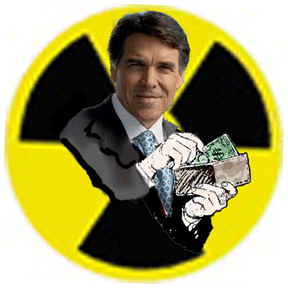
US Energy Secretary Perry turns New Nuclear Salesman to Europe
|
Messianic Perry preaches nuclear to sceptical Europeans, By Frédéric Simon | EURACTIV.com 21 Oct 19, Small nuclear reactors can help “vulnerable nations take control of their destinies,” the US energy secretary said in Brussels today (21 October), claiming that small off-grid nuclear plants can bring electricity to poor nations and “disperse the darkness” around the globe.
Countries with nuclear power “can’t be controlled by other countries wielding energy as a geopolitical weapon”, US Secretary of State Rick Perry said in Brussels as he addressed a forum of policymakers and industry representatives from both sides of the Atlantic. Nuclear power helps “vulnerable nations take control of their destinies,” Perry claimed, arguing that “energy security also bolsters national security”. Perry attended the first EU-US high-level forum on small modular reactors. His remarks on energy independence were chiefly aimed at Eastern European countries, which have repeatedly complained about Russian interference in national politics, using gas as a lever. Nuclear is a divise topic in Europe. While countries like France opted for it decades ago, others like Germany and Austria are strongly opposed. “Nuclear energy is neither safe and sustainable nor cost-effective,” said German State Secretary for Energy, Andreas Feicht, during a recent meeting of EU energy ministers, firmly rejecting suggestions that EU money might be used to extend the lifetime of existing nuclear plants. But Perry’s message was broader, and was also addressed at developing nations whom he said could benefit from small off-grid nuclear plants………. |
|
Nuclear shill Rick Perry switching from DOE Secretary to Small Nuclear Reactor Salesman
Perry to Resign as DOE Secretary, With Nuclear Weapon Programs on  Autopilot, OCTOBER 18, 2019, BY DAN LEONE,Rick Perry on Thursday announced his resignation as the Donald Trump administration’s first secretary of energy after more than two-and-a-half years on the job. In a published letter to President Donald Trump, Perry said he would resign “later this year”…(subscribers only) https://www.exchangemonitor.com/perry-resign-doe-secretary-nuclear-weapon-programs-autopilot/
Energy Wire 17th Oct 2019, Energy Secretary Rick Perry will head back to Europe next week as part of an effort to boost the U.S. advanced nuclear industry’s ability to export its technologies across the globe.
https://www.eenews.net/energywire/2019/10/17/stories/1061299145
More evidence of safety risks: Hunterston B nuclear reactors should be closed
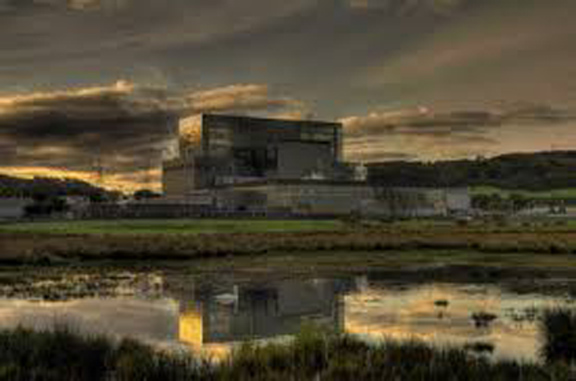
The Ferret 17th Oct 2019, Hunterston, The graphite cores of two ageing nuclear reactors at Hunterston in North Ayrshire have begun to crumble as cracks spread, prompting safety inspectors to impose tough new conditions threatening future operations.
Technical reports released by the UK government’s Office for Nuclear
Regulation (ONR) reveal that at least 58 fragments and pieces of debris
have broken off the graphite bricks that make up the reactor cores.
According to ONR there is “significant uncertainty” about the risks of
debris blocking channels for cooling the reactor and causing fuel cladding
to melt. This could cause an accident and a leak of radioactivity.
The 50-strong group of Nuclear Free Local Authorities (NFLA) is urging ONR to close down both reactors at Hunterston. “These latest alarming
revelations about the graphite reactor cores at Hunterston B starting to
crumble and potential issues with the fuel make us even more convinced that
reactor three should not be allowed to resume operation,” said NFLA
Scotland convener and Glasgow SNP councillor, Feargal Dalton.
“We will be pressing the Office for Nuclear Regulation very hard to examine very carefully any justification which EDF Energy puts forward to reopen reactor four after its initial four month trial, and to be open and transparent
about what they find.
The precautionary principle would suggest that this reactor too should stay closed.” NFLA radiation consultant, Dr Ian Fairlie, described ONR’s latest reports as “very worrying”. By considering the melting of fuel cladding the regulatory agency was “getting into even more dangerous matters than before”. He added:
“These reports and their harder language make one wonder why ONR granted
a four month extension to reactor four in August. Taken together the new
revelations strengthen the calls by local residents to close both reactors
at Hunterston B.” https://theferret.scot/hunterston-graphite-debris-nuclear/
Bradwell B – UK’s futile nuclear project
BANNG 17th Oct 2019, Andy Blowers ponders the question, ‘Why, since Bradwell B is such a futile project, don’t the regulators stop it now?’ in the BANNG column for Regional Life, October, 2019. Why is it that so often decision makers fail to see or, perversely, choose to ignore the blindingly obvious?
This thought occurred to me during a recent meeting of BANNG with officials from the Office for Nuclear Regulation (ONR) and the Environment Agency (EA) about the Bradwell B site?
There are at least three major ‘showstoppers’ that should have already made Bradwell B, to borrow a phrase, ‘dead in the water’: Cooling water – the Blackwater estuary cannot possibly provide or sustain the volume of cooling water needed.
Emergency plan – in the event of a serious accident it will be impossible
to evacuate the surrounding area. Climate change – the Bradwell site is
fragile and vulnerable to rising seas, storms and erosion which will,
sooner or later, impact on the power station and its dangerous nuclear
waste stores. https://www.banng.info/news/the-show-must-not-go-on/
Safety concerns over Berkshire nuclear weapons factories
 Safety concerns over Berkshire nuclear weapons factories, BBC, 17 Oct 19, Two nuclear weapons factories are to remain under extra scrutiny due to safety concerns over their ageing facilities, a government watchdog said. BBC News
The AWE sites in Aldermaston and Burghfield, Berkshire, make and maintain the UK’s nuclear warheads.
The Office for Nuclear Regulation (ONR) said the sites will be scrutinised closely for at least two years.
Contractor AWE Plc said the replacements for the outdated facilities had been delayed.
The private company manufactures the warheads for Trident, the UK’s nuclear deterrent at sea.
AWE had planned to replace the Burghfield facilities by 2016, but due to construction delays it is expected to be completed in 2023, according to the Local Democracy Reporting Service. …. https://www.bbc.com/news/uk-england-berkshire-50099579
Russia showcases its nuclear arsenal with huge war games
|
Russia kicks off huge war games to test its nuclear arsenal, CBS News, BY DARIA LITVINOVA, OCTOBER 15, 2019 MOSCOW — Russia kicked off a sweeping military exercise of its Strategic Missile Forces on Tuesday. The Defense Ministry said the drills would include 16 practice launches of cruise and ballistic missiles.
Dubbed “Thunder-2019,” the war games were set to last three days and involve 12,000 troops, 213 missile launchers, 105 aircraft, 15 surface warships and five nuclear submarines………
Last week, Putin announced that Russia would start developing short- and intermediate-range missiles in response to U.S. plans to deploy such weapons in Asia. They are missiles that were banned for decades under the INF. Russia formally withdrew from the Reagan-era treaty soon after the U.S., which had accused Moscow of working on new missiles that violated the terms of the accord. https://www.cbsnews.com/news/russia-war-games-thunder-2019-test-strategic-nuclear-weapons-today-after-inf-collapse-2019-10-15/ |
|
Removal of highly radioactive material from 60 year old Dounreay Fast Nuclear Reactor (DFR).

BBC 15th Oct 2019, Radioactive material jammed inside a Scottish nuclear reactor since the 1970s has been removed for disposal. Remotely-operated tools were specially made to extract the breeder elements from the Dounreay Fast Reactor (DFR).
The DFR and its dome-shaped housing are to be demolished as part of the
wider decommissioning of the former nuclear power site near Thurso.
Dismantling the 60-year-old DFR is among the most challenging of the
decommissioning work.
https://www.bbc.co.uk/news/uk-scotland-highlands-islands-50055003
1 This Month

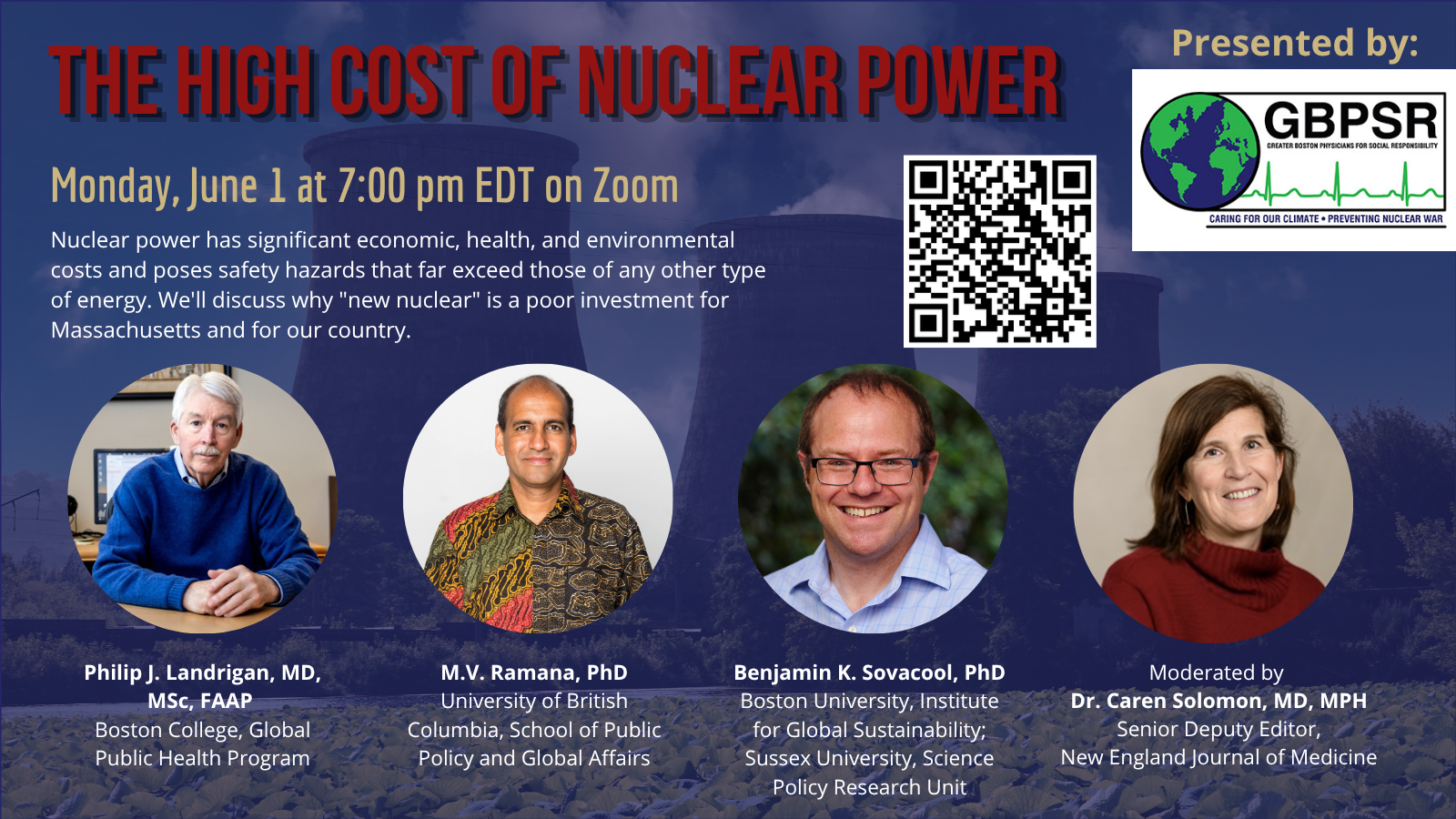
1 June Webinar – The High Cost of Nuclear Power – Register


of the week– Nuclear Reactor Information Task Force
To see nuclear-related stories in greater depth and intensity – go to https://nuclearinformation.wordpress.com
-
Archives
- May 2026 (243)
- April 2026 (356)
- March 2026 (251)
- February 2026 (268)
- January 2026 (308)
- December 2025 (358)
- November 2025 (359)
- October 2025 (376)
- September 2025 (257)
- August 2025 (319)
- July 2025 (230)
- June 2025 (348)
-
Categories
- 1
- 1 NUCLEAR ISSUES
- business and costs
- climate change
- culture and arts
- ENERGY
- environment
- health
- history
- indigenous issues
- Legal
- marketing of nuclear
- media
- opposition to nuclear
- PERSONAL STORIES
- politics
- politics international
- Religion and ethics
- safety
- secrets,lies and civil liberties
- spinbuster
- technology
- Uranium
- wastes
- weapons and war
- Women
- 2 WORLD
- ACTION
- AFRICA
- Atrocities
- AUSTRALIA
- Christina's notes
- Christina's themes
- culture and arts
- Events
- Fuk 2022
- Fuk 2023
- Fukushima 2017
- Fukushima 2018
- fukushima 2019
- Fukushima 2020
- Fukushima 2021
- general
- global warming
- Humour (God we need it)
- Nuclear
- RARE EARTHS
- Reference
- resources – print
- Resources -audiovicual
- Weekly Newsletter
- World
- World Nuclear
- YouTube
-
RSS
Entries RSS
Comments RSS
 nuclear-news