Russia, in fear of a USA first strike may now revive its “dead hand” nuclear weapon
 ‘s Nuclear “Dead Hand”
Russia won’t succumb to pressure near its territory. National Interest, by Michael Peck 30 Dec 19,
Key point: Russia is acting out of fear that a U.S. first-strike that would decapitate the Russian leadership before it could give the order to retaliate.
But the system, known as “Perimeter” or “Dead Hand,” may be back and deadlier than ever.
This comes after the Trump administration announced that the United States is withdrawing from the 1987 Intermediate-Range Nuclear Forces Treaty, which eliminated the once-massive American and Russian stockpiles of short- and medium-range missiles.
Donald Trump alleges that Russia has violated the treaty by developing and deploying new, prohibited cruise missiles.This has left Moscow furious and fearful that America will once again, as it did during the Cold War, deploy nuclear missiles in Europe. Because of geographic fate, Russia needs ICBMs launched from Russian soil, or launched from submarines, to strike the continental United States. But shorter-range U.S. missiles based in, say, Germany or Poland could reach the Russian heartland.
Viktor Yesin, who commanded Russia’s Strategic Rocket Forces in the 1990s, spoke of Perimeter/Dead Hand during an interview last month in the Russian newspaper Zvezda [Google English translation here]. Yesin said that if the United States starts deploying intermediate-range missiles in Europe, Russia will consider adopting a doctrine of a preemptive nuclear strike. But he also added this:
Yesin: “The Perimeter system is functioning, it has even been improved. But when it works, we will have little left – we can only launch those missiles that will survive after the first attack of the aggressor.” …….
What is unmistakable is that Perimeter is a fear-based solution. Fear of a U.S. first-strike that would decapitate the Russian leadership before it could give the order to retaliate. Fear that a Russian leader might lose his nerve and not give the order.
And if Russia is now discussing Perimeter publicly, that’s reason for the rest of us to worry.https://nationalinterest.org/blog/buzz/america-driving-return-russias-nuclear-dead-hand-109206
UK: legal action against environmental destruction by Sizewell nuclear project
Crowd Justice (accessed) 30th Dec 2019, Together Against Sizewell C (TASC) is an unincorporated citizens’ group
formed to oppose the building of Sizewell C’s twin nuclear reactors and
associated works in Suffolk Coast & Heaths Area of Outstanding Natural
Beauty (AONB) in a legal open, peaceful and fully accountable manner.
TASC has mounted a legal challenge against East Suffolk Council’s decision to
approve the planning application submitted by EDF, the nuclear developer,
to: – chop down 100-year-old Coronation Wood, turn a large area of priority
habitat acidic grassland, known as Pillbox Field, into a 576 space car
park, relocate over 320,000 sq. feet of 7 largely non-essential and
non-operational Sizewell B buildings and an additional 128 car parking
spaces, that will encroach further into the AONB. Most of these
buildings/facilities could be located outside the AONB. The works are
needed to free up land for the construction of Sizewell C as the existing
site is too small and are clearly integral to the wider Sizewell C
development.
https://www.crowdjustice.com/case/save-coronation-wood/
BBC 30th Dec 2019, Campaigners opposing a new nuclear power station are seeking a judicial review over a “premature” decision to allow woodland to be felled. EDF Energy wants to build two reactors next to Sizewell B in Suffolk and in September was told it could chop down Coronation Wood on the site. TogetherAgainst Sizewell C (Tasc) said the area was vital for wildlife. East
Suffolk Council said it would respond to the campaigners’ challenge in due
course.
Germany To Close All Nuclear Plants By 2022
In the wake of the Fukushima disaster in Japan in 2011, Germany ordered the immediate shutdown of eight of its 17 reactors, and plans to phase out nuclear power plants entirely by 2022.
The Philippsburg 2 reactor near the city of Karlsruhe in southwestern Germany has provided energy for 35 years. The Philippsburg 1 reactor—opened in 1979—was taken offline in 2011.
Over the past few years, nuclear power generation in Germany has been declining with the shutdown of its nuclear plants, while electricity production from renewable sources has been rising.
A government-appointed special commission at Europe’s largest economy announced the conclusions of its months-long review and proposed that Germany shut all its 84 coal-fired power plants by 2038.
Germany, where coal, hard coal, and lignite combined currently provide around 35 percent of power generation, has a longer timetable for phasing out coal than the UK and Italy, for example—who plan their coal exit by 2025—not only because of its vast coal industry, but also because Germany will shut down all its nuclear power plants within the next three years.
The closure of all nuclear reactors in Germany by 2022 means that Germany might need to retain half of its coal-fired power generation until 2030 to offset the nuclear phase-out, German Economy and Energy Minister Peter Altmaier said earlier this year.
Russia extends license for remote nuclear power plant
One of the reactors at Bilibino NPP has got permission for another five years despite the nearby new floating nuclear power plant now is in operation. By Thomas Nilsen– December 29, 2019
Just one week after “Akademik Lomonosov” started to produce electricity to the grid in Pevek, one of the three remaining reactors at Bilibino nuclear power plant (NPP) got a renewed five-years permission until December 31st, 2025.
Bilibino NPP is located in the far remote Bilibinsky District in the Chukotka Autonomous Okrug, Russia’s northeastern corner. The power plant provides electricity to the same Pevek-Chaun-Bilibino grid currently under construction as the new floating nuclear power plant.
One of the four reactors at Bilibino is already shut-down, while the other three were to follow as soon as the grid and the “Akademik Lomonosov” came in place. That would likely not happen before earliest by the end of 2021.
The license was issued by Rosteknadzor, Russia’s Federal Agency for Ecological, Technological and Nuclear Supervision and is valid for reactor No. 2.
It is operator of the plant, state nuclear corporation Rosatom, that informs about the renewed license.
Bilibino nuclear power plant started operation in 1974 with reactors supposed to run for a 30-years period. In 2004, the plant’s operational lifetime was prolonged with 15 years, and now, another five years is added to one of the reactors.
Bilibino NPP, which is located some 240 kilometers from Pevek, would need a prolonged license even if shut down by 2022, since the spent nuclear fuel most likely will stay in the reactors for a much longer period before decommissioning work can start.
Russian nuclear news-site Seogan reports that work is underway aimed at prolonging the lifetime of reactor No. 3 and No. 4 as well.
The reactors are of the EGP-6 type, a scaled down version of the Chernobyl-type RBMK light-water cooled graphite reactors. The plant is both the world’s smallest and most remote located onshore nuclear power plant.
In August this year, Rostechnadzor made a scheduled audit at the plant and discovered 19 violations of norms and rules for operating a nuclear power plant. 3 of the violations were fixed on spot, while the 16 others resulted in administrative protocols and sanctions, the agency reports on its own portal.
Germany’s nuclear phase-out enters final stretch
The 2011 Fukushima nuclear disaster in Japan led to widespread anti-atomic-power protests across Germany. Two months after the accident, Chancellor Angela Merkel announced that all plants would be closed over the next decade, making Germany the second country after Italy to shut down all of its atomic energy stations.
The German Federation for the Environment and Nature Conservation (BUND) welcomed the news. A BUND spokesman said the group hoped to see the end of nuclear power being “conjured up again and again as a supposed healing charm and climate savior.”
However, Wolfram König, who heads the German government’s office for the nuclear phase-out, warned that the country still faced the great “challenge” of trying to phase out both coal and atomic energy at the same time.https://www.dw.com/en/germany-shuts-down-atomic-plant-as-nuclear-phase-out-enters-final-stretch/a-51845616
Britain’s nuclear weapons convoys a disaster waiting to happen

DOZENS of safety failures during nuclear weapons convoys are a “disaster waiting to happen,” campaigners charged as they demanded the Ministry of Defence (MoD) answer for the risks it is exposing the public to.
The Campaign for Nuclear Disarmament (CND) and political campaigners have hit out at the MoD after concerning reports show 40 lapses in safety while nuclear and radioactive materials were being transported across the country over the past five years.
A Freedom of Information request has revealed the 40 operational and engineering issues on convoys carrying bombs and hazardous materials.
These incidents included issues identified with brakes on convoy vehicles, included burning smells during transportation.
On other occasions convoy vehicles were forced to stop, and road lanes closed, after suffering flat tyres.
Among other engineering faults listed were warnings of overheating in convoy vehicles.
Multiple “operational” issues also disrupted transportation of dangerous materials.
Reported in these were rolling road blocks needed to manoeuvre the convoy through busy, congested routes across the UK, causing delays in the journey.
CND general secretary Kate Hudson said: “Nuclear bombs carried on our roads are a disaster waiting to happen.
“This report shows that ‘poor maintenance’ is a factor in these safety lapses.
“The MoD must be brought to book for this disgraceful failure — and our new government must end this cargo of death through our communities.”
Britain’s nuclear weapons are still based in Scotland and those north of the border have said it is time to rid ourselves of the apocalyptic threats.
Scottish Green MSP Mark Ruskell led a debate on the topic last year.
He said: “Like many I’d like to see an end to the housing of nuclear weapons in Scotland, but while they are still here it’s not unreasonable to expect the highest standards of safety to apply to their movement.
“People will be shocked at the thought of nuclear convoys travelling on public roads.
“In Stirling the convoys even park up overnight behind a chain-link fence across the road from a Nando’s and a Vue Cinema. This is an absurd situation that must come to an end.”…… https://morningstaronline.co.uk/article/b/britain-nuclear-weapons-convoys-are-a-disaster-waiting-to-happen-peace-campaigners-warn
Documents reveal UK’s plans for rolling out nuclear weapons
 World War 3: UK’s plan for ‘rapid deployment of nuclear weapons’ in 24 hours exposed https://www.express.co.uk/news/world/1219002/world-war-3-uk-nuclear-weapon-deployment-24-hours-soviet-union-cold-war-spt, by CALLUM HOARE, Mon, Dec 30, 2019 |
THE UK planned to roll out its nuclear arsenal in as little as 24 hours in what would have been a “frenetic” response to the Soviet Union’s escalation of war in the Eighties, documents seen by Express.co.uk reveal.
The 1983 papers came at a time of intense tensions, as the Cold War reached boiling point, threatening to topple into World War 3. The US and the Soviet Union were jostling for world supremacy and, as the threat of nuclear war increased, allies on both sides prepared for how they would respond, including the UK. Ministry of Defence documents expose a top secret mission for “rapid deployment of nuclear weapons” in the event things spiralled out of control.
One document seen by Express.co.uk reads: “The Secretary of State asked for further advice on the arrangements which would be needed for the rapid deployment of Tactical Nuclear Warheads (TNW) in a crisis on the assumption that all naval nuclear weapons were stored in the UK in peacetime.
“A plan – Operation Perfidious – is already in existence to allow for the rapid deployment of TNW from the stock-pile at RAF Honington in Suffolk, either directly by helicopter to the ship, or to service airfields in the UK by helicopter or C130 Hercules aircraft for onward transmission to ships.
“Theoretically, transfer from Honington to sea could take as little as 24 hours, but this assumes that the ships are close to the Norfolk coast and that all the assets from the movement are available.
The documents go on to discuss the need to act quickly, and the risks the Soviet Union posed.
They add: “Nuclear stockpiles are known to be prime targets for Soviet Special Forces.
“Additionally, each time a nuclear weapon is moved there is a safety risk, a security risk, and, if the timing of the move can be predicted, a risk of civil, industrial or even military intervention.
“The risks are small if the move is preplanned and conducted in isolation of all other activities.
The risks would be higher if hurried embarkation of a large number of TNW were attempted amidst all the other preparations for war under the eagle eyes of the media and anti-war faction.
“Nuclear stockpiles could be created around the country, but the cost in preparing storage facilities and the manpower necessary to service and guard such areas would be disproportionately high.”
Thankfully, they were never needed.
While tension did reach unthinkable levels, both the US and the Soviet Union were aware of each other’s nuclear capabilities.
As a result, the doctrine of Mutually Assured Destruction was accepted between the two.
This was the belief that a full-scale use of nuclear weapons by two or more opposing sides would cause the complete annihilation of both the attacker and the defender.
It is based on the theory of deterrence, which holds that the threat of using strong weapons against the enemy prevents the enemy’s use of those same weapons.
“Potentially faulty electrical components” in France’s nuclear backup systems
 Montel 27th Dec 2019, EDF has replaced 28 “potentially faulty electrical components” making backup systems for the Penly 2 nuclear reactor (1330 MW) unavailable and is checking whether other units could present the same “safety” problem, said France’s ‘Nuclear Safety Authority (ASN) and EDF Friday. Montel 27th Dec 2019, EDF has replaced 28 “potentially faulty electrical components” making backup systems for the Penly 2 nuclear reactor (1330 MW) unavailable and is checking whether other units could present the same “safety” problem, said France’s ‘Nuclear Safety Authority (ASN) and EDF Friday.
https://www.montelnews.com/fr/story/edf-change-des-pices-dfectueuses-%C3%A0-penly-2/1074523 |
|
Swiss nuclear power station shut down, due to a technical problem
Once the cause has been clarified, the plant will be put back into operation as soon as possible, the operator said. It is not clear when that will be. ……
Transducers replaced
Two reactor shutdowns had already occurred at Leibstadt in April and May 2019. Both had the same cause. According to ENSI a malfunctioning transducer led to incorrect values in a channel of the main steam pressure measuring system. These triggered a rapid closure of the turbine inlet valves.
……Saturday’s shutdown comes a week after the 47-year-old Mühleberg nuclear power plant near Bern was permanently switched off. It was the first Swiss nuclear power reactor to be decommissioned. https://www.swissinfo.ch/eng/leibstadt_technical-problem-shuts-down-swiss-nuclear-power-station/45461886
Goats irradiated in 1950s now pose possible environmental danger in Berkshire, UK
Contamination in Berkshire, Berkshire Live 21st Dec 2019, Goats injected with radioactive chemicals could be buried in Berkshire. The
animals, said to have been experimented on in the 1950s and 60s, could now
be buried on land in Shinfield.
Those living nearby have raised concerns
after learning scientists at the University of Reading injected the goats
with radioactive isotopes. The experiments were said to have been looking
into how radiation affected milk and metabolism.
It formed part of research
into milk production and the dairy industry, by The National Institute for
Research in Dairying (NIRD), based in Shinfield and closed in 1985. The
goats were apparently ‘famous in folklore’, according to one American
professor, Margaret Neville. Burying dead livestock is now banned to stop
the spread of disease. But before the 2003 ban, farmers would reportedly
often bury dead animals in pits on their own land.
Russia deploys first hypersonic missiles
Russia has deployed its first hypersonic nuclear-capable missiles, with Vladimir Putin boasting that it puts his country in a class of its own.
The president described the Avangard hypersonic glide vehicle, which can fly at 27 times the speed of sound, as a technological breakthrough comparable to the 1957 Soviet launch of the first satellite.
Putin has said Russia’s new generation of nuclear weapons can hit almost any point in the world and evade a US-built missile shield, though some western experts have questioned how advanced some of the weapons programmes are.
The Avangard is launched on top of an intercontinental ballistic missile, but, unlike a regular missile warhead, which follows a predictable path after separation, it can make sharp manoeuvres en route to its target, making it harder to intercept……. https://www.theguardian.com/world/2019/dec/27/russia-deploys-first-hypersonic-missiles-nuclear-capable
European Union split on nuclear energy, but manages a draft Green Finance deal.
Green-finance deal survives EU split on nuclear energy. European Central Bank chief Christine Lagarde has underlined the importance of the reform, with sustainable finance deals reaching one half a trillion dollars in 2018.
But the long-standing disagreement over nuclear energy has undermined the EU’s efforts to cut greenhouse emissions, with a promise last week by EU leaders for carbon neutrality by 2050 nearly scuppered by a feud over atomic energy.
https://www.khmertimeskh.com/50671303/green-finance-deal-survives-eu-split-on-nuclear-energy 23 Dec 19, EU negotiators have been struggling for weeks to finalise a harmonised classification system for green finance in Europe that could decide the fate of hundreds of billions of euros in investment.
The lobbying frenzy in Brussels over the new EU norm has been immense, with soon to Brexit Britain also making its voice heard while protecting the interests of the City of London financial hub.
“This is a historic moment… the much-needed enabler to get green investments to flow and help Europe reach climate neutrality by 2050,” said EU Commission Vice President Valdis Dombrovskis.
Late on Monday, EU lawmakers approved an offer by member states that delayed the nuclear question – as well as the role of natural gas cherished by Berlin – until the end of 2021.
“I am fully aware that the nuclear problem will return in two years’ time. We pushed back the matter,” said the chairman of the European Parliament’s Environment Committee, French centrist MEP Pascal Canfin.
“The risk was to take the whole classification hostage,” he added.
Ever since the European Commission’s proposal was put on the table in May 2018, nuclear energy has been the subject of a huge fight between its supporters, led by France and backed by Eastern European countries.
But opponents of nuclear power – such as Germany, Austria, Luxembourg and Greece – have refused to back down, with domestic opinion fearing atomic energy disasters, such as Fukushima or Chernobyl.
The compromise suggested by Finland, which holds the EU’s rotating presidency, was reached with MEPs behind closed doors and needs final approval by member states envoys on Wednesday.
Once approved, the European Commission will then have two years to draw up detailed lists of sectors eligible for a Green finance label, based on the criteria.
Germany’s next nuclear reactor closure on December 31st
|
German nuclear exit continues as planned with next reactor to close Dec 31, https://www.spglobal.com/platts/en/market-insights/podcasts/crude/122319-capitol-crude-oil-market-top-geopolitical-risks-2020. Andreas Franke Editor. Dan Lalor — Germany’s planned phasing out of nuclear power will continue with the closure next Tuesday of the 1.5 GW Philippsburg 2, leaving six reactors with a combined 8 GW online for the next 2-3 years. Federal environment minister, Svenja Schulze, said in a statement that the consensus in Germany behind the nuclear phase-out was “rock solid”. The last reactor will close by the end of 2022. “The nuclear exit makes our country safer [as it avoids radioactive waste]…It is important to emphasize in times when some propagate nuclear power as supposed climate savior that it solves no single problem, but creates new problems for a million years,” Schulze said. Germany decided in 2011 amid the aftermath of the Fukushima nuclear accident in Japan to immediately close reactors built before 1980 and reverse a planned run-time extension for modern nuclear plants by setting final closure dates. Nuclear operators still had to pay a combined Eur23 billion ($25.6 billion) into a state-run fund for the financing of mid- and long-term nuclear storage in Germany. So far, two modern reactors were shut in 2015 and 2017, with Philippsburg 2 the third reactor to close. The final shutdowns are more concentrated with three reactors set to close in December 2021 and the final three by the end of 2022. |
|
Scientists track down the source of radioactive plume, – Russian cover-up of a nuclear accident

|
Russia appears to have kept a major nuclear accident secret. But scientists called the ‘Ring of 5’ tracked the plume of radiation to its source. https://www.businessinsider.com.au/russia-nuclear-accident-radiation-timeline-2017-2019-12?r=US&IR=T, ARIA BENDIX DEC 21, 2019
A group of scientists called the “Ring of Five” noticed something unusual in the atmosphere in late 2017: Air across Europe showed “unprecedented” levels of the radioactive isotope ruthenium-106.
The isotope is often made when reprocessing nuclear fuel. “We were stunned,” Georg Steinhauser, a professor at the University of Hanover in Germany who is part of the group, told Business Insider in August. “We did not have any anticipation that there might be some radioactivity in the air. We were just measuring air filters as we do on a weekly basis, 52 times a year, and suddenly there was an unexpected result.” The Ring of Five, which had been monitoring Europe’s atmosphere for elevated levels of radiation since the mid ’80s, spent the next two years looking for the cause of the spike.
The culprit, according to a study released in July, was an undisclosed nuclear accident at the Mayak nuclear facility in Russia, which was once the centre of the Soviet nuclear-weapons program. Mayak was also the site of the 1957 Kyshtym explosion, the world’s third-worst nuclear accident. More than 10,000 nearby residents were forced to evacuate at the time. Russia has never acknowledged that any nuclear accident happened at the Mayak facility in 2017, and has not responded to any findings from the Ring of Five. But now, the scientists have unravelled the mystery even further.A second study published last month offers even more evidence that an accident occurred at Mayak in 2017. It even pinpoints a timeline: Most of the ruthenium was emitted on September 26, 2017.
Tracing a radioactive plume across EuropeThe Ring of Five is so named because the group was originally made up of scientists from five nations – Sweden, Germany, Finland, Norway, and Denmark – but it now includes researchers from 22 countries. Their monitoring work takes takes place 24 hours a day, 365 days a year. The new study suggests that the Mayak facility likely released 250 terabecquerels (a measurement of radioactivity) of ruthenium into the atmosphere. The Kyshtym explosion, by comparison, released around 2,700 terabecquerels of ruthenium. The world’s worst nuclear accident, Chernobyl, released around 5.3 million terabecquerels of radioactive material, according to a 2013 analysis.
To find out where the 2017 radioactive plume came from, scientists traced the path of the wind at the time using more than 1,100 measurements from the fall of that year. That required studying the wind’s altitude and direction, as well as weather conditions that may have changed its course.
The scientists determined that the plume started out in the Southern Urals, where the Mayak facility is located, then was driven towards southwest Russia. It arrived in Romania on September 29, then split in two. The main part of the plume spread toward Central Europe, where it encountered rain in Bulgaria. Plant and soil samples taken in the country showed elevated levels of ruthenium at the time. After that, the plume moved north to Scandinavia before arriving in Italy on October 2, 2017. That day, Italian scientists sent an alert to the Ring of Five about elevated levels of ruthenium in Milan. Steinhauser called this the “single greatest release from nuclear-fuel reprocessing that has ever happened.” Russia has not responded to the Ring of Five’s findingsAt the time of the alleged accident in 2017, Russian officials said the Mayak facility wasn’t the source of the release, even though the nation showed elevated levels of ruthenium. Instead, officials in Russia attributed the radiation to a satellite that burned up in the atmosphere. Russia still hasn’t issued a response to either of the studies the Ring of Five published this year. “We should not forget that Mayak is a military facility – and, of course, the Russian Federation is very reluctant when it comes to talking about military facilities,” Steinhauser said. “I presume this would not be much different for other superpower nations.” The scientists don’t consider the levels of radiation they detected to be an immediate threat to people’s health. Last year, France’s Institute for Radiological Protection and Nuclear Safety determined that the levels of ruthenium-106 in the atmosphere do not pose danger to human health or the environment. But the long-term consequences are unknown. Another unanswered question, Steinhauser said, is whether the population near the Mayak facility breathed any radiation into their lungs. He added that there could be reason to monitor food safety if radiation leaked into the soil and water. “We would like to get some more in-depth information on what actually happened,” he said. “There’s a good chance that we’ll catch every single accident – but, in the present case, surprise was on our side.” |
|
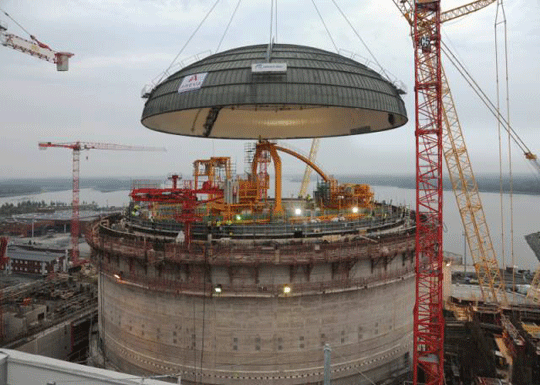
Yet more delay – Finland’s Olkiluoto 3 nuclear reactor already 12 years behind schedule
|
Olkiluoto 3 nuke delayed yet again, now 12 years behind schedule https://yle.fi/uutiset/osasto/news/olkiluoto_3_nuke_delayed_yet_again_now_12_years_behind_schedule/11128489
– 20 Dec 19, Finland’s fifth nuclear reactor will not begin regular operations before 2021, rather than 2009 as originally planned. The startup date for the Olkiluoto 3 (OL3) nuclear reactor on Finland’s southwest coast has been pushed back again. Plant owner Teollisuuden Voima (TVO) said on Thursday that it had been informed of the new schedule by the main supplier, the Areva-Siemens Consortium.The supplier now says that fuel will be loaded into the reactor next summer ahead of grid connection in November 2020. Regular electricity production would start in March 2021, instead of September 2020 as most recently announced. Faulty components foundTVO says the latest delays are due to slow progress in system testing and shortcomings in spare part deliveries. For instance auxiliary diesel generators were found to have faulty components. “Because of numerous delays we have to do maintenance to equipment and components already installed to ensure fluent start-up and continuous operation. The manufacturing and deliveries of the spare parts take time,” OL3 Project Director Jouni Silvennoinen said in a TVO statement. Construction work on OL3 started nearly 15 years ago. According to the original timetable, it was to have gone online in 2009. Since then there have been many delays, lawsuits and massive cost overruns. With a total cost estimate of at least 8.5 billion euros, it has been described as the second-most expensive building in human history, behind a hotel complex in Mecca. Construction of the original atomic power station began in 1973. The first unit began commercial operations six years later, becoming the country’s second reactor after one in Loviisa. The Fennovoima consortium hopes to build Finland’s first entirely new nuclear plant since the 1970s in Pyhäjoki, near Raahe. That project too has been beset by delays and is yet to receive a construction permit.
|
|

1 This Month
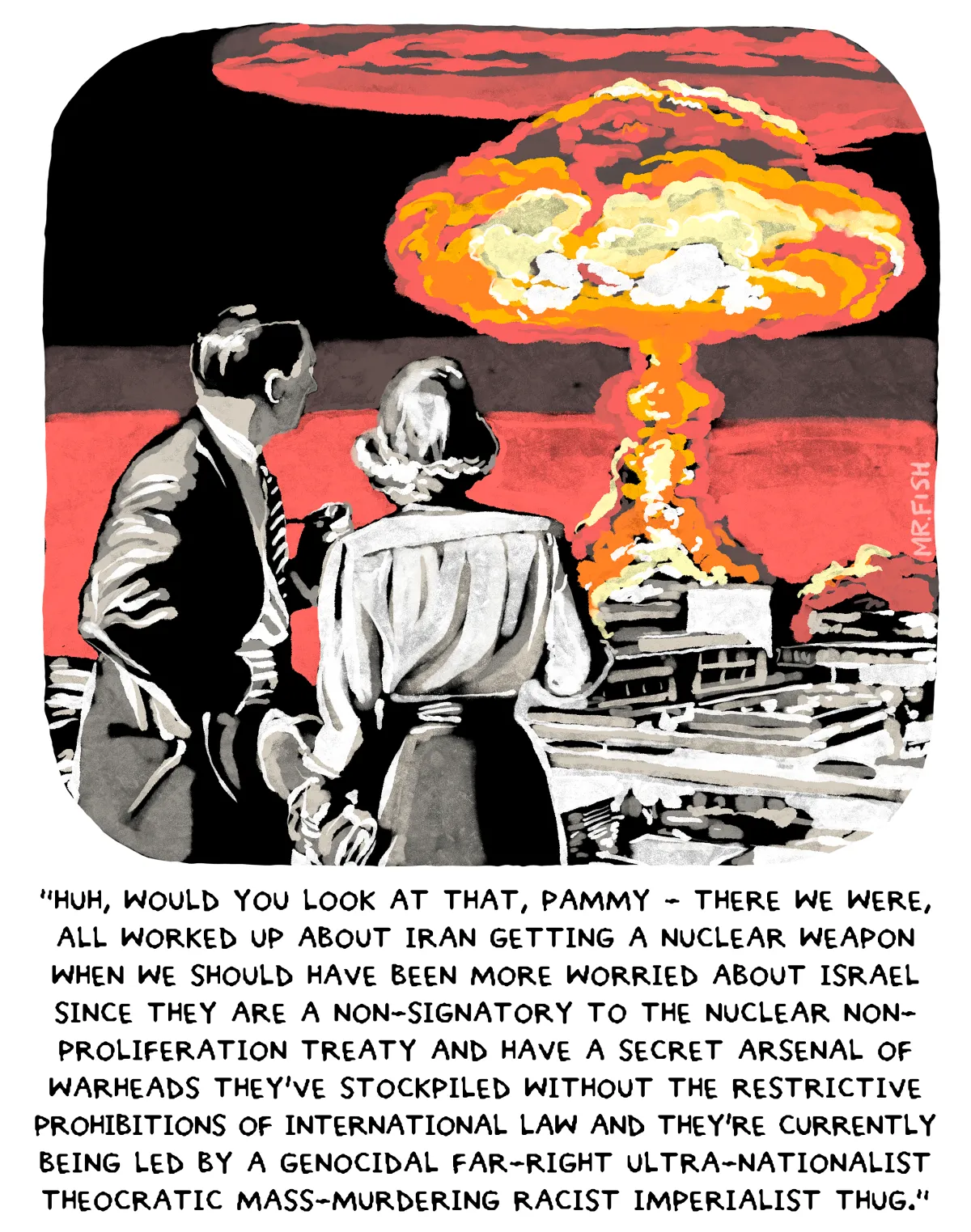
1 June Webinar – The High Cost of Nuclear Power – Register


of the week– Nuclear Reactor Information Task Force
To see nuclear-related stories in greater depth and intensity – go to https://nuclearinformation.wordpress.com
-
Archives
- May 2026 (243)
- April 2026 (356)
- March 2026 (251)
- February 2026 (268)
- January 2026 (308)
- December 2025 (358)
- November 2025 (359)
- October 2025 (376)
- September 2025 (257)
- August 2025 (319)
- July 2025 (230)
- June 2025 (348)
-
Categories
- 1
- 1 NUCLEAR ISSUES
- business and costs
- climate change
- culture and arts
- ENERGY
- environment
- health
- history
- indigenous issues
- Legal
- marketing of nuclear
- media
- opposition to nuclear
- PERSONAL STORIES
- politics
- politics international
- Religion and ethics
- safety
- secrets,lies and civil liberties
- spinbuster
- technology
- Uranium
- wastes
- weapons and war
- Women
- 2 WORLD
- ACTION
- AFRICA
- Atrocities
- AUSTRALIA
- Christina's notes
- Christina's themes
- culture and arts
- Events
- Fuk 2022
- Fuk 2023
- Fukushima 2017
- Fukushima 2018
- fukushima 2019
- Fukushima 2020
- Fukushima 2021
- general
- global warming
- Humour (God we need it)
- Nuclear
- RARE EARTHS
- Reference
- resources – print
- Resources -audiovicual
- Weekly Newsletter
- World
- World Nuclear
- YouTube
-
RSS
Entries RSS
Comments RSS
 nuclear-news