‘Error of judgement’: UK police recall guide which listed Extinction Rebellion among extremist groups
‘Error of judgement’: UK police recall guide which listed Extinction Rebellion among extremist groups https://www.sbs.com.au/news/error-of-judgement-uk-police-recall-guide-which-listed-extinction-rebellion-among-extremist-groups
Counter-terrorism police in South-East England say they made an ‘error of judgement’ in adding climate Justice group Extinction Rebellion to a list of extremist ideologies.
The Guardian revealed the group was included in a 12-page guide named ‘Safeguarding young people and adults from ideological extremism’.
The document was designed to help educate people working with youth to “recognise when young people or adults may be vulnerable to extreme or violent ideologies”,
The guide advises people to look out for young people who “neglect to attend school” or “participate in planned school walkouts” – an apparent reference to the global School Strike for climate movement started by Greta Thunberg this year.
It also suggests that young people who engage in non-violent direct action such as writing environmentally-themed graffiti, sit-down protests or banner drops are potentially at risk of radicalisation.
The environmental group featured alongside Neo-Nazi terror operations and a pro-terrorist Islam outfit.
In a statement to The Guardian, Counter Terrorism Policing South East boss Kath Barnes said the guide is being recalled.
“The document was designed for a very specific audience who understand the complexities of the safeguarding environment we work within and who have statutory duties under Prevent. We are in the process of confirming who it has been shared with and recalling it.”
Extinction Rebellion was founded in October 2018 and the group maintains a welcoming, non-violent culture is at the core of its beliefs.
A spokesperson for Extinction Rebellion’s Sydney arm, AJ Tennant, says it was a shock to hear the international movement had made it onto the list in the first place.
“It’s very distressing that a peaceful, environmental organisation that’s trying to advocate for the protection of humanity would be treated with such disdain.”
He says he understands that people may find the extinction rebellion movement confronting, and even frustrating at times, but argues the movement has always been focused on non-violent methods of drawing attention to the climate debate.
“The first word that applies to everything that XR does is non-violent. We talk about being peaceful, we talk about having love in the movement, we talk about apologising to people for any inconvenience we caused, so while we are disruptive, we are always, always peaceful.
London-based human rights lawyer and media commentator Shoaib Khan has taken to Twitter to condemn the actions of British authorities.
Tens of thousands of Australians took to the streets on Friday to demand stronger action on climate, with some in the large crowds carrying the Extinction Rebellion network’s recognisable logo and flag.
Climate protests in London, Berlin, Madrid, Copenhagen and Stockholm target Australian government
Climate action protesters angry over Australia’s bushfires rally across Europe https://mobile.abc.net.au/news/2020-01-11/scott-morrison-labelled-laughing-stock-europe-climate-protests/11859988 BY EUROPE CORRESPONDENT BRIDGET BRENNAN AND ROSCOE WHALAN IN LONDON
Thousands of people have taken part in demonstrations across Europe, taking aim at what they say is the Australian Government’s lack of action on climate change during the bushfire crisis.
- Demonstrations organised by Extinction Rebellion were held in London, Berlin, Madrid, Copenhagen and Stockholm
- The protesters called for stronger action on climate change in response to the Australian bushfires
- Protesters in London rallied outside Australia House, while protesters chanted outside the Australian embassy in Berlin
Protesters stopped traffic in London and turned out at rallies in Berlin, Madrid, Copenhagen and Stockholm to show their support for victims of the disasters.
At the Strand in London, hundreds gathered outside Australia House, where the High Commission of Australia is located, calling for stronger action on climate change as part of a protest organised by Extinction Rebellion.
Anne Coates travelled from Sheffield, north of London, to attend the rally.
She began to cry when she spoke about watching the effect of the disaster on people who had lost relatives and homes.
“It’s just too much for your heart. You just can’t live with it. It just gets worse and worse every day,” she said.”Absolutely devastating to watch it. It’s like hell. And it seems like governments around the world are in a race to drag us down to hell.”
She said Prime Minister Scott Morrison was “a laughing stock around the world”.
“We’re absolutely furious with him. And I don’t know what’s it going to take. Governments should be listening,” she said.
Many people wore koala hats to represent the massive loss of wildlife in New South Wales, Victoria and South Australia.
Fi Radford from Bristol carried a sign which said “koalas not coal”.
“We’re here to say to the Australian people, challenge your Government on the evidence they’re giving you,” she said.
“Australia, you are custodians of precious species that exist nowhere else in the world. Overturn your Government, they’re leading you to destruction.”
Among the protesters were some of the tens of thousands of Australians living in London.
Harley McDonald-Eckersall from Melbourne said she had been watching on in horror at what has been unfolding in Australia.“It’s been so horrible being away … Australians are extraordinarily resilient — like our First Nations people who have survived genocide and are still caring for the environment,” she said.
Australian Dylan Berthier said he believed the catastrophic conditions in Australia were a wake-up call for the world.
“I think a crisis of this magnitude is a global crisis. I think world leaders have a responsibility to call on the Australian Government to enact new policy that will actually prevent this from happening in the future,” he said.
In Germany, protesters chanted outside the Australian embassy in Berlin.
One man carried a sign which read “Aloha from Berlin” in reference to Mr Morrison’s maligned trip to Hawaii when the bushfires were burning in December.
The climate action group Extinction Rebellion organised the protests across Europe.
Bushfires ‘a warning to the whole world’: UK politicians
The bushfire emergency has been front-page news in the UK for weeks — and has forced Tourism Australia to temporarily pull its new $15 million advertising campaign, fronted by Kylie Minogue.
When the UK Parliament returned earlier this week, Speaker Lindsay Hoyle said what had been happening in Australia should act as a “wake-up call for the world”.
Last year, the Conservative Government in the United Kingdom passed legislation to reach net-zero carbon emissions by 2050 — one of the most ambitious targets set by a major economy.
But many environmental groups have said 2050 is not soon enough.
Labour leadership contender Clive Lewis told the House of Commons: “So as Australia burns, as millions in African states face climate-driven famine, and floods have swept the north of England, will this Government give a damn about this existential threat and act, not posture?”
Shadow Foreign Secretary Emily Thornberry, who is vying to become the new opposition leader, has criticised the Morrison Government.
“I hope that the horrendous wildfires in Australia, brought on by record temperatures, with such devastating impacts for the human and animal populations in New South Wales, will not just wake up Scott Morrison’s Government to its wilful inaction over climate change, but serve as a warning to the whole world,” she said.
Earlier this week, outspoken British television presenter Piers Morgan cut short an interview with Liberal MP Craig Kelly on Good Morning Britain.
Climate change and global warming are real and Australia is right now showing the entire world just how devastating it is,” he said.
“And for senior politicians in Australia to still pretend there’s no protection is absolutely disgraceful.”
In an address to Vatican diplomats this week, Pope Francis also criticised climate inaction.
“Many young people have become active in calling the attention of political leaders to the issue of climate change. Care for our common home ought to be a concern of everyone,” he said.
“Sadly, the urgency of this ecological conversion seems not to have been grasped by international politics, where the response to the problems raised by global issues such as climate change remains very weak and a source of grave concern.”
In Germany, gridlock over nuclear-capable fighter jet
“That’s pretty tight,” according to one pilot.
He spoke to DW on condition of anonymity. For the air base, tucked away amid the picturesque plateaus of the Eifel region in western Germany, has a special, secret mission: It is here that American nuclear bombs are stored in what is officially termed a “nuclear sharing agreement.”
In the case of a nuclear strike, German Tornado fighter jets and their crews would deliver the American bombs.
American bombs on German soil
Their location is a state secret. The German government has never officially confirmed the existence of the nuclear bombs in Büchel. The precise number of bombs stored in the underground vaults in the air base is thus unclear; estimates range between 10 to 20.
On the record, the Germany government only admits to being part of the sharing agreement, which dates back to the Cold War and NATO’s nuclear deterrence strategy aimed at keeping Soviet influence at bay.
In essence, it provides for member states of the military alliance without nuclear weapons to partake in planning and training for the use of nuclear weapons by NATO and, officials argue, for their views to be taken into account by nuclear-capable countries, including the US. Germany, Belgium, the Netherlands and Italy are all part of the sharing agreement.
Upkeep of Tornado fleet skyrocketing
But as Germany’s Tornado fleet is swiftly nearing the end of its shelf life, the cost of maintaining a fleet for the nuclear mission is skyrocketing.
“The increase each year is brutally high,” as one parliamentarian put it.
DW has obtained a copy of an official document from the Ministry of Defense, which puts the expenditure for the Tornado fleet, including maintenance, procurement and development, at €502 million ($562 million) in 2018. This year, the figure is estimated to reach €629 million…………https://www.dw.com/en/in-germany-gridlock-over-nuclear-capable-fighter-jet/a-51897327
A nuclear accident in Essex would be catastrophic
|
How much of Essex would disappear if there was a nuclear disaster?The damage would be catastrophic, Essex Live, By Brad Gray Multimedia Reporter 12 Jan 2020 “…………. disasters can happen, and Essex has it’s own nuclear power plant up in Bradwell-on-Sea.
Although the plant was closed down back in 2002 – and works have taken place over the past 20 years to remove nuclear waste and storage vaults – there are plans to reopen the site. A new plant could be built on the same location, up to modern standards, by 2030, but plans are not fully in place. However, with the date only a decade away – and interest in nuclear disasters higher than usual because of the hit TV show Chernobyl – it’s worth seeing how bad a nuclear disaster would be if something happened near Essex. How bad would the damage be in Essex?No 2 Nuclear Power have created a map tool to see how bad the damage would be if Sizewell were to have a nuclear accident the scale of Chernobyl’s. The map shows that much of Essex would become uninhabitable and areas in dark red or purple would have compulsory evacuation take place. At around 30 miles from the Essex border, the impact would still encompass most of the county. What about elsewhere?The damage wouldn’t just stop at our county. Suffolk and Norfolk would both be equally as affected as Essex, and London would also be heavily affected with some relocation needed. The affects would be felt as far away as Birmingham and Wales, and even further north to Nottingham and Sheffield. It’s fair to say that an explosion would be a national disaster unlike anything ever seen in the country. These estimations are also based upon there not being strong winds on the hypothetical day in question, as radiation can spread further if gusts are strong. If wind was blowing strongly west a huge portion of the country would be brought to a halt. Cities like Nottingham, Derby, Lincoln and Sheffield would all require immediate evacuation. Huge parts of the country would become uninhabitable and it would be a nationwide disaster not seen in the UK since World War Two. How likely would something like this be?It’s worth remembering that at the moment, Bradwell’s site is a non-operable plant. A disaster like this cannot happen until reactors there are up and running. And even then, with modern technology and monitoring standards, explosions like this are incredibly unlikely. In regards to Sizewell, which is made up of two nuclear power stations, there are plans that it could be transferred to a ‘nuclear island’ off the Suffolk coast………. HTTPS://WWW.ESSEXLIVE.NEWS/NEWS/ESSEX-NEWS/HOW-MUCH-ESSEX-WOULD-DISAPPEAR-3729222 |
|
|
UK’s planned Sizewell power station likely to become a ‘nuclear island’
Rising sea levels could turn new Sizewell power station into ‘nuclear island’ East Anglian Daily Times, 10 January, 2020, Andrew Hirst
Surging sea levels due to climate change could mean new power station Sizewell C is cut off by the water within decades, a top scientist has warned.
UK’s competition watchdog to investigate Jacobs’ acquisition of Wood Nuclear Limited
Times and Star 9th Jan 2020, The proposed £250 million acquisition of a major player in the clean-up of the Sellafield site in West Cumbria could be blocked. The Competition and Markets Authority (CMA) has launched an investigation into global engineering firm Jacobs’ acquisition of Wood Nuclear Limited – the nuclear arm of the Wood Group.
The proposal deal – announced in August last year – would see Wood Nuclear Limited along with “subsidiary and certain affiliated companies” come under control of Jacobs’ UK division. Jacobs would also take on existing contracts held by the business – which include managing the Design and Engineering lot for the Programme and Project Partners (PPP) framework.
20-year contract awarded last year by Sellafield Limited as part of its push to “revolutionise” the decommissioning of the site, could be worth up to £769 million. Wood’s nuclear division is already a long-standing big tier company at Sellafield and, in December was awarded a £50m contract to provide programmable digital control technologies to the plant.
Bradwell nuclear power plan – foolish, in view of climate change predictions
 BANNG 8th Jan 2020, As we enter a new year, Andy Blowers muses on the massive challenge of climate change that lies ahead, globally and locally, in the column for Regional Life, January 2020.
In East Anglia, we are increasingly aware of record heatwaves, milder and wetter winters, retreating coastlines and loss of precious habitats and declining and disappearing species. To an extent, these may be tackled by adaptive measures such as managed retreat of the coastline or hard defences. Even then, land loss and inundation will be unavoidable.
The idea of a massive nuclear power station at Bradwell on a
site threatened by the impacts of climate change seems foolish in the
extreme. Far better to go for cheaper, less risky and easily deployable
renewable options. Concerted action worldwide and locally, by governments,
businesses and individuals, is needed now if we are to reduce carbon
emissions to net zero and avert catastrophe. That was a clear message from
the General Election. Now we must get on with it.
UK nuclear weapons programme £1.3bn over budget.
BBC 10th Jan 2020, UK nuclear weapons programme £1.3bn over budget. The Ministry Of Defence’s “poor management” of Britain’s nuclear weapons programme has led to rising costs and lengthy delays, according to the government spending watchdog.
UK Leading Labour leadership candidate Rebecca Long-Bailey would use nuclear weapons
|
8 January 2020 Leading Labour leadership candidate Rebecca Long-Bailey has said she would be prepared to use nuclear weapons as prime minister.It is a marked contrast to the policy of outgoing leader Jeremy Corbyn, a passionate and long-standing advocate of nuclear disarmament. Ms Long-Bailey, a staunch defender of Mr Corbyn’s failed leadership of the party, has previously been accused of being his “continuity candidate”. Asked on BBC Radio 4’s Today programme whether she would be prepared to launch a nuclear strike, Ms Long-Bailey said: “If you have a deterrent you have to be prepared to use it.”…. https://au.news.yahoo.com/rebecca-long-bailey-labour-leadership-nuclear-weapons-134918253.html |
|
|

Britain’s £1.2bn cleanup begins, of Berkeley power station, closed 30 years ago
 Nuclear waste removal begins 30 years after power station closure, https://www.bbc.com/news/uk-england-somerset-50866867 5 Jan 2029, Work has begun on removing nuclear waste from Berkeley power station, 30 years after it was decommissioned.The disused Magnox generator, situated on the banks of the River Severn in Gloucestershire, closed in 1989. Nuclear waste removal begins 30 years after power station closure, https://www.bbc.com/news/uk-england-somerset-50866867 5 Jan 2029, Work has begun on removing nuclear waste from Berkeley power station, 30 years after it was decommissioned.The disused Magnox generator, situated on the banks of the River Severn in Gloucestershire, closed in 1989.
It was the world’s first commercial power station and its laboratories and many of its buildings have already been dismantled. Work emptying its vast concrete vaults of the nuclear waste Berkeley generated is only now able to safely begin. But it will not be safe for humans to go inside its reactor cores until 2074. The BBC has been given a rare glimpse of what is stored under the disused site.For the past 50 years parts of the coastline of the west of England have been dominated by nuclear power stations. The 1960s saw the construction of Hinkley A and Hinkley B in Somerset, with both Oldbury and Berkeley built on the banks of the River Severn in the 1950s. Only Hinkley B is still in use but the nuclear waste the stations generated has remained in place. It takes hundreds of years to decompose and has to be stored underground. It will cost an estimated £1.2bn to fully decommission Berkeley. About 200 people are currently working on the site under strict security. Work emptying waste products from the concrete vaults, eight metres (26ft) underground, is a complicated process. They contain used graphite from the fuel elements in the nuclear generating process, material from the cooling ponds and from the laboratories. The removal is expected to take five or six years to complete. Rob Ledger, waste operations director at Berkeley, said: “When the power stations first started generating I don’t think there was much thought put into how the waste was going to be dealt with or retrieved. “It’s taken a while to develop the equipment and the facilities [to do this]. “A mechanical arm moves the debris into position and then a ‘grab’ comes down through an aperture in the vaults and picks up the debris [and] puts it into a tray. “Each debris-filled tray weighs up to 100kg (220lb). “The automated machinery is controlled by computers [and] tips [the waste] into a cast iron container.” The containers will house the waste in an intermediate storage facility until a long-term solution can be found. “Nuclear waste does take a long time to decay… it’s hundreds of years. And that’s why we have to go to these lengths, to store it safely,” said Mr Ledger. Eventually the boxes will be housed deep underground in a long-term storage facility. The location has not yet been decided by the government. There are currently estimated to be almost 95,000 tonnes of nuclear waste in the form of graphite blocks across the UK. But if the Carbon 14 can be extracted from the blocks, they become much safer and easier to deal with. A new process is being explored, by scientists at Bristol University, to ensure not all of the waste will be discarded. They have developed a process that uses reactor core spent contents in a new power form. Carbon 14 from nuclear reactors is infused into wafer-thin diamonds, man-made in a lab at Bristol University. They then become radioactive and form the heart of a battery that would last for many thousands of years. The tiny batteries could be used in pacemakers, hearing aids or sent into space as part of the space programme. The process is being piloted in association with the UK Atomic Energy Authority in Abingdon. It is hoped the decommissioned Gloucestershire site may be redeveloped to manufacture the new batteries, creating jobs in the region. |
|
UK govt trying to finance new nuclear plants, – complicated relations with China and USA
boss Vincent de Rivaz ill-advisedly said that customers would be using
electricity from the planned Hinkley Point C power plant to cook their
Christmas turkeys by 2017. Two years on from that self-imposed deadline,
the £21bn nuclear power station is still being built over a sprawling site
in the Somerset countryside – while the very future of nuclear power in
the UK is up for debate as other sources of energy snap at its heels and
investment in the sector gets harder to find.
backdrop of wariness about the source of potential investments:
state-backed China General Nuclear (CGN) is one of few investors willing to
pour money into the risky nuclear sector – but the communist
superpower’s involvement has brought political and security concerns as
well as opposition from the US.
beset by controversy, with Theresa May, the former prime minister,
reversing George Osborne’s courting of China in 2016 when she ordered a
review of China’s involvement in the UK’s nuclear industry, amid
concerns about national security.
consultation opened in the summer on the potential new financing mechanism for nuclear power plants which will see consumers pay for nuclear power plants before they start producing, in an attempt to bring down the costs of financing.
https://www.telegraph.co.uk/business/2020/01/05/britain-heading-fallout-nuclear-conundrum/

UK’s Sizewell C nuclear project not viable, due to escalating costs?

Could escalating costs mean ‘game over’ for nuclear power and Sizewell C? East Anglian Daily Times, January 2020, Andrew Hirst
The growing cost of nuclear power could mean ‘game over’ for Sizewell C, experts claim. While much of the debate in Suffolk around EDF Energy’s proposals have focussed on the local impacts, recent reports from energy forums have started to question how viable the industry is for the UK – and globally.
At a recent debate, Paul Dorfman of the University College London’s Energy Institute went head to head with Paul Spence, director of strategy and corporate affairs at EDF to discuss the future of the sector.
Dr Dorfman, who also founded the Nuclear Consulting Forum, said the “massive cost escalations” of nuclear power together with the increasing competiveness of renewables meant there was “little rationale for new nuclear builds”.
Costs for offshore wind have plummeted to around £40 per MWh – making it now one of the cheapest forms of power available.
Meanwhile, the costs government agreed to pay EDF for Hinkley Point C, is more than twice as expensive at £92.50 per MWh.
The latest World Nuclear Industry Status Report warned of “substantial challenges” and a decline in usage, with fewer reactors in operation today than 30 years ago.
Globally, while investment in renewables has increased to around $350bn per year, nuclear fell to just $17bn. Dr Dorfman said: “In this context, nuclear power at the expense of more flexible, safe, productive, cost-effective and affordable technologies really does seem to be rather foolish.”
He said it could mean “game over” for nuclear projects, including Sizewell…….
The government consulted earlier this year on the “Regulated Asset Base model”, which is intended to incentivise private investment in public projects by guaranteeing a return for developers. It would mean developers can raise revenue, potentially though customer bills, and reduces their risk. ……
although EDF claims RAB could save money for consumers – critics say it merely leaves the public with all the risk.
“Under RAB, the plan is for the burden of risk to pass to hard-pressed UK consumers and/or taxpayers labouring under post-Brexit conditions,” said Dr Dorfman.
“Not only that, but the revenue stream will include a variable strike price – with taxpayers and/or electricity consumers forced to write, what is essentially, a ‘blank cheque’.
Earlier this year it was reported a “Sizewell surcharge” could add £6 to annual energy bills under the RAB model. A petition opposing the surcharge was signed by more than 36,000 people.
Concerns were further compounded by EDF’s precarious financial position. The company is €37.4billion net debt and its stock lost 34% of its value this year.
Professor Steve Thomas, a researcher in energy policy at the University of Greenwich, questioned the company’s credentials ahead of a seminar organised by the Nuclear Free Local Authorities in Colchester last month.
“EDF is in deep financial crisis and will only be able to survive with heavy French government support and radical restructuring,” he said. “It is unclear how EDF will be able to finance Hinkley Point C, much less Sizewell C, and the UK government must resist pressures to throw more public money at these ill-conceived projects and abandon them now.”
Environmental and technical worries, as Russia extends the life of old Kola Nuclear Power Plant
One of Russia’s oldest nuclear reactors set to run until 2034 https://bellona.org/news/nuclear-issues/2020-01-one-of-russias-oldest-nuclear-reactors-set-to-run-until-2034
The second reactor unit at the Kola Nuclear Power plant near Murmansk has received the nod from Russian regulators to operate until 2034, making it one of the longest running commercial reactors in the world and raising a host of environmental and technical concerns. January 2, 2020 by Charles Digges
The second reactor unit at the Kola Nuclear Power plant near Murmansk has received the nod from Russian regulators to operate until 2034, making it one of the longest running commercial reactors in the world and raising a host of environmental and technical concerns.
Currently, the longest serving reactor ever is the Oyster Creek Nuclear Generating Station in the United States, which, after running for 49 years, was finally shut down in 2018. Should the Kola plant’s No 2 reactor run out the term of its new lifetime extension, it would be 59 by the time it is retired.
Kola’s No 2 reactor, which came online in 1975, is not alone. The plant’s other three units, which are all VVER-440 reactors, are likewise operating on sometimes numerous lifetime extensions that would bring them to ripe old age before their operations are stopped. The No 1 reactor at the Kola plant, which started generating power 1973, was granted a second runtime extension two years ago, and won’t retire until 2033. The No 3 and No 4 reactors – which came online in the early 1980s – will operate until 2027 and 2029, respectively.
The prolonged operations of these reactors has been cause for concern among some experts, who say that bringing the units into step with current industry safety demands is difficult, given their aging design.
n the shadow of the 2011 Fukushima disaster, which resulted in a triple reactor meltdown, worldwide nuclear building standards have tightened across the board in ways that some fear have left the Kola Nuclear Power Plant’s reactors behind.
Yet more and more often, extending runtime extensions is becoming a general practice throughout the nuclear industry – and not only in Russia. Throughout central and western Europe, there are some 90 nuclear reactors that are currently under review for lifespan extensions, including many in countries like France, the United Kingdom, the Netherlands, Switzerland and Finland. Six of the 15 Soviet-built nuclear reactors in Ukraine are operating on extended lifespans, with the remaining expected to follow.
For its part, Germany has elected altogether to shutter its nuclear power plants – a goal it hopes to reach by 2022. But the move is proving politically and technically complex. The waste resulting from the closures – thought to eventually comprise some 2,000 containers – must be stored in safely the same spot for 1 million years, and experts are short on ideas about where, exactly, to do that. The costs, too, are astronomical, with the phase-out expected to reach nearly $73 billion.
t is expenses like these that are so deviling to Russia’s nuclear industry, which has failed to build up a robust savings account for decommissioning expenses. Like other countries, Russia collects decommissioning funding through electricity tariffs charged to customers. But unlike other countries, Russia has only been doing this since 1995, shortly after the fall of the Soviet regime and the introduction of a market-based economy. As a result, issuing lifetime extension to elderly reactors offers Moscow a cheap – and what many countries consider a safe – alternative to the more costly route of dismantlement.
Still, environmentalists are right to be nervous. Scientific research on how nuclear reactors age – and on the kinds of problems that emerge as they do – has come mostly from studies in research reactors. While these studies have offered some insight on how reactors weather over time, many experts say that the data on how commercial reactors behave in their twilight years are still too inconclusive to be trusted.
But Rosatom officials insist that the extended reactors at the Kola Nuclear Power Plant are safe, and offers figures to back up its claims. According to a report in the Barents Observer, the corporation spent some 4.5 billion rubles – or about $72 million – on upgrades to the No 2 reactor before regulatory officials granted the runtime extension. Plant officials likewise eliminated numerous safety violations and are in the process of eliminating them.
Depleted uranium causing cancer epidemic in Serbia
The number of cancer patients will dramatically increase 20 years after NATO aggression, because that is when uranium has strongest effect, said oncologist Vladimir Cikaric. Now we have 35000 people that suffer from cancer, and in three years that number could climb to 70.000
According to him, there are 35.000 people suffering from cancer, and after 2019 that number could double to 70.000 because the effect of the depleted uranium from Kosovo and from Pcinjski area is spreading over the entire country.
– Serbia is number one in the mortality rate from tumors in Europe, and we have almost three times higher mortality than carcinoma in comparison to the world. The reason is that the dust from the depleted uranium in Pcinski area and Kosovo spread across the entire country. We all breathed it. Because of that we now have drastic increase of leukemia and lymphoma, but also all other types of carcinoma. However, the worst is yet to come. Depleted uranium has the strongest effect after 20 years and it turns healthy cells into cancer cells. That means that from 2019 the number of people who will get sick with cancer will increase, according to some assessments, there will be 70.000 people, which is twice the number we have now. Real health disaster is in front of us, which we can not prevent – warns Cikaric.
The European Pressurised Water Reactor (EPR) is dragging nuclear company EDF into $billions of debt

Climate News Network 31st Dec 2019, The edifice already heading for the status of the largest and most expensive construction project in the world, the Hinkley C nuclear power station (above) in the UK, is dragging its builder, the French giant EDF, into ever-deeper debt: the company’s flagship reactor is facing still more delay.
Although EDF is a vast company, owning 58 reactors in France alone,
and is 85% owned by the French state, it owes around €60 billion ($67bn),
a debt expected to increase by €3 billion ($3.35bn) a year.
This has led some city analysts, notably S&P Global, to downgrade the company’s prospects to “negative” − which is essentially a recommendation to
shareholders to sell.
Apart from the problem that EDF’s fleet of reactors in France is operating well beyond their original design life and are in constant need of safety and maintenance upgrades, the company’s main problem is its flagship, the European Pressurised Water Reactor (EPR), which is getting into ever-greater difficulties.

In Europe there are four EPRs under construction: the two barely begun at Hinkley Point in Somerset in the west of England; one in northern France at Flamanville (below) in Normandy; and the original prototype in Finland, known as Olkiluoto 3 (OL3) (above) . The extraordinary fact is that, although OL3 was due to start up in 2009, it is still incomplete, and its start date has just been put back again – until 2021.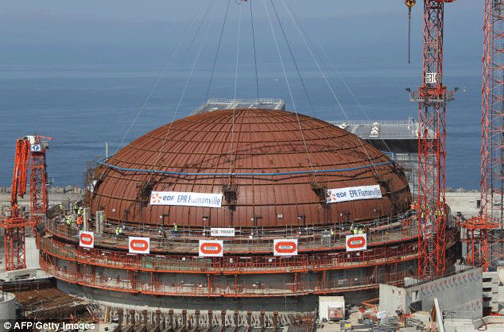
https://climatenewsnetwork.net/flagship-reactor-launch-postponed-again/
1 This Month

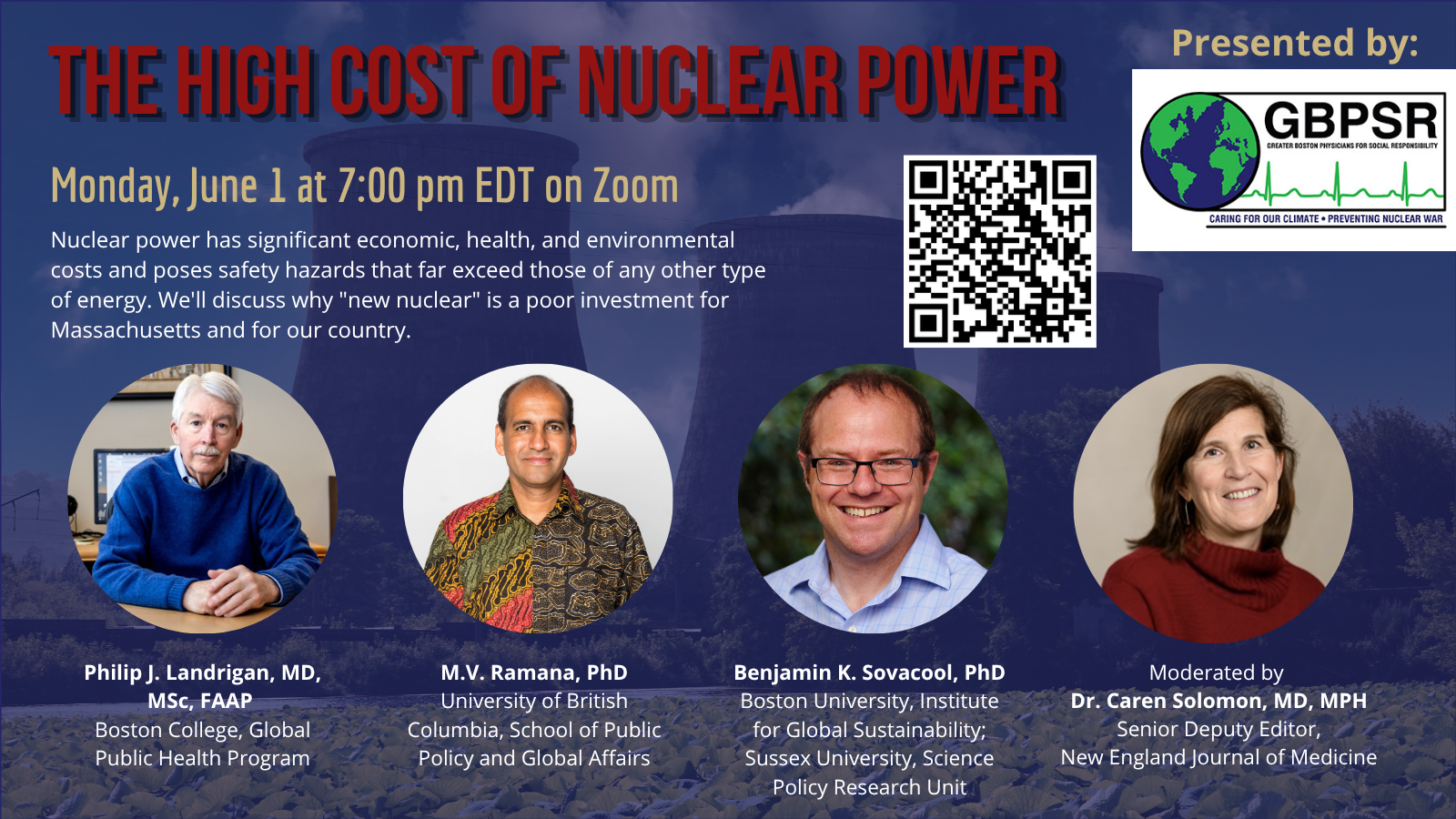
1 June Webinar – The High Cost of Nuclear Power – Register


of the week– Nuclear Reactor Information Task Force
To see nuclear-related stories in greater depth and intensity – go to https://nuclearinformation.wordpress.com
-
Archives
- May 2026 (243)
- April 2026 (356)
- March 2026 (251)
- February 2026 (268)
- January 2026 (308)
- December 2025 (358)
- November 2025 (359)
- October 2025 (376)
- September 2025 (257)
- August 2025 (319)
- July 2025 (230)
- June 2025 (348)
-
Categories
- 1
- 1 NUCLEAR ISSUES
- business and costs
- climate change
- culture and arts
- ENERGY
- environment
- health
- history
- indigenous issues
- Legal
- marketing of nuclear
- media
- opposition to nuclear
- PERSONAL STORIES
- politics
- politics international
- Religion and ethics
- safety
- secrets,lies and civil liberties
- spinbuster
- technology
- Uranium
- wastes
- weapons and war
- Women
- 2 WORLD
- ACTION
- AFRICA
- Atrocities
- AUSTRALIA
- Christina's notes
- Christina's themes
- culture and arts
- Events
- Fuk 2022
- Fuk 2023
- Fukushima 2017
- Fukushima 2018
- fukushima 2019
- Fukushima 2020
- Fukushima 2021
- general
- global warming
- Humour (God we need it)
- Nuclear
- RARE EARTHS
- Reference
- resources – print
- Resources -audiovicual
- Weekly Newsletter
- World
- World Nuclear
- YouTube
-
RSS
Entries RSS
Comments RSS
 nuclear-news