A quarter of Russia’s Andreeva Bay’s spent nuclear fuel stack removed, with Norway’s help
Norway helps pay for transporting old Russian navy nuclear waste
A shipment of 14 containers with spent nuclear fuel from Andreeva Bay to Atomflot in Murmansk took place this week. Barents Observer By Thomas Nilsen December 20, 2019
|
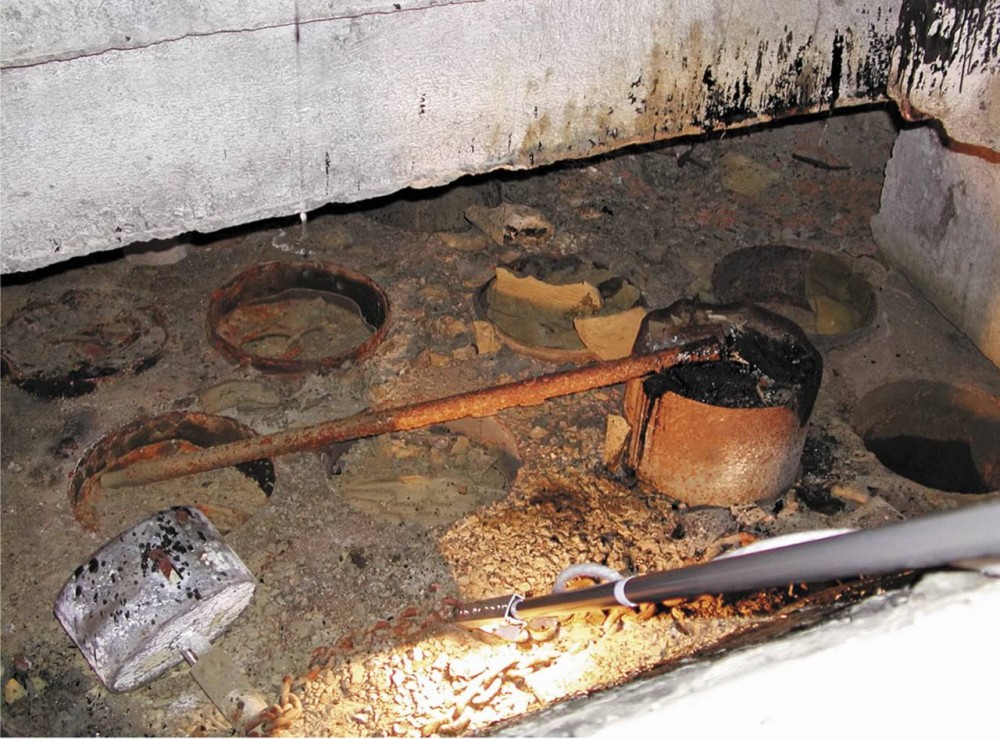
“This is the first time we will pay for removing. The ship was fully loaded. 14 containers with spent nuclear fuel,” says project coordinator Per-Einar Fiskebeck to the Barents Observer. The removed waste contained about one million Curie (37.000 TBq) of long lived isotopes. Unloading the 40-years old spent uranium fuel elements from the rundown storage tanks and repacking them to transport containers came with a price-tag of 5 million kroner (€500.000), while the shipment from Andreeva Bay to Murmansk will cost additional 2,5 million kroner (€250.000). This week’s shipment is the fourth this year, but the first one paid by Norway. Per-Einar Fiskebeck, an engineer with the County Governor of Troms & Finnmark, has since the 1990s worked in close cooperation with SevRao, Russia’s regional enterprise in charge of cleaning up the nuclear waste site on the western banks of the Litsa fjord. Here, only 65 kilometers from the border to Norway, the Soviet navy packed away its lethal leftovers. Without too much thought for the costs of future clean up. In Norway, like in Russia, the demand for action came out of fears for possible radioactive leakages that could have potentially negative impact on the important fisheries in the Barents Sea. So far, isotopes contamination has only been discovered in the sediments in the near proximity off the shore and not further out in the bay. Concerns of nuclear accidents and radioactive leakages are also why Norwegian authorities have granted hundres of millions kroner in aid to secure and clean up the site……. In 2017, the first load of containers with spent nuclear fuel left Andreeva Bay towards Murmansk, from where it go by rail to Mayak, Russia’s reprocessing plant north of Chelyabinsk east of the Ural Mountains. So far in 2019, three shipments paid by Russia and one shipment paid by Norway have left Andreeva Bay. “25% of the original amount of spent nuclear fuel is now removed,” says Per-Einar Fiskebeck. With one-fourth of the waste removed in two and a half years doesn’t mean the remaining will be shipped away with the same speed. «The fuel elements lifted out and re-packed so far have been undamaged,” Fiskebeck says. Both tank No. 1 and No. 2 are believed to hold mostly unproblematic elements. He explains how some of the other elements will be a much more challenging task. Tank 3A holds numerous rusty, partly destroyed steel pipes where concrete of poor quality was filled in the space between. Some of those fuel assemblies are stuck in the canisters, while some of the canisters are stuck in the cells. This is high level nuclear waste with radiation levels close to the uranium fuel comparable to the melted fuel rods inside the ill-fated Chernobyl reactor. Risk-assessments give a clear recommendation: Do not try to lift any of the assemblies before you are sure nothing falls out.
A worst case scenario is uranium pellets falling to the bottom, becomes unstable, creating an uncontrolled nuclear fission chain reaction with radionuclides being airborne. Three different kind of containers to handle damaged elements are now under development and testing, a work Fiskebeck estimates will take all of 2020 and 2021. “Risk assessment and environmental safety studies are core to all Norwegian funded projects,” Fiskebeck tells……… Another groundbreaking milestone in the clean up work took place earlier this fall when the retrieval of six abandoned, highly radioactive spent nuclear fuel assemblies from the bottom of Building No. 5 were successfully completed. Building No. 5 is a former pool storage, where several elements fell to the floor following a water-leakages in 1982. Traces of uranium and other radionuclides remained in the sludge at the bottom of the pool. The radiation on site was too high for humans to work safely. “You can’t have humans there. Robotics were needed to do the job,” Per-Einar Fiskebeck explains. Such remote controlled equipment were made and the six elements are now safely transferred to the nearby storage building No. 151 in Andreeva Bay……. https://thebarentsobserver.com/en/ecology/2019/12/norway-helps-pay-transporting-40-years-old-russian-navy-nuclear-waste |
|
Switzerland to shut down uneconomic Mühleberg nuclear reactor
|
Switzerland to shut down first nuclear reactor le News18/12/2019 BY LE NEWS
On 20 December 2019, Switzerland will shut down the Mühleberg nuclear reactor in the canton of Bern. The plant went into operation in 1972, making it the nation’s second oldest nuclear power station after Beznau, which started its first reactor in 1969. The Mühleberg power station, which takes its cooling water from the Aare river, was originally scheduled for shutdown in 2012. This date was later extended to 2019. Fissures in the mantle surrounding the reactor and rising operating costs mean the plant is no longer economically viable. Groups concerned about the safety of the reactor are celebrating. The safety justification for the nation and it neighbours for shutting down this reactor has existed for a long time, according to Philippe de Rougemont, a spokesperson for the group Sortir du nucléaire, a group that organised an unsuccessful referendum in 2016 to precipitate the phaseout of Switzerland’s nuclear power industry. The Mühleberg reactor, which is the closest Swiss reactor to Lausanne and Geneva, must now be decommissioned. Radioactive material must be cooled, processed and disposed of safely. The organisation Sortir du nucléaire said it will keep a close eye on this process, which it considers a major risk. Switzerland has five nuclear reactors on four sites. After the 2011 nuclear accident at Fukushima in Japan, the Federal Council, Switzerland’s executive, said it would build no new nuclear reactors and decommission existing nuclear power plants at the end of their safe operational lifespans. It estimated the safe operational lifespan to be about 50 years, which means Beznau I would be taken offline in 2019, Beznau II and Mühleberg in 2022, Gösgen in 2029 and Leibstadt in 2034. However, the government made no commitment to close any nuclear reactor by a specific date. The Federal Council was supported by parliamentary and upper house majorities……. https://lenews.ch/2019/12/18/switzerland-to-shut-down-first-nuclear-reactor/ |
|
Hazards of Russia’s nuclear colonialism- example South Africa
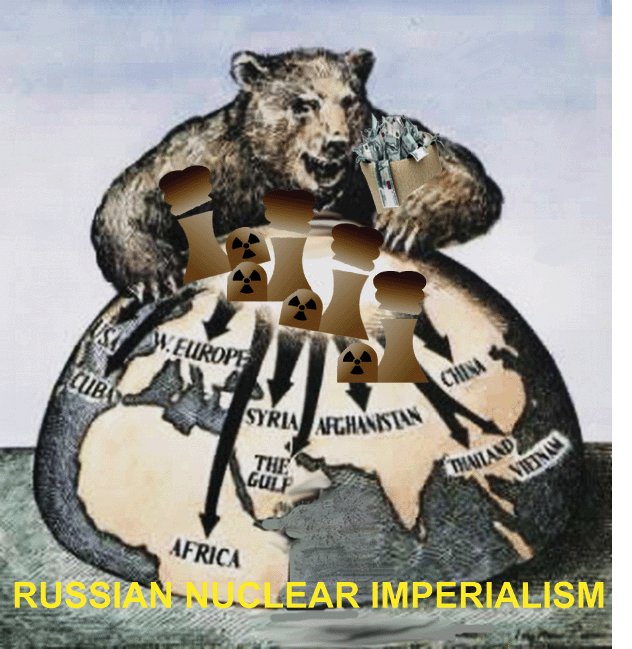
 Africa, Russia squandered close ties with the South African government by overplaying its hand and getting caught up in a corrupt nuclear energy pact. Carnegie Endowment For International Peace (thoroughly researched and referenced) 16 Dec 19,
 SUMMARY
 Amid the widespread attention the Kremlin’s recent inroads in Africa have attracted, there has been surprisingly little discussion of South Africa, a country which, for nearly a decade, unquestionably represented Russia’s biggest foreign policy success story on the continent. As relations soared during the ill-starred presidency of Jacob Zuma (2009–2018), the Kremlin sought to wrest a geopolitically significant state out of the West’s orbit and to create a partnership that could serve as a springboard for expanded influence elsewhere in Africa. Continue reading
 European Union’s “taxonomy” of sustainable activities includes nuclear
 Green-Finance Deal Reached by EU States on Nuclear Compromise https://www.bloomberg.com/news/articles/2019-12-16/green-finance-deal-reached-by-eu-states-on-nuclear-compromise
By Alexander Weber, December 16, 2019, Green-Finance Deal Reached by EU States on Nuclear Compromise https://www.bloomberg.com/news/articles/2019-12-16/green-finance-deal-reached-by-eu-states-on-nuclear-compromise
By Alexander Weber, December 16, 2019,
Diplomats from the European Union’s 28 countries agreed to advance with key legislation for green financial products, bringing the bloc a step closer to embedding environmental goals in standards for banks, money managers and insurers. Envoys signed off on a deal on the EU’s list of sustainable activities after more lenient wording on the inclusion of nuclear energy won the backing of countries including France and the U.K., according to an official involved in the talks, who asked not to be named, in line with policy. A first attempt to strike a deal last week failed amid divisions over the role that nuclear energy should play in the framework. The EU’s list of sustainable activities for investment purposes, dubbed “taxonomy,” is the centerpiece of its push to regulate the fast growing market of green finance, in the hope of directing trillions of euros to fund a radical revision of the region’s economy. It’s meant to define what’s green and what’s not, an effort that could find a range of uses and serve as an example for governments around the world. The difficulty of agreeing on the rules shows what kind of obstacles the EU has to overcome to meet its ambitious climate targets. Leaders last week agreed that the bloc should achieve zero net emissions in 2050, paving the way for a flurry of legislation that’s needed for the unprecedented clean-up of the economy. The member states now have to present their compromise to the European Parliament, which has been critical of allowing fossil fuels and nuclear power to be classified as sustainable and thus eligible to be financed with green bonds and similar financial products. |
|
In France, over the next decade renewable energy is ‘on track to overtake nuclear’
 Renewables ‘on track to overtake nuclear’ in France https://www.powerengineeringint.com/2019/12/16/renewables-on-track-to-overtake-nuclear-in-france/ Kelvin Ross A new study claims that renewables are on track to overtake nuclear power as the dominant energy source in France in the next decade.The share of renewables in France will hit 42.9 per cent of the country’s power mix by 2023, up from 19.9 per cent in 2018, according to analytics company GlobalData. Renewables ‘on track to overtake nuclear’ in France https://www.powerengineeringint.com/2019/12/16/renewables-on-track-to-overtake-nuclear-in-france/ Kelvin Ross A new study claims that renewables are on track to overtake nuclear power as the dominant energy source in France in the next decade.The share of renewables in France will hit 42.9 per cent of the country’s power mix by 2023, up from 19.9 per cent in 2018, according to analytics company GlobalData.
And the research suggests that renewables will continue to rise as nuclear reactors come offline. The report examining France’s power outlook to 2030 reveals that in 2018 nuclear power dominated the capacity mix by 47.2 per cent, followed by renewables, hydropower and thermal power. In the non-hydro renewable energy mix, wind contributed 56.7 per cent followed by solar PV with 35.6. GlobalData analyst Piyali Das said that France “is aiming to boost the renewable energy sources through tender mechanism. Renewable power sources are expected to increase at a compound annual growth rate of 8.9 per cent between 2019 and 2030 with a net capacity addition of around 50 GW. “Installed capacity for onshore wind will double from its current levels of 15.1 GW by 2026, and to support the expansion the government has announced doubling of the renewable energy budget. Solar PV is not behind by much in terms of growth and will witness an addition of more than 24 GW during the same period.” Das said that in the long-term, the French government has decided to cut down its fossil fuel dependency and is replacing coal and oil power stations with gas-fired plants. The government also has wants to reduce nuclear generation to 50 per cent of net generation by 2035, with a plan to decommission around 14 reactors by 2035 and fill the gap with renewable sources. “To date the development of renewable energy is largely supported by public support mechanisms,” explained Das. “These mechanisms finance the difference between the remuneration of their production on the wholesale market and the purchasing price guaranteed by the state to the renewable producer. |
|
Anger as EDF tries to shrink emergency zone around Scottish nuclear plant
Follow The emergency zone around Hunterston B, an ageing nuclear power plant in Scotland, sprawls for more than 2km in every direction. Residents of this zone are regularly given iodine pills to take in the event of a nuclear disaster.However, French state-owned EDF Energy has come under fire for attempting to reduce the emergency zone to 1km, potentially exposing residents further away to harmful levels of radiation if an accident were to take place.
Activists claim the zone should be expanded rather than contracted. A recent change in the law has placed the responsibility for zoning around nuclear facilities with local authorities, rather than the Office of Nuclear Regulation (ONR).
North Ayrshire...(subscribers only) https://www.telegraph.co.uk/business/2019/12/16/anger-edf-tries-shrink-emergency-zone-around-scottish-nuclear/
Boris Johnson’s overhaul of govt departments. Will it really be good for the environment?
Times 16th Dec 2019, Boris Johnson wants an overhaul of Whitehall that would merge departments and make it easier to fire civil servants and bring in experts from outside. Climate change would again become a separate department, allowing Mr Johnson to claim that he has a commitment to the environment.
https://www.thetimes.co.uk/article/prime-ministers-cummings-plan-for-civil-service-zv85vxd8z
Legal action regarding defective welds in EPR nuclear reactor
Crilan 16th Dec 2019, On July 20, 2018 and following the “Sortir du nuclear” network and Greenpeace France, CRILAN filed a complaint with the Cherbourg Public Prosecutor concerning defective welds, particularly those relating to
crossings of the containment. This December 16, 2019, following ASN
inspections and in connection with the complaint by Réseau “Sortir du
nuclear” and Greenpeace France, CRILAN files a complaint with the Public
Prosecutor of Paris for serious breaches relating to the qualification of
some equipment installed on the EPR.
These are materials participating in
the safety demonstration: mechanical (pumps, valves) or electrical (relays,
circuit breakers, etc.). This qualification is based in particular on
studies and tests. It must be the subject of documentation and traceability
of reservations and “open” points, which has not always been the case.
As EDF is subject to regulations on basic nuclear installations, violations
committed may be penalized.
Call to postpone a decision on Suffolk’s new nuclear power station bid

 East Anglian Daily Times 16th Dec 2019, An MP has called on the Secretary of State for Energy to postpone a decision on Suffolk’s new nuclear power station bid – accusing developers of failing to address community concerns.
Central Suffolk and North Ipswich MP Dan Poulter told Andrea Leadsom that EDF Energy’s latest consultation on Sizewell C still failed to provide enough information for consultees to make an informed response. EDF is expected to make its ‘Development Consent Order’ to the Planning Inspectorate early next year – after finishing its stage four consultation in September.
But Dr Poulter, said the company’s stage four consultation still left too many unanswered questions. EDF said its consultation had engaged with thousands of people across East Suffolk, providing updates on its plans as they evolved. It said it held regular meetings with parish councils and had provided funding to offer themindependent and free guidance during consultation.
But it faced regular criticism over the level of detail supplied in each stage of consultation. Dr Poulter said EDF’s lack of detail was a “common theme”. “There was some hope among interested parties in East Suffolk that EDF would use the stage four consultation to address the numerous calls for better information, but a review of the responses indicates EDF has missed this opportunity,” Dr Poulter wrote.
He said the collective response from the Suffolk Coast and Heaths AONB was “particularly damning”. The response said the consultation failed to pay proper regard to the purposes of the AONB – “despite comments made in previous consultations”. Dr Poulter said the information called for should be provided in EDF’s DCO but he had “serious reservations” of its ability to do so, given its failings so far.
Even if EDF was able to provide the information, Dr Poulter said the amount of data consultees would need to go through would be “substantial” – meaning their ability to make proper responses would be “severely limited”. Explaining his letter, Dr Poulter said: “EDF are behaving in a disdainful and unacceptable way towards many of the communities in East Suffolk. They should engage
properly and consult with local communities so the very real concerns of
residents about what the construction of Sizewell C means for them can be
properly considered and addressed.”
Sceptisim over Boris Johnson’s promises environment and climate
The Conversation 13th Dec 2019, Rebecca Willis: Climate change had a higher profile in the UK election campaign than ever before, with parties competing hard over their offer to concerned voters.
But this was a debate that the Conservatives – who won a landslide majority – largely stood back from. Their manifesto was light on detail compared to the other parties, and Boris Johnson chose not to take part in the first ever UK televised leaders’ debate on climate.
Conservative candidates were conspicuous by their absence in local climate
hustings, too. Neither was climate mentioned in their legislative plan for
the first hundred days. The Conservative government did legislate for a net
zero carbon emissions target back in June, following the advice of the
Committee on Climate Change. And there was an explicit manifesto pledge to
deliver on this target, with no signs of backtracking.
In his speech to the party faithful on the morning of his election, Johnson declared his ambition to “make this country the cleanest, greenest on Earth, with the most far-reaching environmental programme”, adding: And you the people of this country voted to be carbon-neutral in this election – you voted to be carbon-neutral by 2050. And we’ll do it.
But targets don’t reduce carbon. Policies do. And despite its much-admired Climate Change Act, the UK’s policy record lately has not been good. The Committee on Climate Change have repeatedly warned that the UK is off track to meet future commitments, a verdict shared by the independent Climate Action Tracker project, which assesses each country’s performance against the Paris Agreement. It rated the UK as “insufficient”, with policies compatible
with a 3°C world – not the 1.5°C level that we desperately need.
If the new government is serious about its commitment, it will have to signal this soon, and with confidence. Steps that it could and should take straight
away include: instigating a swift review of governance for net-zero, giving
responsibility and resources to other government departments, and,
crucially, to local areas, to deliver on carbon strategy; prioritising
climate and environmental protection in negotiations for a trading
relationship with the European Union; moving quickly to consult on a
phase-out date for petrol and diesel vehicles, as promised in its
manifesto; removing the de facto ban on onshore wind energy, which the
Committee on Climate Change advised needs to increase in capacity by 1GW a
year; confirming its opposition to fracking, and making its moratorium
permanent; pledging to formally consider the results of the national
citizens’ assembly on climate change, Climate Assembly UK, due to report
in 2020.
UK election. Green Party grew by 60%
 Business Green 13th Dec 2019, The Green Party saw its total number of votes grow by over 60 per cent in yesterday’s election, delivering the biggest percentage gains of any party following a campaign that saw environmental issues take centre stage.
Caroline Lucas retained her seat in Brighton Pavilion, increasing her share
of the vote by almost five per cent to 57 per cent.
https://www.businessgreen.com/bg/news/3084650/green-party-celebrates-60-per-cent-vote-surge
United States and Russia are on the verge of a new arms race
By most accounts, the United States and Russia are on the verge of a new arms race, if not already in one.
But last month, something unusual happened: U.S. inspectors traveled to Russia to examine a new missile that Moscow says is super-fast. The demonstration was “aimed at facilitating efforts to ensure the viability and efficiency of New START,” the Russian Defense Ministry said.
Dmitry Stefanovich, a researcher with the Russian International Affairs Council, said the inspection of the weapon — called Avangard by Russian military designers — was a demonstration that Moscow was eager to extend New START.
“It is more like an offer: See, we will [give] you transparency on some new weapons and probably some more in the future, but we have to extend the treaty for it to work,” he told RFE/RL. “And we expect the same from you, when your modernization of strategic weapons reaches fruition.”
Large Arsenals
Signed in 2010 by Presidents Barack Obama and Dmitry Medvedev, New START limited the U.S. and Russian nuclear arsenals by capping the numbers of delivery systems — long-range bombers, silo-based land missiles, and submarine-launched missiles — and deployed warheads.
As of September 1, Russia had 513 deployed strategic launchers with 1,426 warheads, according to State Department figures. The United States deploys 668 strategic launchers with 1,376 warheads, according to the data……
The treaty expires in February 2021, although provisions allow for it to be prolonged by five years if both sides agree. ….. https://www.rferl.org/a/new-hope-for-new-start-can-russia-and-the-u-s-agree-to-keep-a-lid-on-their-nuclear-arsenals-/30326546.html
Docking problems for Russia’s nuclear ships
After the floating dock SD-50 sank at Roslyakovo yard north of Murmansk last fall “Sevmorput” now had to sail all around Scandinavia to St. Petersburg to find a dock large enough. Barents Observer, By Thomas Nilsen, December 15, 2019
“Sevmorput” left her homeport in Murmansk on December 5th and arrived in St. Petersburg on the 12th after sailing a distance of nearly 3,000 nautical miles, information from MarineTraffic tells.
The 260 meters long container ship is currently moored at the Admiralteyskiye yard in the Neva River, but will later be taken to the nearby dry dock at Kanonerskiy yard, SeaNews agency reports.
It was late October last year the floating dock sank at shipyard No. 82 in Roslyakovo between Murmansk and Severomorsk in the Kola Bay. The dock was then holding “Admiral Kuznetsov”, Russia’s only aircraft carrier.
The sunken dock was the only one on the Kola Peninsula large enough to accommodate “Sevmorput” and navy ships like the nuclear-powered battle cruiser “Pyotr Velikiy” and ballistic missile submarines of the Delta-IV-, Oscar, II- and Borei-classes.
An older land-dock at naval yard No. 35, Sevmorput, in Murmansk will be expanded to facilitate larger military vessels, like the submarines. The dock is said to be ready by 2021. Meanwhile, navy ships will have to sail to Severodvinsk for simple docking operations……..https://thebarentsobserver.com/en/industry-and-energy/2019/12/nuclear-powered-container-ship-sailed-3000-nm-change-propellers-lack
Release of radioactive dust at Dounreay contravened regulations
|
RADIOACTIVE DUST ACCIDENTALLY RELEASED AT NUCLEAR SITE CONTRAVENED MULTIPLE REGULATIONS, INVESTIGATION FINDS, Newsweek
BY ARISTOS GEORGIOU ON 12/13/19 Environmental authorities in Scotland have said that an accidental release of radioactive dust from a nuclear site “contravened multiple” regulatory conditions, according to reports.
The contaminated dust vented out of a uranium recovery plant at Dounreay—a nuclear research center which is in the process of being decommissioned—earlier this year after a valve failed during a system test in February, the BBC reported. This caused a “disturbance” of contaminated dust in the ventilation system and a subsequent discharge into the facility itself and the atmosphere…… https://www.newsweek.com/radioactive-dust-nuclear-site-multiple-regulatory-conditions-investigation-1477168 |
|
EU heads of state and government agreed that nuclear energy will be recognized as a way to fight climate change
 EU leaders include nuclear energy in green transition, By SAMUEL PETREQUIN, Associated Press Dec. 13, 2019 BRUSSELS (AP) — European Union leaders agreed Friday that nuclear energy will be part of the bloc’s solution to making its economy carbon neutral by 2050, allowing them to win the support of two coal-dependent countries.
EU heads of state and government agreed that nuclear energy will be recognized as a way to fight climate change as part of a deal that endorsed the climate target. While Poland did not immediately agree to the plan, the concessions on nuclear energy were enough for the Czech Republic and Hungary to give their approval…….. (subscribers only) https://www.sfchronicle.com/news/world/article/EU-leaders-include-nuclear-energy-in-green-14904378.php
1 This Month

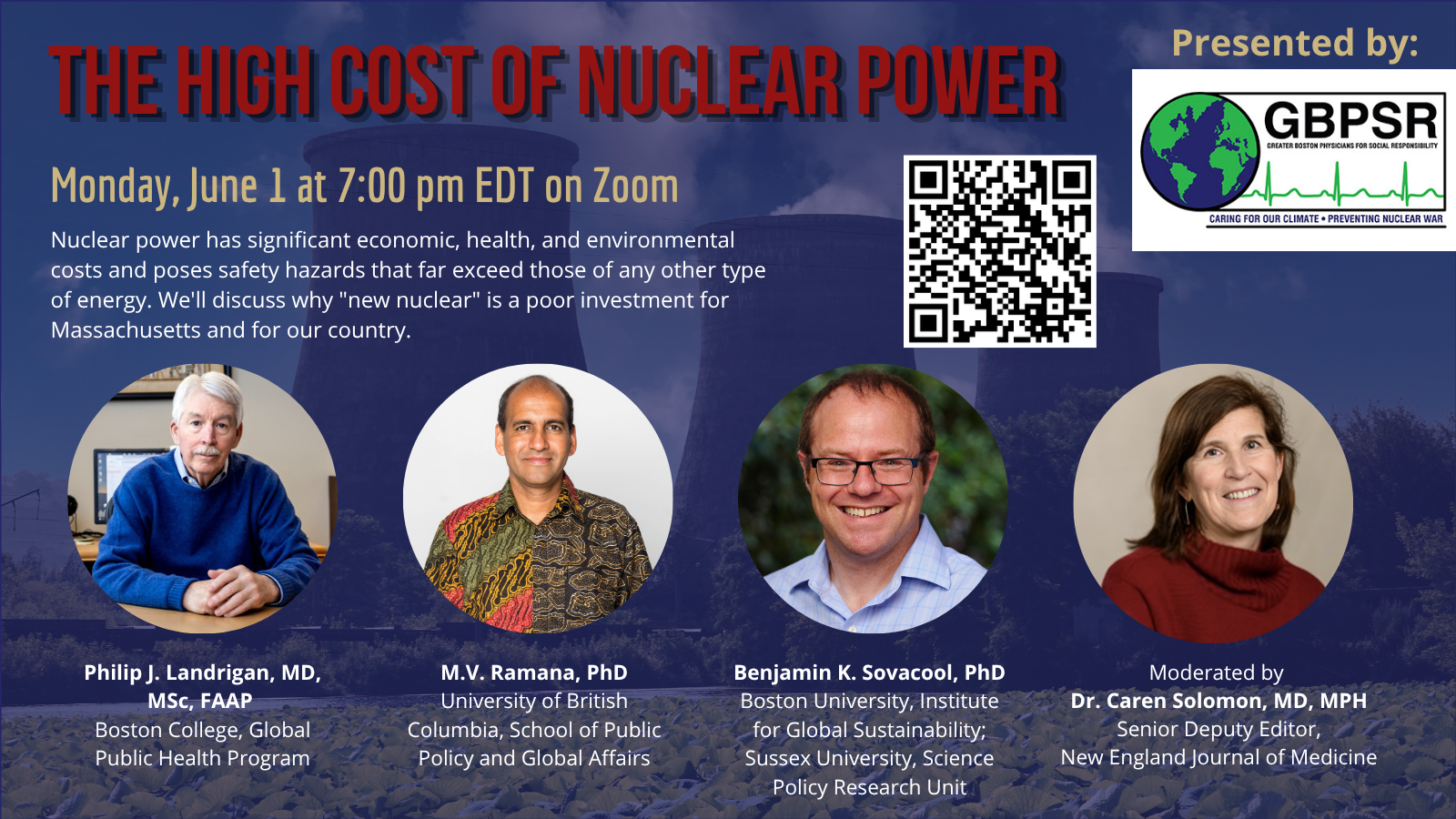
1 June Webinar – The High Cost of Nuclear Power – Register


of the week– Nuclear Reactor Information Task Force
To see nuclear-related stories in greater depth and intensity – go to https://nuclearinformation.wordpress.com
-
Archives
- May 2026 (243)
- April 2026 (356)
- March 2026 (251)
- February 2026 (268)
- January 2026 (308)
- December 2025 (358)
- November 2025 (359)
- October 2025 (376)
- September 2025 (257)
- August 2025 (319)
- July 2025 (230)
- June 2025 (348)
-
Categories
- 1
- 1 NUCLEAR ISSUES
- business and costs
- climate change
- culture and arts
- ENERGY
- environment
- health
- history
- indigenous issues
- Legal
- marketing of nuclear
- media
- opposition to nuclear
- PERSONAL STORIES
- politics
- politics international
- Religion and ethics
- safety
- secrets,lies and civil liberties
- spinbuster
- technology
- Uranium
- wastes
- weapons and war
- Women
- 2 WORLD
- ACTION
- AFRICA
- Atrocities
- AUSTRALIA
- Christina's notes
- Christina's themes
- culture and arts
- Events
- Fuk 2022
- Fuk 2023
- Fukushima 2017
- Fukushima 2018
- fukushima 2019
- Fukushima 2020
- Fukushima 2021
- general
- global warming
- Humour (God we need it)
- Nuclear
- RARE EARTHS
- Reference
- resources – print
- Resources -audiovicual
- Weekly Newsletter
- World
- World Nuclear
- YouTube
-
RSS
Entries RSS
Comments RSS
 nuclear-news