UK’s nuclear region, Cumbria, has unusually high rates of certain cancers
 NW Evening Mail 16th Jan 2020, A WORRYING new report has found that Cumbria has the highest incidence rates of certain kinds of cancer in the North West. According to data collated by charity North West Cancer Research, the county ranks 11 per cent higher on key cancers than the national average. As part of the study, analysts assessed the impact of 25 key cancers across the North West and 37 cancers across Wales.
Nuclear’s swansong?
 Is This The Death Knell For Nuclear? https://finance.yahoo.com/news/death-knell-nuclear-200000585.html By Haley Zaremba – Jan 18, 2020 It’s nearly impossible to discuss climate change and the future of the energy industry without discussing nuclear energy. Nuclear energy produces zero carbon emissions, [ ed. not so!] it’s ultra-efficient, it’s already in widespread use, and could be scaled up to meet much more of our global energy needs with relative ease, but it is, and will likely always be, an extremely divisive solution.nuclear energy certainly has its fair share of drawbacks. It may not emit greenhouse gases, but what it does produce is deadly nuclear waste that remains radioactive for up to millions of years and we still don’t really know what to do with it other than hold onto it in ever-growing storage spaces. And then there are the horror stories that keep civilians and politicians alike wary if not outright antagonistic toward the technology. Chernobyl, Fukushima, and Three Mile Island loom large in our collective doomsday consciousness, and not without good reason.
We’re still dealing with the aftermath of these nuclear disasters. Japan is in many ways still reeling from 2011’s Fukushima nuclear disaster and recently even threatened to throw radioactive water into the Pacific Ocean or letting it evaporate into the air because they are running out of storage space for the wastewater they have been using to keep the damaged Fukushima reactors from overheating again. So yeah, nuclear isn’t perfect.
As paraphrased by environmental news site EcoWatch, the energy experts at Chatham House “agreed that despite continued enthusiasm from the industry, and from some politicians, the number of nuclear power stations under construction worldwide would not be enough to replace those closing down.” The consensus was that this is nuclear’s swan song, and we are now unequivocally entering the era of wind and solar power.
These conclusions were arrived at during a summit convened to discuss the findings of the World Nuclear Industry Status Report 2019, which concluded that “money spent on building and running nuclear power stations was diverting cash away from much better ways of tackling climate change.”
This echoes the sentiment of many other climate and energy experts, who have long been sounding the alarm bells that renewable energy is not being built up or invested in with nearly enough urgency. Last year the International Energy Agency announced that renewables growth has slumped, and that our current renewable growth rate of 18o GW of added renewable capacity per year is “only around 60 percent of the net additions needed each year to meet long-term climate goals”.
The International Renewable Energy Agency (Irena) did the math, calculating exactly how much renewable energy will need to be installed by 2030 if the world has any hope of meeting the goals set by the Paris climate agreement, and they found that “7.7TW of operational renewable capacity will be needed by 2030 if the world is to limit global warming to ‘well below’ 2C above pre-industrial levels, in line with the Paris Climate Agreement,” according to reporting by Wind Power Monthly. “However, at present, countries’ nationally determined contributions (NDCs) amount to 3.2TW of renewable installations by 2030, up from 2.3TW currently deployed.”
The World Nuclear Industry Status Report succinctly sums up the situation while sounding the death knell for nuclear: “Stabilising the climate is urgent, nuclear power is slow. It meets no technical or operational need that these low-carbon competitors cannot meet better, cheaper, and faster.”
Belgium lawmakers narrowly agree to keep U.S. nuclear weapons, Belgian public overwhelmingly opposes this
Belgium debates phase-out of US nuclear weapons on its soil, By Alexandra Brzozowski | EURACTIV.com Jan 17, 2020 It’s one of Belgium’s worst kept secrets. Lawmakers on Thursday (16 January) narrowly rejected a resolution asking for the removal of US nuclear weapons stationed in the country and joining the UN Treaty on the Prohibition of Nuclear Weapons (TPNW).
66 MPs voted in favour of the resolution while 74 rejected it.
Those in favour included the Socialists, Greens, centrists (cdH), the workers party (PVDA) and the francophone party DéFI. The 74 that voted against included the nationalist Flemish party N-VA, the Flemish Christian Democrats (CD&V), the far-right Vlaams Belang and both Flemish and francophone Liberals.
Just before the Christmas recess, the parliament’s Foreign Affairs Committee approved a motion calling for the withdrawal of nuclear weapons from Belgian territory and the accession of Belgium to the International Treaty on the Prohibition of Nuclear Weapons. The resolution was led by Flemish socialist John Crombez (sp.a).
With this resolution, the chamber requested the Belgian government “to draw up, as soon as possible, a roadmap aiming at the withdrawal of nuclear weapons on Belgian territory”.
The December resolution was voted in the absence of two liberal MPs, even though the text was already watered down.
According to Flemish daily De Morgen, the American ambassador to Belgium was “particularly worried” about the resolution before Thursday’s vote and a number of MPs were approached by the US embassy for a discussion.
The controversy was sparked by a debate to replace the US-made F-16 fighter aircraft in the Belgian army with American F-35s, a more advanced plane capable of carrying nuclear weapons…….
Although the Belgian government had so far adopted a policy of “to neither confirm, nor deny” their presence on Belgian soil, military officials have called it one of Belgium’s “most poorly kept secrets”.
According to De Morgen, which obtained a leaked copy of the document before its final paragraph was replaced, the report stated:
“In the context of NATO, the United States is deploying around 150 nuclear weapons in Europe, in particular B61 free-bombs, which can be deployed by both US and Allied planes. These bombs are stored in six American and European bases: Kleine Brogel in Belgium, Büchel in Germany, Aviano and Ghedi-Torre in Italy, Volkel in the Netherlands and Inçirlik in Turkey……..
Belgium, as a NATO country, so far has not supported the 2017 UN Treaty on the Prohibition of Nuclear Weapons (TPNW), the first legally binding international agreement to comprehensively prohibit nuclear weapons, with the goal of leading towards their total elimination.
However, the resolution voted on Thursday was meant to change that. A public opinion poll conducted by YouGov in April 2019 found that 64% of Belgians believe that their government should sign the treaty, with only 17% opposed to signing. https://www.euractiv.com/section/defence-and-security/news/belgium-debates-phase-out-of-us-nuclear-weapons-on-its-soil/
Anxiety in Belarus and Lithuania, over new Chernobyl-style nuclear power station
|
They may not tell you the whole truth’: Fears of another Chernobyl as Russian-built atomic power station set to open in Belarus, Independent, 20 Jan 2020 Three decades after world’s worst nuclear disaster, the country most affected by the fall out is set to open its first nuclear plant. But as Oliver Carroll finds out, not everyone is pleased It was when the tree fellers arrived in early 2009 with their bulldozers that Nikolai Ulasevich, a local activist, knew the game was up. There might not have been a published order to build an atomic power station in the fields overlooking his homestead in the village of Vornyany – but a decision had clearly been made. In authoritarian Belarus those decisions rarely have a reverse gear. In the years that followed, Ulasevich watched as the gigantic cooling towers and system blocks of Belarus’s first nuclear power station took shape. Construction, which was led by the Russian state nuclear agency Rosatom, would be far from straightforward. A string of incidents delayed its opening, but the first reactor is finally due to go online early 2020. To say the construction of the Belarusian nuclear plant has been controversial would be to trivialise the history of these lands. Chernobyl lies only seven miles from Belarus’s southern border, and the nuclear accident, still the world’s worst, has left the deepest of scars locally. The direction of the wind in spring 1986 – and the Soviet authorities’ decision to avoid major harm in Moscow – meant Belarus suffered more than any other region in the union. At the moment that the radioactive clouds moved towards the capital, air force pilots were ordered to chase down the toxic clouds and seed them with jets of silver iodide. Much of the southernmost region of Homel remains seriously contaminated, with elevated oncology levels as a result. Any local over 50 can recall what they were doing on those dry, spring-summer days. They talk about the tiredness; the strange, dryness of the mouth; the rumours that it might be a good idea to take iodine, but the lack of reliable information. They will also tell you about a cloud of secrecy almost as harmful as the black cumulus masses that had their radioactive bowels emptied over southern Belarus. …….. “The thought of what happened back in 1986 can’t fail to make you anxious about what may happen. You know they may not tell you the whole truth.” Lithuania, the European nation that borders Belarus just 10 miles west of Astravets, is bitterly opposed to the nuclear plant. It says it has not been properly consulted and claims the plant breaches post-Fukushima distance guidelines – in particular, a recommendation that nuclear power stations should not be built closer than 100km of major conurbations. The new nuclear plant lies just 30 miles east of the Lithuanian capital, Vilnius. The Lithuanians say they are preparing for any eventuality: from stockpiling iodine tablets to opening up nuclear bunkers and issuing survival notes to their citizens. In October, authorities ran a major preparedness operation, imitating a disaster response to a nuclear meltdown. The drills were knowingly hyperbolic. But several reported incidents do give pause for thought. From what we know, the reactor vessel in Belarus has already been involved in at least two accidents. The first was in July 2016, when it was apparently dropped from a crane during installation. Belarusian authorities took weeks to admit a “minor” incident. Five months later, a replacement reactor vessel collided with a railway pylon while being transported. At least five workers have died in construction accidents. There was at least one fire incident in the control room. The outside world would likely have stayed little the wiser were it not for the opposition activist Ulasevich monitoring from his modest home, which he shares with his wife, a few chickens and sheep, three miles away from the new power station. He said he found out about the dropped reactor vessel in conversation with a local construction worker. “He swore that he saw it break free of ropes at a height of two or three metres,” he says. ……. Yury Voronezhtsev, the man who led the official Soviet official response to Chernobyl, says he could not believe any statement that the plant was “safe”. “I don’t believe that our Belarusian construction workers are any better than the Soviet ones,” he tells The Independent. “We have the same people, and the same systems………. https://www.independent.co.uk/news/world/europe/chernobyl-belarus-nuclear-power-station-atomic-vornyany-rosatom-ostrovets-astravets-a9271811.html
|
|
As building large nuclear stations stall in UK, sites are picked for ‘small] nuclear reactors


REVEALED: Sites for revolutionary mini nuclear power stations led by Rolls-Royce are set to be built in the North of England
- Whitehall is planning new small nuclear power plants in Cumbria and Wales
- Britain’s eight large-scale nuclear power plants are reaching their end of life
- Plans to build a new generation of large-scale nuclear power stations are stalled
- Officials hope these smaller power stations will be able to plug the potential gap
Daily Mail, By NEIL CRAVEN FOR THE MAIL ON SUNDAY 19 January 2020 | The first of a new generation of revolutionary mini nuclear power stations is to be built in the North of England and North Wales by a consortium led by Rolls-Royce, The Mail on Sunday can reveal.
A number of existing licensed nuclear sites have already been informally discussed within Whitehall.
The sites under consideration include Moorside in Cumbria and Wylfa in North Wales, where plans for future large-scale reactor projects have recently been shelved/
Britain’s eight large-scale nuclear power plants are nearing the end of their collective lifespan, with most due to close by the end of the decade.
It will be followed by up to 16 more mini reactors at other sites, with plans for all to be producing electricity.
It is understood that other locations being considered include Trawsfynydd in Snowdonia, North Wales…….
The pre-fabricated modules would then be transported to sites for construction. Officials have cautioned, though, that there could be public opposition in some areas to a nuclear facility being built nearby. ……..
Work at Wylfa by nuclear developer Horizon, owned by Japanese firm Hitachi, was suspended a year ago amid rising costs. Only months before, plans for a new nuclear power station at Moorside were scrapped after the Japanese giant Toshiba announced it was winding up the project.
A joint investment of £500 million between the Government and the Rolls-Royce consortium was proposed last summer. An initial award from the Government of £18 million was signed off in November, which the consortium will match.
One nuclear industry source said: ‘There is broad support for this programme from Government.’ https://www.dailymail.co.uk/news/article-7903495/New-Rolls-Royce-mini-nuclear-power-stations-built-North.html
V4 group and Austria disagree on nuclear power
“We want to live in a diverse Europe,” that is yet unified when it comes to the main goals, said Kurz after meeting Commission President Ursula von der Leyen in Brussels on Tuesday (12 January).
Kurz emphasised that the V4 as a group are the second most important partner for Austria after Germany, but admitted that his country, a net contributor to the bloc’s budget, has a different point of view from the Visegrád partners when it comes to the distribution of European funds.
In the context of talks on the future EU budget for 2021-2027, Poland, Hungary, the Czech Republic and Slovakia are members of the so-called ‘Friends of cohesion’ group, while Austria and other rich countries are members of the so-called group of “frugal” countries.
“It is very important for Austria not to support nuclear energy but the funds should be allocated on development of renewable energy sources,” said Kurz.
discuss migration, border security, competitiveness, enlargement and climate. The newly appointed Austrian chancellor Sebastian Kurz, also in attendance, said he wanted to “fight” the “gaps” between Western and Eastern Europe.
“We want to live in a diverse Europe,” that is yet unified when it comes to the main goals, said Kurz after meeting Commission President Ursula von der Leyen in Brussels on Tuesday (12 January).
Kurz emphasised that the V4 as a group are the second most important partner for Austria after Germany, but admitted that his country, a net contributor to the bloc’s budget, has a different point of view from the Visegrád partners when it comes to the distribution of European funds.
In the context of talks on the future EU budget for 2021-2027, Poland, Hungary, the Czech Republic and Slovakia are members of the so-called ‘Friends of cohesion’ group, while Austria and other rich countries are members of the so-called group of “frugal” countries.
“It is very important for Austria not to support nuclear energy but the funds should be allocated on development of renewable energy sources,” said Kurz.
Hungarians and Slovaks are currently building new reactors to enlarge their existing power plants, a sore spot for the Austrian government that has previously pledged to fight the construction of new nuclear facilities in neighbouring countries “with all available political and legal means.” …… https://www.euractiv.com/section/politics/news/austria-and-v4-agree-on-everything-but-nuclear/
Legal action against Orano’s lying advertising about nuclear power solving climate change
 Reporterre 16th Jan 2020 The Sortir du nuclear network is filing a complaint against an Orano advertising campaign, which presents nuclear energy as a solution against climate change. A false statement intended to boost investments in a declining sector, denounces the association.
https://reporterre.net/Le-nucleaire-bon-pour-le-climat-Orano-poursuivi-pour-publicite-mensongere
In UK, energy bosses bullying locals into submission over Sizewell nuclear build?
East Anglian Daily Times 16th Jan 2020, Villagers whose properties would be affected by a bypass included in Sizewell C plans, claim energy bosses are trying to pressure them into submission.
A group of households in Farnham claim EDF Energy’s valuers
have attempted to hold complex discussions over financial mitigation
related to the new section of the A12 with little notice and no time to
prepare.
https://www.eadt.co.uk/news/farnham-residents-criticse-edf-over-a12-bypass-route-1-6468545
Europe’s Just Transition Mechanism excludes nuclear from the European Green Deal
|
Nuclear ‘excluded’ from EU’s new Just Transition Fund, By Beatriz Rios reporting from Strasbourg | EURACTIV.com, Jan 15, 2020 The EU’s regional policy Commissioner Elisa Ferreira revealed on Tuesday (14 January) details of the €100 billion Just Transition Mechanism, a key financial component of the European Green Deal that should make the bloc climate neutral by 2050.
“Nuclear energy is excluded from the Just Transition Mechanism,” Ferreira told a small group of journalists ahead of the college meeting of the European Commission that approved the proposal for the fund aimed at supporting poorer EU regions achieve climate neutrality. EU leaders agreed in December on a bloc-wide objective of reaching climate neutrality by 2050. In order to convince Hungary and the Czech Republic to sign up, they also reaffirmed the right of countries to decide on their own energy mix, including nuclear. Poland refused to sign up, saying it needed more EU funding to help phase out coal. The Just Transition Fund is intended to support regions that will be particularly affected by the changes brought by ‘greening’ the economy. Ferreira confirmed “no country or region” will be excluded but the objective is to concentrate on those areas facing the most dramatic challenges. The Commission will, therefore, take into account the intensity of greenhouse gas emissions of the industrial sector compared to the EU average and the impact in terms of employment of the transition for these industries. The relative prosperity of the country will also be considered. ……… The fund in detail The Fund will provide financial aid to countries in their work towards climate neutrality. Within a wider mechanism, the Commission aims to provide technical assistance and ease state aid rules for green investments. The fund will be based on €7.5 billion of “fresh money”, to be topped up with financing from the European Regional Development Fund and the European Social Fund Plus, both part of the EU’s cohesion policy, but its use will be limited to a 20% of the total allocation. Ferreira admitted the money is not huge but hoped it could help leverage up to €100 billion for the period 2021-2027 in investments through the support of private investors. …….. https://www.euractiv.com/section/economy-jobs/news/nuclear-excluded-from-eus-new-just-transition-fund/ |
|
|
The highly controversial question of how to fund UK’s nuclear build
|
Momentum Builds for UK Government to Self-Fund New Nuclear Plants https://www.greentechmedia.com/articles/read/momentum-builds-for-uk-government-to-fund-new-nuclear-itself
The U.K. government wants new nuclear capacity. How it will be funded remains a highly contentious question. JOHN PARNELL JANUARY 15, 2020 When the U.K. government unveiled its contract for difference with EDF’s 3.2-gigawatt Hinkley Point C nuclear power station in 2012, it proudly proclaimed that the arrangement proved new nuclear did not need direct subsidy.
Since then, three other U.K. projects have been put on an indefinite pause after Hitachi and Toshiba said their respective ventures had failed to attract investors. While the 35-year contract for difference (CFD) awarded to EDF is considered generous at £92.50 ($120) per megawatt-hour, the French energy giant is on the hook for overrun costs — no small concession. A 2014 study found that of a global sample of 180 nuclear power plants, 97 percent ended up over budget. There is an acceptance in the nuclear industry and at the government level that the CFD approach won’t be used for nuclear again in the U.K. Yet all but one of the country’s 15 working reactors are going offline by 2030, and the process of replacing them is behind schedule. A new approach is needed — and quickly. Sizewell C is the next active nuclear project in the U.K. pipeline. It will be a carbon copy of EDF’s Hinkley C, offering project savings and a readymade supply chain. The plan is to switch the workforce from one site to the other. How Sizewell C will be funded, however, remains an open question. The government launched a consultation in July 2019 on a new method that could be used for Sizewell C. That process closed in October, but between Brexit and an election, there has been no response from the government since. EDF has reportedly become twitchy about the timeline, telling the government it needs to know how Sizewell C will be funded by the end of the year if it’s to have any chance of starting construction in 2022. The Department for Business, Energy & Industrial Strategy told GTM it would follow up on the consultation’s responses “in due course.” RAB: Nuclear’s next top model?The government is seeking feedback on one possible new approach for Sizewell C known as regulated asset base (RAB), which is already in use for other big infrastructure projects. The RAB model basically gives the project developer a means to recover its investment through consumer bills under the watchful gaze of a regulator — including payments during the construction phase. It’s the model used by the country’s water monopolies to pay for their infrastructure. But pipes and pumps are generally simpler and cheaper than new nuclear. The biggest RAB deal in the U.K. so far is the £13.5 billion extension of Heathrow Airport. The most conservative estimate for Sizewell C is £20 billion ($26 billion). (Its forerunner Hinkley Point C is sitting at £22 billion and counting.) Taking this approach would be a first for the energy sector and a first for RABs. An entirely new entity, within or outside current regulator Ofgem, would have to step up to monitor how funds were being recouped from bills. EDF and other nuclear developers wouldn’t be paid if projects never make it to financial close, potentially leaving them exposed to the predevelopment costs. But clarity is still needed on which entities would be exposed to various other risks, and there is danger that in the event of project costs rising, billpayers would be stuck with the tab. Another option: State-backed nuclear funding?Meanwhile, a number of respondents to the government’s consultation say the government should take another, more controversial route: stepping in to build new nuclear itself, then quickly selling completed plants to the private sector. The U.K. government celebrated the fact that it wasn’t sinking state money into Hinkley Point C when the CFD was awarded. But after all, that project is being developed by two other state-run companies, albeit ones from France and China. In its response to the government’s consultation on funding options, the independent Nuclear Energy Consulting Group called for a new nuclear Crown Corporation, a state-backed investment vehicle, to step in to build nuclear projects. “This new entity would act as an owner or funder of new [nuclear power] projects from inception to commercial operation, with project risks and benefits during development and construction remaining with [HM government],” write authors Edward Kee, Ruediger Koenig, Paul Murphy and Xavier Rollat. In an email to GTM, Edward Kee, the CEO of Nuclear Energy Consulting Group, shared the group’s reservations about the RAB model. “We have doubts that developing and implementing a nuclear power RAB framework would happen fast enough. It is also unclear that the RAB approach would deliver the needed nuclear power investment, even when put into place,” said Kee. The International Project Finance Association, whose members include the World Bank, the U.S. Treasury and many major investors, agreed that the U.K. government should consider funding nuclear projects. “An alternative structure would be for government to procure construction on the balance sheet (so that the government would own the project and pay for construction as the costs are incurred), and then look to sell the project to the private sector once operational,” the IPFA suggested in its response. Energy Systems Catapult, a not-for-profit innovation center established by the government itself, also backs using the national balance sheet to build new nuclear at the lowest cost. The potential funding pool for new nuclear in Europe shrank in December when the EU published a definitive list of what can be considered for “sustainable finance.” Nuclear power did not make the grade, and nuclear won’t be financed as part of the EU’s recently announced Green Deal. Whether financial institutions follow the EU’s lead remains to be seen. The government declined to comment on its position toward directly funding and owning new nuclear power assets. “New nuclear has an important role to play in providing reliable, low-carbon power as part of our future energy mix as we aim to eliminate our contribution to climate change by 2050,” a spokesperson said. “However, we are clear that any energy project must offer value for money for consumers.” Does the U.K. need new nuclear at all?Other influential groups remain open or even supportive of the RAB model for funding new nuclear. The union Unite is receptive to a RAB framework but began its own response by saying it “favors a policy of state ownership of the energy sector.” The union also warned against letting what it views as inevitable cost overruns be passed on to energy-intensive consumers, which might then take their operations and jobs elsewhere. Trade body EnergyUK said it supports the development of an RAB model but added that it views a levy on consumer bills as a more regressive approach to funding than using general taxation. At the same time, other groups are questioning the government’s commitment to new nuclear. Citizens Advice, the powerful consumer watchdog, said it does not believe RAB would deliver good value. The union Unite is receptive to a RAB framework but began its own response by saying it “favors a policy of state ownership of the energy sector.” The union also warned against letting what it views as inevitable cost overruns be passed on to energy-intensive consumers, which might then take their operations and jobs elsewhere. Trade body EnergyUK said it supports the development of an RAB model but added that it views a levy on consumer bills as a more regressive approach to funding than using general taxation. At the same time, other groups are questioning the government’s commitment to new nuclear. Citizens Advice, the powerful consumer watchdog, said it does not believe RAB would deliver good value. “Several of the government’s own advisors, including both the Committee on Climate Change and the National Infrastructure Commission, are less definitive on the case for new nuclear than it is,” the group states in its response to the consultation. “If new nuclear is an option rather than a necessity, its economics come more sharply into play, and they are challenging when compared to a range of other low-carbon options.” Citizens Advice said it wants to see a detailed business case for new nuclear prior to any contracts being signed. It claims the value-for-money assessment on Hinkley C was published after the deal was legally binding and was only three pages long. The group also pointed out the elephant in the room: Brexit. To date, the investor pool for new U.K. nuclear has been largely populated by firms backed by foreign governments, including those that we may need to strike trade deals with in the coming years, meaning that there are political as well as economic considerations at play,” it wrote. “These factors would make it extremely hard for any regulator to take any steps that might result in the abandonment of a new nuclear project, even if costs were to escalate significantly. This would dilute their ability to act in consumers’ best interests.” |
|
Significant drop in France’s nuclear energy production
 Reuters 10th Jan 2020, EDF’s French nuclear power generation fell by a more than expected 3.5 percent last year, the state-owned utility said on Friday. The French company’s domestic nuclear output power dropped to 379.5 terawatt hours (TWh), missing a revised production target of between 384 TWh and 388 TWh.
power output tumbling in the final month of 2019 by 15.2% to 33 TWh. The
operator of France’s 58 nuclear reactors, covering about 75% of the
country’s electricity needs, had revised its 2019 nuclear production
target from 390 TWh to between 384 TWh and 388 TWh in November because of reactor maintenance and safety checks after an earthquake.
Britons want real action on climate change, but Boris Johnson’s govt missing in action on this
  UK Energy Policy, Independent 12th Jan 2020 UK Energy Policy, Independent 12th Jan 2020Boris Johnson was today facing calls to step up action on global warming, after a poll for The Independent found overwhelming support for radical change to end the UK’s net carbon emissions by the end of the decade. Some 70 per cent of those questioned by pollsters BMG said they supported the target of net-zero emissions by 2030, with only 7 per cent opposing it. And support for swift action over the next 10 years was high across all age ranges, social groups and parts of the country, countering perceptions of a generational or urban/rural split on the climate emergency. Independent 8th Jan 2020, Ministers are under fire after revealing their strategy to achieve net-zero carbon emissions by 2050 will not be released until the end of the year. It means the plans – which will require huge and potentially unpopular changes to transport, energy and agriculture – will only emerge more than a year after the legal commitment was made. “If this is true, it doesn’t really smack of a government treating this issue as a climate emergency,” said Clive Lewis, Labour’s Treasury spokesman and a
leadership candidate. And Wera Hobhouse, the Liberal Democrat climate emergency spokesperson, pointing to the wildfire crisis in Australia, said: “While the world is waking up to the dangers of climate change, this Tory government is still on holiday. |
|
Britain’s Sizewell nuclear project in jeopardy, as EDF struggles to get funding
 Sizewell, Times 13th Jan 2020, EDF is in a race against time to secure a funding deal for its proposed nuclear power station in Suffolk as delays risk making the project prohibitively expensive. The French energy giant has hired Rothschild as financial adviser for the Sizewell C project and says it wants a “definitive way forward” from the government this year so it can start construction in 2022. The company building the £22 billion Hinkley Point C plant in Somerset has promised it can significantly reduce the cost of the sister plant in Suffolk, including by transferring workers and equipment Sizewell, Times 13th Jan 2020, EDF is in a race against time to secure a funding deal for its proposed nuclear power station in Suffolk as delays risk making the project prohibitively expensive. The French energy giant has hired Rothschild as financial adviser for the Sizewell C project and says it wants a “definitive way forward” from the government this year so it can start construction in 2022. The company building the £22 billion Hinkley Point C plant in Somerset has promised it can significantly reduce the cost of the sister plant in Suffolk, including by transferring workers and equipmentbetween the two. Delays to funding that result in a hiatus between the
projects would erode such savings and jeopardise Sizewell, which the government has said must be cheaper than Hinkley. A senior executive at Sizewell recently admitted that if funding proposals ended up “outside an acceptable price range for the government, then the project probably won’t go ahead — it’s as simple as that”.
EDF has proposed an alternative, funding model for Sizewell C, under which consumers would pay for the project while it is still under construction. This would cut borrowing costs but also put consumers on the hook for cost overruns.
The government ran a consultation last year on adopting the model but is yet to give its verdict. An EDF spokeswoman said: “We hope to see a way forward on nuclear financing in 2020 ahead of COP26 [the Glasgow climate change summit]. This would ensure we can maximise the benefits of replicating the design of Hinkley Point C at Sizewell C.”
|
Despite USA, the European Union is determined to preserve the Iran nuclear deal
 EU willing to maintain Iran nuclear deal, risking rift with the US, By Alexandra Brzozowski | EURACTIV.com 11 Jan 2020, With the prospects of a potential US-Iran war fading, EU foreign minister during an emergency session on Friday (10 January), said they are willing to maintain the Iran nuclear deal as long as Tehran fulfils its commitments in order to achieve it.
In an attempt to avoid an escalation between Iran and the US, EU leaders in the recent week have intensified diplomatic activities, trying to salvage the EU-brokered nuclear deal while making sure the US-led anti-IS coalition continues to operate in Iraq after Iraq’s parliament called for the withdrawal of all foreign troops from the country.
“The region cannot afford another war, we call for an urgent de-escalation and maximum restraint,” EU’s chief diplomat Josep Borrell told reporters following the meeting in Brussels on Friday, that had reaffirmed European commitments preserving the Joint Comprehensive Plan Of Action (JCPOA).
“We have been saying in the past and we continue to say that we regret the US decision to withdraw from the deal,” Borrell said, “And we continue believing that this deal is a key element of the global nuclear non-proliferation architecture and critical for the regional stability.”
He also warned that negotiating a new pact would be a “very complex, highly technical process” that would take a long time………
Since the Trump administration decided to exit the deal in 2018, all three European parties to the pact – Britain, France and Germany – have repeatedly stressed their commitment to saving it, even after a call by Trump this week urging them to join him in walking away.
One of the contentious points between Europe and Washington has been the Instrument in Support of Trade Exchanges (INSTEX), which was born as the brainchild of France, Germany and the UK in January 2019, and recently joined by further European countries.
It was created as a special purpose vehicle to help EU companies do business with Iran and facilitate non-USD transactions to avoid breaking US sanctions against the country.
European efforts, however, to ensure that Iran can keep trading in spite of the sanctions have had little impact.
The Trump administration on Friday (10 January) imposed new sanctions on Iran, with the latest round set to target multiple sectors of the Islamic Republic’s economy, including construction, manufacturing, textiles and mining…….
Angela Merkel urges all parties to back Iran nuclear deal
 German Chancellor urges all parties to back Iran nuclear deal, MOSCOW (Reuters) – German chancellor Angela Merkel on Saturday repeated a call for all parties to respect the Iranian nuclear accord, despite Iran’s decision to intensify its enrichment of uranium and moves by the United States to impose economic sanctions.
“For this reason we will continue to employ all diplomatic means to keep this agreement alive, which is certainly not perfect but it is an agreement and it comprises commitments by all sides,” Merkel said.

1 This Month
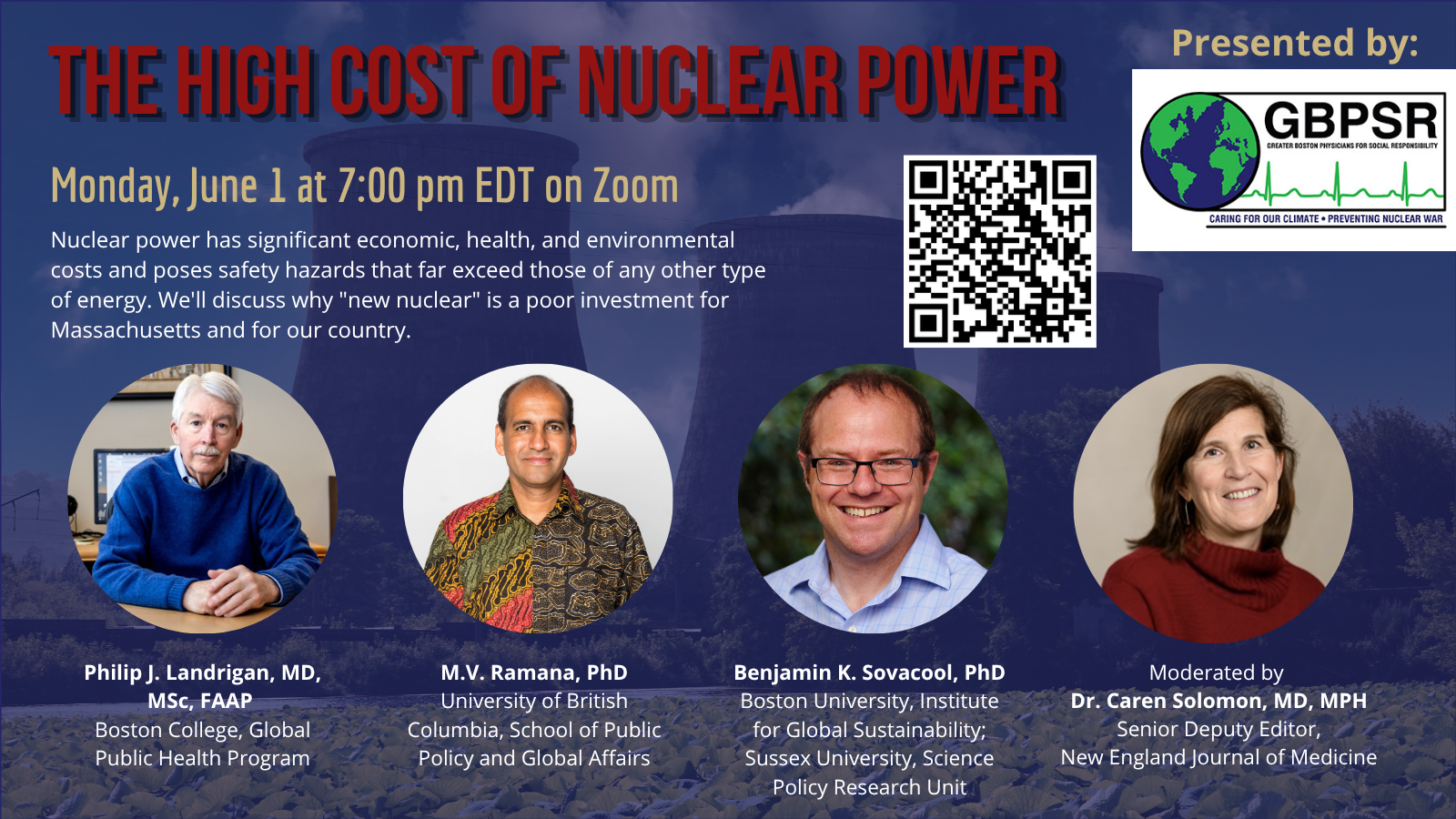
1 June Webinar – The High Cost of Nuclear Power – Register


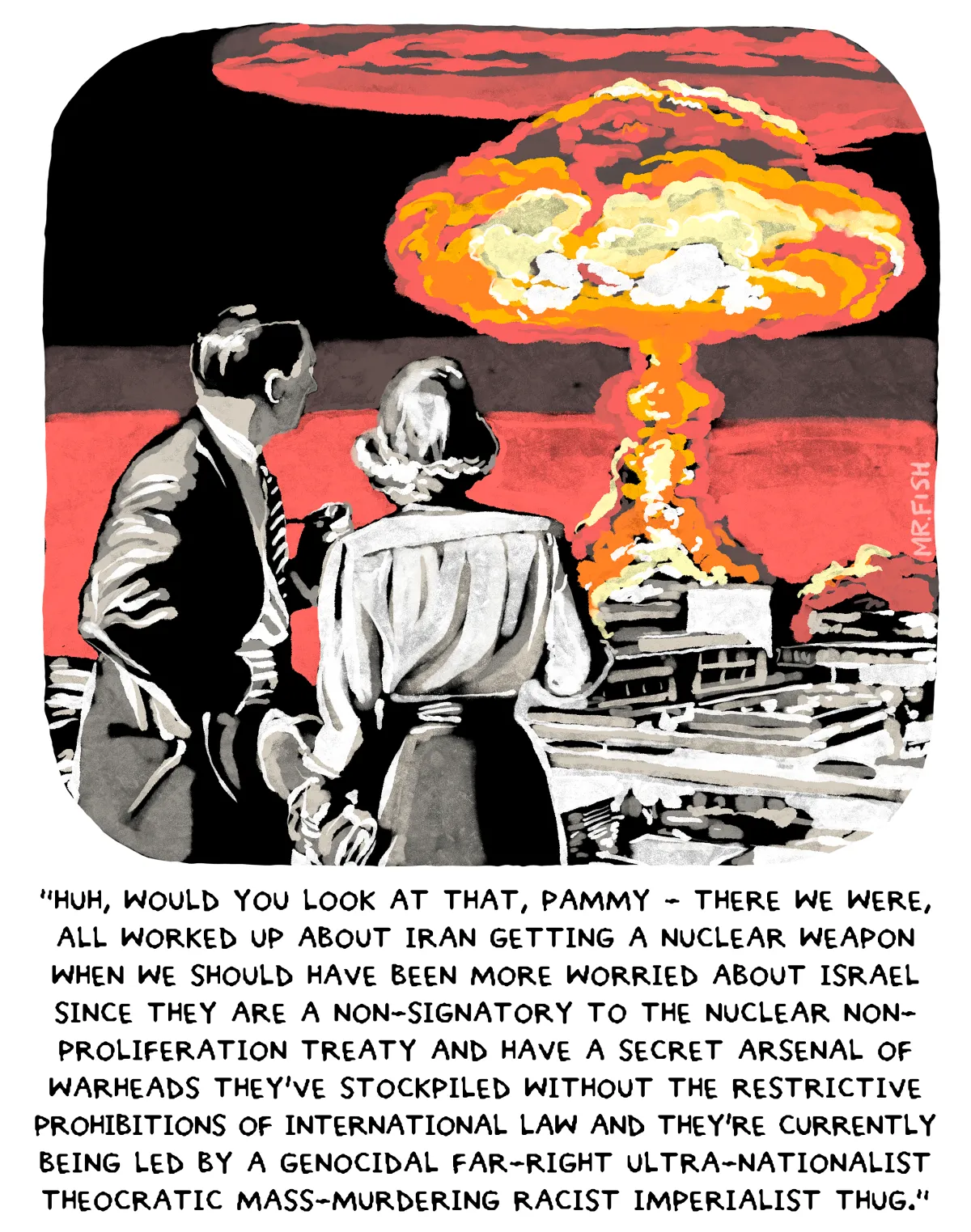
of the week– Nuclear Reactor Information Task Force
To see nuclear-related stories in greater depth and intensity – go to https://nuclearinformation.wordpress.com
-
Archives
- May 2026 (243)
- April 2026 (356)
- March 2026 (251)
- February 2026 (268)
- January 2026 (308)
- December 2025 (358)
- November 2025 (359)
- October 2025 (376)
- September 2025 (257)
- August 2025 (319)
- July 2025 (230)
- June 2025 (348)
-
Categories
- 1
- 1 NUCLEAR ISSUES
- business and costs
- climate change
- culture and arts
- ENERGY
- environment
- health
- history
- indigenous issues
- Legal
- marketing of nuclear
- media
- opposition to nuclear
- PERSONAL STORIES
- politics
- politics international
- Religion and ethics
- safety
- secrets,lies and civil liberties
- spinbuster
- technology
- Uranium
- wastes
- weapons and war
- Women
- 2 WORLD
- ACTION
- AFRICA
- Atrocities
- AUSTRALIA
- Christina's notes
- Christina's themes
- culture and arts
- Events
- Fuk 2022
- Fuk 2023
- Fukushima 2017
- Fukushima 2018
- fukushima 2019
- Fukushima 2020
- Fukushima 2021
- general
- global warming
- Humour (God we need it)
- Nuclear
- RARE EARTHS
- Reference
- resources – print
- Resources -audiovicual
- Weekly Newsletter
- World
- World Nuclear
- YouTube
-
RSS
Entries RSS
Comments RSS
 nuclear-news