UK’s new nuclear projects headed to be submerged due to climate change?
 Speeding Sea Level Rise Threatens Nuclear Plants https://www.ecowatch.com/sea-level-rise-nuclear-plants-2645160125.html?rebelltitem=2#rebelltitem2 Climate News Network, Feb. 15, 2020 By Paul Brown
The latest science shows how the pace of sea level rise is speeding up, fueling fears that not only millions of homes will be under threat, but that vulnerable installations like docks and power plants will be overwhelmed by the waves.
New research using satellite data over a 30-year period shows that around the year 2000 sea level rise was 2mm a year, by 2010 it was 3mm and now it is at 4mm, with the pace of change still increasing.
The calculations were made by a research student, Tadea Veng, at the Technical University of Denmark, which has a special interest in Greenland, where the icecap is melting fast. That, combined with accelerating melting in Antarctica and further warming of the oceans, is raising sea levels across the globe.
The report coincides with a European Environment Agency (EEA) study whose maps show large areas of the shorelines of countries with coastlines on the North Sea will go under water unless heavily defended against sea level rise.
Based on the maps, newspapers like The Guardian in London have predicted that more than half of one key UK east coast provincial port — Hull — will be swamped. Ironically, Hull is the base for making giant wind turbine blades for use in the North Sea.
The argument about how much the sea level will rise this century has been raging in scientific circles since the 1990s. At the start, predictions of sea level rise took into account only two possible causes: the expansion of seawater as it warmed, and the melting of mountain glaciers away from the poles.
In the early Intergovernmental Panel on Climate Change reports back then, the melting of the polar ice caps was not included, because scientists could not agree whether greater snowfall on the top of the ice caps in winter might balance out summer melting. Many of them also thought Antarctica would not melt at all, or not for centuries, because it was too cold.
Both the extra snow theory and the “too cold to melt” idea have now been discounted. In Antarctica this is partly because the sea has warmed up so much that it is melting the glaciers’ ice from beneath — something the scientists had not foreseen.
Alarm about sea level rise elsewhere has been increasing outside the scientific community, partly because many nuclear power plants are on coasts. Even those that are nearing the end of their working lives will be radio-active for another century, and many have highly dangerous spent fuel on site in storage ponds with no disposal route organized.
Perhaps most alarmed are British residents, whose government is currently planning a number of new seaside nuclear stations in low-lying coastal areas. Some will be under water this century according to the EEA, particularly one planned for Sizewell in eastern England.
The agency’s report says estimates of sea level rise by 2100 vary, with an upper limit of one meter generally accepted, but up to 2.5 meters predicted by some scientists. The latest research by Danish scientists suggests judiciously that with the speed of sea level rise continuing to accelerate, it is impossible to be sure.
A report by campaigners who oppose building nuclear power stations on Britain’s vulnerable coast expresses extreme alarm, saying both nuclear regulators and the giant French energy company EDF are too complacent about the problem.
The report said: “Polar ice caps appear to be melting faster than expected, and what is particularly worrying is that the rate of melting seems to be increasing. Some researchers say sea levels could rise by as much as six meters or more by 2100, even if the 2°C Paris target is met.
“But it’s not just the height of the rise in sea level that is important for the protection of nuclear facilities, it’s also the likely increase in storm surges. An increase in sea level of 50cm would mean the storm that used to come every thousand years will now come every 100 years. If you increase that to a meter, then that millennial storm is likely to come once a decade.
Bearing in mind that there will probably be nuclear waste on the Hinkley Point C site [home to the new twin reactors being built by EDF in the West of England] until at least 2150, the question neither the Office of Nuclear Regulation nor EDF seem to be asking is whether further flood protection measures can be put in place fast enough to deal with unexpected and unpredicted storm surges.”
European Pressurised Reactor at Flamanville: nuclear is expensive and it doesn’t work.

 France Culture 14th Feb 2020, EPR: nuclear is expensive and it doesn’t work. A kind of modern replica of the Danaïdes barrel, the EPR at Flamanville, in the Manche department, is once again being talked about: between construction delays (delivery scheduled for 2010, “potentially promised” now in 2022) and additional costs ( estimated three billion, we would exceed 12 billion today), is there ultimately a future for what was sold in the late 90s (1998-2000) as
the new wonder of the genre?
Ultimate Doomsday Weapon: Missiles Powered By Nuclear Reactors
 Ultimate Doomsday Weapon: Missiles Powered By Nuclear Reactors, With disastrous results. National Interest Ultimate Doomsday Weapon: Missiles Powered By Nuclear Reactors, With disastrous results. National Interest
– 17 Feb 20 Key Point: Russia is resurrecting the demons of our shared Cold War past.
After days of speculation by Western analysts that a deadly accident on August 8 that briefly spiked radiation levels in northwestern Russia was tied to tests of an exotic nuclear-powered “Skyfall” nuclear-powered cruise missile, Russian sources confirmed to the New York Times the explosion of a “small nuclear reactor.”
While there’s a tactical rationale behind Russia’s development of a fast, surface-skimming cruise missile with an unlimited range as a means of bypassing American missile defenses, it strikes many analysts as an inordinately expensive, extremely technically challenging, and—evidently!—downright unsafe. That’s because the United States has tried it before sixty years earlier—and even with the fast-and-loose safety culture of the Cold War 1960s, the poison-spewing radioactive mega missile it began developing was considered too dangerous to even properly flight test. This project was most famously described in a 1990 article by Gregg Herken for Air & Space Magazine, which remains well worth the read. …..
The SLAM missile was expected to soar towards its Soviet targets at tree-top level, traveling at three times the speed of sound. The combination of low-altitude (reducing detection range) and Mach 3 speed was thought to make it too fast for interception by fighters or surface-to-air missile. The sonic shock wave produced by the huge missile was believed to be strong enough to kill anyone caught underneath it.
The huge missile, laden with up to twelve thermonuclear bombs, would proceed to race towards one Soviet city after another, visiting Hiroshima-level human tragedies upon each. And once the bombs were exhausted, the nuclear-powered missile would…simply keep on going and going like a murderous Energizer Bunny. Because installing adequate radioactive shielding on such a small reactor would have proven impossible, the SLAM would have spread in its wake trails of cancer-inducing gamma and neutron radiation and radioactive fission fragments expelled by its exhaust. Project Pluto scientists even considered weaponizing this property by programming the missile to circle overhead Soviet population centers, though how exposing even more people to slow deaths by radiation poisoning would be useful in an apocalyptic nuclear war that would likely leave both nations in ruin in a few days is hard to fathom. However, realizing the SLAM concept involved a succession of serious technical challenges. For example, a separate conventional rocket system would be necessary for the missile to reach the supersonic speeds at which its ramjet motor could function. That, in turn, meant the reactor had to be designed to withstand the heat and stress of those powerful booster rockets. In fact, it’s believed precisely that problem may have resulted in the deadly accident in Russia this August. As a result, the Livermore laboratory devised a 500-megawatt reactor so robust it was nicknamed the “flying crowbar.”……. Having established the workability of the nuclear ramjet, Merkle’s team then ran into a serious practical obstacle: where on Earth, literally, could a long-range weapon prone to trailing plumes of radioactive pollution behind it be tested? And what would happen if the supersonic weapon with theoretically nigh-unlimited range “got away”—ie., fell out of control, and potentially irradiated American communities? …….
Deploying the weapon operationally presented even worse dilemmas, as the missile would likely overfly U.S. allies on its approach to Russia. Even deploying an operational weapon to a remote Pacific island seemed to entail an inordinate amount of radiation poisoning for the surrounding environment. ……
Fortunately, the Pentagon was able to assess that the SLAM did nothing to alter the Mutually Assured Destruction dynamic of Moscow and Washington’s Cold War standoff, except perhaps by provoking an equally terrifying response. Furthermore, it presented undesirable budgetary burdens and intolerable safety and political risks.
Despite technical advances since the 1960s, those same fundamental considerations likely remain true for Russia’s Skyfall missile today.
As John Krzyzaniak succinctly put it in a piece for the Bulletin of the Atomic Scientists: “The problems with a nuclear-powered missile are so numerous and obvious that some have questioned whether Putin is being hoodwinked by his scientists, or whether he is bluffing to scare the United States back into arms control agreements. In any case, what was once a terrible new idea is now just a terrible old idea.”
Unfortunately, in a climate of escalating paranoia and nuclear arms competition, Moscow is not merely devising exotic new nuclear weapons, but resurrecting the demons of our shared Cold War past. https://nationalinterest.org/blog/buzz/ultimate-doomsday-weapon-missiles-powered-nuclear-reactors-123231
|
|
Tortuous progress, ever-increasing costs for UK’s Sizewell and Hinkley Point C nuclear projectsy
 Reports: EDF readies plans for £16bn Sizewell C nuclear plant, Business Green , Michael Holder, 17 Feb 20, EDF is gearing up to formally submit plans for a new £16bn-£20bn nuclear power station at Sizewell in Suffolk within weeks, which if approved could generate enough energy for around six million UK homes, according to reports.The French state-controlled energy giant has again teamed up with CGN – the Chinese state-owned company with which it is currently developing Hinkley Point C power station in Somerset – on the project, which would include two new EPR reactors, reports The Telegraph. Reports: EDF readies plans for £16bn Sizewell C nuclear plant, Business Green , Michael Holder, 17 Feb 20, EDF is gearing up to formally submit plans for a new £16bn-£20bn nuclear power station at Sizewell in Suffolk within weeks, which if approved could generate enough energy for around six million UK homes, according to reports.The French state-controlled energy giant has again teamed up with CGN – the Chinese state-owned company with which it is currently developing Hinkley Point C power station in Somerset – on the project, which would include two new EPR reactors, reports The Telegraph.
A planning application is currently being prepared for the new Suffolk nuclear plant, which would be located at the same site as EDF’s existing Sizewell B nuclear plant, and could be lodged by as soon as the end of this month, or potentially in March, the newspaper revealed on Saturday. Due to the size of the development, the project requires a Development Consent Order (DSO) to proceed from the UK’s Planning Inspectorate, which could take around a year to approve or reject the application. …. concerns reportedly remain about flood risk at the site due to its low lying coastal location, while a framework for funding the new Sizewell nuclear plant still needs to be ironed out, which could potentially delay the plant’s development, according to the newspaper. A spokesperson for EDF said work on the DSO application “is continuing” but declined to comment any further when contacted by BusinessGreen. It comes in the wake of criticism over the decision to proceed with the two firms’ other flagship nuclear project Hinkley Point C due to the high cost associated with the project, which is being paid for through a surcharge on consumer energy bills. In September EDF was once again forced to increase its cost estimates for the Somerset project, admitting that costs are likely to soar £2.9bn over the original budget, and that it may not start generating electricity until 2026, 15 months later than previously scheduled. More broadly the UK’s nuclear sector has suffered setbacks over the past couple of years, with two other major projects at Wylfa in North Wales and Moorside in Cumbria having both been shelved by developers over cost concerns…….. https://www.businessgreen.com/news/4010867/reports-edf-readies-plans-gbp16bn-sizewell-nuclear-plant |
|
Climate change to continue hitting UK with bigger storms
  UK must prepare for more intense storms, climate scientists say UK must prepare for more intense storms, climate scientists say
Government urged to create more natural drainage systems to cope with impact of crisis, Guardian, Jonathan Watts 17 Feb 20, Britain must brace for more storms like Dennis and Ciara because rainfall will be more intense in a climate-disrupted future, scientists have warned.They said the government needed to increase the creation of more natural drainage systems if it wanted to avoid having to raise the level of sea and river defences every few years to counter the growing threat of flooding and storm surges. Storm Dennis killed at least three people and flooded many parts of the country at the weekend. Politicians from all parties have acknowledged the link to the climate crisis, but differ over how to respond. The new environment secretary, George Eustice, said on Sunday that the UK was already spending billions of pounds on flood infrastructure, but that there was a limit to how effective this could be in the face of a worsening threat…… Dr Mohammad Heidarzadeh, the head of coastal engineering and resilience at Brunel University, said the UK’s flood defences were not suited to the current situation, which is characterised by high frequency and high intensity climate events. “While the interval for major floods was 15-20 years in the past century in the UK, it has dramatically shortened to two-to-five years in the past decade. Therefore, it is no surprise that several flood defence systems were overtopped or damaged by flood water,” he said…… After Storm Desmond devastated parts of Scotland, the Lake District and Northern Ireland in 2015, scientists estimated human-driven change to the climate made extreme rain about 40% more probable. Similar attribution studies for the latest downpours will need more time, but the overall trends towards more extreme weather are well established. Compared with 50 years ago, the Met Office says the maximum daily deluge each year has risen by 17% from 64mm to 75mm, while the longest wet spell has increased from an average of 12.4 days to 12.9 days. https://www.theguardian.com/uk-news/2020/feb/17/uk-must-prepare-for-more-intense-storms-climate-scientists-say |
|
Iran would return to 2015 nuclear agreement if Europe would provides “meaningful” economic benefits
 Zarif Says Iran Could Reverse Nuclear Breaches If Europe Acts, Sunday, 16 February, 2020 Munich- Asharq Al-Awsat Zarif Says Iran Could Reverse Nuclear Breaches If Europe Acts, Sunday, 16 February, 2020 Munich- Asharq Al-Awsat
Iran would be willing to move back towards the 2015 nuclear deal (JCPOA) if Europe provides “meaningful” economic benefits, announced Iranian Foreign Minister Mohammed Javad Zarif on the sidelines of Munich Security Conference (MSC).
Zarif met with members of the European Council on Foreign Relations (ECFR) in Munich where they discussed the nuclear deal, Europe’s obligations under the deal, and regional and international issues. He pointed out that Iran is ready to return from reducing its nuclear obligations if Europe abides by its obligations and takes practical steps in this field…… https://aawsat.com/english/home/article/2134461/zarif-says-iran-could-reverse-nuclear-breaches-if-europe-acts |
|
Excess radiation level recorded in Moscow

 Belsat 12th Feb 2020, A sensor of the Russian state enterprise Radon, which specializes in handling radioactive waste, has recorded a 60-fold excess of the radiation background at the construction site of the South-East Chord (multi-lane expressway) in Moscow, the Russian service of Radio Liberty reports.
radiation level of 0.3 microsieverts. Residents of the
Moskvorechye-Saburovo district report that this is the seventh time in
three days, but neither Radon nor the MES have taken any action, claiming
that the sensor works in test mode and there are no actual spikes in
radiation.
of radioactive waste on the South-Eastern Chord route. The mayor`s office
said that “in the case of the construction of the chord, the city faced a
unique and exceptional problem — radioactive waste, which the Moscow
Polymetal Plant stored in its backyard in the 1950s and 1960s”. At the
same time, the City Hall called the discovered traces of radioactive
contamination “insignificant”.
https://belsat.eu/en/news/excess-radiation-level-recorded-in-moscow/
French govt considers a “0% nuclear” energy plan: and problems in existing nukes
 Europe1 16th Feb 2020, The government is considering a “0% nuclear” energy plan and the Flamanville EPR, still under construction, should open, at best, ten years behind schedule: in the coming years, there will be no shortage of challenges for the first producer electricity in France. If the group
Electricity of France (EDF), will supply “all the sites of Paris 2024 in
renewable energies” , all is not however rosy on the side of the first
electricity supplier in Europe. Several points are to be reviewed on its
copy in the coming years, especially around the construction of new nuclear
power plants in France, including that of Flamanville.
https://www.europe1.fr/economie/epr-de-flamanville-et-part-du-nucleaire-les-defis-dedf-3949806
The plutonium dilemma – Japan and UK

 What should be done with Japan’s plutonium now stored in the UK? ~ Research trip report. BY by Caitlin Stronell, CNIC
From September 11 to 21, Ban Hideyuki and Caitlin Stronell from CNIC visited the UK in order to survey opinions on what should be done with Japan’s 21.2 tons of plutonium presently stored at the Sellafield facility in the UK. As Japan does not have an operating reprocessing plant, spent fuel was shipped to the UK and France for reprocessing and fabrication into MOX fuel from the late 1970s. Including Japan’s 21 tons, a total of approximately 140 tons of separated plutonium are held in the UK, which has offered to take ownership of foreign owned plutonium on its soil, subject to acceptable commercial terms. There have already been several such cases of ownership transfers of plutonium. (For example, in January 2017 the UK took ownership of 600 kg of plutonium previously owned by a Spanish utility and 5 kg previously owned by a German organization.)
Last year Japan’s Ministry for Economy, Trade and Industry (METI) announced that a dialogue concerning plutonium between the UK and Japan had begun. Although the details of this dialogue have not been released, ownership transfer may well be one of the discussion points. If Japan does go through with the ownership transfer, it will be an admission that the plutonium, which it has spent vast sums on extracting from the spent fuel, is not a precious resource at all, but material that now has to be disposed of, again at large cost. This would be another heavy blow against Japan’s reprocessing policy. However, how do people in the UK feel about accepting 21 tons of Japanese plutonium? This was what we tried to find out on our research trip.
Closely related to the issue of plutonium in both Japan and the UK is the issue of nuclear waste and we also wanted to find out about how the UK is planning to deal with this issue, especially in terms of siting a Geological Disposal Facility (GDF). Plans to site the GDF in Cumbria were rejected by the Council in 2013 and since then the national government has introduced a new system where smaller communities are able to request that they be considered as a GDF site. We wanted to find out how people were reacting to this and what the prospects are for the government being able to successfully site a GDF under this system.
We spoke to a large range of people directly concerned with these issues, of course anti-nuclear activists, but also a scientist involved in research on direct disposal methods for plutonium, as well as a number of people who work at Sellafield and local councilors for the area. Their answers to the question of what to do with Japan’s 21 tons of plutonium were varied and, in some cases, a little unexpected. For example, I was expecting that Prof. Neil Hyatt of Sheffield University, who is conducting cutting edge research on plutonium disposal, would be more open to accepting Japan’s plutonium, but he expressed some hesitation, saying that if the UK government agrees to take ownership of such a large amount of plutonium, it will break trust with local people by increasing their waste burden.
Divided opinions
We also noticed a split opinion between the two Cumbrian Councillors we interviewed. Cumbria is the county where the Sellafield Site is located and the nuclear industry obviously plays an important part in the local economy and politics………
The NDA is also tasked with siting the GDF for radioactive waste, which has proved to be a difficult task indeed, as it is all over the world, including in Japan where little progress has been made. There have been three attempts so far in the UK to try to decide on a site for the GDF, none of which have yielded results and so a new process for finding a GDF site began in January 2019. This process allows any community, no matter how small, to express an interest in starting a dialogue regarding hosting a GDF. …….
These and many other campaigns led by local communities show that the authorities and industry claims of transparency and safety cannot be trusted and in this sense it was easy to understand comments by Cr. Celia Tibble regarding the public reaction if the UK government were to accept Japanese plutonium. It would be seen as another lie and breach of trust…….
Conclusion
I thought that there were many similarities between the situation in Japan and in the UK regarding nuclear fuel cycle policy. Both countries must deal with massive amounts of plutonium, extracted at huge cost and risk, which now has no apparent use. Both the governments of Japan and the UK try to convince themselves and the world that it can be used as MOX fuel, but without a fabrication plant or sufficient MOX reactors, this solution is totally unconvincing. In the UK, it seems at least some industry people are facing up to this reality. In Japan, however, the government, at least at a policy level, hasn’t even faced up to the reality that plutonium is not a resource. Transferring ownership of its 21 tons of plutonium held in Sellafield to the UK would be an important step in facing up to this reality and could open the door to more practical and constructive discussions on how to reduce the plutonium stockpile. These discussions will not be easy and require an honest and concerted effort on the part of local and national governments, industry, communities and citizens. https://cnic.jp/english/?p=4681
Algeria’s radioactive legacy from France’s nuclear bomb tests
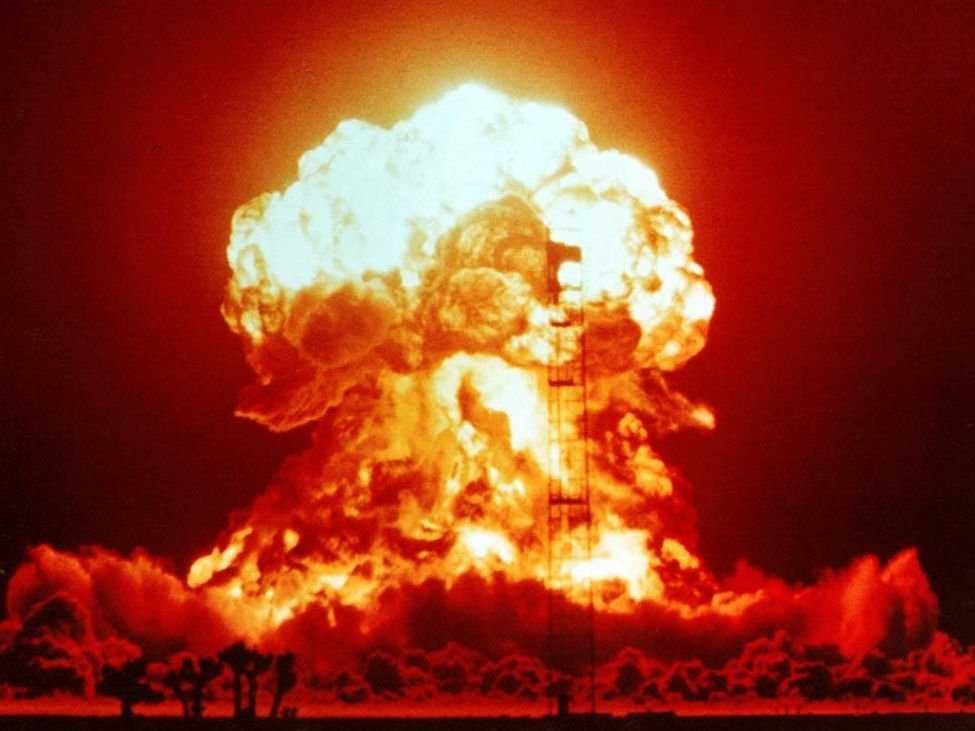 Algeria: 60 years on, French nuclear tests leave bitter fallout https://www.dw.com/en/algeria-60-years-on-french-nuclear-tests-leave-bitter-fallout/a-5235435113.02.2020, Author Elizabeth Bryant (Paris)
Decades after the first French nuclear test in Algeria, thousands of victims are still waiting for compensation from the government. Why is France dragging its feet over the issue?
Jean-Claude Hervieux still remembers joining a crowd of soldiers and high-level officials in Algeria’s Sahara desert to witness one of France’s first nuclear tests. Things didn’t go exactly as planned.
Instead of being contained underground, radioactive dust and rock escaped into the atmosphere. Everyone ran, including two French ministers. At military barracks, the group showered and had their radiation levels checked as a crude means of decontamination. “You don’t see nude ministers very often,” Hervieux chuckled.
But as France marks the 60th anniversary of its first nuclear test — near Algeria’s border with Mauritania, on February 13, 1960 — there is not much to laugh about. Critics have long claimed more than three decades of nuclear testing may have left many victims, first in Algeria and later in French Polynesia, where the bulk of testing took place.
But so far, only hundreds have been compensated, including just one Algerian. And as key nuclear testing anniversaries tick by, the unresolved fallout of the nuclear explosions has also fed into longstanding tensions between Paris and its former colony.
It is part of the whole issue of decolonization, and of Algerians asking for French recognition of crimes committed” as a colonial power, said Brahim Oumansour, North African analyst for the Paris-based French Institute of International Relations. For France, he added, doing so might mean “financial compensations in the millions of euros.”
Such issues are off the French government’s current public radar. A major nuclear policy speech last week by President Emmanuel Macron made no mention of them. France’s compensation commission says it has responded to claims that meet criteria set out by law.
The French Defense Ministry and Algerian authorities did not respond to questions about the tests.
A former electrician, Hervieux spent a decade working on the French nuclear tests, first in Algeria and later in French Polynesia. The botched Beryl explosion he witnessed in May 1962 took place two months after Algeria’s independence from France. The desert testing would continue for another four years, thanks to an agreement Paris secured with Algiers. “The showers cleaned our bodies and clothes,” Hervieux said of the Beryl incident, “but not what we breathed in or swallowed.”
Hervieux asked French authorities for the results of his radiation tests. They were bizarre, he said. One claimed to have screened him when he was on vacation; another named his father. He was told yet another had been destroyed on grounds it was contaminated.
Buried everything
Altogether, Paris exploded more than 200 nuclear devices. Most were in remote atolls of French Polynesia, but the first 17 took place in Algeria’s desert. In 1996, French President President Jacques Chirac called a halt to the testing.
When we left Algeria, we dug large holes and we buried everything,” said Hervieux, now 80, of France’s departure from the desert sites, in 1966.
He later joined AVEN, a pressure group for victims of French nuclear tests, although he says he remains healthy.
While he did not witness ill effects in Algeria, Hervieux describes visiting a village in French Polynesia where high radiation levels had been detected. “A local teacher said children were sick and vomiting,” he recalled. “Mothers were asking why their children’s hair was falling out.”
In Algeria, testing sites are still contaminated, activists say, many fenced off by only barbed wire, at best. “I saw radiation levels emitted from minerals, rocks vitrified by the bombs’ heat, which are colossal,” said retired French physicist Roland Desbordes, who has visited the sites. “These aren’t sites buried in the corner of the desert — they’re frequently visited by Algerian nomads,” who recuperate copper and other metals from the detritus.
Indelible scar?
The former president and now spokesman for CRIIRAD, an independent French research group on atomic safety, Desbordes claims the French army has key classified information about the testing it will not open to public scrutiny, including about the health and environmental effects of the explosions. But he believes Algerian authorities also bear some blame.
Each anniversary they talk about how these nuclear tests were not good,” he said, “but it’s also up to them to close off the sites to ensure nobody can access them.”
Reports, including a pair of decade-old documentaries by Algerian reporter Larbi Benchiha, suggest the testing left an indelible scar on local communities. Unaware of the danger, they collected once-buried scrap metal uncovered by desert winds, and turned them into jewelry and kitchen utensils.
Altogether, between 27,000 to 60,000 people from communities surrounding the test sites were affected, according to one Al Jazeera report, citing differing French and Algerian estimates.
But out of more than 1,600 claims filed under a decade-old French compensation law that finally acknowledged health problems from the tests, only 51 have come from Algeria, according to France’s nuclear compensation commission, CIVEN. A separate Supreme Court ruling recently reinstated two extra compensation claims from French Polynesia.
Among other criteria, the 2010 law requires proof of a minimum level of exposure to weapons tests, and offers a list of 23 types of cancers that qualify for compensation.
“There are very few demands and we can only judge those we receive,” said CIVEN Director Ludovic Gerin, who added the Algerian claims didn’t meet compensation criteria.
“We can’t actively search for victims,” he added, “so we’re a bit blocked.”
Estonia, Latvia and Lithuania oppose energy imports from a Belarusian nuclear power plant
|
Emerging Europe 13th Feb 2020. Estonia, Latvia and Lithuania are joining forces to oppose energy imports from a Belarusian nuclear power plant (NPP) Lithuania has declared a national security threat. The governments of the three Baltic nations have announced that they will sign a declaration of intent to oppose electricity purchases from Russian-built NPP at Astravets near the Lithuanian border.
We are pleased to be moving closer to a common position,”
Lithuania’s prime minister Saulius Skvernelis told reporters, adding that the three Baltic nations and the European Commission will work on finding “an appropriate mechanism controlling the origin of electricity entering our networks from third countries”.https://emerging-europe.com/news/baltic-states-will-not-buy-energy-from-belarus-npp/ |
|
#WETOOARE PROTESTERS FREE JULIAN ASSANGE
 https://weetoo.home.blog/We are a group of mothers, fathers, teachers and students from all over the world, and we are extremely worried about the health condition, as well as the violations of the most basic human rights, of journalist and editor Julian Assange.
The award-winning journalist, in fact, has been held for months in isolation in the maximum security of Belmarsh Prison waiting for extradition to the United States where, confirmed by United Nations experts, it will be difficult for him to have a fair trial and where he risks up to 175 years in prison or even the death penalty.
The motive for the indictment was made mainly by his having published military documents confirming corruption and atrocious war crimes; in particular his website Wikileaks documents show how the wars in Afghanistan and Iraq that have massacred millions of people were created by governments for economic interests and for the exploitation of resources. In these territories the number of terrorists has increased exponentially. Not only that, Assange unveiled the conditions of Guantanamo prisoners, abuses of every type, and tens of thousands of civilian homicides in Iraq and Afghanistan by the American army, including the assassination of two Reuters journalists all documented in the chilling video, Collateral Murder. https://www.youtube.com/watch?v=5rXPrfnU3G0&t=59s
In Julian Assange’s long and frightening persecution, we witnessed seven years of systematic violation of his human rights. The right of citizens to question public interests was also completely ignored. Now, we refuse to participate in a further extension of psychological and physical torture perpetrated against the journalist, as reported by Nils Melzer, the special reporter of the United Nations, who found Assange in a condition of extremely troublesome health. Continue reading
Rolls Royce plans small nuclear reactors near Snowdonia National Park in Wales.
|
Rolls-Royce eyes Snowdonia nuclear site for first small modular reactor, https://www.constructionnews.co.uk/sustainability/rolls-royce-eyes-snowdonia-nuclear-site-for-first-small-modular-reactor-14-02-2020/BY MILES ROWLAND Engineering firm Rolls-Royce has said that the first of its planned small nuclear reactors could be built at a site near Snowdonia National Park in Wales.
Speaking to the BBC today, Rolls-Royce chief technology officer Paul Stein said there was a “high probability” that Trawsfynydd would be the site of the first such reactor, which would be assembled from pre-manufactured components. The site was previously home to a nuclear reactor, closed in 1991, and has an existing local nuclear supply chain. Stein said: “Trawsfynydd is a great first site for the [reactor]. Right now the jury’s out – there are a number of great sites around the country – but two of the three sites [under consideration] are in Wales.” He added: “With so-called brownfield sites, where there has been a nuclear reactor, we know the local population is happy, there is a skilled local population that used to run the plant, there’s a grid connection and the seismic condition of the site [is suitable].” Rolls-Royce announced last year that it was working with a consortium of companies including Laing O’Rourke, Bam Nuttall and Atkins to develop small modular reactors (SMRs), with Laing O’Rourke telling Construction News that it could use its offsite manufacturing facility to produce components. Once operational, each SMR could generate 440MW of energy, enough to power Cardiff, Swansea and Newport combined, according to Rolls-Royce. The reactors have a target cost of £1.8bn each by the time five stations have been constructed, though the first will not be completed until at least 2029. Wylfa in Anglesey has previously been identified by Rolls-Royce as another potential site for SMRs. |
|
Few permanent jobs in small modular nuclear reactors?
In Cumbria 12th Feb 2020, Plans to develop unique small nuclear reactors in Cumbria by Rolls-Royce should not be seen as a “saviour of the county”, one of its major rivals said.
in-Cumbria exclusively revealed in November that a consortium, led by
the engineering giant, was focusing its efforts on efforts on developing
its emerging Small Modular Reactors at existing nuclear licensed sites –
with Cumbria and Wales its top targets.
But John Coughlan, chief executive of TSP Engineering, based in Workington, said he was concerned that people would think the plans would prompt people to think thousands of jobs would be created. TSP Engineering is also developing its own version of the technology, and while Mr Coughlan acknowledged that they were rivals and that was a factor in him speaking out, he was also passionate about the local community. He said:
“Make no mistake. When Rolls-Royce talk about developing their reactors in Cumbria, they are talking about a construction site. “If they get the go-ahead for Cumbria, the reactors will be shipped in from elsewhere and built on the site. So you are probably looking at a large number of short-term construction jobs – say 1,000 – then only about 60 to 100 people with a permanent position there.
Decline and uncertainty in UK nuclear construction
Construction News 10th Feb 2020, Contractors hoping to work on nuclear builds have been forced to scale back their workforce in recent months, according to the head of the sector’s trade body. Nuclear Industry Association (NIA) chief executive Tom Greatrex told Construction News that the uncertain future for nuclear megaprojects such as the £16bn Wylfa Newydd , which was suspended by Hitachi in January 2019, has had a negative impact on construction firms
Greatrex said: “There’s a lot [of nuclear specialists] that have cut back their
headcounts. If they don’t feel there’s going to be any work to do in that
area, they’ll focus on other areas and costs will be cut.” He added that
the NIA was aware of “a few small companies that have ceased to trade”,
but declined to name them.
1 This Month
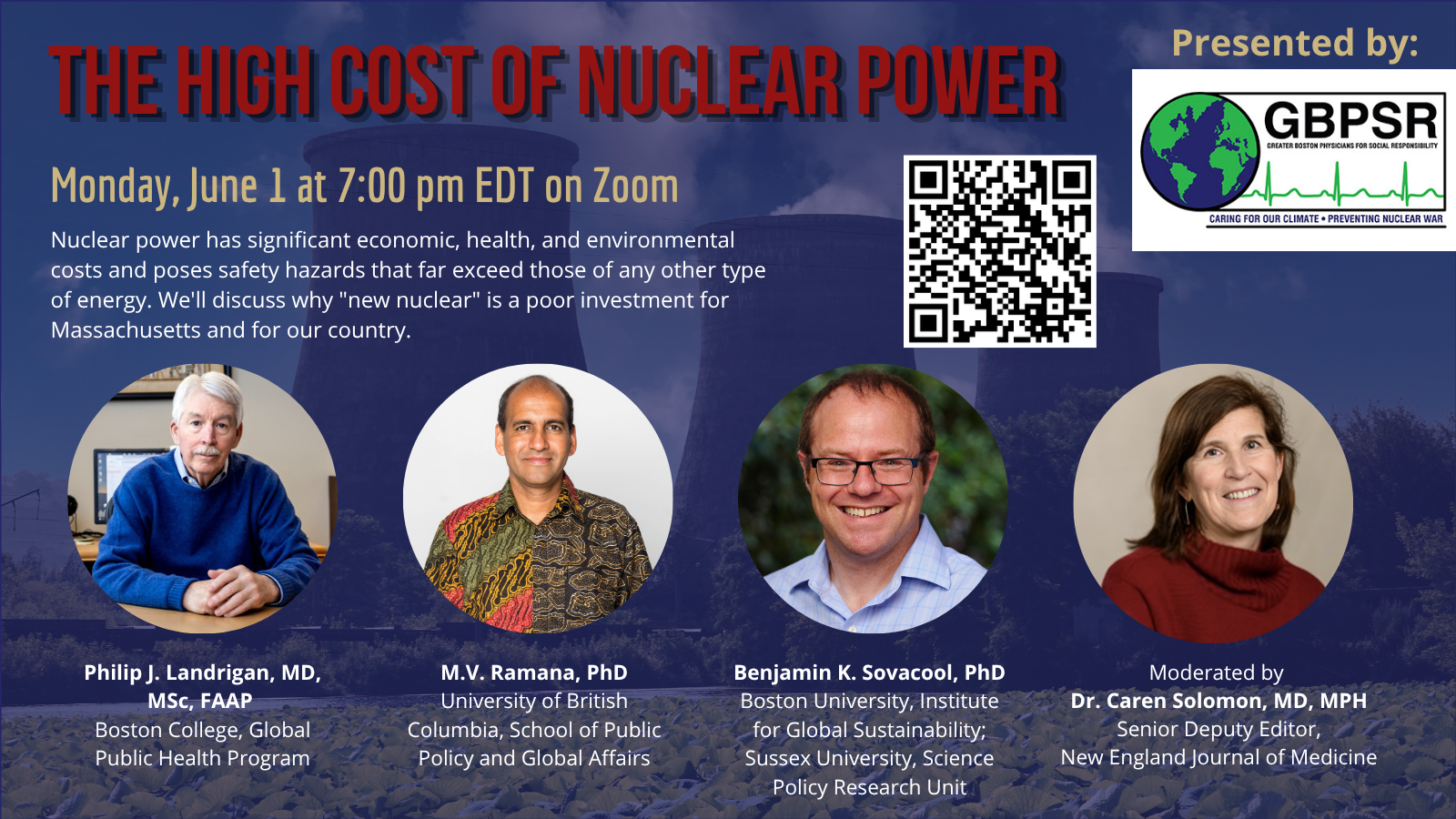
1 June Webinar – The High Cost of Nuclear Power – Register


of the week– Nuclear Reactor Information Task Force
To see nuclear-related stories in greater depth and intensity – go to https://nuclearinformation.wordpress.com
-
Archives
- May 2026 (235)
- April 2026 (356)
- March 2026 (251)
- February 2026 (268)
- January 2026 (308)
- December 2025 (358)
- November 2025 (359)
- October 2025 (376)
- September 2025 (257)
- August 2025 (319)
- July 2025 (230)
- June 2025 (348)
-
Categories
- 1
- 1 NUCLEAR ISSUES
- business and costs
- climate change
- culture and arts
- ENERGY
- environment
- health
- history
- indigenous issues
- Legal
- marketing of nuclear
- media
- opposition to nuclear
- PERSONAL STORIES
- politics
- politics international
- Religion and ethics
- safety
- secrets,lies and civil liberties
- spinbuster
- technology
- Uranium
- wastes
- weapons and war
- Women
- 2 WORLD
- ACTION
- AFRICA
- Atrocities
- AUSTRALIA
- Christina's notes
- Christina's themes
- culture and arts
- Events
- Fuk 2022
- Fuk 2023
- Fukushima 2017
- Fukushima 2018
- fukushima 2019
- Fukushima 2020
- Fukushima 2021
- general
- global warming
- Humour (God we need it)
- Nuclear
- RARE EARTHS
- Reference
- resources – print
- Resources -audiovicual
- Weekly Newsletter
- World
- World Nuclear
- YouTube
-
RSS
Entries RSS
Comments RSS
 nuclear-news