Egypt going into $25 billion debt to Russia, to buy nuclear reactors
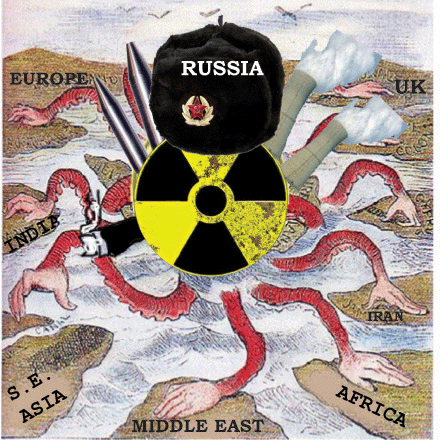
Russia lends Egypt $25 billion for Dabaa nuclear power plant, AL-Monitor, 26 Feb 20, CAIRO — Atomstroyexport, a subsidiary of Russia’s State Atomic Energy Corporation, or Rosatom, announced Feb. 17 that three Egyptian companies were awarded a tender offer for constructing the first phase of Egypt’s Dabaa nuclear power plant.
The three Egyptian companies, competing among 10 others, are Petrojet, Hassan Allam and the Arab Contractors.
The Egyptian government intends to start negotiations within the next few days with the Egyptian Nuclear and Radiological Regulatory Authority to obtain permission to start implementing the Dabaa nuclear plant project. The plant will be constructed in the Dabaa area of Marsa Matrouh governorate in the west of the country.
The Dabaa plant is the first nuclear plant for peaceful uses, with a total capacity of 4.8 gigawatts. The project is financially supported by Rosatom through a Russian loan amounting to $25 billion………….
Yemen al-Hamaki, a professor of economics at Ain Shams University said that under this agreement Egypt will use the loan to finance 85% of the total value of the building, construction, insurance and all other related works. Egypt would bear the remaining 15% in the form of installments. The loan is for 13 years at a 3% annual interest rate. If Egypt fails to repay any of the annual interest within 10 working days, it shall be subject to arrears of 150% of the interest rate calculated on a daily basis
Hamaki also warned that this massive Russian loan of $25 billion could blow up Egypt’s foreign debts. “This loan is a great risk to the future because it burdens the state and should be settled from the wealth and economic assets of the future generations,” she said, adding, “Egypt’s resorting to many loans foretells its inability to attract foreign investments, while tourism revenues continue to decline.” ….. https://www.al-monitor.com/pulse/originals/2020/02/power-plant-nuclear-egypt-russia-loan.html#ixzz6F5iQcolQ
Iran Nuclear Accord Parties Meet to Try to Salvage Deal
|
Iran Nuclear Accord Parties Meet to Try to Salvage Deal https://www.voanews.com/middle-east/voa-news-iran/iran-nuclear-accord-parties-meet-try-salvage-deal By RFE/RL, February 26, 2020 The remaining members of the floundering Iran nuclear deal are set to meet in Vienna Wednesday for the first time since Germany, France, and Britain initiated dispute procedures that could reimpose U.N. sanctions on Tehran.
The talks come as the signatories try to rescue the landmark 2015 accord, which has been faltering since U.S. President Donald Trump unilaterally withdrew from it in 2018 and enforced crippling sanctions on Iran. It will be attended by senior diplomats from Iran, Britain, France, Germany, China, Russia, and the EU. They have promised to uphold the deal that saw Iran agree to reduce its program of developing nuclear weapons in exchange for an easing of sanctions, even without Washington’s support. However, since the U.S. withdrawal, Iran has stepped up its program in defiance of Washington’s “maximum pressure” campaign.“ This is a chance — though not of 100 percent — to stop escalation before it’s too late,” Russian Foreign Minister Sergei Lavrov was cited as saying by the Russian Embassy in Vienna on Twitter. Why EU Powers Rejected Trump’s Call to Leave Iran Nuclear Deal
EU foreign policy chief Josep Borrell said Friday the 28-nation bloc will keep trying to save the Iran nuclear deal despite Trump’s call on EU to join US in breaking away from it
This is a chance — though not of 100 percent — to stop escalation before it’s too late,” Russian Foreign Minister Sergei Lavrov was cited as saying by the Russian Embassy in Vienna on Twitter. Iran has since breached its main limitations, exceeding the stockpiles of heavy water and uranium allowed, the number and types of centrifuges it can operate to enrich uranium, and the purity of uranium. As a result, in mid-January, the three European countries said they had “no choice” but to trigger a dispute mechanism in the accord, citing reduced compliance. The process for ultimately reimposing U.N. sanctions consists of several steps, the final one of which is to notify the U.N. Security Council. The restrictive measures would then automatically be reinstated after 30 days unless the Security Council voted to keep them lifted. Trump has called the deal “fatally flawed,” in part because it did not restrict Tehran’s ballistic-missile program or address its support for terrorist groups in the Middle East. Iran insists its nuclear program is for civilian purposes only and that the Joint Comprehensive Plan of Action (JCPOA) allows the country to run reactors to generate power. |
Is Cumbria about to become the world’s plutonium dump?

 February 24, 2020During the last search process for a burial site for the UK’s nuclear waste, which ended in January 2013, the Nuclear Decommissioning Authority (NDA) offered repeated assurances that only the UK’s nuclear waste would be buried in a UK Geological Disposal Facility (GDF). Many questioned at the time whether the NDA could be trusted to keep its word, and it became apparent in mid-2012 that it could not be trusted. The NDA had accepted 4 tonnes of plutonium from Germany in a ‘commercially advantageous arrangement’ according to Charles Hendry, the UK’s Energy Minister at the time. In other words the NDA had been paid to take ownership of the German plutonium.
Nuclear station Sizewell C will cause environmental damage on an unprecedented scale
Telegraph 23rd Feb 2020 Suffolk Wildlife Trust: We have serious concerns over the effect upon wildlife of Sizewell C and, despite years of working closely with EDF, we are far from convinced that the electricity giant is taking the impacts seriously.
We also believe that it will be impossible wholly to mitigate or
compensate for much of the negative impact on wildlife. The current plans
suggest that we will lose between 20 and 30 acres of nationally important
land that is supposedly protected by its Site of Special Scientific
Interest status. This equates to covering roughly 10 football pitches of
rare fen habitat in concrete. Invariably there will be devastating habitat
loss for birds such as kingfisher and for rare mammals such as water vole
and otters. EDF has made little attempt to minimise these losses.
Suffolk Preservation Society: The proposed nuclear power plant at
Sizewell C will cause environmental damage on an unprecedented scale in a
highly sensitive location, much of which is designated an Area of
Outstanding Natural Beauty. The construction phase will bring massive
disruption to communities in East Suffolk over many years and will
permanently change our landscapes. Suffolk’s environment is remarkably
undeveloped and is characterised by a sense of remote wildness. The
tranquillity provides a high quality of life for residents and is a major
draw for tourists. However, this isolation is fragile and could easily be
lost forever. The impact of a development such as Sizewell C upon heritage
sites – including an abbey, churches, farmhouses and other vernacular
buildings that contribute to the special qualities of Suffolk – will be
considerable. The intrusion of new roads to cope with a massive increase in
HGV traffic, spoil heaps, borrow pits, and accommodation for up to 3,000
workers will be felt across numerous locations. Development of the Sizewell
site cannot be at unlimited cost to the quality and character of our county
and its communities.
Outage’s at EDF’s Hinkley nuclear station extended until June
EDF Energy extends outages at Hinkley Point B nuclear plant https://www.reuters.com/article/edf-energy-nuclear/update-1-edf-energy-extends-outages-at-hinkley-point-b-nuclear-plant-idUSL5N2AO3DT
 LONDON, Feb 24 (Reuters) – EDF Energy has extended two planned outages at Britain’s Hinkley Point B nuclear plant to June to complete further inspections of the reactor cores, the company said on Monday.
|
A planned outage at Britain’s Hinkley Point B-8 nuclear reactor has been extended by three months, data from EDF Energy shows. The 480 megawatt reactor went offline on Friday night and was originally due to return to service on March 17. The restart date has now been extended to June 5.
An upcoming outage from April at Hinkley Point B-7 reactor has been extended to June 20 from May 19.“We have decided to take more time to complete the forthcoming inspection outages at Hinkley Point B to allow for additional analysis and review of the core inspection findings which as always we will share with our regulator, ONR,” a company spokesman said, referring to the Office for Nuclear Regulation. The reactors have to undergo such inspections after cracks developed faster than expected in graphite bricks in the reactor core at another of the company’s nuclear fleet in Britain. Reporting by Nina Chestney; Editing by Edmund Blair and Jane Merriman
|
|
|
Extradition case for Julian Assange – how it will proceed
 Julian Assange’s extradition case is finally heading to
  court – here’s what to expect more https://www.sbs.com.au/news/julian-assange-s-extradition-case-is-finally-heading-to-court-here-s-what-to-expe
February 24, 2020 Holly Cullen, Adjunct professor, University of Western AustraliaThe extradition hearing to decide whether to send Julian Assange to the United States to be tried for publishing classified military documents on Wikileaks is expected to finally begin today in London.Assange is charged with 17 counts under the Espionage Act, involving receipt, obtaining and disclosing national security information. He has also been charged with one count of conspiracy to assist Chelsea Manning to crack a US Department of Defense password to enable her to access classified information.
Assange has been in Belmarsh prison since his arrest in April 2019. He had been in solitary confinement in a prison medical unit, but was recently moved into a less isolated section of the prison due to concerns about his mental health.
From May to September of last year, Assange served a sentence for bail absconding, but since then has been waiting for the extradition hearing.
How will the process play out? Continue reading
Britain buying new nuclear warheads from USA: Pentagon knew about it, UK Parliament did not
|
The revelation has dismayed MPs and experts who question why they have learned of the move – which will cost the UK billions of pounds – only after the decision has apparently been made. It has also raised questions about the UK’s commitment to staunching nuclear proliferation and the country’s reliance on the US for a central plank of its defence strategy. Earlier this month, Pentagon officials confirmed that its proposed W93 sea-launched warhead, the nuclear tip of the next generation of submarine-launched ballistic missiles, would share technology with the UK’s next nuclear weapon, implying that a decision had been taken between the two countries to work on the programme. In public, the UK has not confirmed whether it intends to commission a new nuclear warhead. The Ministry of Defence’s annual update to parliament, published just before Christmas, says only: “Work also continues to develop the evidence to support a government decision when replacing the warhead.” But last week Admiral Charles Richard, commander of the US strategic command, told the Senate defence committee that there was a requirement for a new warhead, which would be called the W93 or Mk7. Richard said: “This effort will also support a parallel replacement warhead programme in the United Kingdom, whose nuclear deterrent plays an absolutely vital role in Nato’s overall defence posture.” Ed Davey, acting leader of the Liberal Democrats, said: “It is totally unacceptable that the government seems to have given the green light to the development of new nuclear weapon technologies with zero consultation and zero scrutiny. Britain under Johnson increasingly looks like putty in Trump’s hands. That Britain’s major defence decisions are being debated in the United States, but not in the UK, is a scandal. Under Johnson, it seems that where Trump leads, we must follow.” ………. https://www.theguardian.com/uk-news/2020/feb/22/pentagon-gaffe-reveals-uk-deal-replace-trident-nuclear-weapon |
|

Huge rise predicted for Britain’s seas and tidal rivers
 Times 23rd Feb 2020, Britain should be preparing for its seas and tidal rivers to rise by up to 6½ ft in the next 80 years, according to the scientist in charge of protecting Holland against flooding and sea level change. Peter Glas, head of Holland’s Delta Programme, which oversees long-term flood risk management, will tell a UK conference that the rise in the level of the Times 23rd Feb 2020, Britain should be preparing for its seas and tidal rivers to rise by up to 6½ ft in the next 80 years, according to the scientist in charge of protecting Holland against flooding and sea level change. Peter Glas, head of Holland’s Delta Programme, which oversees long-term flood risk management, will tell a UK conference that the rise in the level of theNorth Sea may accelerate sharply from 2050, potentially reaching 2 metres (6½ ft) by 2100. That is nearly double the Met Office’s worst-case
predictions. It follows research at Holland’s Deltares centre, commissioned by the Delta Programme, into the impact of rising sea levels on northern Europe. “The rise could potentially accelerate with effect from 2050, entailing far-reaching consequences,” said Glas’s latest report to the Dutch government, which he will cite at this week’s Floodex conference in Peterborough. The Delta report added that effects of “the more rapid melting of Antarctic ice sheets” had not yet been incorporated into the programme’s predictions. |
|
|
Anti nuclear activists break into France’s Tricastin nuclear station
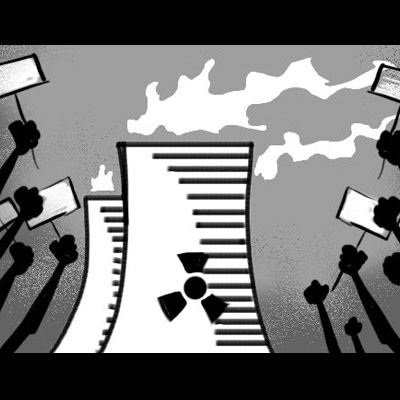 Reuters 21st Feb 2020. Activists from Greenpeace broke into the Tricastin nuclear power plant in southern France in order to demand its closure, the environmental pressure group said on Friday. “Some 50 Greenpeace activists gained access to several points at the Tricastin nuclear power plant this morning,” said Greenpeace spokeswoman Cecile Genot. “We are protesting and drawing attention to an aging nuclear power plant that is dangerous and should be shut down.” Officials for French state-controlled power group EDF, which runs Tricastin, had no immediate comment on the situation.
 |
ReplyForward
|
Nuclear Energy Agency’s “pretend transparency”
| “ |
Nuclear Energy Agency’s Janus-like approach to nuclear transparency: a case study in obstruction, 21 February 2020 By Dr David Lowry, Nuclear Transparency Watch
 “…………. Conclusion “…………. Conclusion
NEA cannot make publicity it is hosting an international meeting on stakeholder engagement, but only allow well-resourced stakeholders to participate, having allocated no budget line for accommodation or travel for civil society organisations (CSOs). Initially, NEA refused to reveal which Civil Society / NGO groups had shown up to participate, because – I believe – they were embarrassed that so few were there. Aside from representatives of civil society groups invited (and remunerated) as speakers, there was virtually no civil society representation. The final list of attendees, released after four months of pressure from me, shows the balance of participants was about 95% pro nuclear institutional interests, 5% civil society or non-aligned interested parties. To label such an imbalanced event a “Stakeholder Engagement” meeting is an abuse of language. The nuclear industry cannot be allowed to pretend they believe in transparency, then practice secrecy, as NEA did in this sorry saga. Because, like a dog with a bone, I refused to let go in this, I finally forced disclosure. But this should have come automatically. NEA needs to learn the lessons: the first is, it needs to abide by the dictionary definition of transparency, and deliver it in future! http://www.nuclear-transparency-watch.eu/activities/transparency-and-public-participation/nuclear-energy-agencys-janus-like-approach-to-nuclear-transparency-a-case-study-in-obstruction.html
|
|
France starts out on the path to withdraw from nuclear energy
|
France Takes First Steps to Reduce Nuclear Energy Dependence https://www.voanews.com/europe/france-takes-first-steps-reduce-nuclear-energy-dependence, By Lisa Bryant, 21 Feb 20
February 21, 2020 France, the world’s most nuclear energy-dependent nation, is taking its first steps to shift to more renewables to power up.
On Saturday, the country begins a gradual shutdown of its aging Fessenheim plant. The move fits into the government’s broader energy strategy to reduce French dependence on nuclear energy from supplying three-quarters of its electricity to about half by 2035. Prime Minister Edouard Philippe says the plant’s first reactor will be closed Saturday, and the second in June. Another dozen reactors must close by 2035 to meet the phase-down target. The plan also sees France closing its remaining coal plants, and moving to renewables like solar and wind to close the energy gap and help fight climate change. For Charlotte Mijeon, spokesperson for anti-nuclear group Sortir du nucléaire, the Fessenheim shutdown is welcome news — but not enough. “It’s great that it’s eventually closed; however, we fear that Fessenheim is something like the tree hiding the forest,” she said. “The government is closing one nuclear power plant, but it should not make us forget that the rest of the nuclear fleet is aging.” France has 58 nuclear power plants, thanks to an energy strategy dating back to the 1970s oil crisis. Supporters say nuclear energy is a clean way to fight climate change while also meeting national energy needs. But critics say the plants have received billions in subsidies and nuclear lobbies are powerful, making it harder for renewables to compete. And they say the remaining plants pose mounting safety concerns as they age. “Regarding the climate emergency, we have no time left,” Mijeon said. “So we have to invest in green climate solutions, not in nuclear power, which is not only dirty, but also very expensive and slow.” While the reactor shutdown is a first for France, other countries, including Switzerland, Sweden and the United States, have also shut plants for a mix of budgetary, safety and environmental reasons. Neighboring Germany aims to phase out of nuclear power completely by 2022. It has been pushing for years for the shutdown of Fessenheim, which is located near its border |
|
Bavaria’s renewable capacity growing as nuclear plant shutdown boosts power imports
|
Bavaria’s renewable capacity growing as nuclear plant shutdown boosts power imports, 21 Feb 2020, Benjamin Wehrmann, Clean Energy Wire
Power generation with solar panels and bioenergy plants has reached a new record level in Bavaria, the German state’s economy ministry has said. Final data for 2018 showed that solar power production grew by 4.5 percent that year to reach nearly 12 terawatt hours (TWh), while production with bioenergy reached 9.2 TWh, 0.2 percent more than in 2017. “The energy transition is right on our doorstep,” said Bavaria’s economy minister Hubert Aiwanger, adding that the looming solar power support cap had to be removed and new land designated for solar panel installation to ensure that renewables could continue to grow in the state. However, the shutdown of nuclear power plant Gundremmingen B and a particularly dry year in 2018, which substantially reduced hydropower production, meant that Bavaria had to import large volumes of electricity for the first time ever in that year. Gross power production dropped from nearly 85 TWh to just under 74 TWh between 2017 and 2018, meaning that the economic powerhouse state had to import 10 TWh to cover its demand, a situation “that has never existed before,” the ministry says. Aiwanger said the “power generation gap” would grow further once Bavaria’s two remaining nuclear plants go offline at the end of 2021 and 2022, respectively. “The figures show that we all need to pull together to ensure a sustainable energy supply,” Aiwanger said…….. https://www.cleanenergywire.org/news/bavarias-renewable-capacity-growing-nuclear-plant-shutdown-boosts-power-imports |
|
France shuts down Fessenheim reactor in first phase of retreat from nuclear power
Reactor No. 1 will be halted on Saturday and the entire complex will come to a halt on June 30, the statement said.
Germany has long called for the plant, France’s oldest, to be shut down. It is the first nuclear complex to be closed under Macron’s plan.
France depends more on nuclear energy than any other country, getting about three-quarters of its electricity from the plants. Macron said in 2018, outlining France’s energy strategy for the next 30 years, that 14 nuclear reactors out of the 58 now running at 19 plants would be shut down by 2035. France would cap the amount of electricity it derives from nuclear plants at 50% by then.
Algeria and French Polynesia suffer from France’s 30 years of nuclear bomb testing
But Jean-Claude Hervieux has other memories. He joined the French testing efforts in Algeria as an electrician. He remembers a nuclear test in 1962 that did not go according to plan.
Radioactive dust and rock escaped from underground. Hervieux and others observing the testing ran for shelter. Two French ministers were among them. The group washed themselves in a military housing area to decontaminate.
France held more than 200 nuclear tests until a later president, Jacques Chirac, ended testing in 1996. Most tests took place in French Polynesia. But 17 took place in Algeria between 1960 and 1966, ending four years after Algeria’s independence from France.
Brahim Oumansour is a North Africa expert at the French Institute of International Relations in Paris. He said, “It’s part of the whole issue of decolonization and Algerians in general asking for recognition of colonization crimes.” He added that official recognition and financial compensation for the Algerian tests could cost millions of dollars.
Hervieux spent 10 years working on nuclear test areas in Algeria and later French Polynesia. Now 80 and living in France’s Lyon area, he says he is physically fine. But he used to receive some questionable radioactive testing results from the French government……
France’s nuclear compensation commission, CIVEN, said more than 1,600 claims have been filed under a 2010 French law that finally recognized health problems related to the testing.
Only about one-third have met the requirements needed to receive financial benefits. The requirements include about 24 possible radiation-related cancers. Almost all the claims came from France and French Polynesia. Of the 51 claims from Algeria, only one has been compensated…. https://learningenglish.voanews.com/a/questions-remain-as-france-marks-60-years-since-nuclear-tests-/5287541.html
Chinese-led nuclear company pretending that Sizewell project is a ‘fait accompli’ – no, it is far from it.
BANNG 1 020, The Blackwater Against New Nuclear Group (BANNG) has learned that GNSL, the Chinese-led company seeking to build a mammoth new nuclear power station at Bradwell, is preparing to launch its pre-application public consultation for planning permission later this year.
This will be long before detailed discussions with the nuclear regulators are concluded. There are major issues and challenges still to be confronted. ‘It seems that the Chinese developers are taking a risk in trying to present the public and politicians with an apparent ‘fait accompli’ well before major design
and environmental hurdles have been crossed’ said Prof. Andy Blowers,
Chair of BANNG.
GNSL greeted the announcement that the Generic Design
Assessment (GDA) for Bradwell B had begun Step 4 as a major milestone,
clearing the path for deployment of Chinese nuclear technology in Britain.
That is far from the case. Moving to Step 4 in the GDA is like reaching a
hurdle, not passing a milestone. It is at this stage that all the tricky
issues facing the Bradwell B project must be confronted, including the
cooling system, site suitability, security, coastal defence, impacts on
marine and terrestrial environments and so on.
Step 4 is a long and intensive process between the developer and the independent regulators, the Office for Nuclear Regulation (ONR) and the Environment Agency (EA). It is not expected to be concluded for another two years. A pre-application should follow, not overlap, Step 4 of the GDA.
https://www.banng.info/news/press-release-18th-february-2020/
1 This Month

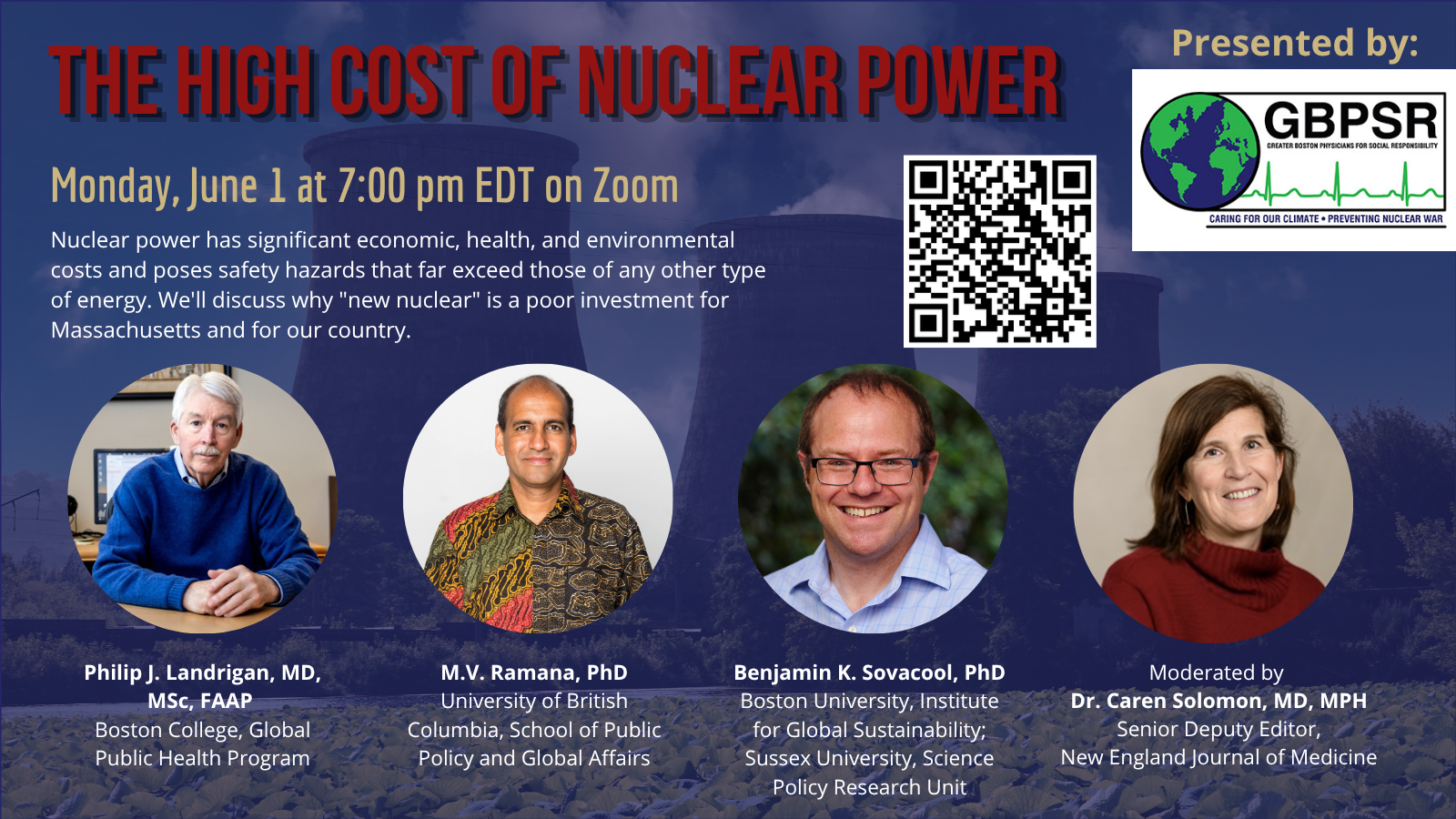
1 June Webinar – The High Cost of Nuclear Power – Register


of the week– Nuclear Reactor Information Task Force
To see nuclear-related stories in greater depth and intensity – go to https://nuclearinformation.wordpress.com
-
Archives
- May 2026 (235)
- April 2026 (356)
- March 2026 (251)
- February 2026 (268)
- January 2026 (308)
- December 2025 (358)
- November 2025 (359)
- October 2025 (376)
- September 2025 (257)
- August 2025 (319)
- July 2025 (230)
- June 2025 (348)
-
Categories
- 1
- 1 NUCLEAR ISSUES
- business and costs
- climate change
- culture and arts
- ENERGY
- environment
- health
- history
- indigenous issues
- Legal
- marketing of nuclear
- media
- opposition to nuclear
- PERSONAL STORIES
- politics
- politics international
- Religion and ethics
- safety
- secrets,lies and civil liberties
- spinbuster
- technology
- Uranium
- wastes
- weapons and war
- Women
- 2 WORLD
- ACTION
- AFRICA
- Atrocities
- AUSTRALIA
- Christina's notes
- Christina's themes
- culture and arts
- Events
- Fuk 2022
- Fuk 2023
- Fukushima 2017
- Fukushima 2018
- fukushima 2019
- Fukushima 2020
- Fukushima 2021
- general
- global warming
- Humour (God we need it)
- Nuclear
- RARE EARTHS
- Reference
- resources – print
- Resources -audiovicual
- Weekly Newsletter
- World
- World Nuclear
- YouTube
-
RSS
Entries RSS
Comments RSS
 nuclear-news