French nuclear workers in fear of coronavirus infection
 French nuclear plants tighten hygiene procedures over coronavirus worries Benjamin Mallet, PARIS (Reuters) 21 Mar 20, – French utility EDF is introducing stricter hygiene procedures at its nuclear plants after walk-outs by a small number of workers who feared getting infected with coronavirus during radiation screening, union and industrial sources said on Friday.
Under French labor laws, staff have the right to walk off the job if they consider there is a clear and imminent threat to their health or safety.
After working in the radioactive areas of nuclear plants, staff have to step through narrow shower-style portals in their underwear to be checked for possible radiation exposure. Workers feared the surface areas of these portals could become a source of spreading the virus.
EDF (EDF.PA) has now agreed to clean the portals twice per eight-hour shift, to increase security distances between workers and provide gloves and hand sanitizer, according to new internal rules announced on Tuesday.
“The problem has been solved or will be soon, provided that guidelines are respected,” CGT union member Thierry Raymond told Reuters.
CGT nuclear specialist Thomas Plancot said more than a dozen workers – mostly contractors – had walked out over the issue in the nuclear plants of Fessenheim, Civaux and Chooz, including a sixty-year-old who considered himself especially at risk because of his age. …….https://www.reuters.com/article/us-health-coronavirus-france-nuclear/french-nuclear-plants-tighten-hygiene-procedures-over-coronavirus-worries-idUSKBN2172J1
1,000 staff at Sellafield nuclear facility self-isolating amid pandemic
 Coronavirus: 1,000 Sellafield staff self-isolating amid pandemic https://www.bbc.com/news/uk-england-cumbria-51951984 Coronavirus: 1,000 Sellafield staff self-isolating amid pandemic https://www.bbc.com/news/uk-england-cumbria-51951984
18 March 2020
About 1,000 employees at the Sellafield nuclear site in Cumbria are self-isolating amid the coronavirus outbreak. The firm earlier said it was carrying out a controlled shutdown of the Magnox plant, ahead of any absences. The plant in Seascale reprocesses spent fuel and Sellafield Ltd said it was scaling back operations so staff could concentrate on critical processes. The thousand staff represents about 8% of the whole workforce. They are either showing symptoms, have close family who have symptoms, or are having to distance themselves because they have an underlying health condition. On closing the reprocessing site, Sellafield said: “As a proactive measure, to retain the reprocessing stream in a sustainable state for the future, we are moving to a controlled shutdown of the Magnox reprocessing plant over the next few days. “This approach will enable the best opportunity for an effective restart when circumstances permit. With safety in mind, similar measures may be necessary elsewhere across the business.” |
|
The Blackwater Against New Nuclear Group (BANNG) protests the lack of full information on nuclear plans
BANNG 19th March 2020, In the wake of the coronavirus epidemic, Bradwell B has cancelled two-thirds of the exhibitions it had planned as part of its public
consultation on its proposals for a new nuclear power station. But, the
company is still calling for feedback on its plans to be given at any time
up to 27th May 2020.
The Blackwater Against New Nuclear Group (BANNG) has protested that the partial consultation will be only partially informed and
consequently feedback will be unrepresentative of the views of the whole of
the Blackwater communities. Prof. Andy Blowers, Chair of BANNG has written
to the Chinese company developing the proposals urging that the
consultation be terminated altogether. The exhibitions that did take place
were well attended, engaging in robust discussion where citizens were able
to question the plans and make clear in face-to-face exchanges with company
staff their concerns about the imposition of a massive nuclear complex on
the Dengie peninsula. The meetings at Maldon and Bradwell Village were well
attended, informative and occasionally emotional.
https://www.banng.info/news/banng-press-release-19th-march-2020/
Moscow: roadworks commence on top of radioactive waste dump: protestors enraged

 Protests as Moscow moves to build road on radioactive dump, https://www.france24.com/en/20200318-protests-as-moscow-moves-to-build-road-on-radioactive-dump Moscow (AFP)Moscow authorities on Wednesday began work on building a highway over a Soviet-era dump of radioactive materials, despite months of public protests and warnings from environmental campaigners.
Greenpeace and other activists have long campaigned against the project to build an eight-lane motorway over the top of a tree-lined slope in southern Moscow that contains radioactive waste buried in the Soviet era.
The former top-secret facility produced the radioactive element thorium for nuclear reactors until the 1970s.
Greenpeace and other activists have long campaigned against the project to build an eight-lane motorway over the top of a tree-lined slope in southern Moscow that contains radioactive waste buried in the Soviet era.
The former top-secret facility produced the radioactive element thorium for nuclear reactors until the 1970s.
“We have registered 0.4 microsieverts,” while the permitted level in Moscow is 0.3,” Vlasov told AFP, adding that he expected those levels to increase in the future.
“When large-scale work begins, all this crap will be in the air,” he said.
Galina Rozvadovskaya, who lives near the site, said she came as soon as she learnt of the start of the construction work.
“Our task is to stop this lawlessness,” Rozvadovskaya told AFP. “What do we want? For them to conduct a proper survey of this burial site.”
Moscow Mayor Sergei Sobyanin is keen to redevelop post-industrial wasteland and insists there are only “insignificant traces of contamination” on the road’s route.
Activists say, however, dangerous radioactive particles could be spread around and end up in people’s lungs. Citing a state report, Greenpeace says the site contains at least 60,000 tonnes of radioactive waste.
ma-video-as/am/cdw
Big European bank offers to help Russia retrieve 1000s of radioactive junk from the Arctic sea
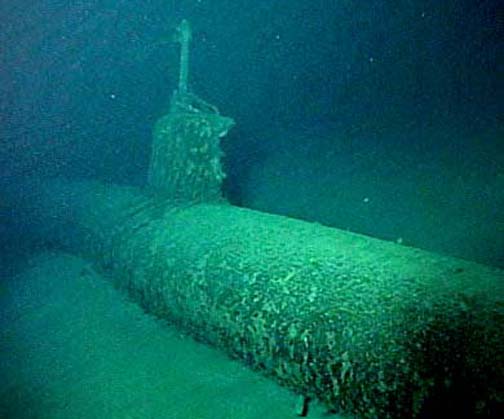
CTY Pisces – Photos of a Japanese midget submarine that was sunk off Pearl Harbor on the day of the attack. There’s a hole at the base of the conning tower where an artillery shell penetrated the hull, sinking the sub and killing the crew. Photos courtesy of Terry Kerby, Hawaii Undersea Research Laboratory. August 2003.
|
Major European bank could help Russia lift its sunken nuclear submarines https://bellona.org/news/nuclear-issues/2020-03-major-european-bank-could-help-russia-lift-its-sunken-nuclear-submarinesThe European Bank for Reconstruction and Development has signaled its readiness to help Russia raise Soviet-era radioactive debris, including two sunken nuclear submarines, from the bottom of Arctic seas. March 18, 2020 by Charles Digges charles@bellona.no While the deal is not yet final, it is thought that financial assistance would be allocated by the bank’s Northern Dimensions Environmental Partnership program – whose Nuclear Window fund has disbursed millions of dollars to help clean up radioactive hazards in Russia and Ukraine. Talks on funding the recovery of these Cold War artifacts have been underway since the end of last year, when the Russian government reinvigorated long-dormant discussions on retrieving the sunken radioactive cast offs. Alexander Nikitin, who heads Bellona’s St Petersburg offices, has been a part of these discussions. According to the Russian government’s official website on submarine decommissioning programs, the plan to raise the subs was presented at the EBRD’s assembly of donors in December, where the cost for the project was estimated at €300 million. It will now be up to Russia, the site reported, to furnish the bank with a comprehensive plan on raising the subs. While Moscow has considered various methods for raising the subs over the years, those who participated in the December discussions concluded a special ship might have to be built to get the job done. Beginning in the 1960s, the Soviet Navy used the waters east of the Novaya Zemlya atomic weapons testing range as a sort of watery nuclear waste dump. While the Soviet Union was hardly the only nuclear nation that resorted to dumping radioactive waste at sea, it was one of the most prolific. According to catalogues released by Russia in 2012, the military dumped some 18,000 separate objects in the Arctic that could be classified as radioactive waste. These included some 17,000 containers of radioactive waste; 19 ships containing radioactive waste; 14 nuclear reactors, including five still loaded with spent nuclear fuel; and 735 other piece of radioactively contaminated heavy machinery. Scientists at the Nuclear Safety Institute of the Russian Academy of Sciences, or IBRAE, say that time and corrosion have managed to decay thousands of these hazards and render them harmless. This leaves about 1,000 that continue to post a high risk of spreading radioactive contamination. Chief among these are two submarines, the K-159 and the K-27, both of which officials say pose the greatest threat to the environments in which they now lie. The K-159, which sank while it was being towed to decommissioning in 2003 and killed the nine sailors aboard, now lies in some of the most fertile fishing grounds of the Kara Sea. Raising this sub, say Russian experts, should be a priority. Its reactors hold some 800 kilograms of spent nuclear fuel, which they fear could contaminate the sea floor, leading to an economic crisis for the Russian and Norwegian fishing industries.
Like the K-159, the K-27 claimed its share of victims. Nine members of its crew of 144 died of radiation related illnesses shortly after returning to shore. Many more of the crew succumbed to similar illnesses in the years that followed. Too radioactive to be dismantled conventionally, the Soviet Navy towed the K-27 to the Arctic Novaya Zemlya nuclear testing range in 1982 and scuttled it in one of the archipelago’s fjords at a depth of about 30 meters. The sinking took some effort. The sub was weighed down by concrete and asphalt to secure its reactor and a hole was blown in its aft ballast tank to swamp it. But the fix won’t last forever. The asphalt was only meant to stave off contamination until 2032. Worse still is that the K-27’s reactors could be in danger of generating an uncontrolled nuclear chain reaction, prompting many experts to demand it be retrieved first. Raising these submarines from the depths will require technology Russia currently lacks. Even the lifting of the Kursk – perhaps the most famous sub recovery to date – required the assistance of the Dutch. But the K-159 lies at a depth much greater than the Kursk did, leading many experts to suggest building an new vessel for the purpose. From 1946 to 1993, more than 200,000 tons of waste, some of it highly radioactive, was dumped in the world’s oceans, mainly in metal drums, according to the International Atomic Energy Agency. The lion’s share of dumped nuclear waste came from Britain and the Soviet Union, figures from the IAEA show. By 1991, the US had dropped more than 90,000 barrels and at least 190,000 cubic meters of radioactive waste in the North Atlantic and Pacific. Other countries including Belgium, France, Switzerland and the Netherlands also disposed of tons of radioactive waste in the North Atlantic in the 1960s, 70s and 80s. |
|
|

Sellafield nuclear waste site to close due to coronavirus
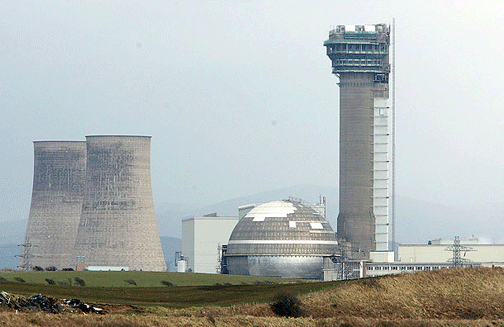 Sellafield nuclear waste site to close due to coronavirus, Magnox reprocessing plant will begin controlled shutdown after 8% of staff self-isolate,Guardian Jillian Ambrose Energy correspondentThu 19 Mar 2020 Britain’s nuclear waste site will shut its reprocessing plant at Sellafield after more than 8% of its staff began self-isolating to prevent the spread of the coronavirus.
The controlled shutdown of the Magnox plant in Cumbria will begin in the next few days after an outbreak of the Covid-19 virus within Sellafield’s 11,500 staff.
The company told employees on Tuesday evening that it would “scale back some operations” to “make best use of available people”.
Sellafield revealed last weekend that a staff member had tested positive for coronavirus, and on Monday it confirmed that another employee with suspected Covid-19 had begun self-isolation.
The number of Sellafield employees self-isolating has quickly climbed to about 1,000.
A Sellafield spokesman said the number in self-isolation included people with symptoms of the virus as well as those with underlying health conditions who undertaking social distancing……..
The Magnox plant is to close permanently this year. It began reprocessing waste from Britain’s first nuclear reactors in 1964 to separate the uranium and plutonium, which can still be reused from the spent radioactive waste. https://www.theguardian.com/business/2020/mar/18/sellafield-nuclear-waste-plant-close-coronavirus-staff
EDF reassures UK that during coronavirus epidemic, nuclear operations will continue
|
EDF Energy says plans in place to maintain operations at UK nuclear plants https://uk.finance.yahoo.com/news/edf-energy-says-plans-place-144424093.html?guccounter=1&guce_referrer=aHR0cHM6Ly9uZXdzLmdvb2dsZS5jb20v&guce_referrer_sig=AQAAABq2naeyyQ9ohtcPQW2Ho9e2-qDfI6XSbDwfZUneTxi4VhdT3GWx-zWbqg0MCFS2ArOO-cBI7xrEXbGJxc_Z4MEQGCMb8xZYz9GdF6dLu3azUPUvN5EB4x2GgyUSjwZkX1E93xGECuqxS4HnxqOETaVwytGf9KBTZIzT3QuaBP-R Reuters18 March 2020 By Nina ChestneyLONDON (Reuters) – EDF Energy has plans in place to maintain operations at its nuclear power plants in Britain during the coronavirus outbreak, it told Reuters on Tuesday.
The company operates all 15 nuclear reactors in Britain. Currently eight of those, with a combined capacity of around 4.2 gigawatts – almost half of the country’s total nuclear power capacity – are offline for planned or unplanned outages. “We have comprehensive plans in place to maintain operations at all of our power stations and planned generation is not affected at any of our sites,” said a spokeswoman, declining to specify what the measures were. On Monday, EDF Energy’s parent company EDF <EDF.PA> said it would reduce staff at its Flamanville nuclear power plant in northern France due to coronavirus infections in the Cotentin region. The plant has been offline for maintenance. Britain’s Office for Nuclear Regulation (ONR) said all UK sites have minimum staffing levels, and contingency plans should they fall below these levels, to enable them to stay in control of activities that could affect nuclear safety under all foreseeable circumstances. The ONR, which is in charge of overseeing nuclear safety, said its staff have been directed to work at home. “A number of inspectors will continue to travel to sites where required, but we will endeavour to carry out as much of our business as possible via phone, email and Skype,” it said. “These measures will not have a severe impact on our regulation of the nuclear industry.” (Reporting by Nina Chestney; Editing by Pravin Char and Jan Harvey) |
|
“Military Intelligence?” 30,000 U.S. soldiers to Corona-infested Europe for “war games”

|
U.S. Army invades virus plagued Europe, http://space4peace.blogspot.com/2020/03/us-army-invades-virus-plagued-europe.html BRUCE K. GAGNON BRUNSWICK, MAINE, UNITED STATES
In the midst of a staggering virus epidemic that has shut much of Europe down, the insane and arrogant United States is presently sending 30,000 Army troops throughout Europe for war games.As the soldiers emerged from their transport planes they shook the hands of US and European military officials welcoming them to the hot bed of corona-virus.
|
|
Coronavirus cluster in the area – construction stalled at France’s Flamanville nuclear reactor
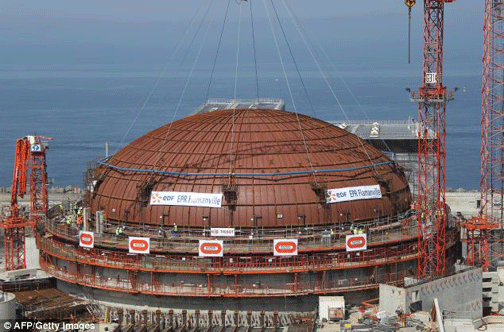
France’s EDF to reduce Flamanville nuclear plant staffing over virus, PARIS, March 16 (Reuters) – EDF will reduce staff to around 100 from 800 at its Flamanville nuclear power plant in northern France due to coronavirus infections in the Cotentin region, a spokesman for the French utility said on Monday.
Only people in charge of safety and security will remain on-site.
The decision was made because of a cluster of COVID-19 infections in region, the spokesman said adding that some staff displayed signs of the virus.
“But today, it is no longer possible to carry out tests. There are too many cases,” he said. “As a preventive measure and because it is no longer possible to carry out tests to confirm cases, we have decided to only keep those in charge of safety and security,” the spokesman said.
While the two reactors have been offline for maintenance since January and September, respectively, major maintenance work was under way.
EDF also said construction work on a long-delayed third reactor on the site would be reduced.
The French government is preparing an order that would put its inhabitants under partial lockdown to combat the coronavirus epidemic, sources aware of the planning said on Sunday, a move that would tighten further restrictions on public life. (Reporting by Bate Felix; writing by Geert De Clercq; editing by Jason Neely and Louise Heavens) AT TOP https://uk.reuters.com/article/health-coronavirus-france-nuclear/update-1-frances-edf-to-reduce-flamanville-nuclear-plant-staffing-over-virus-idUKL8N2B962I
UK’s nuclear regulated asset base (RAB) financing passes all financial risks to electricity customers
 Times 15th March 2020 David Lowry: I read with incredulity the claims of Horizon nuclear chief Duncan Hawthorne that his company, which is really a Japanese shell company with no products, could build nuclear plants offering power at half the currently projected cost from the Hinkley Point C plant being built.
Fukushima Daiichi reactors in Japan on March 11, 2011 — costs $250bn
(£200bn) and rising — suggests Horizon has not learnt the full lessons
of that. The regulated asset base (RAB) financing mechanism Horizon
advocates transfers all financial investment risk to electricity customers
before a single unit is delivered to a home, allowing the foreign nuclear
company to build plants without having to pay attention to keeping costs
under control. This is an extraordinarily one-sided proposal. Surely even
this nuclear-friendly government cannot fall for it.
Nuclear waste transport disrupted by measures to stall coronavirus
GNS 13th March 2020, The return transport of vitrified waste from the reprocessing plant in Sellafield to the interim storage facility in Biblis planned for this spring is suspended. As the police authorities responsible for accompanying and carrying out the transport have stated, the police operation is currently not responsible with regard to the current “spread of corona” and therefore cannot be carried out in spring as planned. The companies and institutions involved in the repatriation will agree on a new deadline for the repatriation in due course.
German grid and nuclear plant operators step up coronavirus precautions
Background German operators of key energy infrastructure including power stations, gas and electricity grids have stepped up their precautions against a coronavirus pandemic, reports Jakob Schlandt in Tagesspiegel Background. “The primary goal is to protect employees from infection – especially employees in the system control room,” a spokesperson from power grid operator 50Hertz told the energy newsletter. Employees are no longer allowed to travel to areas classified as risky – even private trips are banned – and all other business trips are being kept to a minimum. The operator also said it had reduced visits by foreign delegations “practically to zero”. Like other transmission grid operators, 50Hertz also operates a reserve control centre as a back-up.
The company said it is prepared for worst-case scenarios. In case of emergency, the system control room and other key technical divisions can operate “self-sufficiently and largely isolated from the environment for weeks. To this end, we have staff, a lounge and a bedroom, as well as food supplies,” the spokesperson said, adding key spare parts for the grid are also available. Germany’s other transmission grid operators Tennet, Amprion and TransnetBW have similar policies, according to the article. Gas grid operator Open Grid Europe (OGE) has also put additional precautions in place to make sure gas can continue to flow to consumers, including cancelling all internal and external events that are not strictly necessary. Germany’s eleven gas grid operators also have reserve control rooms as a back-up at their disposal.
Nuclear power plant operators have also put new rules in place. RWE, for example, is disinfecting radiation meters that are regularly used by employees more often. The company has also closed visitor centres, and cancelled scheduled group visits to lower the risk of infections, a spokesperson told the publication.
Bradwell BNuclear power plant consultations cancelled amid coronavirus fears
Nuclear power plant consultations cancelled amid coronavirus fears, East Anglian Daily Times, 13 Mar 20, Public consultations for the proposed Bradwell B power plant in Essex have been cancelled amid growing coronavirus uncertainty.
Project partners EDF and China General Nuclear (CGN) took the decision to cancel the stage one events in the interest of public safety.
In total, 10 of the events will no longer take place, including exhibitions in Brightlingsea, Great Barrow and South Woodham Ferrers.
A spokesman for the project said: ‘The Bradwell B project has been closely monitoring the rapidly changing situation relating to Covid-19 and listening both to advice from Public Health England and to the concerns of the public, our staff and other stakeholders……
Those who wish to have their say on the plans can still do so until May 27, with consultation documents still available online and at various libraries and council offices in the county. ……
So far, 590 people have been diagnosed with the virus – including six in Essex.
Those who wish to obtain hard copies of the documents or have questions about the proposals can contact developers on 01621 451451 or by email here. https://www.eadt.co.uk/news/bradwell-b-events-cancelled-amid-coronavirus-fears-1-6559799
The lies about nuclear waste dumping in Scotland – from U.S. nuclear submarines
We were lied to in the past about dumping of nuclear waste https://www.thenational.scot/politics/18295704.lied-past-dumping-nuclear-waste/
By Iain Ramsay, Greenock & Inverclyde 11 Mar 20, QUITE a few years back, when I was a local SNP candidate here in Inverclyde, the local small boat owners and fishermen’s association approached me with their worries and problems, which resulted in me taking up the cudgels on their behalf.One of their spokesmen, who had a prawn fishing boat, was the late Brian Penny, who explained the problem and gave me the astounding fact that all the sea life had died in the Holy Loch.
The obvious cause of this was the USA nuclear submarine base of Polaris submarines, which must be discharging or dumping nuclear waste into the loch. With the help of the Greenock Telegraph we made a complaint to the far-off powers in Westminster who (according to them) sent a naval investigation team and took samples of sand, and water from the Loch, and assuring all concerned, that there was no need for any worry, as their tests had shown that the Loch was clean and no contamination was found.
 So who was to be believed, our local men who worked the river, or the boffins from the Anglo/Brit Navy? It was their expert word against our on-the-spot working fishermen. The result was that, as usual, nothing happened, until long after the USA navy left, the commander of the Holy Loch base retired and confessed to dumping tons of radio active waste into the loch.
Along with this admission was his statement that the base would have been illegal in America, as such nuclear bases have got to be more than 20 miles from the nearest town.This Holy Loch base was bang in the middle of the river Clyde, and only two miles from Greenock, the second-largest town in Scotland.
This confession by this former USA commander made the Royal Navy tests a total lie. No such tests were made. Proof of the pudding resulted in a permanently based dredger, working for well over a year on the very spot where the American commander’s mother ship was moored. I hope since that panic clean-up, sea life may have made a comeback, although some types of nuclear waste are a danger for a hundred years or more. I hope the USA were back charged for this long and hazardous clean-up, or did we taxpayers foot that bill also?
This doesn’t end the story of contamination, and if anything is only the beginning of a long line of attacks on our fragile environment. The English-flag-flying Royal Navy have taken over where the Yankees left off. Just across the river we have a nuclear submarine base, which not only admits to discharging radioactive waste from Faslane into the Gairloch but announces that this will increase by 50% when the new nuclear subs arrive.
The fact is, the only enemy attack we have to thole right now is from this highly dangerous Cobalt-60 and Tritium cocktail, a GIFT from the Royal Navy. However if you look up GIFT in a German dictionary, it means poison or venom. There are no contingency plans for our children’s health, when only less than two miles away we have a unique seawater swimming pool in Gourock which will eventually filter this contamination through, to be shared by all.
No, to Mr Donald Doull, the base commander, don’t install that new pipeline which will spew out this dangerous filth into our beloved Clyde. Rather fill your navy tankers with the effluent, and sail it down to the River Thames, when opposite the Westminster Parliament discharge this contaminated water into the river. Let’s see how long the Londoners would tolerate such muck spreading on their patch. You will find the English are not as gullible as to accept your stupid comment that this waste is of an acceptable radioactive level. Acceptable by whom, may I ask?
Groups question the viability of the three coastal sites for UK’s new nuclear plants
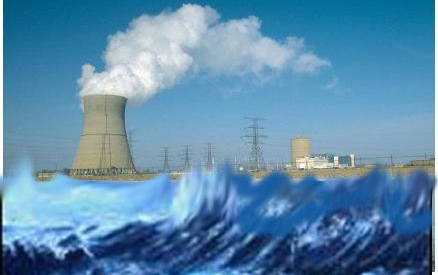 Hinkley, Sizewell and Bradwell, Stop Hinkley 10th March 2020, A meeting between representatives of groups opposing new nuclear development, the Office for Nuclear Regulation (ONR) the independent nuclear safety regulator, and the Environment Agency discussed how the ONR regulates against external hazards.
2018. According to minutes of meetings held by ONR’s group of climate
change experts, projections of sea level rise for the year 2100 contain
“considerable uncertainty” and ” small changes to UK storm systems can
alter the height of storm surges significantly”. Crucially, sea level has a
huge effect on the severity of storm surges. An increase in sea level of
one metre could mean that a storm of a severity currently expected only
once every thousand years is likely to occur once every decade. The meeting
took place in Bridgwater on 28th January 2020. Stop Hinkley was joined by
Together Against Sizewell C (TASC) and Blackwater Against New Nuclear Group
(BANNG). The groups are questioning the viability of the three coastal
sites which are all vulnerable to the impacts of flooding, storm surges and
coastal processes which will inevitably intensify in coming years.
1 This Month
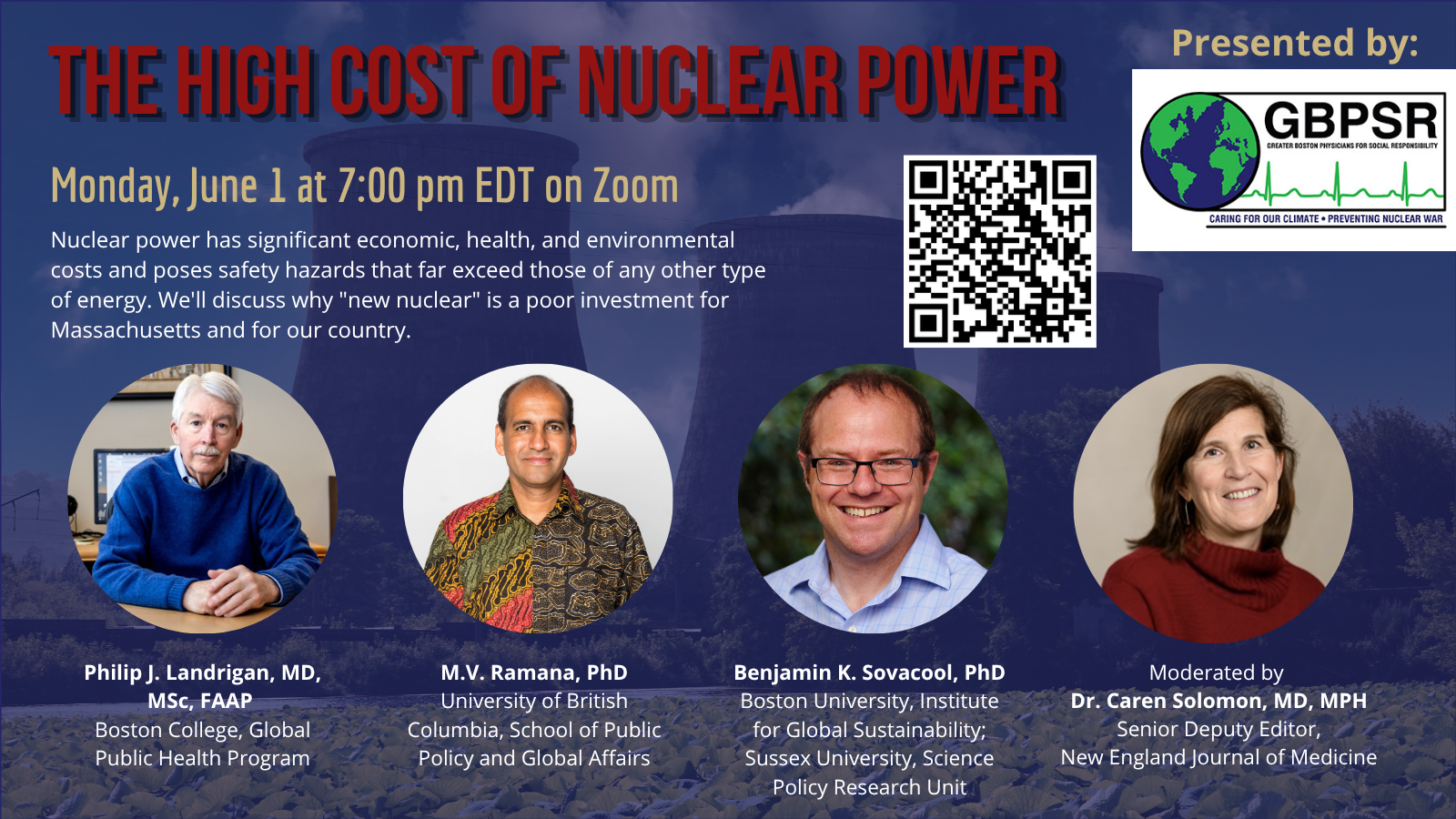
1 June Webinar – The High Cost of Nuclear Power – Register


of the week– Nuclear Reactor Information Task Force
To see nuclear-related stories in greater depth and intensity – go to https://nuclearinformation.wordpress.com
-
Archives
- May 2026 (235)
- April 2026 (356)
- March 2026 (251)
- February 2026 (268)
- January 2026 (308)
- December 2025 (358)
- November 2025 (359)
- October 2025 (376)
- September 2025 (257)
- August 2025 (319)
- July 2025 (230)
- June 2025 (348)
-
Categories
- 1
- 1 NUCLEAR ISSUES
- business and costs
- climate change
- culture and arts
- ENERGY
- environment
- health
- history
- indigenous issues
- Legal
- marketing of nuclear
- media
- opposition to nuclear
- PERSONAL STORIES
- politics
- politics international
- Religion and ethics
- safety
- secrets,lies and civil liberties
- spinbuster
- technology
- Uranium
- wastes
- weapons and war
- Women
- 2 WORLD
- ACTION
- AFRICA
- Atrocities
- AUSTRALIA
- Christina's notes
- Christina's themes
- culture and arts
- Events
- Fuk 2022
- Fuk 2023
- Fukushima 2017
- Fukushima 2018
- fukushima 2019
- Fukushima 2020
- Fukushima 2021
- general
- global warming
- Humour (God we need it)
- Nuclear
- RARE EARTHS
- Reference
- resources – print
- Resources -audiovicual
- Weekly Newsletter
- World
- World Nuclear
- YouTube
-
RSS
Entries RSS
Comments RSS
 nuclear-news