EDF workers at Hinkley Point C nuclear site are a major health risk to local residents

 accommodation around Hinkley Point are a major health risk to residents and should be moved out to purpose-built campuses which have strict health precautions, local councillors urged this week.
workforce by half to around 2,000 in the coming days in an attempt to limit
the spread of the coronavirus, it was claimed that while residents were in
lockdown, HPC construction workers could “come and go as they wish”.
“People are very scared and concerned,” said Cllr Chris Morgan,
chairman of Stogursey Parish Council and the area’s councillor on
Somerset West and Taunton Council. “What is happening is a recipe for
disaster.”
Hinkley workforce, “you have still got a very large group of people doing
what everyone else has been told not to do. “We have a large multiple
occupation building (HMO) in the middle of the village, another in Castle
Street, one in Burton and many rented rooms, all full of people going to
work, coming back, using the shops, all mixing together.
particularly in Stogursey parish, is that we still have contractors who
quite rightly go home at the weekends, some to the Covid 19 hotspots of
South Wales and the West Midlands, and then return to the middle of our
local community, totally untested, before they return to the site.
measures can be taken, but at the moment it seems that the only real
control over the situation would be to shut the site down, which I don’t
think will happen because it is a critical national infrastructure
project.” https://www.wsfp.co.uk/article.cfm?id=123896&headline=Health%20fears%20over%20Hinkley%20workers
EDF, French company building Hinkley Point power station, shifts workers’ costs to UK govt
Coronavirus: EDF to furlough Hinkley Point workers after reducing site numbers, Edward Thicknesse CITY A.M. 29 Mar 20, Hundreds of workers at EDF’s Hinkley Point C nuclear plant are being furloughed after the firm decided to cut the number of workers on site by more than half.
In an attempt to cut costs, the Telegraph reported that many of the site’s workers are being moved onto the government’s employee retention scheme, which guarantees them 80 per cent of their wages.
In an attempt to cut costs, the Telegraph reported that many of the site’s workers are being moved onto the government’s employee retention scheme, which guarantees them 80 per cent of their wages.
Although some of the 2,000 or so workers moved off the nuclear site in Somerset will continue to work in back office roles, the requirement to pay the majority will now shift to the government.
Those initially set to be moved onto the Treasury scheme are contractors working on the site, not EDF employees.
The French firm said: “Hinkley Point C has reduced the number of workers on its site to enable safe working. The project has not asked for any additional Government support and the majority of workers will remain in employment”.
It is understood that contractors are furloughing 500 or so employees, with the intention to bring them back onto payroll as soon as possible.
EDF has not issued a statement on whether it expects the coronavirus pandemic to impact the project’s timeline. …..
EDF’s decision to reduce its workforce came after the government came under pressure to suspend all non-essential construction work over safety concerns.
Politicians of all stripes, from London mayor Sadiq Khan to Tory ex-minister Iain Duncan Smith hit out against the government’s decision not to pause all such work for the duration of the crisis. https://www.cityam.com/coronavirus-edf-to-furlough-hinkley-point-workers-after-reducing-site-numbers/
Entire crew of nuclear submarine in coronavirus quarantine
“Orel” (K-266) is an Oscar-II class nuclear-powered submarine sailing for the Northern Fleet. Normally, the submarine has a crew of about 110 sailors.
The civilian that had met with a man infected with the coronavirus was on board “Orel” in a “business matter”, Murmansk-based news-online B-port reports.
Also, the crew of a nearby submarine and the personnel on a floating workshop are placed in quarantine.
The submarine is based in Zapadnaya Litsa, the westernmost bases of the Northern Fleet on the Kola Peninsula.
No reports have been published about any coronavirus cases in Zaozersk, the navy town where the crew and their families live.
By March 28th, Russia’s official number of coronavirus infections raised to 1,264.
The “Murmansk group” on social media channel Vkontakte says there are 12 people who have given pre-positive tests of coronavirus in the Murmansk region.
Government under pressure to suspend non-essential construction work (such as building nuclear plants)
“The judgment we have made is that in work, in many instances, the 2m rule can be applied,” he said.
However critics say public health should be prioritised over the economy during the coronavirus outbreak.
Former Tory cabinet minister Iain Duncan Smith joined those calling for a temporary suspension of work. He told the BBC: “I think the balance is where we should delete some of those construction workers from going to work and focus only on the emergency requirements.”
The confusion over who is able to work came after Prime Minister Boris Johnson’s announced a nationwide lockdown in a televised address on Monday night.
The PM said people should only leave their homes to shop for basic goods, fulfil medical needs, to exercise and to travel to work when “absolutely necessary”. However the types of work considered necessary has not yet been made clear….. https://www.cityam.com/government-under-pressure-to-suspend-non-essential-construction-work/
British small nuclear reactors to help Turkey to get nuclear weapons?
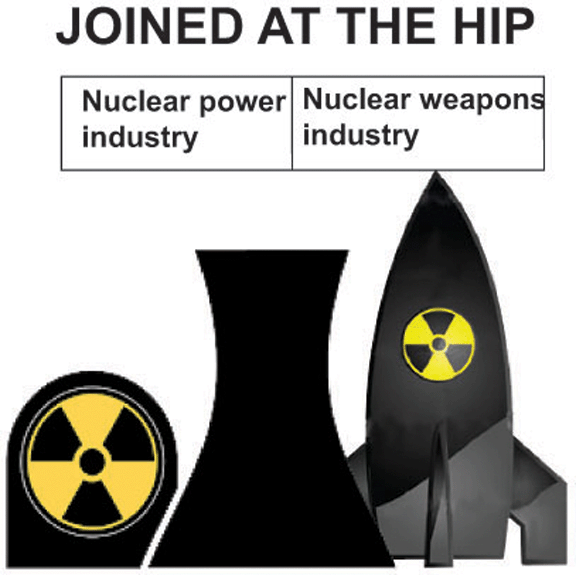 Fears over nuclear Turkey after Rolls Royce reactor deal, Morning Star,
 MARCH 25, 2020 ENGINEERING firm Rolls-Royce has struck a deal with Turkey for the production of nuclear mini-reactors, sparking fears that the British company and its international consortium partners are helping pave the way for Ankara to develop a nuclear bomb…..
the plans have raised fears that Turkey’s authoritarian President Recep Tayyip Erdogan could use the development as a step towards the country becoming a nuclear-armed power.
As previously reported in the Morning Star, Turkey’s secret nuclear programme includes plans to acquire weapons of mass destruction (WMDs), including nuclear missiles.
Writing in a pro-government newspaper in 2017, Mr Karaman said: “We need to consider producing these weapons, rather than purchasing them, without losing any time and with no regard to words of hindrance from the West.”
There are already some 70 US-owned nuclear warheads said to be based at Incirlik airbase near the southern of Adana.
In previous deals with Russia and a Japanese-French consortium, the door was left open for the development of nuclear weapons after Turkey rejected offers to include the provision of uranium and the return of the spent fuel rods used in the reactors.
The development has parallels with the Indian missile capability developed after the testing of plutonium produced in the Canadian-supplied Cirus reactor, which first raised the issue that nuclear technology supplied for peaceful purposes could be diverted to weapons production. https://morningstaronline.co.uk/article/b/fears-over-nuclear-turkey-after-rolls-royce-reactor-deal
Hinkley nuclear construction work continues, while rest of UK is in lockdown
UK and Fench govts consider nuclear construction as “essential”, so can remain open
The Government has deemed the jobs at Hinkley Point C nuclear power station near Bridgwater to be essential and French energy giant EDF says that it is “a project of critical national importance”.
The number of construction workers will now be reduced by more than half to around 2,000 to mitigate the coronavirus risk and bosses have pledged to reduce staffing levels further as the project progresses.
But critics and opponents have rounded on the decision to carry on and have called on the Government to halt proceedings.
This is putting lives at risk right across Somerset and the whole of the country. Why hasn’t the Prime Minister ordered them to stay at home – is he just pandering to the nuclear lobby? While the rest of the country is in lockdown, EDF fails to acknowledge that if someone has developed a fever, they have been incubating and spreading the virus for days beforehand.
Workers have been photographed close to each other in the canteen and sitting shoulder to shoulder on the buses which transport them to and from the site.
This is at odds with Government advice to socially distance.
They need to put something else in place. They need to consider their workers. If there is an outbreak at Hinkley Point then it would be uncontrollable. Our NHS system here in the South West is quite small compared to big cities.
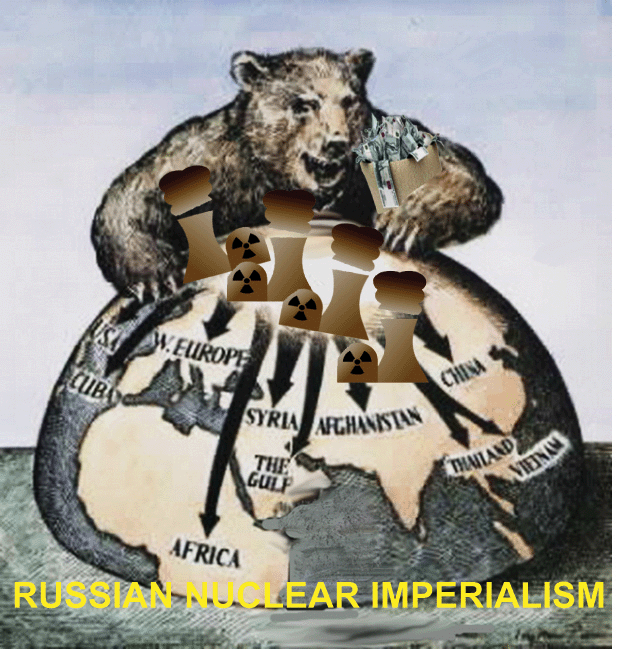
Belarus to swap gas dependence on Moscow for nuclear dependence on Moscow
|
Belarus to swap gas dependence on Moscow for nuclear dependence on Moscow https://bellona.org/news/nuclear-issues/2020-03-belarus-to-swap-gas-dependence-on-moscow-for-nuclear-dependence-on-moscowA nuclear power plant built to lessen Belarus’s dependence on Moscow for natural gas – but constructed and lavishly financed by Russia’s state nuclear corporation Rosatom – is due to begin operation later this year, officials in the Belarus capital of Minsk have said. March 24, 2020 by Charles Digges
A nuclear power plant built to lessen Belarus’s dependence on Moscow for natural gas – but constructed and lavishly financed by Russia’s state nuclear corporation Rosatom – is due to begin operation later this year, officials in the Belarus capital of Minsk have said. The plant will feature two VVER-1200 reactors – the second of which will come online next year – that will together generate some 2.4 gigawatts of power in the cloistered post-Soviet dictatorship on Russia’s western border. The International Atomic Energy Agency found that the plant largely fulfilled general safety guidelines and issued a number of recommendations for improvement. Others have raised alarm over potential safety issues. GlobalData quoted energy and nuclear policy analyst Mycle Schneider as warning: “Neighboring countries have voiced concern over the lack of review of some serious safety concerns, and Lithuania has transmitted an official note to the European Council.” Since its inception in the early 2000s, the Belarus nuclear power plant, in Ostrovets near the border of Lithuania, has been fraught with difficulties. Environmentalists who oppose the plant are routinely harassed and stifled and in some cases kicked out of the country. Neighboring Lithuania, once seen as a promising potential market when construction began, is now so opposed to the plant that its parliament outlawed purchasing any electricity it produces and has sent envoys to other countries encouraging them to do the same. Poland and the Ukraine have also spoken out against the plant. Each of these groups have called attention to the mishaps that have plagued the plant during its construction, including an incident in 2016 when technicians inadvertently dropped a 330-ton reactor pressure vessel – which houses the core – from a crane. A replacement unit sent to the site was accidentally run into a column at a railway station when it arrived. But the plant also illustrates an energy conundrum facing many European countries. While a number of nations in the old Soviet orbit seek to diversify their energy supplies away from Russian natural gas, Rosatom is more than willing to step into the vacuum left by that shift. By offering huge loans to build and supply nuclear power plants, Rosatom can keep customers financially and technically beholden to Moscow for as long as 50 years. With other kinds of power infrastructure, a contractor builds a facility and leaves it to be operated by the country where it stands. Not so with nuclear power plants, where foreign government customers, like Belarus, remain dependent on Rosatom – and thus the Russian state – for fuel, know-how and eventual decommissioning works. That geopolitical strategy is not lost on Lithuania, whose prime minister recently told the New York Times that: “The [Ostrovets} nuclear plant is an example of Russia’s desire to keep states along its borders in its orbit at all costs – it helps them preserve more influence.” The policy is has broad implications. Rosatom has convinced dozens of countries to sign memorandums of understanding on all manner of nuclear services, from research and training facilities to nuclear power plant construction. As a result, Rosatom says that its portfolio of foreign projects has swelled to more than $200 billion. But that figure invites skepticism. Many of the counties Rosatom counts toward that figure – like Ethiopia, Algeria, Nigeria, Sudan and Rwanda – won’t be ready to support nuclear power on their grids for decades. Others where Rosatom builds are already underway – like India’ Kudankulam, Iran’s Bushehr and China’s Tianwan – are already familiar with Rosatom’s typical cost overruns and delays. Furthermore, a deep dig into Rosatom’s claimed income by the Russian environmental group Ecodefence revealed that business wasn’t going quite as indicated. A report by the group, published last year, detailed a number of cases where the corporation misstated the worth of its overseas reactor construction projects, and inflated their worth by several billion dollars. Still, the corporation is an ambitious and successful presence on the international market. According to one study, cited by the New York Times, Rosatom has sold more nuclear technology abroad since 1999 than the United States, France, China, South Korea and Japan combined. Rosatom’s approach to marketing its reactors is distinct from its western competitors because it offers to finance, build and operate the plants that it builds abroad. These generous terms come thanks to the enormous state subsidies Rosatom receives – and which it can then funnel into loans that boost its profits on paper. The Belarus plant, for instance, comes thanks to a $10 million line of credit from Rosatom. Hungary, a member of the EU, became another customer when it took an $11 billion loan to build its Paks II in 2016. Rosatom also won a $30 billion contract for four reactors in Egypt, and another big nuclear plant deal in Turkey. While it’s tempting to see a strategy afoot in Rosatom’s foreign projects, the Kremlin insists it’s just business. President Vladimir Putin has publicly distanced himself from mixing politics with foreign commerce. |
|
Moscow preparing highway though nuclear waste site, despite protests
|
Moscow starts work on highway through nuclear waste site https://www.dw.com/en/moscow-starts-work-on-highway-through-nuclear-waste-site/a-52864335Preparation for the construction of a controversial road in the Russian capital has kicked off. Activists say it could send radioactive dust into the air and river. But the authorities are pushing on with the project. Residents film on their mobile phones as an excavator broke ground to prepare the construction site. They film through the shoulders of a row of police officers, pointing out that no one is wearing protective clothing for work on a nuclear waste site. “These comrades are protecting us from the radiation,” says one woman sarcastically about the officers. “Just wonderful.”
Behind the police line is a factory that produces military equipment. The onetime Polymetals factory used to extract thorium and uranium from ore and dump radioactive waste here in the 1950s and 1960s, before this spot became part of the territory of the capital. The site stretches along the sloping banks of the Moskva River, with the popular Kolomenskoe park on one side and residential apartment blocks on the other. Since January, Sergey Vlasov has been one of around 50 local activists standing guard at the site around the clock to prevent construction. “My family has lived here for decades,” he says. “It’s my home and I don’t want to have to move to avoid the threat of nuclear radiation. I don’t want to have to worry about them thoughtlessly digging this all up and radioactive dust being released into the air.” Vlasov is an elected deputy in the municipal council of the Pechatniki district across the river, and he also worries about representing his voters. There have been several protests against the highway, which demonstrators have call the “Road to Death.” Another local resident, Anna, whose windows look out on the nuclear waste dump, says the project is “scary” and complains that the police officers here are essentially “acting as security guards for the bridge building company.” Killing two birds with one stone
According to city authorities, the planned highway and flyover will help with Moscow’s chronic traffic problems by connecting districts and helping free up the city’s main ring road. In an official blog post Moscow’s mayor, Sergey Sobyanin, wrote in January that although the highway is no “panacea,” there are “no logical alternatives” to it. He did, however, admit for the first time that the area is contaminated. Sobyanin insists that construction of the highway will “solve two problems at once” by “radically improving the transportation situation and eliminating a radioactive dump.” On the other hand, the city authorities have repeatedly insisted that the actual highway will not cut through the nuclear waste itself. On its website the city planning department explains that the current work is merely preparation for construction, and that they will only begin work on the flyover after “positive results” confirm that the area is clean. Beneath the surface But the cleanup is difficult. The government agency in charge of it, Radon, has been removing contaminated soil from the site for years to prevent slippages. In an agency publication from 2006, Radon’s chief engineer for Moscow, Alexander Barionov, said that the hilly location of the site would make a full cleanup tough. “One incautious step, and radioactive soil gets into the river.” Rashid Alimov from the Russian branch of Greenpeace thinks authorities should not be digging in the area without having carried out a full ecological evaluation of the site. “We don’t really even know to what extent the company, Radon, understands where exactly the nuclear waste is and how deep it really is in the ground.”
The authorities did check the area ahead of the decision to build. But Greenpeace insists they were too superficial, and the group is taking the city to court to get that evaluation declared invalid. “Our position is that this place should have officially been declared a nuclear waste dump,” Alimov says. Greenpeace carried out its own tests with an external company in October and found that radiation in several samples from the area is “above the permissible norm” and that building work should not be carried out there. Alimov also points out that the government is contradicting itself. He cites a 2017 report from the official Russian consumer watchdog Rospodtrebnadzor on the “sanitary and epidemic” conditions in Moscow, which stated that there were 60,000 tons of nuclear waste by the former Polymetals factory. “That’s a very inconvenient number for Moscow authorities now,” he says. Keeping up the fight But many local residents seem to feel that the work being done ahead of building shows the authorities will most likely go ahead with their plans no matter what. Still, even after the excavators arrived, they were as determined as ever to stand their ground, despite the high police presence at the construction site. Authorities have opened a criminal case against several activists for apparently damaging a radiation monitor on the site. And there were several standoffs between protesters and police last week. On Thursday, over 60 activists were briefly detained. Vlasov says that since the arrests the residents have been regrouping. They may have to call off their shift duty at the construction site, he says. But just like Greenpeace, they are hoping to take authorities to court over the highway plans. “Of course we will keep fighting,” he says. “We plan to take this case to court — even though no one really believes we can win.”
|
|
Sellafield nuclear facility cuts back drastically on staff working onsite

 In Cumbria 22nd March 2020, Sellafield is telling the vast majority of its workers to stay away from its main site and satellite offices and to work from home. Mark Neate,
director of environment, safety and security with Sellafield Ltd, has told
employees: “We will minimise attendance at all of our sites and wherever
possible everyone should continue (or start) working from home.
https://www.in-cumbria.com/news/18325910.sellafield-workforce-told-stay-home/
Why using hydrogen to supply heating would be a terrible choice
energy. Even if the hydrogen was sourced from renewable energy (and not much of it will be) the result would be a grandiose waste of renewable energy. This is because using hydrogen from renewable energy to heat buildings is around four times less energy efficient compared to using heat pumps (using renewable electricity) to supply heating in buildings.
enough to 100 per cent. Second, such a programme will provide support for a continued fossil fuel industry. A third reason is that using ‘blue’ hydrogen, in as much as it succeeds in paving the way for supply of renewable hydrogen, will lock in a huge wastage of renewable energy
compared to using this renewable energy much more efficiently.http://realfeed-intariffs.blogspot.com/2020/03/why-using-hydrogen-to-supply-heating.html
Hinkley nuclear worker concerned at coronavirus risks at the site
station but has seen no changes.
https://www.somersetlive.co.uk/news/somerset-news/worker-fears-spread-coronavirus-hinkley-3967724
Seabrook Nuclear plant operating with limited staff
Nuclear plant operating with limited staff Gloucester Daily Times, By Jack Shea Staff Writer, 22 Mar 20
- SEABROOK, N.H. — Amid the ongoing coronavirus pandemic, the company that owns the Seabrook, New Hampshire, nuclear power plant is continuing to operate the facility with only essential personnel, while the Nuclear Regulatory Commission is doing most of its work to monitor the plant remotely.
In a statement Friday afternoon, Lindsay Robertson, spokesperson for NextEra Energy, which owns the Seabrook nuclear plant, said the company has implemented its “pandemic plan,” and is following its procedures for ensuring continuity of service……..
According to Diane Screnci, spokesperson for the NRC, the commission is continuing oversight of the Seabrook plant and other facilities licensed by the commission, although much of the work is being done over the phone.
Screnci said the NRC’s resident inspectors are onsite at a reduced frequency, and are able to do their jobs remotely……
The C-10 Foundation monitors the safety of the Seabrook nuclear power plant because six Massachusetts communities — Amesbury, Merrimac, Salisbury, Newburyport, Newbury and West Newbury — are within a 10-mile radius of the plant and are considered part of the New Hampshire plant’s emergency planning zone. https://www.gloucestertimes.com/news/local_news/nuclear-plant-operating-with-limited-staff/article_b477e508-1332-5eb5-8592-3d9426ab897d.html
Bulgaria delays deadline for Belene nuclear project bids
French energy company EDF’s Framatome and U.S. group General Electric, which had both offered to provide equipment for the 2,000 megawatt project and arrange financing, will also be part of the process.
“At the moment we cannot provide access to the data room for the project. So we would have to extend the deadline for filing bids until we can grant such access,” Energy Minister Temenuzhka Petkova said. “It would mean a delay of a month, month and a half.”
She added that all shortlisted bidders remain interested.
Sofia has revived the Belene project to make use of two nuclear reactors it bought for more than 620 million euros from Rosatom in compensation for scrapping the original project in 2012. It plans to have the project operational in 10 years. ($1 = 0.9351 euros) (Reporting by Tsvetelia Tsolova Editing by David Goodman)
Britain’s Trident nuclear submarine base is in the grip of a Coronavirus scare
Coronavirus crisis at UK’s nuclear submarine base as twenty staff show COVID-19 symptoms and are forced into isolation Daily Mail,
By JAKE WALLIS SIMONS ASSOCIATE GLOBAL EDITOR FOR MAILONLINE 20 March 2020 Britain’s Trident nuclear submarine base is in the grip of a Coronavirus scare, MailOnline can reveal. Her Majesty’s Naval Base Clyde, the home of the UK nuclear deterrent in Scotland, has nearly 20 possible cases of infection so far. Servicemen and women reporting Covid-19 symptoms have been isolated in sealed rooms with ‘no entry’ signs taped to the doors. The number of possible victims is currently in the ‘low teens’, a source said, and preparations are underway for a major outbreak. The top floor of the Linton Block, one of 17 accommodation buildings at the facility, has been converted into a makeshift quarantine unit and sealed off. A medical team equipped with masks and yellow biohazard bags was seen at work on the base last week. A Ministry of Defence source insisted that Britain’s nuclear deterrent remains fully operational and that there is no possibility of a national security emergency. So far nobody has tested positive on the base, he added, though he acknowledged that testing has not been carried out in every case, in line with Government guidelines. Staff have complained at being ‘left in the dark’, saying they have not been informed about the virus risk at the facility. ‘Nobody knows what is going on and it’s making people frightened,’ one told MailOnline on condition of anonymity. ‘We have not had a single communication to tell us what is happening, and every day more rooms are sealed off. ‘Everyone here is expected to put our lives on the line for the Navy. We just want the Navy to level with us and tell us what the risk is.’ A Ministry of Defence source said that the jigsaw of different private firms and Navy units that operate the base has made it difficult to communicate news about the virus effectively to all staff. The source said: ‘The base is endeavouring to ensure all personnel are aware of the situation and the measures being taken to safeguard personnel.’ HMNB Clyde, commonly known throughout the Navy as ‘Faslane’, is home to 3,000 service personnel, 800 of their families and 4,000 civilian workers, mainly from the engineering firm Babcock International. The Linton Block, where the quarantine facility is being set up, is opposite the ‘Supermess’, one of the base’s major leisure hubs. In addition to separate bars for officers and sailors, there are restaurants, cafes and shops, with a bowling alley, ski slope, swimming pool and gym nearby. All of these are now seen as a ‘petri dish for the virus’, according to personnel serving at the site, and most are being closed down as the top brass prepares for the worst. The sports schedules, which include circuit training and team events such as football, rugby and boxing, have been cancelled, and the swimming pool has been shut in an effort to combat the spread of the disease………https://www.dailymail.co.uk/news/article-8131755/Coronavirus-crisis-UKs-nuclear-submarine-base.html |
|
1 This Month
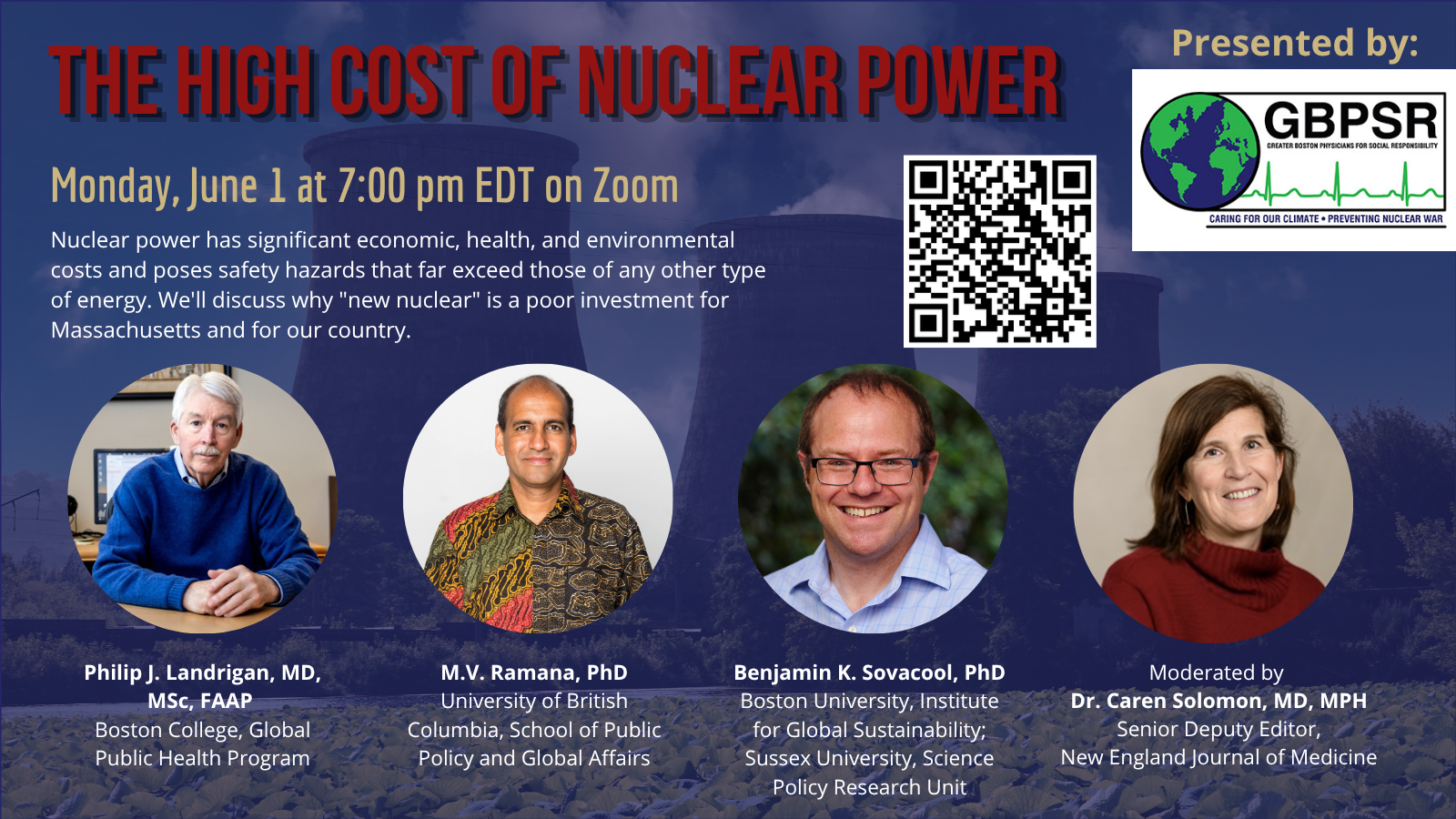
1 June Webinar – The High Cost of Nuclear Power – Register


of the week– Nuclear Reactor Information Task Force
To see nuclear-related stories in greater depth and intensity – go to https://nuclearinformation.wordpress.com
-
Archives
- May 2026 (235)
- April 2026 (356)
- March 2026 (251)
- February 2026 (268)
- January 2026 (308)
- December 2025 (358)
- November 2025 (359)
- October 2025 (376)
- September 2025 (257)
- August 2025 (319)
- July 2025 (230)
- June 2025 (348)
-
Categories
- 1
- 1 NUCLEAR ISSUES
- business and costs
- climate change
- culture and arts
- ENERGY
- environment
- health
- history
- indigenous issues
- Legal
- marketing of nuclear
- media
- opposition to nuclear
- PERSONAL STORIES
- politics
- politics international
- Religion and ethics
- safety
- secrets,lies and civil liberties
- spinbuster
- technology
- Uranium
- wastes
- weapons and war
- Women
- 2 WORLD
- ACTION
- AFRICA
- Atrocities
- AUSTRALIA
- Christina's notes
- Christina's themes
- culture and arts
- Events
- Fuk 2022
- Fuk 2023
- Fukushima 2017
- Fukushima 2018
- fukushima 2019
- Fukushima 2020
- Fukushima 2021
- general
- global warming
- Humour (God we need it)
- Nuclear
- RARE EARTHS
- Reference
- resources – print
- Resources -audiovicual
- Weekly Newsletter
- World
- World Nuclear
- YouTube
-
RSS
Entries RSS
Comments RSS
 nuclear-news