As at 5 April, radiation levels in Chernobyl area were 16 times above normal, due to forest fires
 A FIRE AT CHERNOBYL IS RELEASING LARGE AMOUNTS OF RADIATION, https://futurism.com/the-byte/fire-chernobyl-releasing-radiation APRIL 6TH 20__JON CHRISTIAN__ Ukrainian authorities say a forest fire is causing radiation levels to spike in the area of Chernobyl, a nuclear power plant that melted down in 1986.“There is bad news — in the center of the fire, radiation is above normal,” wrote Egor Firsov, the head of Ukraine’s ecological inspection service, in a Facebook post. “As you can see in the video, the readings of the [Geiger counter] are 2.3, when the norm is 0.14. But this is only within the area of the fire outbreak.” A FIRE AT CHERNOBYL IS RELEASING LARGE AMOUNTS OF RADIATION, https://futurism.com/the-byte/fire-chernobyl-releasing-radiation APRIL 6TH 20__JON CHRISTIAN__ Ukrainian authorities say a forest fire is causing radiation levels to spike in the area of Chernobyl, a nuclear power plant that melted down in 1986.“There is bad news — in the center of the fire, radiation is above normal,” wrote Egor Firsov, the head of Ukraine’s ecological inspection service, in a Facebook post. “As you can see in the video, the readings of the [Geiger counter] are 2.3, when the norm is 0.14. But this is only within the area of the fire outbreak.”
Since Chernobyl’s deadly 1986 meltdown, the area around the plant has remained uninhabited — allowing nature to take over the abandoned town. But now the blaze is reigniting the specter of the decades-old disaster site. Residents of the Ukranian capital of Kiev are even concerned about breathing in the radiation, according to The Guardian, which is about 60 miles south of Chernobyl, though Firsov said there was not yet cause for alarm. Authorities say that a 27-year-old man has admitted that he set the fires “for fun,” according to The Guardian. It’s unclear whether the radiation levels will continue to spike or die down as firefighters continue their work in the area, but Firsov said that as of Sunday, radiation levels at the site were about sixteen times the norm. |
|
More delay in planning application for UK’s Wylfa Newydd nuclear project
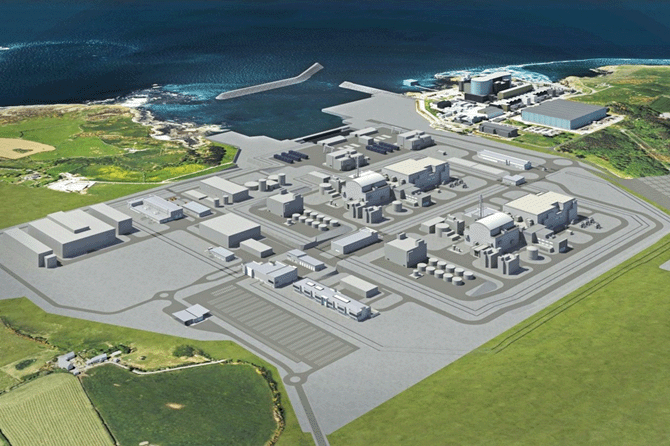
Wylfa Newydd planning decision delayed again, NEI, 6 April 2020 A planning decision over the Wylfa Newydd nuclear power plant in Anglesey has been deferred, the UK Government has confirmed.
The Wylfa Newydd project, which envisaged the construction of two UK advanced boiling water reactors (ABWRs), was suspended in January 2019 after Hitachi, failed to reach a funding deal with the UK government. However, the government had been expected to grant a Development Consent Order to construct the £12 billion power station on 31 March…… The Secretary of State (Alok Sharma) has decided to re-set the statutory deadline for this application to 30 September 2020….'”
…..EDF Energy announced last month that it was delaying submission of its planning application for Sizewell C by a “few weeks” due to the coronavirus crisis. Construction work at Hinkley Point C has also been scaled back. https://www.neimagazine.com/news/newswylfa-newydd-planning-decision-delayed-again-7859280
EDF’s hypocrisy -Hinkley C nuclear construction continued, despite pandemic, as “essential” work

Bridgwater Mercury 4th April 2020 Roy Pumfrey: WHILE EDF has gone halfway by reducing the number of workers on the Hinkley C (HPC) site, the company seems reluctant to shut HPC down completely (‘HPC construction continues’, Mercury, March 24) due to the Coronavirus pandemic.
An EDF statement talked about reducing worker numbers ‘further as work already in progress is completed’, but was not specific about which work was so critical that it couldn’t be terminated now and how much longer it would carry on.
This is in stark contrast to the situation at Flamanville in France (HPC’s sister station) where EDF has stopped all but essential tasks. EDF hides behind the fig leaf of HPC being ‘a project of critical national importance’.
This is simply no longer justified. If it was okay to stop work for three weeks
over Christmas and the New Year, it must be done now when the stakes are
much higher than a holiday. At the same time, EDF promised to take more
effective measures on social distancing. Photographs of workers grouped in
bus queues and using the canteen but clearly less than 2m apart show that
this is all but impossible.
https://www.bridgwatermercury.co.uk/news/18351121.letter-shut-hinkley-c-now/
Wildfires in Ukraine: authorities say that those near Chernobyl are now extinguished
Ukraine Says Fire Extinguished Near Contaminated Site Of Chernobyl Nuclear Disaster, Emergency authorities in Ukraine say there are no signs of any fire still burning in the uninhabited exclusion zone around the decommissioned Chernobyl nuclear plant after firefighters mobilized to put out a blaze.
Radio Free Europe, 5 Apr 20, The country’s State Emergency Service said early on April 5 that background radiation levels were “within normal limits.”
More than 130 firefighters, three aircraft, and 21 vehicles were deployed on April 4 to battle the fire, which was said to have burned around 20 hectares (50 acres) in the long-vacated area near where an explosion at a Soviet nuclear plant in 1986 sent a plume of radioactive fallout high into the air and across swaths of Europe.
Fire and safety crews were said to be inspecting the area overnight on April 4-5 to eliminate any threat from sites where there was still smoldering.
The blaze required seven airdrops of water, officials said.
There was no threat to settlements, the State Emergency Service said.
Firefighters battle forest blazes near Chernobyl nuclear site
|
Ukraine battles forest fires near Chernobyl https://abcnews.go.com/Health/wireStory/forest-fire-chernobyl-boosts-radiation-level-69983859
Ukrainian says firefighters are laboring to put out two forest blazes in the area around the Chernobyl nuclear power station that was evacuated because of radioactive contamination after the 1986 explosion at the plant By The Associated Press 6 April 2020 MINSK, Belarus — Ukrainian firefighters labored into Sunday night trying to put out two forest blazes in the area around the Chernobyl nuclear power station, which was evacuated because of radioactive contamination after the 1986 explosion at the plant.
Ukraine’s emergencies service said one of the fires, covering about five hectares (12 acres), had been localized. It said the other fire was about 20 hectares (50 acres). Earlier Sunday, the head of the state ecological inspection service, Yehor Firsov, said the fires had spread to about 100 hectares (250 acres). The discrepancy in sizes could not immediately be resolved. Firsov said radiation levels at the fire were substantially higher than normal. But the emergencies service said radiation levels in the capital of Kyiv, about 100 kilometers (60 miles) south, were within norms. The fires were within the 2,600-square-kilometer (1,000-square-mile) Chernobyl Exclusion Zone established after the 1986 disaster at the plant that sent a cloud of radioactive fallout over much of Europe. The zone is largely unpopulated, although about 200 people have remained despite orders to leave. |
|
Radiation spike as forest fire hits Chernobyl nuclear zone
Radiation spike as forest fire hits Chernobyl nuclear zone https://www.deccanherald.com/international/world-news-politics/radiation-spike-as-forest-fire-hits-chernobyl-nuclear-zone-821778.html AFP, Kiev, APR 05 2020, AFP, Kiev, APR 05 2020, 21:04 IST UPDATED: APR 05 2020, 21:31 IST AFP/file photo Ukrainian authorities on Sunday reported a spike in radiation levels in the restricted zone around Chernobyl, scene of the world’s worst nuclear accident, c aused by a forest fire.
Sizewell C nuclear project: community has lost faith in the integrity of EDF
 East Anglian Daily Times (not on web) 3rd April 2020, John Rea Price: Community has lost faith in the integrity of EDF. East Anglian Daily Times (not on web) 3rd April 2020, John Rea Price: Community has lost faith in the integrity of EDF.So EDF has generously agreed to defer their application for planning consent “by a few weeks”, actually for just a month the website of the Planning Inspectorate suggests.
Mr Cadoux Hudson of EDF goes on to promise that more
time would be given for people to register as participants in the public examination. What he didn’t say is that this will be an extremely formal and legalistic process with very little opportunity for genuine engagement by members of the community and is thus a meaningless concession. He goes on to say that over eight years of public consultation EDF has tried hard to be transparent. He doesn’t seem to appreciate that the community has experienced its efforts as truculent and dismissive.
Despite repeated demands at each of the four stage of public consultation it has, in particular, failed to provide any evidence of substance and quality on the probable cumulative environmental impact of its development on this
uniquely sensitive landscape and coastline. The consequence has been that communities that were not in principle opposed to Sizewell C have become its bitterest opponents. Such is the loss of any faith in the integrity of EDF that many now believe that it will exploit the opportunity of this grave national crisis to drive its application forward as aggressively as possible.
It will thus seek to minimise the depth of scrutiny that its very
complex proposals demand at a time when statutory agencies, county, district and parish councils, conservation bodies and community groups have the least capacity to undertake this. https://www.eadt.co.uk/news |
|
Sam and the Plant Next Door – growing up by the nuclear power plant
Sam, 11, is always being told not to worry about the nuclear power plant rising next door, but for him there is lots to think about. Hinkley Point C will be Britain’s largest nuclear plant, and it’s only two miles away. Most of his classmates expect to work at the plant but Sam is determined to escape that fate.
His dream is to protect the surrounding marine life he identifies with. Like the fish, he feels unappreciated by the adults. Sam thinks the only way to reach his dream is to leave his friends behind and to go to a private school. But when he’s offered a place, his parents can’t afford the fees. As a last resort, they turn to the power company for funding, which forces Sam to decide what kind of person he wants to be. Drifting between Sam’s daily life and his dreams, a film about holding on and letting go, along the tricky passage from childhood innocence to grown-up life https://www.youtube.com/watch?v=VMhYngrEgZU&feature=youtu.be
Russia’s response to coronavirus risk for nuclear stations – isolate the nuclear workforce

 Russia’s nuclear workers isolated onsite as coronavirus spreads, Bellona, April 3, 2020 by Charles Digges, charles@bellona.no
Workers at Russia’s nuclear power plants will be isolated from the general public and required to live in onsite clinics at their respective stations as nuclear authorities tighten their response to the coronavirus after a number of industry infections.
The order came Tuesday from Rosenergoatom, Russia’s nuclear utility, and specified that both primary and back up crews of nuclear technicians, who “facilitate process continuity” would now be required check in to dispensaries at their plants, where they would be provided with daily living essentials and isolated from outside contact.
Rosenergoatom, which is a subsidiary of state nuclear corporation Rosatom, is responding to a Tuesday video address by Andrei Likhachev, the corporation’s CEO, which outlined the isolation measures.
Earlier this week, Likhachev confirmed that four Rosatom employees had tested positive for the coronavirus, the spread of which has all but ground the world economy to a halt as the number of those infected worldwide surpasses 1 million.
Russians have been told to stay home through next week on a government ordered holiday. There have been 4,149 cases of coronavirus reported by Moscow as of Friday, 34 of which have resulted in death. In his address, Likhachev asked all Rosatom employees who could feasibly work remotely had been asked to do so, though he said the corporation’s overseas reactor building projects would continue.
Rosenergoatom’s unprecedented steps to protect highly skilled nuclear specialists from falling ill from the virus mirror measures other countries are taking for their own workers to avoid power interruptions or outright plant shutdowns.
In the United States, the Nuclear Regulatory Commission is considering isolating its own workers from the effects of the coronavirus pandemic, while France – the world’s most nuclear-dependent nation – is weighing staff cuts of its own. Both France and the United Kingdom have shut down a number of their nuclear fuel reprocessing facilities in response to a spike in local infections
Rosenergoatom didn’t make clear precisely how many of Russia’s nuclear workers have been put in isolation, but its parent company Rosatom controls a sprawling network of reactors, laboratories, commercial structures and fuel fabrication facilities that employ some 250,000 people…….
Workers at the Beloyarsk nuclear power plant, 1,800 kilometers to Moscow’s east, have already been working in isolation for more than a week, after the wife of one of the plant’s technicians tested positive for the virus. https://bellona.org/news/nuclear-issues/2020-04-russias-nuclear-workers-isolated-onsite-as-coronavirus-spreads
Bosnia and Herzegovina oppose Croatia’s nuclear waste plan
 BiH warns Croatia against storing nuclear waste from Krško at borderhttps://balkangreenenergynews.com/bih-warns-croatia-against-storing-nuclear-waste-from-krsko-at-border/ Bosnia and Herzegovina Croatia April 3, 2020 An environmental impact study is underway after Croatia gave the green light to a special fund to use a former barracks near the border with Bosnia and Herzegovina for the disposal of nuclear waste from the Krško nuclear power plant. Both the government in Sarajevo and the Republic of Srpska entity protested against the decision. BiH warns Croatia against storing nuclear waste from Krško at borderhttps://balkangreenenergynews.com/bih-warns-croatia-against-storing-nuclear-waste-from-krsko-at-border/ Bosnia and Herzegovina Croatia April 3, 2020 An environmental impact study is underway after Croatia gave the green light to a special fund to use a former barracks near the border with Bosnia and Herzegovina for the disposal of nuclear waste from the Krško nuclear power plant. Both the government in Sarajevo and the Republic of Srpska entity protested against the decision.
Bosnia and Herzegovina’s Minister of Foreign Trade and Economic Relations Staša Košarac told Croatia’s Ambassador Ivan Sabolić that the neighboring country’s intention to build a storage site for radioactive and nuclear waste from Krško less than a kilometer from the border is unacceptable. The Čerkezovac location at Trgovska gora is a former army barracks near the town of Dvor. Croatia’s Fund for Financing the Decommissioning of the Krško Nuclear Power Plant and the Disposal of Krško NPP Radioactive Waste and Spent Nuclear Fuel just got the approval to use the facility. It revealed an environmental impact study would be conducted before it seeks permits. The Una river, separating the two states, is a protected area. Following earlier announcements about the project, BiH threatened to sue the other country and pursue arbitration and its officials have cited risk from seismic activity. Protests have been held as well.
Košarac claimed more than 250,000 people living near the river would be endangered if the plan is implemented and that it would be bad for the environment. BiH will continue to prove the damaging effect and mobilize its institutions, his ministry said. Čerkezovac is near the country’s northwestern tip. The fund based in Zagreb vowed to cooperate with the local community, the general public and stakeholders on the other side. It claimed that if the project goes through, it would manage the radioactive waste from Krško in a safe, systematic and standardized way. The nuclear power plant is in Slovenia, just 10 kilometers from the border with Croatia and just over 30 kilometers from the center of Zagreb. It was built jointly by the two republics, then part of Yugoslavia, in 1981. Slovenia plans to store waste in Krško’s vicinity, in Vrbina, but there is no consensus with Croatia.
Croatian authorities have filed the domestic national strategy with the European Atomic Energy Community (Euratom) for evaluation. The said study is planned to include geological work and the determination of the so-called zero radiation conditions. The fund said it would perform security analysis as well. Košarac informed Johann Sattler, Head of the Delegation of the European Union and the EU’s Special Representative in BiH, of the country’s stance. |
|
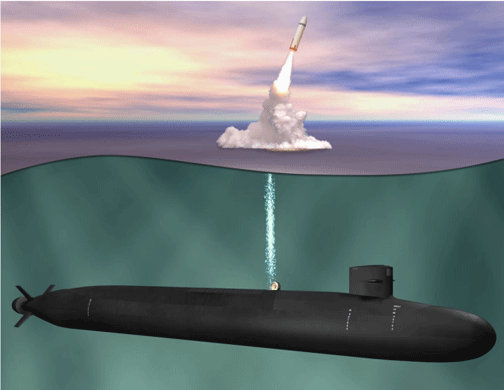
Expert opinion recommends furloughing Britain’s Trident nuclear weapons
|
Nuclear weapons law expert suggests furloughing Trident https://www.irishlegal.com/article/nuclear-weapons-law-expert-suggests-furloughing-trident 3 April 2020 A legal expert on nuclear weapons has joined calls for the UK government to rethink keeping Trident submarines at sea during the coronavirus pandemic.Professor Nick Grief of Kent Law School is among a group of signatories to a letter questioning whether the cost of keeping the nuclear weapons system on “continuous at sea deterrent patrol” is justifiable during the COVID-19 outbreak.
Other signatories to the letter, circulated to parliamentarians across the UK, include three former Royal Navy commanders, SNP Westminster leader Ian Blackford, academics and peace campaigners. The signatories have said they hope the letter will encourage politicians and the wider public to begin to question the morality and the feasibility of nuclear weaponry. It states: “The increasing cost of coronavirus will require decades to recover. Meanwhile, the UK’s Trident nuclear weapon system remains on continuous at sea deterrent patrol costing some £2 billion a year and using scarce military assets to protect the on-patrol submarine.” The letter also raises concerns about “the morale of the submarine crew on patrol” during the pandemic, as well as “their own state of health and exposure to the virus”. It concludes: “In these circumstances, and lacking any foreseeable threat of a ‘bolt from the blue’ nuclear weapon attack on the UK, is it appropriate for the government to continue spending billions of pounds on continuous at sea deterrent, as well as building new nuclear warheads and the submarines to carry them?” |
|
UK ‘s new nuclear projects further delayed
|
Nuclear project planning hit by delays, Construction News, 02 APR 2020 BY MILES ROWLAND DECISIONS ON FUTURE NUCLEAR BUILDS HAVE BEEN PUSHED BACK AT THREE POTENTIAL NEW SITES DUE TO THE CORONAVIRUS CRISIS.The planning process for Wylfa Newydd, Sizewell C and Bradwell B have all been delayed by periods ranging from weeks to months.
A decision on Horizon Nuclear’s application for a development consent order (DCO) for Wylfa Newydd – the shelved nuclear project in Anglesey, North Wales – has been pushed back by six months by the government, from 31 March to 30 September. This is the second such delay for the decision, the original deadline for which was 23 October last year. While the project was put on hold over funding issues, Horizon, a subsidiary of Hitachi, had been hopeful the project could restart following the decision and the approval of a new funding model. A statement from the Planning Inspectorate said: “The secretary of state has concluded that an additional period of time is required in order to complete his consideration in respect of environmental effects and other issues which were outstanding following the examination.”…… Decisions on future nuclear builds have been pushed back at three potential new sites due to the coronavirus crisis. The planning process for Wylfa Newydd, Sizewell C and Bradwell B have all been delayed by periods ranging from weeks to months. A decision on Horizon Nuclear’s application for a development consent order (DCO) for Wylfa Newydd – the shelved nuclear project in Anglesey, North Wales – has been pushed back by six months by the government, from 31 March to 30 September. This is the second such delay for the decision, the original deadline for which was 23 October last year. While the project was put on hold over funding issues, Horizon, a subsidiary of Hitachi, had been hopeful the project could restart following the decision and the approval of a new funding model. A statement from the Planning Inspectorate said: “The secretary of state has concluded that an additional period of time is required in order to complete his consideration in respect of environmental effects and other issues which were outstanding following the examination.”……. EDF and Horizon Nuclear have also been awaiting a decision from the government on whether the regulated asset base model could be used to fund nuclear projects, following a consultation in October. The model requires developers to spend less upfront and instead raise cash through consumer bills. A spokesman for the Department for Business, Energy and Industrial Strategy said a decision would be made “in due course”. Meanwhile, the public consultation for Bradwell B in Essex, which began last month, is to be extended by five weeks. The project is introducing new ways for the community to participate in the consultation online and on the phone, as well as allowing people to book 20-minute discussions with nuclear experts to answer questions throughout April. Ground-surveying works are continuing on site at Bradwell B, and the project is awaiting a decision from the Office for Nuclear Regulation and the Environment Agency on its design for the UK HPR1000 – a third-generation pressurised water reactor.
Last week EDF announced it was cutting its workforce on Hinkley Point C by more than half, and implemented a range of measures to encourage social distancing after criticism that its actions there had been insufficient. A spokesman declined to state whether this could cause delays to the project. It is due to be completed in either 2025 or 2026. https://www.constructionnews.co.uk/civils/nuclear-project-planning-hit-by-delays-02-04-2020/ |
|
Doctors warn on coronavirus danger for Julian Assange, imprisoned without conviction, in a coronavirus incubator
 ASSANGE EXTRADITION: Doctors Warning on Assange in a Covid-19 Breeding Ground, Consortium News,April 1, 2020 • In a prison cited for failing to curb infections, Doctors4Assange warn that Julian Assange is at high risk of contracting the deadly coronavirus. According to a report Wednesday in The Daily Maverick, imprisoned WikiLeaks publisher Julian Assange is one of only two prisoners of 797 inmates in Belmarsh Prison who are being held for skipping bail. The majority are violent criminals, including 20 percent for murder and 16 inmates on terrorism offenses. The facility was also repeatedly criticized by prison inspectors for a lapse in preventing infections to inmates. Following Judge Vanessa Baraitser’s decision to deny Assange bail last week, Doctors4 Assange released the following statement:
Doctors4Assange Statement on Assange
Bail Hearing over Coronavirus Risk, March 27, 2020 Doctors4Assange strongly condemns last Wednesday’s decision by UK District Judge Vanessa Baraitser to deny bail to Julian Assange. Despite our prior unequivocal statement[1] that Mr Assange is at increased risk of serious illness and death were he to contract coronavirus, and the evidence of medical experts, Baraitser dismissed the risk, citing UK guidelines for prisons in responding to the global pandemic: “I have no reason not to trust this advice as both evidence-based and reliable and appropriate.”[2]
Notably, however, Baraitser did not address the increased risk to Mr Assange relative to the general UK prison population, let alone prisoners at HMP Belmarsh where Assange is incarcerated. Nor did she address the rapidly emerging medical and legal consensus that vulnerable and low-risk prisoners should be released, immediately.
As the court heard, Mr Assange is at increased risk of contracting and dying from the novel disease coronavirus (COVID-19), a development which has led the World Health Organization to declare a public health emergency of international concern[3] and a global pandemic.[4] The reasons for Mr Assange’s increased risk include his ongoing psychological torture, his history of medical neglect and fragile health, and chronic lung disease.
Edward Fitzgerald, QC, representing Mr Assange, said, “These [medical] experts consider that he is particularly at risk of developing coronavirus and, if he does, that it develops into very severe complications for him… If he does develop critical symptoms it would be very doubtful that Belmarsh would be able to cope with his condition.”[5]
Baraitser’s casual dismissal of Mr Assange’s dire situation in the face of the COVID-19 emergency stood in stark contrast not only to the expert medical evidence, but the proceedings themselves. The hearing took place on the third day of the UK’s coronavirus lock-down. Of the two counsels representing Mr Assange, Edward Fitzgerald QC wore a facemask and Mark Summers QC participated via audiolink. US attorneys joined the proceedings by phone.
Mr Assange himself appeared by videolink, which was terminated after around an hour, rendering him unable to follow the remainder of his own hearing, including the defence summation and the District Judge’s ruling. Mr Assange’s supporters attending in person observed social distancing measures. Overall only 15 people were in attendance, including judge, counsel, and observers……..
Adding their legal voices to these medical and human rights authorities, the day after Mr Assange’s bail hearing, three professors in law and criminology recommended “granting bail to unsentenced prisoners to stop the spread of coronavirus”.[12]
Julian Assange is just such an unsentenced prisoner with significant health vulnerability. He is being held on remand, with no custodial sentence or UK charge in place, let alone conviction.
Doctors4Assange are additionally concerned that keeping Assange in Belmarsh not only increases his risk of contracting coronavirus, it will increase his isolation and his inability to prepare his defence for his upcoming extradition hearing, in violation of his human right to prepare a defence…… https://consortiumnews.com/2020/04/01/assange-extradition-doctors-warning-on-assange-in-a-covid-19-breeding-ground/
Russia concerned about coronavirus and nuclear safety, as four nuclear workers test positive4
 Four nuclear workers test positive for coronavirus as Rosatom steps up pandemic response Bellona, April 1, 2020 by Charles Digges The staff of at least one nuclear power plant in Russia has been put into isolation due to concerns over the spread of Covid-19, as Rosatom, Russia’s state nuclear corporation, announced a raft of measures to protect the employees of its sprawling domestic and international apparatus.
Four Russian nuclear workers have tested positive for the coronavirus and the staff of a nuclear power plant has been put into isolation while state nuclear corporation Rosatom implements a raft of measures to protect employees of its sprawling domestic and international apparatus.
As Moscow – and the rest of the world – institutes lockdowns for its citizens, Rostom says it is erring on the side of caution to protect its highly skilled workers against an international pandemic that has infected some 877,000 people around the planet. As of March 31, Russia claims 2,337 of those cases………
On Monday, Alexei Likhachev, Rosatom’s CEO said in a video address on the company’s website that he had instituted corporation-wide health checks and sanitation practices at nuclear facilities in Russia, and had sent home all employees who could feasibly work remotely.
But he left broader decisions about staff quarantines up to local authorities, both in the Russian regions where Rosatom operates facilities as well as in foreign countries.
To that end, he said that Rosatom is continuing the construction of nuclear stations abroad despite the global coronavirus outbreak. But he added that the majority of business trips scheduled for Rosatom employees had been cancelled. …….
Throughout the world, nuclear operators are grappling with the advance of the coronavirus, which causes the Covid-19 illness. Some countries, like the United States, are suggesting that nuclear power plant operators should be isolated on site to prevent their specialized staff from falling ill.
The United Kingdom has already shut down one of its nuclear fuel reprocessing sites after a portion of its technicians were forced to self-isolate after being exposed to the virus.
In France, the Le Hague reprocessing facility has likewise been stalled. And while France’s national operator EDF has refused to comment about the level of absenteeism or the number of confirmed coronavirus infections among its staff, it says its nuclear power plants could operate for three months with a 25 percent reduction in staffing levels and for two to three weeks with 40 percent fewer staff.
Rosatom’s 250,000 employees operate 38 nuclear reactors throughout Russia and staff numerous mining, technological and sales concerns throughout Europe, Asia and the Middle East. The corporation also has 36 power units at different stages of implementation in 12 countries around the world. It is currently constructing seven reactors overseas: two each in Bangladesh, Belarus and India, plus one unit in Turkey.
Sweden’s Vattenfall AB’s 44-year-old Ringhals-1 shut down, as energy prices fall
1 This Month
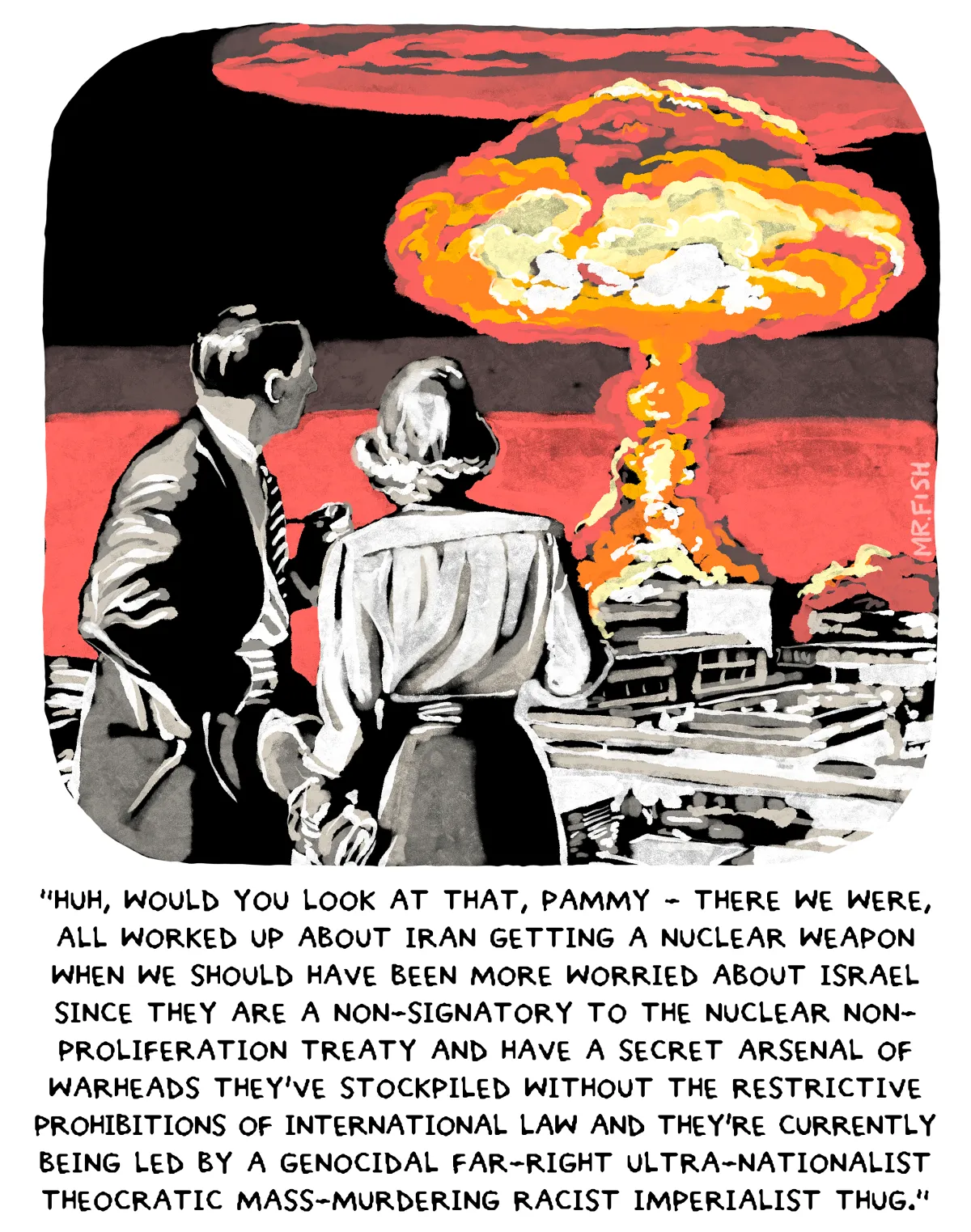
1 June Webinar – The High Cost of Nuclear Power – Register


of the week– Nuclear Reactor Information Task Force
To see nuclear-related stories in greater depth and intensity – go to https://nuclearinformation.wordpress.com
-
Archives
- May 2026 (235)
- April 2026 (356)
- March 2026 (251)
- February 2026 (268)
- January 2026 (308)
- December 2025 (358)
- November 2025 (359)
- October 2025 (376)
- September 2025 (257)
- August 2025 (319)
- July 2025 (230)
- June 2025 (348)
-
Categories
- 1
- 1 NUCLEAR ISSUES
- business and costs
- climate change
- culture and arts
- ENERGY
- environment
- health
- history
- indigenous issues
- Legal
- marketing of nuclear
- media
- opposition to nuclear
- PERSONAL STORIES
- politics
- politics international
- Religion and ethics
- safety
- secrets,lies and civil liberties
- spinbuster
- technology
- Uranium
- wastes
- weapons and war
- Women
- 2 WORLD
- ACTION
- AFRICA
- Atrocities
- AUSTRALIA
- Christina's notes
- Christina's themes
- culture and arts
- Events
- Fuk 2022
- Fuk 2023
- Fukushima 2017
- Fukushima 2018
- fukushima 2019
- Fukushima 2020
- Fukushima 2021
- general
- global warming
- Humour (God we need it)
- Nuclear
- RARE EARTHS
- Reference
- resources – print
- Resources -audiovicual
- Weekly Newsletter
- World
- World Nuclear
- YouTube
-
RSS
Entries RSS
Comments RSS
 nuclear-news