David Lowry: Covid-19 spread shows up vulnerability at heart of nuclear programmes


programmes, with resilience of UK critical national infrastructures undermined. The coronavirus’ effects act as threat multiplier, as David Lowry explains.
regulatory oversight to continue effectively across the UK? And, if this situation arose, what executive regulatory decision would be required if all operating nuclear facilities could no longer be simultaneously regulated to a legal standard?
plans should they fall below these levels, to enable them to remain in control of activities that could impact on nuclear safety under all foreseeable circumstances throughout the life cycle of the facility. In addition, licensees need minimum staffing levels to comply with their on-site and off-site emergency plans.
https://energytransition.org/2020/04/corona-crisis-hits-nuclear-sector/
The unsafety of Ukraine’s nuclear reactors: Ukrainian Association of Veterans of Atomic Energy and Industry fear “another Chernobyl”

Ukrainian Nuclear Industry Workers Sound Alarm About Threat of ‘Another Chernobyl’ https://sputniknews.com/europe/202004101078906091-ukrainian-nuclear-industry-workers-sound-alarm-about-threat-of-another-chernobyl/ RIA Novosti . Alexei Furman 10.04.2020
Ukrainian firefighters reported that radiation levels at the Chernobyl Exclusion Zone spiked to over 16 times their normal level this week as wildfires continue to ravage the desolate, forested area. The fires are said to have unleashed radioactive elements previously trapped in soil and plants into the atmosphere, carrying them into the wind.
The Ukrainian Association of Veterans of Atomic Energy and Industry, a collective of retired officials including several former heads of nuclear power plants, have declared that the country’s nuclear energy sector is in a critical state and that there is a danger of “another Chernobyl.”
“A dire situation is taking shape in the country’s nuclear energy sector,” association members warn in a letter addressed to President Volodymyr Zelensky, the prime minister and speaker of parliament, and published by local media.
The letter alleges that Energoatom, operator of Ukraine’s nuclear power plants, has not had permanent managers working based on the relevant safety permits from nuclear regulators over a space of several months now. This, they say, means that “legally, no one is responsible for the safety of nuclear power plants.”
“Is it really the case that Chernobyl was not enough for us, and we are trying to repeat it again?” the appeal urges.
The letter also warns that Energoatom faces a critical shortage of financial resources necessary to ensuring the safe operation of plants and the procurement of fuel, and asks authorities if they understand what a forced shutdown of the country’s nuclear power plants could lead to (Ukraine depends on its nuclear power plants for about half of all the electricity generated in the country).
Complaining about what they say are ongoing efforts to have individuals with no knowledge of nuclear energy placed in senior positions at Energoatom, the retired nuclear industry workers ask whether authorities “realize that all of this is a gross violation of the international nuclear safety regime.”
Ultimately, the association says they are “not asking” nor urging, “but insisting” that authorities “stop the practice of [running Energoatom by] acting heads, stop the financial discrimination of Energoatom, and prevent the country from sliding toward another Chernobyl!”
The appeal was written by senior former industry officials, including Vladimir Bronnikov, former director of the Zaporizhzhia nuclear power plant, Vladimir Korovkin, former director of the Rivne nuclear plant, and Nikolai Shteynberg, former chief engineer of the Chernobyl nuclear power plant.
Ukraine’s Nuclear Power Plants
The Ukrainian nuclear power industry operates four power plants and 15 reactors, and has the seventh-largest nuclear power-generating capacity in the world. Starting in the mid-2010s, Ukraine began turning away from Russia’s Rosatom to US nuclear power company Westinghouse for its nuclear fuel rods. However, observers have expressed concerns over the safety of the US equipment, including amid reports that its nuclear fuel rods literally didn’t initially fit into Ukraine’s Soviet-era reactors.
In popular consciousness, Ukraine’s nuclear power sector is probably most commonly associated with the Chernobyl nuclear catastrophe, which took place on the night of April 26, 1986. The disaster was the result of an experiment simulating a power outage carried out by deputy chief-engineer Anatoly Dyatlov. The test saw the blatant violation of numerous safety regulations, with Dyatlov ordering the shutdown of multiple computerized and manual safety systems to proceed with the test. Ultimately, the ‘experiment’ led to an uncontrolled reaction and steam explosion, followed by a graphite fire. 54 people died in the disaster’s immediate aftermath and cleanup operation, with 4,000 more perishing from cancers and other illnesses in the two decades that followed, according to World Health Organization figures. The disaster also contaminated some 50,000 square kilometers of land across northern Ukraine, and up to 20 percent of the total land area of neighbouring Belarus.
Over three decades on, the fallout from Chernobyl continues to cause problems for Ukraine and its neighbours. This week, Ukraine’s emergency services reported that out of control fires in the forests of the Chernobyl Exclusion Zone had spread to cover at least 35 hectares of territory, leading to a massive spike in local radiation levels.
With coronavirus problem, Hinkley Point C nuclear project should be paused

until the Covid-19 public health emergency is under full control. This repeated call comes from the NGOs and NFLA following intensive lobbying of the UK Government, the Office for Nuclear Regulation (ONR) and the Somerset local authorities responsible for the Hinkley Point C site by many of these groups, including the local Stop Hinkley group.
There have been improved efforts as well to enforce social distancing, though it remains to be seen if earlier poor practice in this area on and around the site could lead to increased infection rates in North Somerset and areas where the workforce originate from, such as South Wales and the Bristol area.https://www.nuclearpolicy.info/news/joint-statement-concerned-anti-nuclear-ngos-uk-ireland-nuclear-free-local-authorities-ongoing-construction-work-hinkley-point/
Sellafield nuclear construction stalled – paus in construction extended to April 27
|
I
  n Cumbria 9th April 2020, Sellafield has announced it is extending the pause of construction work n Cumbria 9th April 2020, Sellafield has announced it is extending the pause of construction workacross its nuclear site. Initially the firm has announced it would halt construction work until April 8. But now it has been extended to April 27.
A company spokesman said: “Our pause on construction work has been extended
while we continue to identify the key work that needs to continue and which of our key workers and supply chain are needed on site. “The pause includes all construction work currently being undertaken by the Projects Delivery Directorate and most other project work on-site, with some key exceptions where stopping work could impact on nuclear safety. https://www.in-cumbria.com/news/18369742.sellafield-extends-pause-work/ |
|
Ukrainian firefighters continue to struggle with Chernobyl are fires, amid radiation fears
|
Chernobyl fires: Radiation fears as firefighters struggle to contain blazes in radioactive zone, 9 News, By AAP, Apr 10, 2020 Ukrainian firefighters are in their sixth day of battling fires within the Chernobyl exclusion zone amid concerns over radiation that has remained in the area since the nuclear disaster more than three decades ago.
More than 300 firefighters aided by several firefighting aircraft were working to contain the blazes, which in recent days have been exacerbated by high winds.
Authorities have more than doubled the number of firefighters in the area since Monday. The extent of the blazes has not been disclosed for the past two days.
Ukrainian firefighters are in their sixth day of battling fires within the Chernobyl exclusion zone amid concerns over radiation that has remained in the area since the nuclear disaster more than three decades ago.
More than 300 firefighters aided by several firefighting aircraft were working to contain the blazes, which in recent days have been exacerbated by high winds.
Authorities have more than doubled the number of firefighters in the area since Monday. The extent of the blazes has not been disclosed for the past two days….. https://www.9news.com.au/world/chernobyl-fires-radiation-concerns-radioactive-ash-nuclear-disaster-zone/3d363469-536e-4f57-b224-1b6e27810315?fbclid=IwAR2e2d7oM4XzrapuNt_VlpZ-4Js0kwG0OdMSwp5WiwebBux7javXyTWqoYk
|
|
New START treaty must be extended, a U.S. – Russia nuclear arms race an intolerable threat to the whole world
 Extend New START — The World Can’t Afford a U.S.-Russia Nuclear Arms Race Too, JUST SECURITY, by Kingston Reif and Shannon Bugos, April 10, 2020 The unrelenting and rapid spread of the novel coronavirus underscores the cost of neglect and indecision by the Trump administration in the face of serious threats to U.S. and global security. This reckless abandonment of leadership also characterizes America’s response to other transnational challenges, including the potential for conflict on the European continent and the threat posed by nuclear weapons.
For example, The Guardian reported on April 5 that the Trump administration may withdraw the United States from the Open Skies Treaty this fall. The treaty allows for short-notice, unarmed, observation flights over the territory of treaty parties to collect data on military forces and activities, and is staunchly supported by U.S allies. Nothing screams the U.S. absence in a world starving for leadership during a pandemic than moving forward with plans to withdraw from a treaty that continues to benefit U.S. and European security and that our allies want us to continue to support.
In addition, and even more consequentially, the New Strategic Arms Reduction Treaty (New START), which was signed a decade ago this week, expires in just 10 months. New START is the only remaining arms control agreement limiting the world’s two largest nuclear arsenals. However, as the novel coronavirus emerged earlier this year, the administration continued to stiff-arm Russian overtures to prolong the life of the agreement by five years, as permitted by the accord. Instead, the administration has pursued the idea of striking an entirely new, trilateral arms control agreement that would include China in addition to Russia.
The chances of successfully negotiating such a new, complex deal were already slim before the coronavirus pandemic. Now, in the midst of what clearly will be an extended crisis, the odds are nigh nonexistent……
Extending New START will maintain a cap on the Russian nuclear arsenal and is a necessary condition for follow-on talks with Russia and new negotiations with China. As the world girds for a long fight against the coronavirus pandemic, the preservation of New START represents the best immediate option that Trump has to reduce the risks of instability and insecurity posed by the still-bloated and dangerous U.S. and Russian nuclear arsenals. https://www.justsecurity.org/69613/extend-new-start-the-world-cant-afford-a-u-s-russia-nuclear-arms-race-too/
Microbes in nuclear fuel ponds slow down the decommissioning process
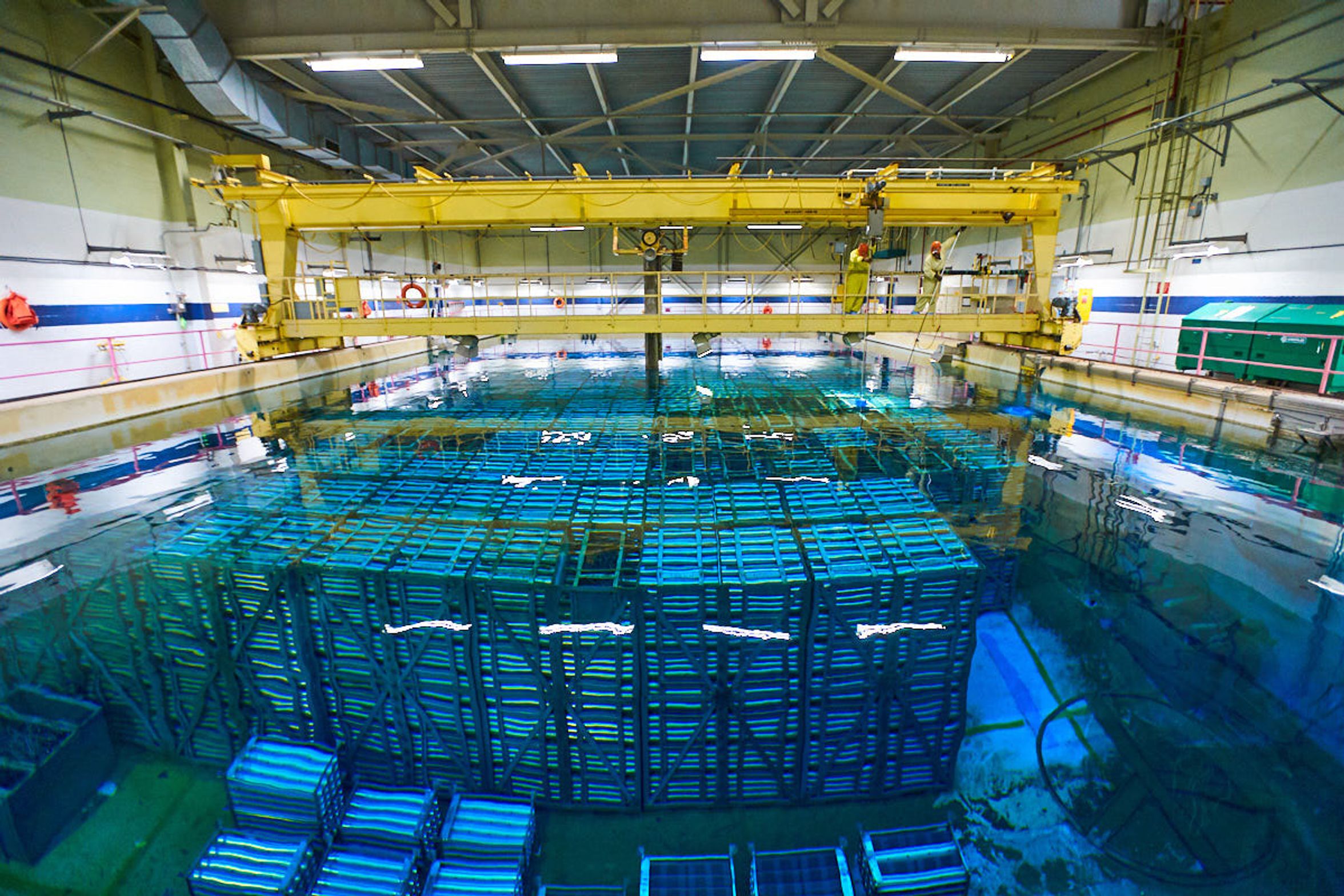 Manchester University 8th April 2020,Two new research papers from The University of Manchester, working with colleagues at Sellafield Limited and the National Nuclear Laboratory show that microbes can actively colonise some of the most intensively radioactive waste storage sites in Europe. When nuclear facilities such as
Sellafield were designed and built more than 50 years ago, it was sensible to assume that the conditions in the pond would prevent microbial life from taking hold, but now new research shows that this is not the case. The growth of microbial life in nuclear facilities can cause uncertainty or problems. Understanding how microbial life can inhabit environments such as
fuel storage ponds is vital to progress nuclear decommissioning work such as at Sellafield. Microbes are a group of organisms that, including bacteria and algae, are known to inhabit a wide range of habitats on Earth. Improvements in detection technology in recent years has allowed microorganisms to be detected in environments previously thought to be inhospitable to life. It is now becoming clear that some microorganisms are capable of withstanding surprisingly high doses of radiation, at levels significantly greater than seen in natural environments. Power Technology 8th April 2020, University of Manchester researchers have discovered microbial life can
Geomicromicrobiologists studied microbes that can cause summer blooms in
nuclear fuel storage ponds, slowing down the decommissioning process of retired nuclear plants. Summer blooms reduce visibility and disrupt fuel retrieval. University of Manchester microbiology professor Jonathan Lloyd
said: “Our research focused on Sellafield’s First Generation Magnox Storage Pond (FGMSP), which is a legacy pond that has both significant levels of radioactivity in conjunction with a highly alkaline pH (11.4), equivalent to domestic bleach. “The ultimate aim of this work was to identify the microbes that can tolerate such an inhospitable environment, understand how they tolerate high radiation levels, and help site operators control their growth. “The growth of the microorganisms in the FGMSP inhibits the operations in the pond, which is currently a priority for decommissioning. “ |
|
|
Nuclear Free Local Authorities (NFLA) call for more stringent safety measures, and the closure of EDF’s old nuclear reactors
|
Ardrossan Herald 8th April 2020, Six safety incidents have been reported at Hunterston including concerns about the nuclear plant’s cooling systems, fuelling machine and cracks in the reactors’ graphite core. The UK government’s safety watchdog, the Office for Nuclear Regulation, said that Hunterston had “failed to adequately account for” radioactive materials last October. The Scottish Environment Protection Agency (SEPA) also disclosed that unauthorised radioactive “debris” was found in a supposedly empty fuel flask that had been returned to Hunterston from the Sellafield site. The Nuclear Free Local Authorities (NFLA) are calling for North Ayrshire Council to take more stringent measures regarding the plant and for EDF to close down old reactors. NFLA Scotland Convenor, Councillor Feargal Dalton said: “These
incidents confirm in our view that these aging reactors would be better being closed and the workers transferred into the long-term process of decommissioning Hunterston B.” |
|
Call to stop construction at Hinkley C nuclear project, due to coronavirus risk
Allan Jeffrey of Stop Hinkley talks to the Extinction Rebellion Radio Show. Rebel Radio 7th April 2020
https://www.mixcloud.com/XR_RebelRadio/rebel-despatches-hinkley-point-07042020/
BBC Points West 8th April 2020, Bus drivers carrying workers to Hinkley Point C construction site are
worried their lives are being put at risk. Every day a fleet of vehicles drops of and picks up hundreds of staff. The bus company says its putting in screens to protect the drivers, but work hasn’t been complete yet.
Bus drivers are calling for construction to stop. For the safety of everybody it makes more sense to close the site down. They are showing no regard for human life and potentially putting everyone in a situation where people
could die. Drivers are expressing their concern on social media and sending pictures which seems to show lack of social distancing. There are concerns too about the movement of workers who come from outside the area.
https://www.bbc.co.uk/iplayer/episode/m000h59p/points-west-late-news-08042020
Sweden’s wind power on the way to putting nuclear out of business
 Giant Wind Park Starting Up Is Another Blow to Nuclear Industry
A surge in renewable energy output in the Nordic region has sent power prices below the level where some nuclear plants are profitable. Bloomberg Green, By Lars Paulsson April 8, 2020, Sweden’s biggest wind farm began producing power this month, and the region’s nuclear reactors are feeling the heat.Vasa Vind AB’s Askalen started commercial output on April 1, increasing supplies in a market already bloated by a massive surplus of water for power generation. A day later, two units at Vattenfall AB’s Forsmark nuclear plant north of Stockholm curbed output by about 50%. Two reactors at the utility’s Ringhals plant are halted because of low power prices.
While there’s no direct link between those events, it’s the latest sign of how renewable energy is crowding out traditional power sources across Europe. The 288-megawatt facility in northern Sweden will boost the nation’s wind output further, after a 50% jump in the first quarter from a year earlier because of a very breezy winter.
“This could mean more frequent periods with rock bottom power prices, forcing conventional generators off the grid, especially when windy conditions coincide with high hydro output,” said Oliver Metcalfe, lead analyst for onshore wind research at BloombergNEF in London.
BNEF forecasts that global onshore wind capacity will gain 9% to more than 66 gigawatts this year, a forecast scaled back from the 24% expansion first anticipated.
That will help push out more traditional coal, gas and nuclear plants from the energy system. The German and U.K. coal power industries, among others, have already been decimated by a surge in green power.
Sweden will install more than 4.2 gigawatts of new onshore wind this year and next, according to BNEF. The Nordic region’s biggest economy will rely heavily on wind to replace old nuclear reactors in the future. The Askalen park has installed 80 Vestas A/S’s V136 turbines, which are as high as 112 meters……. https://www.bloomberg.com/news/articles/2020-04-08/giant-wind-park-starting-up-is-another-blow-to-nuclear-industry
Russia wants to extend New START nuclear weapons treaty, but the U.S. has not revealed its plans
|
RUSSIA SAYS U.S. ‘UNWILLINGNESS’ IS THREATENING MAJOR NUCLEAR WEAPONS DEAL https://www.newsweek.com/russia-us-unwillingness-threatening-major-nuclear-weapons-deal-1496824 BY DAVID BRENNAN ON 4/8/20 Russia has again pointed the finger at the U.S. for delaying the extension of the New START nuclear weapons treaty, which expires next year.
Kremlin spokesperson Dmitry Peskov told reporters Wednesday that any questions about why the deal has not been extended should be directed to Washington rather than Moscow. Peskov said the Kremlin remains keen to make a deal, but has met with delay from the White House. “Actions on destruction of this document—on its non-extension—are taken not by Moscow,” Peskov told reporters, according to the Tass state news agency. “Rather, this is our U.S. colleagues’ unwillingness, and we have repeatedly expressed our regret in that regard.” The 10-year New START treaty came into force in 2011. It extended the existing START agreement, which was signed in the early 1990s. New START capped the number of deployed Russian and U.S. strategic nuclear warheads and bombs at 1,550, and the number of deployed intercontinental ballistic missiles, submarine-launched ballistic missiles and heavy bombers used for nuclear missions at 700. The total allowed number of deployed and non-deployed assets is currently 800. New START is the last of what former Soviet Premier Mikhail Gorbachev called the “three principal pillars of global strategic stability,” following the collapse of the Anti-Ballistic Missile Treaty in 2002 and the Intermediate-Range Nuclear Forces treaty last year. Russia has repeatedly said that it wants to extend New START, but the U.S. has still not revealed its plans. President Donald Trump has hinted that they wish to include China in any new deal, but experts—among them one of the original negotiators of START—have warned this is not feasible in such a short time frame. Chinese officials have dismissed any suggestion of involvement in a new treaty. Newsweek has contacted the State Department for comment on its plans regarding New START. Peskov acknowledged that the New START deal has fallen down the pecking order with the appearance of the coronavirus pandemic. Both the U.S. and Russia—like many other nations—are struggling to contain the virus. “The coronavirus has halted many vital processes,” Peskov said, “This is the reality we have to face.” Russian Deputy Chairman of the Security Council of Russia Dmitry Medvedev—who was serving as president when New START was signed—complained Wednesday that in the nine years since the deal was agreed, the U.S. has flipped from “cooperation to political pressure and unleashed an unprecedented war of sanctions against us, trying to oust Russia from the global agenda.” In an op-ed for Tass, Medvedev suggested that removing sanctions on Moscow would be a good first step to re-open New START talks. “If the New START deal ceases to exist, its demise will have extremely serious consequences for international security,” the former president and prime minister said. Russian officials including President Vladimir Putin have urged the White House to lift sanctions—imposed because of Russia’s annexation of Crimea, support of separatists in eastern Ukraine and meddling in the 2016 U.S. presidential election—to help the global response to coronavirus. |
|
Bosnia might need international arbitration over Croatia’s nuclear waste dump plan near the border
|
Bosnia May Seek Arbitration on Croatia Nuclear Waste Dispute
https://balkaninsight.com/2020/04/08/bosnia-may-seek-arbitration-on-croatia-nuclear-waste-dispute/ Nedim Dervisbegovic, Sarajevo, BIRN
April 8, 2020, Minister says Bosnia will ramp up its protests after Croatia gives go-ahead for nuclear waste store to be built near Bosnian border. Bosnia may request international arbitration if Croatia proceeds with a plan to create a nuclear waste disposal site just across the border from Novi Grad in north-west Bosnia, Foreign Trade and Economic Relations Minister Stasa Kosarac was reported as saying. Kosarac’s ministry said dumping waste from the Croatian-Slovenian jointly-owned Krsko nuclear power plant at a former military storage facility near the Croatian town of Dvor would endanger the health and lives of some 250,000 people living in 13 Bosnian municipalities along the Una River. He made the statement after speaking with a group of ministers from Bosnia’s two entities, state parliamentarians and Novi Grad’s mayor via video link on Tuesday. Kosarac reportedly informed them about his telephone conversations with the Croatian ambassador to Bosnia, Ivan Sabolic, and Croatia’s Environment and Energy Minister, Tomislav Coric, after the fund for financing the decommissioning of the Krsko power plant and the disposal of its radioactive waste said last week that it had received approval from Coric’s environment ministry to use the former Čerkezovac military barracks at Trgovska Gora near Dvor. The statement said the video conference had concluded that Bosnia’s Ministry of Foreign Trade and Economic Relations would now ask the Council of Ministers – Bosnia’s state government – to help set up legal teams “to deal with this open bilateral issue with Croatia, and that budget funds be allocated for this”. “It was also concluded that it was necessary for all relevant institutions to strengthen diplomatic activities with the goal of preventing Croatia from designating this location as the final solution for the disposal of the nuclear waste,” it added. Croatia needs to take over half of the nuclear waste from the Krsko power plant, which lies inside Slovenia, by 2023. The plant was a joint venture of the two republics when both were part of former Yugoslavia. |
Russia evacuates some employees from Bangladesh nuclear site
Rosatom evacuates some employees from Bangladesh nuclear site, https://www.neimagazine.com/news/newsrosatom-evaucates-some-employees-from-bangladesh-nuclear-site-7864853 8 April 2020 Russia’s state nuclear corporation Rosatom has repatriated 178 employees from the Rooppur nuclear power plant construction site in Bangladesh.Rosatom had to obtain government permission to evacuate its employees. Russia temporarily suspended all international flights on 3 April in an effort to prevent the spread of the coronavirus.
The first 178 employees arrived on a flight from Dhaka, which landed at the Nizhny Novgorod international airport in Russia on Monday.
Almost all of the workers were from Rosatom’s Engineering Division or were subcontractors working at the Rooppur site, where Rosatom is building two VVER-1200 reactors.
Rosatom said passengers on the flight would be tested for Covid-19, and will need to spend two weeks in isolation, under medical supervision.
More than 4000 people are involved in the construction of Rooppur NPP, so the temporary relocation of 178 employees will not affect the project schedule, Rosatom said.
Rosatom said it is taking steps to combat the spread of Covid-19 by monitoring employee temperatures at various locations on-site, issuing masks to workers and increasing disinfection of all office space.
Rooppur 1 is currently scheduled to start operating 2023, followed by Rooppur 2 a year later.
Russia gambles on safety and cost, in extending life of fast breeder reactor
One of Russia’s fast neutron reactors granted a runtime extension https://bellona.org/news/nuclear-issues/2020-04-one-of-russias-fast-neutron-reactors-granted-a-runtime-extension
Russia’s nuclear regulator has agreed to extend the operational lifetime of 39-year-old experimental reactor as part of a wide-ranging modernization program at the Beloyarsk nuclear plan. April 8, 2020 by Charles Digges
The reactor, a BN-600, is a powerful sodium-cooled fast-breeder and its continued operation marks a step by Russia toward developing a closed nuclear fuel cycle, a subject of concern among some environmentalists and nonproliferation experts.
Fast breeder reactors form the backbone of Russia’s “proryv” or “breakthrough” program, which aims to develop reactors that do not produce nuclear waste. In simple terms, these breeders are theoretically designed to burn the spent nuclear fuel they produce, thus closing the nuclear fuel cycle and creating nearly limitless supplies of energy.
But the technology has been hard to perfect. Russia is alone among nuclear nations in actually running fast-breeders with any success. Yet they have still not been able to close the nuclear fuel cycle entirely.
Under the new order, the BN-600 reactor, which began operations in 1981, would continue to function until 2025, at which point the Beloyarsk plant’s operators say it will be evaluated for yet another extension that would see it run until 2040.
The Beloyarsk plant is the site of another fast-breeder reactor, the BN-800, which began commercial operations 2016 after several long delays. The plant also hosts two AMB supercritical water reactors, one of which ceased operations in 1983, the other in 1990.
At the moment, technicians at the plant have been isolated on site to prevent their exposure to the coronavirus, which has driven most of the world’s population indoors and shuttered much of the international economy.
But Rosenergoatom, Russia’s nuclear utility still maintains high hopes for the safety and modernization plan, of which the BN-600’s runtime extension is a part. So far, the modernization plan, which began in 2009 has included the installation of a reactor emergency protection system, an emergency dampening system using an air heat exchanger and a back-up reactor control panel.
In addition, a large amount of work has been carried out on the inspection and replacement of equipment, including the replacement of the reactor’s steam generators.
But many environmental groups, Bellona among them, consider reactor runtime extensions to be worrisome territory. As the world’s nuclear reactor fleet begins to age, runtime extensions throughout the world have become routine business.
Yet because commercial power-producing nuclear reactors have only been around for a little more than four decades, the industry can’t make safe bets on their behavior over longer periods of time than that.
In particular, data on how reactor cores – which are largely irreplaceable – age over time is extremely scarce. While certain characteristics of core aging can be simulated in test reactors, such simulations can’t take all variables into account.
Individual national regulatory bodies also set the criteria for whether or not reactors are granted runtime extensions – meaning that what Japan or France consider to be safe grounds for an extension might differ from what Russia or the United States deem safe.
But as the history of Chernobyl and Fukushima show, the fallout from nuclear disasters doesn’t respect international boundaries.
However, because nuclear reactors typically cost billions of dollars to build, there is less incentive to construct new ones to replace the old. But as Chernobyl and Fukushima also showed, such decisions could cost more than the short-term savings they provide.
1 This Month
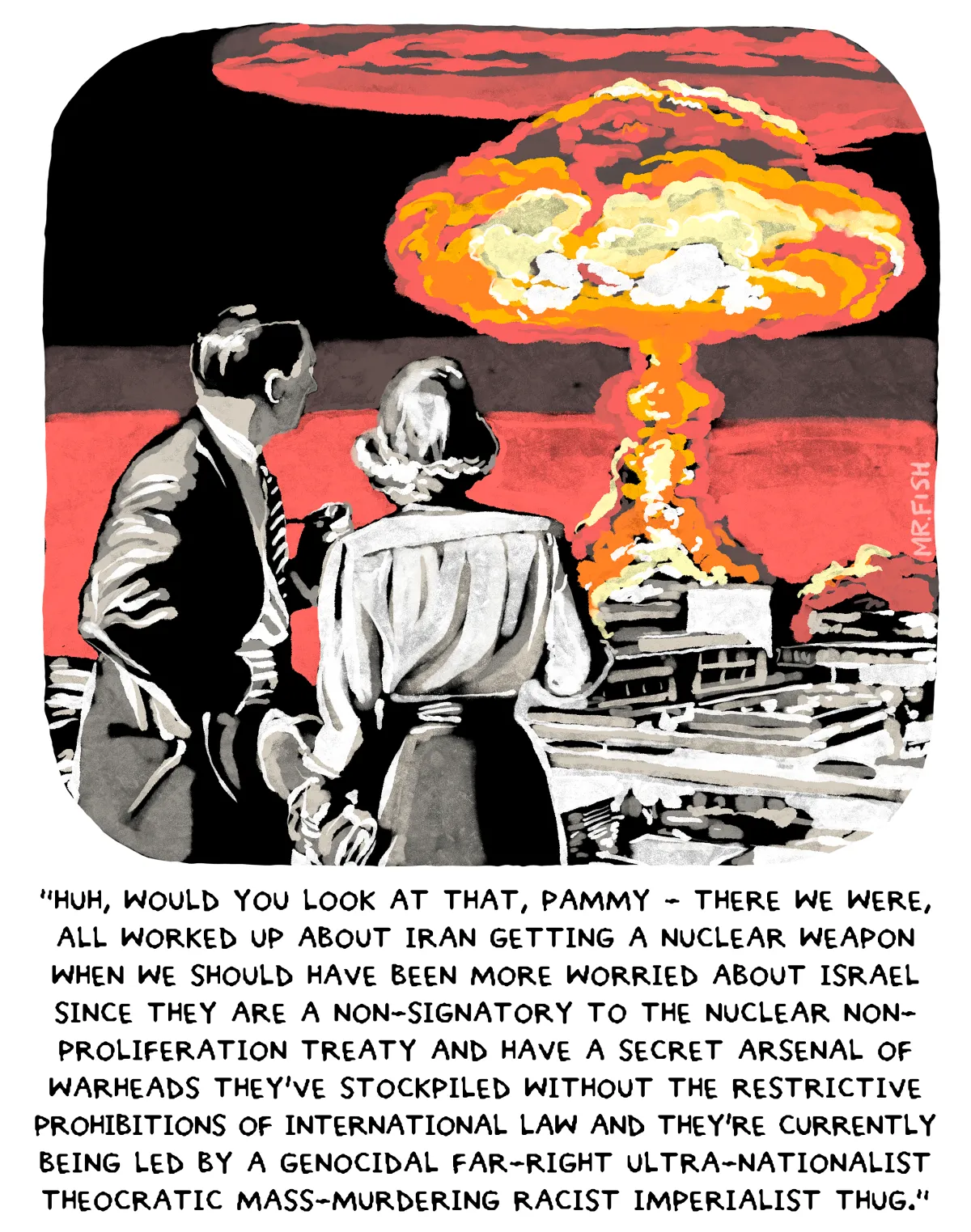
1 June Webinar – The High Cost of Nuclear Power – Register
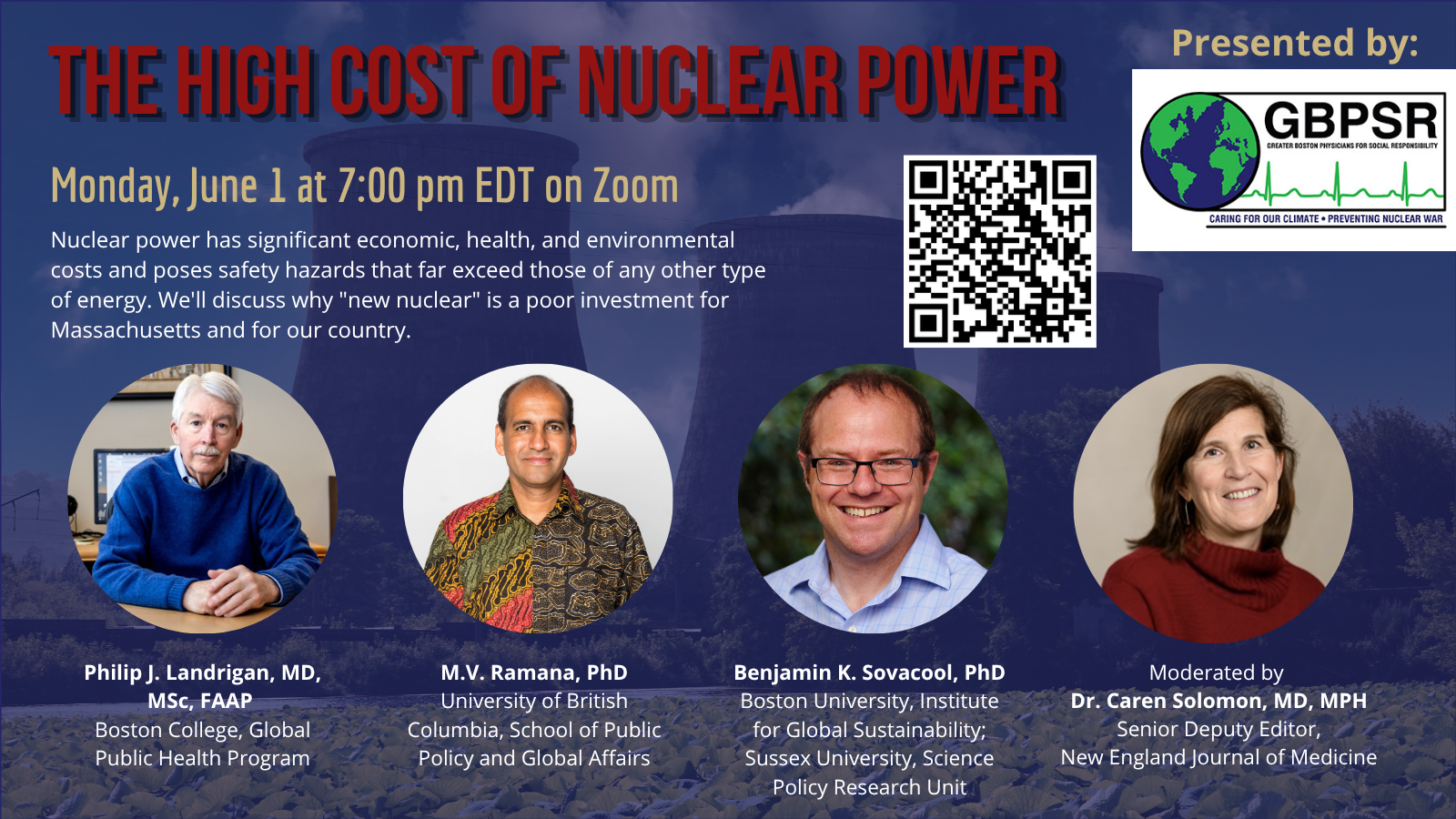


of the week– Nuclear Reactor Information Task Force
To see nuclear-related stories in greater depth and intensity – go to https://nuclearinformation.wordpress.com
-
Archives
- May 2026 (235)
- April 2026 (356)
- March 2026 (251)
- February 2026 (268)
- January 2026 (308)
- December 2025 (358)
- November 2025 (359)
- October 2025 (376)
- September 2025 (257)
- August 2025 (319)
- July 2025 (230)
- June 2025 (348)
-
Categories
- 1
- 1 NUCLEAR ISSUES
- business and costs
- climate change
- culture and arts
- ENERGY
- environment
- health
- history
- indigenous issues
- Legal
- marketing of nuclear
- media
- opposition to nuclear
- PERSONAL STORIES
- politics
- politics international
- Religion and ethics
- safety
- secrets,lies and civil liberties
- spinbuster
- technology
- Uranium
- wastes
- weapons and war
- Women
- 2 WORLD
- ACTION
- AFRICA
- Atrocities
- AUSTRALIA
- Christina's notes
- Christina's themes
- culture and arts
- Events
- Fuk 2022
- Fuk 2023
- Fukushima 2017
- Fukushima 2018
- fukushima 2019
- Fukushima 2020
- Fukushima 2021
- general
- global warming
- Humour (God we need it)
- Nuclear
- RARE EARTHS
- Reference
- resources – print
- Resources -audiovicual
- Weekly Newsletter
- World
- World Nuclear
- YouTube
-
RSS
Entries RSS
Comments RSS
 nuclear-news