nuclear-news

The News That Matters about the Nuclear Industry Fukushima Chernobyl Mayak Three Mile Island Atomic Testing Radiation Isotope

Russia dumps its plans for costly huge Nuclear Destroyer and supersized Frigate Programs

Russia Has Abandoned Its Massive Nuclear Destroyer And Supersized Frigate Programs, The Drive BY JOSEPH TREVITHICK APRIL 21, 2020  The state-run shipbuilding company responsible for both programs now has concerns about its long-term finances

Eussia’s Severnoye Design Bureau has stopped development entirely of its Project 23560 destroyers, also known as the Lider class, and the Project 22350M frigate, an expanded derivative of the Project 22350 Admiral Gorshkov class. The company has said these ships are among its most promising future offerings and the halting of the two programs has raised quThe Lider destroyer, also referred to at times as the Shkval, was clearly an extremely ambitious project, perhaps overly so, from the very beginning. Though originally intended to be a conventionally powered warship, plans subsequently shifted to a nuclear-powered design. Its expected displacement also grew from already massive 12,000 to 13,000 tons to 19,000 tons, stretching its classification as a “destroyer.” estions about its long-term financial stability.

Russian newspaper Interfax reported the new developments at Severnoye, which is part of the country’s state-owned United Shipbuilding Corporation, on Apr. 18. The information was reportedly contained in an annual review of the shipbuilder’s activities in 2019, which the outlet had obtained……

The Lider destroyer, also referred to at times as the Shkval, was clearly an extremely ambitious project, perhaps overly so, from the very beginning. Though originally intended to be a conventionally powered warship, plans subsequently shifted to a nuclear-powered design. Its expected displacement also grew from already massive 12,000 to 13,000 tons to 19,000 tons, stretching its classification as a “destroyer.”  …… HTTPS://WWW.THEDRIVE.COM/THE-WAR-ZONE/33099/RUSSIA-HAS-ABANDONED-ITS-MASSIVE-NUCLEAR-DESTROYER-AND-SUPERSIZED-FRIGATE-PROGRAMS

April 23, 2020 Posted by | Russia, weapons and war | Leave a comment

Fitch downgrades EDF’s Outlook to Negative

Fitch Revises EDF’s Outlook to Negative; Affirms IDR at ‘A-‘22 Apr, 2020
Fitch Ratings – Milan – 22 Apr 2020: Fitch Ratings has revised Electricite de France’s (EDF) Outlook to Negative from Stable, affirming the utilities group’s Long Term Issuer Default Rating at ‘A-‘. A full list of rating actions is below.

The Outlook revision mainly reflects a large production cut in nuclear generation in France related to the coronavirus pandemic, and ongoing problems with new nuclear, adding to an expected increase in leverage to slightly above our rating sensitivity on average for 2020-2022. It also reflects growing uncertainties about the nuclear-market reform in France – which we still expect to be finally implemented – in terms of timing and final impact.

KEY RATING DRIVERS

Production Cuts due to Pandemic: The pandemic and the lockdown have caused daily electricity demand to fall up to 20% yoy and depressed both spot and forward electricity prices. EDF has announced a cut of French nuclear production to 300TWh in 2020 and to 330TWh-360TWh for 2021-2022 (from our earlier assumption of 385TWh annually for the whole period), due mainly to the operational impact of the pandemic on the outages scheduled for these years and, to a lesser extent, to the drop in demand. While the announcement led to a rebound of forward prices 2021-2022 to around 45EUR/MWh, we do not expect EDF to fully benefit from it due to the ARENH reference price of 42EUR/MWh. For 2020, EDF is largely protected from the low price environment through hedging.

Large Working Capital Outflows: Another immediate consequence of the pandemic has been an increase in the number of end-customers struggling to pay their bills. In this respect, EDF will continue to supply power to households and small companies with overdue bills without penalties. ,……..

Company’s Reaction Uncertain: EDF has not yet communicated revised financial targets to the market, and we do not know what actions it will focus on to mitigate the impact of the pandemic.  …….

Problems with New Nuclear: At Flamanville, fuel loading would occur at best at end-2022 (compared with the previously estimated late-2019), implying an increase of construction costs by EUR1.5 billion (in 2015 real terms and excluding interests during construction) compared with previous estimates. HPC – the other key nuclear project of EDF – following another cost review in September 2019, sees an increase in construction costs of GBP1.9 billion-GBP2.9 billion (2015 real terms) compared with previous estimates. It remains to be seen if the pandemic will further increase the delay and cost overrun for these projects…….. https://www.fitchratings.com/research/corporate-finance/fitch-revises-edf-outlook-to-negative-affirms-idr-at-a-22-04-2020

April 23, 2020 Posted by | business and costs, France | Leave a comment

Wind or solar technologies will provide UK with 100% energy, in a predominantly electric future

Chartist 18th April 2020,   Dave Toke: As offshore wind technology fully blooms as its own distinctmass industrial technology producing power at low prices, and as the prospect of floating wind turbines comes closer, the potential for the technology threatens to eclipse everything else – at least in countries with a large waterline, such as the UK.
In reality solar pv technology costs are coming down at least as quickly, so that what is likely to happen in the coming years is that these two technologies will compete with each other (and with onshore wind of course) for market share. Indeed, such is the rate of cost reductions that some are now suggesting that the way to approach 100 per cent renewables targets is to minimise the use of batteries and other storage techniques, and simply to build gross overcapacity in wind and solar.
That of course ushers in the possibility of uses for excess production, such as conversion to hydrogen, but that is
another story. The story here is that on its own, the offshore wind available could generate over five times the anticipated total energy requirements for the UK in a ‘net zero carbon’ scenario – that is, based upon the Committee on Climate Change estimate that a mainly electric economy supplied from low carbon sources would require 645TWh of power generation in 2050. Wind power could do this as the cheapest electricity source available – apart from solar power of course, with which the competition will probably be intense in the future.

https://www.chartist.org.uk/offshore-wind-the-force-is-with-you/

April 21, 2020 Posted by | renewable, UK | Leave a comment

UK’s plutonium problem as it shuts down its last nuclear reprocessing facility

Bulletin of Atomic Scientists 17th April 2020, The United Kingdom’s last plutonium reprocessing plant, B205, located in Sellafield in northern England, will shut down by the end of 2020. It will bring an end to the era of plutonium separation in the country, which began 68 years ago.
Because the United Kingdom never used any of the material it recouped from reprocessing except in nuclear weapons, today it has amassed a stockpile of almost 139 metric tons of separated plutonium. This creates lasting problems: Plutonium stored in Sellafield is highly toxic and poses a permanent risk of proliferation. It is enough material to build tens of thousands of nuclear weapons.
According to parliamentary estimates, storage will cost the British government about 73 million pounds a year for the next century.
But after decades of public and private consultation, there is still no accepted plan for its disposition. In the meantime, the Nuclear Decommissioning Authority is working on the consolidation of the stockpiles in Sellafield and developing the capability to retreat the packages to allow for long-term storage once the government makes a final decision on permanent disposal.
The United Kingdom views the material as a resource and is pursuing options that involve burning the plutonium in reactors, even though multiple assessments have shown risks associated with such a choice, namely immature concepts and technology.
A better alternative would be to treat it as waste and begin planning for its permanent immobilization and
burial.   https://thebulletin.org/2020/04/britain-has-139-tons-of-plutonium-thats-a-real-problem/

April 20, 2020 Posted by | - plutonium, UK | Leave a comment

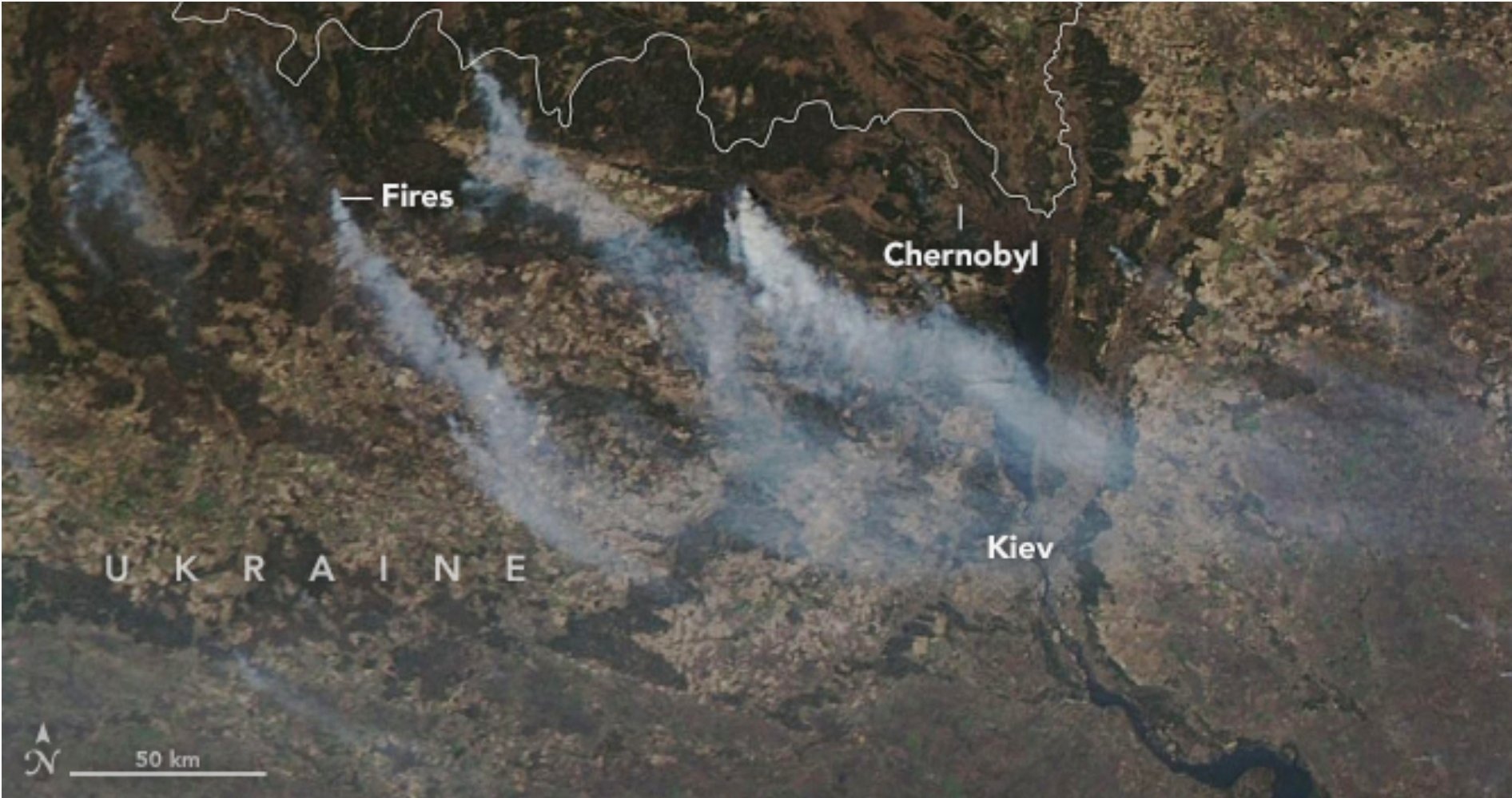
Smoke from Chernobyl area wildfires made Ukraine’s capital have the worst air pollution in the world

Unilad 18th April 2020, Wildfires burning near the Chernobyl nuclear plant have covered the capital
of Ukraine in smoke and made its air pollution among the worst in the
world. Residents burning rubbish near Chernobyl accidentally sparked fires
on April 4, and though firefighters managed to contain the initial blazes,
three new fires began to spread in the contaminated exclusion zone on
Thursday, April 16. The fires were propelled by strong winds and smoke has
engulfed the capital Kyiv. While many residents are adhering to
stay-at-home orders anyway, authorities are now encouraging residents to
close their windows to prevent the smog filling their houses.

https://www.unilad.co.uk/news/fires-blazing-dangerously-close-to-chernobyl-blanket-ukranian-capital-in-smog/

April 20, 2020 Posted by | environment, Ukraine | Leave a comment

With dry and windy conditions, new areas of ‘smoldering’ reported near Chernobyl nuclear plant

New areas of ‘smoldering’ reported near Chernobyl nuclear plant, Accu Weather, By Courtney Spamer, AccuWeather meteorologist,  Apr. 18, 2020    A massive fire that broke out in northern Ukraine at the beginning of April is no longer said to be threatening the infamous Chernobyl nuclear power plant in the region. However, officials are monitoring hot spots as winds whip through the region.

The fire began to burn in the region back on April 3, near the town of Pripyat, located over two hours north of the country’s capital of Kiev and near the border with Belarus.

Police say they arrested a 27-year-old man who is being accused of starting the fire last week. On Monday, police said that another local resident burned waste and accidentally set dry grass ablaze.

The location of the fire was reportedly only one kilometer (less than one mile) away from the Chernobyl nuclear power plant, the site of the world’s largest nuclear catastrophe back in April 1986.

However, Greenpeace Russia, on Monday, warned that the fire being in close proximity of the power plant posed a radiation risk.

“Higher-than-usual” radiation levels were first reported by the AP on April 5, and are being carefully monitored as the fire continues.

According to Reuters, Chernobyl tour operator, Yaroslav Yemelianenko, shared on Facebook that the fire was only two kilometers away from where “the most highly active radiation waste of the whole Chernobyl zone is located.” He called on officials to warn people of the danger.

Emergency services said on Tuesday morning that there were still some acreage “smoldering” in the Chernobyl Exclusion Zone, but that the zone contained no open fire.

Acting Chairman of the State Environmental Inspectorate, Yegor Firsov, later said that the fire in the Chernobyl exclusion zone was extinguished, and cited some rain that moved through the region as one helpful factor.

Hundreds of firefighters, as well as several planes and helicopters, battled the blaze for 10 days.

………Strong winds increased the difficulty in containing what’s left of the blaze and new areas of “smoldering” were reported in the Exclusion Zone, but did not pose a threat to any critical facilities, reported officials……..

Dry weather across much of eastern Europe has allowed for a more volatile environment for fire to thrive.

Through April 13, only two percent of the month’s normal rainfall has fallen in Kiev. Since the beginning of 2020, the city has been much drier than normal, only recording 81 mm of rain instead of the average 150 mm.

The dry weather has also caused crop losses already this year across Ukraine, with further damage possible should the dry stretch continue.

Keep checking back on AccuWeather.com and stay tuned to the AccuWeather Network on DirecTV, Frontier and Verizon Fios.


April 18, 2020 Posted by | climate change, safety, Ukraine | 2 Comments

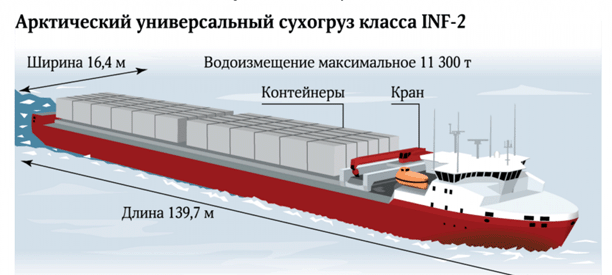
No easy fix for Russia’s troubled Arktica ice-breaker – delivery delayed for at least a year

April 18, 2020 Posted by | Russia, safety | Leave a comment

Heavy winds fan new fires breaking out in Chernobyl exclusion zone

— New wildfires spread around Chernobyl nuclear plant, New Europe,  By Elena Pavlovska, 17 Apr 20, 


New fires broke out in Chernobyl’s exclusion zone on Thursday, fanned by heavy winds that have made it harder to put out the blaze, Ukrainian officials said.On Tuesday, Ukraine’s emergency service said the fire has been extinguished after rain fell in the region, and stressed that there is no radiation risk.

The state emergency service said three new fires had broken out, but were “not large-scale and not threatening”…..

The [previous] fire sparked concerns that clouds of radioactive smoke could be released and blow south towards Kyiv, after an activist posted a video online showing a cloud of smoke rising within sight of the protective dome over Chernobyl’s Unit 4 nuclear reactor.  https://www.neweurope.eu/article/new-wildfires-spread-around-chernobyl-nuclear-plant/


April 18, 2020 Posted by | climate change, safety, Ukraine | Leave a comment

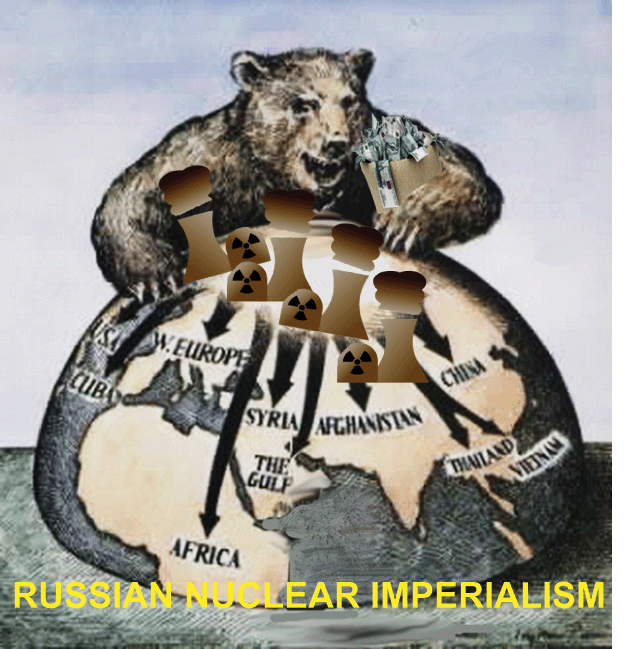
Opening the lid on Russia’s super-secretive nuclear industry

“Our country will receive waste from foreign nuclear power plants built by Rosatom from time to time”  https://realnoevremya.com/articles/4406-vladimir-slivyak-on-import-of-radioactive-waste-to-russia  By Matvey Antropov, 14.04.2020

Environmentalist Vladimir Slivyak on the industry that “always kept its affairs secret”

On March 19 and April 6 of this year, German eco-activists protested against the export of new shipments of radioactive waste to Russia, “cynically undertaken in the midst of the pandemic to safely avoid protests.” Realnoe Vremya spoke with Vladimir Slivyak, co-chairman of the Russian environmental group Ecozaschita!, author of the book From Hiroshima to Fukushima, about how nuclear waste is imported to Russia, how open information is about Rosatom’s activities, and whether a nuclear power plant will be built in Tatarstan.

“We will know that certain wastes are imported to Russia after their transportation or arrival”

Vladimir, let’s first determine what is considered to be radioactive waste.

There are different points of view on this issue. There is a view of the nuclear industry, which is the position of the state, and there is a view of environmentalists, which, of course, is fundamentally different. The first is that if you plan to use radioactive waste (RW) further, then they are not considered waste. Environmentalists believe that any action with radioactive materials leaves waste (by-products). This can be work at nuclear power plants, in places where uranium is extracted and enriched — there are a lot of such places. In general, the discussion about what is considered waste in Russia has been going on for many years.

It should also be noted that when it comes to importing nuclear waste to Russia, it is most often waste from uranium enrichment — depleted uranium hexafluoride UF6 or spent fuel from nuclear power plants.

How many tonnes of radioactive waste are imported to Russia and who is their main exporter?

There is a contract, under which from 2019 to 2022, 12,000 tonnes of depleted uranium hexafluoride should be imported to our country from the plant in Gronau (North Rhine —Westphalia), owned by Urenco. Approximately 6,000 tonnes have already been imported. Of course, we don’t know about all the contracts. From 2016 to at least 2019, Russia received depleted uranium hexafluoride from the British plant in Capenhurst of the same company Urenco. It is unknown exactly how much it was imported.

The nuclear industry has always kept its business secret and still does. All the words that they want to be open and engage with the public are conversations in favour of the poor. Of course, all the information in Rosatom is classified. We will know that certain wastes are imported to Russia after their transportation or arrival to Russia. We have colleagues abroad who monitor the movement of nuclear waste. So we will only find out about this through our own channels of civil cooperation of activists. Reports from representatives of the nuclear industry are very rare in the media, so it is quite difficult for us to navigate. But the data on the movement of uranium hexafluoride from the plant in Gronau are accurate — they were obtained by a member of the Bundestag from the official response of the German government.

It should also be noted that Rosatom builds nuclear power plants in different countries of the world. Last year, we conducted the first independent study in Russia to find out where Rosatom operates, where nuclear power plants are actually being built, and where only the appearance of construction is being created. We have a corresponding report on our website. Usually, the priority option when signing an agreement on the construction of a nuclear power plant involves the return of spent nuclear fuel to Russia, of course, for a lot of money. In other words, our country will receive waste from foreign nuclear power plants built by Rosatom from time to time. Ecologists consider them to be one of the most dangerous among the nuclear waste.

“They say that this is not waste but valuable raw materials. At the same time, a million tonnes of ‘raw materials’ lie idle for decades”

As far as I know, the import of nuclear waste in Russia was not always allowed, right?

Yes, in the ’90s, spent nuclear fuel from nuclear power plants could not be transported. And then it was considered waste. There was also a complete ban on the import of other raw materials. The nuclear industry (then ministry of atomic energy) came out of the situation in the following way: referring to long-concluded agreements that need to be fulfilled, the ministry for atomic energy asked to make an exception for them. And the government agreed with these arguments.

And in 2001, a bill was passed allowing the import of spent fuel from foreign nuclear power plants and removing it from the category of waste (because it can be used further). Although the essence of the question on this topic is as follows: during the production of electricity at nuclear power plants, nuclear waste occurs. Whether you use them in the future or not -it’s still waste. Besides, not all spent fuel is used in any way in industry.

Our legislation has done everything for Rosatom’s comfortable operation. If the latter has indicated somewhere that it plans to use the waste in some way in the future, this means that it ceases to be radioactive waste. But this is absurd.

Rosatom is committed to disposing of all depleted uranium hexafluoride available in Russia by 2080. Here is a quote on this topic from Novaya Gazeta: “But against the background of the international outcry, Rosatom announced the launch of a programme for the management of DUHF, in which uranium “tails” are called raw materials for nuclear power of the future, a source of hydrogen fluoride and fluorine. One of the goals of the programme is the complete elimination of DUHF reserves at all Russian landfills by 2080. “Our activities can be designated with the Recycling sign,” said the acting CEO of Techsnabexport (Rosatom’s subsidiary) Yury Ulyanin.”

Does anyone believe that Rosatom will be able to recycle millions of tonnes of UF6 by 2080? In Russia, any documents that speak of such a distant time are perceived as absurd. At the moment, more than one million tonnes of depleted uranium hexafluoride are stored at enterprises and in places where radioactive waste is stored in Russia. A very small part has been converted to a different form that is more convenient for storage, but this is not even disposal or recycling. 

Now, when the issue of importing UF6 from Germany has been raised, Rosatom insists that it is not waste but insanely valuable and necessary raw materials. But at the same time, they have a million tonnes of this raw material without any use for decades

“We were brought and showed absolutely nothing”

Under what conditions are nuclear waste stored? How safe is it?

For example, waste from Germany is being transported to a landfill in the closed city of Novouralsk in Sverdlovsk Oblast. No one is allowed in this city to see what kind of radioactive waste is stored there. There are satellite photos that show that the containers are under the open sky. In some photos in Google Maps or Google Earth, one can see that some containers are subject to corrosion.

This information is also available from government agencies, but it is from the second half of the 2000s. Since then, publication of information on nuclear waste had been restricted. In the 2000s, Rostekhnadzor made reports on dangerous types of industry in Russia, in which the risks were described in detail. It said that a significant number of containers are subject to corrosion and there is a threat of their depressurization.

Now Rosatom says that everything is fine, take our word for it. Word — because an ordinary person can not get to the places where any radioactive waste is transported. For the most part, these are closed cities with access control. Even if someone is allowed on them as an exception, they only show a small piece of territory. You can’t freely study containers, you don’t decide what they show you.

I had a single experience of visiting a closed city in the 2000s. Then there was a fire at one of the enterprises of the uranium industry in the city of Lesnoy, Sverdlovsk Oblast. We distributed information about the fire through our channels, and a representative of Rosatom told us something like this: “Let’s take you to that company, and you will see for yourself that the information about the fire is not true.” My colleague and I were brought and showed absolutely nothing. We were taken to the house of culture, where the employees of this enterprise were sitting, and they began to express something to us. We asked: “Will you show us anything?” They told us they wouldn’t show us anything, and sent us back.

Apart from satellite images, there is no other open information on radioactive waste in closed cities.

Where and how are other types of radioactive waste stored in Russia? Are there any radiation leak?

If we take spent nuclear fuel from a nuclear power plant, then after removing it from the reactor, it is stored in pools, where it lies in the water for several years and cools down. Spent fuel can be stored dry for a long time in containers on special sites.

By default, we should assume that in theory, radiation leakage is always possible, and therefore we need to achieve the most reliable barrier between RW and the environment. Once radiation enters the environment, you can no longer control it. The rain or wind blows, and the radioactive trace spreads further and further. The only chance to contain radiation is to organize very well the places where radioactive substances are stored.

A person cannot imagine all the combinations of extreme circumstances that can lead to the depressurization of a container with radioactive substances or to the destruction of a storage facility. Accidents happen because people can’t calculate everything. Each accident is an example of some new combination of circumstances that we could not have predicted.

The nuclear industry remains the most classified in Russia. They try never to talk about any problems or accidents, and this is contrary to the interests of public safety. From the latest news, we can recall how last year the media reported about a suspected radiation leak in Novouralsk. We haven’t really found out what happened there.

April 16, 2020 Posted by | Reference, Russia, secrets,lies and civil liberties, wastes | Leave a comment

For UK’s new Labour leader, climate action and Green New Deal will be key goals

Business Green 14th April 2020, Newly appointed Labour leader Sir Keir Starmer completed his front bench
team late last week, handing key green positions to a raft of experienced
MPs. Starmer is widely expected to make climate action and Labour’s Green
New Deal a key plank in the Opposition’s offer to the public – a fact
underlined by the handing of specific green briefs to senior MPs. But it
remains to be seen if he retains the unprecedented levels of low carbon
infrastructure funding pledges and nationalisation programmes proposed
under Corbyn’s leadership.

https://www.businessgreen.com/news/4013864/labour-completes-green-shadow-ministerial-lin

April 16, 2020 Posted by | climate change, politics, UK | Leave a comment

EDF cutting back on its nuclear energy goals

EDF pulls financial targets in response to pandemic, WNN, 15 April 2020   EDF said on 23 March it would lower its 2020 nuclear power production target of 375-390 TWh, but did not say by how much. On 8 April French transmission system operator RTE said that electricity demand in the country had fallen between15% and 20% since the lockdown.

“The economic turmoil that follows from the current health crisis is causing a drop in power demand and is significantly impacting many of the group’s businesses, namely nuclear generation (which EDF indicates is currently under review and will be adjusted significantly below the initial assumption), new-build projects and services,” EDF said. “Consequently, the EDF Group withdraws all its financial targets for 2020, including the lower end of the EBITDA range of EUR17.5 billion, as well as for 2021.”…….

A new decree – published in the Official Journal on 27 March – postponed the deadline for loading of first fuel at EDF’s EPR unit at its Flamanville site in Normandy by four years, to April 2024. Under the currect schedule, the loading of fuel is planned by the end of 2022. …… https://www.world-nuclear-news.org/Articles/EDF-pulls-financial-targets-in-response-to-pandemi

April 16, 2020 Posted by | business and costs, France | Leave a comment

Ukrainian authorities declare wildfires near Chernobyl nuclear power plant.

Wildfires near Chernobyl under control, Ukrainian authorities say,  April 14, 2020 The fires reportedly came within two kilometers of the Chernobyl nuclear power plant.

April 14, 2020 Posted by | incidents, Ukraine | Leave a comment

Belarus to get a new nuclear reactor along with $10 billion debt to Russia

Belarus Says New Nuclear Power Plant To Go Online In Autumn, Radio Free Europe, 13 Apr 20,  Officials in Minsk say a nuclear power plant being constructed in western Belarus will be launched during the summer and start producing electricity in the autumn…..

The plant is being built in the town of Astravets near the border with Lithuania. It is just 40 kilometers from Lithuania’s capital, Vilnius.

In January, Lithuanian Energy Minister Zygimantas Vaiciunas told RFE/RL that the Belarusian plant is “a threat to our national security, public health, and environment.”

“The key question is the site selection, which was done politically — geopolitically,” Vaiciunas told RFE/RL.

Plans for the nuclear plant were unveiled by Belarusian President Alyaksandr Lukashenka in 2008 when Minsk received a $10 billion loan from Moscow for the project.

The general contractor for the Belarusian nuclear power plant building is Atomstroiexport, an affiliate of Russia’s state-owned Rosatom.    Based on reporting by TASS, ONT, and RFE/RL correspondent Matthew Luxmoore

April 14, 2020 Posted by | Belarus, politics international | Leave a comment

Environmental rules governing radioactive waste, fish farming, recycling and other sectors are being weakened due to Covid 19

Radioactive Waste Regulations – Scotland

The Ferret 12th April 2020, More than 5,000 business sites across Scotland are going to escape
judgement on their environmental breaches in 2020 because of the coronavirus pandemic. Environmental rules governing radioactive waste, fish farming, recycling and other sectors are also being relaxed by the Scottish
Environment Protection Agency (Sepa) to help companies cope with Covid-19.

The Faslane nuclear base and nuclear power plants have been given the green light to break safety limits on radioactive waste. Sepa has relaxed environmental rules for specific sectors, notably the military and civil
nuclear industry. A “temporary regulatory position statement” posted on its website offered radioactive waste exemptions to the Faslane navel base on the Clyde, as well as nuclear plants at Hunterston in North Ayrshire,
Torness in East Lothian and Dounreay in Caithness.

“During a significant outbreak of Covid-19 the ability of operators to run their operations may be compromised by a lack of available staff,” the statement said. “We expect operators to be ensuring that the impacts of Covid-19 on the environment are minimised. We recognise, however, that in some cases operators may be unable to comply for reasons beyond their control.” It added: “Any failure by the operator to comply with the conditions of their authorisation will not be treated as a non-compliance”.  This only applied “where non-compliance with authorisation conditions is unavoidable and a direct result of emergency resulting from Covid-19 outbreak and will not lead to significant environmental harm,” Sepa said.

The Scottish Campaign for Nuclear Disarmament warned that more dangerous radioactivity could be discharged into the environment. “It is outrageous to suggest that the pandemic is a reason for relaxation of the regulatory
requirements,” said campaign chair, Lynn Jamieson. “Willingness to tolerate possible breaches of regulations by civil or military nuclear facilities demonstrates shocking inadequacy on the part of the Scottish Environment Protection Agency. Whose environment are they in place to protect?”

The nuclear-free group of local authorities also expressed concern. “These new rules from Sepa seem to allow further leeway on nuclear sites over the handling of radioactive waste,” said the group’s vice convenor in Scotland, Renfrewshire SNP councillor Audrey Doig. “Sepa should be very wary of relaxing rules and find ways of continuing to
regulate the industry in the robust, safe and secure way the public expects.”

https://theferret.scot/pollution-checks-coronavirus-crisis-sepa/

The National 12th April 2020

https://www.thenational.scot/news/18374483.polluters-given-free-pass-coronavirus-crisis/ 

April 14, 2020 Posted by | safety, UK | Leave a comment

Chernobyl wildfires now ‘close’ to exploded nuclear reactor

Raging forest infernos in Chernobyl Exclusion Zone burning for eight days are now ‘close’ to exploded nuclear reactor amid new fears of radiation contamination

  • Wildfires burning through Chernobyl forests are nearing the nuclear reactor
  • There are fears that flames could reach radioactive trucks and vehicles abandoned after the notorious 1986 power station explosion
  • Kiev has deployed more than 300 people and 85 pieces of equipment   By JACK WRIGHT FOR MAILONLINE, 13 April 2020

April 13, 2020 Posted by | climate change, incidents, Ukraine | Leave a comment