France’s unfairly heavy monitoring of anti-nuclear activists, treating them as violent criminals

 Justice has massively monitored Bure’s anti-nuclear activists Reporterre, April 27, 2020 / Marie Barbier (Reporterre) and Jade Lindgaard. Dozens of people tapped, a thousand retranscribed discussions, more than 85,000 conversations and intercepted messages, more than 16 years of cumulative telephone surveillance time: the judicial information opened in July 2017 is a disproportionate machine of intelligence on the movement antinuclear from this village of the Meuse, according to the documents consulted by Reporterre and Mediapart.
Faces caught in a web of arrows and diagrams. Under each photo: date and place of birth, nickname, organization. The individuals are grouped into “clans”, linked to places and ratings of the investigation file. Some faces are magnified, others reduced to the size of a pinhead. Some people are entitled to a photo, others appear in the form of a pictogram – blue for men, fuchsia pink for women.
This diagram [on original] was produced by the Anacrim criminal analysis cell of the national gendarmerie. Its software, Analyst’s notebook, makes it possible to visualize the links between people via their telephone numbers, places, events. This technique is usually used to solve particularly serious crimes: it recently emerged from the Gregory of legal darkness case, and is currently used in the investigation of the multi-repeat killer Nordahl Lelandais.
Examining magistrate Kévin le Fur used it to dissect the organization of the opposition movement at Cigeo, the radioactive waste landfill center planned next to the village of Bure, in the Meuse. Scheduled to come into operation in 2035, it is one of the largest industrial facilities in project today in France, and a very sensitive site for the nuclear industry.
The Anacrim diagram appears in the file of the judicial information for association of criminals, where ten antinuclear militants are under investigation for various reasons in connection with degradations committed in a hotel and the organization of an undeclared demonstration in August 2017. Subject to strict judicial control, those under investigation are prohibited from seeing each other, talking to each other and even being in the same room.
In the Bure case, Anacrim produced a total of fourteen diagrams on “the role and involvement” of the accused and the interactions between collectives and associations. This method leaves its mark on education. Seven people, among the ten indicted, are for criminal association, but 118 individuals are listed in the organization chart of the gendarmes placed in the investigation file.
Dozens of people tapped, more than a thousand transcribed discussions, tens of thousands of conversations and intercepted messages, more than fifteen years of cumulative telephone interception time: the judicial information opened in July 2017 looks like a real intelligence machine on the anti-nuclear movement of Bure, according to the investigation file consulted by Reporterre and Mediapart, and of which Liberation had unveiled part of the content in November 2018. An extraordinary investigation, extremely intrusive and focused on the surveillance of political activists whom the justice system seems to consider as enemies of democracy.
Molotov cocktails and stones fly. Gendarmes were injured and a protester mutilated by a grenade on the foot. Those charged are for different reasons from each other: participation in a gathering after summons, participation in a criminal association for the preparation of an offense punishable by five or ten years’ imprisonment, detention (or complicity) in an organized gang of incendiary product, damage to the property of others by dangerous means, concealment of property from an aggravated theft, voluntary violence in meetings.
From the first days of the investigation, the gendarmes were worried about “criminal designs” unrelated to the “legitimate challenge in a democratic state” of the militants implicated. “These actions can no longer be considered as a legitimate social and societal protest” or “as a form of democratic opposition”, they write in a report, July 27, 2017. According to them, “some of the opponents deliberately choose a violent path. They attack the property associated with the contested projects, but sometimes also the people working for the development of these industrial installations and at the same time against the police. ” In the eyes of the investigators, “opponents criminalize themselves”.
Part of the seals is sent to the Anti-Terrorism Office, a unit of the gendarmerie responsible for the prevention and suppression of acts of terrorism. To take the measure of the surveillance of the militants of Bure and their entourage, Reporterre and Mediapart evaluated the means deployed by the gendarmerie and the justice in their mission. Almost 765 telephone numbers have been the subject of identity verification requests from telephone operators. At least 200 other requests were made to find out the call histories, their places of emission, the bank details of the holders subscription, PUK codes to unlock a phone when you don’t know your PIN.
According to Me Raphaël Kempf, one of the lawyers for the indictments: Listening for so long is proof that we are not in a classic criminal judicial procedure intended to collect evidence of the commission of crimes, but that we are using the means of law and criminal procedure for the purpose of intelligence, which is political in nature. ”
If we add up all these sequences, we get a cumulative time spent listening to activists equivalent to more than sixteen years! According to the minutes, most of these people were listened to permanently by a team of gendarmes taking turns behind their screens. In total, more than 85,000 conversations and messages were intercepted, according to our estimates. And no less than 337 conversations were transcribed on trial- verbal, to which are added some 800 messages reproduced by the Technical Assistance Center (CTA). Are these means proportionate to the crimes being prosecuted? Joined by Reporterre and Mediapart, Olivier Glady, public prosecutor of Bar-le-Duc answers: “I cannot answer that. This is a dossier that makes fifteen volumes. You have files of other kinds (traffic in vehicles or narcotics) which are roughly equivalent, I am not sure that the proportionality of the investigations is simply to relate to a number as you give it to me. ”
During these innumerable hours spent listening to the militants, the gendarmes tracked the indications, sometimes tiny, of each other’s responsibilities in organizing the protest. These are two cultures which, behind closed doors of a judicial investigation, seem to confront each other from a distance. On the one hand, the gendarmes. On the other, anti-nuclear, libertarian culture, who refuse hierarchy and formal assignments to roles. Inevitably, the vision of gendarmes stumbles on the spontaneous and horizontal practices of regulars at the Maison de la Résistance. This old farm in Bure was bought in 2004 by anti-nuclear activists to create a place of struggle. It has become a place of collective life where people come to sleep during a gathering, get together, work, cook, party……. https://reporterre.net/1-3-La-justice-a-massivement-surveille-les-militants-antinucleaires-de-Bure
EDF’s planned Sizewell nuclear power station – vulnerable to sea level rise
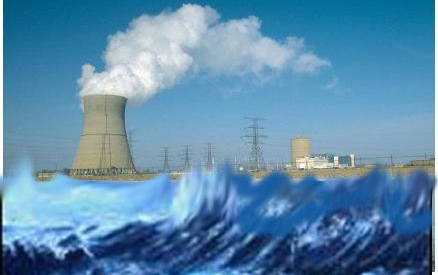 Climate News Network 28th April 2020, Controversial plans by the French nuclear giant EDF to build two of its massive new reactors on the low-lying east coast of England are causing
alarm: the shore is eroding and local people fear sea level rise could maroon the station on an island.
because they fear the proposed sea defences for the new station, Sizewell C, will be inadequate.
will be adequate.
of construction, 60 years of operation and then the time needed to decommission it.
https://climatenewsnetwork.net/sea-level-rise-threatens-uk-nuclear-reactor-plans/
With international finance help, Russia is dismantling its most radioactive ship
|
Russia’s most radioactive ship reaches dismantlement milestone The Lepse service ship, once the most glaring nuclear hazard in the Murmansk harbor, will now be emptied of nearly all of its radioactive cargo by the end of this year, Russian nuclear authorities have said. Bellona April 29, 2020 by Anna Kireeva, Charles DiggesThe Lepse service ship, once the most glaring nuclear hazard in the Murmansk harbor, will now be emptied of nearly all of its radioactive cargo by the end of this year, Russian nuclear authorities have said.
During its career as a refueling vessel for Soviet era nuclear icebreakers, the Lepse amassed 639 spent nuclear fuel assemblies, some of them damaged, creating an environmental danger that bobbed neglected at a Murmansk dock for decades. After it was taken out of service in 1988, the Lepse was left to languish at Atomflot, the headquarters of Russia’s nuclear icebreaker fleet, where it posed a severe radioactive hazard to Murmansk and its 300,000 residents. Over the course of more than two decades, Bellona worked with Russian officials ensure the vessel’s safe disposal. Now those plans are coming to fruition as officials say 97 percent of the nuclear fuel loaded into the Lepse’s holds will be emptied at the Nerpa Shipyard, to where the vessels was finally moved in 2012 for its painstaking dismantling…… All told, the Lepse participated in 14 refueling operations aboard the Lenin as well as the nuclear icebreakers the Sibir and the Arktika. In 1981, the vessel was again retrofitted, this time to so it could accommodate irradiated machine parts and other radioactive waste the nuclear icebreakers needed to offload. The Lepse’s history took a darker when it was used to help dump radioactive waste in the Kara and Barents Seas, contributing to Russia’s Cold War heritage of f nuclear and radiological hazards strewn across the Arctic sea floor, the extent of which is only beginning to be understood. It was in the early 1990s that the Lepse and the dangers it posed caught Bellona’s eye, and the organization mobilized the European Union to allocate funding toward removing it from Murmansk harbor and safely dismantling it. The boat was finally towed from Atomflot to the Nerpa naval shipyard in September 2012, after more than a decade of strenuous and often tedious negotiations among Bellona, the Russian government and European financial institutions – most notably the European Bank of Reconstruction and Development – to ensure the Lepse’s safe disposal. The EBRD-managed program is financed by the NDEP Nuclear Window, an international fund with contributions from Belgium, Canada, Denmark, the European Union, Finland, France, Germany, the Netherlands, Norway and the UK. The bank is also helping finance the safe removal of some 22,000 spent nuclear fuel assemblies from Andreyeva Bay, a former technical base used to service Soviet Northern Fleet Submarines. https://bellona.org/news/nuclear-issues/2020-04-russias-most-radioactive-ship-reaches-dismantlement-milestone |
|
|
Coronavirus spreads to Russia’s ‘secret’ nuclear cities
|
Now, coronavirus spreads to Russia’s ‘secret’ nuclear cities,
WION New Delhi, Delhi, India Apr 29, 2020, The coronavirus has rattled Russia. The number of cases in the country is nearing the 100,000 milestone, the country’s oil prices have collapsed and its economy is set to contract by 4 to 6 per cent.
In the latest, the coronavirus has begun spreading to Russia’s nuclear cities. The secret cities are at high risk and they stand exposed. ……
Also lying exposed are Russia’s secret cities. The Wuhan virus has sneaked its way past their fences and now Sarov, Elektrostal and Desnogorsk are infected. The situation is so bad that a top Russian executive was forced to mention these cities during his address. “The situation in Sarov, Elektrostal, Desnogorsk is today particularly alarming. In Sarov, the situation is being compounded by the outbreak in the nearest Diveyevo convent,” Rosatom chief, Alexei Likhachev, said. Sarov has at least 23 coronavirus cases. The numbers for Elektrostal and Desnogorsk are not clear. Also unknown are the number of hospitals in these cities and their pandemic preparedness. Not surprising, given everything around these cities is blurry. Sarov, Elektostal, and Desnogorsk are among Russia’s many secret cities.
They are highly restricted, so much so that they weren’t shown on the map until the breakup of the Soviet Union in the 1990s. These cities were excluded from train and bus routes. They were known only by their postal codes. Sarov, for example, was Arzamas-16. No one knew who lived there. The lives of its residents were as secretive as those of KGB agents. For years, the Russian government rewarded the residents of its secret cities with numerous perks – private apartments, well-paying jobs and good healthcare. These cities are closely linked to Russia’s nuclear industry. They are managed by Russia’s state atomic energy corporation – Rosatom.
Sarov became a closed city after World War-II. Once known for its monastery, the city was quickly turned into a rocket-making hub. It’s monastery buildings were converted into rocket factories. Today, Sarov is home to one of Russia’s top research institutes. The city is fenced, patrolled by the military and no one can enter without a pass. Last year, five scientists from the research institute died in a mysterious accident. No one knew what had happened. Russia said there was an accident during a rocket engine test.
The United States claimed it was a missile test gone wrong. Today, these secret cities are becoming coronavirus hotspots. Russia says it is sending emergency ventilators and medical aids to its nuclear cities but truth be told – we may never know what’s really going on there. https://www.wionews.com/world/now-coronavirus-spreads-to-russias-secret-nuclear-cities-295663
|
|
Russia warns US against using low-yield nuclear weapons, threatening all-out retaliation
Russia warns US against using low-yield nuclear weapons, threatening all-out retaliation, SCMP, 29 Apr 20
US State Department had argued that deploying such warheads in submarines would help counter new threats from China and Russia
Moscow says any attack involving submarine-launched missiles will be perceived as nuclear aggression
, warning that an attempt to use such weapons against Russia would trigger an all-out nuclear retaliation.
The US State Department argued in a paper released last week that fitting the low-yield nuclear warheads to submarine-launched ballistic missiles would help counter potential new threats from Russia and China…… https://www.scmp.com/news/world/russia-central-asia/article/3082226/russia-warns-us-against-using-low-yield-nuclear
Ukraine Continues Fighting Fires Near Defunct Chernobyl Nuclear Plant
 Ukraine Continues Fighting Fires Near Defunct Chernobyl Nuclear Plant, Radio Free Europe, 27 Apr 20 KYIV — Firefighters in Ukraine continue to battle a series of fires near the defunct Chernobyl nuclear power plant nearly a month after they broke out.
The State Service for Emergency Situations said on April 27 that brigades were still working to extinguish fires in the Lubyanskiy, Paryshivskiy, Dytyatkivskiy, and Denysovytskiy forest districts in the Chernobyl exclusion zone.
“The main efforts are focused on the localization of two fire sites, smoldering stumps, wood segments, and peat-boggy soil,” the service said, adding that radiation in the area does not exceed permissible levels.
The fires began on April 3 in the western part of the uninhabited exclusion zone before spreading to nearby forests.
Ukrainian officials have said they have extinguished the fires several times, but new fires continue appearing in the area…… https://www.rferl.org/a/ukraine-continues-fighting-fires-near-defunct-chernobyl-nuclear-plant/30579563.html
Under cover of Coronavirus constraints, EDF could speed application for £14 billion Sizewell nuclear reactor build, without pubic consultation
East Anglian Daily Times 27 April 2020 Suffolk MP has joined growing concern that EDF Energy will submit its planning application for the Sizewell C nuclear power station during the coronavirus crisis.
Already 54 town and parish councils, along with campaign groups, have voiced their frustration at the possibility – amid concerns that it would be “intolerable and unfair” to add extra anxiety
to people at this time. Now Central Suffolk and North Ipswich MP, Dr Dan Poulter has written to Government ministers saying the Covid-19 restrictions would inhibit full and proper consideration of the application and it would “not be appropriate” yet.
EDF has already delayed its submission of a Development Consent Order (DCO) for the £14 billion twin reactor for a month but there are worries it could submit the documents in
May. Dr Poulter has been contacted by a large number of residents who have
a number of concerns in regards to the DCO. He is concerned there would be
pressure on council officers dealing with Covid-19 to respond to issues and
questions raised by the submission and opportunities for public
consultation curtailed as public meetings are not permitted.
https://www.eadt.co.uk/news/mp-dan-poulter-sizewell-c-letter-to-ministers-1-6624715
UK govt again to try “astronomically expensive” plutonium reprocessing nuclear reactors
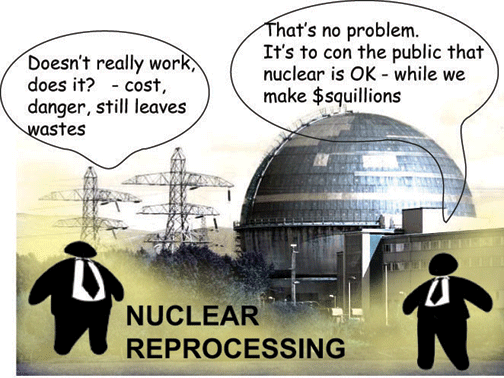 Westminster relaunches plutonium reactors despite ‘disastrous’ experience, The National, 26 April, 20 By Rob Edwards This article was brought to you by The Ferret.
THE UK Government is trying to resurrect plutonium-powered reactors despite abandoning a multi-billion bid to make them work in Scotland.
Documents released by the UK Office for Nuclear Regulation (ONR) under freedom of information law reveal that fast reactors, which can burn and breed plutonium, are among “advanced nuclear technologies” being backed by UK ministers.
Two experimental fast reactors were built and tested at a cost of £4 billion over four decades at Dounreay in Caithness. But the programme was closed in 1994 as uneconomic after a series of accidents and leaks.
Now ONR has been funded by the Department for Business, Energy and Industrial Strategy (BEIS) in London to boost its capacity to regulate new designs of fast reactors, along with other advanced nuclear technologies.
Campaigners have condemned the moves to rehabilitate plutonium as a nuclear fuel as “astronomically expensive”, “disastrous” and “mind-boggling”. They point out that it can be made into nuclear bombs and is highly toxic – and the UK has 140 tonnes of it…….
ONR released 23 documents about advanced nuclear technologies in response to a freedom of information request by Dr David Lowry, a London-based research fellow at the US Institute for Resource and Security Studies. They include redacted minutes and notes of meetings from 2019 discussing fast reactors, and are being published by The Ferret.
One note of a meeting in November 2019 shows that ONR attempted to access a huge database on fast reactors maintained by the UK Government’s National Nuclear Laboratory (NNL) in Warrington, Cheshire…..
Two companies have so far won funding under this heading to help develop fast reactors that can burn plutonium. The US power company, Westinghouse, is proposing lead-cooled fast reactors, while another US company called Advanced Reactor Concepts wants to build sodium-cooled fast reactors.
In November 2019 BEIS also announced an £18 million grant to a consortium led by reactor manufacturer, Rolls Royce, to develop a “small modular reactor designed and manufactured in the UK capable of producing cost effective electricity”.
According to Dr Lowry, fast reactors would require building a plutonium fuel fabrication plant. Such plants are “astronomically expensive” and have proved “technical and financial disasters” in the past, he said.
“Any such fabrication plant would be an inevitable target for terrorists wanting to create spectacular iconic disruption of such a high profile plutonium plant, with devastating human health and environmental hazards.”
Lowry was originally told by ONR that it held no documents on advanced nuclear technologies. As well as redacting the 23 documents that have now been released, the nuclear safety regulator is withholding a further 13 documents as commercially confidential – a claim that Lowry dismissed as “fatuous nonsense”.
THE veteran nuclear critic and respected author, Walt Patterson, argued that no fast reactor programme in the world had worked since the 1950s. Even if it did, it would take “centuries” to burn the UK’s 140 tonne plutonium stockpile, and create more radioactive waste with nowhere to go, he said.
“Extraordinary – they never learn do they? I remain perpetually gobsmacked at the lobbying power of the nuclear obsessives,” he told The Ferret. “The mind continue to boggle.”
The Edinburgh-based nuclear consultant, Pete Roche, suggested that renewable energy was the cheapest and most sustainable solution to climate change. “The UK Government seems to be planning some kind of low carbon dystopia with nuclear reactors getting smaller, some of which at least will be fuelled by plutonium,” he said.
“The idea of weapons-useable plutonium fuel being transported on our roads should send shivers down the spine of security experts and emergency planners.”
Another nuclear expert and critic, Dr Ian Fairlie, described BEIS’s renewed interest in fast reactors as problematic. “Experience with them over many years in the US, Russia, France and the UK has shown them to be disastrous and a waste of taxpayers’ money,” he said.
This is not the view taken by the UK Nuclear Industry Association, which brings together nuclear companies. It wants to see the UK’s plutonium being used in reactors rather than disposed of as waste……
“The Scottish Government remains opposed to new nuclear power plants in Scotland,” a spokesperson told The Ferret. “The Scottish Government believes our long term energy needs can be met without the need for new nuclear capacity.”
The UK Department for Business, Energy and Industrial Strategy did not respond to repeated requests to comment. https://www.thenational.scot/news/18405852.westminster-relaunches-plutonium-reactors-despite-disastrous-experience/
Eleven of 12 hottest years have occurred since 2000, new climate report warns
 Eleven of 12 hottest years have occurred since 2000, new climate report warns, Independent, Isabelle Gerretsen @izzygerretsen 23 Apr 20
Last year was the hottest year on record for Europe after scorching heatwaves led to record-breaking temperatures in February, June and July
Eleven out of the 12 hottest years to date have all occurred since 2000, according to a new report by the European Union’s climate monitoring service.
Last year was the hottest year on record for Europe after scorching heatwaves led to record-breaking temperatures in February, June and July, scientists from the Copernicus Climate Change Service (CS3) said in the annual European State of the Climate report.
“The number of days with high heat stress levels are increasing in both northern and southern Europe,” they said.
An intense heatwave at the end of July led to record melting of Greenland’s ice sheet and all-time records being broken in northern Scandinavia, the Copernicus report noted.
According to recent research, Greenland’s ice sheet and the polar ice caps are melting six times faster than they were in the 1990s. The high melt rate fits with the worst-case scenario outlined by the UN’s Intergovernmental Panel on Climate Change (IPCC), which states that sea levels will rise 17cm without sweeping reductions in greenhouse gas emissions…..
Concentrations of CO2 and methane in the atmosphere continue to increase. “It is only possible to find concentrations as high as they were in 2019 by going back millions of years in history,” the Copernicus scientists said.
Professor Martin Siegert, co-director of the Grantham Institute for Climate Change at Imperial College London, told The Independent that the current level of CO2 in the atmosphere is “unnaturally high”.
He said it should be 280 parts per million (ppm) but is currently 415ppm and could reach 1000ppm by the end of the century if CO2 emissions continue to rise at their current rate…… https://www.independent.co.uk/environment/climate-change-global-warming-hottest-years-on-record-a9477796.html
France: The Forgotten Nuclear Power That Could Kill Billions of People
|
France: The Forgotten Nuclear Power That Could Kill Billions of People
Paris might not have a massive stockpile of nukes, but they could do some serious damage if need be. National Interest, by Caleb Larson, 26 Apr 20, The French nuclear arsenal is pretty substantial, with air- and sea-based components. Here is a breakdown of French nuclear capabilities. Nuclear Dyad Unlike the United States or Russia, who maintain a nuclear triad of land-based, submarine-launched, and air-launched missiles, France has a dyad of submarines that can launch nuclear ballistic missiles and a stockpile of air-launched nuclear cruise missiles. M51 Ballistic Missile The M51 is the heart of French nuclear deterrence at sea. Each missile has six to ten Multiple Independent Reentry Vehicles (MIRVs), and each of those MIRVs is guessed to be in the 75 to 110 kiloton range. Its range is estimated at 8,000 kilometers, or just under 5,000 miles and the missiles are launched from the nuclear-powered Triumphant-class submarines. Air-Sol Moyenne Portée The Air-Sol Moyenne Portée is the air-launched component of French strategic deterrence. The missiles play a unique role in French deterrence, where their use would be considered a warning shot of sorts before the more widespread use of nuclear weapons would be used in a conflict. …….. Hadès The Hadès missile system was at one point a land-based component of French strategic deterrence — though only at the tactical, not strategic level, due to the system’s relatively short 480 kilometer, or about 300 mile range……. https://nationalinterest.org/blog/buzz/france-forgotten-nuclear-power-could-kill-billions-people-148396 |
|
The end of reprocessing spent nuclear fuel has left an expensive UK plutonium stockpile with no peaceful use
 UK plutonium stockpile is a costly headache, https://climatenewsnetwork.net/uk-plutonium-stockpile-is-a-costly-headache/ April 23rd, 2020, by Paul Brown, The end of reprocessing spent nuclear fuel has left an expensive UK plutonium stockpile with no peaceful use UK plutonium stockpile is a costly headache, https://climatenewsnetwork.net/uk-plutonium-stockpile-is-a-costly-headache/ April 23rd, 2020, by Paul Brown, The end of reprocessing spent nuclear fuel has left an expensive UK plutonium stockpile with no peaceful use
LONDON, 23 April, 2020 − For 70 years Britain has been dissolving spent nuclear fuel in acid, separating the plutonium and uranium it contains and stockpiling the plutonium in the hope of finding some peaceful use for it, to no avail: all it has to show today is a UK plutonium stockpile. To comply with its international obligations not to discharge any more liquid radioactive waste into the Irish Sea, the United Kingdom government agreed more than 20 years ago under the Ospar Convention on the protection of the north-east Atlantic to shut its nuclear fuel reprocessing works at Sellafield in northwestern England at the end of this year. As well as 139 tonnes of plutonium, which has to be both carefully stored to prevent a nuclear chain reaction and protected by armed guards as well, to avoid terrorist attack, there are thousands of tonnes of depleted uranium at Sellafield. The reprocessing plant shut down prematurely as a result of a Covid-19 outbreak among its employees, and most of the 11,500 workers there have been sent home, leaving a skeleton staff to keep the site safe. Whether the plant will be restarted after the epidemic is unknown. Fewer than half Sellafield’s workers are involved in reprocessing. Most are engaged in cleaning up after decades of nuclear energy generation and related experiments. There are 200 buildings at the massive site, many of them disused. It costs British taxpayers around £2.3 billion (US$2.8bn) a year to run Sellafield and keep it safe. Solution needed soon While the British government has been reluctant to make any decision on what to do about its stockpiled plutonium and uranium, the Bulletin of the Atomic Scientists has expressed alarm about the danger it poses. “The United Kingdom has to find a solution for its plutonium stockpile, and quickly,” its report says. The scientists point out that there is enough plutonium to make hundreds of thousands of nuclear weapons, and that it is a permanent proliferation risk. The annual cost of £73m to keep the plutonium safe is dwarfed by the much larger cost of trying to make safe the whole site with its thousands of tonnes of nuclear waste. The Bulletin reports that the original reason for the reprocessing works was to produce plutonium for nuclear weapons. The UK supplied the US at times, as well as producing its own weapons. A 2014 agreement between the British and US governments gives an outline of the nuclear links which then existed between them.
For decades there were also plans to use plutonium in fast breeder reactors and to blend it with uranium to make Mixed Oxide Fuel (MOX) . This was a time when governments believed that the world’s supply of uranium would run out and that re-using it with plutonium would be a way of generating large amounts of electricity, as a way to avoid burning fossil fuels and as part of the solution to climate change. MOX was one possible fuel. Using recycled plutonium in fast breeder reactors was another possibility. And a third option was new-style reactors that burned plutonium, theoretically possible but never built. But uranium did not run out, and MOX did not prove economic. It and the new reactors proved so technically difficult they were abandoned. Despite these setbacks, successive British governments have continued reprocessing, always refusing to class plutonium as a waste, while still exploring ways of using it in some kind of new reactor. This is likely to remain the official position even after reprocessing ends in December. The UK’s Nuclear Decommissioning Authority, the agency that runs Sellafield, faced by this indecision, continues to store the plutonium behind three barbed-wire barricades, guarded by the only armed civilian police force in the country. Here to stay? One of the tricky political problems is that 23 tonnes of the plutonium is owned by Japan, which sent its spent fuel to be reprocessed at Sellafield but is unable to use the recycled material, which cannot be returned to Japan in its current state because of nuclear proliferation concerns. Despite these setbacks, successive British governments have continued reprocessing, always refusing to class plutonium as a waste, while still exploring ways of using it in some kind of new reactor. This is likely to remain the official position even after reprocessing ends in December. The UK’s Nuclear Decommissioning Authority, the agency that runs Sellafield, faced by this indecision, continues to store the plutonium behind three barbed-wire barricades, guarded by the only armed civilian police force in the country. Here to stay? One of the tricky political problems is that 23 tonnes of the plutonium is owned by Japan, which sent its spent fuel to be reprocessed at Sellafield but is unable to use the recycled material, which cannot be returned to Japan in its current state because of nuclear proliferation concerns. |
|
France’s nuclear company EDF in spiralling debt crisis
|
New York Times 22nd April 2020, Plummeting electricity demand and falling power prices during the coronavirus outbreak could leave EDF in need of a capital injection by the
end of 2020 to avoid a spiralling debt crisis, a source close to the French firm and analysts said. The state-controlled utility, which operates the
world’s largest nuclear fleet, has long been weighed down by a 41.1 billion-euro debt pile. Shrinking income due to the health crisis and likely delays in reforming France’s electricity market, which could have boosted the firm’s earnings power, are now adding to its challenges and pressuring its financial ratios. A source close to EDF’s management said
the company may need a capital injection towards the end of the year to cushion the shock, with one analyst putting the size of any rights issue at several billion euros. |
|
Latest delay in Olkiluoto nuclear fuel loadings leads to Fitch revising outlook to negative
|
Fitch 20th April 2020, Fitch Ratings has revised Teollisuuden Voima Oyj’s (TVO) Outlook to
Negative from Stable and affirmed the Long-Term Issuer Default Rating (IDR) at ‘BBB-‘. The Negative Outlook reflects the latest announced delay of fuel
loading, a critical milestone, at the third 1,600 MW nuclear plant Olkiluoto 3 (OL3) project caused by overall slow progress of works as well as disruption due to the coronavirus outbreak. There is a risk that the settlement agreement signed with the supplier consortium (Areva NP, Areva GmbH, Siemens AG (A/Stable) and Areva Group’s parent Areva SA) in March
2018 would not protect TVO from financial impacts should the start of power production be delayed beyond June 2021, because the consortium has not yet assigned a new date for the fuel loading. After this date, TVO would not be entitled to penalty payments from the supplier consortium under the settlement agreement anymore. |
|
European Solar Generation Breaks Records, As Coronavirus Shutdowns Reduce Air Pollution
|
As Coronavirus Shutdowns Reduce Air Pollution, European Solar Generation Breaks Records, 360 Yale, 23 Apr 20, Three of Europe’s biggest economies — Germany, Spain, and the United Kingdom — have recently achieved new records in solar generation, due in part to a drop in air pollution from coronavirus-related shutdowns, which has cleared skies and boosted production of photovoltaic cells, Greentech Media reported.
Germany generated a record-high 32.2 gigawatts (GW) of solar power earlier this week, accounting for 40 percent of the country’s electricity needs, according to Bloomberg News. And UK solar production peaked at 9.68 GW this week, up from a previous record of 9.55 GW set in May 2019, according to Sheffield Solar, a project of the University of Sheffield. In total, the UK has gone without coal power on its grid for nearly two weeks….. Spain’s record-high solar production is the result of last year’s boost in installations, which expanded new capacity by 4.7 gigawatts. On March 26, Spain generated 6.3 GW of solar power, accounting for about a quarter of the country’s electricity needs. https://e360.yale.edu/digest/as-coronavirus-shutdowns-reduce-air-pollution-european-solar-generation-breaks-records |
|
|
EDF nuclear power company looks to a profitable future in small-scale, distributed RENEWABLE energy
 Can EDF Make Big Money in Small-Scale Renewables?, Greentech Media
The world’s leading nuclear power generator is betting big on a future of small-scale, distributed energy.
Électricité de France operates 58 nuclear reactors in its home country and owns stakes in several U.S. nuclear plants that it’s now moving to sell. But EDF’s biggest stamp on the American power market has come in large-scale renewables: Its San Diego-based EDF Renewables North America subsidiary has developed and now operates gigawatts of wind and solar farms across the country.
Now, EDF Renewables is trying to replicate that success on a much smaller scale. How it fares in the distributed space will be of great interest to other 20th-century energy giants feeling their way toward a transformed, low-carbon future.
Over the past few years, and largely through acquisitions, EDF Renewables has amassed one of the most comprehensive U.S. distributed energy businesses, covering solar, energy storage, microgrids and electric vehicle chargers.
The coronavirus crisis may open the door to more dealmaking, said Raphael Declercq, who runs the Distributed Solutions unit at EDF Renewables North America. “There will be some casualties in our sector: Assets seemed overpriced up to a month ago; that may change and we may be able to grow through acquisitions,” Declercq told GTM.
Several European energy giants have been on a recent shopping spree for distributed energy companies in the startup-rich U.S. — notably Shell, EDF and Enel. Without their own U.S.-based utilities to worry about taking business from, they can roll up fleets of behind-the-meter energy assets and deliver power to customers in new ways, while learning lessons that can be applied in other markets.
“It’s a grab game right now, getting as much of that value chain as possible,” said Elta Kolo, content lead for grid edge research at Wood Mackenzie. “In a way, you’re almost seeing a new type of utility emerging in the market,” she said.
It’s a hazardous moment for the energy industry, oil companies and utilities alike. State-controlled EDF last week pulled its financial guidance for 2020 and 2021, saying it expects a sharp drop in its French nuclear output this year as the coronavirus outbreak depresses power demand…….
The rising importance of corporate renewables…….
1 This Month

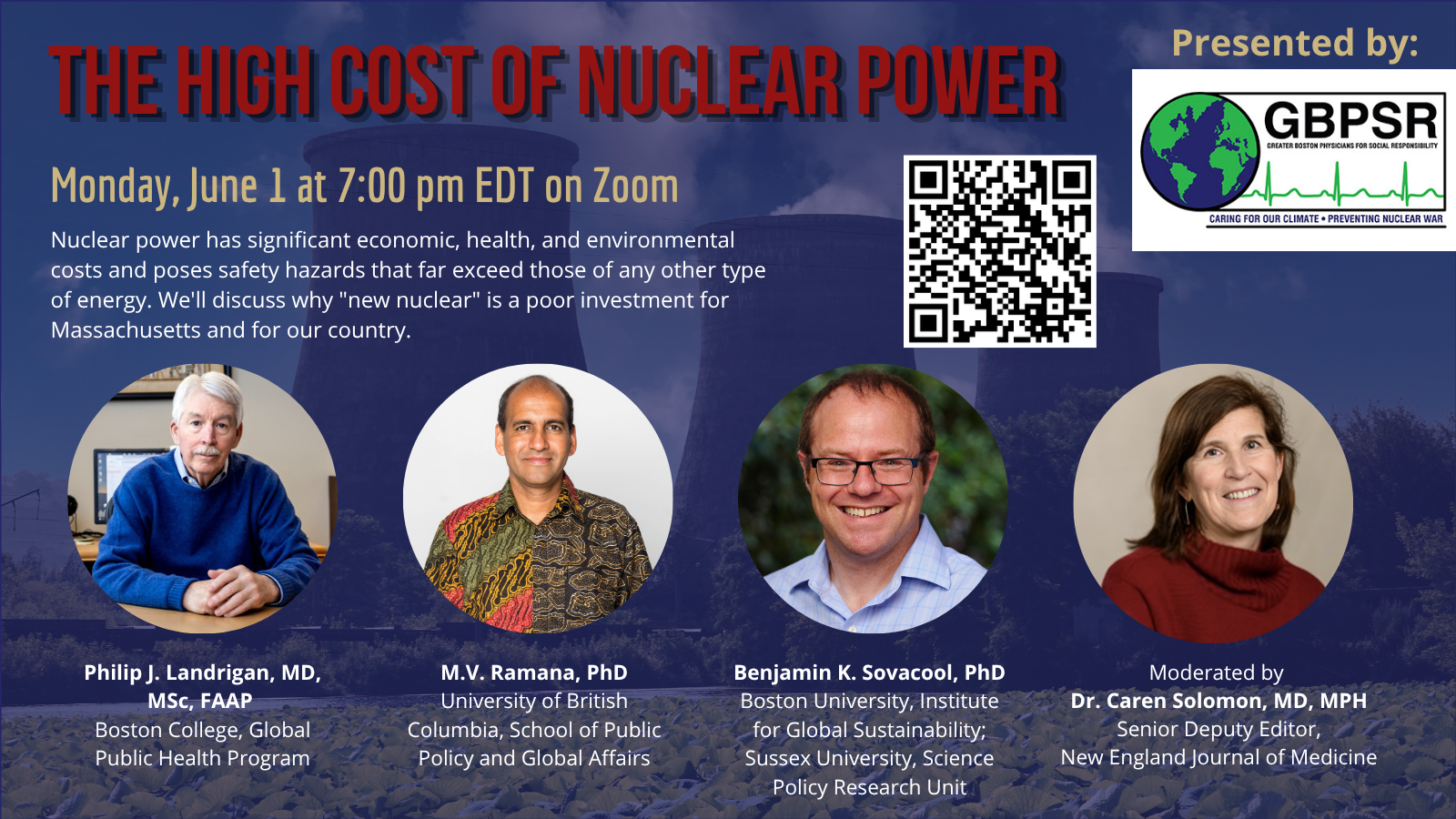
1 June Webinar – The High Cost of Nuclear Power – Register


of the week– Nuclear Reactor Information Task Force
To see nuclear-related stories in greater depth and intensity – go to https://nuclearinformation.wordpress.com
-
Archives
- May 2026 (235)
- April 2026 (356)
- March 2026 (251)
- February 2026 (268)
- January 2026 (308)
- December 2025 (358)
- November 2025 (359)
- October 2025 (376)
- September 2025 (257)
- August 2025 (319)
- July 2025 (230)
- June 2025 (348)
-
Categories
- 1
- 1 NUCLEAR ISSUES
- business and costs
- climate change
- culture and arts
- ENERGY
- environment
- health
- history
- indigenous issues
- Legal
- marketing of nuclear
- media
- opposition to nuclear
- PERSONAL STORIES
- politics
- politics international
- Religion and ethics
- safety
- secrets,lies and civil liberties
- spinbuster
- technology
- Uranium
- wastes
- weapons and war
- Women
- 2 WORLD
- ACTION
- AFRICA
- Atrocities
- AUSTRALIA
- Christina's notes
- Christina's themes
- culture and arts
- Events
- Fuk 2022
- Fuk 2023
- Fukushima 2017
- Fukushima 2018
- fukushima 2019
- Fukushima 2020
- Fukushima 2021
- general
- global warming
- Humour (God we need it)
- Nuclear
- RARE EARTHS
- Reference
- resources – print
- Resources -audiovicual
- Weekly Newsletter
- World
- World Nuclear
- YouTube
-
RSS
Entries RSS
Comments RSS
 nuclear-news