Anti–nuclear resistance in Russia: problems, protests, reprisals

Produced by RSEU’s program “Against nuclear and radioaсtive threats”
Report “Anti–nuclear resistance in Russia: problems, protests, reprisals” Produced by RSEU’s program “Against nuclear and radioaсtive threats”
Editor and translator: Vitaly Servetnik
English editor: Anna WhiteCover
illustration: Anastasia Semenova
Layout: Sergey Fedulov
Saitnt Petersburg 2020
Nuclear energy: failures and lies…….5
Expired reactors……………………………6
Decommissioning problems…………..7
Uranium mining protest………………..8
The Mayak plant: Rosatom’s dirty face………10
Struggle against nuclear repository……………11
A road through a radioactive graveyard……..14
Conclusion: nuclear power is a problem, not a solution….14
Nuclear energy: failures and lies
4 https://7×7–journal.ru/articles/2019/08/09/admin-istraciya–severodvinska–udalila–s–oficialnogo–saj-ta–reliz–o–skachke–radiacii–v–gorode–posle–vzry-va–pri–ispytanii–reaktivnoj–ustanovki–baza–soobshi-la–o–shesti–postradavshih–ot–oblucheniya
8 https://www.tol.org/client/article/23174-nucle-ar-strength-kola.html
9 https://barentsobserver.com/en/sections/nature/ kola-reactor-3-runs-overtime (Eng.)
10 https://barentsobserver.com/en/nature/ ice-cold-swimming-nuclear-protest (Eng.)
11 http://pim.org.ru/old/2005–04–28–answer–mur-manproc.pdf (Rus.)
12 https://profile.ru/society/ekolog–znachit–vrag–13271/
13 https://kec.org.ru/organisation/histrory/
14 http://rusecounion.ru/eng/nuclearstatusre-port2019 (Eng.)
15 http://rusecounion.ru/eng/node/2994 (Eng.),http://rusecounion.ru/eng/node/2991 (Eng.)
16 https://www.rbc.ru/spb_sz/29/12/2018/ 5c2633749a7947f8833fc99817 http://decommission.ru/2019/06/14/laes_sos-nobyl/
18 http://decommission.ru/2017/12/21/yad-news_1_201217/
19 http://rusecounion.ru/eng/node/2993 (Eng.)
20 http://rusecounion.ru/eng/node/2992 (Eng.)
21 http://greenworld.org.ru/?q=human_right_21111622 https://shtab.navalny.com/hq/kurgan/3687/
23 https://novayagazeta.ru/arti-cles/2019/11/08/82647–strana–uraniya
24 https://youtu.be/irqY75jSnA8
25 https://vk.com/wall–141292704_3351
26 https://45.ru/text/gorod/53533571/
27 https://ovdinfo.org/express–news/2020/04/15/v–kurgane–fsb–vozbudilo–ugolovnoe–delo–protiv–ekoaktivistki
28 http://chng.it/xHgMmwkPq5
29 http://rusecounion.ru/ru/no–uf6
30 http://activatica.org/blogs/view/id/8619/title/ pochemu–nuzhno–ostanovit–uranovyy poezd
31 https://www.zaks.ru/new/archive/view/195957
32 http://rusecounion.ru/ru/decomatom_19320
33 https://66.ru/news/society/226814/
34 https://greenpeace.ru/blogs/2019/12/17/peter-burg–ne–hochet–radioaktivnyh–podarkov/
35 https://foeasiapacific.org/2019/07/01/ russia-must-stop-criminal-persecu-tion-of-ecodefense-director-alexandra-koroly-ova-repeal-the-foreign-agent-law-and-promote-envi-ronmental-justice/ (Eng.)
36 https://ecodefense.ru/2019/12/30/alexandra–koroleva–political–refuge/
37 http://rusecounion.ru/ru/decom_mayak_2018
38 http://nuclear.tatar.mtss.ru/fa230907.htm
39 http://chel–portal.ru/enc/dvizhenie_za_yader-nuyu_bezopasnost
40 http://hudoc.echr.coe.int/eng?i=001-103084(Eng.), http://hudoc.echr.coe.int/eng?i=001-158136(Eng.)
41 https://www.vesti.ru/doc.html?id=949087
42 https://theins.ru/confession/81445
43 https://www.kommersant.ru/doc/941081
44 https://www.rbc.ru/poli-tics/18/03/2015/550812909a79475f79d367cc
45 https://novayagazeta.ru/ news/2016/12/13/127413–sud–v–chelyabinske–likvid-iroval–priznannyy–inostrannyym–agentom–fond–za–prirodu
46 https://za–prirodu.ru/page/ekspansija–neve-zhestva
47 http://babr24.com/kras/?IDE=198678
48 http://www.change.org/mogilnik
49 https://youtu.be/WTKfCnXt58Q?t=1729
50 https://meduza.io/news/2016/08/25/krasnoyarsk-ogo–aktivista–obvinili–v–razzhiganii–nenavisti–k–at-omschikam
51 http://greenworld.org.ru/sites/default/greenfiles/ Mariasov_doklad_int.pdf
52 https://vk.com/@pitsunova–filkina–gramota–ros-rao
53 https://news.sarbc.ru/main/2019/07/25/235566.html
54 https://regnum.ru/news/polit/2867802.html
55 http://chng.it/5RsJDQfkxq
56 https://ovdinfo.org/express–news/2020/03/11/ kirovskie–vlasti–ne–soglasovali–miting–ni–na–odnoy–iz–31–ploshchadok–no
57 http://rusecounion.ru/ru/horda_msk
58 https://youtu.be/R9_9phYaWBE
59 https://youtu.be/bMKfYD1SLdc
60 https://youtu.be/l5K8agywCNw
61 https://youtu.be/iXOyT0qPUi0
62 http://activatica.org/blogs/view/id/9759/title/ na–sklon–v–moskvoreche–vernulsya–simvol–obo-rony–sob
Czech Fiscal Council warns on the long-term risk of financing a new nuclear reactor

Even the World Nuclear News, voice of the global nuclear industry, admits that nuclear reactors are just too costly
Czech budget council warns of Dukovany cost https://www.world-nuclear-news.org/Articles/Czech-budget-council-warns-of-Dukovany-cost 05 June 2020
 The Czech Fiscal Council, Národní rozpočtová rada (NRR), has warned that financing a new nuclear power unit could have a long-term impact on the country’s budget and could be “a lot higher” than current estimates.
Czech Prime Minister Andrej Babiš said last week that the government will provide a loan to ČEZ to cover 70% of the cost of building a new unit at the Dukovany nuclear power plant, with the majority state-owned utility funding the remaining 30%. The project cost is estimated to be about EUR6.0 billion (USD6.7 billion).
In its latest quarterly report, published on 3 June, the NRR said it was outside its remit to comment on the country’s choice of energy mix, but that it considered it necessary to comment on aspects of policy that significantly affect public budgets.
“In May 2020, the government presented a proposal to provide a loan to ČEZ covering up to 70% of the funds needed for the completion of the Dukovany nuclear power plant, while the costs of project implementation are expected to be around CZK160 billion. It’s obvious that such an amount would have to be secured by the state on the capital markets and thus the share of public debt in GDP would increase,” it said.
v”In addition, experience from the construction of nuclear power plants abroad in recent years has shown that the budgeted amounts are generally significantly exceeded. In the end, the fiscal costs of completing a nuclear power plant may be significantly higher than current estimates. Decisions of similar importance should therefore, in the NRR’s view, be taken on the basis of careful analysis and after a more detailed discussion.”
ČEZ applied to the State Office for Nuclear Safety on 25 March to construct two new reactors at its Dukovany nuclear power plant. Four VVER-440 units are currently in operation at the site, in Vysočina Region.
Russian city Severodvinsk, (near site of nuclear accident) sealed off due to Covid-19
 Coronavirus seals off city near secret Russian nuclear accident site, https://thebarentsobserver.com/en/2020/06/coronavirus-seals-city-near-secret-russian-nuclear-accident-site The Moscow Times 05, 2020, Authorities have blocked access to Severodvinsk, the north Russian city located near the site of last year’s mysterious nuclear testing accident as the coronavirus outbreak there intensified.The governor of the Arkhangelsk region signed an order to close public access to Severodvinsk this Saturday, the city’s press service said Thursday. Severodvinsk is near the Nyonoksa testing site where an August 2019 explosion during a rocket engine test killed five Russian nuclear workers and led to a radiation spike.
Severodvinsk will set up checkpoints Friday and restrict entry and exit starting midnight Saturday to everyone except workers and people attending funerals, going to country houses or transiting through the city.
“The measure remains in effect until special orders,” the city’s press service said in a statement.
Around 700 people have been infected with Covid-19 at two of the city’s major shipyards since April, an unnamed shipbuilding industry source told the Vedomosti business daily. The Sevmash and Zvezdochka shipyards reportedly saw more than 200 new cases in the past week alone.
The outbreak has prompted federal health officials last week to order enterprises in Severodvinsk to limit their activities.
The Arkhangelsk region has confirmed 2,496 coronavirus infections since the start of the outbreak. Severodvinsk accounts for roughly half of the region’s overall cases.
Last August, a missile exploded during what is believed to have been a recovery operation. The secrecy surrounding the accident has led outside observers to speculate that the explosion involved the Burevestnik nuclear-powered intercontinental cruise missile, dubbed the SSC-X-9 Skyfall by NATO.
President Vladimir Putin later said the accident occurred during testing of what he called promising new weapons systems.
Nuclear submarine accidents contaminating Russia’s Far East
Here’s What You Need To Remember: The explosion blew out the reactor’s twelve-ton lid—and fuel rods—and ruptured the pressure hull. The reactor core was destroyed, and eight officers and two enlisted men standing nearby were killed instantly. A the blast threw debris was thrown into the air, and a plume of fallout 650 meters wide by 3.5 kilometers long traveled downwind on the Dunay Peninsula. More debris and the isotope Cobalt-60 was thrown overboard and onto the nearby docks.
In 1985, a Soviet submarine undergoing a delicate refueling procedure experienced a freak accident that killed ten naval personnel. The fuel involved was not diesel, but nuclear, and the resulting environmental disaster contaminated the area with dangerous, lasting radiation. The incident, which remained secret until after the demise of the USSR itself, was one of many nuclear accidents the Soviet Navy experienced during the Cold War……
The explosion blew out the reactor’s twelve-ton lid—and fuel rods—and ruptured the pressure hull. The reactor core was destroyed, and eight officers and two enlisted men standing nearby were killed instantly. A the blast threw debris was thrown into the air, and a plume of fallout 650 meters wide by 3.5 kilometers long traveled downwind on the Dunay Peninsula. More debris and the isotope Cobalt-60 was thrown overboard and onto the nearby docks.
According to Nuclear Risks, the accident scene was heavily contaminated with radioactivity. Gamma ray radiation was not particularly bad; at an exposure rate of five millisieverts per hour, it was the equivalent of getting a chest CT scan every hour. However, the explosion also released 259 petabecquerels of radioactive particles, including twenty-nine gigabecquerels of iodine-131, a known cause of cancer. This bode very badly for the emergency cleanup crews, especially firefighters who needed to get close to the explosion site, and the nearby village of Shkotovo-22. Forty-nine members of the cleanup crew displayed symptoms of radiation sickness, ten of them displaying acute symptoms…….
While the Chazhma Bay region appears contaminated to this day with radiation, it is unknown how much of it is the result of the K-431 incident and how much the result of the many nuclear-powered submarines that were junked and forgotten in the area.
The K-431 incident was one of several involving Soviet submarine reactors. Ten Soviet submarines experienced nuclear accidents, and one other, K-11, also suffered a refueling criticality………. https://news.yahoo.com/1985-nuclear-submarine-explosion-contaminated-213000521.html
Russia will now allow use of atomic weapons against non-nuclear strike
By including a non-nuclear attack as a possible trigger for Russian nuclear retaliation, the document appears to send a warning signal to the U.S. The new expanded wording reflects Russian concerns about the development of prospective weapons that could give Washington the capability to knock out key military assets and government facilities without resorting to atomic weapons.
In line with Russian military doctrine, the new document reaffirms that the country could use nuclear weapons in response to a nuclear attack or an aggression involving conventional weapons that “threatens the very existence of the state.”
But the policy document now also offers a detailed description of situations that could trigger the use of nuclear weapons. They include the use of nuclear weapons or other weapons of mass destruction against Russia or its allies and an enemy attack with conventional weapons that threatens the country’s existence.
U.S.-Russia relations are at post-Cold War lows over the Ukrainian crisis, the accusations of Russian meddling in the U.S. 2016 presidential election and other differences.
Last year, both Moscow and Washington withdrew from the 1987 Intermediate-range Nuclear Forces Treaty. The only U.S.-Russia nuclear arms control agreement still standing is the New START treaty, which was signed in 2010 by U.S. President Barack Obama and then-Russian President Dmitry Medvedev. The pact limits each country to no more than 1,550 deployed nuclear warheads and 700 deployed missiles and bombers and envisages sweeping on-site inspections to verify compliance.
Uranium mining protests in Russia
“……..Uranium mining protest
In the Kurgan region, Rosatom’s subsidiary company, Dalur, has been mining uranium and the local communities fear an environmental disaster. In the summer of 2019, the state environmental appraisal revealed a discrepancy between Dalur’s documentation and the Russian legislation
Activists attribute her persecution to her work at the Public Monitoring Fund for the Environmental Condition and the Population Welfare which she led back in 2017. The Foundation has repeatedly published information on the possible environmental damage resulting from Dalur’s mining activity. (28)
9
In the fall of 2019, environmentalists revealed that radioactive and toxic waste (uranium hexafluoride, UF6)were being imported from Germany through the port of Amsterdam into Russia. This is the waste from the uranium enrichment process which will be sent to the Urals or Siberia and stored in containers above the ground. Thus, under the auspices of a commercial transaction, the German uranium–enriching enterprise, Urenco, avoids its nuclear waste problem, while Rosatom profits by taking the hazardous waste into Russia.
Activists, despite government oppression, campaign for decommissioning of Russia’s aging nuclear reactors
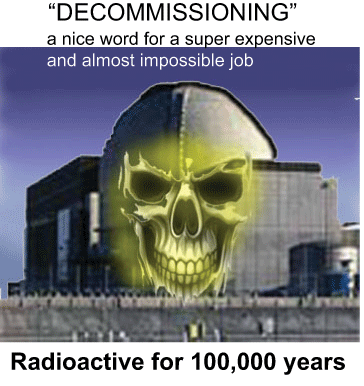 Anti–nuclear resistance in Russia: problems, protests, reprisals [Full Report 2020] Report “Anti–nuclear resistance in Russia: problems, protests, reprisals” Produced by RSEU’s program “Against nuclear and radioaсtive threats”
“………..For many years, Murmansk regional environmental groups have opposed the ageing Kola NPP reactor’s lifetime extension. They have participated in public hearings, have organised many demonstrations (8-9-10), appealed to and received support from the prosecutor’s office(11), but this was all ignored by Rosatom. Activists also called on the governor to shut down the old NPP, but environmental organisations were shutdown instead. One such organisation is Kola Environmental Center (KEC) – listed as a Foreign Agent in 2017– and was subject to two trials and fined 150,000 rubles (12). KEC was forced to close down as a legal entity in2018, but has continued its environmental work as a public movement(13). Another organisation in the region –Nature and Youth – made the decision to close down in order to avoid prosecution, but continues its work as an unregistered initiative
• In 2018, after 45 years of operation, the first power unit of the Leningrad NPP was finally shut down.The second one scheduled for shutdown is in 2020, the third in 2025 and the fourth in 2026. However,decommissioning projects have not yet been clearly developed for the reactors.
• The public organisation, Green World, has worked for many years in Sosnovy Bor, Leningrad Region, a city dominated by the nuclear industry and closed to outsiders. Since 1988, activists of the organisation have opposed dangerous nuclear projects in the Baltic Sea region(17) and have provided the public with independent information on the environmental situation. (18)
In its place, another organisation was opened – the Public Council of the South Coast of the Gulf of Finland. Activists have continued their work as before under this new name…….”
French state-controlled utility EDF has to inspect valve leaks at Flamanville, Taishan, Finland nuclear sites
Flamanville and Taishan nuclear sites after valve leaks were reported at
Finland’s Olkiluoto 3 (OL3) nuclear reactor, a company’s spokesman said
on Wednesday. EDF was unaware of any major issues at Flamanville and
Taishan sites similar to the valve leaks in Finland, the spokesman also
said. Finland’s nuclear watchdog reported on May 25 valve problems in a
component involved in the cooling process at the long-delayed OL3 nuclear
reactor.
Deep concern over environmental cost of planned Sizewell C nuclear station
 East Anglian Daily Times 5th June 2020 Councillor David Blackburn: Deeply concerned over the environmental cost of Sizewell C. I share the ‘deep concerns’ of the National Trust to
the potential environmental costs of the proposed Sizewell C new nuclear
reactor project (EADT, 25th May).
They tally with those made at our recent
Saxmundham seminar from environmental representatives including the
naturalist Simon Barnes, the Suffolk Wildlife Trust and Suffolk Coastal
Friends of the Earth. At that meeting it was made clear that Sizewell C
could have major and long term negative effects on highly sensitive sites
like Minsmere, and as the National Trust notes, Dunwich Heath.
And we know as well that Coronation Wood is to be removed in the interim plans for the
site. The natural environment around Sizewell includes some rare and unique
habitats, and clearly an industrial development on the sheer scale of
Sizewell C can’t possibly be able to mitigate all of these issues.
It should also be noted that, in the past few months, renewable energy has
delivered the bulk of UK electricity needs and it is reported that EDF may
be paid £50 million just to turn Sizewell B off due to a lack of demand.
With longer-term concerns over climate change, coastal erosion and rising
sea levels there is a lethal combination of factors that make it much more
sensible not to develop new nuclear reactors in Suffolk. The concerns of
local environmental groups need to be heeded for this and future
generations so that we can continue to enjoy these beautiful landscapes and
their rare wildlife.
Most UK pension providers are investing in nuclear weapons companies
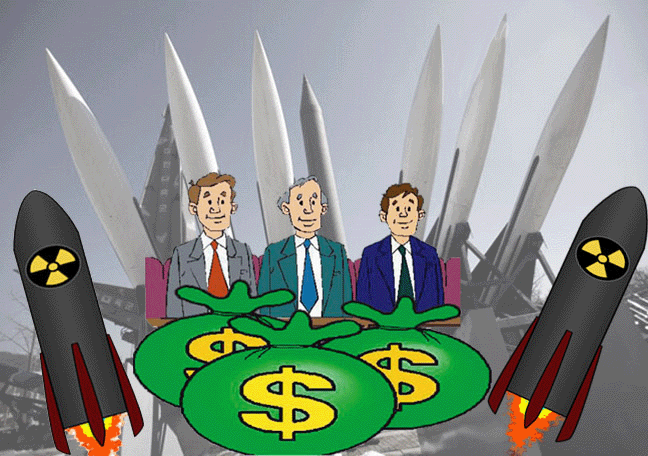
“The UN Treaty on the Prohibition of Nuclear Weapons (TPNW) was agreed in 2017.
“Once this is ratified by 50 states and comes into effect as a new piece of international law, the implications will be significant for nuclear armed states and financial institutions alike.
“The biggest banking corporations have a global reach and cannot disregard international law.”
|
Concerns raised over pension investments in nuclear weapons,
https://www.pensionsage.com/pa/Most-pension-providers-investing-in-nuclear-weapons.php By Sophie Smith 03/6/20 A report by the UK Nuclear Weapons Financing Research Group has raised concerns about the number of pension providers investing in companies that are producing nuclear weapons.
The report, Banks, Pensions and Nuclear Weapons: Investing in Change, found that among pension providers, policy on restricting investment in nuclear weapons is generally limited to ethical funds. Continue reading |
Climate Experts Predict ‘Grim Future’ For Nuclear Power
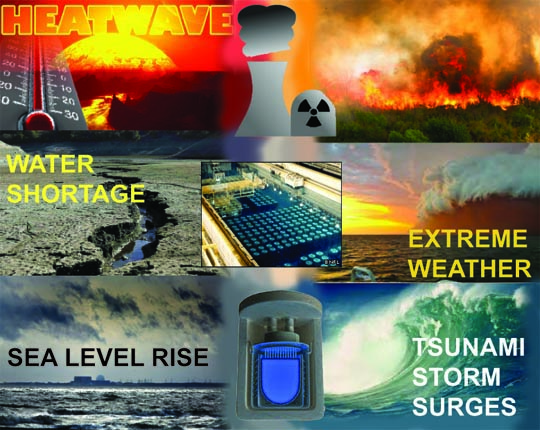
Climate Experts Predict ‘Grim Future’ For Nuclear Power
The result of research into black swans – called “Synthesising Unprecedented Coastal Conditions: Extreme Storm Surges” aka SUCCESS – was presented at the meeting. It was important to conduct this research, the academic said, because “the storm surge of 5th December 2013 caused sea levels in many parts of the country that were the highest ever recorded and begs the obvious question – could they have been worse?”
All in all, the presentations and discussions at the meeting would not have been particularly welcome to the ONR, whose job it is to make sure nuclear power stations are built to standards that guarantee public safety. In a statement to VICE, an ONR spokesperson said “ONR requires that nuclear new build sites are able to withstand extreme natural hazards, by designing against a one in 10,000 year event. Sites must identify these external hazards, which include the impact of climate change, and demonstrate that they are adequately protected against them throughout the lifetime of the facility.”
Assange too sick to attend the very unjust process of the UK extradition hearings
 Monica Del Mestre 3 June 20
2. In addition to other ongoing health concerns, Assange faces the serious risk of exposure to Covid in Belmarsh prison, and has been advised that even going to the video room to take part in hearings is unsafe. This is another reason he should be immediately released.
3. Assange’s lawyers have long complained they have had insufficient access to him in prison. Under lockdown conditions, they have had no access to him at all. They have repeatedly flagged that this lack of access seriously impacts their ability to prepare his defence.
4. One of the next steps agreed today is that psychiatric reports on Assange from the prosecution and defence will be due to the court on 31 July. Remember that UN Special Rapporteur @NilsMelzer has expressed alarm many times that Assange shows symptoms of psychological torture.
5. It is a welcome step that the continuation of the full extradition hearing was adjourned, as lockdown conditions present clear barriers to open justice – but 7 September may not be late enough to make a meaningful difference. Also the court is still struggling to find a venue.
6. It remains extremely frustrating that the court does not adequately accommodate NGO observers. I have never experienced so much difficulty accessing a trial in any country as at Woolwich Crown Court in February, and the teleconference option we now have is far from sufficient.
7. The press are also facing severe restrictions. Only 6 journalists have been allowed to attend in person the past 2 hearings, with others limited to the awful phone line. This case is of high public interest and a better solution must be found before the full hearing resumes.
8. Assange’s next callover hearing has been scheduled for 29 June at 10 am. We urge the court to find workable solutions to enable his safe attendance and ensure the press and observers are able to properly monitor proceedings. /END
UK’s Sizewell nuclear plan in doubt, due to cost and China’s involvement?
Plan for new UK nuclear plant under intense scrutiny, Proposal for reactor attracts attention because of Chinese role as well as cost Ft.com Nathalie Thomas in Edinburgh and Jim Pickard in London, JUNE 2 2020
Environmentalists insist cheaper, green technologies such as wind, solar and batteries should take precedence over nuclear. ……….Nuclear just isn’t cost-effective,” said Doug Parr, chief scientist for campaign group Greenpeace.
https://www.ft.com/content/4e3221ef-ac1e-43cc-8d68-e1397ca0637f Against this backdrop, the government last year launched a consultation on a possible new funding model for new nuclear plants. The so-called regulated asset base model is attractive to developers because it would cut the cost of capital for a new nuclear plant, reflecting how consumers would pay upfront for the project through their energy bills. These consumers could be left picking up the tab for cost overruns.
Please use the sharing tools found via the share button at the top or side of articles. Copying articles to share with others is a breach of FT.com T&Cs and Copyright Policy. Email licensing@ft.com to buy additional rights. Subscribers may share up to 10 or 20 articles per month using the gift article service. More information can be found here.
https://www.ft.com/content/4e3221ef-ac1e-43cc-8d68-e1397ca0637f
France goes back to its restrictive nuclear compensation law affecting Polynesian nuclear test survivors
The new law reintroduces the need for every claimant to prove a minimum exposure to radiation for a compensation claim to be accepted.
It was approved by a joint commission of the National Assembly and the Senate which met after last week’s rejection of the text in the Senate.
The National Assembly had earlier voted for the law, and in a first reading, the Senate had initially also approved it but then acceded to amendments.
The French Polynesian members of the legislature have not been in Paris since the start of the Covid-19 pandemic and couldn’t take part in the discussion of the proposed law.
The compensation law clause defining the minimum exposure had been removed in 2017 because almost all compensation claims kept being rejected.
However, in 2018 the government changed its mind and reintroduced the restrictions as part of a finance act to complement a health act.
This was challenged and in February, the supreme court ruled that compensation claims lodged before the 2018 law change were not subject to the new terms.
With the new law, however, all outstanding claims have to meet the same requirements.
Between 1966 to 1996, France carried out 193 nuclear weapons tests in French Polynesia and until a decade ago, France claimed its tests were clean caused no harm to humans.
The test sites of Moruroa and Fangataufa remain excised from French Polynesia and are French no-go zones.
Latina plant, the last of Italy’s 4 nuclear power stations to be dismantled
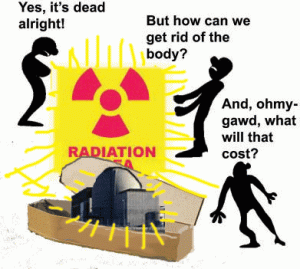 Italy approves dismantling of Latina plant https://www.world-nuclear-news.org/Articles/Dismantling-of-Italys-Latina-plant-to-begin 02 June 2020
The main activities envisaged during this initial phase of decommissioning concern the dismantling of the six boilers, with a total weight of over 3600 tonnes, and the lowering of the reactor building height from 53 to 38 metres. Buildings and auxiliary systems will also be dismantled. These operations are in addition to those already carried out or in progress at the plant.
By the end of this phase, all previous radioactive wastes generated through the operation of the plant or those produced by the dismantling of structures, systems and plant components will be stored safely at the site. These wastes will be stored both in a new temporary storage facility and in some specifically adapted reactor building premises. This initial phase of decommissioning the Latina plant is expected to be completed in 2027 and to cost EUR270 million (USD302 million).
With the availability of a planned national repository, it will be possible to start the second and final phase of the decommissioning of the plant with the dismantling of the graphite gas reactor. Once all the radioactive waste has been transferred to the repository and the temporary storage facilities demolished, the site will be released, without radiological restrictions, and returned to the community for its reuse.
“We are pleased with the issuance of this decree, the fifth after those obtained for the Bosco Marengo [fuel fabrication] plant and the Trino, Garigliano and Caorso [nuclear power] plants,” said Sogin CEO Emanuele Fontani. “This is a crucial step for the closure of the Italian nuclear cycle, which allows us to get to the heart of the decommissioning of the Latina plant. This measure confirms the fruitful collaboration between the various institutional subjects involved in the dismantling of nuclear plants.”
The Latina plant, comprising a single 210 MWe Magnox graphite gas-cooled reactor, began operating in January 1964. It was permanently shut in December 1987 as a result of the Italian referendum on nuclear power that followed the April 1986 Chernobyl disaster. Sogin took over ownership of the site in November 1999.
1 This Month
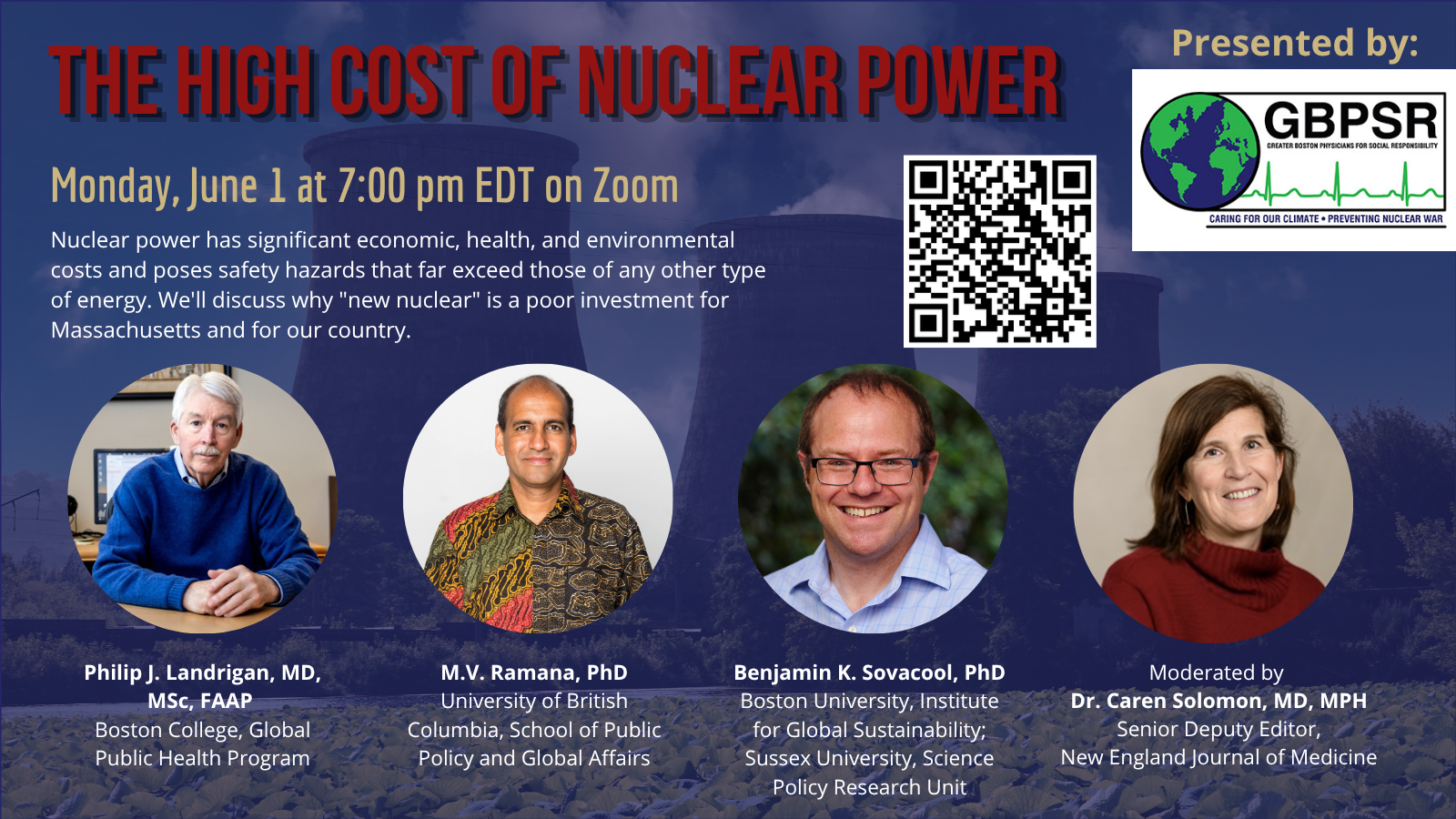
1 June Webinar – The High Cost of Nuclear Power – Register


of the week– Nuclear Reactor Information Task Force
To see nuclear-related stories in greater depth and intensity – go to https://nuclearinformation.wordpress.com
-
Archives
- May 2026 (235)
- April 2026 (356)
- March 2026 (251)
- February 2026 (268)
- January 2026 (308)
- December 2025 (358)
- November 2025 (359)
- October 2025 (376)
- September 2025 (257)
- August 2025 (319)
- July 2025 (230)
- June 2025 (348)
-
Categories
- 1
- 1 NUCLEAR ISSUES
- business and costs
- climate change
- culture and arts
- ENERGY
- environment
- health
- history
- indigenous issues
- Legal
- marketing of nuclear
- media
- opposition to nuclear
- PERSONAL STORIES
- politics
- politics international
- Religion and ethics
- safety
- secrets,lies and civil liberties
- spinbuster
- technology
- Uranium
- wastes
- weapons and war
- Women
- 2 WORLD
- ACTION
- AFRICA
- Atrocities
- AUSTRALIA
- Christina's notes
- Christina's themes
- culture and arts
- Events
- Fuk 2022
- Fuk 2023
- Fukushima 2017
- Fukushima 2018
- fukushima 2019
- Fukushima 2020
- Fukushima 2021
- general
- global warming
- Humour (God we need it)
- Nuclear
- RARE EARTHS
- Reference
- resources – print
- Resources -audiovicual
- Weekly Newsletter
- World
- World Nuclear
- YouTube
-
RSS
Entries RSS
Comments RSS
 nuclear-news