Desperate nuclear lobby tries to con the European Commission with its bogus claim about climate solving

|
Industry urges EC to recognise nuclear’s role in economic recovery, WNN,03 June 2020The European nuclear industry has written an open letter to the European Commission, saying it is ready to play an important part in supporting a low-carbon economic revival. The letter, addressed to EC President Gertrud von der Leyen, European Parliament President David Maria Sassoli and European Council President Charles Michel, was signed by 25 companies and 14 associations, including European nuclear trade body Foratom.
Last week, Foratom said it was regrettable that the European Commission had ignored the need for nuclear power as a clean, dispatchable and European source of energy in its green recovery plan from the coronavirus pandemic. The EC’s plan – Next Generation EU – aims to boost the EU budget with new financing raised on the financial markets for 2021-2024, and a reinforced long-term budget of the European Union for 2021-2027. Today’s letter reads as follows:…… https://www.world-nuclear-news.org/Articles/Industry-urges-EC-to-recognise-nuclear-s-role-in-e |
|
EDF terminates nuclear electricity supply contracts,
EDF terminates nuclear electricity supply contracts, WNN ,03 June 2020 French utility EDF has notified three energy suppliers – Alpiq, Gazel Energie and Total Direct Energie – of the termination of their contracts under a mechanism that allows rival suppliers to buy electricity produced by EDF’s nuclear power plants. The suppliers had sought to invoke the force majeure clause in their supply contracts with EDF…….
EDF announced today that it had terminated the ARENH contracts it has with Alpiq, Gazel and Total Direct Energie, as provided for in the contracts when an interruption occurs for a period of over two months.
“The COVID-19 health crisis and the emergency measures introduced by public authorities on 17 March 2020 led to a decline in electricity consumption by non-residential clients, impacting all market players, including EDF,” the company said. “Faced with this decline in electricity consumption, some suppliers decided to revoke their contractual commitments citing force majeure to reduce the volumes bought last November as part of the ARENH contract.”…… https://www.world-nuclear-news.org/Articles/EDF-terminates-nuclear-electricity-supply-contract
Exhumed AREVA – now “Framatome” acquires BWX Technologies’ US nuclear services business
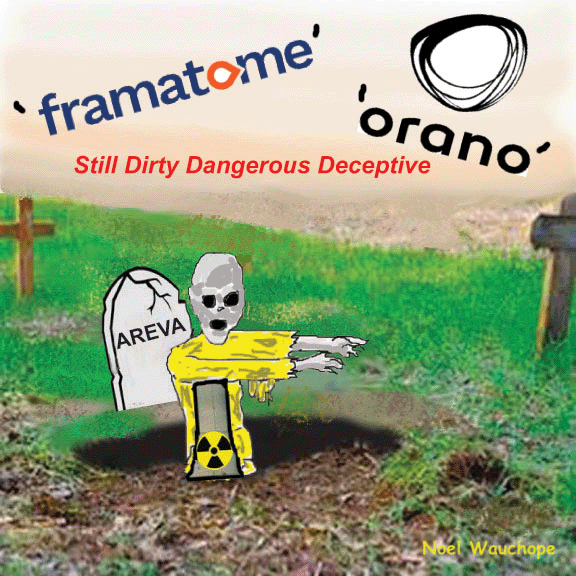 Framatome acquires BWX Technologies’ US nuclear services business 3 June 2020 3 June 2020 Framatome has completed its acquisition of BWX Technologies’ US commercial nuclear services business. With this transaction, Framatome expands its portfolio of equipment and tooling for nuclear power plant inspections and maintenance, a statement said. …..https://www.neimagazine.com/news/newsframatome-acquires-bwx-technologies-us-nuclear-services-business-7954409
The European Union plus France, Germany and the UK “deeply regret” US decision on Iran sanctions
EU and others ‘regret’ US decision on Iran sanctions, WNN 01 June 2020 The European Union plus France, Germany and the UK have said they “deeply regret” the USA’s decision to end three sanction waivers covering Joint Comprehensive Plan of Action (JCPOA) projects in Iran. Separately, a spokesperson for China’s Foreign Ministry said the US decision “hampers” international non-proliferation progress…….
“We deeply regret the US decision to end the three waivers covering key JCPOA nuclear projects in Iran, including the Arak Modernisation Project,” the spokespersons of the High Representatives of the EU and the Foreign Ministries of France, Germany and the UK said in a joint statement issued on 30 May. “These projects, endorsed by UN Security Council resolution 2231, serve the non-proliferation interests of all and provide the international community with assurances of the exclusively peaceful and safe nature of Iranian nuclear activities.
“We are consulting with our partners to assess the consequences of this decision by the United States.
“The JCPOA is a key achievement of the global non-proliferation architecture and currently the best and only way to ensure the exclusively peaceful nature of Iran’s nuclear programme. That is why we have worked continuously with the aim of ensuring the full and effective implementation of commitments under the JCPOA, in particular the return of Iran to full compliance with its nuclear commitments without delay.”
Zhao Lijian, spokesman for China’s Foreign Ministry, on 29 May said the US decision to end the waiver “hampers” international non-proliferation progress and shared efforts to preserve the JCPOA.
“The Arak reactor conversion is an important part of the JCPOA and a joint project of parties to the agreement,” he said. “China is ready to work with other parties to continue upholding the deal and safeguarding its own legitimate rights and interests.”
The JCPOA was signed in July 2015 by Iran and the E3/EU+3 (China, France, Germany, Russia, the UK and the USA – also referred to as the P5+1 – plus the European Union) and implemented in January 2016, clearing the way for the lifting of nuclear-related economic sanctions against Iran. Under its terms, Iran agreed to limit its uranium enrichment activities, eliminate its stockpile of medium-enriched uranium and limit its stockpile of low-enriched uranium over the subsequent 15 years……
US President Donald Trump in 2018 announced the termination of the USA’s participation in the JCPOA, directing the US administration to begin the process of re-imposing sanctions on Iran. https://www.world-nuclear-news.org/Articles/EU-and-others-regret-US-decision-on-Iran-sanctions
German Parliament in debate on basing of nuclear weapons
|
German Politicians Renew Nuclear Basing Debate Arms Control June 2020
By Oliver Meier A senior member of the German Parliament has revitalized the debate over whether the nation should host U.S. nuclear weapons on German soil. “It is about time that Germany in the future excludes the deployment” of nuclear weapons on its territory, said Rolf Mützenich, the leader of the Social Democrat (SPD) group in the Bundestag, in a May 2 interview with Der Tagesspiegel. The German Social Democrats are coalition partners of the conservative Christian Democrat Union (CDU). The SPD leadership backed Mützenich’s comments. The discussion followed a mid-April decision by the Defense Ministry to replace Germany’s current fleet of Tornado aircraft, some of which are dual-capable with 90 Eurofighter Typhoon and 45 U.S. F-18 fighter aircraft. Thirty of the F-18s would be certified to carry U.S. nuclear weapons. Under nuclear sharing arrangements, NATO allies jointly discuss, plan, and train nuclear missions. According to Hans Kristensen of the Federation of American Scientists, Belgium, Germany, Italy, the Netherlands, and Turkey host up to 150 U.S. B-61 nuclear gravity bombs on their territory. These countries, except Turkey, provide their own aircraft capable of delivering nuclear weapons in times of war. Details of the arrangements remain shrouded in secrecy, but 20 U.S. nuclear weapons are estimated to be deployed at Büchel air base in western Germany.
The Tornado replacement has been controversial for years. Washington has been lobbying Berlin to follow the example of other host nations and buy U.S. F-35 aircraft as the future nuclear weapons carrier.
France prefers a European approach, and it is jointly developing with Germany and Spain the Future Combat Air System (FCAS), a sixth-generation fighter aircraft that will have a nuclear capability in the French Air Force. Germany’s selection of the F-18 was thus a political compromise which Defense Minister Annegret Kramp-Karrenbauer presented as a “bridge solution” until the FCAS becomes operational after 2040. Germany plans to retire the Tornado between 2025 and 2030.
Kramp-Karrenbauer may have mishandled the process by not sufficiently consulting with SPD members in the parliament. She has conceded that the Bundestag would not need to make a decision until 2022 at the earliest and said that there would thus be “space for a debate” on the dual-capable aircraft decision in the campaign for the September 2021 parliamentary elections and negotiations on a new coalition government thereafter. In a May 7 article in Internationale Politik und Gesellschaft, Mützenich took up that invitation, saying that he would like “an open and honest debate about the rationale for nuclear sharing.” Social Democrats “are not calling for the immediate denuclearization of NATO,” but want to discuss the need “to spend billions on the procurement and maintenance of U.S. aircraft whose sole purpose is to drop American nuclear bombs,” he wrote.
Katja Keul, spokeswoman on disarmament policy for the Green party, told Arms Control Today in a May 14 interview that the Greens “do not want to put Germany on a path of continued involvement in technical sharing arrangements by committing to the procurement of a new nuclear-capable aircraft now.” Based on current polls, many expect the Greens to be part of Germany’s next government. Keul, like other proponents of change, separated Germany’s role as a host nation from the continued participation in NATO political bodies associated with nuclear sharing, such as the Nuclear Planning Group. By contrast, those who have argued in favor of preserving the nuclear status quo have often conflated technical and political dimensions of sharing arrangements, equating the end of forward deployment of U.S. nuclear weapons with a denuclearization of the alliance or even the end of deterrence……..
Keul said the Greens want “Germany to push for a new consensus in NATO that would pave the way for the withdrawal of U.S. nuclear weapons from Europe. That would be our plan A.” She cautioned that “because such a consensus will be difficult to achieve, our plan B would be to ask for understanding that Germany will end the deployment of U.S. nuclear weapons on its territory once the Tornado reaches the end of its lifetime.”……
Like others, Keul believes that “the future of nuclear sharing should certainly be on the agenda of the NATO experts group” established by Secretary-General Jens Stoltenberg at end of March. Kiesewetter agrees that “we need an informed debate, including by experts, on the future of nuclear sharing arrangements.” The group, co-chaired by former U.S. diplomat A. Wess Mitchell and former German Defense Minister Lothar de Maizière, is to discuss NATO’s political role. Heinrich suggested that it would also be “useful if the experts include civil society in their deliberations.”…….https://www.armscontrol.org/act/2020-06/news/german-politicians-renew-nuclear-basing-debate
|
|
Discussion on Poland, Germany hosting nuclear weapons
Playing Warsaw against Berlin on nuclear weapons, European Leadership Network, Katarzyna Kubiak |Policy Fellow 1 June 20, The German domestic dispute about its future role in NATO nuclear sharing is heating up again. But the discussion took a new turn when in May 2020 US Ambassador to Poland Georgette Mosbacher tweeted “If Germany wants to diminish nuclear capability and weaken NATO, perhaps Poland – which pays its fair share, understands the risks, and is on NATO’s eastern flank – could house the capabilities.” How much merit does this “perhaps” have?
NATO nuclear sharing is an arrangement in which the United States deploys about 150 nuclear free-fall bombs in Germany, Italy, Belgium, the Netherlands and Turkey, of which about 80 are for delivery by European NATO aircraft. Berlin, Rome, Brussels and Amsterdam possess nuclear-certified planes and train their pilots on the nuclear mission, while several other Allies, including Poland, would support NATO nuclear operations with conventional air tactics (SNOWCAT).
In December 2015, asked if Poland would want to join NATO’s nuclear sharing program, Deputy Defence Minister Tomasz Szatkowski said, “concrete steps are currently under consideration.” The interview stirred confusion. The Polish Ministry of Defence rectified that it was not working on Poland’s accession to the program. It pointed out that Szatkowski’s statement should be read in the frame of the then on-going international discussion about widening allied participation in NATO’s nuclear sharing. It also made clear that Warsaw did not seek to acquire nuclear weapons, and that any form of Polish participation in NATO nuclear sharing requires domestic and allied political arrangements. Yet since the interview, rumours that Poland is interested in joining NATO’s nuclear sharing have become prevalent.
Limited technical merit
Poland does not host American nuclear weanuclear pons. It does not have the necessary infrastructure to do so, nor does it possess aircraft certified for the mission. Poland participates in SNOWCAT and observers spotted Polish F-16 aircraft supporting NATO’s nuclear strike exercises in 2013, 2014 and 2017. Warsaw has recently ordered 32 F-35A aircraft with the first anticipated for delivery between 2025 and 2026. The United States certified the F-35 to carry tactical nuclear weapons. Belgium, Italy and the Netherlands already procured or ordered the jets to replace their ageing dual-capable aircraft prescribed to NATO’s nuclear mission. While the Polish procurement of the F-35 could be interpreted as building readiness to receive weapons, it should be remembered that other NATO allies with no roles in nuclear sharing (like Denmark and Norway) also bought F-35.
Legal uncertainty
Moving American nuclear weapons from Germany to Poland and Polish participation in NATO nuclear sharing is not a clear-cut matter legally either. Poland is a party to the Nuclear Non-Proliferation Treaty (NPT). Article I of this treaty, applicable to nuclear-weapons states, prohibits the transfer of “control” of nuclear weapons “to any recipient whatsoever.” While some experts view existing NATO nuclear sharing arrangements compatible with the NPT, others voice scepticism.
A clear breach of political commitments……
Vague political benefits……
Questionable militarily benefits ……
The merit……
The United States never publicly offered Poland to become a host state. In October 2019, when the US government was reviewing plans for evacuating its nuclear weapons from Turkey out of political concerns, no US government representative openly suggested relocating these weapons to Poland. Ambassador Mossbacher seems to have simply instrumentalised Poland, playing
Oleg Bodrov on the status of the Russian nuclear industry
Oleg Bodrov: Rosatom has agreements to build 36 nuclear power plants outside of Russia https://www.pressenza.com/2020/05/oleg-bodrov-rosatom-has-agreements-to-build-36-nuclear-power-plants-outside-of-russia/ 31.05.2020 – St Petersburg, Russia – Abolition 2000, On the 23rd of May, 2020, the Abolition 2000 Global Network to Eliminate Nuclear Weapons held its Annual General Meeting online for the first time due to the coronavirus pandemic. A large part of the meeting was dedicated to reflecting on the implications of covid-19 on the work of nuclear abolition. Oleg Bodrov of Public Council of the South Coast of the Gulf of Finland, near St Petersburg, Russia shared his views in a pre-recorded interview. We share it here for readers of Pressenza.
Transcript below
Dear colleagues, my name is Oleg Bodrov, I am a physicist, ecologist and peace movement activist from the south coast of the Gulf of Finland, in the Eastern Part of the Baltic Sea Region, close to St. Petersburg, Russia. I am the Chairman of the Public Council of the South Coast of the Gulf of Finland.
I worked in the Russian nuclear industry for 17 years but left it after the Chernobyl disaster. For the past 30 years, I have been working on issues of environmental protection, nuclear safety and the prohibition of nuclear weapons. I live on the border of the confrontation between NATO and Russia, on the southern coast of the Gulf of Finland.
So, the point which I will present just now, will be based on my personal experience and activities in the last years.
First of all I’d like to say something about the status of the Russian nuclear industry in the context of nuclear weapons and the export of “civil nuclear technologies” before the NPT Review Conference.First of all Russia, according to the official doctrine, could be the first to use nuclear weapons. It is a very important message. The Ministry of Foreign Affairs of the Russian Federation declared that: “The prohibition of nuclear weapons is contrary to our national interests”. And the president of the Russian Federation has demonstrated his psychological readiness to use nuclear weapons. He has personally launched four transcontinental missiles from submarines, air and ground-based facilities. Last but not least, the Russian state corporation, Rosatom, has agreements to build 36 nuclear power plants outside of Russia in different countries. Consumers of the nuclear electricity from these nuclear power plants outside of Russia may be investors in Russian military programs.
So the top level of Russian politicians are already ready to use nuclear weapons and develop the nuclear infrastructure outside of Russia which is possible to support Russian military programmes. This is number 1 of my message to my colleagues.
Some lessons after the pandemic Covid-19.
All countries, including nuclear weapons countries, have been powerless against the new virus.
Covid19 has stimulated the development of the economic crisis, and leaders of nuclear countries are using the crisis to find enemies outside of their counties. Thus, instead of joining forces against the virus, the political confrontation between countries deepens. What can we do, our international peace movement?
First of all I’d like to say that we have a SICK planet and we have no planet B! So now we need to not only protect our planet from nuclear weapons, but also reduce greenhouse gas emissions, stop “civil nuclear” expansion, which is part of military nuclear industry. We need to provide safe decommissioning of the more 400 nuclear power plants on our planet, and we need to promote sustainable development of our countries.
I think, first of all, we need to develop cooperation with our colleagues from non-governmental organisations working in the field of protection of traditional lifestyles of indigenous peoples, NGOs against climate change, and NGOs against the export of nuclear power plants.
It is reasonable to stimulate transboundary cooperation between NGOs, municipal and regional authorities close to the border between NATO and non-NATO countries.
I think that the politicians of NATO and Russia are trying to make us enemies 75 years after the Second World War. I think let’s hold hands, friends, in Russia, Europe, China and USA. We are friends and not enemies!
RUSSIAN NUCLEAR INDUSTRY STRUGGLES WITH PANDEMIC, also threatened by climate change
 COVID Infects World Nuclear Plants, May 27, 2020, by Alex Smith, Radio Ecoshock, “……….RUSSIAN NUCLEAR INDUSTRY STRUGGLES WITH PANDEMICNow it the time to talk about the awful virus out of control in Russia, the last bastion of nuclear ambition with an infamous track record. I have to report it, because it seems no one from there feels safe to talk about it. One environment group reported safety questions about secret nuclear cities – after a government minister mentioned it. They declined an interview. I contacted reporters usually willing to do radio, including two from the English language Moscow Times, but got no reply. Radio silence as they say. These are dangerous times in Moscow, as ambulances line up outside hospitals, mortuaries go into overdrive, and the Putin government, like many governments, covers up early mistakes. COVID Infects World Nuclear Plants, May 27, 2020, by Alex Smith, Radio Ecoshock, “……….RUSSIAN NUCLEAR INDUSTRY STRUGGLES WITH PANDEMICNow it the time to talk about the awful virus out of control in Russia, the last bastion of nuclear ambition with an infamous track record. I have to report it, because it seems no one from there feels safe to talk about it. One environment group reported safety questions about secret nuclear cities – after a government minister mentioned it. They declined an interview. I contacted reporters usually willing to do radio, including two from the English language Moscow Times, but got no reply. Radio silence as they say. These are dangerous times in Moscow, as ambulances line up outside hospitals, mortuaries go into overdrive, and the Putin government, like many governments, covers up early mistakes.
o I patch together what little we can find out. The Russian nuclear story, as I said in the beginning, spreads out to governments all over the world, from the Middle East to North Korea. Really their nuclear technology is not much more dangerous than in Japan or America. It is all dangerous when built and run by flawed humans. Every nuclear country has a secret history of near-misses and hidden atomic poisons. Britain, Canada, France, you name it. There is a long list of atomic leaks, break-downs, hair-raising risks all over the world. Like the Trump Administration, the Putin government downplayed the threat of COVID-19 for precious months after it broke out in China. For a while in February, it looked like the pandemic would barely graze Russia. It was business-as-usual. Then the first wave arrived. Now Russia has the third most serious infection in the world, with way over 300,000 cases confirmed, and who knows how many really. The government is reporting low death rates, under 4,000 mortalities. As in China, these numbers are not credible. The real number of deaths has to be many times that. In late May, the Moscow Times ran an article explaining why the Russian government did not count 60% of suspected Covid-19 deaths. Only cases where autopsies showed the disease were counted. But who has time or staff to do thousands of autopsies during a wave of the pandemic? The Moscow health department attributed the obvious spike in deaths to things like “heart failure, stage four malignant diseases, leukemia … and other incurable deadly diseases”. In many ways, Russia is still a secret state. Certainly it has secret atomic cities. These are closed cities. You needed special permits to go there even before the pandemic, in fact, since the 1950’s. Nuclear bombs, missiles, and torpedoes are made there. Factories make reactors that can float in the sea, hide in the ground, or blast out into space. During Soviet times, these cities also specialized in chemical and biological weapons. Some say they still do, though the Russians publicly denounced those weapons. So if was surprising when “The head of Russia’s state nuclear corporation has expressed concerns about the spread of the novel coronavirus to three of its so-called “nuclear cities.” At the beginning of May, Charles Digges from the Russian environment group Bellona wrote about it, after the public announcement by Rosatom chief Alexei Likhachev. Likhachev said: “The situation in Sarov, Elektrostal, Desnogorsk is today particularly alarming.” People in the West do not understand why it is alarming that anything was admitted at all. When he said it, Russia was just the seventh most infected country. Less than a month later, their cases have doubled, and Russia is number two worst. The archipelago of nuclear labs and businesses controlled by Russia’s Rosatom employ around 250,000 people. The company admits they have stashed some workers permanently on nuclear sites, but like the U.S. industry, won’t say how many or where. This is what you do when you have an emergency. During the pandemic, they need to try to isolate enough workers to keep nuclear reactors operating and cool, to keep vast lakes and mountains of nuclear waste cool and secure, literally, to keep the lights on. The record shows safety at many Russian nuclear complexes has been poor at the best of times. There is a long and painful history not just of nuclear accidents – those are legendary – but of atomic neglect. Barrels of highly radioactive materials were just buried all over, or sunk at sea. Nobody is totally sure where all of it went. The Soviet Union left the world a legacy of abandoned hot spots no-go zones. Putin inherited that, and doubled down on Russian nuclear ambitions. The Russians will sell, and have sold, nuclear technology to anyone. Iran? Sure. North Korea, well that transfer of Russian nuclear technology may or may not have been authorized. Now they are building a nuclear reactor in Bangladesh. But why not? Canada gave India nuclear tech that led to their atomic bomb, and trained the Pakistani father of the bomb. Canadian engineers watched as prison slave labor built a Candu nuclear plant in Romania. The Romanians couldn’t really pay, so Canada agreed to take it out in coal and jam. It’s a dirty corrupt business no matter who does it. The on-again off-again felon Mike Flynn was busy trying to selling nuclear reactors to dictators in the Middle East. China wants to make money selling reactors. Nobody makes money selling reactors. Nuclear power is the biggest money pit in the history of money pits. And the cost never ends. Deconstruction usually falls on future taxpayers. The dangerous radioactive waste needs to be secured and guarded for tens of thousands of years. It’s never over. Thank goodness nuclear weapons are no longer a threat. Except both Russia and the United States have announced new supersonic atomic delivery missiles in just the last couple of years. Trump is pushing to build new nuclear weapons – the best anybody has ever seen! Britain is always embarking on a new nuclear plan that sinks into hundreds of billions of wasted pounds. Don’t get me started on nuclear waste dump schemes that never work or mini-reactors to save the climate. But the Russians have to be champions of nuclear secrecy. I don’t know of any other whole cities entirely closed off, so secret they did not even appear on maps. Now they say that despite official worries, everything nuclear is under control in Russia. The Rosatom chief reported 47 employees infected with COVID-19. 23 of them are in the secret city of Sarov, he said, in late April. How many are there now? MORE NUCLEAR WORRIES IN RUSSIA AS COVID-19 RUNS RAMPANTEleven hundred miles East of Moscow, the Russian nuclear power plant at Beloyarsk was the first to keep it’s staff on site. Nobody goes home. That was reported in Russian-only by the state news agency Interfax. At least one staff member was sick for days with a high fever. That was in April. The old reactors from the 1960’s are temporarily shut down, but now they run two large fast-neutron reactors there. The Russian group Bellona reports “270 workers isolated at the Rostov nuclear plant took to social media to complain they were being treated like ’cattle’.” That is in Southwest corner of Russia, along the Don River. The workers reported lack of protection against the virus and terrible working conditions. Rosatom says those concerns have since been addressed. URANIUM MINING SHUT DOWN AROUND THE WORLDRosatom also reports the large Russian uranium mining industry has been shut down due to coronavirus concerns. Many mines of all kinds have been closed around the world. We will start to feel the shortages some time in the fall, even though demand has fallen off. The Russians are also concerned about their electric utilities, because as they say “Falling incomes of both retail and corporate consumers might result in a tidal wave of unpaid electricity bills.” The American and European electric utilities fear that too. Uranium mining has been closed down for the pandemic pretty well everywhere from Canada to Kazakhstan to Namibia. Nuclear reprocessing plants are also closed. There is currently a glut of nuclear fuel, but I suppose if the pandemic is not solved in a year or so, nuclear power plants could run low on fuel. Perhaps experts can advise us on that. On April 14, a Russia language news outlet reported three employees of Kursk Nuclear Power Plant were infected by COVID-19. That is in the city of Kurchatov, in the direction of the border with Ukraine. You need a special permit to go there too. How many are infected there now? The Russian nuclear industry, both weapons and power, is not immune to this novel virus. So far they have not been overwhelmed by it. Not that we know of. Now that the pandemic is full blown and still growing in Russia, there is practically nothing coming out about the nuclear danger there. I suppose we will find out 30 years from now when the archives are released. Or maybe any day now, when radioactivity monitors in Sweden or Washington State go off. Of course, that could be coming from Japan, China, Canada, the U.S., or any of the dozens of nuclear operations run by humans with no immunity to a new disease, and economies shaking down. THERE IS ANOTHER HOT SPOT – SIBERIABefore we leave Russia, let me tell you about another hot spot there: Siberia. In last week’s Radio Ecoshock program, two top scientists told us about the coming heat as we load up the atmosphere with carbon. Dr. Radley Horton from Columbia was part of a team that discovered heat beyond human endurance is already popping up in various countries. It’s not that hot in Siberia. I’m sure the locals are enjoying the early summer warmth, although they must be nervous. Forest fires, and they have massive planet-changing forest fires, are already burning in Siberia, when it should be time for the snow to melt. For European and Canadian listeners, that’s 31 degrees C in Siberia, instead of -12 C, over a massive, massive area. Will we see a repeat of the 2010 heat wave over Russia, that killed tens of thousands of people and closed down the country’s wheat export trade? How much carbon will be released this year from forest fires in the far north? It has begun. ‘…… https://www.ecoshock.org/2020/05/covid-infects-world-nuclear-plants.html |
|
Estimated costs of Uk’s nuclear power projects – Sizewell C £18 billion ($22bn), Hinkley Point C £22.5bn
 Nuclear Engineering International 28th May 2020, The cost of Sizewell C is put at £18 billion ($22bn), while the estimated cost of Hinkley Point C is between £21.5bn and £22.5bn. The application for a Development Consent Order for Sizewell C follows four rounds of public consultation which began in 2012. More than 10,000 residents and organisations in Suffolk contributed their views.
Resistance developing to EDF’s plan to store nuclear waste at Belleville-sur-Loire
Nuclear: EDF plans Belleville-sur-Loire to store nuclear waste, resistance is getting organized https://france3-regions.francetvinfo.fr/centre-val-de-loire/cher/nucleaire-edf-envisage-belleville-loire-stocker-dechets-nucleaires-resistance-s-organise-1835296.html EDF has not yet chosen the site that will host the project for a national radioactive waste storage center, but the Belleville-sur-Loire plant is expected. The project will be formalized before the end of 2020. The mobilization is organized.
n 2018, the Reporterre information site revealed that EDF plans to create a radioactive waste storage pool in Belleville-sur-Loire (Cher) to relay the center of La Hague which will soon reach saturation. The affair had then aroused the hostile reaction of the regional council whose president François Bonneau (PS) declared: “the Center-Loire Valley does not have vocation to become the nuclear dustbin of France! ”
Geographically, the Cher is located in the center of France and several major roads are connected near Belleville. The site also has large land reserves allowing the construction of other nuclear installations since only two reactors out of four possible have been built there. It could therefore easily welcome this vast project which, according to Sortir du nuclear, plans to store 10,000 tonnes of used fuel, including MOX, a highly radioactive product in which uranium and plutonium mix. This pool would be installed on the banks of the Loire for about a century before its hypothetical and distant dismantling.
Nationally important – to stop the dumping of radioactive mud off Cardiff coast
 Western Mail 28th May 2020, A COALITION of high-profile environmental groups has urged First Minister Mark Drakeford to insist on the further testing of mud from a nuclear power
station in Somerset before it is dumped in the Severn Estuary off Cardiff.
station were dumped in the face of significant public opposition amid
concerns that it could be radioactive and pose a threat to health. This was
denied by Natural Resources Wales, which licensed the dumping, the Welsh
Government and EDF, the French company which owns the power station.
location. A letter signed by 34 NGOs, policy analysts, experts and
campaigners, including Greenpeace UK, the leading environmentalist Sir
Jonathon Porritt, the Welsh Anti-Nuclear Alliance, the Low Level Radiation
Campaign, Nuclear Free Local Authorities and the Nuclear Consulting Group,
was yesterday delivered to First Minister Mark Drakeford.
(Wales) Act 2016, ensure that the mud sampling programme aimed at
establishing whether there are radioactive substances present is expanded,
and appoint an expert group which includes members nominated by
environmental groups when conducting the assessment of the mud.
Natural Resources Wales and the Welsh Government to take full account of
uncertainties. There is abundant evidence in the scientific literature that
uranium and plutonium particles are blown ashore and cause cancer,
leukaemia and birth defects, yet Westminster’s advisory committee COMARE
refuses to address them and EDF’s tests can’t detect them.
Level Radiation Campaign and chair of Together Against Sizewell C, said:
“The number and diversity of those who have been willing to put their
name to this letter indicates that this issue is of national importance.
The evidence points to the fact that the relationship between radioactive
dose and risk is not necessarily linear and this letter seeks recognition
of that uncertainty and a considered, science-based approach to the EDF
application.” A Welsh Government spokesman responded: “We have received
the letter and will respond in due course.”
https://www.pressreader.com/uk/western-mail/20200528/281767041433492
Britain, France, Germany not happy that USA will end waivers for Iran civilian nuclear projects
“We deeply regret the decision by the United States to end the three exemptions for key nuclear projects of the Joint Comprehensive Plan of Action (JCPOA), including the Arak reactor modernization project,” the statement said.
“These projects, including the Arak reactor modernization project, endorsed by U.N. Security Council Resolution 2231, have served the non-proliferation interests of all and provide the international community with assurances of the exclusively peaceful and safe nature of Iranian nuclear activities,” the three counties said.
Wednesday the United States announced the end of the waivers, which had allowed the continuation of projects related to Iran’s civil nuclear program, even though the Trump administration abandoned the 2015 international plan of action in 2018.
Under the waivers Russian, Chinese and European companies worked on the conversion of Iran’s Arak heavy water reactor to civilian purposes and on the transfer of nuclear fuel abroad.
Sellafield’s radioactive cats
Carlisle News & Star 30th May 2020, Claims that cats from West Cumbria’s nuclear site given out for adoption were found to have plutonium in their system have been challenged by
Sellafield. Radiation Free Lakeland claims samples analysed from two cats
showed plutonium and cesium in the poop of one of them. Marianne Birkby, of
the campaign group, said: “For Sellafield to be handing out cats to the
public is rather at odds with their policy of culling wildlife on site to
contain radioactive contamination.
https://www.newsandstar.co.uk/news/18476222.sellafield-challenges-claim-plutonium-sites-cats/
Ex-president Kravchuk estimates compensation for Ukraine’s nuclear weapons at US$250 bln.
Ex-president Kravchuk estimates compensation for Ukraine’s nuclear weapons at US$250 bln. UNIAN Information Agency 30 May 20 No negotiations were held with the United States on the compensation.Leonid Kravchuk, the first president of independent Ukraine, estimates compensation for scrapping the country’s nuclear weapons after signing the Budapest memorandum at US$250 billion. “The nuclear weapons were tactical, they also went to Russia. There were Backfire carriers, these are legendary aircraft. They also were transferred to Russia. If one counts everything – it’s somewhere about US$250 billion,” Kravchuk told Ukrainian TV host and journalist Alesia Batsman during the Batsman program.
Sizewell C nuclear project now becoming prohibitively expensive?
NS Energy 27th May 2020, EDF has predicted the cost of Sizewell C will be 20% lower than Hinkley Point C – which is set to cost about £20bn ($26bn) – because of the similarities between the stations and established infrastructure. But in an interview with The Times in April 2018, the company’s UK chief executive Simone Rossi questioned whether the project would remain “feasible” without faster progress being made at the Hinkley Point C site – which has suffered from rising costs and delays – and a government guarantee.
The firm is still talking with the government about workable funding models that can convince it to stay at the table. Speaking about the possibility of no functional funding model appearing, Mr Rossi said: “This is the year where we need to understand whether this whole thing is really
feasible or not. “If we were to conclude that maybe it’s not feasible, then at that point maybe we say we are not in a position to continue the project.” In January 2020, it was reported that EDF was running out of time to secure a funding deal before the project became prohibitively expensive.
https://www.nsenergybusiness.com/features/sizewell-c-nuclear-power-station/
1 This Month
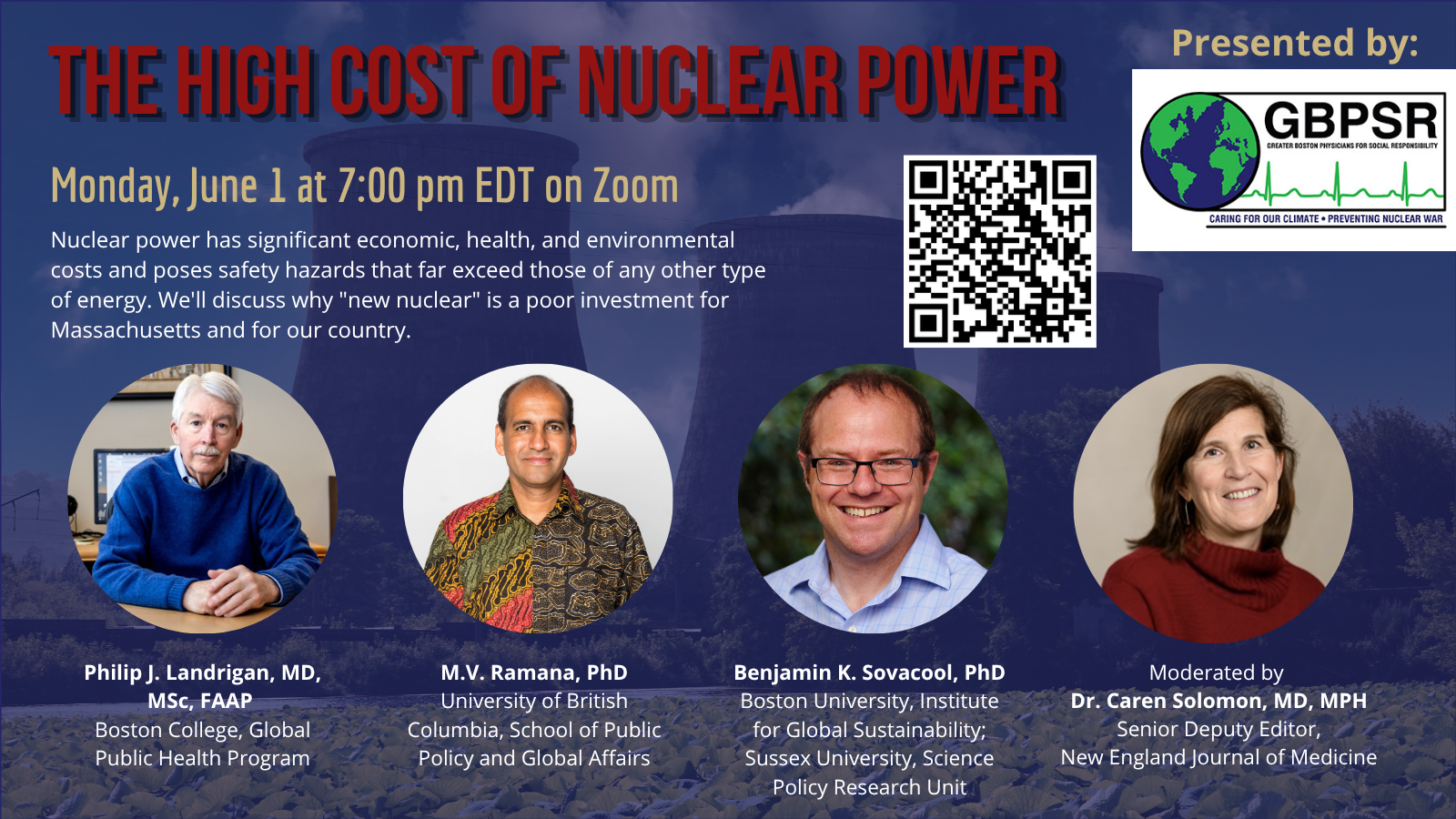
1 June Webinar – The High Cost of Nuclear Power – Register


of the week– Nuclear Reactor Information Task Force
To see nuclear-related stories in greater depth and intensity – go to https://nuclearinformation.wordpress.com
-
Archives
- May 2026 (235)
- April 2026 (356)
- March 2026 (251)
- February 2026 (268)
- January 2026 (308)
- December 2025 (358)
- November 2025 (359)
- October 2025 (376)
- September 2025 (257)
- August 2025 (319)
- July 2025 (230)
- June 2025 (348)
-
Categories
- 1
- 1 NUCLEAR ISSUES
- business and costs
- climate change
- culture and arts
- ENERGY
- environment
- health
- history
- indigenous issues
- Legal
- marketing of nuclear
- media
- opposition to nuclear
- PERSONAL STORIES
- politics
- politics international
- Religion and ethics
- safety
- secrets,lies and civil liberties
- spinbuster
- technology
- Uranium
- wastes
- weapons and war
- Women
- 2 WORLD
- ACTION
- AFRICA
- Atrocities
- AUSTRALIA
- Christina's notes
- Christina's themes
- culture and arts
- Events
- Fuk 2022
- Fuk 2023
- Fukushima 2017
- Fukushima 2018
- fukushima 2019
- Fukushima 2020
- Fukushima 2021
- general
- global warming
- Humour (God we need it)
- Nuclear
- RARE EARTHS
- Reference
- resources – print
- Resources -audiovicual
- Weekly Newsletter
- World
- World Nuclear
- YouTube
-
RSS
Entries RSS
Comments RSS
 nuclear-news