Sizewell C nuclear project threatens nationally important landscapes, habitats and species of the Suffolk coast
Risk of fire on a nuclear submarine. France’s lucky escape, due to reactor being removed for overhaul
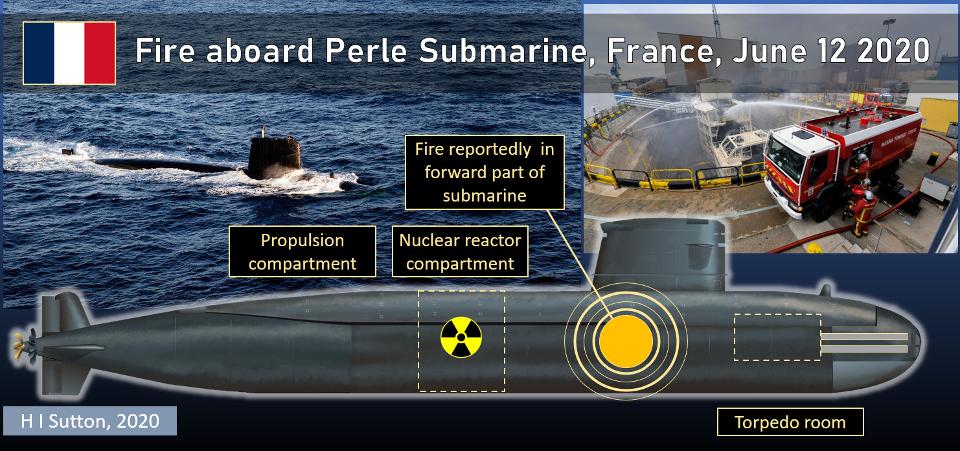
Why The Catastrophic Fire On A Nuclear Submarine Is Nothing To Gloat About https://www.forbes.com/sites/hisutton/2020/06/14/why-the-catastrophic-fire-on-a-nuclear-submarine-is-nothing-to-gloat-about/#ef9667d2ffd0
As details emerge of the fire aboard the French submarine Perle on Friday, it seems unlikely to me that the boat will be returned to service. Whichever way you look at it, the fire is a terrible blow for the French Navy (Marine Nationale). Their submarine fleet is already stretched. But France’s misfortune brings home a basic reality that it could happen to any navy.
The cause of the fire, which took most of Friday to extinguish, has yet to be determined. Florence Parly, Minister of the Armed Forces, was reported by Naval News as saying on June 13 that the “cause for such a strong (and rapid) fire is still unknown.” She also said that if the boat turns out to be fixable, everything will be done to repair it. Any hint of optimism in this statement may point to the terrible predicament that it will leave the French Navy in if it cannot be repaired.
No Reason To Gloat
You will not find many in the defense community laughing at France’s expense. When a Russian or Chinese warship suffers a similar accident, many casual observers are quick to make jokes. Less so the defense community.
For example on April 13 a Chinese Type-075 assault carrier caught fire in Shanghai. That ship, the first of its type, was being fitted out before delivery. The types of work done during refit are similar to the deep overhaul that Perle was being subject to. Or in December last year a Russian aircraft carrier caught fire.
But the Western defense community is very aware that these accidents could equally apply to their home navies. Overhauling ships and submarines is ‘hot work’ and fires can easily occur.
The fire took 14 hours to put out, from 10.35am until 00.50 am the next morning. This may sound like a long time, but the U.S. Navy had a similar experience dealing with a fire aboard the Los Angeles class submarine USS Miami in 2012. That fire, which was also during an overhaul, lasted 12 hours and caused so much damage that the boat had to be written off. In the American case it turned out that the fire had been started deliberately by a dockyard worker hoping that the alarm would get him off work early.
In general, fires aboard submarines can be harder to put out. This is because of the cramped spaces aboard, and also because there are very few openings into the submarine. And they can be more devastating than a similar fire aboard a surface vessel because the heat can deform the steel hull. On a surface vessel this can be repaired more easily, but with a submarine it can make the hull weaker so that it is no longer safe to dive. This is why I am not optimistic that she will be repairable.
The fire was not as bad as it could have been. Fortunately the nuclear reactor had apparently already been removed. So the fire has not been categorized as a nuclear accident. And the torpedoes and missiles had also been unloaded so there was no risk of them exploding.
Many core systems, such as the combat system and sonar, had also been removed. So if the hull can be saved, then returning her to service is at least feasible. But everything seems to depend on whether the hull itself has been weakened.
Radioactive cloud over Europe in 2017 came from a civilian nuclear reactor

|
Radioactive cloud over Europe had civilian background https://www.eurekalert.org/pub_releases/2020-06/uom-rco061220.phpIsotope measurements on air filters: researchers investigated undeclared nuclear release / Study in “Nature Communications” 14 June 20
UNIVERSITY OF MÜNSTER A mysterious cloud containing radioactive ruthenium-106, which moved across Europe in autumn 2017, is still bothering Europe’s radiation protection entities. Although the activity concentrations were innocuous, they reached up to 100 times the levels of what had been detected over Europe in the aftermath of the Fukushima accident. Since no government has assumed responsibility so far, a military background could not be ruled out. Researchers at the Leibniz University Hannover and the University of Münster (both Germany) now found out that the cloud did not originate from military sources – but rather from civilian nuclear activities. Hence, the release of ruthenium from a reprocessing plant for nuclear fuels is the most conclusive scenario for explaining the incident in autumn 2017. The study has been published in the journal Nature Communications.
Background: It is impossible to make a clear distinction between civilian and military sources solely based on measurements of radioactive isotopes of ruthenium. For the first time, researchers from the Institute of Radioecology and Radiation Protection at Leibniz University of Hannover and the Institute of Planetology at Münster University succeeded in quantifying stable ruthenium isotopes in air filters that were released with the radioactive ruthenium. Within the scope of the study, the team left conventional scientific paths: “We usually measure ruthenium isotopes to study the formation history of Earth”, says Prof. Thorsten Kleine from the University of Münster, adding that the methods originally developed to address research questions in planetology were instrumental in solving this mystery. The fact that the airborne ruthenium stemming from nuclear activities occurred in minuscule amounts and were diluted with natural stable ruthenium presented a significant challenge. Through the clean chemical separation of ruthenium fractions from air filters and subsequent high-precision measurements via mass spectrometry, the researchers determined the ratio of stable ruthenium from the nuclear source. The ruthenium isotopic ratios found in the filter are consistent with the signature of a civilian source, in particular the signature of spent nuclear fuel from a nuclear power plant. A military background (such as the production of weapons-grade plutonium) can be ruled out. Furthermore, high-precision measurements enabled the researchers to draw further conclusions. “The isotope signature discovered in the air filter exhibits no similarities with nuclear fuels of conventional Western pressurised or boiling water reactors. Instead, it is consistent with the isotope signature of a specific type of Russian pressurised water reactors – the VVER series. Worldwide, approximately 20 reactors of this type of VVER are currently operational”, specifies Professor Georg Steinhauser from Leibniz University Hannover. Original publication: T. Hopp et al. (2020): Non-natural ruthenium isotope ratios of the undeclared 2017 atmospheric release consistent with civilian nuclear activities. Nature Communications; DOI: 10.1038/s41467-020-16316-3 |
|
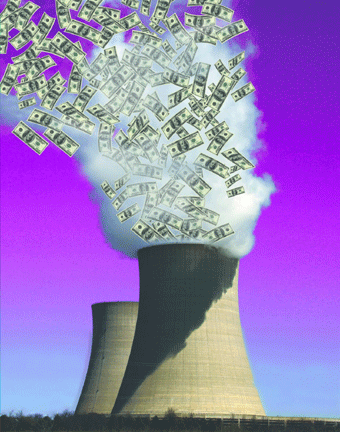
Why doesn’t debt-ridden EDF cut its losses and close its uneconomic UK nuclear reactors
|
Unanswered questions dog UK’s new nuclear plans Climate News Network June 11th, 2020, by Paul Brown A French company has designs on the United Kingdom: new nuclear plans for more reactors, with British consumers footing the bill.
– The French company EDF, a company in a hurry, wants permission to start building two more reactors in the United Kingdom, and it hopes to save money – by arranging for British taxpayers to pay the capital costs of its new nuclear plans. EDF is already building two reactors at Hinkley Point in the West of England, and it is hoping to transfer workers from that site to Suffolk, on the east coast, believing that will help it to save up to 20% of the construction cost of the two planned reactors, because everyone employed there will know already what to do. The catch is that EDF has no money itself to finance the construction and wants the UK government to impose a new tax on British electricity consumers so that they will pay the cost through their electricity bills. The UK has yet to decide whether to go ahead with this tax, euphemistically called a Regulated Asset Base. If adopted, what the scheme means is that the UK consumer will pay EDF’s bills rather than the company having to borrow the money from banks, which are increasingly unlikely to lend money to such expensive schemes because they take so long to build and promise little return. Anxieties abound Meanwhile EDF, which has a Chinese nuclear company as its junior partner, promises to create 25,000 jobs, including 1,000 apprenticeships during construction, and says 900 full-time jobs will be available when Sizewell C, as the station will be called, is complete. If all goes to plan the company hopes to start work in 18 months and says the two reactors will take 10 years to build. It expects them to provide 7% of the UK’s electricity, enough for six million homes. There are many objectors. Some say much of the coastline will be badly affected, including internationally important nature reserves. Others fear the site is highly vulnerable to sea level rise and therefore a danger to the public. Local people also fear that the construction site, with its attendant lorry and commuter traffic, will disrupt their lives for a decade, destroying the important tourist trade. Cheaper options Other more strategic objections, which might weigh heavier with the government, are that nuclear power is very expensive and much cheaper and less controversial alternatives exist, particularly on-shore and off-shore wind and solar power, and biogas. More importantly, a drive for energy efficiency, badly neglected in the UK at present, would render the whole project unnecessary. The problem EDF has is its track record on construction and repairs. The type of reactor it plans to build, the European Pressurised Water Reactor, said by the company to be the most powerful in the world, is proving extremely difficult to build, and till now none has yet been completed outside China. Construction is running more than 10 years late in both Finland and France, and costs continue to escalate.
EDF’s debts are now huge, so big that the French state is working out how to restructure the company by splitting it into a renewables arm (which is profitable) and a nuclear branch. There are serious doubts about the reliability of EDF’s claims and timetables for fixing existing power stations and opening new ones. The company currently owns all of the UK’s operating nuclear reactors, most of which are near the end of their lives, and there are serious doubts about whether they are economic and in some cases even safe. Two reactors at Hunterston in Scotland have serious cracking in the graphite blocks that are part of the control mechanism. The company has spent two years trying to justify continuing to operate the reactors to the Office for Nuclear Regulation (ONR). Similarly, at the other end of the UK, at Dungeness in south-east England, the station is also closed for extensive repairs, an outage that was going to take weeks has now stretched to two years – and the start-up date has just been put back again. Looking on the bright side One of the features of all of EDF’s activities is the extraordinary optimism the company seems to have, particularly about when reactors will be finished or ready to restart after repairs. With the Hunterston reactors restart dates have been announced nine times, only to be postponed each time. This track record led the Climate News Network to ask EDF some searching questions, including why they continued to offer optimistic start-up dates that were repeatedly postponed. We also asked why the company kept the Hunterston and Dungeness stations open at all, since repairing them was costly and they were already near the end of their operating lives. We asked EDF: “At what point do you cut your losses and close the stations permanently?” After five days of pleading for more time to answer, it sent us already published press releases extolling the virtues of the plan to build Sizewell, and several comments. …….HTTPS://CLIMATENEWSNETWORK.NET/UNANSWERED-QUESTIONS-DOG-UKS-NEW-NUCLEAR-PLAN/, l |
|
Fire on French submarine – luckily its nuclear reactor, nuclear fuel, had been removed for overhaul
 A French Submarine Caught Fire In Drydock. It Could Lead Paris To Rethink Its Nuclear Deterrence Strategy. Forbes, Sebastien Roblin 11 June 20 A fire broke out in the rear section of the French nuclear-powered attack submarine Perle on Friday morning as she lay in drydock in the port of Toulon. White clouds of smoke poured into the sky as firefighters from Toulon and Marseilles rushed to the scene. A French Submarine Caught Fire In Drydock. It Could Lead Paris To Rethink Its Nuclear Deterrence Strategy. Forbes, Sebastien Roblin 11 June 20 A fire broke out in the rear section of the French nuclear-powered attack submarine Perle on Friday morning as she lay in drydock in the port of Toulon. White clouds of smoke poured into the sky as firefighters from Toulon and Marseilles rushed to the scene.
Finally at 9:36 p.m local time the Mediterranean Maritime Prefecture reported that the fire had been brought under control by completely flooding the rear compartments of the boat with foam, further noting that the “reactor rooms remains untouched.”…….. Just as importantly, the ship’s 48 megawatt pressurized water nuclear reactor, nuclear fuel, and (conventional-only) weapons had been removed when the submarine entered the drydock in January 2020 for an overhaul by Naval Group due for completion by February 2021. For that reason, the local maritime prefecture claims there is no possibility of radioactive contamination from the incident.
The firefighting effort reportedly involved 30 specialist naval firefighters with support from a firefighting boat, as well as additional specialists scrambled from Marseilles, 11 specialized ground-based firefighting vehicles, and at least 10 ESNA submariners to advise the firefighters. However, there are growing fear that the Perle may have sustained too much damage to be saved. A veteran submariner told the local paper Var Matin “If the thick hull [made of 80HY high-tensile steel]…is deformed, the boat is screwed.” The cause of the blaze is speculated to possibly be faulty welding or a high-pressure cutting gone awry. France’s Nuclear Submarine Force French periodical LeMonde warned that should the Perle suffer “irremediable damage,” there was the possibility “the entire organization of French nuclear deterrence may have to be rethought. And the Navy may have to give up on certain strategic missions.” The Perle does not actually carry any nuclear weapons. However, one of the primary roles of French attack submarines is protecting the four larger Triomphant-class nuclear-powered ballistic missile submarines (SSBNs) from hostile submarines. Indeed, the SSBN Le Téméraire conducted a test launch of an unarmed M51 nuclear ballistic missile just the day prior. France perceives these submarines as performing a vital role in strategic nuclear deterrence, or “dissuasion” as it’s called in France………. Establishing the cause of the accident that may put out of action a valuable strategic asset will also be a priority for Defense Minister Florence Parley, particularly given how much more serious the incident might have been had weapons, the reactor and/or additional personnel had been onboard. For now the citizens of Toulon can only be thankful that loss of life was averted and that there is no apparent risk of contamination. The French Navy will have to take stock of the damage, adjust its plans for its SSN fleet accordingly—and consider how it can minimize the odds of another such accident occurring. https://www.forbes.com/sites/sebastienroblin/2020/06/12/a-french-submarine-caught-fire-in-drydock-it-could-lead-paris-to-rethink-its-nuclear-deterrence-strategy/#4addae213d05 |
|
|
Sellafield waste will stay on site after 2021, Cumbria County Council agrees

The Sellafield atomic fuel reprocessing site, operated by Sellafield Ltd., stands in Seascale, U.K.,
Sellafield waste will stay on site after 2021, Cumbria County Council agrees, In Cumbria, By Liam Waite @imliamwaite 11th June 20 Sellafield can continue to store 11,000 cubic metres of nuclear waste in one of its Seascale buildings, Cumbria County Council has agreed.
Permission was granted in 1992 for Sellafield to store encapsulated intermediate-level waste in a five-storey building on the site but that permission was due to expire at the end of next year due to a planning condition.At a virtual meeting of the council’s development control and regulation committee yesterday, councillors voted unanimously in favour of removing the condition and allowing the waste to continue to be stored there after an application by Sellafield Ltd.
Members were told that there was no permanent alternative available in the absence of the proposed new UK Geological Disposal Facility, the location of which has not yet been decided. …… https://www.in-cumbria.com/news/18506264.sellafield-waste-will-stay-site-2021-cumbria-county-council-agrees/
Armenia Rejects Russian Funding For Nuclear Plant Upgrade
|
Armenia Rejects Russian Funding For Nuclear Plant Upgrade, https://www.rferl.org/a/armenia-rejects-russian-funding-for-nuclear-plant-upgrade/30667786.html June 12, 2020 By RFE/RL’s Armenian Service
YEREVAN — The Armenian government has announced it has decided to use only 60 percent of a $270 million Russian loan designed to finance the ongoing modernization of its Soviet-era nuclear power plant at Metsamor. The plant’s sole functioning reactor went into service in 1980 and was due to be decommissioned by 2017. However, a previous government in 2014 decided to extend the life of the 420-megawatt reactor by 10 years after failing to attract foreign investment for the construction of a new nuclear plant. In 2015, the Russian government agreed to provide Armenia with a $270 million loan and a $30 million grant to upgrade the Metsamor nuclear power plant. The modernization work, led by Russia’s Rosatom nuclear energy agency, was due to be completed by the end of 2019, but the process fell behind schedule, preventing the full disbursement of the Russian funds. Armenia’s infrastructure minister on June 11 said the country had used only $107 million of the Russian money. Suren Papikian said Moscow had offered to extend the loan agreement by two years under the condition that Armenia agreed to use 80 percent of the money to commission equipment and services from Russian companies. The government of Prime Minister Nikol Pashinian backed Papikian’s proposal to reject the Russian offer and to finance the remaining work through government bond sales. Pashinian’s government said it planned to spend 63 billion drams ($130 million) to upgrade the facility over the next two years. Pashinian said that the government will now be free to select the suppliers for Metsamor, which he said will “substantially” lower the costs. Armenia’s sole nuclear plant, located 35 kilometers west of Yerevan, generates roughly 40 percent of the country’s electricity. The European Union and the United State have long pressed for its closure, saying that it does not meet modern safety standards. |
|
Russia: commentary on its nuclear deterrence principles
The only public statement on nuclear deterrence was a standard sentence repeated in Russia’s military doctrine and other documents stating that Russia would only resort to nuclear weapons if it was attacked by weapons of mass destruction, or if an attack threatened the very existence of the state. …..
While the existence of such an ‘escalate to de-escalate’ doctrine and other details on Russia’s potential use of nuclear weapons was contested in the past, the final sentence of Article 4 of the doctrine comes closest to answering this question. It states that, once a war has started, nuclear deterrence policy is to seek to prevent it from escalating further, or from being terminated on terms unfavourable to Moscow. This is a short version of what in Russian military literature is termed ‘escalation control’. Escalation control implies that threats, demonstrations of strike capabilities, and inflicting “calibrated damage” on the enemy (which may, but does not have to, include nuclear weapons) should contain, localise, and if possible terminate a war on Moscow’s terms. …..
Article 19 deliberates on the conditions under which nuclear weapons could be released. It explicitly mentions a ‘launch on warning’ posture. This is a signal to the US that conventional or low-yield re-entry vehicles (the latter are in development) of intercontinental missiles would be treated as a full-scale attack and that Washington should therefore not think of employing them in a tactical or limited attack close to Russia’s borders. ……….
The Russian decree does not contain any detailed provisions on force structure, weapons systems (future or present), force modernisation, or references to other nuclear powers. Much detail is lacking from what one might normally expect to see in a nuclear doctrine. Article 15 states merely that nuclear deterrence needs to be adaptable, and should leave the enemy guessing about the time, scale, and manner of the use of nuclear weapons. It also says that Russia intends to maintain the minimal force required to achieve its tasks………
Taken together, all these provisions seem surprisingly minimalist. It may well be that Russia intends to signal to the United States that, if the American-Chinese arms race takes off, Moscow does not intend to follow suit and “spend itself into oblivion”, as US assistant secretary for terrorist financing in the Treasury, Marshall Billingslea, put it. Russia is hardly likely to publicly admit that in the 21st century it will most probably be a secondary nuclear power. But, in fact, it does seem to be adapting to this role.
Finally, Article 3 notes that Russia’s nuclear deterrence is flanked by other state measures to achieve its goals, including diplomatic and “information policies” (propaganda). The publication of the doctrine and the content of Article 3 effectively represent the firing of the starting pistol on a new ‘information campaign’ in the West: expect to soon see an information operation that aims to inflate the purported capabilities of Russia’s nuclear forces and induce fear (such as the new “Wunderwaffen”, presented in March 2018), and new diplomatic overtures in the fields of arms control, in particular designed to split the alliance. At least on the latter, Putin may get assistance from the White House: Trump’s clumsy and undiplomatic handling of the INF and Open Skies issues provide more opportunities to exploit than any Russian diplomat would have ever dreamed of creating. ……… https://www.ecfr.eu/article/commentary_russias_nuclear_deterrence_principles_what_they_imply_and_what_n
USA offers to build Britain’s nuclear reactors
 US offers to build UK’s 5G and nuclear stations to end ‘coercive’ relationship with China
Mike Pompeo said the United States ‘stands ready to assist our friends in the U.K’ Telegraph UK , By Danielle Sheridan, POLITICAL CORRESPONDENT10 June 2020 • America has offered to build Britain’s 5G and nuclear power stations so that the “coercive and bullying” relationship with China can end, Mike Pompeo has said.
In a statement released yesterday the US Secretary of State said America stood with its “allies and partners against the Chinese Communist Party’s (CCP) coercive bullying tactics”, as he sighted reports that Beijing had threatened to punish HSBC and “break commitments to build nuclear power plants in the United Kingdom unless London allows Huawei to build its 5G network”.
HSBC is understood to have claimed that it could face reprisals in China if Huawei was blocked from selling equipment to the next generation of networks being built by Britain’s mobile operators…. (subscribers only) https://www.telegraph.co.uk/politics/2020/06/10/us-offers-build-uks-5g-nuclear-stations-end-coercive-relationship/
Grave climate risks to Sizewell C nuclear project – all too close to the sea
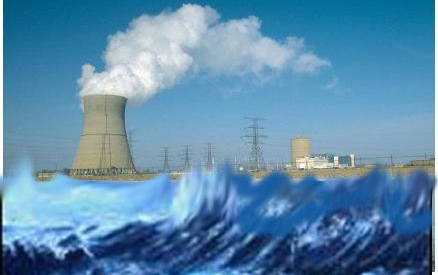  Times 10th June 2020, As if big nuclear power plants weren’t already toxic enough. To the usual Times 10th June 2020, As if big nuclear power plants weren’t already toxic enough. To the usuallist — exploding costs, endless delays, ruinously pricey electricity and a vast clean-up bill — Sizewell C brings another joy. And not just that it’s being partly built by CGN of China: odd reward for the crackdown on Hong Kong. No, it’s that Sizewell C is in a “dangerous location”. Or so says Nick Scarr from the Nuclear Consulting Group, a collection of academics and experts. The consulting engineer has examined the plans from France’s EDF and CGN to build the 3,200MW nuke on the Suffolk coast from the perspective of coastal erosion and climate change. And, assuming he’sright, his paper is alarming — unless you’re relaxed about the risk of the plant being encircled by sea.
Sizewell C will be bigger and closer to the sea than the site’s existing reactors. Mr Scarr takes issue with EDF claims that it’ll be effectively protected by the offshore Sizewell-Dunwich bank and a coralline crag, so creating a “natural wave break”. He points to studies showing waves are getting through in storms, while at the Sizewell C site the crag is more gravelly than desired.
With decommissioning of the plant not due until 2150, Mr Scarr believes EDF and CGN are paying far too little attention to forecasts from the Met Office and the Intergovernmental Panel on Climate Change. Not least the notion that once-a-century “extreme sea level events”, are “projected to occur much more frequently by 2050”. He says the once in 10,000 year flood risk that “EDF trumpets” is “just 0.71m above the historical 1953 flood level”. This is only Mr Scarr’s opinion, but he says his paper has been “approved” by Professor Andrew Plater of Liverpool
University: a leading coastal geomorphologist. So what’s EDF’s
response? Well, it reckons Mr Scarr’s analysis of the effects of the sandbank and crag is both confused and wrong. It also says it has evaluated
the likely effect of climate change. “The design of the power station, including its sea defence and the raised platform it will be built on, will protect Sizewell C from flooding,” EDF insists. It says it’ll take an “adaptive approach”, raising the sea defences “during the lifetime of Sizewell C if needed”. Mr Scarr says such an approach only works for
construction projects such as painting the Forth Bridge every year, not sea defences for a nuclear plant. Indeed, he reckons it’s “clear evidence” that the location cannot “offer the criteria necessary for long-term safety of the project”. https://www.thetimes.co.uk/edition/business/sizewell-c-debate-turns-a-bit-salty-gvvzhp7rf |
The last major treaty for nuclear weapons control now hangs in the balance
|
Nuclear might crux of push for new pact. Treaty expiration would end caps on arms; U.S. envoy says Russia meeting set Northwest Arkansas Democrat Gazette by PAUL SONNE AND ROBYN DIXON, 10 June 20, THE WASHINGTON POST The last major treaty limiting U.S. and Russian nuclear might hangs in the balance as the Trump administration pushes to replace it with an arms-control pact that also includes China five months before the U.S. presidential election.The New START accord, which restricts the number of deployed strategic nuclear warheads and certain launch platforms, is set to expire in February. If the Trump administration declines to extend it and the caps disappear, the United States and Russia will be left without any significant limits on their nuclear forces for the first time in decades.
Russia has said it is willing to extend the New START pact unconditionally. But the Trump administration has balked, saying the treaty signed by former President Barack Obama in 2010 is outdated, insufficient and overly advantageous for Moscow. …….. The result is a game of nuclear brinkmanship in the waning days of the Trump administration’s first term…… https://www.nwaonline.com/news/2020/jun/10/nuclear-might-crux-of-push-for-new-pact/ |
|
French nuclear watchdog demands EDF fix faults at 5 reactors
French nuclear watchdog demands EDF fix faults at 5 reactors, Montel News, MURIEL BOSELLI, Paris 10 June 20, France’s nuclear safety authority has served EDF with a formal notice to repair deviations and reinforce five reactors at its 5.4 GW Gravelines nuclear power plant by the end of October – work that would not require shutdowns.
The notice concerned deviations in five out of the plant’s six reactors. Operator EDF had already made changes to equipment around reactor 5, ASN said on Wednesday. https://www.montelnews.com/en/story/french-nuclear-watchdog-demands-edf-fix-faults-at-5-reactors/1121918
Sellafield’s 11000 cubic metres of nuclear waste – UK’s storage problem
 Plans for 11,000m³ of nuclear waste, In Cumbria, 8 June 20 A DECISION on whether Sellafield can continue storing 11,000 cubic metres of nuclear waste in one of its Seascale buildings is due to be made tomorrow (Tuesday).Sellafield was granted permission to build a five-storey building in 1992 for interim storage of encapsulated intermediate-level waste. Plans for 11,000m³ of nuclear waste, In Cumbria, 8 June 20 A DECISION on whether Sellafield can continue storing 11,000 cubic metres of nuclear waste in one of its Seascale buildings is due to be made tomorrow (Tuesday).Sellafield was granted permission to build a five-storey building in 1992 for interim storage of encapsulated intermediate-level waste.
However the permission expires at the end of 2021, due to a condition imposed at the time by Copeland council. The nuclear firm now wants to have permission to continue storing the waste, as a more permanent solution is not yet available. The county council’s development control and regulation committee will discuss the application at a meeting at 10am. A report prepared for the authority said: “The building is required to be retained for the continued storage of intermediate-level waste (ILW) which is required to be stored until alternative facilities come on line. “The alternative storage solution is likely to be the Geological Disposal Facility (GDF), which is currently out to consultation on host site availability, and until such time as the GDF is made available a suitable interim storage place for ILW is required…… Both Seascale and Ponsonby parish councils have objected to the proposal. The report said that the Seascale authority wanted Sellafield to submit a full planning application. “When constructed these [facilities] had a 50-year life and Copeland put a time limit of 30 years to allow time for future storage options; these amendments need a full planning application. “Seascale Community are living with what are described as health and quality of life risks and this needs to be taken into account.”…….. The meeting is due to take place virtually. For more information on how to join the meeting, visit the council’s site cumbria.gov.uk https://www.in-cumbria.com/news/18502494.plans-11-000m-nuclear-waste/ |
|
China is reconsidering building nuclear reactors in Britain
|
China poised to pull plans for UK nuclear plants https://www.straitstimes.com/world/europe/china-poised-to-pull-plans-for-uk-nuclear-plants 5 June 20 LONDON (BLOOMBERG) – China’s ambassador to the UK said that Prime Minister Boris Johnson’s plans to seek alternatives to Huawei Technologies Co Ltd in the 5G network could spoil plans for Chinese companies to build nuclear power plants and the HS2 high-speed rail network, the Sunday Times reported.Mr Liu Xiaoming signalled that Beijing is viewing the decision over Huawei as “a litmus test of whether Britain is a true and faithful partner of China”, the newspaper reported the ambassador telling business leaders, saying that the words were “interpreted as a threat by those listening”.
China General Nuclear Power Corp plans to build its own nuclear reactor at Bradwell in Essex, according to the newspaper report. China has a minority share in nuclear power plants at Hinkley Point in Somerset and Sizewell C in Suffolk, both in partnership with EDF of France. |
|
Huge police squadron paid by nuclear industry to monitor residents of Bure
the tens of millions of euros per year disbursed by Andra to pay for the presence of the gendarme squadron represents a significant sum. In 2018, the agency’s net profit amounted to only 11.5 million euros,
Cigeo related expenses are directly funded by the three major nuclear players: EDF and Orano, two private companies, and CEA, a public research establishment. In 2018, they poured 212 million euros into the landfill project.

Large Man Looking At Co-Worker With A Magnifying Glass — Image by © Images.com/Corbis
In Bure, the nuclear waste agency pays the police,  À Bure, l’agence des déchets nucléaires se paie des gendarmes, Reporterre, 5 juin 2020 / Marie Barbier (Reporterre) et Jade Lindgaard According to information obtained by Mediapart and Reporterre, an agreement was signed in 2018 between the national gendarmerie and Andra, the agency responsible for the burial of nuclear waste, in this village of the Meuse. Since then, the agency has paid tens of millions of euros to monitor residents through gendarmes. This partnership poses ethical and legal problems.
Around Bure, in the Meuse, where the most dangerous nuclear waste from French power plants must be buried in a gigantic mine 500 meters underground, the villages are only inhabited by a handful of people. And yet, 75 gendarmes patrol there 24 hours a day. For almost a year and a half, according to information collected by Mediapart and Reporterre, these soldiers are paid by Andra, the National Agency for Radioactive Waste Management, which has set up a laboratory at the future landfill.
In October 2018, an agreement was signed between Andra and the General Directorate of the National Gendarmerie (DGGN) “in order to guarantee the safety of personnel and facilities in the long term” the agency confirmed to us, in response to our questions. According to figures given by the agency itself, “ten million euros” are spent each year by Andra, a public industrial and commercial establishment (EPIC), to pay the soldiers engaged and cover related costs, including catering. To date, therefore, at least twenty million euros have been spent – or are in the process of being spent – in this context
The mobile gendarmes are hosted directly on Andra’s site, in a block built for this purpose. They sleep there, store their equipment and their vehicles and take their recovery days there before leaving to patrol. These soldiers, often very young, stay there for three to six weeks before leaving on another assignment. They are immediately replaced by new arrivals. The DGGN refused to communicate the exact content to us The government decision to assign a squadron of mobile gendarmes to this territory dates from the summer of 2017. In June, Le Bindeuil, a hotel-restaurant known to accommodate Andra staff and gendarmes, suffered damage during the anti-nuclear days. And in August, a demonstration ended in confrontations with the police. These facts are today the subject of judicial information, in which ten people are under investigation, and which gives rise to massive and particularly intrusive surveillance, as we detailed in our four-part investigation……..
Is it legal to pay a squadron of gendarmes to protect themselves?….
Long dormant, this system was revived by a decree, signed by Alain Juppé in 1997…..
….. In 2009, an agreement was signed with EDF for the protection of nuclear power plants. “At the national level, the overall workforce is around a thousand gendarmes,” confirms EDF, who specifies that “this specialized platoon is financed by EDF” but that the latter “does not communicate on the cost of this protection” .
This is to prevent a new Zad, like that of Notre-Dame-des-Landes, from forming But Andra’s laboratory cannot, unlike nuclear power plants, be considered a sensitive site. No radioactive waste is present there. Cigeo’s excavation work.
So what is the purpose of the gendarmerie platoon paid by Andra at the Bure site? According to many residents that we were able to contact, these gendarmes are mainly assigned to the surveillance of the territory and its inhabitants. For the police, it is a question of preventing the militants evicted from Lejuc wood – a communal forest once occupied by opponents of Cigeo – from returning. And to prevent a new Zad from forming, he example of Notre-Dame-des-Landes, in Loire-Atlantique
According to residents interviewed for this article, the patrol vehicles are reformed vehicles, old Range Rovers, or newer models from Kangoo and Transit. A villager saw them move at night with torches bearing the acronym of Andra. What exactly are their prerogatives? The Directorate General of the National Gendarmerie refused to answer our questions.
“Permanent and repeated identity checks infringe on individual freedoms” and can “only lead to incidents”.
Me Matteo Bonaglia, one of the lawyers indicted in the framework of the criminal investigation for association of criminals, says he is “surprised by such means allocated to Andra. This explains, however, the over-militarization that we observe in this territory where the fight against the project to bury nuclear waste is playing out, Andra being able to allocate the assistance of the police force in a proportion three times greater than everywhere elsewhere.
It is already difficult to oppose the Cigeo project and assert its anti-nuclear opinions. Here, the multiplication of controls and the over-representation of gendarmes constitutes a de facto obstacle to freedom of opinion and the free expression of ideas. It also explains the large number of trials that have taken place in recent years for offenses such as contempt and rebellion, not everyone is so willing to be subject to constant scrutiny. ”
This agreement with the gendarmerie is all the more problematic since Andra appears several times in the file currently being examined after the start of the fire at the Hôtel-restaurant du Bindeuil, in which ten anti-nuclear activists are put under review and to which Mediapart and Reporterre had access.
The agency did not bring a civil action, but complained three times. Thus, on February 17, 2017, its director, David Mazoyer, filed a complaint “on behalf of Andra” after “degradations” committed on the site of the eco-library, belonging to the agency. “During the night of February 16 to 17, 2017,” explains the director of gendarmes in Ligny-en-Barrois the opponents damaged, bent or tore down the fence around the site, mainly on the west facade and on a line of about 150 meters. These degradations were the subject of an additional indictment and joined the long list of crimes covered in this sprawling instruction.
A few months later, on June 21, 2017, the day of the fire at the Le Bindeuil hotel and restaurant, David Mazoyer filed a second complaint: “Other members of their movement attacked the code on the pedestrian portal giving access to the Ecothèque site. This device is damaged and out of use. I am filing a complaint on behalf of Andra for the destruction of this device. ”
Finally, on April 24, 2018, it was the head of Andra’s risk protection and prevention service who complained about receiving documents after discovering photos belonging to the Ecoteca during a search.
According to our information, the platoon of gendarmes paid by Andra is not assigned to the “Bure cell”, a cell of gendarmes with their own badge in charge of the current investigation. But what about a complainant who pays gendarmes to go and monitor the people against whom he has complained? By order of the prefecture, Andra gendarmes can also in theory be assigned to the maintenance of order at demonstrations or at the courthouse. The mix of genres would then be total: a complainant who pays the police in a demonstration against him or worse, during trials of opponents of his project …
In addition to this potential conflict of interest, the apparently legal agreement between Andra and the national gendarmerie raises legal questions. In 2018, a circular from the Minister of the Interior Gérard Colomb paved the way for a much wider billing than what had been initially planned. “The circular no longer takes the precaution of limiting it to” organizers of sporting, recreational or cultural events for profit “. We can invoice everyone, regardless of the object and the lucrative purpose or not, “said Mickaël Lavaine.
In 2018, the publication of his article in the review of legal current events in administrative law gave rise to an action brought by the Collectif des Festivals before the Council of State, the organizers denouncing the considerable sums of security which they owed. ” discharge to the State.
This mixture of genres questions the impartiality of police work
In this legal debate, the two paragraphs of article L211-11 of the code of internal security, organized by the Columbus circular, are opposed. The first specifies that these conventions concern only “organizers of sporting, recreational or cultural events for profit”, the second target much more broadly all “natural or legal persons”. “The Council of State will have to rule on this debate: is paragraph 2 linked to paragraph 1? If he decides in this sense, which I defend, that means that Andra cannot be invoiced, nor of the associations which organize the potato festival. This would return to the spirit of the text of the Tour de France, “said Mickaël Lavaine. The Council of State is expected to decide by summer.
For the researcher, this legal debate poses a much broader question: “The internal security code specifies that the police or gendarmerie forces may be charged for law enforcement services which cannot be attached to the normal obligations incumbent on the public authorities’. But what is the obligation normal state? This notion is vague enough to be able to put what you want into it. If we push the logic of the Columbus circular to its end, there is nothing to prohibit charging the organizer of an FO demonstration or the CGT for the police devices of a demonstration. However, the Declaration of Human Rights provides that the public force must be financed by taxes. ”
For Alexandre Faro, lawyer for one of the activist witnesses assisted in the investigation opened after the fire at Bindeuil, “this amounts to privatizing the police in favor of Andra. From a strict legal point of view this is very questionable because in France the police are a monopoly of the state and the Constitution provides that sovereignty is exercised by the people and for the people. ”
These debates also animated Andra employees when the agreement with the DGGN was signed. An internal source tells us that “that posed questions”: “Why is Andra paying when it is a public establishment?
Far from being anecdotal, the tens of millions of euros per year disbursed by Andra to pay for the presence of the gendarme squadron represents a significant sum. In 2018, the agency’s net profit amounted to only 11.5 million euros, mainly made up of research tax credit, as indicated in the establishment’s annual financial report. Cigeo related expenses are directly funded by the three major nuclear players: EDF and Orano, two private companies, and CEA, a public research establishment. In 2018, they poured 212 million euros into the landfill project.
The gendarmes paid by Andra who crisscross the territory are not the same as those who are investigating for justice as part of the judicial information and have listened for months to opponents of Andra. But they belong to the same institution. This mix of genres questions the impartiality of police work. Then does not public power find itself in a situation of insincerity towards the citizens whom it controls with such relentlessness? The gendarmes, Andra, justice, political leaders on one side; opponents of the other. Two tight-knit camps, one facing the other, like in a war situation.
https://reporterre.net/A-Bure-l-agence-des-dechets-nucleaires-se-paie-des-gendarmes
1 This Month
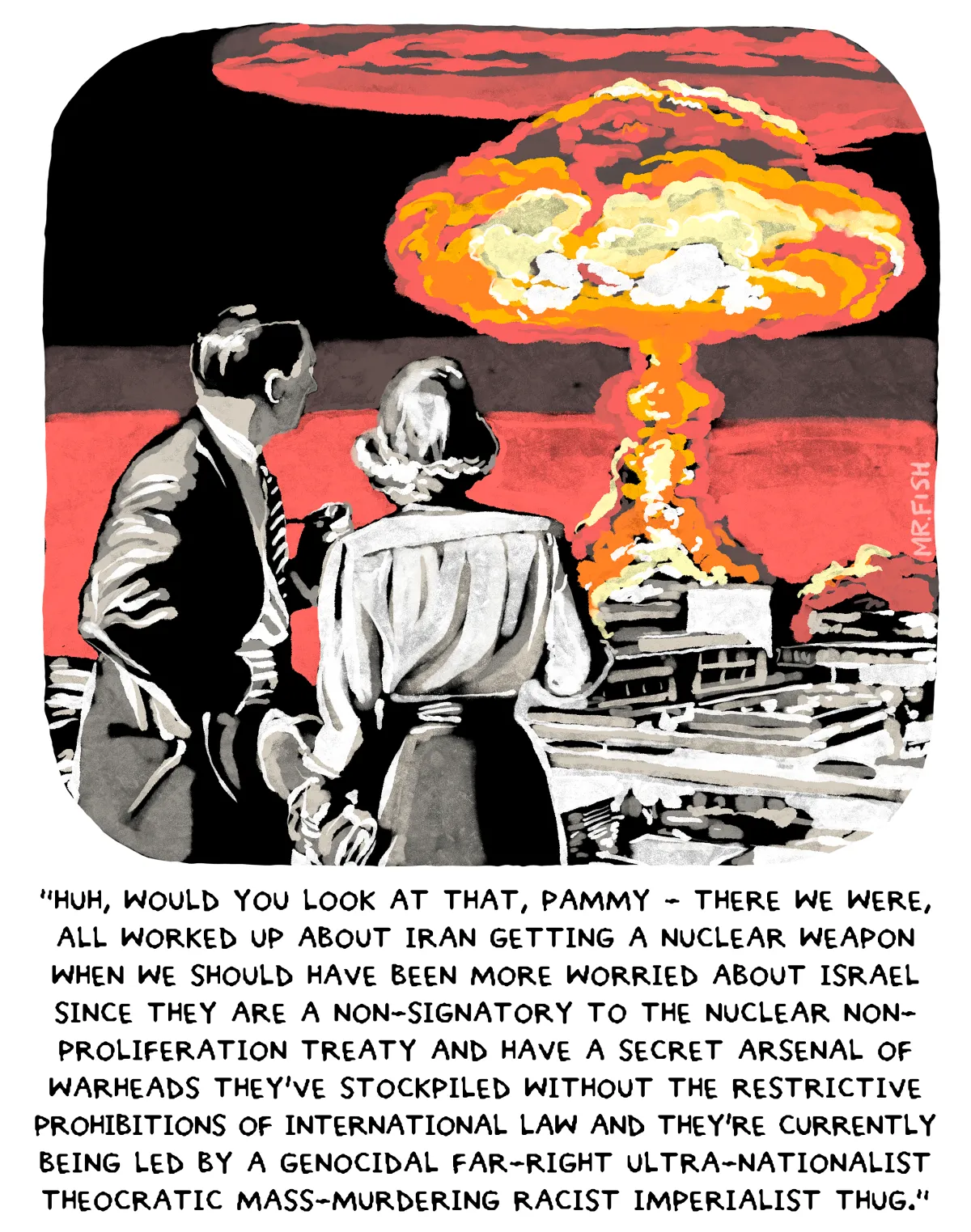
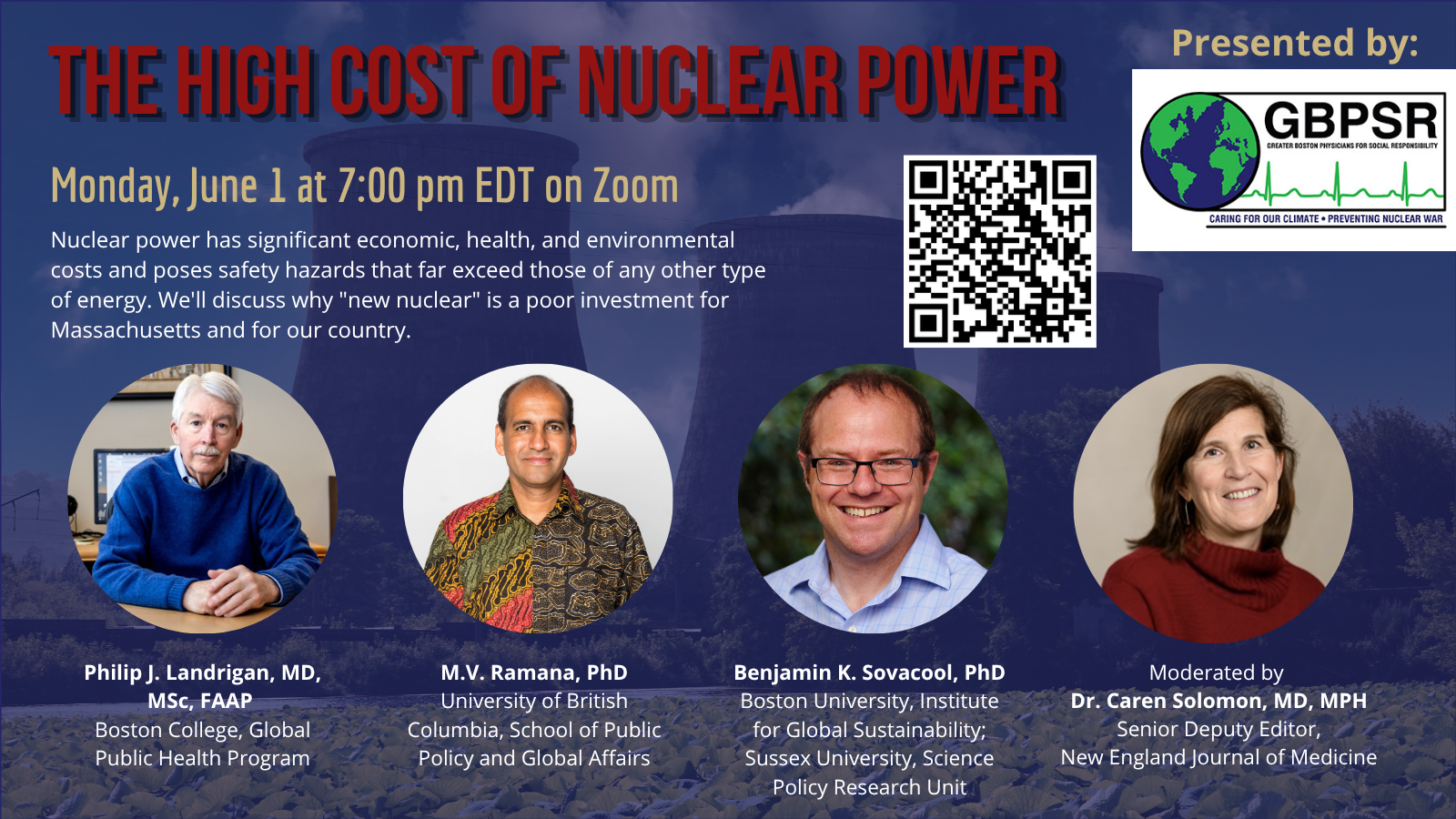
1 June Webinar – The High Cost of Nuclear Power – Register


of the week– Nuclear Reactor Information Task Force
To see nuclear-related stories in greater depth and intensity – go to https://nuclearinformation.wordpress.com
-
Archives
- May 2026 (235)
- April 2026 (356)
- March 2026 (251)
- February 2026 (268)
- January 2026 (308)
- December 2025 (358)
- November 2025 (359)
- October 2025 (376)
- September 2025 (257)
- August 2025 (319)
- July 2025 (230)
- June 2025 (348)
-
Categories
- 1
- 1 NUCLEAR ISSUES
- business and costs
- climate change
- culture and arts
- ENERGY
- environment
- health
- history
- indigenous issues
- Legal
- marketing of nuclear
- media
- opposition to nuclear
- PERSONAL STORIES
- politics
- politics international
- Religion and ethics
- safety
- secrets,lies and civil liberties
- spinbuster
- technology
- Uranium
- wastes
- weapons and war
- Women
- 2 WORLD
- ACTION
- AFRICA
- Atrocities
- AUSTRALIA
- Christina's notes
- Christina's themes
- culture and arts
- Events
- Fuk 2022
- Fuk 2023
- Fukushima 2017
- Fukushima 2018
- fukushima 2019
- Fukushima 2020
- Fukushima 2021
- general
- global warming
- Humour (God we need it)
- Nuclear
- RARE EARTHS
- Reference
- resources – print
- Resources -audiovicual
- Weekly Newsletter
- World
- World Nuclear
- YouTube
-
RSS
Entries RSS
Comments RSS
 nuclear-news