How we can manage the intermittency of renewables and attain 100% renewables
|
Yes. In fact, many ways are possible, including
Interestingly, in June 2020, several large power companies, including Centrica and E.ON, sent an open letter calling on National Grid to accelerate the deployment of smart electric vehicle (EV) charging infrastructure, energy storage and other flexibility services in order to manage the Grid more rationally. The utilities’ letter stated that a number of options existed to reduce its current reliance on curtailing renewables, from long-duration storage to industrial-scale demand response. They stated that EVs, smart electric heaters and home solar batteries “could all be providing services at this time if the right signals and instructions were being administered”. They added “flexible technologies and storage assets will be needed to integrate a higher level of renewable generation into the system to produce carbon savings. Harnessing the potential of these technologies is critical to ensuring green energy supply isn’t unnecessarily wasted”. https://www.greentechmedia.com/articles/read/smart-flexibility-could-slash-uk-coronavirus-curtailment-costs Indeed, throughout the UK,local authorities and local companies are in fact steaming ahead with their own initiatives. See box below. In addition, the recent UK pressure group, 100percentrenewableuk, was also set up to press for these developments. www.100percentrenewableuk.org Some examples of innovative flexible RE technologies Continue reading |

UK’s expensive problem of nuclear power’s inflexibility
Because of the inflexibility of the AGRs, RE suppliers are shut off first. This is explained in a recent report by the newly-formed pressure group, 100 percentrenewable uk, which explains that the inflexible nature of nuclear power is instrumental in forcing the National Grid to turn off large amounts of wind power (ie in the jargon to be ‘constrained’) in Scotland when there is too much electricity on the network.
This appears nonsensical as the Grid is turning off cheap renewables to preserve expensive nuclear, and then paying large compensation payments to them to do so.
UK Electricity: Renewables and the problem with inflexible nuclear, Ian Fairlea, June 21, 2020
In recent years, the share of the UK’s electricity supplied by renewable energy (RE) sources has increased substantially to the point that RE is now the second largest source after gas: It now supplies 20% to 25% of our electrical needs. This is greater than the amount supplied by nuclear – about 15% to 18%. Coal, hydroelectric, and mainly gas (~40%) constitute the other sources. See chart [on original] for Britain’s electrical power supplies in 2019.
Why are AGR reactors inflexible? Continue reading
Nuclear waste from Germany to Russia
A shipment of 600 tonnes of depleted uranium has left a nuclear fuel plant in Germany bound for Russia, a Russian environmentalist group says.
Twelve rail cars left the Urenco plant in the town of Gronau, close to the Dutch border, on Monday 22 June, according to the Ecodefense group.
The waste will reportedly be moved by sea and rail to a plant in the Urals.
Urenco told the BBC its uranium would be further enriched in Russia and the process met environmental standards.
Russia’s state atomic energy corporation, Rosatom, insisted it was “inaccurate and misleading” to refer to the depleted uranium as waste.
But environmental activists have long been concerned that Russia may become a “dumping ground” for radioactive material from power plants.
Greenpeace protested last year after German media reports that Urenco had resumed shipping depleted uranium from Germany to Russia after a gap of 10 years. Russia had halted the practice in 2009 under pressure from environmentalists.
On Monday activists in Germany posted video on social media of what appeared to be the train en route from Gronau, as well as photos of anti-nuclear protesters.
Why is the shipment being sent to Russia?
According to the report (in Russian) by Ecodefense, some of it will be shipped by sea to Russia via the port of Amsterdam.
It will, the group says, eventually arrive at the Ural Electrochemical Combine in Novouralsk, 3,400km (2,500 miles) away in Russia’s Ural Mountains.
The group believes that nearly 3,000 tonnes of depleted uranium have already been shipped from Germany to Russia this year.
The Urenco spokesperson contacted by the BBC said they could not give details of shipments for “safety and security reasons”.
But Urenco did confirm that it had a contract with a firm called Tradewill, a subsidiary of Tenex which is the overseas trade company of Rosatom.
Under the contract, it said, depleted uranium “tails” are sent to Russia for further processing. The enriched uranium product then returns to Urenco while the “depleted fraction” remains with Tenex.
“This is common and legal practice,” Urenco says. “We also retain depleted uranium at Urenco in Europe.”
Urenco, which is a partnership between German, British and Dutch companies, said its representatives had inspected the facilities involved in the process and had found that they complied with “all internationally recognised logistics standards, which includes handling, storage, safeguarding and processing of nuclear material, as well as appropriate environmental standards”.
Why are environmentalists so concerned?
One of the big questions is how much of the waste is eventually returned to Germany, with activists arguing that most of it stays in Russia.
There are also fears of toxic pollution in the event of any spill.
On 15 June, a petition to stop the shipments was sent to Russian President Vladimir Putin and German Chancellor Angela Merkel. It was signed by environmental groups and activists from Russia, Germany and the Netherlands.
The petition calls for an end to the “colonial policy of moving hazardous cargoes from Europe to Russia’s Siberian and Ural regions”.
It argues that Germany has the technology to deal with its own nuclear waste and ends with the words: “Russia is not a dumping ground!”
Greenpeace argued last year that Russia lacked a plan to utilise depleted uranium on a large scale. Continue reading
Record breaking heat in Verkhoyansk, north of the Arctic Circle
|
A Siberian town near the Arctic Circle just recorded a 100-degree temperature https://www.vox.com/2020/6/21/21298292/siberia-temperature-100-climate-change
One of the coldest towns on Earth clocks a potentially record-breaking — and worrying — temperature. By Zeeshan Aleem@ZeeshanAleem Jun 21, 2020,A small town in Siberia reached a temperature of 100.4 degrees Fahrenheit on Saturday, which, if verified, would mark the hottest temperature ever recorded north of the Arctic Circle. Temperatures have jumped in recent months to levels rarely seen in the Russian region, and it’s a sign of a broader trend of human-caused climate change that’s transforming weather patterns in the Arctic Circle. The town of Verkhoyansk is one of the coldest towns on Earth — temperatures dropped to nearly 60 degrees below zero there this past November — and the average June high temperature is 68 degrees. The 100.4 reading in Verkhoyansk, which sits farther north than Fairbanks, Alaska, would be the northernmost 100-degree reading ever observed. The Washington Post reports that while there are questions about the accuracy of the record temperature, a Saturday weather balloon launch that found unusually high temperatures in the lower atmosphere supports the reading. And on Sunday, the town reached 95.3 degrees, according to the Post. CBS News meteorologist and climate specialist Jeff Berardelli wrote on Saturday that 100-degree temperatures in or near the Arctic are “almost unheard of.” Before Saturday, Siberia was already experiencing an extraordinary heat wave. Surface temperatures in Siberia were 18 degrees higher than average in May, making it the hottest May in the region since record-keeping began in 1979, according to the Copernicus Climate Change Service. “It is undoubtedly an alarming sign, but not only May was unusually warm in this region,” said Freja Vamborg, a senior scientist at the Copernicus Climate Change Service, in a statement about the finding. “The whole of winter and spring had repeated periods of higher-than-average surface air temperatures.” Climate scientist Martin Stendel said on Twitter that the temperatures recorded in northwestern Siberia last month would be a 1-in-100,000-year event — if not for climate change. Berardelli said the average heat across Russia between January and May actually matches what current models project to be normal for the region in 2100, if carbon emissions continue. “Due to heat trapping greenhouse gases that result from the burning of fossil fuels and feedback loops, the Arctic is warming at more than two times the average rate of the globe,” he explained in his analysis of the Verkhoyansk reading. “This phenomenon is known as Arctic Amplification, which is leading to the decline of sea ice, and in some cases snow cover, due to rapidly warming temperatures.” He noted that if the climate continues to heat up, extreme heat waves will become more of the norm. |
|
Anti-nuclear resistance in Russia: problems protests, reprisals

Mayak victims’ organizer, Nadezhda Kutepova, a Nuclear-Free Future Award winner, was eventually forced to flee the country. (Photo: ©Orla Connolly)
Standing up to Rosatom
https://beyondnuclearinternational.org/2020/06/21/standing-up-to-rosatom/ June 21, 2020 by beyondnuclearinternational
Anti-nuclear resistance in Russia: problems protests, reprisals
The following is a report from the Russian Social Ecological Union (RSEU)/ Friends of the Earth Russia, slightly edited for length. You can read the report in full here. It is a vitally important document exposing the discrimination and fear tactics used against anti-nuclear organizers in Russia and details their courageous acts of defiance in order to bring the truth of Russia’s nuclear sector to light.
Rosatom is a Russian state-owned corporation which builds and operates nuclear power plants in Russia and globally. The state-run nuclear industry in Russia has a long history of nuclear crises, including the Kyshtym disaster in 1957 and Chernobyl in 1986. Yet Rosatom plans to build dozens of nuclear reactors in Russia, to export its deadly nuclear technologies to other countries, and then to import their hazardous nuclear waste.
This report is a collection of events and details about the resistance to Russian state nuclear corporation, Rosatom, and other activities that have led to the pollution of the environment and violation of human rights. Social and environmental conflicts created by Rosatom have been left unresolved for years, while at the same time, environmental defenders who have raised these issues, have consistently experienced reprisals.
Nuclear energy: failures and Lies
Bradwell nuclear project “unsustainable, unsuitable and unacceptable” – and not a done deal
 Clacton Gazette 20th June 2020, CAMPAIGNERS fighting plans for a new nuclear power station at Bradwell are calling for the proposals to be scrapped. Opposition group Banng – Blackwater Against New Nuclear Group – has prepared a 13,000-word response to the stage one public consultation.
a joint operation between CGN and EDF Energy. Banng chairman Andy Blowers said: “This is not a done deal as CGN would have us believe. A new nuclear power station is not needed, and especially it is not needed at this site.”
EDF’s failing nuclear reactors in UK
- NuclearNews No 126 20 June 20,Hinkley’s sister reactors at Hunterston B (all 4 reactors have operated since 1976) have both been closed for much of the past two years. Reactor 3 has been offline for more than two years, since March 2018. Reactor 4 was first shutdown on 2nd October 2018 but was allowed a trial operation between August 2019 and 10th December 2019. The safety case for restarting Reactor 3 was finally been submitted to the Office for Nuclear Regulation (ONR) for its assessment in mid-May and for Reactor 4 on 29th May. EDF now says it is hoping that Reactor 3 can restart on 13th July 2020 and Reactor 4 on 27 July 2020.
EDF may be hoping to restart the two reactors in July but there are increasing concerns regarding revelations the graphite cores have begun to crumble as cracks spread. At least 58 fragments and pieces of debris have broken off the graphite bricks that make up the reactor cores. According to the Office for Nuclear Regulation (ONR) there is “significant uncertainty” about the risks of debris blocking channels for cooling the reactor and causing fuel cladding to melt. Such a disaster could result in a radiation leak and contamination right across the central belt of Scotland. Small wonder then that many local residents are pressing ONR to refuse EDF permission to restart these decrepit 44-year old reactors. (3)
EDF says it has spent more than £200 million on tests, inspections and creating quarter-scale models of the reactor cores that are shaken to mimic a quake to try to prove that the graphite is safe. EDF hopes the new safety cases will be approved in July to allow for six months of operation. That may pave the way for approval for Hinkley Point B with “pretty much the same safety case”.
£200 million may seem like a lot of money, but it’s only about one reactor’s income for one year, so if it helps EDF keep its fourteen AGRs generating for longer it will have been well worth it for the Company.
But, like Hinkley Point B, the two Hunterston reactors are due to shut for good in 2023. EDF chose not to enter the two Hunterston B reactors into the capacity market auction for the period October 2022 to September 2023. Although Hinkley Point B entered into the auction “it exited above the clearing price and therefore did not get an agreement. The revenues at the clearing price did not provide sufficient reward to take on the risk of penalties arising from non-delivery” (4) – probably indicating a lack of confidence at EDF that any of the 4 reactors will make it as far as September 2023.
Another signal that minds at EDF are switching from generation to decommissioning is the fact that the generator has announced plans to submit scoping requests to North Ayrshire Council ahead of planning applications for waste facilities to support future decommissioning activities.
As part of the preparations for decommissioning, EDF is planning to build a new intermediate level waste (ILW) store and two waste processing facilities on the B site with applications for planning permission submitted by early 2021, following a period of consultation with a range of stakeholders.
A final decision has still to be taken on the best route for storage of ILW from Hunterston B and EDF is still looking at a range of options including the shared use of the Hunterston A ILW store. But to ensure the site can move into de-fuelling with no unnecessary downtime, applications are being lodged now to speed up the process should EDF decide to build a new store.
Discussions are also reported to be underway between BEIS, EDF Energy and the NDA, to examine the future decommissioning of the AGR fleet when it is time for the reactors to come off line. As yet no decisions have been made, and those discussions continue.
But it’s not just Hunterston B and Hinkley Point B which are causing sleepless nights for EDF. As Emily Gosden, writing in The Times, points out, all of “the AGRs are scheduled to close permanently between 2023 and 2030, but all also have graphite cores that bring their lifespans into doubt.”
- All the AGRs will eventually exhibit some form of cracking towards the end of life says Richard Bradfield, chief technical officer for generation at EDF Energy: “There are two irreplaceable components on an advanced gas-cooled reactor: the graphite and the boilers.”
- Hartlepool and Heysham 1 Hartlepool and Heysham 1 are both due to shut-down in 2024. Although they were entered into the capacity market auction for October 2023 to September 2024 and EDF says “we are confident they will operate to their scheduled closure date of 2024, they exited above the clearing price and therefore did not secure agreements. The revenues at the clearing price did not provide sufficient reward to take on the risk of penalties arising from non-delivery.” (5)
Heysham 1 Power Station was recently served with an improvement notice by the Office for Nuclear Regulation after contravening safety regulations regarding the pressure systems of their nuclear reactor. The notice was served on June 4 after shortfalls were discovered in the examination and inspection of the Reactor 1 pressure vessel. Nuclear reactor pressure vessels feature hundreds of sealed penetrations which must be routinely inspected to ensure they are free from defects. Out of the 600 penetrations in one of the reactors ONR found that EDF Energy had failed to examine 11 penetrations within the intervals specified in the written maintenance scheme. EDF must comply with the improvement notice served to them by the ONR and complete the 11 overdue examinations by December 18, 2020. (6)
Dungeness B On 27 August 2018 Dungeness B shut down Reactor 22 for its planned statutory outage. On 23 September 2018 Reactor 21 was also shut down for the planned double reactor outage. Both reactors have been shut since. The regular inspections on the reactors in Kent in late summer 2018 identified the need for repairs on steam pipes. The inspections showed that seismic restraints, pipework and storage vessels associated with several systems providing a safety function were found to be “corroded to an unacceptable condition” according to ONR. (7) Measures are being taken to eliminate the corrosion, including the upgrading of more than 300m of pipeline associated with reactor cooling systems and renewal of numerous seismic pipework supports and remediation of carbon dioxide storage vessels. On 26th February 2020 EDF Energy announced further extended outages at the two reactors The Dungeness B21 reactor was due to come back online on April 20 but the outage was extended to July 18. The Dungeness B22 unit was previously due back online on May 2 but that was extended to July 8. The dates given now are 21st September and 11th September. (8)
- The boiler design at Dungeness was “very different” to the other AGRs and probably would be the life-limiting factor for the plant. However, EDF says the issues are “manageable” and that the company aimed to present a safety case shortly to seek to restart in September. (9)
- Torness and Heysham 2 The Office for Nuclear Regulation (ONR) published its Project Assessment Report which allows Torness and Heysham 2 to continue operating for the period 2020 – 2030. (10) The Ferret website reported that cracks in the graphite core are now expected to start appearing six years sooner than previously thought (11)
- ONR said that the cracking could cause debris to inhibit vital cooling of highly radioactive reactor fuel beginning as soon as 2022 rather than 2028. It said Torness and Heysham 2 will be able to keep operating until 2030 – but only if inspections to check for cracks are intensified. ONR promises to “robustly challenge” the plant’s operators, EDF Energy, to ensure that it “remains safe”.
- Campaigners fear that Torness will become increasingly unsafe, and warn it may have to close down sooner than expected. EDF, however, insists that the station will keep generating electricity safely until 2030. NFLA has called on ONR to keep Torness under close scrutiny. “These safety reservations surrounding the Torness periodic safety review need to be cleared up as soon as possible,” said the group’s Scotland convenor, SNP Glasgow councillor, Feargal Dalton. “Whilst EDF is having to spend large resources trying to persuade the regulator that it is safe to restart the Hunterston B reactors, this report emphasises that similar issues with ageing are likely to arise at Torness over coming years.” Councils would press ONR “to forensically scrutinise what look like significant weaknesses in the EDF safety case,” Dalton added. “In the meantime, the Scottish Government should start discussions about a ‘just transition’ for the workers at both Hunterston and Torness so that Scotland can move to a safe, sustainable and nonnuclear economy as quickly as possible.”
ONR made nine recommendations to remedy major “safety shortfalls” at Torness and Heysham 2 and raised 41 minor matters with EDF. These include “weaknesses” in health reviews, as well as issues with “structural integrity”, “corrosion management” and “cyber security”.
Although no cracks have yet been detected, ONR inspectors pointed out there was a significant difference in the design of Torness and Heysham 2 compared to that of Hunterston. The newer stations have seal rings between the graphite bricks that make up the reactor core. ONR quoted EDF saying that there could be “a systematic failure” of the seal rings after cracking. “This could lead to debris with the potential to challenge the ability to move or adequately cool fuel,” said ONR. “If keyway root cracking predictions are realised, then the safety case is unlikely to remain robust for the next ten years periodic safety review period,” observed ONR inspectors.
It could, in fact, be cheaper to build new renewable capacity rather than continue to operate these ageing reactors. This could soon be the case with Torness, especially if it has to keep being turned on and off to inspect the graphite core. Scotland clearly needs to be prepared for the possibility that Torness might be forced to close not long after 2022.
- Flexible Return Dates
- Paul Brown asked EDF “At what point do you cut your losses and close the stations permanently?” but failed to get a sensible reply. On Dungeness B it said: “For the past two years we have undertaken a major investment programme at Dungeness to secure the station’s longer-term future. Since the start of the year we have made great progress in tackling some of the complex problems our works identified. However we still have further engineering works to complete, and a detailed safety case to finalise, before we ask for restart approval from our regulator. Our present position for estimated return to service is 11 September for Reactor 22 and 21 September for Reactor 21.”
Stephen Thomas, professor of energy policy at the University of Greenwich, commented on the constantly postponed start-up dates for the ageing reactors: “It is clear, given that shutdowns expected to take two months are now expected to take two years or more, that EDF has found huge unanticipated problems”, he said. “It is hard to understand why, when the scale of the problems became clear, EDF did not cut its losses and close the reactors, but continues to pour money into plants to get a couple more years of operation out of plants highly likely to be loss-makers. It is depressing that ONR, which has a duty to keep the public informed on such important issues, chooses to hide behind bland statements such as that it will take as long as it takes, and that it will not comment on EDF’s decisions.” (12)
Europe’s effort to save Iran nuclear deal
|
Europe scrambles to save Iran nuclear deal as Trump insists key part of accord is scrapped
US president’s administration announces it has drafted extension to arms embargo on Tehran, Independent UK, Kim Sengupta, Defence Editor, 19 June 20, Western European diplomats are working on how to save the Iran nuclear accord in a day of important developments on the issue which saw Tehran censured by the UN nuclear watchdog, and the US reiterate its demand that a key part of the deal is scrapped. Foreign ministers of Britain, France and Germany – three signatory states to the agreement – met in Berlin to formulate a strategy for the next crucial months with Iran and its nuclear programme under focus. At a meeting in Vienna, the International Atomic Energy Authority (AEA) called on Iran to stop blocking its inspectors from two sites and the Trump administration announced that it has drafted an extension to an arms embargo on Iran which is due to be lifted in a few months time.
|
|
Nuclear power sales heavily affected byCOVID-19 in France: legal battles to follow
  The Impact of COVID-19 on Nuclear Electricity Sales Contracts in France, JDSUPRA, The Impact of COVID-19 on Nuclear Electricity Sales Contracts in France, JDSUPRA,
Nora Djeraba, Ruxandra Lazar, King & Spalding 19 June 20, The electricity sector, like numerous others in France, has been heavily affected by the economic shutdown due to the COVID-19 pandemic.
The first two weeks of confinement led to a reduction in electricity consumption in France of around 15 to 20% compared to the consumption usually observed at the same year period under equivalent weather conditions[1]. Such a variation in electricity consumption over such a short period of time is unprecedented, the most recent significant drop in demand having been observed during the economic crisis of 2008-2009, when, in contrast, the contraction in demand spread over the long term, reaching a maximum of -5% from one year to the next. Concomitantly, electricity prices on the wholesale markets dropped from EUR50-55/Mwh at the beginning of 2020 to around EUR20/Mwh at the end of March. This distressed economic situation highly impacted the so-called “alternative” electricity suppliers in France, i.e., suppliers other than the incumbent operator, EDF, which entered the retail electricity market in France as a result of its opening up to competition. Several of these suppliers declared force majeure under the contracts entered into with EDF for buying nuclear electricity at a price which became too high compared to the wholesale market price. Several decisions have already been rendered on this issue by the French energy market regulator – Commission de regulation de l’énergie or “CRE”, the Conseil d’Etat (the highest administrative court on administrative matters) and the Commercial Court of Paris, but the legal battle is only just beginning and, given the amounts at stake, we can expect it will be long and bitter……… https://www.jdsupra.com/legalnews/the-impact-of-covid-19-on-nuclear-52378/ |
|
Covid-19 pandemic being used to prevent proper public consultation on Bradwell nuclear project
Ecologist 17th June 2020, Bradwell B, a proposed nuclear power plant, appears to be moving forward to its construction phase during the Covid-19 pandemic without proper public consultation.
China General Nuclear Power Group (CGN), a Chinese state-owned energy corporation, and Électricité de France (EDF), are seeking to build a new nuclear power plant in Bradwell-on-Sea, opposite Blackwater Estuary Natural Nature Reserve on the Essex coast. A statement released by JAN (Japanese Against Nuclear) UK stated: “The companies cancelled two-thirds of the planned public consultation events due to the Covid-19 pandemic. But the pandemic should not be used to avoid the legal requirement of public engagement.
French, American, Russian nuclear companies join forces to build Bulgarian nuclear station
Well, Framatome is really the old AREVA, coming back from bankruptcy. They’re all in it together, nuclear companies worldwide, conning the taxpayers
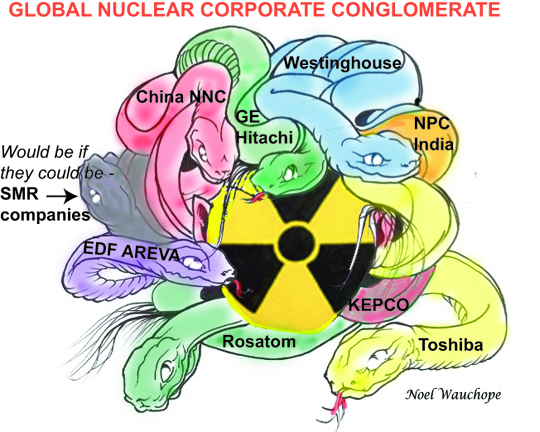 Framatome, GE and Rosatom team up for Belene project, WNN.18 June 2020, Russian state nuclear corporation Rosatom announced today it has signed Memoranda of Understanding (MoUs) with France’s Framatome and GE Steam Power of the USA to participate in a tender to construct the Belene nuclear power plant in Bulgaria.
The MoUs were signed by Kirill Komarov, Rosatom’s first deputy director general of corporate development and international business, Frédéric Lelièvre, Framatome’s senior executive vice president in charge of sales, regional platforms and I&C, and Michael Keroulle, president of GE Steam Power.
As part of the agreements, Rosatom said that if it were to become a strategic investor in the project through a competitive process, GE would be considered as the partner for an Arabelle based turbine-generator set and turbine hall equipment, while Framatome would be considered as the key partner for the instrumentation and control (I&C) systems for the Belene plant.
The Belene project in northern Bulgaria includes construction of two 1000 MWe units, each using the Russian VVER-1000/V-466 design which is a pressurised water reactor with four circulating loops. Preliminary site works began in 2008, and contracts for components including large forgings and I&C systems were signed with suppliers, but the project was stymied by financing problems……….
Rosatom noted that it has already successfully collaborated with Framatome and GE on international projects, including the Paks-II nuclear power plant in Hungary and the Hanhikivi-1 plant in Finland. It said the cooperation with GE is carried out within the framework of the Akkuyu project in Turkey and the El-Dabaa project in Egypt. AAEM, a joint venture between GE and Rosatom subsidiary Atomenergomash, is a supplier of equipment for the turbine island of each plant. https://world-nuclear-news.org/Articles/Framatome-GE-and-Rosatom-team-up-for-Belene-projec
Siberia’s alarming prolonged heat wave
Climate crisis: alarm at record-breaking heatwave in  Siberia https://www.theguardian.com/environment/2020/jun/17/climate-crisis-alarm-at-record-breaking-heatwave-in-siberia
Thu 18 Jun 2020 A prolonged heatwave in Siberia is “undoubtedly alarming”, climate scientists have said. The freak temperatures have been linked to wildfires, a huge oil spill and a plague of tree-eating moths.
On a global scale, the Siberian heat is helping push the world towards its hottest year on record in 2020, despite a temporary dip in carbon emissions owing to the coronavirus pandemic.
Temperatures in the polar regions are rising fastest because ocean currents carry heat towards the poles and reflective ice and snow is melting away.
Russian towns in the Arctic circle have recorded extraordinary temperatures, with Nizhnyaya Pesha hitting 30C on 9 June and Khatanga, which usually has daytime temperatures of around 0C at this time of year, hitting 25C on 22 May. The previous record was 12C.
In May, surface temperatures in parts of Siberia were up to 10C above average, according to the EU’s Copernicus Climate Change Service (C3S). Martin Stendel, of the Danish Meteorological Institute, said the abnormal May temperatures seen in north-west Siberia would be likely to happen just once in 100,000 years without human-caused global heating.
Freja Vamborg, a senior scientist at C3S, said: “It is undoubtedly an alarming sign, but not only May was unusually warm in Siberia. The whole of winter and spring had repeated periods of higher-than-average surface air temperatures.
“Although the planet as a whole is warming, this isn’t happening evenly. Western Siberia stands out as a region that shows more of a warming trend with higher variations in temperature. So to some extent large temperature anomalies are not unexpected. However, what is unusual is how long the warmer-than-average anomalies have persisted for.”
Marina Makarova, the chief meteorologist at Russia’s Rosgidromet weather service, said: “This winter was the hottest in Siberia since records began 130 years ago. Average temperatures were up to 6C higher than the seasonal norms.”
Robert Rohde, the lead scientist at the Berkeley Earth project, said Russia as a whole had experienced record high temperatures in 2020, with the average from January to May 5.3C above the 1951-1980 average. “[This is a] new record by a massive 1.9C,” he said.
In December, Russia’s president, Vladimir Putin, commented on the unusual heat: “Some of our cities were built north of the Arctic Circle, on the permafrost. If it begins to thaw, you can imagine what consequences it would have. It’s very serious.”
Thawing permafrost was at least partly to blame for a spill of diesel fuel in Siberia this month that led Putin to declare a state of emergency. The supports of the storage tank suddenly sank, according to its operators; green groups said ageing and poorly maintained infrastructure was also to blame.
Wildfires have raged across hundreds of thousands of hectares of Siberia’s forests. Farmers often light fires in the spring to clear vegetation, and a combination of high temperatures and strong winds has caused some fires to burn out of control.
Swarms of the Siberian silk moth, whose larvae eat at conifer trees, have grown rapidly in the rising temperatures. “In all my long career, I’ve never seen moths so huge and growing so quickly,” Vladimir Soldatov, a moth expert, told AFP.
He warned of “tragic consequences” for forests, with the larvae stripping trees of their needles and making them more susceptible to fires.
The ‘chemical fingerprint’ of a 2017 nuclear explosion
 Scientists just found the ‘chemical fingerprint’ of an alleged nuclear explosion that went undeclared in Russia, Business Insider, Aria Bendix Jun 16, 2020
- A group of scientists known as the “Ring of Five” detected unusual levels of radiation in Europe in 2017.
- A new study offers “irrefutable proof” that the radiation came from nuclear waste reprocessing.
- The study lends further evidence to the claim that Russia failed to disclose an accident at the Mayak nuclear facility in September 2017.
- For the past three years, a group of scientists called the “Ring of Five” has been inching toward the conclusion that an undisclosed nuclear accident took place in Russia in 2017.
In July 2019, the group released evidence that an explosion may have occurred at the Mayak nuclear facility — once the center of the Soviet nuclear-weapons program. Mayak was also the site of the 1957 Kyshtym explosion, the world’s third-worst nuclear accident behind Fukushima and Chernobyl.
- In late 2019, the scientists suggested that, given the large amount of radiation admitted on the date, the accident took place on September 26, 2017. The radiation seemed to spread from Russia’s Southern Urals region (where the Mayak facility is located) toward central Europe, Scandinavia, and Italy.
A third study, released Monday, offers “irrefutable proof” that the explosion was linked to nuclear waste reprocessing — a method that separates plutonium and uranium from spent nuclear fuel. The Mayak facility is the largest nuclear reprocessing facility in the region. That makes it the most likely, if not the only possible, origin site — though Russia has never acknowledged a nuclear accident at the facility in 2017…….
- The Ring of Five has been monitoring Europe’s atmosphere for elevated levels of radiation since the mid-1980s. The group originally hailed from five countries: Sweden, Germany, Finland, Norway, and Denmark. But after the Chernobyl disaster in 1986, the team enlisted the help of other nations to expand their efforts. It now includes researchers from 22 countries.
- On October 2, 2017, Italian scientists sent an alert to the Ring of Five about elevated levels of ruthenium-106, a radioactive isotope, in Milan. The discovery marked the first time that ruthenium-106 had been found in the atmosphere since Chernobyl.
“We were stunned,” Steinhauser said. “We did not have any anticipation that there might be some radioactivity in the air. We were just measuring air filters as we do on a weekly basis, 52 times a year, and suddenly there was an unexpected result.”
- Steinhauser said the explosion was the “single greatest release from nuclear-fuel reprocessing that has ever happened.”
But Russia has not responded to any findings from the Ring of Five. In December 2017, Russian officials attributed the radiation to an artificial satellite that burned up in the atmosphere. The scientists’ latest study excludes that possibility.
- The study is the first direct evidence that the ruthenium-106 came from nuclear waste reprocessing. It identified a unique “chemical fingerprint” among samples of the isotope collected in 2017.
Within those samples, the scientists found signs of two chemicals commonly associated with nuclear waste reprocessing: (III) chloride and ruthenium(IV) oxide. This provided “direct evidence that fuel reprocessing was the origin of the 2017 environmental release,” the scientists wrote………. https://www.businessinsider.com/russia-nuclear-accident-mayak-facility-new-evidence-2020-6?r=AU&IR=T
Sizewell nuclear power station could become a dangerous nuclear island
No2NuclearPower 16th June 2020, Letter to The Times (unpublished) Rachel Fulcher Suffolk Costal FOE:
The Sizewell C debate is salty indeed (Alistair Osborne, 10/06/20). Anyone taking a brisk walk along the Suffolk coast around Sizewell can see clearly how unstable and dynamic it is. Defensive anti-tank blocks from World War II spill down the collapsed cliffs, and here and there the remains of a
pill box, once aloft, can be seen lying on the shingle. ‘Dragons’ teeth’ have disappeared under the sea and then re-appeared before being finally removed – some by EDF ironically. Signs warn of cliff falls, yet, sadly, a man was killed not long ago walking his dog along the beach.
EDF Energy maintains that the two offshore sand banks will continue to protect the nuclear power stations at Sizewell from storm surges for the projected lifetime of Sizewell C, including the long-term storage of high-level nuclear waste. What madness is this? Local swimmers and sailors know only too well how these shift and change. Once you could swim out and stand on one – no longer possible as it has eroded and flattened.
Equally, as Nick Scarr correctly points out, and as our own in-depth researches demonstrate, the two banks have been moving apart, allowing the larger waves to reach the shore during storms.
The power of the sea should not be under-estimated. At nearby Thorpeness, thought to be stable due to the out-lying coralline crag, houses are now teetering on the edge, despite the revetment hastily put in place. Gabions are already rusting away and the huge sand bags have been tossed about by the waves. EDF Energy says in their consultation documents that their new defences would guard Sizewell C against projected climate change and sea level rise.
Even if that were the case, which cannot be proven, what would be the result of these? For a
start, they would cause ‘coastal squeeze’, preventing natural roll-back and resulting in flanking erosion and flooding. Not only would this put at increased risk villagers living either side of the station, but the RSPB’s flagship reserve of Minsmere immediately to the north and Sizewell
Marshes SSSI at the rear.
Indeed, this would leave a highly unsafe nuclear island. Water in the wrong place at a nuclear power station can have devastating consequences, as the catastrophe at Fukushima demonstrates only
too well. Let’s hope that the Planning Inspectorate puts the precautionary principle in place and turns down this hazardous development.
http://www.no2nuclearpower.org.uk/news/campaign-update/sizewell-debate-turns-salty/
UK’s Nuclear Future in Doubt amid Diplomatic Fallout over Huawai.
 Telegraph 14th June 2020, UK’s Nuclear Future in Doubt amid Diplomatic Fallout over Huawai. Boris Johnson’s now faces a test of his diplomatic and political skills against the Chinese state. Eyeing China’s crackdown on Hong Kong protesters, seeking to define the UK’s place in the world post-Brexit, and shaken by the pandemic, the UK is hardening its stance on China – and the communist superpower is responding in kind.
Expectations that the UK will reduce Chinese company Huawei’s role in the UK’s 5G network have been met with veiled threats that Chinese companies might pull out of building UK nuclear power plants and other infrastructure – ratcheting up tensions with potentially profound political and economic consequences.
Chinese direct investment in the UK reached almost £50bn between 2000 and 2018, while in
2018 the UK sold £22.6bn worth of goods to China and bought £44.7bn of Chinese goods. It was less than five years ago that David Cameron and Chinese president Xi Jinping popped into the Plough in Cadsden, Bucks, to toast a “golden era” of friendship between the two nations over pints
of IPA and fish and chips.
The visit took place just two days after the Chinese nuclear power giant China General Nuclear and France’s EDF agreed to build the Hinkley Point C nuclear power plant in Somerset, as part of about £40bn in business deals signed between the UK and China. Hinkley
Point C is now taking shape next to the Bristol Channel, but plans for a second plant with EDF, Sizewell C, and CGN’s own plant, Bradwell B inEssex, as well as other infrastructure investment now appear to be at risk if the UK ousts Huawei.
Plenty argue that would be no bad thing. China’s involvement in the UK’s nuclear power plants has long been controversial due to security concerns, while some experts also argue that large nuclear power plants have had their day as a source of energy. “The energy landscape has changed,” argues Paul Dorfman, of the UCL Energy Institute,
given that offshore wind power and other renewable technologies are getting much cheaper and more effective……. https://www.pressreader.com/uk/the-sunday-telegraph-money-business/20200614/281698321989436
1 This Month

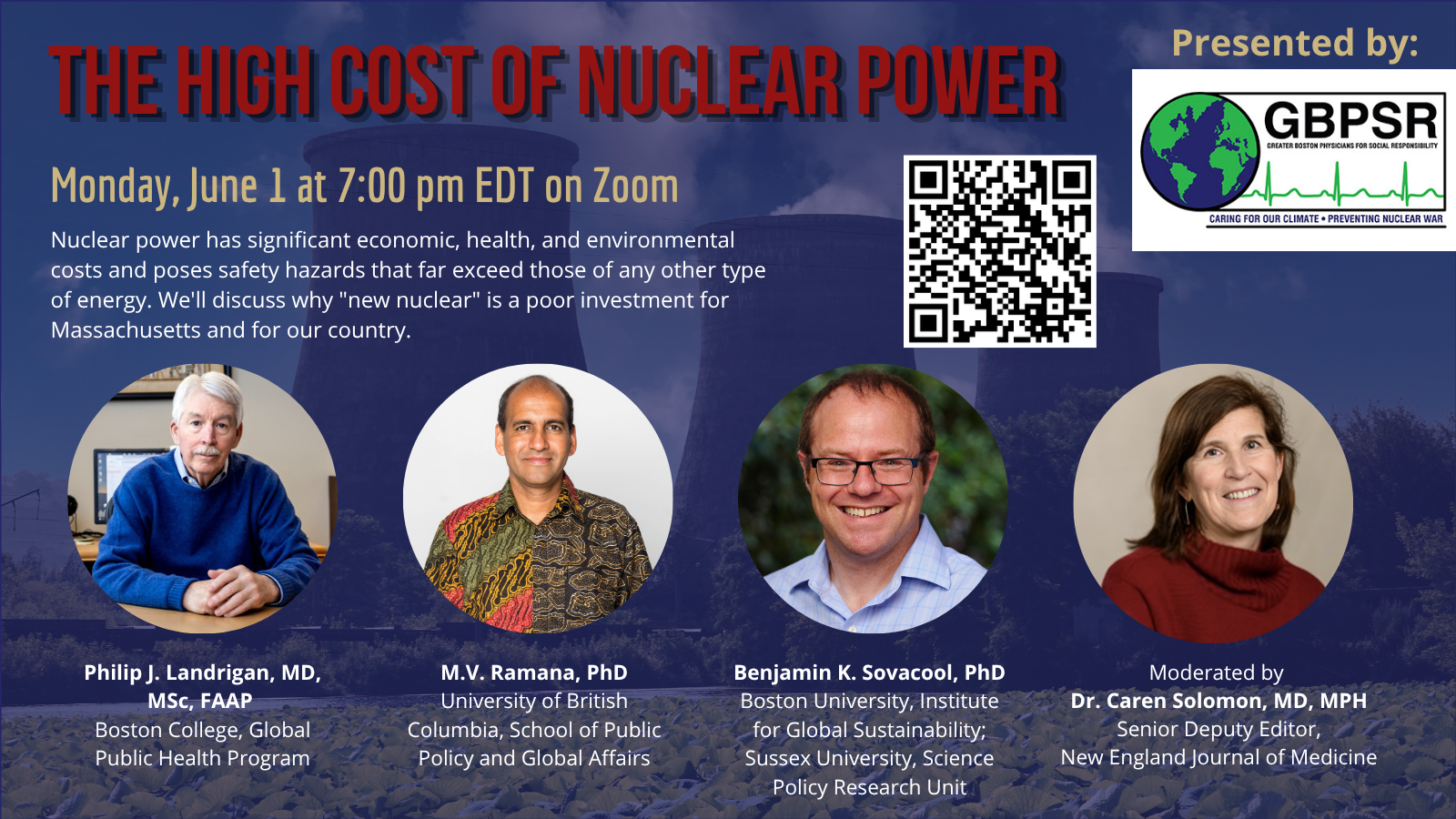
1 June Webinar – The High Cost of Nuclear Power – Register


of the week– Nuclear Reactor Information Task Force
To see nuclear-related stories in greater depth and intensity – go to https://nuclearinformation.wordpress.com
-
Archives
- May 2026 (235)
- April 2026 (356)
- March 2026 (251)
- February 2026 (268)
- January 2026 (308)
- December 2025 (358)
- November 2025 (359)
- October 2025 (376)
- September 2025 (257)
- August 2025 (319)
- July 2025 (230)
- June 2025 (348)
-
Categories
- 1
- 1 NUCLEAR ISSUES
- business and costs
- climate change
- culture and arts
- ENERGY
- environment
- health
- history
- indigenous issues
- Legal
- marketing of nuclear
- media
- opposition to nuclear
- PERSONAL STORIES
- politics
- politics international
- Religion and ethics
- safety
- secrets,lies and civil liberties
- spinbuster
- technology
- Uranium
- wastes
- weapons and war
- Women
- 2 WORLD
- ACTION
- AFRICA
- Atrocities
- AUSTRALIA
- Christina's notes
- Christina's themes
- culture and arts
- Events
- Fuk 2022
- Fuk 2023
- Fukushima 2017
- Fukushima 2018
- fukushima 2019
- Fukushima 2020
- Fukushima 2021
- general
- global warming
- Humour (God we need it)
- Nuclear
- RARE EARTHS
- Reference
- resources – print
- Resources -audiovicual
- Weekly Newsletter
- World
- World Nuclear
- YouTube
-
RSS
Entries RSS
Comments RSS
 nuclear-news