Cloud with tiny levels of radioactivity detected over Scandinavia and European Arctic.
 Radioactivity is blowing in the air https://thebarentsobserver.com/en/ecology/2020/06/various-reactor-related-isotopes-measured-over-scandinavia-and-svalbard?fbclid=IwAR2UsXspMQZSLInvisible for humans, but detectable for radiation-filters. A cloud with tiny levels of radioactivity, believed to originate from western Russia, has been detected over Scandinavia and European Arctic. By Thomas Nilsen, June 26, 2020
First, in week 23 (June 2-8), iodine-131 was measured at the two air filter stations Svanhovd and Viksjøfjell near Kirkenes in short distance from Norway’s border to Russia’s Kola Peninsula. The same days, on June 7 and 8, the CTBTO-station at Svalbard measured tiny levels of the same isotope.
CTBTO is the global network of radiological and seismic monitoring under the Comprehensive Nuclear-Test-Ban Treaty Organization.
Norway’s nuclear watchdog, the DSA, underlines that the levels are very small.
“We are currently keeping an extra good eye on our air-monitoring system,” says Bredo Møller with DSA’s Emergency Preparedness unit at Svanhovd.
While iodine-131 is only measured in the north, in the Kirkenes area and at Svalbard, Swedish and Finnish radiation authorities inform about other isotopes blowing in the skies over southern Scandinavia.
Bredo Møller says to the Barents Observer that his agency can’t conclude there is a connection between what is measured up north and what his Scandinavian colleagues measured in week 24.
“As part of our good Nordic cooperation we are currently exchanging data,” he says.
Møller tells about radiation just above detectable levels. “We found 0,9 microBq/m3 at Svanhovd and 1,3 microBq/m3 at Viksjøfjell.”
Finland’s Radiation and Nuclear Safety Authority (STUK) detected on June 16 and 17 small amounts of the radioactive isotopes cobalt, ruthenium and cesium (Co-60, Ru-103, Cs-134 and Cs-137).
STUK says the measurements were made in Helsinki where analysis is available on the same day. “At other stations, samples are collected during the week, so results from last week will be ready later.”
Likely from a reactor
All these isotopes indicate that the release comes from a nuclear-reactor. Iodine-131 has a half-life of 8 days, and given the small amount measured in the north, this isotope could be gone before the radioactive cloud reached the southern parts of Finland and Sweden a week after the first measurements in the north. That be, if the release was somewhere in the Arctic or northwestern Russia and winds were blowing south or southwest.
Neither of the Scandinavian radiation agencies will speculate about the origin.
“It is not possible now to say what could be the source of the increased levels,” writes the Swedish Radiation Safety Authority in a statement. Also the Swedes underline that the levels are low and do not pose any danger to people or the environment.
In the Netherlands, though, the National Institute for Public Health and the Environment (RIVM) has analyzed the data from Scandinavia and made calculations to find out what may have been the origin of the detected radionuclides.
“These calculations show that the radionuclides came from the direction of Western Russia,” RIVM concludes.
Calls for info-exchange
Senior Nuclear Campaigner with Greenpeace Russia, Rashid Alimov, says to the Barents Observer that the composition of the isotopes strongly indicates that the source is a nuclear reactor or a spent fuel element from a reactor.
“The Russian monitoring systems have not reported any unusual levels of radioactivity in June,” Alimov says, emphasizing that could be due to delayed publication of data.
Greenpeace calls for rapid international cooperation that includes Russia.
“We think information exchange is crucial,” Rashid Alimov says.
Russia denies its nuclear plants are source of radiation leak
https://www.bbc.com/news/world-europe-53214259, 28 June, 20
Russia has said a leak of nuclear material detected over Scandinavia did not come from one of its power plants.
Nuclear safety watchdogs in Finland, Norway and Sweden said last week they had found higher-than-usual amounts of radioactive isotopes in the atmosphere.
A Dutch public health body said that, after analysing the data, it believed the material came “from the direction of western Russia”.
It said the material could indicate “damage to a fuel element”.
But in a statement, Russia’s nuclear energy body said its two power stations in the north-west – the Leningrad NPP and the Kola NPP – were working normally and that no leaks had been reported.
“There have been no complaints about the equipment’s work,” a spokesperson for the state controlled nuclear power operator Rosenergoatom told Tass news agency.
“Aggregated emissions of all specified isotopes in the above-mentioned period did not exceed the reference numbers.”
Radiation levels around the two powers stations “have remained unchanged in June”, the spokesperson added.
Lassina Zerbo, executive Secretary of the Comprehensive Nuclear-Test-Ban Treaty Organization (CTBTO) tweeted on Friday that its Stockholm monitoring station had detected three isotopes – Cs-134, Cs-137 and Ru-103 – at higher than usual levels but not harmful to human health.
The particles were detected on 22-23 June, he said.
The Dutch National Institute for Public Health and the Environment in the Netherlands said on Friday that the composition of the nuclear material “may indicate damage to a fuel element in a nuclear power plant”.
The International Atomic Energy Agency – the UN’s nuclear watchdog – said on Saturday it was aware of the reports and was seeking more information from member states.
Ukraine declassifies Chernobyl nuclear disaster documents
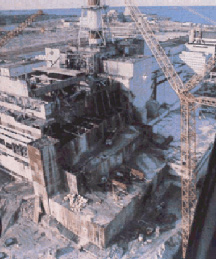 Ukraine declassifies Chernobyl nuclear disaster documents https://www.brusselstimes.com/all-news/119019/ukraine-declassifies-chernobyl-documents/
The archives, published in a book edited by the Ukrainian secret service, SBU, give an overview of the various construction errors, accidents and emergency interruptions at the plant between 1971 and the day of the disaster.
After Reactor 4 of the Soviet nuclear plant at Chernobyl exploded, a no-go zone was set up around the area due to the risk of radiation.
The biggest nuclear disaster in History caused the deaths of thousands of people, while tens of thousands had to be displaced.
On Sunday, a new fire occurred in the red zone around the plant, which is about three hectares in area. The Ukrainian authorities said on Monday that the fire had, for the most part, been put out.
In early April, a forest fire fed by gusty winds and unusually dry weather had broken out around the abandoned nuclear plant.
By the time it was brought under control in mid-May, about 11,500 hectares had been destroyed.
France’s old Fessenheim nuclear reactor to finally shut down- the first of many
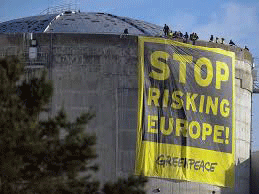 France’s oldest nuclear reactor to finally shut down,Guardian,
Environmentalists have welcomed news that the 43-year-old Fessenheim reactor will close, nine years after it was first planned, Agence France-Presse, 28 June 20,
France’s oldest nuclear power plant will shut down on Tuesday after four decades in operation, to the delight of environmental activists who have long warned of contamination risks, but stoking worry for the local economy.
The Fessenheim plant, opened in 1977 and already three years over its projected 40-year life span, became a target for anti-nuclear campaigners after the catastrophic meltdown at Fukushima in Japan in 2011.
Despite a pledge by then-president Francois Hollande just months after the Fukushima disaster to close Fessenheim – on the Rhine river near France’s eastern border with Germany and Switzerland – it was not until 2018 that his successor Emmanuel Macron gave the final green light.
Run by state-owned energy company EDF, one of Fessenheim’s two reactors was disconnected in February.
The second is to be taken off line early on Tuesday, but it will be several months before the reactors have cooled enough for the used fuel to be removed.
That process should be completed by 2023, and the plant is not expected to be fully dismantled before 2040 at the earliest. …..
More will follow, with only 294 people needed on site for the fuel removal process until 2023, and about 60 after that for the final disassembly. ……
There is no legal limit on the life span of French nuclear power stations, but the EDF had envisaged a 40-year ceiling for all second-generation reactors, which use pressurised water technology.
France’s ASN nuclear safety authority has said reactors can be operated beyond 40 years only if ambitious safety improvements are undertaken.
In the 1990s and 2000s, several safety failures were reported at Fessenheim, including an electrical fault, cracks in a reactor cover, a chemistry error, water pollution, a fuel leak, and non-lethal radioactive contamination of workers.
In 2007, the same year a Swiss study found that seismic risks in the Alsace region had been underestimated during construction, the ASN denounced a “lack of rigour” in EDF’s operation of the plant.
Without Fessenheim, France will still have 56 pressurised water reactors at 18 nuclear plants generating some 70% of its electricity. Only the US, with 98, has more reactors, but France is by far the world’s biggest consumer of nuclear energy.
In January, the French government said it would shut 12 more reactors nearing or exceeding the 40-year limit by 2035, when nuclear power should represent just 50% of the country’s energy mix in favour of renewable sources.
At the same time, the EDF is racing to get its first next-generation reactor running by 2022 – 10 years behind schedule – and more may be in the pipeline…….https://www.theguardian.com/environment/2020/jun/28/frances-oldest-nuclear-reactor-to-finally-shut-down
Wylfa nuclear project: Donald Trump plea over site sale dismissed
Work on the £13bn project was put on hold last year because of rising costs after Hitachi failed to reach a funding agreement with the UK government.
A Horizon Energy spokesman said: “We don’t comment on speculation.
“Our focus remains on securing the conditions necessary to restart this crucial project, which would bring transformative economic benefits to the region and play a huge role in helping deliver the UK’s climate change commitments.”
Horizon is owned by Hitachi and was set to lead the project to build the site……. https://www.bbc.com/news/uk-wales-politics-53212790
Unacceptable to build a radioactive waste repository on the BiH border, Bosnia forming an expert team to plan Croatian nuclear waste disposal .
He expects that after the formation of the expert team, a meeting with the competent ministry in the Government of Croatia will follow and that, based on the application of European conventions, scientific, research and professional staff from BiH will be able to come to Trgovska Gora…… Košarac added, they are working on forming a proposal of a team for legal experts not to give up on the internationally recognized rights that BiH has signed at the international level.
He reiterated that it is completely unacceptable to build such a landfill on the border with BiH. https://www.sarajevotimes.com/164093-2/
Need for action on global heating – It’s 38°C in Siberia
|
The Arctic heatwave: here’s what we know, https://www.theguardian.com/commentisfree/2020/jun/25/arctic-heatwave-38c-siberia-scienceTamsin Edwards
It’s 38°C in Siberia. The science may be complicated – but the need for action now couldn’t be clearer Fri 26 Jun 2020 There’s an Arctic heatwave: it’s 38°C in Siberia. Arctic sea ice coverage is the second lowest on record, and 2020 may be on course to be the hottest year since records began. For many people, such news induces a lurch of fear, or avoidance – closing the webpage because they don’t want to hear yet more bad news. A few might think “It’s just weather,” and roll their eyes. How can we make sense of such an event? Climate is subtle and shifting, with many drivers and timescales. But we can use this northern heatwave to illuminate the complexity of our planet. We can break this question into parts, from fast to slow. Fast: the immediate effect is to increase wildfires. Siberia has seen “zombie fires” reignited from deep smouldering embers in peatland. This is bad news, releasing particulate air pollution and more carbon in 18 months than in the past 16 years. The immediate cause? Here in the mid-high northern latitudes, we live in unstable weather under the influence of the polar jet stream. This rapid current of air high above our heads drags weather in a conveyor belt from west to east, with alternating patches of cold and warm air, low and high pressure. Sometimes the weather patterns get stuck, creating a stable period of weather, like a heatwave. This is one long, severe example. Does climate change make this “blocking” more likely? Maybe. The jet stream is created by the contrast between cold polar air and the warmer south. The Arctic is warming twice as fast as the global average: that means less north-south contrast, so the jet stream can become more wobbly and meandering. Loops break off like the oxbow lakes of school geography lessons, stranding particular weather patterns in one place. And why is the Arctic warming faster? Because sea ice and snow are so bright. When they melt with global warming, the ocean and land beneath are darker, so they absorb more of the sun’s heat. Their loss amplifies our warming. The current low in Arctic sea ice is itself partly the result of the Siberian heatwave, amplifying the usual year-to-year fluctuations. But the trend is down: the more CO2 we emit, the more the planet’s temperature rises, and the more sea ice we lose. Scientists predict the Arctic will start seeing summers without sea ice by 2050. But it’s not irreversible. It’s not a tipping point. The sea ice would return if we could cool the climate again. Unfortunately we know only three ways to do that: extract vast amounts of CO2 from the air with trees or technology; reflect the sun’s rays at a planetary scale; or wait, for many generations. This Arctic heatwave is a sharp spike on top of the global warming trend. That’s what makes it more intense, more likely and more of a warning: it’s a taste of the future predicted for Russia, if we burn quickly through our fossil fuels. The real fear around the Arctic for the longer term, I find when talking to people, comes from the idea of “runaway” warming from methane release. Warming could release stores of methane – a strong greenhouse gas – from permafrost or frozen sediments at the bottom of the ocean, which would add to the warming from our own activities. There is more than twice the amount of carbon in the permafrost as in the atmosphere, and thawing has already begun. There are big local impacts – damage to roads and buildings, because the ground can no longer bear so much weight, and an appalling story involving what appears to be anthrax release from thawing burial grounds. Permafrost thaw was even blamed by a Russian mining company for the recent collapse of a fuel reservoir, contaminating the river with 20,000 tonnes of diesel, though other factors were probably also involved. So could this Siberian heatwave, or ones like it, trigger catastrophic warming? I see much fear about amplifying methane feedbacks, including the false idea that climate scientists don’t consider them (we do, just separately to the main global climate models). Yet for several years there has been growing evidence that this risk is less than originally thought. Carbon stored in permafrost and wetlands is predicted to contribute around 100bn tonnes of CO2 this century. That’s a lot, but we add around 40bn tonnes ourselves every year. The methane at the bottom of the ocean would take centuries to release, so as long as we limit global warming we should keep those stores mostly locked up. There are uncertainties, of course, but the stores’ impact on warming is likely to be tenths of a degree, not several degrees. Yet every tonne of CO2 released from permafrost means one tonne fewer we can emit if we are to reach net zero emissions by 2050. Every year’s equivalent of our emissions brings our deadline closer. Every tenth of a degree of warming brings us closer to our target of 1.5°C and makes more permafrost thaw, and the impacts of climate change worse for the most vulnerable people and species of the world. The Arctic heatwave shows us that there are few simple stories in climate change. There is always a mix of natural and human influence, bad news and slightly-less-bad news, and occasionally even hopeful news. So, more than ever, we need to avoid over-simplifying or slipping into easy tropes like “We’re all doomed” or “It’s all weather,” but to try to understand the details. Perhaps there is one simple story though: every bit of warming we avoid will help keep our planet a more familiar and an easier place to live on. • Dr Tamsin Edwards is a senior lecturer in physical geography at King’s College London |
Sizewell planning documents reveal higher-than-expected £20bn price tag
  Cost of new Sizewell C nuclear plant put at £20bn https://www.ft.com/content/77c209f7-6d18-4609-ac3c-77d1b5b82b34 26 June 20, Higher-than-expected price tag revealed for first time in planning documents. Nathalie Thomas in Edinburgh and Donato Paolo Mancini in London Cost of new Sizewell C nuclear plant put at £20bn https://www.ft.com/content/77c209f7-6d18-4609-ac3c-77d1b5b82b34 26 June 20, Higher-than-expected price tag revealed for first time in planning documents. Nathalie Thomas in Edinburgh and Donato Paolo Mancini in London
A new nuclear plant proposed on England’s east coast will cost £20bn, according to planning documents that reveal the higher-than-expected price of the project for the first time. The developers of the proposed plant at Sizewell in Suffolk — France’s EDF and Chinese state-owned CGN — had previously indicated the power station could be built for 20 per cent less than Hinkley Point C. Britain’s first new nuclear plant in a generation is under construction in Somerset.
This implied a cost of about £18bn for the Suffolk plant, called Sizewell C, after EDF last year said the price tag for Hinkley Point had risen to as much as £22.5bn. The first new-build project has suffered a string of cost overruns.
The revelation of Sizewell’s cost in extensive planning documents published on Thursday will reignite the ferocious debate around whether the UK should build large new nuclear plants.
Some backbench Conservative MPs, opposed to Chinese state involvement in critical national infrastructure, have concerns about the project because of the presence of CGN. The Chinese state-owned company is a junior financing partner on the Sizewell C project but hopes to install its own reactor technology in another proposed nuclear station at Bradwell-on-Sea, Essex.
The Financial Times reported on Wednesday that CGN, or China General Nuclear Power Corporation, was on a US list of 20 companies with links to the Chinese military compiled by the Pentagon. The list is part of an attempt by the White House and Congress to prevent Beijing from obtaining sensitive technologies as well as US funding.
EDF said in the planning documents that the cost estimate for Sizewell C includes design, construction and land costs associated with the proposed site, which is situated next to one of the UK’s operational nuclear plants, known as Sizewell B. It also takes into account “expected inflation and contingencies”, according to the document.
The company had previously claimed the cost savings on Sizewell could be delivered because it would be a “near identical copy” of Hinkley Point C.
EDF said the budget detailed in the planning application includes inflation over the estimated 10 years of construction, whereas the latest estimate for Hinkley Point C — estimated to be in a range of £21.5bn to £22.5bn — was based on 2015 prices.
The 20 per cent cost saving still stood if you subtracted a fifth from the Hinkley budget and then adjusted that sum for inflation, the company added.
EDF and CGN are yet to clarify how the new plant would be funded. The UK government last year launched a consultation on a so-called regulated asset base model (RAB) — used for other forms of infrastructure such as energy networks. This would lower the cost of capital of the scheme because consumers would have a surcharge added to their energy bills before the plant was completed.
Stop Sizewell C, a local campaigning group, said the funding statement was “a work of fiction” and described the £20bn pricetag as “totally eye-watering”.
Greenpeace UK’s chief scientist Doug Parr said the nuclear industry’s claim that it can always make the next power plant cheaper was “just never true.” He pointed out that the costs of renewable power had dropped below half those of nuclear “and just keep dropping”.
The government is yet to report back on the consultation. Privately, some nuclear industry leaders have been making an argument for the taxpayer to take a stake in any new project.
|
|
UK planning inspectorate accepts Sizewell C nuclear plans for examination

|
Sizewell C: Nuclear power station plans accepted for scrutiny, https://www.bbc.com/news/uk-england-suffolk-53176514, 25 June 2020
An application to build a new nuclear power station has been accepted for examination by the planning inspectorate. Plans for the Sizewell C plant on the Suffolk coast were put forward by EDF Energy after being mooted 10 years ago. The acceptance means an examining authority will now be appointed to scrutinise the application, with the government having final decision. Stop Sizewell C (SSC) group said it will continue to fight the application. EDF Energy said in a statement: “The decision means the Inspectorate is satisfied that the eight years of public consultation by the project was conducted properly and that full examination of the proposals can now take place.” But Alison Downes from SSC said the “quality of EDF’s consultations failed to provide required information”. She added EDF “had not been transparent in its disclosures of environmental assessment or transport strategy” nor the plant’s impact on the local area. Concerns about effective scrutiny of pre-application proposals during the lockdown restrictions was supported in letters from local MP Dr Dan Poulter and Suffolk County Council. In a joint statement on Wednesday Suffolk County Council and East Suffolk Council said: “The lack of a comprehensive set of documents up to this point has compromised the engagement that has taken place, and the Councils do not feel they have been able to complete their pre-application work with the Applicant (EDF Energy) to the extent set out by the Planning Act 2008,” EDF Energy said a copy of the full planning application and supporting documents would become available on the Planning Inspectorate website. |
|
Nuclear developers push UK government for prompt decision on government finance for new construction
 Nuclear developers press for ‘prompt’ decision on new UK plants , Ft.com, Nathalie Thomas in Edinburgh, JUNE 24 2020
Britain’s nuclear energy industry has said it could cut the price of power from new large power stations by more than half as it presses ministers for a “prompt” decision on government financing to support construction. …….
The NIA argues that supply chain costs would fall further if it can build further scale and experience. But it warns that new projects rely on “prompt decisions” by ministers on an alternative financing mechanism to support nuclear plant construction. Executives at EDF have made clear they will not replicate the model used for Hinkley, which has been beset by cost overruns. A government consultation on alternative funding models, launched last year, is yet to report back.
Under a RAB model, households would pay for a plant’s construction through their energy bills long before any electricity is generated, allowing developers to attract cheaper finance from investors such as pension funds. But it also leaves consumers on the hook for cost overruns.
European Union countries agreed to exclude nuclear, fossil gas from green transition fund
 EU ministers exclude nuclear, fossil gas from green transition fund EU ministers exclude nuclear, fossil gas from green transition fund
EURACTIV.com with Reuters European Union countries agreed on Wednesday (24 June) that the bloc’s flagship fund to wean regions off fossil fuels should not finance nuclear or natural gas projects, despite calls from some Eastern countries for gas to be eligible for EU funding. The European Commission, the EU’s executive, wants to set up a €40 billion Just Transition Fund, comprised of €30 billion from an EU coronavirus recovery fund and €10 billion from its budget for 2021-27. The fund aims to encourage a shift from high-carbon industries that would help coal miners to retrain and find new low-carbon jobs, and support regions whose economies depend on polluting sectors to build new industries. Ambassadors from the EU’s 27 member states agreed on Wednesday that the Just Transition “shall not support the decommissioning or the construction of nuclear power stations” nor “investment related to the production, processing, distribution, storage or combustion of fossil fuels,” according to a document, published on Thursday (25 June). The position is in line with the Commission’s, making it likely that the final Just Transition Fund will exclude nuclear and gas. The proposal will be finalised following negotiations between member states, the Commission and EU Parliament, with the latter typically favouring ambitious climate change policies…….. https://www.euractiv.com/section/energy/news/eu-ministers-exclude-nuclear-fossil-gas-from-green-transition-fund/ |
|
US, Russia nuclear arms talks end with plans for second round
US, Russia nuclear arms talks end with plans for second round, Aljazeera, 26 June 20,
US says any new agreement on curbing nuclear weapons should include China, a condition Russia calls ‘unrealistic’. US and Russian negotiators have concluded a round of nuclear arms control talks in Austria’s capital, Vienna, aimed at producing a new agreement to replace the New START treaty that expires next year.
US negotiator Marshall Billingslea told reporters on Tuesday that the day of high-level “marathon discussions” ended late on Monday.
Billingslea said the talks had been productive enough to establish several technical working groups to delve deeper into the issues in order to pave the way for a second round of talks by late July or early August…… https://www.aljazeera.com/news/2020/06/coronavirus-deaths-children-extremely-rare-live-updates-200626000914304.html
Russia’s priority is to involve UK, France in future nuclear arms control talks — diplomat
Russia’s priority is to involve UK, France in future nuclear arms control talks — diplomat
The two states are the US closest NATO allies that possess nuclear weapons, the senior diplomat explained, MOSCOW, June 26. /TASS/. Russia thinks it necessary that the United Kingdom and France join the strategic nuclear arms control process as the United States’ closest NATO allies, Russian Deputy Foreign Minister Sergei Ryabkov said in an interview with TASS First Deputy Director General Mikhail Gusman on Friday……. https://tass.com/politics/1172109
Lithuania standing firm against sales of electricity from Belarus’ new nuclear power station
|
Lithuania spurns Baltic presidents’ meeting amid nuclear power rift KURESSAARE, Saaremaa, Estonia (Reuters) 25 June 20, – Lithuanian President Gitanas Nauseda refused to attend a planned meeting with his Estonian and Latvian counterparts on Thursday, saying he did so after the countries failed to agree to ban electricity purchases from a new nuclear power plant in Belarus. Lithuania has a law banning all Belarusian power sales after the power plant gets operational. The Estonian president’s office, which hosted the meeting, said that Nauseda, who is dealing with a reshuffle of his team, “decided to stay home at the last minute due to internal affairs”. Lithuania wants all the three countries to sign up to banning sales of Belarusian electricity after the nuclear plant comes online, binning an earlier draft agreement that only pledged to help keep the energy from being sold in Lithuania……. Lithuania sees the nuclear power plant, built by Russia’s Atomstroyexport near its capital and financed by Moscow with a $10 billion loan, as threat to its safety and national security, something Belarus disagrees with. “The President’s opinion is that negotiations should be finished first,” Nauseda’s spokesman told Reuters in a statement.https://www.reuters.com/article/us-baltics-energy-belarus/lithuania-spurns-baltic-presidents-meeting-amid-nuclear-power-rift-idUSKBN23W27C |
|
|
2,000 Covid-19 Cases in Severodvinsk, city that builds Russia’s nuclear submarines
 The City That Builds Russia’s Nuclear Submarines Now Has Over 2,000 Covid-19 Cases, By The Barents Observer, 24 June 20,
Two naval construction yards in a northern Russian city near the site of last year’s mysterious nuclear testing accident have become new hotbeds for the coronavirus.
Severodvinsk is near the Nyonoksa testing site where an August 2019 explosion during a rocket engine test killed five nuclear workers and led to a radiation spike. The building of nuclear subs and other naval vessels continues despite the increasingly serious virus situation.
Approximately 43% of all infections in the Arkhangelsk region are in Severodvinsk, regional authorities recently announced.
That indicates that there now are more than 2,000 cases in the city.
The lion’s share of the people infected are affiliated with Sevmash and Zvezdochka, the two naval yards.
Despite the introduction of protective measures, the virus has continued to spread among the local population of about 180,000.
In the past week alone, more than 320 new cases have been registered in town, most of them among the shipbuilders, a statistics overview said.
Temperature testing is conducted at entry points to the yards as well as on the construction premises, and workers are required to wear masks.
But the mask requirement is not observed, a local employee told the Sever.Realii newspaper in early June. Every worker is given 10 masks every five days along with a liter of antiseptic.
But most workers still do not wear the masks and ignore social distancing rules, the worker said.
There are about 30,000 employees at the Sevmash and about 11,000 workers at the Zvezdochka.
While the Zvezdochka engages primarily in vessel repair and upgrades, the Sevmash builds nuclear submarines. At the moment, there are at least eight new vessels under construction onsite, among them four Borey-class and four Yasen-class subs. AT TOP https://www.themoscowtimes.com/2020/06/24/the-city-that-builds-russias-nuclear-submarines-now-has-over-2000-covid-19-cases-a70681
1 This Month
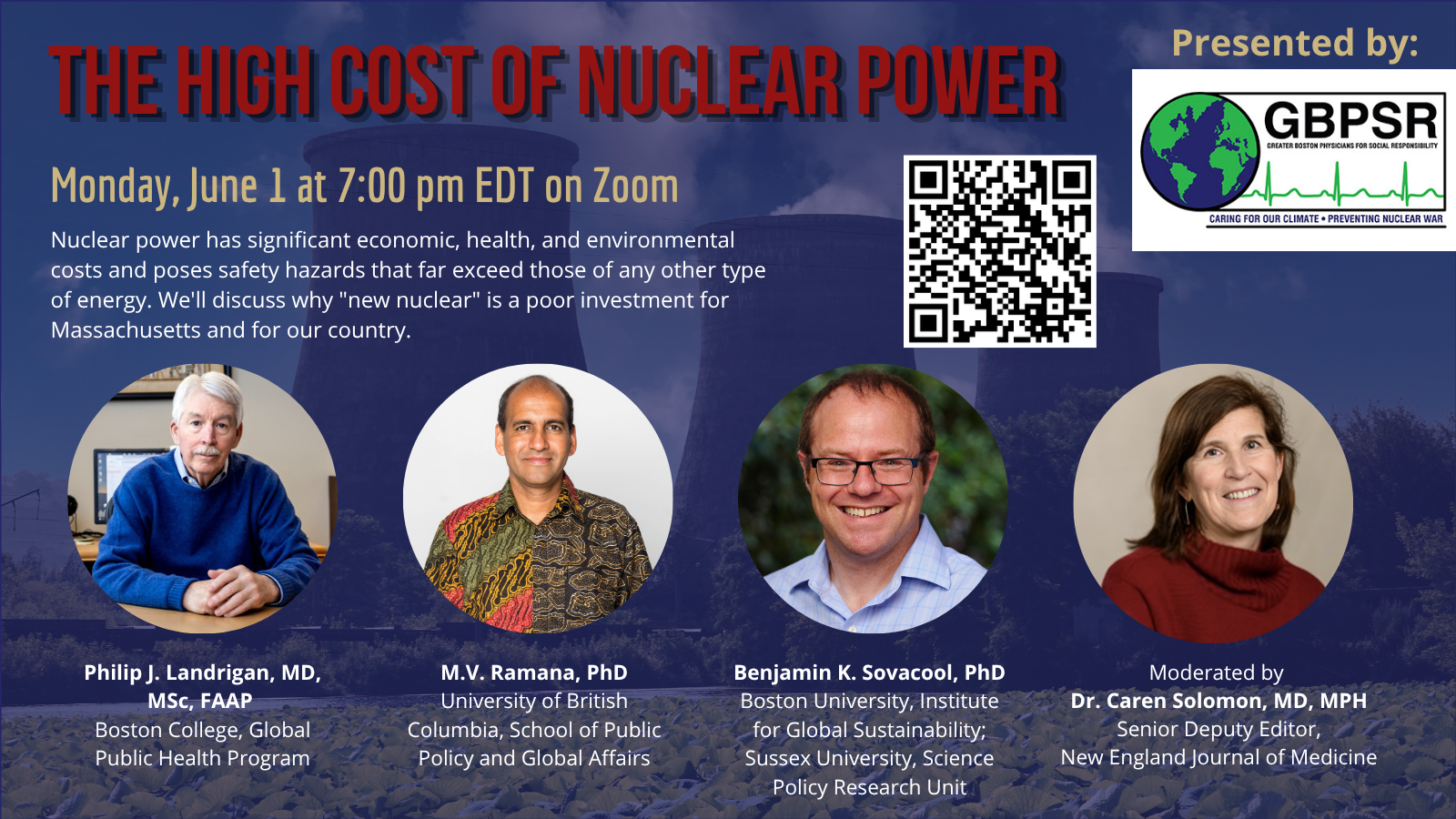
1 June Webinar – The High Cost of Nuclear Power – Register


of the week– Nuclear Reactor Information Task Force
To see nuclear-related stories in greater depth and intensity – go to https://nuclearinformation.wordpress.com
-
Archives
- May 2026 (235)
- April 2026 (356)
- March 2026 (251)
- February 2026 (268)
- January 2026 (308)
- December 2025 (358)
- November 2025 (359)
- October 2025 (376)
- September 2025 (257)
- August 2025 (319)
- July 2025 (230)
- June 2025 (348)
-
Categories
- 1
- 1 NUCLEAR ISSUES
- business and costs
- climate change
- culture and arts
- ENERGY
- environment
- health
- history
- indigenous issues
- Legal
- marketing of nuclear
- media
- opposition to nuclear
- PERSONAL STORIES
- politics
- politics international
- Religion and ethics
- safety
- secrets,lies and civil liberties
- spinbuster
- technology
- Uranium
- wastes
- weapons and war
- Women
- 2 WORLD
- ACTION
- AFRICA
- Atrocities
- AUSTRALIA
- Christina's notes
- Christina's themes
- culture and arts
- Events
- Fuk 2022
- Fuk 2023
- Fukushima 2017
- Fukushima 2018
- fukushima 2019
- Fukushima 2020
- Fukushima 2021
- general
- global warming
- Humour (God we need it)
- Nuclear
- RARE EARTHS
- Reference
- resources – print
- Resources -audiovicual
- Weekly Newsletter
- World
- World Nuclear
- YouTube
-
RSS
Entries RSS
Comments RSS
 nuclear-news